
Setting up a patio umbrella correctly takes about 20 to 40 minutes and really comes down to four things: picking the right spot before you touch a single bolt, assembling the canopy and ribs the right way, getting the base weighted and stable enough that the whole thing won't tip over, and then learning how to open, close, and tilt it without fighting the mechanism. Once you know how to open, close, and tilt it safely, you can dial in shade without fighting the mechanism. If you’re starting from scratch, use this same order of steps to install your patio table umbrella safely and correctly Setting up a patio umbrella correctly. Do those four things right and you'll have a solid, functional umbrella that lasts for seasons. Skip any one of them and you'll be troubleshooting a leaning pole or a stuck crank on a hot afternoon.
How to Set Up a Patio Umbrella From Start to Ready

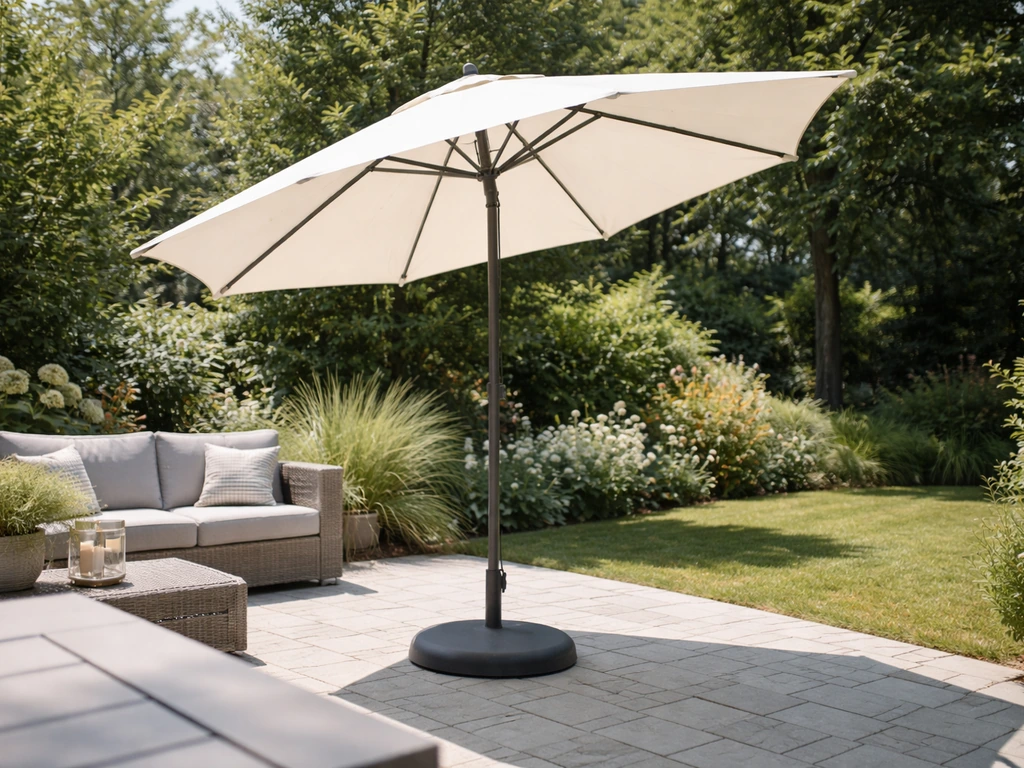
Before you start: tools, parts, and choosing the right spot
The most important pre-assembly step most people skip is picking the location before touching anything. Several manufacturer manuals actually call this out explicitly as step one: figure out where the umbrella will live before you start assembling it. This matters because the ground surface, nearby furniture, and overhead clearance all affect how you set it up. A cantilever umbrella, for example, needs a wider footprint for its crossbar base, and the canopy swings out to the side, so you need clear space in that direction. A center-pole market umbrella going through a table hole needs to line up with that hole, so the table position is your anchor point.
Quickly confirm which type of umbrella you have. Market (center-pole) umbrellas have a straight pole that either drops through a hole in your patio table or sits in a freestanding weighted base. Cantilever or offset umbrellas have the pole mounted to the side, suspending the canopy out over your seating area without a center obstruction. They're great for lounge chairs or sectionals where a center pole would be in the way, but they need heavier, more substantial bases because the side pole creates much more leverage against the stand.
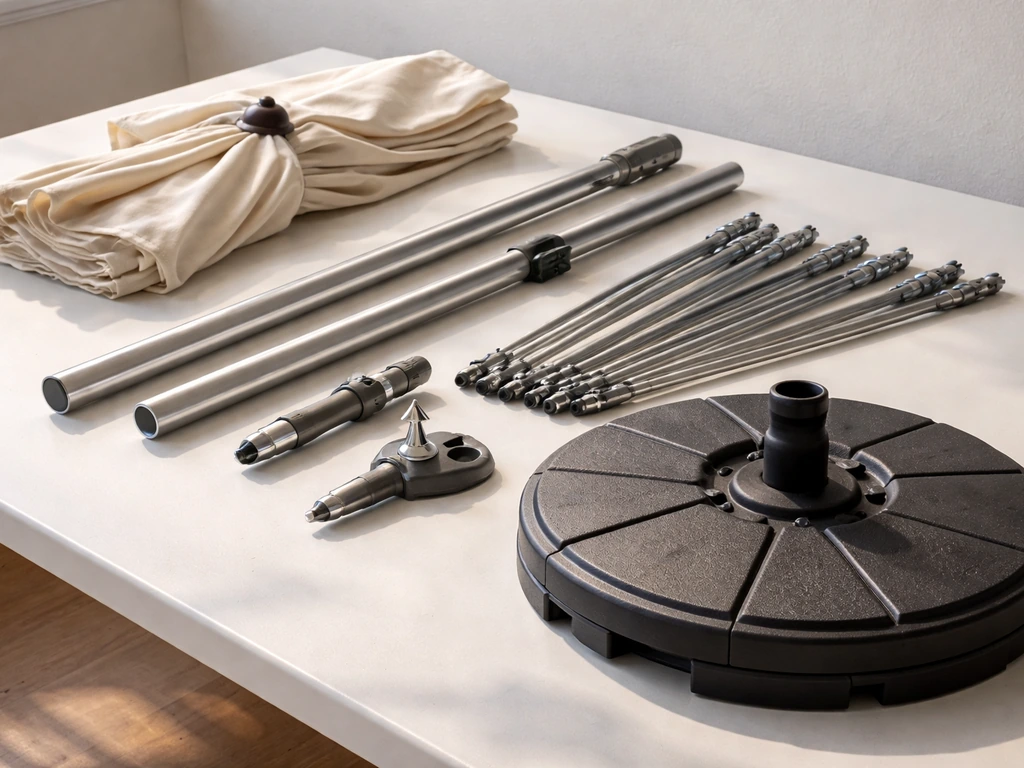
Gather everything you'll need before you start. Most umbrellas ship with everything required for basic assembly, but you'll want a few things on hand:
- The umbrella pole, canopy, and ribs (check all are included before starting)
- The base or stand (separate purchase for most umbrellas)
- A rubber mallet (useful for seating pole sections without damaging threads)
- A wrench or Allen key set (many bases use hex bolts)
- Sand, water, or base weight plates if you have a fillable base
- A step stool if you're working with a 10-ft or larger canopy
- Velcro tie straps or the storage strap that shipped with the umbrella
On location: put the umbrella where it actually needs shade, not just where it's convenient to set up. Check that you have at least a foot of clearance between the canopy edge and any walls, fences, or overhead structures. If you're going through a table hole, confirm the pole diameter matches the hole size, typically 1.5 to 1.75 inches for most market umbrellas, before you start assembly.
Assembling the umbrella canopy and ribs safely
Most patio umbrellas arrive partially disassembled: the pole comes in two or three sections, the canopy is folded and banded, and the ribs may be attached or packed separately. Work through assembly in this order to avoid having to backtrack.
- Lay the pole sections out on a clean surface and join them together. Most poles use a push-button connector: compress the button, slide the upper pole into the lower section, and release so the button snaps into the hole. If your pole uses a threaded collar, hand-tighten firmly but don't over-torque it.
- If the ribs are not pre-attached to the hub, connect them now. Each rib slots into a notch or pin on the hub (the spider-shaped piece near the top of the pole). Work around the hub one rib at a time so the tension stays even. Many umbrellas also have a lower runner (a ring that slides up the pole) with stretcher rods that connect the ribs to it. Attach those stretchers before moving on.
- Drape the canopy over the ribs, starting at the top cap and working outward. Each rib tip has either a small clip or a fabric sleeve the rib slides into. Attach every single one before you stand the umbrella up. A missing rib attachment causes uneven tension that can stress the canopy seam or jam the opening mechanism.
- Once the canopy is attached to all ribs, carefully stand the assembled umbrella upright. Have a second person hold it steady if it's a larger model (9 ft or bigger). Do not try to open the canopy yet; wait until the pole is seated in the base.
One common mistake: people try to attach the canopy after the pole is already in the base. That makes it much harder to rotate the umbrella and reach all the rib tips evenly. Do the canopy work on the ground or a table first.
Attaching the base and making it stable
How you set the base depends on whether you're using a market umbrella with a freestanding stand or a cantilever umbrella with a crossbar base. These two setups have very different stability requirements, so I'll walk through each.
Center-pole (market) umbrella base
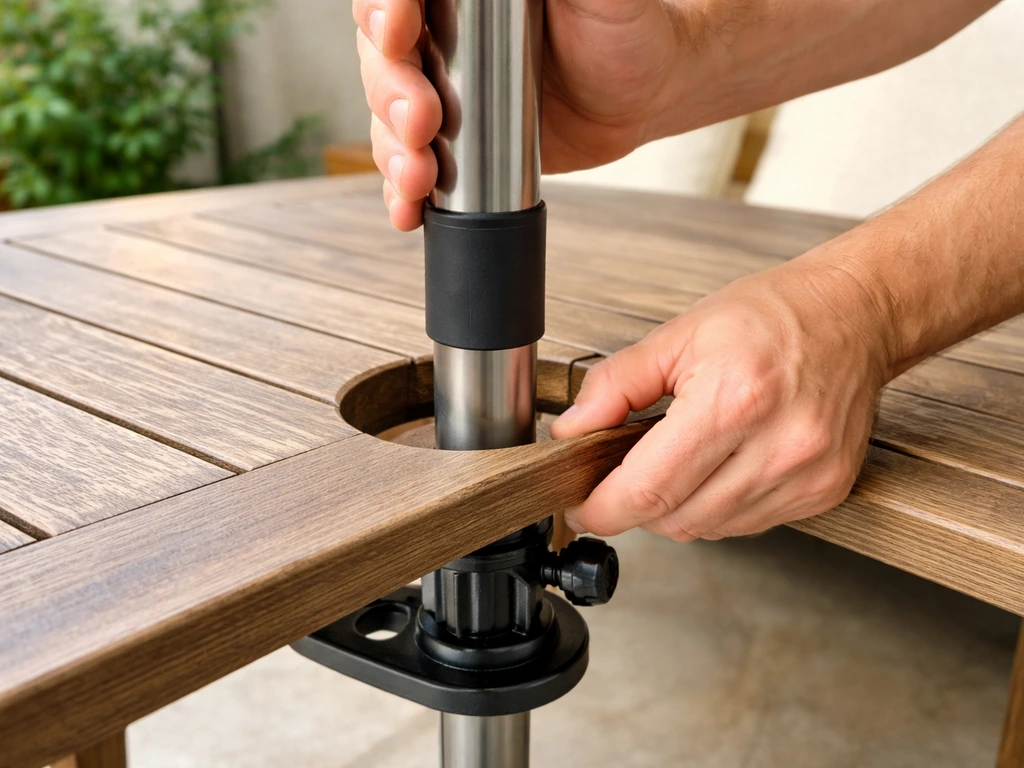
If you're going through a table hole, lower the pole through the hole first, then attach the base or base clamp underneath the table. Tighten the base's thumb screw or bolt so the pole is snug but can still rotate when you need to adjust direction. If you're using a freestanding weighted stand, set the stand in position first, then lower the pole into the stand's center opening and tighten the clamping bolt or thumb knob at the side. Most freestanding market umbrella stands weigh 40 to 80 lbs on their own, which is enough for calm conditions but not for wind.
Cantilever (offset) umbrella base
Cantilever bases are typically crossbar-style with four arms that spread out on the ground, and they almost always have hollow compartments you fill with sand or water for stability. This is not optional. The offset pole creates significant lateral leverage, and an unfilled cantilever base will tip over in even a light breeze. Fill each base compartment with sand or water according to your manual. Some popular cantilever bases (like the Treasure Garden AKZ) reach around 300 lbs when fully loaded with sand and water. That sounds like a lot but it's what it takes to counterbalance a large canopy catching wind at an offset angle.
Once the base is positioned and filled, slide the umbrella pole into the base's mounting collar and tighten the locking bolt. For models with a caster option, install the casters before filling the base, because a fully weighted base is essentially impossible to move without them.
| Umbrella Type | Base Style | Typical Base Weight (filled) | Extra Stability Tip |
|---|---|---|---|
| Center-pole / market (through table hole) | Table clamp or integrated table base | N/A (table provides stability) | Add sandbag weight to table legs in windy areas |
| Center-pole / market (freestanding) | Round or square weighted stand | 40–80 lbs | Choose heavier stands for 9 ft+ canopies |
| Cantilever / offset | Crossbar with fillable compartments | 150–300 lbs when filled | Use sand over water for more weight per volume |
Opening, closing, and adjusting tilt
Once the umbrella is seated in the base, you're ready to open it. How you do this depends on whether you have a crank-lift or a push-up (manual pulley/cord) system.
Crank-lift umbrellas
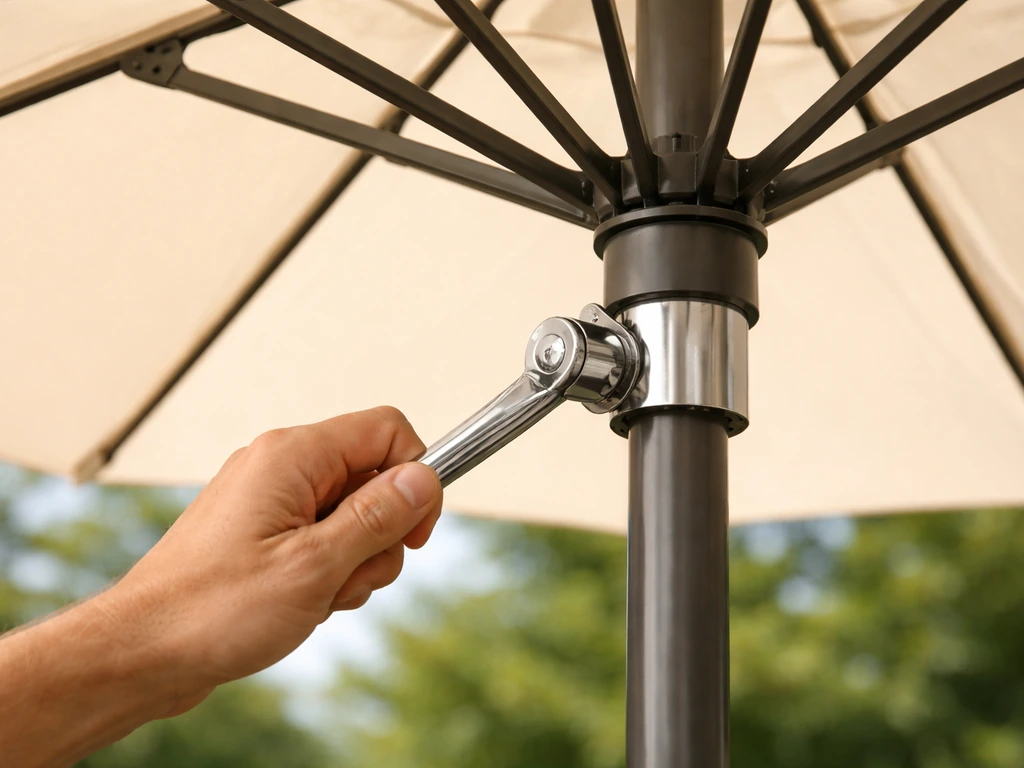
Turn the crank handle clockwise to open the canopy. Keep turning until the canopy is fully extended and taut. Do not crank counterclockwise to open it. This is a surprisingly common mistake and it can unseat the cord from its track inside the pole, which turns a 5-second operation into a repair job. If it feels like the canopy is fighting you, stop and check that the ribs are all properly seated before continuing.
Push-up and cord-pull umbrellas
Push-up models use a runner that you physically slide up the pole until it locks. Some have a cord and pulley: you pull the cord hand-over-hand until the canopy opens and then tie or cleat the cord to hold it. These are simpler mechanisms with fewer moving parts, which means less that can go wrong, but they do require the cord to be in good shape and the runner to slide freely.
Tilt mechanisms
Most tilt systems on market umbrellas are button-tilt: you push a small button or lever where the upper pole meets the tilt joint, hold it, tilt the canopy to the angle you want, then release the button to lock it. Some cantilever umbrellas use a collar and clamp lever: you loosen the lever, slowly rotate the arm to the desired angle, then retighten the lever until it's locked firmly. Only use tilt on calm days. Manufacturer warnings are consistent on this: tilt adds wind-catching surface area and significantly increases the tip-over risk even in a light breeze. If wind picks up, bring the umbrella back to vertical first.
Securing the umbrella against wind and preventing tipping
Patio umbrellas are shade structures, not wind structures. Every manufacturer manual I've seen says some version of the same thing: close and secure the umbrella any time you're not actively using it, and close it immediately when wind picks up. For additional wind threshold guidance, blank" rel="noopener noreferrer">one guide provides example closing ranges in mph and distinguishes sustained winds from gusts. That's not overcautious advice. A 9-ft canopy in a 20 mph gust acts like a sail, and even a 60-lb weighted base won't hold it. If you need to know how to hold up a patio umbrella without using the table as a mount, focus on a properly weighted or filled base and keep it closed when wind rises A 9-ft canopy in a 20 mph gust acts like a sail.
For day-to-day wind security, here's what actually works:
- Close the umbrella whenever you leave the patio, even briefly. Most tip-overs happen when no one's watching.
- Use the Velcro storage strap or tie strap that came with your umbrella to wrap the closed canopy tightly. This prevents the wind from catching a loosely closed canopy and prying it open.
- If you have a market umbrella in a freestanding base, consider adding extra weight to the base: sandbag weights designed for umbrella stands are inexpensive and make a real difference for larger canopies.
- For cantilever umbrellas, make sure the base compartments are fully filled. A half-filled base is not a half-stable base; the offset leverage means stability drops off fast as you remove weight.
- In gusty conditions (generally anything above 20 to 25 mph sustained wind), take the umbrella down entirely rather than just closing it. A closed umbrella in a heavy base can still tip in strong gusts.
Quick troubleshooting if something's not working during setup
Setup-time problems are common and almost never mean your umbrella is defective. They're usually alignment or assembly-order issues. Here's how to diagnose the most frequent ones.
The canopy won't open fully or feels stuck
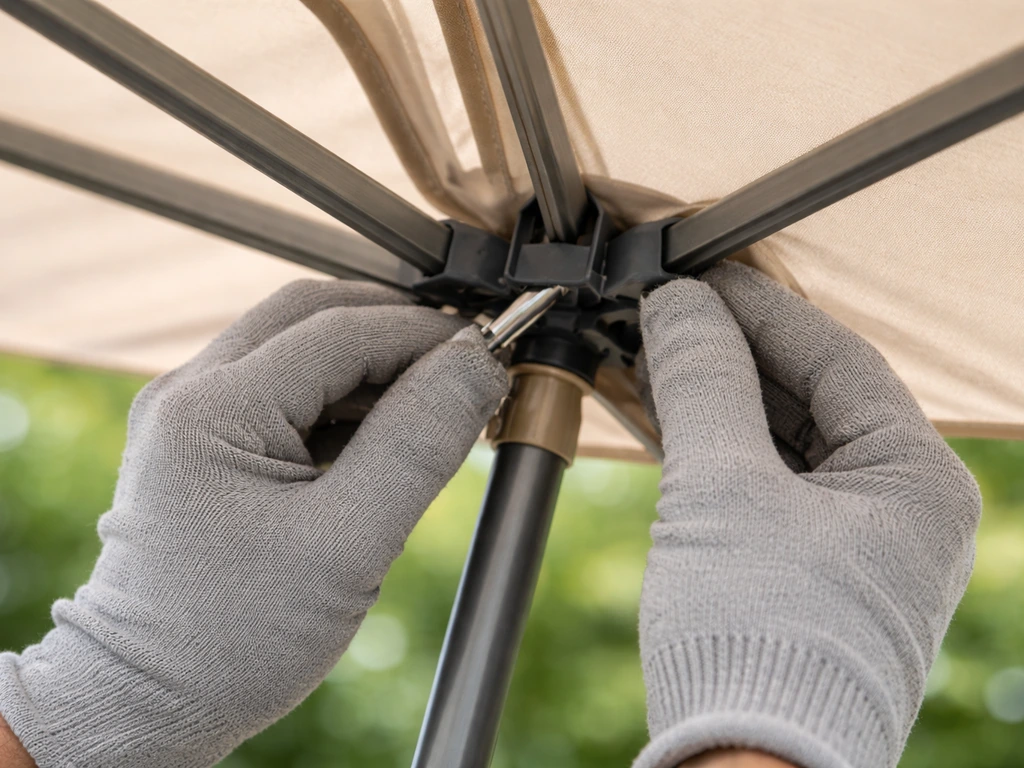
Stop cranking or pushing and check the ribs first. Usually one or two ribs aren't properly seated in their canopy sleeves or hub notches, which creates uneven resistance. Release any tension you've added, re-check every rib attachment point, and try again. If it still resists, check whether the pole sections are fully locked together. A pole section that's not fully seated will bind when the ribs try to spread outward.
The tilt mechanism won't engage or won't lock
On button-tilt umbrellas, make sure the canopy is fully open before trying to tilt. The button won't engage on a partially open canopy because the joint isn't under the right tension. For collar-style tilt on cantilever umbrellas, fully loosen the clamp lever before trying to move the arm. Trying to force the angle without releasing the lock is the most common reason the mechanism feels broken when it isn't.
The pole is leaning or won't sit straight
If the pole leans after you've seated it in the base, the base's clamping bolt isn't tightened enough, or the pole diameter is slightly smaller than the base opening. Try wrapping a few layers of electrical tape around the lower section of the pole at the base entry point to shim it snug. If it leans because the base itself isn't level (common on brick or stone patios), use rubber shims under the base feet to level it out.
The canopy closes unevenly or one side droops
This is almost always a rib that's detached from the runner or a stretcher rod that came unclipped. Fully close the umbrella, then manually work your way around the ribs to find the loose connection. Re-clip or re-seat it and test the open/close cycle again.
The crank feels loose or makes a grinding noise
A grinding crank on a new umbrella usually means the cord jumped its pulley track during assembly. Close the umbrella completely, look down the pole's center opening at the crank housing, and check whether the cord is seated in the pulley groove. If it's off-track, you'll need to open the crank housing (usually two screws on the collar) to re-seat it. This is easier than it sounds and worth attempting before concluding the mechanism is broken.
First test, daily use habits, and basic storage
Once assembly is done, do a complete test cycle before you call it finished. Open the umbrella fully, check that the canopy is taut and even on all sides, engage the tilt and confirm it locks, then close it back down. This one test run catches 90% of setup issues while they're still easy to fix.
For daily use, build two habits that will extend your umbrella's life significantly. First, never leave it open unattended, especially overnight. Morning dew followed by sun bakes moisture into the canopy fabric and accelerates fading and mold. Second, always close it before a storm, not during. By the time you're running outside in the wind and rain, it's already at risk of tipping.
When you store it at the end of the day or before bad weather, close the canopy completely, wrap it tight with the Velcro strap or a bungee, and if the umbrella is in a freestanding base, consider tilting the whole pole slightly so the closed canopy is angled away from the prevailing wind direction. For seasonal storage, remove the canopy fabric if possible (most zip or clip off), clean it with mild soap and water, let it dry completely before folding, and store the pole and base in a garage or shed. Storing a damp canopy folded tight is the fastest way to get mildew stains that won't come out.
If you're still figuring out exactly where to position the umbrella on your patio to maximize shade coverage, or you're not sure your base is sized right for the canopy you bought, those are worth thinking through before you commit to the final setup. If you also need help choosing the right umbrella to match your patio and budget, follow the full guide on how to buy a patio umbrella. To answer the bigger question, focus on how do you measure a patio umbrella by matching the canopy size and footprint to your space position the umbrella on your patio. The physical setup process described here stays the same regardless of umbrella size, but getting the placement and sizing right makes everything else more satisfying to use. Sizing a patio umbrella well also means matching the canopy span and height to your space and seating layout placement and sizing right makes everything else more satisfying to use.
FAQ
My umbrella feels wobbly after assembly, what should I check first?
If the pole wobbles after you tighten everything, first confirm the pole sections are fully locked together (no gap at the seams). Then check the base is both level and snug to the pole, if your model uses a clamping bolt or thumb screw. On uneven patios, use rubber shims under the base feet, but do not shim the umbrella by slipping items into the pole opening (that can prevent a proper clamp and increase stress on the crank/tilt parts).
Can I mount a patio umbrella to my patio table instead of using a stand or base?
Yes, but only if the umbrella is designed for that mount. If the pole is meant to drop through a table hole, use only the correct clamp or base kit that matches your table thickness and hole size, and tighten so the pole is snug but still able to rotate when you adjust direction. If your umbrella is freestanding or cantilever, using a table as support can create unwanted leverage and tip risk, especially when the canopy is tilted.
Is it okay to add extra weights or fill beyond what the base holds?
Do not add weight unless your manual allows it, because some stands rely on specific loading to keep the tilt and crank lines operating smoothly. For cantilever bases, use only the fill type and fill amount specified (sand versus water) and fill all compartments evenly, that prevents the base from “walking” on one side. For market freestanding stands, use the recommended total weight or an approved add-on weight kit if you regularly face breezier conditions.
What should I do if my umbrella won’t open smoothly?
Before opening, make sure the canopy is fully clear of any covers, straps, and nearby chair backs, then verify the ribs are seated evenly in their sleeves. If it still feels resistant, stop and check the pole sections are fully seated and the ribs are not binding in the wrong order. A stuck open is usually alignment or rib seating, not a broken crank.
Can I tilt the umbrella while it is still partially closed?
Yes, but only after you confirm the umbrella is vertical and fully open, and only on calm days. Tilt systems are designed to lock at specific tensions, so if you tilt while the canopy is partially open or you release the button early, you can get a weak lock or strain at the joint. If wind picks up, return to vertical and close when safe.
How do I fix a leaning umbrella without damaging the pole or base?
If your umbrella leans, check three things in order: the base clamp is fully tightened, the pole diameter matches the base opening, and the base is level on the ground. If the pole is slightly small for the opening, shimming with tape around the lower pole section at entry can help achieve a snug fit, but keep the tape thin and only at the clamp area. If the patio is uneven, level the base with shims under the feet, not by wedging the umbrella itself.
What’s the safest way to handle my umbrella when wind picks up?
For daily security, close and secure when leaving it unattended or when wind increases, even if you think it is “fine for a minute.” The best practice for storms is to close before conditions get rough, because the canopy acts like a sail. If you must leave it out temporarily, keep it closed and upright, not tilted.
My crank grinds on a new umbrella, how can I tell if it is a cord-track issue?
If your crank feels like it is grinding, close the umbrella and inspect the crank area through the center opening to see whether the cord is seated in the pulley groove. Re-seat the cord before using the crank again, because forcing it can damage the pulley track. If the cord is frayed or repeatedly jumps off, stop and inspect for a misrouted cord path during assembly.
What is the best way to store it so it lasts through the season?
When storing, close it completely, secure it with the strap or bungee, and keep it dry. For freestanding base models, angling the closed canopy slightly away from the prevailing wind can reduce load on the fabric and components, but the umbrella should still be secured and not exposed to regular gusts. For long seasonal storage, store the base and pole in a dry area and ensure the canopy is fully dry before folding to prevent mildew.
What quick test should I run after setting up my patio umbrella?
A quick way is to do a full open-close-tilt cycle once assembled, before you move furniture or call it done. Confirm the canopy is taut and even, tilt locks in place, and that the open and close feel consistent across the range. If you notice uneven resistance, stop and re-check rib seating and pole section locks before continuing.
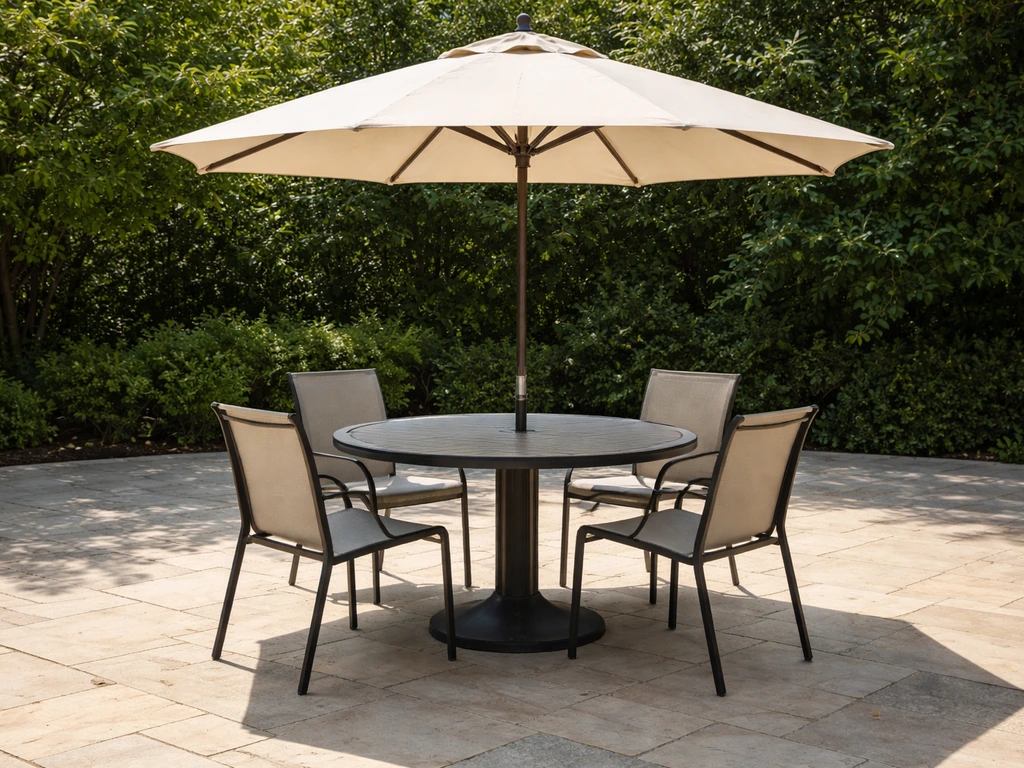
Learn how to size patio umbrella canopy and base for your table using simple measurements, coverage, and stability tips.
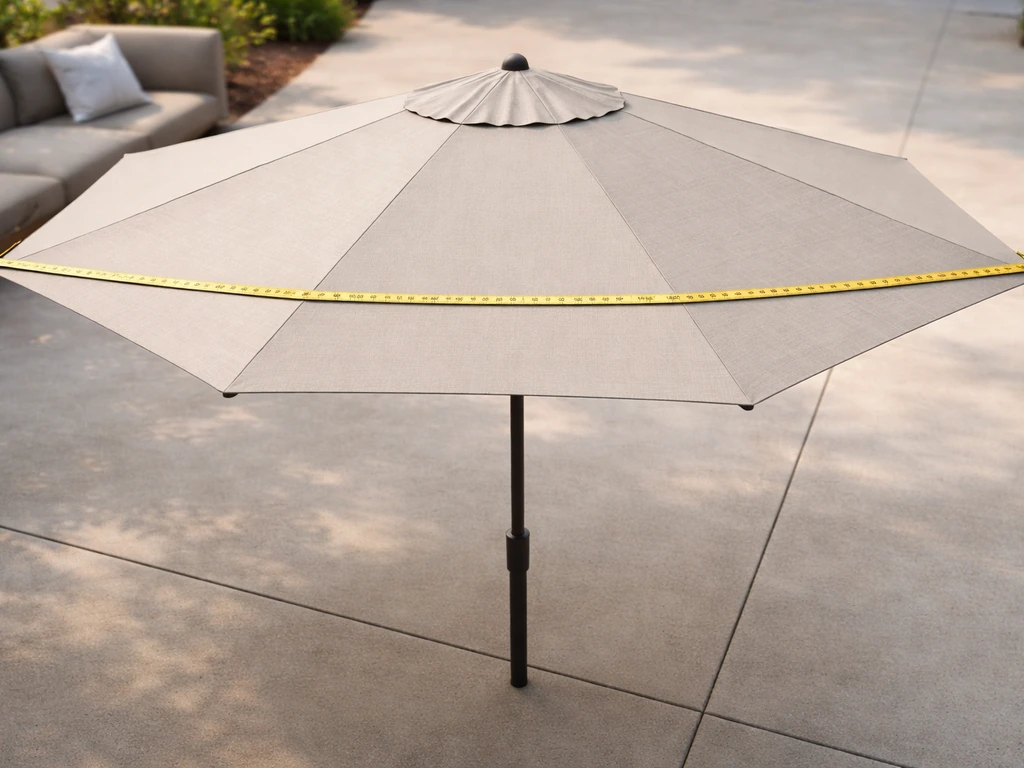
Learn exactly how do you measure a patio umbrella, including canopy, frame size, and pole diameter for perfect replaceme
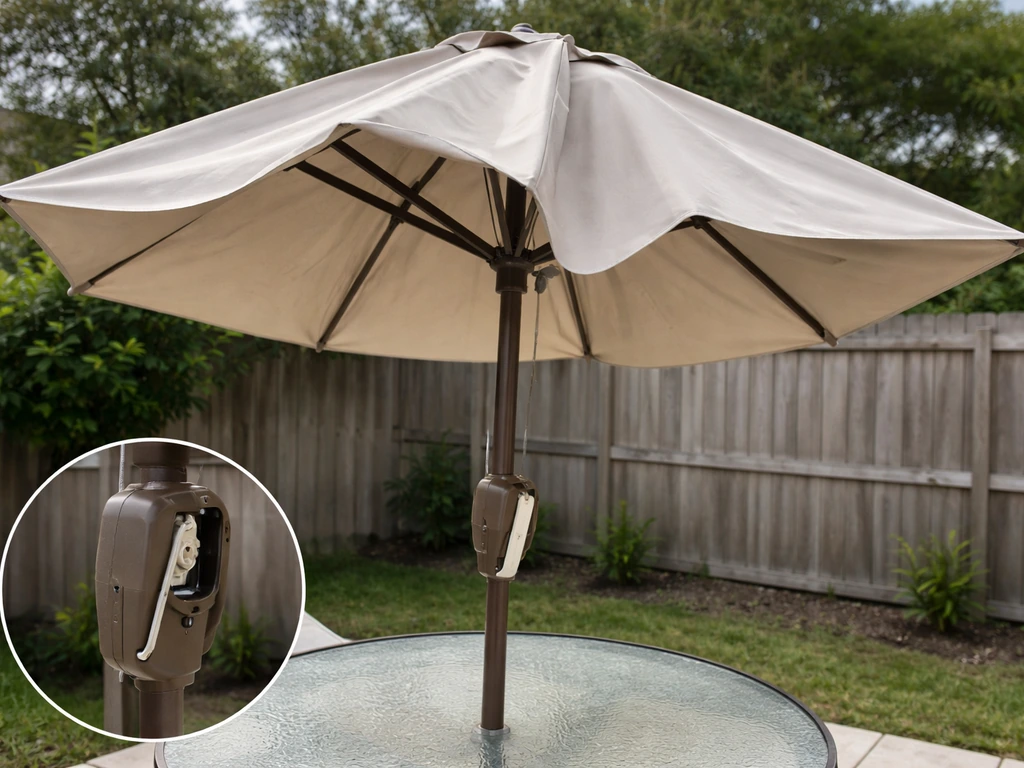
Step-by-step fixes for patio umbrellas that won’t open or close, with checks for jams, cords, latches, and lubricating t