Using a patio umbrella correctly means assembling it in the right order, opening and closing it without forcing anything, tilting it to block the sun where you actually need coverage, and securing it so it doesn't become a hazard in a gust. Most people skip a few of these steps and then wonder why the crank spins freely, the tilt mechanism sticks, or the whole thing topples in a light breeze. This guide walks you through every phase, from first assembly to off-season storage, with troubleshooting for the mechanical problems that come up most.
How to Use a Patio Umbrella: Setup, Tilt, and Safety
Luca Morrison
11 Jun 2026
Choosing the right setup before you do anything else
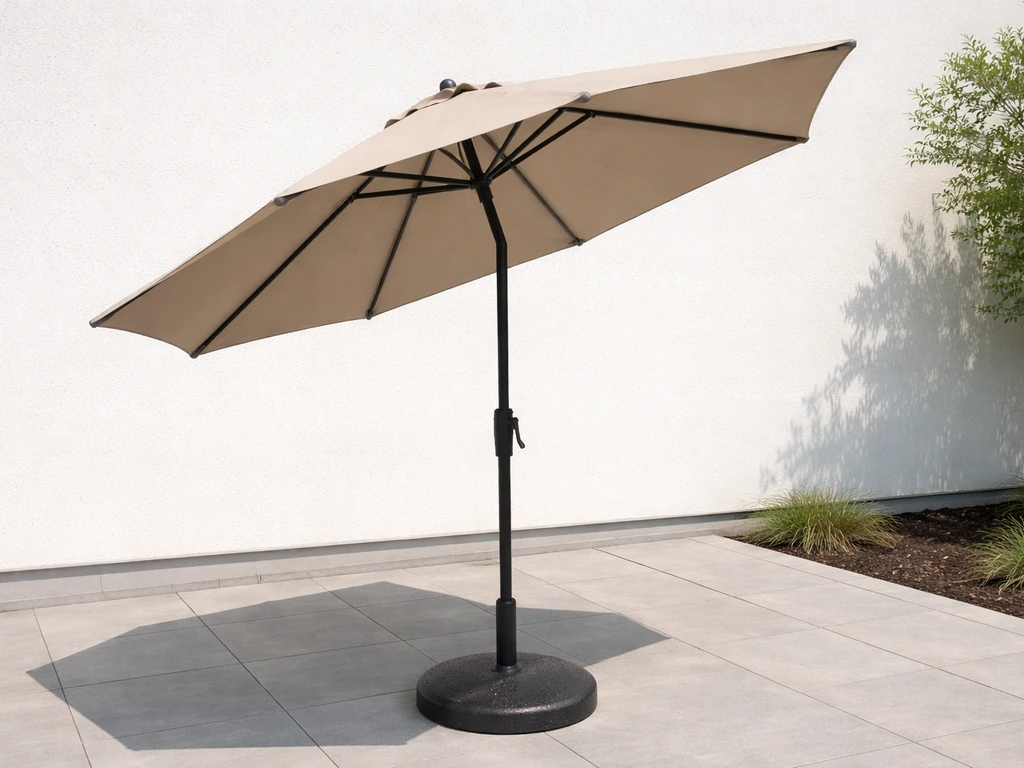
Before you assemble anything, make sure you have the right umbrella for your situation. Once you’ve chosen a size, measuring the canopy width and overall height is what tells you how much shade a patio umbrella will provide for your space the right umbrella for your situation. A canopy that is too small leaves half your table in the sun, and a base that is too light turns your umbrella into a projectile.
If you have a six-person dining table, you want a 9- to 11-foot umbrella. A good general rule is to choose a canopy at least 2 feet wider than the seating area you want to cover. If you are going through a table with a center hole, confirm the hole is large enough to fit the pole diameter before you buy or assemble anything.
If you are unsure about measurements like pole diameter for a center hole, review how to set up a patio umbrella so you can match your purchase to your space before assembly. If you are figuring out how to buy a patio umbrella, matching the size and style to your table and sun exposure will save you headaches later before you buy or assemble anything.
To size the hole correctly, measure the pole diameter and confirm the table opening can pass the pole without forcing it what size hole for patio umbrella.
You also need to decide between a center-pole (market) umbrella and a cantilever (offset) umbrella. Center-pole umbrellas go through a table hole or into a freestanding base and are simpler to set up. Cantilever umbrellas hang the canopy off to the side on a lateral arm, which gives you more flexibility for positioning but requires a heavier base and a more involved assembly. Pick the style that fits your space, then gather your tools before you start. If you are wondering about the full setup workflow, see how to install patio table umbrella for step by step assembly and placement before you start.
Assembling the frame, canopy, pole, and crank
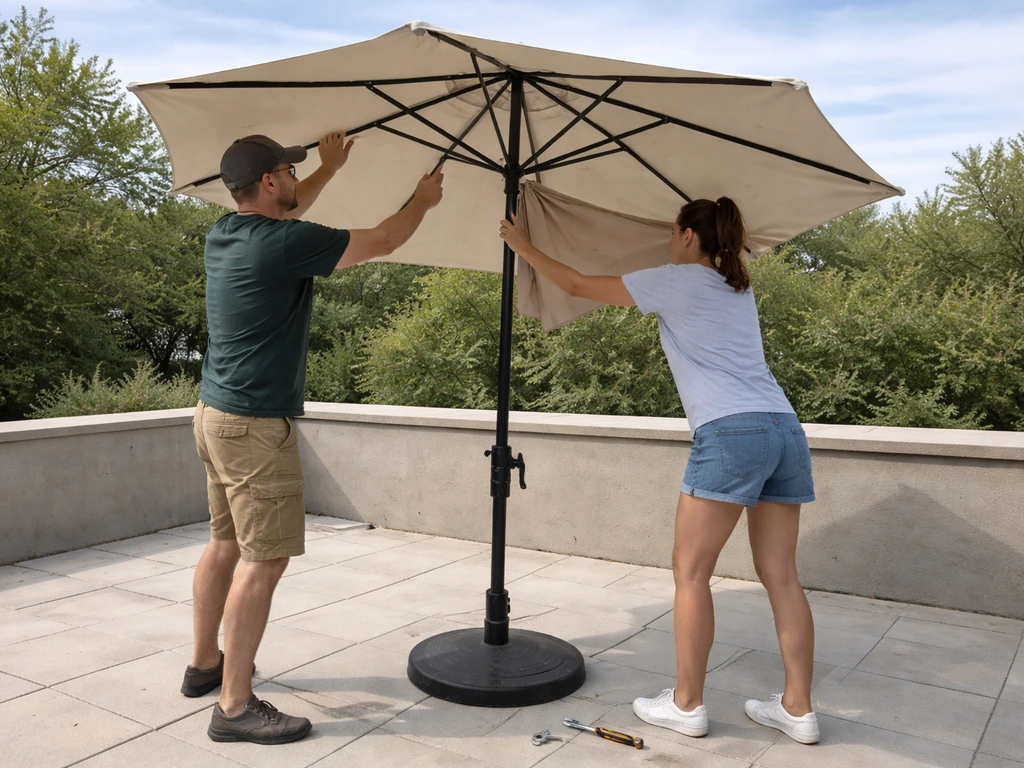
Assembly goes faster and safer with two people. Most manufacturers, including Lowe's cantilever PDF instructions and the Tropitone manual, explicitly recommend having a second person on hand, especially for cantilever models where the arm and canopy are awkward to hold alone. Lay all the parts out and match them against the manual before you start connecting anything.
Center-pole (market) umbrella assembly
- Assemble the base first and place it in the exact spot you plan to use the umbrella. Moving a filled base later is a back problem waiting to happen.
- Insert the lower pole section into the center of the base. If your pole is two-piece, connect the sections now, making sure the ribs and runner hardware are aligned before you join them.
- Slide the canopy onto the pole from the top, threading the finial (the decorative cap at the very top) through the center hole of the canopy.
- Attach each canopy panel to its corresponding rib tip. Most canopies use small hooks or loops sewn into the fabric edge.
- Connect the crank handle or the pulley cord at the collar (the sliding ring on the pole). On crank models, insert the crank arm into the socket and test that it turns before lifting the umbrella upright.
- Stand the pole upright into the base, lock any locking pins, and do a quick wiggle test. If there is noticeable play at the base, tighten the retaining bolt or add more weight before opening the canopy.
Cantilever umbrella assembly
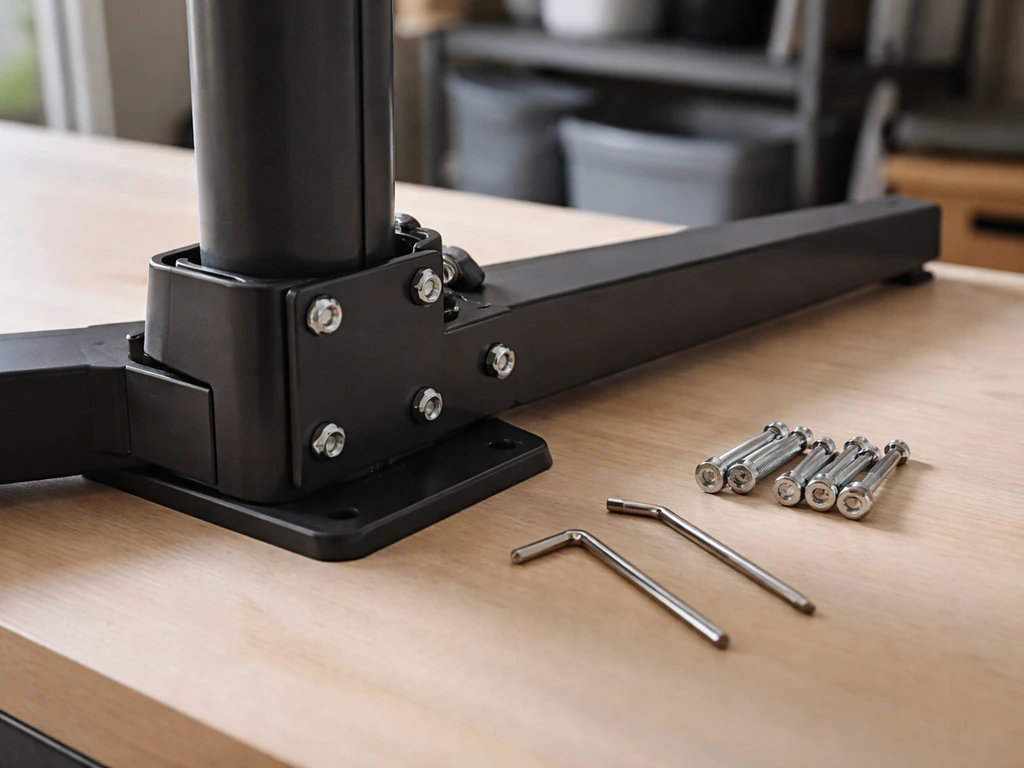
Cantilever umbrellas like the Pottery Barn Trigger Lift or Treasure Garden AKZ series have more parts and usually require a 5mm and 6mm hex wrench. The key rule for cantilever assembly is to build the base and install it in its final location before you attach the arm and canopy. Trying to move a fully assembled cantilever umbrella is difficult and risks damaging the pivot joint. Once the base is in place, attach the vertical pole, then the lateral arm, then hang the canopy and secure all connection bolts. Do not crank or tilt the umbrella until everything is hand-tight at minimum.
Opening, closing, and tilting correctly (manual vs. crank)
This is where most people run into trouble, usually because they force the mechanism before the canopy is properly aligned, or they try to tilt before the umbrella is fully open. Neither ends well.
Crank-operated umbrellas
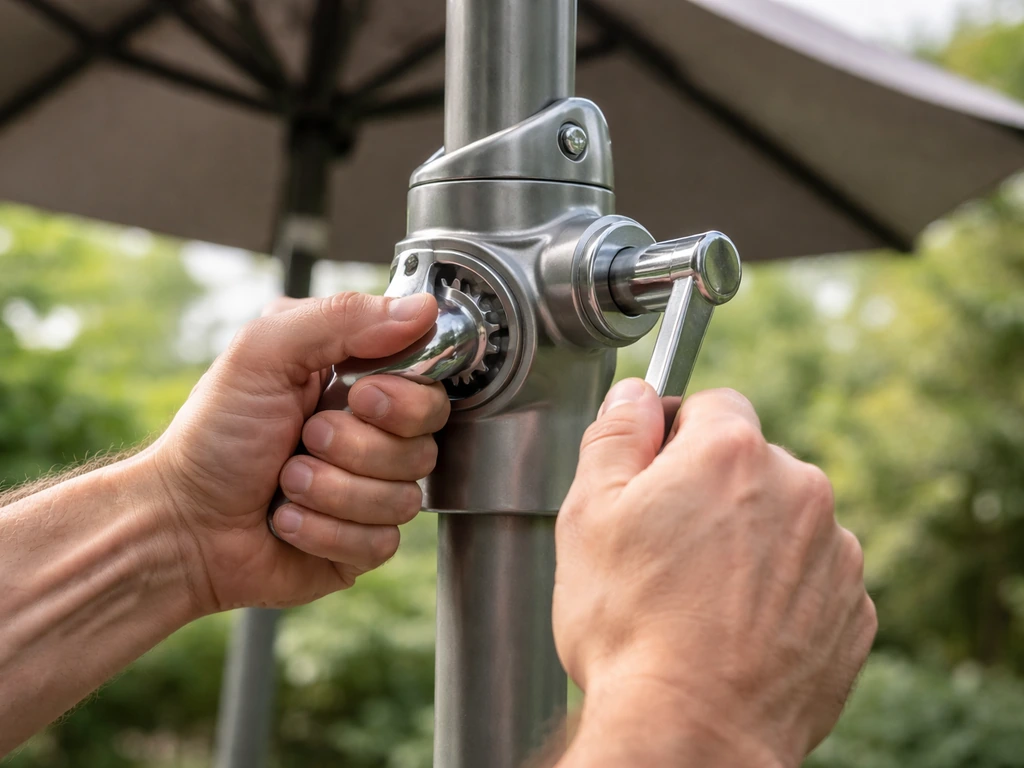
On a standard crank umbrella, turn the handle clockwise to open and counterclockwise to close. That is the near-universal convention, and Pottery Barn's manuals state it exactly that way. Turn steadily and watch the canopy as it rises. If you feel resistance and the canopy is not moving, stop immediately. Atleisure’s manual adds a specific forced-operation warning: if you feel resistance while cranking or opening and the canopy is not opening, do not force the crank handle. Forcing the crank is the number one cause of snapped internal cords and stripped gears. Check that no rib is snagged on the canopy fabric before trying again.
Push-button and pulley (manual) umbrellas
On a manual umbrella, you push the runner (the sliding ring) up the pole until it locks into a notch, or you pull a cord to raise the canopy. These are simpler mechanically but require a bit more muscle. Make sure the runner locks fully into the notch before letting go, otherwise the canopy will slowly drift down under its own weight.
Tilting the umbrella
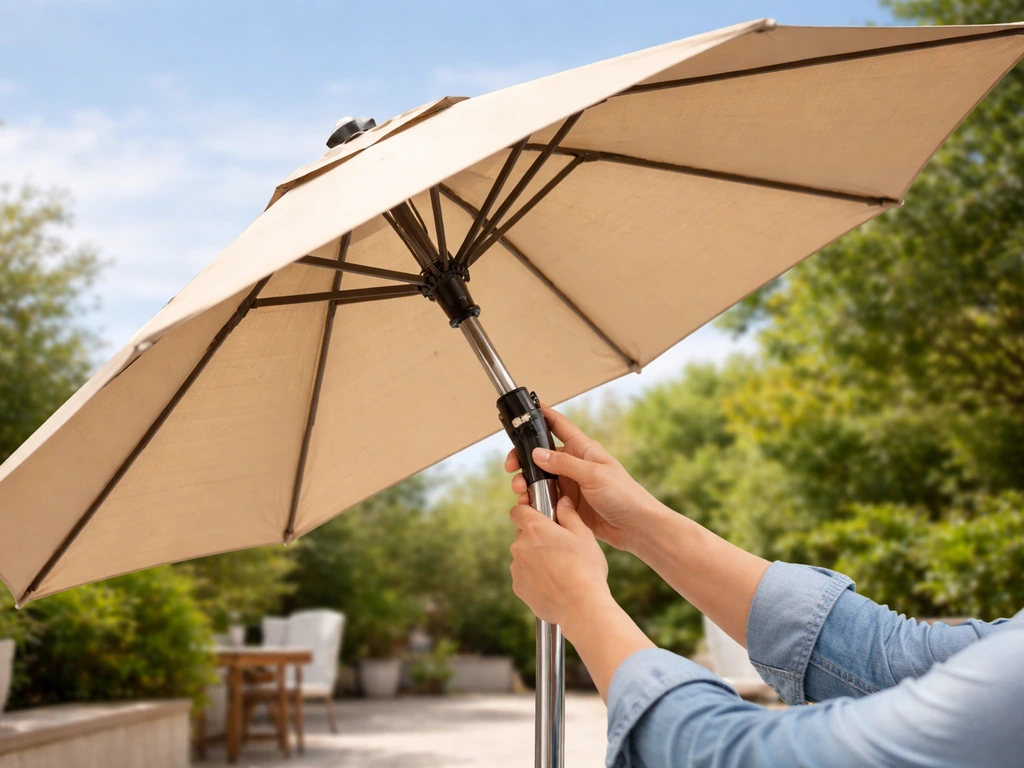
Always open the canopy fully before engaging the tilt. Treasure Garden's manual is explicit about this: the canopy must be fully open before you use the tilt lever or loop lock. On lever-tilt models, stand in front of the tilt lever, pull the loop lock, and push the pole to the angle you want using the tilt degree scale as a guide. On auto-tilt (crank-tilt) models from brands like Treasure Garden, you keep cranking past the open position and the mechanism shifts into tilt mode. On some Proshade cantilever models, you turn the crank counterclockwise to tilt after the umbrella is fully open. Check your specific model's manual for the exact crank direction because it varies.
Securing it safely: bases, weights, and wind
An unsecured patio umbrella is genuinely dangerous. A modest gust can send an open umbrella across a patio, through a window, or into a person. Securing it properly is not optional.
Choosing and weighting the base
For a freestanding center-pole umbrella, a filled base of at least 50 pounds is the realistic minimum for a 9-foot canopy. Go heavier (75 pounds or more) for 11-foot canopies or any location with regular afternoon wind. Cantilever umbrellas need even more ballast because the canopy is offset from the center of gravity. Cross-base cantilever stands often accept additional weight plates. Add them. Do not assume the base that came in the box is sufficient on its own.
If you are using a table umbrella through a center hole, the table itself adds stability, but the pole still needs to be secured at the base of the table hole with the included pin or clamp. If you want to avoid using a table umbrella through a hole, see how to hold up patio umbrella without table for options like freestanding bases and weighted setups. A loose pole that rattles in the hole will stress the runner and crank over time.
Wind safety
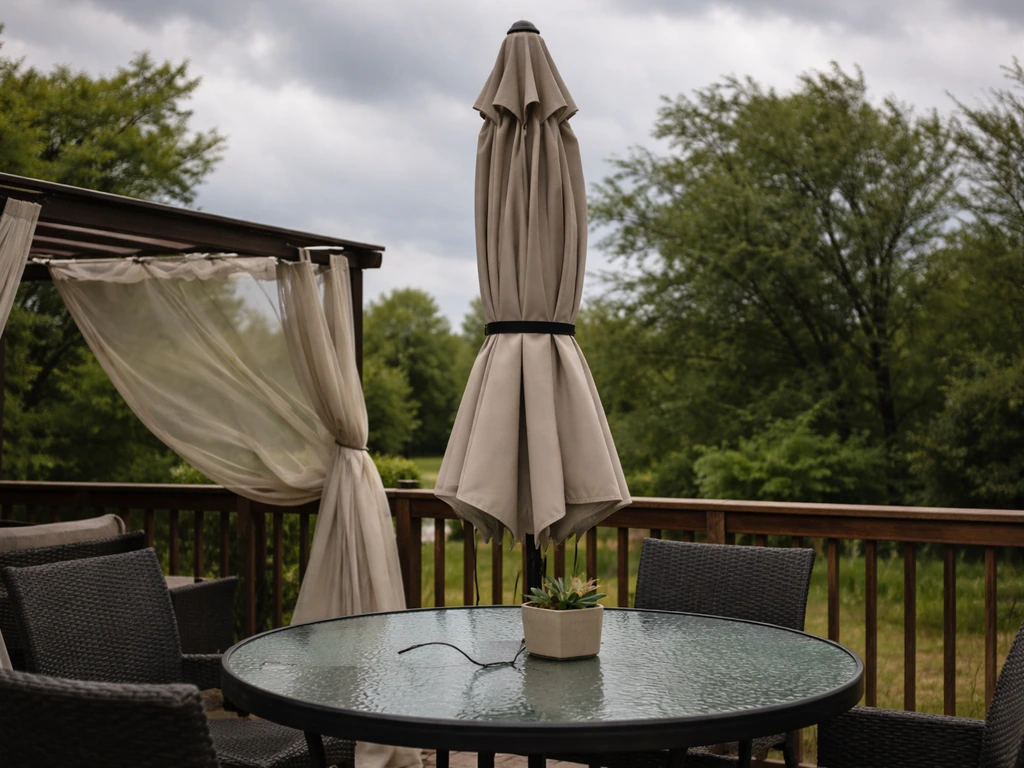
Close the umbrella any time you leave it unattended, and close it immediately when wind picks up or a storm approaches. Treasure Garden, Frontgate, and Pottery Barn all say essentially the same thing in their safety documentation: do not leave an open umbrella in wind or rain, period. Many quality canopies include a vent at the top of the frame that lets air pass through during gusts, which helps, but a vent is not a reason to leave the umbrella open in serious wind. Close it and cover it.
Adjusting for sunlight and positioning
The whole point of a patio umbrella is keeping the sun off you, so positioning matters more than most people realize. For a center-pole umbrella, you are mostly adjusting the tilt angle to track the sun. Tilt the canopy toward the sun rather than straight up: a vertical canopy blocks overhead sun at noon but does almost nothing for low afternoon light. If your umbrella has a 45-degree tilt range, use it.
For cantilever umbrellas, you have more flexibility because you can rotate the canopy independently of where the base sits. Position the base so it is out of foot traffic, and rotate the arm so the canopy floats over the seating area. The base does not need to be directly beside the table. That is the whole advantage of the cantilever design.
Think about where the sun is at the time of day you actually use the patio. If you mainly eat dinner outside, the sun will be lower in the west and a tilted canopy will do more work than a perfectly upright one. Pay attention to placement relative to your house or fencing too: walls can create gaps in shade that a well-angled umbrella can fill. Thinking about where to place the umbrella on your patio before you lock the base in place saves a lot of frustration later. Thinking about where to place the umbrella on your patio before you lock the base in place saves a lot of frustration later where to place umbrella on patio.
Troubleshooting common problems
Patio umbrellas fail in predictable ways. Here are the most common issues and how to fix them without buying a new umbrella.
Crank spins freely but the canopy doesn't open or close
This is the most common crank failure, and it almost always means the internal lift cord has either detached from the crank drum or snapped entirely. Open the crank housing (usually held by one or two Phillips screws under the collar) and look inside. If you see a loose cord end, reattach it to the drum and retension it. If the cord is snapped, you need a replacement cord cut to the same length. These are inexpensive and available from umbrella parts suppliers. While you have it open, spray the drum and gear teeth lightly with silicone spray lubricant. Do not use WD-40 or oil-based lubricants: they attract dirt and gum up the mechanism over time.
Tilt mechanism won't move or is stuck
First, confirm the canopy is fully open before trying the tilt. A partially open canopy physically jams the tilt collar on most designs. If the canopy is fully open and the tilt still won't budge, try applying silicone spray to the tilt collar and collar pin, wait a few minutes, and try again. If it still won't move on an auto-tilt model, the tilt return cord may be broken or the tilt gear may be stripped.
Look for a dangling cord inside the pole or at the collar joint. A broken return cord is a fixable repair with a replacement cord. A stripped gear usually means replacing the tilt assembly, which is worth doing on a quality umbrella but probably not on a budget one.
Crank is stiff or hard to turn
Stiff cranks are usually a lubrication problem, sometimes combined with a bent or corroded crank arm socket. Apply silicone spray to the crank shaft and the internal gear, work the crank back and forth slowly, and repeat until it loosens. If the crank arm itself is bent, straighten it carefully with pliers before it damages the socket.
Canopy won't stay open or sags on one side
A canopy that won't stay up is usually a runner that is not locking into its notch, a bent rib, or a broken rib connector. Check the runner first: make sure it is actually clicking into the locking position and not just resting below the notch. If a rib is bent, you can often straighten aluminum ribs carefully by hand or with a padded clamp. If a rib connector (the small hub fitting where the rib meets the center hub) is cracked or missing, replacement connectors are sold by size and are easy to swap.
The umbrella leans or wobbles in the base
A wobbling pole is almost always a base that needs more weight or a loose locking pin. Fill the base fully if it is a fillable style, tighten the retaining bolt, and check that the pin at the base of the pole is fully seated. If the pole itself is slightly bent, it will always lean: a bent pole generally needs to be replaced.
| Problem | Most Likely Cause | Fix |
|---|---|---|
| Crank spins, canopy doesn't move | Internal cord detached or snapped | Reattach or replace cord; use silicone spray on drum |
| Tilt won't engage | Canopy not fully open, or return cord broken | Open fully first; inspect and replace cord if needed |
| Crank is stiff | Lack of lubrication or corrosion | Apply silicone spray; work crank slowly back and forth |
| Canopy sags on one side | Bent rib or broken rib connector | Straighten rib or replace rib connector fitting |
| Umbrella leans/wobbles | Insufficient base weight or loose pin | Add weight, tighten retaining bolt, reseat locking pin |
Cleaning, maintenance, and storing it for the season
A little routine care extends the life of both the canopy fabric and the mechanical parts significantly. Most umbrella failures are preventable.
Cleaning the canopy
For most canopy fabrics, including Sunbrella and similar solution-dyed acrylics, a cleaning solution of water and mild soap is all you need for routine cleaning. Spray or sponge the solution onto the fabric, scrub gently with a soft brush, and rinse thoroughly until no soap residue remains. Sunbrella's care guidance emphasizes thorough rinsing above everything else: leftover soap residue left to dry in the sun breaks down fabric fibers and dulls the color over time. Sunbrella fabrics do not actively promote mildew, but dirt and organic debris sitting on the surface will. Rinse the canopy after heavy pollen seasons and after any extended rain period.
Maintaining the mechanical parts
Once a season, apply silicone spray to the crank mechanism, the tilt collar, the rib hinges, and the runner. Wipe off any excess. Check all bolts and locking pins for looseness and tighten them. Inspect the internal cord by cranking fully open and closed and listening for any grinding or skipping: these sounds usually mean a fraying cord that is about to fail. Replacing a cord when it is fraying costs a few dollars; replacing it after it snaps means a more involved repair.
Seasonal storage and winterizing
When the season ends (or whenever you know the umbrella will sit unused for more than a few weeks), close it, let the canopy dry completely, and put the protective cover on. Treasure Garden’s manual similarly instructs that when the umbrella is not in use, you should close it and cover it with a protective cover close it, let the canopy dry completely, and put the protective cover on.
If temperatures in your area drop below freezing regularly, bring the umbrella inside or into a garage. Treasure Garden recommends removing the umbrella from the base and storing it in a dry, protected place. Never leave an umbrella stored outside in a wet cover: moisture trapped against the fabric and pole hardware causes mildew, corrosion, and cracked plastic fittings by spring.
For cantilever umbrellas, consider disassembling the arm from the base for storage. Cantilever arms are long and create leverage stress on the base joint if left assembled and lying on their side all winter. Store the arm flat or hang it vertically if you can. Before bringing it back out in spring, inspect the tilt gear, check all hex bolts, and lubricate the crank before the first use of the season.
Put together, the full routine is not complicated: clean the canopy at least once a season, lubricate the moving parts, check the base weight and hardware, close and cover the umbrella whenever you leave it unattended for extended periods, and store it dry at the end of the season. Do those five things and most umbrellas will run reliably for many years without needing more than minor repairs.
FAQ
How do I know if my patio umbrella is the right size for the sun and my seating area?
Measure the seating footprint you want to shade and compare it to the umbrella canopy diameter. As a practical check, place the umbrella centered over the table and set it to your typical tilt angle, then step to the farthest seat and see if the seat edge still receives direct sun. If you have late-day west sun, prioritize canopy width plus tilt range, because upright shade often misses low angles.
Can I use a patio umbrella as a temporary rain cover?
It should not be used for rain. Rain increases wind sail effect, and most umbrellas are not designed to handle water weight sitting on fabric for long periods. If rain starts, close it promptly, then let it dry fully before covering it for storage to prevent mildew.
What’s the safest way to open and close my umbrella if it’s windy?
Only open or close it when gusts are minimal. If you must handle it, keep your body and hands clear of the moving ribs and crank area, open to fully closed first, then close immediately when gusts increase. Never try to adjust tilt or rotate the canopy while the umbrella is under wind load.
Should I use the tilt when the umbrella isn’t fully open yet?
No. Tilt mechanisms and tilt collars are designed to engage only at the fully open position. If you tilt early, the mechanism can jam, and repeated partial engagement increases wear on cords, collars, and collar pins.
My crank opens but the umbrella won’t stay at the top, what should I check first?
Check the runner and notch engagement. Even if the canopy rises, it may not be locking into the correct position, which lets it creep down. Inspect the runner visually to confirm it clicks into the notch rather than resting just below it, then check for bent ribs that can misalign the locking system.
What lubricant should I use on the patio umbrella, and what should I avoid?
Use silicone spray on the crank shaft, tilt collar, collar pin, rib hinges, and runner. Avoid oil-based lubricants and WD-40, because residue attracts dirt, leading to sticky movement and grinding over time.
Do I need to tighten bolts and pins after assembly, or only once?
You should do both. After the first full opening and tilting, recheck bolts, retaining bolts, and locking pins while the umbrella is closed and stable. After that, inspect again at the start of the season and once midway through periods of heavy use or after transport.
How do I prevent fabric tears at the canopy edges or ribs?
Before operating the umbrella, confirm no rib is snagged on the fabric and that the canopy fabric is routed correctly between the ribs. When closing, guide the canopy gently rather than letting it slam shut against the ribs, and avoid forcing the crank if you feel uneven resistance.
What should I do if my tilt lever is hard to move but the canopy is fully open?
First, try silicone spray on the tilt collar and collar pin and wait a few minutes before attempting the tilt again. If it still resists on an auto-tilt model, inspect the internal tilt return cord for a dangling or broken cord end, since a broken return cord can make tilt feel stuck.
How much base weight is enough, and how do I handle different umbrella heights?
Use canopy size and wind exposure to choose weight. A realistic baseline for a 9-foot umbrella is at least 50 pounds, while 11-foot canopies usually need 75 pounds or more, especially where afternoon winds are common. For cantilever styles, add extra ballast because the canopy sits off-center, which increases leverage on the joint.
If my umbrella wobbles, is it always the base?
Most wobble comes from inadequate base weight or a not-fully-seated locking pin, but a slightly bent pole can also cause constant leaning. Tighten the retaining bolt and confirm the pole pin at the base is fully seated, then test again. If wobble continues with correct pin seating and proper base fill, check whether the pole itself is bent.
How should I store my patio umbrella off-season so it lasts longer?
Close it and let it dry fully before covering it. If temperatures drop below freezing in your area, bring it inside or into a garage, or store it dry in a protected place. For cantilever umbrellas, disassemble when possible and store the arm flat or vertically to reduce stress on the base joint.
Next Articles
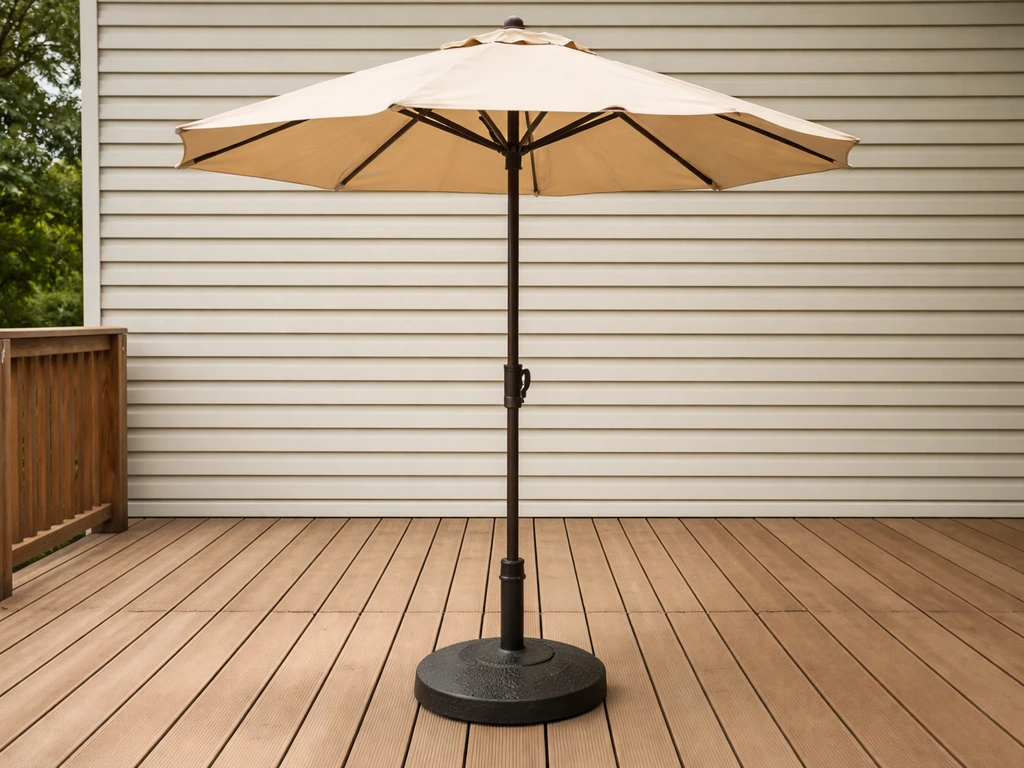
How to Hold Up a Patio Umbrella Without a Table
Step-by-step ways to hold a patio umbrella upright without a table, with bases, setup, troubleshooting, and maintenance.
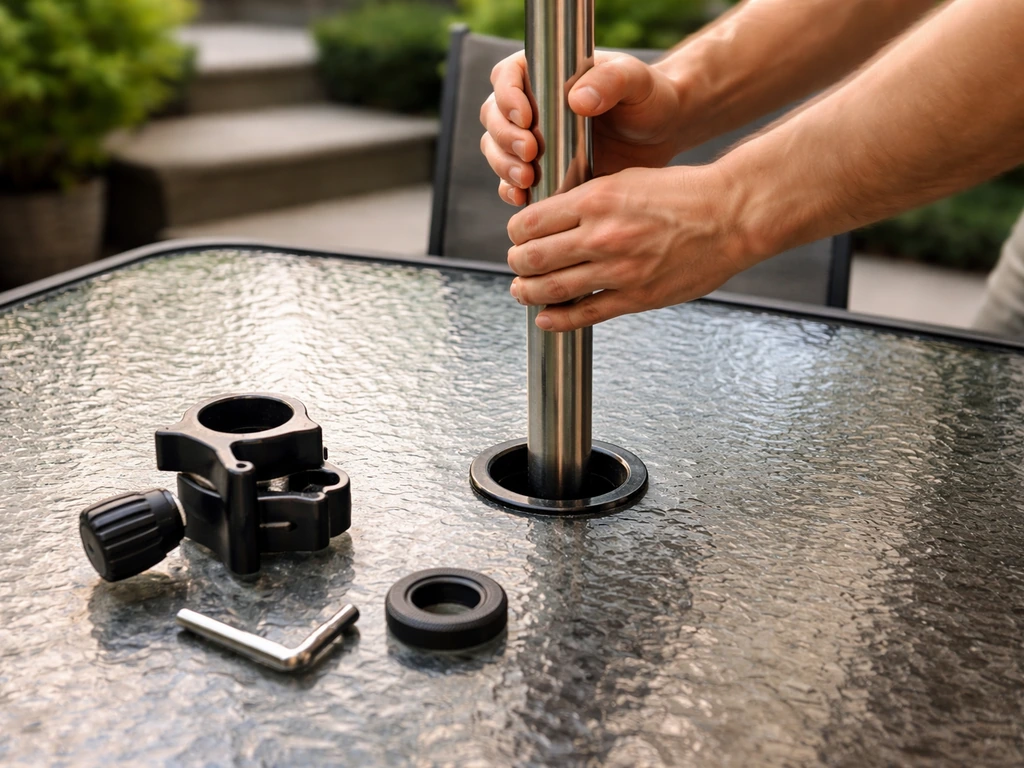
How to Install a Patio Table Umbrella Step by Step
Step-by-step guide to install a patio table umbrella, align the pole, secure the clamp, and troubleshoot wobble and tilt
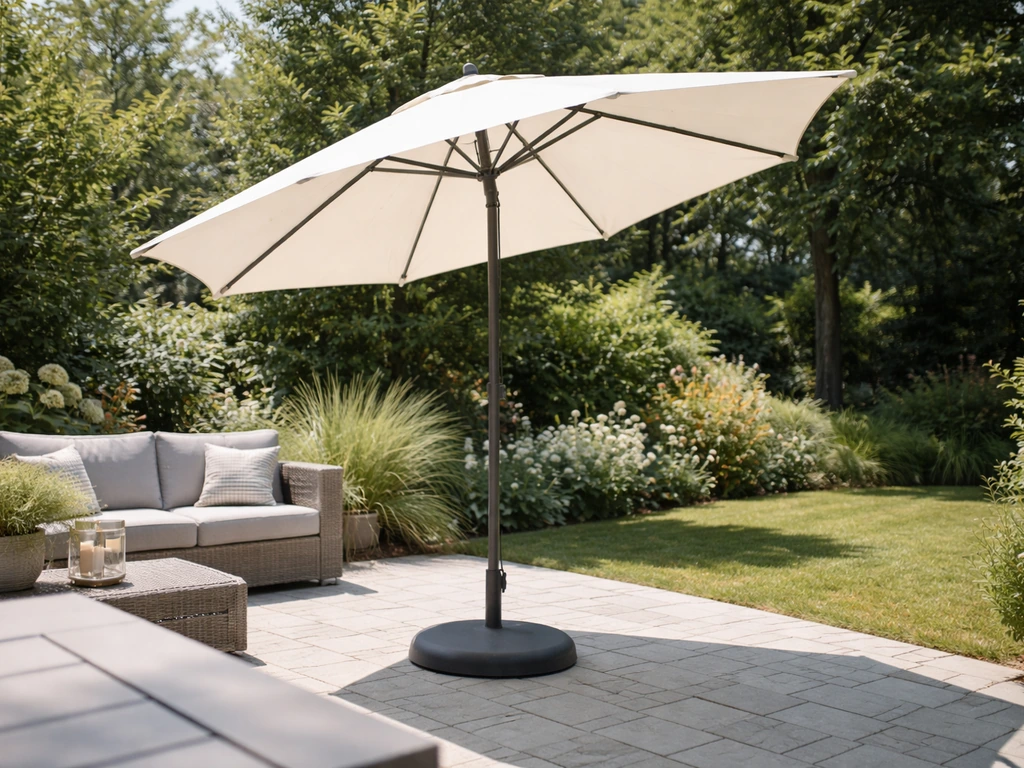
How to Set Up a Patio Umbrella From Start to Ready
Step-by-step how to set up a patio umbrella: pick placement, assemble, open and tilt, secure the base, troubleshoot comm