
You can hold a patio umbrella upright without a table by planting it in a freestanding weighted base sized for your pole diameter and canopy width. As a rule of thumb, plan on roughly 10 lbs of base weight per foot of canopy when there's no table involved (a 9-ft umbrella needs at least 90 lbs of ballast). Get that weight right, tighten every locking knob and bolt during assembly, and you'll have a stable setup that handles normal wind without wobbling, tilting, or walking across the patio.
How to Hold Up a Patio Umbrella Without a Table
Luca Morrison
10 Jun 2026
Why you even need a different setup when there's no table
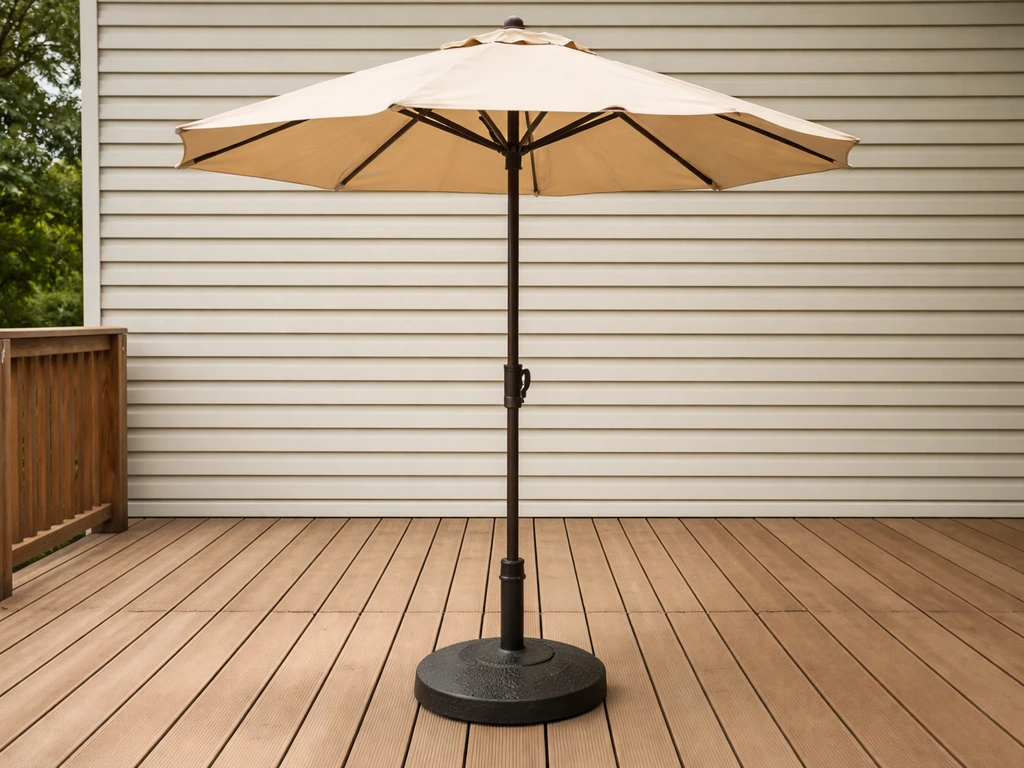
A patio table does more than hold your drinks. When an umbrella pole runs through a table's center hole, the table itself acts as a wide, low stabilizer that resists tipping. Remove that table and all the lateral force from wind and canopy drag goes straight to the base. That's why the same umbrella that felt rock-solid in a table might wobble aggressively in a freestanding base that technically 'fits' the pole but isn't heavy enough.
The other thing to nail down before buying anything: figure out exactly why you're going table-free. Common scenarios include poolside setups where no table fits, deck areas where you want shade without furniture underneath, offset/cantilever umbrellas that are designed to stand alone, or situations where the existing table doesn't have a pole hole at all. Each scenario points to a slightly different solution, so it's worth being specific about yours before you start.
Best ways to hold a patio umbrella without a table
There are four practical options, and the right one depends on your umbrella type, your budget, and how permanent you want the setup to be.
Freestanding weighted base (most common)
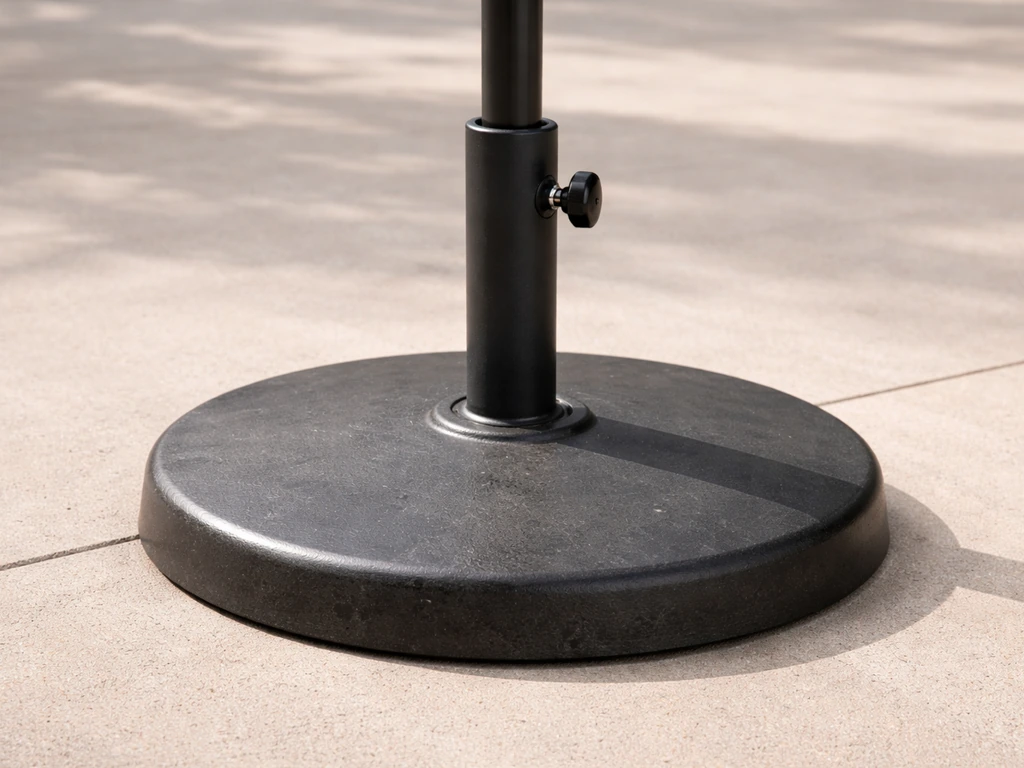
This is the go-to for standard market-style umbrellas. A freestanding base is a heavy weighted disc or cross-shaped stand, typically around 20 inches in diameter, with a center sleeve that accepts the umbrella pole. You fill it with sand or water (or buy a cast iron/resin version that's already heavy) to hit your target weight. These bases work with round, octagonal, and most mid-size market umbrellas as long as the sleeve diameter matches your pole.
Cantilever (offset) base with cross legs
Cantilever umbrellas are designed to work without any table at all. They use a crossbar-style base where the pole mounts offset to one side, letting the canopy hang over your seating area. The stability comes from the weight of the base plus any sandbags or weighted plates you add to the crossbars. If you already own an offset umbrella, you're already in the right category. If you're shopping, this is a purpose-built no-table solution.
In-ground sleeve mount
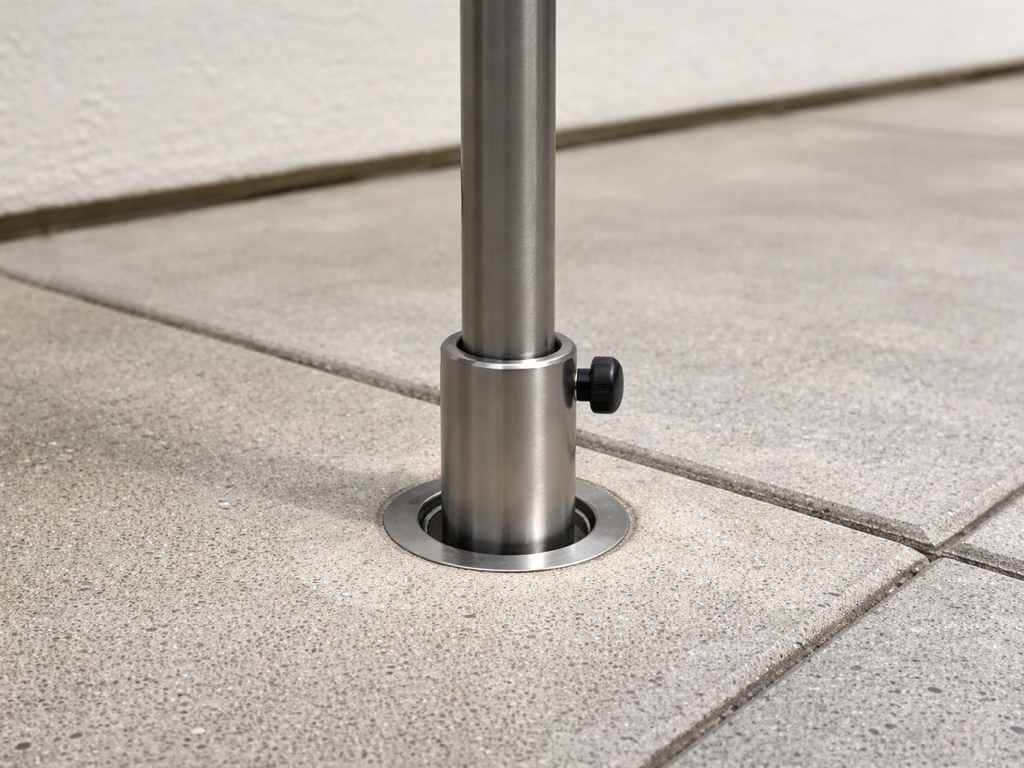
If you want the most permanent, wind-resistant setup possible, a ground sleeve anchors directly into a concrete pad or deck post. You pour or bolt it in once, and from then on you just drop the pole in, tighten the locking collar, and go. This is overkill for most backyards, but it's the right call for larger umbrellas (11 ft and up) in consistently windy locations.
Deck mount bracket
A deck-mount clamp bolts onto a deck railing or post and holds the umbrella pole at an angle or straight up. This trades the weight-based stability of a ground base for a mechanical attachment to the structure of your deck. It works best for smaller umbrellas (6–8 ft) and sidesteps the need for a big heavy base entirely. Just make sure the railing you're clamping to is structurally sound.
Picking the right base weight and pole fit
Two numbers matter most when selecting a base: the weight capacity and the sleeve diameter. If you're wondering how to buy a patio umbrella that stays secure without a table, start by matching the base weight and pole fit to your wind exposure. If you want to get everything right, use these guidelines to size a patio umbrella based on its canopy and pole measurements how to size a patio umbrella. Get either one wrong and you'll fight wobble no matter what else you do.
| Canopy Size | Minimum Base Weight (No Table) | Minimum Base Weight (With Table) |
|---|---|---|
| 6 ft | 60 lbs | 30 lbs |
| 7.5 ft | 75 lbs | 37 lbs |
| 9 ft | 90 lbs | 45 lbs |
| 11 ft | 110 lbs | 55 lbs |
| 13 ft | 130 lbs | 65 lbs |
These are working minimums based on the 10 lbs-per-foot rule for freestanding setups (roughly 5 lbs per foot when a table adds stability). In a consistently windy location or if your canopy is vented, stick closer to your manufacturer's published weight chart rather than just the rule of thumb. Manufacturers publish compatibility charts precisely because real wind loads vary, and those charts account for canopy geometry and pole strength.
For pole fit, the most common market umbrella pole diameter is 1.5 inches, but blank" rel="noopener noreferrer">poles range from 1-1/8 inch all the way to 3 inches depending on the umbrella's size and brand. Measure your pole before buying a base. If the sleeve is too wide, the pole will rock side to side inside it and no amount of weight fixes that. The solution is a reducer ring or rubber shim (more on that in the troubleshooting section) to center the pole and eliminate slop.
Step-by-step setup for a stable, wind-safe hold
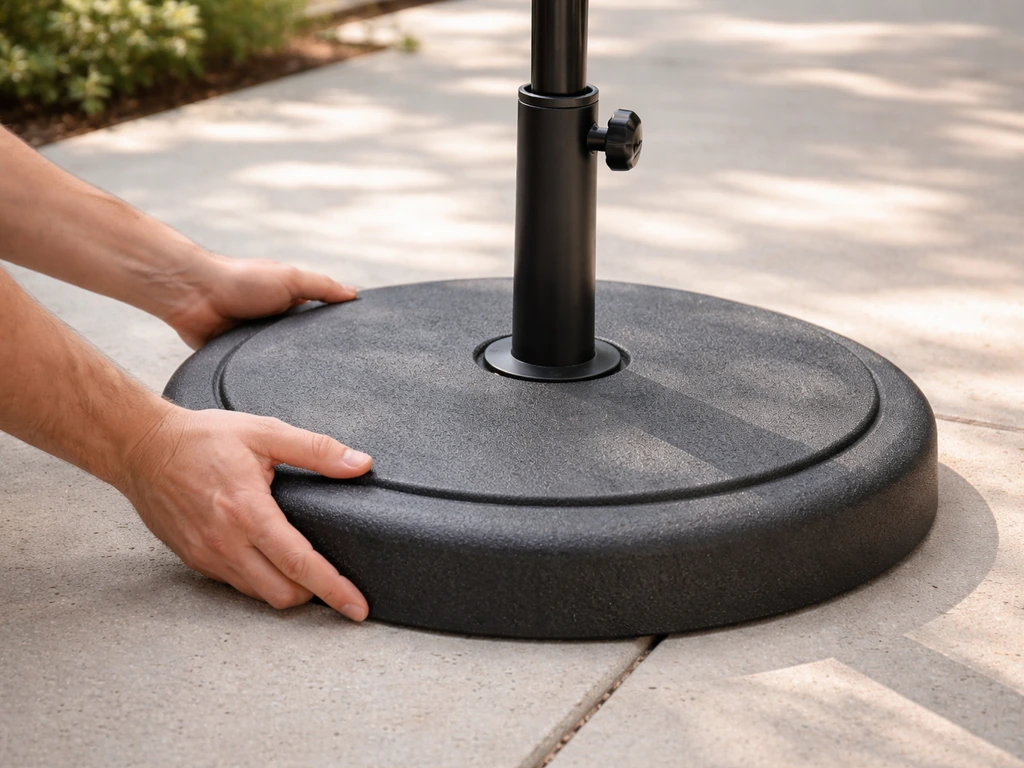
Run through these steps in order. After that, follow the patio table umbrella installation steps for a secure, stable fit and better wind performance. Skipping steps, especially the tightening ones, is where most wobble problems start. If you want a quick checklist, use this guide as your step-by-step approach on how to use a patio umbrella safely.
- Place the base at the exact spot you want to use it before you add weight or insert the pole. Moving a fully loaded base is hard on your back and on the base itself.
- Assemble the base legs or fill it with ballast before inserting the pole. For a cantilever base, check that the upper and lower cross legs are seated flat in their notches and that the holder pole is bolted down with all listed bolts and flat washers. Any leg assembly that isn't fully seated will rock on the ground even on a perfectly flat surface.
- Select the right reducer ring or adapter for your pole diameter. Drop it into the sleeve before inserting the pole. This step is the single biggest thing you can do to eliminate wobble caused by loose pole-to-base fit.
- Slide the umbrella pole into the base sleeve all the way down until it seats. You should feel or hear it bottom out.
- Thread and hand-tighten the locking knob or set screw. Then go a half-turn tighter with a wrench or by gripping it firmly. The Tropitone assembly guidance phrase 'fully tighten the assembly' is exactly right here: loose fasteners are the number one wobble cause, and hand-tight is rarely tight enough.
- Extend the pole to its full height and lock any pole-height collar if your model has one.
- Open the canopy slowly using the crank or push-button mechanism. If your umbrella has an auto-tilt or manual tilt function, leave it in the straight-up position until the canopy is fully open.
- Once open, adjust the tilt to your desired angle. Align the tilt lever or foot pedal (depending on your model) before locking it so the joint engages cleanly rather than being forced into position.
- Do a stability check: push gently sideways on the pole about 2 feet up from the base. If it rocks more than about a quarter inch, add more weight to the base or re-check that the reducer ring is centered.
- If your setup is in a known wind corridor, stake the outer edges of the base down with ground stakes or set paving stones on the base arms as additional ballast before calling it done.
Troubleshooting wobble, tilt, and slippage
Most problems with freestanding umbrella setups fall into three zones: the base connection, the tilt joint, and the pole itself. Figuring out which zone is causing the issue before you start tinkering saves a lot of time.
Wobble at the base
If you can rock the pole and feel the movement coming from where the pole meets the base sleeve, you have one of two problems. Either the base isn't heavy enough (add more ballast first, it's the easiest fix), or the pole is undersized for the sleeve and is rattling inside it. For the second problem, wrap the bottom of the pole with two or three layers of rubber foam weatherstripping or buy a purpose-made reducer ring. This centers the pole in the sleeve and eliminates the slop. For cantilever bases specifically, get underneath and confirm every cross-leg bolt is tight and the legs are sitting flat, not rocking on an uneven surface.
Leaning or tilting that won't stay fixed
If the umbrella slowly drifts off vertical even after you've positioned it, the tilt joint is the suspect. Check whether the tilt collar or pin is fully engaged. On many umbrellas, the tilt mechanism has a set position and only holds when the joint clicks into that detent. If it's clicking but still slipping, the joint is worn and a clamp solution applied just above the tilt point can hold it in place while you source a replacement part. For auto-tilt models, a dried-out or corroded tilt gear inside the crank housing is a common culprit: clean the metal parts, inspect the pivot pin, and apply silicone spray lubricant before writing it off as a failed part.
Crank that won't turn or sticks
A seized crank is usually rust, dried-out bearing grease, or debris in the crank housing. Spray silicone lubricant into the crank mechanism and work the handle back and forth several times, pausing after each pass to let the lubricant penetrate. Aluminum poles don't rust, but the steel hardware inside the crank housing absolutely can. Consumer Reports also notes that aluminum poles typically do not rust, and it recommends checking your umbrella's manufacturer instructions for the specific cleaning and troubleshooting steps to follow Aluminum poles don't rust. If the crank frees up after lubricating but feels gritty, open the housing, clean the gears with a dry cloth, re-lubricate, and reassemble. One important safety note: there are real pinch and crush zones around the opening mechanism and tilt joints. Work slowly and keep your fingers clear whenever you're testing a mechanism under load.
Slippage in wind
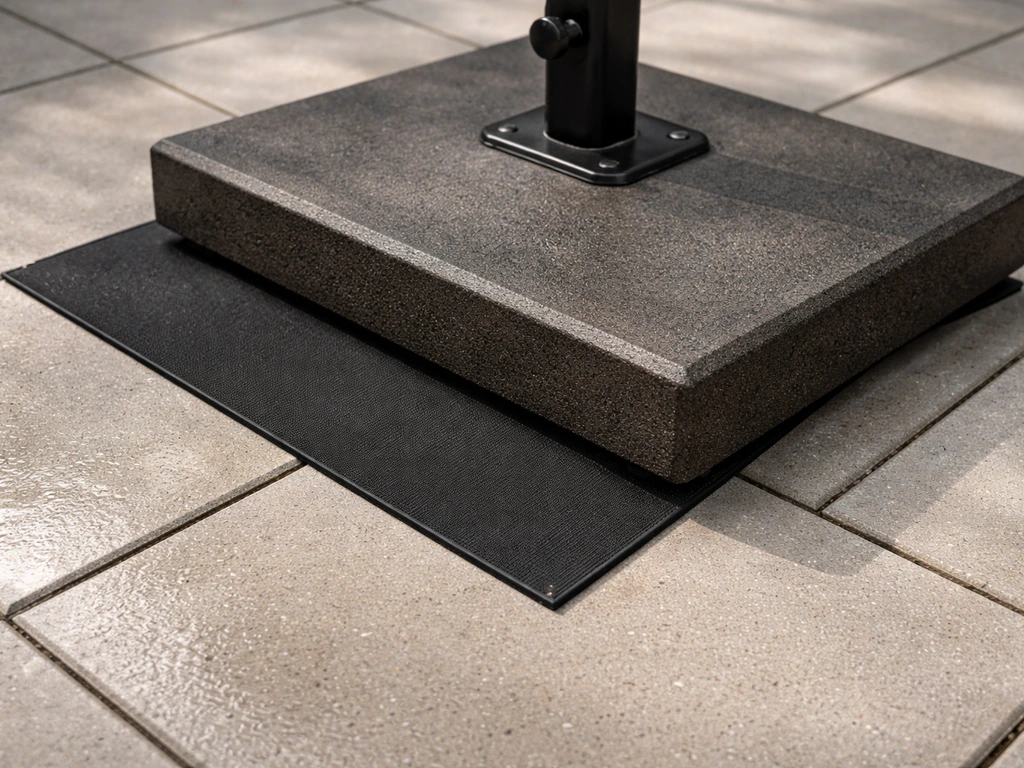
If the base itself is walking or sliding across a smooth surface during wind gusts, you either need more weight or a rubber non-slip mat under the base. For paver or tile surfaces, a thick rubber mat under the base arms adds friction without damaging the surface. If you're dealing with a strong wind event, the right move is to close the umbrella before it knocks over (not after). Operating a crank umbrella in gusts can open it further against your will; close it, lock it, and reopen it after the wind dies. Weighted cantilever bases are explicitly designed to keep the umbrella straight in windy conditions when filled, but they still need to be closed in high winds and storms.
DIY fixes vs. hardware worth buying
There's a meaningful difference between a DIY fix that buys you time and a real hardware solution that actually solves the problem. Here's an honest breakdown.
| Problem | DIY Fix (Short-Term) | Recommended Hardware (Long-Term) |
|---|---|---|
| Pole too small for sleeve | Rubber foam weatherstripping or foam pipe insulation wrapped around pole base | Correct-diameter reducer ring or purpose-made adapter sleeve |
| Not enough base weight | Sandbags draped over cross legs, paving stones on base arms | Fillable base sized to the 10 lbs/ft rule, or cast iron/resin base rated for your canopy |
| Tilt joint slipping | Hose clamp tightened just above the tilt collar to eliminate slop | Replacement tilt collar or pin for your umbrella model |
| Crank seized | Silicone spray, work back and forth | Replacement crank mechanism if gears are stripped or corroded beyond cleaning |
| Base walking on smooth surface | Rubber mat or old carpet piece under base | Purpose-made non-slip base pad or rubber feet kit for your base model |
| Uneven ground causing lean | Plastic shims under low base leg | Adjustable-foot base or in-ground sleeve mount for permanent setup |
The DIY fixes are fine for getting through a season or figuring out what's actually wrong before you spend money. But if you're relying on sandbags and foam shims as your permanent solution, you're going to be re-doing this every few weeks. Buy the right reducer ring, get the base weight right, and use proper hardware at the tilt joint. Those three things eliminate 90% of freestanding umbrella headaches.
One specific adapter worth knowing about: if you're working with a pool or spa shelf application (sometimes called a Baja shelf), sleeve adapters like the BajaMate system convert a tight shelf sleeve into a secure 2-inch anchored mount and include the correct reducer ring to center the pole. The centering step is the key: an off-center pole inside any sleeve will wobble even if the sleeve technically 'holds' it. That same principle applies to any adapter system you use on a deck or patio.
Keeping the setup working season after season
A freestanding umbrella setup has more components to maintain than a table-mounted one because every connection point is exposed. Hit these maintenance points at the start of each season and again before storing for winter.
Early-season prep
- Re-tighten all base bolts and locking knobs. Freeze-thaw cycles and vibration loosen fasteners over winter even if you stored everything correctly.
- Inspect the pivot pin and tilt collar for corrosion. Clean any rust or mineral deposits with a dry brush before applying silicone lubricant to all moving parts.
- Check that the base fill (sand or water) hasn't settled, leaked, or partially drained. Top it off to hit your target weight.
- Inspect the pole for dings, cracks at the tilt joint, or stripped threads on locking knobs. Small damage here becomes a big failure point mid-season.
- Check the reducer ring or shim for compression set (foam that's been compressed for months may not snap back to its original size). Replace it if it's noticeably thinner than when you installed it.
End-of-season storage
The single best thing you can do for a freestanding umbrella is to remove the pole from the base at the end of the season and store the umbrella horizontally in a dry location. Storing it vertically in the base over winter puts constant lateral stress on the tilt joint and base connection, especially if the base flexes with freeze-thaw cycles. If you must leave it outside, use an outdoor-rated cover rated for your umbrella size and close and secure the canopy before covering.
For fillable bases: drain water-filled bases completely before freezing temperatures arrive. Water left inside will expand, crack the base shell, and leave you shopping for a new base in spring. Sand-filled bases can stay put if the base is UV-stabilized resin, but removing them to a garage or shed extends their life significantly.
If your umbrella has an auto-tilt mechanism, end-of-season is a good time to open the crank housing, clean and re-lubricate the tilt gears, and inspect the pivot pin before everything gets sealed up for months. Corrosion that develops over winter is what causes those stuck cranks and seized tilt joints you deal with every spring.
If you're at the earlier stage of figuring out placement, sizing, or how to set up your umbrella from scratch, those decisions all feed into which no-table solution will work best for your specific situation. Once you know which no-table base you’re using, you can choose the exact placement that matches wind exposure and keeps the pole centered where to place umbrella on patio. Getting the placement right also affects how much wind load your base needs to handle, so it's worth thinking through before you commit to a base weight.
FAQ
Can I hold up a patio umbrella without a table using just sand or water in the base?
Yes, if you match the base to your canopy size and your pole fit, but sand and water behave differently in wind. Water-filled bases are heavier when full, but they can freeze and crack in cold climates if you don’t drain them before freezing temperatures. Sand is less likely to freeze-solid, but it can shift over time, so re-check that the pole stays centered and the locking knobs stay tight after a few windy days.
What if my umbrella wobbles even when the base weight seems correct?
Weight alone won’t fix slop if the sleeve and pole are not centered. Measure your pole diameter and confirm the sleeve is not too large, then use a purpose-made reducer ring or rubber weatherstripping to eliminate the side-to-side play. Also verify the tilt collar is fully engaged (the joint should click into a detent), because a partially seated tilt joint can mimic a “light base” problem.
How do I know whether the wobble is from the base, the tilt joint, or the pole?
Do a controlled test: gently rock the pole by hand and see where the movement starts. If you feel looseness at the sleeve-to-pole area, it’s usually centering or sleeve fit. If the pole slowly slips off vertical, suspect the tilt collar or pin engagement and look for wear on the tilt mechanism. If the base itself shifts across the surface, add friction (for example, a thick outdoor rubber mat under the base arms) or increase ballast.
Can I use a reducer ring or shim long-term instead of buying a different base?
Often, yes, as long as the adapter is sized for your sleeve and the friction stays stable. Rubber foam and weatherstripping can work as a temporary centering fix, but for long-term stability, a dedicated reducer ring typically holds alignment better and won’t compress as quickly. If you still get rattling after adding the adapter, the sleeve may be too oversized for your pole or the base weight capacity may be below your wind exposure.
Do I need to anchor the umbrella in a windy area, or is a freestanding base enough?
It depends on umbrella size and local wind patterns. For typical market umbrellas, the “10 lbs per foot of canopy” guideline can work, but consistently windy locations often require you to follow the manufacturer’s published compatibility or weight chart. If you’re in a severe wind zone, consider a ground sleeve or at least a base rated for your canopy size rather than relying on generic weight rules.
What’s the best no-table option for an offset or cantilever umbrella?
Use the base system designed for cantilever models, which mounts the pole offset to one side so the canopy covers seating without a table. These setups rely on the crossbar base plus added ballast, and they still need correct leveling on the patio surface. If the cross legs sit unevenly, tighten the bolts and place the base on a stable, level surface to prevent early wobble.
Will a deck-mount clamp without a table hold my umbrella safely?
It can, especially for smaller umbrellas, but it’s only as strong as the railing or post it clamps to. Before installing, check that the structure is solid and not loose, rotted, or flexing under light hand pressure. Also confirm the clamp supports your umbrella size range, and use the correct angle or straight-up configuration so the pole stays within the clamp’s designed load conditions.
How should I position the umbrella on the patio so it stays stable?
Place it so the pole sits fully centered in the base sleeve and give the canopy room to swing without hitting furniture or barriers that can create sideways stress. Also consider wind direction, set the umbrella where gusts are not blocked by a wall that can create turbulent flow, and make sure the base sits flat without rocking on pavers or tile joints.
Should I close the umbrella before wind gusts, or can I leave it open?
Close it before gusts if possible, because an open canopy increases wind load and can force the umbrella to open further if it has a crank or auto-tilt. Operating it during gusts makes the base and tilt joint fight higher forces than they were designed for. Use your locking steps, close and secure the canopy, and reopen only after conditions calm down.
What maintenance should I do before storing the umbrella for winter?
Remove the pole from the base and store the umbrella horizontally in a dry location to reduce constant stress on the tilt joint and base connection. For water-filled bases, drain completely before freezing weather. For auto-tilt models, clean and lubricate the crank and inspect the pivot pin at season end, so corrosion doesn’t make next season’s joints seize.
How can I prevent my water-filled base from cracking in freezing weather?
Drain it before temperatures drop below freezing. Even if the base still looks intact, water expands when it freezes and can crack the base shell or weaken seams. After draining, dry it so you don’t trap moisture inside that can promote corrosion on any attached hardware.
Is it safe to test the tilt or crank mechanism while the umbrella is under load?
Be cautious. There are pinch and crush zones around tilt joints and the opening mechanism, so test slowly and keep fingers clear, especially when the umbrella is fully assembled and loaded. If a crank feels stiff, lubricate first instead of forcing it, since forcing can damage gears and pins.
Next Articles
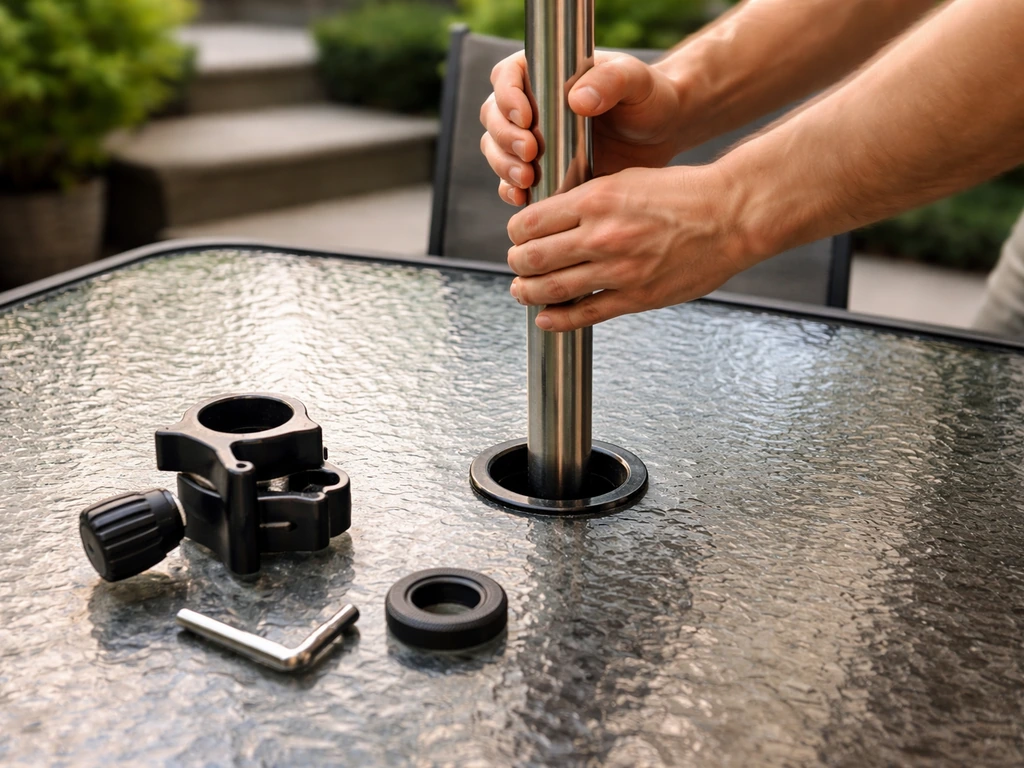
How to Install a Patio Table Umbrella Step by Step
Step-by-step guide to install a patio table umbrella, align the pole, secure the clamp, and troubleshoot wobble and tilt
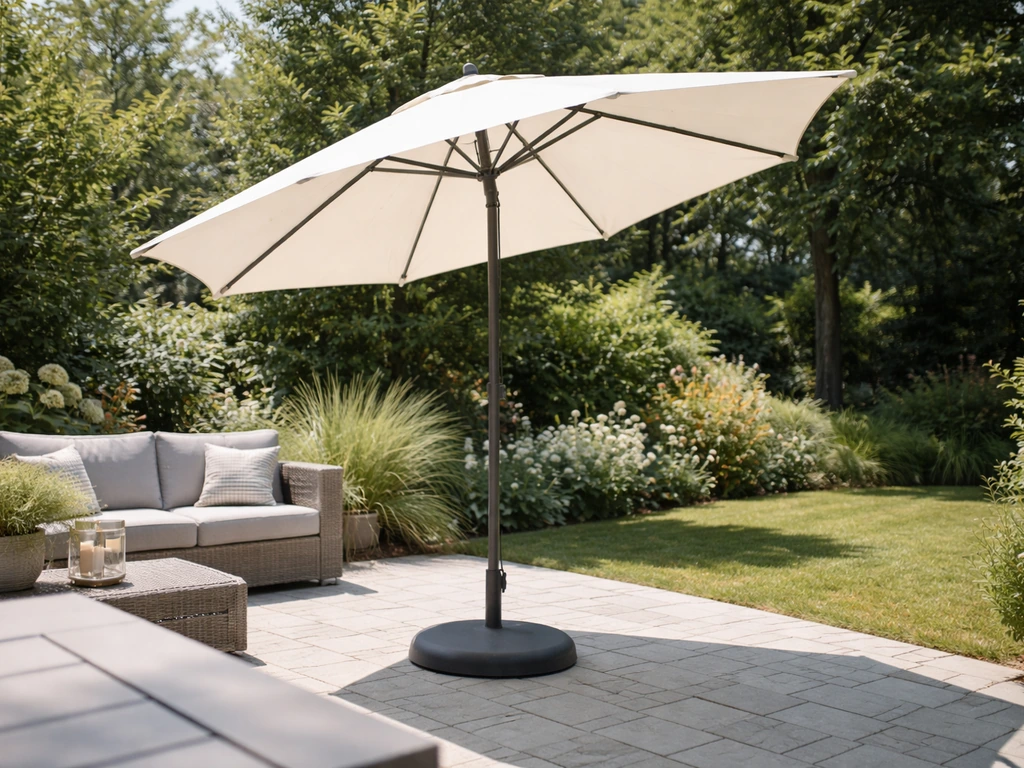
How to Set Up a Patio Umbrella From Start to Ready
Step-by-step how to set up a patio umbrella: pick placement, assemble, open and tilt, secure the base, troubleshoot comm
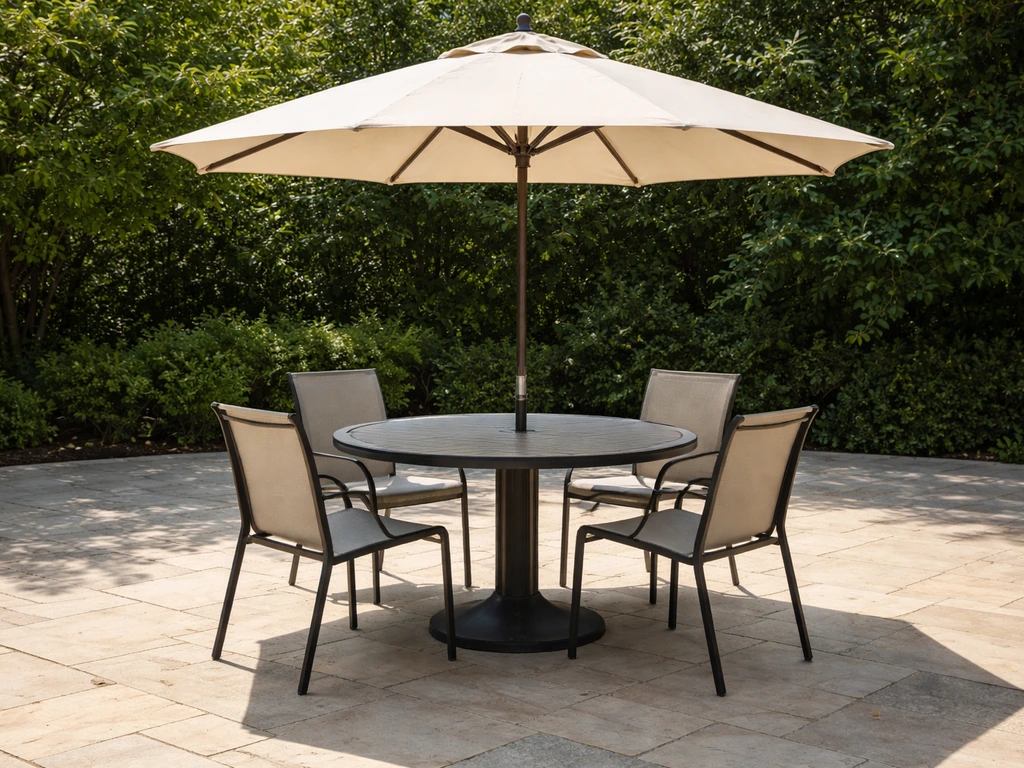
How to Size a Patio Umbrella: Canopy and Base Guide
Learn how to size patio umbrella canopy and base for your table using simple measurements, coverage, and stability tips.