
For most round or square patio tables, add 2 feet to each side of the table diameter and that gives you the umbrella canopy size you need. A 48-inch (4-foot) round table needs roughly a 9-foot umbrella. A 60-inch rectangular table needs a 10- to 11-footer. Your base should weigh about 10 lbs per foot of canopy diameter for a market umbrella, so that same 9-footer needs a 90-lb base. Those two numbers, canopy size and base weight, are really all you need to nail down before you buy.
How to Size a Patio Umbrella: Canopy and Base Guide

Luca Morrison
14 May 2026
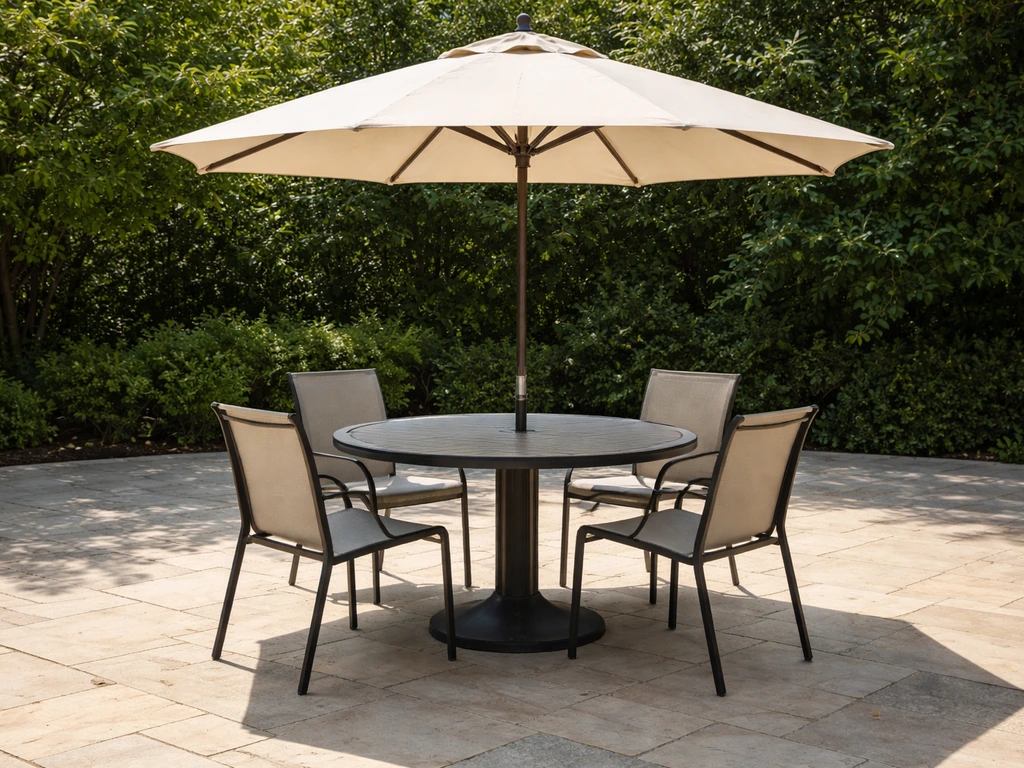
Common patio umbrella sizes and how much shade they actually cover

Patio umbrellas typically come in canopy diameters ranging from 6 feet up to 13 feet, with a few standard sizes that you'll see everywhere. Knowing roughly what each size covers helps you quickly rule out the ones that won't work before you even pull out a tape measure.
| Canopy Diameter | Approximate Shade Coverage | Best For |
|---|---|---|
| 6–7.5 ft | 28–44 sq ft | Small bistro tables (2 seats), tight balconies, limited spaces |
| 9 ft | ~63 sq ft | 4-person dining sets, 42–54 in round or square tables |
| 10 ft | ~78 sq ft | 4–6 person dining sets, tables up to 62 in across |
| 11–12 ft | 95–113 sq ft | 6-person sets, tables up to 60 in round or 72 in rectangular |
| 13 ft (cantilever) | ~133 sq ft | Large lounge areas, freestanding seating with no center pole |
One thing worth knowing: these coverage numbers assume the sun is straight overhead, which almost never happens in real life. As the sun angles in from the side, the shaded area shifts and shrinks. That's why most sizing guides (and my own experience) recommend sizing up rather than picking the exact minimum. A 9-foot umbrella technically covers a 48-inch table, but at 3 PM when the sun is low, your guests are going to be squinting. Go one size up if you're on the fence.
Measure your table and seating area first (quick checklist)
Before you order anything, spend five minutes with a tape measure. You need three measurements: the table itself, the seating footprint (chairs pulled out), and the overall patio space. Write these down because you'll use all three.
- Measure the table diameter or longest side: For round tables, measure straight across the center. For rectangular or oval tables, measure the longest dimension edge to edge.
- Measure the full seating footprint: Pull one chair out to a comfortable sitting position and measure from the chair back on one side to the chair back on the opposite side. This is usually 2–3 feet wider than the table itself.
- Measure your available patio space: Measure the open area where the umbrella will sit, from the nearest wall, fence, or railing to the opposite edge. This caps your maximum canopy size.
- Note your existing base or table pole hole (if applicable): Check the diameter of the pole hole in your table. Standard sizes are 1.5 inches to 2.5 inches. Write down the exact measurement, because pole diameter compatibility will matter when buying.
- Check for overhead obstructions: Look for pergola beams, roof overhangs, or low-hanging branches within the canopy zone. Standard market umbrella poles run about 7.5–9 feet tall when open, and cantilever arms can extend 4–6 feet outward.
If you're measuring an existing umbrella to replace it, measure the canopy from rib tip to rib tip across the widest point when it's fully open, not along the folded canopy or the pole length. A folded canopy length tells you nothing useful about the actual coverage. For more detail on measuring an existing umbrella, the guide on how to measure a patio umbrella covers that process step by step. Follow the steps in this guide to see exactly how to use a patio umbrella once you choose the right size. It walks you through the steps, including what to measure for canopy coverage and clearance the guide on how to measure a patio umbrella.
How to figure out the right canopy diameter for your setup
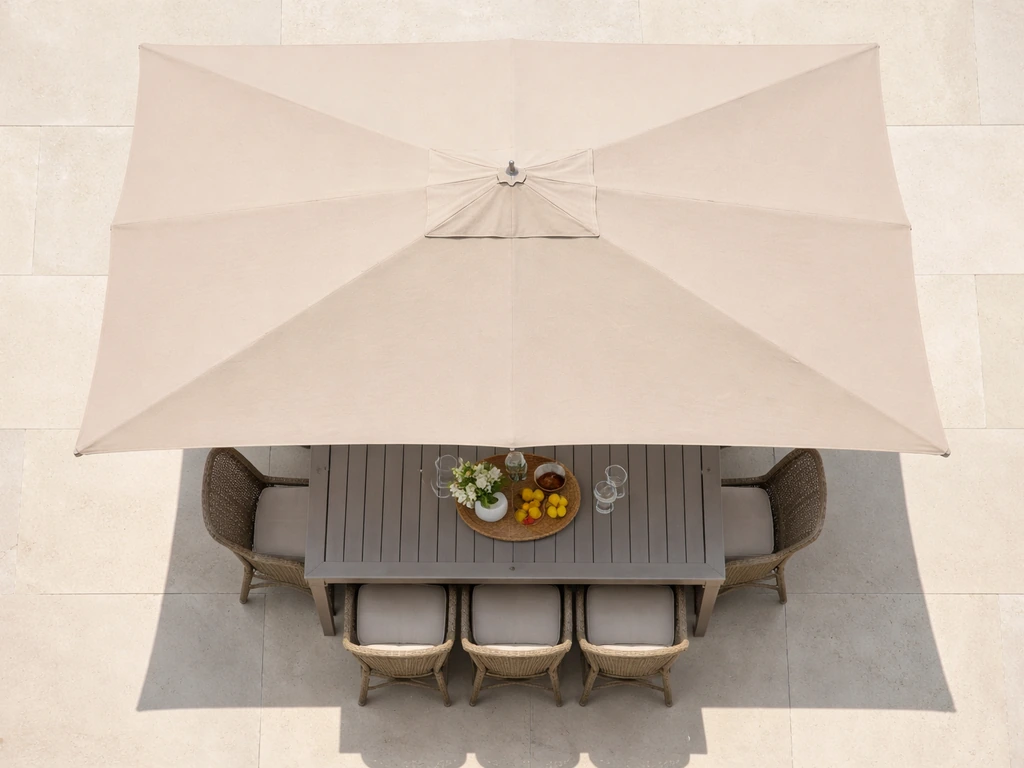
The core rule is simple: your umbrella canopy should extend at least 2 feet beyond the table edge on every side. That 2-foot overhang is what keeps seated guests in the shade even when the sun is at an angle. For a rectangular table, apply this to the longest side and the short side separately, then pick the canopy size that satisfies both.
Sizing by table shape
| Table Size / Type | Seats | Recommended Umbrella Diameter |
|---|---|---|
| 36 in round | 2 | 7.5–9 ft |
| 42–48 in round or square | 4 | 7.5–9 ft (9 ft preferred) |
| 48–54 in round or square | 4–6 | 9–10 ft |
| 60 in rectangular | 6 | 10–11 ft |
| 72 in rectangular or oval | 6–8 | 11–12 ft |
| Freestanding lounge area (no table) | 6+ | 11–13 ft cantilever |
For rectangular tables, a round canopy will leave the corners exposed. That's normal and usually fine because people sit along the sides, not the corners. But if you want full rectangular coverage, look for a rectangular or square canopy, which some brands offer in the 9x7 ft or 10x6.5 ft format. The sizing math works the same way: add 2 feet to each side dimension.
The sun angle issue is real. Experts generally recommend rounding up to the next size, especially if you eat lunch or use the patio in the afternoon when shadows are long and the shade shifts. A 9-foot umbrella over a 48-inch table feels like plenty at noon but can leave half your table exposed by 2 PM. If afternoon use is your main scenario, go 10 feet.
Freestanding seating areas without a table
If you're covering a lounge chair setup or an outdoor sectional without a dining table, forget the table-based formula and just measure the seating footprint directly, then add the 2-foot buffer on all sides. If you do not have a table, look at free-standing options like a cantilever umbrella and measure the seating footprint plus a 2-foot buffer to figure out how to hold up the patio umbrella safely. A typical outdoor sectional with a coffee table might measure 9 by 9 feet, which means you'd need at least an 11-foot umbrella, and a cantilever model often makes more sense here anyway since there's no center pole to work around.
Placement and clearance: making sure the size actually works on your patio
Getting the canopy diameter right is only half the job. Where you place the umbrella on the patio matters just as much as the canopy size, because wind and clearance can change how well it performs where to place umbrella on patio. If you want a step-by-step walkthrough of choosing the right canopy size, base weight, and pole fit, this guide on how to buy a patio umbrella covers it all.
The umbrella has to physically fit in your space, open fully without hitting anything, and sit on a flat surface where the base won't rock. This is where a lot of people get tripped up and end up returning an umbrella that was technically the right size for their table but the wrong size for their patio.
Clearance from walls and obstructions
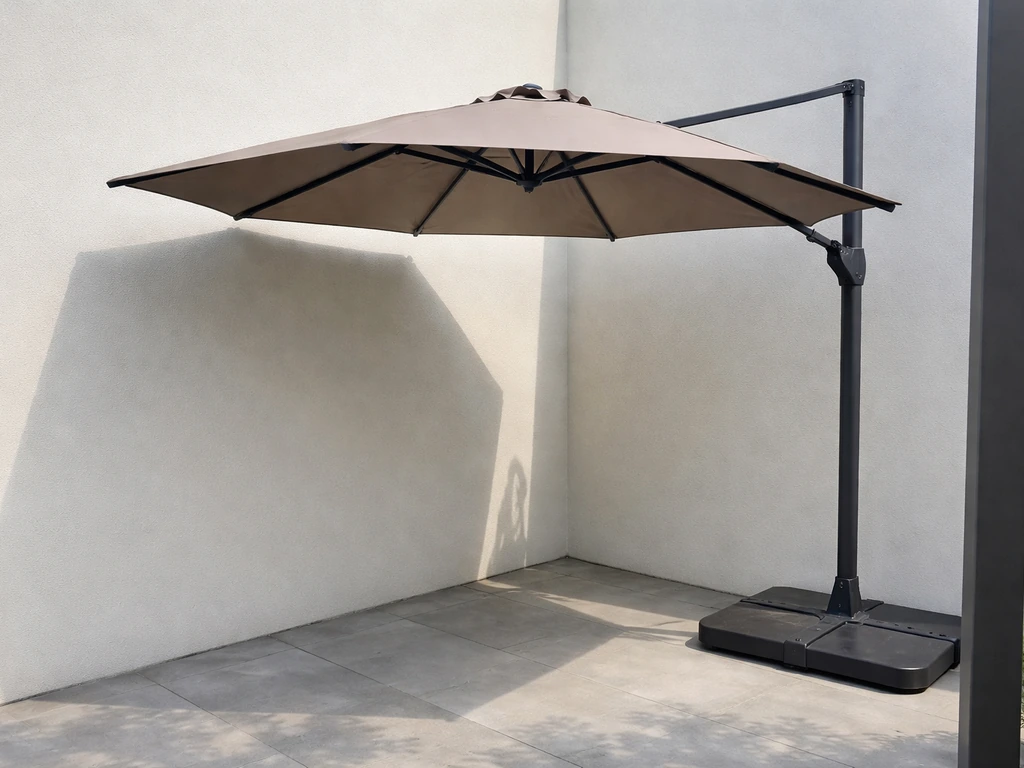
Allow at least 6 inches of clearance between the edge of the open canopy and any wall, fence, railing, or post. This isn't just about aesthetics. An umbrella that brushes a wall every time a breeze hits it will wear out the canopy fabric faster and can stress the rib tips. I always add a few extra inches as a buffer when I'm working in tight spaces. If your math gives you 4 inches of clearance, step down to the next canopy size.
Cantilever umbrella placement
Cantilever or offset umbrellas have an arm that typically extends 4 to 6 feet outward from the base, with the canopy sitting off to one side. This means you need to plan the base position carefully. The base sits outside the seating area, and the arm sweeps over the top. Make sure you have at least 4 to 6 feet of open space in the direction the arm extends, plus the canopy radius on top of that. Cantilever bases are also significantly heavier than market umbrella bases, which brings us to base sizing.
Matching your umbrella to the patio hole size
If your patio table already has an umbrella hole, check its diameter before buying. Most table holes are 1.5 to 2.5 inches. Standard umbrella poles are usually 1.5 inches or about 1.625 inches in outer diameter, but some larger umbrellas have thicker poles. If the pole is too small for the hole, the umbrella wobbles. If it's too large, it won't fit at all. Some bases have an inner diameter of around 1.625 inches but accept poles up to 2 inches with an adapter ring. Check the specs, not just the canopy diameter. The guide on what size hole for a patio umbrella goes deeper on this if you're working with a drilled concrete or stone patio.
Sizing the base for stability
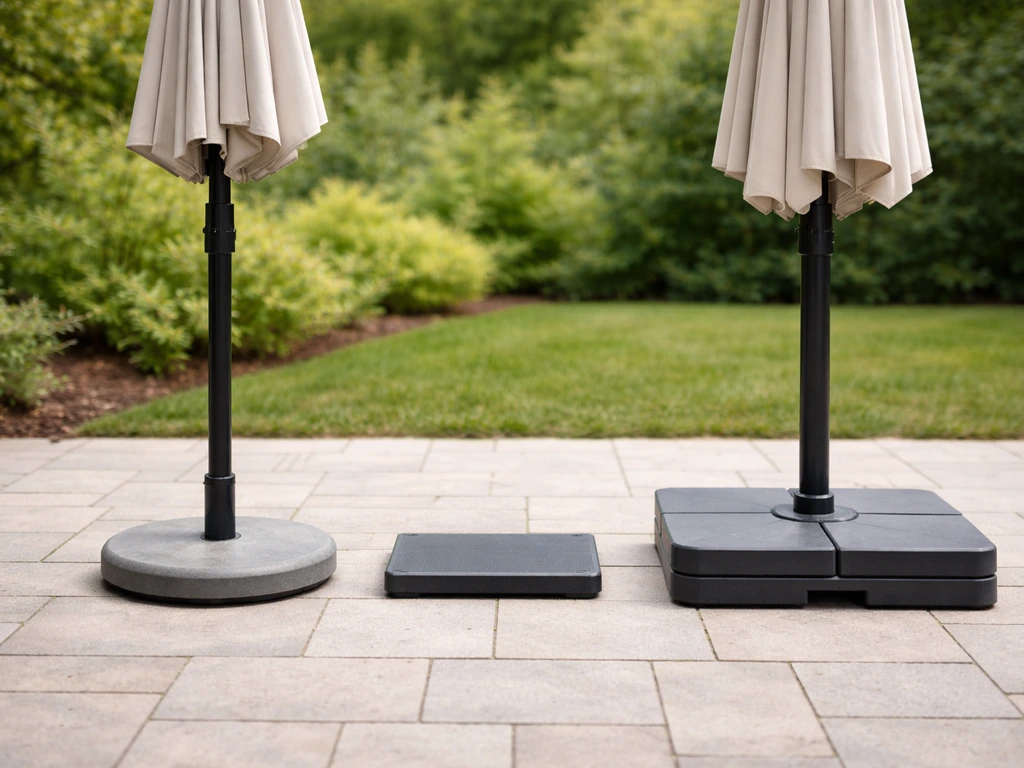
The base is probably the most under-thought part of patio umbrella sizing, and it's the part that becomes very obvious very fast when you get it wrong. An undersized base tips over in a light breeze and becomes a hazard. Here's how to size it correctly.
Base weight rule of thumb
Plan for about 10 pounds of base weight per foot of canopy diameter for a standard market umbrella. Treasure Garden’s umbrella buying guide uses [shade-coverage examples to connect canopy size to the patio coverage you need](https://www. frontera. com/media/wysiwyg/TreasureGarden/UmbrellaBuying_Guide.
pdf). That means a 7. 5-foot umbrella needs a base of at least 75 lbs, a 9-footer needs 90 lbs, and an 11-footer needs 110 lbs. Some sources say 50 to 65 lbs is enough for a 9-foot umbrella, and that may be fine in a sheltered spot with no wind exposure.
Abba Patio’s size guidance, for example, lists an umbrella base of 50, 65 lbs for a 9-foot umbrella and notes that a 10-foot umbrella provides plenty of shade for tables up to 62 inches. But if your patio gets any kind of breeze, or if you're near the coast, treat 10 lbs per foot as your floor, not your target.
Market umbrella vs. cantilever umbrella base weight
Cantilever umbrellas require dramatically heavier bases because the canopy hangs off-center, creating much more leverage. For a 10-foot cantilever umbrella, you'd want a minimum of around 180 lbs of base weight, compared to roughly 75 lbs for a 10-foot market umbrella in the same space. Don't try to use a standard market umbrella base with a cantilever model. Most cantilever umbrellas come with their own purpose-built bases for this reason.
| Umbrella Size | Market Umbrella Base (min.) | Cantilever Umbrella Base (min.) |
|---|---|---|
| 7.5 ft | 50–75 lbs | N/A (rare cantilever at this size) |
| 9 ft | 50–90 lbs | ~150 lbs |
| 10 ft | 65–100 lbs | ~180 lbs |
| 11 ft | 100–110 lbs | ~200 lbs+ |
Base pole diameter compatibility
Beyond weight, the base has to actually fit the pole. Bases have an inner diameter (the hole the pole slides into), and umbrella poles have an outer diameter. A mismatch means the umbrella will be loose and wobbly or won't fit at all. Common pole outer diameters run from 1.5 inches to 2.5 inches. Always check that the base inner diameter matches your umbrella's pole outer diameter. For example, one widely sold Treasure Garden base accepts poles from 1.5 to 2 inches in outer diameter. If you're buying a base separately from the umbrella, don't just match the weight, match the hole size.
Quick decision guide and what to double-check before you buy
Here's the fast version you can run through before adding anything to your cart or heading to a store.
- Start with your table size: Measure the longest dimension and add 4 feet (2 feet per side). That's your target canopy diameter. Round up to the nearest standard size.
- Check your patio footprint: Make sure the canopy diameter fits within your patio with at least 6 inches of clearance from any wall or fixed structure on all sides.
- Verify your table pole hole: Measure the hole diameter in your table if you have one. Match it to the umbrella pole's outer diameter. If you're drilling a new hole, the guide on what size hole for a patio umbrella covers the standard specs.
- Size your base by weight: Multiply canopy diameter in feet by 10 for a minimum base weight in pounds. Add extra margin in windy locations.
- Confirm pole-to-base compatibility: Check that the base inner diameter fits the umbrella pole outer diameter before buying separately.
- Account for tilt and crank mechanisms: If the umbrella has a tilt feature, account for the canopy shifting a few inches in one direction when tilted. This affects clearance from walls and can influence where you place the base.
- If buying a replacement, measure the old one open: Measure rib tip to rib tip across the fully open canopy, not the pole length or the folded bundle.
A few other things worth double-checking if you're working with an existing setup: if you already have a base and want to reuse it, confirm the weight is adequate for the new canopy size and that the pole diameter is compatible. A lot of people buy a new umbrella and assume their old base will work, then wonder why it keeps blowing over.
Also, if you're setting up through a table with a crank or tilt mechanism, make sure the pole is long enough that the tilt point clears the table surface when tilted. Some compact poles don't give you enough height for the mechanism to function properly. The guide on how to set up a patio umbrella walks through the full assembly and positioning process if you want the step-by-step on that part.
Get those core measurements locked down, canopy diameter, base weight, and pole diameter compatibility, and you've eliminated 90 percent of the buying mistakes that lead to wobbly umbrellas, returns, and do-overs. The sizing math isn't complicated, it just requires about 10 minutes with a tape measure before you commit. Once you’ve chosen the correct size and base, follow the umbrella’s setup steps to install it safely on your patio table install patio table umbrella.
FAQ
If my table is a bit bigger or smaller than the “standard” sizes, how do I choose the umbrella size quickly?
Use the same rule of thumb, add 2 feet beyond the table edge on every side, then round up to the next umbrella diameter you can actually buy. For square tables, base the canopy diameter on the table’s side length (not the table’s area), then confirm it clears your patio walls and railing by adding the 6-inch clearance.
Do I measure the canopy diameter at the fabric edge or at the rib tip?
For sizing an existing umbrella or matching coverage, measure rib tip to rib tip at the widest point with the canopy fully open. Measuring along the folded canopy or pole length can overstate how much shade you will actually get.
What if I only have room for a smaller umbrella, can I compensate by moving it closer to the seating?
Not reliably. Moving the umbrella changes where shade falls, and the sun angle can still expose part of the table. If you are trying to “make up” for insufficient canopy size, you can lose the 2-foot overhang guarantee, so prioritize moving up one size before settling for less canopy.
How much clearance do I need for walls, fences, and posts, and where do I measure it?
Leave at least 6 inches between the canopy edge (fully open) and any fixed obstruction. Measure from the canopy edge, not from the pole, because the canopy can shift slightly in a breeze and wear faster if it repeatedly brushes nearby surfaces.
Can I use a market umbrella base for a cantilever umbrella if it’s heavy enough?
Usually no. Cantilever umbrellas create much more turning leverage because the canopy is offset, so their bases are purpose-built. Even if weight looks close, a market umbrella base can be the wrong shape or have the wrong mounting behavior, making it unsafe.
What base weight should I use if my patio is very sheltered or I live in a calm area?
Start with the 10 pounds per foot of canopy diameter as your floor, then adjust only if you are truly sheltered from wind and still keep the umbrella on a stable, flat surface. If you regularly get gusts, coastal winds, or storms, don’t reduce below the 10 lbs per foot guideline.
My umbrella pole doesn’t fit into my table hole, what do I check first?
Check both the table hole inner diameter and the umbrella pole outer diameter. Many holes are 1.5 to 2.5 inches, and poles commonly land around 1.5 inches to about 1.625 inches, but larger umbrellas can be thicker. Also confirm whether the base uses an adapter ring to accept a slightly larger pole.
How do I size for an outdoor sectional or lounge setup when there isn’t a dining table?
Measure the seating footprint directly, including how far chairs and pieces extend when someone pulls out to sit. Then add the same 2-foot buffer around the seating on all sides to select a canopy size that actually covers the area, not just the coffee table.
For a rectangular table, how do I decide between a round umbrella and a rectangular canopy?
Round canopies typically leave corners exposed, which is often fine if people sit along the sides. If you want full coverage, pick a rectangular or square canopy and size each direction using the 2-foot extension rule on both the long and short sides, then choose the canopy size that satisfies both.
If I’m reusing an existing umbrella base, what are the most common reasons the new umbrella still wobbles?
The two usual culprits are an undersized base for the new canopy diameter, and a pole fit mismatch (base inner diameter does not match the umbrella pole outer diameter). Weight plus fit both have to match the new umbrella, even if the old combo felt stable before.
Do I need to worry about tilt or crank clearance when sizing an umbrella?
Yes. Confirm the pole length and mechanism clearance when the umbrella is tilted, especially if your setup uses a crank or tilt point mounted near the table. A correctly sized canopy can still fail if the tilt mechanism hits the table surface or doesn’t clear the tabletop.
What should I do if my canopy sizing math suggests I need more clearance than my patio offers?
Treat it as a hard constraint. If you can’t meet the canopy overhang and wall clearance together, step down in exposure risk by choosing the next compatible canopy size you can safely open, then re-check with fully open measurements and how far the canopy edge will travel in wind.
Next Articles
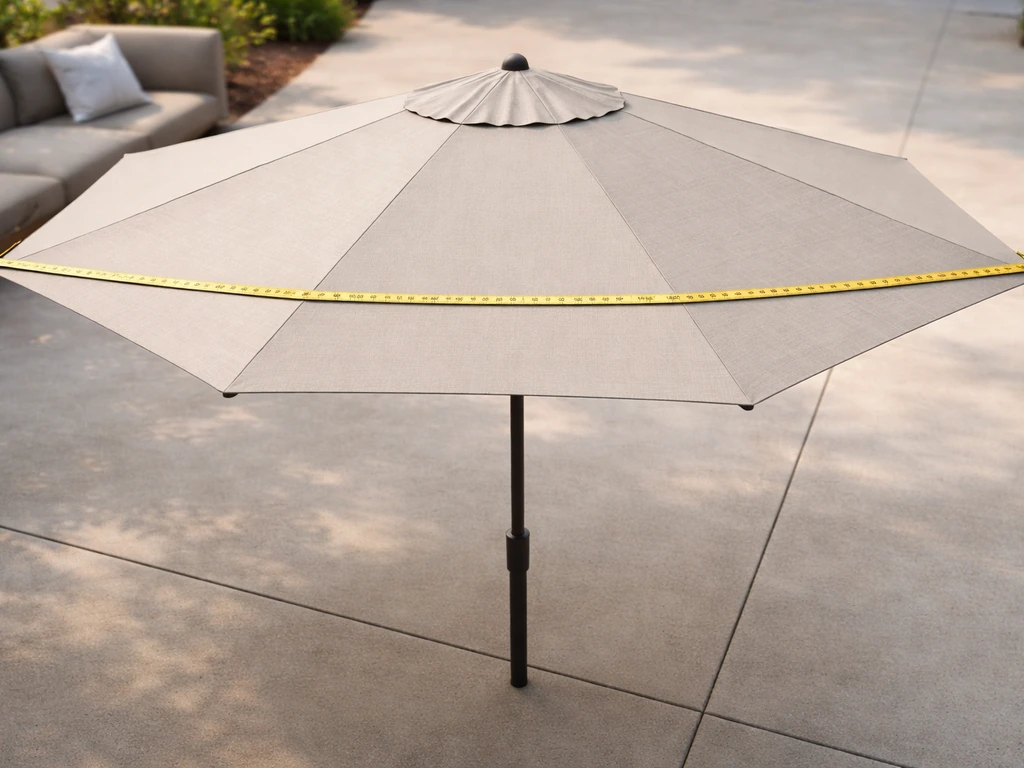
How Do You Measure a Patio Umbrella for a Perfect Fit
Learn exactly how do you measure a patio umbrella, including canopy, frame size, and pole diameter for perfect replaceme
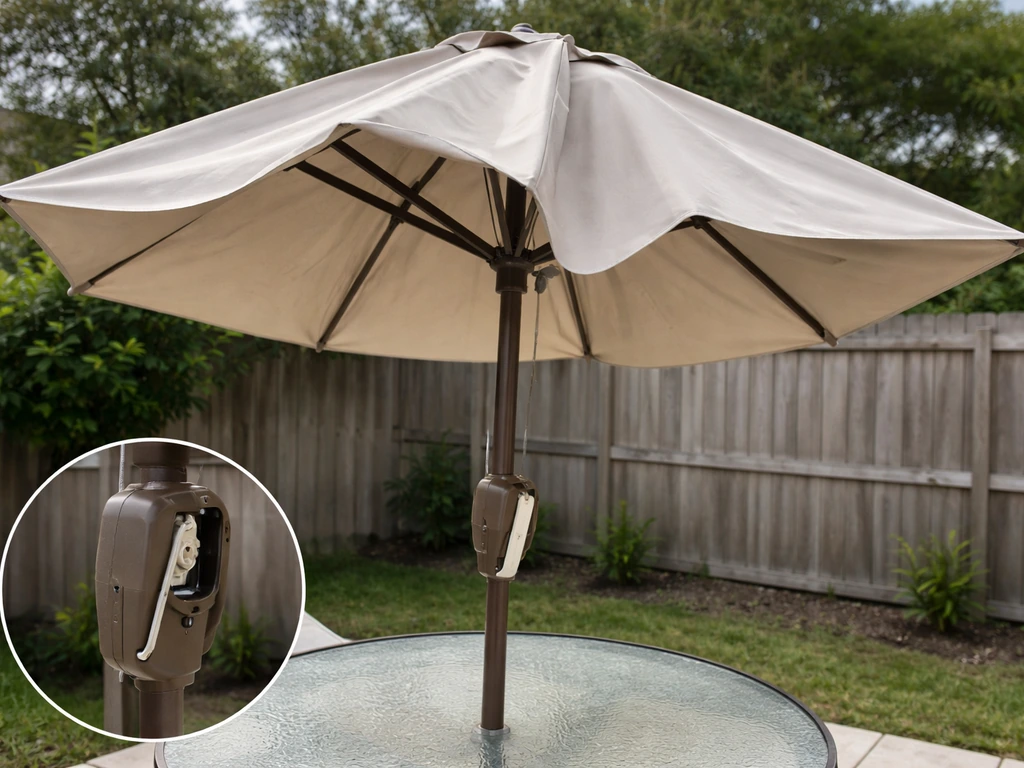
How to Fix a Patio Umbrella That Won't Open or Close
Step-by-step fixes for patio umbrellas that won’t open or close, with checks for jams, cords, latches, and lubricating t
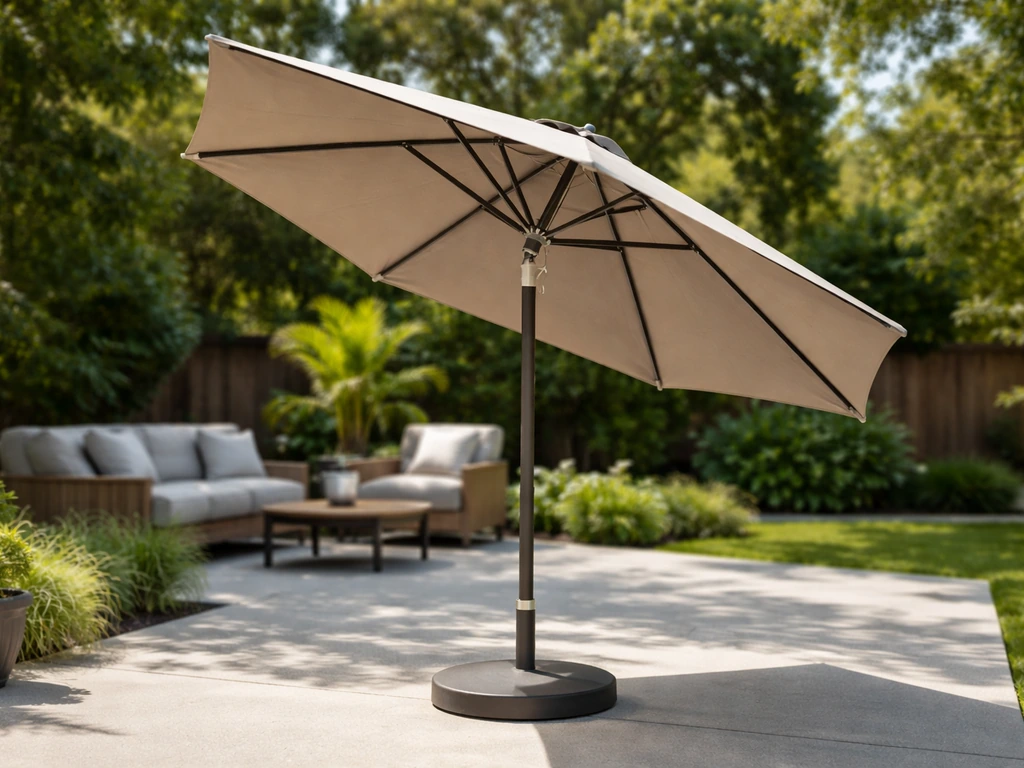
How Does a Patio Umbrella Work? Components, Use, and Fixes
Learn how patio umbrellas work: components, open close tilt, stability, and step by step troubleshooting common mechanic