
To measure a patio umbrella, you need three numbers: the canopy diameter (tip to tip across the open canopy), the rib length (from the hub to the tip of one rib), and the pole diameter. Canopy diameter tells you the umbrella's size, rib length is what replacement canopy listings actually use to confirm fit, and pole diameter matters when you're replacing the pole or buying a base. Get all three before you order anything.
How Do You Measure a Patio Umbrella for a Perfect Fit

Luca Morrison
13 May 2026
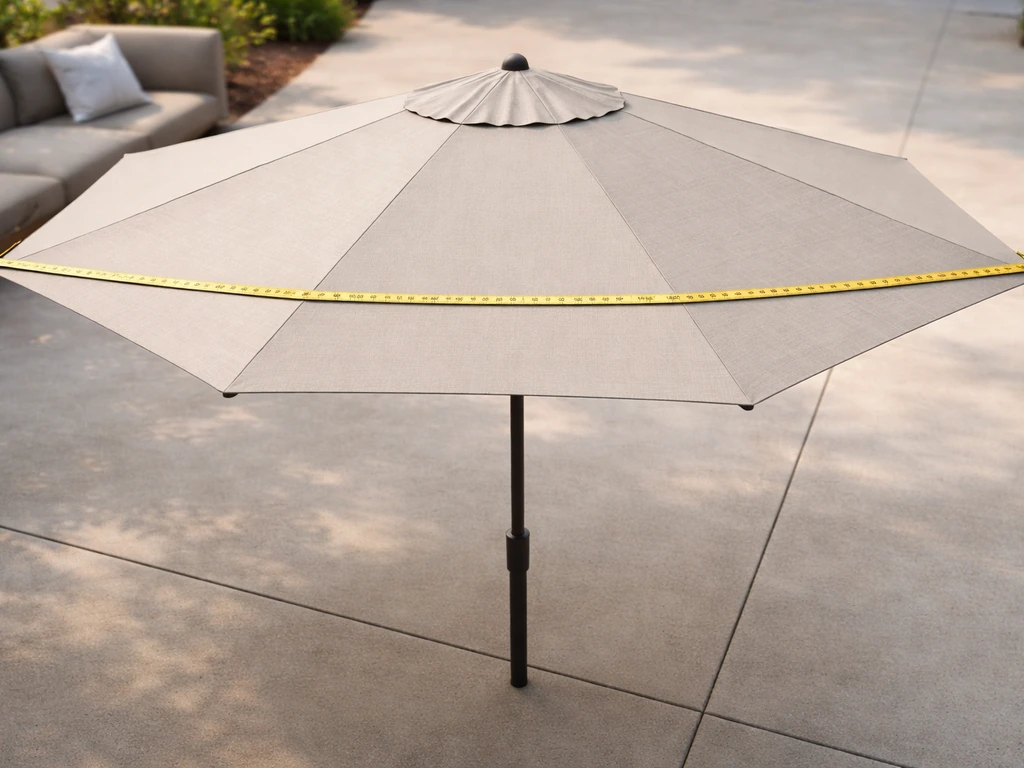
What measurements actually matter (and why each one is different)
People often assume the umbrella's size label (like "9 ft" or "7.5 ft") is enough. It's not, and ordering on that alone is how you end up with a canopy that doesn't fit the frame. There are three distinct measurements, and replacement listings use each one differently.
| Measurement | What It Is | Why You Need It |
|---|---|---|
| Canopy diameter | Tip-to-tip distance across the open canopy through the center | Confirms the umbrella's nominal size; used for shade coverage and full umbrella replacement |
| Rib length | Length of one rib from the center hub to the tip | What most replacement canopy listings use to confirm fit (often a range like 44"–46") |
| Pole diameter | Outer diameter of the center pole | Required for base compatibility, table hole fit, and pole replacement parts |
You'll also occasionally need rib count (almost always 6 or 8 ribs) and the top collar opening diameter, which is a small measurement at the very top of the frame where the finial sits. These come up in specific canopy listings, so I'll show you how to grab those too.
How to measure your umbrella's overall canopy size
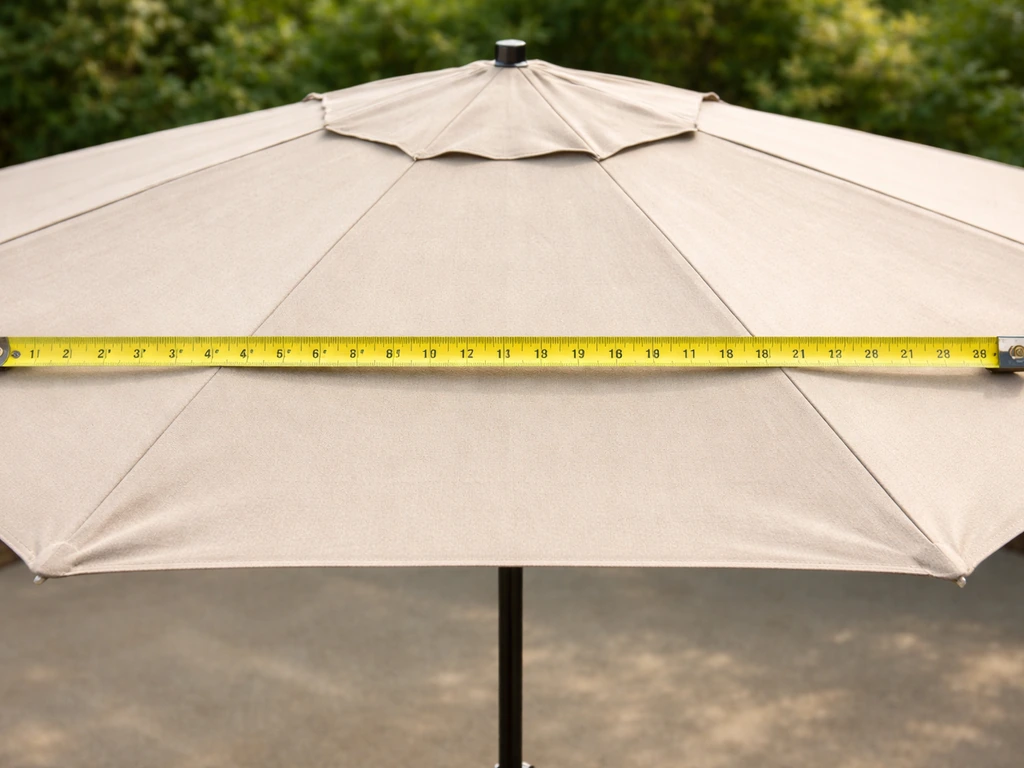
This is the "how big is my umbrella" measurement. Open the umbrella fully so all the ribs are extended and the canopy is taut. Then run a tape measure from one outer rib tip straight across to the opposite rib tip, passing through the center. That straight-line tip-to-tip number is your canopy diameter.
- Open the umbrella completely and lock it in the open position.
- Stand back and visually identify two rib tips that sit directly opposite each other.
- Hold one end of your tape measure at the outer tip of one rib.
- Pull the tape in a straight line across the canopy through the center pole to the opposite rib tip.
- Read that number. For a "9 ft" umbrella, expect something close to 105"–108" (about 267 cm). A "7.5 ft" umbrella will usually measure around 88"–92" tip to tip.
One thing to keep in mind: the labeled size ("9 ft") and the actual measured diameter aren't always identical. Manufacturers round, and fabric stretches or shrinks slightly with age and weather exposure. Always use your tape measure reading, not the sticker on the box. When you're ready to shop, use these measurements to guide how to buy a patio umbrella that actually fits your setup.
How to measure for a replacement canopy (this is where most people go wrong)
If you're shopping for a replacement canopy, the canopy diameter alone is not enough. The canopy has to fit over the specific frame geometry of your umbrella, and that's determined by rib count and rib length, not just the overall span. Here's how to get the right numbers.
Step 1: Count your ribs
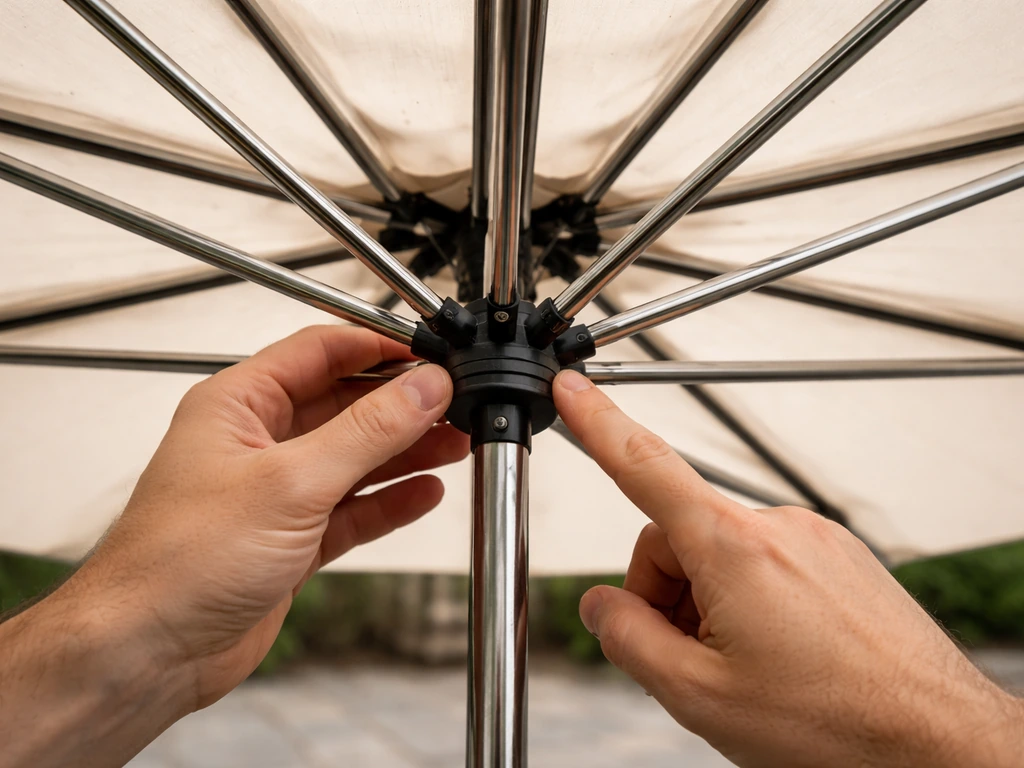
With the umbrella open, count the number of ribs (the metal or fiberglass arms that radiate out from the center hub). Most patio umbrellas have either 6 or 8 ribs. This number has to match the replacement canopy exactly because each rib slots into a fabric pocket or sleeve, and a 6-rib canopy simply won't fit a 8-rib frame.
Step 2: Measure one rib length
Measure a single rib from where it connects at the center hub to its outer tip. This is your rib length. Most replacement canopy listings specify a rib length range, for example "fits frames where each rib measures 44 inches to 46 inches." Your measurement needs to fall inside that window. For a 7.5 ft umbrella, rib length is typically in the 44"–48" range. For a 9 ft umbrella, expect roughly 52"–56".
Step 3: Check the space between adjacent rib tips
Some listings (especially for market-style or restaurant-grade umbrellas) also list the "space between adjacent tips," which is the straight-line distance from one rib tip to the next one beside it. On a 9 ft, 8-rib umbrella this is commonly around 51" (130 cm). Measure this on your frame if the listing includes this field, because it's a more precise geometry check than rib length alone.
Step 4: Measure the top collar opening
At the very top of the frame, there's a small opening where the finial screws on. Some canopy listings specify an inner diameter for this opening, often around 3/4" (2 cm). Use a small ruler or calipers to measure the inner diameter of that circular collar at the top of the frame. If the listing calls out a specific top opening size, make sure yours matches.
To summarize what to write down before shopping for a replacement canopy: canopy diameter, rib count, rib length, space between adjacent tips (if measurable), and top collar inner diameter. With all five, you can confidently filter replacement listings and avoid a return.
How to measure pole diameter
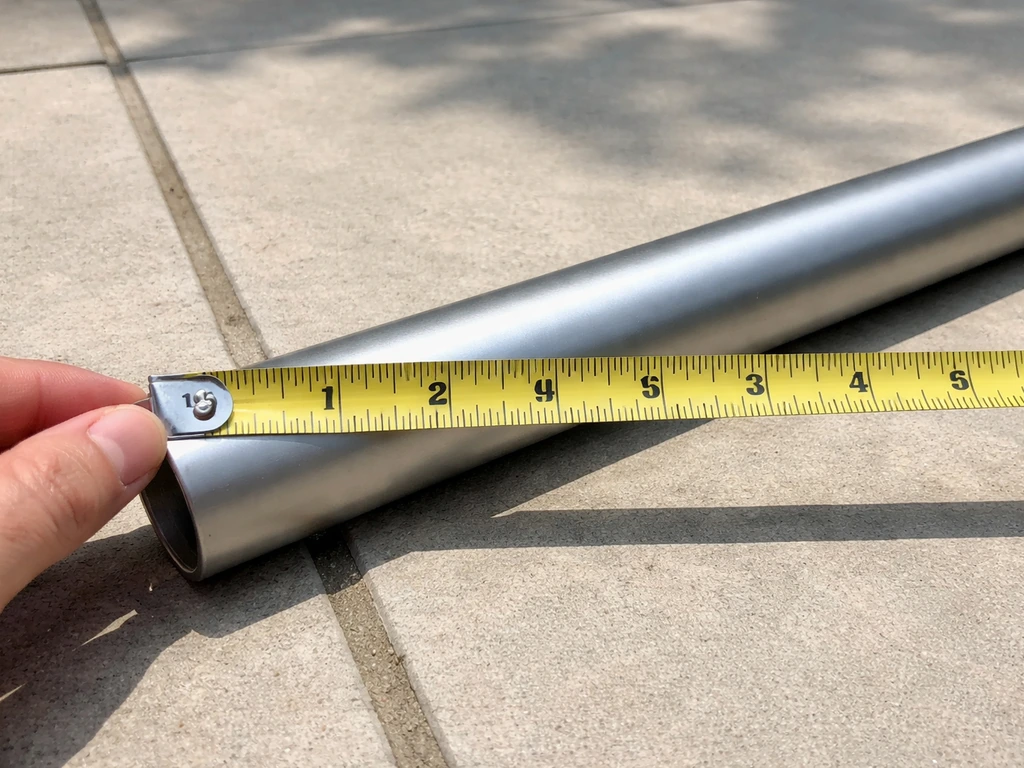
Pole diameter matters for three situations: matching a base or stand, fitting through the hole in a patio table, and ordering a replacement pole section. To figure out what size hole you need in a patio table for your umbrella pole, use your pole’s outer diameter as the starting point what size hole for patio umbrella. Most residential patio umbrella poles are 1.5" (38 mm) in outer diameter, but you'll also find 1" poles on smaller cafe-style umbrellas and 1.75" or 2" poles on large market or commercial umbrellas. Don't assume.
- Close the umbrella and lay it on a flat surface or ask someone to hold it steady.
- Use a tape measure or, better yet, a set of digital calipers for accuracy.
- Measure the outer diameter of the pole at the middle section, not at the very top near the hub (that section may be a different diameter).
- If you only have a tape measure, wrap a thin strip of paper around the pole, mark where it overlaps, lay the paper flat, and measure the length. Divide that number by 3.14159 to get the diameter.
- Write down the measurement in both inches and millimeters if possible, since some international replacement listings use metric sizes.
If you're trying to fit the umbrella through a table hole, the table's hole size matters too. Standard patio table holes are typically 1.5" to 2" in diameter, designed to accommodate a 1.5" pole with a little play. That's a separate measurement to confirm, but it starts with knowing your pole diameter first.
Common gotchas that trip people up
After walking through this process on a lot of umbrellas, here are the mistakes I see most often.
- Measuring a closed or partially open canopy: The ribs need to be fully extended and under tension for tip-to-tip diameter to be accurate. A half-open canopy can read 6"–8" shorter than it actually is.
- Relying on the size printed on the box or tag: Labels get rounded, and older umbrellas may have stretched or shrunk fabric. Always measure the frame, not the fabric, when buying a replacement canopy.
- Ignoring rib count: A 9 ft canopy with 8-rib pockets won't fit a 6-rib frame, even if the diameter is identical. This is the most common return reason for replacement canopies.
- Confusing rib length with canopy diameter: They're not the same number. Rib length is roughly half the canopy diameter, minus a small amount for the center hub width.
- Measuring the pole at the wrong spot: The very top section of the pole (inside the hub assembly) and the very bottom section (where it inserts into the base) can both differ slightly from the main shaft. Measure the main pole section in the middle.
- Skipping the top collar measurement: It's small and easy to forget, but some canopy designs have a reinforced top sleeve that won't fit over a larger collar. A 30-second measurement saves a return shipment.
Write it all down and match it to replacement listings
Once you have your measurements, the next step is matching them to product specs before you add anything to your cart. Once you know the measurements, you can follow the same step-by-step approach to install your patio umbrella correctly how to install patio table umbrella. Here's a simple checklist of what to record and how to use it.
| What to Record | Typical Value Range | Where It Shows Up in Listings |
|---|---|---|
| Canopy diameter (tip to tip) | 88"–108" for 7.5–9 ft umbrellas | "Canopy Diameter" field or nominal size (e.g., "9FT") |
| Rib count | 6 or 8 (most common) | "Fits 6-rib" or "Fits 8-rib" in title or specs |
| Rib length | 44"–56" depending on size | "Each rib must measure X" to X"" in product description |
| Space between adjacent tips | Varies by size/rib count | "Space between Adjacent Tips" in spec table |
| Top collar inner diameter | Often ~3/4" (2 cm) | "Recommended top opening size (inner diameter)" in specs |
| Pole diameter | 1" / 1.5" / 1.75" / 2" | "Fits poles up to X" diameter" on base or pole listings |
When you're on a product page, scroll past the main photos to the full spec table. Listings that are worth buying will include rib count, rib length range, and canopy diameter. If a listing only says "fits 9 ft umbrellas" without any rib or rib-length specs, skip it. That vague sizing is a gamble and a common source of returns.
Measure twice before you finalize the order. It sounds obvious, but rib length in particular can be easy to misread the first time if the tape slips at the hub end. Lock in your numbers, match every spec field the listing provides, and you'll get the right canopy on the first try.
Once the new canopy is on or the new umbrella is sized correctly, setting it up properly and anchoring it well makes all the difference in how long it lasts. If you are planning a full patio umbrella setup, next you can follow a step-by-step guide on how to install a patio table umbrella how to install patio table umbrella.
After you choose the right parts, follow these steps to set up a patio umbrella so it stays stable and protected.
FAQ
If my umbrella says “9 ft,” do I just buy a 9 ft replacement canopy?
Not if you want a replacement canopy to fit. “9 ft” or “7.5 ft” is a marketing label, but canopies mount to the frame using rib-specific sleeve pockets. The canopy should be chosen using canopy diameter plus rib count and rib length, and then confirm any extra geometry fields the listing provides (like top collar opening).
Should I measure canopy diameter with the umbrella open or closed?
Yes, the umbrella must be fully opened and extended before measuring. If the canopy is partially open or loose, the tip-to-tip distance will be smaller and rib length can also read short. Measure on a flat, stable surface, with the fabric taut and all ribs in their normal locked position.
What if the replacement listing gives a rib length range, but my measurement is right near the edge?
If a listing offers only one rib-length number (not a range), treat it as exact. If it gives a range, your measured rib length must fall inside that range at the hub-to-tip distance, not rounded to the nearest inch. When you are between two sizes, choose the one that matches your exact tape-measure reading.
Where exactly do you measure rib length on the frame?
Measure rib length from the center hub connection point to the outer rib tip, along the same straight alignment you naturally get when the umbrella is fully extended. Don’t measure the fabric edge, and don’t include the length of the finial or the pole. If the hub connection is ambiguous, take a second reading and use the value that matches the slot depth where the canopy pocket mounts.
How do you handle rib count if a rib is bent, missing, or replaced?
Rib count is usually the number of fabric pockets or rib sleeves the canopy will have. Count the metal or fiberglass arms that radiate from the hub. If your umbrella has missing ribs, a damaged pocket, or a replacement frame piece, counting can be misleading, so compare against the canopy sleeve count or the frame’s hub slots.
Is the top collar opening diameter required for every replacement canopy purchase?
Sometimes listings specify a “top collar opening” or “finial collar inner diameter,” but others do not. If the listing does not call it out, you can still measure it for safety, especially for restaurant or market umbrellas where the finial area can differ. If the listing does provide a required inner diameter, match it closely using a small ruler or calipers.
Do you measure pole diameter the same way as canopy diameter?
For replacement poles or bases, pole diameter is the critical dimension, not canopy diameter. Measure the pole’s outer diameter with calipers if possible (or wrap a tape measure snugly and read the widest outer edge). If your pole has a slight taper near the base or a thicker sleeve section, measure the portion that the base or table hole actually clamps or fits.
How do you confirm a patio table umbrella hole will work with your pole?
If your table has a standard umbrella hole, the hole size must fit the pole while allowing a little clearance. Use the pole’s outer diameter first, then check that the table opening is typically larger by the amount the listing implies. If your table hole is near the pole size, confirm whether the pole inserts with a bushing or grommet, because that changes the effective fit.
What’s the most common cause of issues when the umbrella fits the canopy but not the table?
Measure the pole diameter at the exact section that goes through the table hole, and compare it to the table’s stated hole diameter range if available. A common failure is having the right canopy but discovering the umbrella pole cannot seat fully through the tabletop due to a tight or mismatched hole diameter.
What should you do if the product listing lacks rib count or rib length specs?
If a spec table is missing rib count or rib-length range, treat it as too risky for a replacement canopy. You can contact the seller with your canopy diameter and rib measurements, but if they cannot confirm those fields, skip the listing to avoid returns. Also watch out for “fits many 9 ft umbrellas” language, which often covers only diameter, not frame geometry.
Next Articles
How to Fix a Patio Umbrella That Won't Open or Close
Step-by-step fixes for patio umbrellas that won’t open or close, with checks for jams, cords, latches, and lubricating t
How Does a Patio Umbrella Work? Components, Use, and Fixes
Learn how patio umbrellas work: components, open close tilt, stability, and step by step troubleshooting common mechanic
Patio Umbrella Crank Not Working: DIY Fix Guide
Fix a patio umbrella crank that won’t work with safe step-by-step jam, gear, and base troubleshooting and repair tips.