
For a table umbrella, the pole goes straight through the center hole in your table, so placement is mostly about where you put the table itself. For a freestanding market or cantilever umbrella, the base goes roughly 2 feet back from the edge of your seating area, centered on the chairs you want to shade, not on the table. That's the starting point for almost every patio layout.
Where to Place an Umbrella on a Patio: Step by Step Guide
Luca Morrison
6 Jul 2026
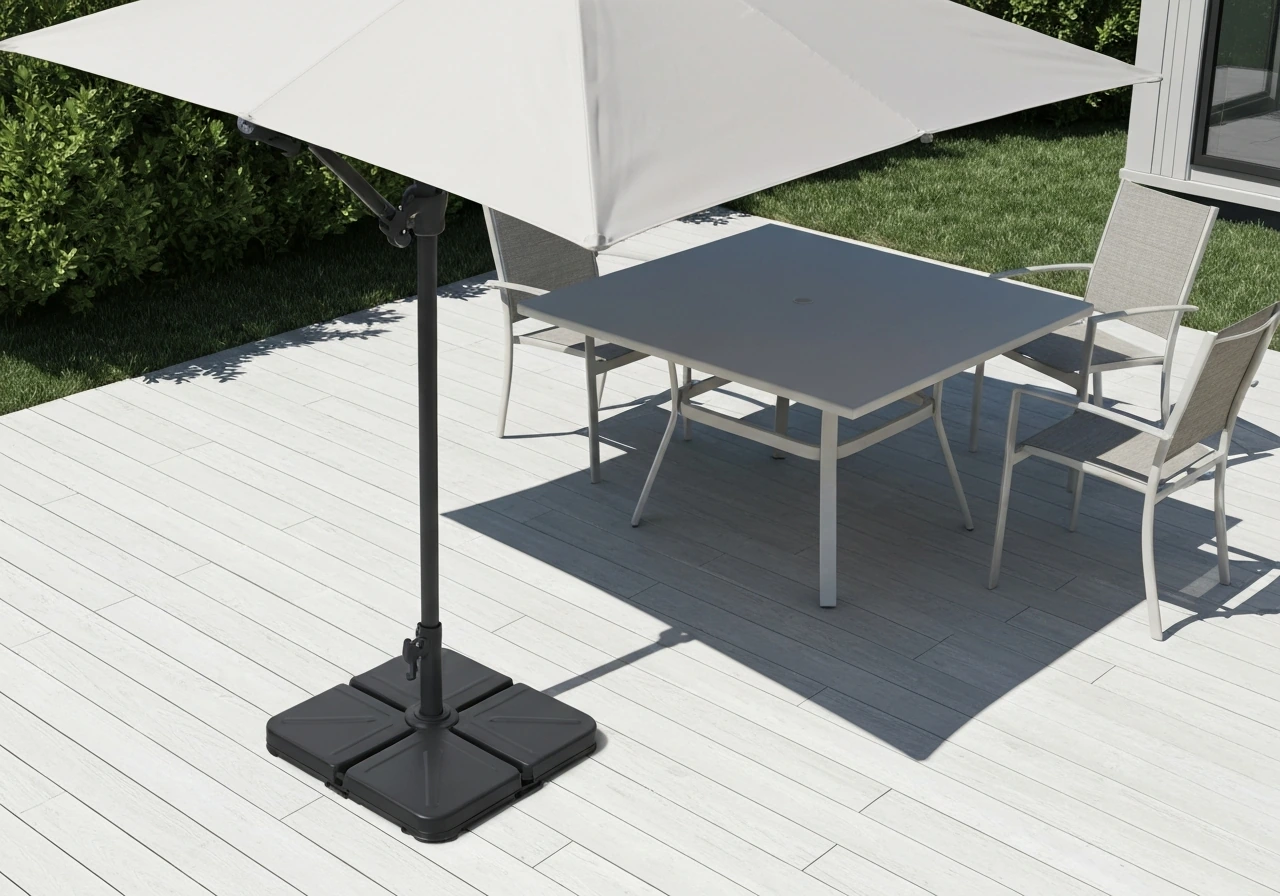
Table umbrella vs. freestanding: pick your setup first
Before you figure out where to put anything, settle which umbrella type you're working with, because the placement logic is completely different.
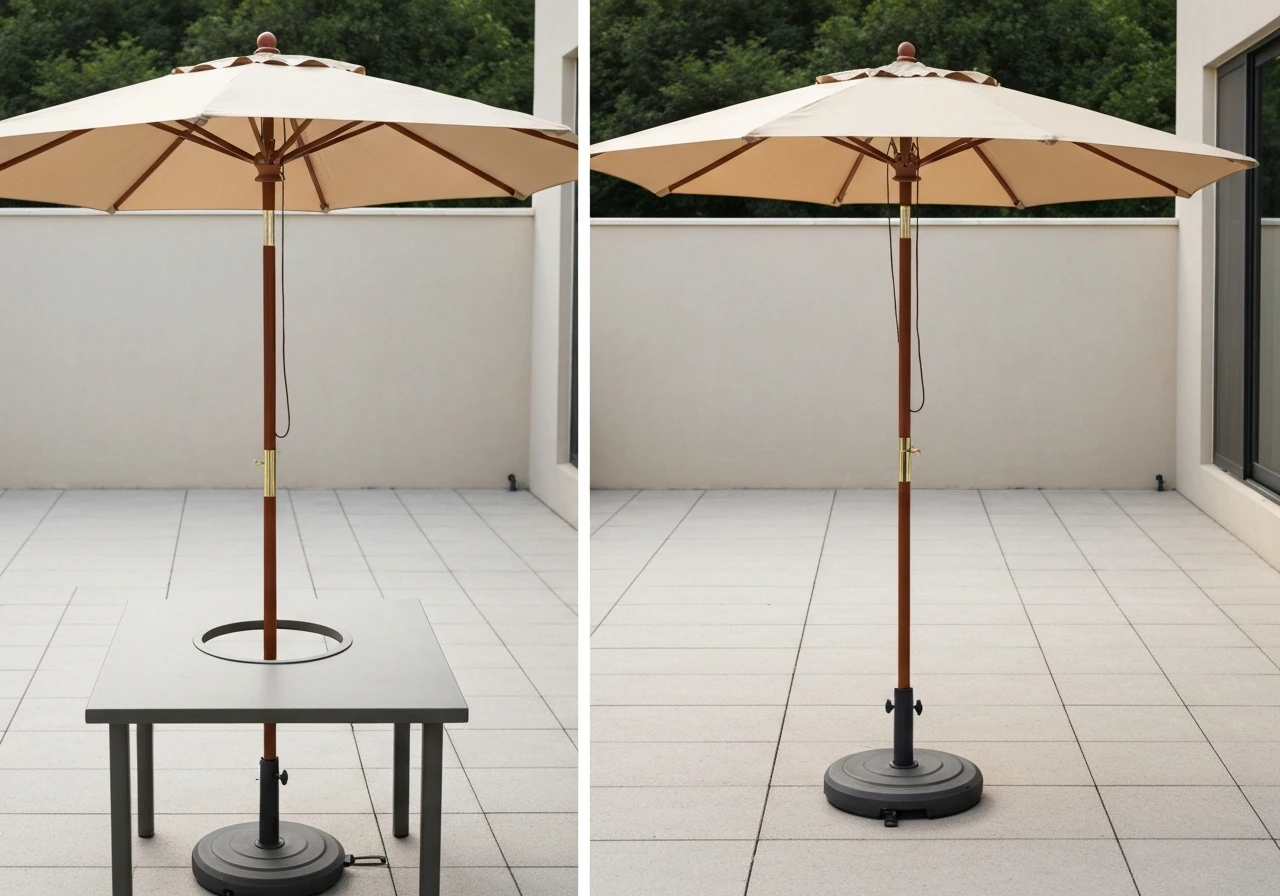
A center-pole market umbrella used with a table drops straight through the umbrella hole in the tabletop. The canopy hangs directly above the pole, so it's automatically centered over the table. Your placement job is really just choosing where the table lives on the patio. The only thing to double-check is that the pole diameter matches your table hole (usually 1. The hole size should also match the umbrella pole diameter for a snug fit. 5 to 2 inches) so it seats properly and doesn't wobble or sit off-center.
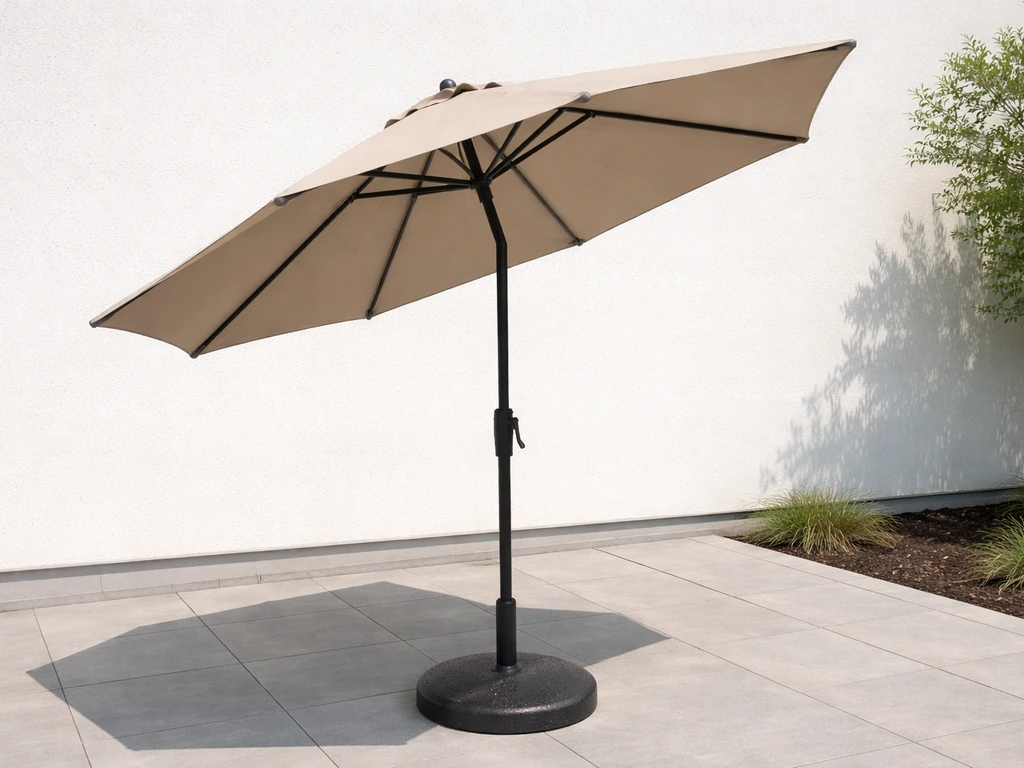
A freestanding market umbrella uses a weighted base on the ground, separate from any table. A cantilever umbrella (side-post or offset) has its base off to the side entirely, so there's no pole in the middle of your seating at all. For both of these, you're physically choosing where the base lands on the patio surface, which gives you more flexibility but also more responsibility to get the position right. If you're still deciding between a table setup and freestanding, the sizing and base-matching questions come into play, and it's worth sorting those out before you commit to a location.
| Umbrella Type | Base Position | Best For | Main Placement Challenge |
|---|---|---|---|
| Center-pole with table | Through table hole, table sets position | Dining sets with umbrella hole | Getting table centered in shaded zone |
| Freestanding market (weighted base) | Ground level, centered behind seating | Lounge chairs, no-hole tables, flexible layouts | Keeping base out of foot traffic paths |
| Cantilever / offset | Side of seating area, back corner or edge | Large seating groups, no center-pole obstruction | Base weight, swing arc clearance from structures |
Recommendation: if you have a dining table with a center hole and four to six chairs, use the table setup. It's simpler, more stable for the size, and requires less base weight. If you're shading a lounge area, a sectional, or a table without a hole, go freestanding or cantilever and follow the positioning steps below.
Find the right spot for actual shade coverage
The most common mistake people make is centering the umbrella over the table surface and calling it done. If you are also shopping, use these shade-position rules alongside how to buy a patio umbrella so you get the right size, style, and coverage for your seating area. The table isn't what needs shade. The people sitting around it are. Pull your chairs out as if someone is sitting in each one, then measure the full footprint of that occupied seating area. That's your target zone.
A good planning rule: blank" rel="noopener noreferrer">take your table's longest dimension and add 2 feet on each side, so 4 feet total added to the diameter. Once you know your umbrella diameter target from your seating area, you can use the same measurements to figure out how to size a patio umbrella for proper shade coverage. That gives you a realistic coverage target. For a standard 48-inch round table with chairs pulled out, you're often looking at a coverage zone of 7 to 8 feet across, which is why 9-foot umbrellas are the default for most patio dining sets.
The shadow test: simplest way to verify before you commit
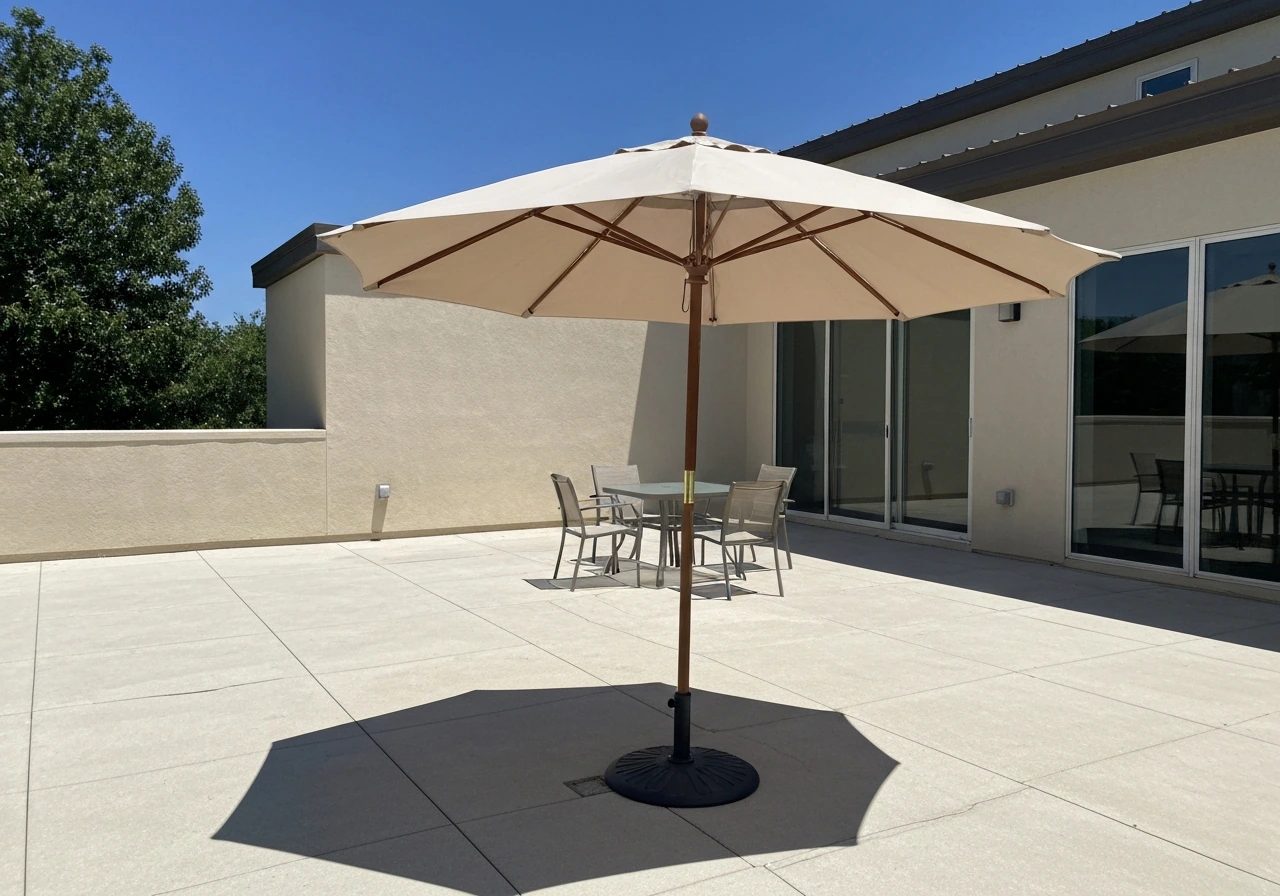
Don't guess. On a sunny day, open the umbrella, hold or prop it approximately where you're thinking of placing the base, and look at where the shadow falls at the time of day you normally use the patio. To learn how to measure a patio umbrella, start by taking the canopy diameter and checking the seating footprint you want it to cover. Most people eat or sit outside between 11 a.m. and 4 p.m., when the sun is highest and hottest. That's the window you're optimizing for. If the shadow covers your chairs and the table, you're in the right ballpark. If it's off to one side, shift the base position before you finalize anything.
For a center-pole market umbrella, the canopy casts its shadow offset slightly in the direction away from the sun. In the middle of the day in summer, the shadow is close to directly below the canopy. In the afternoon, it shifts significantly. If you mainly use your patio in the late afternoon, position the pole a foot or two toward the west side of your seating area so the afternoon shade falls east, back over your chairs.
Clearances: doors, walkways, and foot traffic
The base itself needs to sit somewhere people won't trip over it. A weighted base sticking out on a main walkway path is a safety hazard, and it will get kicked or bumped constantly, which gradually loosens things. Keep the base off the main walking line between your back door and the seating area.
- Leave at least 36 inches of clear path between the base/pole and any door, step, or gate
- Don't place the base directly behind a chair where someone will push back into it when standing up
- Keep the pole at least 12 inches away from table edges, chair backs, and any furniture that gets moved around
- If two umbrellas are open near each other, leave a minimum 12-inch gap between the canopy edges to avoid contact and wear
For a cantilever umbrella, the base is usually a large rectangular weighted block that sits to the side or corner of the seating area. This is actually easier to tuck out of the traffic zone than a center-pole base, but the arm swings outward as it opens, so check that there's clear space above and to the side before choosing a corner position.
Stability and wind safety: where the base actually needs to be
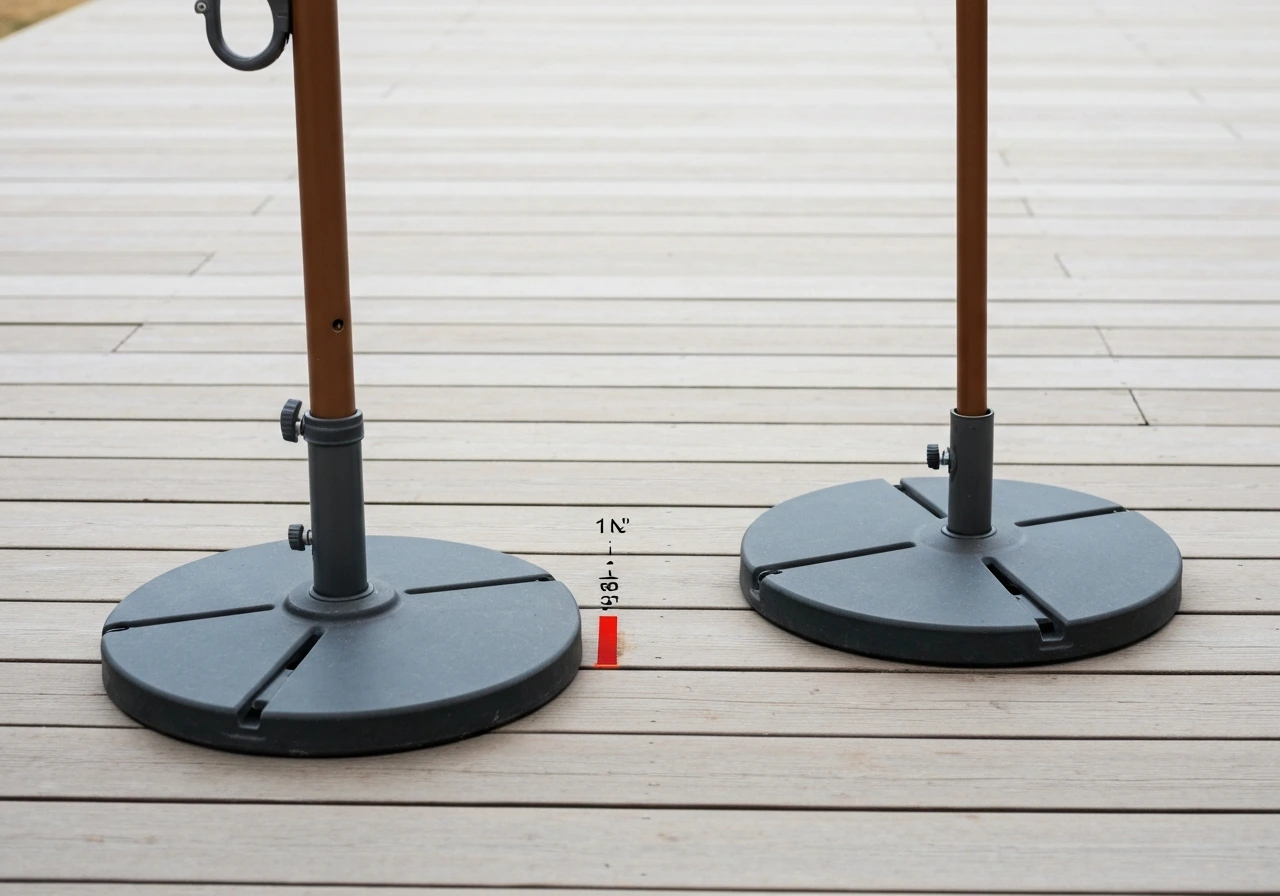
This is where placement becomes a safety decision, not just a convenience one. A patio umbrella that catches wind becomes a projectile, and the base position affects how exposed the setup is. There are a few hard rules here.
Keep the base at least 12 to 18 inches away from the edge of a deck, rail, or patio perimeter. When the wind comes over the rail, it hits the canopy from below at an angle, and a base right at the edge gives almost no leverage to resist tipping. Moving the base inward even a foot makes a real difference. If your patio is elevated or exposed (a rooftop deck, an upper balcony, a high-altitude location), treat the setup as a high-wind environment. At 7,000 feet elevation or on an open deck, a 9-foot umbrella may need a base in the 75 to 100 pound range to stay stable.
As a general baseline: a 6 to 7-foot umbrella needs at least 20 to 30 pounds of base weight; a 7.5 to 10-foot umbrella needs 40 to 50 pounds minimum, and more in any exposed or windy location. If you're using weight bags to supplement a lighter base, make sure they're fully filled and secured before you open the canopy. And a direct quote worth taking seriously: never open or operate a patio umbrella in wind conditions greater than 5 mph. That sounds low, but a sudden gust on an already-open umbrella is what causes most tip-over incidents.
In-ground sleeve installations
If you're installing a permanent in-ground sleeve, position matters from the start because you can't move it later. If you're wondering how to install patio table umbrella using a sleeve, focus on exact placement and getting the sleeve centered before the concrete sets in-ground sleeve. blank" rel="noopener noreferrer">Mark your target pole location with chalk, then check shade coverage with the shadow test before you drill or pour anything. A standard in-ground sleeve runs about 12 inches deep, requires roughly a 5-inch wide hole through the slab, and should sit level and centered in the hole before concrete is poured. The top of the sleeve ring should sit flush with or just slightly above the finished surface level (pavers, tile, or concrete) so water doesn't pool inside. Centering and leveling the sleeve at install time is the only chance you get, so measure twice.
Operating clearances: make sure the umbrella can actually open and tilt
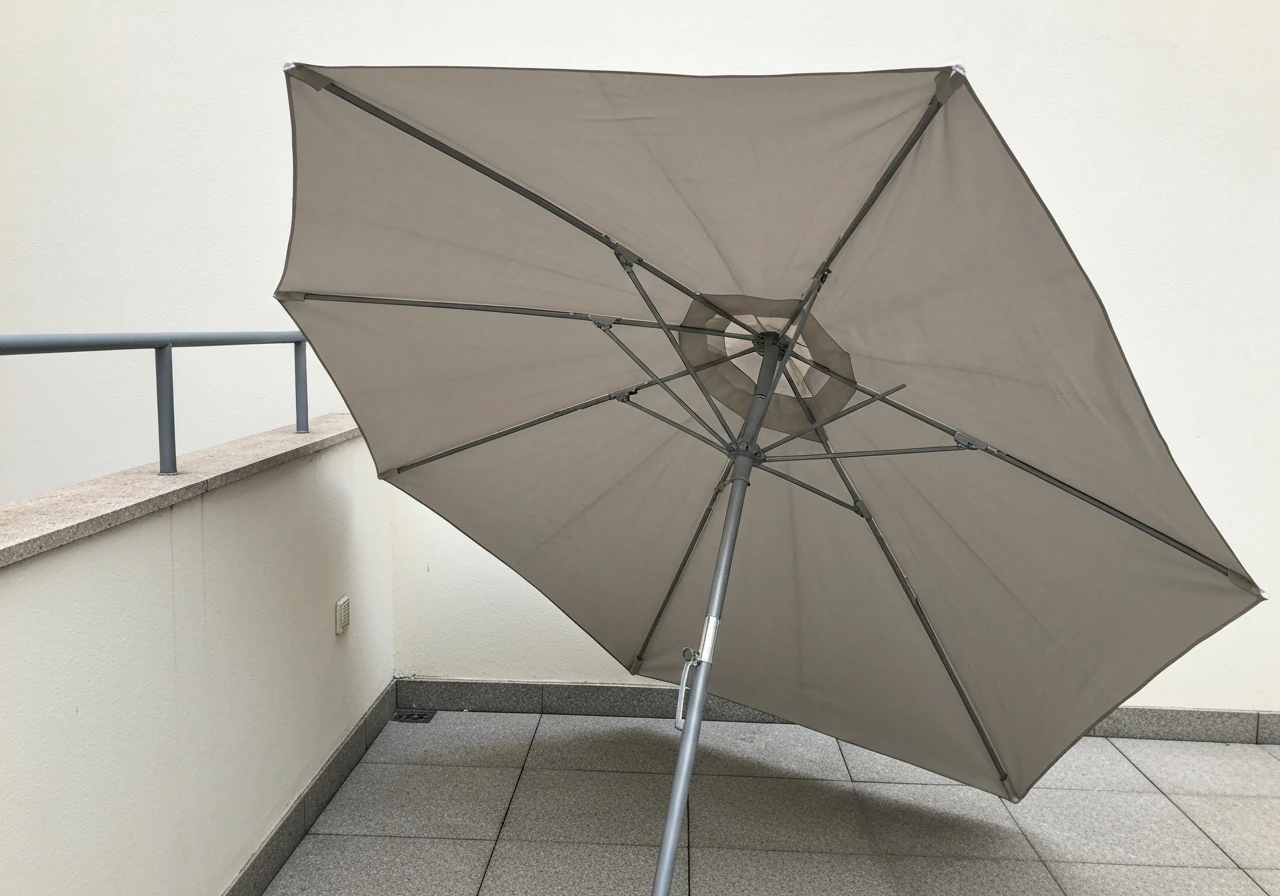
This one gets skipped constantly, and it's the reason people end up with a bent rib or a canopy that won't open fully. Every umbrella has an opening arc, meaning the ribs and canopy fabric sweep through a zone of space as the umbrella opens from its closed, furled position. If the pole is too close to a wall, pergola post, fence, or overhead structure, the ribs will catch on that structure mid-open and jam or bend.
The clearance you need depends on the canopy diameter. A 9-foot umbrella needs roughly 4.5 feet of clear radius from the pole center in every direction it opens toward. Before you finalize a base location, open the umbrella partially and watch what the rib tips do. They should clear all nearby structures by several inches, not just barely miss them. Give yourself at least 6 to 12 inches of buffer beyond the canopy edge to any wall, post, railing, or overhead beam.
Tilt mechanisms add another consideration. If your umbrella tilts (push-button, collar-tilt, or auto-tilt), the canopy angle shifts significantly when deployed, dropping one side lower. If you tilt toward a fence or railing, the canopy edge can rub or catch. Position the pole so the tilt direction points toward open space, not toward a structure. For most setups this means the pole is slightly toward the sun side of the seating area, so tilting toward the sun still keeps the canopy over your chairs without swinging into a wall or pergola column.
Seasonal repositioning: the sun angle changes, and so should you
In summer, the sun is nearly overhead at midday, and the shade falls almost directly below the canopy. In spring and fall, the sun is lower on the horizon, so the shadow projects further north (in the northern hemisphere). In late fall and winter, even a fully open umbrella at midday casts its shadow well to the north of the pole position.
Practically, this means your ideal base position for a July afternoon is not the same as your ideal position for a September afternoon. In midsummer, centering the pole roughly over the seating area works well. By September, if you want afternoon shade (say, 3 to 5 p.m.), you may need to shift the base 1 to 2 feet toward the south or southwest so the longer afternoon shadow falls back over your chairs instead of behind them.
Run the shadow test again each time the season changes noticeably, which in most of the U.S. means at least three adjustments: once at the start of summer, once in early fall, and once if you're using the patio in spring. If you're using a weighted base on pavers, this is a 30-second adjustment. If you're using an in-ground sleeve, install it at the position that covers your peak-use window (typically midsummer midday), and rely on the umbrella's tilt function to compensate in shoulder seasons.
A practical placement sequence to follow
- Set up your furniture as if people are actually sitting there (chairs pulled out, cushions on).
- Measure the full occupied footprint, then add 2 feet on each side to get your target shade coverage diameter.
- Choose the umbrella size that matches that coverage target, not just the table size.
- Mark the intended pole/base position with tape or chalk on the patio surface.
- Open the umbrella and do the shadow test at your peak-use time of day.
- Walk a full circle around the open umbrella and check that the canopy clears all structures (rails, posts, walls, overhead beams) by at least 6 inches.
- Test the tilt direction: tilt toward the sun and confirm the low edge doesn't swing toward a wall or fence.
- Check the base weight matches your umbrella size and the exposure level of your location.
- Keep the base at least 12 to 18 inches from any deck edge or railing.
- Once satisfied, finalize the base position and close the umbrella when wind picks up.
Getting placement right the first time saves a lot of frustration later. It's much easier to move a chalk mark than to unbolt an in-ground sleeve or drag a 50-pound base across the patio after the furniture is set up. Take the extra 10 minutes to do the shadow test and the clearance check before you call it done. If you need step-by-step guidance, this article also covers how to use a patio umbrella safely and effectively.
FAQ
When I’m trying to decide where to place the umbrella, should I place it based on the table or the chairs?
Do a “dry run” before you commit to the base spot. Pull your chairs out to the real sitting positions, place the umbrella base temporarily where you think it will go, then open the umbrella fully and slightly tilt it (if your model tilts). Confirm the canopy covers the chair area you measured, and verify the pole does not land on a chair leg or the edge of a table support.
How do I handle where to place a cantilever umbrella if the seating is close to a fence or wall?
If you have a cantilever umbrella, measure clearance for the side arm, not just the canopy. The arm swings as it opens, so test with the umbrella partially opened, then fully opened, then tilted. Leave extra space toward the direction the arm travels (often the side opposite your seating corner), otherwise it can collide with a nearby wall or pergola post.
Can I position the pole so the closed umbrella clears things, but still have problems when opening?
Yes, and the key is to account for the umbrella’s opening arc. Even if the final canopy position is fine, ribs can jam during opening. Before locking the base location, open the umbrella partway while someone watches the ribs, then mark the zones near any overhead beam or railing and keep the pole far enough that the ribs pass with a noticeable buffer.
If I install an in-ground sleeve, how do I choose the right permanent location for different seasons?
For a fixed in-ground sleeve, placement should be based on your peak-use shade window (often midsummer midday), then you rely on tilt to cover shoulder seasons. If you try to install it for every season equally, you usually end up with imperfect afternoon coverage. A practical approach is to choose the season you use most, do the shadow test there, and then confirm the change in early fall with a small tilt plan.
How accurate is the “canopy diameter versus seating footprint” sizing rule if my patio has reflective surfaces?
Use the umbrella’s height and canopy shape as a tie-breaker when footprints look similar. Higher-end umbrellas and some fabric shapes cast slightly different shadow edges, so measure with a real open canopy, not just based on diameter. If your outdoor space has reflective surfaces (light pavers, white walls), re-check because brightness can make shade boundaries look sharper than they are.
What should I check if the umbrella is positioned correctly but still wobbles?
If the base feels stable but wobbles when you lightly push the canopy, it’s a sign your base is either on uneven ground or too close to the traffic edge. Level the surface under the base (or use a base pad), then re-test with a gentle push at the edge of the umbrella fabric. Stability should hold when the umbrella is moving naturally with light wind, not only when fully still.
Is it okay to supplement a lighter umbrella base with weight bags, and what can go wrong?
If you use a weight-bag approach with a lighter base, fully fill the bags and secure them so they cannot shift when you open and close the umbrella. Also check that bags will not slide on your patio surface type, pavers especially, since movement can change the effective base location and reduce stability over time.
What’s the most common clearance mistake people make when placing a patio umbrella near structures?
Plan for clearance not only around the pole, but also around the fabric at full extension and the area where the ribs pass when opening. A common error is thinking “the canopy clears” while ignoring that the ribs can still hit a beam. The safe move is to keep a buffer beyond both the canopy edge and the rib path, then verify by partially opening, not just fully opening.
If I mostly use the patio in the late afternoon, how should I decide where to place the umbrella?
Take the season and time-of-day seriously. If you mainly use the patio in late afternoon, you may need to shift the base toward the sun earlier in the day so the afternoon shadow falls back over the chairs. A quick decision rule is to do one shadow test at your actual use time, then adjust by 1 to 2 feet rather than relying on midday placement.
Can I place the umbrella base on any patio surface, like tile or sealed concrete?
Yes, but only if the floor surface and base design match. On smooth tile or sealed concrete, some bases can creep, especially when opening the umbrella. Use a base pad or ensure the base is designed for your surface type, then confirm there is no movement after you open to the shade position.
Next Articles
How to Buy a Patio Umbrella: Step-by-Step Guide
Step-by-step guide to buy a patio umbrella: choose size, tilt, frame quality, stability base, and setup for lasting shad
What Size Hole for Patio Umbrella Pole Fit and Drill Guide
Measure umbrella pole diameter then drill the right patio mount hole size for a snug, wobble-free fit.
How to Use a Patio Umbrella: Setup, Tilt, and Safety
Step-by-step how to use a patio umbrella: assemble, open close, tilt setup, fix crank issues, and ensure wind-safe stabi