Most patio umbrellas that won't open or close have one of four problems: the crank is jammed or stripped, the cord or pulley is tangled or broken, a rib or hinge is catching on something, or there's debris and dried grime locking up a joint. In almost every case, you can diagnose and fix it in under an hour without replacing the whole umbrella. Here's exactly how to figure out what's wrong and get it moving again today. If you're also trying to understand how a patio umbrella works, start with the crank, pulley, rib, and tilt mechanisms how to figure out what's wrong and get it moving again today.
How to Fix a Patio Umbrella That Won't Open or Close
Luca Morrison
29 Apr 2026
Before You Touch Anything: Safety and Identifying Your Umbrella
A patio umbrella under tension has some serious pinch points. The runner (the sliding hub on the pole), the folding ribs, and any cord going through a pulley can catch fingers fast. Keep hands away from those joints while the umbrella is in motion. If the umbrella is in a base, also confirm it's anchored before you start cranking or pulling hard on anything. An unstabilized umbrella that suddenly pops open can tip over.
The second thing to do before any diagnosis is figure out what kind of umbrella you're working with, because the fix depends entirely on the mechanism.
| Umbrella Style | How You Open It | Typical Failure Points |
|---|---|---|
| Center-post with crank | Rotating handle on the pole | Stripped crank gear, snapped internal cord, over-cranked tension cable |
| Center-post with cord/pulley | Pull cord that threads through rings or pulleys | Frayed or snapped cord, seized pulley, tangled cord wrap |
| Push-up / hand-push | Slide runner up pole by hand, latch it | Stuck runner, bent rib catching pole, latch not seating |
| Offset / cantilever | Usually a crank plus a separate tilt or lock lever | Crank issues plus jammed rotation collar or lock arm |
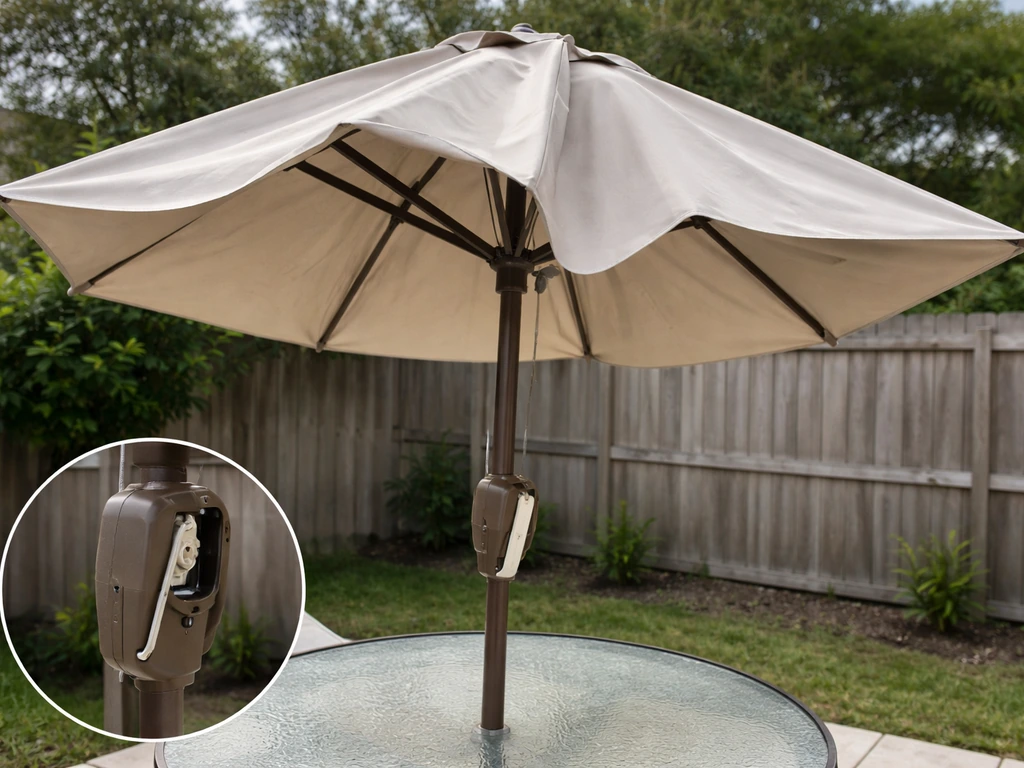
Look at the pole near the canopy and near the base. If there's a handle that rotates, you have a crank system. If there's a hanging loop or rope, it's a cord/pulley system. If the runner (the ring that slides up and down the pole) just moves freely by hand with no mechanism, it's a push-up umbrella. Offset umbrellas usually hang from a side arm on a separate base and often have a crank plus a separate knob or pin for tilting. Knowing your type cuts the troubleshooting list in half immediately.
Umbrella Won't Open: What to Check First
Start with the obvious stuff before you take anything apart. Manufacturers hear this complaint constantly, and a surprising number of calls turn out to be the simplest things.
- Remove any storage strap or tie that's still holding the canopy closed. I know it sounds obvious, but a tight strap around folded fabric will stop any mechanism cold.
- Check the crank direction. Clockwise opens, counter-clockwise closes on virtually every crank umbrella. If you've been turning the wrong way, you may have just been fighting yourself.
- Look for tangled fabric. A snagged or torn panel can catch on a rib tip or the runner and jam the whole thing. Run your hand along each rib and look for fabric that's looped around a joint.
- Check for debris. Dirt, dead leaves, a dried wasp nest in the runner channel, spider webs in the cord path — all of these can lock up the mechanism. Look at the runner channel and pulley guides.
- On market-style umbrellas, some require you to gently pull each rib out by hand while slowly cranking. If you just crank without doing that first, the fabric won't deploy and the mechanism fights back.
- On tilt models, confirm the tilt button or collar is in the neutral (centered) position before trying to open. A half-engaged tilt can misalign the runner and prevent travel.
If none of those quick checks solve it, the problem is mechanical inside the crank, cord, or rib system. If your patio umbrella crank not working, the issue is usually mechanical inside the crank, cord, or rib system. Move to the next section for mechanism-specific diagnosis.
Umbrella Won't Close: What to Check First
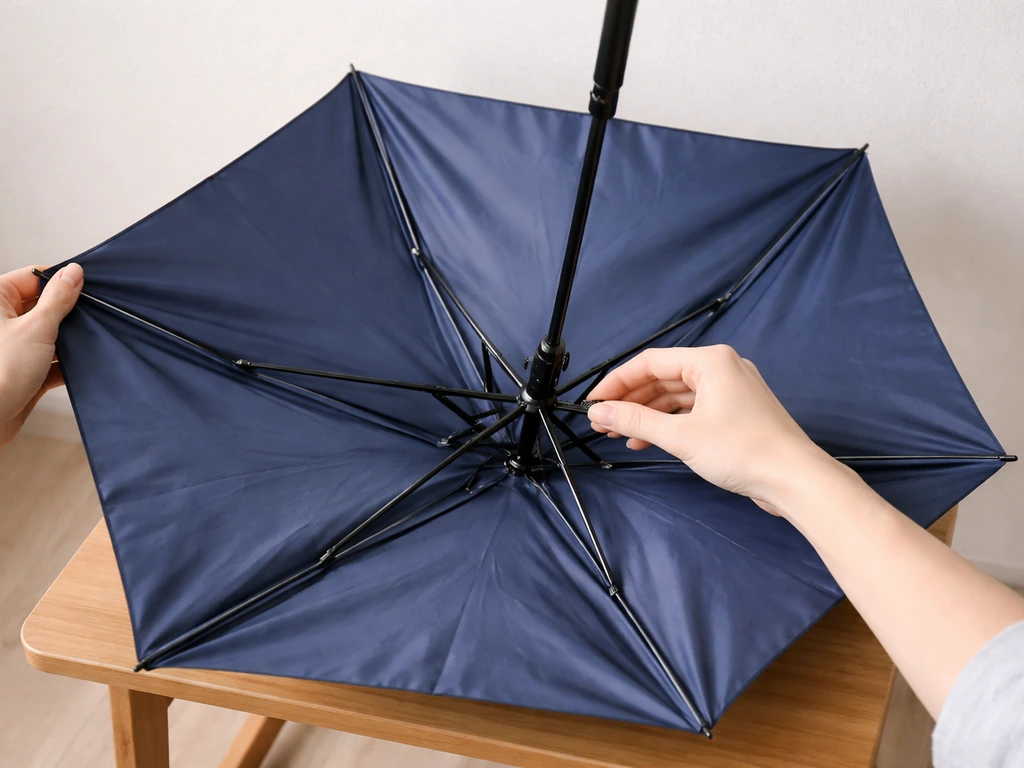
A stuck-open umbrella is just as frustrating as a stuck-closed one, and it's actually more urgent because leaving it open in wind will destroy the ribs. Here's the diagnostic sequence.
- Check for a broken rib. Look at each rib arm from tip to hub. A snapped or severely bent rib will splay out at an odd angle and catch on the others during closure, preventing the canopy from folding down evenly.
- Look at the runner. If the runner is stuck partway up the pole, the canopy can't retract. Try pushing the runner down manually (with umbrella flat, not overhead). If it won't budge, it's likely seized from rust, debris, or a bent pole channel.
- On cord models, check whether the cord itself is broken or slack. If the cord hangs loose or is clearly snapped, the return tension is gone and the canopy has nothing pulling it closed.
- On crank models, counter-clockwise should close it. If the handle turns freely without the canopy responding, the internal cord or gear has likely slipped — see the crank section below.
- Check the tilt joint. A jammed tilt hinge or a lock that's half-engaged can physically block the runner's travel path. Press or click the tilt button fully and try again.
- Look for debris in the tilt collar or hinge area. Grit and oxidized aluminum can seize a tilt joint completely. Clean it out before forcing anything.
Common Causes by Mechanism
Crank Systems
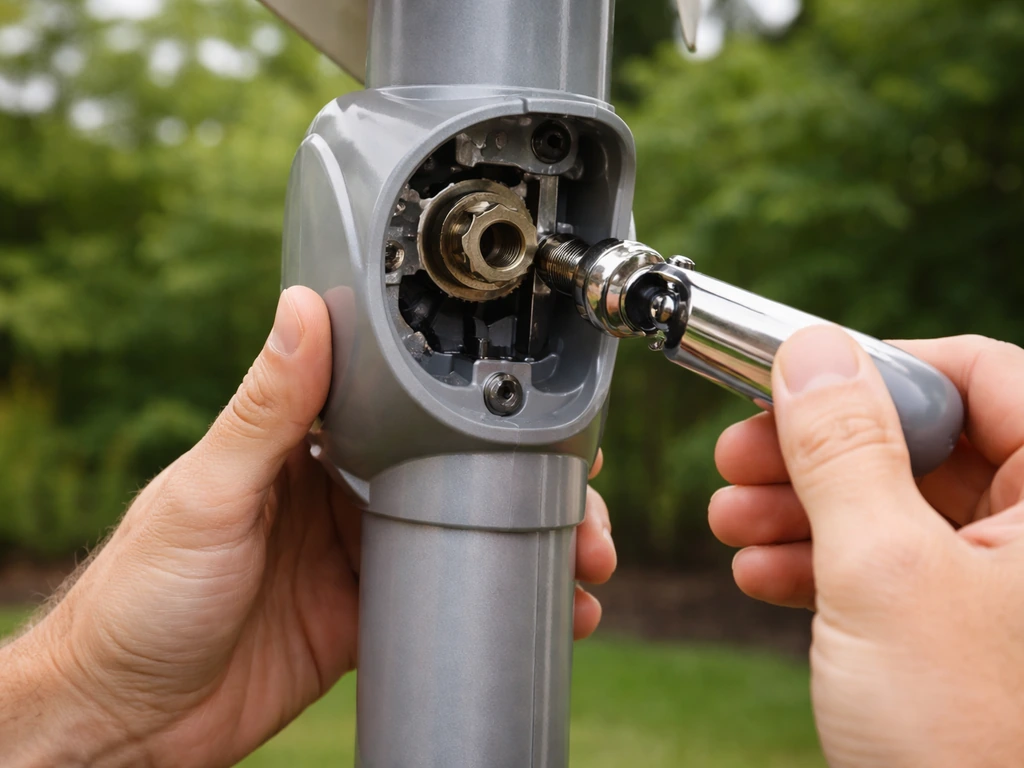
The crank handle connects to an internal winding mechanism that pulls a cord or cable to raise the runner. When the handle spins freely without moving the canopy, the most common cause is a stripped or slipped internal gear, or the internal cord has snapped. If you have a crank system, the fastest way to fix a patio umbrella crank is to check for jammed or stripped internal gears and make sure the cord is not snapped or tangled strippped or slipped internal gear. If you want the quickest path to results, follow the steps for fixing a patio umbrella crank after checking the internal gears and the cord fix a patio umbrella crank. If you have a pulley system instead of a crank, the same jam and tangling checks can help you get your patio umbrella pulley system working again. When the handle is hard or nearly impossible to turn, the cord is likely jammed under tension, the runner is seized on the pole, or someone over-cranked past the fully-open stop (which can snap the tension cable inside). Stop turning as soon as the canopy is fully open, that extra quarter-turn has ruined a lot of crank mechanisms.
Tilt Mechanisms
Tilt mechanisms are usually either a push-button collar on the pole or a rotating collar (auto-tilt). The button type can get grit packed in the button housing, preventing full engagement or full release. The rotating collar type can seize from oxidation. In both cases, the tilt lock needs to be fully engaged or fully released before the umbrella can open or close. A half-pressed button jams the whole thing.
Cord and Pulley Systems
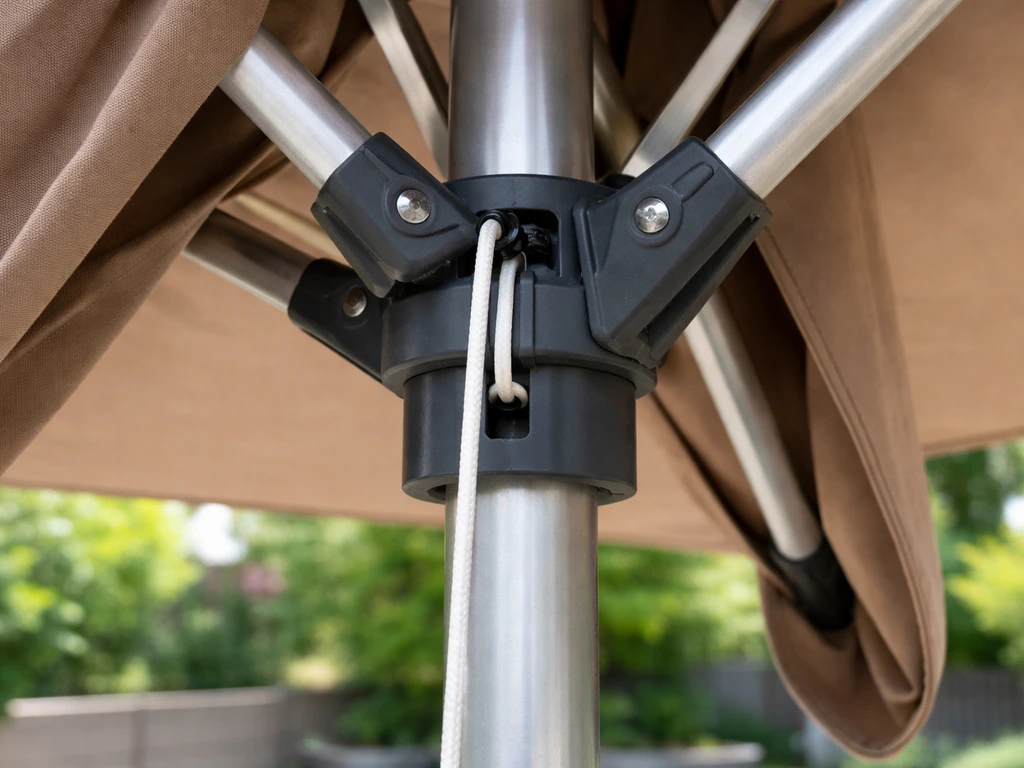
Cord systems thread a single cord through a series of pulleys and rings to translate a pull into canopy motion. Failure modes include: the cord fraying and snapping (usually at a pulley edge), the cord unwinding into a bird's nest inside the hub, a seized pulley wheel that no longer spins (so pulling the cord just shreds it instead of moving anything), or the cord slipping off its pulley track. If you pull the cord and feel no resistance at all, the cord is likely broken. If you feel grinding or very high resistance, a pulley is seized or the cord is jammed.
Friction Joints and Rib Connectors
Older and less expensive umbrellas use friction joints where the ribs connect to the hub. These rely on nylon or plastic friction tabs to hold position. Over time, those tabs crack, shrink, or get packed with debris, and the joint either won't move at all or won't hold position once moved. A runner that slides up but won't latch is usually a friction tab issue at the hub, not a crank problem.
Step-by-Step Fixes You Can Do Today
Gather a few things before you start: silicone spray lubricant (not WD-40, not oil, silicone only), a clean rag, a small flathead screwdriver, needle-nose pliers, and replacement cord if you suspect the cord is broken (3mm braided polyester cord works for most residential models). Work with the umbrella horizontal on a table or low surface if possible rather than trying to fix it in the base overhead.
Fix 1: Stuck or Jammed Crank Mechanism
- Remove the crank handle by pulling it straight out of the housing (most unplug from a socket; some have a small retaining pin you push with a flathead).
- Look inside the crank housing for visible debris, a frayed cord end, or any obvious obstruction. Clear anything you see with the flathead and rag.
- Spray silicone lubricant lightly into the crank housing socket. Do not soak it — two short bursts is enough.
- Reattach the handle and turn slowly in both directions. You should feel it engage the internal mechanism, not spin freely.
- If the handle still spins freely with no resistance, the internal cord has snapped or the gear is stripped. You'll need to open the crank housing (usually two small screws on the housing cover) to inspect the gear and cord spool inside.
- If the gear teeth are visibly chewed up or the cord spool is empty, replace the crank assembly. Most manufacturers sell this as a single replacement part for under $20.
Fix 2: Seized Runner on the Pole
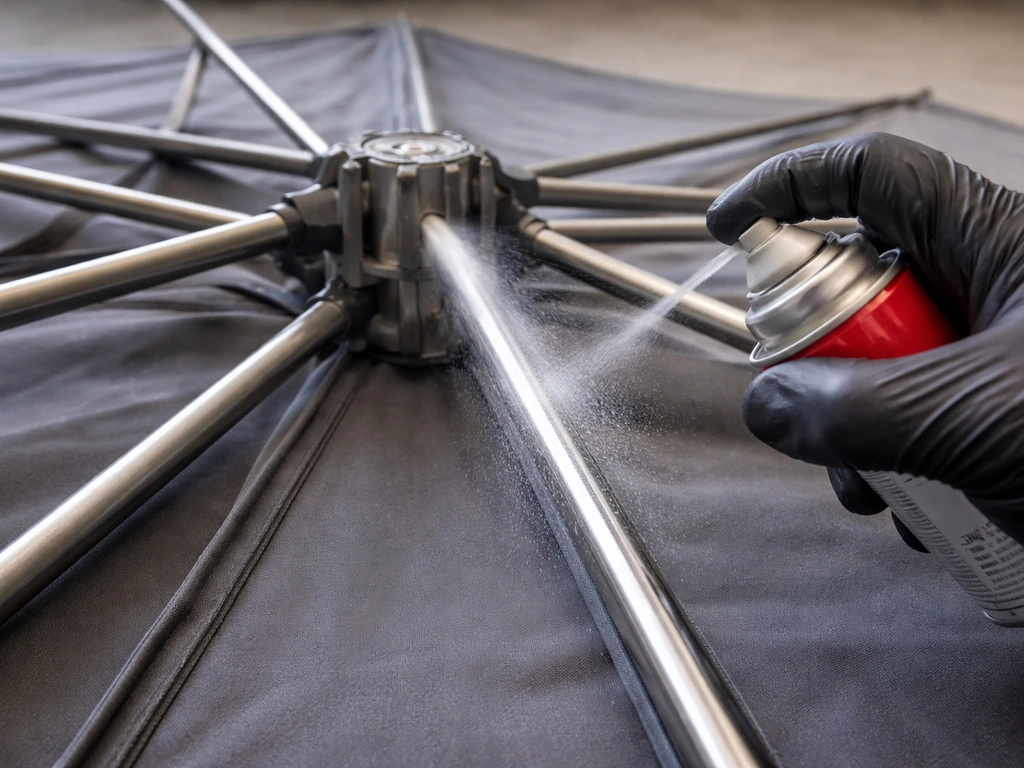
- Lay the umbrella flat and try to move the runner by hand. Don't force it from the crank.
- Spray silicone lubricant along the pole channel where the runner slides. Wait 2 minutes, then try moving it by hand again.
- If it moves slightly, work it back and forth to distribute the lubricant while applying gentle, steady pressure. Avoid hard jerks that can bend the runner bracket.
- If it still won't move, inspect the channel for a bent pole wall or for a rib connector pin that has slipped and is catching inside. Straighten carefully with pliers if accessible.
- Once the runner moves freely, wipe excess lubricant off the pole (too much silicone makes the runner slide past the latch point).
Fix 3: Jammed Tilt Joint
- Locate the tilt collar on the pole (usually a button or rotating ring, roughly 12 to 18 inches below the canopy hub).
- Press the tilt button firmly and hold it while you try to move the canopy angle. If the button feels mushy or won't fully depress, debris is likely packed in the button housing.
- Use the flathead to clear any visible grit from around the button. Spray a short burst of silicone into the button gap and press it repeatedly to work the lubricant in.
- For rotating-collar tilts: grip the collar firmly and try to rotate it in both directions. If it's seized, apply silicone and work it gently back and forth — do not use a wrench or clamp.
- Once the tilt moves freely, confirm it locks in the neutral position before opening the umbrella fully.
Fix 4: Replacing a Broken or Tangled Cord
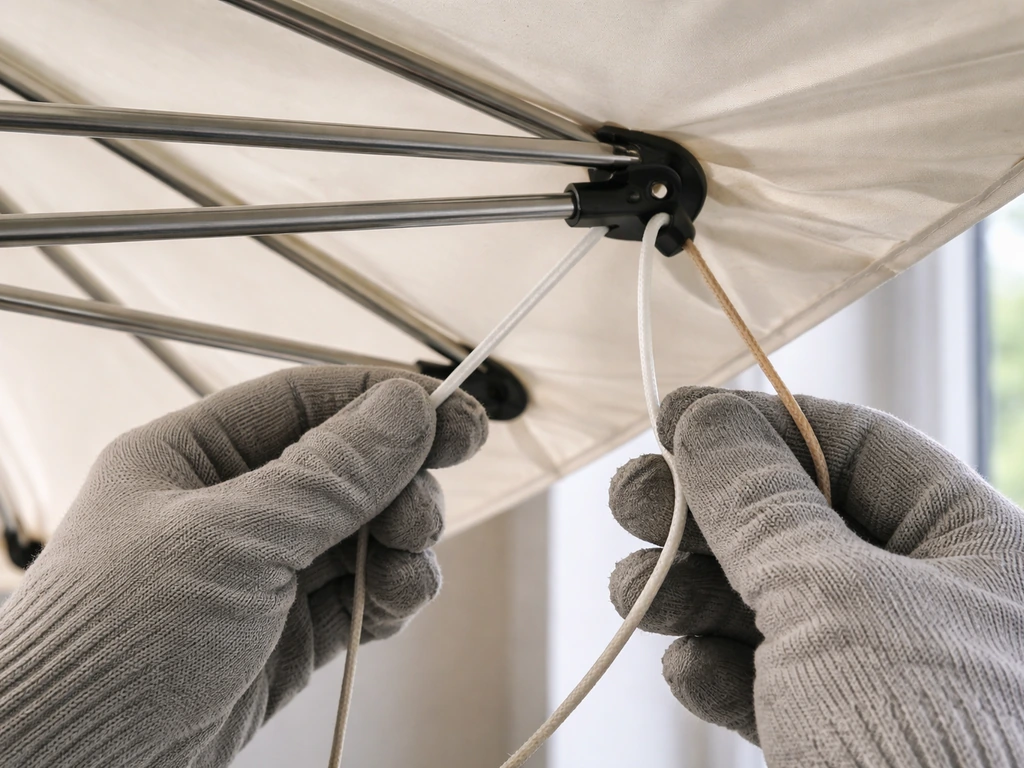
- IMPORTANT: Do not work on the cord while it is under tension. Fully close or open the umbrella until tension is released before cutting or removing the old cord.
- Photograph the cord path before removing anything. You need to know exactly how it threads through each pulley and ring.
- Remove the old cord by following it from the pull loop through each pulley, using the flathead to pop it out of the pulley tracks.
- Inspect each pulley wheel. Spin it with your finger — it should spin freely. If a pulley is seized, spray silicone into the axle and try to spin it loose. If it still won't spin, replace the pulley (usually $5 to $10 at a hardware store).
- Thread new cord through the pulley path using your photo as a guide. Work from the anchor point outward to the pull loop.
- Tie off the anchor end with a stopper knot that won't pull through the anchor hole, then test the cord by pulling slowly before fully reassembling.
Fix 5: Replacing a Broken Rib
- Identify the broken rib: it will look bent at an unnatural angle, have a visible crack, or splay away from the others.
- Do not try to open or close the umbrella further with a broken rib — it can bend other ribs and damage the canopy mounting points.
- Contact the umbrella manufacturer with the model number for a replacement rib kit. Most brands supply them, and replacement instructions are generally available as a separate PDF.
- Follow the rib replacement instructions exactly. The process usually involves detaching the canopy panel from the broken rib's tip ring, unscrewing the rib from the hub connector, and reversing the process with the new rib.
- Check your warranty before doing this. Some warranties exclude broken ribs, but others cover them — and some exclude coverage if you attempt unauthorized repairs first.
Keeping It Working: Maintenance and When to Walk Away
Preventive Maintenance That Actually Matters
Most of these problems are preventable with about 15 minutes of work twice a year, in spring when you bring the umbrella out and in fall before storage.
- Lubricate the runner channel, crank housing socket, tilt collar, and any pulley axles with silicone spray every season. Don't use WD-40 or cooking oil — they attract grit and gum up over time.
- Clean the canopy and fully dry it before closing for storage. Wet fabric stored folded breeds mold that stiffens the canopy material and makes it catch on ribs during opening.
- Always close the umbrella when you're not actively using it, especially overnight and any time wind picks up. The ribs and internal cord take most of their damage from the canopy catching wind when no one is watching.
- When closing, hold the canopy roughly horizontal as it comes down rather than letting it flap. This prevents ribs from bending backward past their stop point.
- Check all visible hardware (rib connector screws, runner bracket bolts, base collar bolts) at the start of each season. Loose hardware causes the kind of wobble that accelerates wear.
- Store the umbrella with a breathable cover or sleeve, not wrapped tightly in plastic, which traps moisture.
When the DIY Fix Isn't Worth It
Most crank, cord, and tilt repairs are well within DIY range. But there are situations where repair doesn't make sense or isn't safe to attempt yourself.
- Multiple broken ribs: replacing one rib is straightforward; replacing three or four usually means the frame has been structurally compromised (often by a wind event), and the remaining ribs are likely stressed and close to failure.
- Bent or cracked center pole: this is a structural problem and the umbrella should not be used until the pole is replaced. A bent pole misaligns every moving part and makes the canopy dangerous overhead.
- Stripped crank housing where the crank assembly itself is riveted in rather than screwed: on budget umbrellas, the crank is sometimes permanently attached and not user-replaceable. If the gear is stripped and you can't access it, the umbrella is at the end of its practical life.
- Frayed or broken internal tension cable on a cantilever umbrella: this is under significant load and the repair requires full disassembly of the arm system. Unless you can source the exact replacement cable with the correct tension rating from the manufacturer, leave this to a professional or replace the umbrella.
- Anything under warranty: before doing any disassembly beyond basic lubrication and cleaning, check your warranty. Unauthorized alterations or disassembly can void coverage, and some manufacturers will send replacement parts or service the umbrella for free if you contact them first.
The honest rule of thumb: if parts cost more than about a third of the umbrella's replacement price, or if the frame itself is bent or cracked, it's usually better to replace. But for the vast majority of stuck cranks, tangled cords, seized tilt joints, and jammed runners, a silicone spray can and 30 minutes of your time will get the umbrella working like new.
FAQ
What should I do if the crank handle spins but the canopy never moves?
Yes, and it can permanently damage the mechanism. When the umbrella is stuck, use gentle force first, then stop if the crank handle spins without movement or if the cord feels like it is shredding. Forcing it past the fully-open stop can snap the internal tension cable, making the problem worse.
How can I tell if my patio umbrella cord is broken versus just jammed?
A snapped cord often shows no resistance at all when you pull, or you may see fraying at a pulley edge. If you suspect a break, check whether the cord moves through the hub area. If it pulls freely but nothing lifts, plan on replacing the cord rather than trying to “re-tangle” it inside.
How do I confirm what type of patio umbrella mechanism I have before troubleshooting?
Because many fixes depend on whether the runner is being pulled by a cord, rotated by gears, or moved directly on a push-up mechanism. A simple way is to look for a rotating crank handle, a hanging loop/rope with pulley behavior, or a runner ring that you can raise by hand without a cable or gears.
Can I use WD-40 or regular oil to fix a stuck patio umbrella mechanism?
If silicone spray lubricant isn’t enough, do not switch to general-purpose oils. Oils and WD-40 can attract grit and cause the tilt or pulley to seize again. Use silicone spray on the tilt collar/button surfaces, pulley tracks, and any joint that binds, then wipe away excess so debris cannot collect.
My runner slides up but won’t latch, what does that usually mean and where should I apply lubricant?
For a seized runner, focus on where the runner meets the pole and the points where ribs hinge. Try working it with the umbrella laid flat on a table or low surface, then apply silicone to the runner contact area rather than spraying into the canopy fabric or hinges where cords run.
What’s the safest way to deal with a patio umbrella that is stuck open?
If the umbrella is stuck open, it is safer to close it as soon as possible, but always anchor the base first. Leave it open in wind only briefly, since it can bend ribs. If you feel grinding or excessive resistance while closing, stop and diagnose the pulley, cord, or seized rib hinge instead of forcing the handle.
How do I prevent over-cranking from causing internal damage?
You can usually avoid stripping by stopping the crank immediately when the canopy is fully open or fully closed. Treat the last turn as a hard stop, not something to “push through.” If the handle becomes much harder to turn near the end, you likely hit a jam or the mechanism is past the designed limit.
What should I do if pulling the cord feels like grinding or extremely high resistance?
Signs point to a seized pulley when pulling the cord causes grinding, heavy resistance, or shreds the cord without raising the canopy. In that case, the pulley wheel needs inspection and likely cleaning and lubrication. If the pulley won’t spin freely by hand after you unload tension, replacement may be needed.
My cord looks tangled inside the hub, how do I avoid making it worse when rethreading it?
Tangled cords inside the hub can form a bird’s nest that looks messy but still requires careful routing. Use the cord diagram you can see in the hub area, and route it in the pulley track order, then test pull with the umbrella on a flat surface. If the cord keeps slipping off the track, you may need the correct cord length or pulley alignment.
When is it better to replace the umbrella instead of repairing the crank or ribs?
If the frame is bent, cracked, or the cost of replacement parts is a large fraction of the umbrella’s price, replacement is usually the right move. Also replace rather than DIY if you find a damaged rib hinge that does not align after cleaning, or if the tension cable is snapped and cannot be restored with normal cord replacement.
Next Articles
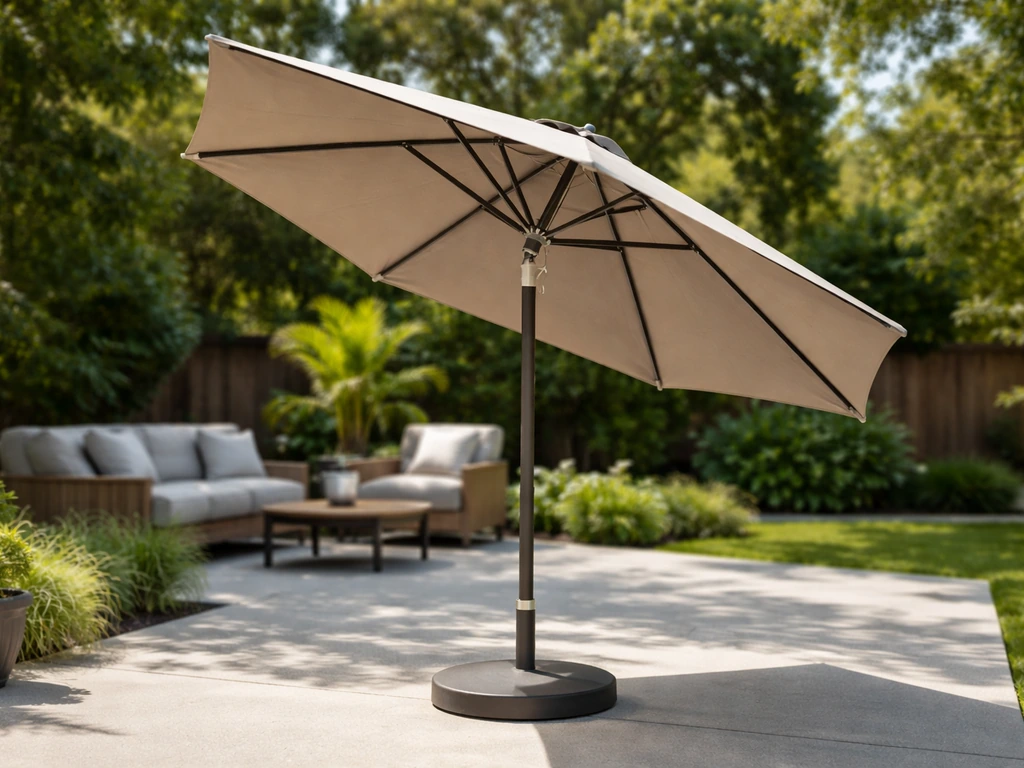
How Does a Patio Umbrella Work? Components, Use, and Fixes
Learn how patio umbrellas work: components, open close tilt, stability, and step by step troubleshooting common mechanic
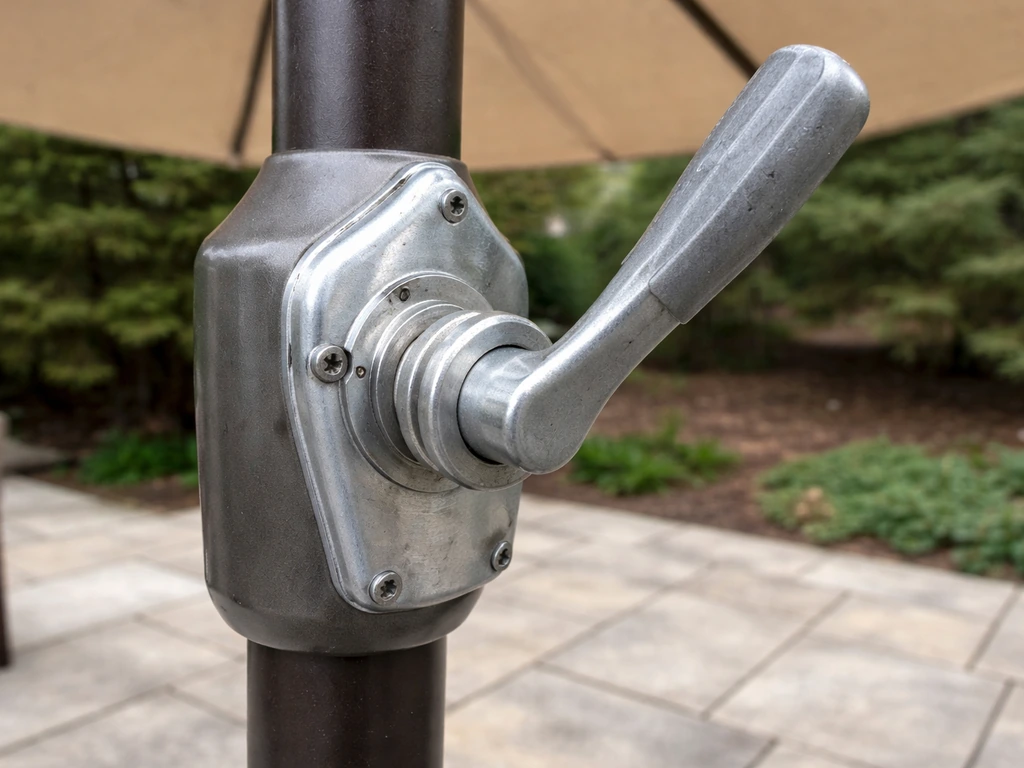
Patio Umbrella Crank Not Working: DIY Fix Guide
Fix a patio umbrella crank that won’t work with safe step-by-step jam, gear, and base troubleshooting and repair tips.
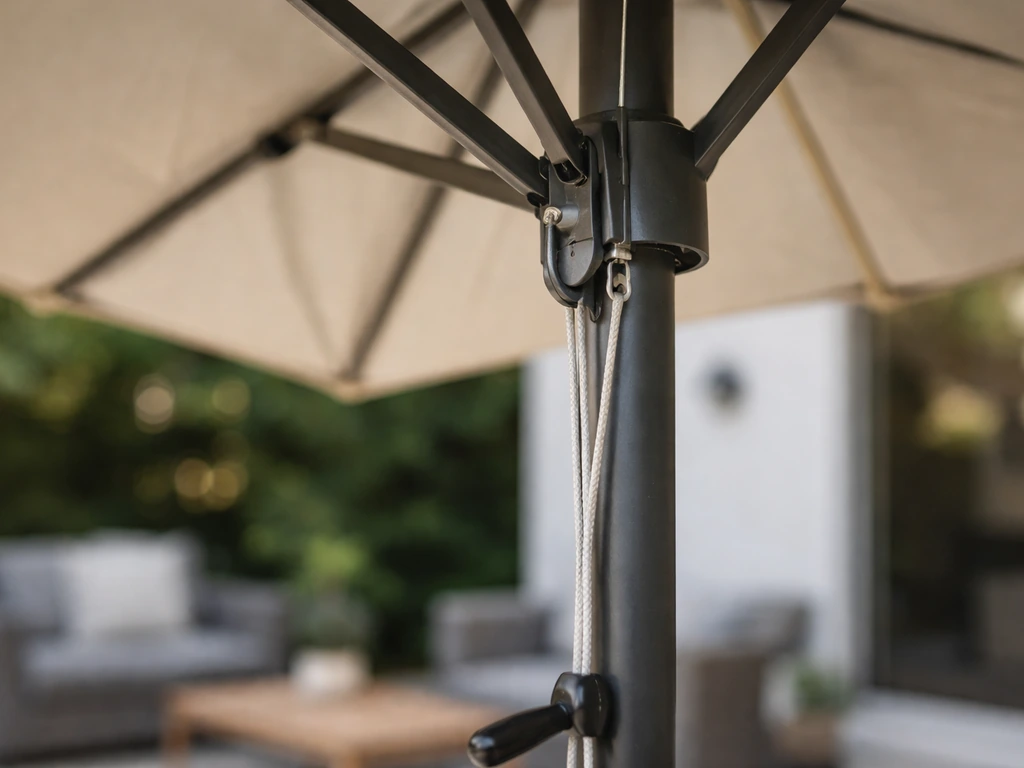
How to Fix a Patio Umbrella Pulley System Step by Step
Step-by-step guide to fix a patio umbrella pulley system, rethread/replace lift rope, clear jams, and test smooth operat