When your patio umbrella crank stops working, the most likely culprits are cord tension locking up the mechanism, a jam from misalignment or a stuck canopy rib, a seized or dry crank gear, or a physically broken crank handle or ratchet. Most of these are fixable in under an hour without special tools. The trick is figuring out which one you're dealing with before you start forcing anything, because forcing a stuck crank is the fastest way to turn a five-dollar fix into a full part replacement.
Patio Umbrella Crank Not Working: DIY Fix Guide
Luca Morrison
29 Apr 2026
First: make it safe and figure out what actually failed
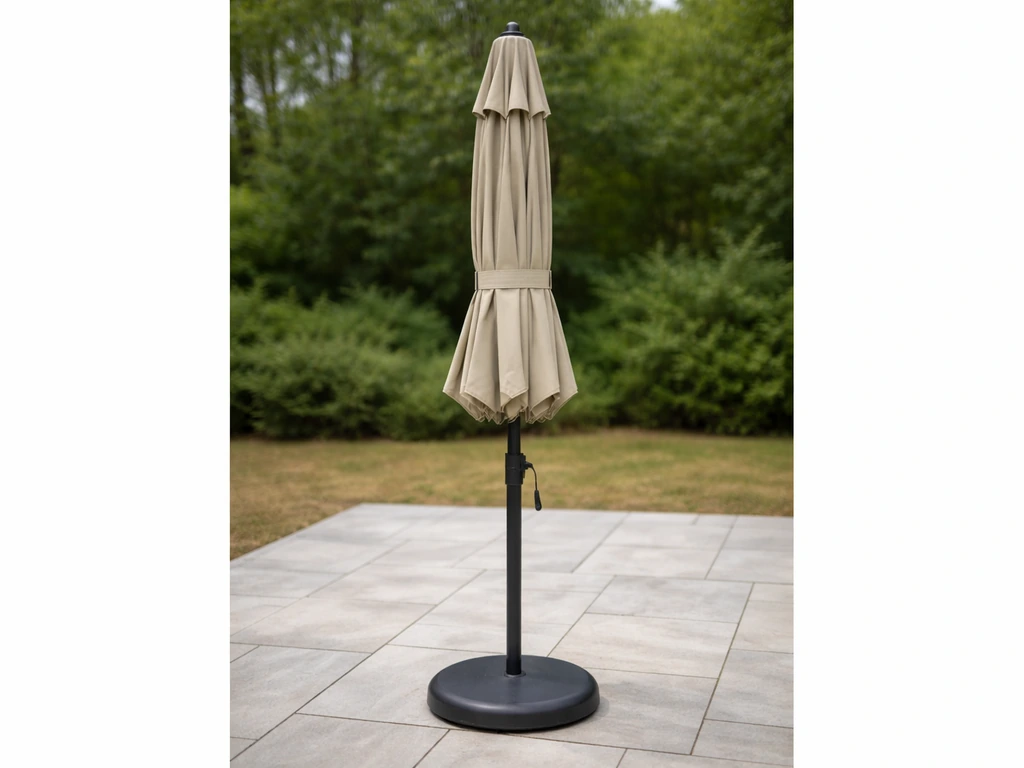
Before you touch the crank, step back and make the umbrella safe to work on. If it's even partly open on a windy day, close it manually or tie the canopy down so it doesn't catch a gust and knock into you while you're working. A half-open umbrella can act like a sail, so if there's any wind, get the canopy secured first. Same goes for a storm forecast: don't troubleshoot a stuck umbrella outdoors in rough weather.
Next, narrow the failure down before doing anything else. There are really two separate things that can go wrong: the crank itself (the handle, the internal ratchet/gear, or the cord it drives), and the umbrella's opening mechanism (the hub, the ribs, the pivot, or the pole). There are really two separate things that can go wrong: the crank itself (the handle, the internal ratchet/gear, or the cord it drives), and the umbrella's opening mechanism (the hub, the ribs, the pivot, or the pole), and if you want the full overview of how does a patio umbrella work, that framework helps you map symptoms to parts. A broken crank means the handle turns without doing anything, or it won't turn at all. A failed mechanism means the crank seems fine but the canopy still won't open or close. These have different fixes, so getting this right saves you a lot of wasted time.
- Handle spins freely with no resistance: likely a broken ratchet, stripped gear, or snapped cord inside the crank housing
- Handle won't turn at all or feels completely locked: likely a jammed mechanism, seized pivot, cord tension lock, or something physically blocking the ribs
- Handle turns but the canopy only moves partway and then stops: partial jam, misalignment, or a rib caught on something
- Clicking sound is gone while cranking: often a ratchet engagement issue, documented as a specific failure mode in crank assembly repair guides
- Crank handle is visibly cracked, bent, or broken off: the handle or crank arm itself needs replacement
What you need and what to check before disassembling
For most crank repairs, you won't need much. Gather a flathead and Phillips screwdriver, a pair of pliers, silicone spray lubricant (not WD-40 or oil-based products, more on that below), a soft cloth, and optionally a hex/Allen key set if your umbrella uses set screws on the crank housing. That's genuinely all you need for 80% of crank problems.
Before you open anything up, run through a few quick checks that can save you a full disassembly. First, confirm the canopy fabric is dry. Wet canvas is heavier and sticks together, which can create enough resistance to feel like a mechanical failure when it isn't. Second, check that any tilt mechanism is fully reset to its neutral (straight-up) position. Some crank-operated tilting umbrellas have a documented requirement that the tilt arm must be fully extended before you retract the canopy. Trying to crank down a tilted umbrella on these models can bind the mechanism and feel like a jam. Third, visually inspect the ribs and canopy for anything tangled, a rib caught on furniture, a string wrapped around the pole, or fabric bunched around the hub.
Diagnosing why it won't crank (the real cause)
Most crank failures fall into one of these four categories. Work through them in order from simplest to most involved.
Cord tension lock (the most common reason it won't crank down)
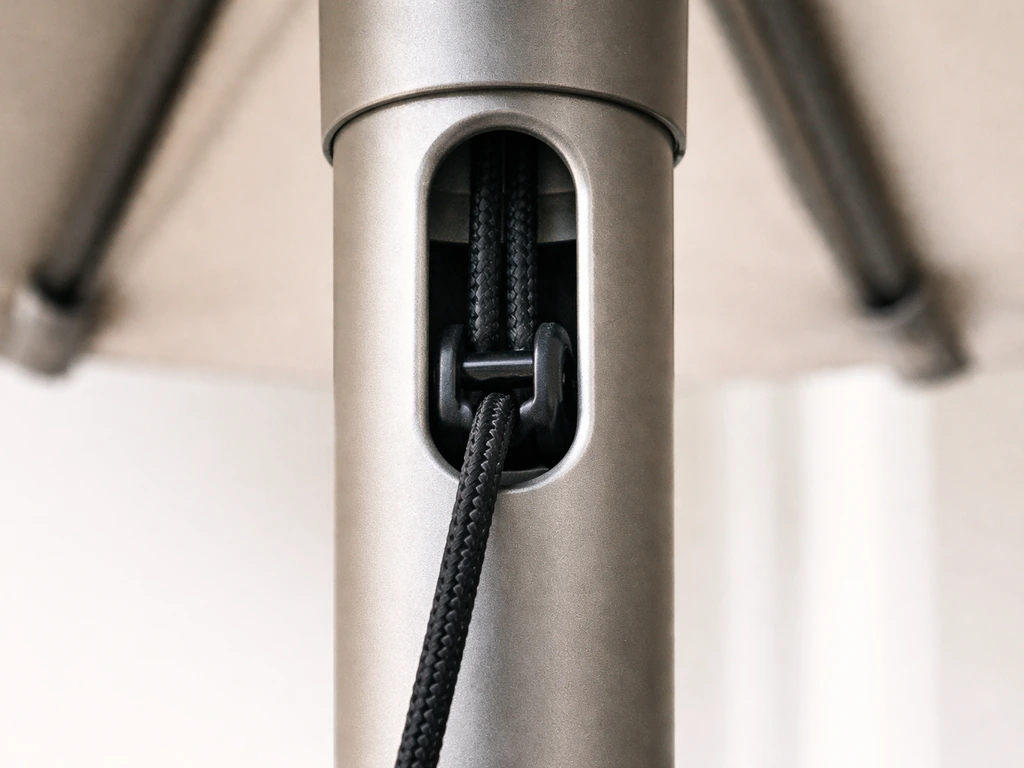
This is by far the most common reason a crank umbrella suddenly won't close. The cord or strap that runs through the pole gets loaded with tension from the weight of the open canopy, and that tension locks the mechanism so the crank can't overcome it on its own. The crank isn't broken. It just can't beat the load by itself. The fix is a two-person move: one person turns the crank counter-clockwise (the closing direction on most models) while the other person gently pushes down on the canopy ribs to relieve the cord tension. You can also try closing the umbrella without using the crank by relieving any cord tension and manually guiding the ribs into the closed position how to open patio umbrella without crank. Once the cord tension releases, the crank will start moving freely again.
Misalignment or wrong crank sequence
Some umbrellas, particularly those with a crank-operated tilt or a hub/ledge that retracts into the pole, require a specific sequence to close. On several models, you need to position the crank handle in a set starting position before cranking begins. If you start cranking from the wrong position, the ledge or hub doesn't retract into the pole properly and the whole thing locks up. Similarly, a tilting umbrella that isn't reset to vertical before closing will often jam. Check your model's manual for the correct closing sequence. PatioCollection’s UM800 SL & UM801 SL owner’s manual includes a dedicated “Closing Umbrella” step section you can use to verify the model-specific closing sequence and confirm the umbrella is safe to operate before or after troubleshooting a crank that won’t work blank" rel="noopener noreferrer">Check your model's manual for the correct closing sequence.. The counter-clockwise direction to close is standard across most crank umbrellas, and on some designs the retracting hub parts literally pull back inside the pole as you begin that first counter-clockwise rotation.
Seized pivot or dry, corroded moving parts
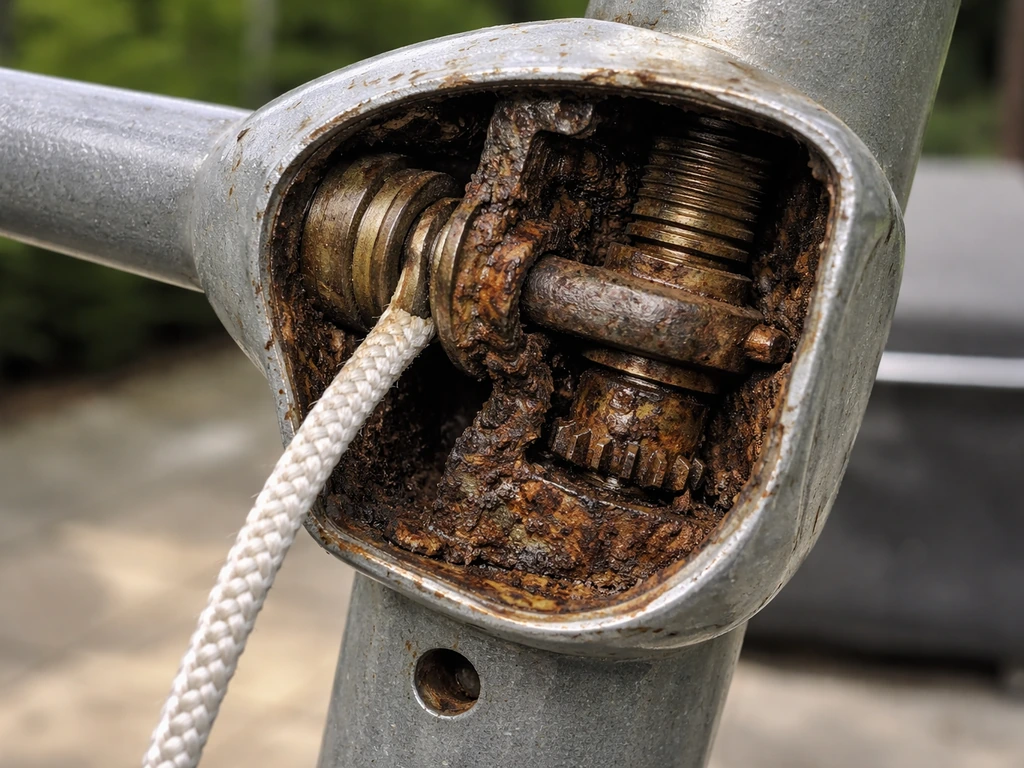
If the umbrella has been sitting through a winter or a wet season without any maintenance, the internal pivot points, the gear housing, and the cord guide can corrode or stiffen to the point where the crank genuinely can't turn them. This usually shows up as the handle being very stiff or turning only with a lot of force. It's different from a hard lock: with a seized component, the handle moves but fights you the whole way. Lubrication is the fix here, but you need to do it right.
Internal drive failure (gear, ratchet, or cord)
If the handle spins freely with zero resistance and the canopy doesn't move at all, the internal drive has failed. This means either the cord has snapped, the ratchet pawl is worn out or has slipped off its seat, or the internal gear has stripped. You can confirm this by listening while you crank: a working ratchet makes a clicking sound as you turn. No click, or a click that immediately skips, points to a ratchet or gear problem. This type of failure requires opening the crank housing to inspect and replace the internal parts.
Step-by-step fixes: from quick release to full reset
Fix 1: Release cord tension (two-person method)
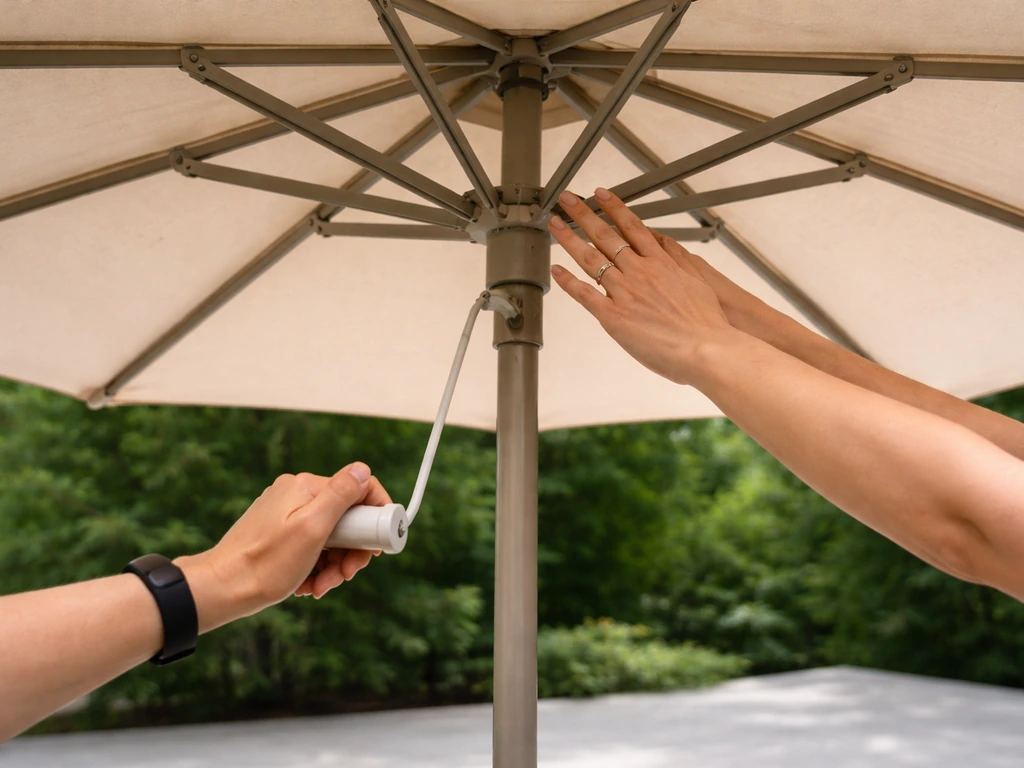
- Position one person at the crank handle, ready to turn counter-clockwise.
- Have the second person stand next to the canopy and place both hands on top of a rib or the canopy center, ready to push gently downward.
- On a count of three, the first person begins slow, steady counter-clockwise cranking while the second person applies a gentle downward push on the canopy.
- Don't yank or force. The goal is to take just enough load off the cord that the crank can start moving.
- Once the canopy starts descending, the tension self-releases and one person can finish closing it alone.
Fix 2: Reset the sequence and tilt position
- If your umbrella has a tilt function, manually return the canopy to the fully vertical (straight-up) position before trying to crank it closed.
- Check that the crank handle is positioned at its defined starting point (refer to your manual's 'To Close Canopy' section if available).
- Attempt the counter-clockwise cranking motion again from this reset position.
- If the mechanism begins to engage, continue slowly and check that the hub or ledge is retracting smoothly into the pole.
Fix 3: Lubricate seized or stiff parts
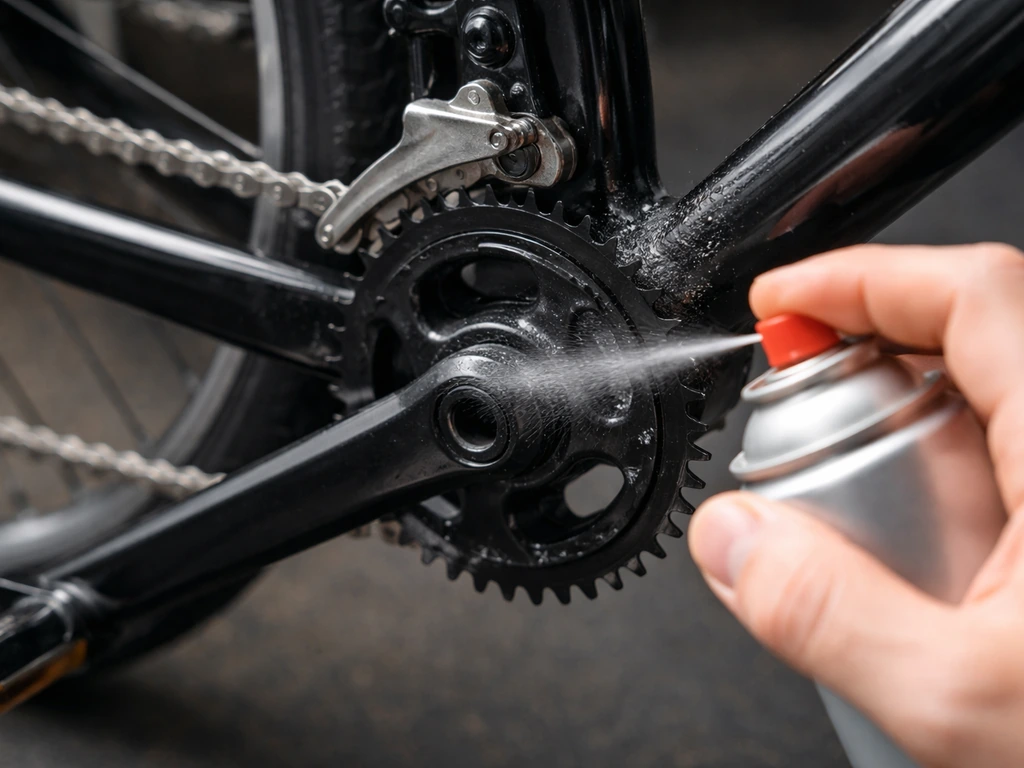
- Use a silicone-based spray lubricant only. Avoid WD-40, 3-in-1 oil, or any petroleum-based product. Oil-based lubricants attract dust and debris, which will eventually make the jam worse.
- Spray silicone lubricant into the crank housing entry point and around the base of the crank handle where it meets the pole.
- Let it sit for 3 to 5 minutes to penetrate.
- Try the crank again slowly. If it's a dry/seized issue, you should feel the resistance ease up within the first few rotations.
- If the pole has access holes near the crank housing, a short spray inside the pole will help lubricate the cord guide and internal pivot.
Crank-specific repair paths
Broken or bent crank handle
A cracked or snapped handle is a straightforward parts replacement. The handle typically slides onto a square or hex drive shaft and is held by a small set screw or clip. Remove the set screw, pull the old handle off, slide the new one on, and tighten the set screw. Replacement handles are inexpensive and widely available. The key is matching the drive shaft size, so measure the shaft width before ordering (common sizes are 7mm and 8mm square).
Worn ratchet or stripped gear
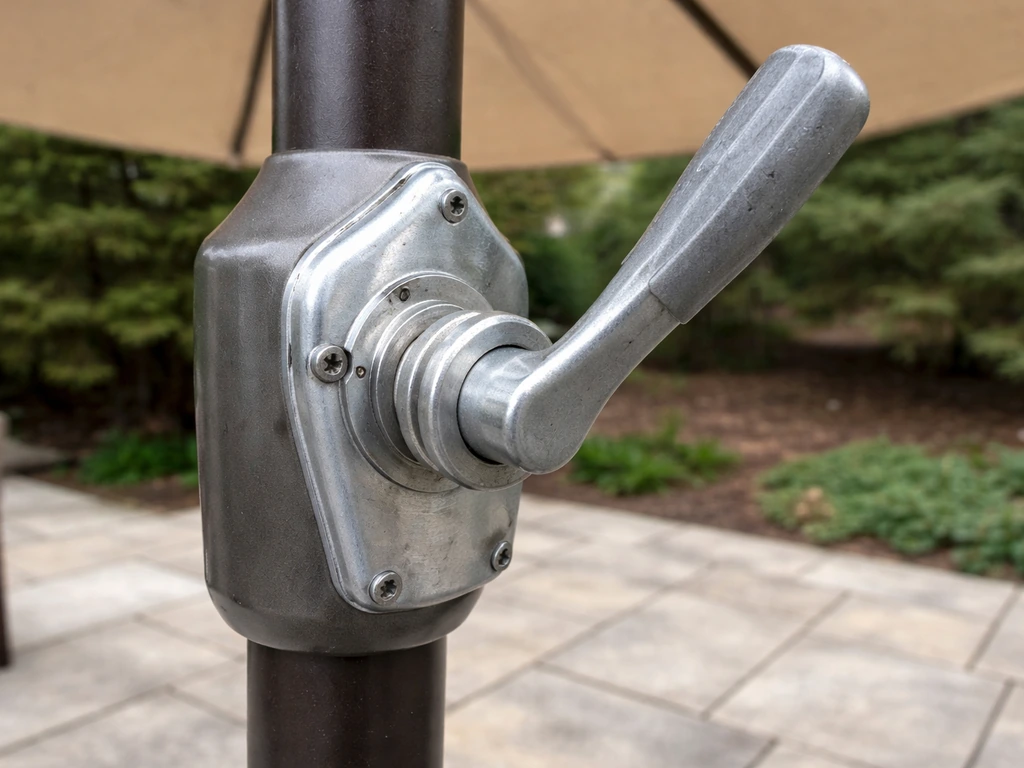
If the handle spins with no resistance and no clicking, the ratchet pawl is the most likely culprit. To inspect it, you need to access the crank housing. On most umbrella poles, the crank housing is a plastic or metal box mounted to the side of the pole, held by two or four screws. Remove those screws, open the housing, and look for a small spring-loaded pawl (a tiny tooth that clicks against a gear wheel). If the spring is broken or the pawl has slipped out of position, it can often be reseated or the spring replaced. If the gear teeth are visibly worn or stripped, the gear itself needs replacement. Some manufacturers sell complete crank assembly replacement kits for this exact failure.
Cord or strap tangled or broken
A tangled cord is actually a common failure, especially if someone closed the umbrella while it was off-center or overtightened the crank. Open the crank housing and trace the cord from the gear drum through the pole. Look for any point where the cord has crossed over itself, frayed, or jumped off the drum. If it's just tangled, you can often unspool it by hand and re-route it correctly around the drum. If the cord is frayed or snapped, measure its length and diameter before ordering a replacement. When re-spooling, close the canopy first and make sure the cord is under light tension as you wrap it back onto the drum so it winds evenly.
Crank-operated tilt vs. lift-and-tilt models
Worth a quick note: not all umbrellas use the same crank system. If you are still unsure about the specific mechanics behind your setup, reviewing how does a patio umbrella work can help you understand the crank system and adjacent opening parts. A standard market umbrella uses the crank only to open and close the canopy. A crank-operated tilt umbrella uses a secondary crank rotation (or a button-release tilt collar) to also angle the canopy. Lift-and-tilt designs use a push-button or lever rather than a separate crank for the tilt function. If you're troubleshooting a tilt umbrella and the crank feels locked, double-check whether the tilt collar is engaged. A tilt that's partially activated can bind the main crank mechanism on some designs.
When to stop DIY and how to find the right parts
Stop DIY and move to part replacement when: the gear teeth are visibly stripped and the ratchet can't engage, the internal cord drum is cracked, or the crank housing itself is broken or warped. Forcing a stripped gear will just grind it down further. At that point, you need a new crank assembly, not more troubleshooting.
Finding the right replacement parts is where a lot of people get stuck, so here's how to do it efficiently. Look for a manufacturer label on the pole or base of the umbrella. This label usually has the brand name, model number, and sometimes a parts hotline or website. That model number is what you need to search for compatible crank assemblies. If the label is gone, measure the pole diameter, the drive shaft size, and the crank housing dimensions, then search the manufacturer's parts page or a patio parts retailer using those measurements. Generic crank handles and assemblies exist, but fit varies, so the model number match is always better when you can get it.
On cost and effort: a replacement crank handle runs $5 to $20. A full crank assembly with gear and housing is usually $20 to $50. If the umbrella itself is several years old and the pole or canopy has other wear issues, it's worth doing a quick honest comparison of repair cost versus the cost of a new umbrella before you order parts.
How to prevent this from happening again
Most crank failures are avoidable with a few simple habits. The biggest one is always closing the umbrella when you're not using it, especially before any wind picks up. An umbrella left open in wind builds up cord tension and stresses the crank mechanism every time it moves. Closing it every evening is genuinely the single best thing you can do for the longevity of the crank.
- Lubricate the crank housing and pivot points with silicone spray at the start and end of each season. It takes two minutes and prevents most jam and seizure issues.
- Always reset the tilt to vertical before cranking the canopy closed. This is especially important on crank-tilt models where forcing the sequence causes binding.
- Crank slowly and evenly. Rapid cranking stresses the ratchet pawl and can cause the cord to jump off the drum.
- Make sure the canopy is completely dry before closing it. Wet fabric is heavier and can trap the ribs in an awkward position.
- At the end of the season, loosen the cord tension slightly before storing the umbrella. Leaving the crank under full load over winter accelerates wear on the pawl and spring.
- Tighten all bolts and set screws at the start of each season. Loose hardware lets the housing shift, which causes misalignment and binding.
- Store the umbrella in a cover or indoors during the off-season to keep moisture and debris out of the crank housing.
If you've gone through all of this and the crank still isn't operating correctly, it's likely a deeper mechanical issue with the internal pulley or cord routing system inside the pole. If your patio umbrella still won’t open after the basic crank checks, the deeper internal pulley or cord routing system may be the reason how to fix a patio umbrella that won t open. That's a different repair path from the crank itself. Similarly, if your umbrella doesn't use a crank at all and relies on a pulley rope, the failure points and fixes are specific to that system. If you have a pulley rope system instead of a crank, the same diagnostic approach applies, but you'll need to check the rope routing, tension, and pulley alignment to restore smooth opening and closing.
FAQ
My patio umbrella crank not working, but it turns a little, then jams. Should I keep cranking harder?
Stop as soon as you feel the crank “binds,” not just resists. Forcing usually strips the ratchet or gear further. A safer first step is to confirm the canopy is vertical and dry, then try relieving cord tension by gently pressing down on the ribs while someone turns the crank counter-clockwise (common closing direction).
How can I tell if my patio umbrella crank issue is the ratchet/gear or just lubrication?
Try a simple listening test. If you hear consistent clicking as you crank, the ratchet is likely engaging. If there is no click, or the click skips almost immediately, plan on opening the crank housing to inspect the pawl and gear teeth rather than only lubricating.
Can I use WD-40 or oil when my patio umbrella crank not working?
Yes, but only after you verify you are using the right lubricant type. Silicone spray is typically compatible with umbrella plastics and cords and helps prevent sticking at pivot points and the cord guide. Avoid oil-based greases near fabrics, since residue can attract dirt and make future binding worse.
My patio umbrella crank handle spins freely, nothing moves. What’s the most likely cause?
If the crank handle is spinning freely, the handle is not connected to the drive. Most often it is a slipped set screw or a sheared drive shaft key, depending on the model. Remove the handle (after closing the umbrella safely) and check for a loose set screw, missing clip, or worn square drive before replacing parts.
The crank clicks, but my canopy still won’t open or close. What should I check next?
If it clicks but the canopy still does not open or close, the failure is probably in the opening mechanism path (hub, ribs, pivot) or the cord routing inside the pole. In this situation, don’t assume the crank is fine, open the crank housing and trace the cord drum to the pole entry to confirm the cord moves when the ratchet turns.
My patio umbrella crank not working on a tilt model. How do I know if the tilt is causing the lock?
A partially engaged tilt collar can lock the main crank on tilt models. Verify the tilt control is fully reset to neutral (straight-up) before trying to close, and start with the crank handle in the model’s specified starting position if your umbrella uses a ledge or retracting hub sequence.
What causes a tangled or crossed cord on a patio umbrella crank system, and how do I fix it without breaking anything?
If you closed the umbrella with the fabric off-center, the cord can climb or cross on the drum. After you open the housing, look for cord crossing, uneven layering, or frayed sections. Re-route so the cord winds in one direction without crossing, and keep the cord under light tension while you re-spool.
How do I make sure I buy the correct replacement crank handle for my patio umbrella?
Measure the drive shaft where the handle mounts before ordering. Common square sizes (often 7 mm or 8 mm) vary by brand, and “universal” handles frequently don’t match. Also check whether your handle uses a set screw, clip, or pinch style retention.
At what point should I stop DIY troubleshooting and replace the crank assembly?
Common stop points are visibly stripped gear teeth, a cracked internal cord drum, or a warped/cracked crank housing. When any of those are present, replacement is usually more reliable than repeated attempts to reseat pawls or re-lubricate, since the damaged part will re-bind quickly under load.
My patio umbrella crank not working to open, not to close. Does the troubleshooting change?
If the umbrella won’t open, but the crank moves normally, check for locked ribs or fabric bunching around the hub/pivot. Also confirm the opening sequence is not starting in a bad position on retracting-hub designs. For stubborn opening, avoid forcing, since rib misalignment can damage the cord path.
Next Articles
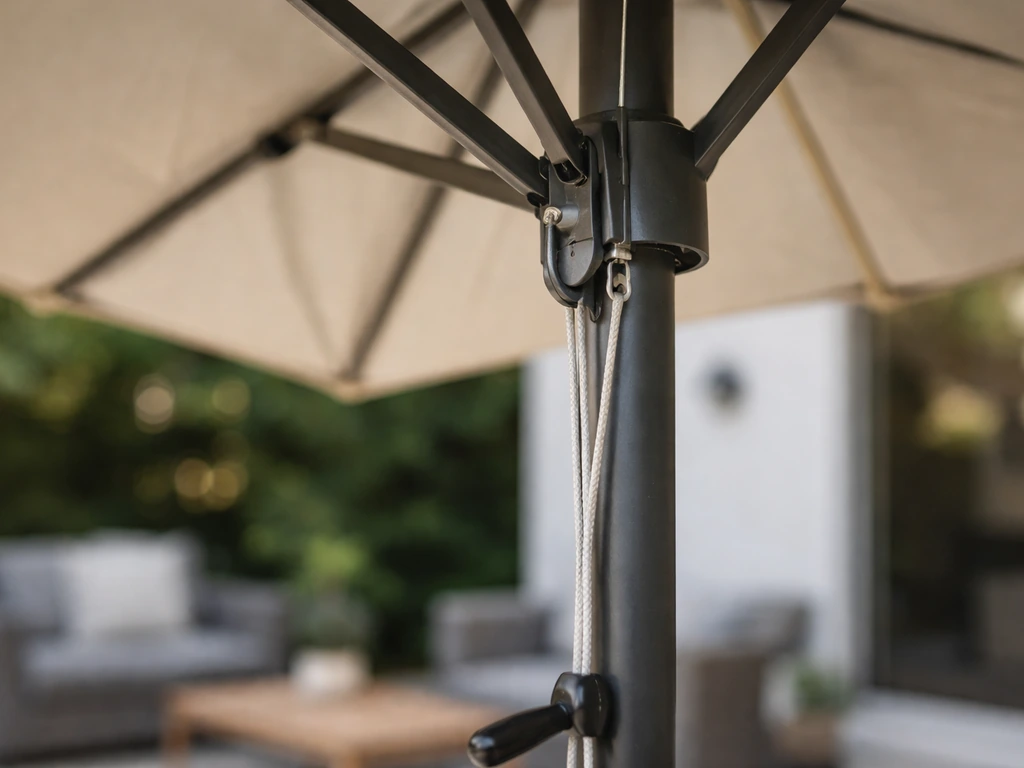
How to Fix a Patio Umbrella Pulley System Step by Step
Step-by-step guide to fix a patio umbrella pulley system, rethread/replace lift rope, clear jams, and test smooth operat
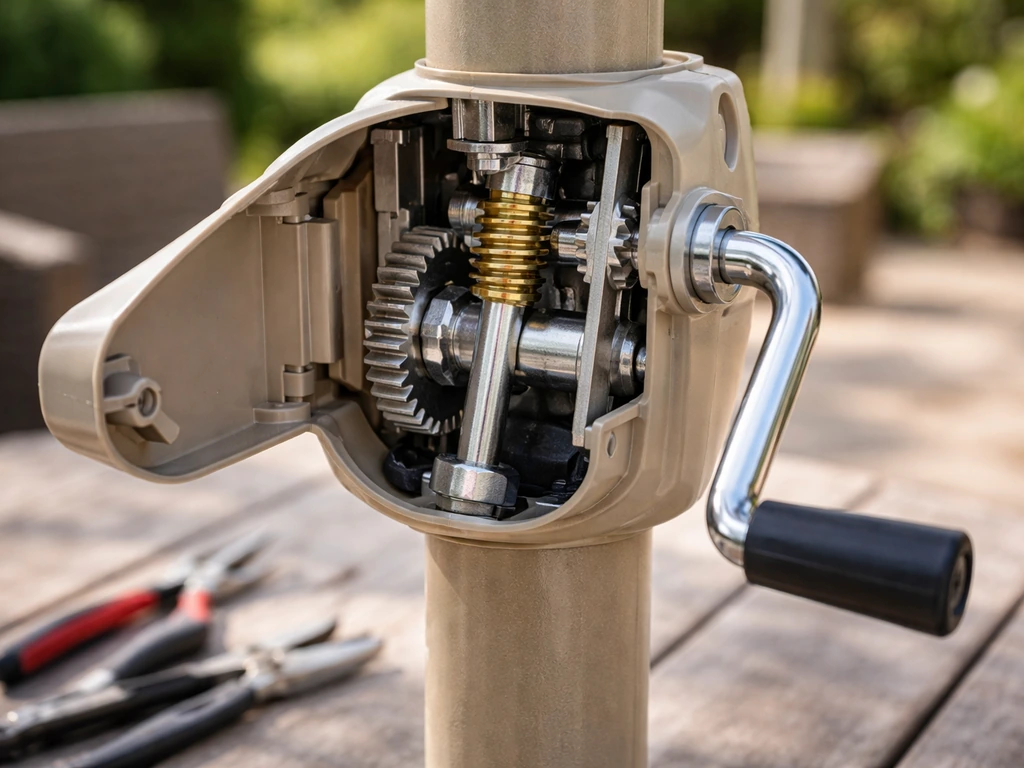
How to Fix a Patio Umbrella Crank: Step-by-Step
Fix a patio umbrella crank with step-by-step diagnosis, handle repair, mechanism checks, tools, reassembly, and testing.
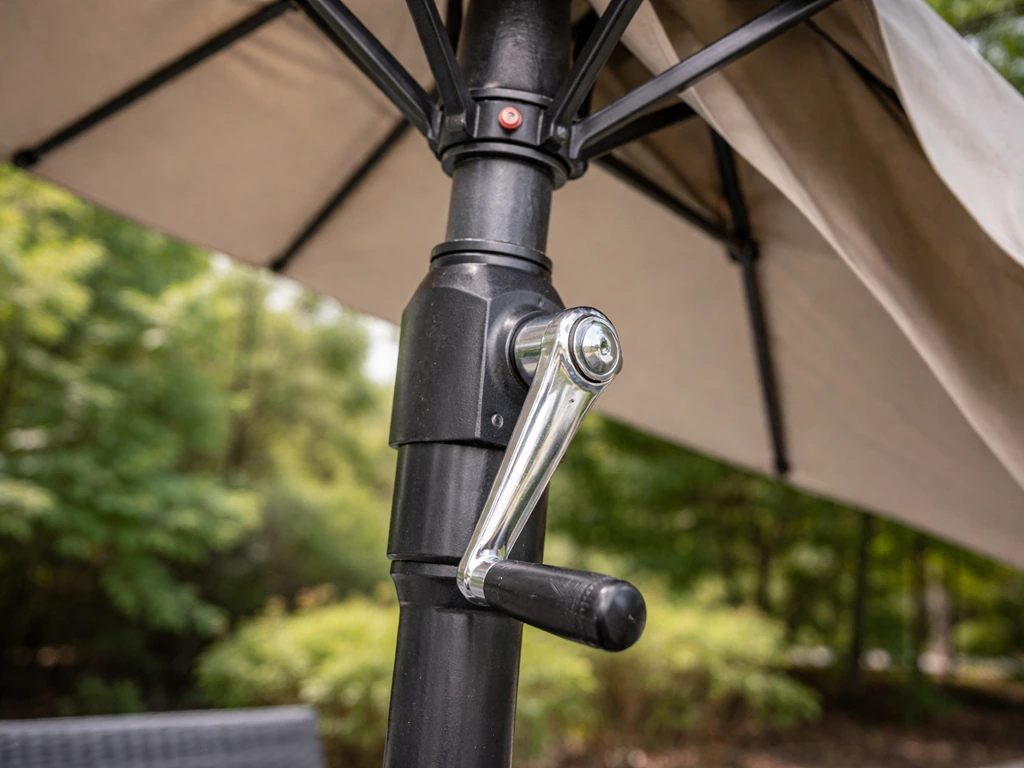
How Does a Patio Umbrella Crank Work? Troubleshooting Guide
Learn how a patio umbrella crank drives opening and tilt, then troubleshoot jams, slipping, stiffness, and locking failu