A patio umbrella crank works by converting the rotational motion of your handle into vertical movement inside the pole. When you turn the handle, a small drive gear or spindle winds a cable (or pushes a linkage rod) that pulls a sliding runner hub upward along the pole shaft. That runner hub connects to the umbrella ribs, so as it climbs, the ribs fan outward and the canopy opens. Reverse the crank, and the runner drops, folding the ribs back in. The whole system is mechanical, mostly contained inside the pole, and surprisingly simple once you know what's in there.
How Does a Patio Umbrella Crank Work? Troubleshooting Guide
Luca Morrison
29 Apr 2026
How the crank actually opens and closes your umbrella
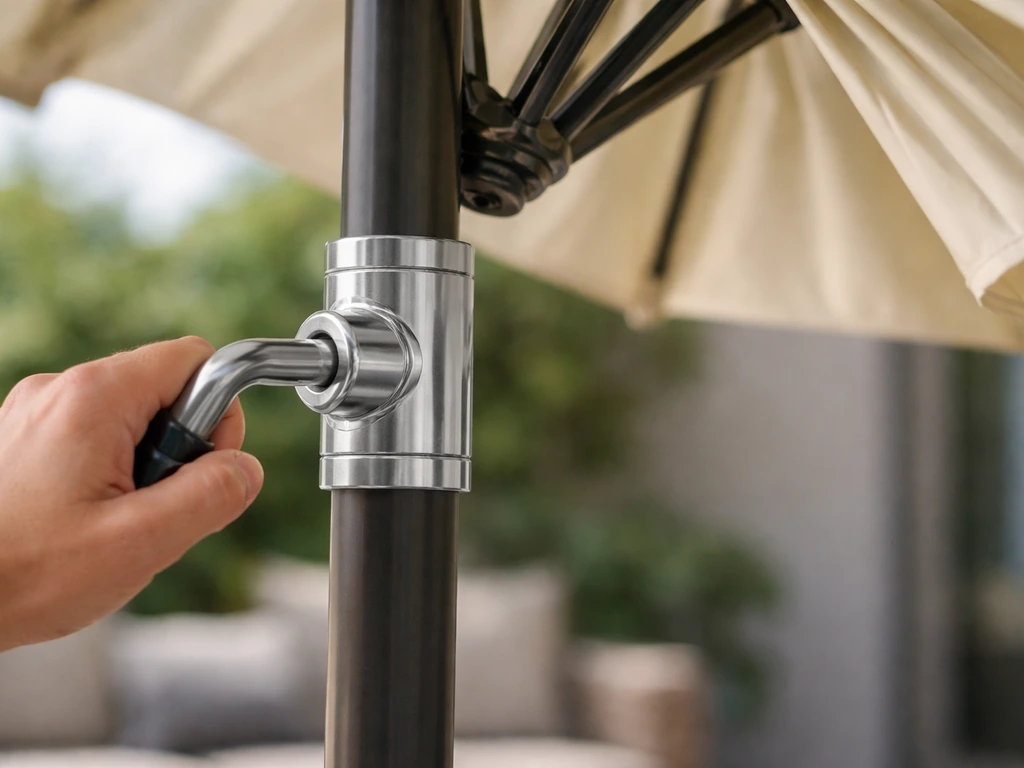
Before you touch the crank, there's one thing that trips up almost everyone: always 'fluff' the canopy slightly by hand before you start cranking. When the umbrella is folded, the fabric bunches between the ribs and creates resistance. If you crank directly against that fabric tension, you're putting unnecessary stress on the cable and gear system, which accelerates wear. Just loosen the fabric with your hands so the ribs can move freely, then crank.
Cranking clockwise opens most umbrellas. If your umbrella has no working crank or you want a backup method, learn how to open a patio umbrella without a crank instead. You should feel only light, consistent resistance as the runner hub climbs the pole. On umbrellas that use a locking ledge system (sometimes called an EZ-Up style spring or steel ledge), the sequence goes like this: crank clockwise until the runner passes a spring-loaded steel ledge that pops out of the pole wall, then blank" rel="noopener noreferrer">crank just about an inch further and reverse counter-clockwise so the runner seats back down onto that ledge. That's what holds the umbrella open without you having to hold the crank. To close, crank clockwise slightly to lift the runner off the ledge, then crank counter-clockwise steadily until the canopy is fully folded.
One important safety note, especially on tilt-style umbrellas: cranking counter-clockwise when the umbrella isn't fully seated on its locking ledge can cause the canopy to drop suddenly. Always complete the open sequence fully before using the tilt function, and always close from a fully-open position.
What's actually inside the crank housing
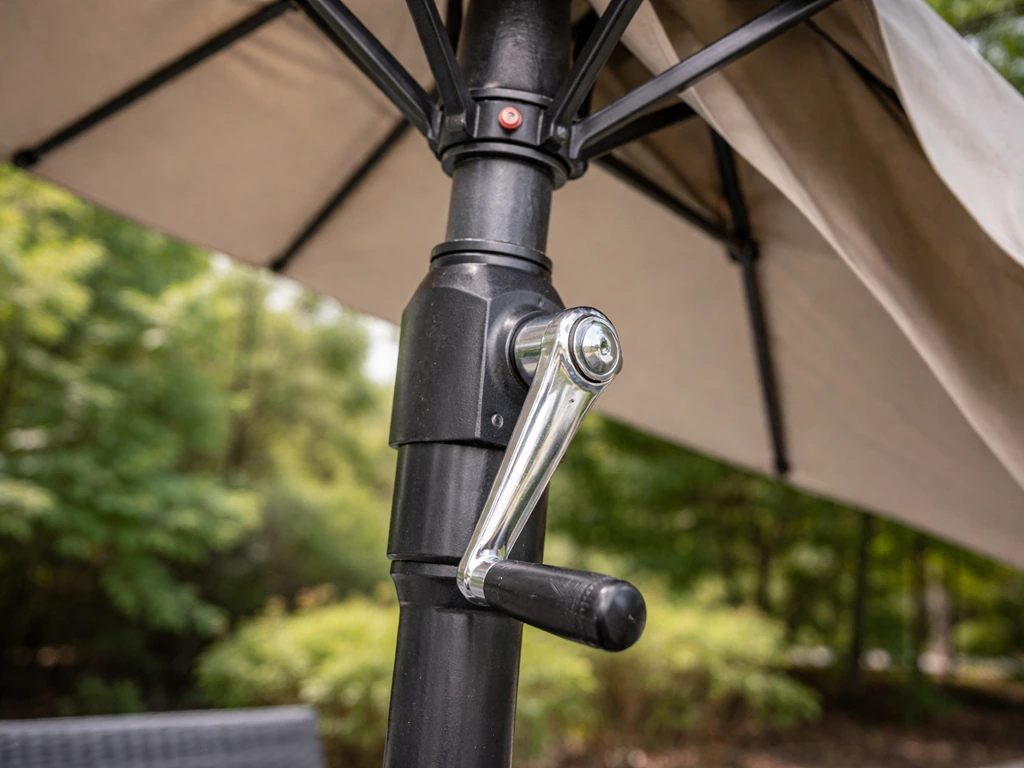
The crank handle connects to a spindle that sits inside a plastic or cast housing mounted on the pole. That spindle drives a gear system (either a worm gear or a simple reduction gear set) that multiplies your torque so the lift doesn't require much hand strength. The gear output connects to a lift cable (a braided cord or thin steel cable that runs up through the center of the pole) or in some designs a push-pull linkage rod. The cable loops around a pulley near the top of the pole and attaches to the runner hub, which is the sliding collar that the rib struts connect to. The umbrella runner hub is the sliding collar that connects to the rib struts, and the crank mechanism links to that hub through the lift cable system blank" rel="noopener noreferrer">runner hub connects to the rib struts.
Inside or directly behind the gear assembly is a ratchet and pawl mechanism, sometimes called a P-ratchet in parts catalogs. This is what keeps the umbrella from collapsing under its own weight when you stop cranking. The pawl (a small spring-loaded tooth) catches on the ratchet teeth and holds position. This is also one of the first things to wear out. If your umbrella slowly drifts closed after you open it, the ratchet is the likely culprit.
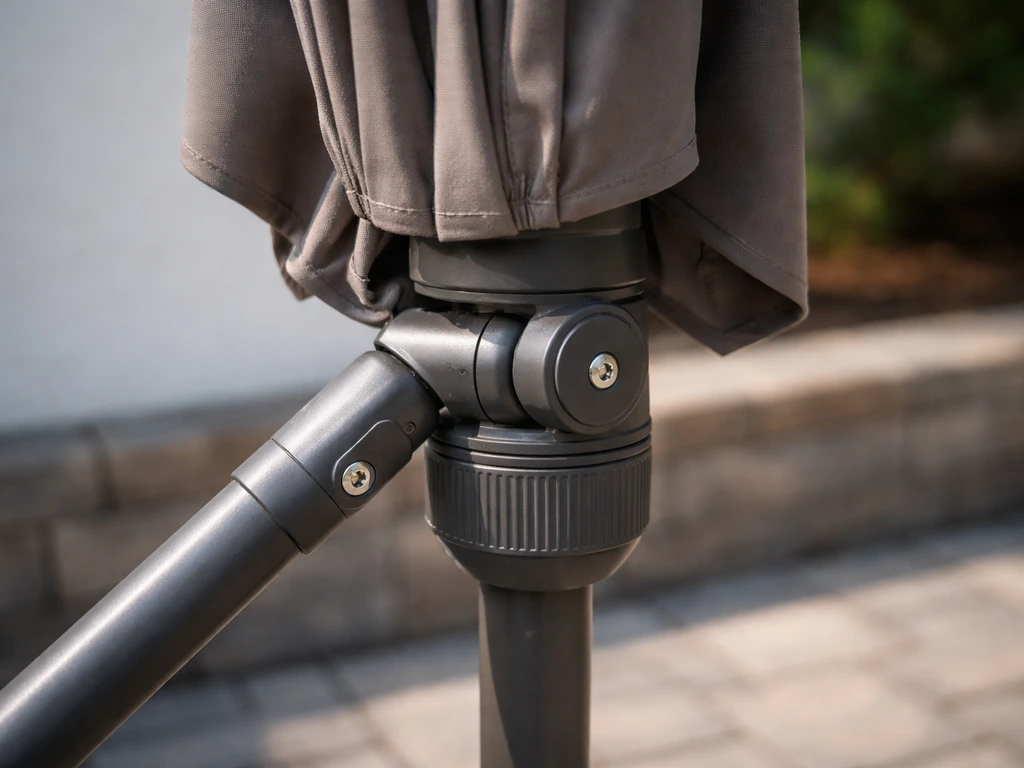
On umbrellas with a crank-plus-tilt feature, there's an additional tilt wheel or pivot joint near the upper hub. On most designs, the tilt is a separate action from cranking, operated by a knob or by pushing the pole to a preset angle. The crank itself doesn't control tilt directly, it only drives the open/close lift mechanism. Keep this distinction in mind when troubleshooting.
| Part | What it does | Common failure sign |
|---|---|---|
| Crank handle | Transfers your turning force into the gear system | Wobbles, spins loose, or snaps at the base |
| Drive gear / spindle | Multiplies torque and turns cable spool or linkage | Grinding noise, handle turns but nothing moves |
| Lift cable or linkage rod | Connects gear output to runner hub | Handle turns freely with no lift, cable visible outside pole |
| Runner hub | Slides up/down pole, ribs attach here | Ribs open unevenly, hub tilts or jams on pole |
| Pulley (top of pole) | Redirects cable to runner hub | Clicking or scraping from inside upper pole |
| Ratchet and pawl | Holds umbrella open without constant hand force | Umbrella slowly closes, slipping or clicking when cranking |
| Crank housing | Encloses gear system, mounts to pole | Cracked housing, gears visible, alignment shifted |
| Upper hub / top finial | Secures ribs at top of canopy | Ribs flop, canopy tilts unevenly |
| Tilt wheel / pivot joint | Allows canopy angle adjustment (if equipped) | Tilt drifts, won't lock, or rattles |
Recognizing what's wrong: symptoms and what they mean
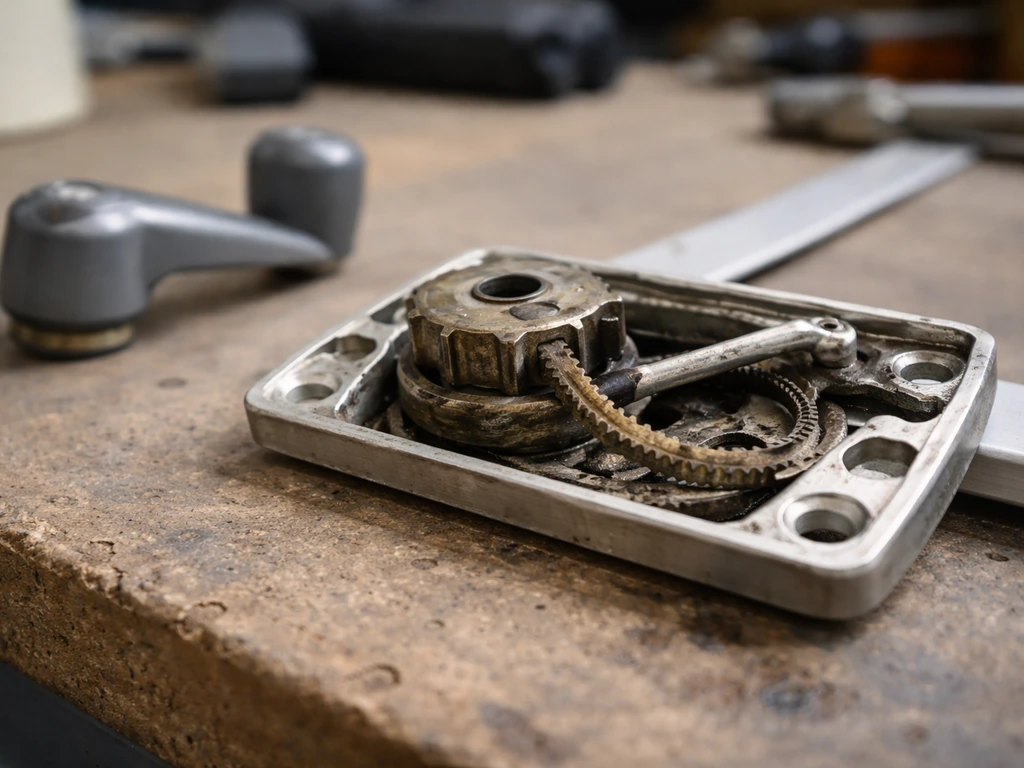
Most crank problems fall into a handful of patterns. Matching your symptom to the right cause saves you from dismantling parts you don't need to touch.
- Handle spins freely with no resistance and the canopy doesn't move: The lift cable has snapped or jumped off the pulley, or the gear-to-cable coupling has failed. The crank is spinning with nothing attached on the output side.
- Handle is stiff or jammed and won't turn at all: Debris, corrosion, or a kinked cable is creating a physical blockage. Could also be fabric bunched around the runner hub, or a seized gear from lack of lubrication.
- Umbrella opens partway then stops: The cable is fraying and caught on the pulley or pole opening, the runner hub is binding on a dent or burr in the pole, or the fabric hasn't been fluffed and is pulling back against the ribs.
- Handle turns but with a grinding or crunching feel: Gears are worn, stripped, or have debris between the teeth. On older umbrellas this often means the plastic gear teeth have started to break off.
- Umbrella slowly sinks after opening (ratchet slipping): The pawl spring is worn or the ratchet teeth are stripped. The ratchet assembly usually needs replacement, not just lubrication.
- Cranking produces clicking but no movement: The pawl is engaging and releasing (clicking) rather than holding, which points to worn ratchet teeth or a broken pawl spring.
- Canopy opens but tilts crooked or unevenly: This is usually a rib or strut issue rather than a crank problem, but a misaligned runner hub can cause it too. Check whether the hub is seating evenly all the way around the pole.
- Crank turns freely in one direction only: Normal on ratchet-equipped models when closing, but if it spins freely in both directions with no movement, the ratchet and cable system have both failed.
Quick inspection checklist before you take anything apart
Run through this list first. I've seen plenty of crank 'failures' that turned out to be something much simpler, and this checklist has saved me unnecessary disassembly more than once. If you need specific steps, follow this guide on how to fix patio umbrella crank problems.
- Fluff the canopy by hand and try cranking again. Fabric resistance alone can make the crank feel seized. This takes 10 seconds and rules out the most common non-mechanical cause.
- Look at the crank handle connection point. Grasp the handle and wiggle it. If it has play or wobbles side-to-side, the handle pin or retaining clip may be loose or missing rather than the gear system being broken.
- Peer into the crank housing opening (where the handle inserts). Use a flashlight. Look for visible debris, a broken gear tooth, or a cable that's obviously slack or bunched up.
- Check the pole exterior below the crank housing. A frayed cable end poking out of the pole is a dead giveaway that the lift cord has snapped.
- Try cranking very slowly in each direction while watching the runner hub (the collar that slides on the pole). Is it moving at all? Even a small amount of hub movement tells you the gear system is working and the problem is downstream (cable, pulley, hub binding).
- Look at the runner hub position on the pole. Is it sitting crooked or canted? A tilted hub will jam against the pole before it gets fully up or down.
- Inspect the pole for dents or deformation near where the hub travels. Even a small dent can stop the runner cold.
- On tilt umbrellas, confirm the tilt joint is locked before cranking. An unlocked tilt can let the pole flex mid-stroke, which feels like a crank problem but isn't.
Step-by-step troubleshooting and repair
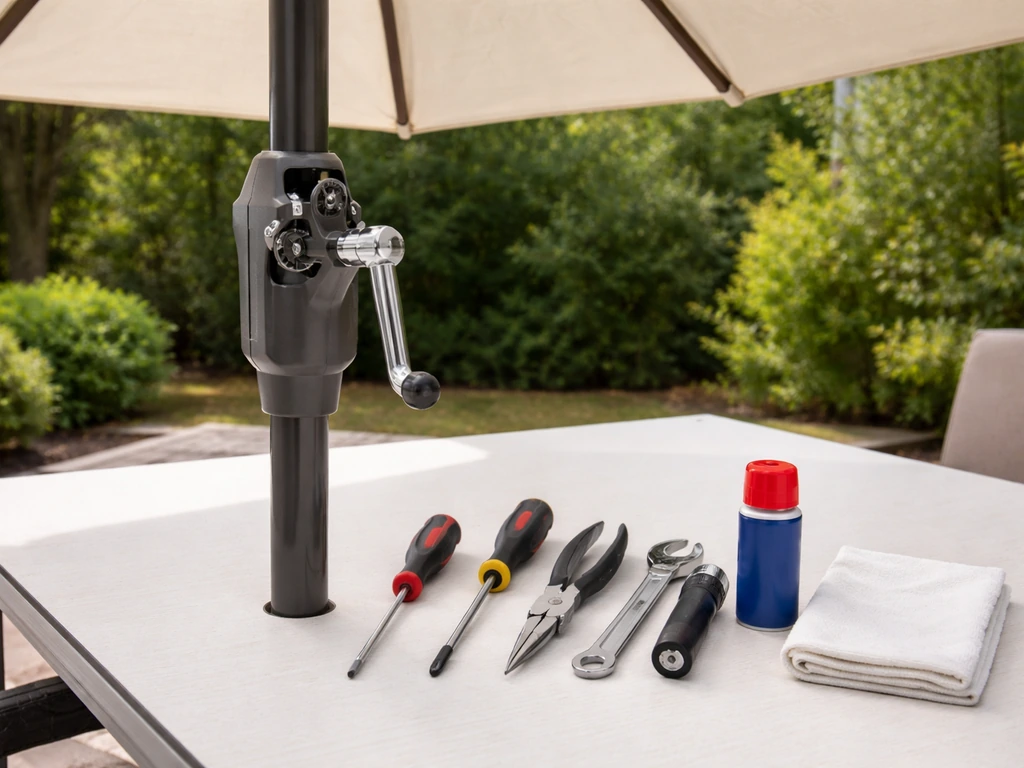
You'll want a few basic tools on hand: a Phillips and flathead screwdriver, needle-nose pliers, a small adjustable wrench, a flashlight, silicone spray lubricant, and a clean cloth. Some crank housings use a hex bolt or a roll pin to secure the handle, so a hex key set and a pin punch can be useful. Don't use power tools on any of these fasteners.
Fix a jammed or stuck crank that won't turn
- First, fluff the canopy thoroughly. Push it open by hand as much as possible to release any fabric tension on the runner hub.
- Spray a small amount of silicone lubricant into the crank housing opening around the spindle. Let it sit for 2 to 3 minutes to penetrate. Do not use WD-40 original formula or oil-based lubricants here. They attract dust and grit and will make the problem worse within a season. Silicone spray or dry lithium grease spray is the right choice.
- Try turning the handle slowly back and forth (not full rotations) while the lubricant works into the mechanism. You're trying to break free any corrosion or grit binding the gear.
- If the handle still won't move, remove it (usually a single screw or retaining pin at the base) and attempt to turn the spindle directly with pliers, gently. If the spindle turns freely but the handle didn't, the handle connection itself is stripped or broken.
- If the spindle is also seized, the housing will need to come off the pole. Most crank housings have two or three screws on the face plate, or a clamp-style ring that unscrews. Remove these and slide the housing off the pole.
- Inspect the interior for debris, a kinked cable, or a snapped gear tooth. Clean out any debris with a dry brush, re-lubricate, and test the gear movement by hand before reassembling.
Fix a crank that spins freely (cable or linkage failure)
- A freely spinning handle with zero resistance almost always means the cable has snapped or come off its spool. Remove the crank housing from the pole as described above.
- Look at the gear output spool. Is there cable on it, or is it bare? If bare, the cable has snapped. You'll need a replacement cable cut to the correct length. On most market umbrellas this is a braided polyester or nylon cord roughly 3 to 5 millimeters in diameter.
- If the cable appears intact on the spool, trace it upward into the pole with a flashlight. It may have slipped off the top pulley. You can sometimes feel the end of a detached cable with a piece of stiff wire used as a hook, or by removing the finial at the top of the pole to access the pulley directly.
- Re-thread the cable: secure one end to the runner hub, run it up through the pole, over the top pulley, and back down to the spool on the crank gear. Wind it snugly in the direction that tightens when you crank clockwise.
- Important: do not over-crank once the new cable is installed. Over-cranking is the most common cause of cable failure, and it's surprisingly easy to do. Once the runner hub is fully raised, stop immediately.
Fix worn or stripped gears
- Grinding or crunching during cranking usually means gear teeth are damaged. With the housing removed, look at the gears directly. On most consumer-grade umbrellas the gears are plastic, so wear is visible: look for missing teeth, rounded teeth, or white powdery residue (worn plastic dust).
- A partial strip (one or two missing teeth) will cause the crank to skip or grind at the same point in every rotation. A fully stripped gear means no movement at all.
- Replacement gear sets or full crank assemblies are available from umbrella parts suppliers and from brands like Galtech that catalog crank components separately. Match your pole diameter and crank housing dimensions when ordering.
- If the cost of a replacement crank assembly is more than roughly a third of the umbrella's original price, it's worth pausing to consider a full umbrella replacement instead, especially if the frame or canopy has other wear.
Fix a slipping or non-locking ratchet
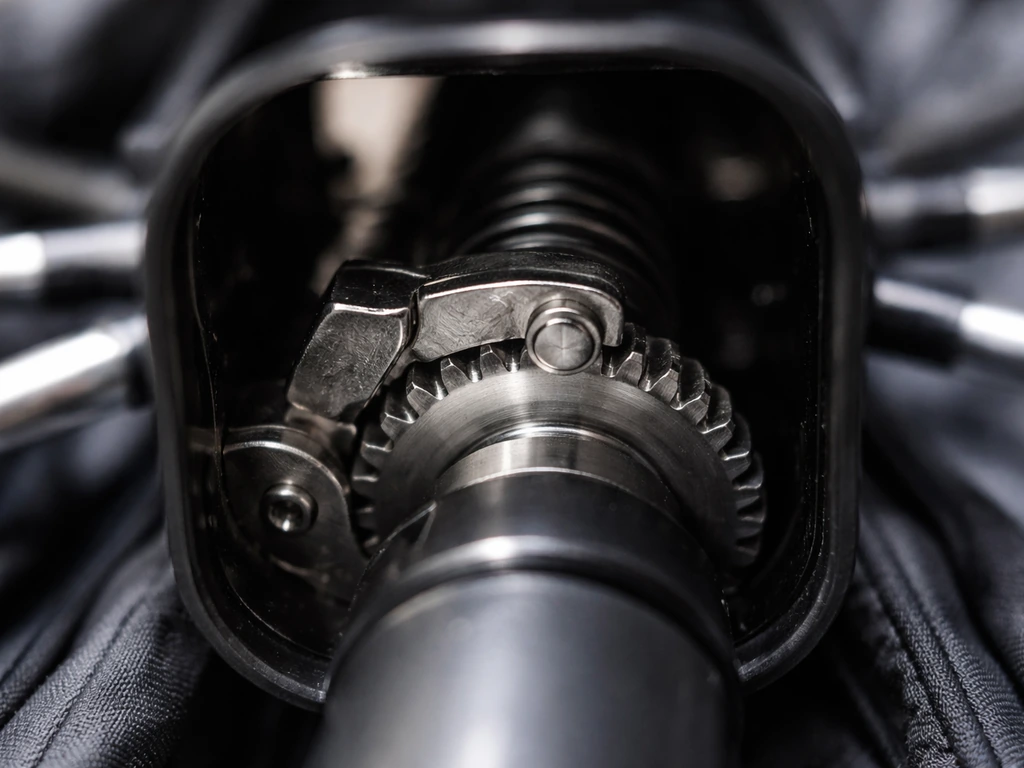
- If the umbrella won't stay open (slowly closes on its own) or the crank clicks without holding, the ratchet pawl is the culprit. With the housing open, locate the ratchet wheel and the small spring-loaded pawl tooth next to it.
- Check the pawl spring first: if the spring is bent, flattened, or missing, the pawl won't press against the ratchet teeth with enough force to hold. A replacement pawl spring is a very inexpensive fix.
- Inspect the ratchet wheel teeth. If they're worn smooth or rounded, the pawl has nothing to catch on and the whole ratchet assembly needs replacement. Ratchet components (listed as P-ratchet in Galtech-style parts catalogs) are usually sold as a complete sub-assembly.
- Clean all debris and old lubricant from the ratchet teeth before installing a new assembly. Old grease mixed with grit is a common cause of pawl slipping even when the teeth are still intact.
Putting it back together, lubricating it right, and testing
Reassembly is mostly the reverse of disassembly, but there are a few things worth doing carefully. Before closing the housing, apply a thin coat of silicone spray or dry lithium grease spray to the gear teeth, spindle shaft, and any pivot points inside the housing. You don't need much, just a light coverage. Avoid getting lubricant on the ratchet teeth themselves, as excess lubricant there can cause the pawl to slip.
When you reattach the housing to the pole, make sure the cable runs straight into the pole without any kinks or twists. A kinked cable at the entry point will fray and snap within a season. Hand-tighten the housing screws evenly so the housing sits flush against the pole on all sides.
Test before fully buttoning everything up. With the housing on but the cover panel still open (if your design allows it), turn the handle slowly and watch the runner hub move. It should travel smoothly with consistent resistance. If it still won't open, go back through the crank’s lift mechanism and the ratchet for the likely cause, since that’s the core of how to fix patio umbrella crank issues. With the housing on, turn the handle slowly and watch the runner hub move, then review the lift mechanism and ratchet for the most likely cause of a patio umbrella crank not working. If the canopy still won’t open after checking the lift mechanism and ratchet, follow a full guide on how to fix a patio umbrella that won’t open how to fix a patio umbrella that won t open. Open the umbrella fully and let go of the handle. If it stays open without drifting, the ratchet is holding. Then close it fully and confirm the runner seats at the bottom. If everything moves cleanly, replace the cover panel and test the tilt function (if equipped) last.
Keeping the crank working season after season
Most crank failures are slow-moving and completely preventable. The mechanisms inside are simple, but they're made from materials (plastic gears, braided cord, thin spring steel) that degrade quickly when exposed to UV, moisture, and grit without any maintenance. Here's what actually makes a difference:
- Lubricate once per season: At the start of each outdoor season, apply a light coat of dry silicone spray to the crank housing opening, the runner hub, and any tilt joint. Don't wait until something feels stiff. Regular lubrication prevents the corrosion and grit buildup that eventually locks gears solid.
- Always fluff before cranking: Make this a habit every single time. The 10 seconds it takes to loosen the fabric by hand saves the cable and gear system from repeated overload stress.
- Don't over-crank: When the umbrella is fully open and the hub hits the top of its travel, stop. Continuing to crank jams the runner, tensions the cable beyond its design limit, and is the leading cause of cable snaps.
- Close it when it's not in use: Leaving an umbrella open during wind and rain accelerates wear on every moving part. The crank and ratchet are under continuous load when the canopy is catching wind.
- Store it dry and covered: Before storing for winter, let the canopy dry completely, then close and wrap or bag the umbrella. Moisture trapped inside the pole causes cable fraying and gear corrosion faster than anything else.
- Inspect the cable visually each spring: Before your first use of the season, look for fraying at the pole entry point and at the runner hub attachment. A fraying cable that's caught early costs almost nothing to replace. One that snaps mid-season takes the pulley with it sometimes.
- Keep the pole clean: Wipe down the pole section where the runner hub travels. Sand, salt, and debris act like sandpaper on the runner and the pole wall, eventually causing the hub to bind or score the pole.
If your crank is beyond repair or the housing is cracked and the gears are fully stripped, a full crank assembly replacement is usually the right call. Replacement assemblies for common pole diameters (typically 1.5 inch or 38mm) are widely available and install in about 20 minutes. That's a much better outcome than replacing the whole umbrella. But if the pole itself is bent, the ribs are cracked in multiple places, or the canopy fabric is deteriorated, the crank repair won't fix a fundamentally worn-out umbrella. Know when the whole unit has reached the end of its useful life.
If you've gone through all of this and the crank is working but the umbrella still won't open fully or stay open, the problem may have shifted to a different part of the system, such as a stuck or broken pulley, a rib that's binding, or a jammed tilt mechanism. Those are separate repairs worth looking into once you've confirmed the crank itself is in good shape.
FAQ
Can I crank and then tilt immediately, or do I have to wait until it is fully open?
Yes, but only when the umbrella is already fully seated in its open position (or fully closed when you are closing). If you tilt while the runner is not properly engaged on its locking ledge, the canopy can unload and drop suddenly when you crank in the opposite direction.
What should it feel like when the crank is working, and what does it mean if it suddenly feels heavy or jerks?
If you feel a change from light, consistent resistance to grinding or jerking, stop. That usually points to a cable misroute, a kink at the housing entry, or gear teeth damage, not a normal “stiff season” issue. Forcing it can strip the gear or cause the pawl to skip.
If my umbrella opens but slowly closes when I let go, is the crank mechanism definitely bad?
A slow drift closed after you stop cranking is most often the ratchet and pawl area, but confirm the runner hub is actually seated at the bottom when closed. If the cable stretches or the runner is misaligned, the ratchet may appear at fault even though the real issue is incorrect cable tension or housing alignment.
When should I replace the entire crank assembly instead of trying to repair parts inside the housing?
Often, yes. Many crank housings use a spindle and gear set inside a plastic or cast enclosure. If those gears are stripped, the most efficient fix is replacing the crank assembly rather than trying to source individual gears, because mismatched gear tolerances can cause uneven movement and early failure.
What’s the correct way to lubricate a patio umbrella crank, and where should I avoid applying lubricant?
Always “fluff” the canopy and confirm the runner moves without binding before doing any lubrication. After that, keep lubricant off the ratchet teeth and the pawl contact area, a light coat on the spindle/gear teeth and pivot points only. Too much grease there can make the pawl slip.
My crank handle turns but the umbrella does not open, what are the most likely causes?
If it won’t open at all, but the crank turns freely, the cable may be disconnected or routed incorrectly, and the runner hub may not be receiving lift. If the crank turns but the runner does not rise, suspect the ratchet engaged incorrectly, a seized pulley near the top, or a jammed runner.
Why does my umbrella open only halfway and then stop?
If the umbrella opens partway but won’t reach fully open, the runner may be catching on debris, the locking ledge sequence may not be completing, or the cable may be kinked or twisted at the housing entry. Also check that you crank to the point where the spring ledge actually pops and then do the small reverse step to seat it.
Do I need to replace the lift cable if the umbrella is hard to crank, or can it be rerouted?
Disconnecting and rethreading the lift cable is sometimes necessary, but only if the housing is opened and the cable path is confirmed straight. A twisted cable at the entry point can fray quickly, so take time to route it without twists before reassembling the housing.
Is it ever okay to use a drill or impact driver to remove or tighten the crank screws?
Power tools can strip small fasteners, misseat housings, and damage pins used to retain the spindle or handle. Use hand tools only, tighten evenly, and stop if you feel the fastener bind, that’s often a sign the housing is not flush.
If the crank internals look fine but the umbrella still won’t open smoothly, what should I inspect next?
A bent pole can throw off cable alignment, making the runner bind or the pulley work poorly, even if the crank gears and ratchet are fine. If the crank tests smooth with the housing open and still fails under normal load, inspect the pole straightness and check rib alignment.
Next Articles
How to Open a Patio Umbrella Without a Crank
Step-by-step ways to open and close a crankless patio umbrella, troubleshoot stuck tilt or seized mechanism, and fix it
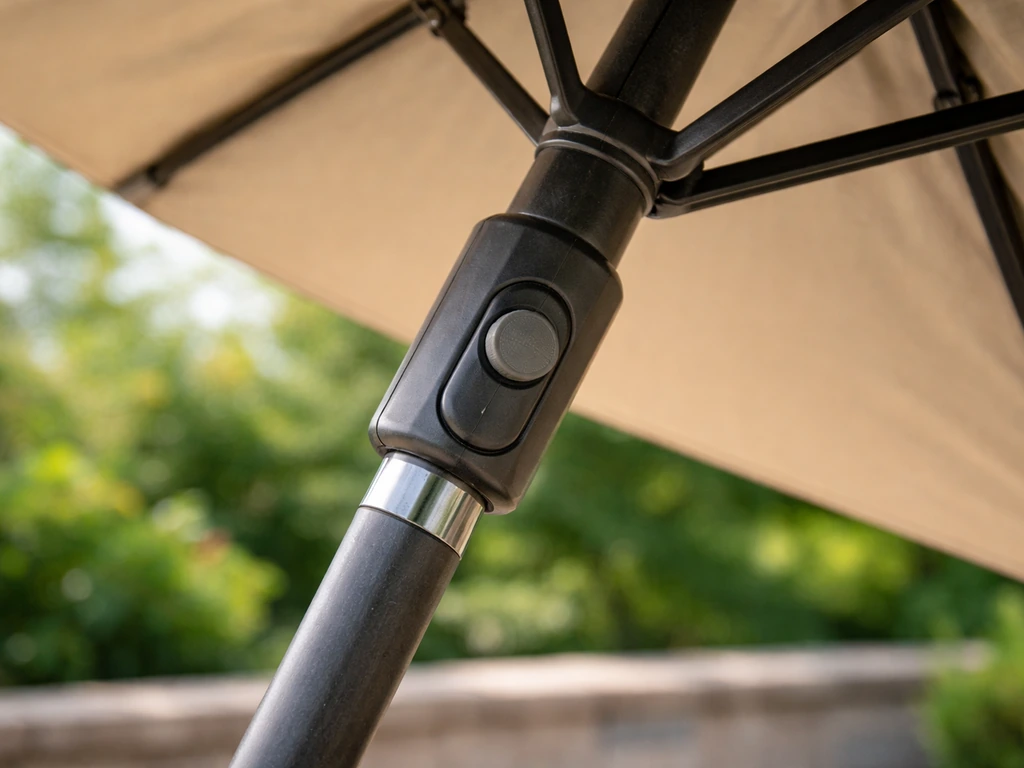
Patio Umbrella Stuck in Tilt Position: Fix the Button
Step-by-step fix for a patio umbrella tilt button stuck, with diagnosis, safe release, lubrication, and prevention tips.
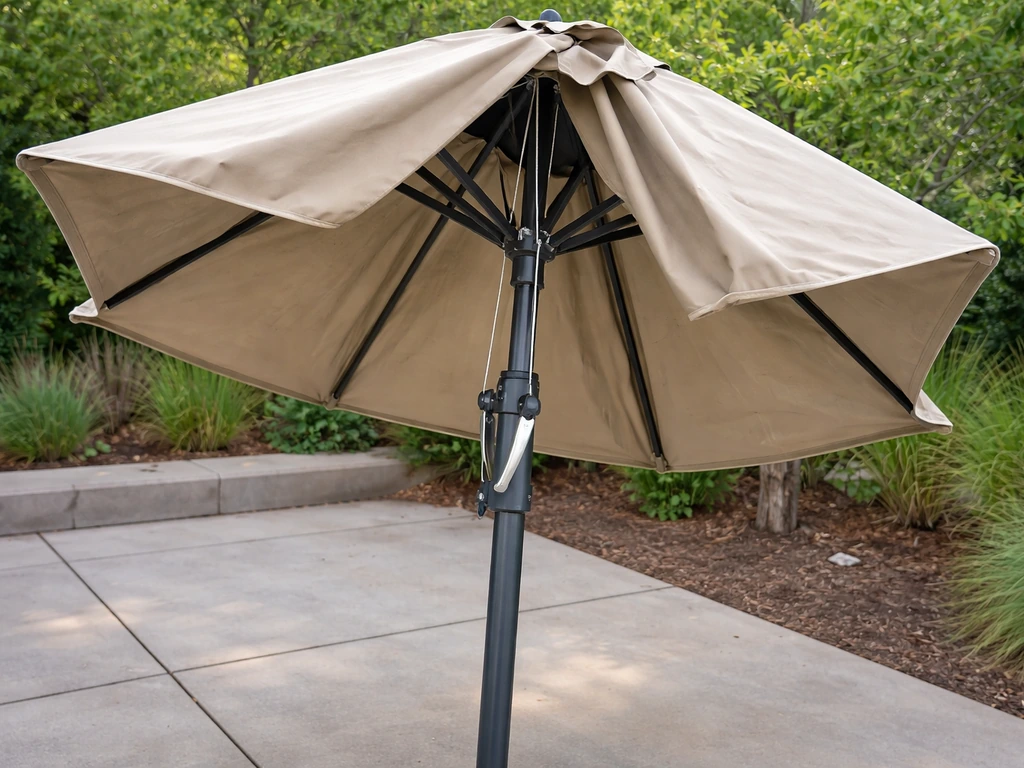
Patio Umbrella Will Not Close: Troubleshooting Fixes
Step-by-step fixes for a patio umbrella stuck open or won’t close, including binding, cord, crank, lock, and tension che