If your patio umbrella won't close, the fix usually comes down to one of four things: something is physically blocking the mechanism, the cord or lift string has slipped or snapped, the crank or gear is stripped or jammed, or the locking pin near the runner is stuck. Before you force anything, take 60 seconds to figure out which one you're dealing with. That single step will save you from cracking a pulley, bending a rib, or making the problem worse.
Patio Umbrella Will Not Close: Troubleshooting Fixes
Luca Morrison
29 Apr 2026
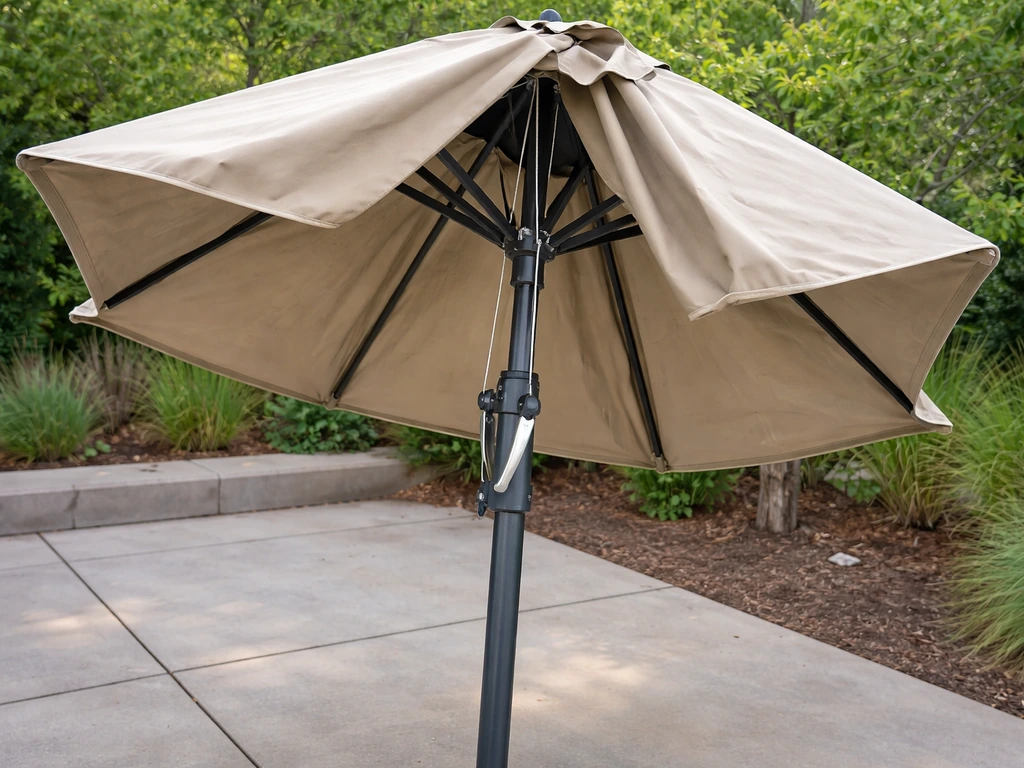
Quick diagnosis: is it a bind, a cord problem, or a crank/locking issue?
The fastest way to narrow this down is to pay attention to what the umbrella does (or doesn't do) when you try to close it. Each failure mode gives you a different clue.
| What you observe | Most likely cause | Where to start |
|---|---|---|
| Crank turns freely but nothing moves | Broken or slipped lift cord, stripped gear | Inspect cord and crank gear |
| Crank turns but umbrella stops partway | Cord tangle, rib obstruction, or debris in runner | Check runner track and cord path |
| Crank feels grinding or stiff | Corroded or damaged gear teeth inside crank housing | Lubricate or replace crank |
| Handle turns but umbrella won't lock open or closed | Worn locking pin or broken spring near runner | Inspect runner locking mechanism |
| Canopy is tilted and won't budge | Trying to close while still in tilt position | Return canopy to horizontal first |
| Umbrella is stuck partway open/closed, no movement at all | Frame distortion, bent rib, or physical blockage | Visual inspection of ribs and pole |
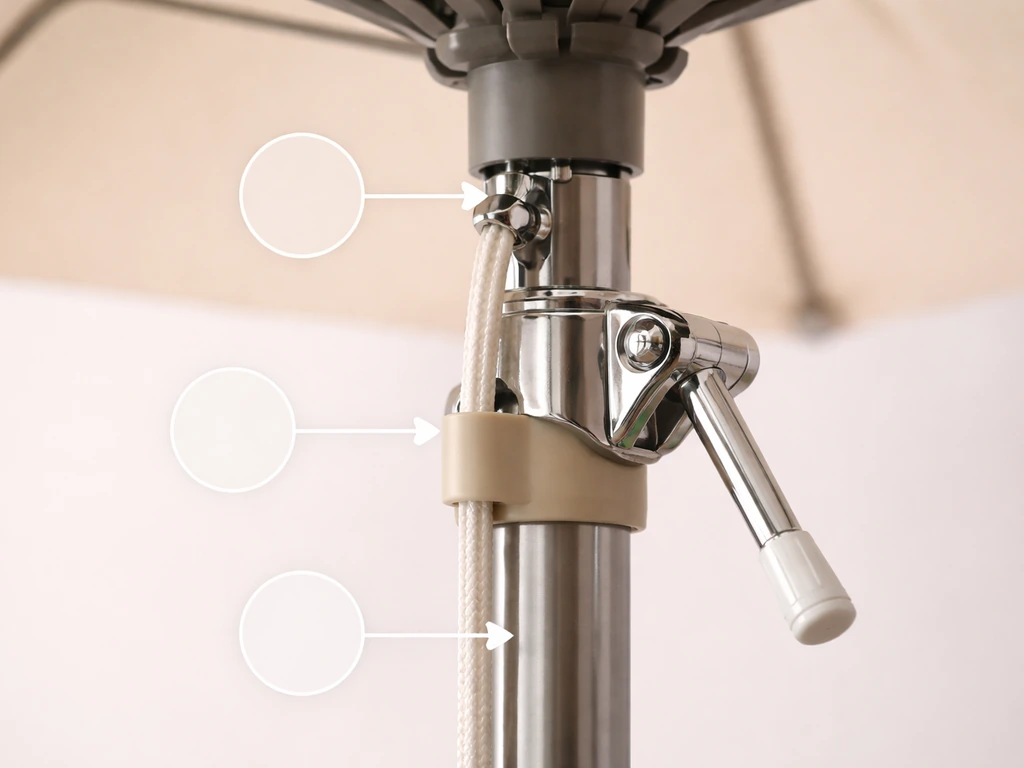
One important split to understand right away: there are two distinct mechanical zones in a typical patio umbrella. The first is the sliding action of the runner (the collar that travels up and down the central pole to push the ribs open). The second is the internal locking mechanism, usually a spring-loaded pin or clasp near that runner, that holds the umbrella in the open or closed position. Problems in each zone feel different and get fixed differently. Keep that distinction in mind as you work through the steps below.
Troubleshooting when the umbrella won't close (or is stuck open)
A stuck-open umbrella is one of the most common calls I get from readers, and it almost always traces back to one of three things: something blocking the runner or ribs, a cord or string that has tangled or broken, or a locking pin that's seized in the open position. Here's how to work through each one.
Check for physical obstructions first
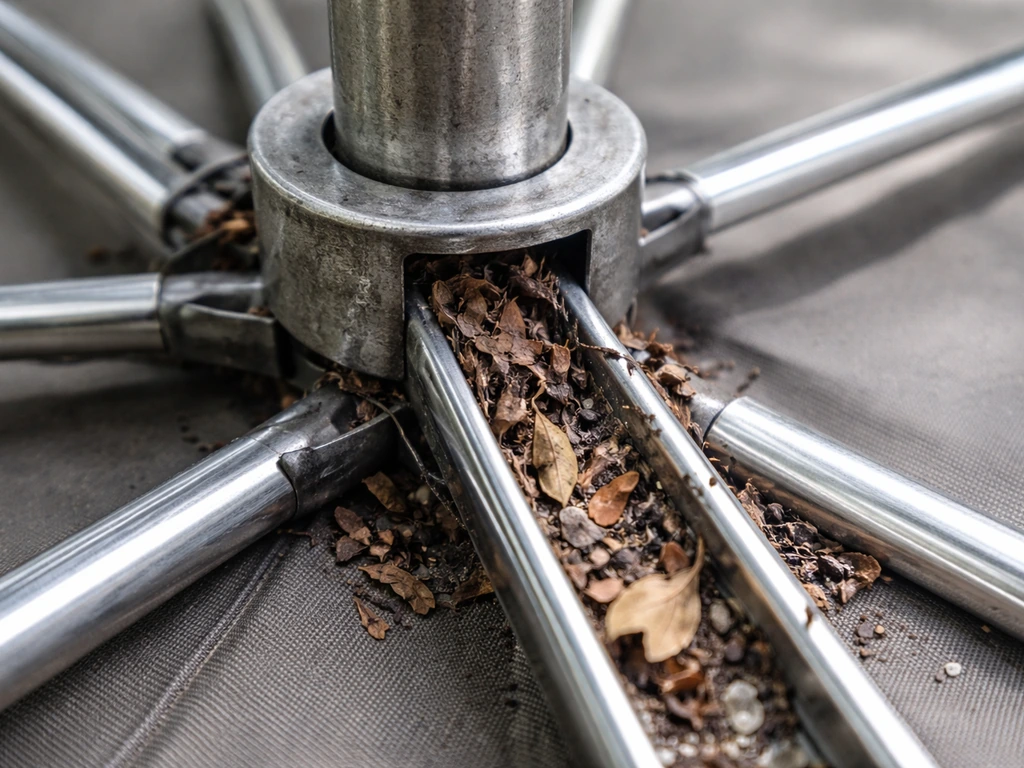
Before touching the crank, look at the runner (the sliding collar on the pole) and the ribs. Leaves, twigs, dirt buildup, and even a wasp nest can wedge into the runner track and physically prevent the canopy from folding. Run your hand around the runner and along each rib junction. Clear anything you find. Then try the crank again.
Is the umbrella in the tilted position?
This one trips up a lot of people. Many manufacturers are explicit about it: never try to close the umbrella while the canopy is in a tilted position. The geometry of the ribs won't allow the canopy to fold properly if it's angled. If your umbrella has a tilt feature, return the canopy to fully horizontal before attempting to crank it closed. Push the tilt button, gently bring the canopy level with your other hand, and release the button to lock it horizontal. Then try closing.
Inspect the lift cord or string
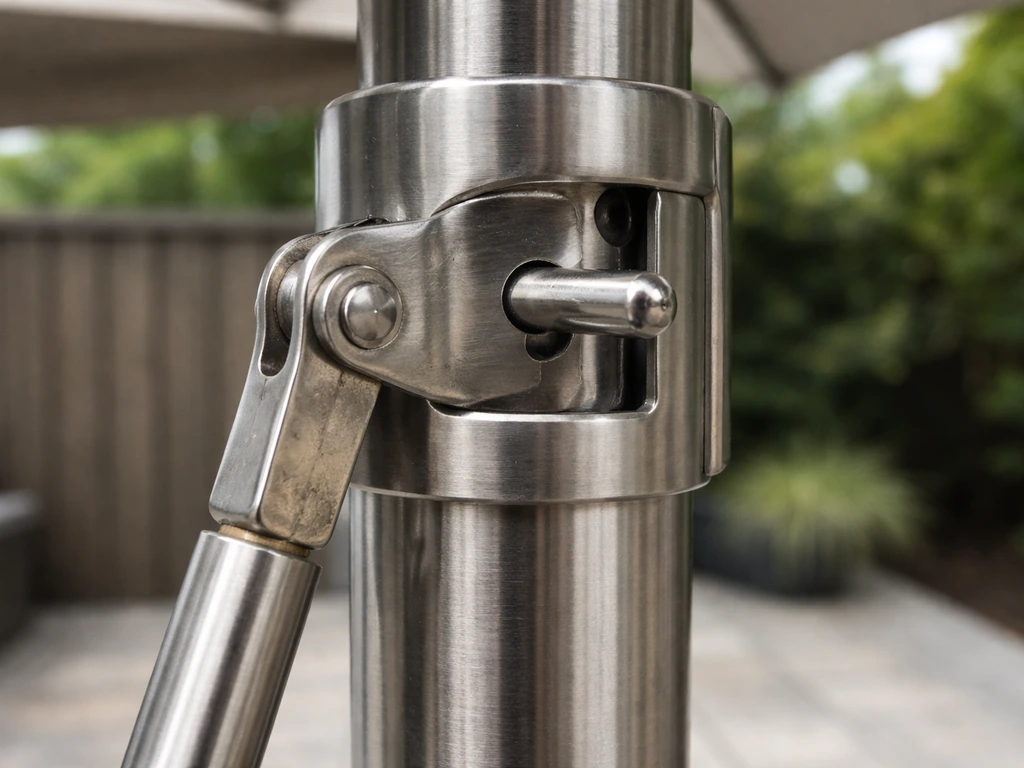
Many patio umbrellas (especially cantilever or offset styles) use an internal cord that runs through the pole and over pulleys to raise and lower the canopy. If that cord is frayed, tangled, or broken, the umbrella will either not move at all or will stop partway. Look down into the pole opening at the top and check for a loose or bunched cord. On cantilever models, the cord can get caught in the pulley housing, which is a common failure mode. A broken lift string is actually one of the most fixable issues on this list. Replacement cord kits are widely available, and restringing is doable at home, though you do need patience. Just don't yank on a frayed cord to test it. Extra force during cord repair can crack plastic pulleys, deform the pole, or bend the ribs.
Test the locking pin and runner
With the umbrella open, look at the runner (the sliding piece on the pole). There's usually a spring-loaded pin or clasp that snaps into a hole in the pole to lock the runner in the open position. If that pin is stuck, corroded, or the spring has failed, the runner won't release downward when you crank to close. Press the pin inward manually and see if the runner moves. If the pin is seized, a shot of dry silicone spray lubricant right at the pin and its hole usually frees it. If the spring is broken, you'll need to replace the locking assembly, but that part is inexpensive on most standard umbrellas.
Won't open vs. won't stay open: what to check in the tilting and locking parts
These two problems feel similar but point to different culprits. An umbrella that won't open at all usually has a cord, crank, or serious blockage issue. An umbrella that opens but won't stay open is almost always a locking or tilt mechanism problem.
If it won't open at all
- The lift cord may be completely broken or tangled inside the pole. Try cranking very slowly and listen for cord movement or a snapping sound.
- The crank gear may be stripped. If the handle turns with zero resistance and nothing happens, the gear teeth are likely worn or the crank shaft has slipped off the gear.
- The canopy fabric ties (if your umbrella has them at the base of the ribs) may still be tied shut. Undo any tie strings before cranking open.
- Seasonal storage can leave the fabric stuck together if it was stored slightly damp. Gently peel the panels apart before applying crank pressure.
If it opens but won't stay open (or slowly droops)
When the handle turns easily but the umbrella won't hold its open position, the likely culprit is a damaged locking pin or a worn spring inside the runner mechanism. The locking pin should snap audibly into the pole when the runner reaches the open position. If you don't hear or feel that click, the pin isn't engaging. Try lifting the runner by hand while someone cranks, to help it reach the lock point. If it still won't hold, the spring or pin needs replacing.
Tilt mechanism issues that affect open/close behavior
Some umbrella designs use the same crank for both opening and tilting. In these systems, the crank goes through a sequence: you crank to open, and continuing to crank activates the tilt. If the tilt button isn't fully engaged or the tilt is locked in a position, it can interfere with the open/close travel. The fix is simple: make sure the tilt button is pressed fully in and the canopy is at horizontal before cranking. Broken ribs can also prevent smooth tilting movement and, in some cases, jam the whole canopy in a half-open position. A related problem, a tilt mechanism that's completely failed, is covered separately but is worth checking if the canopy seems stuck at an angle. This same tilt system can also fail and leave the umbrella unable to close smoothly, so check the tilt button and tilt linkage before assuming the runner or locking pin is the only problem tilt mechanism that's completely failed.
Fast DIY fixes: clean, lube, and replace the right parts
Once you've identified the zone of failure, most of these fixes take under 30 minutes and cost very little. Here's what actually works.
Lubricate the mechanism (the right way)
Dry silicone spray is the go-to lubricant for patio umbrella moving parts. It doesn't attract dirt the way oil-based products do, and it works well on both plastic and metal components. Apply it to the runner track on the pole, the pivot points where the ribs connect to the runner, and the locking pin. For the crank housing, a light spray into the gear area does the job. WD-40 can work to free a seized or corroded joint in a pinch, but wipe off the excess after application and follow up with a dry silicone spray. Don't soak the mechanism: you want to lubricate the contact points, not flood the housing. Over-spraying can wash out grease in the gear assembly and cause its own problems.
Clean out debris and corrosion
Use a dry cloth or a soft brush to clean the runner channel on the pole before lubricating. Grit and rust buildup in that channel is a major cause of binding, and lubricant on top of dirt just creates a paste that makes things worse. For corrosion on metal components, a little white vinegar on a rag will dissolve light rust before you apply lubricant. If the crank housing shows visible corrosion around the gear opening, remove the housing (usually two or three screws on the underside of the crank arm) and clean the gear teeth directly.
Reset cord tension
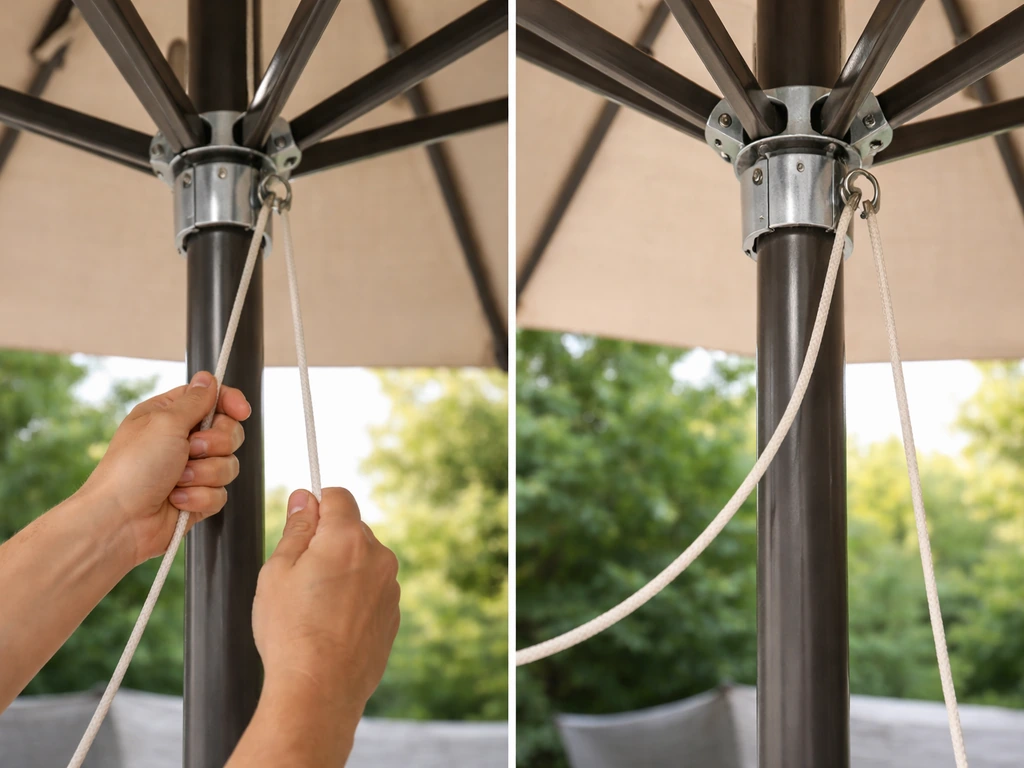
If the cord is intact but slack or misrouted, it can prevent smooth operation in either direction. To reset tension, fully close the umbrella manually (see the next section for how to do this safely), then re-route the cord through its pulleys according to your umbrella's diagram (usually found in the original manual or on the manufacturer's support page). Tie off the cord at the correct tension point: it should have slight resistance but not be so tight that the crank feels strained. A cord that's too loose will slip; one that's too tight will snap pulleys.
Replace common failed parts
Some parts just wear out and need swapping rather than fixing. Here's an honest assessment of what's worth replacing versus what signals a bigger problem:
| Failed part | DIY replaceable? | Approximate cost | Notes |
|---|---|---|---|
| Lift cord / string | Yes | $5–$15 | Most common fix; replacement kits widely available |
| Locking pin / spring | Yes | $5–$20 | Usually sold as a runner assembly; match your pole diameter |
| Crank handle | Yes | $10–$30 | Straightforward swap; confirm thread direction before ordering |
| Crank gear/housing | Yes, with some mechanical comfort | $15–$40 | Remove housing, match gear tooth count exactly |
| Plastic pulleys | Yes | $5–$15 per pulley | Handle with care; easy to crack when installing |
| Bent or cracked rib | Partial | $10–$25 per rib | Repairable if only one or two ribs; structural damage to multiple ribs suggests replacement |
How to manually close (or open) the umbrella safely when it's stuck
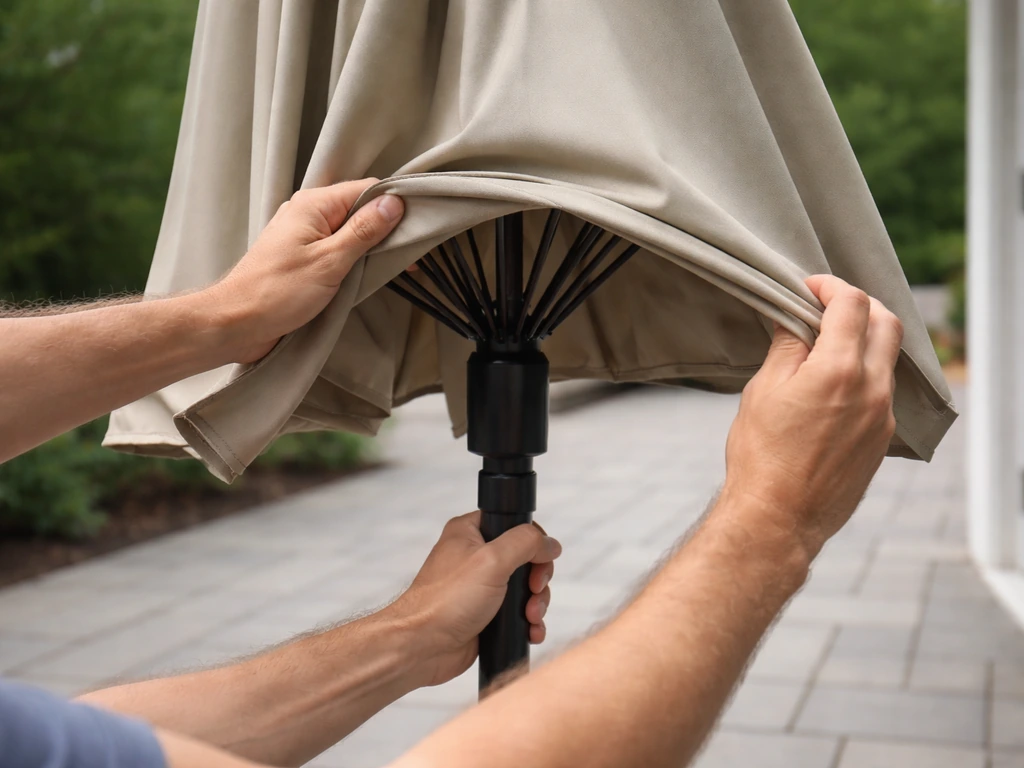
If the crank isn't working and you need to get the umbrella closed right now, for weather or storage reasons, here's how to do it without damaging the frame. This is also a useful technique to reset the mechanism before attempting a repair.
- Return the canopy to horizontal. If it's tilted, press the tilt button, bring the canopy level by hand, and release the button.
- Undo any tie strings or canopy straps at the base of the ribs. These are sometimes left tied from storage and will prevent folding entirely.
- Stand next to the pole and gently press inward on the locking pin or clasp near the runner to release it from its locked position. Don't force it with a tool; use your thumb or a blunt dowel.
- With the pin released, use one hand to slowly push the runner downward along the pole while your other hand guides the canopy ribs inward. Work smoothly and evenly. If one rib resists, check it for a physical catch before pushing harder.
- Once the canopy is folded, wrap the tie strings around the closed canopy to keep it from catching wind while you work on the repair.
- To manually open from a stuck-closed state: release the pin, slide the runner upward by hand until you hear or feel it click into the open lock position, then confirm all ribs have extended evenly before letting go.
The most important rule throughout all of this, and manufacturers are consistent about it: never use excessive force on the crank handle to open or close the umbrella. If it's not moving, force will strip gear teeth, snap a cord, or crack a pulley. Stop, diagnose, fix the cause, then operate the crank normally.
After it's working again: quick maintenance to prevent a repeat
Once you've got the umbrella opening and closing smoothly, spend five minutes on basic maintenance so this doesn't happen again before the end of the season. Lubricate the runner channel, locking pin, and crank gear with dry silicone spray. Check the lift cord for fraying, especially where it bends over pulleys. Inspect every rib connector for cracks, since a broken rib can jam the entire canopy mid-travel. Make sure the canopy is completely dry before closing and storing, because storing it slightly wet leads to fabric sticking and mildew that makes opening difficult next season.
If you find the umbrella is moving around in its base while you're working on it, that's a separate but related problem worth addressing before next use. If your patio umbrella is stuck in the base or the base is loose, you’ll need to stabilize and inspect the mounting before troubleshooting the open/close mechanism patio umbrella stuck in base. A wobbly base makes it harder to diagnose mechanism issues because the whole assembly shifts when you apply crank pressure. And if the umbrella has a habit of tipping over in light wind, that's a sign the base weight is insufficient for the canopy size, which puts extra stress on the open/close mechanism every time a gust hits. If your patio umbrella tips over, the base weight and mounting need attention so the open/close mechanism stays aligned.
Most stuck or non-closing patio umbrellas are repairable in under an hour with basic tools and a few dollars in parts. If your main issue is that the umbrella won’t close or keeps jamming, those patio umbrella problems usually tie back to the same runner, cord, or locking-pin causes covered here. The key is identifying the right failure zone first, then fixing that specific thing instead of cranking harder and hoping for the best.
FAQ
Can I keep trying the crank repeatedly if my patio umbrella will not close?
Yes. Before you lubricate anything, remove the canopy obstruction only, then try the crank with the umbrella kept fully horizontal. If it still will not move, stop and reassess whether the cord is slack or tangled and whether the locking pin is actually disengaging (you should feel a release, not just looseness).
What should I do if the lift cord looks intact but the umbrella still won’t close?
If the lift cord is frayed or already slipping, do not rely on tensioning tricks. Instead, replace or restring using the manufacturer’s cord path, then confirm the runner moves freely before reconnecting or re-tensioning. Damaged cord segments can bind in the pulley housing even after cleaning and lubrication.
My patio umbrella handle turns, but nothing moves. What does that indicate?
If your handle turns but the canopy does not move, the failure is often in the crank-to-cord interface or inside the pole (slipped cord on pulleys, cord bunched near the pulley housing, or a jammed runner track). Check for cord bunching by looking down the pole opening near the top, and inspect the pulley area before assuming the locking pin is the issue.
The umbrella closes partway and then jams. How do I tell what’s causing the stop?
Measure the closure by position, not by effort. If the umbrella gets halfway and stops, it usually means the cord is snagging, a rib is binding, or the runner is not traveling smoothly in its track. Lubricate only after clearing debris, and avoid forcing because mid-travel jams can crack ribs or deform the runner.
Is it safe to lubricate near the fabric, and which lubricant should I use?
Dry silicone spray is preferred for moving parts, but never apply it to fabric or in a way that soaks the canopy. If silicone or oil gets on the canopy, wipe the area and let it dry, since residue can attract dirt and make the next close-open cycle feel sticky.
Why would my patio umbrella work now but fail to close after storage?
For storage, close the canopy only when it can close smoothly without extra force, and make sure it is completely dry. If you leave it slightly wet, fabric sticking and mildew can increase friction so the locking pin feels harder to engage, which can look like a “won’t close” problem next season.
How can I tell whether the locking pin is stuck versus the runner track is binding?
Not always. A stuck locking pin can show up as “runner won’t release,” but a frozen runner track (debris or corrosion in the channel) can also prevent travel and mimic a pin issue. The quickest separation test is to clear the runner track and then press the locking pin inward to see whether the runner actually moves downward when you crank gently.
Can I temporarily close the umbrella even if I suspect the mechanism is damaged?
Yes, but only for temporary relief. If you must close it for weather, use gentle manual guidance to keep ribs aligned and stop as soon as you feel resistance that increases. Then diagnose the cause afterward, because forcing during the reset phase can strip gear teeth or crack pulleys.
How do I re-route and set the cord tension if my umbrella won’t close smoothly?
Tension reset depends on correct routing. If you can see the cord path and it is slack or misrouted, re-route through the pulleys exactly as shown in your manual, then tie off so the crank feels like normal operation, not hard resistance. Too loose makes slippage, too tight can snap pulleys even if it closes once.
Could a loose base make it seem like my patio umbrella won’t close?
If the umbrella tips or the base is wobbly, it changes the angle of the pole and can make the runner and locking pin bind at the worst moment. Before mechanism repair, stabilize the base, re-check mounting tightness, and confirm adequate weight for your canopy size so the frame stays aligned during closing.
Next Articles
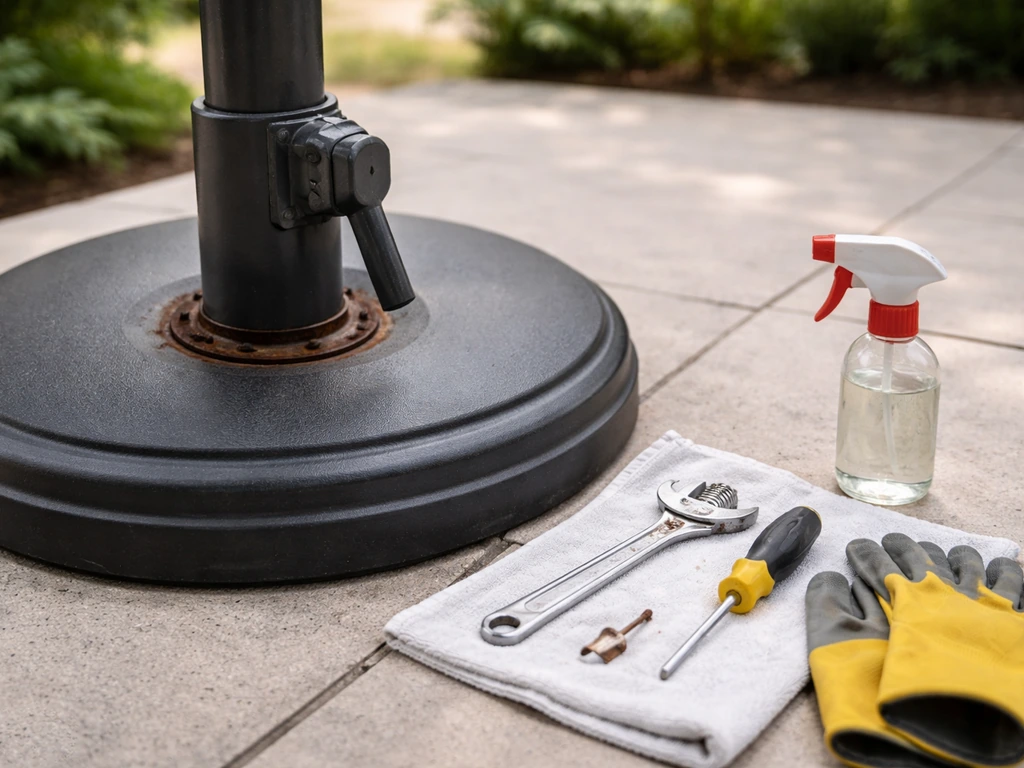
Patio Umbrella Stuck in Base: Fix It Safely Today
Fix a patio umbrella stuck in the base with safe steps for jammed crank, tilt, rust, pins, and proper reassembly.
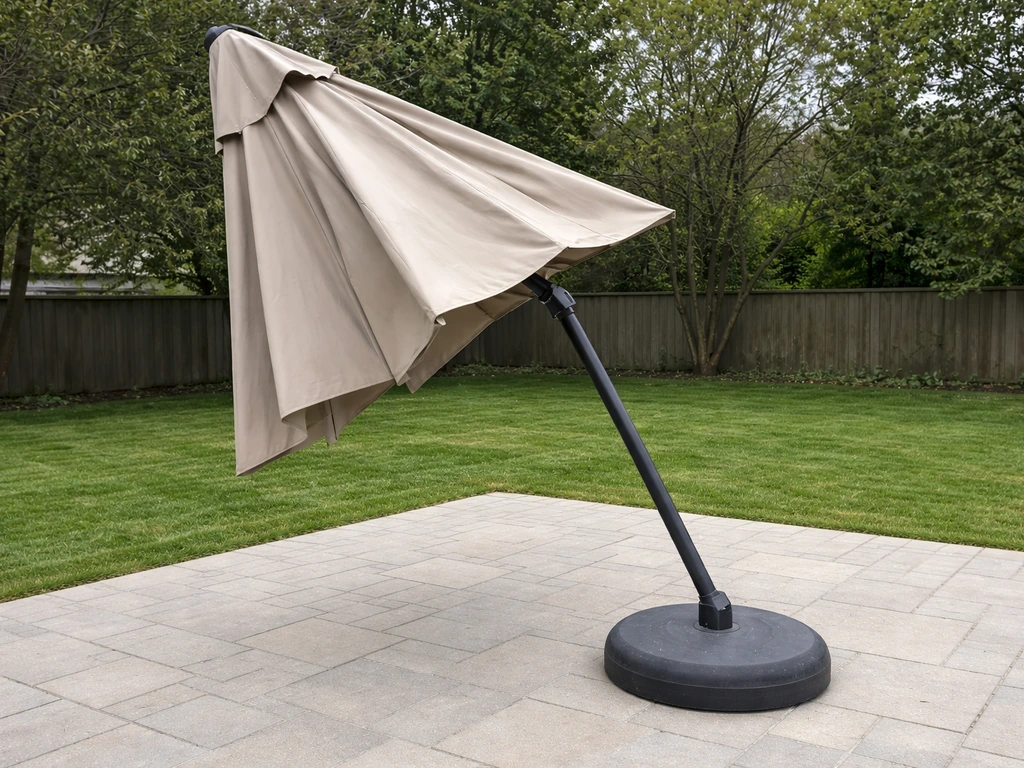
Patio Umbrella Problems: Diagnose and Fix Common Failures
Step-by-step fixes for patio umbrella problems: diagnose crank, cord, tilt, wobble, and wind/base issues fast, safely.
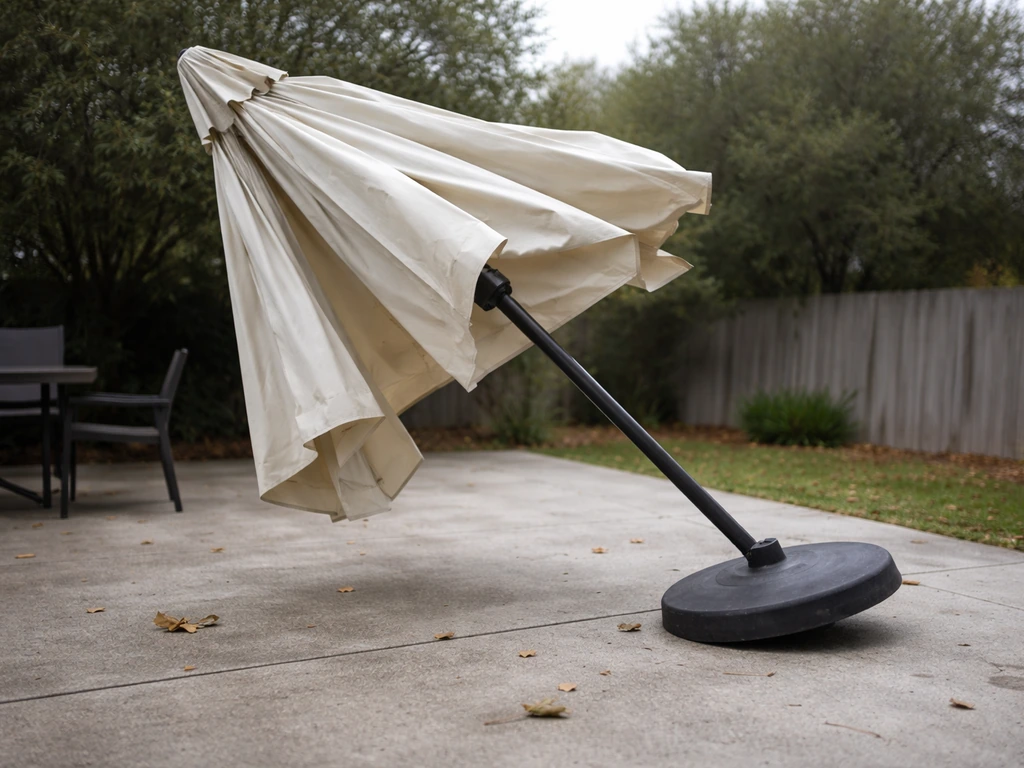
Patio Umbrella Tips Over: Fix Tilting, Base, and Wind Stability
Stop a tilting patio umbrella fast: fix base weight, wind stability, and broken tilt and crank parts step by step.