If your patio umbrella is stuck in its base, the fix is usually straightforward: fully loosen or disengage every locking mechanism on the base before you try to pull, twist, or lift anything. Most poles that seem seized are just being held by a tension collar, a set screw, or a locking pin that someone forgot to release. Before you reach for a bigger tool or start yanking, take two minutes to work through the diagnosis below, and you'll almost certainly free it without bending the pole or snapping the crank. If you still cannot resolve the issue after freeing the base hardware, review additional patio umbrella problems that can affect the pole and crank separately.
Patio Umbrella Stuck in Base: Fix It Safely Today
Luca Morrison
29 Apr 2026
Safety check first: what not to force
The most common way people make a stuck umbrella worse is by applying brute force before understanding what's holding it. Forcing the crank handle when the umbrella is jammed can strip internal gears or snap the cable linkage. Yanking a pole upward against a partially tightened collar screw will gouge and deform the pole surface, which then makes it stick even worse the next time. And torquing a tilt mechanism that's already bound up can crack the housing. So before you do anything else, run through this quick checklist.
- Do not crank hard in either direction if you feel real resistance. Stop, back off the handle, and diagnose first.
- Do not pull the pole straight up with significant force until every lock, screw, and collar on the base is fully backed out.
- Do not force the tilt button, tilt collar, or height-adjustment pin if it isn't moving cleanly. These small plastic and die-cast parts break under sideways pressure.
- If the umbrella is still open (canopy deployed), close it before attempting any base removal. An open canopy adds torque and wind load that makes every stuck point worse.
- If any part looks bent, cracked, or visibly deformed, stop and assess before proceeding. Forcing a bent pole through a collar can permanently ruin both parts.
The general rule straight from most manufacturer manuals: never use excessive force on the crank handle, and if there's resistance while opening or closing, stop immediately and find the cause. That same principle applies to removing the pole from the base.
Figure out exactly where it's stuck
There are three main places a patio umbrella can get stuck, and the fix is completely different for each one. Spending 60 seconds on this diagnosis saves you 30 minutes of chasing the wrong solution.
The base collar or locking hardware is engaged
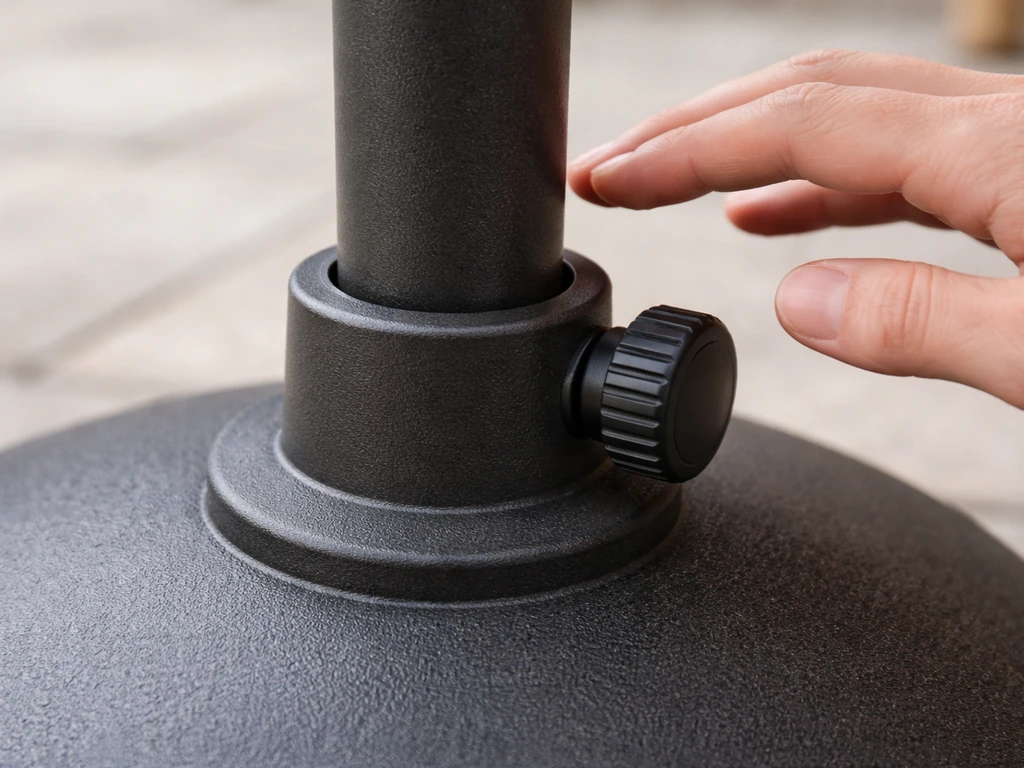
Look at the base itself where the pole enters. Most bases have at least one of these: a tension knob or collar screw that tightens against the pole to hold it upright, a locking pin or button that drops into a hole in the pole, or a stainless steel inner collar/sleeve that grips the pole. If any of these are even slightly engaged, the pole will not come out. This is by far the most common cause of a "stuck" umbrella, and it feels identical to a truly seized pole until you check.
Corrosion or debris at the pole-to-base interface
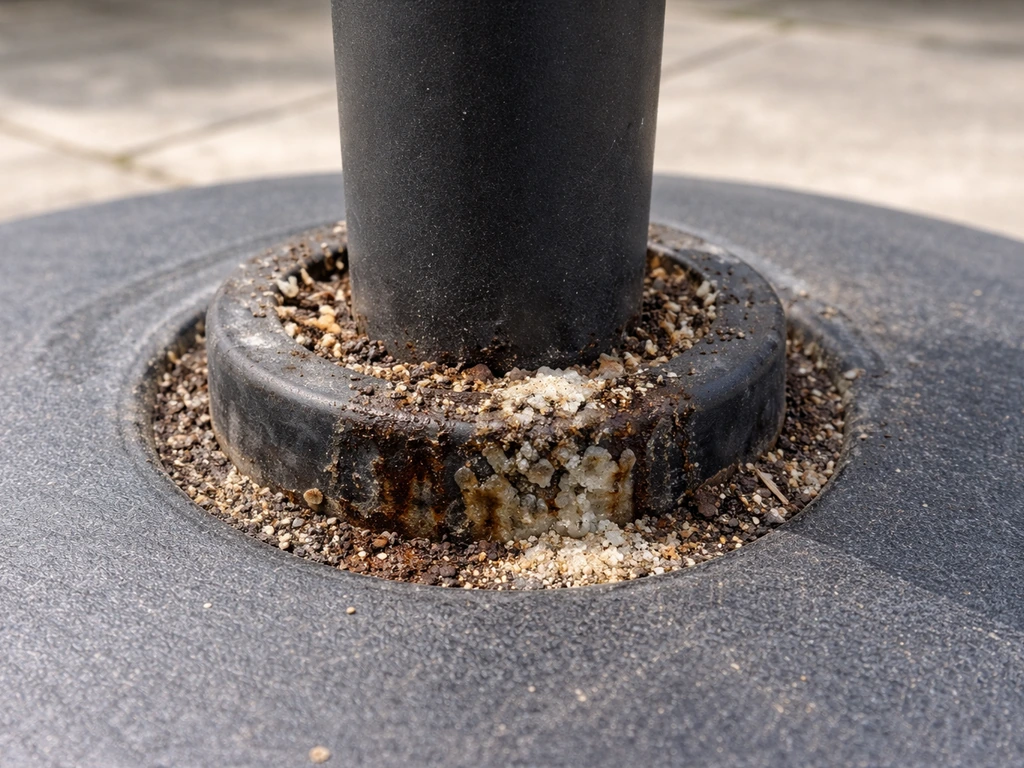
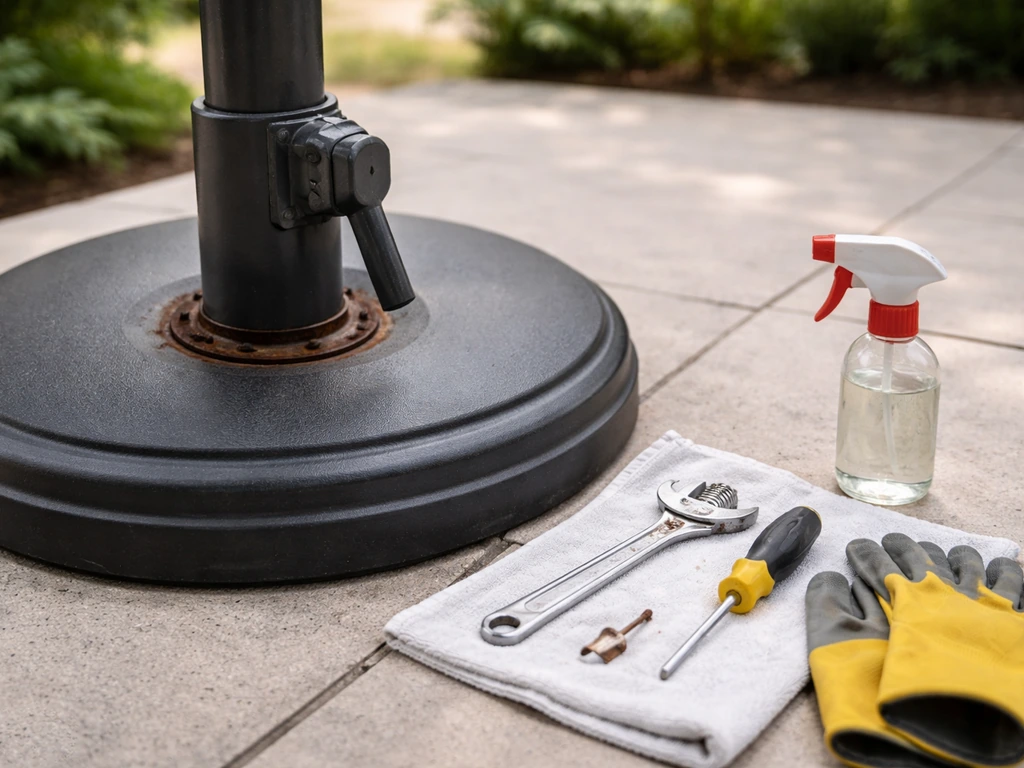
If all the locking hardware is fully disengaged but the pole still won't budge, you're dealing with corrosion, mineral deposit buildup, or compacted debris between the pole and the collar. This happens most often when an umbrella has been left in the base through rain, winter, or high humidity without any lubrication. The pole can literally bond to the collar via rust or oxidized aluminum. You'll notice reddish-brown streaking or white chalky residue around the base opening. This is fixable but takes more effort and the right chemicals.
The crank or tilt mechanism is jammed (separate issue)
If the umbrella is stuck in the open or closed position and the crank handle spins freely without doing anything, or the crank won't turn at all, you're dealing with a mechanical failure inside the umbrella itself, not the base. If your patio umbrella is stuck in a tilted or tilt-holding position, start by following the tilt mechanism steps rather than treating it as a base-locking issue tilt position frozen or the tilt button won't engage. Similarly, if the tilt position is frozen or the tilt button won't engage, that's an umbrella-side problem. If the tilt mechanism is frozen or the tilt button will not engage, follow the umbrella-side troubleshooting steps instead of focusing only on the base. The pole may not be stuck in the base at all. It's worth clarifying which problem you actually have before proceeding. This guide covers both, but they require different fixes.
| Symptom | Likely Location | First Step |
|---|---|---|
| Pole won't lift out of base | Base collar/lock or corrosion | Check and fully release all base hardware |
| Crank spins freely, canopy won't move | Crank gear or cable inside umbrella | Inspect crank area for stripped gear or tangled fabric |
| Crank won't turn at all | Crank mechanism or canopy fabric snag | Check for fabric caught in ribs; try reversing direction gently |
| Tilt button stuck or tilt won't release | Tilt mechanism on pole | Check tilt button is fully pressed; inspect for debris or corrosion |
| Pole stuck, no visible rust, hardware released | Debris or dried mineral deposits in collar | Apply penetrating oil, wait, then use rocking technique |
Tools and supplies to free it today
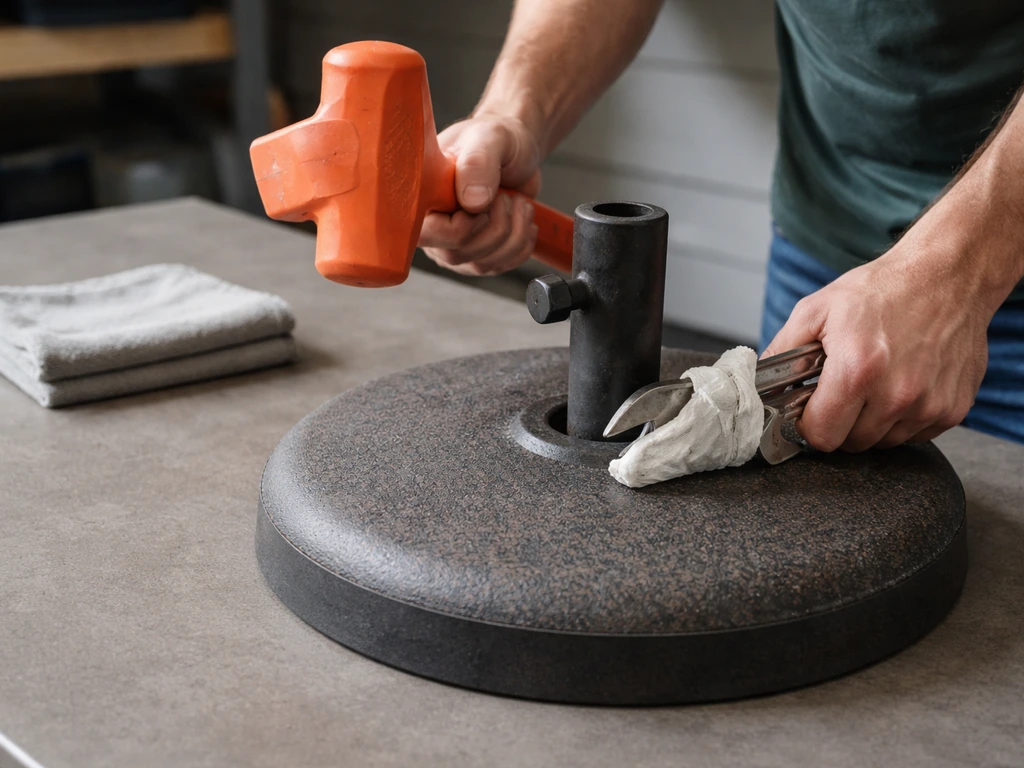
You probably have most of what you need in the garage already. Here's what's actually useful and what each item is for.
- Adjustable wrench or pliers with a rag wrap: for loosening collar screws and set screws without scratching the finish
- Rubber mallet or dead-blow hammer: for tapping the base collar to break loose corrosion bonds without damaging metal (never use a steel hammer directly on the pole or collar)
- Penetrating oil (WD-40 or a dedicated penetrant like PB Blaster): works into tight rust bonds at the collar-pole interface when left to soak for 15 to 30 minutes
- Rust dissolver (optional, for severe oxidation): products like Rust-Oleum Rust Dissolver or WD-40 Specialist Rust Remover Soak work chemically on rust bonds; read the product instructions because they require surface prep and flash-rust prevention steps
- Silicone lubricating grease: for reassembly and prevention, not for loosening; do not use petroleum-based grease on plastic components
- Soft cloths or rags: for cleanup and wiping surfaces dry before reassembly
- Flathead screwdriver: for locating and backing out recessed set screws
- Zip ties or bungee cord: to secure the closed canopy so it doesn't flap or catch wind while you work
One thing worth noting on rust dissolvers: remove as much loose dirt and debris as possible before applying any chemical treatment, and dry the metal thoroughly afterward to prevent flash rusting. If you use a rust dissolver, following up with a spray of WD-40 Multi-Use or a light silicone coating protects the bare metal until you can apply proper lubricant.
How to remove the umbrella from the base safely
Work through these steps in order. Don't skip ahead to step 4 until you've confirmed steps 1 through 3.
- Close and secure the canopy. Make sure the umbrella is fully closed and use a zip tie or the included canopy strap to keep the fabric bunched tightly around the pole. This reduces weight and prevents the canopy from catching any breeze while you work.
- Identify every locking device on the base. Crouch down and look at the full base assembly. Find the collar screw or tension knob (usually a large plastic or metal knob on the side of the base opening), any set screws (small flathead or hex screws recessed into the collar), and any locking pin or button that engages a hole in the pole. Each of these must be fully released.
- Fully back out or release every locking device. Don't just loosen the collar screw a few turns. Back it out completely, or until you feel zero resistance. Press any spring-loaded pins fully inward and hold them. If there's a stainless steel inner collar with its own adjustment screw, back that out too. A partially loosened screw is one of the main reasons poles feel stuck when they're actually just pinched.
- If the base allows it, crank the pole upward first. Some bases have a height-adjustment mechanism that lets the pole rise a bit before you lift it free. Use it. Cranking the pole up even an inch or two inside the base reduces the contact surface between pole and collar, making the final lift out much easier.
- Attempt removal with a controlled rocking motion. Stand directly over the umbrella, grip the pole near the base opening with both hands, and gently rock the pole side to side while applying light upward pressure. Do not jerk or twist aggressively. This rocking motion breaks the mechanical grip of any residual friction or light corrosion without bending the pole.
- If the pole still won't move, apply penetrating oil. Pour or spray penetrating oil around the pole where it enters the base collar. Let it soak for at least 15 to 30 minutes, longer if there's visible rust. Then return to the rocking-and-lifting technique. Reapply if needed and wait again. Patience here beats force every time.
- For stubborn corrosion bonds, use a rubber mallet on the collar. With the pole hardware fully released, use the rubber mallet to deliver firm, sharp taps around the outside of the base collar (not on the pole itself). This vibration helps break the rust or mineral bond between the pole and collar. Do this after the penetrating oil has had time to soak in.
- Lift the pole straight up once it moves freely. Once you feel the grip release, lift the pole directly upward, keeping it as vertical as possible. Angling a pole while extracting it from a tight collar is how poles get bent or collar threads get damaged.
- If corrosion is severe and none of this works: a documented escalation from one manufacturer's base manual is to remove the inner collar and holder assembly from a concrete base and take it to a metal shop for professional separation. That's a real option when the pole and collar have fused via corrosion over multiple seasons.
If the crank or tilt won't move: fix the mechanism
If your issue is that the crank handle won't turn, spins without effect, or the tilt mechanism is frozen, the pole-in-base steps above won't help you. This is a separate problem inside the umbrella hardware. Here's how to work through it.
Crank won't turn or feels completely seized
- Check for fabric caught in the ribs or around the crank area. A piece of canopy fabric snagged near a rib tip or wrapped around the crank gear assembly is one of the most common causes of a seized crank. Visually trace the canopy fabric from the outer edges inward.
- Confirm you're cranking in the correct direction. This sounds obvious but it matters: most cranks are directional and will feel very stiff if you're going the wrong way when the canopy is either fully open or fully closed. Try reversing direction with gentle pressure.
- Check whether a release grip or trigger on the crank handle needs to be activated. Some umbrella models require you to squeeze a small lever or depress a button on the handle before the crank will rotate freely. Consult your model's manual if you're unsure.
- If the handle spins freely with no canopy movement, the internal gear or cable linkage is likely stripped or disconnected. This is an internal mechanical failure. You can often order replacement crank assemblies for popular brands; disassembly involves removing the crank housing cover at the pole joint and replacing the gear wheel or cable.
- Apply a small amount of silicone lubricant to the crank gear area if the mechanism feels stiff but is otherwise functioning. Do not use heavy grease, which can attract dirt and gum up the gears over time.
Tilt mechanism frozen or won't engage
A tilt that won't budge is usually one of three things: the tilt button isn't fully engaged (it needs to be pressed completely through its travel before the collar releases), corrosion has seized the tilt collar on the pole, or the tilt housing itself is cracked or deformed from a wind event. Press the tilt button firmly and fully before applying any rotational pressure to the tilt collar. If it's corroded in place, the penetrating oil soak method applies here too: soak the tilt collar joint, wait, then try gentle movement. Avoid forcing a tilt mechanism in any direction until you've confirmed the button is released, since forcing a locked tilt collar can crack the housing and turn a $15 repair into a full pole replacement. Note that tilt mechanisms are only meant to be used on calm days with no wind, so if yours seized during or after a windy period, a wind-bent component could be the real culprit.
If you're dealing specifically with a tilt that's stuck in a tilted position, or a tilt button that's broken internally, that's a deeper mechanical problem than this guide covers in full depth.
Clean, lubricate, and inspect before you put it back
Once the pole is out, don't just drop it back in. Take 10 minutes to do these steps and you'll dramatically reduce the chance of it sticking again.
- Clean the pole surface where it contacts the collar. Use a soft cloth to remove any rust, mineral deposits, dried lubricant, or debris. For oxidized aluminum (white chalky residue), a cloth dampened with a mild cleaner works well. For rust streaks on steel poles, use a rust dissolver according to the product instructions, then wipe dry immediately to prevent flash rusting.
- Clean the inside of the base collar. Use a cloth or a narrow brush to remove debris, rust, and old lubricant from inside the collar opening. If the collar has a stainless steel sleeve insert, check whether it can be removed for cleaning (some unscrew or slide out). A dirty collar re-deposits grime right back onto a clean pole.
- Inspect the collar screw, tension knob, and any locking hardware. Look for cracked plastic, stripped threads, or worn contact points. If the collar screw no longer tightens properly or its threads are damaged, replace it before reassembling. Loose base hardware is one cause of umbrella tip-over problems, so don't skip this step.
- Inspect the pole for bending or deformation. Roll the lower section of the pole on a flat surface or sight down its length. Even a slight bow will cause binding every time you insert or remove it. A bent pole is very difficult to straighten and often needs replacement.
- Apply silicone lubricating grease to the pole surface. Coat the lower portion of the pole (the section that sits inside the collar) with a light, even layer of silicone grease. Silicone is the right choice here because it won't degrade rubber or plastic components in the collar assembly, and it won't attract dirt the way petroleum-based grease does. Re-apply every six months or at the start and end of each season.
- Apply a small amount of silicone lubricant to the crank mechanism and any moving tilt parts. This is also the right time to check that all fasteners and joints at the pole hub and canopy ribs are tight and undamaged. Tighten or replace any loose or corroded hardware before the umbrella goes back into service.
- Wipe the pole dry after lubrication and re-insert it into the base, seating it firmly at the bottom of the collar before re-engaging any locking hardware. Correct seating at the base collar is important: a pole that's only partially inserted and then locked can bind or cant sideways.
Stop it from sticking again: setup, wind habits, and winterizing
Most stuck umbrellas are preventable. The three main causes are skipping lubrication, leaving the umbrella in the base through wet or freezing conditions, and not securing it during wind events. Here's what to build into your routine.
Get the setup right from the start
Make sure your base is the right size and weight for your umbrella. An undersized base is a safety issue (tip-over risk) and also means the collar fit may be wrong for your pole diameter, leading to binding. If you ever notice your patio umbrella tips over, treat it like a safety stop and check the base setup and locking hardware before trying to free the pole. Insert the pole so it seats firmly at the bottom of the collar before tightening any hardware. A pole that's only partially seated and then locked is under lateral stress every time it's loaded by wind or canopy weight, which accelerates wear on both the pole and the collar.
Close and remove it when the wind picks up
Close the umbrella and remove it from the base during any strong wind, rainstorm, or if you're leaving the patio unattended for an extended time. If your patio umbrella will not close, this step helps prevent binding caused by wind damage or a stuck tilt mechanism Close the umbrella and remove it from the base. Even a moderate gust can bend a tilt mechanism or bow a pole slightly if the canopy is deployed. A bent pole, even slightly, is what causes the binding you fought today. The tilt function specifically should only be used on calm days with zero wind. Using tilt even in a light breeze puts lateral stress on the tilt collar and is one of the fastest ways to seize or crack that mechanism.
Lubricate on a schedule
Apply silicone lubricating grease to the pole (the section that sits in the collar) and to the crank mechanism at least every six months. The start of the outdoor season and the end of it are the two natural times. It takes five minutes and prevents the majority of stuck-pole situations. Don't use WD-40 as a long-term lubricant here; it's a great penetrant for freeing stuck parts but evaporates quickly and leaves the surface dry. Use a proper silicone grease for ongoing lubrication.
Winterize properly to prevent spring sticking
Before storing for winter, remove the umbrella from the base and clean both the pole and the inside of the collar. Wipe all metal components down to remove dirt, grime, and moisture that causes corrosion during storage. Apply a fresh coat of silicone grease to the pole before storing. Store the umbrella in a dry, cool location with low humidity. Keeping the canopy fabric away from sharp objects prevents tears that can then snag on hardware and contribute to stuck-crank situations the following spring.
For water-ballast bases, drain them completely before freezing temperatures arrive. Water expands when it freezes and can crack the base housing. If you can't drain completely, adding antifreeze to the remaining water prevents expansion damage. A cracked base often leads to a collar that no longer holds the pole square, which creates binding at the pole interface.
Clean the base regularly
Wipe the base collar area clean periodically through the season, especially after rain or if the umbrella was used near a pool or sprinkler. Mineral deposits from hard water are a surprisingly common cause of pole-to-collar bonding. A quick wipe-down takes 30 seconds and prevents the hours of soaking and tapping you went through today. When cleaning, use a soft cloth and mild cleaning solution. Avoid bleach or strong chemical cleaners on the umbrella materials and finished surfaces.
FAQ
What should I do first if the pole feels stuck but the base knobs and pins look loose?
Recheck that the pole is fully seated at the bottom of the collar before you loosen hardware, then try disengaging every base lock while the umbrella is closed. A partially seated pole can keep the collar under tension even when it looks “off,” making it feel seized.
Can I spray lubricant into the base opening right away if the umbrella is stuck?
Do a quick dry wipe and remove loose grit first, then apply a penetrating soak only to the joint area around the collar. After it works, wipe off residue and apply silicone grease afterward, so you do not trap debris or leave a dry surface that causes re-seizing.
How long should I wait after applying penetrating oil or rust dissolver to free a stuck pole?
Plan on a staged approach, for example soak, wait, then test gentle movement. If there is visible rust or chalky buildup, you may need multiple short attempts over a few hours rather than one long forceful try, to avoid bending the pole or deforming the collar.
What’s the safest way to test whether the problem is in the umbrella tilt or in the base collar?
Observe the crank action while the pole is still in the base. If the crank handle spins without moving the tilt or the crank will not turn at all, treat it as an umbrella-side mechanical issue, not a base-lock problem.
Is it okay to use WD-40 as the main lubricant to prevent future sticking?
Use it only as a temporary penetrant for freeing stuck parts, then switch to silicone grease for ongoing lubrication. WD-40 evaporates and leaves the interface drier, which increases the chance of mineral buildup and sticking over time.
What should I do if I see white chalky residue or reddish-brown streaks around the base opening?
That usually points to mineral deposits or oxidation bonding the pole to the collar. Clean off loose residue, use the recommended rust dissolver approach with thorough drying to prevent flash rust, then protect the bare metal with silicone or the proper long-term lubricant.
I’m worried about damaging the pole, what counts as “too much force”?
If hardware is confirmed disengaged and the pole will not move with gentle rocking or controlled hand pressure, stop and escalate to soaking and cleaning rather than pulling upward hard. Force attempts can deform the pole surface, causing a permanent fit problem next time.
If the base housing is cracked or loose, will that make a stuck-pole problem worse?
Yes. A cracked or misaligned base can hold the collar at an angle, which increases binding at the pole interface when the umbrella is loaded. If you notice rocking at the base or collar misalignment, address the base stability before trying to free the pole again.
After I remove the pole, how do I prevent it from sticking the next time it goes in?
Clean the pole and the inside of the collar, dry completely, then apply silicone grease specifically on the section that sits in the collar. Also seat the pole firmly to the bottom before tightening any locking hardware so the collar is not clamping a partially inserted pole.
How often should I lubricate and clean to avoid another “stuck in base” situation?
Apply silicone grease at least twice per year, start of outdoor season and end of it, and do quick collar wipe-downs after rain or sprinkler exposure. For water-ballast bases, drain fully before freezing temperatures, and check for mineral buildup near the collar during the season.
Next Articles
Patio Umbrella Problems: Diagnose and Fix Common Failures
Step-by-step fixes for patio umbrella problems: diagnose crank, cord, tilt, wobble, and wind/base issues fast, safely.
Patio Umbrella Tips Over: Fix Tilting, Base, and Wind Stability
Stop a tilting patio umbrella fast: fix base weight, wind stability, and broken tilt and crank parts step by step.
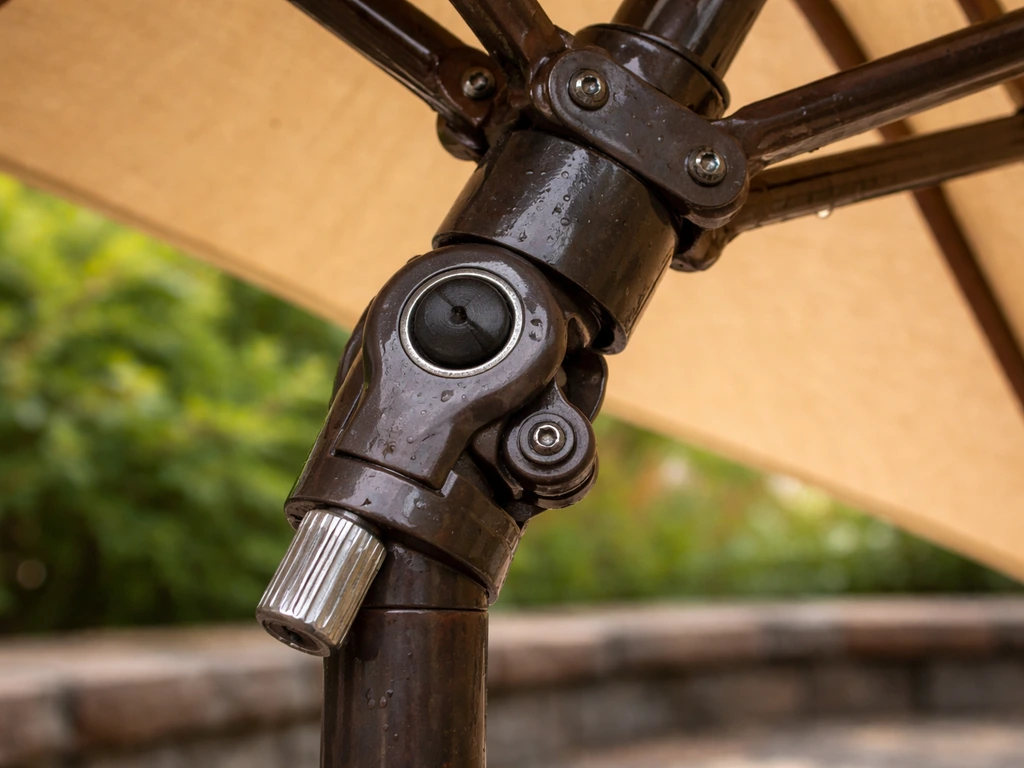
Patio Umbrella Tilt Mechanism Broken Fix in Minutes
Quick troubleshooting and DIY repair for a broken patio umbrella tilt mechanism, button, linkage, gears and seized pivot