
A broken patio umbrella tilt mechanism almost always comes down to one of three things: something disconnected (a cord snapped, a button linkage popped loose, a pin fell out), something worn or stripped (a gear, ratchet, or spring gave up), or something seized (grit and dried lubricant turned the pivot into a brick). You can diagnose which one in about five minutes without any special tools, and the majority of these repairs are completely doable at home in under an hour.
Patio Umbrella Tilt Mechanism Broken Fix in Minutes
Luca Morrison
29 Apr 2026
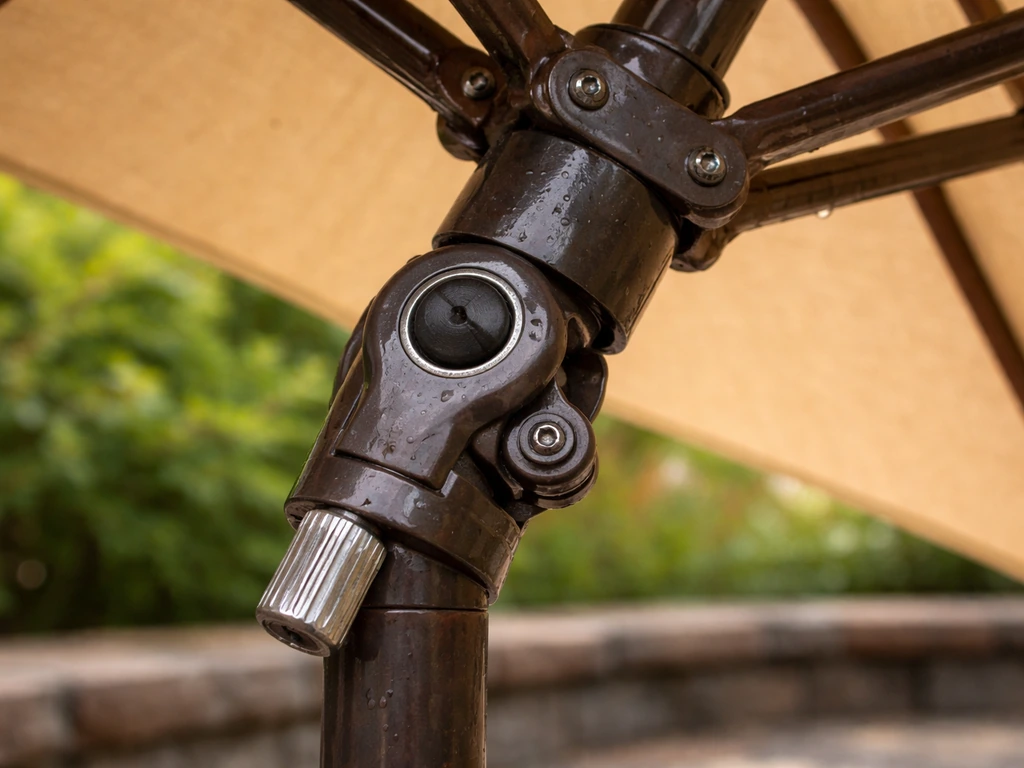
Quick diagnosis: figure out what's actually broken
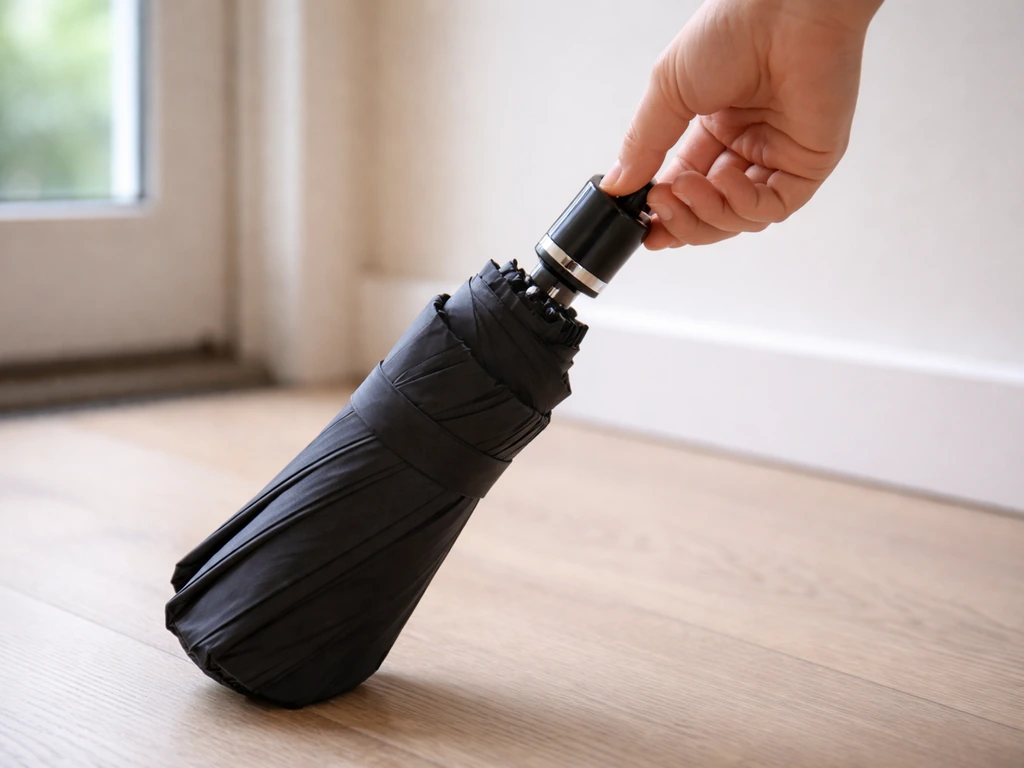
Before you grab a screwdriver, do a 60-second external check. Close the umbrella completely (gently, don't force it), then try the tilt control with the canopy fully closed. This tells you a lot about where the failure lives.
- Button feels totally loose or drops straight through with no resistance: the button's spring or linkage pin is broken or disconnected.
- Button presses fine but nothing moves: the linkage between the button and the tilt collar/coupling has come apart, or the cord that drives the tilt has snapped.
- Crank spins freely but the canopy doesn't tilt: on auto-tilt and crank-tilt designs, this usually means a stripped gear, broken worm drive, or a snapped internal cord.
- Mechanism feels stiff, moves a little but grinds or binds: seized pivot points or grit acting as grinding compound inside the housing. This is actually the best-case scenario—it's fixable with cleaning and lubrication.
- Umbrella tilts in one direction only, or gets stuck halfway: a bent rack, misaligned gear, or a damaged ratchet tooth.
- You can hear a click but the canopy doesn't hold its angle: the ratchet or detent spring is worn or broken.
One quick check that care manuals always mention and people always skip: make sure the tilt button is fully engaged before assuming something is broken. On push-button tilt models, a half-pressed button won't release the collar, so the whole mechanism just sits there doing nothing. Press it firmly all the way in while someone else tries to tilt the canopy. If that does it, you just fixed it.
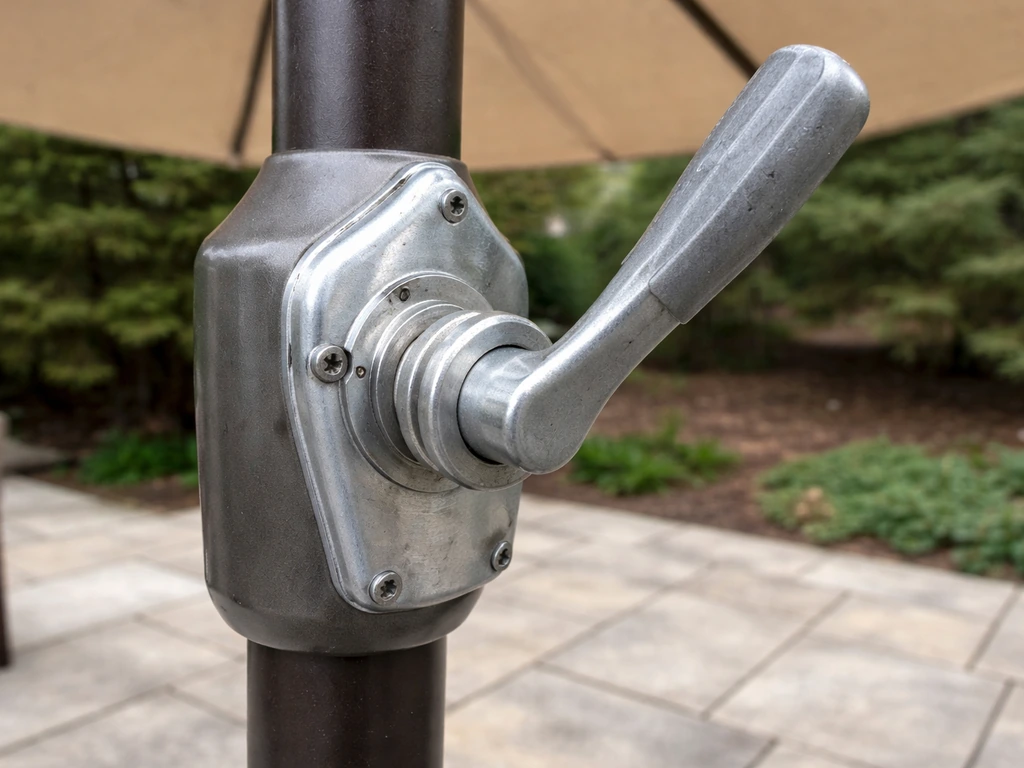
It also helps to know which tilt style you have, because the fix path is different for each. The three most common types are push-button tilt (a collar on the pole with a spring-loaded button), auto-tilt (tilt is controlled by continuing to turn the opening crank past a certain point), and side-crank or steering-rod tilt (a separate handle or rod, common on cantilever umbrellas like the Treasure Garden AG19 series). If you're not sure which you have, look at the pole just below the canopy hub: a push-button model has a visible collar with a button; an auto-tilt has no collar and the crank does all the work; a cantilever with a steering rod will have an operation housing with labeled sockets.
Tools, safety, and getting to the mechanism
You don't need much. Gather these before you start so you're not hunting around mid-repair with parts spread across the patio.
- Phillips and flathead screwdrivers (multiple sizes)
- Hex key / Allen wrench set (metric and standard)
- Needle-nose pliers (for cotter pins and small clips)
- A small container or magnetic parts tray to hold screws and pins
- PTFE dry lubricant spray (WD-40 Specialist Dry Lube PTFE is a good choice—it dries to a slick coating and doesn't attract dirt)
- Compressed air or a soft brush for cleaning out grit
- Mild dish soap and warm water for cleaning housing parts
- A phone or camera for photos before you disassemble anything
On the safety side, the biggest risk is the canopy falling unexpectedly while you're working. Always fully close and lower the canopy before disassembling the tilt mechanism. If the umbrella is in a base, move it to a stable flat surface or lay it down on a clean area of the patio. Never force a stuck mechanism, if you can hear or feel something grinding, stop and diagnose rather than push harder. If your patio umbrella is stuck in the base, stop forcing it and check for a seized tilt mechanism or pivot before you disassemble anything patio umbrella stuck in base. If you notice the patio umbrella tips over again after you get it working, double-check the tilt mechanism, canopy balance, and the base setup to prevent another incident patio umbrella stuck in base. Forcing things is how a fixable problem becomes an expensive one.
Access varies by tilt type. For push-button tilt, the collar is external and often snaps apart or is held by 2 to 4 small screws. For auto-tilt and crank-based systems, you'll need to remove the crank handle first: unscrew the center bolt on the handle, then remove 2 to 4 screws from the crank housing cover to expose the internal gears and cord. On cantilever models with a crank assembly (like the Treasure Garden AG28), you'll pop a plastic ring from the socket and unscrew hex screws from each side of the housing. Take a photo of everything before any part comes off, gear orientation, cord routing, washer order. You will thank yourself later.
Fix path A: tilt button, cord, or linkage disconnected or snapped
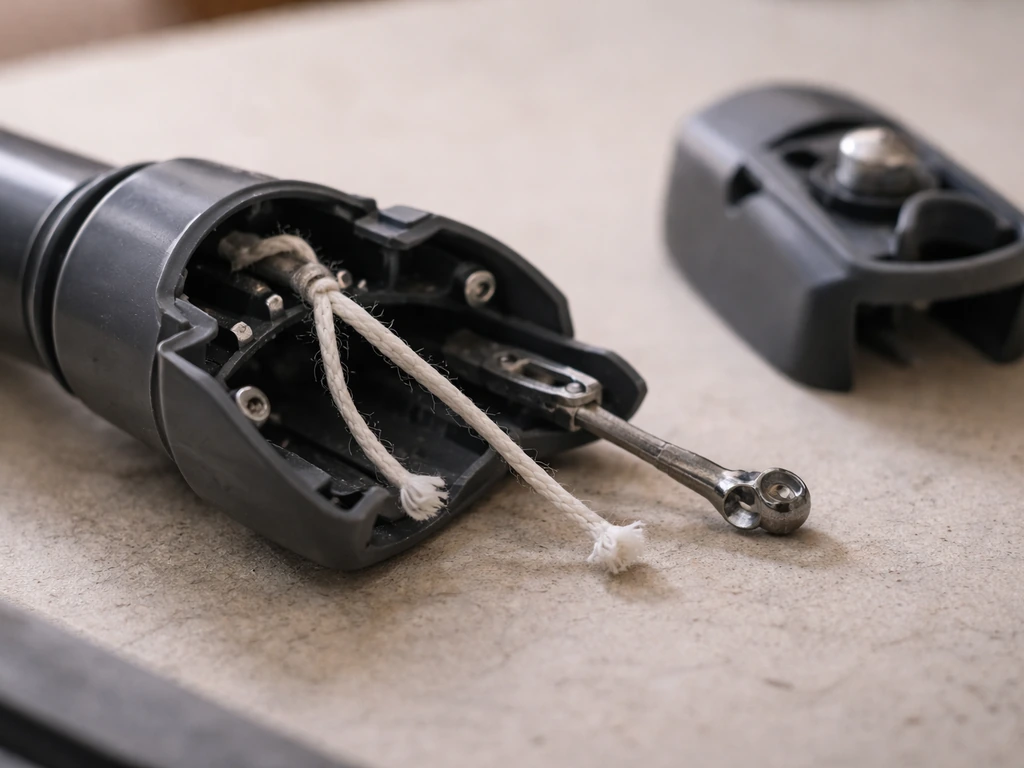
This is the most common failure on push-button tilt models and on umbrella designs that use an internal cord to drive the tilt movement. iFixit provides a step-by-step guide specifically for fixing an umbrella tilt button or trigger mechanism Fix path A: tilt button, cord, or linkage disconnected or snapped. The fix is usually straightforward as long as the cord break is accessible.
- Close and lower the canopy fully, then lay the umbrella on a flat surface.
- On a push-button model, locate the tilt collar on the pole. Look for small screws or a snap-fit seam around its circumference. Remove the screws or carefully pry the collar halves apart with a flathead.
- Inspect the button assembly: there's a spring and usually a pin or coupling leg that engages a guide track. If the spring is missing or the pin has fallen out, that's your problem. Check the inside of the housing halves—small parts often just fall to the bottom of the collar.
- If the linkage pin is intact but the cord that connects the button to the tilt collar is frayed or snapped, you need to replace the cord. Before doing anything, check whether the cord is visible outside the umbrella frame. If it runs entirely inside the pole and is not visible, internal cord replacement is not possible without full disassembly—at that point, a replacement mechanism is the better path.
- If the cord is accessible (visible at the collar area or at the crank housing), remove the crank handle bolt and housing cover screws to expose the cord routing. Note exactly how the cord threads through the pulley and handle bolt area before removing anything.
- Cut a replacement cord of the same diameter and length. Thread it following the original routing, and secure the end with the same knot style (usually a simple stopper knot or a specific manufacturer knot—check your manual's reassembly diagram).
- On auto-tilt designs where the cord drives tilt through the crank housing, the reassembly order matters: reinstall washers, gears, and the nut in the correct sequence before threading the cord. Cotter pins secure the gear stack—these are small but critical, so don't skip them.
- Reassemble the collar or housing, press the button, and test before closing everything up.
A quick note on the Treasure Garden push-button tilt series specifically: this design uses a collar/coupling leg that moves in a guide track controlled by a pin. The most common failure is that pin working loose over time. If you find the pin but the track it rides in is cracked or deformed, the collar needs replacement rather than just reassembly.
Fix path B: internal gear, rack, ratchet, or spring failure
If your crank spins freely without tilting, or if the umbrella tilts but won't hold its angle, you're likely dealing with a worn or damaged internal component. This is more involved but still a DIY-friendly repair if you're comfortable with small mechanical assemblies.
- Remove the crank handle by unscrewing its center bolt, then remove the 2 to 4 screws on the crank housing cover. Lift the cover off carefully—springs can be under tension and may launch small parts.
- Photograph the gear stack, cord routing, and spring positions before touching anything.
- Inspect the gears. On worm-drive and rack-and-pinion tilt systems, look for stripped teeth (they'll look rounded or missing compared to the intact teeth nearby), cracks, or obvious misalignment. A gear that spins freely without engaging is either stripped or has slipped off its retention point.
- Check the ratchet mechanism if the issue is that the tilt won't hold a position. The ratchet uses a small pawl (a spring-loaded tooth) to lock into detents. If the pawl spring is broken or the detent surfaces are worn smooth, the ratchet won't hold. This is a common failure on older umbrellas.
- On cantilever models with a steering rod (like the AG19 and AG19A), the tilt gear releases when you move the steering rod to the marked range (roughly 45 degrees of rotation). If the gear isn't releasing or re-engaging, check that the pin securing the tilt degree mechanism is intact. The AG19A has crank sockets labeled RIGHT and LEFT on the operation housing—make sure the crank is seated in the correct socket.
- If a gear or ratchet component is stripped or cracked, it needs replacement—reshaping or gluing plastic gear teeth does not work reliably under the load of a full canopy. Note the exact measurements and tooth count before ordering.
- Reassemble in reverse order, making sure cotter pins are fully seated and any retention clips are closed. A loose cotter pin will let a gear walk off its shaft after a few uses.
One service note worth calling out: blank" rel="noopener noreferrer">Treasure Garden's repair documentation for their AG28 crank assembly explicitly lists 'PIN, SPRING OR CRANK SYSTEM NEED TO BE REPLACED' as the reason for service. That's an honest acknowledgment that these components wear out and that replacement (not improvised repair) is the right answer for internal mechanical failures.
Fix path C: seized pivot or stiff tilt points, cleaning and lubrication
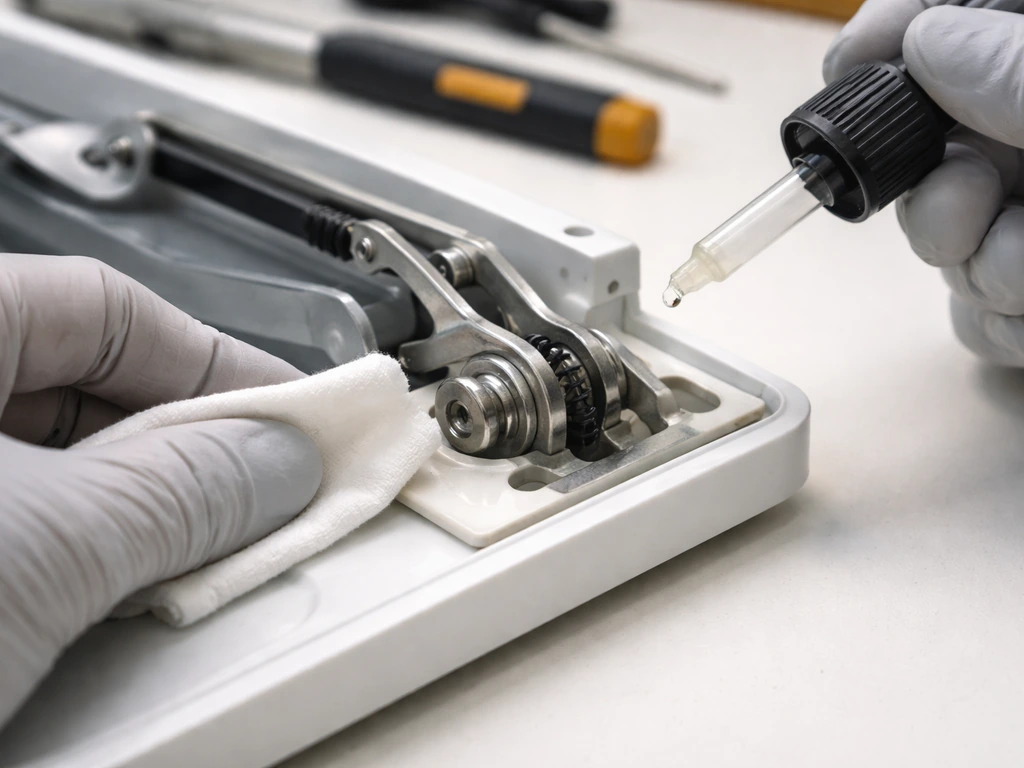
If the mechanism moves but feels stiff, grinds, or requires serious force, you've got contamination or dried lubricant in the pivot joints. Sand and grit inside the tilt housing acts like grinding compound and will eventually wear down gear surfaces and pivot bores. The good news: this is the easiest fix of the three.
- Access the tilt mechanism using the same steps from the section above—remove the housing cover to expose the pivot points, collar bore, or gear assembly.
- Blow out any loose debris with compressed air. Work from the inside out so you're pushing grit away from the mechanism, not deeper into it.
- Use a soft brush and warm soapy water to clean the housing interior, gear surfaces, and pivot bores. Rinse with clean water and dry completely before adding any lubricant. Applying lubricant over wet surfaces or trapped moisture speeds up corrosion.
- Inspect the cleaned surfaces for scoring or pitting. Light scratches are fine—the mechanism will still work. Deep grooves or cracked surfaces mean a component is ready to fail soon.
- Apply a PTFE dry lubricant spray to all pivot points, the collar bore, gear teeth, and any sliding surfaces. The reason to use a dry lube (not grease or WD-40 standard spray) is that dry PTFE coatings resist attracting dirt and dust back into the mechanism. A standard wet lubricant would just collect grit and re-create the same problem in a season.
- Work the tilt through its full range by hand several times to distribute the lubricant before reassembling the housing.
- Reassemble, test, and check for smooth movement. If it still binds after cleaning and lubrication, a pivot bore is likely worn oval or a shaft is bent—at that point you're looking at component replacement.
Dried lubricant is almost as bad as grit. Old grease turns into a gummy residue that locks up pivot points just as effectively as rust. If your umbrella is more than two or three seasons old and has never been lubricated, there's a good chance you'll find thick, dark residue on the collar bore and gear surfaces. Clean it off completely before applying anything new.
When it's beyond repair: finding the right replacement parts
Sometimes the tilt mechanism is just done. A cracked housing, stripped gear down to the nub, or a corroded-through pivot shaft isn't worth trying to nurse back to life. Here's how to make sure you order the right replacement and don't waste money on parts that don't fit.
First, identify your tilt style family. Treasure Garden, one of the most widely distributed brands, organizes their replacement parts into distinct categories: Auto Tilt, Push Button Tilt, and cantilever-specific tilt mechanism modules. These are not interchangeable. An auto-tilt crank housing will not swap onto a push-button collar post. Getting this wrong is the most common and most expensive ordering mistake.
To get the right part, you need at minimum: the brand, the model number (usually on a label near the base of the pole or on the original packaging), the tilt style (auto, push-button, or steering-rod), and the pole diameter. For cantilever umbrellas like the AG25T, the tilt mechanism is a named component in the parts list, you can order it by part number if you have the manual. For other brands, take clear photos of the mechanism housing, the collar (if present), and any legible part numbers stamped into the plastic or metal.
- Measure the pole diameter at the tilt collar location (common sizes are 32mm, 35mm, 38mm, and 48mm—metric sizing is standard on most imports).
- Count the gear teeth if a gear is the failed part—tooth count and module (pitch) must match exactly.
- Photograph the cord routing before disassembly if a cord kit is needed—replacement cord kits often come with instructions, but your specific routing may differ.
- Check the manufacturer's customer support page before ordering from a third party. Treasure Garden, for example, can provide replacement parts directly, issue repair authorizations, or in some cases replace the unit under warranty.
- Avoid generic 'universal' tilt kits unless the listing specifically confirms compatibility with your model. Tilt mechanism geometry varies significantly between brands and even between product lines from the same brand.
If the cord is not visible outside the umbrella frame on a cord-driven tilt model, the repair cannot be completed without full disassembly that's often not practical on integrated-pole designs. In that case, a full tilt mechanism replacement (or a replacement umbrella, if the pole itself is also damaged) is the correct next step. It sounds like a bigger deal than it is, most tilt mechanism replacements on mid-range umbrellas cost $20 to $60 in parts and take about 30 minutes to install.
Post-repair testing and keeping it working long-term
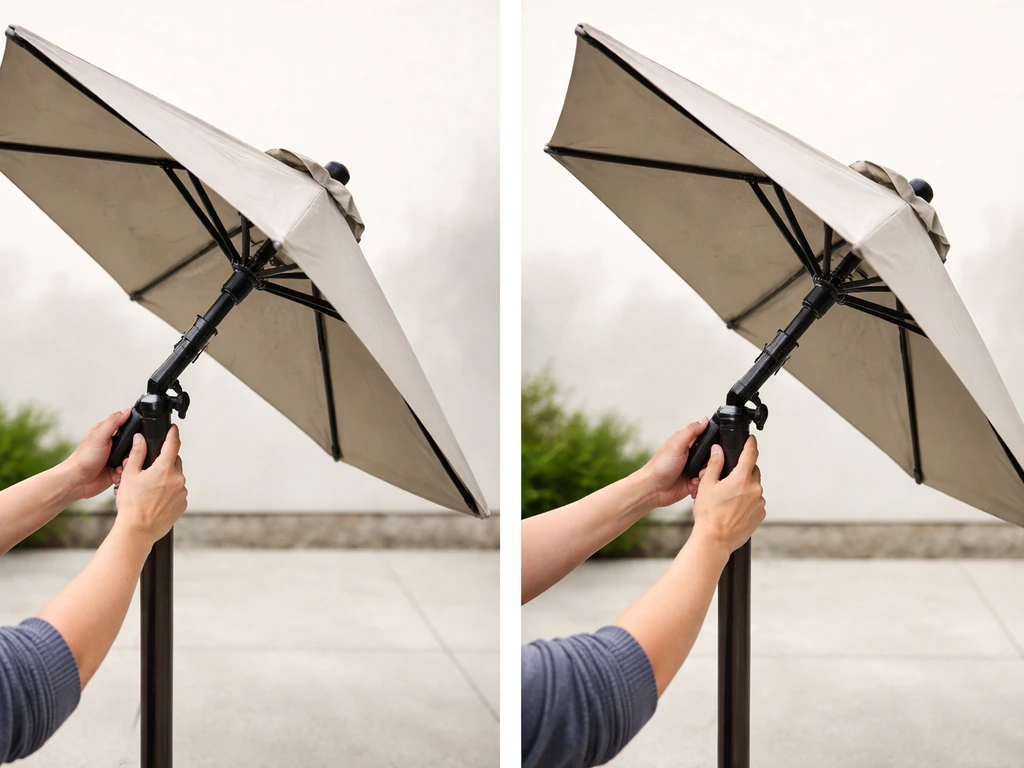
Before you consider the repair done, test the tilt through its complete range at least twice. Open the umbrella fully, engage the tilt, and move it to the maximum angle in each direction. Then return it to vertical, tilt again, and hold it at a mid-angle for a minute to confirm the ratchet or detent is holding. If you hear any grinding, feel any hard spots, or notice the canopy drifting from its set angle, you haven't fully solved the problem yet. If you run into patio umbrella problems where the canopy won't tilt or won't stay in position, the post-repair testing steps below will help you pinpoint what still needs adjustment.
Also check that the tilt mechanism doesn't affect the open/close operation. On auto-tilt umbrellas especially, a reinstalled gear that's slightly out of position can cause the crank to bind when you try to close the canopy. If closing feels harder than it did before the repair, reopen the housing and check gear alignment before calling it done. A similar interaction can happen with push-button tilt models where the collar isn't fully seated, you might see the umbrella stuck in a tilted position or struggling to close fully, which is worth reading about separately if that comes up. A similar interaction can happen with push-button tilt models where the collar isn't fully seated, you might see the umbrella stuck in a tilted position or struggling to close fully, which is worth reading about separately if that comes up patio umbrella stuck in tilt position. If your patio umbrella will not close after the repair, check the tilt and collar seating before you assume the mechanism is permanently broken.
Preventive maintenance that actually makes a difference
- Lubricate the tilt mechanism at the start and end of each season with a PTFE dry lubricant. It takes three minutes and prevents most of the failures described in this guide.
- Close and store the umbrella during high wind rather than leaving it tilted. A tilted canopy acts like a sail and puts serious lateral stress on the tilt pivot—this is the fastest way to bend or crack a housing.
- When closing the umbrella, return it to vertical before cranking it down. Closing a tilted canopy forces the ribs and tilt collar to work against each other.
- Keep the tilt button and collar area clear of sand and debris. After a day at the beach or near a sandbox, a quick rinse and blow-out goes a long way.
- Store the umbrella in a protective cover or indoors during winter. Cold temperatures make plastic housings brittle, and freeze-thaw cycles work moisture into pivot bores and accelerate corrosion.
- Never force the tilt control. If it resists, stop and diagnose. Forcing it is how a simple cleaning job turns into a gear replacement.
Most tilt mechanism failures are slow and preventable. The umbrella doesn't break suddenly, it stiffens a little each season, gets forced a few times, and eventually something gives. Fifteen minutes of cleaning and lubrication at the start of each outdoor season will keep the mechanism working for the life of the canopy. If you've already done the repair, you're in the best possible position: you know exactly what's in that housing, and you know what to look for before the next failure sneaks up on you.
FAQ
What should I do if the tilt mechanism feels loose instead of stuck after the repair?
If the umbrella tilts but doesn’t feel secure, check that any detent, ratchet, or spring-loaded collar actually engages fully (not just partially). During testing, hold the canopy at a mid-angle for a full minute and verify it stays there without drifting. Loose engagement often means a cord end is not seated correctly, a pin is not snapped into its hole, or a collar is installed one notch off.
Is it safe to use WD-40 to clean or lubricate a patio umbrella tilt mechanism?
WD-40 can temporarily displace moisture, but it is not a long-term lubricant for pivot joints. After cleaning, use an appropriate dry or light silicone-type lubricant for outdoor plastics and pivots, apply sparingly, and wipe off excess to avoid attracting grit. If you already sprayed heavy residue, clean it out again before re-lubing.
How can I tell whether the cord is the problem or the internal gears are the problem?
On cord-driven tilt styles, observe whether the tilt button releases the collar or whether you see the cord moving when you actuate the control. If the control releases and the cord does not seem to pull, you may have a disconnected or snapped cord end. If the cord moves but the tilt won’t progress smoothly, the gear or ratchet is more likely worn or stripped.
My umbrella tilts, but it won’t stay at the set angle. What are the usual causes?
This pattern usually points to a worn detent/ratchet surface, missing or weak spring force, or misalignment after reassembly (especially on crank-based systems). Confirm gear orientation with your photos, then re-test at multiple angles. If the canopy drifts, stop and check that the locking feature is engaging, not just rotating freely.
What’s the best way to clean grit and old grease from the tilt housing?
First remove loose debris, then clean the inside of the housing and collar bore thoroughly so no dark gummy residue remains. Use a lint-free wipe and a mild degreaser safe for plastics, then let everything dry before adding a light lubricant. If you only wipe the outside of the pivot, grit will remain in the pivot bores and cause grinding again.
Can I replace only one internal part instead of the whole tilt mechanism module?
Often yes, but only when the failure is clearly a discrete part like a pin, spring, or cord end. If you find a cracked housing, stripped gear teeth down to the base, or a corroded-through pivot shaft, replacing only one component can lead to rapid repeat failure. In those cases, buying the full module is typically the more reliable fix.
How do I avoid the wrong replacement part when ordering?
Match at least four details: brand, model number, tilt style type (push-button, auto-tilt, steering-rod/cantilever), and pole diameter. Also verify whether your system uses an internal cord and the specific crank or collar configuration. If any of those details are uncertain, take clear photos of the mechanism housing and collar area before ordering, and double-check that parts are not labeled as interchangeable across tilt styles.
What should I do if the umbrella won’t close after I reinstall the tilt mechanism?
Don’t force closure. Reopen the housing and confirm gear alignment and that the collar is fully seated on push-button designs. For auto-tilt, a slightly out-of-position reinstall commonly causes the crank to bind during closing. Once you can close smoothly by hand, do the full tilt-range test again.
Do I need to remove the umbrella from the base to repair the tilt mechanism?
Not always, but it is strongly recommended if the umbrella cannot be safely stabilized. If you can lay it down on a clean flat surface, that reduces the risk of the canopy dropping while you’re working. If you must work in the base, secure the canopy fully closed and lower, then keep hands clear of pinch points while disassembling.
How can I prevent repeat failures after the repair?
At the start of each outdoor season, clean out any visible grit, then apply a small amount of suitable pivot lubricant (not dripping into the canopy fabric or pole joints). Avoid forcing the tilt if you hear grinding, and after the first repair, repeat the tilt test twice over the next few uses to confirm the detent holds and nothing has shifted. Over time, a pin that slowly loosens will show up as intermittent engagement before it fully fails.
Next Articles
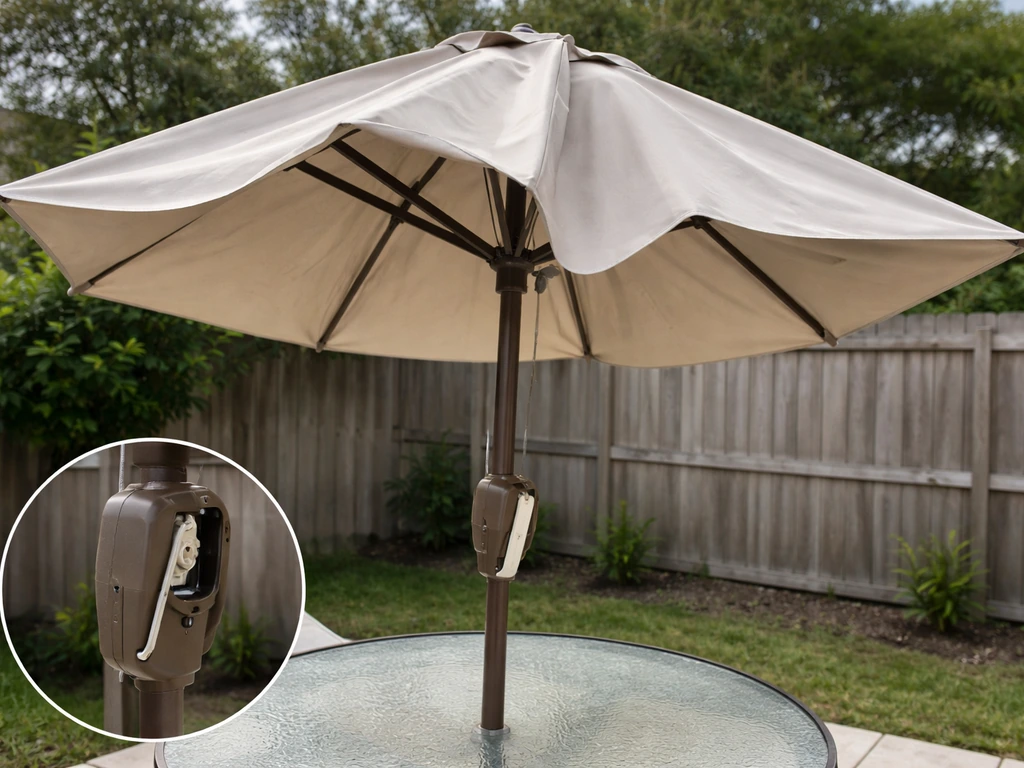
How to Fix a Patio Umbrella That Won't Open or Close
Step-by-step fixes for patio umbrellas that won’t open or close, with checks for jams, cords, latches, and lubricating t
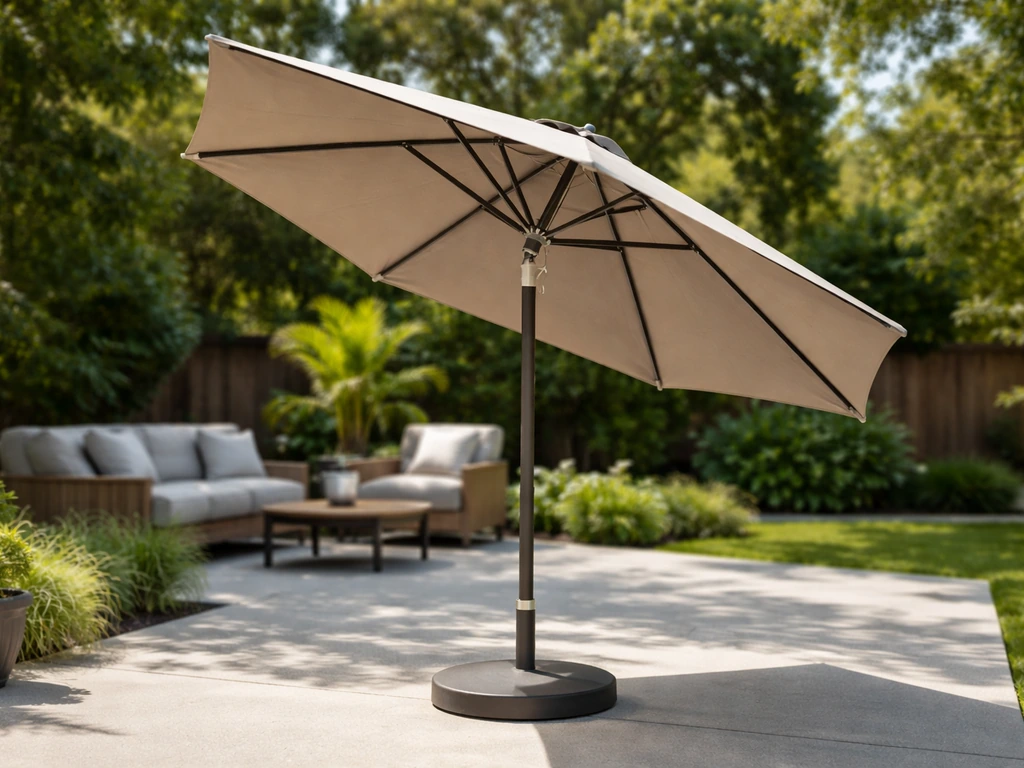
How Does a Patio Umbrella Work? Components, Use, and Fixes
Learn how patio umbrellas work: components, open close tilt, stability, and step by step troubleshooting common mechanic
Patio Umbrella Crank Not Working: DIY Fix Guide
Fix a patio umbrella crank that won’t work with safe step-by-step jam, gear, and base troubleshooting and repair tips.