You can open most crank-style patio umbrellas without the crank by manually lifting the runner hub up the pole with both hands until the ribs lock open, then securing them in place. It takes about 30 seconds once you know what to grab and which direction to push. The key is understanding what your crank was actually doing mechanically, so you don't accidentally force something that will break. Below I'll walk you through the safety checks, the manual method, how to close it the same way, and what to do if the umbrella is genuinely stuck.
How to Open a Patio Umbrella Without a Crank
Luca Morrison
29 Apr 2026
Safety checks before you touch anything
Before you start pushing or pulling parts of the canopy, run through these quick checks. Skipping them is how people crack ribs, tip over the base, or drop a canopy on themselves.
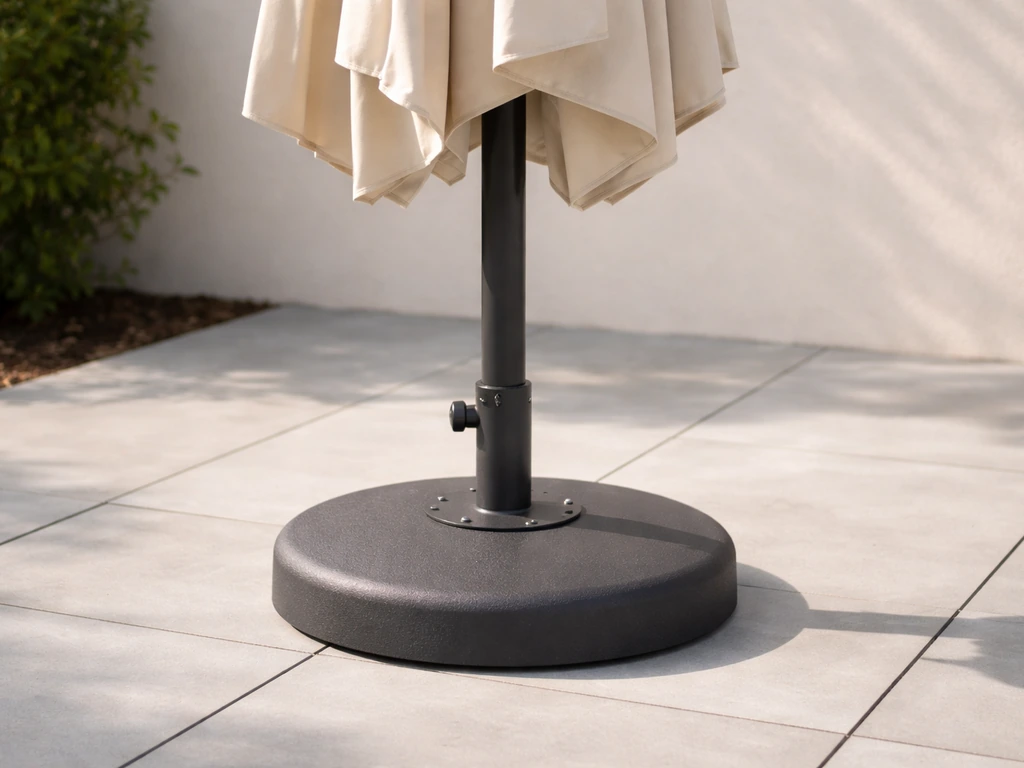
- Make sure the umbrella is seated firmly in its base. The base should weigh at least 50 lbs for a standard 9-foot market umbrella. Tighten the locking nut or fastener at the base collar before doing anything.
- Check the wind. Do not open the umbrella if it's gusty. Even a partially open canopy acts like a sail, and without the crank mechanism holding tension, it can flip or come down fast.
- Look for obvious obstructions first: a twist tie left on from storage, a strap that wasn't removed, or a bird's nest in the ribs. These cause the majority of 'won't open' calls I get.
- If there's a cord visible inside the pole or running through the hub, don't work on the umbrella while that cord is under tension. Let the canopy rest at its lowest position before touching the cord or any internal components.
- If the canopy is half-open and you can't figure out why, don't force it further up or down yet. A canopy stuck mid-way usually signals a cord or gear problem, and forcing it can snap a rib.
Figure out which type of mechanism you have
Before you try any manual method, take 60 seconds to identify your umbrella's mechanism. The manual workaround is completely different depending on the type, and using the wrong method can damage parts that are otherwise fine.
Crank gearbox (the most common type)
Look at the pole about two-thirds of the way up. If you see a housing with a handle sticking out of the side (like a small window crank), that's a crank gearbox. Inside that housing are gears that convert your hand rotation into vertical movement of the runner hub, which opens and closes the ribs. Turning clockwise raises the canopy and locks it open. Turning counterclockwise lowers it. The locking behavior is directional: if the crank is broken or missing, the ribs won't stay up on their own without the gears holding that position. That's the core challenge with manual operation.
Tilt or hinge mechanism
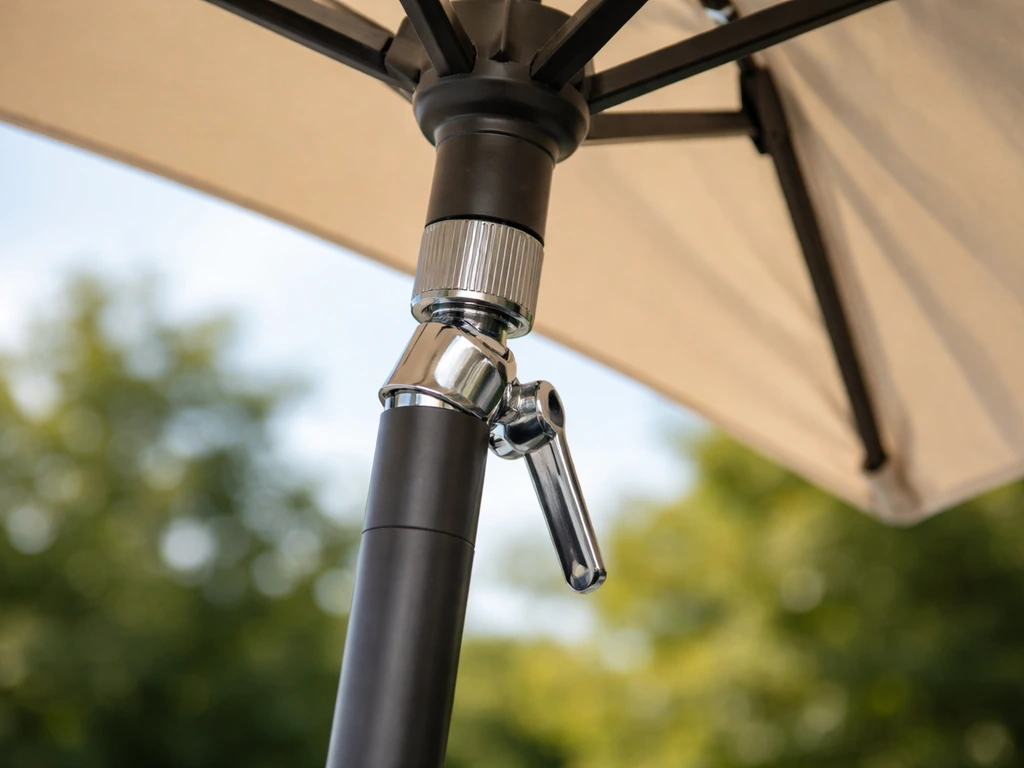
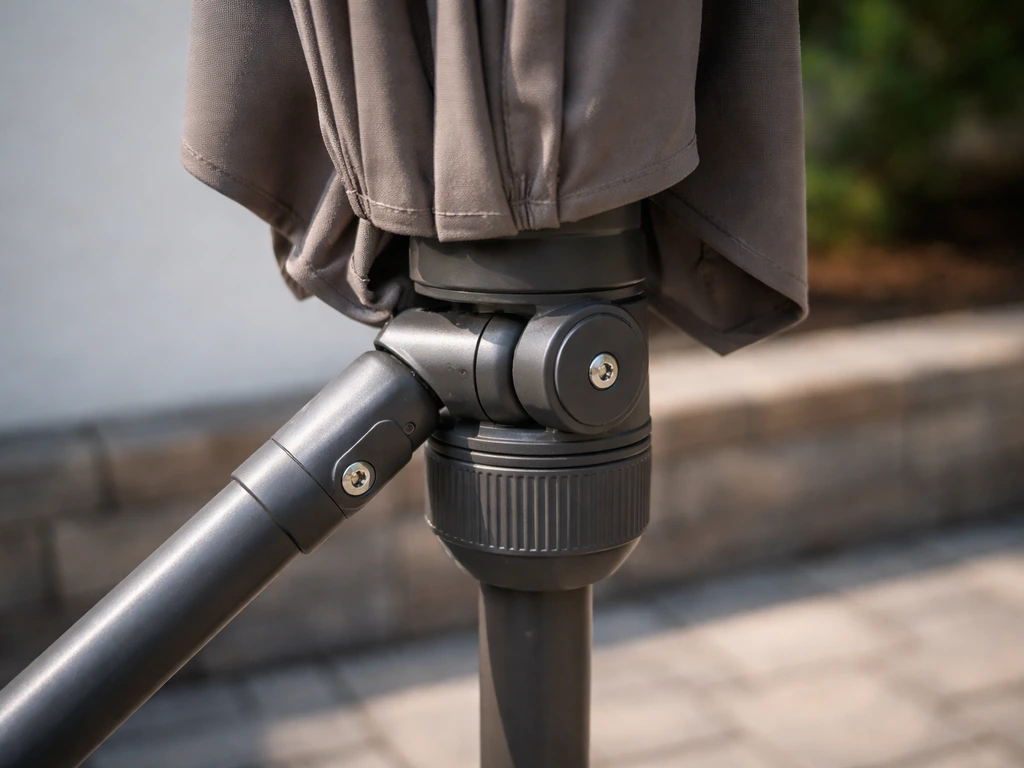
Some umbrellas have a separate tilt function at or near the top of the pole, above the crank. This lets the canopy angle toward the sun. It's usually a collar you twist or a button/lever you press to release the upper pole section so it pivots. The tilt mechanism is separate from the open/close function. If your umbrella opens fine but won't tilt, that's a tilt issue, not a crank issue.
Cord and pulley system
On some patio umbrellas, especially older or lower-cost models, the crank doesn't connect to gears directly. Instead, it winds a cord or rope that runs up through the pole and attaches to a lift ring or hub. If your canopy stops partway up and the crank handle just spins freely, a broken or detached cord is almost certainly the culprit. You'll need to address the cord before the manual lift method will work reliably.
Cantilever (offset) umbrella
Cantilever umbrellas, where the pole is off to the side rather than through the center, often use a trigger-lift system combined with a crank. These have specific opening sequences (squeeze trigger, push frame to position, then crank) and closing sequences (squeeze trigger, bring frame down, crank, then squeeze trigger again to finish). Manual operation of a cantilever is riskier because the offset weight means a released canopy can swing down fast. I'd be especially cautious with these.
| Mechanism type | How you identify it | Manual operation difficulty |
|---|---|---|
| Crank gearbox | Housing with side handle on the pole | Moderate — hub must be pushed manually past the gear resistance |
| Cord and pulley | Crank spins freely; cord visible inside pole | Low — cord can sometimes be pulled directly, but cord repair is often needed first |
| Tilt/hinge collar | Twist collar or push-button near canopy attach point | Low — usually just release the collar and adjust angle by hand |
| Cantilever trigger-lift | Offset pole, trigger handle, crank near base | High — sequence-dependent, drop hazard if released wrong |
How to open a patio umbrella without the crank
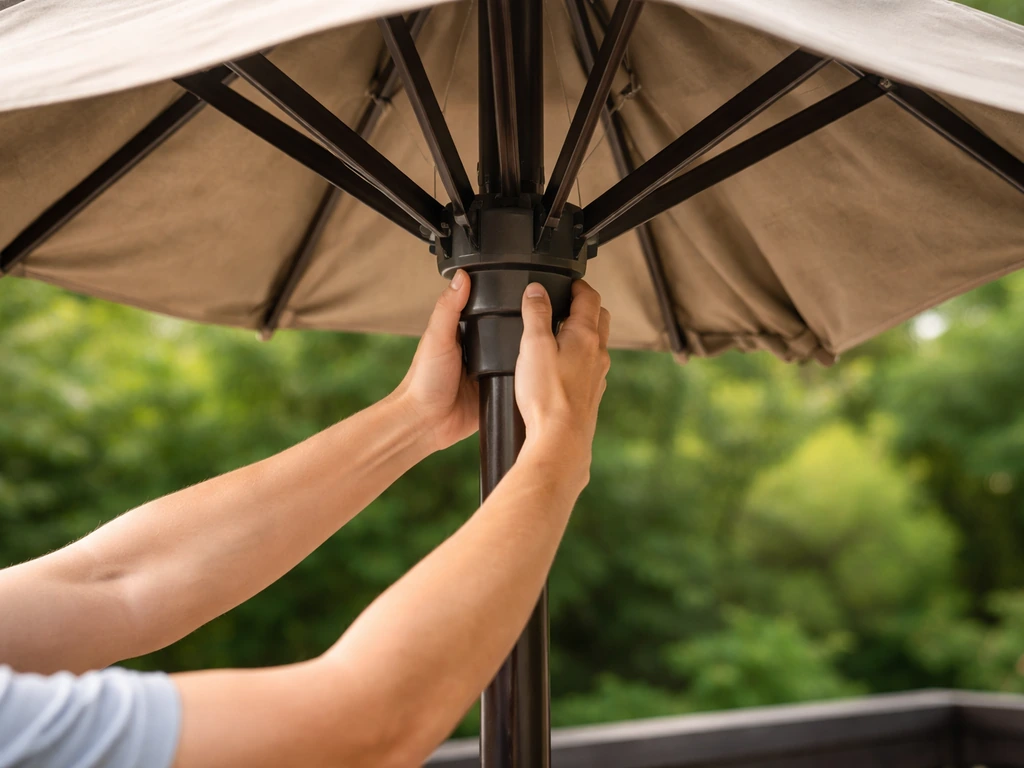
This method works for standard center-pole crank gearbox umbrellas. If you have a cord/pulley style, start at step 1 but expect to need the cord fix before step 4 works. If you have a cantilever, read the cautions above first.
- Set the umbrella in its base and tighten the base collar. The pole should feel solid with zero wobble before you do anything else.
- Stand facing the pole and locate the runner hub. This is the ring-shaped piece that slides up and down the pole. On most market umbrellas it sits at the bottom of the rib assembly when closed. The ribs connect to it with small hinges.
- Grip the runner hub firmly with both hands — one hand on each side of the pole. Don't grab the ribs themselves; they're the fragile parts.
- Push the runner hub straight up the pole with steady, even pressure. You may feel resistance from the gears inside the crank housing. Push through it slowly. Do not jerk or yank. If it won't budge with reasonable hand pressure, stop — something is seized and you need the troubleshooting section below.
- Continue pushing the hub up until the ribs swing outward and the canopy starts to spread. Keep pushing until the hub reaches the stop ring at the top of its travel. You'll feel it seat firmly with a click or solid stop. That's fully open.
- Check that the ribs are all evenly extended and no rib is bent back at an odd angle. If one rib looks wrong, lower the hub back down and check that rib's hinge pin before going further.
- If your umbrella has a tilt collar: once the canopy is fully open, locate the collar just below the canopy attach point. Twist it or press the release button, angle the canopy to the position you want, then release the collar so it locks. Stop at your desired angle — leaving it halfway tilted makes the umbrella unstable.
A note on locking: when you open manually, the gears inside the crank housing are what normally hold the hub in place. Without the crank turning clockwise to engage that lock, the hub may slowly creep down over time, especially in heat or if anyone bumps the pole. This is a real limitation of manual operation without a working crank. It's fine for a short-term fix, but you'll want to repair or replace the crank mechanism if you're using the umbrella regularly.
How to close a patio umbrella without the crank
Closing manually is actually easier than opening because gravity is working with you. The risk is letting the hub drop too fast, which can snap a rib or trap fingers.
- If you have a tilt collar that's engaged, release and straighten the canopy back to vertical first. Trying to fold the ribs while the canopy is angled puts uneven stress on the rib hinges.
- Stand at the pole and get a firm grip on the runner hub with both hands, same as you did when opening.
- Control the hub downward with steady hand pressure. Let it slide down slowly — don't just let it drop. The canopy will fold inward as the hub descends.
- Lower the hub until the ribs are fully folded and the hub is at its lowest stop point. On most umbrellas, you'll feel it reach the bottom of its travel.
- If your umbrella has tie straps or velcro wraps attached to the canopy, use them now to secure the folded ribs. This prevents wind from catching the canopy even while it's closed.
- If you're storing the umbrella or expecting any kind of weather, remove it from the table hole, bring it to a sheltered spot, or lay it down flat. A closed umbrella left in a base can still tip in strong wind.
For offset cantilever umbrellas: the closing sequence matters a lot. Squeeze the trigger, bring the frame down to its lower positions step by step, then crank counterclockwise if you still have partial crank function. If you don't, manually guide the frame down while a second person holds the base. Never try to close a cantilever solo with one hand on the trigger and one on the frame, you'll lose control of the canopy.
If it still won't open or close: what's actually wrong
If you tried the manual method and the hub won't move, or it moves but the ribs won't spread, there's a specific mechanical failure happening. If the crank turns but the umbrella still won't open, check for common internal problems like a broken cord or stripped gears, then follow the correct repair steps. Here's how to diagnose it.
Crank handle turns but nothing moves
This is almost always a cord failure (on cord/pulley systems) or stripped gears (on gearbox systems). If your patio umbrella crank not working problem lines up with the symptoms here, the cause is usually either a cord failure on cord/pulley systems or stripped gears on gearbox systems. If your <a data-article-id="E80A43BD-CBEA-492D-B431-3A3218ED11FE">patio umbrella crank turns but nothing moves</a>, that often points to a specific internal problem like stripped gears or a cord failure. Try pushing the hub manually while someone else turns the crank. If the hub moves freely when you push but the crank does nothing, the drive connection between the gearbox and the hub is broken. On a cord system, the cord has likely snapped or slipped off the drum. On a gearbox system, the internal teeth are stripped and the gears are spinning freely. Both of these need a repair, not just a workaround.
Crank won't turn at all
If the handle is locked solid and won't rotate, there's something seized in the gearbox or a rib/hub is mechanically jammed. First, try pushing the hub slightly upward while attempting to turn the crank, sometimes the gears bind at a specific point and a small load shift frees them. If that doesn't work, remove the crank housing cover (usually two screws on the back face) and look inside for broken gear teeth, rust, or debris. A spray of dry PTFE lubricant or silicone spray into the housing can free light corrosion. Avoid wet greases that attract dirt. If you see a snapped gear tooth or cracked housing, the gearbox needs replacement.
Hub moves but canopy only partially opens
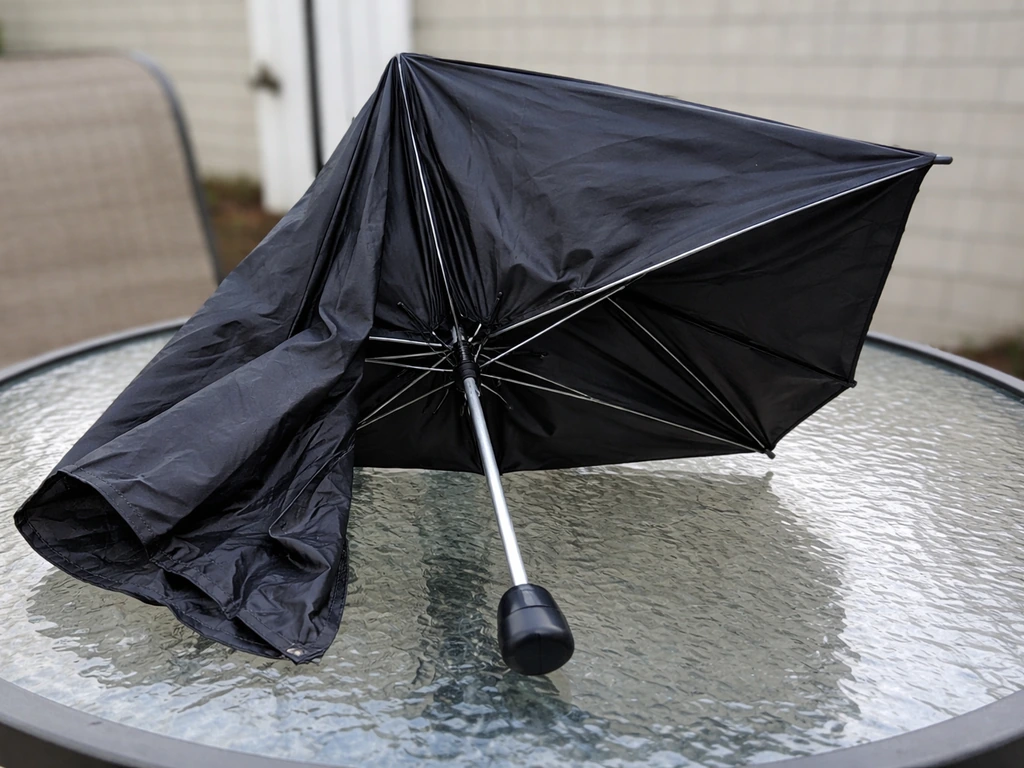
One or more ribs aren't extending fully. This usually means a bent rib, a rib hinge pin that has popped out, or a stretched/tangled cord that's preventing one side from deploying. Lay the umbrella on a flat surface, fully open what you can, and inspect each rib where it connects to the hub and to the stretcher (the lower secondary arm). Look for any pin that's sticking out, any rib that's kinked, and any cord that's wrapped around a rib instead of running freely.
Tilt won't engage or is stuck at an angle
This is a separate problem from the crank. The tilt collar may have debris in the threads, or the locking button may be stuck. Spray the collar joint with silicone lubricant, work it back and forth gently, and try again. If the collar has cracked plastic housing, replace it, a failing tilt collar can let the canopy suddenly drop to one side.
When to repair parts vs. when to replace them
Here's the honest breakdown based on what's broken and how much effort it's worth.
| What's broken | Repair or replace? | What to do |
|---|---|---|
| Crank handle only (no gearbox damage) | Repair — easy, low cost | Order a replacement handle. Most use a standard 5/16" square drive shaft. Measure yours before ordering. |
| Stripped gearbox gears | Replace gearbox | Remove the crank housing (2–4 screws). Match the housing size and drive shaft dimensions. Brands like GALTECH label these by part number. |
| Broken or detached cord | Repair — moderate effort | Thread new cord through the pole and reattach to the hub. Cord kits are widely available for about $10–$20. |
| Bent rib | Replace the rib | Most ribs are model-specific. Search by brand and pole diameter, or email a photo to the manufacturer parts team. |
| Cracked tilt collar | Replace the collar | Plastic collars are inexpensive. Match by pole diameter (usually 1" or 1.5"). |
| Cracked pole or hub | Replace the umbrella frame or full umbrella | Structural frame damage is rarely worth repairing on mid-range umbrellas. |
One practical note on sourcing parts: many umbrella brands don't put a model number on the pole or canopy label. Manufacturers like FIM actually tell customers to email a photo to their parts team to confirm compatibility before ordering. Do that before buying a gearbox or hub, an incompatible part wastes money and time.
How to test that everything worked
After any repair or manual operation session, do a quick functional check before you walk away. Open the umbrella fully until the hub reaches the stop ring and all ribs are evenly extended. Give the pole a gentle shake, the canopy should not wobble or start to drop. If you have a tilt function, engage it, stop at your desired angle, and release the collar. It should lock firmly with no sag. Then close the umbrella fully until the hub hits the bottom stop and all ribs fold flat. If anything feels sloppy, catches, or moves when it shouldn't, that's your cue to look more closely at that specific joint or component before the next use.
If the crank mechanism is what sent you here in the first place, it's worth understanding exactly what the gearbox does internally before you decide on a repair path. Knowing how the crank converts rotation into hub movement makes it much easier to spot where the failure is. To understand how does a patio umbrella work, it helps to see how the crank’s rotation becomes hub movement that spreads the ribs crank converts rotation into hub movement. Once you've got the umbrella opening and closing reliably again, a little silicone spray on the hub runner and rib hinges every season goes a long way toward preventing the next stuck-crank situation.
FAQ
What should I do if the hub lifts but the ribs still won’t lock open when I open the patio umbrella without the crank?
Stop forcing the hub, and first check whether a single rib is lagging or a stretcher arm is not rotating into place. Bent ribs, a popped hinge pin, or a cord that has slipped and is catching one side can prevent the locking position from reaching. Lay the umbrella flat, spread what you can, and inspect each rib at both the hub connection and the lower secondary arm for kinks or tangles.
Can I hold the umbrella by the canopy or ribs while lifting the hub manually to open it?
It’s safer to keep your hands on the pole area and the runner hub, not on the fabric canopy or near the rib hinges. If you grip the canopy, you can pull fabric unevenly or let the canopy shift suddenly as the ribs release. Also keep fingers out of the gap where the hub meets the ribs since that’s where pinching can happen during locking.
If my umbrella has tilt, will manually opening it without the crank affect the tilt function?
Usually it will not, tilt is a separate mechanism. But if you had to force the hub, debris or misalignment around the tilt collar can make tilt feel stiff or not lock. After opening, engage tilt once, set the angle, and confirm it holds without sag before you close up and move the umbrella.
How long can I rely on manual opening if the crank gears are broken or missing?
Treat it as short-term. Without the clockwise gear action that normally engages the lock, the hub can slowly creep downward over time, especially in heat or if the pole gets bumped. If you use the umbrella regularly, plan on repairing or replacing the crank/gear mechanism so it stays locked open and closed reliably.
My crank handle spins freely but the umbrella won’t open, what does that usually mean?
That pattern most often points to a broken or detached cord on cord/pulley models, or stripped internal teeth on gearbox models. A quick test is to push the hub upward by hand while someone turns the crank. If the hub moves freely under push but the crank does nothing, the drive connection is broken, which typically requires repair rather than a better manual technique.
What if the crank feels jammed and the handle won’t rotate at all?
Try gently pushing the hub slightly upward while attempting to turn. Sometimes the gears bind at a specific load point and a small shift frees them. If it’s still locked solid, remove the crank housing cover (often two screws on the back) and inspect for broken gear teeth, rust, or debris, then use a dry PTFE or silicone spray to address light corrosion (avoid wet greases that attract dirt).
Is it safe to close an offset cantilever umbrella manually without a working crank?
It’s riskier because the weight is offset, so the canopy can swing down quickly when control is lost. Only close with a controlled, step-by-step approach, and ideally have a second person stabilize the base. Don’t try to close solo with one hand on the trigger and one on the frame, since you can lose control and trap fingers.
How can I tell whether my umbrella is cord/pulley type or gearbox type before attempting the manual method?
Look for the crank housing on the pole. If the housing contains a crank-like gearbox where rotation normally drives vertical hub movement, it’s likely a gear system. If the canopy stops partway up and the crank just spins without lifting, and the umbrella behaves like it’s “pulling” something through the pole, it’s often a cord or rope system where a broken cord is the main culprit.
After I get it open manually, how do I confirm everything is actually working before I leave it outside?
Run a functional check: open fully until the hub hits the stop ring and ribs are evenly extended, then give the pole a gentle shake. The canopy should not wobble or start creeping down. If there is tilt, engage it to your angle and confirm the collar locks firmly, then close until ribs fold flat and the hub reaches the bottom stop.
Where do I find the correct replacement parts if I need a crank mechanism or hub later?
Check whether your brand uses model numbers on the label, many don’t. If there is no clear model number, email a photo of the pole label and crank housing to the parts team before ordering. This helps confirm compatibility, especially for hubs and gearbox assemblies where similar-looking parts can still be incompatible.
What seasonal maintenance reduces the chance I’ll need the crankless opening method again?
After it works reliably again, apply silicone spray to the hub runner and the rib hinge areas, then avoid adding heavy grease. Do this once per season so hinges stay free without attracting dirt that can increase friction and lead to binding or seized motion later.
Next Articles
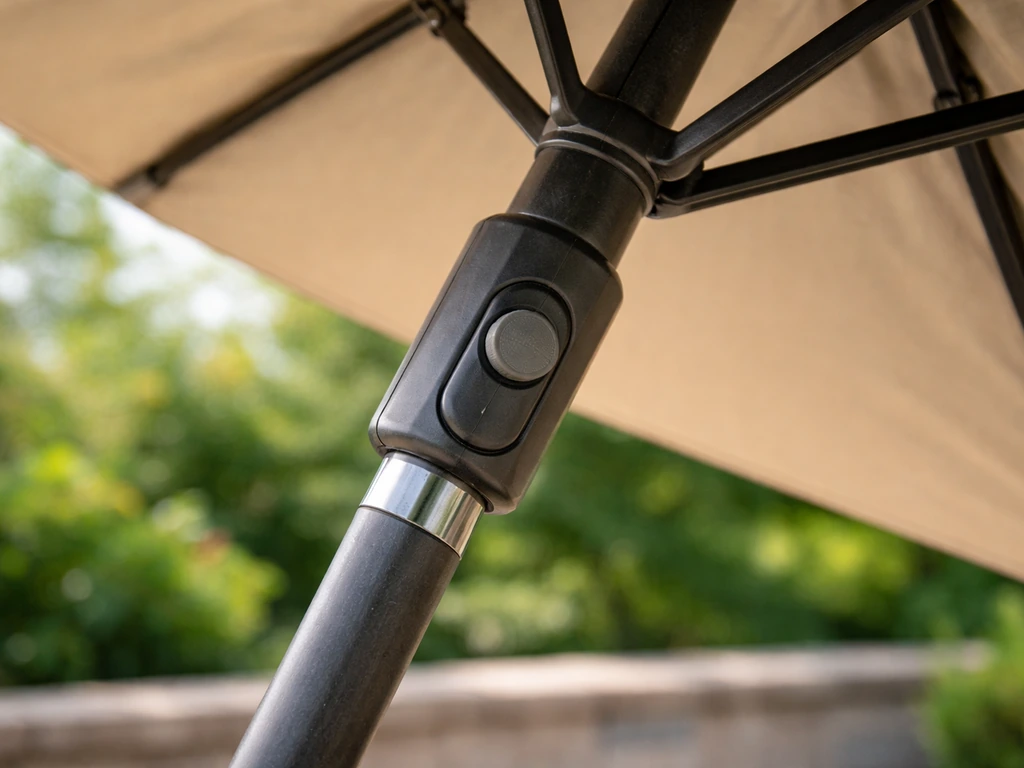
Patio Umbrella Stuck in Tilt Position: Fix the Button
Step-by-step fix for a patio umbrella tilt button stuck, with diagnosis, safe release, lubrication, and prevention tips.
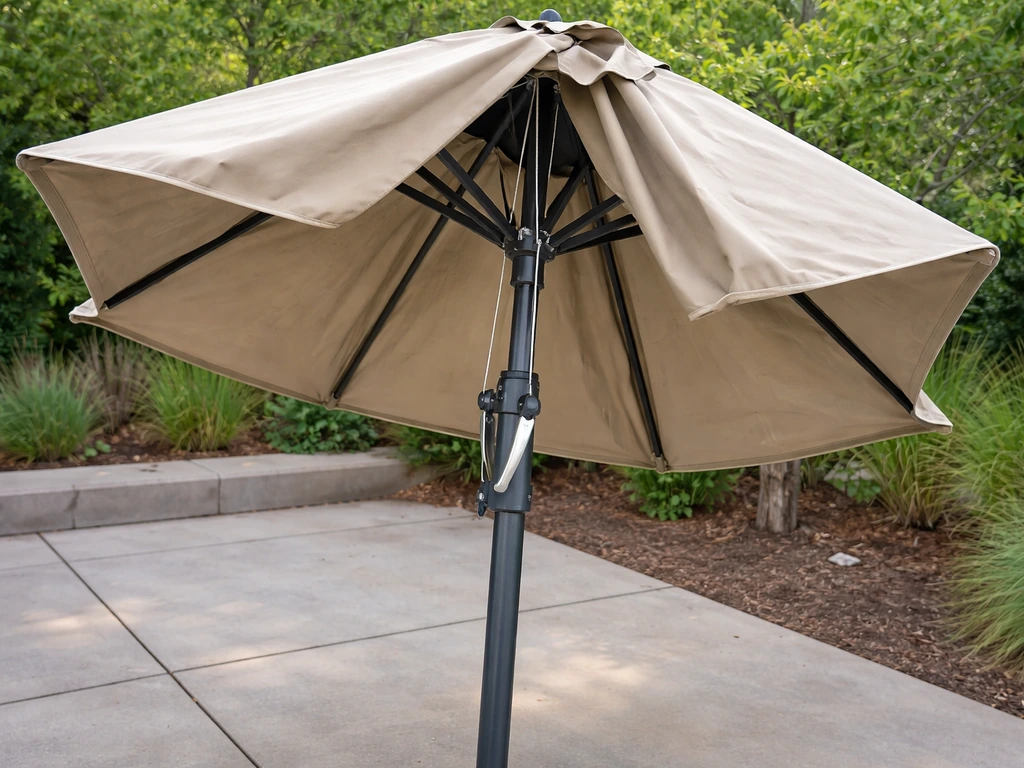
Patio Umbrella Will Not Close: Troubleshooting Fixes
Step-by-step fixes for a patio umbrella stuck open or won’t close, including binding, cord, crank, lock, and tension che
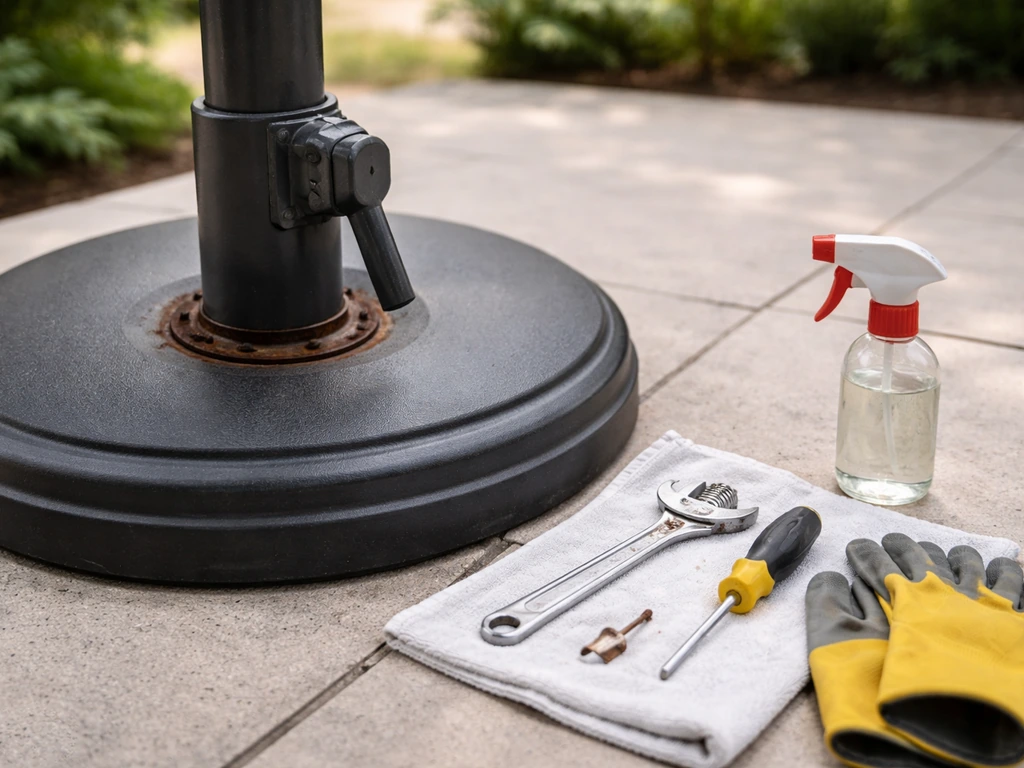
Patio Umbrella Stuck in Base: Fix It Safely Today
Fix a patio umbrella stuck in the base with safe steps for jammed crank, tilt, rust, pins, and proper reassembly.