
A patio umbrella that keeps spinning usually comes down to one of three things: the pole isn't locked into the base properly, the locking hardware inside the hub or tilt mechanism is loose or worn, or the base itself isn't heavy enough to hold everything steady when the wind picks up. Most of the time you can fix this in under an hour without buying anything new. Start at the bottom and work your way up the pole.
How to Keep Patio Umbrella From Spinning in Wind
Luca Morrison
19 May 2026
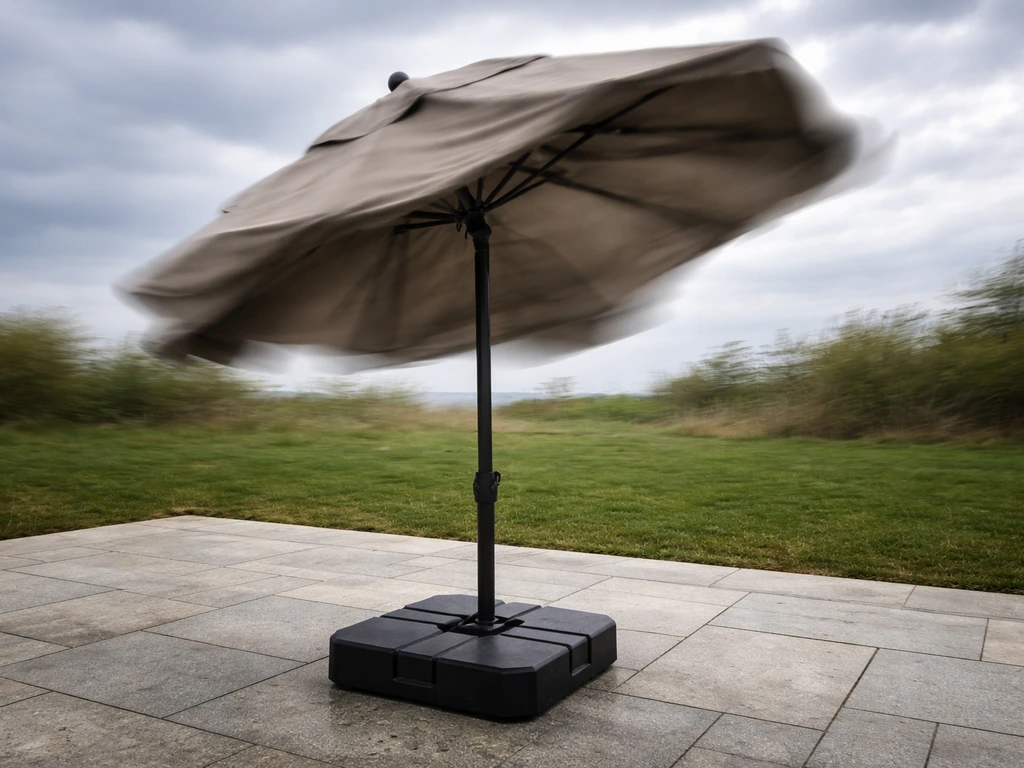
Quick diagnosis: why it keeps spinning
Before you start tightening things at random, it helps to know exactly where the rotation is coming from. Stand next to the umbrella and watch it while someone else gives the canopy a gentle push. Is the whole pole spinning inside the base, or is just the canopy rotating while the pole stays still? Is the crank collar slipping, or does the tilt collar turn freely when it should be locked? Each of those failure points has a different fix, and mixing them up wastes time.
- Whole pole spins inside the base: the base connection is loose or undersized
- Canopy rotates but pole stays put: the hub lock, tilt collar, or rotating hub cover isn't engaged
- Umbrella wobbles and spins together: base weight is insufficient or sitting on an uneven surface
- Spinning only starts in wind: the canopy is acting as a sail because nothing is locking the rotation axis
- Crank or tilt handle turns but nothing locks: the gear lock button or crank lock mechanism is worn or disengaged
Once you've identified which type of spinning you're dealing with, the sections below will walk you through the exact fix in order from simplest to most involved.
Check the base setup, weight, and surface contact
The base is the first thing to inspect because it's the most common culprit and the easiest to correct. An undersized or improperly positioned base lets the entire pole rotate freely, no matter how tight everything else is above it.
First, check the weight. As a general rule, a 6 to 7 foot umbrella needs a base weighing at least 20 to 30 pounds, and anything from 7.5 to 10 feet needs 40 to 50 pounds. A lot of the cheap bases that ship with umbrella packages fall short of those numbers, especially the hollow plastic ones that rely on you filling them with sand or water. If yours is hollow, open the fill cap and confirm it's actually full. Sand is heavier than water and a much better choice if you have access to it.
For offset or cantilever umbrellas, the stakes are higher because the canopy isn't centered over the pole. Manufacturers like Sunnydaze and Home Depot's offset umbrella line specifically call out that you should weigh down the base before you even open the canopy. Separate base plate weight sets (usually sold as a 4-piece set) bolt onto the base legs and can add 50 to 100 pounds of ballast. If you have a cantilever that spins, that's the upgrade worth making first.
Next, look at where the base is sitting. A base on uneven pavers or a sloped deck rocks slightly under wind load, which lets the pole shift. Put a level on the base plate. If it's off by more than a few degrees, shim the low side with rubber furniture pads or reposition it to a flatter section of the patio. Also confirm the base's pole sleeve diameter matches your pole. A 1.5-inch pole rattling around in a 2-inch sleeve will spin freely no matter how much the base weighs.
Fix loose hardware and confirm the locking and hinge points
Once the base is squared away, move up to the hardware that is supposed to hold the pole and canopy from rotating. This is where most of the mechanical spinning problems actually live.
Tighten the pole collar and base sleeve bolt
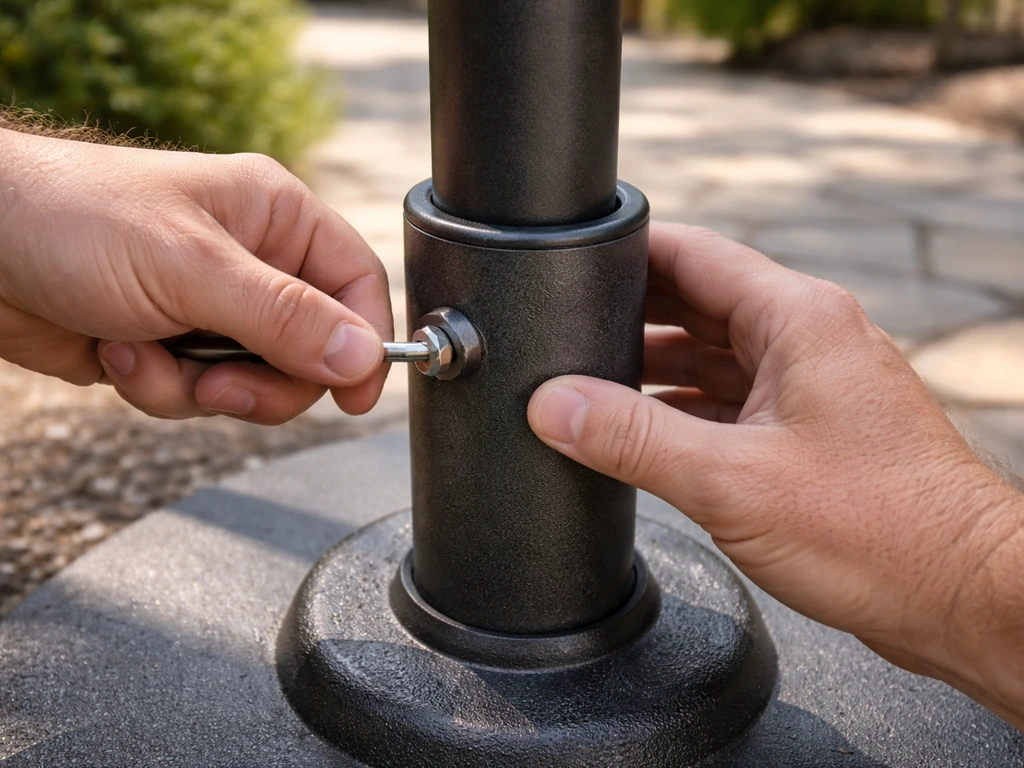
Almost every umbrella base has a tightening bolt or thumbscrew on the sleeve that grips the pole. Find it (usually on the side of the sleeve near the top), and tighten it firmly by hand or with a wrench. Don't crank it so hard that you crack a plastic sleeve, but it should be snug enough that the pole doesn't wiggle when you push it side to side. If the bolt is stripped or the threads are gone, replace the bolt with a matching machine screw from a hardware store. It's usually an M8 or 5/16-inch bolt.
Check the hub and canopy locking ring
The hub is the center cap assembly at the top of the pole where the ribs attach. On most standard table umbrellas, there's a runner (a sliding piece on the pole) that engages a latch or spring pin when the canopy is fully open. If that runner doesn't click into its locked position, the canopy can rotate freely. Open the umbrella fully, listen for the click, and manually press the runner upward until it latches. If the latch is broken, replacement runners are available from most umbrella parts suppliers for around $5 to $15.
Inspect the tilt collar
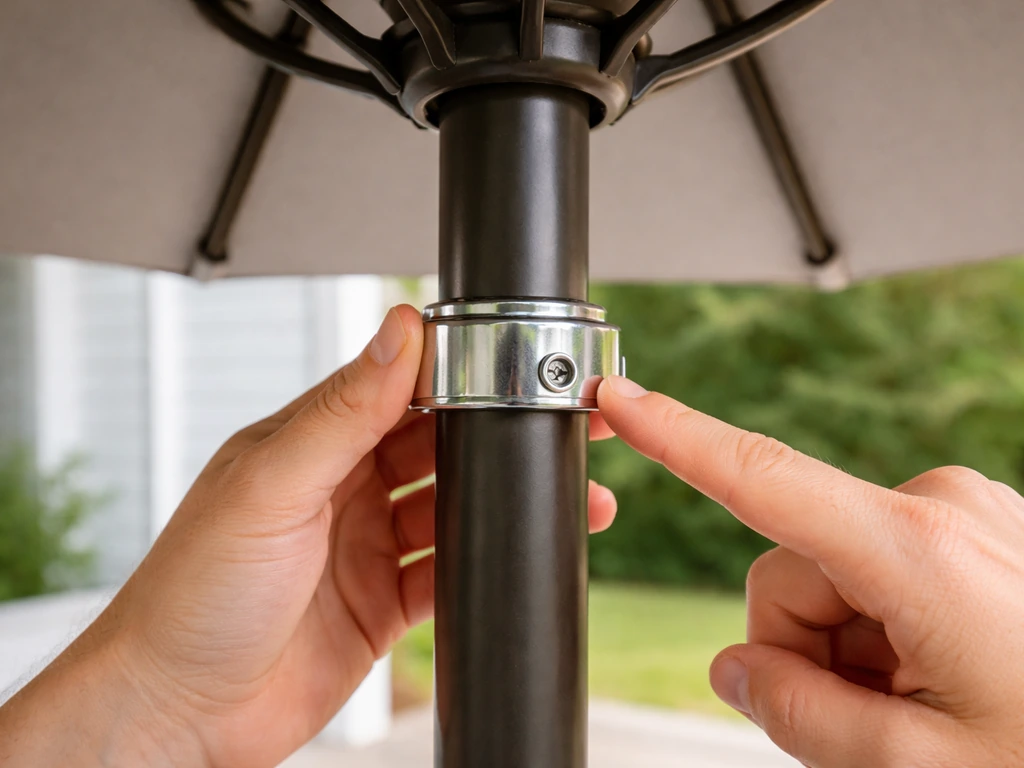
If your umbrella has a push-button or collar tilt, there's a ring on the pole below the canopy hub that you twist or click to lock the tilt angle. When that collar's set screw loosens or the collar cracks, the whole upper section of the umbrella can rotate independently from the pole below it. Grip the collar firmly and try to twist it. If it turns, find the set screw (usually a small Phillips or hex screw on the side of the collar) and tighten it. A drop of blue threadlocker (Loctite 243 or similar) on that screw thread will stop it from backing out again.
Inspect the crank and tilt mechanism for wear
On umbrellas with a crank handle, there's usually a gear lock or crank lock that prevents the mechanism from rotating backward (or at all) once the canopy is open. On Tuuci models, this is a gear lock button that must be pressed into the top (unlock) position before you can turn the crank, and it drops back down into the locked position once the canopy is open. If that button is stuck in the unlock position or the detent spring behind it is broken, the crank mechanism never locks and the pole can spin freely.
California Umbrella manuals specifically warn users not to release the crank key during the opening motion until after the locking position is engaged. If you've been letting go of the crank mid-turn, the mechanism may have been repeatedly stressed in a way that wears down the locking teeth over time. Inspect the teeth on the crank gear by removing the crank housing cover (usually two to four screws). If the teeth are rounded off or chipped, the gear assembly needs to be replaced, not just tightened.
For offset/cantilever models like the Treasure Garden AD45, the hub assembly includes a rotating hub cover and foot pedal knob that control the locking and rotation. If the hub cover is cracked or the foot pedal detent is worn, the umbrella can spin freely on the hub bearing. Press the foot pedal while holding the canopy and see if you feel any resistance. If the pedal feels loose or doesn't click, the detent spring or pedal assembly needs attention.
Reseat and adjust the umbrella pole and center hardware
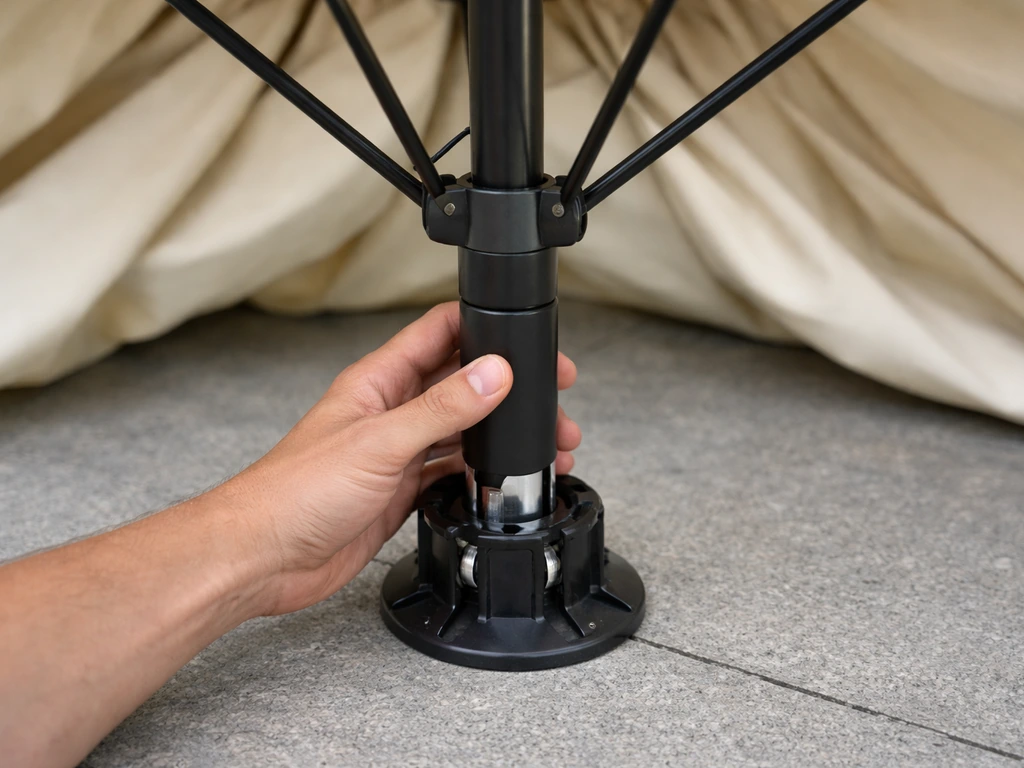
Sometimes the fix isn't a broken part at all. The pole has simply worked itself into a slightly misaligned position, and nothing is engaging the way it should. Reseating everything from scratch takes about 10 minutes and often solves spinning that seemed like a mechanical failure.
- Close the canopy completely and lower the runner to the bottom of the pole.
- Loosen the base sleeve bolt and pull the pole straight up out of the base.
- Inspect the bottom of the pole for burrs, cracks, or deformation that might prevent it from seating flush. Smooth any rough spots with fine sandpaper.
- Check inside the base sleeve for debris, sand, or grit that has built up. A quick rinse with a hose and a dry-off with a rag clears it out.
- Reinsert the pole straight down until it hits the bottom of the sleeve. On bases with a cross-pin or key hole, make sure the pole's alignment notch lines up with the pin before pushing it all the way down.
- Tighten the sleeve bolt firmly.
- Reopen the canopy slowly using the crank or push-button, holding the crank until you hear or feel the lock engage. Don't let go of the handle mid-stroke.
- Give the canopy a firm push in each direction to confirm nothing rotates.
On Treasure Garden AG25T cantilever models and similar 360-degree rotating designs, there's an intentional rotation function built into the hub that lets you swing the canopy to cover different angles. If you're not aware of this, you might mistake the designed rotation for a problem. The fix in that case is simply engaging the rotation lock (usually a knob or lever on the hub) to fix the canopy at your preferred angle. Check your manual's parts diagram to find that lock if you can't locate it by touch.
Wind-proofing and prevention steps
Even a perfectly assembled umbrella will spin and potentially become dangerous in strong wind. This is worth taking seriously. Home Depot's own product documentation for plastic umbrella bases includes a warning not to open or operate a patio umbrella in wind conditions greater than 5 mph (8 kph). That's a very low threshold, and most people ignore it, but it tells you how seriously manufacturers think about wind loads on these products.
For everyday breezy conditions, these steps make a real difference in keeping your umbrella from spinning or swaying. For more effective protection, use a wind-resistant setup and a properly secured base to keep the umbrella steady secure patio umbrella from wind. Related problems like the umbrella blowing away or swaying side to side are caused by the same root issues, so solving spinning usually addresses those at the same time. null swaying side to side.
- Always use the maximum rated base weight for your umbrella size, not the minimum
- Fill hollow bases with sand rather than water for about 20 to 25 percent more ballast weight
- Position the base so the canopy's lowest point faces into the prevailing wind, reducing the sail effect
- Use a Velcro tie strap around the canopy and pole when partially closing the umbrella to reduce the catch area in gusts
- Attach the base to the deck with L-brackets or anti-tip straps if your patio surface allows it
- Use a table-mount base or a base with a table hole collar rather than a freestanding base whenever possible, since the table's weight adds significant stability
- At the first sign of strong or gusty wind, close the canopy all the way and secure it with the canopy tie strap before you go inside
One practical trick that's easy to overlook: after closing the canopy, make sure the crank is in the locked position before walking away. An open crank mechanism lets the pole rotate freely inside the collar, so even a closed umbrella can spin itself loose on a windy afternoon and loosen all the hardware you just tightened.
When to replace parts or the whole umbrella
Replacement parts make economic sense when the umbrella frame and canopy are in good shape and only one or two components have failed. Here's a straightforward way to think about it:
| Problem | Repair or replace? | Approximate cost |
|---|---|---|
| Stripped sleeve bolt | Replace the bolt | $1 to $3 at hardware store |
| Worn crank gear with rounded teeth | Replace the crank assembly | $15 to $40 depending on brand |
| Broken hub runner or latch | Replace the runner | $5 to $20 |
| Cracked tilt collar | Replace the collar | $10 to $30 |
| Broken foot pedal detent (cantilever) | Replace the hub assembly | $30 to $80 |
| Cracked or deformed pole | Replace the pole section | $25 to $60 |
| Undersized or cracked base | Replace the base | $30 to $150 |
| Multiple worn parts on an old umbrella | Replace the whole umbrella | $80 and up |
As a general rule, if the total repair cost is more than 50 percent of what a comparable new umbrella would cost, and the frame or canopy has other signs of wear (rust, torn fabric, bent ribs), replacement is the smarter call. Umbrella parts from brands like Treasure Garden, California Umbrella, and Tuuci are widely available through the manufacturer and through third-party parts suppliers, so branded umbrellas are almost always worth repairing if the core structure is solid.
One last thing: never operate your umbrella without a proper base in place, and always keep it in the closed, lowered position when it's not in use or when you're leaving it unattended. If wasps are nesting around your patio umbrella, using wasp repellent and removing attractants nearby can help prevent them from taking over the area. That single habit prevents most of the spinning, swaying, and blowaway problems that lead to hardware damage in the first place. A closed umbrella in a solid base is almost impossible to spin.
FAQ
How can I tell if the canopy is rotating while the pole stays still, or if the whole pole is turning in the base?
Try a quick test with a second person: mark the pole sleeve position with tape, then watch whether the tape moves relative to the base. If the tape stays aligned but the fabric rotates, the hub runner, latch, tilt collar, or crank lock is the likely issue. If the tape shifts, the sleeve clamp on the base or the base weight and seating alignment are the likely causes.
My umbrella has a crank, but the crank lock still feels loose. What should I check first?
First verify the umbrella is fully open when you test the lock. Then check for play by pushing gently at the canopy ribs, if the mechanism rotates backward or never “clicks” into the locked position, inspect the crank gear teeth and the detent/spring behind the lock button. A worn detent often lets the lock partially engage, which can lead to gradual tooth wear even if it seems to work sometimes.
Can I use sand or water to fill a hollow base to stop spinning, and which is better?
If your base is designed to be filled, sand generally provides better ballast and is less likely to slosh around like water. If you use water, expect more movement during gusts and potential higher vibration, which can loosen hardware over time. Also make sure the fill cap is fully seated, otherwise the base can leak or settle, reducing holding weight.
What’s the safest way to shim an umbrella base on pavers or a deck without making it wobble more?
Use rubber furniture pads only under the lowest side so the plate becomes level, and avoid stacking multiple thin pieces that can shift. After shimming, push the pole side to side firmly with your hand, the pole sleeve should not visibly rock. If it still moves, reposition to a flatter area rather than adding more shims.
My pole sleeve seems like it might not fit perfectly. How do I confirm the right size and fix the mismatch?
Measure the pole diameter and the inside diameter of the base sleeve. If the clearance is large enough that the pole rattles, tightening the sleeve bolt may still leave enough play for wind to work it loose. The practical fix is matching the sleeve or using the correct adapter sleeve designed for that pole diameter, since oversized fit will keep causing spinning.
Which tightening method is best if the pole sleeve clamp uses a bolt, but I’m worried about cracking plastic?
Tighten in small increments until the pole cannot be moved by side-to-side hand pressure, then stop. If the threads are already worn or the plastic sleeve deforms, don’t keep forcing it, replace the bolt or sleeve hardware. Using threadlocker is helpful only on metal set screws, not on slip surfaces where you need adjustment later.
How do I prevent the tilt collar from loosening and letting the upper section rotate?
Check the set screw regularly, especially after your first windy season. If the collar twists when you grip it, tighten the set screw and consider adding a small drop of blue threadlocker on the screw threads (not on the mating collar surface) so it resists vibration. If the collar is cracked, tightening alone won’t fix it, the cracked plastic can fail again under gusts.
Some umbrellas are meant to rotate 360 degrees. How can I confirm mine isn’t “broken”?
Look for an intended rotation lock, usually a knob or lever on the hub. If the umbrella is a rotating design, the canopy will move smoothly by design, the correct behavior is that it locks at your chosen angle. If it rotates when the lock is engaged, then the hub cover, bearing area, or the detent mechanism may actually be faulty.
What should I do if the runner or latch in the hub doesn’t click into place reliably?
Open the umbrella fully and press the runner upward until it seats, then check whether it stays locked when you lightly shake the canopy. If it pops out or never catches, inspect the latch contact points for damage or misalignment and replace the runner assembly if the latch is worn. Lubricate only if the manual specifies it, otherwise extra lubricant can attract grit and prevent proper engagement.
Is it normal that a fully repaired umbrella still moves in wind, and when should I stop using it?
Some movement is normal, but if you see twisting, noticeable rocking, or the base shifts, stop using it in that conditions. Many manufacturers specify very low operating limits, so treat gusts seriously and close the umbrella during storms. If you repeatedly reach the point where it locks poorly in mild wind, revisit the base size, levelness, and sleeve clamp fit rather than assuming the wind is the only factor.
What is the “after closing” mistake that can still lead to spinning later?
Make sure the crank is returned to its locked position before leaving it unattended. Even with the canopy closed, an unlocked or partially engaged crank mechanism can allow the pole to rotate inside the collar, loosening the clamp and other fasteners over time.
Next Articles
How to Fix a Patio Umbrella That Won't Open or Close
Step-by-step fixes for patio umbrellas that won’t open or close, with checks for jams, cords, latches, and lubricating t
How Does a Patio Umbrella Work? Components, Use, and Fixes
Learn how patio umbrellas work: components, open close tilt, stability, and step by step troubleshooting common mechanic
Patio Umbrella Crank Not Working: DIY Fix Guide
Fix a patio umbrella crank that won’t work with safe step-by-step jam, gear, and base troubleshooting and repair tips.