
Close the umbrella any time wind picks up above about 20 mph, make sure your base weighs at least 50 lbs for every 7 to 8 feet of canopy diameter, and use a strap or tie-down to keep it from rotating or tipping. Those three steps fix the vast majority of blowaway and tip-over problems. If your umbrella is still fighting you, the issue is usually a base that's too light, a tilt mechanism that's left the canopy angled like a sail, or a cord or hardware failure that's preventing you from closing it properly in the first place.
How to Keep Patio Umbrella From Blowing Away
Luca Morrison
23 May 2026
Why umbrellas blow away: a quick safety check first
Before you add weight or tie anything down, spend two minutes doing a safety check. A patio umbrella that has blown over once has usually shown you exactly where its weak point is. The CPSC has flagged windblown umbrellas as a genuine hazard, and there have been real incidents of umbrellas becoming airborne projectiles in strong gusts. That's not meant to scare you, just to make clear that "my umbrella keeps tipping" is worth actually solving rather than just propping back up every time.
Here's what to check right now, before anything else:
- Is the base the right weight for your canopy size? A 50 lb base under a 9-foot umbrella is borderline. A 50 lb base under an 11-foot umbrella is not enough.
- Is the pole fully seated and locked in the base? A pole that can rotate or wobble even slightly will walk right out of a base in wind.
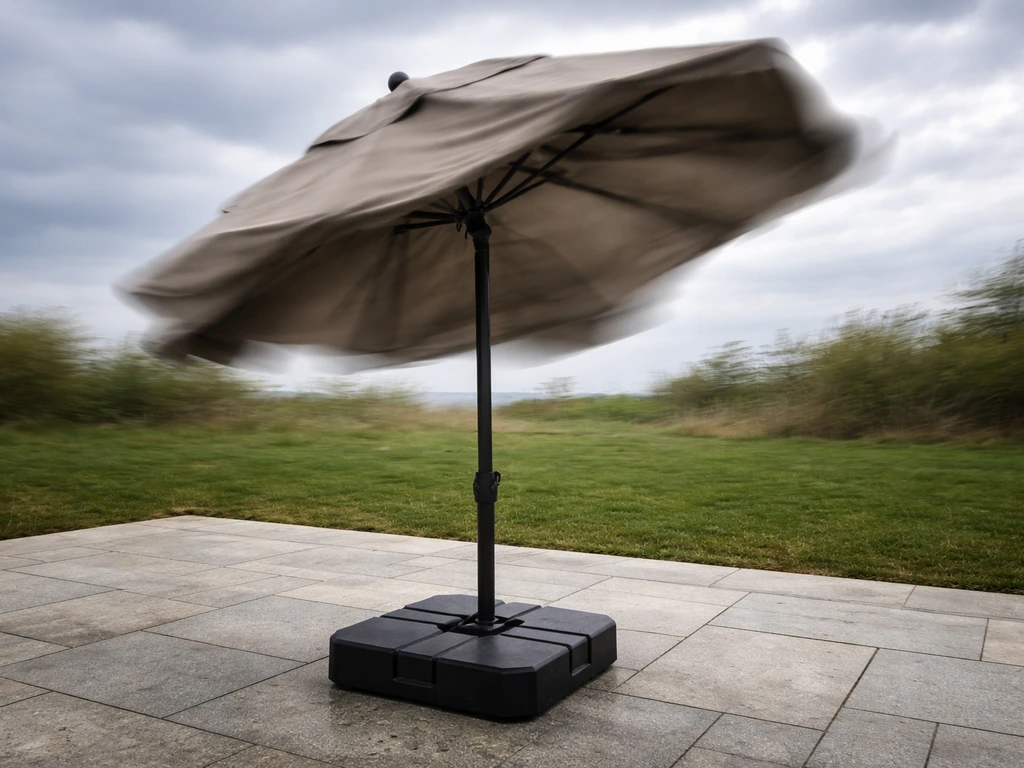
- Is the tilt mechanism left open at a sideways angle? An angled canopy catches dramatically more wind than a vertical one.
- Are there any cracked or broken ribs, frayed cords, or loose collar hardware? Any of these make the canopy less controllable and more likely to flip.
- Is the umbrella left open and unattended? Treasure Garden's manuals are explicit on this: never leave an open umbrella unattended, and never let it flap in the wind. Flapping causes canopy damage and turns the whole umbrella into an unstable structure.
If you checked any of those boxes, start there before adding weights or straps. Fixing the root cause is always faster than compensating for it.
Proper setup: base position, tilt adjustment, and crank operation
Most umbrella blow-away problems start at setup. Getting this right from the beginning means you need far less weight and fewer tie-downs to stay stable.
Positioning the base
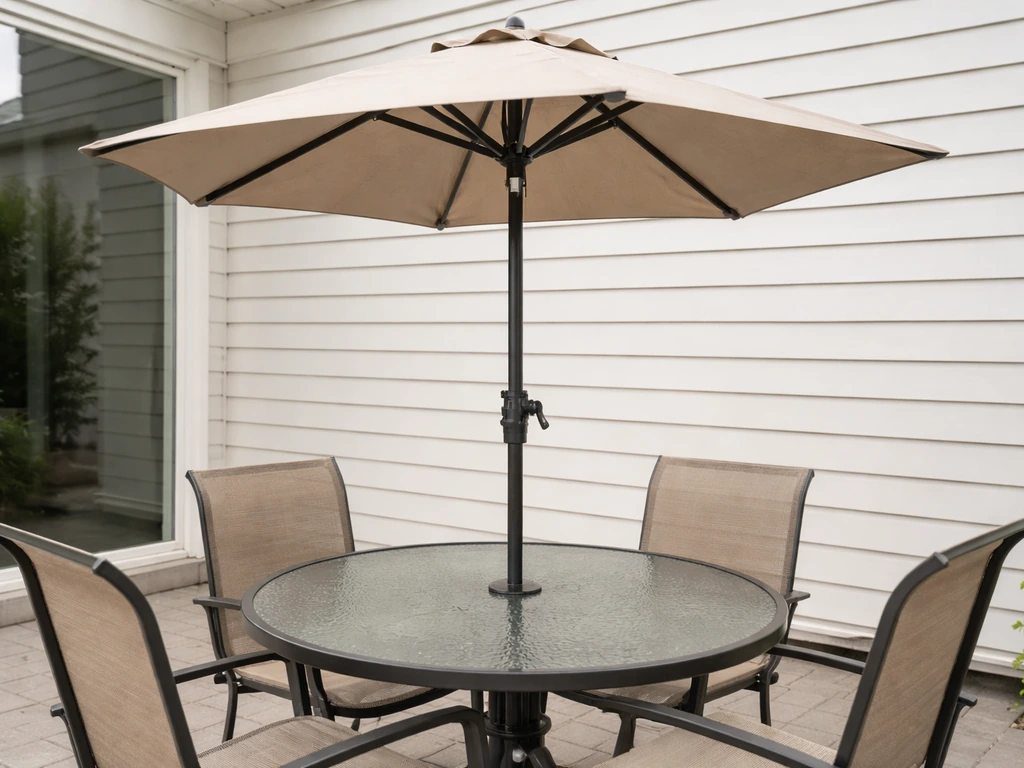
Center the base under the table hole if you're using a table-mount style, or place it as close as possible to directly under the canopy's center for freestanding setups. An off-center base dramatically reduces the umbrella's ability to resist tipping in any direction. For cantilever (offset) umbrellas, the base needs to sit on the opposite side of where the canopy extends, and many manufacturers (including Sun Villa) include instructions for fastening the pole to the base using a locking mechanism specifically to prevent wind from lifting it.
Getting the tilt angle right
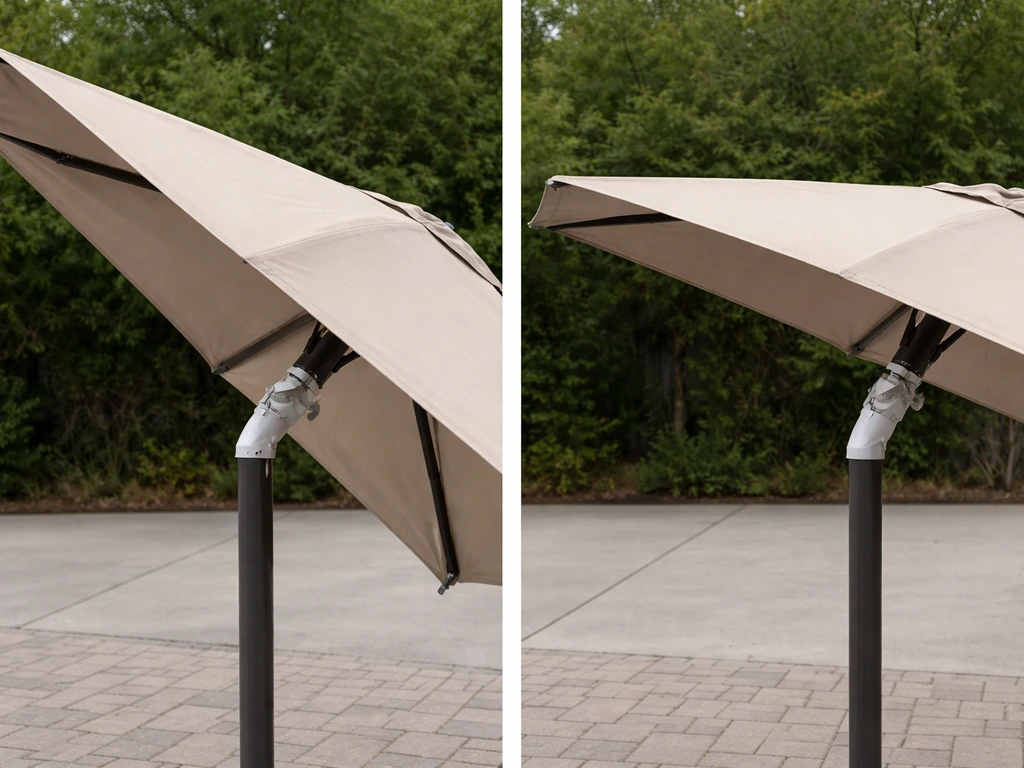
This is the most overlooked setup mistake. If your tilt mechanism is left at a 30 to 45 degree angle, you've essentially turned your canopy into a wind scoop. The tilt should only be engaged when you need shade from a specific sun angle, and you should always return it to vertical (or close the umbrella) when the wind picks up. For collar tilt models, the collar needs to be fully locked after you set the angle. For auto-tilt (crank-through) models, the umbrella must be cranked all the way open until the hub hits the stop ring before the tilt engages. If you stop cranking before that point, the canopy can sag at an unpredictable angle and will catch wind badly.
Locking everything down during use
After opening and tilting, check that every locking knob or screw on the base is tightened. Treasure Garden's Twist manuals specifically call out tightening the base knobs during use. A knob that's finger-loose instead of hand-tight is enough for wind to start rotating the pole, which quickly escalates into tipping. On cantilever umbrellas, confirm the cross-bar base joints are fully tightened, not just snapped into position.
Base weight and ballast: how much do you actually need
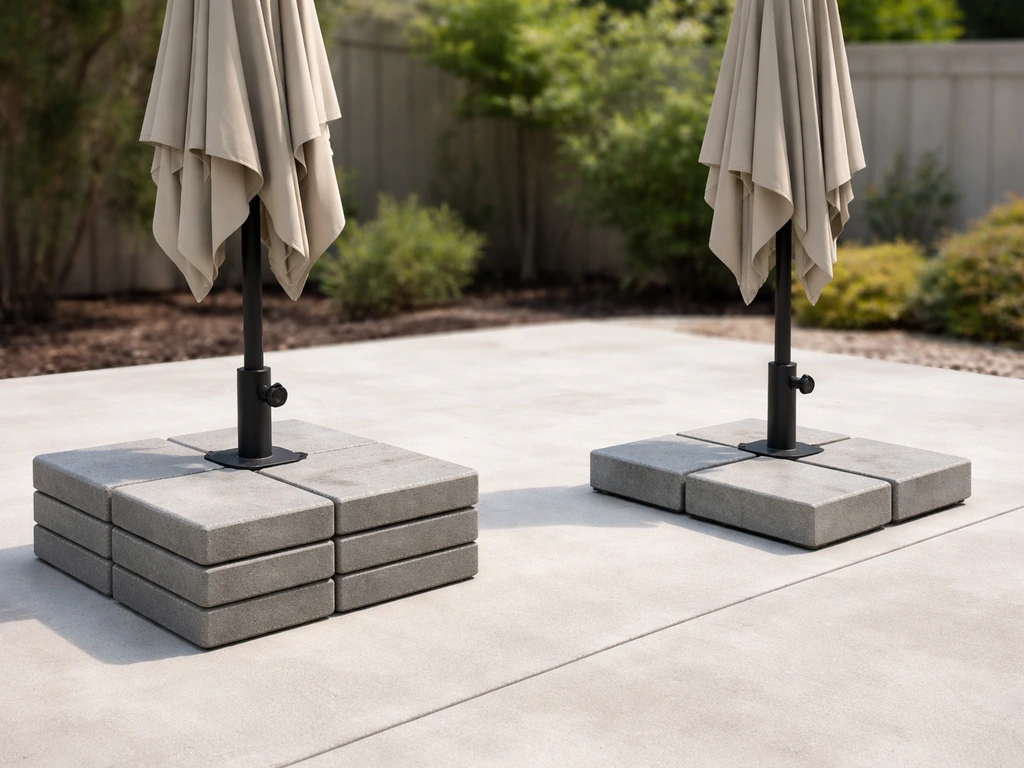
The general rule of thumb used by most retailers and manufacturers is at least 50 lbs of base weight for every 7 to 8 feet of canopy diameter. That means a 9-foot umbrella needs roughly 50 lbs minimum, a 10 to 11-foot umbrella should have 75 to 100 lbs, and a large cantilever in the 13-foot range can need 200 lbs or more. Some heavy-duty cantilever bases are rated at 350 lbs for exactly this reason.
| Canopy Diameter | Minimum Base Weight | Recommended for Windy Areas |
|---|---|---|
| 7 to 8 ft | 40 to 50 lbs | 50 to 75 lbs |
| 9 ft | 50 lbs | 75 lbs |
| 10 to 11 ft | 75 lbs | 100+ lbs |
| Cantilever 10 to 13 ft | 100 to 200 lbs | 200 to 350 lbs |
Sand vs. water fill
Most plastic bases have a fill port for either sand or water. Sand is heavier (a filled base can reach 50 to 60 lbs with sand versus 30 to 40 lbs with water) and won't freeze and crack in winter. Water is easier to drain if you need to move the base. If you live somewhere with real wind, fill with sand. If you're in a milder climate and move the umbrella seasonally, water is fine, but drain it before temperatures drop below freezing.
Adding weight with ballast plates or anchor kits
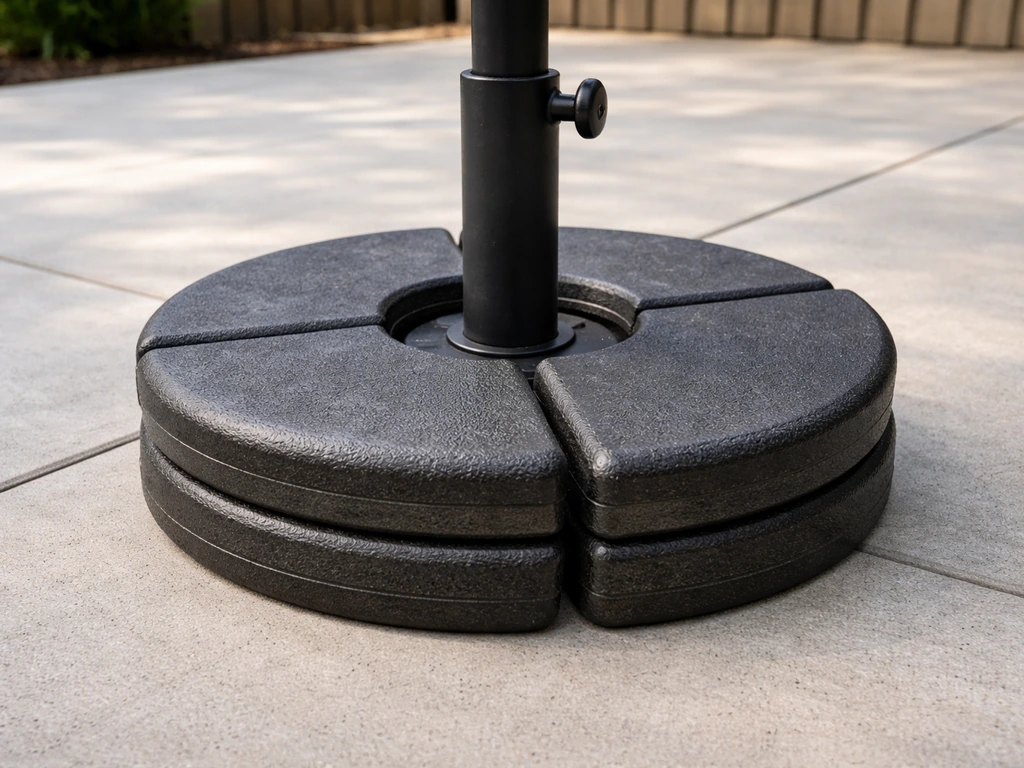
If your existing base isn't heavy enough and you don't want to replace it, you can buy cast iron or steel weight plates that stack around the pole base. These are sold separately by most umbrella brands and add 25 to 50 lbs per plate. Anchor kits are another option: they include ground stakes and straps designed to connect the base to the ground, which is especially useful on grass or gravel where you can actually drive a stake. Consumer Reports recommends combinations of base weight and ground anchoring for the best overall stability.
Tie-downs, straps, and guy lines: securing against real wind
Even a properly weighted base can be overcome by a strong gust, especially with a large canopy. Adding a physical connection to the ground or a nearby structure is the next level of security.
Straps and canopy ties
When the umbrella is closed and not in use, use the velcro or snap wrap strap that came with the umbrella to bundle the canopy tightly against the pole. Sun Garden USA specifically describes a canopy strap that secures the rib assembly to the pole when the umbrella is stored. This prevents wind from getting under a loosely closed canopy and prying it open. If your umbrella didn't come with a wrap strap, a simple bungee cord or velcro cable tie works fine.
Guy lines and ground stakes
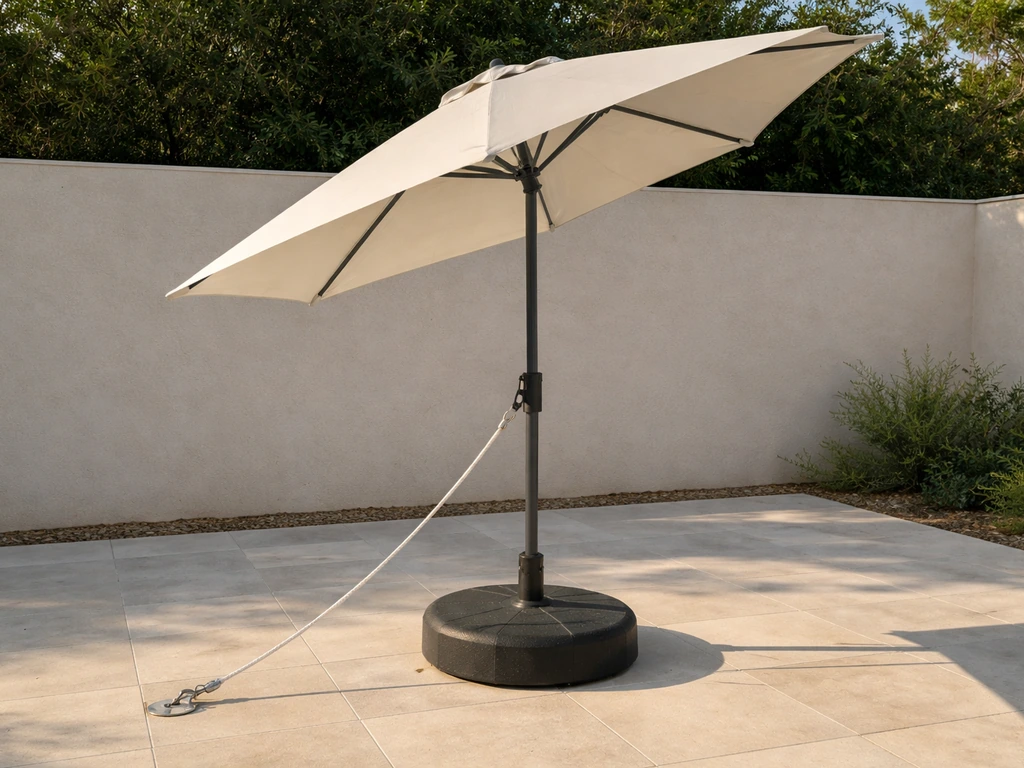
For freestanding umbrellas in open areas, guy lines run from the pole or base to ground stakes driven at a 45-degree angle away from the umbrella. Use at least three lines spaced evenly around the umbrella, and keep each line taut but not so tight that it stresses the pole. Ratchet tie-down straps give you easy tension adjustment. This approach is especially effective on grass or soil. On concrete or pavers, you'll need either a very heavy base or anchor bolts.
Tying to a nearby structure
If your umbrella is near a fence post, deck railing, or pergola column, a single strap connecting the pole to that structure at mid-height can make a huge difference. Keep the connection point roughly at the level where the pole exits the base, and make sure the structure you're tying to is itself solidly anchored. This isn't a permanent fix for a freestanding umbrella, but it's a very effective storm precaution.
Preventing flip-overs: wind orientation, fabric tension, and knowing when to close
Wind direction matters more than most people realize. Position the umbrella so the tilt (if you're using it) angles away from the prevailing wind, not into it. An umbrella tilted into the wind is exponentially more likely to flip than one tilted away or kept vertical. If you're not sure which way your wind usually comes from, keep the umbrella vertical when you're not actively sitting under it.
Fabric tension plays a role too. A canopy that's fully stretched and taut over the ribs is more aerodynamic than one that's loose and flapping. Make sure every rib tip is seated in its canopy pocket and that the canopy isn't bunched on one side. If your canopy is sagging between ribs, a broken or bent rib is usually the cause, and it needs to be repaired before the umbrella will behave predictably in wind.
The single most effective thing you can do to prevent a flip: close the umbrella. Both Treasure Garden and Sun Garden USA are clear in their documentation that blank" rel="noopener noreferrer">umbrellas should be closed and covered when not in use, when you leave, or when wind picks up. ASTM testing for beach umbrellas shows a properly anchored umbrella can hold up to around 30 mph, but residential patio umbrellas often don't have that same level of anchoring. If the gusts are above 20 mph, close it. Keeping a related eye on spinning is worth noting too: if your umbrella rotates freely in the base, that spinning problem compounds tip-over risk and deserves its own fix. If your patio umbrella spins freely in the base, lock down or repair the base hardware so it cannot rotate in gusts spinning.
When parts fail: fixing cords, tilt mechanisms, and broken ribs
If your umbrella won't stay closed, won't tilt properly, or keeps drooping on one side, a hardware failure is probably making your wind problem worse. Here's how to identify and fix the most common ones.
Broken or worn tilt cord
Auto-tilt umbrellas use an internal cord (sometimes a strap) that runs through the pole to engage the tilt hub when you crank past the open position. When that cord snaps, the tilt stops working, and the canopy can hang at a weird angle you can't control. Treasure Garden's cord replacement manual covers models UM810x and UM812x specifically and gives step-by-step cord replacement instructions. The key warning from that manual: if the cord isn't visible outside the frame, you can't complete the replacement without disassembling the pole. Lowe's repair guidance also recommends ordering replacement cord directly from the manufacturer when damaged.
- Identify your umbrella model number (usually on a label at the base of the pole or underside of the hub).
- Contact the manufacturer or check their website for a model-specific cord replacement kit. Most major brands including Treasure Garden, SunVilla, and Sun Garden have downloadable manuals and parts.
- Open the umbrella fully and lay it on its side on a padded surface before attempting any cord work.
- Thread the new cord through the pole channel following the manufacturer diagram, making sure the cord runs straight without kinks.
- Reattach to the tilt hub and test by cranking through the full open cycle before using the umbrella again.
Tilt mechanism won't engage or won't lock
This is usually caused by one of four things: not cranking far enough to hit the stop ring, a jammed gear or slider inside the hub, a snapped tilt cord, or a lock collar that wasn't released before tilting. For collar tilt models, always loosen the collar first, then adjust the angle, then retighten. For auto-tilt models, crank until you feel the hub click or resistance increase, which tells you the tilt is engaged. If cranking past that point doesn't tilt the canopy, the internal cord or strap has failed and needs replacement.
Broken ribs
A broken rib lets the canopy sag on one side, which catches wind unevenly and creates a tipping moment. Treasure Garden's rib replacement instructions cover their UM801, UM800, and UM812 series and involve cranking the umbrella open, carefully laying it down, and removing the runner screws to access the collar or auto-tilt components. Identify which rib is broken first (look for the section that droops or has a visible bend or crack), then order that specific rib from the manufacturer. Rib replacements usually cost $15 to $40 and are worth doing if the rest of the umbrella is in good shape.
When to repair vs. replace
Repair is worth it when the frame and pole are solid, the canopy fabric isn't faded or torn, and parts are available. Replace if the pole is bent (a bent pole means the umbrella was already in a serious tip-over), multiple ribs are broken, or the base hardware is cracked. A $30 cord or rib repair on a $300 umbrella makes sense. Spending $80 on parts for a $99 umbrella doesn't.
Seasonal habits and storm-proofing for year-round stability
Most umbrella damage, including the kind that leads to blow-away incidents, happens because of gradual wear that goes unnoticed until a storm arrives. Building a few seasonal habits into your routine prevents almost all of it.
Before storm season
At the start of spring, do a full inspection: check all rib connections, test the tilt mechanism through its full range, inspect the crank cord for fraying, and look at the canopy fabric for tears or thinning spots. Tighten every bolt and knob on the base. If your base fill has settled or leaked, top it off with sand before the season starts.
Choosing and using a cover
A cover keeps the closed canopy from catching wind gusts and protects fabric from UV degradation that weakens it over time. Both Treasure Garden and Sun Garden USA recommend covering the umbrella when not in use. Look for a cover with a drawstring or velcro bottom that cinches tightly around the pole, not one that just slips over the canopy. A loose cover can actually act as a sail itself. Treasure Garden notes covers are sold separately, so don't assume yours came with one.
Storm and high-wind protocol
When a storm is incoming, don't just close the umbrella, take it down. Remove the pole from the base, lay the umbrella flat in a garage or storage area, and store the base in a sheltered spot. This is non-negotiable for anything with a forecast of 30+ mph winds. Sun Garden's warranty documentation specifically states that wind damage is not covered under cord warranty, which is a strong hint that the manufacturer expects you to take it down in serious weather.
Winterizing
At the end of the season, drain any water from the base fill port before the first freeze. Water expands when it freezes and will crack most plastic bases. Sand doesn't freeze, so if you used sand, you can leave it. Clean the canopy fabric with mild soap and water, let it dry completely, then store the umbrella horizontally or vertically in a dry space. Storing it outside all winter, even covered, means the ribs and hardware are working all season against freeze-thaw cycles, and they'll show it by spring.
If you can't bring the umbrella indoors, at minimum close it, strap the canopy bundle tightly, cover it with a fitted cover, and make sure the base is weighted and the locking knobs are hand-tight. If you notice activity around the canopy even when it is closed and strapped, also use bird netting or other wildlife-safe deterrents to prevent bats, which is covered in more detail in how to keep bats out of patio umbrellas strap the canopy bundle tightly. To keep wasps out of the patio umbrella, add protection when it's closed and check for nesting spots before use keep wasps out of patio umbrella. Check on it after any significant storm and retighten anything that's shifted.
FAQ
What should I do if my umbrella keeps rotating, even after I tie the canopy down?
Yes. If your umbrella keeps rotating in the base, it can start a chain reaction where the canopy shifts angle, increases wind loading, then tips. Make sure the base hardware that prevents rotation is tightened or repaired, and do not rely on straps alone if the pole can still spin freely when the umbrella is closed.
How do I position a table-mount base correctly to prevent tipping?
For table-mount umbrellas, confirm the base is centered under the table hole and that the pole is fully seated with the correct collar, washers, and pin or locking mechanism. A small mis-seat can create a lever effect so the umbrella tips in one consistent direction, even when the base weight is correct.
Can I fix stability problems without replacing the base, and how do I know what ballast type I have?
If you don’t have a fill port, check whether your base uses a different ballast method (some use removable weight trays). If you do have a fill port, top it off before the windy season, and use sand in areas with freeze risk because water can crack plastic bases when it expands.
What’s the correct way to set up guy lines, and how tight should they be?
Guy lines work best when they’re attached near the pole or base and angled about 45 degrees outward. Use at least three lines spaced evenly, keep tension firm but not so tight that it bends the pole, and re-check tension after the first gust, since stakes can loosen in soil.
Can I strap my umbrella to a nearby fence or pergola, and where should the strap attach?
Yes, but only when the structure is truly solid. Tie a single strap at mid-height to a firmly anchored fence post, deck railing post, or pergola column, and connect it at the level where the pole exits the base. A loose railing or wobbly column will transfer force into the umbrella, making tipping worse.
My umbrella won’t close completely during gusts. How can I troubleshoot that?
If the umbrella is blowing over because it won’t close fully, focus on closure and locking first, not just weight. Check that there’s no obstruction preventing full closure, inspect the tilt cord or crank mechanism for tension or fraying, and test the close position after tightening all base knobs.
Can I leave my umbrella partially open and just strap it tighter in wind?
Do not use a strap to “hold” an open umbrella. Your safest sequence is close it when wind picks up, bundle the canopy tightly against the pole using the wrap strap, and then secure the bundled state with velcro, snap straps, or a bungee. Leaving it partially open acts like a sail.
Will a loose umbrella cover make blow-away problems worse?
Yes. If you commonly get strong gusts, choose a cover or wrap that cinches down near the bottom of the pole and rib assembly, not one that only covers the canopy. A loose cover can flutter and pull up the canopy, especially on windy days.
How can I tell whether I need a rib repair versus a base or pole replacement?
If the canopy looks normal but the umbrella tips consistently to one side, inspect for a bent pole, a cracked base joint, or a broken rib causing uneven sag. Replace only the specific rib or cord when the frame and pole are otherwise straight, but replace if multiple ribs are broken or the pole is bent.
What wind speed should trigger “close immediately” versus “take the umbrella down”?
If you expect 30+ mph wind, plan to take it down rather than trying to out-secure it. For normal use, set a personal threshold (for many umbrellas that’s around 20 mph) and close immediately above it, since residential patio umbrellas often aren’t tested for higher sustained gusts.
Next Articles
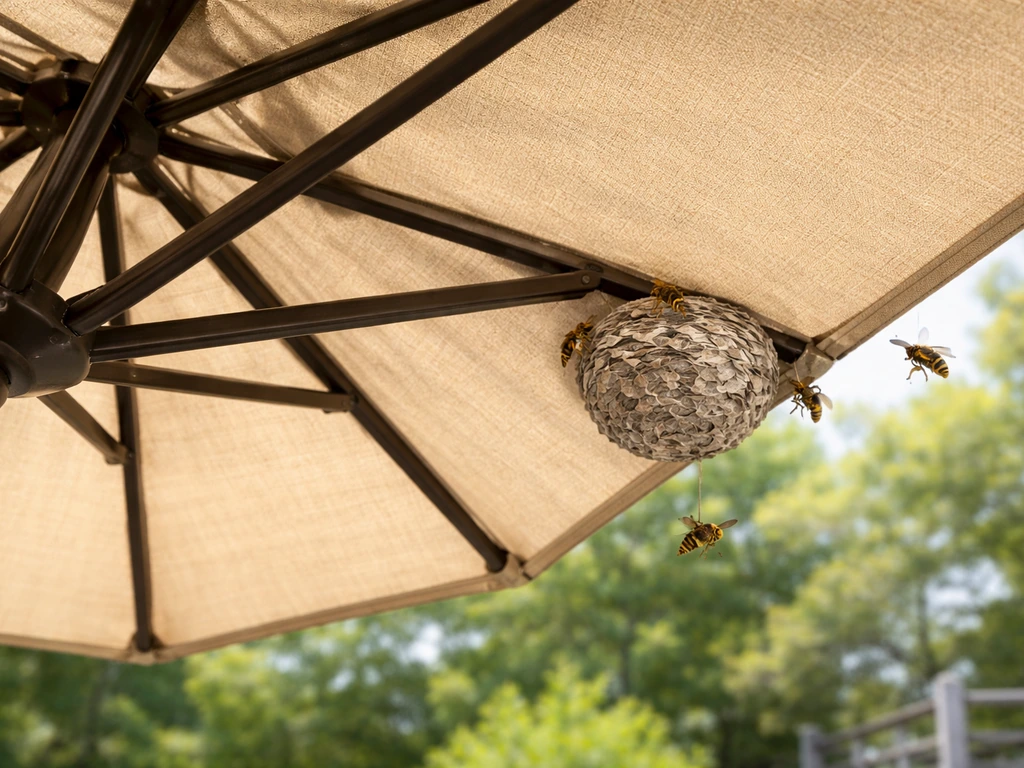
How to Keep Wasps Out of Patio Umbrella Safely
Step by step safe ways to keep wasps out of patio umbrellas, block entry points, and remove nests without damaging fabri
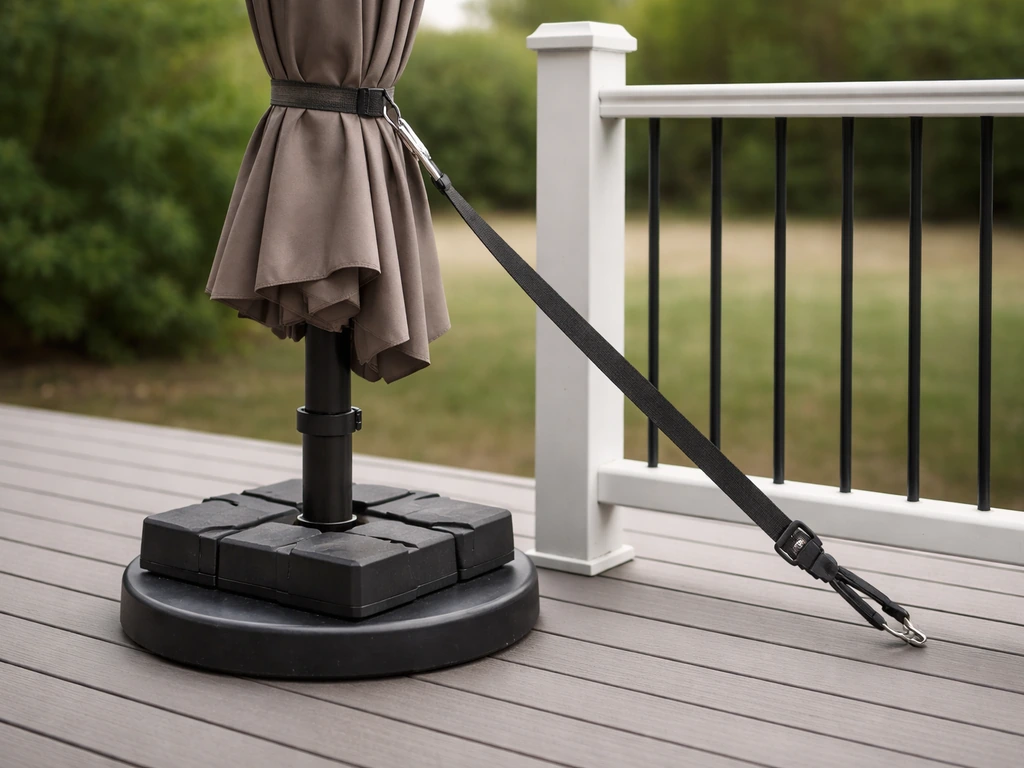
How to Secure a Patio Umbrella From Wind
Step-by-step ways to secure a patio umbrella from wind using a stable stand, locks, straps, and tie-downs plus quick saf
How to Keep Patio Umbrella From Spinning in Wind
Fix a patio umbrella that keeps spinning in wind: tighten hardware, adjust base weight, replace worn parts, verify locks