
Most patio umbrella swaying comes down to one of three things: an under-filled or under-weighted base, a pole that isn't seated and locked properly in the base collar, or a worn tilt joint that lets the whole canopy drift. Fix the base first, then check the locking mechanisms, and only after those pass inspection should you start hunting for broken hardware. Nine times out of ten, the problem is in one of those first two spots and takes less than fifteen minutes to solve.
How to Stop Patio Umbrella From Swaying and Tilting
Luca Morrison
10 Jun 2026
First: Is It Swaying or Tilting? (These Need Different Fixes)
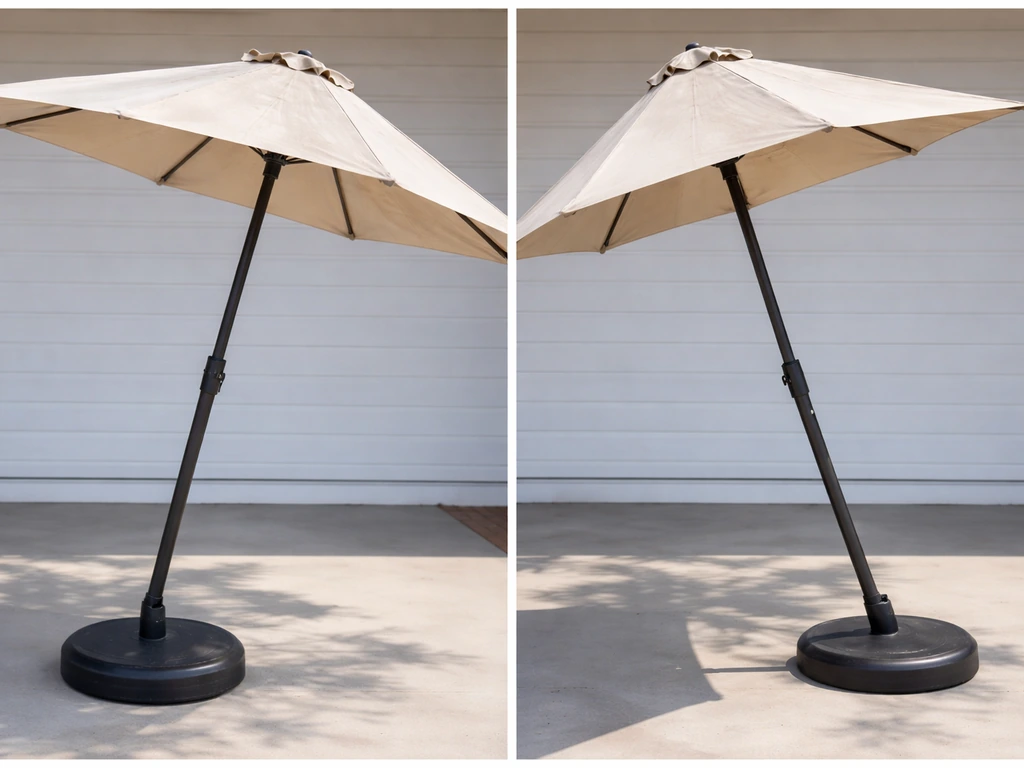
Before you grab a wrench or a bag of sand, take thirty seconds to figure out exactly what the umbrella is doing. Swaying and tilting look similar from across the yard but point to completely different problems.
- Swaying side-to-side: The pole rocks back and forth inside the base or base collar. This is almost always a base stability issue or a loose pole-to-base connection.
- Tilting/drooping to one side and staying there: The canopy hangs off-angle and won't hold its set position. This points to the tilt joint, tilt collar, or locking mechanism rather than the base.
- Spinning freely: The pole rotates in the base. This is a different problem related to the base's inner gripping sleeve, not sway.
- Wobbling at the top but not the bottom: The pole feels solid at the base but the canopy shakes. Check the ribs, tilt joint, and upper hardware.
Grab the pole at waist height and push it gently in each direction. Then grab it near the top. If the movement is greatest at the bottom, it's a base/connection problem. If the top moves more than the bottom, the tilt joint or upper hardware is loose. That single test tells you where to start.
Also do a quick safety check before anything else: look for cracks in the base, any ribs that are bent or snapped, and whether the canopy fabric is torn. A damaged rib or cracked base puts the whole structure at risk in any breeze. If you spot structural damage, close the umbrella before continuing your diagnosis.
Base Weight, Fill, Leveling, and Placement
An under-filled base is the single most common reason a patio umbrella sways. Most people fill theirs halfway with water and call it done. That's almost never enough, especially with a large canopy catching wind.
How Much Weight You Actually Need
The target depends on your base model, but real-world numbers are much higher than most people expect. Treasure Garden's AKZ base calls for 200 lbs of all-purpose sand split across four sections. Their BF10 resin base weights hold up to 55 lbs of sand each, for a four-weight total of 220 lbs. A Costco patio set targets 400 lbs for the full base assembly. The Flame&Shade round fillable base is rated for calm conditions with no significant wind, which tells you a lot about how little a basic water-only fill actually holds. If your base is just water-filled, swapping to sand (or sand plus water) immediately adds meaningful stability.
How to Fill a Base Correctly

- Remove the cap or plug from each fill section.
- Pour in dry sand first, packing it into all corners and edges of the container as you go.
- Once the section is mostly full of sand, add water slowly. The water will sink and compact the sand further.
- Once the water settles (give it a few minutes), pack in more sand to top it off.
- Replace the cap and repeat for each remaining section.
- Re-check the fill level after a week of use, especially after rain, since sand settles over time.
Surface and Placement
A base sitting on uneven pavers or sloped decking tilts the whole umbrella off-center, which turns every breeze into a lever working against your stability. Before filling or adding weight, set the base on a flat surface and check that it sits level. Use rubber shims or paver leveling wedges under the base feet if your deck or patio isn't perfectly flat. Also keep the umbrella away from fence lines and walls where wind gets funneled and amplified. Wasps are attracted to warm, sheltered outdoor areas, so it helps to keep the umbrella area clean and use wasp-safe deterrents when you set up your patio wasps out of patio umbrella. Open patio space with airflow from multiple directions is better than a spot where gusts hit one side repeatedly.
Locking and Setup: Making Sure Everything Is Actually Engaged
A surprising number of sway complaints come from an umbrella that simply wasn't opened or locked correctly. If the canopy isn't cranked fully open, or the tilt mechanism isn't properly engaged, the whole structure is mechanically loose by design.
Opening the Umbrella Completely
Crank the handle clockwise until you feel the hub hit the stop ring at the top of its travel. That stop is important. A canopy that's 90% open flaps and sways because the internal runner hasn't locked the ribs into their fully tensioned position. If your crank goes stiff and then releases slightly, keep cranking until it stops completely.
Tilt Mechanism: Crank-Through vs. Push-Button
If your umbrella has a tilt feature and the canopy keeps drifting to one side, the tilt lock isn't holding. Here's how to check both common tilt types:
- Crank-through tilt: After cranking fully open, continue turning the crank to advance the tilt to your chosen angle. To reduce tilt, reverse the crank slightly. If the angle drifts back after you set it, the slider or gear inside the mechanism is worn or dirty.
- Push-button tilt: Set your tilt angle, then release the button to lock it in place. If the canopy drifts, press and re-release the button firmly. A common mistake is leaving the button partially depressed, which prevents the lock from fully engaging.
- Auto-tilt collar: Rotate or push the collar down on the pole to engage. If drift continues after engaging, the collar may need cleaning or lubrication at the pivot point.
One gotcha worth knowing: on many auto-tilt models, there's a lock button or collar that must be in the released position before the tilt function can hold an angle. If that lock is still engaged when you try to set a tilt, the mechanism fights itself and the canopy ends up loose. Check your model's instructions for the exact sequence, because the order of steps matters.
Hardware and Wear Points That Cause Wobble
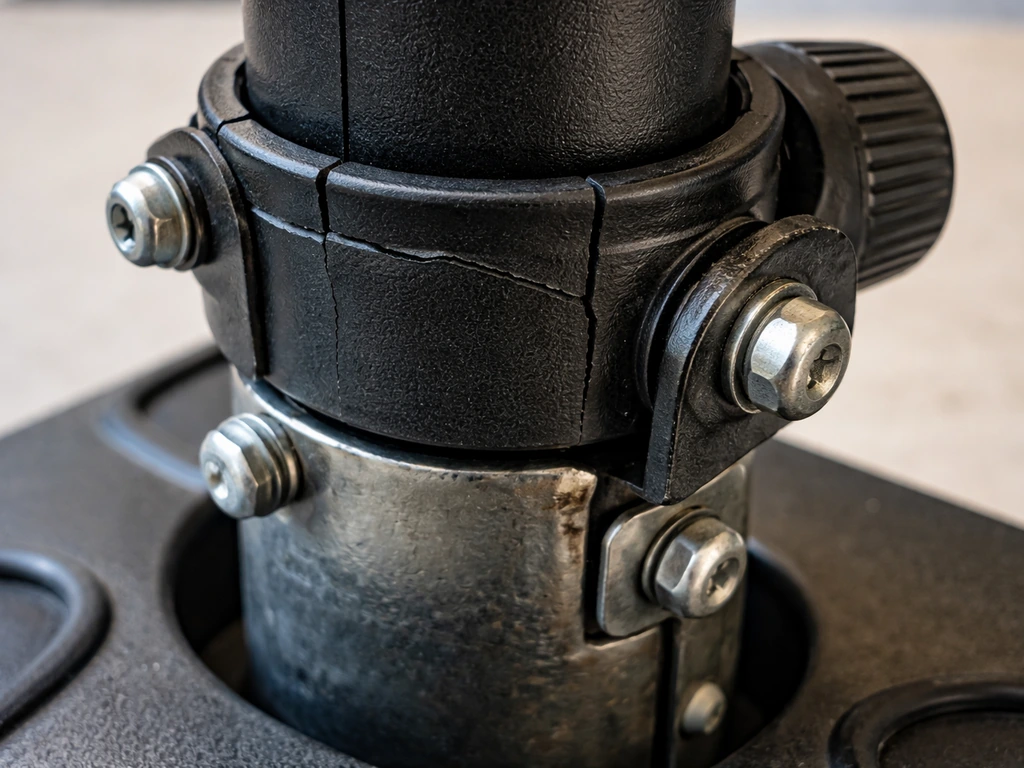
Once you've ruled out base weight and setup errors, it's time to get hands-on with the hardware. Most wobble that survives a proper base fill and correct opening procedure comes from one of these wear points.
| Component | What to Look For | Common Fix |
|---|---|---|
| Tilt collar | Cracks, looseness, or the collar spinning freely on the pole | Tighten set screw; replace collar if cracked |
| Tilt joint/pivot | Slop or play when you wiggle the canopy up/down | Clean and lubricate pivot point; replace worn slider or gear |
| Pole-to-base sleeve | Pole rocks inside the base opening even when the base is heavy | Check for a missing or worn rubber/plastic grip insert; replace insert |
| Runner (inner sliding ring) | Runner doesn't travel smoothly or stops short of the top | Inspect for debris, tighten loose screws, lubricate track |
| Rib connections at hub | Individual ribs flap or hang lower than others | Check hub screws and rib ferrule pins; replace missing pins |
| Crank mechanism | Crank turns but doesn't move the canopy, or feels loose | Open crank housing and check for stripped gear or loose housing screws |
The tilt collar is the most overlooked part. When it's worn or even slightly cracked, the canopy has a tiny amount of play that gets amplified into visible sway when wind catches it. It also accelerates wear on everything connected to it. Replacing a tilt collar costs around $10 to $25 for most major brands and is usually just a matter of removing a set screw, sliding off the old collar, and sliding on the new one.
If your umbrella has a push-button tilt and Treasure Garden ribs, the runner is held by a set screw that can back out over time. Check that screw if the runner feels loose or stops before the fully-open position. Loose hardware anywhere in the rib system creates canopy movement that looks like a base problem but isn't.
Wind-Ready Solutions: Anchors, Tethers, Weights, and Smart Habits
If you're in a consistently breezy area, a heavy base alone may not be enough. After you choose the right weight, consider adding anchors or tethers so the umbrella is secured from gusts, not just from everyday movement. These additional measures make a real difference, and several of them cost almost nothing.
Sandbags and Additional Weight
Drape sandbags directly over the base arms or stack them around the base perimeter. Use 20 to 30 lb sandbags and position them as symmetrically as possible so you don't introduce a lean. A pair of sandbags on opposite sides of the base adds 40 to 60 lbs of low-profile ballast without looking out of place. You can also buy purpose-made base weight bags that look cleaner than construction sandbags.
Ground Anchors and Tethers
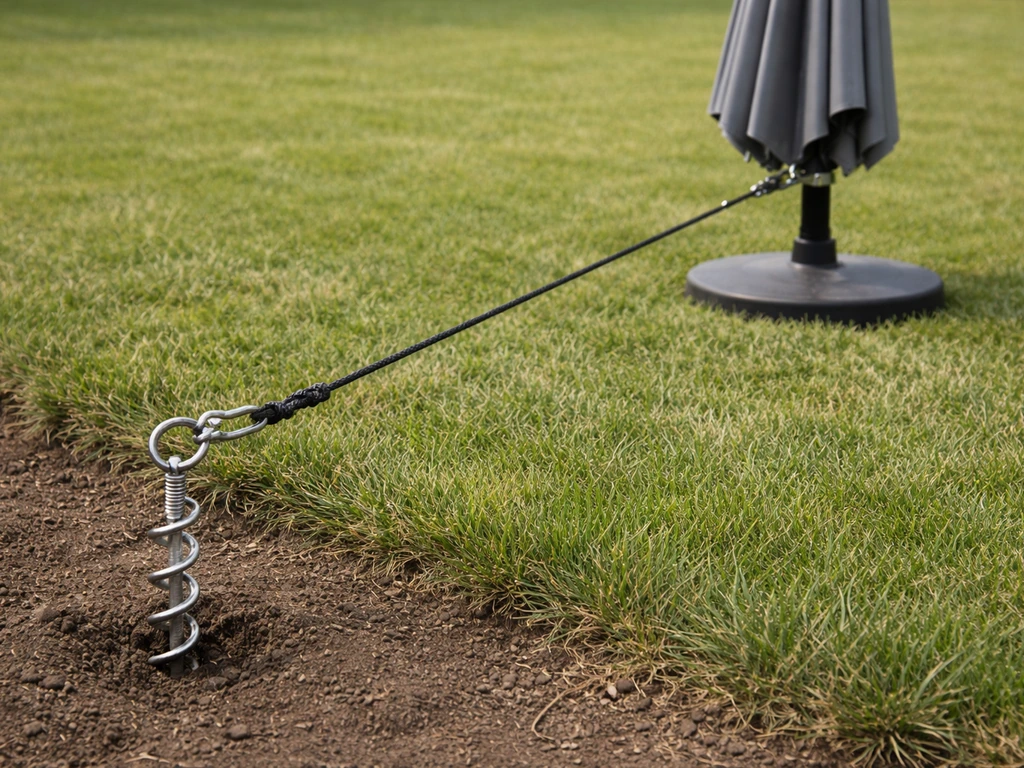
For umbrellas on a lawn or soft ground, screw-in ground anchors (similar to large corkscrew stakes) driven 12 to 18 inches into the soil and connected to the base or pole with a nylon tether give you serious holding power. For hard surfaces like concrete or pavers, anchor straps that loop around heavy patio furniture legs and attach to the base work well. Some umbrella brands sell wind tie-down kits that include straps, hooks, and buckles sized for their poles.
The Most Important Wind Habit
Close the umbrella before wind gusts exceed your umbrella's rated wind speed. Every major brand, from California Umbrella to Original Parasol Co. to Treasure Garden, says the same thing: close and secure the canopy in high winds and storms. This isn't just about preventing the umbrella from blowing away. An open canopy in strong wind wrenches the tilt joint, stresses the ribs, and slowly ruins the hardware that keeps everything stable on calm days. It also makes the post-storm sway problem progressively worse. If you're not home to close it, add a wind chime or small wind meter near the umbrella so whoever is home gets a visual cue when conditions are getting serious.
For table-mounted umbrellas (the kind that goes through a hole in a patio table), California Umbrella recommends always pairing the umbrella with a separate weighted base of suitable weight even when the table is providing the hole. The table alone doesn't provide enough resistance, especially if it's lightweight aluminum.
Step-by-Step Fixes to Try Right Now
Work through these in order. Most people find their fix within the first three steps.
- Diagnose the movement: Grab the pole at waist height and push gently. Then grab near the canopy and push. Note where movement is greatest. If it's at the base, go to step 2. If it's at the tilt joint or top, skip to step 5.
- Check and correct base fill: Open the fill caps and verify the base is packed with sand, not just water. If it's water-only or less than full, drain it, pack it with sand, then add water and top off with more sand. Let it settle for a few minutes, then top off again.
- Check that the base is level and the pole is centered: Look at the base from the side. Is it tilting on uneven ground? Slide shims under low spots. Make sure the pole is seated straight in the center opening, not angled to one side.
- Re-open the umbrella fully: Close it completely, then re-crank it open until the hub hits the stop ring. Don't stop short. Check that the runner has traveled fully to the top.
- Check and reset the tilt mechanism: If the canopy is tilted and drifting, identify your tilt type (crank-through, push-button, or collar). Follow the correct sequence to set and lock the tilt angle. Make sure no lock collar or button is in the wrong position.
- Inspect the tilt collar and joint: With the umbrella open and still, grab the top of the pole just below the canopy and try to wiggle it. Any play here means the tilt collar is loose or worn. Tighten the set screw with a hex key (usually 3mm or 4mm). If the collar is cracked, order a replacement.
- Check all hardware screws and pins: Run your hand along each rib and look for loose or missing pins at the hub connections. Check the runner screws and crank housing screws. Tighten anything loose with the appropriate screwdriver or hex key.
- Add supplemental weight or anchoring: If the umbrella still sways after all the above, add sandbags to the base or rig a ground anchor/tether setup. This is your last-resort fix for persistent sway in breezy conditions.
- Test and watch: Crank open and set the tilt, then step back and observe for a few minutes. Gently push the canopy in several directions. If it holds position and the pole doesn't rock, you're done.
Keeping It Stable Long-Term: Maintenance and Storage
Stopping the sway today is only half the job. A few simple habits keep the problem from coming back next season.
Regular Inspection Checklist
- Check base fill every spring and after any major weather event: sand settles and compacts after rain, so top it off at the start of each season.
- Lubricate the tilt pivot and collar once a season with a silicone-based spray lubricant. Avoid petroleum-based lubricants, which attract dirt and gum up gears.
- Inspect all set screws and housing screws at the start of each season and tighten any that have backed out.
- Look at the tilt collar for hairline cracks every spring. A cracked collar that looks fine can fail suddenly under wind load.
- Check rib hub pins annually and replace any that are bent or missing. Missing pins cause rib drop, which turns into canopy flap and sway.
- Clean the runner channel and tilt mechanism with a dry cloth before lubricating, especially if the mechanism feels gritty or jerky.
End-of-Season Storage
The best thing you can do for long-term stability is to remove the umbrella from the base at the end of the season and store it indoors or in a dry shed. blank" rel="noopener noreferrer">Treasure Garden recommends exactly this: remove the umbrella from the base and store it in a dry, protected place. Leaving the umbrella outside through winter, even closed and covered, lets moisture work into the tilt joint, rust the hardware, and degrade the pole sleeve. If bats are nesting nearby, store patio umbrellas indoors during the off-season and keep them sealed when not in use to help keep bats out of patio umbrellas. All of that contributes directly to next spring's wobble problem. If you do leave it outside, use a protective cover with a tie-down string (not just a loose slip-over) so wind can't inflate the cover and use it like a sail to rock the whole assembly. Treasure Garden’s umbrella cover accessory description also highlights using a string tie to secure the cover in place and help prevent it from being blown away by strong gusts blank" rel="noopener noreferrer">protective cover with a tie-down string.
What Not to Do
- Don't leave the umbrella open during thunderstorms, strong wind advisories, or when you leave home for more than a few hours in uncertain weather. The structural damage from one bad storm can take a stable umbrella and permanently compromise the tilt joint and ribs.
- Don't fill a base with water alone if your area gets any real wind. Water sloshes and provides much less resistance to lateral force than packed sand.
- Don't ignore a cracked tilt collar hoping it holds. It won't, and when it fails it can drop the canopy suddenly.
- Don't overtighten the pole set screw in the base to compensate for a worn sleeve. You'll strip the screw housing and make the problem harder to fix. Replace the worn sleeve insert instead.
- Don't try to tilt the umbrella before it's fully open. This is a very common setup error that strains the tilt mechanism and leads to premature wear of the slider and gear.
If after all of this the umbrella still sways badly and you've confirmed the base is fully loaded, all hardware is tight, and the tilt mechanism is clean and lubricated, the issue may be that the canopy size simply exceeds what the base can handle. A large 11-foot or 13-foot canopy needs a significantly heavier base than a 9-foot model. Check the pairing. Sometimes the real fix is a heavier base, not more repairs to the existing one. Related problems like the umbrella spinning in the base or blowing away entirely are worth addressing separately, as they involve slightly different solutions even though the root causes overlap with everything covered here. If your patio umbrella is spinning in the base, the fix is usually adding the right ballast and making sure the base and tilt hardware are fully engaged umbrella spinning in the base.
FAQ
If I fill the base with sand but it still sways, what’s the next thing to inspect?
Re-check the fit between the pole and the base collar after loading. If the pole collar is seated but the pin or set screw is missing, cracked, or tightened onto a misaligned slot, you can have plenty of sand weight and still get bottom-to-top wobble. Tighten with the umbrella fully closed and cranked down, then reopen to confirm the stop-ring engagement.
Is water-only filling ever enough to stop a patio umbrella from swaying?
Yes, water can work in light wind, but it usually underperforms because it’s either too shallow, not heavy enough, or it sloshes and shifts the umbrella’s center. If your base is water-filled, the quickest stability upgrade is switching to sand (or sand plus some water) and filling to the manufacturer-style targets for your base model rather than “halfway.”
How can I tell whether my umbrella is swaying because it was not locked open correctly?
Make sure the umbrella is opened to the true stop position, not “almost fully open.” A canopy that flaps at the last 5 to 10 percent of travel often looks like a base issue because the tilt runner is not locked and can respond more at the top than the bottom. If the crank releases slightly before the stop ring, keep cranking until it fully stops.
My umbrella’s top moves more than the bottom, what does that indicate?
If the movement is bigger at the top, focus on tilt joint engagement and tilt hardware first, not on base ballast. A worn or loose tilt collar or a tilt lock that was left in the wrong position can let the canopy drift under gusts even when the base is fully loaded.
What should I do if my umbrella tilts even after I add more weight?
If the umbrella leans after you load it, that usually points to either uneven ground under the base feet or sandbags placed asymmetrically. Confirm the base is sitting level on pavers or decking, then add shims or paver leveling wedges under the feet until the base doesn’t rock. When using sandbags, place them symmetrically so you add weight without creating a new lever.
Do I need a new tilt collar, or could it be loose hardware in the runner?
Before buying replacement parts, do a quick “runner feel” check. For push-button tilt models, look for a set screw on the runner and verify it hasn’t backed out, and then test opening until fully open without stopping early. Replacing a tilt collar is worthwhile if you detect side-to-side play at the collar, but loose runner screws are a cheaper first fix.
Why does my canopy drift to one side only when I use the tilt feature?
Yes. Using a tilt lock/collar in the wrong position can make the mechanism fight itself, which feels like looseness and causes repeated drifting to one side. The best practical approach is to set the lock exactly as the model’s sequence describes, then confirm the canopy holds its angle without creeping.
When should I add anchors or tethers, and what’s the correct way to use them?
Anchors and tethers are most helpful when wind is consistent or your umbrella is in the typical gust path. Use tethers on the base or pole so the umbrella resists movement without forcing the tilt joint to absorb every gust. On lawns, screw-in ground anchors with nylon tethers work better than tying to the surrounding fence.
Could the umbrella sway because the canopy is too large for the base?
It’s a strong sign of a base-canopy mismatch when the umbrella canopy size is large for the base. If you have a 11-foot or 13-foot canopy, a base that works for a smaller model may not have enough resistance. The practical next step is to compare your umbrella’s canopy size to the base’s designed fill or rated capacity, then switch to a heavier matched base if needed.
What’s the best way to prevent sway during high winds if I’m not home to close the umbrella?
If you cannot reliably close the umbrella before gusts, reduce exposure by lowering the risk window: keep it closed and secured during wind advisories, and add a visible cue like a small wind meter or audible cue near the umbrella so you get alerted when conditions climb. Also avoid leaving the umbrella open overnight, since that is when post-storm sway damage can start to accumulate.
Next Articles
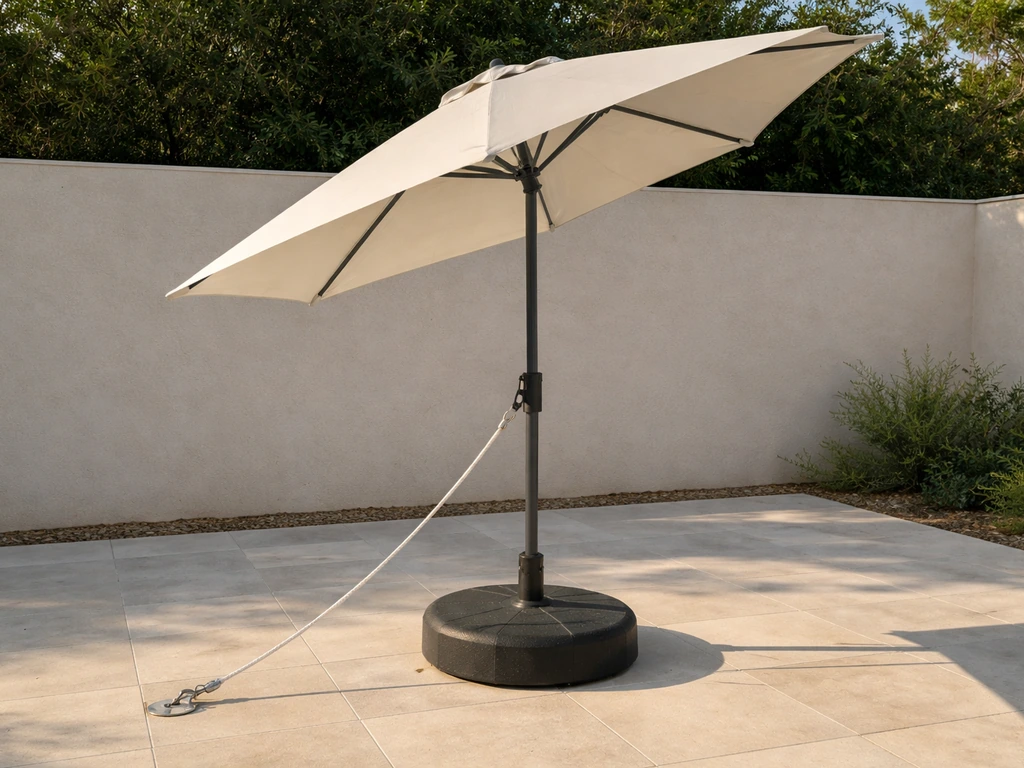
How to Keep Patio Umbrella From Blowing Away
Step-by-step tips to stop a patio umbrella lifting, tipping, or flying in wind with fixes, weights, and secure anchors.
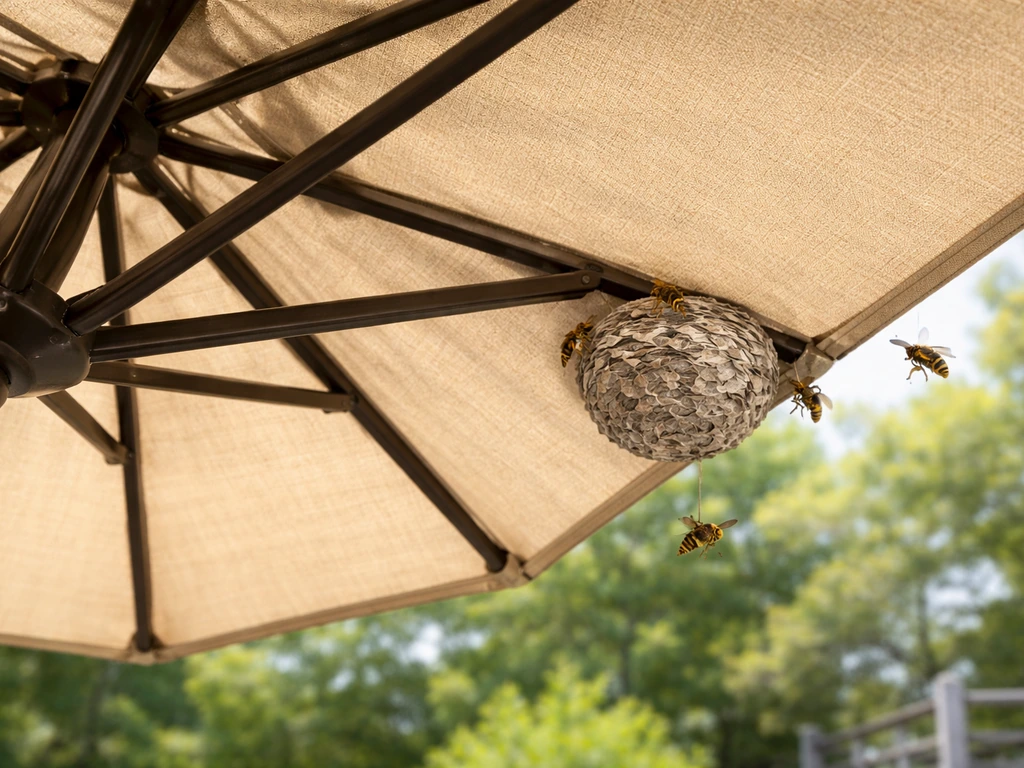
How to Keep Wasps Out of Patio Umbrella Safely
Step by step safe ways to keep wasps out of patio umbrellas, block entry points, and remove nests without damaging fabri
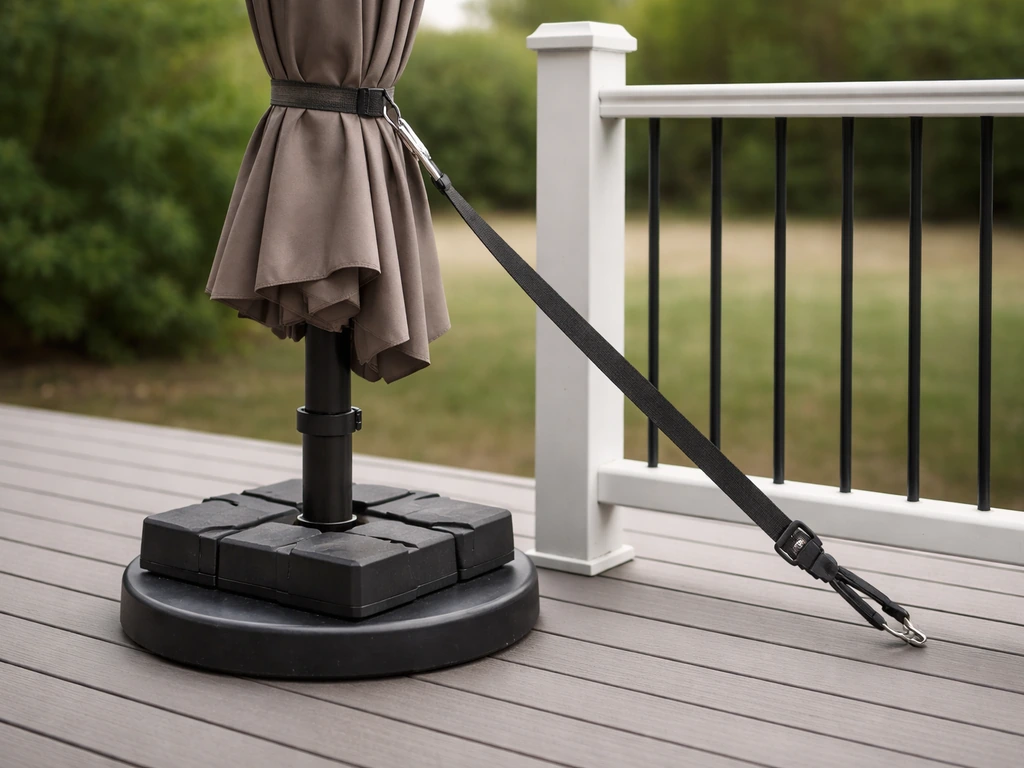
How to Secure a Patio Umbrella From Wind
Step-by-step ways to secure a patio umbrella from wind using a stable stand, locks, straps, and tie-downs plus quick saf