
Wasps love patio umbrellas for the same reason you do: they offer shade, shelter, and protection from rain. The underside of a canopy, the hollow frame joints, and the gap where the pole meets the base are all prime real estate for paper wasps looking to build a nest. If you already have one, treat it in the evening when wasps are calmer, use a wasp spray rated for outdoor nests, wait 24 to 48 hours, then knock the nest off and seal the spot. If you don't have a nest yet, a few simple deterrents and one good inspection now will keep it that way.
How to Keep Wasps Out of Patio Umbrella Safely
Luca Morrison
21 May 2026
Why wasps pick your patio umbrella
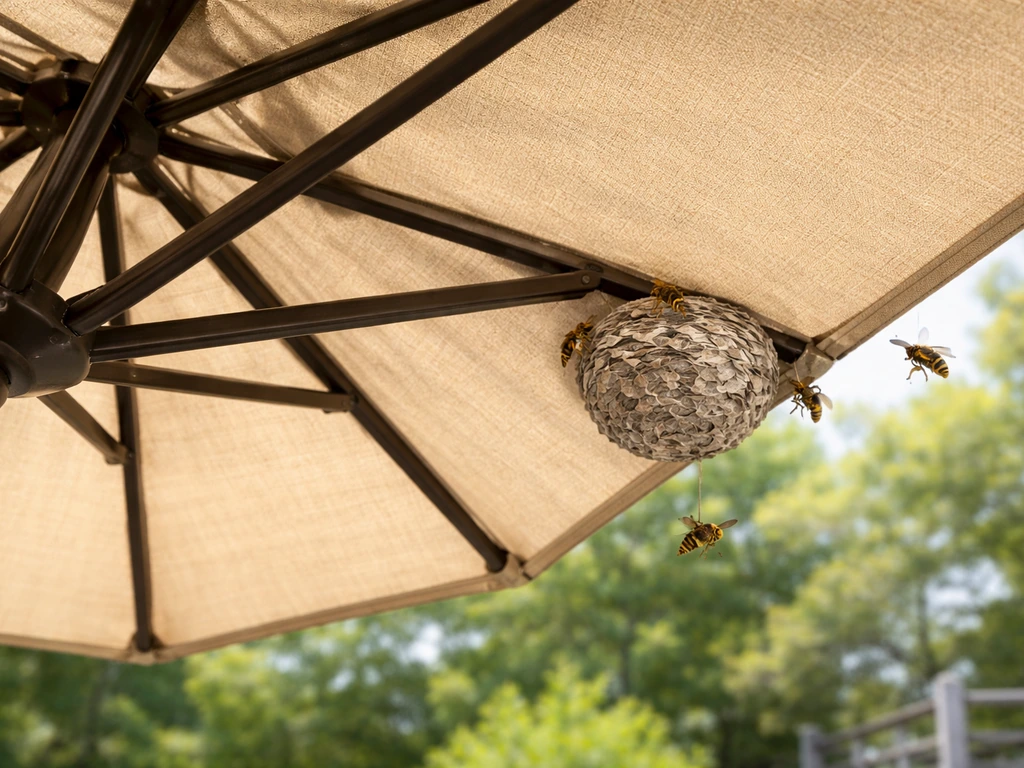
Paper wasps are the species you're almost certainly dealing with. They build those tan, papery honeycomb nests (single layer of open hexagonal cells, suspended by one small stalk) and they specifically seek out sheltered overhead surfaces that keep their nest dry and protected. Your patio umbrella checks every box.
The most common attachment spots on a patio umbrella are the underside of the canopy fabric near the ribs, the junction where the ribs meet the hub (top and bottom), hollow sections of the frame where two pole segments connect, the inside of the canopy sleeve that wraps around the pole, and the underside of the finial or cap at the very top. Any spot that is sheltered, horizontal or angled, and slightly hidden from wind is a candidate. Paper wasps emerge in spring and start scouting in early summer, so if your umbrella has been sitting open or loosely covered since last season, it may already have activity.
Safety first: what to do before you touch anything
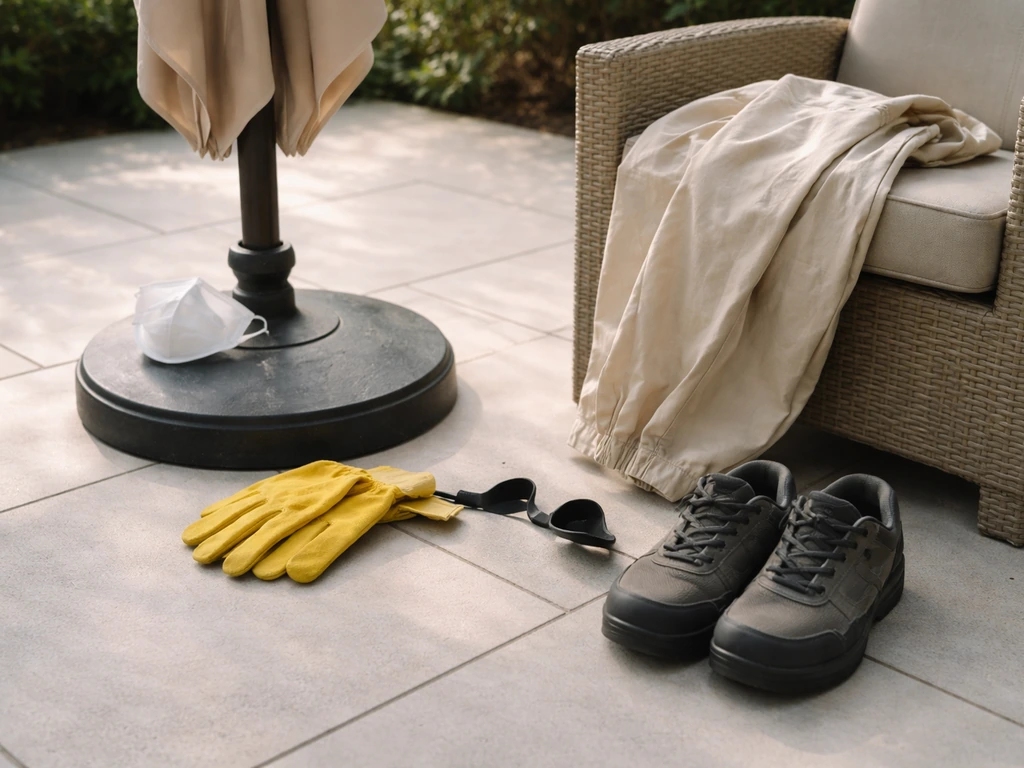
Before you get close enough to inspect, take a minute to think about your situation. Paper wasps don't attack randomly, but they absolutely will sting if the nest is disturbed, and they can sting multiple times. If you or anyone nearby has a known allergy to wasp stings, have your epinephrine auto-injector within reach before you start, and don't work alone. Anaphylaxis can develop fast and epinephrine is the first and most critical treatment.
- Wear long sleeves, long pants, closed-toe shoes, and gloves. Cover as much skin as possible.
- Put on sunglasses or safety glasses to protect your eyes.
- Tell someone where you are or have them nearby, especially if you're working with an active nest.
- Have a clear, unobstructed exit path behind you before you approach.
- Do not wear sweet-smelling perfume, cologne, or scented lotion.
- Keep children and pets well away from the area.
- If stung, don't scratch the sting site as this increases swelling and infection risk. Have someone stay with you and watch for any signs of a serious reaction.
How to inspect the umbrella frame and canopy without making things worse
Do your inspection from a distance first. Stand back about 6 to 8 feet and just watch the umbrella for a minute or two. If there are wasps present, you'll see them flying in and landing consistently in one specific spot. That's your target area. If you see multiple wasps entering and exiting a gap in the frame, that's a more serious situation than a visible external nest.
Once you've observed from a distance, do a slow visual walk-around at arm's length. Use a flashlight rather than getting your face close. You're looking for the papery tan or grey honeycomb structure (can range from the size of a quarter in early summer to the size of your palm or larger by late summer), wasp activity around any hollow frame section or seam, and any dark, chewed-up wood fiber residue around frame joints, which is a sign wasps have been gnawing to build nest material.
- Check the underside of the canopy, especially around each rib connection point and along any sewn seams near the outer edge.
- Look inside the top hub area where all ribs meet the pole, peering up from below without getting directly underneath.
- Inspect each pole segment joint, particularly if your umbrella uses a push-button or twist-lock connector, as these leave small gaps.
- Check the canopy sleeve (the fabric tunnel the pole runs through) for nest material visible from the side.
- Look at the finial cap at the top of the pole from a distance using binoculars if needed.
- Inspect the base connection point where the pole meets the stand or table hole insert.
If the umbrella is currently closed and stored, be extra careful opening it. Wasps can build inside a tightly rolled canopy during storage. Open it slowly and step back the moment you feel resistance or hear any buzzing.
Getting rid of wasps in the umbrella right now
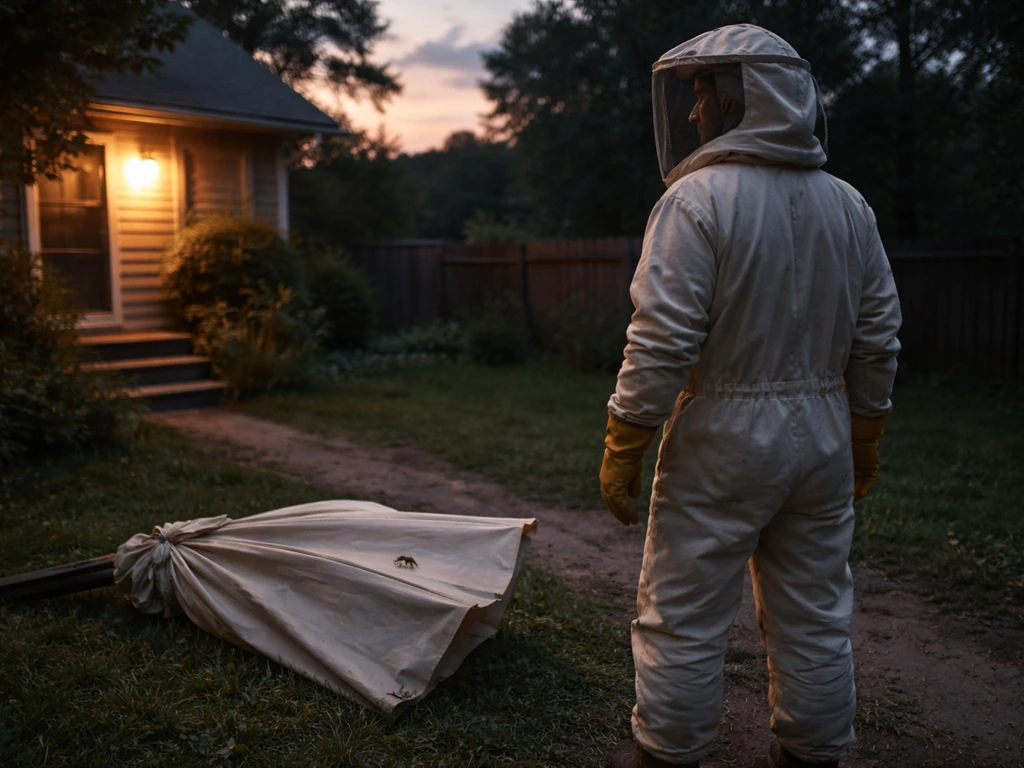
Timing is everything here. Treat in the evening, ideally after dusk, or in the early morning before sunrise. Wasps are far less active at those hours and most of the colony will be on or near the nest rather than out foraging. Treating during the middle of the day means half the colony is still flying around and you'll face a much more aggressive response.
- Get suited up with your protective gear before you grab anything.
- Use a wasp and hornet spray that shoots a jet stream from a distance, 10 to 15 feet of reach is ideal. Look for products labeled specifically for wasp nest elimination.
- Position yourself so you are not directly underneath the nest. Stand to the side and slightly back so wasps that drop or fly out don't land on you.
- Spray the nest thoroughly from a distance until it is soaked. Direct the spray into any gap in the frame where wasps are entering.
- Back away immediately and don't linger nearby.
- Wait 24 to 48 hours before touching anything. Check carefully after that time to confirm no live wasps remain on or near the nest.
- If wasps are still active after 48 hours, repeat the treatment the following evening.
For nests inside hollow frame sections (where you can't spray directly onto the nest), a wasp nest killer dust can be applied into the opening. The dust coats the interior surfaces and is picked up by wasps entering and exiting, spreading it through the nest. Use the same evening timing and give it at least 48 hours before probing the opening.
Removing the nest safely: active vs. inactive
Removing an inactive or abandoned nest
If the nest is clearly old (grey, dry, no wasps coming or going for several days), you can remove it without treatment. Paper wasp nests from last season are abandoned and the remaining wasps are gone. Even so, treat with the same care: gear up, use a stick or a plastic scraper to knock the nest free, and don't handle it with bare hands.
Old nests can still house newly hatched insects if they weren't treated and removed promptly at end of season. Drop the nest directly into a sealed plastic bag and dispose of it in an outdoor trash bin right away. Don't bring it inside. Nest material can start to decay and cause odor and potential secondary pest issues indoors.
Removing an active nest after treatment
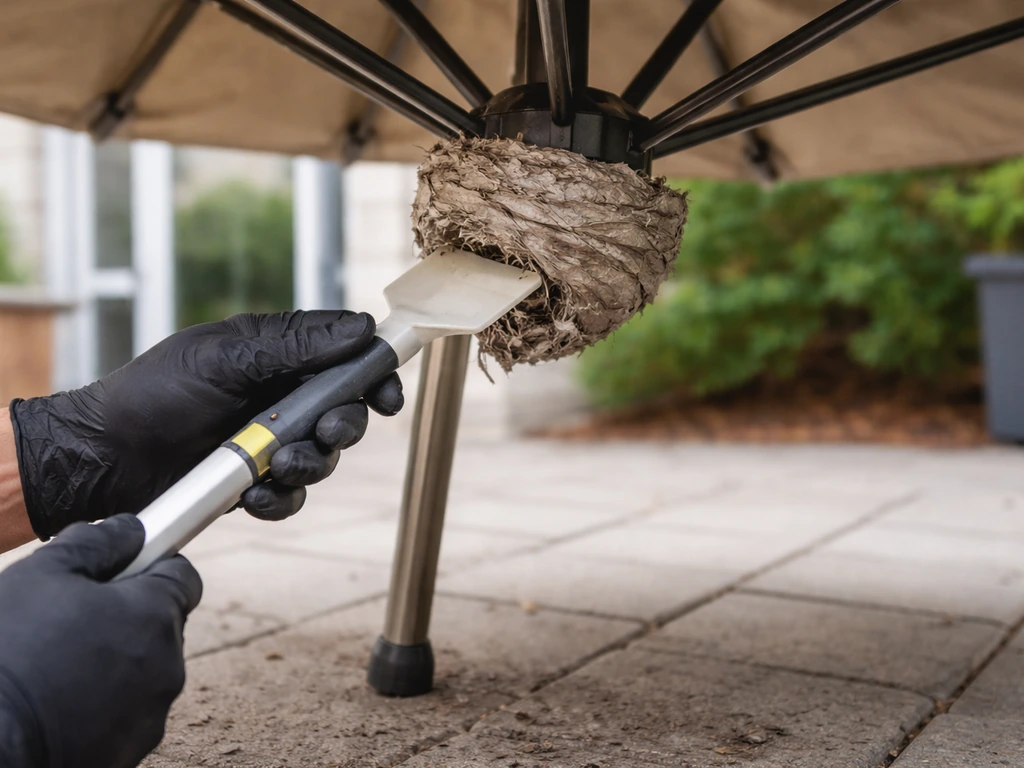
After 24 to 48 hours post-treatment, and once you've confirmed no live wasps are present, remove the nest the same way: a plastic scraper, a stick, or a long-handled tool. Treat wasp and bee nests in the evening when insects are less active, then [check nests one or two days after treatment](https://www3. epa. gov/pesticides/chem_search/ppls/000149-00012-20191007.
pdf) to ensure complete kill before removing and destroying the nest. The nest is attached by a single small stalk (called a pedicel) to the surface, so it usually breaks free cleanly without much force. Paper wasp nests are made from “wood tissue and saliva,” pressed into thin, delicate paper-like layers, and are typically attached by a pedicel to sheltered undersides such as eaves and other overhangs [single small stalk (called a pedicel)](https://edis. ifas.
ufl. edu/publication/IN1112). Seal it in a plastic bag immediately and bin it outside. Don't reuse the bag or leave it sitting around.
The reason you remove the nest even after treatment is to prevent any remaining larvae from hatching out later.
For nests in hard-to-reach places like inside a hollow frame section, use a stiff wire or pipe cleaner to dislodge material after the nest is confirmed dead, then rinse the interior of the tube with a garden hose. Shake out the pole section if possible and let it dry completely before reassembling.
Cleaning up and getting the umbrella back in good shape
After the nest is gone, clean the area where it was attached. Any wasp pheromone residue left behind can attract scout wasps looking for a good nesting site the following season. For fabric areas, wipe down with a mild dish soap and warm water solution, then rinse and let it dry fully. For metal or aluminum frame parts, a diluted white vinegar solution works well to neutralize residue without corroding the finish.
Check the frame hardware at the same time. Wasp nests in frame joints or pole connectors sometimes mean the connection has been loosened or the protective coating scraped off. Wipe out any debris from inside tube sections, check that push-button connectors still click firmly, and inspect crank or tilt mechanisms if wasps were active near the hub area. If you find any cracked or split canopy fabric along the seams (which wasps sometimes chew at or exploit to get underneath), patch it with a matching outdoor fabric repair tape or replace the canopy if the damage is significant. A compromised seam is both an entry point for pests and a wind vulnerability.
Your prevention plan: keep wasps from coming back
Seal off the entry points
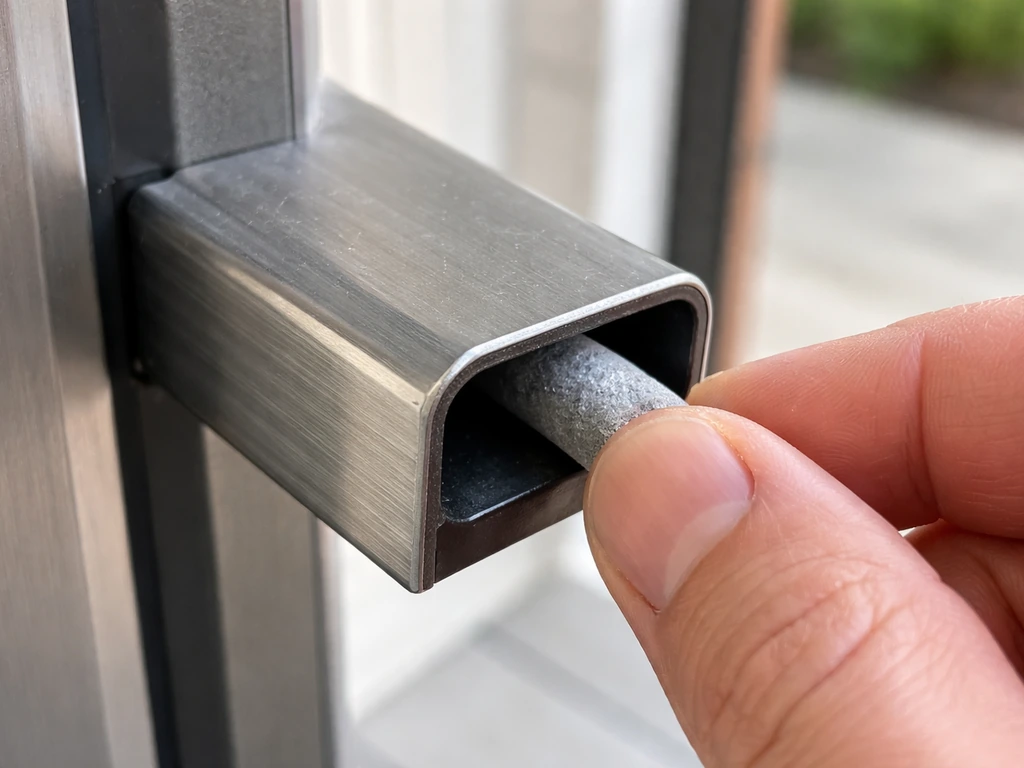
The single most effective thing you can do is close off the spots wasps want to use. For hollow frame tubes with open ends, push foam backer rod or tightly-wound steel wool into the opening and cap it. For the gap where the pole passes through the canopy sleeve, check that the fabric fits snugly around the pole. If there's a loose gap, a zip tie cinched around the sleeve fabric can close it enough to be discouraging. Any crack or hole in a plastic hub or connector should be filled with exterior-grade silicone sealant. These are small fixes that take maybe 20 minutes total and they pay off significantly.
Use deterrents that actually work around fabric
A few deterrents are umbrella-safe and genuinely effective. Fake wasp nests (the paper or fabric decoy variety that hang nearby) exploit paper wasps' territorial instinct. They won't build near an apparent existing colony. Hang one from the umbrella finial or a nearby pergola beam. This works best as a preventive measure before any activity begins. Peppermint oil on cotton balls tucked into frame joints and replaced every couple of weeks is another option that won't stain or damage metal or fabric. Some people apply a spray of diluted peppermint oil directly to the underside of the canopy at the start of each season, which can deter early scouting queens.
Smarter setup and storage habits
How you store and cover your umbrella matters more than most people realize. You can also reduce the chance bats roosting nearby take up shelter under the same umbrella by keeping it closed and sealed when not in use. Wasps are most likely to establish a nest when the umbrella sits open and unattended for long periods, or when it's stored loosely and gives easy access to sheltered frame sections. Here's what to build into your routine:
- Close the umbrella when you're not using it. An open canopy is a perfect sheltered ceiling for nest building.
- Use a fitted umbrella cover for storage, especially if the umbrella is staying outside for extended periods. Make sure the cover fits snugly around the pole at the base to prevent wasps from climbing up inside.
- At the start of each season (spring), do a full inspection of all frame joints and the canopy before the first open. Catching a small early nest in May is much easier than dealing with a full colony in August.
- At the end of each season, clean the umbrella thoroughly before storing it (see the cleanup steps above), inspect every hollow frame section, and store it in a garage or shed rather than leaving it outside covered. A stored umbrella with a few forgotten nest materials inside is an invitation for activity the following year.
- If you're heading into an extended period of not using the patio (vacation, off-season), close the umbrella and secure the cover, or bring it inside entirely.
Quick-reference: scenario guide
| Situation | First step | Follow-up |
|---|---|---|
| No nest, no wasps, early season | Inspect all frame joints and canopy seams | Seal openings, hang decoy nest, apply peppermint deterrent |
| Scout wasps circling but no nest yet | Remove any food/drink attractants from patio area | Seal entry points immediately, deploy decoy nest |
| Small active nest (under 10 cells) | Treat at dusk with jet spray from 10+ feet away | Wait 48 hours, remove nest, clean surface, seal attachment point |
| Large active nest or wasp activity inside frame | Treat at dusk with spray or dust, stand to the side not underneath | Wait 48 hours, confirm kill, dislodge nest material, rinse frame section |
| Old inactive nest from prior season | No spray needed, gear up and knock it free with a stick | Bag and dispose immediately, clean surface, seal or fill attachment site |
| Umbrella stored all winter, opening for season | Open slowly outdoors with gear on, step back immediately | Full inspection, treat if active, clean and seal before first use |
One thing worth mentioning: wasps choosing your patio umbrella is related to the broader challenge of keeping your setup stable and in good condition. If your umbrella also sways in the wind, tightening the base and checking for loose joints will help reduce movement and limit gaps where pests can get in keeping your setup stable and in good condition.
To keep your patio umbrella from spinning, make sure the base is secured and prevent wind lift by checking the pole, joints, and any loose hardware keeping your setup stable. To stop an umbrella from shifting in gusts, secure the base and tighten any joints so the canopy stays properly aligned stable and in good condition.
An umbrella that's been knocked around by wind, has loose frame joints, or has a worn canopy is more likely to develop the kinds of gaps and sheltered crevices that wasps exploit. Keeping the umbrella mechanically sound (tight joints, intact canopy seams, secure base) is genuinely part of keeping pests out. If wind is still flipping or dragging your umbrella, focus on anchoring the base properly and using a cover or tie-down designed for outdoor gusts secure base.
To keep a patio umbrella from blowing away, make sure it has a secure base, tightened hardware, and stays properly covered when not in use keeping your setup stable and in good condition. If you've been dealing with umbrella movement or loose connections, addressing those structural issues also closes off wasp entry points.
If you're dealing with a very large nest, a colony that has spread into multiple frame sections, or you have a known allergy and no safe way to treat it yourself, call a licensed pest control professional. There's no award for handling that alone. The umbrella can wait a day or two, and a pro can treat and remove it efficiently. Everything after that point (cleanup, sealing, prevention) you can handle yourself using the steps above.
FAQ
Can I just knock the wasp nest off my patio umbrella right away?
Remove it only if it is clearly inactive (no wasps flying in and out for several days). If you still see consistent entry and exit at one spot, do not knock it down, treat first in the evening, then remove after the wait period.
What if my umbrella was closed in storage, can wasps still be inside?
Yes, but do it slowly and with distance. Wasps may be inside the canopy sleeve or rolled fabric during storage, so open the umbrella gradually, stand back, and stop if you feel resistance or hear buzzing.
Is daytime treatment okay, or does the timing really matter?
Paper wasp activity is usually a lot higher mid-day, so you can see more scouts and defensive behavior. If you must act urgently, choose early morning or dusk, and use the same distance observation and protective gear before you get close.
What should I do if wasps are going into more than one spot on the umbrella?
If you see multiple gaps with wasps entering and exiting, it often indicates more than one nest site or a connected cavity problem. Treat as a higher-risk situation and consider pest control, especially if you cannot isolate the target area on the frame.
Why didn’t the spray seem to work when the nest was inside the frame?
A common mistake is spraying directly onto the outside surface while the nest is inside a hollow frame. For interior nests, dust or treatment delivered into openings works better, and you still need the evening timing and the waiting period before removal.
Do I have to clean and remove the nest even after I used treatment products?
The key is post-treatment cleanup. Even after using spray or dust, remove the nest after you confirm no live wasps are present, then wash and neutralize residue so you do not attract scouts later.
Can I vacuum wasps or the nest off the umbrella?
Do not use a vacuum unless you are trained, because wasps can escape and sting when the device vibrates or when you empty it. Instead, use tools like a plastic scraper or long-handled tool for removal at distance.
How can I tell if a nest is old enough to remove without treatment?
Old nests can still be attached, fragile, and sometimes coincide with residual insect activity. Handle with a tool, bag it immediately, and do not leave it outdoors where it can reintroduce insects or create odor near doors.
What’s the quickest prevention step I can do the same day?
After removing the nest, check for gaps you can close right away, such as open tube ends, loose canopy sleeve fit around the pole, and any seam tears. Sealing entry points within 20 minutes reduces the chance of a second attempt.
Do fake wasp nests or peppermint oil work if the wasps already started building?
For decoy nests and scent options, effectiveness is mainly preventive. Place decoys before scouting ramps up (early in the season) and recheck after storms, since wind can move the decoy and reduce the territorial effect.
When should I stop DIY and call pest control?
If you are allergic or you cannot safely keep people away while you work, pause and call a pro. Also consider professional help for very large or multi-section colonies, because multiple access points raise the risk during removal.
Next Articles
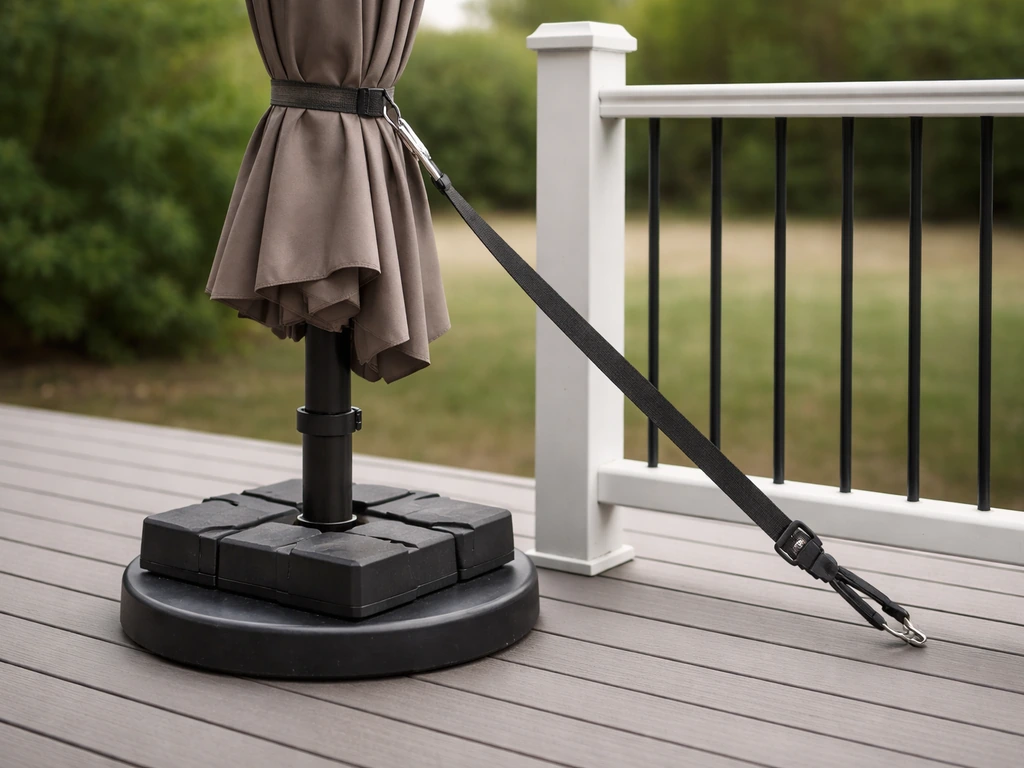
How to Secure a Patio Umbrella From Wind
Step-by-step ways to secure a patio umbrella from wind using a stable stand, locks, straps, and tie-downs plus quick saf
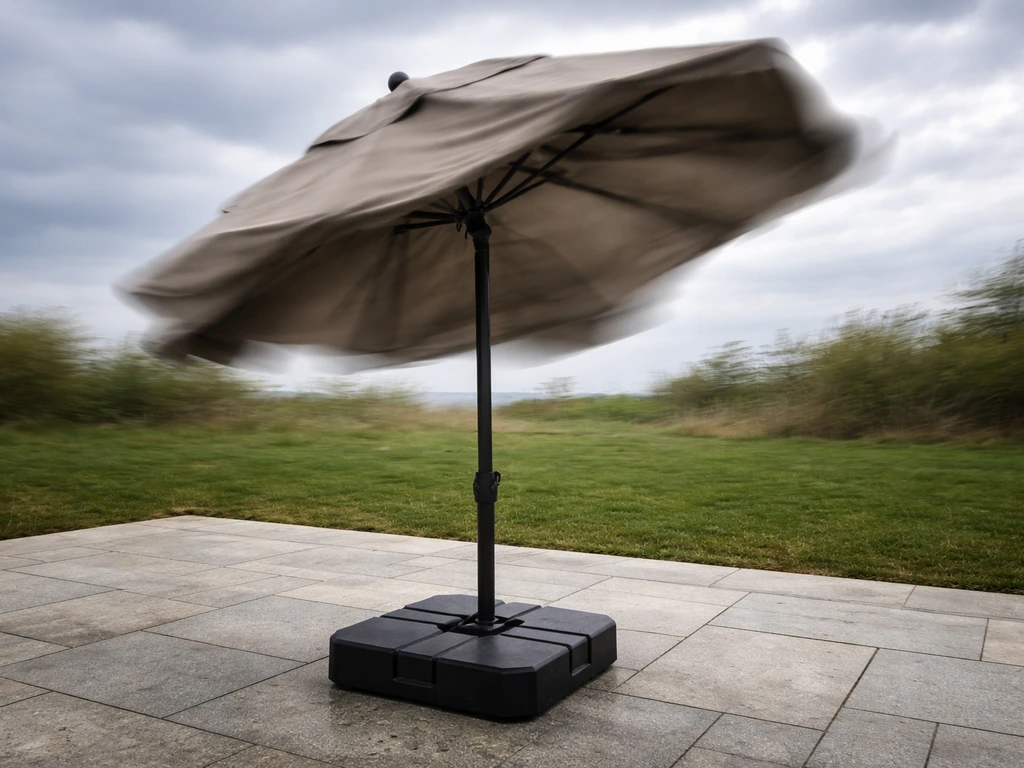
How to Keep Patio Umbrella From Spinning in Wind
Fix a patio umbrella that keeps spinning in wind: tighten hardware, adjust base weight, replace worn parts, verify locks
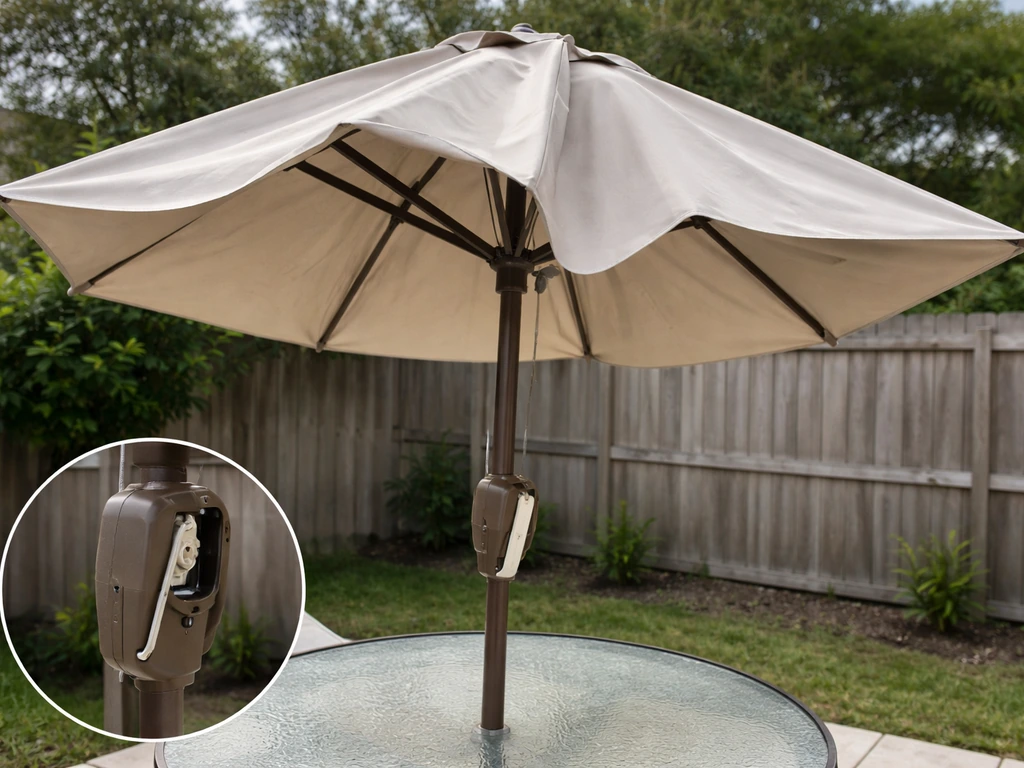
How to Fix a Patio Umbrella That Won't Open or Close
Step-by-step fixes for patio umbrellas that won’t open or close, with checks for jams, cords, latches, and lubricating t