
Close the umbrella when you're not using it, seal any gaps around the center pole and canopy vents with fine mesh, and eliminate the insect buffet that draws bats to your patio in the first place. That combination handles about 90% of bat problems on patio umbrellas. If bats are already roosting inside the canopy or around the ribs, you'll need to encourage them to leave first before sealing anything up, and you'll want to handle the cleanup carefully to avoid a real health risk from their droppings. Here's exactly how to do all of that.
How to Keep Bats Out of Patio Umbrellas: Removal and Prevention

Luca Morrison
18 Jun 2026
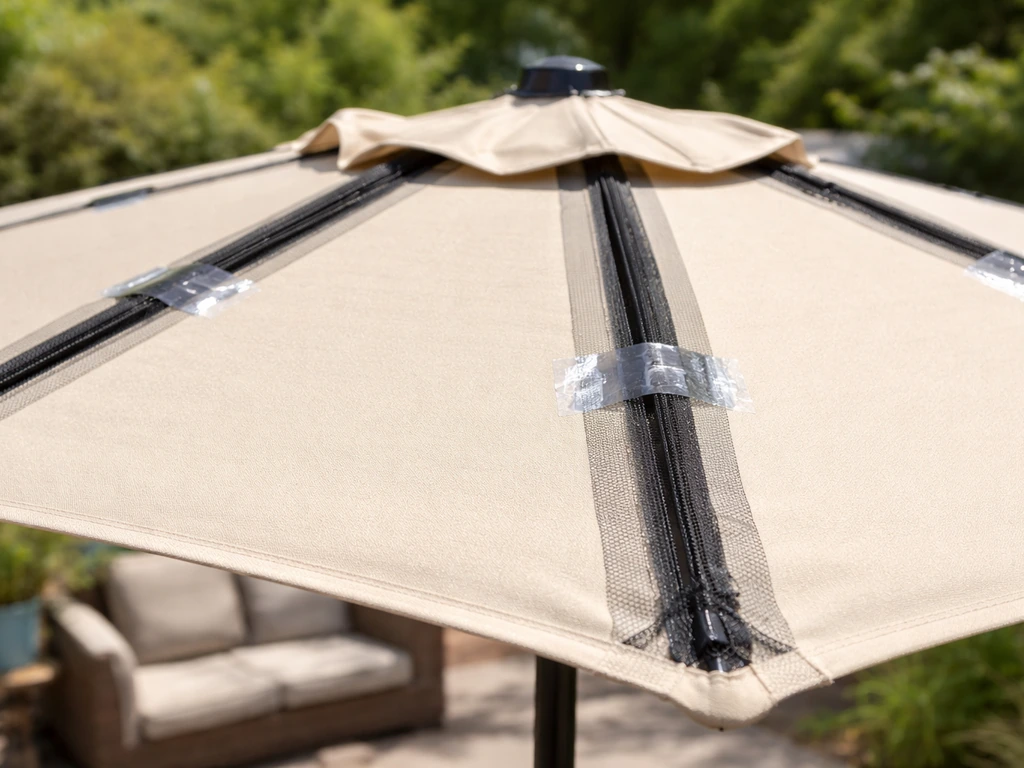
How to spot signs of bats and find where they're getting in
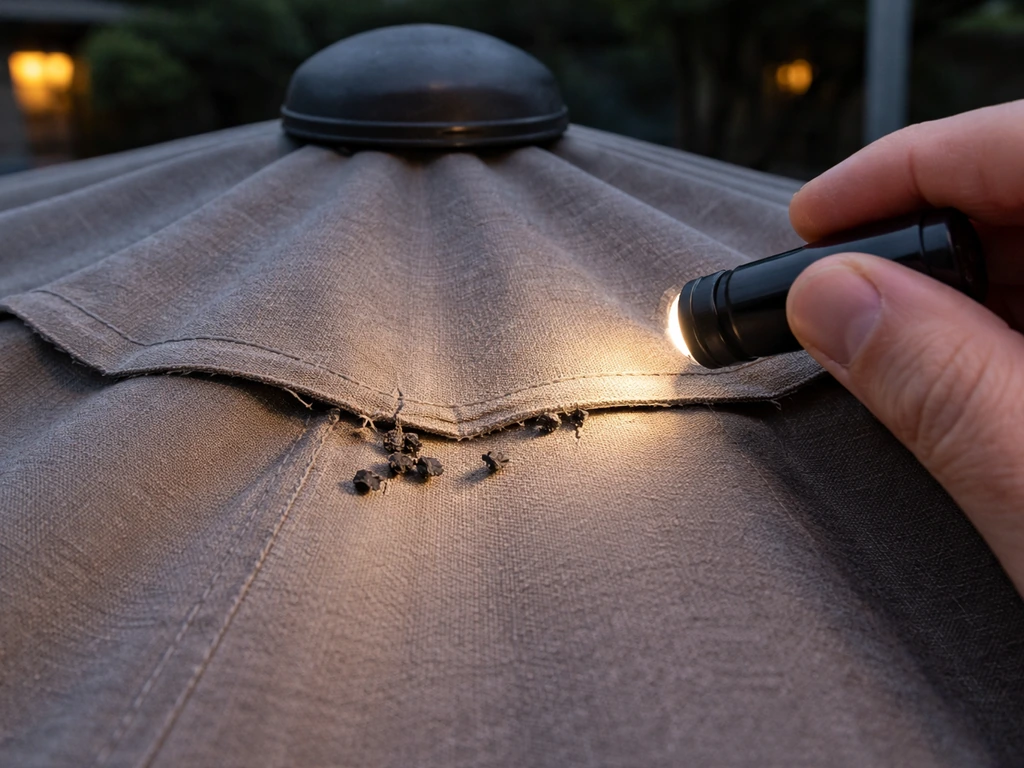
Bats don't need much space to squeeze into a patio umbrella. A gap the width of your finger is enough. The first thing to do is a slow, close-up inspection of the umbrella before you open it wide or handle it carelessly.
The clearest sign is guano: small, dark brown or black pellets roughly the size of a grain of rice, often clustered in one spot. Fresh guano looks slightly wet and glossy; older accumulations are dry and crumbly. You'll usually find it on the table or ground directly below where the bats are hanging. Look also for urine staining, which shows up as yellowish streaks on the canopy fabric or pole. If your patio umbrella sways in the breeze, tighten the center pole and use a heavier base or tie it down to reduce movement how to stop patio umbrella from swaying. A musty, ammonia-like odor is another dead giveaway, especially on a warm day when the umbrella has been closed.
One of the most useful things to look for is rub marks: dark, greasy smudges where bat fur and oils accumulate at the exact spot bats squeeze through. On a patio umbrella, the most common entry points are the center pole opening at the top of the canopy (the ferrule or cap), any ventilation ports sewn into the canopy top, seams where fabric panels meet the ribs, and the gap between the canopy sleeve and the pole on telescoping or tilt-style models. On crank-open umbrellas, the crank housing at the base of the pole can also leave a gap that bats crawl behind.
If you're not sure where they're entering, watch the umbrella at dusk from about 10 to 15 feet away. Bats typically emerge just after sunset, and you'll see them exit from the same spot every evening. That's your entry point.
Safe immediate steps if bats are already inside
Do not just yank the umbrella open and shake it. That's the fastest way to stress the bats, get scratched, and spread guano dust into the air. Stay calm and work methodically.
- Don't open the umbrella during the day if you suspect bats are roosting inside. Bats are protected species in most U.S. states, and disturbing a maternity roost (roughly May through mid-August when females have pups) can be illegal and harmful. If you're in that window and suspect a colony, call your state wildlife agency or a licensed bat exclusion specialist.
- Wait for dusk. Bats naturally exit to feed at twilight. Open the area around the umbrella so there's nothing blocking their exit path, then watch from a safe distance. Once they've all left, you have a short window to act before they return.
- If a bat is already loose and flying around your patio, don't swat at it. Open any nearby doors or screen panels and give it a clear exit route. Turn off patio lights temporarily, since light draws the insects that draw bats back in. Most loose bats will find their way out within a few minutes.
- If you find a bat on the ground, do not touch it with bare hands. A grounded bat is more likely to be sick. Use thick gloves, a container, and a piece of cardboard to gently scoop it up, then contact your local animal control or wildlife rehabilitator. If anyone was potentially exposed (scratched or bitten, even lightly), contact your local health department about rabies risk immediately.
- Once the bats have exited naturally at dusk, immediately cover or block the entry points temporarily with tape, a cloth, or a plastic bag secured with a rubber band so they can't return that same night while you gather materials for a proper fix.
A note on timing: if you're outside the maternity season (roughly mid-August through early spring), exclusion is simpler and there's less risk of trapping young bats inside. If you're in peak summer and you notice a large cluster of bats, not just one or two, call a professional. Trying to DIY a colony exclusion mid-summer without experience can create what wildlife managers call a log jam situation, where bats can't exit properly and end up trapped inside or find their way into your living space.
Bat-proofing the umbrella itself
Once the bats are out, this is where you protect the umbrella long-term. You're essentially closing every gap they could use to roost again. This isn't complicated, but it does require going through the umbrella methodically.
The center pole cap and ferrule
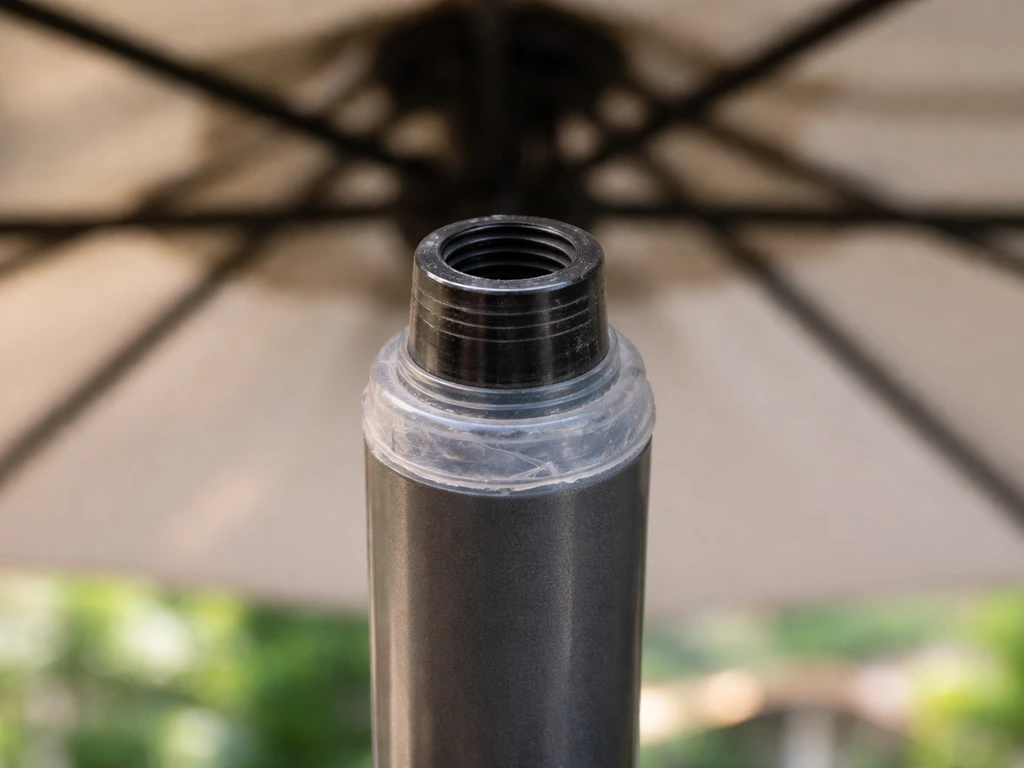
The cap at the very top of the center pole is one of the most common entry points. On most market umbrellas and offset models, this is a plastic or metal finial that screws or snaps on. Check whether it fits tightly. If there's any gap between the cap and the canopy fabric hole it passes through, wrap that joint with self-fusing silicone tape or use a small piece of 1/4-inch hardware cloth (the fine wire mesh sold at hardware stores) tucked under the cap before re-seating it. On telescoping poles, check the joint where the upper pole slides into the lower section: that gap is a perfect bat entry point if the pole is left partially extended.
Canopy vents and seams
Many umbrella canopies have a ventilation flap or double-top at the peak. That's basically an open pocket. Bats love it. You can sew a piece of fine fiberglass window screen (1/16-inch mesh or smaller) to the inside of that vent flap using a curved upholstery needle and polyester thread. It keeps airflow but blocks bats. Check all the seams where fabric panels attach to the rib pockets, too: if any seam is pulling away or has a gap, a few hand stitches or a bead of flexible outdoor fabric sealant will close it up.
Rib tips and crank or tilt hardware
The tips of the ribs where they meet the canopy edge are often left open on cheaper umbrellas. If yours have open hollow rib tips, press small rubber furniture caps (the kind meant for chair legs) over each one. For the crank housing, check that the cover plate sits flush against the pole. If there's a gap, a strip of self-adhesive weatherstripping foam around the inside edge of the cover will seal it. On push-button tilt models, check the tilt collar where the upper pole pivots: the gap around that pivot point can be large enough for a bat. Wrapping it with self-fusing silicone tape after assembly fills that gap without interfering with the tilt function.
When the umbrella is open and in use
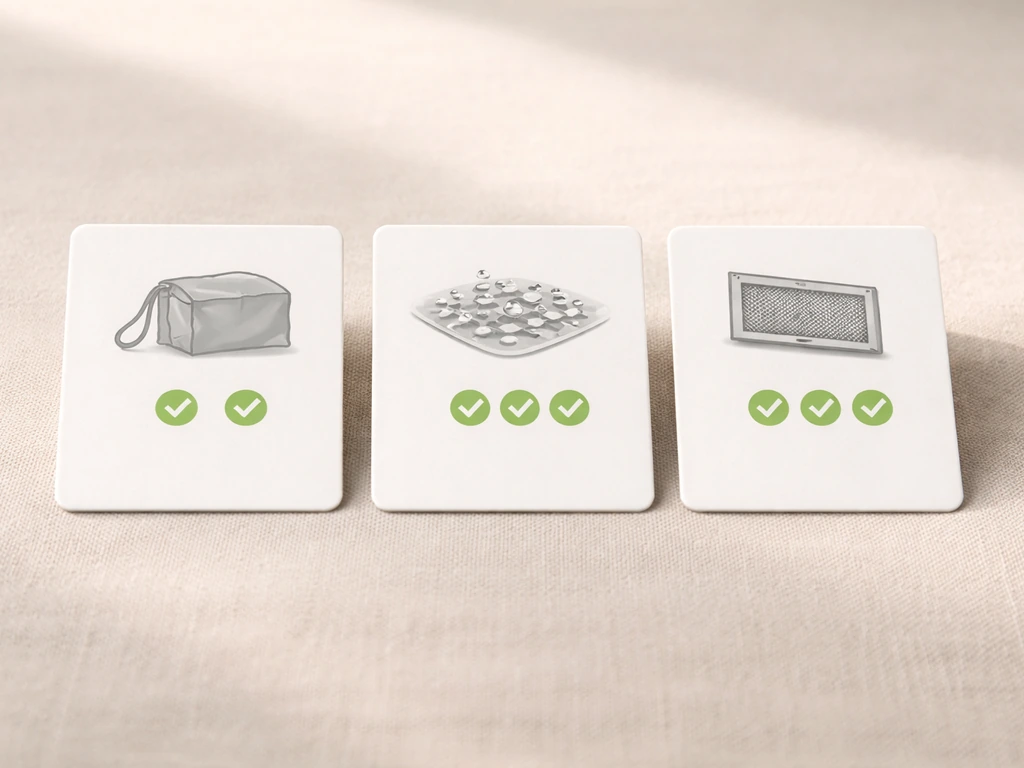
Most bat problems happen when the umbrella is closed and left outside overnight. That folded canopy creates a dark, sheltered pocket that bats find ideal. Unfortunately, the same wind and loose hardware that affects umbrella entry points can also make a patio umbrella spin patio umbrella from spinning. The simplest bat-proofing step of all is to close and cover the umbrella at night with an umbrella storage cover, the kind that's essentially a snug-fitting sleeve. These cost $15 to $30 and prevent bats from accessing the canopy entirely when you're not using it. Many of the same issues that let wind into your umbrella mechanism also let bats in, so any mechanical fixes you've made to tighten up the pole, rib, or crank hardware also work in your favor here.
Deterrents and making your patio less attractive to bats
Physical sealing is the only truly reliable fix, but it helps to make the environment around the umbrella less appealing at the same time. Here's what actually works and what doesn't.
Lighting: use it strategically, not just more of it

Bats are attracted to the insects that gather around outdoor lights, not to the light itself. So simply adding more lights won't keep bats away: it often makes things worse by drawing in a bigger insect buffet. The smarter move is to switch your patio lights to warm amber or yellow LED bulbs (3000K or lower color temperature), which attract significantly fewer insects than white or cool-spectrum bulbs. Motion-activated lights are better than always-on ones. And if you have bright lights right above or next to the umbrella, repositioning them even a few feet can reduce the insect concentration directly around the canopy.
Airflow and disruption
Bats prefer calm, still, sheltered spots. Running a patio fan near the umbrella, especially at night, disrupts that calm-air environment they prefer for roosting. It doesn't need to be powerful, just enough to keep air moving through and around the canopy. This also helps with wasps and other insects that roost in patio umbrellas for the same reason. Wasps are attracted to food and shelter, so reducing standing water, sealing entry points, and keeping the area clean can help keep them from settling in or around the umbrella wasps and other insects that roost in patio umbrellas.
What doesn't work (save your money)
Ultrasonic repellent devices are not effective against bats. Multiple state wildlife agencies and wildlife management experts confirm this. Mothballs and naphthalene products are also not reliable bat deterrents, and they're actually prohibited for this use in many states because they're a pesticide being applied outside their labeled use. Don't waste time or money on either.
Bat houses: redirect, don't just repel
Here's an honest admission: bats eat thousands of insects per night and are genuinely beneficial to have nearby. If you're trying to evict them from your umbrella but you don't mind them in the yard, mounting a bat house on a nearby post or fence (ideally 10 to 15 feet high and in a south-facing sunny spot) gives them an alternative roosting site. This is especially effective if you do it at the same time as exclusion, so they have somewhere to go.
Cleaning up guano and dealing with odor
This section matters more than most people realize. Bat guano can harbor Histoplasma, the fungus that causes histoplasmosis, a lung infection you get by breathing in disturbed spore-laden dust. You don't need a large pile for this to be a risk. A few dried pellets you accidentally sweep off the table are enough to cause a problem if you're unlucky.
Gear up before you touch anything
- N95 or better respirator mask (not a cloth mask or surgical mask)
- Disposable nitrile gloves
- Safety glasses or goggles
- Old clothes you can bag up and wash immediately, or a disposable coverall
How to clean the canopy fabric and pole
- Never dry-sweep or vacuum guano with a regular household vacuum. That blows spores directly into the air. If you must vacuum, use a vacuum with HEPA filtration.
- Dampen the droppings first. Lightly mist the affected area with water from a spray bottle before touching anything. This suppresses dust significantly.
- Use damp paper towels or disposable cloths to pick up and wipe away droppings. Seal used towels in a plastic bag immediately.
- For canopy fabric, spot-clean with an enzymatic cleaner or a solution of 1 part bleach to 10 parts water. Let it soak for several minutes before wiping. Rinse well with clean water afterward. Test a hidden seam first if your canopy fabric is a specialty material.
- For the pole and hardware, wipe down with the same diluted bleach solution using disposable cloths. Pay extra attention to any crevices around the crank, tilt collar, or rib connections where guano may have collected.
- Bag all waste materials in heavy-duty plastic bags, seal them, and dispose of in the trash.
- Wash your hands thoroughly and change out of work clothes before re-entering your home.
Odor from bat waste is a real concern beyond just being unpleasant: the smell can actually attract other bats to the same spot even after you've excluded the originals. The Minnesota DNR warns that blank" rel="noopener noreferrer">odor from bat waste can attract new bats and recommends cleanup precautions to reduce health risks from droppings. After cleaning, apply an enzyme-based odor eliminator to any areas where you found guano or urine staining and let it fully dry before closing the umbrella. If the odor persists in the canopy fabric after cleaning, unclipping or unzipping the canopy and washing it separately (if your model allows it) will help considerably.
If you found a large amount of guano, meaning more than a cup or so, or if it's been accumulating inside a closed umbrella cover for a long season, consider having a professional do the cleanup. The histoplasmosis risk scales with the quantity of material disturbed. It's not worth the lung risk.
Ongoing prevention: storage, seasonal habits, and setup tips
The best bat-proofing is a habit, not a one-time fix. Here's what to build into your routine so this doesn't become an annual problem.
Daily and nightly habits
Close and cover your umbrella every night when you're done using it. I know it feels like extra steps, but it's genuinely the single most effective thing you can do. A snug-fitting umbrella storage cover that cinches or zips shut eliminates the dark, sheltered pocket that bats are looking for. To keep your patio umbrella from blowing away, use a secure strap or anchor kit and check that the base is heavy or weighted enough for windy days Close and cover your umbrella every night. If you leave the umbrella open overnight regularly, no amount of sealing or deterrents will fully solve the problem.
Seasonal inspection and storage
At the start of the outdoor season (usually spring), do a full inspection of the umbrella before you put it back in service. Check the pole cap, rib tips, all seams, and the crank or tilt hardware for any gaps that opened up over winter. Bats start scouting for roosts in early spring, so catching this before they arrive is a lot easier than dealing with an established roost in July.
At the end of the season, clean the canopy thoroughly before storing it, even if you don't see any guano. Trace amounts of urine or odor on the fabric can attract bats to investigate the same spot the following year. Store the umbrella in a sealed bag or case in a garage or shed rather than leaving it outside in a stand. If outdoor storage is your only option, a high-quality, fully sealed cover is non-negotiable.
Setup choices that reduce bat appeal
Where and how you position your umbrella makes a difference. Umbrellas set up directly under trees or near dense shrubs are more attractive roosting spots because bats already use that vegetation. If you can move the umbrella even 6 to 8 feet away from overhanging branches, you reduce its appeal. Keeping the umbrella pole firmly seated in a weighted or in-ground base with minimal wobble also helps: a stable, well-secured umbrella is easier to cover and seal, and the same mechanical tightness that keeps your umbrella from spinning or swaying in the wind also limits the gaps bats can exploit. To keep a patio umbrella secure in breezy weather, focus on stability: use a weighted base, check all joints, and close and cover the umbrella when wind picks up secure umbrella.
Quick comparison: bat-proofing methods
| Method | Effectiveness | Effort/Cost | Best For |
|---|---|---|---|
| Nightly cover/storage bag | Very high | Low / $15-$30 | All umbrellas, daily habit |
| Sealing gaps with mesh or tape | Very high | Medium / $10-$20 | Umbrellas with visible entry points |
| Enzymatic odor eliminator after cleanup | High (prevents re-attraction) | Low / $10-$15 | Post-removal prevention |
| Patio fan for airflow | Moderate | Low-Medium / $30-$80 | Supplement to sealing |
| Amber/warm LED patio lights | Moderate (reduces insects) | Low-Medium / $10-$40 | All patios |
| Bat house installation nearby | Moderate (redirects) | Medium / $25-$60 | Yards where bats are welcome nearby |
| Ultrasonic repellers | Ineffective | Wasted / $20-$60 | Not recommended |
| Mothballs/naphthalene | Ineffective and often illegal | Low cost, high risk | Not recommended |
If you've done everything here and bats keep coming back, the next step is a licensed bat exclusion professional. This is especially true if you have a recurring colony, if you're in the maternity season window, or if you found a grounded or sick bat. A professional can install proper one-way exclusion devices, confirm that no bats are trapped inside during the process, and handle the cleanup safely. That's not giving up on DIY: it's recognizing when the situation has gone beyond what a patio umbrella guide should cover.
FAQ
I think bats are using my umbrella, but I only saw them once. Should I seal gaps right away?
Close the umbrella and put it under a snug storage cover for at least a few days, then inspect only from a distance and watch for the same exit spot at dusk. If you still see bat activity leaving from the umbrella, assume there is an occupied roost and do not seal entry points yet until you confirm bats are gone, otherwise you can trap them inside.
What should I do if I suspect bats are inside the canopy but I cannot find guano?
No. Any action that traps bats inside (like sealing vents while they are present) can force them into the canopy cavity, leading to more contamination and sometimes entry into nearby structures. The practical trigger is this, if you see bats actively exiting at dusk, wait to seal until activity stops and the umbrella is clearly unoccupied.
Is it safe to clean bat droppings from inside the umbrella myself?
Wear disposable gloves and avoid dry sweeping. Use dampening methods (lightly mist or use a HEPA vacuum) to prevent airborne dust, especially around dried droppings. If you have respiratory conditions, use a respirator rated for particulate and contact a wildlife professional for cleanup when contamination looks heavy.
Can I wash the umbrella canopy instead of sealing over the stains and odor?
You can, but only after bats are fully out. If your canopy unzips or unclips, bag the separated fabric so you do not spread dust, wash it if the manufacturer allows, then dry completely before reassembly. Also treat the umbrella frame and seams where residue may have wicked into fabric edges.
Will turning off patio lights or changing bulbs keep bats away from the umbrella?
Warm amber or yellow LEDs help because they reduce insects near the umbrella, which is what the bats are really targeting. Keep light fixtures off to the side rather than aimed at the canopy, and avoid adding additional bright lights near patio seating.
Do ultrasonic repellent devices or mothballs work for bats in umbrella setups?
Ultrasonic units, mothballs, and naphthalene are not reliable for bats and can be a waste of money or create compliance problems because they are pesticides. If you want a practical deterrent, focus on exclusion by closing and covering at night, plus sealing openings only after bats leave.
I sealed the cap and vents, but bats still come back. What usually gets missed?
Even if you seal every visible gap, bats can still re-enter through a small opening you missed, or through a loosely fitted finial, vent flap, or telescoping joint. Re-check the umbrella after windy days and after storage, because hardware shifts and can reopen access points.
At what point should I stop DIY and hire a pro for umbrella bat problems?
If you see multiple entry points or a steady pattern of use, treat it as a colony situation. The safest decision aid is this, if more than a couple bats are present, or you notice guano covering a sizable area inside/under the umbrella, call a licensed wildlife professional rather than attempting DIY exclusion in mid to late summer.
What if I find a sick or grounded bat under the patio umbrella?
If you find a grounded or sluggish bat near the patio, keep pets and people away and contact a local wildlife rehabilitator or animal control for guidance. Do not handle it with bare hands, and do not proceed with sealing or forcing movement until professionals confirm what to do.
Does moving the umbrella location help, or is sealing always enough?
Yes, moving the umbrella can reduce re-use. Bats are more likely to select umbrellas near dense shrubs, tree canopies, or heavy shade where they can approach and feel concealed. Try relocating several feet away from overhanging branches and reapply your night-cover routine.
What are the most common mistakes people make after bats appear in an umbrella?
A common mistake is sealing while the umbrella is still being used, or aggressively shaking the umbrella to “spook” bats out. Another mistake is leaving it open overnight for even one night, which allows them to investigate and re-roost quickly. The reliable habit is nightly closure plus a cinching or zipping cover that fully encloses the canopy.
Next Articles
How to Stop Patio Umbrella From Swaying and Tilting
Fix patio umbrella sway and tilt fast with quick checks, leveling, proper base filling, weights, anchoring, and tilt loc
How to Keep Patio Umbrella From Blowing Away
Step-by-step tips to stop a patio umbrella lifting, tipping, or flying in wind with fixes, weights, and secure anchors.
How to Keep Wasps Out of Patio Umbrella Safely
Step by step safe ways to keep wasps out of patio umbrellas, block entry points, and remove nests without damaging fabri