To close a standard patio umbrella with a crank, turn the handle counterclockwise until the canopy folds down completely and sits snug against the pole. For a cantilever umbrella, insert the crank into the open/close socket and turn counterclockwise until the canopy is fully closed, then release the lock lever if your model has one. If it won't close, the problem is almost always a jammed tilt joint, a stripped crank gear, a stuck rib, or a tangled cord. All of those are fixable without replacing the umbrella.
How to Close a Patio Umbrella Safely Step by Step
Luca Morrison
21 May 2026
Quick safety prep before you start closing
Before you touch the crank or pull a cord, take 30 seconds to set yourself up so nothing gets pinched or bent. Closing an umbrella carelessly is actually how most ribs get damaged, because the metal arms want to swing inward fast and fingers or furniture get in the way.
- Clear the area under the canopy. Move chairs, cushions, and anything else that the ribs could catch on as they fold down.
- Keep your hands away from the rib hinges. Those folding joints are the pinch points. Hold the crank handle or cord only, not the canopy fabric.
- If your umbrella has a tilt function (a joint partway up the pole), straighten it to the upright position before closing. Trying to close a tilted canopy strains the ribs and can crack the tilt collar. Cantilever owners: make sure the arm is level, not angled down, before you crank.
- Stand to the side of the umbrella, not directly under it, while closing. If a rib is bent or the cord lets go, the canopy can drop unexpectedly.
- Check for wind. If it's gusting, close from the downwind side so the canopy folds toward you rather than catching air and inverting.
How to close a standard patio umbrella
Standard center-pole umbrellas use one of three control types: a crank on the pole, a push-button runner that slides up and down, or a pulley and cord system. The steps below cover crank-style umbrellas first since that's the most common, with variations for the other types noted at each step. If you want step-by-step guidance for your exact model, see our guide on how to operate patio umbrella controls.
- Straighten the tilt. If the canopy is angled, use the tilt collar (usually a knob or a button just above mid-pole) to return it to vertical. The ribs need to fold symmetrically, and they can't do that if the pole is canted.
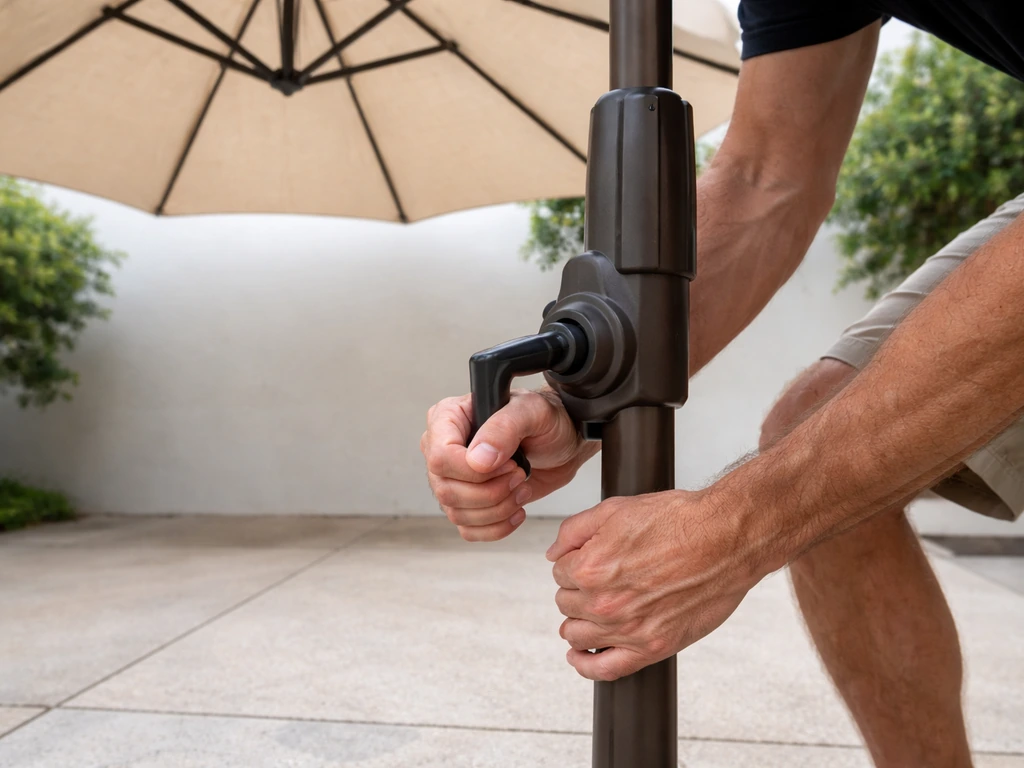
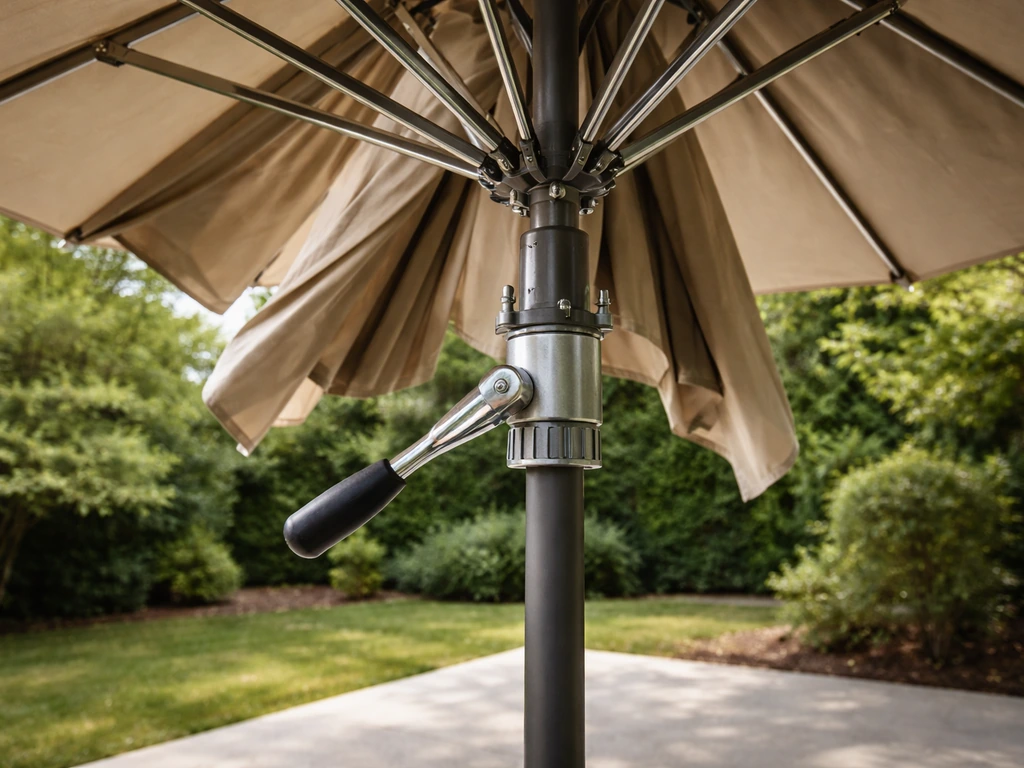
- Locate the crank handle. It's the small fold-out handle on the pole, typically 12 to 18 inches above the base. Unfold it so it's perpendicular to the pole.
- Turn the crank counterclockwise. Watch the canopy as you turn. The ribs will start folding inward toward the pole. Keep a steady, moderate pace. Don't rush it.
- Stop when the canopy is fully closed. The ribs should be pulled tight against the pole with the fabric gathered neatly. You'll feel the mechanism reach a natural stop. Do not keep cranking past this point. Over-cranking can reverse the direction and start reopening the canopy, or it can strip the gear inside the crank housing.
- Fold in the crank handle. Rotate it back flat against the pole so it doesn't snag anything.
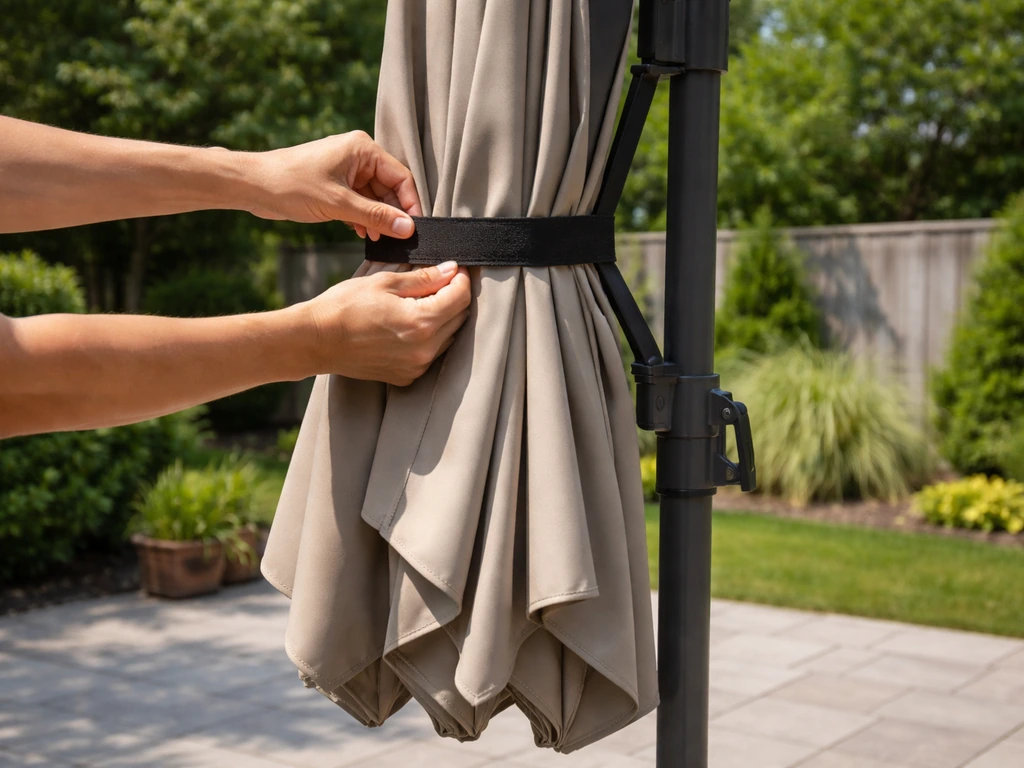
- Secure the canopy. Wrap the velcro strap or tie cord (usually attached to one of the ribs) around the folded canopy. This keeps the fabric from flapping in a breeze.
How to close a cantilever patio umbrella
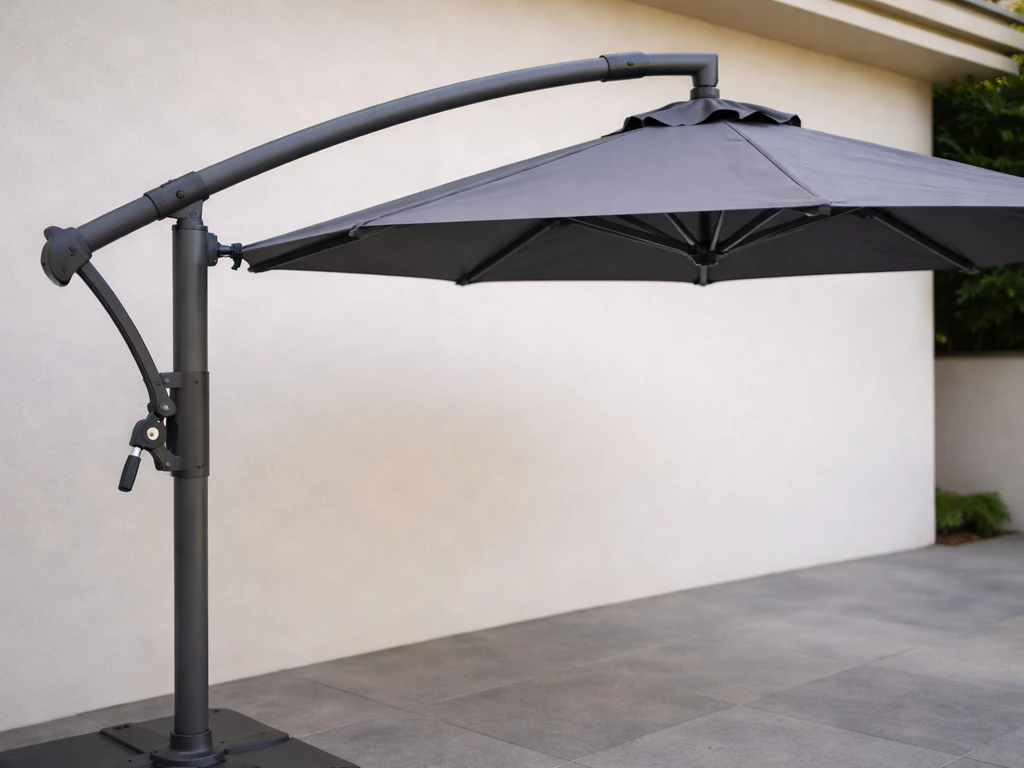
Cantilever (offset) umbrellas are a different animal. If you are trying to open an offset patio umbrella, follow the model-specific crank or latch steps in the opening section, then confirm the canopy locks fully into place open offset patio umbrella. Offset (cantilever) patio umbrellas use a different off-to-the-side pole and closing crank socket, so the assembly steps are specific to that design offset patio umbrella. The pole is off to the side, the canopy hangs from an arm overhead, and the closing mechanism is usually a separate crank socket rather than a handle built into the pole. Brands like Treasure Garden and California Umbrella use this setup on popular models like the AG25T, AG19A, and AKZ.
- Level the canopy before you do anything else. If the canopy is tilted at an angle, return it to a flat, horizontal position. The Treasure Garden AKZ manual specifically calls this out as a required step before closing, because the arm mechanism can bind if you try to close it while the canopy is tilted.
- Find the open/close crank socket. On most cantilever models it's on the main arm near the vertical pole. It's a separate socket from any tilt crank, so don't mix them up. If you're unsure, check your manual. Treasure Garden AG25T and AG19A owners: the socket is labeled 'Open/Close.'
- Insert the crank handle. Most cantilever umbrellas come with a detachable crank that you insert when needed. Push it firmly into the socket so it seats fully.
- Turn counterclockwise. This is consistent across the Treasure Garden line and California Umbrella's BA series. The canopy will begin to close as the ribs fold down toward the arm.
- Stop as soon as the canopy is fully closed. This is important: the AKZ manual and AG25T manual both stress stopping at the closed position rather than continuing to turn. Over-cranking can put stress on the arm joint or cause the mechanism to bind.
- Release the lock lever if applicable. California Umbrella's BA series cantilever has a lock-release lever as the final step after the canopy is cranked closed. Press or flip that lever to disengage the locking position before leaving the umbrella.
- Wrap the canopy strap. Gather the fabric and secure the velcro or tie strap around it. Then cover the entire canopy with the protective cover if one came with your umbrella. Both Treasure Garden and California Umbrella recommend this as standard practice when the umbrella is not in use.
If it won't close: troubleshooting common problems
If you're here because your umbrella is stuck and won't close, you're in the right place. If you want the counterpart steps for using the crank on the offset arm, see how to open cantilever patio umbrella. Here are the most common causes and how to fix each one, starting with the simplest.
Jammed or stuck tilt joint
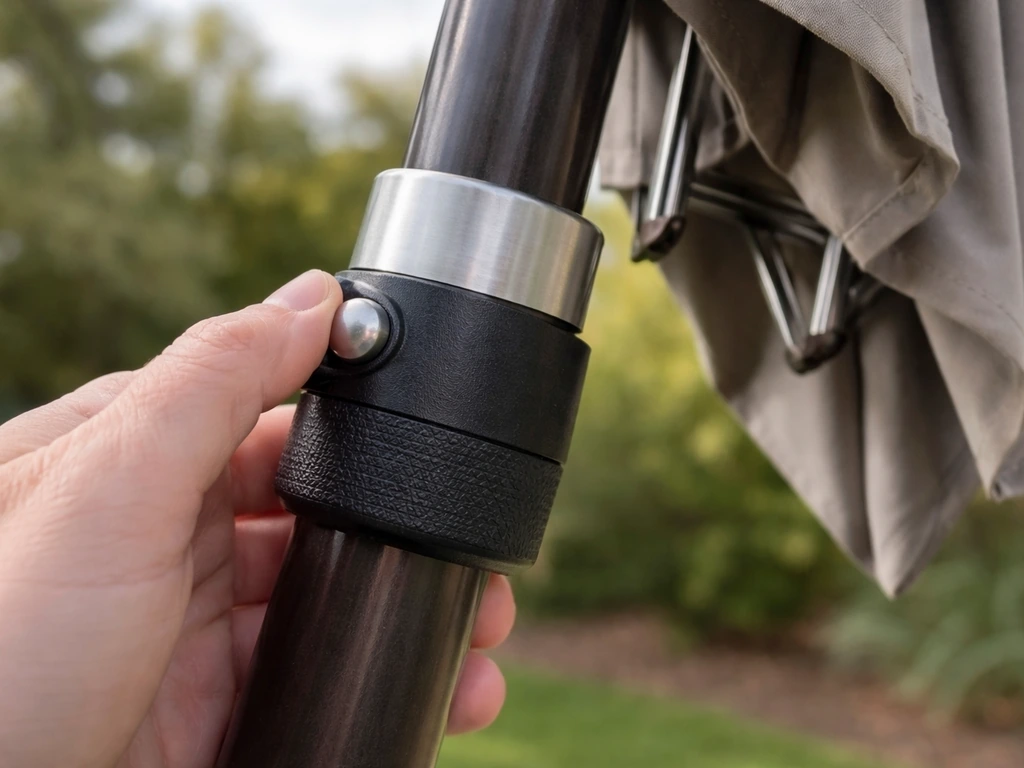
The tilt collar is usually a push-button or collar-style joint on the pole. If it's stuck in the angled position, the ribs can't fold properly when you crank. Press the tilt button firmly and hold it while you manually straighten the pole. If the button won't depress, the joint may have sand or grit in it. Rinse it with water and try again. Don't force the crank while the tilt is engaged, as this is a reliable way to crack the collar or bend a rib.
Crank that turns but nothing happens
If the crank spins freely without moving the canopy, the gear inside the crank housing is likely stripped. This is common on older umbrellas or ones that were repeatedly over-cranked. The fix is to replace the crank mechanism. Most crank housings are sold as replacement parts for $10 to $25 and attach to the pole with two screws. Before ordering, note the pole diameter (usually 1.5 or 1.9 inches) because the crank housing needs to match. Atleisure and others recommend checking the crank mechanism operation as the first step in any won't-open or won't-close diagnosis, rather than assuming the canopy or ribs are at fault.
A rib that won't fold in
If one or two ribs refuse to fold while the others close fine, the issue is usually at the hub (the central ring at the top of the pole where all the ribs connect) or at a bent rib. Inspect the hub carefully. If a runner or slide is catching, try pressing it upward or downward by hand while cranking slowly. If the rib itself is visibly bent, you can sometimes straighten it carefully by hand, but a bent rib is under tension and can snap. Replacement ribs are available for most brands and are worth it if the rest of the umbrella is in good shape.
Cord or pulley system that's jammed or tangled
Pulley-style umbrellas use a rope or cord that runs through a series of rings or pulleys. If the cord is tangled, frayed, or has jumped off a pulley, the canopy won't close no matter how hard you pull. First, look up into the canopy and trace the cord path to find where it's stuck. Untangle any knots carefully.
If the cord has jumped off the pulley wheel, you usually need to remove the canopy from the hub to reseat it. A frayed or broken cord needs to be replaced. Replacement cord kits run around $8 to $15 at most home improvement stores. Do not apply lubricant inside the pulley housing without checking your umbrella's manual first.
Atleisure, for example, advises against user-applied lubricants on their mechanisms.
Cantilever arm that feels stiff or locked
If your cantilever umbrella's crank turns but the canopy barely moves, the arm's internal tension system may be binding. Check that the canopy is level before cranking, as mentioned in the prep steps. If it's already level and the crank still feels extremely stiff or locked, look for a separate tension knob or pin on the arm joint. Some cantilever designs use a spring-loaded latch that must be released before the crank can operate. Consult your specific manual for that release point. On California Umbrella BA series models, the lock-release lever is the key step here.
Closing method by umbrella control type
Not all umbrellas close the same way. Here's a quick reference so you can match your specific control to the right approach.
| Control type | How to close | Common gotcha |
|---|---|---|
| Crank handle (pole-mounted) | Turn counterclockwise until canopy is fully folded. Stop at the natural end point. | Over-cranking strips the gear or reverses the canopy. |
| Push-button runner | Press the button on the runner ring, slide it down the pole toward the base. The canopy folds as the runner descends. | The button must stay depressed the whole way down or the runner locks in place mid-pole. |
| Pulley and cord | Pull the open end of the cord (usually the lower hanging end) steadily and slowly to lower the runner and close the canopy. Tie off the cord cleat once closed. | Releasing the cord too fast lets the canopy drop and snap open again. Always control the descent. |
| Cantilever crank (socket-style) | Insert detachable crank into the open/close socket, turn counterclockwise until closed. Release lock lever if present. | Using the wrong socket (tilt vs. open/close) on the same arm. They're not interchangeable. |
Keeping it closed: securing the umbrella after you close it
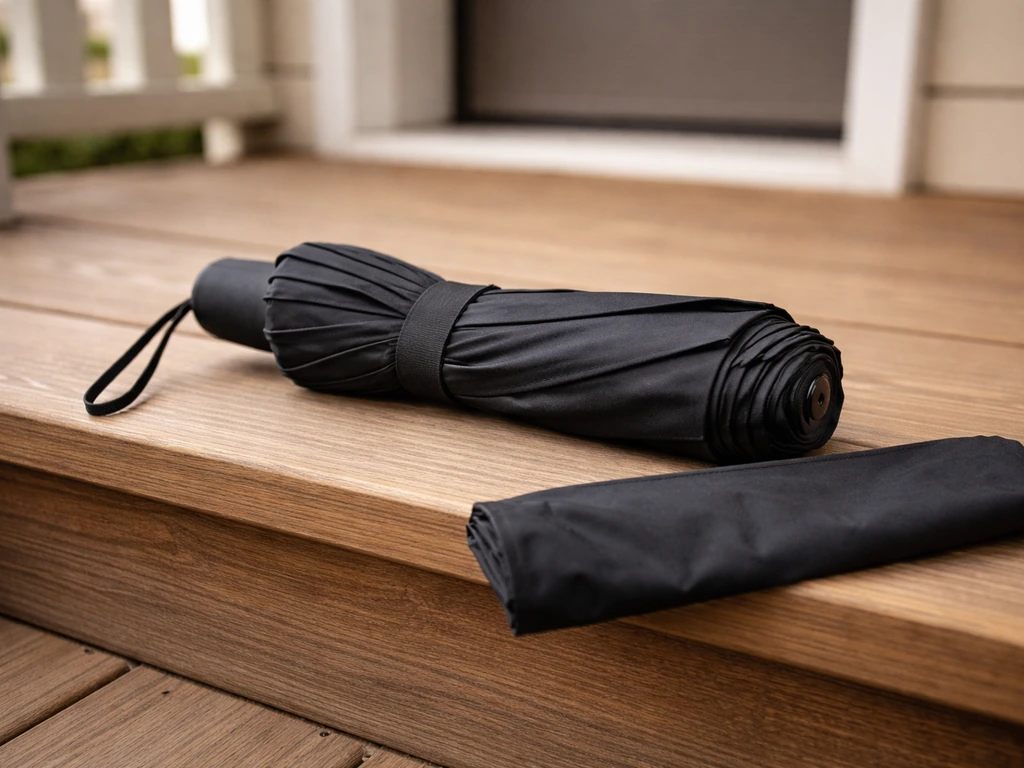
A folded umbrella that isn't secured is still a problem. Wind can catch the gathered canopy like a sail, pop it open, or tip the whole umbrella over. Here's what to do once it's closed, whether you're heading inside for the night or putting it away for the season.
For overnight or short-term closing
- Wrap and fasten the canopy strap. Every umbrella should have a velcro or cord strap on one of the ribs. Wrap it snugly around the folded canopy.
- Lower the umbrella if it's on a tilt or height-adjustable pole. A shorter profile catches less wind.
- Make sure your base is properly weighted. Cantilever umbrellas especially need their bases filled (sand or water, depending on model) to stay stable in wind even when closed. The Treasure Garden AG25T manual connects base stability to closed-umbrella security as standard usage guidance.
- If you're expecting strong winds or a storm, bring the umbrella inside or lay it down flat. No amount of strapping keeps a closed umbrella safe in gusts above 20 to 25 mph.
For seasonal storage
- Wrap the canopy with its strap and slip on the protective cover. Both California Umbrella and Treasure Garden specifically recommend using the manufacturer cover to prevent fading and staining. If you've lost the original cover, a generic outdoor umbrella cover in the right diameter works fine.
- Store the umbrella upright in a garage or shed, out of direct sunlight and away from moisture. California Umbrella also recommends keeping the original box if you have it for long-term storage, since it protects the frame as well as the canopy.
- For cantilever umbrellas, you'll typically need to detach the arm from the pole before it fits through a standard doorway. Remove the crank and secure any loose hardware in a labeled bag so it's easy to reassemble in spring.
One last thing worth knowing: properly closing and covering your umbrella every time you're done using it is genuinely the single best thing you can do for its lifespan. Canopy fabric that's left open fades dramatically faster, and ribs left under tension day after day develop micro-cracks at the hinge points. A two-minute close-and-cover routine pays off in years of extra life.
If you want to make sure you're opening it correctly too, the process for opening is essentially the same steps in reverse, with a few extra considerations depending on whether you have a standard, offset, or cantilever model. For details on how to open your patio umbrella safely, follow the same model-specific steps in reverse opening it correctly.
FAQ
When closing a patio umbrella, should the canopy be level first, or can I just crank it down from any angle?
Start by making the canopy as level as you can before you crank. On cantilever and tension-based models, starting from a tilted or uneven position can make the internal arms fight each other, which leads to stiff cranking or incomplete closure.
My umbrella closes partway, then stops. How can I tell if it is a rib jam versus a cord or pulley problem?
If the crank moves but you see one or more ribs not folding while the rest do, suspect a rib or hub issue. If nothing closes and you notice slack, tangling, or a cord out of its path above the canopy, suspect the pulley or cord system. A quick visual cord trace is often faster than repeated cranking.
What should I do if the crank handle feels loose or wobbly while closing?
Stop immediately if the handle wobbles or slips without pulling the canopy down, it usually indicates a mechanical failure in the crank housing rather than a minor alignment issue. Try the closing action once more only after checking the tilt joint is fully disengaged; otherwise plan on a crank mechanism replacement.
Can I use lubricant or spray grease if the closing mechanism feels sticky?
Avoid adding lubricant inside the pulley housing or moving joints unless your umbrella manual specifically allows it. Many mechanisms can become dirt magnets, and some manufacturer guidance recommends against user-applied lubricants to prevent future binding.
Is it safe to force the umbrella closed if I hear grinding or clicking?
No. Grinding or aggressive clicking often means a gear, rib hinge, or tension mechanism is binding. Forcing it can bend ribs or crack the collar, and it can also worsen a jam so it becomes harder to repair.
What is the best way to check the tilt collar or push-button joint when it will not fully engage?
Press the tilt button or collar firmly and hold it while you manually straighten the pole. If it will not depress, rinse out sand or grit (light water rinse, let it drain) and try again. Do not crank while the joint is half-engaged.
How do I close an umbrella after heavy wind exposure when the canopy is partially open?
First, keep people and pets away from the path of the ribs. Bring the umbrella to a stable, upright position, then close slowly, ensuring the canopy folds into place rather than snapping downward. Once closed, secure it with the cover or strap to prevent wind from reopening it.
For pulley and cord umbrellas, can I pull the cord harder to get it to close?
Pulling harder can stress or break a frayed cord. Instead, inspect the cord path first, untangle carefully, and reseat the cord on the correct pulley wheel if it jumped off. If the cord is frayed or broken, replace the cord kit.
What size replacement crank housing do I need if my pole type is different than the usual 1.5 or 1.9 inch?
Measure the pole diameter on your umbrella before ordering parts, then match the crank housing to that measurement. The housing must fit the pole correctly for the gear to engage and for the screws to tighten securely.
How can I tell if a bent rib can be safely straightened versus replaced?
If a rib looks visibly bent, it is under spring tension and can snap during straightening. If the rib bends back and then immediately resists or flexes unevenly, replacement is safer. Straightening may be possible only with very careful hand adjustments and only if the rib does not show signs of cracking or permanent distortion.
After closing, should I cover the umbrella right away even if I’m only going to store it for a short period?
Yes, covering right after closing is helpful even for short-term storage. Leaving the canopy open exposes it to UV and can also keep ribs under tension longer than necessary, which accelerates fading and hinge micro-cracking.
Next Articles
How to Open a Patio Umbrella Fast, Even If It Sticks
Step-by-step how to open a patio umbrella fast, including stuck umbrellas, big models, crank or tilt, plus troubleshooti
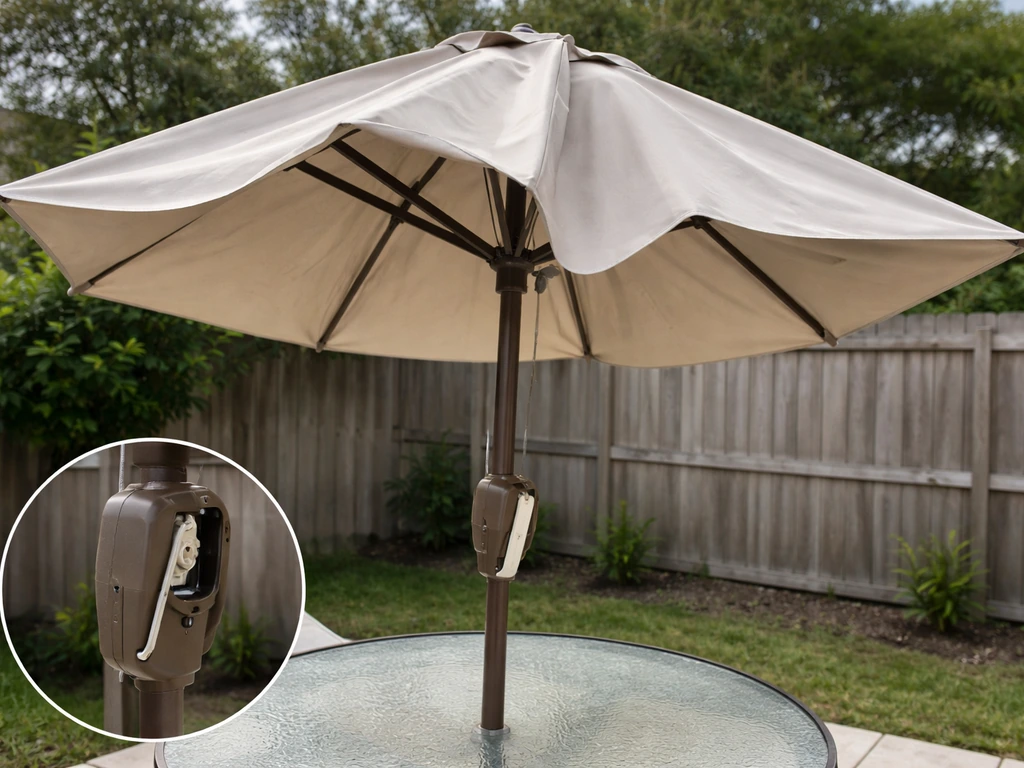
How to Fix a Patio Umbrella That Won't Open or Close
Step-by-step fixes for patio umbrellas that won’t open or close, with checks for jams, cords, latches, and lubricating t
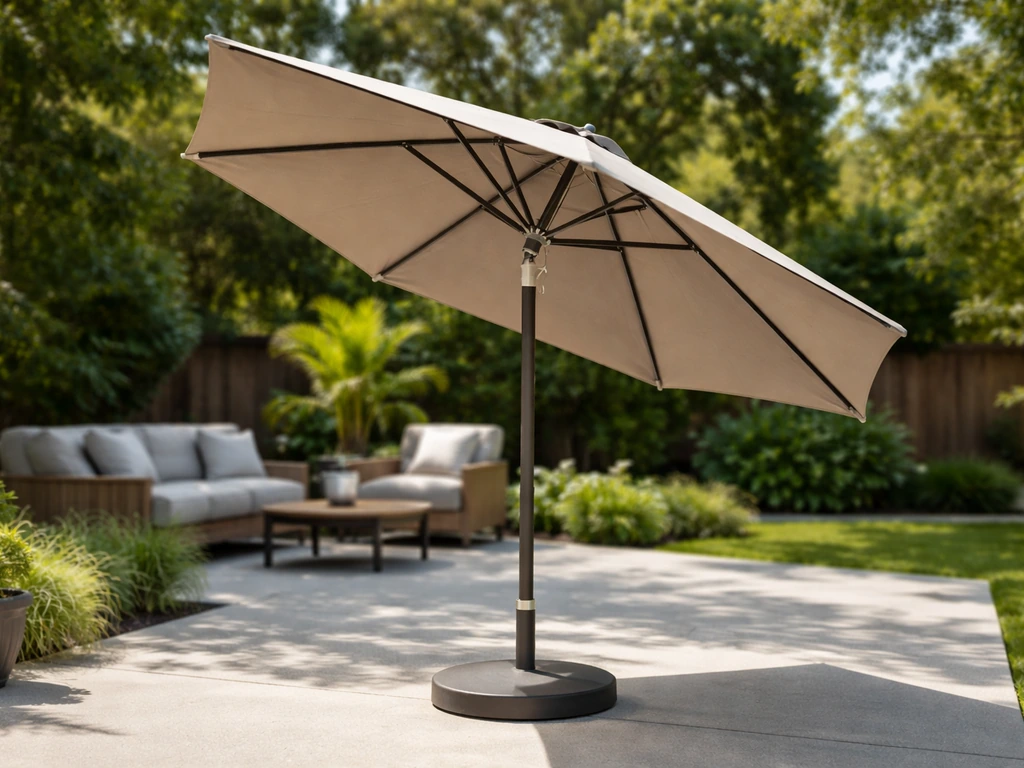
How Does a Patio Umbrella Work? Components, Use, and Fixes
Learn how patio umbrellas work: components, open close tilt, stability, and step by step troubleshooting common mechanic