To open a standard crank-style patio umbrella, remove any storage strap, stand the pole upright in its base, pull down on the lower hub to disengage the lock, and turn the crank handle clockwise until the canopy is fully spread. Stop cranking the moment it's fully open, don't force it past that point. That covers most backyard umbrellas, but large, offset, and cantilever models have a few extra steps that trip people up, so read on for your specific setup. If you need the exact sequence for your model, follow this guide on how to operate patio umbrella step by step.
How to Open a Patio Umbrella Fast, Even If It Sticks
Luca Morrison
3 May 2026
Know your umbrella type and opening mechanism first
Before you do anything, spend 30 seconds figuring out what you're working with. The opening steps are different depending on your umbrella's style and how it opens, and using the wrong technique is usually why people end up forcing something and breaking it.
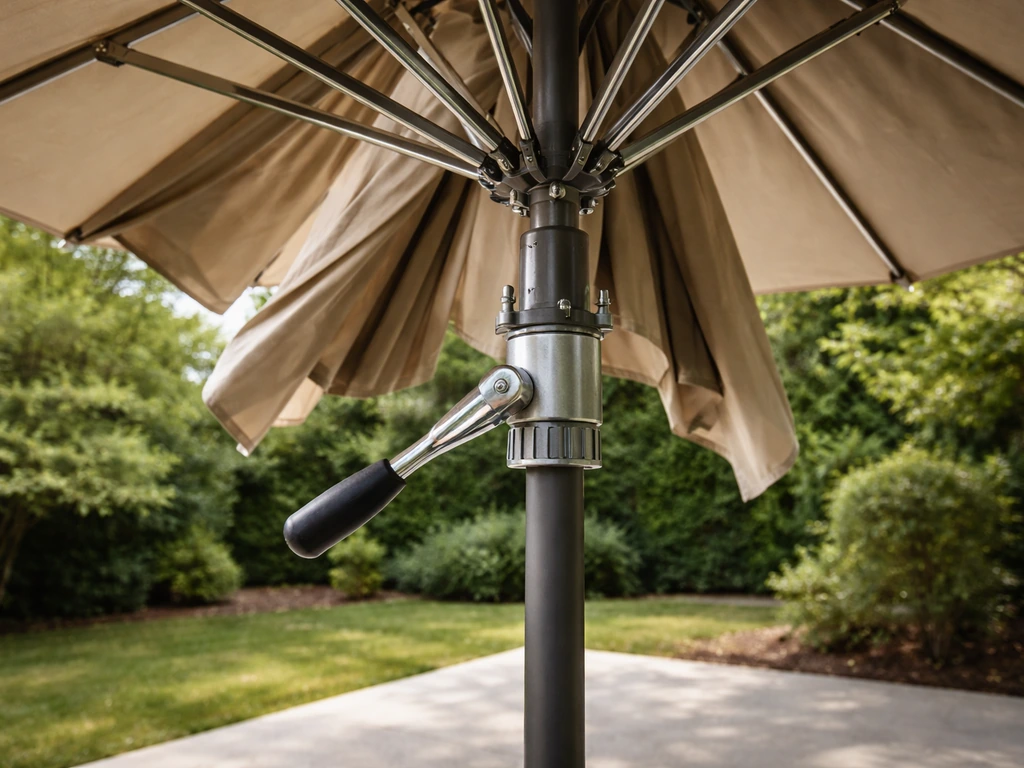
The two main opening mechanisms are crank and manual (push-up). A crank umbrella has a handle mounted partway up the pole, you turn it like a winch to raise and lower the canopy. Most umbrellas sold today use a crank. A manual or push-up umbrella has no crank; you just slide the runner (the collar around the pole) upward by hand and lock it in place with a pin or button.
On top of that, umbrellas fall into three basic styles. A center-pole (standard) umbrella sits through a hole in your table or in a freestanding base, with the pole running straight through the middle of the canopy. A tilt umbrella is the same, but has a joint near the top of the pole that lets you angle the canopy toward the sun, usually activated by a button, collar twist, or auto-tilt lever. An offset or cantilever umbrella has its pole off to the side, with the canopy hanging out over your seating area. Offset and cantilever models have their own opening quirks, and if that's what you have, the dedicated guides on how to open an offset patio umbrella or how to open a cantilever patio umbrella go into much more detail. Offset and cantilever umbrellas have their own quirks and a dedicated opening sequence, so follow the specific steps for your model how to open an offset patio umbrella. Offset and cantilever umbrellas have their own opening and setup quirks, so use the dedicated guide when you go to assemble yours how to assemble an offset patio umbrella.
| Umbrella Type | Opening Mechanism | Key Identifier |
|---|---|---|
| Standard center-pole | Crank handle or push-up runner | Pole runs through center of table or base |
| Tilt (standard + tilt) | Crank + tilt collar, button, or lever near top | Has a pivot joint or collar about 12–18 inches from canopy top |
| Offset / cantilever | Crank handle + glide or trigger grip on pole | Pole stands to the side; canopy hangs out over the space |
Step-by-step: how to open a standard patio umbrella
These steps cover the most common setup: a center-pole umbrella with a crank handle. If yours has a push-up runner instead of a crank, follow the same sequence but substitute step 5 with sliding the runner up by hand until the pin clicks into the hole.
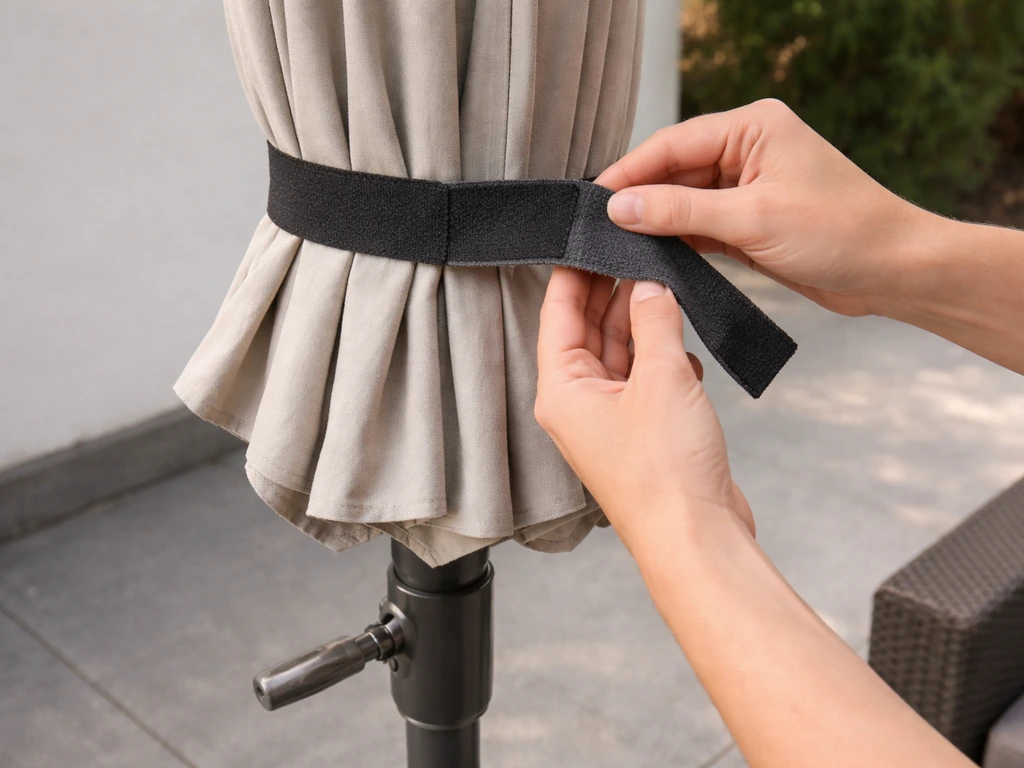
- Remove the storage strap or velcro wrap from the closed canopy. This sounds obvious, but it's the number one reason umbrellas feel stuck — the strap is still on and the ribs can't spread. Set it somewhere you won't lose it.
- Place the pole in your base and tighten the base screw or collar so the umbrella stands upright on its own. Opening an unstable umbrella is how people get hurt.
- Stand to the side of the umbrella — not directly underneath it — so if the canopy snags or releases suddenly, it doesn't catch you in the face.
- Locate the lower hub (the plastic or metal ring partway down the pole that the ribs connect to). Gently pull it downward about an inch to disengage the lock. You'll usually feel a small click or release of tension.
- Find the crank handle on the side of the pole (usually at a comfortable arm height) and turn it clockwise. You'll see the canopy begin to lift and the ribs spread outward.
- If the ribs feel like they're catching, pause cranking and use your other hand to gently lift the ends of any stuck ribs away from the fabric. Then resume cranking. This is normal on first use of the season.
- Stop cranking the moment the canopy reaches its fully open, taut position. Do not keep cranking — you can strip the crank gear or pop a rib out of its connector.
- For push-up style: slide the runner collar upward along the pole with both hands until you feel the spring-pin pop into the locking hole. Give it a gentle tug downward to confirm it's locked before letting go.
That's it for a basic open. If your umbrella has a tilt function, wait until the canopy is fully open before activating the tilt, trying to tilt while still cranking is a good way to jam the mechanism.
Opening large or tilting patio umbrellas (where things get trickier)
Large patio umbrellas, typically 10 feet or wider, use the same crank-and-hub system, but the extra size creates more resistance, heavier ribs, and wider fabric that catches more easily. If you've been wrestling with a 13-foot market umbrella and wondering why it fights back, this is why.
Help the ribs along before you crank
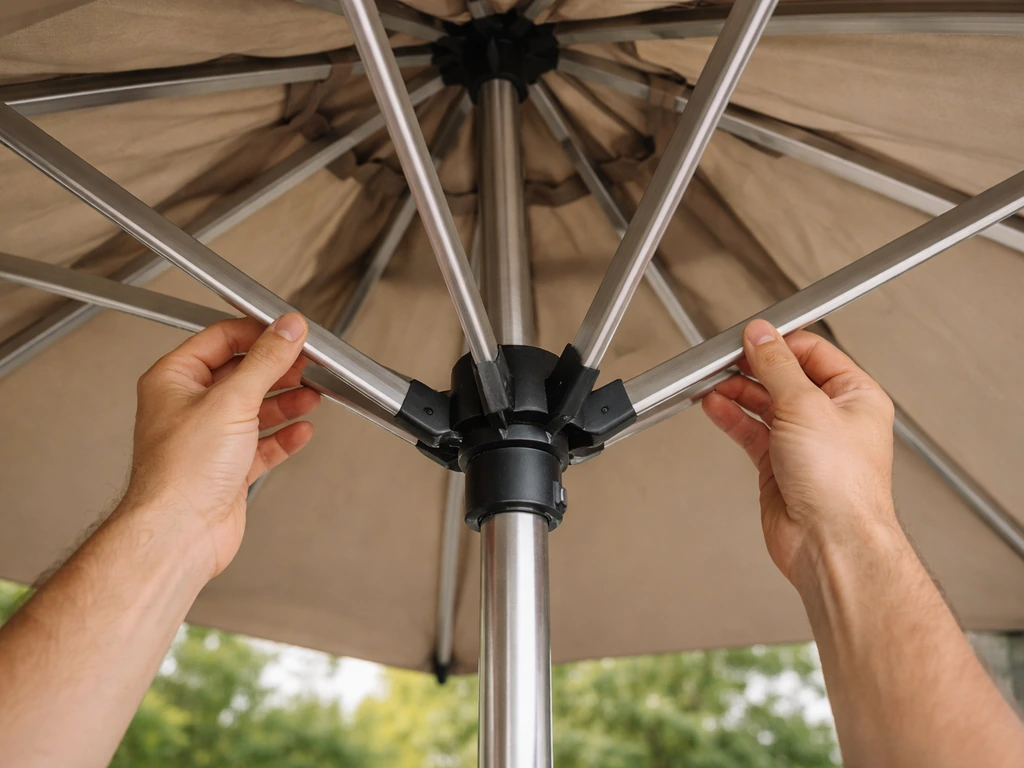
With larger umbrellas, don't just start cranking from a fully closed position. Instead, spread the ribs slightly by hand from their outer tips before touching the crank. Even lifting each rib an inch or two gets the fabric unstacked and makes the crank turn smoothly rather than grinding. Some manufacturers, like Barco, actually include this as an official step in their opening instructions.
Two-person jobs and when to ask for help
A large center-pole umbrella (11 feet or bigger) is manageable solo, but a big cantilever or offset model often genuinely needs two people, one to hold the pole and base steady while the other cranks and adjusts the glide handle. If your cantilever has a canopy glide handle (a separate grip that slides up and down the main frame to adjust canopy angle), you need to position it before opening, not after. On models like those covered in atleisure's manuals, you squeeze the glide handle to release it, slide it to the midpoint of the pole frame, and then crank the canopy open from there. For cantilever umbrellas with a Canopy Glide Handle, the glide handle requires squeezing or activating a release grip or trigger to move the canopy squeeze the glide handle to release it.
Tilt umbrellas: open first, tilt second
On a standard tilt umbrella (the kind with a button or collar joint near the top of the center pole), crank it fully open first, then engage the tilt. Trying to do both at once creates binding. On some models, the tilt collar has a collar you rotate; on others, it's a thumb button you press and hold while tilting the top section by hand. Either way, the sequence is always: open the canopy completely, then adjust the angle. Once it’s open, you can adjust the canopy angle and position using the same tilt or glide controls.
Cantilever-specific opening
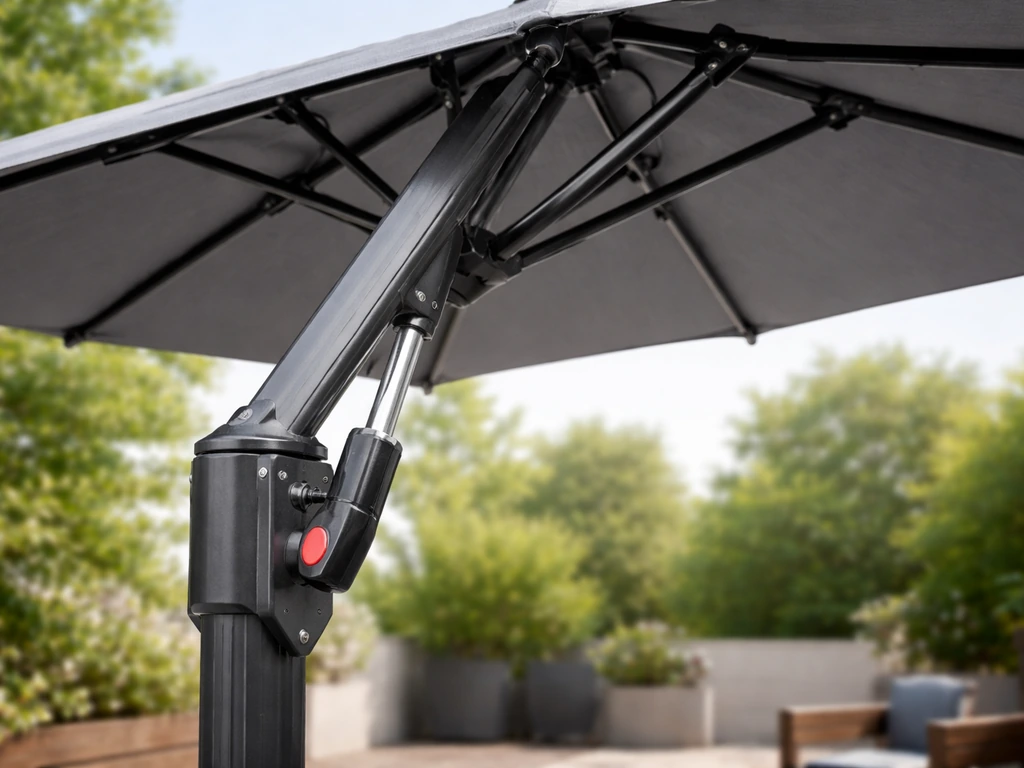
Cantilever and offset umbrellas have their own step-by-step opening process that's meaningfully different from a center-pole umbrella. Some use a trigger-lift mechanism where you crank partway, squeeze a trigger to release a stop, and then continue cranking to fully open. Others use a crank paired with a glide handle that controls canopy angle. If your umbrella has a side pole with a hanging canopy, it's worth referencing the specific guide on how to open a cantilever patio umbrella for the full procedure rather than improvising.
What to do when it won't open (troubleshooting the most common problems)
If your umbrella is stuck, the single most important rule is: stop forcing it. Forcing a stuck crank or ribs past resistance is how you strip gears, snap a rib, or crack a hub. Diagnose first, then fix.
Crank feels stiff or won't turn
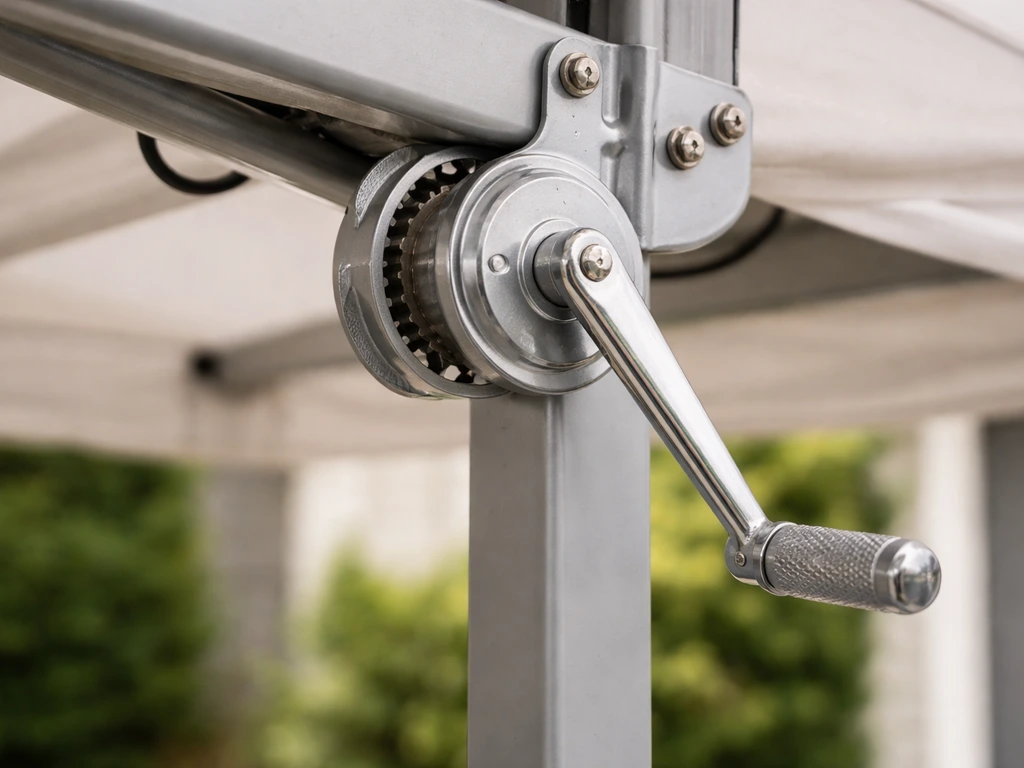
First, double-check that you're turning the crank clockwise to open (counter-clockwise closes it). Sounds simple, but turning the wrong direction is the most common crank complaint. If the direction is right but it still won't budge, try this: manually lift the rib tips to take tension off the fabric, then try the crank again. Crank mechanisms that sit unused over winter collect grime and dried lubrication, a few drops of silicone spray on the crank mechanism and the hub components usually frees them up. Avoid WD-40 as a long-term lubricant; it's a cleaner, not a lubricant, and it dries out quickly outdoors.
Ribs are stuck or canopy won't spread
If the crank turns but the canopy barely opens, one or more ribs are probably caught in the folded fabric. Pause and insert your fingers gently between the ribs at the outer edge, separating them slightly. Then resume cranking slowly. Woodline's assembly documentation puts it well: do not force the umbrella open, instead, insert your fingers into the ribs and open them slightly to free the rope and rib movement. This approach works across almost every brand.
Cord or runner isn't pulling
Push-up umbrellas occasionally have a cord inside the pole that connects the runner to the hub. If the cord frays or slips off its pulley, the runner lifts but the canopy doesn't. You'll know this is happening because the runner feels light, no resistance at all, when you push it up. Open the pole cap (usually a screw-off or press-fit end cap at the top of the pole) and look inside. If the cord is visibly frayed, broken, or looped off the pulley wheel, that's your fix: replace the lift cord. Replacement cords are inexpensive and available at most hardware stores, and it's one of the most satisfying DIY repairs on a patio umbrella.
Hub lock won't disengage
If pulling down on the lower hub does nothing, the lock may be corroded or jammed. Try gently wiggling the hub left and right while pulling down, rather than just pulling straight. A small amount of silicone spray at the hub joint often loosens a frozen lock within a minute or two. If the hub is cracked or the locking pin is visibly bent, that's a parts replacement, hubs are sold separately and most brands use standard sizing.
Tilt mechanism is jammed
If the canopy opens fine but the tilt function is stuck, confirm the canopy is fully open before engaging tilt (half-open canopies bind the tilt joint). On canopy glide systems, squeeze the handle fully before trying to slide it, releasing it partway causes it to grab the pole. If it still won't budge, check whether the glide handle collar is cracked or split; pressure from forcing it can crack the collar housing, which means the grip can't release properly. Replacement glide handles are a straightforward fix.
Still stuck after all this
If none of the above solves it, stop and check your assembly manual (most brands have PDFs online if you've lost your copy). Manufacturers like atleisure explicitly direct users to the assembly manual first, and then to customer service if the issue persists. Calling the manufacturer's support line is a legitimate next step, many will send replacement parts for free if the umbrella is within its warranty period.
Safety tips for opening your umbrella the right way
Most umbrella injuries happen during opening and closing, not while it's sitting open. A few habits make the process genuinely safer, especially if you're doing it for the first time each season.
- Clear the area before opening. Keep kids, pets, and bystanders back while you open a large umbrella. A rib that snaps free unexpectedly can swing with real force. Official safety instructions from umbrella manufacturers consistently note to ensure no person is nearby during opening and adjustment.
- Stabilize the base first. An umbrella pole that's not locked into a solid base can tip toward you as you crank. Tighten the base set screw before you touch the crank.
- Never open in wind. If it's gusty outside, wait. Opening an umbrella in even moderate wind puts enormous stress on the ribs and can tear the canopy off or send the umbrella airborne. Open it in calm conditions, then secure it once it's fully spread.
- Keep fingers clear of the hub and rib joints during cranking. The folding ribs are pinch points. Use the tips of your fingers to guide ribs from the outer ends, not near the hub connectors.
- Don't crank past fully open. When the canopy is fully spread and taut, stop. Continuing to crank puts strain on the gear mechanism and hub. Treasure Garden's cantilever manuals make this explicit: do not continue to crank once the canopy is completely open.
- Stop if the crank becomes very hard to turn. Resistance that increases suddenly means something is caught, bent, or jammed. Don't push through it. The Home Depot's 11-foot cantilever manual is direct on this point: stop and investigate rather than forcing it.
Quick maintenance checks once it's open
Once your umbrella is open, take two minutes to give it a once-over. Catching small issues now prevents bigger problems mid-season, and this is especially important if you're opening it for the first time after winter storage.
Check the rib alignment and canopy tension
Look up at the underside of the open canopy. All the ribs should be evenly spread and the fabric should be taut without bunching on one side. If one rib is sitting lower than the others or the canopy is lopsided, that rib's connector may be loose or its tip fitting may have cracked over winter. Gently press the rib back into alignment; if it won't stay, the connector needs replacing before you use the umbrella through a windy day.
Lubricate the moving parts
A light application of silicone spray at the crank mechanism, the hub, and the rib-to-strut connectors keeps everything operating smoothly for the season. Do this at the start of each season and once mid-season if you use the umbrella daily. Skip petroleum-based lubricants (they attract grit) and stick to dry silicone or PTFE spray.
Inspect the fabric and frame
While it's open and you can see everything, check the canopy fabric for mildew spots or small tears along the seams. A mild soap solution (lukewarm water and a small amount of laundry detergent) handles most surface dirt without damaging the fabric coating. Consumer Reports recommends mild cleaning approaches and following your specific manufacturer's guidance, since some fabric treatments are sensitive to harsh detergents. Let the fabric air dry fully before closing the umbrella, closing it damp is the main cause of mildew between uses.
Before you store it at the end of the season
Don't close and bag a damp umbrella. If the canopy absorbed rain or dew, leave it open in a dry, shaded spot for at least 48 hours before closing and storing it. Folding damp fabric into a storage cover for months is a fast track to mildew that can permanently stain and weaken the canopy. Once it's dry, close it properly, replace the storage strap or cover, and store it horizontally or in a dedicated umbrella bag to protect the ribs from bending under their own weight.
FAQ
What should I do if my patio umbrella opens partway, then stops suddenly?
Don’t force it. Stop cranking, lift the outer rib tips slightly to remove tension from the folded fabric, then crank slowly again. A sudden stop usually means a rib is catching inside the folded canopy, and separating the fabric helps the ribs free up.
How can I tell whether I have a crank umbrella or a push-up (manual) runner?
If you see a crank handle attached to the pole, it’s a crank model. If there’s no handle and instead you move a collar or runner (the piece that slides up the pole) to engage a pin or button, it’s a push-up model.
My umbrella won’t close or the strap won’t latch after opening. What’s the common cause?
It’s usually not fully seated in the closed position or the locking hub didn’t engage. Retract or close slowly and confirm the lock clicks. If the hub feels gritty, a small silicone spray at the hub joint can help the lock release properly.
Which direction should I crank to open, and how do I avoid damaging the mechanism?
For most crank umbrellas, opening is clockwise and closing is counter-clockwise. If it won’t move, pause and check direction first, then relieve tension by lifting rib tips slightly. Forcing the crank past resistance is what strips gears or cracks hubs.
Is it safe to open the umbrella while it’s still wet from rain?
It’s safer to open it, but don’t store it damp. Leave it open in a shaded, dry spot until the fabric is fully dry before closing and covering, typically about 48 hours. Damp storage can cause mildew spots and fabric weakening.
What should I do if the crank handle turns but the canopy barely spreads?
Check for ribs caught in the folded fabric. Insert fingers gently between ribs near the outer edges to separate them, then crank slowly. If the fabric bunches in the same spot each time, continue freeing the ribs before trying again.
My push-up runner feels light and won’t lift the canopy. What’s likely broken?
A cord inside the pole may be frayed or slipped off its pulley. Open the top pole cap, inspect the cord and pulley connection, and replace the lift cord if it’s visibly broken or detached.
What lubricant should I use if the crank feels sticky after winter storage?
Use dry silicone or PTFE spray on the crank mechanism and hub components. Avoid WD-40 as a long-term solution, since it’s more of a cleaner and can dry out, leaving the mechanism stiff again later.
Can I tilt the umbrella while it’s still partially open?
No. Tilting while the canopy is half-open can bind the tilt joint. Open the canopy fully first, then engage the tilt (button, collar, or lever depending on your model).
My umbrella has a glide handle for canopy angle. When should I set it?
Set or position the glide handle before opening. On models with a glide system, release the handle, slide it to the midpoint (or the manufacturer’s specified position), then crank open. Adjusting it after opening can cause it to grab the pole.
What should I check if one rib sits lower and the canopy looks lopsided?
Press the rib back into alignment and test if it stays. If it won’t stay, the rib connector or tip fitting may have cracked over winter and may need replacement before you use the umbrella in wind.
How do I open a large (around 10 to 13 ft) umbrella more easily without grinding the crank?
Start by spreading the ribs slightly by hand from the outer tips, just enough to unstack the fabric, then begin cranking. This reduces resistance and helps prevent gear grinding, especially on heavier, wider umbrellas.
Do large cantilever or offset umbrellas always require two people?
Many do. A big cantilever or offset model often needs one person to steady the pole and base while another cranks and adjusts the glide handle. If your setup involves a glide handle or trigger-lift system, follow the dedicated opening sequence to avoid misalignment.
What’s the fastest way to troubleshoot a stuck lower hub lock?
Try gently wiggling the hub left and right while pulling down, rather than pulling straight. If it feels frozen, apply a small amount of silicone spray at the hub joint. If the hub is cracked or the locking pin is visibly bent, replacement may be required.
If nothing works, should I keep trying or check the manual first?
Check the umbrella’s manual first and stop forcing the mechanism. If you don’t have the manual, look for the correct model instructions, then contact customer service if the issue persists, especially if the umbrella is within warranty.
What is the safest “first season” opening routine to prevent problems?
Do a quick visual check before opening (especially after storage), then after it opens, inspect rib spread and fabric tautness. Treat small issues like misaligned ribs or loose connectors immediately, and apply silicone spray once at the start of the season.
Next Articles
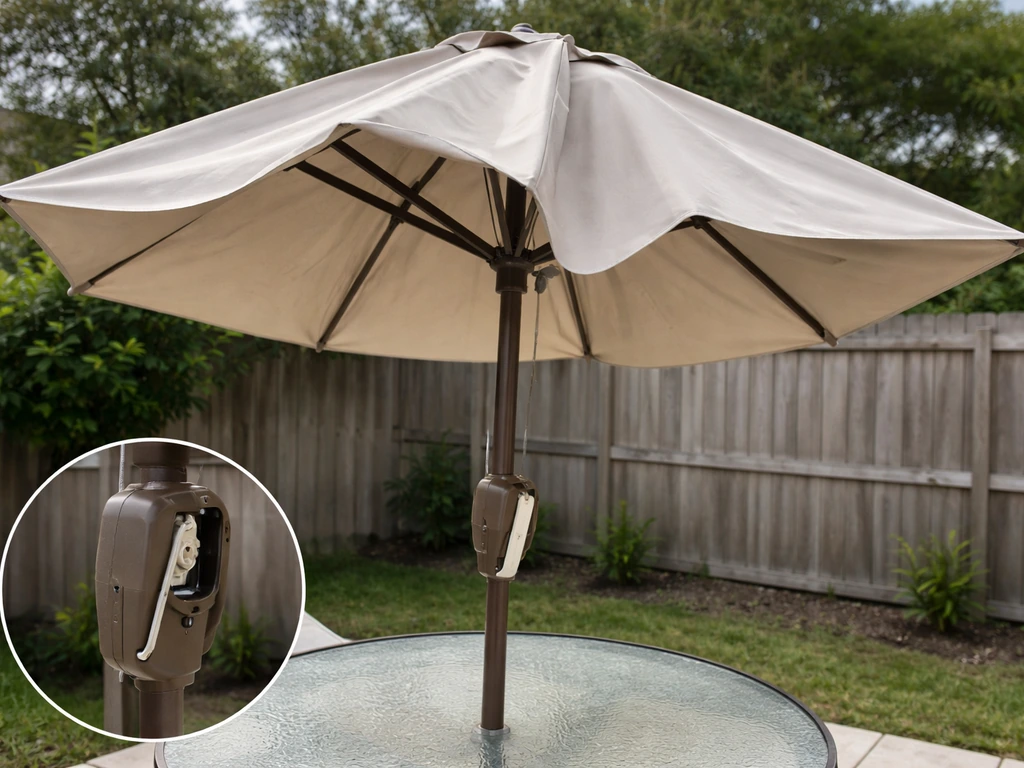
How to Fix a Patio Umbrella That Won't Open or Close
Step-by-step fixes for patio umbrellas that won’t open or close, with checks for jams, cords, latches, and lubricating t
How Does a Patio Umbrella Work? Components, Use, and Fixes
Learn how patio umbrellas work: components, open close tilt, stability, and step by step troubleshooting common mechanic
Patio Umbrella Crank Not Working: DIY Fix Guide
Fix a patio umbrella crank that won’t work with safe step-by-step jam, gear, and base troubleshooting and repair tips.