To operate a patio umbrella, you insert or engage the opening mechanism (crank, pull cord, or push-button), slowly open the canopy until fully extended, lock the runner in place, then adjust the tilt or rotation to your preferred angle and lock that too. Closing is the reverse: return the canopy to level (no tilt), then crank or release the cord until the canopy is fully folded down, and secure it with its tie strap or cover. The exact steps depend on your umbrella's mechanism, so the first thing to figure out is what type you have. If you are unsure where the control is, start by figuring out your umbrella's opening mechanism, then follow the correct open/close steps.
How to Operate a Patio Umbrella Step by Step
Luca Morrison
8 Jul 2026
Step 1: Figure Out What Kind of Umbrella You Have
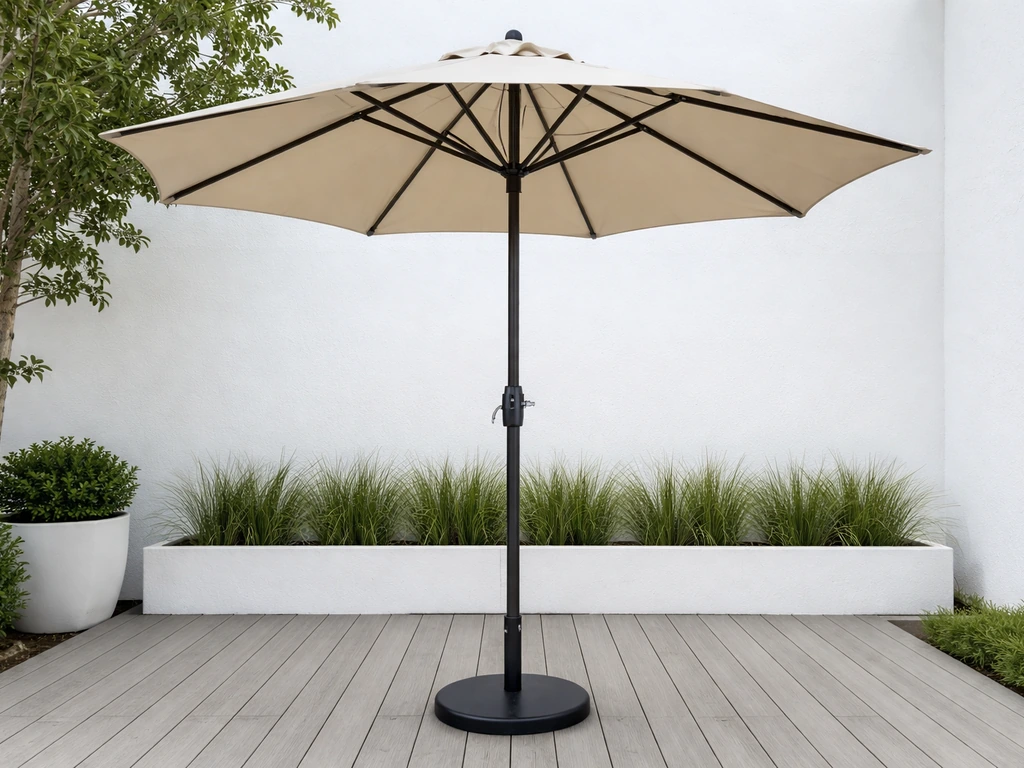
Before you touch anything, spend 30 seconds identifying your umbrella's operating style. Getting this wrong is the fastest way to strip a gear or snap a cord. There are three main setups, and they each work differently.
| Mechanism Type | What It Looks Like | How You Operate It |
|---|---|---|
| Crank (most common) | A rotating handle on the pole, usually mid-pole or at the base on cantilevers | Turn clockwise to open, counterclockwise to close (most brands) |
| Pull cord / rope | A cord hanging from inside the pole or through a cleat on the pole | Pull down to open canopy, release/reverse to close; cleat locks it in place |
| Push-button / collar | A plastic or metal collar with a button or pin on the pole | Lift the collar while pressing the button, raise canopy, release button to lock at notch |
Offset (cantilever) umbrellas almost always use a crank, and many have a secondary crank or lever handle for tilt adjustment separate from the open/close crank. Market-style center-pole umbrellas can use any of the three. If you have a cantilever, check for two different sockets or handles: one labeled or positioned for open/close, and one for tilt. Mixing these up causes a lot of grief.
How to Open Your Patio Umbrella Safely
Rushing the opening is how ribs get bent and runners get cracked. If you are looking for the exact steps for your model, follow the instructions on how to open an offset patio umbrella. The whole process should take about 30 seconds if everything is working. Go slow the first time of the season.
Crank-style umbrellas
- Set the pole upright in its base and make sure the base is locked. On offset umbrellas, engage the safety pin at the base joint before doing anything else.
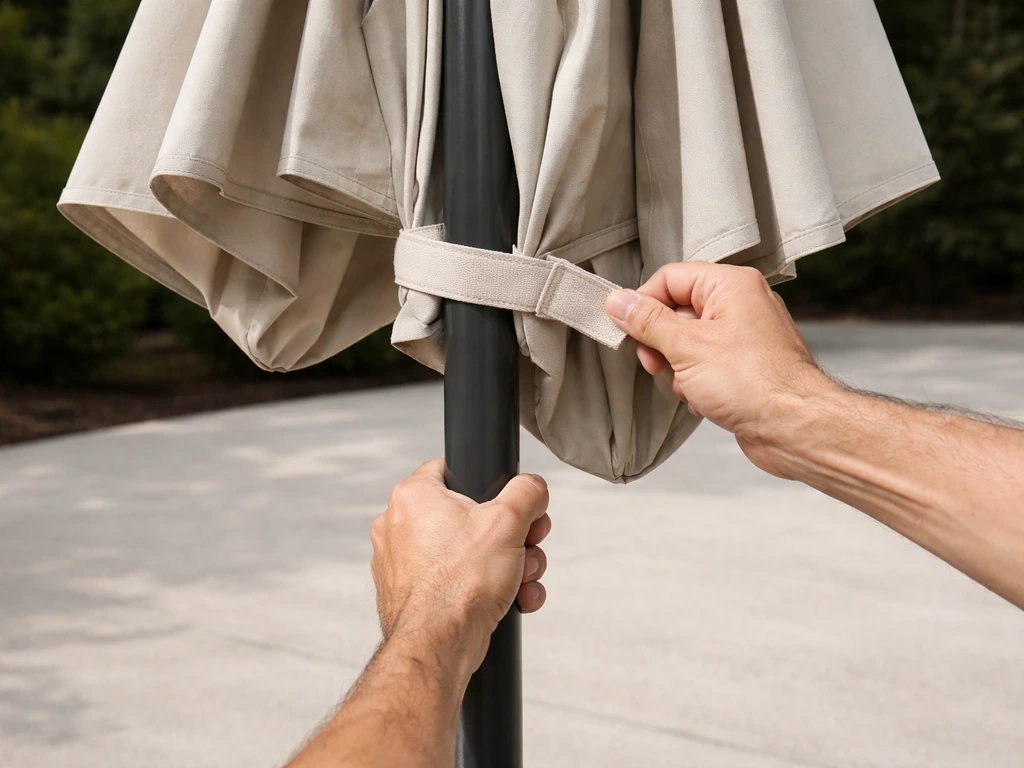
- Remove the canopy tie strap (the velcro or fabric band wrapped around the folded canopy) and let the fabric hang loose.
- Locate the crank handle. On many brands like Treasure Garden, it inserts into a dedicated socket labeled 'OPEN/CLOSED.' On TUUCI cantilevers, you insert it into the crank port and rotate clockwise to open.
- Turn the crank slowly and steadily in the open direction (clockwise for most brands, but check your manual if you have an East Oak or similar brand that specifies direction). Watch the runner (the sliding ring on the pole) travel upward and the ribs spread outward.
- Stop cranking as soon as the canopy is fully extended and the runner reaches the top of its travel. Do not force it past that point.
- If the crank has a removable handle, pull it out and store it somewhere you'll find it again (a lot of people lose these).
Pull-cord umbrellas
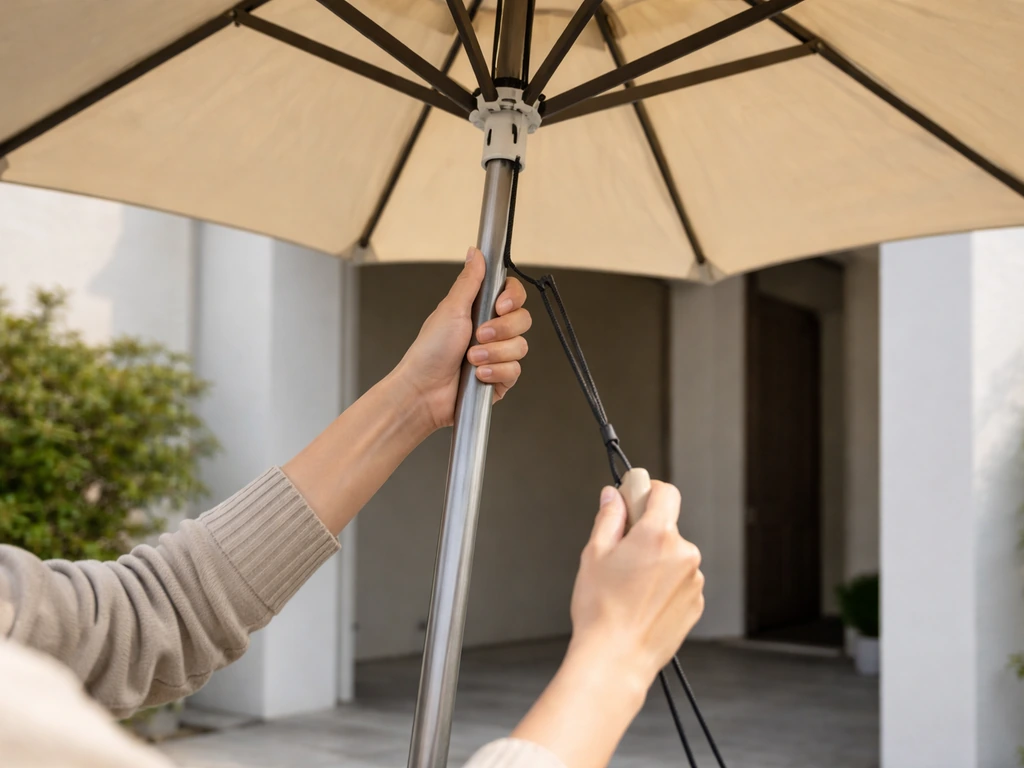
- Remove the tie strap from the canopy.
- Find the pull cord, usually hanging from a slot in the pole. If there's a cleat (a small horn-shaped fitting), unwind the cord from it first.
- Pull the cord downward steadily to raise the runner and open the ribs. Keep tension even; jerking can snap a frayed cord.
- Once fully open, wrap the cord around the cleat in a figure-8 pattern to lock it. If there's no cleat, tie it off to the pole loop.
Push-button / collar umbrellas
- Remove the tie strap.
- Press and hold the button on the collar (the ring around the pole), then slide the collar upward along the pole.
- Continue sliding up until the ribs engage and fan out. Release the button when the collar aligns with the next locking notch on the pole.
- Give the canopy a gentle shake to confirm it's seated. If it slides back down, you haven't hit the notch fully.
One universal rule: never open the umbrella in a strong wind. Do it facing away from the breeze, and check that your base is weighted or secured before you fully deploy. If you have an offset umbrella and want more detail on that specific assembly process, that's covered separately in the offset umbrella setup guide.
Adjusting the Tilt, Angle, and Rotation
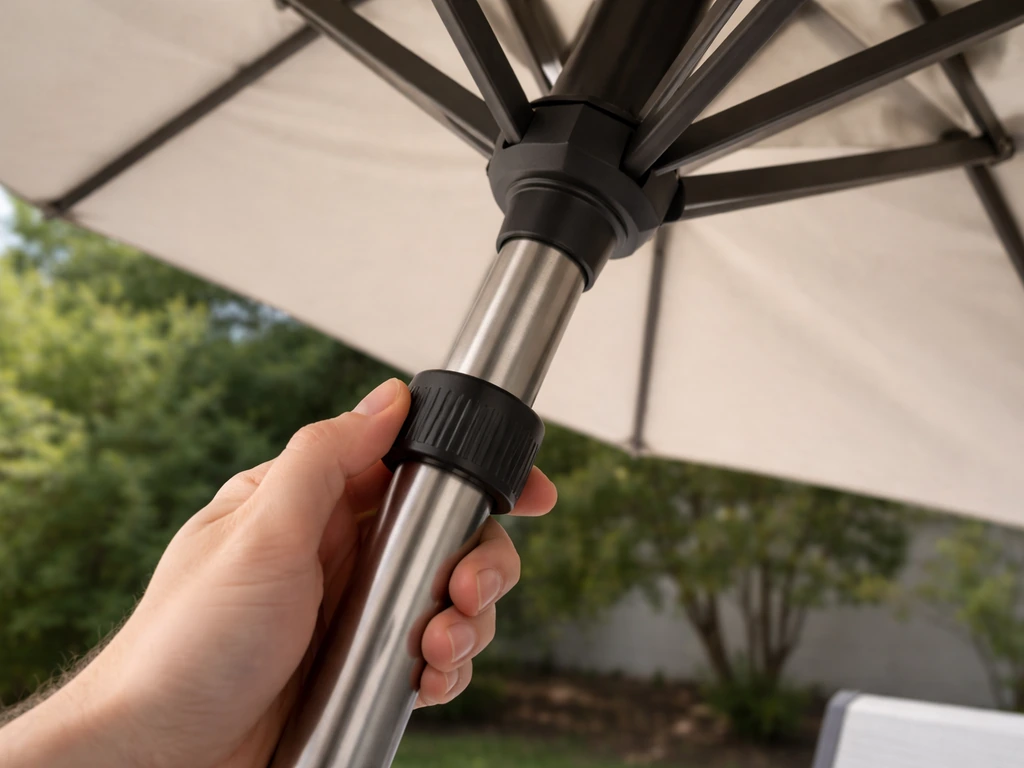
This is where most people get confused because different brands handle tilt in completely different ways. Some umbrellas let you push the pole to tilt; others have a dedicated crank or lever; and cantilevers often have a separate angle-adjustment handle entirely. Get this wrong and you'll either strip the mechanism or wonder why it won't lock.
Tilt mechanisms on center-pole umbrellas
- Collar tilt: A push-button collar sits partway up the pole. Press the button and push the upper pole sideways to tilt. Release to lock. These typically tilt in one direction only.
- Crank tilt (Auto-tilt): On Treasure Garden TWIST and similar models, after opening the canopy fully, you continue turning the same crank past a certain point to engage the tilt function. The canopy starts to angle as you keep cranking. To reverse, crank back the other way.
- Knob or lever tilt: A knob or lever near the top of the pole. Loosen it, tilt to your angle, then tighten to lock. Simple but can wear out.
Angle adjustment on cantilever (offset) umbrellas
Most cantilevers have a separate tilt crank or lever from the open/close crank. On the GrandinRoad cantilever octagon, for example, you insert the crank handle into a 'Right/Left' socket (different from the open/close socket) and turn counterclockwise to tilt the canopy to the right. TUUCI MAX-CL models have a labeled 'ADJUSTING CANOPY ANGLE' lever, and you must unlock it before adjusting. The general rule: unlock or disengage the angle lock, move to your desired position, then re-engage the lock before stepping away. Never leave a cantilever at an angle without locking it.
Rotation
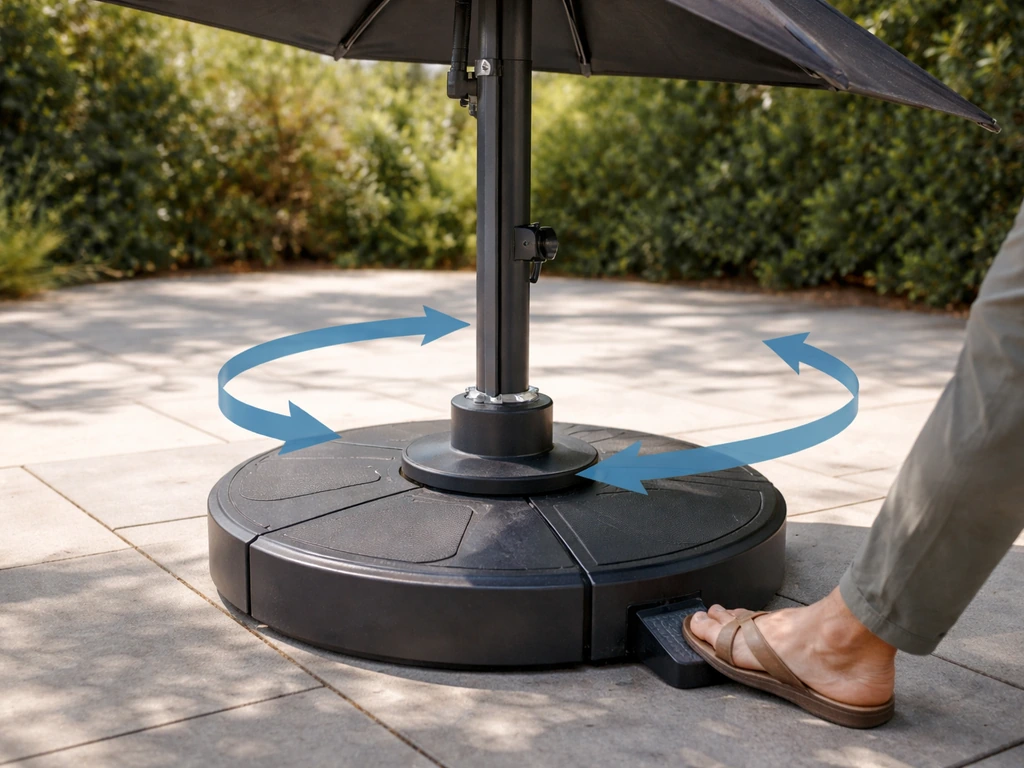
Many cantilever bases rotate 360 degrees to reposition shade coverage as the sun moves. This is usually a foot pedal or a base collar. Press the pedal or release the collar, rotate the arm to the new position, then press or lock again. If the rotation pedal no longer holds position (a common wear point), the locking tab inside the base has likely worn or broken and needs replacement.
How to Close Your Patio Umbrella
Closing correctly matters as much as opening. If you are unsure about the exact sequence, see the steps for how to close patio umbrella and match them to your operating style. Forcing a tilted canopy into the closed position is one of the top ways people damage the runner mechanism or bend ribs. Always return to level first.
- If the canopy is tilted, return it to a level (horizontal) position first. Treasure Garden and East Oak both explicitly require this before cranking closed. Skipping this step can crack the tilt collar.
- For crank models: insert the crank handle and turn counterclockwise (on most brands) slowly until the runner travels down the pole and the ribs fold inward completely. Watch the ribs as they fold to make sure none are catching.
- For pull-cord models: uncleat the cord and gently release it, letting the runner drop slowly. Control the descent by feeding the cord out gradually rather than letting it free-fall.
- For push-button models: press the button, slide the collar down past each notch until the canopy is fully folded.
- Once closed, wrap the tie strap around the canopy firmly. This is not optional in windy areas: a loosely furled canopy will flap and wear out the fabric much faster.
- If you're done for the day or expect bad weather, put on the protective cover.
Troubleshooting: When the Umbrella Won't Cooperate
Most operating problems fall into a handful of categories. Work through these from simplest to most involved before assuming you need a replacement part.
Umbrella won't open or opens unevenly
- Tie strap still attached: Check that you removed the tie strap or any packing zip ties. This sounds obvious but it happens.
- Cord bird-nest jam: On pull-cord models, the cord can tangle inside the pole housing. Open the access panel at the base of the pole (if present) and carefully untangle. A flashlight helps.
- Cord slipped off the pulley: If the crank turns but nothing moves, the internal cord may have jumped off the pulley wheel. You'll need to open the housing and reseat it.
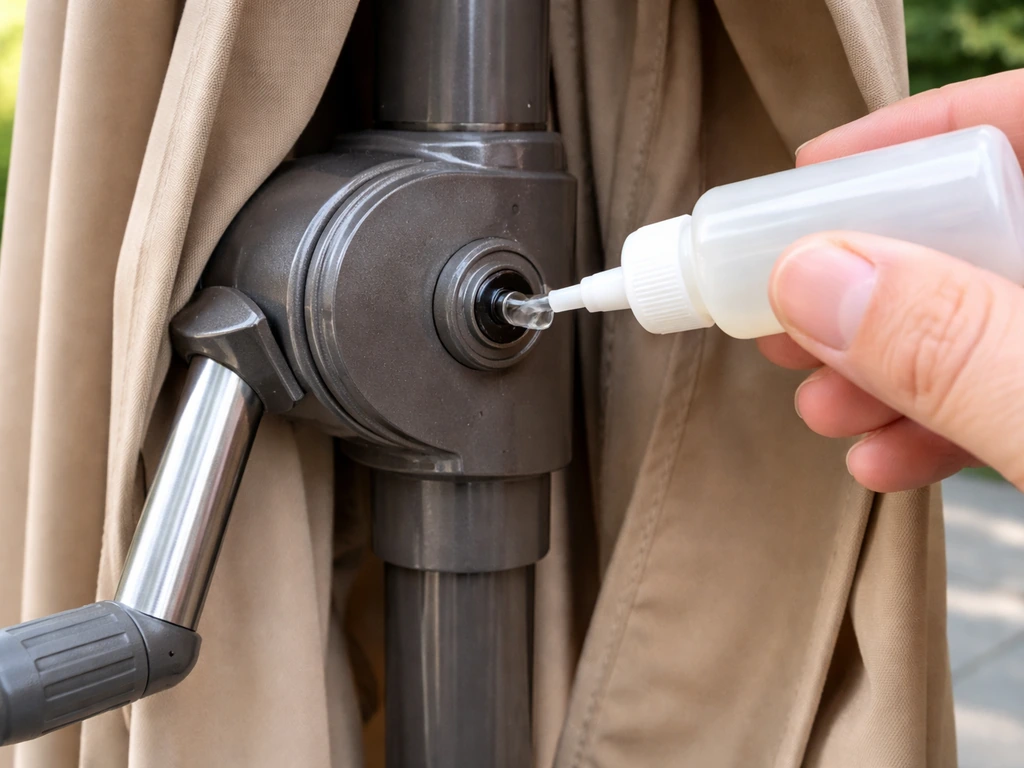
- Seized runner: If the runner ring that slides up the pole is corroded or has debris in the track, it will bind. Spray a silicone lubricant (not WD-40, which attracts dirt) on the pole track and work the runner manually up and down.
- Bent or caught rib: One rib catching on another will cause uneven opening. Close the canopy fully, manually straighten the problem rib, and try again. Pinch points near the hub and runner are common catch spots.
- Crank turns but nothing moves: The cord connecting the crank to the runner may be frayed, broken, or detached from the spool. This usually requires opening the crank housing to inspect.
Crank is stuck or makes grinding noises
- Rust or seized bearings: If the crank handle won't turn at all, internal corrosion is the likely cause. Try a penetrating lubricant on the crank shaft, wait 10 minutes, and try again with gentle pressure.
- Grinding or clicking sounds: Usually means internal gearbox wear or a bearing is broken. If lubricating doesn't stop the noise, the crank housing may need replacement. Crank housings are available as replacement parts for many major brands.
- Crank turns the wrong way: Most brands open clockwise. East Oak PTU2300 specifically warns not to crank counterclockwise to open. If you've been going the wrong direction and the canopy didn't move, switch directions before assuming something is broken.
Tilt mechanism won't engage or won't lock
- Canopy not fully open first: On auto-tilt crank models, tilt only activates after the canopy is completely open. If you're trying to tilt a partially open umbrella, it won't engage.
- Lock not released before adjusting: On cantilever angle systems, there's usually a lock lever or pin you must release before the angle will change. Check for a labeled lock near the tilt joint.
- Worn or broken tilt collar: If the tilt collar (the joint that lets the upper pole angle) no longer holds position, the internal pin or locking tooth is worn. This is a known failure point and replacement tilt collars are available for most brands.
- Multiple lock points on cantilevers: If your cantilever 'won't stay open,' check that both the open/close crank and the angle-adjustment lever are both engaged and locked. Missing one of two lock points is a very common cause of a canopy that slowly droops.
Umbrella won't close fully
- Still tilted: Return canopy to level before cranking closed. This is the single most common reason closing gets stuck partway.
- Rib or fabric caught: A rib panel or piece of fabric may be snagged on the hub or runner. Close slowly and watch for the catch.
- Rope spool not turning: If cranking counterclockwise produces no movement on a cantilever, the internal spool may have disengaged from the cord. Open the crank housing and check that the cord is wound on the spool and attached at both ends.
Wind Safety: When to Close and How to Secure It
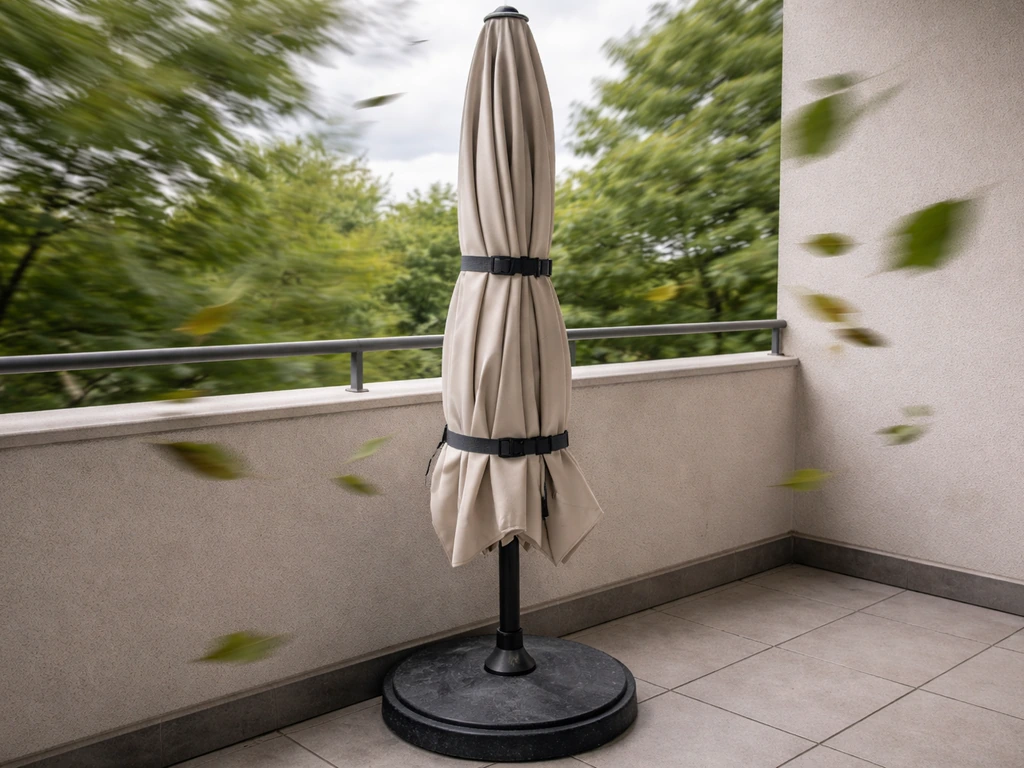
This is the section that prevents the expensive problems. A patio umbrella that gets caught in a gust becomes a projectile, and even a well-made one can break ribs, crack the pole, or tip over and cause injury.
Most quality patio umbrellas handle sustained winds up to about 15 to 20 mph if they're properly based and the canopy is vented. Above that, you're gambling. Finbrella's official guidance is to close in gusts above 35 kph (roughly 22 mph or 20 knots). That's a reasonable benchmark for any umbrella. If you can feel the umbrella moving in the wind, that's your signal to close it.
A few practical steps for securing an open umbrella in moderate breezes:
- Use a properly weighted base. For a standard 9-foot market umbrella, a 50-pound base is a minimum in any exposed location. Cantilevers need more: 100 to 150 pounds is common for a large offset umbrella.
- Choose a vented canopy if you're in a consistently breezy area. Vents let wind pass through instead of turning the canopy into a sail. Tropitone and other brands engineer functional top venting specifically for this.
- Never leave the umbrella open and unattended for extended periods. Storms can develop quickly, and an unsecured umbrella in a sudden gust can tip and damage surrounding furniture or people.
- When you know wind is coming, close it, wrap the tie strap, and ideally lay the pole horizontal or store it inside.
Ultimately, you're the one who has to judge when conditions are too risky. No umbrella manufacturer can do that for you remotely. If it looks rough outside, close it. The five seconds it takes is worth it.
Maintenance, Seasonal Checks, and Winterizing
The umbrellas that operate smoothly year after year are the ones that get a few minutes of attention at the start and end of each season. Here's what actually matters.
Before first use each season
- Inspect the canopy fabric for tears, mold, or fraying at the seam attachments to the ribs. A small tear doubles in a wind event.
- Check all ribs for bends or cracks, especially near the hub joints where stress concentrates.
- Run the crank or cord through its full range once slowly and listen for grinding, clicking, or resistance. Catching a bearing issue now is far easier than mid-season.
- Inspect the tilt collar and any locking pins for cracks or missing parts.
- Check the pole for corrosion. Aluminum poles won't rust, but they can develop oxidation or calcium deposits (white chalky buildup). Wipe down with a mild cleaner and rinse well. For calcium deposits, a diluted white vinegar solution works without damaging the finish.
- Lubricate the crank mechanism and runner track with a dry silicone spray. Avoid oil-based lubricants that attract grit.
During the season
- Close the umbrella whenever you're not actively using it. Leaving it open 24/7 is the fastest way to fade the fabric and stress the ribs.
- Keep the tie strap wrapped when closed. Loose fabric flapping in even light wind will wear and fray at the rib tips.
- Rinse off pollen, sap, and bird droppings promptly. Left sitting, they degrade the canopy coating and stain the fabric permanently.
End-of-season storage and winterizing
- Close the canopy fully and return the tilt to level before storing.
- Clean the fabric thoroughly with mild soap and water. Rinse completely and let it air dry before covering or storing, since trapping moisture under a cover causes mold.
- Wrap the canopy with the tie strap (velcro for East Oak; fabric ties for Treasure Garden and most others), then put on the protective cover if you have one.
- For cantilever umbrellas, detach the canopy and pole assembly from the base if possible and store it horizontally in a garage or shed. The base can stay outside if it's heavy-duty, but cover it.
- Store the crank handle somewhere attached to or inside the base. Losing it over winter is extremely common.
- If storing a center-pole umbrella in a stand, lay the whole umbrella on its side rather than leaving it standing unsupported in a garage where it can fall and crack a rib.
These habits take maybe 20 minutes at the start and end of each season. Umbrellas that skip this routine typically need rib repairs or crank replacements within two to three years. The ones that get basic care run for a decade without problems.
FAQ
What should I do if my patio umbrella won’t fully open or feels jammed halfway?
If you can feel resistance before the canopy is fully deployed, stop and check that you are using the open/close control socket or cord path for your umbrella type. For offset/cantilever models, using the tilt control by mistake can partially drive the mechanism and then jam, which is when people strip gears or crack runners. Try again slowly after confirming the correct labeled handle/socket.
Does canopy ventilation affect wind resistance, or is it only about how heavy the base is?
Ventilation matters most for wind tolerance. An umbrella that is closed up with a solid canopy can catch more pressure, so even if you have the right base weight, performance will be worse. If your umbrella has a vented top, keep it unobstructed and avoid opening in gusts when you can feel rocking, then close promptly when conditions change.
Why won’t my umbrella lock when I open it?
If the umbrella won’t lock in the open position, first confirm the runner is fully extended, then align the lock with the track or latch point before you tighten or re-engage it. Common mistake is partially extended deployment, then attempting to lock, which prevents the latch from catching and can later collapse when bumped. Also inspect the locking parts for dirt or corrosion.
How do I correctly adjust a cantilever umbrella angle, and what if it won’t hold position?
For cantilevers that can be angled, the correct order is unlock (angle lock/disengage), move to the new position, then re-lock before letting go. If it springs back or won’t hold, the angle lock is likely not fully engaged or the adjustment lever is worn, which often shows up as slipping after repeated seasons. In that case, avoid forcing it and plan a replacement of the locking component.
My offset umbrella rotates but won’t stay in the new position. What’s the likely cause?
If the base rotation pedal or collar no longer holds, try to locate the internal locking tab area for wear or damage, then replace the damaged locking tab or the base component as needed. Continuing to rotate without a proper lock can lead to the arm drifting back to a prior position, changing tension in the runner system over time.
What’s the safest way to close the umbrella if it’s currently tilted?
Don’t force the canopy into the closed position while it is still tilted. The safer approach is to return the canopy to level first, then close using the normal open/close control sequence, and finally secure with the tie strap or cover. Forcing closure from a tilted angle is a common reason runners bend and the closure mechanism binds.
Can I move or store the umbrella with the canopy partially open, or should it always be fully closed?
Yes, with one key caveat: always keep the canopy level and locked before you attempt to transport it. If your umbrella has a cover or tie strap, use them after the canopy is fully folded, and avoid dragging the pole across the base because that can misalign the runners and affect future locking.
What are the most common mistakes that cause mechanism damage when learning how to operate a patio umbrella?
Start by identifying the control type, then verify which parts correspond to open/close versus tilt (especially on cantilevers). Use the slow first-season approach, apply gentle turning pressure only until the mechanism engages, and stop if you hear grinding or feel the runner resistance rise. This prevents the most expensive failure mode, stripped gears from using the wrong socket.
How can I quickly test that my umbrella is ready for the season before using it in real weather?
Check for two signs before your first use: smooth crank or cord travel without skipping, and reliable lock engagement at both open and tilt positions. If the pedal/collar rotation or angle lever feels loose or won’t click into place, fix it before relying on it outdoors. Quick troubleshooting then is cheaper than replacing a runner or control hardware.
Next Articles
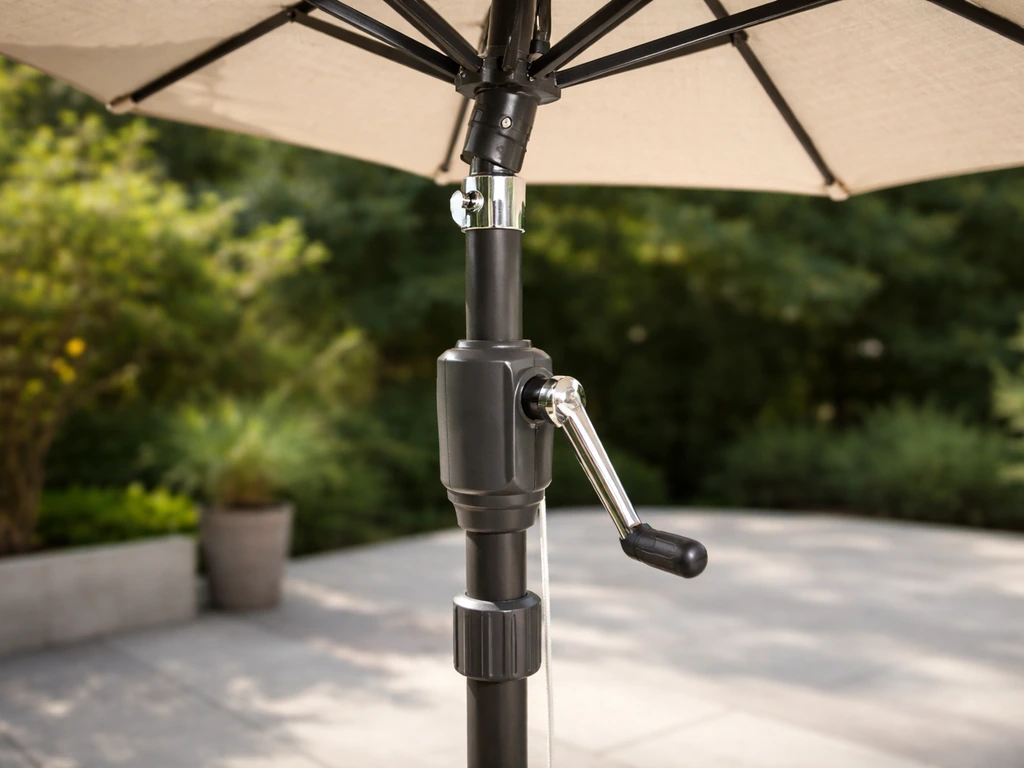
How to Adjust a Patio Umbrella: Height, Tilt, Crank, More
Step-by-step how to adjust patio umbrella height, tilt, rotation, crank and cord, fix locking and wobble, then maintain.
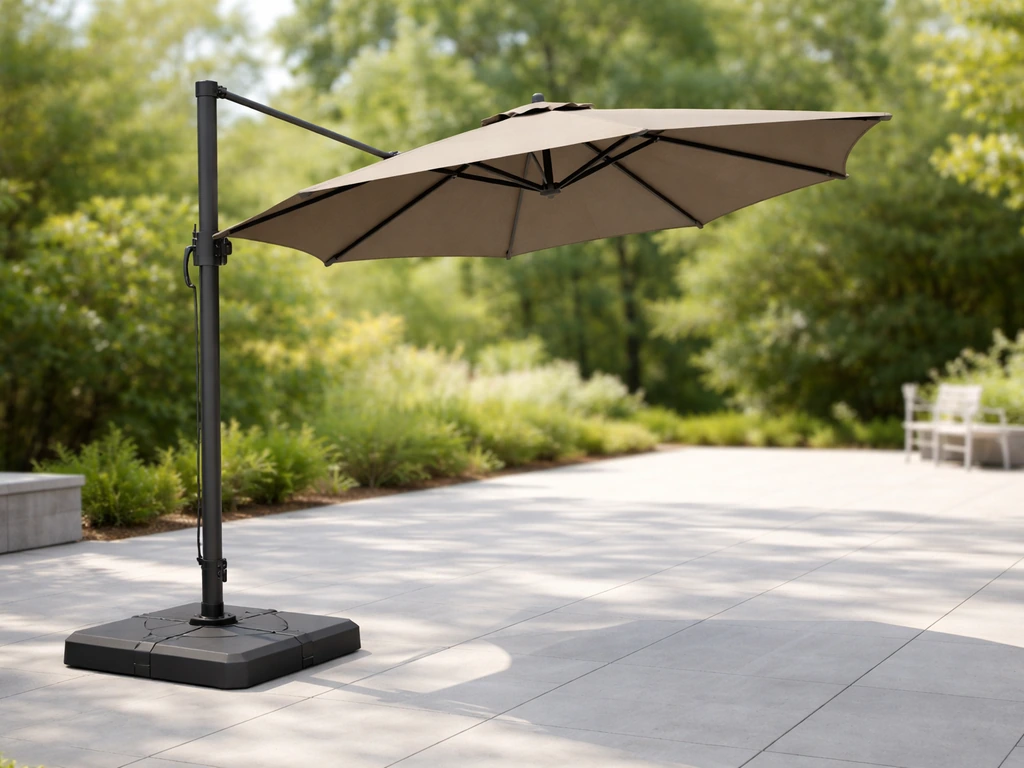
How to Assemble an Offset Patio Umbrella Step by Step
Step-by-step guide to assemble an offset patio umbrella base, mast, canopy, and crank, plus stability and quick troubles
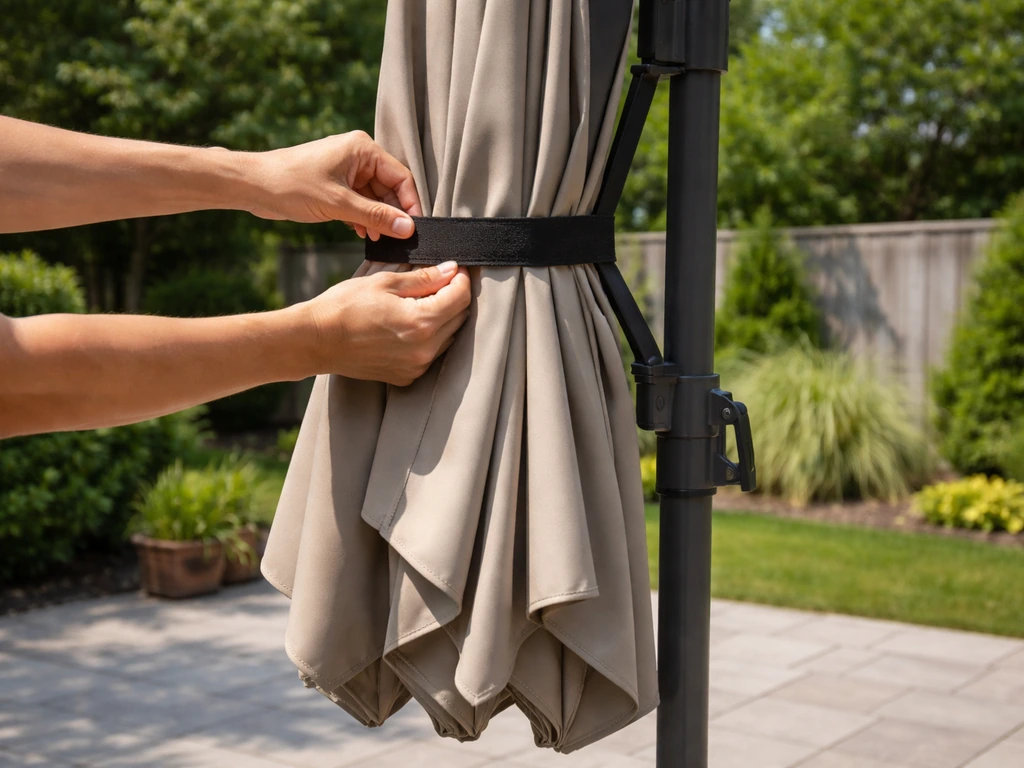
How to Close a Patio Umbrella Safely Step by Step
Step-by-step guide to safely close patio and cantilever umbrellas, troubleshoot jams, and secure so it stays closed.