
The best way to anchor a patio umbrella depends on your surface and umbrella type, but the core idea is always the same: get enough weight or ground connection under that pole so wind can't lever it over. For a freestanding umbrella on a patio or deck, blank" rel="noopener noreferrer">a weighted base sized to at least 10 lbs per foot of canopy width is your starting point. On concrete or pavers, a bolt-down base or in-ground sleeve gives you a much more solid fix. Either way, you also need to lock the tilt mechanism, close the canopy when winds hit 20–25 mph, and make sure the pole is fully seated before you ever open it up.
How to Anchor a Patio Umbrella: Secure Against Wind
Luca Morrison
28 May 2026
Choose the right anchoring method for your patio setup
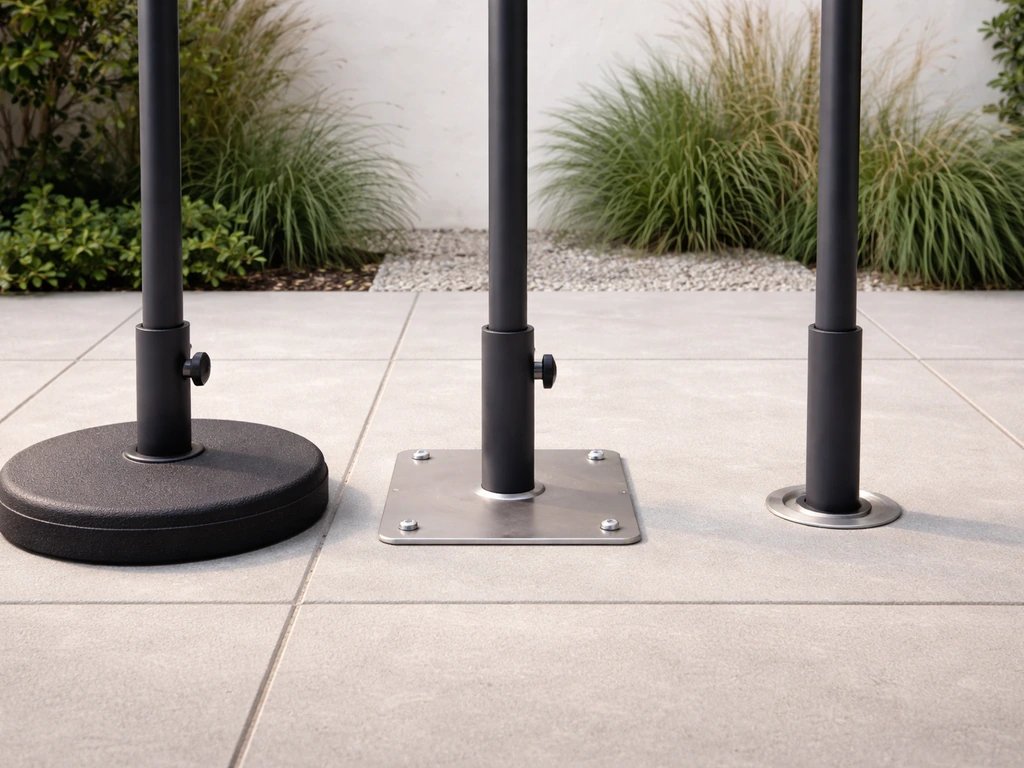
Not every anchoring method works for every situation, so pick the one that matches your surface and how permanent you want the setup to be. Here's a quick breakdown of the main options and when each one makes sense.
| Method | Best For | Permanence | Effort |
|---|---|---|---|
| Weighted umbrella base/stand | Freestanding on any surface, renters | Temporary/moveable | Low |
| Concrete-filled base | Permanent freestanding setups | Semi-permanent | Medium |
| Bolt-down base plate | Concrete slabs, decks with solid structure | Permanent | Medium |
| In-ground sleeve | Grass, dirt, or open concrete areas | Permanent | High |
| Table center-hole mount | Patio dining tables with center hole | Temporary | Low |
| Planter/ballast anchor | Decks where drilling isn't allowed | Moveable | Low–Medium |
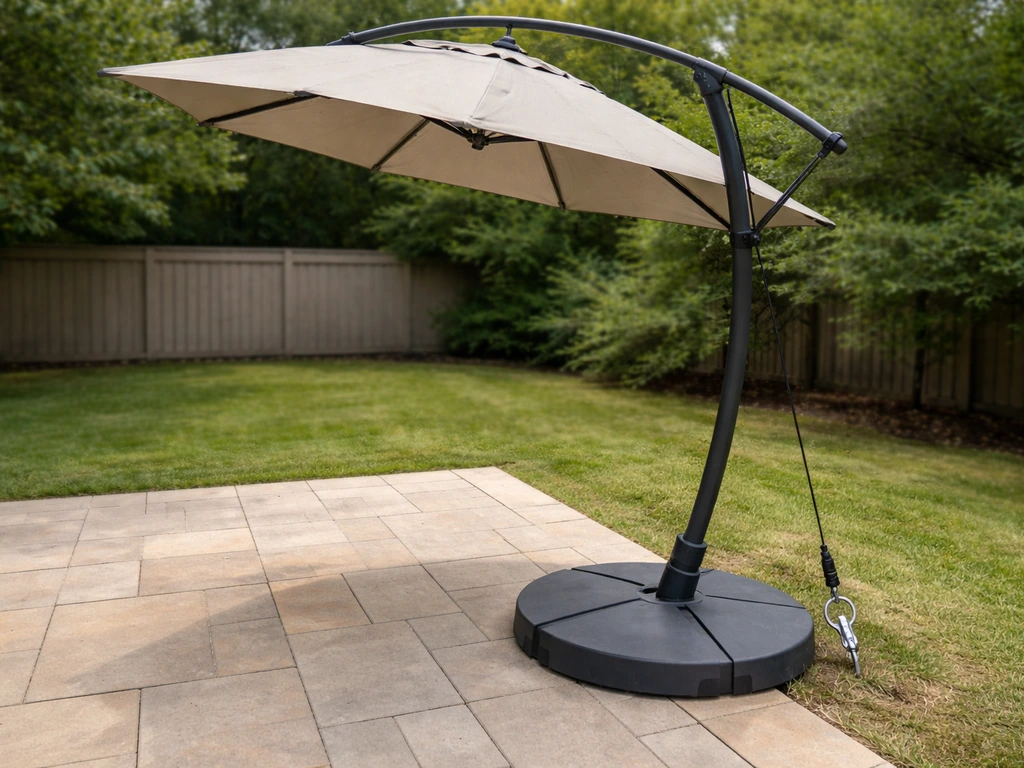
If you have an offset or cantilever umbrella, pay special attention: those designs put the canopy weight and wind load off to one side, which creates a lot more torque on the base. If you’re wondering how to secure an offset patio umbrella, choose a base and anchoring approach that matches the higher wind load and torque these designs create how to secure offset patio umbrella. They require substantially more base weight than a standard center-pole umbrella of the same size. If you're working with a cantilever, weighting down the base and bolting it down are both worth considering at the same time.
Tools and materials you'll need
Before you start, gather everything so you're not running back to the garage mid-install. What you need depends on which method you're using, but here's a complete list covering all the options.
For weighted base setups
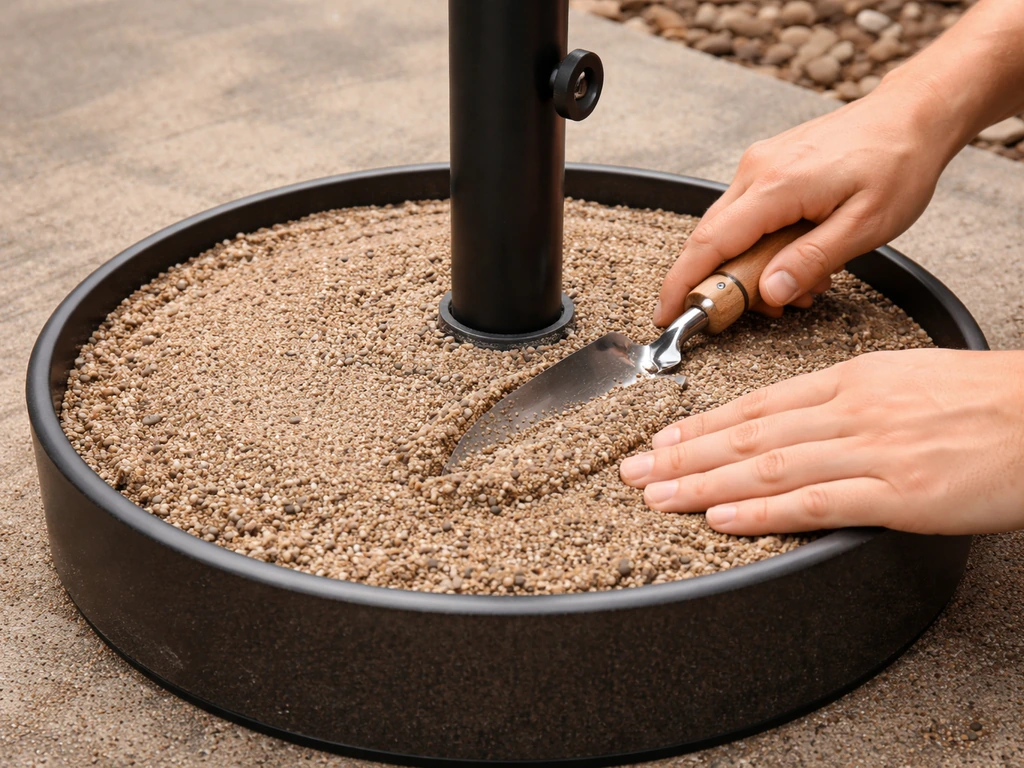
- Umbrella base or stand rated to at least 10 lbs per foot of canopy width (example: a 9-foot umbrella needs at minimum a 90-lb base)
- Sand, gravel, or water fill if using a fillable base
- Umbrella pole sleeve or adapter if the pole diameter doesn't match the base opening
- Rubber mallet or dead-blow hammer for seating the pole
- Level (a small torpedo level works fine) to check the pole is plumb
For concrete-filled base setups
- Ready-mix concrete or fast-setting concrete mix
- A mixing bucket and stirring stick
- Washer and bolt/nut set (usually included with the base, but check)
- Gloves and eye protection
- A wrench to tighten the anchor nut after the concrete sets
For bolt-down bases and in-ground sleeves
- Bolt-down base plate with pre-drilled holes, or in-ground sleeve kit
- Masonry drill bit and hammer drill (for concrete or pavers)
- Concrete anchors or wedge bolts sized to match your base plate holes
- Concrete and gravel (for in-ground sleeve installs)
- Post-hole digger or auger if setting a ground sleeve in soil
- Measuring tape and marker for hole placement
- Socket wrench or impact driver
- Level
For wind security and tie-downs
- Velcro or bungee straps to secure the closed canopy
- Umbrella tie-down strap or anchor cord for securing the canopy and ribs in high wind
- A closing strap (many umbrellas include one, but replacements are cheap if yours is missing)
Step-by-step: anchoring a freestanding umbrella correctly
This is the most common scenario: a market-style or offset umbrella going into a standalone base on your patio or deck. Follow these steps in order and you'll avoid the most common mistakes.
- Pick a location away from the edge of your deck or patio. Wind hitting the canopy at an angle is much worse when the umbrella is near an open edge with no windbreak.
- Set the base flat on the surface. If it's a fillable base, fill it before you insert the pole. For sand or gravel fill, use the access port on the top or side. For water fill, use water but know it's lighter than sand and reduces effective weight in cold climates if it freezes.
- If you're filling with concrete for a permanent setup: flip the base upside down, pour in the concrete mix, insert the anchor bolt with a washer through the center hole, and let it fully cure before flipping it back and seating the pole. After curing, tighten the nut that anchors the base plate snugly.
- Slide the pole into the base sleeve. Push it all the way down until it bottoms out. You should feel or hear it seat fully. This sounds obvious but a lot of wobble problems come from a pole that's sitting 2–3 inches too high.
- Tighten the base collar or set screw firmly. Most bases have a wing nut or crank that clamps the sleeve around the pole. Get it genuinely snug, not finger-tight.
- Check that the pole is plumb using your level. A pole that's leaning even a few degrees will stress the base and tip easier in wind.
- If your umbrella is on a table, confirm the table hole sleeve is clean and the pole collar ring is seated properly in the table hole before opening the canopy.
- Open the canopy only after all the steps above are complete. Pull the crank or push the lift mechanism until the canopy is fully open and the ribs lock into place.
Step-by-step: anchoring on concrete, pavers, or decks
If you want a truly fixed anchor point, a bolt-down base or in-ground sleeve is the way to go. These take more time upfront but they make a real difference in stability, especially for larger umbrellas. A good way to weigh down a patio umbrella is to choose a base or bolt-down anchor that matches your surface and uses enough weight for the canopy size bolt-down base.
Bolt-down base on concrete or a deck
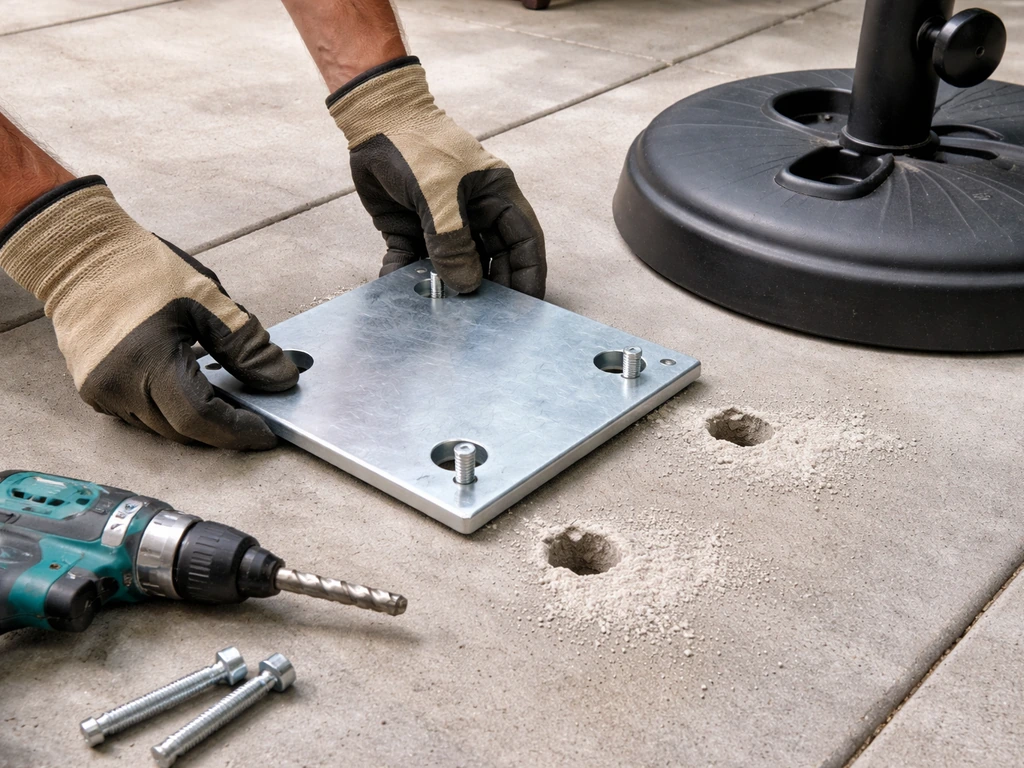
- Place the base plate on the concrete slab in your chosen spot. Before drilling anything, open the umbrella and confirm the canopy won't hit the house, a fence, or another structure.
- Mark the anchor hole locations through the base plate holes using a marker or pencil.
- Drill holes at your marks using a masonry bit and hammer drill. Go deep enough for your concrete anchor hardware, usually 3–4 inches for standard wedge bolts. Note: if you're drilling into pavers rather than a poured slab, make sure the paver is thick enough. For a poured slab, the minimum recommended thickness is around 100mm (about 4 inches) for this type of installation.
- Clear out the dust from the holes using a can of compressed air or a small brush. Concrete dust left in the hole can prevent anchors from setting properly.
- Insert the concrete anchors, set the base plate over them, and tighten down with a socket wrench. Follow the torque specs from your anchor hardware packaging.
- Insert the umbrella pole, tighten the collar, check plumb, and open the canopy.
In-ground sleeve in soil or open ground
- Dig or auger a hole to the depth specified in your sleeve kit instructions. Aztec Umbrellas and similar manufacturers specify exact depth requirements in their installation guides, so check those before digging.
- Add a layer of gravel at the bottom of the hole for drainage. This keeps water from sitting around the sleeve and corroding it.
- Set the sleeve in the hole and use your level to make sure it's plumb in both directions before pouring anything.
- Mix and pour concrete around the sleeve. Concrete and gravel fill is required for a proper set, not just packed soil. Keep the sleeve level while the concrete goes in.
- Make sure the top of the sleeve sits flush with your finished grade or surface level. If the sleeve sticks up above grade, it becomes a tripping hazard and the umbrella pole won't sit correctly.
- Let the concrete cure fully, usually 24–48 hours, before inserting the pole and putting the umbrella under any wind load.
- For paver installations: the sleeve goes through a hole cut or drilled in the paver, then into the concrete below. The paver sits around the sleeve opening, keeping it clean and tidy at ground level.
How to secure against wind
Even a well-anchored umbrella can become dangerous in strong wind if the canopy is open and catching air like a sail. The anchor keeps it from walking across your patio, but the canopy itself is what turns a gust into a tipping force. Here's how to manage that.
Lock your tilt mechanism correctly
A lot of umbrella tilt mechanisms have a lock that needs to be engaged after you set the angle. The typical sequence is: locate the lock button or trigger on the tilt joint, squeeze or release it to unlock, slide or rotate the handle to your desired tilt angle, then release the trigger so the lock re-engages. If you skip that last step and the lock isn't engaged, the canopy can shift in wind and put uneven force on the pole and base. Always give the canopy a gentle push after tilting to confirm the lock is holding.
Position the canopy to reduce wind load
- Point the leading edge of the canopy into the wind rather than presenting a flat face to it when possible.
- Avoid tilting the canopy into the wind direction. A tilted canopy facing the wind acts like a scoop and dramatically increases the tipping force.
- Keep the canopy closed or lower it when wind picks up. The dividing line most manufacturers use is 20–25 mph. If gusts are forecast above that threshold, close the umbrella. An open umbrella in 30 mph wind is not a question of whether it tips, it's a question of when.
- Use a closing strap every time you close the canopy. Pull the canopy down fully, then wrap and secure the strap around the folded ribs. This prevents the canopy from catching a gust and re-opening unexpectedly.
Add tie-down straps for high-risk situations
If you're in a consistently windy area or expecting a storm, close the umbrella and run a tie-down strap from the closed canopy down to the base or to a nearby fixed point like a deck railing. Bungee cords work for light duty. For anything serious, use a dedicated umbrella anchor strap or a cam buckle strap. Loop it around the furled canopy and ribs, not just the pole, so the whole assembly stays compact.
Safety checks and troubleshooting if it still wobbles or tilts
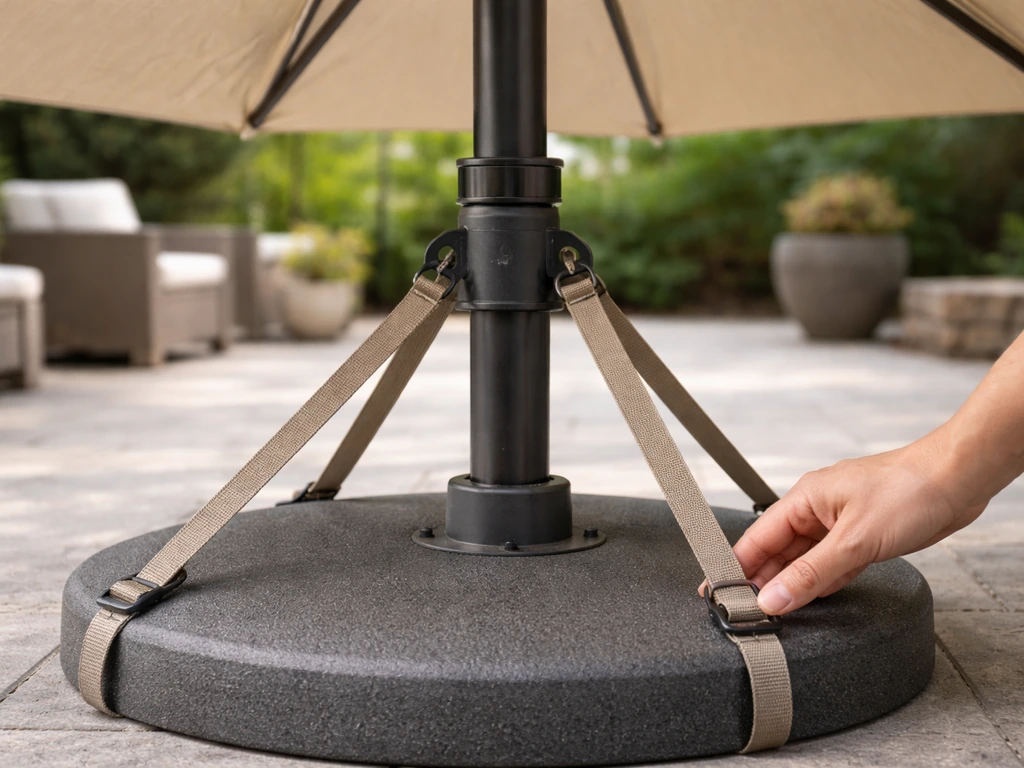
If your umbrella is still rocking or leaning after you've set it up, work through this checklist before assuming you need a bigger base or a new anchor. Most ongoing wobble problems have a simple cause.
- Check that the pole is fully seated. Pull the pole up slightly and push it back down hard. If it drops another inch or two, it wasn't bottomed out. Re-tighten the collar after seating.
- Check the collar or set screw tightness. Wing nuts and hand-tighten collars loosen over a season of use. Grab a wrench and give it a proper snug turn.
- Check the base weight. Use the 10-lbs-per-foot-of-canopy-width rule as your minimum. A 9-foot umbrella needs at least 90 lbs of base. If your base is lighter than that, you need either a heavier base, a concrete fill, or a bolt-down solution.
- Check the tilt mechanism lock. If the umbrella leans to one side even in calm conditions, the tilt joint may not be locked. Go through the lock/unlock sequence and confirm it's engaged before testing.
- Check for missing or stripped hardware. If the collar threads are stripped or the base set screw is missing, the pole will never stay tight. Replacement hardware is usually available from the manufacturer or a hardware store for a few dollars.
- Check pole alignment with the base sleeve. If the pole is slightly bent or the base sleeve is off-angle, the umbrella will never sit plumb. Try rotating the pole 180 degrees in the sleeve, which sometimes corrects a minor alignment issue.
- If you're on a deck and the surface itself flexes, the base can rock even if everything is tight. A bolt-down plate is the fix for this situation.
One thing worth mentioning: if you have an offset umbrella that keeps tipping even with a heavy base, look at where the base feet are positioned relative to the canopy overhang. The base feet should be oriented so they extend out in the direction the canopy hangs, not perpendicular to it. Many offset umbrella bases have a specific orientation marked in the instructions for exactly this reason.
Seasonal storage and maintenance to keep the anchor setup reliable
The anchor setup you build in spring is only as good as how you maintain it through the season and put it away at the end of it. A little end-of-season work saves you from rebuilding everything next year.
Before storing for winter
- Close the canopy completely and secure the closing strap. Don't leave it even slightly open, as a sudden windstorm can catch a partially open canopy and torque the pole.
- If your base is water-filled, drain it before freezing temperatures arrive. Water expands when it freezes and can crack plastic or resin bases from the inside. Refill with sand or leave it empty if storing indoors.
- Loosen the pole collar and remove the pole from the base. Store the pole and canopy somewhere dry, either in a storage bag or a shed. Leaving the pole in the base over winter invites corrosion at the sleeve joint, which makes the pole difficult to remove the following spring.
- For bolt-down bases staying in place outdoors, cover the bolt heads with a plastic cap or a dab of silicone sealant to prevent rust. Stainless hardware is worth using here if you're replacing anything.
- For in-ground sleeves, insert the sleeve cap or plug so debris and water don't fill the opening over winter.
Spring startup checks
- Inspect the base for cracks, especially if it was water-filled. A cracked base won't hold fill weight properly.
- Check all bolt-down hardware for rust or loosening. Re-torque any bolts that have worked loose over the freeze-thaw cycle.
- Inspect the in-ground sleeve for heaving. Freeze-thaw cycles can push a sleeve up slightly out of grade. If it's risen, reset it and re-level before using the umbrella.
- Lubricate the pole sleeve with a thin coat of silicone spray to make insertion and removal easy all season. Avoid petroleum-based lubricants on plastic parts.
- Check the tilt mechanism and lock for stiffness or corrosion. If the lock button doesn't spring back cleanly, clean it with a dry rag and a shot of silicone lubricant before the season starts.
Keeping your anchor setup reliable is really just about two habits: closing the umbrella before wind gets serious (20–25 mph is your number to remember), and doing a 10-minute inspection at the start and end of each season. BBQGuys recommends taking down the umbrella when wind is forecast to exceed 20 mph. Get those right and the anchor you set up today should last for years without needing to be rebuilt.
FAQ
How much weight do I actually need for a patio umbrella base if my canopy size is irregular or the umbrella isn’t perfectly centered?
Use the canopy width as your starting point, but for offset or cantilever units plan for higher torque by stepping up base weight beyond the minimum, and verify the base feet sit in the orientation that matches the canopy overhang direction. If you cannot confirm the manufacturer’s orientation marks, choose a base that allows the feet to extend toward the canopy’s hanging side, since wrong alignment can cause rocking even with heavy weight.
Can I anchor a patio umbrella on brick or pavers without drilling?
Yes, but only if you use a method designed for non-penetrating installs, like a heavy standalone base sized for your canopy, or a sleeve or ballast system that clamps securely to the specific surface type. For uneven or loose pavers, avoid relying on friction alone, because gusts can walk the base. If the ground shifts when you push the base by hand, you likely need a bolt-down or sleeve-style solution.
What’s the safest way to tie down the umbrella if I have a crank tilt or no obvious lock button?
Look for the tilt joint’s dedicated locking mechanism, it may be a lever, a twist collar, or a pull pin instead of a button. Only set the tilt to the angle you can confirm is locked, then run the tie-down around the furled canopy and ribs down to the base or a fixed anchor like a railing post. If you cannot confirm a mechanical lock engaged after tilting, treat it as unlocked and keep it closed in wind.
Do I need to anchor the umbrella even when it is centered and my base is heavy?
In light, occasional breezes you may get away without an additional ground connection, but you still need to manage open-canopy wind loading. A heavy base helps prevent walking, but open fabric can generate enough sail force to tip or stress the pole, especially if the pole is not fully seated. If your area regularly reaches the 20 to 25 mph range, plan on adding a tie-down strap or using a bolt-down base for better margin.
Why does my umbrella still wobble after I set it up, could it be the pole height or seating?
Yes, wobble often comes from improper pole seating or the pole not sitting fully down in the hub or base receiver. Another common cause is tilt lock not re-engaging, which lets the canopy shift and loads the base unevenly. After you tilt and lock, give the canopy a gentle push and confirm it does not move at the joint before leaving it open.
My offset umbrella tips even with a lot of weight, what should I check first?
Check the base foot orientation relative to the canopy overhang direction. Many offset bases must be positioned so the feet extend toward the side where the canopy hangs, not perpendicular to the overhang. If the base is rotated the wrong way, you can waste weight without improving stability, and the umbrella may continue to lever off the base.
How tight should a bolt-down base or in-ground sleeve be, can over-tightening damage the setup?
Follow the manufacturer’s torque guidance when available, because over-tightening can strip anchors in concrete or stress the base housing. The goal is firm seating with no rocking, if you still can rock the base with moderate hand pressure after tightening, you likely need better anchor placement or correct surface prep rather than extra torque.
Is a bungee cord acceptable for storm conditions, or should I use a different strap?
Bungee cords can work for short, light-duty restraint, but for higher wind events use a dedicated umbrella anchor strap or a cam buckle strap. These are better at keeping the furled canopy compact and reducing movement, which matters because shifting fabric changes the force on the pole and base.
Should I remove the tie-down strap after each windy day, or can I leave it on?
In general, remove and re-check it rather than leaving it under tension long term, since strap hardware can loosen and UV exposure can degrade elastomers. At minimum, do a quick inspection at the start and end of the season, confirm the strap loops around the furled canopy and ribs, and ensure nothing is rubbing against moving parts.
What end-of-season steps prevent anchor problems next year?
Before storage, fully close the umbrella, clean grit from the tilt joint and locking area, and remove any straps so they do not stretch permanently. Then inspect the base connection points, confirm there is no cracking in concrete around bolt-down locations, and ensure the pole seating surfaces are clean and dry so it sets fully when you reinstall.
Next Articles
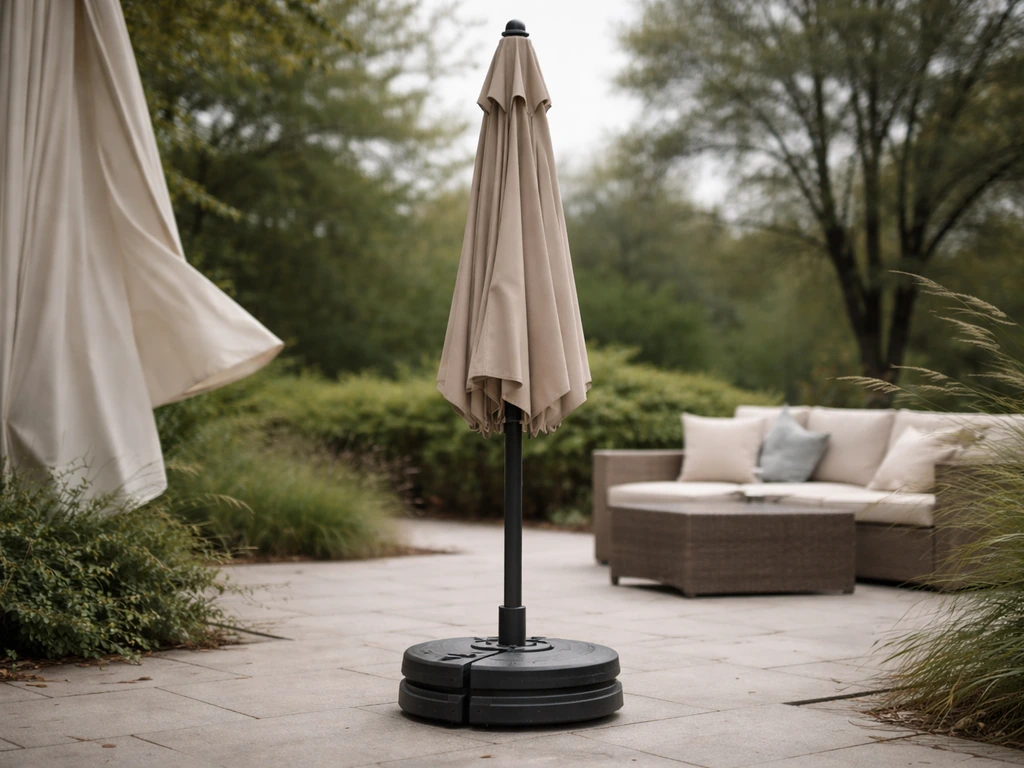
How to Weigh Down Patio Umbrella for Wind Stability
Step-by-step ways to weigh down a patio umbrella for wind stability, including base setup, add-on weights, and fixes.
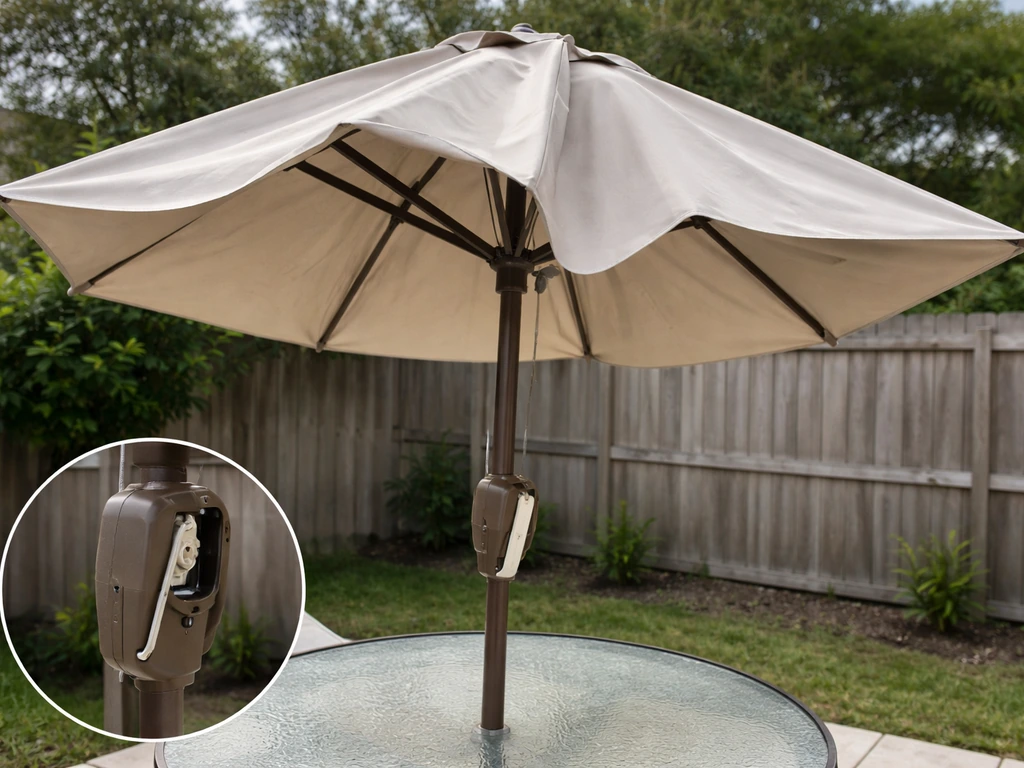
How to Fix a Patio Umbrella That Won't Open or Close
Step-by-step fixes for patio umbrellas that won’t open or close, with checks for jams, cords, latches, and lubricating t
How Does a Patio Umbrella Work? Components, Use, and Fixes
Learn how patio umbrellas work: components, open close tilt, stability, and step by step troubleshooting common mechanic