
To bolt down a patio umbrella, you place the base or base plate flat on your surface, use it as a drilling template to mark your anchor points, drill into the surface with the right bit and anchor for that material (concrete, wood, or pavers), then fasten it down with lag bolts or through-bolts and seal the holes against water. Done right, the umbrella won't tip, shift, or wobble even in a stiff wind.
How to Bolt Down a Patio Umbrella Step by Step
Luca Morrison
26 Jun 2026
That said, there are a few details that trip people up: the wrong anchor for the surface, a base plate that doesn't match the pole diameter, skipping the sealant step, or under-torquing the bolts. This guide walks through all of it from start to finish, including surface-specific drilling instructions and what to do when things go wrong.
Choosing the right mounting approach for your umbrella and surface
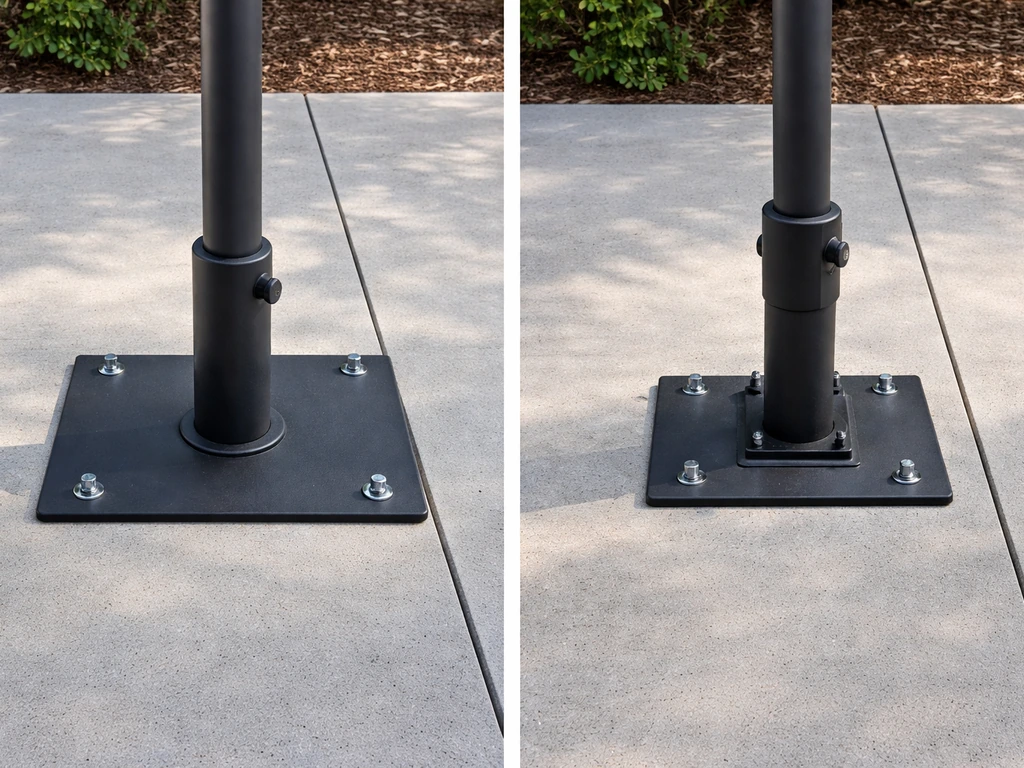
Before you grab a drill, figure out what you're working with. There are two main umbrella types that get bolted down: market umbrellas (center-pole, usually 1.5" or 2" diameter) and cantilever/offset umbrellas (side-arm design with a heavier base). Each mounts a bit differently.
Market umbrellas typically use a bolt-down base plate that has a collar for the pole and four bolt holes in the corners. Specs vary by manufacturer, but a common hole-center spacing is around 210mm between opposing holes, and bolt holes are often 3/8" diameter. The base needs to fit your pole, so check yours before ordering anything. Most market umbrella poles are either 1.
5" or 2" in diameter, and bolt-down bases are usually designed to fit a specific range (for example, poles from 32mm to 52mm). A fixed bolt-down base like the Coolaroo Market Umbrella Base is designed to suit umbrella poles in the 32mm to 52mm diameter range poles from 32mm to 52mm.
A base that's too loose will let the pole rock even after you bolt the plate down.
Cantilever and offset umbrellas use a larger foot plate that bolts directly to the surface. The base acts as its own template. Some cantilever installs blank" rel="noopener noreferrer">require lag-bolting per local regulations, especially in areas with high wind loads. The screw-hole diagonal spacing on typical cantilever bases runs around 6.3", but check your specific model's documentation.
Your surface type determines your mounting hardware. Concrete and masonry need wedge anchors or sleeve anchors. Wood decks take lag screws. Pavers require either removal and concrete setting or specialty paver anchors. Tile over concrete is the trickiest because you're drilling through a hard surface layer before hitting the slab beneath. If your surface isn't bolt-friendly at all (like loose pavers or a rented space), skip down to the alternatives section.
One more quick check: does your umbrella's existing base actually have bolt holes? Many weighted free-standing bases, like the Grosfillex 70 lb market base, have molded anchor bolt holes specifically so you can bolt them to a deck for extra stability. If yours has those holes, you're already halfway there.
Tools and materials you'll need
Gather everything before you start. Nothing slows down this kind of job more than a mid-drill hardware run.
- Hammer drill (for concrete or masonry) or standard drill/driver (for wood decks)
- Masonry drill bit sized to your anchor diameter (typically 3/8" or 1/2" for concrete anchors) or a wood spade/auger bit for deck installs
- Diamond-tipped or carbide tile bit if drilling through ceramic or porcelain tile
- Concrete wedge anchors or sleeve anchors for slab installs (3/8" x 3" is a common starting size; longer if your slab is thin)
- Lag screws with hex heads (3/8" x 2.5" or 3" are typical for deck wood) plus flat washers
- Through-bolts and nuts if drilling through a deck board with access underneath
- Marker or chalk pencil for marking hole locations
- Tape measure and square or level
- Socket wrench or impact driver with the correct socket for your bolt heads
- Weatherproof silicone sealant (polyurethane or marine-grade silicone works best outdoors)
- Vacuum or compressed air to clear drilling dust from holes before setting anchors
- Safety glasses and ear protection
On anchor sizing: for a standard market umbrella base plate on a concrete slab, 3/8" wedge anchors are the go-to. Your slab needs to be at least 100mm (about 4") thick to properly seat most concrete anchors. A step-by-step bolt-down umbrella installation guide specifies using a minimum 100mm concrete slab thickness when drilling the four marked holes on the base at least 100mm (about 4") thick to properly seat most concrete anchors. If you're unsure of your slab depth, tap around with a hammer and listen for hollow spots, or check any existing anchor holes nearby.
Step-by-step: marking, drilling, and anchoring the base plate
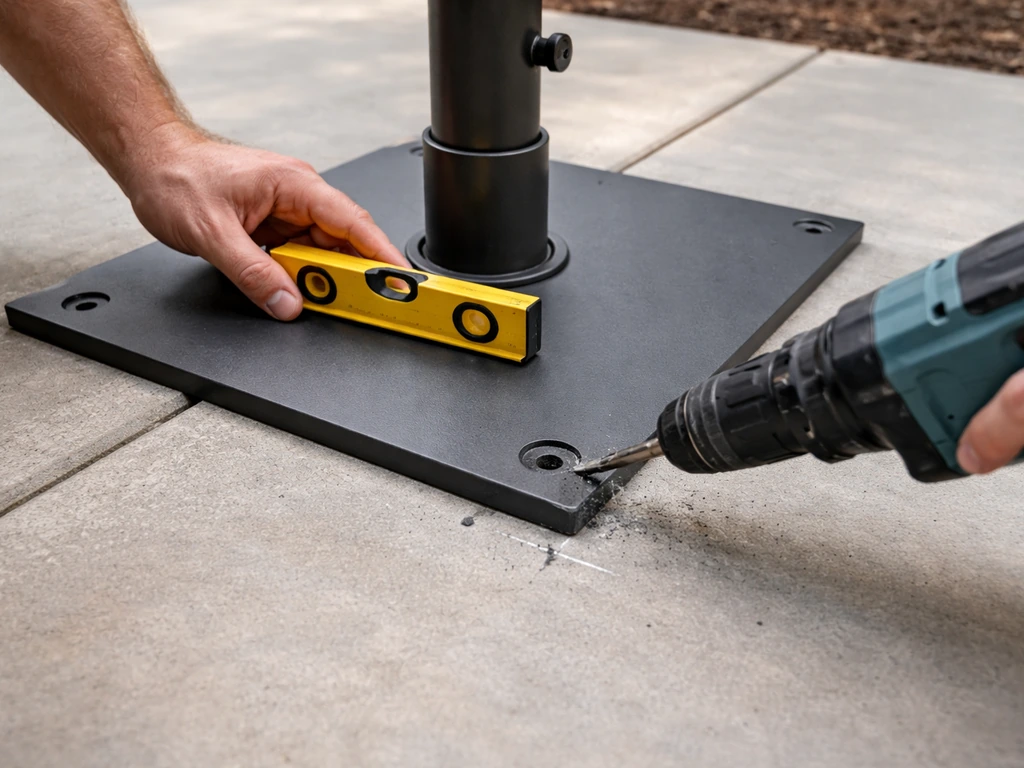
These steps apply to the most common scenario: a bolt-down base plate on a concrete pad. See the next section for surface-specific variations.
- Position the base plate exactly where you want the umbrella to sit. Use a level to make sure the surface underneath is flat. If the plate rocks, the whole install will be unstable before you even open the umbrella.
- Mark all four bolt hole locations through the plate onto the surface using a marker or chalk pencil. Then set the plate aside so it's out of your way.
- Double-check your marks with a tape measure. On a standard market umbrella plate with 210mm hole centers, opposite marks should be exactly 210mm apart. If they're off, re-mark before drilling.
- Put on your safety glasses and ear protection. For concrete, fit your hammer drill with the correct masonry bit (match the bit diameter to your anchor diameter). Drill each hole to the depth specified for your anchor, usually about 1/4" deeper than the anchor's embed length. Keep the drill perpendicular to the surface.
- Vacuum or blow out all the dust from each hole. Concrete anchor failure is almost always caused by dust preventing the anchor from seating properly. This step matters more than most people think.
- Set the anchor in the hole. For wedge anchors, tap them in with a hammer until the threaded end protrudes just enough to fit through the base plate hole and accept the nut and washer.
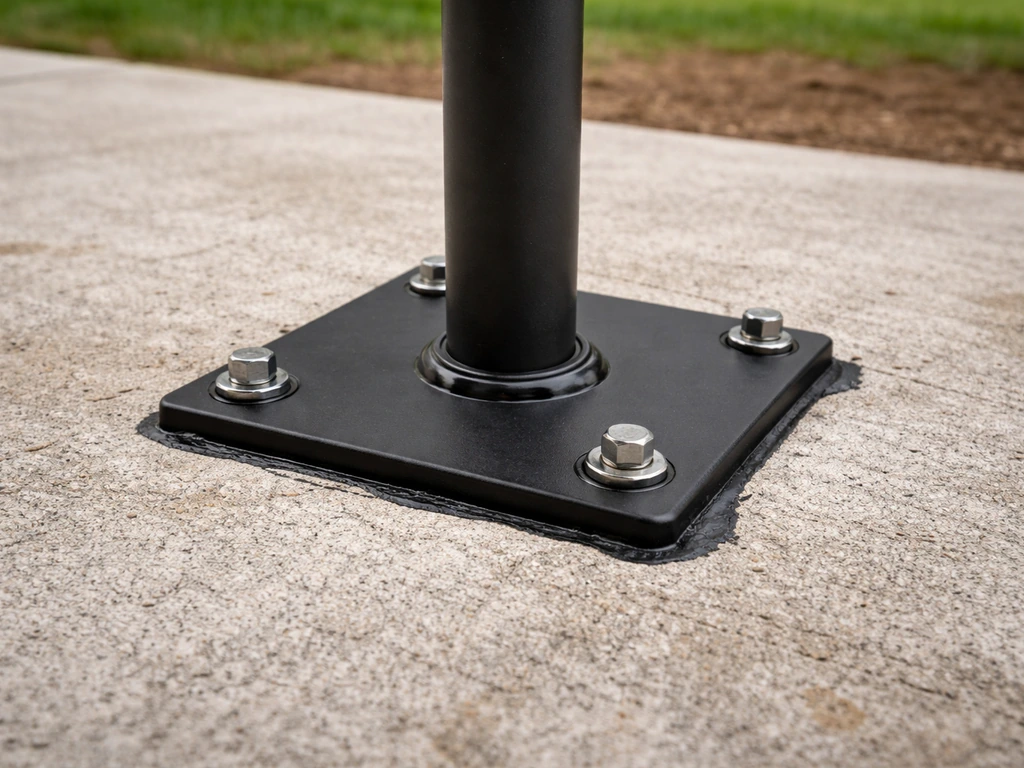
- Lay the base plate back down, aligning the holes over the anchors. Thread on the washers and nuts (or bolt heads, depending on your anchor type).
- Tighten fasteners in a cross pattern, not in a circle. Snug opposite corners alternately so the plate pulls down evenly. Torque to the anchor manufacturer's spec, typically around 25-35 ft-lbs for 3/8" wedge anchors, but always check your specific hardware.
- Before calling it done, apply a bead of weatherproof silicone sealant around the base of each bolt hole where it meets the surface. This keeps water out of the holes, which is the main cause of anchor corrosion and concrete cracking over time.
Tightening and stability checks to prevent wobble and tilt
Once everything is bolted down, do a physical check before you put the umbrella to use. If you are still dealing with wobble or tilt, focus on how to stabilize a patio umbrella by checking base fit, anchor seating, and torque after installation. Grab the base plate and try to wiggle it in all four directions. There should be zero movement. Any play at all means something isn't fully seated or torqued.
Insert the umbrella pole into the base collar and open the canopy. If you want to hold a patio umbrella in place with minimal wobble, focus on how the pole fits the collar and how tightly the base is secured before you test for movement. Watch the pole where it meets the collar. If the pole wobbles inside the collar even though the plate is tight, the base isn't sized right for your pole. A collar that's too large will always let the pole rock. Some bolt-down bases include a tightening set screw or collar clamp for this reason. Use it.
With the canopy open, push on the outside edge of the umbrella from a few different directions and simulate wind load. The pole should flex slightly (that's normal for fiberglass and aluminum poles) but the base should not shift or lift at any corner. If a corner lifts, the plate is warped, the surface is uneven, or an anchor hasn't seated properly. Tighten, shim, or re-drill as needed.
For cantilever and offset umbrellas, the tilt risk is higher because the arm extends the load far out from the base. After tightening, open the canopy fully and rotate the arm through its full range while pressing down lightly on the outer edge. The base bolts should hold without any creaking or base movement. If you get creaking, it's usually a loose anchor or a plate that's flexing because the surface is slightly uneven beneath it.
Surface-specific guidance
Concrete
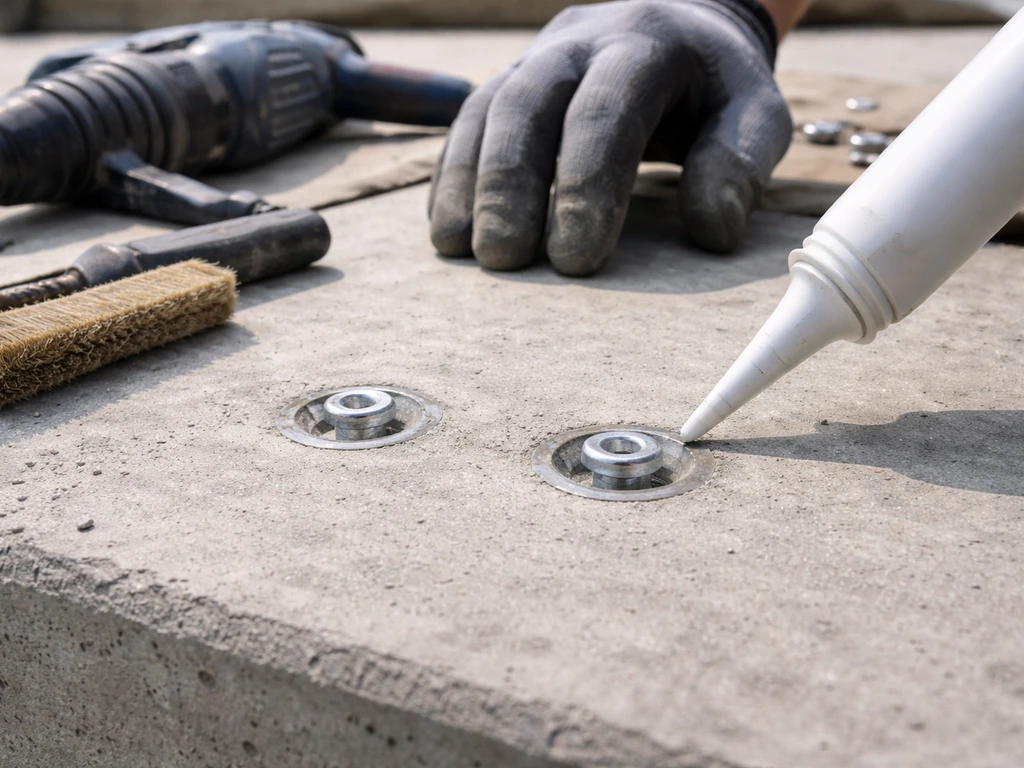
Concrete is the most straightforward surface for this job. You need a slab that's at least 100mm (4") thick and in solid shape (not crumbling or heavily cracked). Use a hammer drill and masonry bit, set wedge anchors or sleeve anchors, and torque to spec. If your slab is older and you hit a hollow spot while drilling, relocate that hole a few inches over and try again.
Wood deck
Wood decks accept lag screws well, but you need to anchor into the structural framing below the deck boards when possible, not just the decking itself. Deck boards alone aren't strong enough to hold a large umbrella in high wind. Find a joist with a stud finder, position your base plate over a joist intersection or as close to one as possible, pilot drill slightly smaller than your lag screw diameter, and drive the lags in with a socket wrench. Add a washer under each head. Seal the holes with silicone to prevent wood rot.
Pavers
Pavers are the hardest surface to bolt down on because individual pavers aren't structurally tied to anything below. The best approach is to remove the pavers in your target area, pour a small concrete collar or pad at least 100mm deep, let it cure fully (72 hours minimum), then bolt your base plate to the concrete. Alternatively, specialty paver anchoring systems use a large subsurface plate that spreads load across multiple pavers, but these are less secure than a concrete anchor. If true bolting isn't possible, a very heavy weighted base combined with a ground stake kit is a more honest solution for a paver surface.
Tile over concrete
Drilling through tile takes patience. Use a carbide or diamond-tipped tile bit at low speed with no hammer action until you're through the tile layer, then switch to your masonry bit and hammer mode for the concrete beneath. Go slow through the tile to avoid cracking it. Mark your drill point with a small piece of tape to keep the bit from walking. Once through the tile, treat the rest exactly like a concrete install. Seal around the bolt heads carefully since water getting under tile causes grout and tile failure over time.
Troubleshooting common issues
| Problem | Likely Cause | Fix |
|---|---|---|
| Anchor pulls loose from concrete | Hole not deep enough, dust not cleared, or slab too thin | Re-drill deeper, vacuum thoroughly, use longer anchor or a different location on the slab |
| Base plate shifts after install | Anchors under-torqued or surface uneven under plate | Re-torque in cross pattern; shim under plate if surface is slightly uneven before re-tightening |
| Pole wobbles inside base collar | Collar diameter too large for the pole | Use a collar insert/reducer sleeve, or replace the base with one sized to your pole diameter |
| Umbrella tilts in one direction under wind | Uneven torque on bolts or one anchor not seated | Check each anchor individually, re-seat loose ones, and re-torque evenly |
| Rust on bolts and corrosion around holes | Water intrusion at bolt holes, non-stainless hardware used | Replace hardware with stainless steel or hot-dip galvanized bolts; re-seal holes with marine silicone |
| Concrete cracking around anchor holes | Anchor placed too close to slab edge, or slab is thin | Anchors should be at least 10x the bolt diameter from the slab edge; consider a surface plate or epoxy anchor system for thin slabs |
| Sealant cracking and lifting seasonally | Used interior caulk instead of weatherproof silicone | Remove old sealant, clean surface, apply polyurethane or marine-grade silicone rated for outdoor UV exposure |
One thing worth calling out specifically: if you're seeing rust staining radiating out from your bolt holes after one season, that's almost always because standard zinc-plated or uncoated hardware was used. Swap in 304 or 316 stainless steel bolts and washers. They cost a bit more but won't stain your patio and will outlast the umbrella itself.
What to do if you can't permanently bolt to your surface
Not every situation allows for drilling. Renters, temporary setups, and loose-paver patios all fall into this category. You've got a few legitimate options that still significantly improve security compared to a free-standing base. If you are wondering how to support patio umbrella without drilling, look for stable temporary setups and anchoring alternatives that still prevent wobble.
- Pre-made bolt-down base plates designed for umbrella poles: these go on a surface you can drill into (even a small concrete block), giving you a permanent mount point without altering your main patio
- Anchor kits with ground stakes or auger-style stakes driven into a planting bed or lawn edge adjacent to the patio, connected to the umbrella base with a strap or cable
- Heavy weighted bases with their built-in anchor bolt holes used as bolt-down points on a wood deck when full structural anchoring isn't possible, combining weight and fastening
- In-ground sleeve systems (usually for semi-permanent installs) that accept a separate removable pole, so you bolt the sleeve once and can remove the umbrella whenever you need to
Weighing down rather than bolting is a separate but related approach that works well as a supplement, though for high-wind areas it's rarely sufficient on its own. Anchoring the base to any fixed structure, even indirectly, is always more reliable than relying purely on ballast weight.
Maintenance and seasonal re-checks
A bolt-down install isn't truly set-and-forget. Thermal expansion and contraction through seasons, water freeze-thaw cycles in cold climates, and the cumulative stress of wind all work on your fasteners over time. A quick seasonal inspection takes five minutes and can save you from a fallen umbrella and a cracked slab.
- At the start of each season (and after any major storm), hand-check the base plate for any movement. It should feel absolutely solid.
- Re-torque all bolts to spec. Concrete anchors in particular can lose clamping force as the concrete experiences seasonal micro-movement.
- Inspect sealant around each bolt hole. If it's cracking, peeling, or pulling away, remove the old sealant with a utility knife, clean the area with isopropyl alcohol, and apply a fresh bead of weatherproof silicone.
- Check for rust staining or white mineral deposits around the bolt heads. Light surface rust on the plate can be sanded and treated with a rust-inhibiting primer. If the bolts themselves are corroding, replace them with stainless hardware.
- Inspect the base collar where the pole sits. Cracks in a cast base or deformation in a metal collar both signal that the base needs replacing before another season of use.
- Before storing for winter, remove the umbrella canopy and pole if possible and cap the base collar or cover the base plate to keep debris and water out of the bolt holes and collar socket.
If you've already put effort into bolting the base down correctly, seasonal maintenance is what actually protects that investment long-term. Spend ten minutes on it in spring and ten minutes in fall, and you'll get years of reliable service out of the same hardware.
FAQ
Can I bolt down my umbrella using the manufacturer’s original weighted base instead of a new bolt-down base plate?
Yes, if your umbrella came with a bolt-down plate or a molded base that has compatible hole locations. Before drilling anything, remove the umbrella base and measure the hole-center pattern on the base (or collar clamp if present), then compare it to the replacement base plate specs. If the pole diameter is correct but the bolt pattern is not, you can end up with partial bearing and looseness even when the plate is tight.
What should I do if my anchors won’t seem to grab in concrete (or the slab sounds hollow when drilling)?
Use an anchor matched to the worst-case movement of your surface. For concrete and masonry, wedge or sleeve anchors are typical, but if you have a softer or cracked slab, relocation is better than forcing anchors into a weakened zone. If you drill and feel the bit break through unexpectedly fast or land in a hollow sounding area, stop and move the hole a few inches rather than trying to “make it work.”
How do I know I torqued the bolts correctly so the base won’t wobble?
Don’t rely on “tight enough by feel.” Use a torque wrench if your hardware lists a torque spec, because under-torque leaves the base able to rock, while over-torque can deform the base plate or strip certain anchor types. After you torque, recheck wiggle in four directions (not just front-to-back), then recheck again after the first use to catch any initial seating.
Is sealant really necessary on every surface, and where exactly should I apply it?
If water runs across the deck, the missing sealant is a common cause of long-term loosening. Even on wood, seal around the bolt holes after installation (silicone or a compatible exterior sealant) to reduce rot and to keep debris out of the holes. For concrete installs, sealing helps prevent freeze-thaw damage and corrosion at the fastener heads.
My umbrella base is tight, but the pole still wobbles at the collar. What’s the fix?
If the umbrella pole wobbles inside the collar even though the plate is secure, it’s usually a sizing mismatch between the pole and collar, not the anchors. Confirm the pole diameter falls within the collar’s stated range. If your base has a tightening set screw or collar clamp, tighten that first, then recheck movement with the canopy open.
What is the best way to bolt down an umbrella on pavers when there’s no concrete underneath?
For pavers, bolting directly into individual pavers is usually unreliable because the load path is not structural. The most secure option is to remove pavers and bolt into a cured concrete collar or pad at least 100 mm deep. If you can’t do that, a specialty paver anchoring system may work, but expect more movement risk than a true concrete anchor. A very heavy weighted base with a ground stake kit is a better stopgap than plain ballast alone.
How can I avoid cracking tile when drilling for a bolt-down umbrella?
On tile over concrete, the failure mode is usually cracked tile or water intrusion. Go slow through the tile with a carbide or diamond-tipped bit at low speed and no hammer action until you reach the concrete, then switch to hammer drilling. After bolting, seal around the bolt heads carefully so water cannot migrate under the tile and undermine grout or grout joints.
I see rust stains radiating from the bolt holes. Is this a hardware-only problem, and what should I replace?
Most rust staining is a hardware choice issue, but the practical next step is to stop using the rusty bolts and replace with corrosion-resistant stainless hardware (commonly 304 or 316 stainless) plus stainless washers. Also clean any water paths and re-seal around the penetrations. This prevents the stain pattern from widening and reduces fastener weakening over the season.
What extra checks should I do for cantilever umbrellas in high wind conditions?
If you’re in a high-wind area and you’re installing a cantilever or offset umbrella, prioritize getting anchors into a structural load path (structural framing for wood, solid concrete for masonry). After tightening, rotate the arm through its full range while lightly pressing the outer edge, watch for creaking, and recheck base bolt movement. If you hear creaking, assume an anchor or plate seating issue until proven otherwise.
How often should I inspect and re-tighten my bolted umbrella base?
Yes, seasonal changes can loosen fasteners, especially with freeze-thaw cycles or strong wind loading. A simple schedule helps: inspect after spring and after fall for any movement, recheck torque if accessible, and look for water intrusion around sealant edges. If you notice any lift at a corner, address it immediately, since that can quickly transfer stress into anchors and the surface.
Next Articles
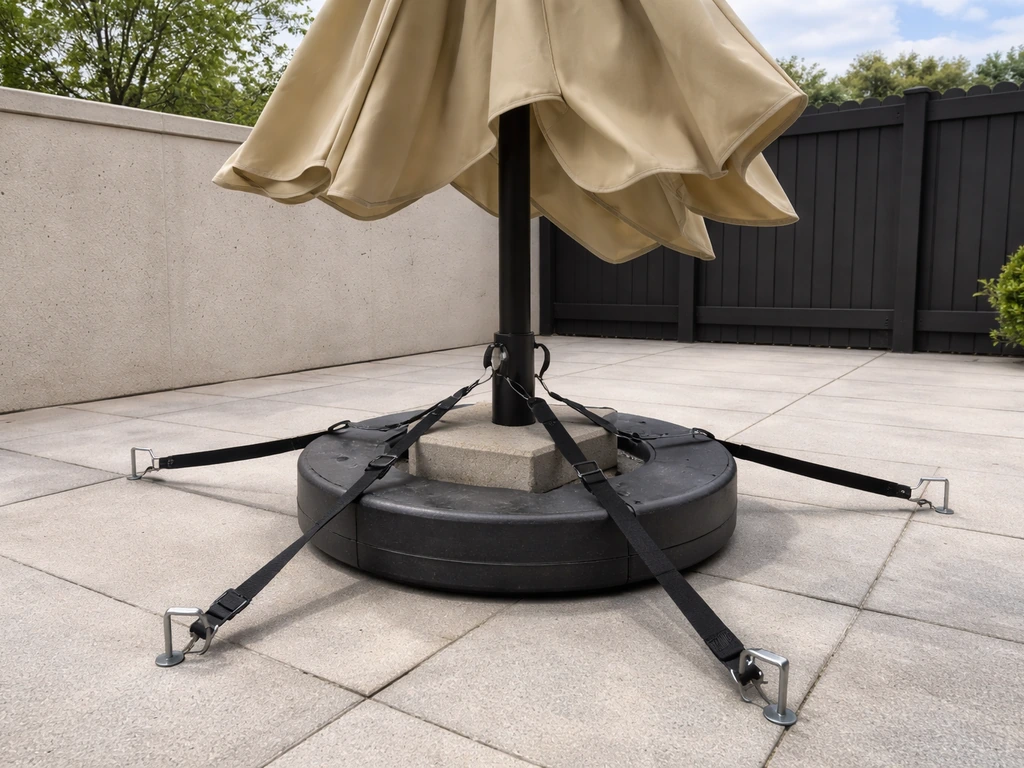
How to Hold Patio Umbrella in Place in Wind
Step-by-step methods to hold patio umbrellas in windy conditions using the right base, anchoring, and wind-stopping tact
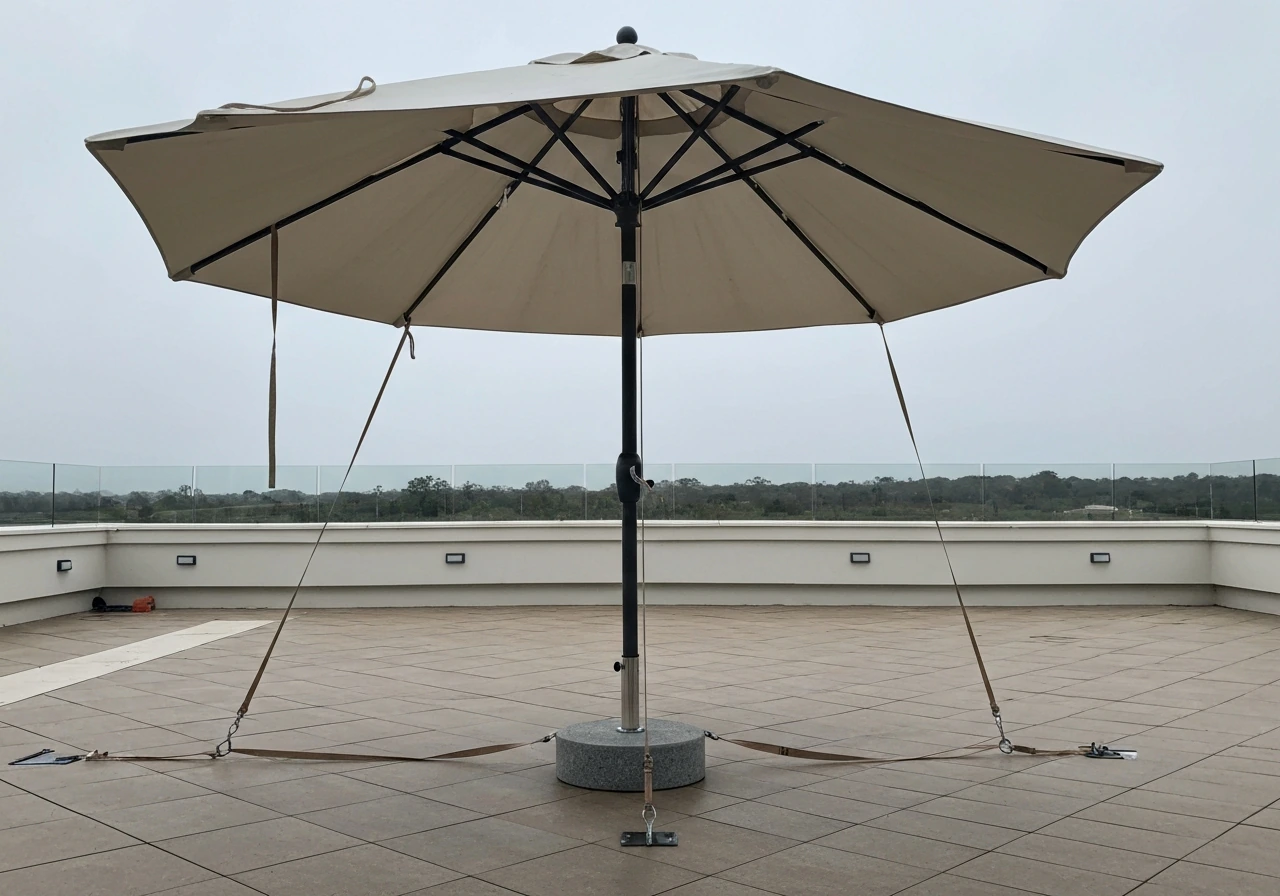
How to Stabilize a Patio Umbrella in Wind
Step-by-step ways to stabilize a patio umbrella in wind, fix wobble causes, and choose the right base and tie-downs.
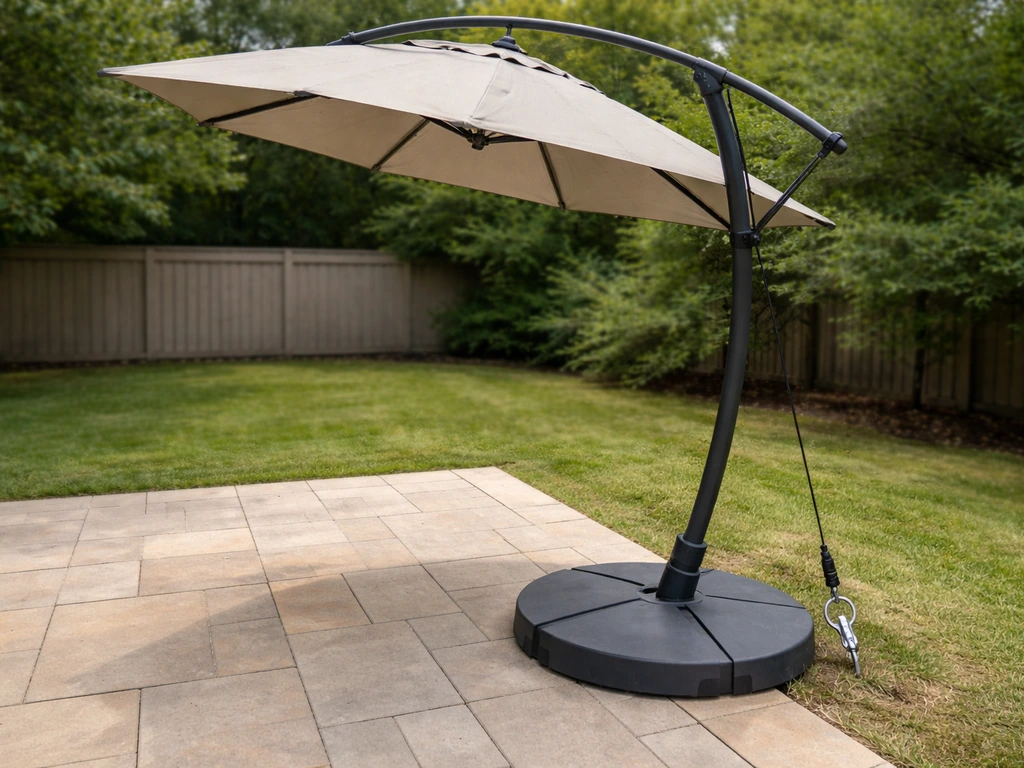
How to Anchor a Patio Umbrella: Secure Against Wind
Step-by-step ways how to anchor a patio umbrella, secure bases, ground anchors, and wind troubleshooting for stable outd