
To weigh down a patio umbrella, fill your base completely with sand and water (most bases hold 30–60 lb filled), add supplemental weight bags to the frame legs if you have an offset umbrella, and place the whole setup on level ground. For a center-pole umbrella, a fully filled base in the 35–50 lb range is usually enough for moderate wind. For a cantilever or offset umbrella, you need significantly more, often 150–300 lb depending on the canopy size, because the off-center pole creates a much bigger torque load when wind hits.
How to Weigh Down Patio Umbrella for Wind Stability

Luca Morrison
5 May 2026
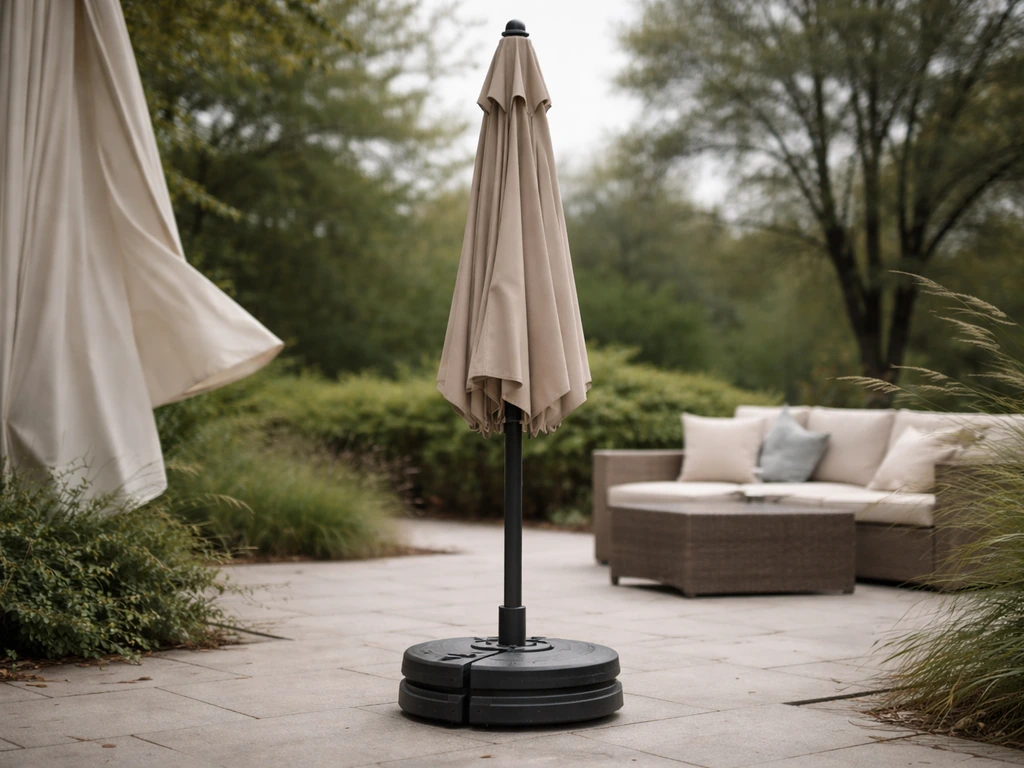
Why your patio umbrella won't stay put
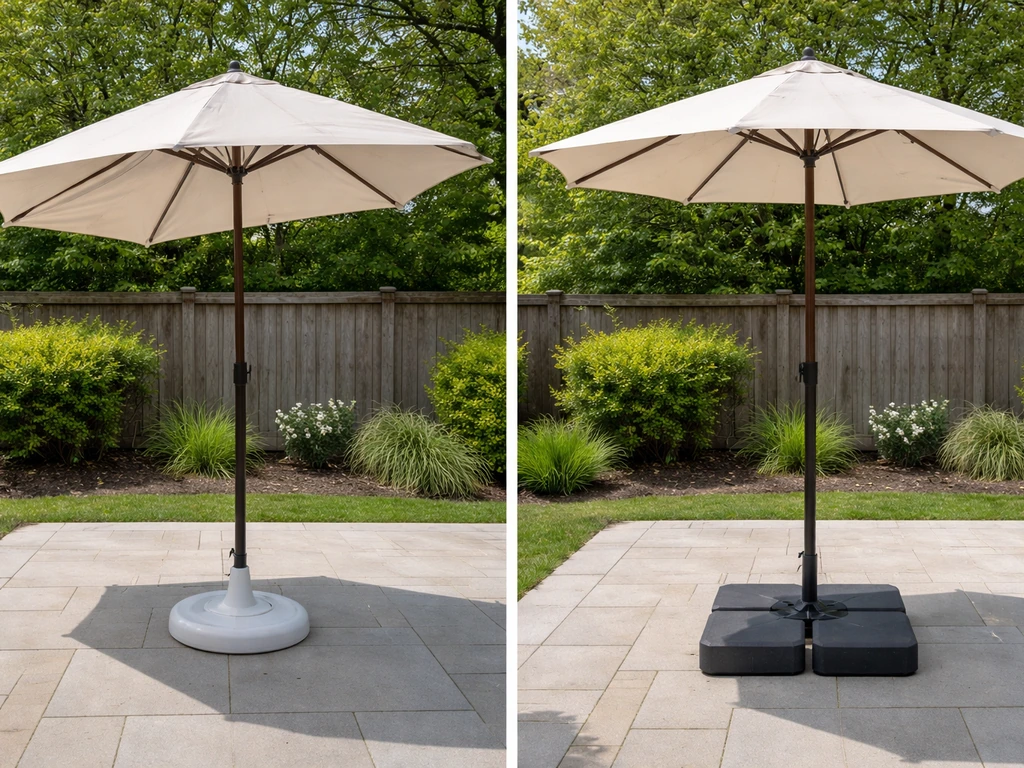
There are two separate problems that look the same from the outside: a wind problem and a base problem. Knowing which one you're dealing with saves you a lot of frustration.
Wind is the obvious culprit. At around 15–20 mph, even a decent umbrella in a decent base starts to wobble. At 20–30 mph, only high-quality wind-rated umbrellas should still be open. blank" rel="noopener noreferrer">Above 39 mph (a near-gale), no patio umbrella should be left open, period, no amount of weight will protect a fully-opened canopy in those conditions. If your area gets a National Weather Service wind advisory (sustained winds around 30 mph or gusts hitting 45 mph), that umbrella needs to be closed and ideally taken down. National Weather Service wind advisory thresholds are defined by Watch/Warning/Advisory criteria, including levels for sustained winds and gusts that trigger advisories Watch/Warning/Advisory definitions page.
But a lot of tipping problems aren't really about extreme wind. They're about an underfilled or wrong-sized base, an umbrella that's shifted onto uneven ground, or a mast that's loose because the tilt or crank hardware has some play in it. If your umbrella wobbles on a calm day, wind isn't the problem, the base setup is.
Check your umbrella type and current base setup
Before you add any weight, figure out exactly what you're working with. The right solution is totally different for a center-pole umbrella versus an offset/cantilever style.
Center-pole umbrellas
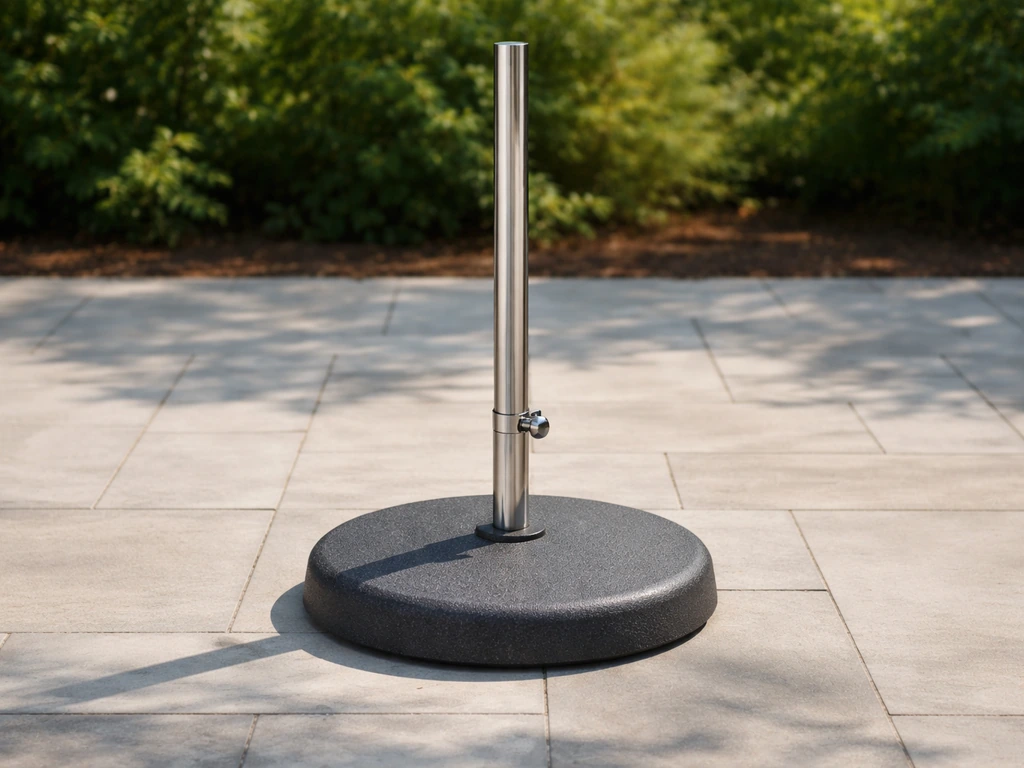
These have a vertical pole running straight up through the middle of the table (or a freestanding base). Because the pole is directly under the center of the canopy, the weight load distributes pretty evenly. A filled base weighing 35–50 lb is typically adequate for a standard 9-foot canopy in light to moderate wind. The rule of thumb is roughly 10 lb of base weight per foot of umbrella diameter, so a 9-foot umbrella wants at least 70–90 lb of effective base weight, which usually means a good standalone weighted base.
Offset and cantilever umbrellas
Offset umbrellas have the pole off to one side, which means the canopy hangs out over open space. That lopsided design creates real leverage, in wind, the force on the canopy acts like a long wrench trying to tip the whole base over. This is why offset umbrellas need dramatically heavier counterweights than center-pole umbrellas of the same size. Here's a rough starting-point guide:
| Canopy Size | Recommended Base Weight (Moderate Wind Exposure) |
|---|---|
| 9 ft | 150–200 lb |
| 10 ft | 175–225 lb |
| 11 ft | 200–250 lb |
| 13 ft | 250–300+ lb |
Check what base you currently have. Is it filled at all? Lift the base or shake it, if it sloshes or feels light, it's either empty or only partially filled. Also check whether your base is cracked or damaged, which can prevent it from holding fill at all. If you're working with a Hampton Bay offset umbrella, some models specify up to 264 lb of fill split across multiple base chambers. Always check your specific model's manual for the target weight, it matters a lot with offset styles.
Weighing down options: fill the base or add dedicated weights
You've got a few practical approaches depending on your setup and budget. If you want the practical steps for how to support patio umbrella, start with the right base fill and upgrade options covered next.
Option 1: Fill your existing base with sand and water
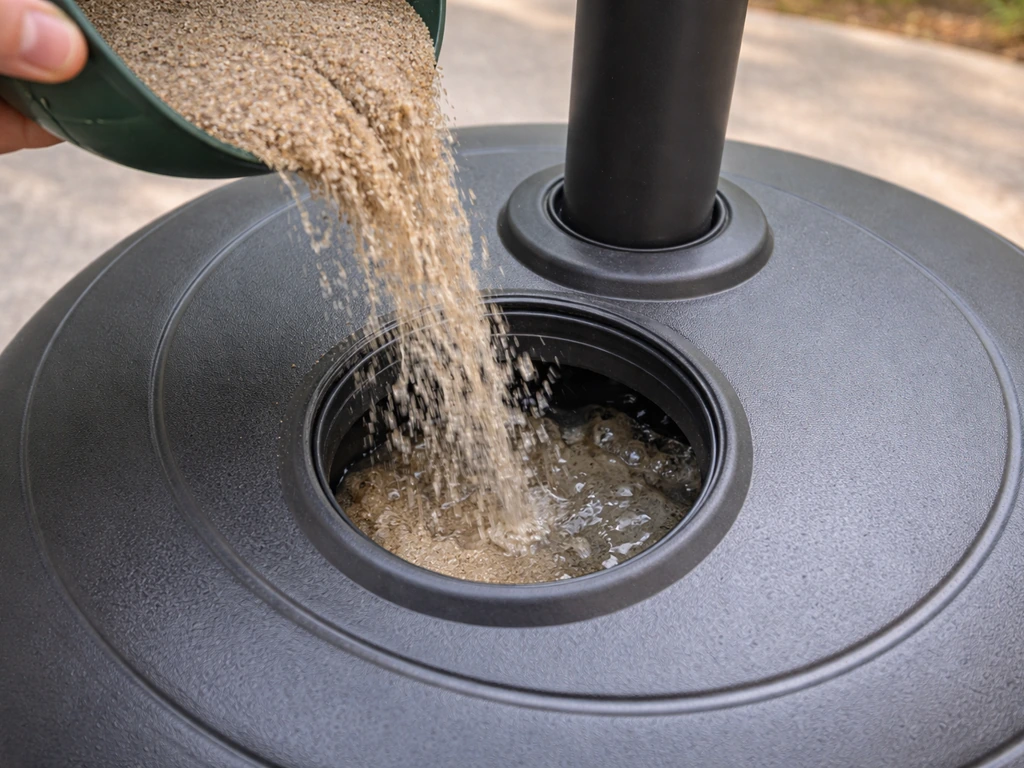
Most plastic umbrella bases have a fill cap on top and are designed to be filled with sand, water, or both. Water alone gives you about 31 lb in a typical base. Sand alone gets you around 51 lb. Sand and water together can reach around 60 lb in the same base.
For most center-pole umbrellas, filling with both is the sweet spot. For offset umbrellas, filling the base is a start, but it won't get you anywhere near the weight you need on its own.
Using the right base weight and filling it correctly is one of the best ways to hold a patio umbrella in place during wind For offset umbrellas, filling the base is a start, but it won't get you anywhere near the weight you need on its own. .
Option 2: Upgrade to a heavier base
If your current base is just too small for your umbrella, replacing it is the honest answer. Grosfillex and similar brands make resin bases specifically designed to hit 35–40 lb when filled, with two thumb screws to lock the pole in place. For offset umbrellas, look at bases with four separate fill chambers, some models like the Coolaroo base system let you fill all four individually to reach the target weight.
Option 3: Add supplemental weight bags
Water weight bags (like the ABCCANOPY set of 4) hang from the frame legs or base and add substantial weight without requiring you to move heavy sand. A set of four can add up to about 88 lb total when filled. They attach via adjustable straps or hooks and have screw-top caps to hold water securely. These are especially useful for offset umbrellas where you need counterweight but can't get there with base fill alone.
Option 4: Concrete fill or bolt-down
For a permanently placed umbrella on a patio slab, concrete fill or a bolt-down anchor gives you the most stability by far. Concrete fill involves installing anchor bolts inside a base sleeve, pouring concrete to the correct level, and letting it cure before tightening nuts. Bolt-down installs drill directly into a concrete slab (minimum around 4 inches / 100 mm thick) and are practically immovable.
If you need a true fix, consider bolt-down patio umbrella anchoring into a concrete slab bolt down patio umbrella. These are overkill for most homeowners but worth considering if you live somewhere consistently windy or have a large commercial-grade umbrella. If you want to explore the anchor and bolt-down route in more depth, those approaches are covered separately in anchoring and bolt-down guides.
Step-by-step: how to fill and set up your umbrella weights correctly
- Close your umbrella completely before doing anything. Never try to fill or move a base with the canopy open — it's a wind sail waiting to tip everything over.
- Place the base on a hard, flat surface. Even a slight slope causes uneven weight distribution and is a common reason umbrellas tip despite having a full base.
- Remove the fill cap (usually a screw-top plug on top of the base). Have your sand and water ready.
- Pour dry sand in first if you're using both. Fill to about 75–80% capacity with sand, then top off slowly with water. The water fills the air gaps in the sand and gets you the maximum weight for the base volume.
- Replace the fill cap firmly. Give it an extra quarter-turn to make sure it's seated — a loose cap will leak over time.
- Insert the umbrella pole into the base and tighten any thumb screws, set screws, or locking bolts until snug. There should be zero play in the pole — if you can wiggle it by hand, tighten more.
- If you're adding water weight bags, hang them on the base legs or frame supports according to the product instructions. Fill them one at a time and distribute them evenly around the base so you don't create a new imbalance.
- Open the umbrella and check stability. Give the pole a firm push from different directions. If it rocks, recheck the ground level and the fill amount before going further.
Extra stability moves beyond just weight
Weight alone doesn't always solve a stability problem. If you want to stabilize a patio umbrella, pairing proper base weight with a few extra stability steps often keeps it from wobbling in wind Weight alone doesn't always solve a stability problem.. A few extra steps can make a real difference, especially for offset umbrellas.
- Position the umbrella so the canopy faces away from your prevailing wind direction. A canopy angled into the wind acts like a parachute; angled with it, the wind passes over more easily.
- Use umbrella tie-down straps or Velcro securing straps to tie the canopy to the frame when it's open. This limits the canopy from catching gusts and acting as a lever.
- If your base has wheels or is on a rolling stand, lock the wheels or place rubber non-slip pads under the legs. Bases that can slide are bases that will tip.
- Check the tilt mechanism. A loose tilt collar or a crank mechanism with play in it allows the pole to shift slightly under load, which reduces the effective contact area between pole and base. Tighten the tilt collar set screw and make sure the crank is fully seated.
- On soft surfaces like grass or pavers, the base can sink unevenly over time. Check the level every few weeks during the season and re-level if needed.
What to do if your umbrella still tips after adding weight
If you've filled the base and added weight bags and the umbrella is still unstable, work through this troubleshooting list before assuming you need a whole new base.
The base isn't actually full
Sand settles and compacts over time, leaving air space at the top. Water evaporates slowly through a loose cap. Check the fill level every season and top it off. A base that felt heavy when you first filled it may be 20–30% lighter by mid-summer.
The ground isn't level
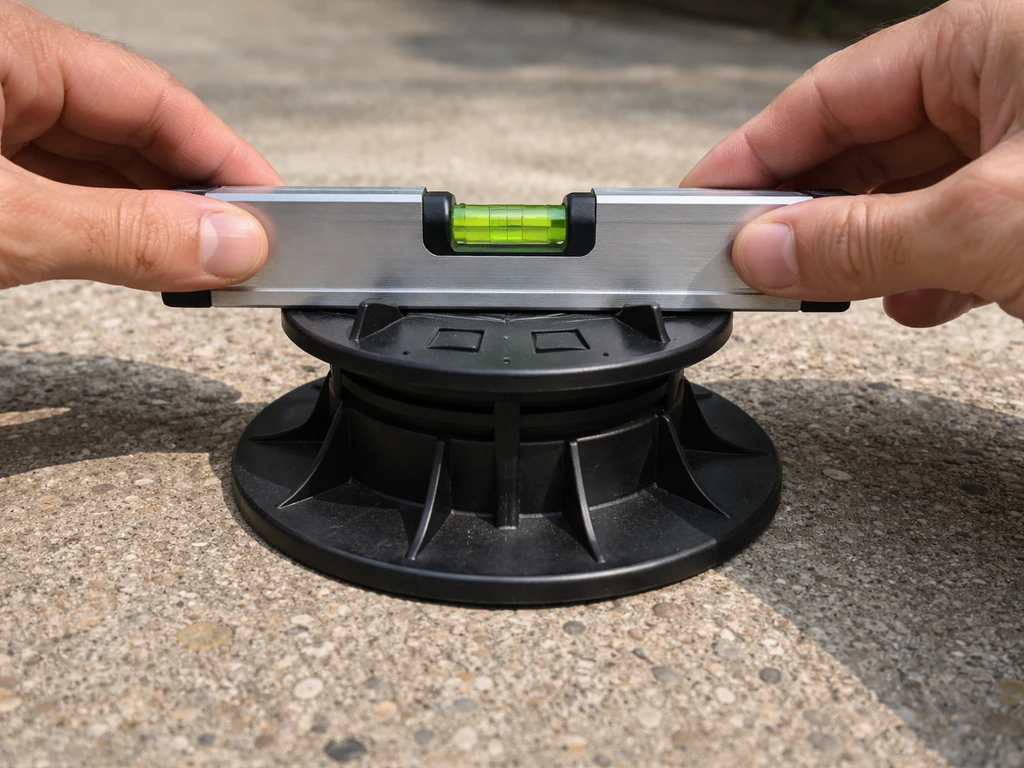
Even a small slope, a few degrees, turns a base into a rocker. Place a bubble level on top of the base to check. If the ground is the problem, use base-leveling pads or relocate the umbrella to a flatter spot. This is one of the most overlooked reasons for tipping.
The base is cracked or damaged
Plastic bases crack from UV exposure, freeze-thaw cycles, and being dropped. A cracked base can't hold full fill and may flex under load. Run your hands over the base while it's empty, look for hairline cracks especially around the fill port and pole socket. A cracked base needs to be replaced, not patched.
The pole socket is worn or oversized
Some bases have a pole socket that has worn out from repeated use, leaving a gap between the pole and the base. Wrap the lower section of the pole with rubber weatherstrip tape to tighten the fit, or use a pole adapter if one is available for your base model.
The umbrella is just too big for the base
This is an honest assessment moment. If you have a 13-foot offset umbrella and a base designed for an 8-foot center-pole model, no amount of fill will save you. The weight math doesn't work, the leverage from a large offset canopy in even moderate wind exceeds what the base can counteract. Upgrade to a base rated for your canopy size, or look into stabilizing and anchoring options that go beyond just weighting the base. If you are still figuring out how to secure an offset patio umbrella, anchoring and proper stabilization steps can help you safely manage the extra leverage from the off-center canopy secure offset patio umbrella.
Seasonal maintenance so this doesn't keep happening
A lot of the tipping problems people deal with mid-season are actually caused by neglect over winter. A few easy maintenance habits will keep your umbrella stable year after year.
Before freezing temperatures hit
This is the most important maintenance step most people skip: drain your water-filled base before winter. Water expands when it freezes and will crack plastic bases, sometimes catastrophically. If you're in a warm climate with no freeze risk, you can leave water in year-round. If there's any chance of freezing temps, either drain the base completely and refill with sand only, or add a manufacturer-approved antifreeze mixture. Leaving a water-filled base outside through a freeze is a guaranteed way to need a new base in spring.
Before and during the season
- Check all nuts and bolts on the base and frame at the start of each season and tighten any that have loosened over winter.
- Inspect the base fill level and top it off if it has settled or leaked.
- Look for cracks in the base housing, especially around the fill port and pole socket.
- Check the tilt and crank hardware for play or damage — loose hardware causes pole movement that undermines even a well-weighted base.
- Always close the umbrella when you're not using it and take it down during any forecast with sustained winds above 20–25 mph or gusts above 35 mph.
Off-season storage
Drain the base, close and dry the canopy thoroughly before covering it, and store the whole assembly in a dry sheltered spot if possible. A dry, covered garage or shed is ideal. If you have to leave it outside, use a fitted protective cover and lay the umbrella on its side so the canopy doesn't catch wind and stress the base all winter. Storing it upright outdoors in an empty base through winter is how poles and bases get damaged before the season even starts.
FAQ
Can I use only water instead of sand to weigh down my patio umbrella?
Yes, but expect less total weight. Most plastic bases reach roughly 31 lb with water alone, which is usually enough for many center-pole umbrellas in light conditions but often falls short for larger canopies or offset styles. If you use water only, double-check stability on a breezy day and consider topping with sand to reach your target weight.
How do I know my base fill is actually at the right level, not just “full enough”?
Fill should be set to the base’s designed fill height, not stopped when it “feels heavy.” Over time sand compacts and water can evaporate through a loose cap, so check the fill level each season (and after any heavy winds). If your base has a fill cap, ensure it is fully seated and the seal is intact.
My umbrella wobbles even when it’s calm, what should I check first?
Start with ground contact and hardware play. Verify the base sits level on a bubble level, inspect the pole socket and crank hardware for looseness, and make sure the pole fit is snug (worn sockets can create a gap). If it wobbles on still days, wind rating and added weight alone often will not fix it.
Are sand and water safe to mix in the same base, and does it change anything?
Mixing sand and water is generally the intent for many umbrella bases and increases effective weight (often up to about 60 lb). Just make sure the base is designed for both materials, keep water capped tightly, and remember that water must be drained before freezing weather to avoid cracking.
What if my umbrella is partially filled and I’m not sure whether it’s underfilled or wrong for the model?
Use a quick “sloshing” test and a weight estimate. If you lift, shake, or tap the base and it feels light or sloshes meaningfully, it is likely underfilled. Then confirm compatibility by checking your exact umbrella model and base chamber count, because some offset systems require split fill across multiple chambers and have specific target weights.
Do water weight bags work better than sand for offset umbrellas?
They can, especially when you need counterweight but your base cannot reach the required capacity. Water weight bags typically add weight via straps or hooks and can collectively add substantial mass (often up to around 88 lb for some sets). The key is correct placement so the bags stay secure and do not shift during gusts.
How often should I refill or adjust the base weight?
Plan on at least a seasonal check. Sand can settle and compact, and water can slowly reduce if the cap is not perfectly sealed. If you see noticeable wobble returning mid-season, re-check the fill level before adding more weight or buying a new base.
What’s the safest way to handle my umbrella when high winds are forecast?
If winds are in the advisory range where gusts may be very strong, close the umbrella, and for near-gale conditions treat an open canopy as unsafe regardless of weight. A good rule is that above the umbrella’s wind-rated limit, weight will not compensate for the aerodynamic force on a fully open canopy.
My umbrella is the “right size,” but the base still won’t stabilize. Could the base be damaged?
Yes. UV exposure, freeze-thaw cycles, and impacts can cause hairline cracks that prevent the base from holding full fill or allow flex. Inspect the base around the fill port and pole socket, and if you find cracking you generally should replace the base rather than patch it.
Is bolting down always necessary for permanent patio umbrellas?
Not always, but it is the most stable option when your patio setup and climate demand it. Bolt-down anchoring is most appropriate for consistently windy areas, large commercial-grade umbrellas, or situations where you cannot achieve adequate counterweight with the base. If your patio slab is thin (around 4 inches or 100 mm minimum is commonly needed), verify feasibility before installing.
Next Articles
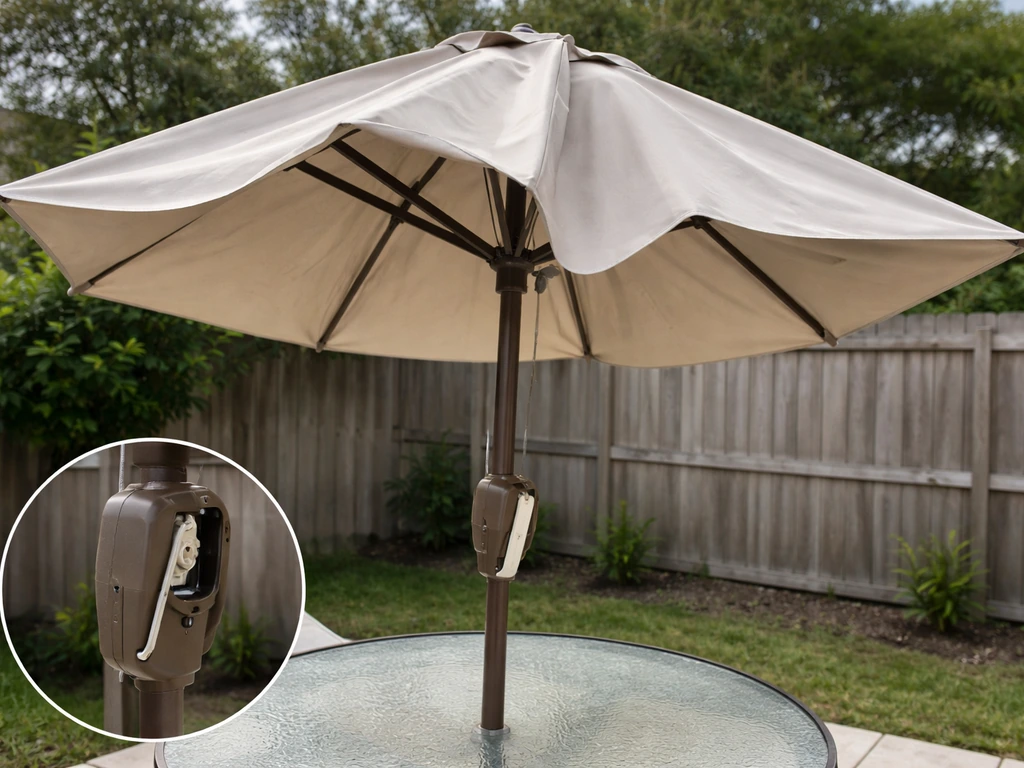
How to Fix a Patio Umbrella That Won't Open or Close
Step-by-step fixes for patio umbrellas that won’t open or close, with checks for jams, cords, latches, and lubricating t
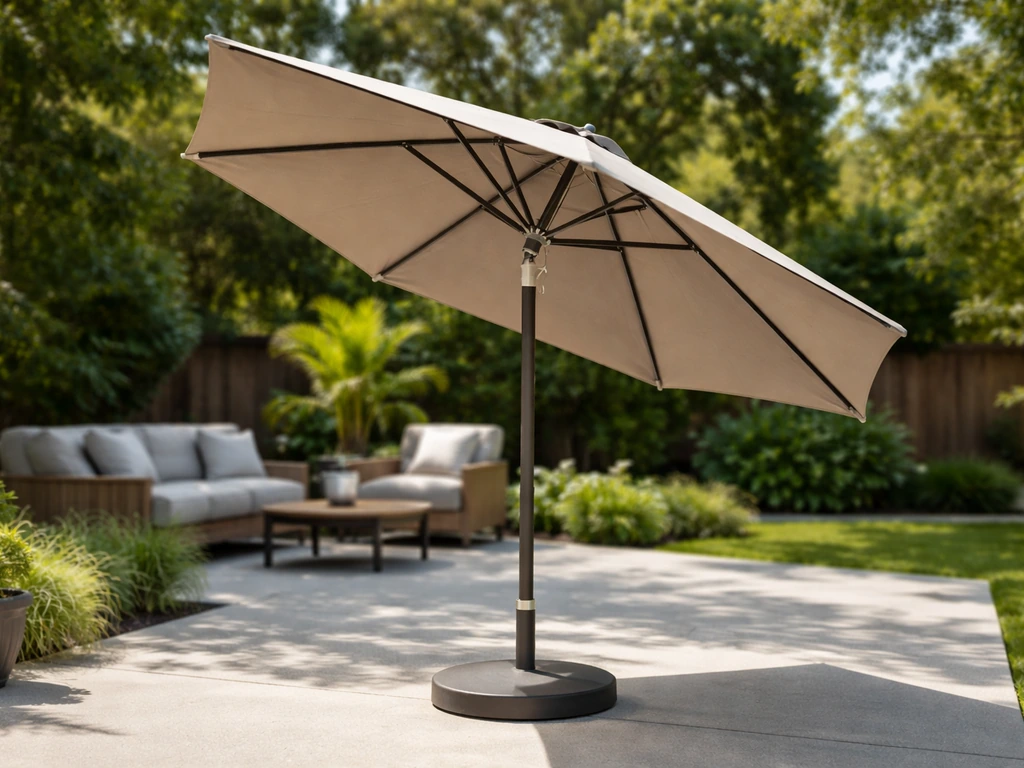
How Does a Patio Umbrella Work? Components, Use, and Fixes
Learn how patio umbrellas work: components, open close tilt, stability, and step by step troubleshooting common mechanic
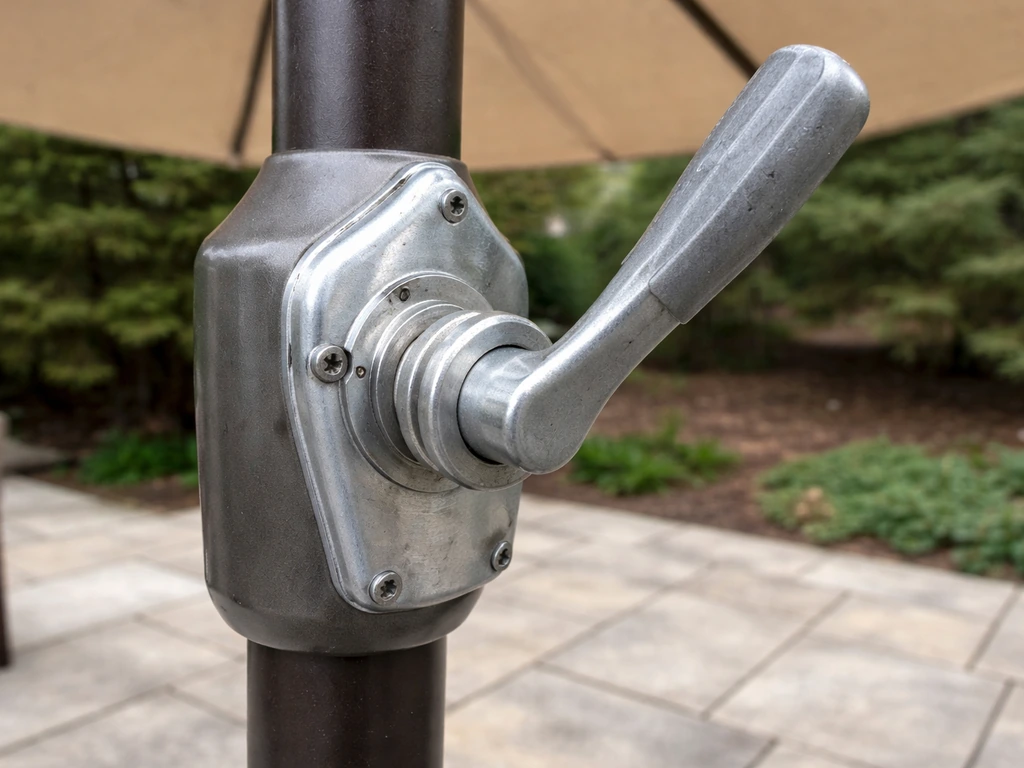
Patio Umbrella Crank Not Working: DIY Fix Guide
Fix a patio umbrella crank that won’t work with safe step-by-step jam, gear, and base troubleshooting and repair tips.