
To properly support a patio umbrella, start with a base that's heavy enough for your canopy size, make sure the pole is fully seated and locked, and check that your tilt and crank mechanisms are tight before you ever open the canopy. For a standard 9-foot market umbrella, that means at least 50 lbs of base weight in calm conditions and significantly more if you get afternoon wind gusts. For a cantilever offset umbrella, you're looking at 100 lbs or more, and some dedicated base weight sets go all the way up to 255 lbs for larger canopies. Get those fundamentals right and most support problems either disappear or become a lot easier to diagnose.
How to Support a Patio Umbrella: Fix Tipping and Wobble

Luca Morrison
30 Jun 2026
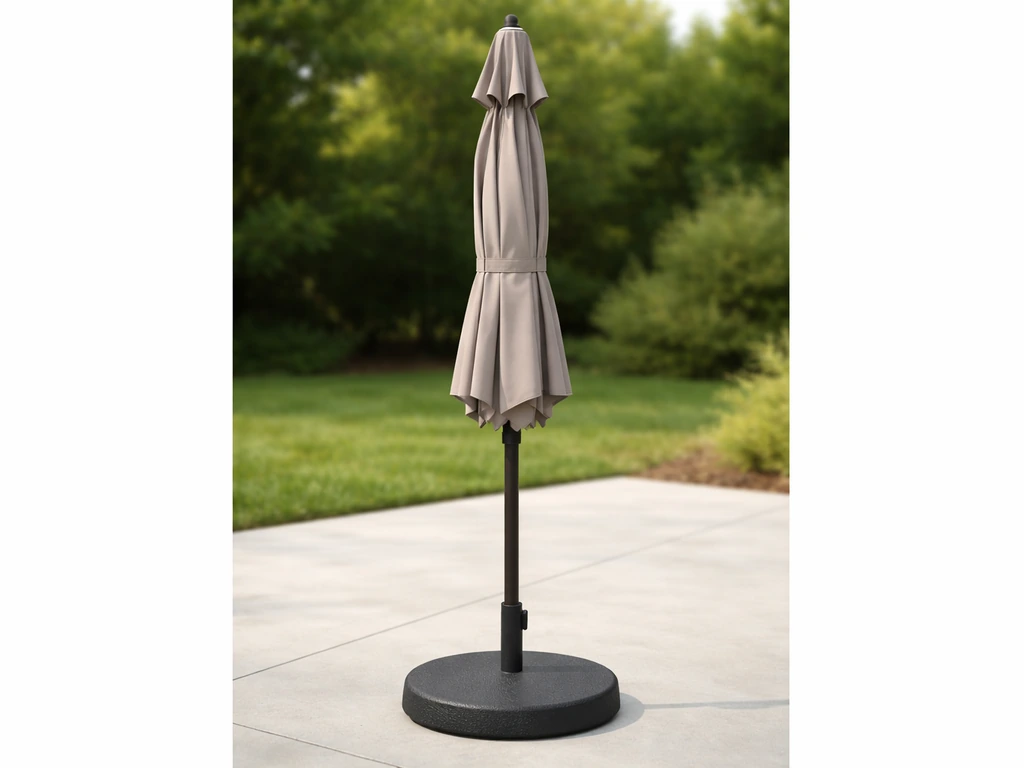
Choose the right base type and weight for your umbrella
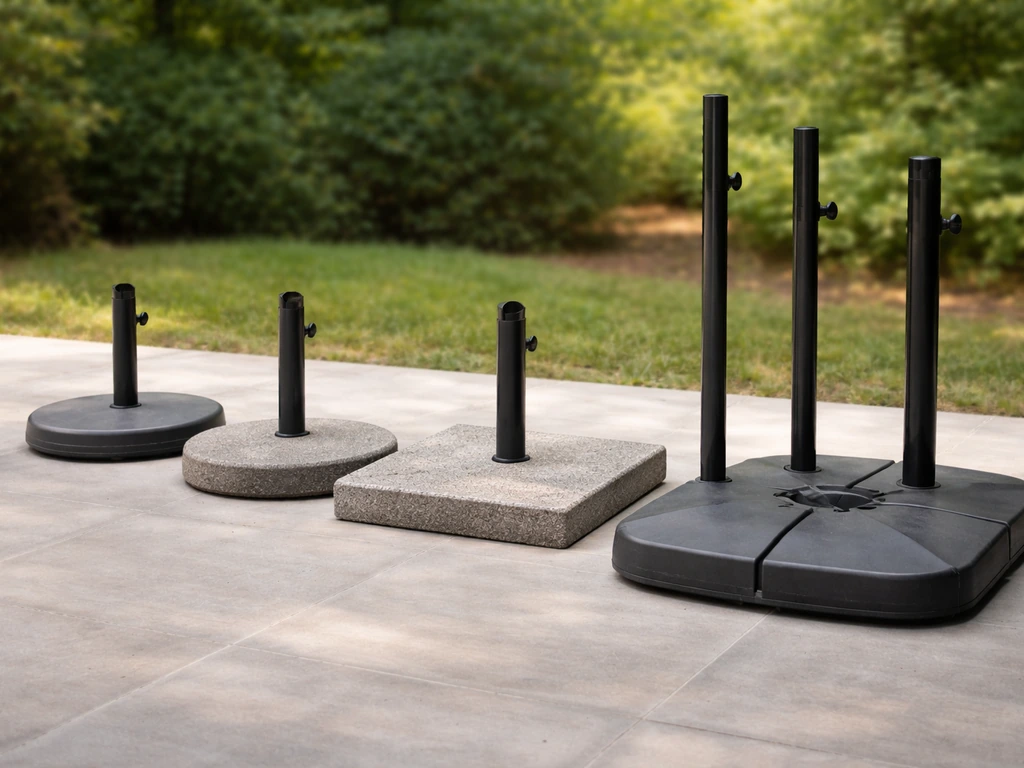
The single biggest reason umbrellas wobble, tip, or get destroyed in wind is an undersized base. It's the most fixable problem, and yet most people just grab whatever base came bundled with the umbrella or pick one that looked sturdy enough in the store. Here's how to actually match your base to your umbrella.
Standard center-pole market umbrellas
For a center-pole umbrella (the classic style that sits through a hole in your patio table or stands alone in a freestanding base), canopy diameter drives the base weight requirement. A 7.5-foot canopy can get away with a 40–50 lb base in low-wind situations, but a 9-foot canopy really needs 50–75 lbs minimum, and a 10- to 11-foot canopy should have 75–100 lbs. If you're in a location that regularly sees afternoon breezes, bump those numbers up by at least 20 percent. When the umbrella sits through a table hole, the table itself adds stability, but the base still matters, especially if the umbrella tilts.
Cantilever and offset umbrellas
Offset cantilever umbrellas put the pole to the side and the canopy overhead, which creates a large lever arm. That physics means they need substantially heavier bases than center-pole umbrellas of the same canopy size. Industry guidance generally puts the minimum at 60–100 kg (roughly 130–220 lbs) depending on canopy size, and dedicated base weight sets for large cantilevers can run up to 255 lbs.
One important caveat: a 255 lb base set is still not a green light to leave a cantilever open in gusty weather. If you are looking at how to secure offset patio umbrella options, remember that manufacturers often recommend using the correct minimum base weight and still closing the umbrella promptly in wind. Manufacturer documentation for these umbrellas often explicitly warns to never operate an offset umbrella in winds greater than 5 mph. Yes, 5 mph.
Close it when the wind picks up, no matter how heavy your base is.
| Umbrella Type | Canopy Size | Minimum Base Weight (Calm) | Notes |
|---|---|---|---|
| Center-pole (freestanding) | 7.5 ft | 40–50 lbs | Increase 20%+ in windy areas |
| Center-pole (freestanding) | 9 ft | 50–75 lbs | More if umbrella tilts |
| Center-pole (freestanding) | 10–11 ft | 75–100 lbs | Use heavy-fill base or steel plate base |
| Cantilever / offset | 9–10 ft | 130–175 lbs | Multiple weight plates recommended |
| Cantilever / offset | 11–13 ft | 175–255 lbs | Dedicated base weight sets required |
Base styles: which one to use
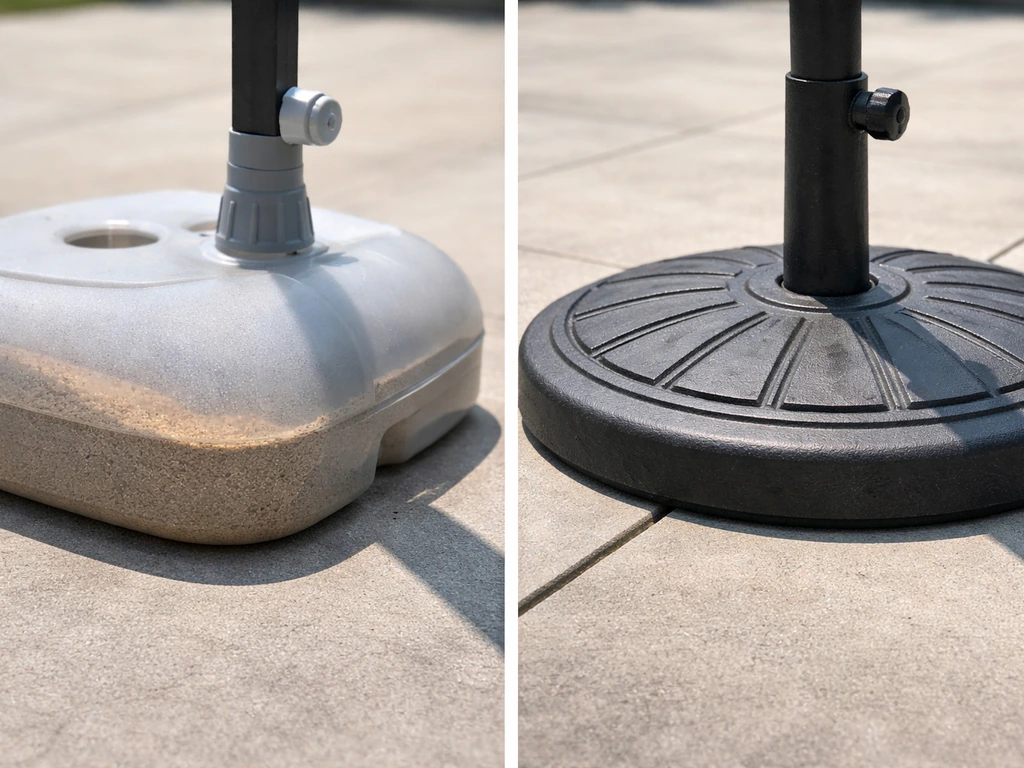
Fillable plastic bases (fill with sand or water) are cheap and portable but rarely heavy enough for anything over 9 feet. If you go this route, always use sand rather than water because it's denser. Solid cast-iron or steel plate bases are heavier per dollar of cost and more reliable long-term, but they're awkward to move. Cross-style bases with weight plates let you add weight gradually, which is handy if you're not sure how much you need.
For cantilevers, a dedicated multi-piece base weight set with interlocking plates is the most secure option. Whatever base you choose, make sure its pole sleeve diameter matches your umbrella pole. Most market umbrellas use a 1. 5-inch or 1.
9-inch diameter pole, and the sleeve fit needs to be snug, not sloppy.
Proper setup and assembly: getting the pole, hinges, and tilt right
A correctly assembled umbrella doesn't just look better, it holds its position, survives wind better, and puts less strain on every moving part. Rushing the setup is how you end up with a crank that skips or a tilt that slowly creeps downward on a hot afternoon.
Seating the pole and attaching the base
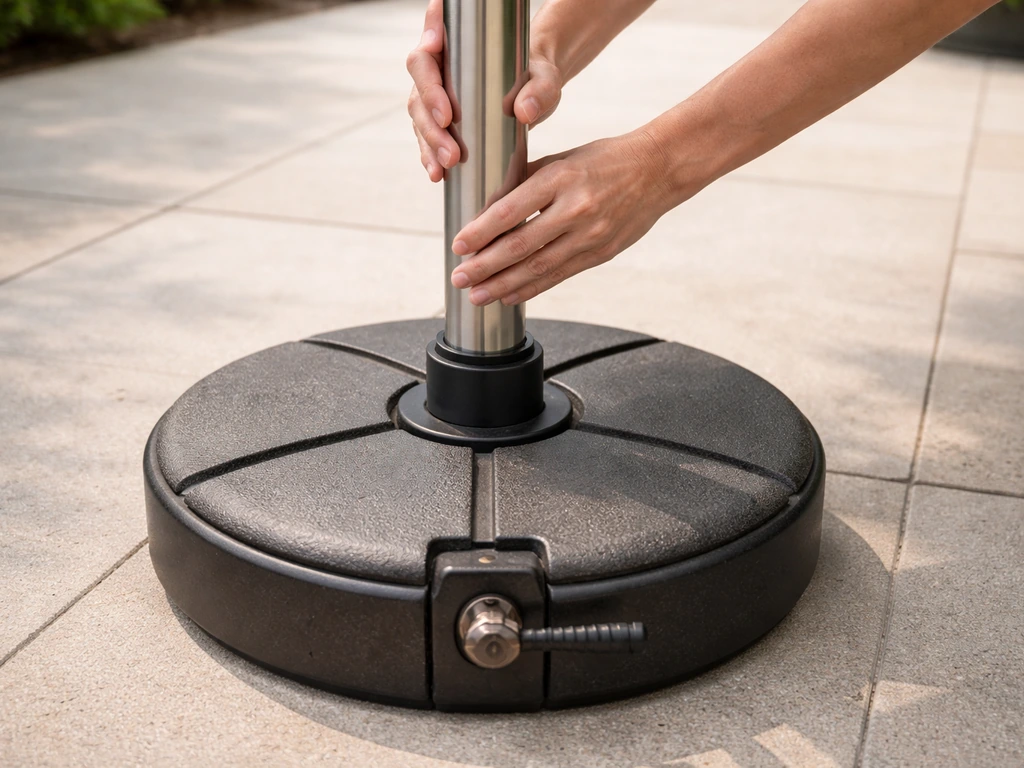
- Set the base in its final position before inserting the pole. Dragging a fully assembled umbrella damages the base sleeve and bends lower pole sections.
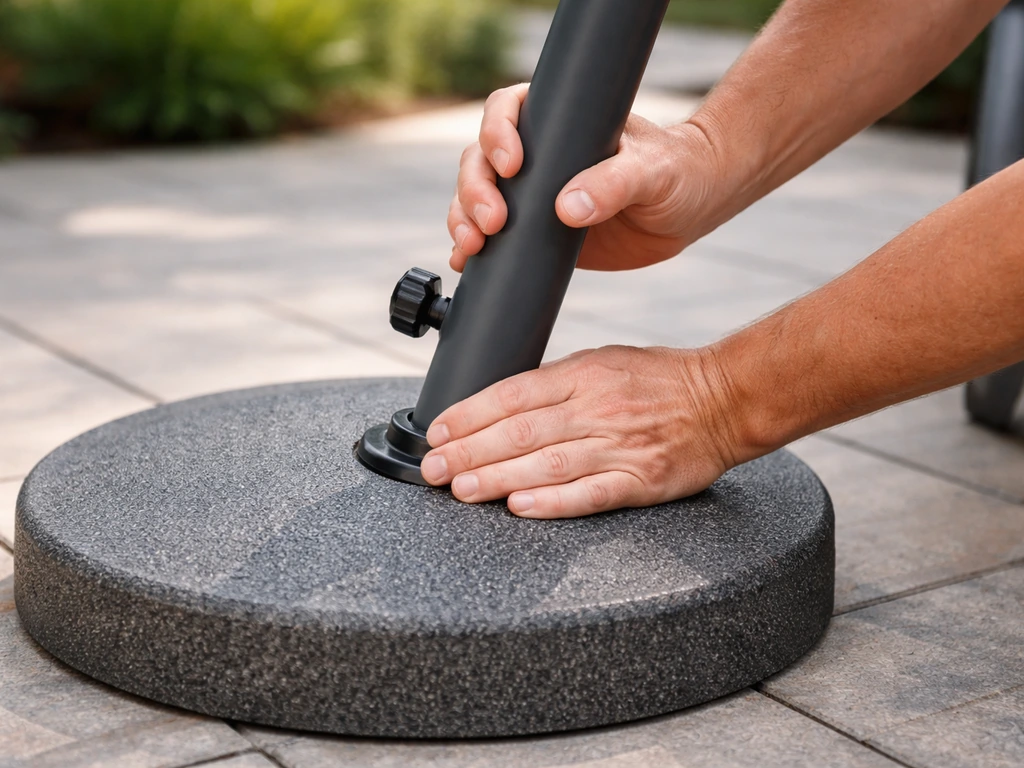
- Insert the pole fully into the base sleeve so the bottom of the pole sits flat on the inner floor of the sleeve. A pole that's only partially inserted is the most common cause of early wobble.
- Tighten the base's locking knob or set screw until it's firmly snug. For bases with a hex set screw (common on Tropitone and similar brands), use the correct hex wrench rather than pliers, which strip the screw head.
- If your base has a secondary lock ring or tension collar, engage it after the knob is tight. This prevents rotation in wind.
Installing the crank lift handle
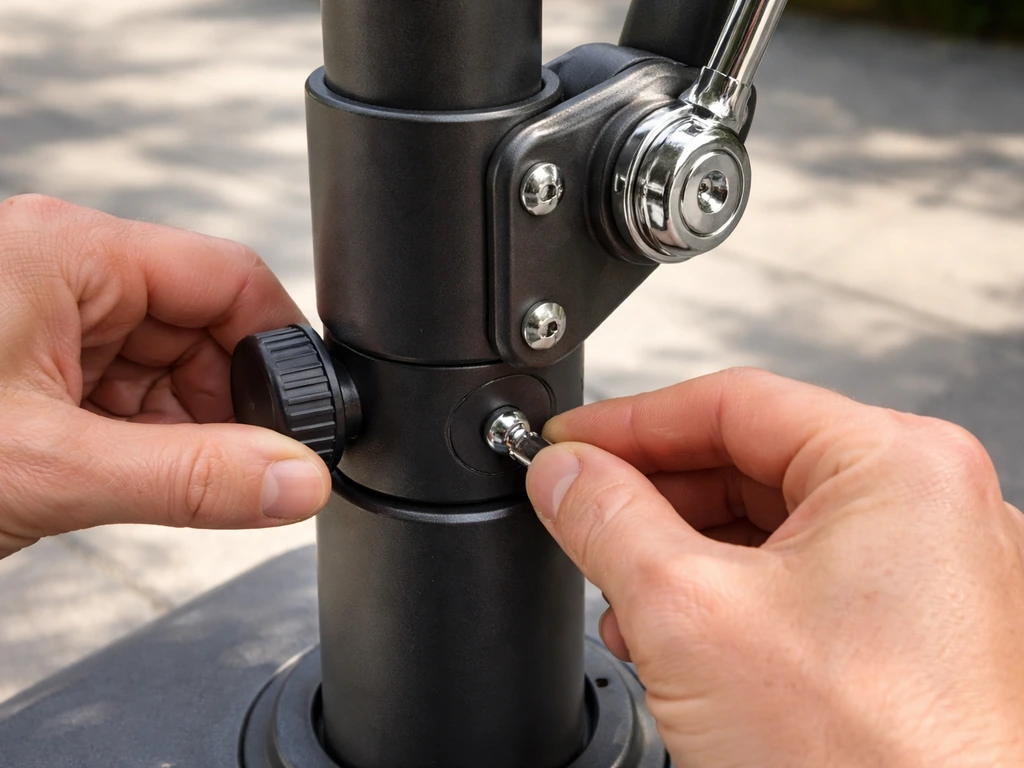
On crank-lift umbrellas (the most common style), the crank handle attaches to a mechanism partway up the pole. On blank" rel="noopener noreferrer">Treasure Garden AKZ and similar models, the handle slides onto the crank axle and is secured with a hex bolt. Tighten this with the provided hex wrench, usually 8mm, until there's no side-to-side play in the handle. A loose crank handle won't just feel sloppy, it causes uneven tension on the lift cord, which leads to premature cord fraying. If you've lost the hex wrench, an 8mm or 5/16-inch hex key from any hardware store works.
Setting up the tilt mechanism
Most modern patio umbrellas use one of two tilt systems: a push-button tilt (a collar on the pole you push in and rotate to lock the canopy angle) or a tilt lever (a lever, often at the hub, that you flip to release and re-lock the tilt). Models like the Treasure Garden AKZ use a tilt lever with a degree scale at the hub, so you can actually see the angle you've set.
Before your first use, open the umbrella fully with the crank, then test the tilt: engage the tilt mechanism, set the canopy angle, and make sure it locks firmly without creeping back. The Frankford Umbrellas ARU owner’s manual includes crank operation language such as continuing to crank until the umbrella is fully open, along with model-specific operation steps tied to the crank mechanism [open the umbrella fully with the crank](https://res. cloudinary. com/curran-catalog/image/upload/v1721324452/Furniture/Vendors/Frankford%20Umbrellas/Vendor%20Resources/_ARUOwnersmanual24_khdym5.
pdf). If it creeps, the tilt lock is either worn or not fully engaged, and you should address that before the umbrella sees any real wind.
Cantilever-specific assembly notes
Cantilever umbrellas have a pivot hinge at the top of the support pole where the horizontal arm attaches. This hinge is load-bearing and needs to be fully bolted and tight before the umbrella is ever opened. Check the hinge hardware with the umbrella closed, not open, because the lever arm under load can make tight bolts feel looser than they are.
On Frankford Eclipse-style cantilevers, the arm-to-pole connection typically uses a bolted collar, and the manufacturer specifically notes that the umbrella should be blank" rel="noopener noreferrer">closed and the cover applied when not in use, both to protect the fabric and to reduce wind load stress on that hinge point.
Frankford ARU guidance also covers how to close and secure the umbrella in high winds or sudden extreme weather manufacturer specifically notes that the umbrella should be closed and the cover applied when not in use.
Stabilize a wobbly or tipping umbrella
If your umbrella is already wobbling, tipping to one side, or rocking in mild breezes, work through this in order from simplest to most involved. To stabilize a patio umbrella, start by addressing the base size and ensuring it’s heavy enough for your canopy and wind conditions. Most wobble problems have a fast fix.
- Check the pole-to-base fit first. Pull the umbrella canopy side to side gently. If the pole shifts inside the base sleeve, the locking knob or set screw has loosened. Retighten it completely. This fixes about half of all wobble complaints.
- Check that multi-section poles are fully pushed together. Most market umbrella poles are two or three sections. If the upper section hasn't clicked or threaded fully into the lower, the joint flexes and the whole canopy rocks. Push each section together firmly until you feel or hear the lock engage.
- Add base weight. If you're at or below the minimum weight recommendation for your canopy size, the base simply can't resist lateral force in wind. Add a weight ring, weight plates, or switch to a heavier base. Filling an existing base more fully with sand (not water) is the cheapest immediate fix.
- Check for a bent pole. Hold the pole at eye level with the umbrella closed. If it curves visibly, wind or a previous tip-over has bent it. A bent pole cannot be reliably stabilized and should be replaced.
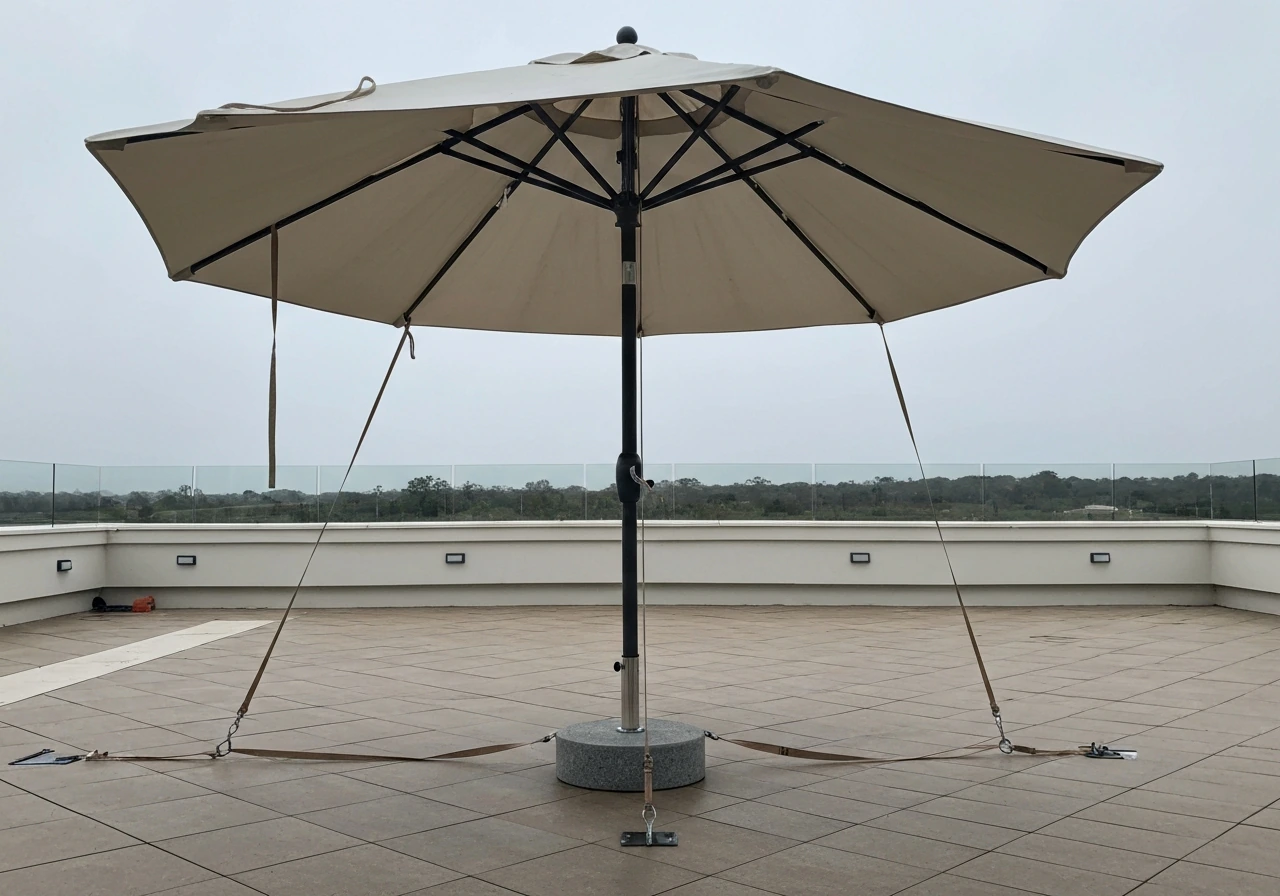
- Anchor to a surface. If your base is the right weight but the umbrella is on a deck or patio that lets the base slide, use non-slip rubber pads under the base feet, or bolt the base down. Bolting is covered in more depth in the related guide on how to bolt down a patio umbrella.
For offset cantilever umbrellas specifically, a second form of instability is side-to-side rotation of the base itself. Most cantilever bases have a locking mechanism that prevents the pole from spinning, but it needs to be engaged. Check the base rotation lock (usually a pin or lever near the base collar) and confirm it's fully set. If your cantilever continues to tip despite adequate base weight, the issue may be uneven weight distribution on the base plate.
If the umbrella still won't stay put, focus on anchoring it properly so it can't wobble or tip as the breeze changes how to hold patio umbrella in place. Make sure your weight plates are added symmetrically or per the manufacturer's diagram, not all stacked on one side.
Fix common mechanical failures: crank, tilt-lock, cords, and pole issues
The support structure of a patio umbrella isn't just the base and pole. The crank, tilt mechanism, lift cord, and frame ribs all play a role in keeping the canopy properly positioned. When these parts fail, the umbrella can't hold its shape or angle, which effectively means it's no longer properly supported even if the base is perfect.
Crank won't hold position or skips
If your crank handle turns but the umbrella doesn't open (or opens and then creeps back down), the issue is usually one of three things: a stripped or worn ratchet inside the crank mechanism, a frayed lift cord slipping on the pulley, or a loose set screw on the lower crank component letting the mechanism spin freely on the pole. Start by tightening the crank handle hex bolt first. Then look inside the crank housing for a visible set screw on the lower collar and tighten it with the appropriate hex key. If the umbrella still creeps, inspect the lift cord.
Frayed or broken lift cord
The lift cord is a braided line that runs from the crank pulley up through the pole and connects to the canopy hub. On cord-lift (non-crank) umbrellas, you pull the cord directly to open and tie it off to hold position. When the cord frays, stretches, or snaps, the umbrella won't open or won't stay open.
Replacement cord is sold by the foot or in 50-foot spools, and the correct type is a braided polyester or poly-cotton cord in the diameter your umbrella uses, typically 3mm to 5mm. To replace it, fully close the umbrella first, remove the top finial and any pole caps, thread the new cord through the internal pole channel following the same path as the old cord, and re-tie the end knots. Test for smooth open and close before relocking the crank.
Tilt-lock won't hold the angle
On push-button tilt umbrellas, a worn or cracked button collar is the usual culprit. The plastic button compresses and no longer creates enough friction against the pole to hold the tilt angle. Replacement tilt collars are model-specific and usually cost $10–$25. On lever-tilt umbrellas like the Treasure Garden AKZ, if the tilt lever doesn't lock firmly, check all the screws at the hub for tightness first (as specifically called out in the AKZ tilt lever replacement instructions).
If screws are tight and the lever still won't hold, the tilt lever itself may be cracked or the locking pin worn, and a replacement lever assembly is needed. When replacing any tilt component, review the complete replacement instructions before starting and test for smooth open, close, and tilt operation before considering the job done.
Bent or broken ribs
A broken rib makes the canopy sag on one side, which catches wind unevenly and puts torque stress on the pole and hub. Single rib replacements are available for most major brands and are worth doing if the rest of the umbrella is in good shape. If more than two ribs are bent or broken, the umbrella's structural integrity is compromised and replacement of the whole canopy and frame section is the more economical path.
Pole joint failure or cracked lower pole
A cracked pole section, especially the lower section where the base exerts lateral force, is a safety issue, not just a cosmetic one. A cracked pole can fail suddenly in wind. If you see visible cracking, fracturing, or sharp bending at any pole section, close the umbrella immediately and replace the affected section before using it again. Do not try to splint or tape a cracked umbrella pole.
Maintenance checks to prevent support problems
Most umbrella support failures are gradual, not sudden. A few minutes of inspection at the start and end of each season catches 90 percent of problems before they become emergencies.
What to inspect and when
- Base locking knob or set screw: check at the start of each season and re-tighten if any play is detected. Vibration from wind slowly loosens these over time.
- Crank handle bolt: tighten with a hex wrench at the start of each season. A loose crank handle is the leading cause of premature cord wear.
- Lift cord condition: inspect for fraying, stiffness, or discoloration. A cord that looks fuzzy or has visible broken strands is close to failing and should be replaced before the season starts.
- Tilt mechanism screws and lever: check for tightness and smooth operation. Any grinding or sticking when you engage the tilt is a sign that a fastener has loosened or debris has packed into the mechanism.
- Pole joints: check for corrosion, cracking, or looseness at each joint. A joint that wobbles even when tightened means the collar or locking pin is worn.
- Base hardware: look for rust or corrosion on any metal components of the base. Surface rust on cast iron bases is cosmetic, but pitting corrosion on structural bolts or the sleeve mounting hardware is a reason to replace the hardware.
- Ribs and hub: open the umbrella fully and visually inspect each rib and the hub where they connect. Any rib that bends asymmetrically or sits lower than its neighbors has a stress fracture or bent connector.
Corrosion prevention
Metal umbrella hardware (screws, set bolts, crank mechanisms, base hardware) corrodes faster when it's exposed to moisture and then left to sit. At the end of each season, clean any metal parts with a damp cloth, dry thoroughly, and apply a light coat of silicone spray or a corrosion inhibitor spray to all exposed metal. For cast-iron bases, a coat of exterior spray paint over any bare metal spots before storage will prevent rust from taking hold over winter. Protect outdoor metal furniture and umbrella bases from moisture exposure to prevent rust, which can compromise base integrity over time.
Wind threshold reminders
Building a maintenance habit around wind awareness is one of the most effective ways to prevent support damage. The general rule from umbrella manufacturers is to close when sustained winds exceed 20–25 mph, and many manufacturers specifically recommend closing at 25 mph sustained. Cantilever umbrellas with large canopies have even lower thresholds, and some manufacturer documentation puts the absolute limit for operating an offset umbrella as low as 5 mph. A fully loaded cantilever canopy in a sudden gust generates enormous torque at the base. No amount of base weight eliminates that risk if the canopy is open.
Seasonal storage and winterizing your umbrella support structure
How you store an umbrella at the end of the season directly affects whether it's structurally sound when you bring it back out. This applies to the canopy fabric, yes, but even more to the support hardware: poles, bases, crank mechanisms, and tilt parts that sit in moisture all winter tend to fail in the spring when you need them most.
Preparing the umbrella for storage
- Close and clean the umbrella before storing. Wipe down the canopy fabric with a mild soap solution and let it dry completely before closing. Storing a damp canopy leads to mold and mildew that weakens the fabric and can migrate into the hub.
- Apply the protective cover. Most quality umbrellas come with a storage cover, and manufacturers like Treasure Garden specifically instruct that the umbrella should be covered with the provided protective cover when not in use. This keeps moisture and UV off the fabric during off-season storage.
- Remove the umbrella from the base and store them separately. This is especially important for areas with freezing winters, where a pole left in a base sleeve can freeze in place and crack the sleeve when you try to remove it in spring.
- Drain fillable bases completely. Any water left in a fillable plastic base will expand as it freezes and crack the base from the inside. Tip the base fully upside down and let it drain for several hours, then store it indoors or in a protected area. Sand-filled bases should also be emptied, or at minimum the drain plug should be left open.
- Inspect and lubricate hardware before storage, not after. Cleaning and applying corrosion inhibitor before you put the umbrella away means the metal goes into storage protected, rather than sitting in surface oxidation for five months.
- Store the pole and canopy assembly horizontally or in a dedicated umbrella storage bag, not leaning against a wall at an angle. Long-term angled storage can introduce a slight bow into aluminum poles that becomes permanent.
Winterizing a cantilever umbrella
Cantilever umbrellas have more hardware points to protect than center-pole styles, and their bases are more complex. In addition to draining any fillable weight sections, inspect the hinge hardware at the horizontal arm connection. This pivot point sees the most stress during the season and is the most likely place to develop cracking or loosened fasteners. Clean, dry, and spray this joint with silicone lubricant before storage. If your cantilever came with a wind kit (some Frankford Eclipse versions include this), store it with the umbrella so it's ready to install at the start of next season.
What to check before you use it again in spring
When you bring the umbrella back out, don't just set it up and open it. Run through a quick pre-season check: tighten the crank handle bolt, check the lift cord for fraying, inspect the tilt lock for smooth operation, seat the pole fully in the base and tighten the sleeve lock, and open the umbrella fully once to confirm all ribs deploy symmetrically.
Fix anything that's off before the umbrella sees its first gust of wind, and it'll hold up reliably all season. If you identified any wobble, anchoring, or mechanical issues this season that weren't fully resolved, now is the time to tackle them rather than waiting until the next windstorm forces your hand. If you still notice anchoring problems after a gust, review the basics of how to anchor patio umbrella models with matching base weight and fit.
FAQ
Can I rely on a heavy base alone to stop an umbrella from wobbling in wind?
No. Base weight helps, but wind is dynamic (gusts and shifting pressure). If your umbrella is offset/cantilever, use a wind threshold to decide when to close, even with a heavy base. For most offset umbrellas, manufacturer guidance can be as low as 5 mph, so treat “heavy base” as only one layer of protection, not a permission to leave it open in strong gusts.
If I use a fillable base, should I fill it with sand or water (and how do I do it safely)?
Use sand only for fillable bases. Sand is denser and stays free-flowing, which makes it more effective than water at adding real mass. Also, never overfill a base that includes a fill cap or vent, and make sure the base is seated flat before you top up.
What should I do if my base and pole do not feel like a snug fit?
If the pole sleeve fit is loose, wobble usually returns even with the correct weight. Check that the umbrella’s pole diameter matches the sleeve size on the base, then reseat the pole fully and tighten the sleeve lock. If the base hardware is designed for a different pole diameter (for example, 1.5-inch vs 1.9-inch), adding more weight will not fully fix the movement.
My base weight seems correct, but it still tips. How can weight placement be the cause?
Yes, uneven weight can cause rocking or tipping even when the base meets the nominal weight. Confirm the weight plates are arranged symmetrically (or exactly per the base diagram), not stacked on one side. For cantilevers, also verify the rotation lock is engaged so the base cannot spin.
My umbrella cranks but won’t stay open. Where do I troubleshoot first?
Check the crank first if the handle moves but the canopy position does not hold. Tighten the crank-handle hex bolt, then inspect for a visible set screw in the lower crank area and tighten it. If the cord is the issue, you may see fraying or slipping at the lift pulley, which will usually show up during repeated open-close tests.
How can I tell whether a wobble problem is tilt-mechanism failure versus a base problem?
Before replacing parts, confirm the tilt mechanism is not simply out of alignment or under tension. For push-button tilt, a worn or cracked button collar is a common failure point. For lever tilt, verify hub screws are tight before replacing the lever, and test that the lock engages firmly and does not creep.
The umbrella creeps down when open. Does that always point to tilt hardware?
A frayed lift cord can let the canopy drop gradually, which can feel like “poor support” even if the base is heavy. Inspect the cord along the pole and near the crank pulley for fuzzing, broken strands, or glazing. If you find damage, replace the cord using the umbrella’s required cord type and diameter (often braided polyester or poly-cotton).
Is it okay to leave an umbrella partially open while it’s stored outdoors?
Do not store an umbrella fully open and wedged. For frame and hinge longevity, close the canopy fully, apply the cover if the system has one, and keep the umbrella sheltered from constant moisture. Leaving an offset cantilever open increases hinge stress and can accelerate loosening at the top pivot.
What maintenance step prevents wobble caused by hardware loosening over time?
Yes, corrosion can weaken threads and prevent proper clamping, which can lead to wobble or creeping. Clean metal parts at season end, dry completely, and apply a corrosion inhibitor to exposed hardware. Pay special attention to crank set screws, tilt hardware, and hinge bolts.
My umbrella pole has a visible crack. Can I tape or splint it to keep using it?
If a pole section is cracked or sharply bent, do not try to patch it with tape or a clamp. Close the umbrella and replace the affected pole section before using it again. A cracked pole can fail suddenly in wind, even if it looks stable when the umbrella is closed.
If I add an anchor, do I still need to match base weight to canopy size?
When you have to anchor beyond the base, stop and verify you still have correct base weight and pole seating. Anchors help resist lateral movement, but they do not replace proper fit (sleeve tightness) or the minimum base weight for your canopy size and wind exposure. If the umbrella wobbles before anchoring, fix base and fit first.
Next Articles
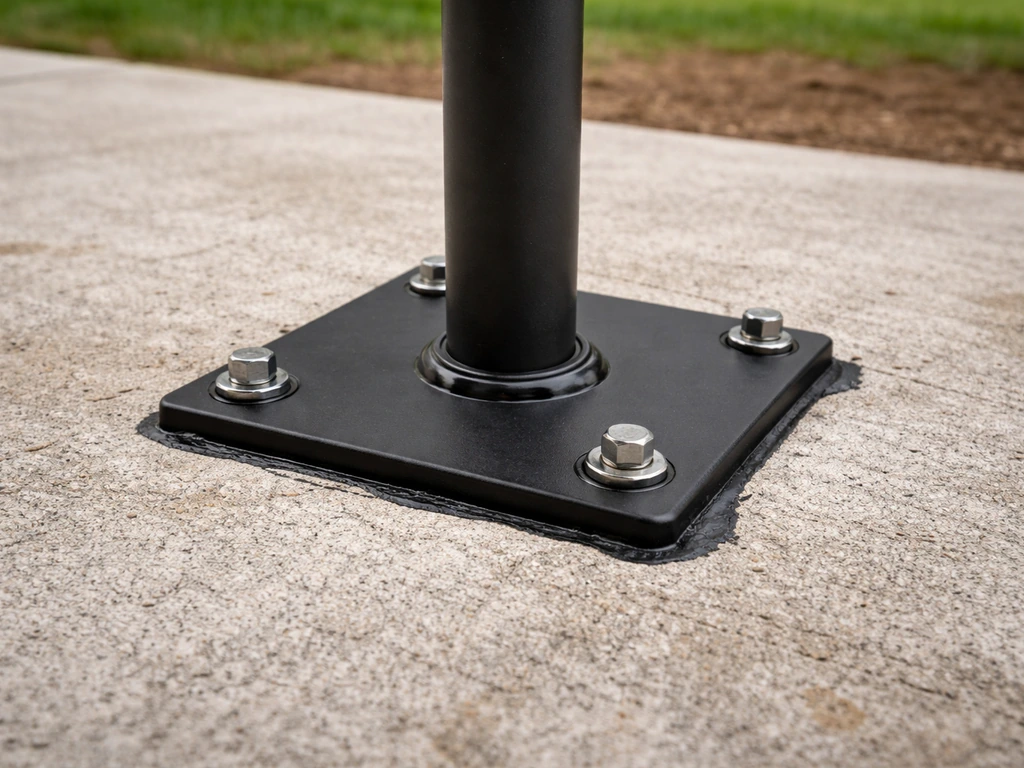
How to Bolt Down a Patio Umbrella Step by Step
Step-by-step how to bolt down a patio umbrella, choose the right anchors, drill, tighten, waterproof holes, and prevent
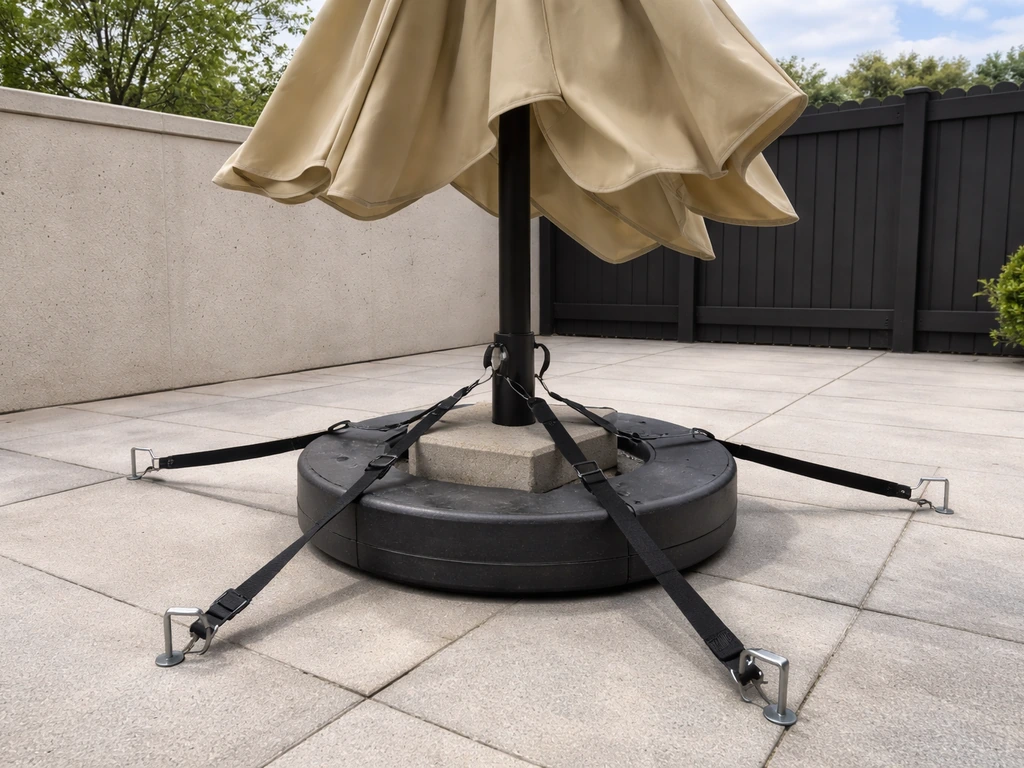
How to Hold Patio Umbrella in Place in Wind
Step-by-step methods to hold patio umbrellas in windy conditions using the right base, anchoring, and wind-stopping tact
How to Stabilize a Patio Umbrella in Wind
Step-by-step ways to stabilize a patio umbrella in wind, fix wobble causes, and choose the right base and tie-downs.