Patio umbrellas are fixed by awning and canvas shops, upholsterers, marine sailmakers, outdoor-furniture repair pros, general handymen, manufacturer service centers, and mobile pickup-and-repair services. For most common failures, broken cords, jammed tilts, snapped ribs, or worn fabric, you have real options, and plenty of repairs are genuinely doable yourself with basic tools and about an hour of time. If you want step-by-step guidance, check our detailed guide on how to repair patio umbrellas for common fixes and tools. Common failure modes include snapped or bent ribs and ferrules, broken hub/runner, stripped crank gears or cable failures, jammed tilt mechanisms, seam tears, UV‑degraded/brittle fabric, and corroded fasteners; see How to Repair Patio Umbrellas, PatioUmbrellaRepairGuide (diagnosis & fixes) How to Repair Patio Umbrellas — PatioUmbrellaRepairGuide (diagnosis & fixes).
Who Fixes Patio Umbrellas: Repair Help, Costs & DIY Tips
Who fixes patio umbrellas: your options at a glance
- Awning and canvas shops: the most versatile option; they handle re-covering, structural repairs, and custom sewing using commercial-grade materials like Sunbrella acrylic
- Marine canvas shops and sailmakers: experts in outdoor fabric work and UV-resistant stitching; a great find if you have one nearby
- Upholstery shops: handle fabric replacement and patching, especially on decorative or cushioned umbrella styles
- Outdoor-furniture and patio specialty stores: many offer in-store repair or can refer you to a trusted local tech
- Manufacturer and authorized service centers: necessary when your umbrella is under warranty or involves proprietary motorized parts
- General handymen: suitable for mechanical fixes like restringing, hardware swaps, and crank repairs
- Mobile and pickup-and-repair services: canvas businesses that collect your umbrella, do the work at their shop, then return it — ideal for large cantilever umbrellas that are hard to transport
What each type of pro actually does
Awning and canvas shops
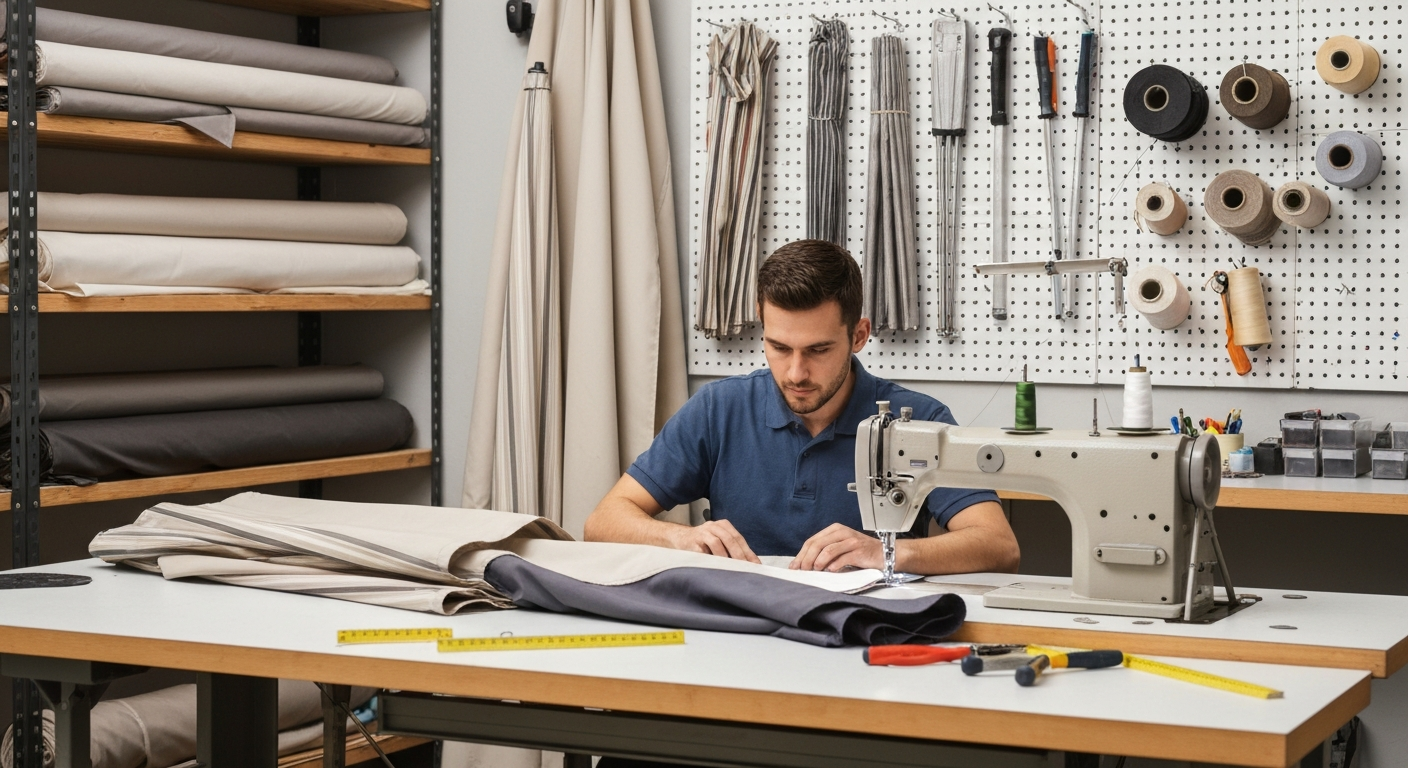
These are my first call for anything fabric-related. A good awning shop works with solution-dyed acrylic fabrics every day, owns industrial sewing machines, and stocks UV-resistant PTFE thread that holds up outdoors far better than standard polyester thread. They quote project-based pricing rather than a flat per-job rate, so bring your umbrella in or send photos with measurements. Many also offer pickup and delivery, which is worth asking about upfront.
Marine canvas shops and sailmakers
Sailmakers work with heavy-duty outdoor canvas all day long. They understand UV degradation, waterproofing, and heavy-gauge stitching better than almost anyone. If you live near a marina or boating community, a marine canvas shop can re-cover or patch a patio umbrella canopy with the same materials they use on boat biminis. The work tends to be extremely durable.
Manufacturer service centers and warranty repairs
If your umbrella is still under warranty, contact the manufacturer before touching anything. Many product manuals explicitly warn against amateur disassembly of crank housings and gear mechanisms, and attempting a repair yourself can void coverage. Brands like Treasure Garden, FIM, and Galtech have authorized service networks or direct mail-in processes for replacement parts and structural failures. Factory turnaround can take several weeks if parts need to be ordered, so plan ahead.
Mobile and pickup-and-repair services
Some canvas and awning companies will come to you, diagnose the problem on-site, and either fix it there or haul it back to their shop. This is especially useful for large offset (cantilever) umbrellas that weigh 60 or more pounds fully assembled. Re-covers done in-shop typically take 7 to 14 days, sometimes up to two weeks depending on the shop's queue and whether custom cutting is involved.
DIY or hire a pro? How to decide
I'll be honest with you: most umbrella repairs land somewhere in the middle of the DIY-versus-pro spectrum. The key is matching the job to your tools and comfort level. Here's how I think through it. For step-by-step guidance on how to fix a patio umbrella, see our detailed repair guide.
| Situation | Recommended approach | Why |
|---|---|---|
| Small fabric tear under 2 inches | DIY | Marine repair tape or a patch-and-stitch fix is fast, cheap, and effective |
| Broken or frayed lift cord / restringing | DIY | Straightforward with replacement cord and a basic knot; no special tools needed |
| Jammed or stiff tilt mechanism | DIY first | Often fixed with silicone spray lubricant in a few minutes |
| Snapped rib or bent ferrule | DIY if parts are available | Standard aluminum ribs are swappable with basic tools; some proprietary ribs require pro sourcing |
| Stripped crank gears or broken crank housing | DIY or handyman | Replacement crank assemblies are widely available; more fiddly but doable |
| Full canopy re-cover or replacement | DIY or canvas shop | DIY works for standard canopy swaps; custom or odd sizes need a shop |
| Bent or broken hub/spider | Pro recommended | Hub damage affects structural integrity; improper repair creates a fall hazard |
| Motorized or retractable system failure | Pro or manufacturer | Motors, control boards, and arm mechanisms need specialized diagnosis |
| Offset/cantilever structural damage | Pro recommended | Cantilever frames carry high torque loads; bent arms or cracked bases are safety issues |
| Umbrella still under warranty | Manufacturer service | DIY work can void coverage |
One honest gotcha I see often: people attempt a hub repair with zip ties or hose clamps as a temporary fix, then forget about it. A damaged hub is a structural failure waiting to happen, especially on umbrellas over 9 feet. If the hub is cracked or the rib sockets are broken, get it looked at by a pro or source a proper OEM replacement.
Questions to ask a repair pro before you hire
Getting a quote from a repair shop is straightforward, but asking the right questions saves you from surprises. Here's exactly what I'd ask before handing over my umbrella.
- Can you diagnose the problem first, and is there a diagnostic fee? Some shops charge a small bench fee; others roll it into the repair cost.
- Do you stock or source OEM parts for my brand and model, or will you use aftermarket components?
- What's the realistic turnaround time — and do you have a current backlog? Simple fixes are often same-day or next-day; re-covers commonly take 7 to 14 days.
- Do you offer a workmanship warranty on the repair, and for how long?
- Do you offer pickup and/or return delivery, and what does that cost?
- Are you insured for on-site repairs if a technician comes to my property?
- Can you give me a written estimate before starting the work?
What repairs actually cost: realistic price ranges
Pricing varies quite a bit based on umbrella type, damage severity, fabric choice, and local labor rates. The numbers below are approximate ranges based on published cost guides and shop pricing as of mid-2026. They give you a solid ballpark before you call anyone.
| Repair type | Typical low | Typical mid | Typical high | Main cost drivers |
|---|---|---|---|---|
| Cord restringing | $15 DIY | $40–$80 handyman | $100+ | Labor time, cord type, umbrella size |
| Tilt mechanism repair/replacement | $10 DIY parts | $60–$120 | $150+ | Part availability, mechanism type (push-button vs. collar) |
| Rib replacement | $5–$15 DIY parts | $50–$100 pro labor | $150+ | Proprietary vs. standard ribs, number of ribs |
| Crank assembly replacement | $20–$50 DIY parts | $80–$150 | $200+ | OEM vs. aftermarket crank, umbrella brand |
| Canopy replacement (standard fit) | $30–$50 DIY polyester | $100–$400 acrylic/UV | $600+ Sunbrella custom | Material grade, umbrella size, DIY vs. shop-sewn |
| Full re-cover by canvas shop | $150–$300 | $300–$600 | $700+ | Fabric choice, umbrella size, custom work required |
| Hub/spider replacement | $30–$80 parts | $100–$200 with labor | $250+ | Part sourcing difficulty, labor complexity |
| Motorized/retractable awning repair | $200–$400 | $500–$700 | $900–$1,100+ | Motor type, arm replacement, control system |
| General awning repair (labor + parts) | $250 | $500–$700 | $1,100+ | Scope of damage, type of awning |
The big variable is fabric. For a step-by-step guide on whether and how to replace an umbrella canopy yourself, see can you replace fabric on patio umbrella. A basic polyester replacement canopy for a 9-foot market umbrella can cost under $50 online. For step-by-step instructions on how to replace patio umbrella canopy, see our detailed guide on replacing a patio umbrella canopy. A custom-sewn Sunbrella re-cover for a 13-foot cantilever umbrella can run $500 or more through a canvas shop. Neither price is wrong, they're just solving different problems. If the frame is solid and the umbrella is a quality brand, a premium re-cover is often worth every dollar.
How to find parts and service for your specific umbrella
Start with your brand and model number
The single most useful thing you can do before contacting anyone is find your umbrella's model number. It's usually on a label near the base of the pole, inside the hub cover, or in your original documentation. With a model number in hand, you can contact the manufacturer directly for OEM parts, search specialty retailers, and give any repair shop an accurate picture of what you have. Brands like Treasure Garden, Galtech, Abba Patio, and California Umbrella all sell replacement parts through their websites or authorized dealers.
Local shops and service directories
Search for 'awning repair,' 'canvas shop,' or 'patio umbrella repair' in your city on Google Maps or a home-services directory like Angi. Awning and umbrella repair is listed as a distinct service category on most major directories, which makes it easier to find vetted local pros with reviews. Marine canvas shops and sailmakers are worth including in your search even if you're not near water, they often take non-marine work and do excellent outdoor fabric repairs.
Online parts retailers
For mechanical parts, cranks, cords, hub assemblies, rib connectors, tilt mechanisms, specialty retailers like ShadePerfect, Patio Umbrella Parts, and general marketplaces like Amazon carry a wide selection. Big‑box home‑improvement retailers provide DIY troubleshooting and replacement‑canopy guidance; replacing a canopy typically involves removing rib tips from pockets and sliding a new canopy onto the frame (DIY possible for many center‑post umbrellas) Big‑box retailers like Lowe's provide DIY troubleshooting and replacement‑canopy guidance.. Search by part type plus your umbrella's pole diameter (usually 1.5 inch, 1.9 inch, or 2 inch) and hub configuration. Canopy replacements are widely available from the same sources; match the rib count, canopy diameter, and vent style to avoid ordering the wrong fit.
Check your warranty before buying anything
Many mid-range and premium umbrella brands offer 1- to 5-year warranties on frames and sometimes fabric. If your umbrella is relatively new and failed due to a manufacturing defect rather than user damage or weather, contact customer service before spending any money on parts or repairs. Getting replacement components at no cost under warranty is common for things like broken hub castings, crank failures, and fabric delamination.
OEM vs. aftermarket parts: which should you use?
This comes up constantly, and the honest answer depends on the repair. Here's how to think through it.
| Factor | OEM (original manufacturer) parts | Aftermarket parts |
|---|---|---|
| Fit and compatibility | Guaranteed fit for your model | May require measuring and verifying dimensions |
| Quality | Consistent with original specs | Varies widely; some are excellent, some are not |
| Price | Generally higher | Usually lower, sometimes significantly so |
| Availability | May require ordering directly; can take weeks | Often available on Amazon and specialty sites with fast shipping |
| Warranty impact | Preserves manufacturer warranty | May void remaining warranty if work is done yourself |
| Best use case | Hub/spider assemblies, crank mechanisms, proprietary tilt parts | Cords, standard ribs, generic canopies, basic hardware |
For structural parts like the hub and crank assembly, I strongly prefer OEM components or at least parts specified to fit your model exactly. For consumables like lift cord, hose clamps, and basic fasteners, aftermarket is fine. For canopies, aftermarket options range from bargain-bin polyester to premium solution-dyed acrylic that matches or exceeds the original, so read the specs carefully rather than just buying the cheapest option.
Build your DIY repair toolkit before you need it
Having the right stuff on hand means you can fix most common failures in an afternoon without a hardware store run. Here's what I keep in my outdoor repair kit.
Tools
- Phillips and flathead screwdrivers (both standard and long-reach versions)
- Needle-nose pliers and standard slip-joint pliers
- Utility knife or box cutter (for cutting cord and trimming fabric)
- Measuring tape
- Rubber mallet (for seating hubs and connectors without damaging parts)
- Zip ties in multiple sizes (temporary bracing, rib repairs)
- Hose clamps in 1-inch and 1.5-inch sizes
- Seam ripper (for removing stitching on canopy fabric without tearing)
- Heavy-duty hand-sewing needle and UV-resistant PTFE or nylon thread for fabric work
- Heat gun or hair dryer (softens plastic rib tips for easier removal)
Replacement parts to keep on hand
- Replacement lift cord or crank cable (match the diameter to your existing cord; 3mm is common)
- Spare rib connectors and ferrule caps in the size that matches your umbrella
- Replacement tilt collar or push-button tilt assembly (inexpensive and a common failure point)
- Spare crank handle and crank assembly for your pole diameter
- Stainless steel bolts, nuts, and washers in M6 and M8 sizes to replace corroded fasteners
Consumables and adhesives
- Silicone spray lubricant (not WD-40) for tilt mechanisms, crank gears, and pole joints
- Marine-grade repair tape (waterproof, UV-resistant; for patching tears under 2 inches quickly)
- Fabric adhesive or vinyl cement rated for outdoor use (for bonding patches before stitching)
- Mildew-resistant outdoor fabric cleaner
- Waterproofing spray rated for outdoor acrylic or polyester fabric
- Sandpaper in 120 and 220 grit (for smoothing corroded aluminum pole sections)
Safety checklist before you start any repair
Most umbrella repairs are low-risk, but a few situations can bite you if you skip the basics. Work through this checklist before you pick up a single tool.
Personal protection
- Wear work gloves when handling broken ribs or bent metal — snapped aluminum has sharp edges
- Use safety glasses when using a rubber mallet or working with springs under tension (tilt mechanisms can release suddenly)
- Wear closed-toe shoes, especially when working on larger umbrellas that could shift or fall
Secure your workspace
- Lay the umbrella flat on a padded surface before disassembling — working on an open umbrella in a base while leaning over it is how accidents happen
- Remove the umbrella from its base or table mount before working on the hub or canopy
- Fully close the canopy before removing the pole from the base so ribs don't spring open unexpectedly
- If working on a mounted cantilever umbrella, have a second person hold the frame while you work on fasteners
Weather and environment
- Never work on or under an open umbrella in wind — even light gusts can invert a canopy suddenly
- Do fabric repairs on a dry, calm day; adhesives and tape don't bond well on damp fabric
- If you need a ladder to reach a mounted awning or umbrella, inspect the ladder before use, set it at the correct angle (roughly 75 degrees, or 1 foot out for every 4 feet up), and follow OSHA/NIOSH ladder safety guidelines — never stand on the top two rungs
Know when to stop
- If you find cracked or severely bent structural components during disassembly, stop and assess before continuing — damaged frames can shift unexpectedly
- Do not attempt to straighten a bent main pole by force; bent poles often indicate the metal has already fatigued and the repair won't hold
- If a motorized system has exposed wiring, stop immediately and contact a qualified technician
Keeping your umbrella in shape long-term
The best repair is the one you never have to make. A little routine maintenance dramatically extends the life of both the fabric and the mechanical parts. Clean the canopy a couple of times per season with a mild outdoor fabric cleaner, rinse thoroughly, and let it dry completely before closing, trapped moisture is the number-one cause of mildew and fabric degradation. Spray tilt mechanisms and crank gear assemblies with silicone lubricant at the start and end of each season. Check all rib-tip caps before season opens; missing tips let water into the rib ferrules and accelerate corrosion. When high winds are forecast (above 25 mph is a common threshold), close the umbrella and secure or store it, no anchor or base handles sustained gusts well. If your umbrella collapses or ends up on the ground, see our guide on how to recover a patio umbrella for safe techniques to right it, inspect for damage, and make basic repairs.
At the end of the season, store the umbrella in a breathable cover or bring it indoors. A canvas or polyester storage bag is better than a plastic wrap, which traps condensation. Before storing, inspect every rib joint, the hub, and the crank mechanism so you're not discovering a broken part at the start of next summer. Catching a cracked rib tip or fraying cord in October means you have all winter to source parts cheaply instead of scrambling in May.
FAQ
Who fixes patio umbrellas and awnings professionally?
A range of pros repair patio umbrellas and awnings: dedicated umbrella/awning companies, commercial awning installers, marine canvas shops and sailmakers, upholstery/canvas shops, patio‑furniture repair shops, authorized manufacturer service centers, general handymen (for simple jobs), and mobile/pickup‑and‑repair services that collect or service large items on site.
When should I try a DIY repair versus hiring a pro?
DIY is reasonable for small, low‑risk tasks: restringing cords, lubricating/jammed tilt/crank mechanisms, patching small fabric tears (<2 in), replacing simple ribs or fasteners, and swapping a direct replacement canopy on a center‑post umbrella. Hire a professional for motorized/retractable systems, bent hubs or major frame damage, offset/cantilever umbrella structural issues, extensive fabric re‑covers, industrial sewing needs, jobs affecting warranty, or any repair that requires heavy lifting, specialized equipment, or advanced sewing/industrial tools.
What questions should I ask a repair shop or technician before hiring?
Ask: Do you specialize in umbrellas/awnings or do canvas/awnings regularly? Can you work on my brand/model and do you use OEM/aftermarket parts? Do you offer pickup/onsite service and what's the estimated turnaround? Get a written estimate with parts and labor separated, warranty on work, payment terms, and safety/insurance proof (liability). Ask whether they use UV‑resistant thread/materials for re‑covers, and whether they provide photos of damage and repair options (patch vs re‑cover).
What are typical cost ranges for umbrella and awning repairs?
Costs vary by damage type and system complexity. Small DIY parts and labor can be under $50–$150. Typical professional repairs often range from about $250 up to $1,100 for more complex awning/umbrella work; motor/arm replacements for retractables commonly average in the mid‑hundreds. Full re‑covers or structural frame repairs are at the higher end. Get written estimates because regional and shop pricing differ.
Where can I find replacement parts and canopies?
Parts and canopies can come from: the umbrella manufacturer (OEM parts), specialty umbrella/canopy suppliers, marine canvas/sailmaker shops (for durable fabrics), local upholstery or awning shops, and general online marketplaces. For upgraded fabrics, look for solution‑dyed acrylics (Sunbrella and similar) via canvas shops or specialty suppliers. When possible, match size, rib count and attachment style; OEM manuals or photos help identify parts.
What tools and supplies should be in a complete DIY umbrella repair toolkit?
Basic toolkit: screwdrivers (Phillips/flat), adjustable wrench, pliers, needle‑nose pliers, wire cutters, replacement cord and cord locks, zip ties, hose clamps, stainless screws/fasteners, silicone spray or dry lubricant, awning/boat fabric repair tape, heavy‑duty needles and UV‑resistant thread (for small sewing), fabric adhesive/vinyl cement, patch material (matching fabric or marine repair patches), rivets and rivet tool, work gloves, and a stable ladder. For large re‑covers or industrial sewing you’ll need shop equipment beyond a homeowner toolkit.
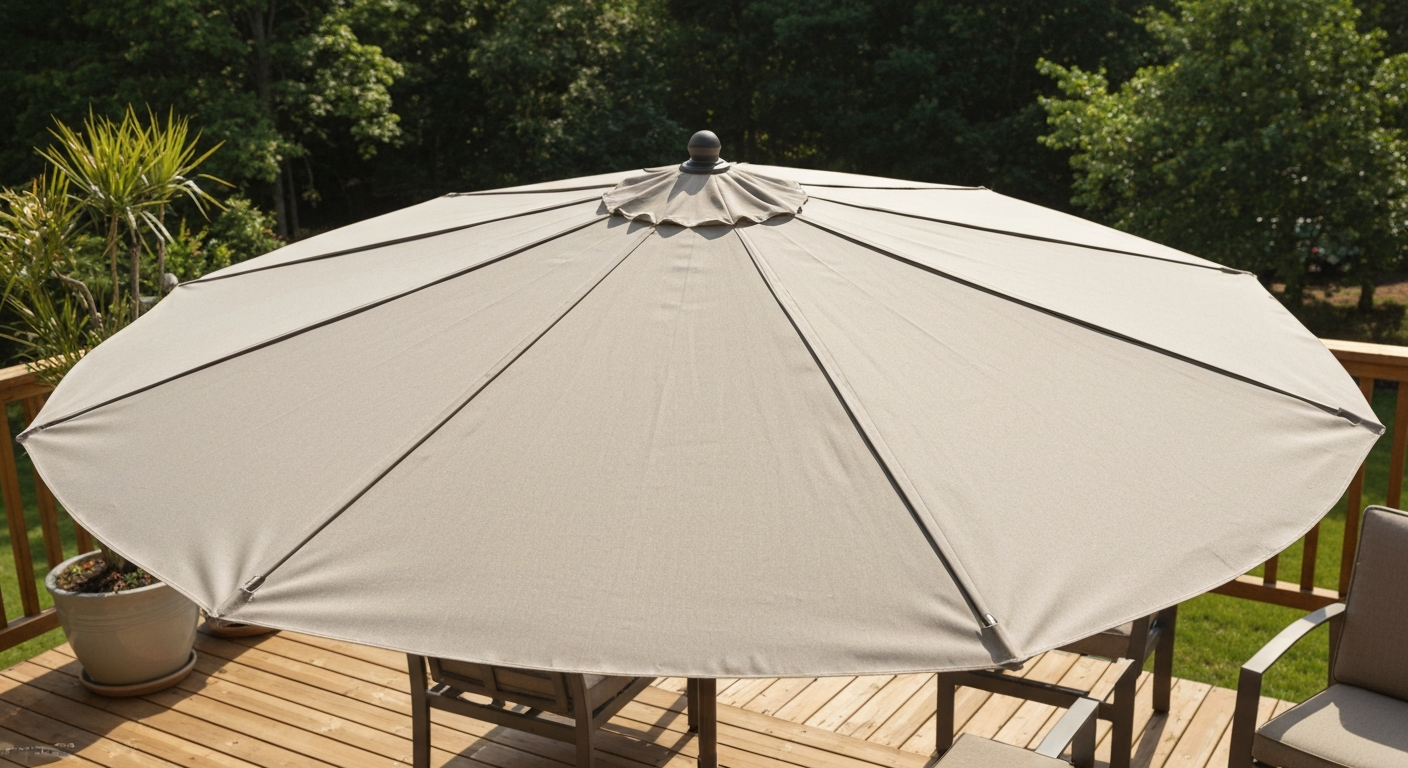
Learn when and how to replace patio umbrella fabric: inspect, measure, choose fabric, DIY steps, costs & pros.
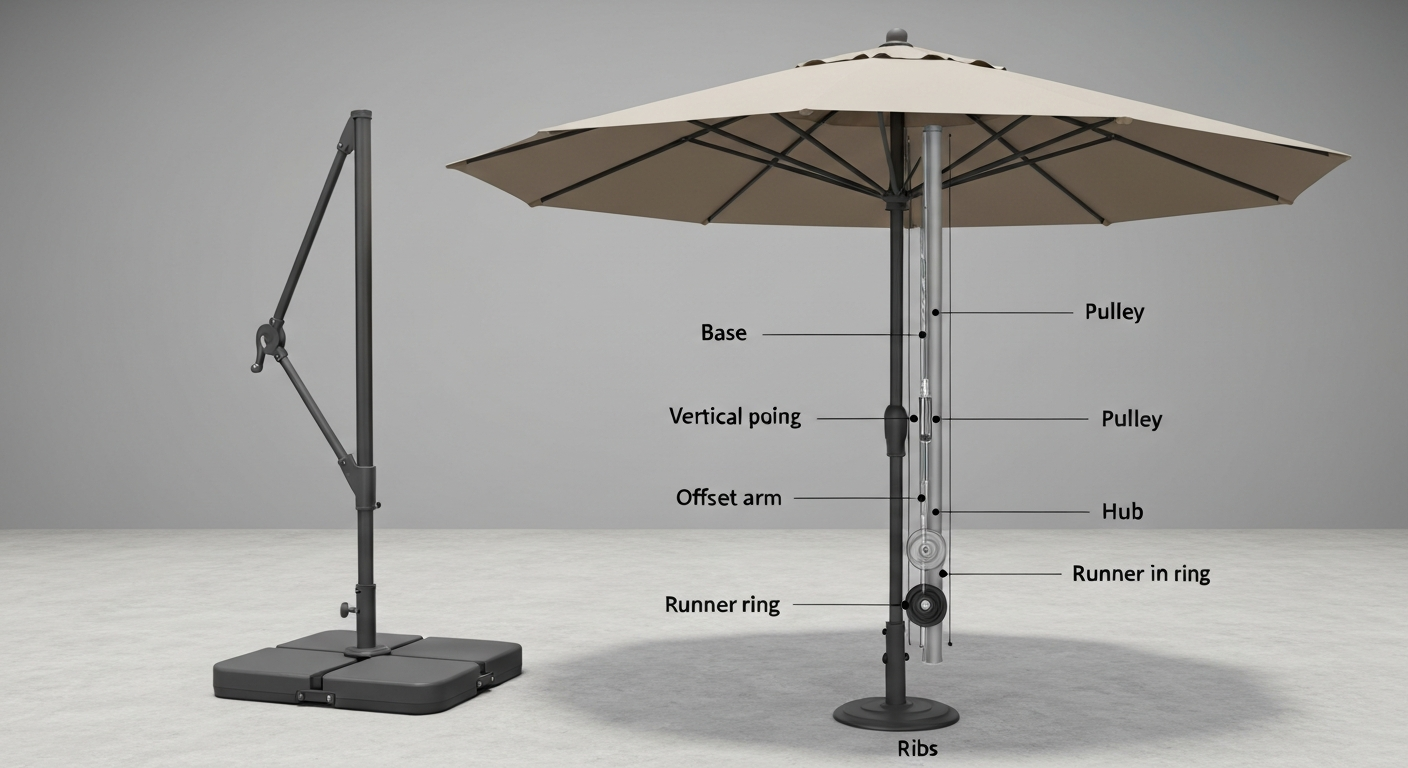
How to repair offset patio umbrella: step-by-step fixes for crank, tilt, cables, ribs, fabric, bases & storage.
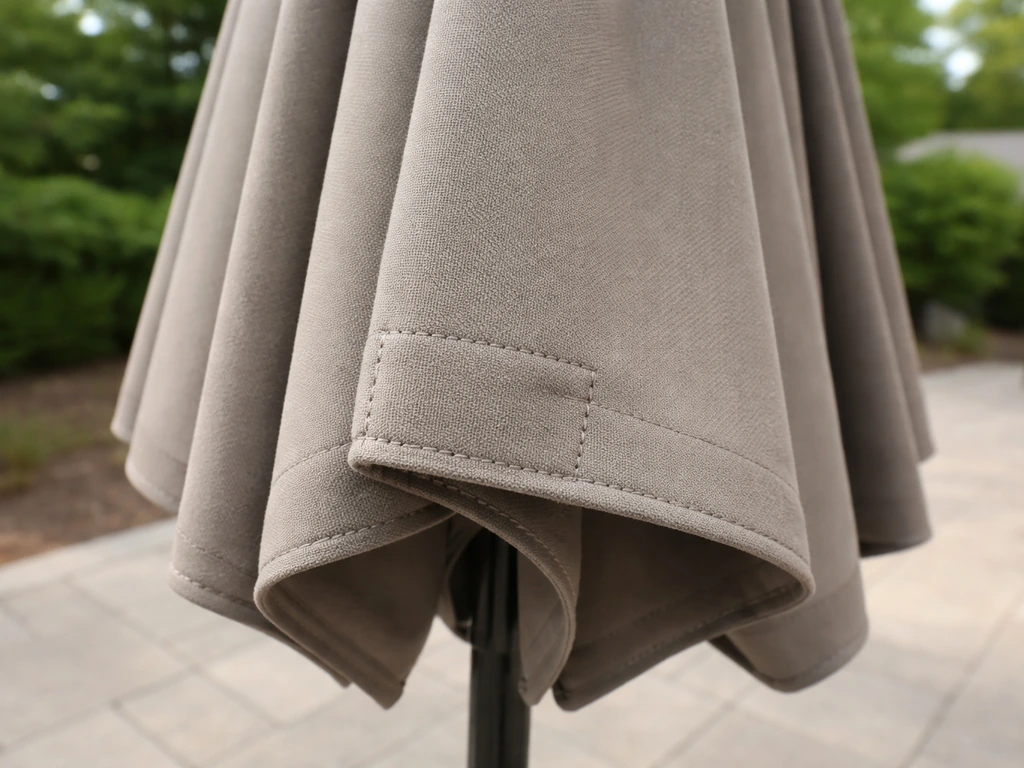
Step-by-step guide to repair or replace patio umbrella fabric, fix tears and mildew, and reattach so it stays taut.