Yes, you can absolutely fix a patio umbrella yourself in most cases. Whether the crank stopped turning, the tilt lock won't hold, a rib snapped, or the canopy tore along a seam, the majority of patio umbrella failures are repairable with basic tools and under $30 in parts. The key is diagnosing the right problem first, then following the correct repair path instead of throwing parts at it randomly.
Fix a Patio Umbrella: DIY Troubleshooting and Repair Steps
Luca Morrison
13 May 2026
Safety Check + Diagnosis: Figure Out What's Actually Broken
Before you touch anything, run through this quick checklist. It keeps you safe and saves you from pulling apart the wrong component. Patio umbrellas have a few real pinch and crush zones, especially around the opening mechanism and tilt joint, so work slowly and keep fingers clear of any moving parts while testing.
- Close and lay the umbrella flat before inspecting. Never inspect or adjust it while it's open and upright in even a light breeze.
- Never use the tilt function when there's any wind. Many manufacturer manuals are explicit about this: even a light breeze while tilting can torque the joint and cause injury or frame damage.
- If the crank meets resistance and the umbrella isn't moving, stop cranking immediately. Forcing it will strip the crank gear or snap a rib runner.
- Check that the umbrella is fully seated and secure in its base before operating. If it wobbles in the stand, fix the stand first.
- Look for rust or corrosion on the pole and joints before deciding on a repair path. Significant rust changes your options.
Now do a quick visual inspection to pinpoint the failure. Work from the top down.
- Canopy: Look for tears, holes, frayed seams, detached fabric panels, or faded/brittle fabric that's pulling away from the ribs.
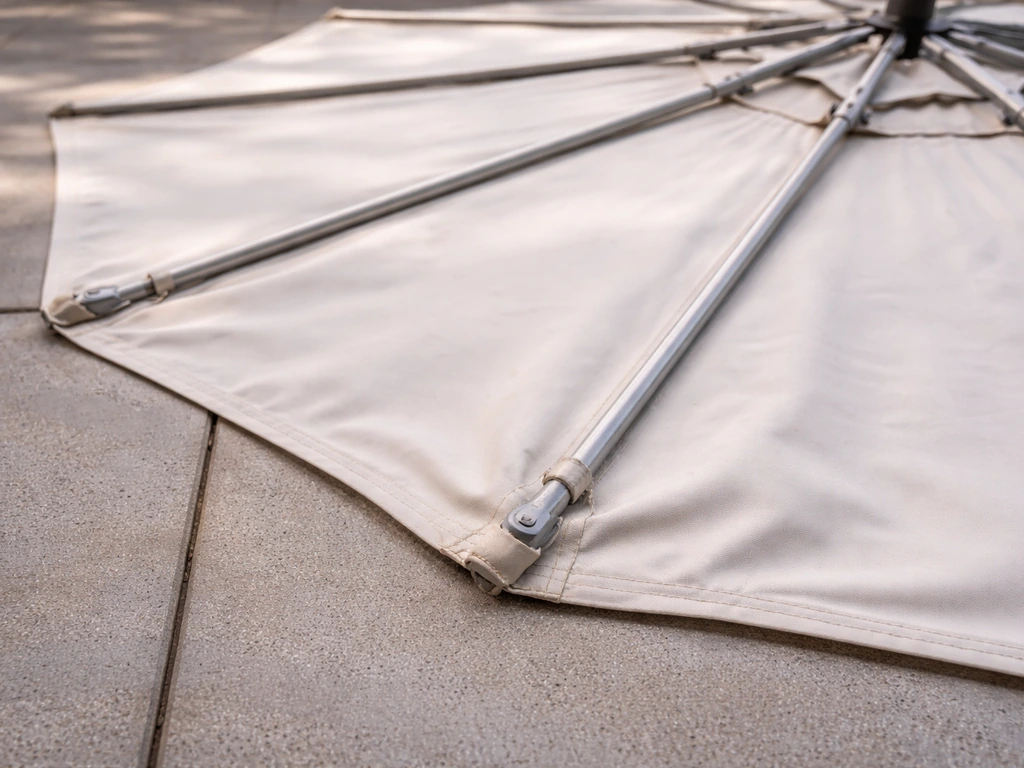
- Ribs and spreaders: Check each rib (the arms that hold the canopy shape) and each spreader (the shorter diagonal struts below) for bends, cracks, or broken connector hubs.
- Tilt joint: With the umbrella closed, grip the pole just above and below the tilt joint and try to wiggle it. Wobble means a loose or worn tilt collar.
- Crank mechanism: Turn the crank handle slowly. Listen for grinding, feel for slipping, or note if it spins without lifting the canopy.
- Opening cord or pulley: If your umbrella uses a pull cord instead of a crank, check for fraying, knots, or a cord that's jumped off its pulley.
- Pole: Look for bends, deep dents, or corrosion at the base where it enters the stand.
- Base and stand: Check for cracks in a resin base, missing ballast (sand or water in a fillable base), or a loose table-umbrella pole hole insert.
Tools, Parts, and Materials You'll Want on Hand
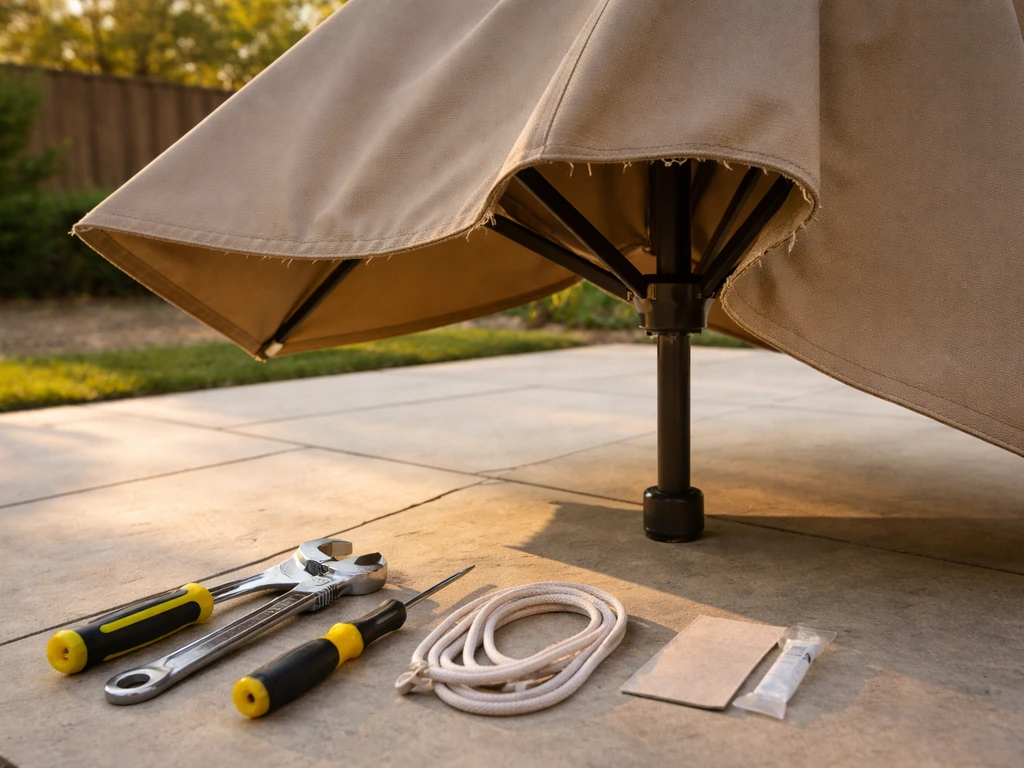
Most umbrella repairs need pretty minimal gear. Here's what covers the majority of jobs. You don't need all of this at once, but having these items ready before you start means you won't be stuck mid-repair.
| Item | What It's For | Approximate Cost |
|---|---|---|
| Flathead and Phillips screwdrivers | Removing hub covers, crank housings, connector pins | $0 (likely already own) |
| Needle-nose pliers | Removing split pins, repositioning cord on pulleys | $8–12 |
| Replacement split/cotter pins (assorted) | Securing rib connectors and spreader hubs | $5–8 for a pack |
| Replacement umbrella cord/rope (3/16" or 1/4" braided) | Crank or pull-cord replacement | $8–15 per 25 ft |
| Replacement rib or rib repair sleeve | Fixing a snapped or bent rib | $10–20 per rib |
| WD-40 or white lithium grease spray | Lubricating crank gears, tilt collars, and hub pivots | $6–10 |
| Wire brush or sandpaper (120-grit) | Removing rust and flaking paint before lubricating | $3–6 |
| UV-resistant outdoor fabric repair tape | Patching small tears in canopy fabric | $8–15 |
| Outdoor-rated thread and curved upholstery needle | Restitching seam damage | $5–10 |
| Two-piece pipe repair clamp (correct pole diameter) | Stabilizing a loose or cracked tilt joint temporarily | $8–15 |
| Replacement tilt collar or push-button tilt assembly | Full tilt mechanism replacement | $15–30 |
| Zip ties (UV-resistant, heavy duty) | Temporary rib-to-hub reattachment while awaiting parts | $5 |
If you know your umbrella brand and model, check the manufacturer's site or the retailer where you bought it for exact replacement parts. Brands like California Umbrella, Treasure Garden, and Galtech sell individual ribs, crank assemblies, and tilt mechanisms as spare parts. Having the pole diameter (usually 1", 1.5", or 2") written down before you shop will save you a trip.
Fixing Common Mechanical Failures
Crank Won't Turn or Spins Without Opening the Umbrella
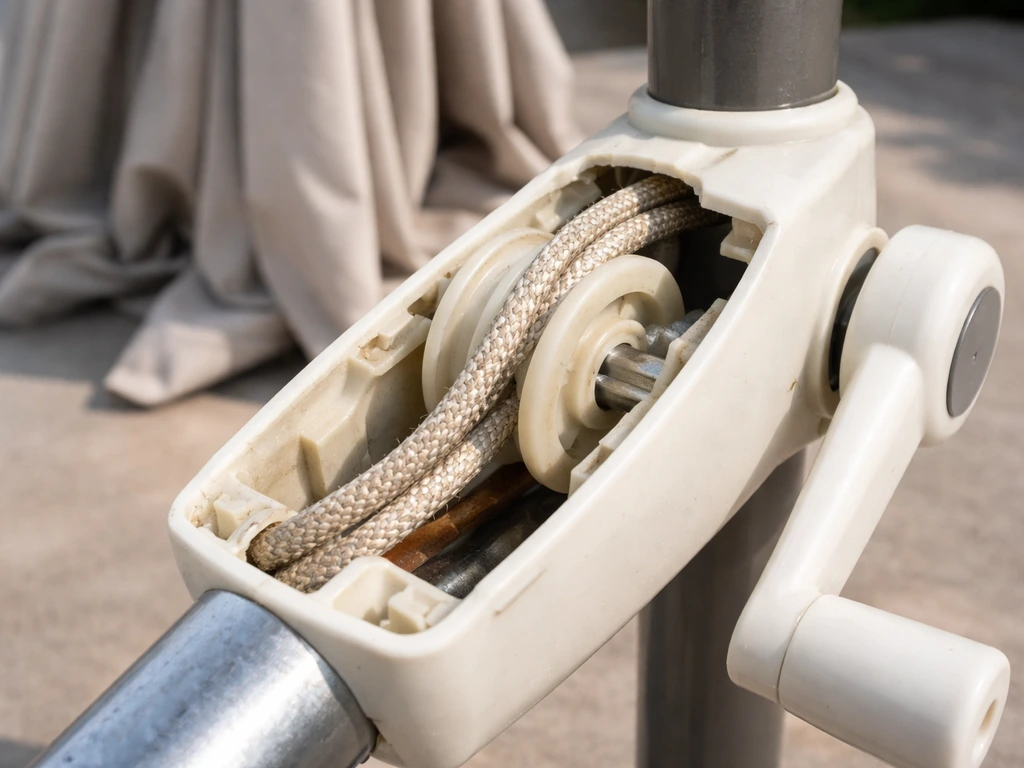
This is probably the most common complaint. If the crank turns but the canopy doesn't rise, the cord inside the crank housing has either snapped or slipped off the pulley. If your offset patio umbrella shows similar symptoms, the tilt and crank linkage usually need the same kind of targeted inspection before you replace parts If the crank turns but the canopy doesn't rise. If the crank meets hard resistance and won't budge, you likely have a stripped gear or a jammed runner (the ring that slides up and down the pole, lifting the ribs).
- Remove the crank handle by unscrewing the cap at the end or pulling out the retaining pin (most pop off once the pin is removed).
- Unscrew or unclip the crank housing cover on the pole. On most umbrellas this is a plastic shell held by two to four screws.
- Look at the gear and cord inside. If the cord is tangled or has jumped off the small pulley wheel, reseat it by hand and check for fraying. If it's frayed at the gear contact point, replace the full cord.
- To replace the cord: thread the new cord through the pole (a stiff wire or thin dowel taped to the cord end helps a lot), tie it to the runner at the top of the pole with a secure double knot, and feed it through the pulley and crank drum.
- If the gear itself is stripped (teeth are visibly rounded or the handle spins with zero resistance), order a replacement crank assembly for your pole diameter. They install by sliding onto the pole and pinning in place.
- Once reassembled, test with one slow turn while watching the runner move. Apply a light spray of white lithium grease to the gear teeth.
Tilt Mechanism Not Working or Canopy Wobbles
Patio umbrellas use one of three tilt types: push-button (a spring-loaded button on the pole that locks into notches), collar tilt (a rotating collar you twist), or auto-tilt (built into the crank). Many patio umbrella manuals warn that you should not use the tilt function in wind, even light breezes, to help prevent injury or damage do not use the tilt function in wind. Each fails a little differently.
- Push-button not engaging: The button spring may be worn or the button itself cracked. Remove the upper pole section, locate the push-button assembly (usually a small spring-loaded plunger), and replace it with a matching spare. These are inexpensive and almost always available by pole diameter.
- Collar tilt slipping: The friction collar wears over time and stops holding the angle. Disassemble the collar by removing the screw or pin holding it to the pole and replace the collar unit. On cheaper umbrellas, wrapping the contact surface with a few layers of plumber's thread tape can restore friction temporarily.
- Canopy wobbles at the tilt joint: Grip both sections of pole at the joint and wiggle them. If they move, the tilt collar is loose. A correctly-sized two-piece (clamshell-style) pipe repair clamp fitted around the joint can stabilize it as a stop-gap while you source the proper part.
- Auto-tilt (crank-style) not tilting: This is usually a stripped internal crank component. Disassemble the crank housing and inspect the auto-tilt gear separately from the opening mechanism. Replacement auto-tilt crank assemblies are sold by size at most hardware stores and online.
- Never operate the tilt function in any wind. Tilting applies significant lateral force to the joint, and even a small gust will amplify it enough to bend the upper pole section or crack the tilt collar.
Pull Cord Frayed, Broken, or Jammed
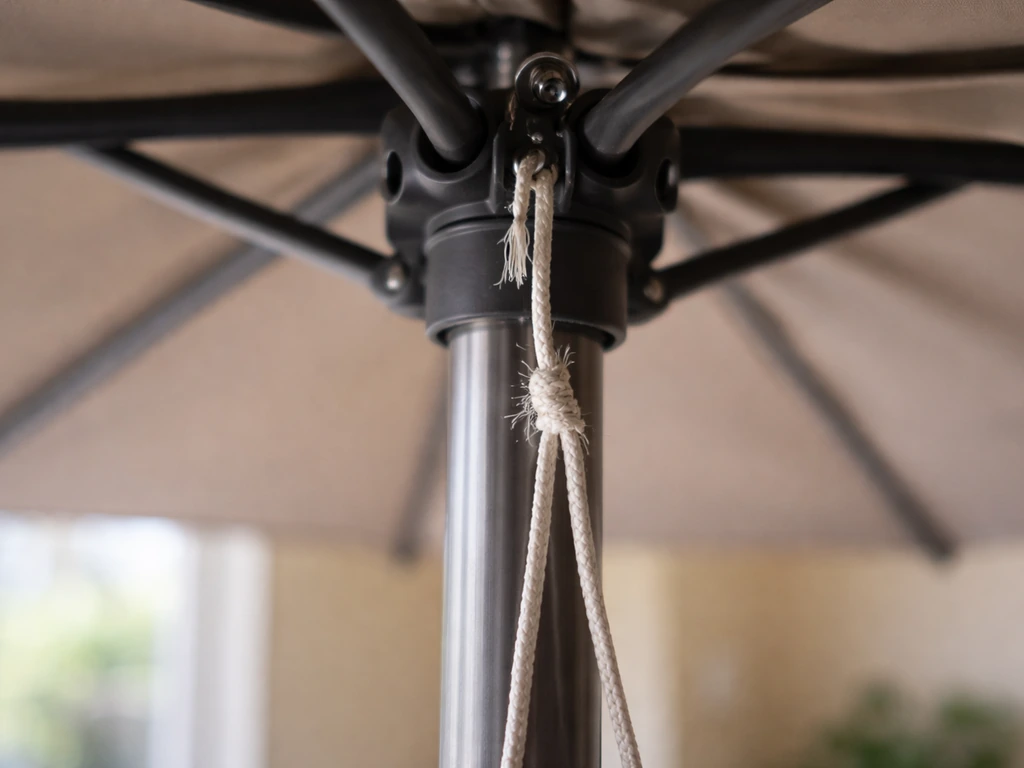
If your umbrella opens via a pull cord looped through the center pole and over a pulley at the top, the cord is a wear item that needs replacing every few seasons in heavy use. To replace it, close the umbrella fully, remove the finial (the cap on top), pull the old cord out, and feed new 3/16" braided rope through the same path. The cord typically loops over the top pulley, threads down through the pole, exits through a guide hole near the base, and ties off to a cleat or cord lock on the side of the pole. Tie secure stopper knots at both ends and test the full range of motion before reattaching the finial.
Wind Lock or Canopy Lock Not Holding
Some umbrellas have a velcro strap, cord lock, or mechanical wind vent lock to keep the canopy from flapping in a breeze. If the velcro has lost its grip, replace the strap entirely rather than trying to clean degraded velcro back to life. If a cord lock on a vented canopy is slipping, thread the cord through a new spring-loaded cord lock, available at any fabric or camping supply store for about $2. For metal latches that have bent or broken, match the part by shape and screw hole pattern and replace the hardware directly.
Fixing Structural Damage: Ribs, Frame, and Pole
Snapped or Bent Rib
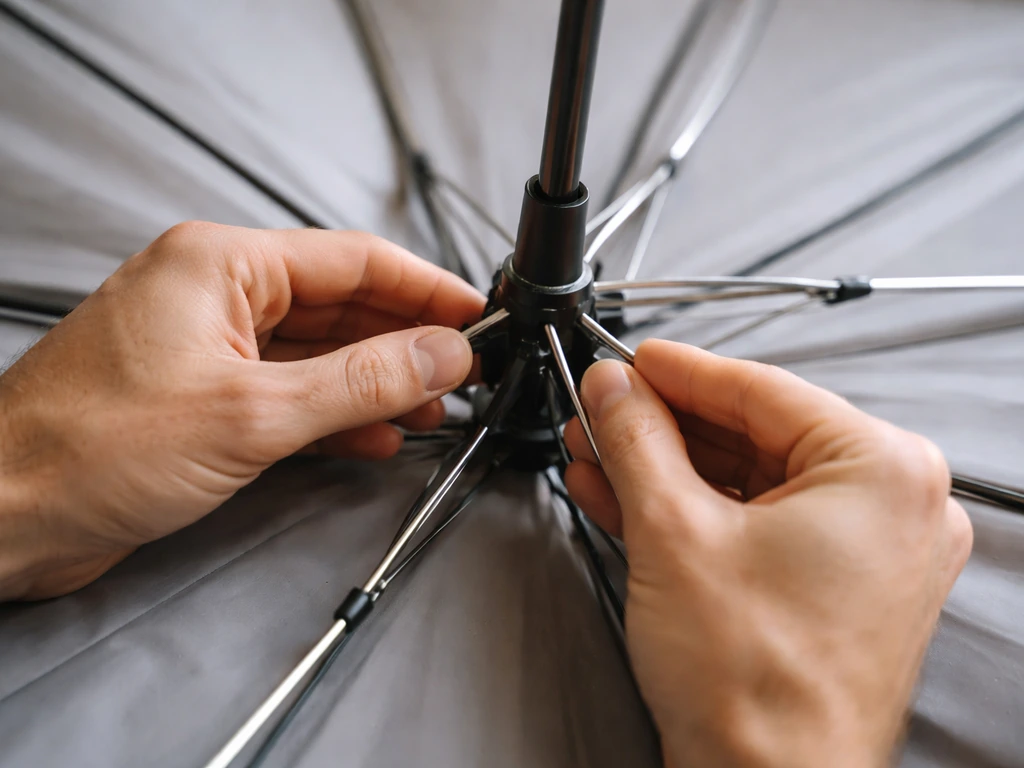
A single broken rib is one of the most straightforward repairs on any umbrella, and doing it yourself saves the $80 or more it would cost to replace the whole canopy just because of one bad arm.
- Close the umbrella and identify which rib is broken. Ribs are the long arms that radiate from the hub at the top of the pole. Spreaders are the shorter diagonal struts beneath them.
- Note how the rib attaches at the hub: most use a small pivot pin (cotter pin or split pin) through a metal tab. Use needle-nose pliers to straighten and pull the old pin out.
- Slide the broken rib out of the hub slot. If the hub itself cracked, you'll need a full hub replacement (sold separately for most brands).
- Slide the new replacement rib into the hub slot and insert a new cotter pin. Bend the pin legs apart to lock it in place.
- Reattach the canopy fabric to the rib tip. Most canopy panels have a sleeve or tie loop at the tip; slide or tie the fabric back onto the new rib.
- If an exact replacement rib isn't available, a fiberglass rib repair sleeve (a short hollow tube of the same diameter) can join two halves of a broken rib. Slide it over the break, center it, and secure with two small hose clamps or epoxy rated for metal or fiberglass.
Bent or Damaged Frame/Pole
A bent pole is a tough situation. Aluminum poles under about 1.5" diameter can sometimes be straightened by hand or with a rubber mallet against a flat surface, but the metal is work-hardened at the bend point and will be weaker afterward. For a 2" or larger pole, especially on a large market umbrella, attempting to straighten it isn't practical. If the bend is in the lower pole section and it's a two-piece design, you may be able to replace just the lower half. Check your manufacturer's parts listing before buying a full new umbrella.
Before working on a rusty pole or frame, wire-brush away loose rust and flaking paint down to bare metal, then sand lightly with 120-grit sandpaper. Apply a rust-converter primer to any bare spots before repainting with outdoor metal spray paint. This matters because rust weakens the pole from the inside and will continue spreading if you just lubricate over it.
Fixing Canopy Issues: Tears, Seams, and Reattachment
Canopy damage ranges from a small puncture you can patch in ten minutes to a fully delaminated or shredded canopy that's time to replace. If the fabric tear is small, you can often patch it using repair tape or outdoor fabric glue and then let it cure fully before opening patch patio umbrella. The good news is that most tears and seam failures fall on the repairable side of that line.
Small Tears and Holes
For holes under about 2 inches and tears with clean edges, UV-resistant outdoor fabric repair tape is the fastest fix. Clean the area around the damage with rubbing alcohol, let it dry completely, then apply a patch of repair tape on both sides of the fabric (the double-sided application holds far better than single-side). Press firmly and let it cure for a few hours before opening the umbrella. For longer cuts, use the tape on one side and a matching piece of outdoor fabric bonded with waterproof fabric glue on the other.
Seam and Stitching Repair
Seam failure is extremely common on umbrellas that were left out through a season without being brought in during storms. The stitching pulls apart at the stress points near the rib sleeves. To repair it, use a curved upholstery needle (straight needles are nearly impossible to maneuver through tight seam folds) and UV-resistant outdoor thread rated for marine or awning use. Restitch the seam with a simple running stitch and finish with a lock stitch at each end. Apply a thin bead of seam sealer (available at camping or fabric stores) over the new stitching to waterproof it.
Canopy Detached From Ribs
If the fabric panels are pulling away from the rib tips or the hub, check whether the attachment loops or tie ribbons have broken or the rib tip caps have come off. Replacement rib tip caps are typically sold in packs of 8 or 10 and just push-fit onto the rib end, securing the canopy's edge loop. If the whole canopy needs to come off and be reattached, this is a good moment to also inspect every rib for damage before reinstalling. If the canopy fabric itself is structurally sound but the design is outdated or you want a fresh look, replacing just the canopy is a cost-effective option worth exploring separately.
If the canopy fabric is brittle, fading unevenly, or tearing easily in multiple places (not just one spot), the UV degradation is too far gone for patches to hold meaningfully. At that point, fabric replacement makes more sense than spot repairs, and that's a whole separate process worth walking through on its own. If you determine the canopy fabric is beyond patching, you can replace the fabric on a patio umbrella by removing the canopy and attaching the new material.
Repairing the Stand and Base (Including Patio Table Umbrellas)
Freestanding Umbrella Base Problems
A wobbly or undersized base is actually a safety issue, not just an annoyance. If the umbrella leans or rocks in the base socket, do not use the umbrella until it's addressed. If the umbrella is not fully secure in its heavy stand, Lowe’s recommends replacing the stand or umbrella rather than forcing it when it’s unstable not use the umbrella until it's addressed. Most 9-foot umbrellas need a base weighing at least 50 pounds, and market-style umbrellas 11 feet or larger need 80 to 100 pounds minimum. Fillable resin bases should be completely filled with sand (heavier than water and won't freeze or evaporate).
- If the umbrella pole wobbles in the base socket, check whether the included reducer sleeve is installed. Most bases ship with one or two plastic sleeves to adapt the socket to different pole diameters. Find the right one and insert it.
- If the socket itself has cracked, a resin base can be repaired with two-part epoxy rated for plastics as a temporary fix, but a cracked structural base should really be replaced before the next windy day.
- If the base simply isn't heavy enough, adding a second base around the pole or a weighted base ring can bring the total ballast up without buying a full replacement.
- For stand-mounted bases with a four-leg cross base on wheels, check that all four leg bolts are tight. These loosen over a season of moving the umbrella around.
Patio Table Umbrella-Specific Issues
When the umbrella goes through a hole in the center of a patio table, the table itself acts as part of the support system. The hole is usually fitted with a plastic or metal umbrella ring insert that centers the pole. If the umbrella leans to one side, check this insert first. A broken or missing insert can be replaced for under $10 at any hardware or patio store. Make sure the insert matches the pole diameter (most are 1.5" to 2" inner diameter).
On patio table setups, the umbrella still needs a base weight under the table in a dedicated table base, or the table legs themselves must be heavy enough to anchor the system. A lightweight aluminum table will tip over in wind even with a pole through the center if there's no weighted base beneath it. Check that the table base or a secondary anchor weight is actually secured and sufficient.
Large Umbrella Troubleshooting and When to Repair vs. Replace
Large umbrellas (11-foot and above, commercial-style market umbrellas, and offset/cantilever models) have the same failure points as standard umbrellas but on a bigger scale, which means the forces involved are higher and some repairs need a more careful approach.
Large Umbrella-Specific Tips
- Large market umbrellas often use a pulley-and-cord opening system rather than a crank, and the cord on these sees more load. Use 1/4" braided nylon or polyester cord (not cotton) as a replacement.
- The center hub on large umbrellas can crack under wind loading. Inspect the hub casting for hairline cracks, especially around the pin holes where the ribs attach. A cracked hub is a replacement job, not a repair.
- Offset/cantilever umbrellas put all the mechanical stress on the cross-arm pivot and the main mast connection. If the pivot arm feels loose or the locking pin no longer holds the arm at angle, address that before the arm drops unexpectedly. Offset umbrella repairs have some unique steps worth treating as their own process.
- For larger poles, a standard crank assembly may be replaced with a heavier-duty version rated for 2" poles. Check that the replacement crank specifies your pole size.
- Heavy-duty UV-resistant thread and heavier-gauge replacement ribs are available for commercial-scale umbrellas from suppliers like Treasure Garden, FiberBuilt, and American Holtzkraft.
Repair vs. Replace: The Honest Answer
Most umbrellas are worth repairing if the pole is straight, the hub is intact, and only one or two components have failed. Here's how to think about the decision quickly. If you’re not comfortable diagnosing or replacing internal parts, a handyman or patio furniture repair specialist can handle the work for you.
| Situation | Repair or Replace? | Why |
|---|---|---|
| Single broken rib | Repair | Replacement rib costs $10–20 and installs in 15 minutes |
| Crank stripped or cord broken | Repair | Parts are $10–25 and widely available |
| Tilt collar worn or loose | Repair | Collar replacement is $15–30 and straightforward |
| Small canopy tear or seam pull | Repair | Tape/stitch fix holds well with UV-rated materials |
| Canopy fabric brittle or fading all over | Replace canopy or full umbrella | UV-degraded fabric tears faster than you can patch it |
| Bent or cracked pole (main mast) | Usually replace umbrella | Structural integrity is compromised; repair rarely holds |
| Cracked hub casting | Replace hub or umbrella | Hub failure under load can drop the canopy suddenly |
| Base cracked or inadequate for umbrella size | Replace base | Safety issue; don't operate an unsecured umbrella |
| Multiple failures on a 6+ year old umbrella | Replace umbrella | Repair costs approach or exceed replacement value |
As a rough rule, if the repair parts cost more than 40 to 50 percent of what a comparable new umbrella costs, replacement is the smarter call. The same logic applies if you're looking at an older umbrella with degraded fabric, a weakened pole, and worn hardware all at once. Patching it all buys you one season at best. A quality mid-range replacement umbrella in the $150 to $300 range will outlast a heavily repaired older unit, especially if you commit to bringing it in during storms and storing it properly off-season.
That said, most single-issue problems, a snapped rib, a stripped crank, a torn seam, a wobbly tilt collar, or a frayed cord, are absolutely worth fixing today before you spend a dollar on a replacement. Work through the diagnosis checklist at the top, identify the one thing that's actually broken, and follow the relevant repair steps. You'll likely have the umbrella working again this afternoon.
FAQ
When I try to fix a patio umbrella, how do I tell if the crank cord is snapped or just slipped?
If the crank turns but the canopy does not move, confirm whether the cord is actually connected to the pulley. A snapped cord often leaves a loose, free end inside the crank housing, while a slipped cord looks intact but will have slack or uneven tension. Before buying parts, test by manually moving the ribs up and down with the umbrella fully closed (keeping fingers clear of the pinch zones) to see if the runner and rib sleeves respond normally.
Can I patch a patio umbrella canopy if the opening problem is actually tied to the fabric?
Yes, but only after you’ve determined the canopy opening is failing for fabric reasons rather than mechanism reasons. A quick check is to lift the canopy slightly by hand at the rib hub area (with the umbrella closed and stable) and watch whether ribs slide and lock properly. If the ribs and linkage move normally but the fabric bunches or binds, repair or patch the fabric rather than replacing crank parts.
What’s the right way to lubricate parts when I’m trying to fix a patio umbrella, especially if there’s rust?
Avoid lubricating rust or jam points before you prep. For a rusty pole, the article’s wire-brush, sand, and rust-converter primer sequence is important because oil can trap moisture under flaking paint and accelerate internal weakening. After the surface is primed and cured, use a dry silicone or light machine oil only on moving metal joints (tilt collars, crank pivots), not on fabric or on seam-sealer areas.
My vent lock keeps slipping. Should I replace the cord lock or the whole vent assembly?
For wind vent locks, replacing the cord lock is best when the lock slips under load. Before installing the new lock, inspect the vent channel and canopy tension so you are not masking a mechanical misalignment. If the vent fabric is torn or the strap/attachment points are loose, fix those first, then install the new lock so the vent closes and holds centered.
I replaced a snapped rib, do I need to check anything else before I reassemble the canopy?
If one rib is broken but the rest look straight, still inspect all ribs for micro-bends near the elbow and near the rib sleeves. Ribs often fail in sequence, especially if the umbrella was forced open while jammed. A simple way to check is to compare each rib’s arc and alignment with the others once the canopy is off or loosened.
What should I do if the crank won’t budge or feels like it’s stripping gears?
For a stripped gear or stuck runner, don’t force the crank. Forcing can spread the damage to the gear teeth or deform the runner ring. If the crank resists hard, stop and check for a jammed runner ring travel path and confirm the runner moves freely along the pole when the canopy is relaxed.
How can I tell whether a small canopy tear is patchable or too far gone to fix?
Yes, a small patch can fail if the fabric is stretched, delaminated, or unevenly brittle. Before patching, gently pinch the area around the damage. If the surrounding fabric feels powdery or breaks easily with light pressure, it’s usually not a reliable patch area, and you may be better off replacing the canopy or using a larger bonded repair approach.
How long should I wait after applying UV outdoor fabric repair tape before opening my patio umbrella?
Use the tape cure guidance as a baseline and don’t open too soon under heat or cold. The practical guardrail is to let the adhesive fully set, then do a gentle stress test while the umbrella is still closed, a light tug across the patch line is enough to confirm it is bonded before you raise the canopy.
My umbrella canopy is pulling away at the rib tips, what should I check first?
If the canopy is coming loose at the rib tips or hub, confirm what failed first: the tie ribbons, the attachment loops, or the rib tip caps. If only the rib tip caps popped off, push-fit replacements can solve it without removing the entire canopy. If loops or ribbons are broken or missing, replacing those specific components is cleaner than trying to reattach torn fabric.
What should I verify if my patio umbrella wobbles in its base?
A wobbly base is a safety issue even when the umbrella “still seems stable.” Don’t just tighten any visible hardware if the base socket itself is too small or the umbrella is seated improperly. Confirm the base weight requirements and ensure the fillable resin base is fully filled with sand, then recheck wobble by pushing the pole gently at the height where it would be loaded by wind.
For a patio umbrella through a table, how do I ensure the setup is actually safe?
If the umbrella is on a table setup, a common mistake is assuming the table alone is enough. The article notes the need for a dedicated table base under the table, or heavy, secure anchoring through the table legs. Also inspect the center insert ring size against your pole diameter, an incorrect fit can allow the pole to shift and slowly loosen connections.
When is it better to hire a pro to fix a patio umbrella instead of buying parts and DIY-ing?
If the repair parts cost is near the replacement threshold, the decision should also factor in your confidence with internal disassembly. For complex internal fixes like internal crank mechanisms or linkage, a handyman or specialist may still be worth it even if parts are cheap, because a misinstalled crank can fail quickly. If you’re uncertain after diagnosis, replacement or professional repair is often the lower-risk option.
Next Articles
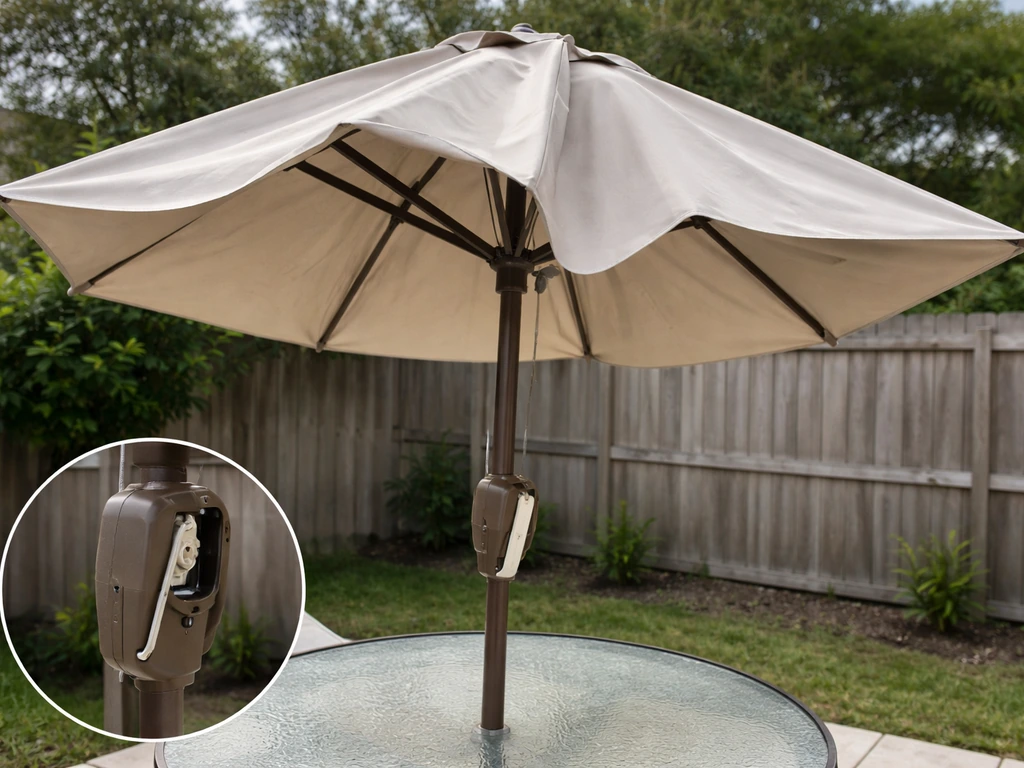
How to Fix a Patio Umbrella That Won't Open or Close
Step-by-step fixes for patio umbrellas that won’t open or close, with checks for jams, cords, latches, and lubricating t
How Does a Patio Umbrella Work? Components, Use, and Fixes
Learn how patio umbrellas work: components, open close tilt, stability, and step by step troubleshooting common mechanic
Patio Umbrella Crank Not Working: DIY Fix Guide
Fix a patio umbrella crank that won’t work with safe step-by-step jam, gear, and base troubleshooting and repair tips.