
To secure a patio umbrella to its base, insert the pole fully into the base tube, then engage the locking pin, screw pin, or clamp mechanism until the pole stops rotating and doesn't lift out. If you don't have a base, you can still keep an umbrella stable using weighted stands, in-ground anchors, or deck-mount systems. Either way, the goal is the same: zero wobble at the joint, no tilt under light wind, and a pole that stays put without you babysitting it.
How to Secure a Patio Umbrella Base and Anchor

Luca Morrison
10 Jul 2026
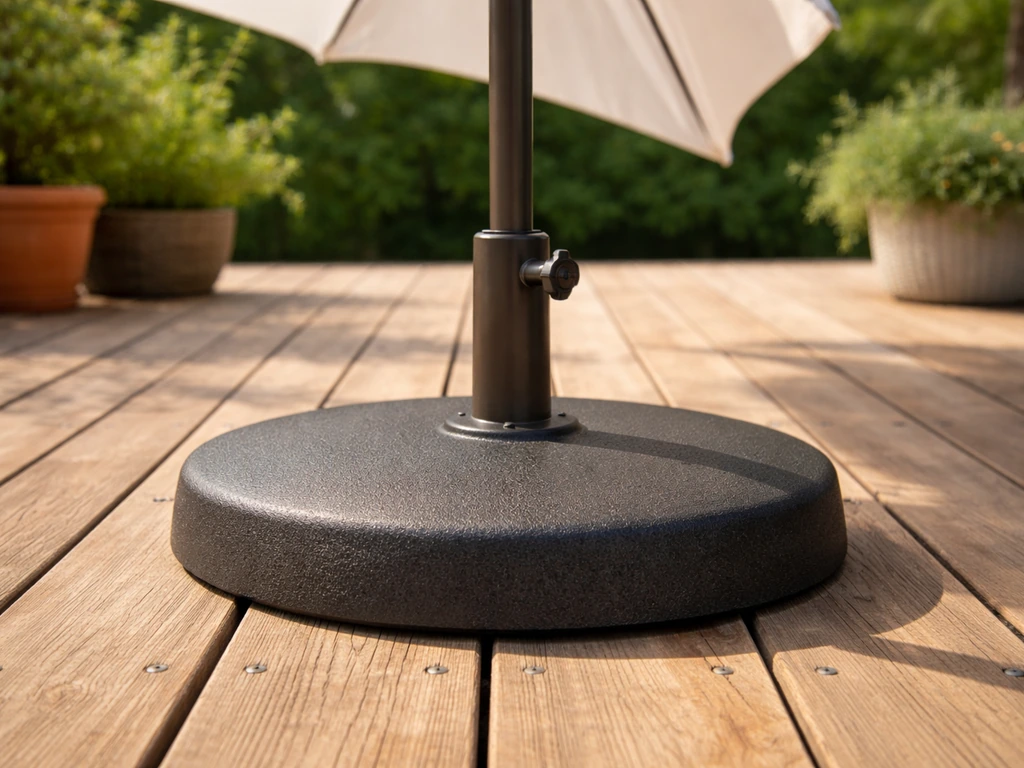
First, figure out what kind of setup you actually have
Before you buy anything or start tightening things, spend two minutes identifying your pole and base type. Getting this wrong means buying hardware that won't fit. Most setups fall into one of these categories.
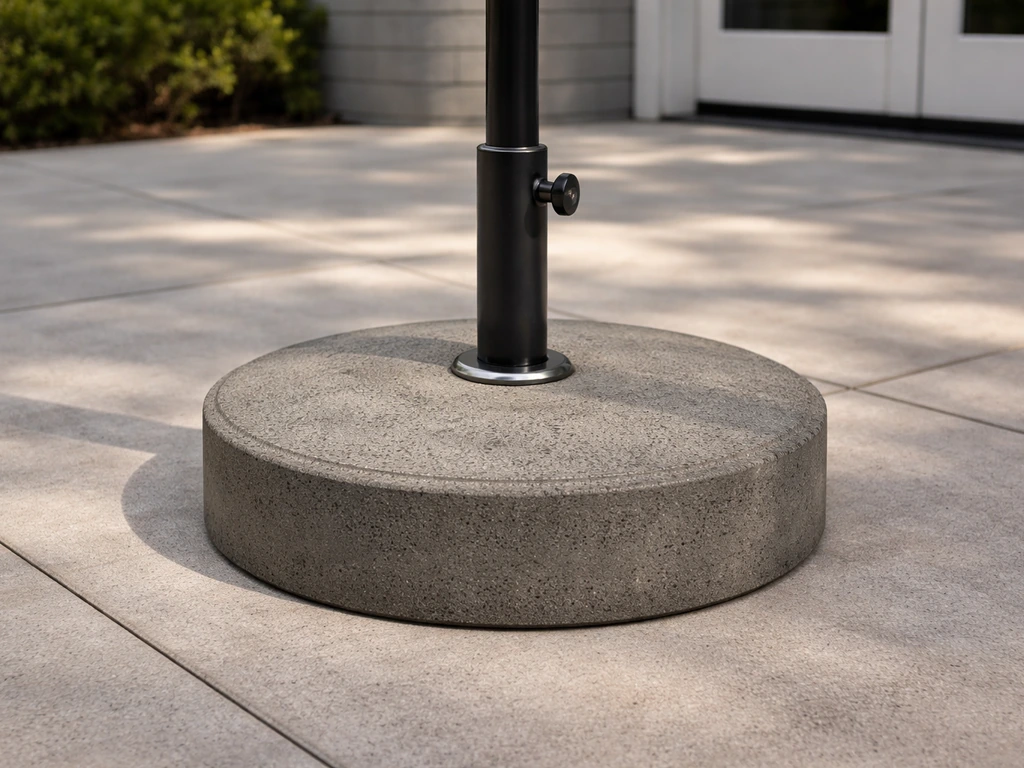
- Standard freestanding base: A heavy weighted base (concrete, sand-filled plastic, or cast iron) with a central tube called a base tube or spigot. Your umbrella pole drops straight in. Common pole diameters are 1.5 inches, 1.75 inches, and 2 inches.
- Cantilever or offset umbrella base: The base sits to the side, and a horizontal arm holds the umbrella overhead. These almost always have a locking collar or bolt clamp at the joint.
- In-ground anchor or spike: A metal sleeve driven or cemented into soil that the pole slides into, used in yards, gardens, or grass areas.
- Table-mount or deck-mount: A flange or bracket bolted to a surface, with a sleeve for the pole. Common on commercial patios and increasingly popular for home decks.
- No base at all: You have just the umbrella pole and need to improvise a secure anchor using weights, clamps, or alternative stands.
Look at the very bottom of your umbrella pole. You'll usually find a smooth round tube (the bottom pole section). Then look at your base: does it have a hole with a locking pin hole drilled through the side? A lever or cam-lock collar? A set screw you tighten with an Allen key? Or is it just an open tube with no fastener at all? Knowing the answer tells you which securing method applies to you.
If you're starting from scratch without any base hardware, that's a separate path. Jump ahead to the section on securing without a base. If you're working with an existing base that isn't holding the pole properly, keep reading through the locking methods first.
How to secure the umbrella to a compatible base
Most stability problems with a base come down to one of three things: the wrong pole-to-tube diameter fit, a missing or broken locking pin, or a collar that isn't fully engaged. Here's how each system works and what you need to check.
Screw pin or locking pin systems
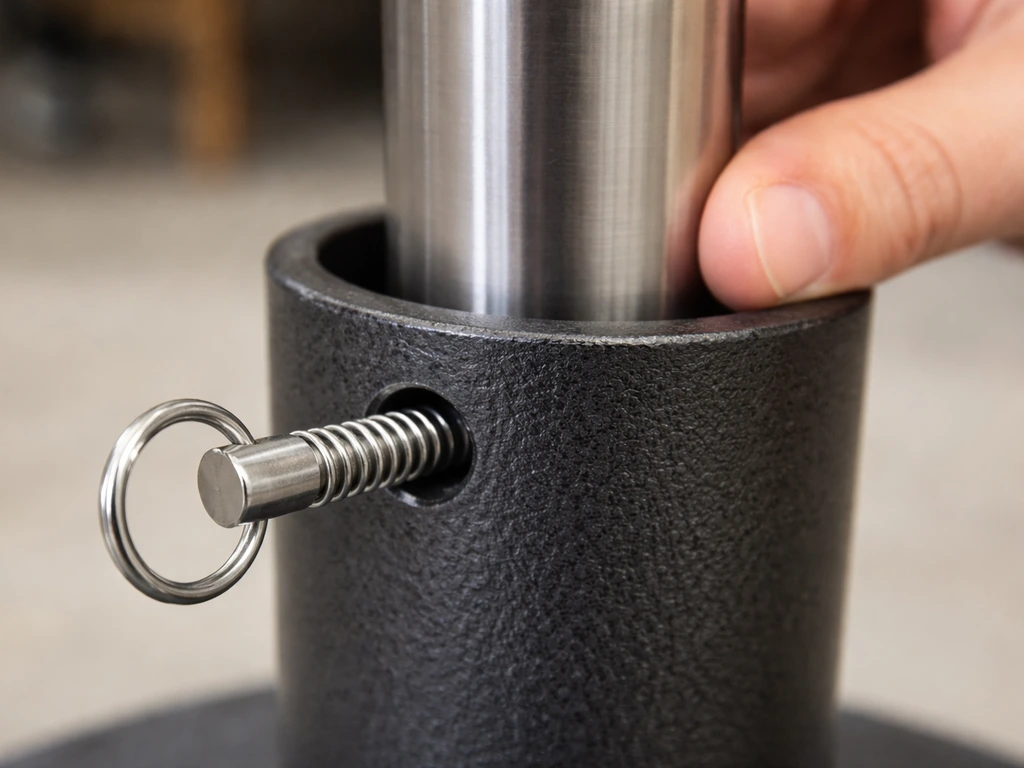
This is the most common design on residential umbrellas. The base tube has one or two small holes drilled through the side. A spring-loaded pin or a threaded screw pin passes through the base tube wall and presses against (or through) the umbrella pole, locking it in place. Transformer Patio Umbrella models, for example, use screw pins to secure the pole into the base, with a ring fitting between the pole and base tube to fill any gap and eliminate wobble.
- Slide the umbrella pole straight down into the base tube until you feel it bottom out or hit a stop.
- Rotate the pole slowly until the hole in the pole (if present) lines up with the pin hole in the base tube.
- Insert the locking pin and press or thread it in until it seats fully. You should hear or feel a click on spring-loaded designs.
- If your base uses a screw pin, thread it clockwise until it's snug against the pole. Don't over-tighten on plastic bases or you'll strip the thread.
- Give the pole a firm twist and a light upward tug. If it rotates or lifts, the pin isn't seated correctly. Check alignment and try again.
Shadespec's support notes that on their Serenity, Unity, and SU7 models, a missing locking pin is the number-one reason the umbrella rotates freely in the base. The pin should slide in between the base and the spigot (the bottom section of the pole). If yours is missing, measure the diameter of the pin hole and order a replacement. Most are 5mm to 8mm in diameter and cost almost nothing.
Cam-lock and lever collar systems
Higher-end residential and commercial bases use a lever or cam-lock collar that wraps around the base tube opening. When you close the lever, it compresses the collar against the pole. American Holtzkraft's quick-coupling system, for instance, uses two pivot arms that automatically lock the sleeve to the base the moment the pole is inserted, and they won't release until the pole is pulled out. If you have a lever system and the pole still wobbles, check that the lever closes completely flat. If it stops short of fully closing, the collar bore is probably too large for your pole diameter and you need a reducer sleeve.
Reducer sleeves and shim rings
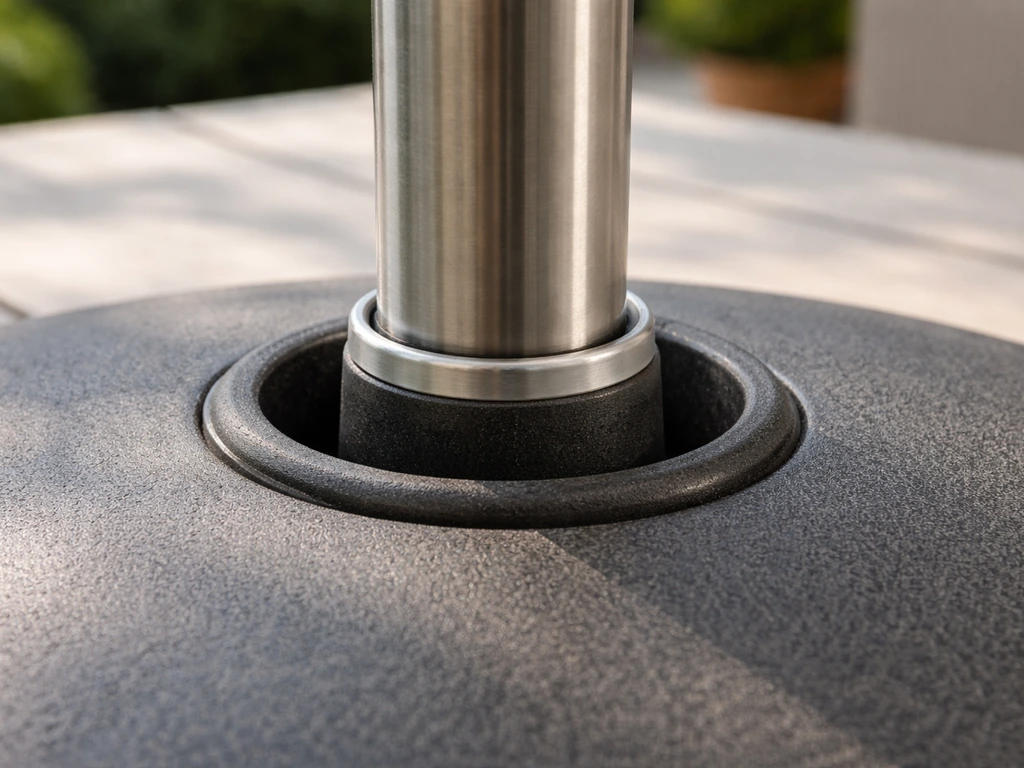
A very common real-world problem: the pole is noticeably smaller than the base tube, so even with the pin engaged, it rocks side to side. The fix is a reducer sleeve (sometimes called a pole adapter or base insert), which is a short plastic or rubber ring that slides inside the base tube and narrows the inner diameter to match your pole. If you need to build or choose a patio umbrella base that fits your pole, start by matching the base tube diameter and locking method. You can buy these for $5 to $15 at most hardware stores or online. Just measure your pole's outer diameter and your base tube's inner diameter before ordering.
Securing a patio umbrella without a base
No base doesn't have to mean no stability. There are several solid methods depending on your surface type and how permanent you want the solution to be.
Weighted stands and umbrella stand rings
A freestanding weighted stand is the easiest drop-in solution. If you want a base you can set up quickly, this is similar to learning how to set up patio umbrella base units with the right pole fit. These are essentially bases you buy separately, designed to accept standard pole diameters. You can fill them with water or sand for extra weight. On a flat patio, a stand filled with sand adds considerable mass and handles typical breezes well. This is also a great path if your original base broke and you need a replacement.
Paving stones and plate weights
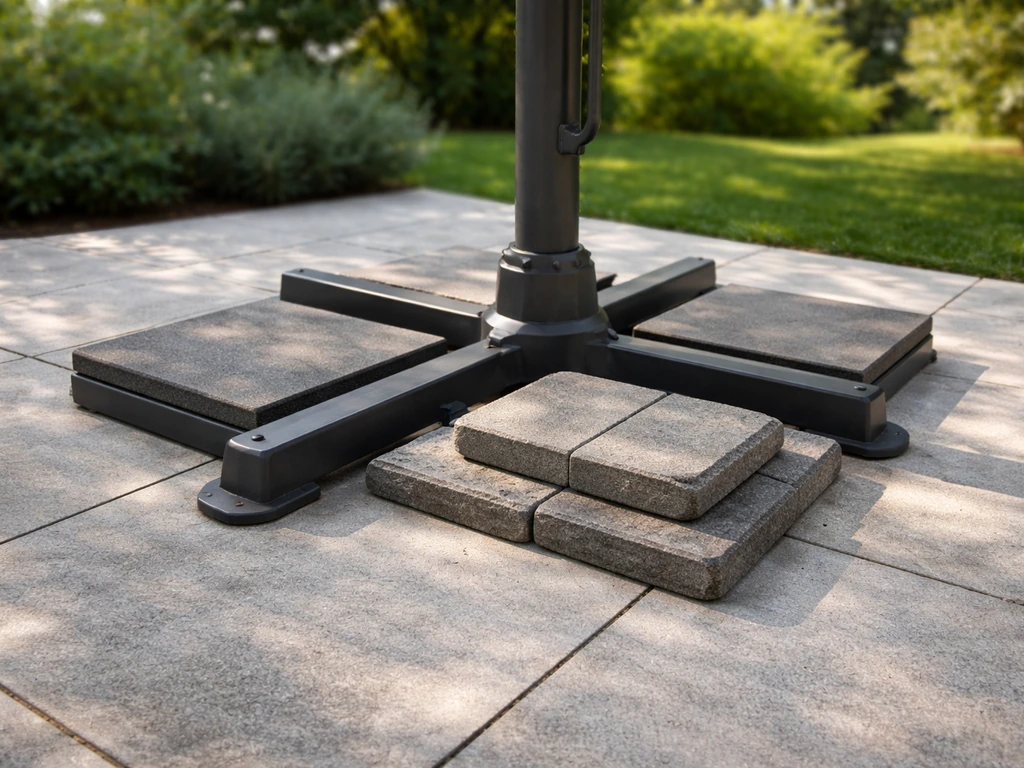
For cantilever or offset umbrellas, blank" rel="noopener noreferrer">Coolaroo's documentation specifically calls out using paving stones or additional weight plates on the base legs to prevent tipping. This applies to any offset umbrella: stack two or three standard 12-inch paving stones (each weighs around 20 to 25 pounds) on the base feet. This method is cheap, effective, and adjustable. Cantilever umbrellas are top-heavy by design, and skipping this step is the most common reason they tip over in a gust.
In-ground anchors and ground spikes
If you're setting an umbrella on grass or in a garden bed, a ground spike or in-ground sleeve is the most stable option. Drive a steel spike anchor into the ground (typically 12 to 18 inches deep), then drop the umbrella pole into it. For a permanent installation, you can cement a steel sleeve into a hole dug in the ground. This is about as solid as it gets and handles high-wind exposure well. Just make sure the sleeve diameter matches your pole.
Deck mount and surface-mount flanges
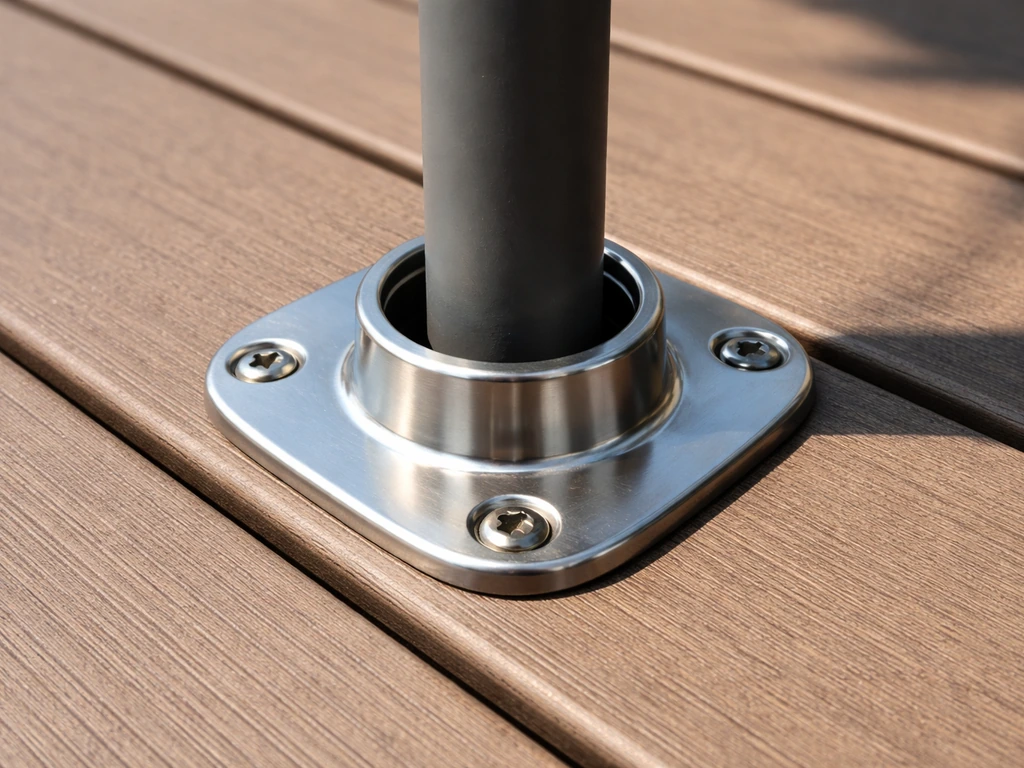
If you have a wood or composite deck, a bolt-down deck flange is a clean, secure option. The flange is screwed directly into the deck surface, and the umbrella pole drops into the attached sleeve. Make sure you're screwing into a joist or use proper deck anchors, not just the decking boards. This method eliminates any lateral movement entirely.
Tools and materials checklist before you start
Getting everything together beforehand saves a lot of back-and-forth. Here's what you'll typically need depending on your setup.
| Item | What It's For | When You Need It |
|---|---|---|
| Measuring tape | Measure pole OD and base tube ID | Always |
| Replacement locking pin (5mm to 8mm) | Replace missing or bent pin | Pin-lock systems |
| Allen key / hex wrench set | Tighten set screws on collar systems | Set-screw bases |
| Reducer sleeve / pole adapter | Fill gap between pole and oversized base tube | When pole wobbles in tube |
| Rubber mallet | Seat sleeve inserts without damaging pole | When fitting inserts |
| Paving stones (12-inch, 20-25 lbs each) | Weight base feet on cantilever setups | Cantilever umbrellas |
| Sand (up to 50 lbs per base) | Fill hollow plastic base for weight | Sand-fill bases |
| Deck flange kit with lag screws | Surface-mount on wood decks | No-base deck setups |
| Ground spike or in-ground sleeve | Anchor in soil or grass | Lawn or garden installs |
| Silicone lubricant spray | Ease pole insertion, prevent corrosion at joint | All systems, especially metal-on-metal |
Step-by-step: measure, align, and lock the umbrella in place
Follow these steps in order. Skipping the measurement step is how people end up with a wobbling pole or a pin that won't seat. Take the extra two minutes.
- Measure your pole. Use a tape measure around the outside of the bottom pole section and convert circumference to diameter (divide by 3.14), or use calipers if you have them. Common sizes are 1.5 inches (38mm), 1.75 inches (44mm), and 2 inches (51mm). Write this down.
- Measure your base tube opening. Stick the tape inside the opening and measure the inner diameter. If it's more than 2mm to 3mm larger than your pole, grab a reducer sleeve before proceeding.
- Check for a pin hole in both the base tube and the pole. They need to line up when the pole is fully seated. If your pole has no pin hole, you're using a screw-pin or collar system, not a through-pin system.
- Apply a light spray of silicone lubricant inside the base tube. This makes insertion easier and prevents the pole from seizing in the tube over time, especially on aluminum-in-aluminum setups.
- Insert the pole straight down. Don't angle it. Push firmly until you feel the bottom of the pole contact the base tube floor or a built-in stop ring. The pole should sit completely vertical.
- Engage the locking mechanism. For pin systems, rotate the pole until holes align and insert the pin. For lever collars, close the lever fully until it lies flat. For set screws, tighten with an Allen key until you feel firm resistance.
- Test before you walk away. Grip the pole at shoulder height and push sideways with moderate force. There should be zero movement. Then try to rotate it. If it spins, the pin isn't seated. If it rocks side to side, you need a reducer sleeve.
If you're working with a cantilever umbrella, also confirm that the offset arm locking knob or bolt is tightened after you adjust the tilt angle. That joint is a second wobble point that people often forget to check after setting the base.
Wind safety, stability checks, and fixing wobble or tilt
Most residential patio umbrellas are tested for winds up to about 20 to 25 mph when properly anchored. Once you're above that, the safest move is to close the umbrella. But the base and locking setup you use determines how well the umbrella handles gusts before you get to that point.
Stability check after setup
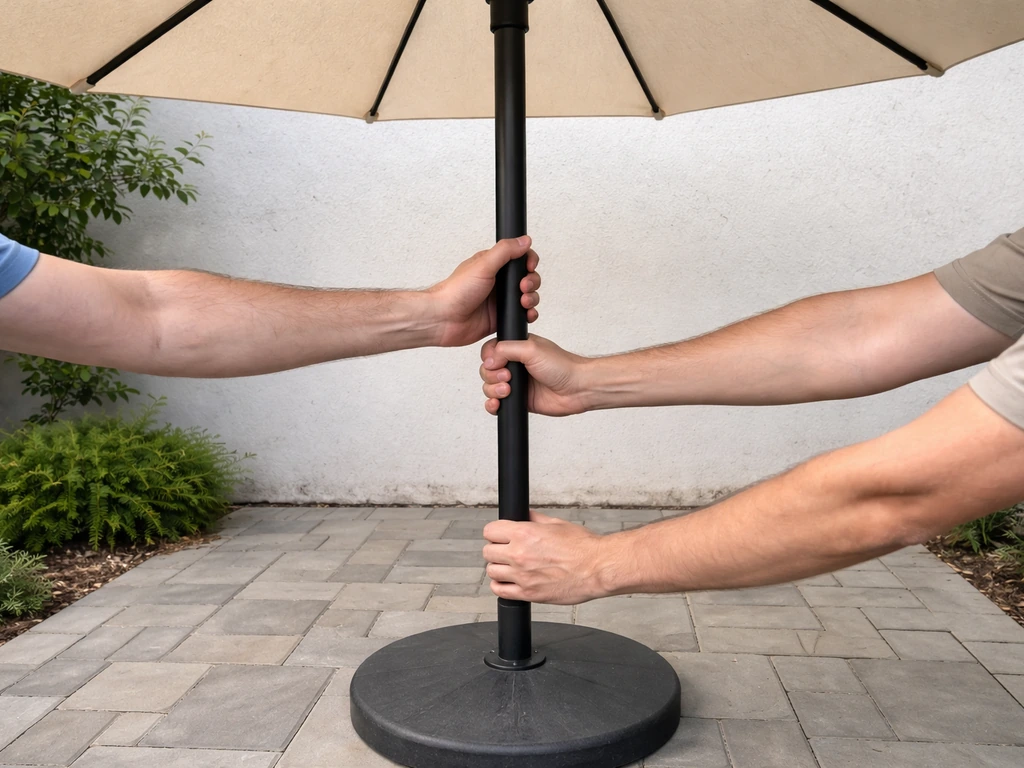
- Open the umbrella fully and step back. The canopy should be level, not tilted to one side.
- Push the pole at mid-height from multiple directions. No movement is the goal. If you feel a slight rock, find the play and address it before wind does it for you.
- Check that the base isn't tipping. For freestanding bases, the base should sit flat with no rocking. If it rocks, the surface is uneven: use rubber leveling pads under the base feet.
- For cantilever models, check that the cross-base legs are fully extended and any locking clips on the legs are engaged.
Troubleshooting common problems
| Problem | Most Likely Cause | Fix |
|---|---|---|
| Pole wobbles side to side | Pole diameter too small for base tube | Add a reducer sleeve or shim ring |
| Umbrella rotates freely in base | Missing or disengaged locking pin | Re-seat pin; replace if bent or missing |
| Pole won't stay seated, lifts up | No bottom stop in base tube; pin not through pole | Confirm pin passes through pole hole, not just presses on pole surface |
| Tilt after opening (leans to one side) | Loose tilt mechanism or worn tilting joint | Tighten tilt knob; check tilt button engagement |
| Whole umbrella tips in wind | Base too light for canopy size | Add weight: fill base with sand, stack paving stones on feet |
| Pole seized in base tube (won't remove) | Corrosion or debris in joint | Apply penetrating lubricant, let sit 10 min, twist with gentle rocking motion |
One real-world tip: if your umbrella is consistently tipping in the direction the wind comes from (usually the prevailing afternoon wind direction at your home), that's a base weight problem, not a locking problem. Adding 25 to 50 pounds of sand or water to a hollow base, or placing two paving stones on the windward base foot, makes an immediate difference.
Maintenance and seasonal storage to keep the fit secure long-term
The joint between your umbrella pole and base takes a lot of repeated stress, especially if you're inserting and removing the pole for storage. A little maintenance twice a season prevents most of the problems people run into.
During the season
- Check the locking pin or collar every two to three weeks. Vibration from wind can slowly back out a screw pin or loosen a collar lever over time.
- Inspect the pin hole in the pole for elongation. If the hole has become oval instead of round from side-loading in wind, the pin is no longer fully locking the pole. It's time for a replacement pole bottom section or a new base with a collar clamp.
- If you have a sand-filled or water-filled base, check the fill level at the start of summer. Water evaporates, sand can settle and compact. Top off to the manufacturer's recommended fill line.
- Spray the inside of the base tube with silicone lubricant at the start and middle of the season, especially in coastal or humid climates.
End-of-season storage
- Remove the umbrella pole from the base before storing, unless you're covering the whole setup in place. Leaving the pole inserted through fall and winter accelerates corrosion at the joint and makes the pole nearly impossible to remove in spring.
- Clean the base tube opening with a dry cloth and apply a light coat of silicone spray before storing the base. This prevents the tube walls from oxidizing and narrowing the opening.
- Store the pole vertically if possible, in a garage or shed. Horizontal storage can slightly bend aluminum poles over a full winter, which causes that annoying slightly-off-plumb situation in spring.
- For water-filled bases, drain completely before temperatures drop below freezing. Water expands when it freezes and will crack most plastic base shells.
- Inspect the locking pin or collar at the start of every new season before reassembly. If anything is bent, cracked, or corroded, replace it now rather than finding out it's broken when you're trying to secure the umbrella before a summer storm.
If you're dealing with a base that's cracked, has a stripped pin hole, or just isn't holding weight properly anymore, that's worth addressing as a separate repair project rather than trying to work around it. If your patio umbrella base is damaged or the pin hole is stripped, follow the fix steps below to restore a secure, wobble-free fit fix patio umbrella base. A secure umbrella starts with a structurally sound base, and no amount of shimming and pinning will compensate for a base that's fundamentally damaged.
FAQ
My locking pin goes in but the pole can still be lifted out, what should I check?
If the pole still lifts out after the pin or screw is engaged, you likely have the wrong fit (pole diameter mismatch), the locking pin is the wrong length, or the pin is not fully seated. Remove the pole, verify the base tube inner diameter, then confirm the pin hole size and that the pin passes completely through the space between the base and the spigot.
How do I know if I need a reducer sleeve (pole adapter) or just a new locking pin?
Yes. Reducer sleeves work best when they snug the pole without forcing the lever closed or bending the pole. Measure your pole outer diameter and your base tube inner diameter, then choose a sleeve that narrows the tube enough to remove side-to-side play while still allowing the pole to insert fully.
What measurements should I take so I buy the correct replacement hardware for my patio umbrella base?
Measure both dimensions before buying. Base tube inner diameter matters for reducer sleeves and for lever/cam systems, while pin hole diameter and pin type matter for pin-based designs (spring pin, screw pin, or threaded pin). If you only measure the pole, you can still end up with hardware that fits the pole but not the base.
My base uses a set screw, how tight should it be so the pole doesn’t wobble or get damaged?
For set screw style bases, tighten only after the pole is fully inserted and centered, then re-check after the first day of use. Over-tightening can deform the pole or strip the base hole, especially on aluminum poles. Use the correct Allen key size and avoid gorilla-level force.
The lever/cam on my umbrella base closes partially, is that normal?
If a lever/cam collar doesn’t close completely flat, it will often leave the pole free to rotate. That usually means your pole is larger than the collar bore, a reducer sleeve is required, or debris is preventing full closure. Clean the collar area, reinsert the pole, then try closing again fully.
What are common reasons a screw-pin style base still allows rotation?
For screw pins, check the thread condition and ensure the screw engages the correct depth, then confirm the pin actually contacts the pole spigot or ring. If it stops short, you may have a shortened pin, misaligned hole, or a ring adapter that is sitting crooked. Test by inserting the pole with no wind and trying to rotate it by hand.
My umbrella tilts in wind even though the pole is locked, how do I diagnose that?
If your umbrella tilts even when the pin is engaged, the problem is often base weight distribution or improper stacking for offset/cantilever models. Add weight to the windward side (for many homes, that is the direction the umbrella naturally tips toward), and ensure paving stones or plates sit squarely on the base feet.
After adjusting a cantilever umbrella tilt, what else should I tighten to prevent wobble?
Yes, especially on cantilever and offset umbrellas where the center of mass is shifted upward and outward. Re-check the offset arm tilt locking knob or bolt after you adjust angle, because that is a second joint that can introduce wobble independent of the pole-to-base lock.
Can I fix a wobbling problem by just adding shims or extra tape around the pole?
Never rely on shimming a damaged base tube or a stripped pin hole. If the base tube wall is cracked, the locking hole is wallowed out, or the pin cannot fully seat, the safest fix is replacing the base or repairing the specific component as a structural issue.
How should I maintain the pole-to-base connection so the locking mechanism keeps working?
If the pin or collar area is wet or gritty, it can prevent full seating and cause intermittent wobble. Wipe the pole end and base insert area, dry them, then lubricate sparingly only if the manufacturer allows it (dry graphite is often safer than heavy oils that attract grit).
What maintenance steps prevent the locking pin or collar from sticking over time?
If you leave the umbrella outdoors, inspect the locking parts for corrosion and check that the pin still slides smoothly. For storage, insert the pole fully before storing or keep the pin installed so you do not lose the correct pin length. Replace any pin that looks deformed or has worn edges that reduce contact.
Next Articles
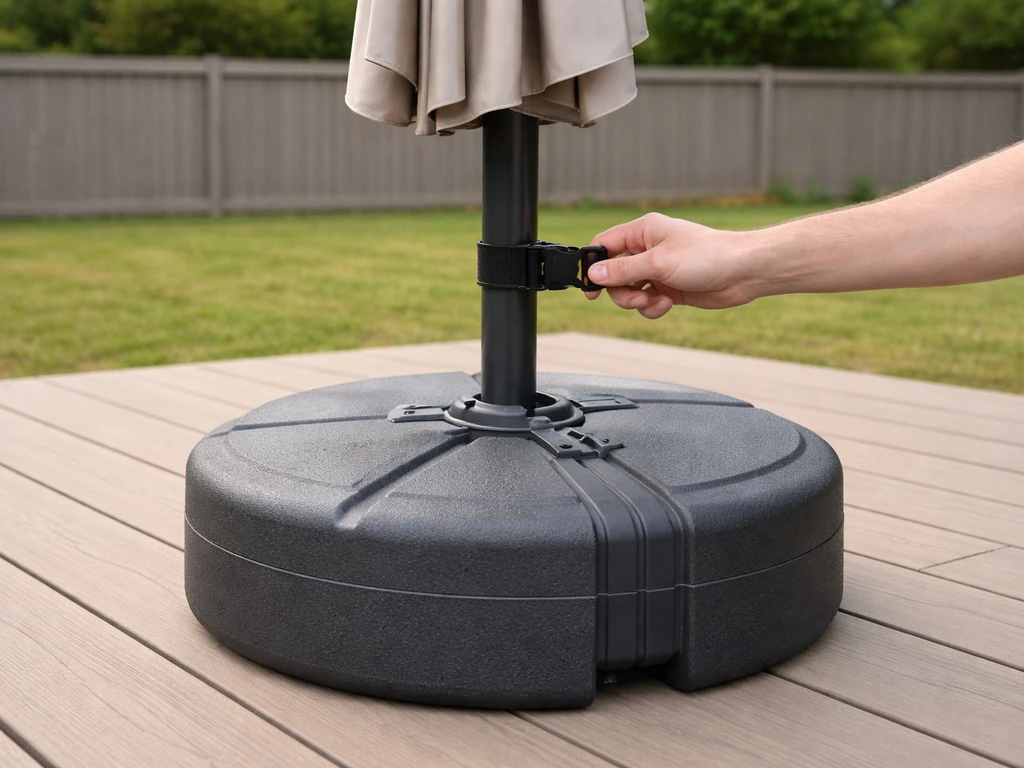
How to Use a Patio Umbrella Without a Base Safely
Step-by-step ways to secure a patio umbrella without a base, with safe weight needs, setup steps, and wobble fixes.
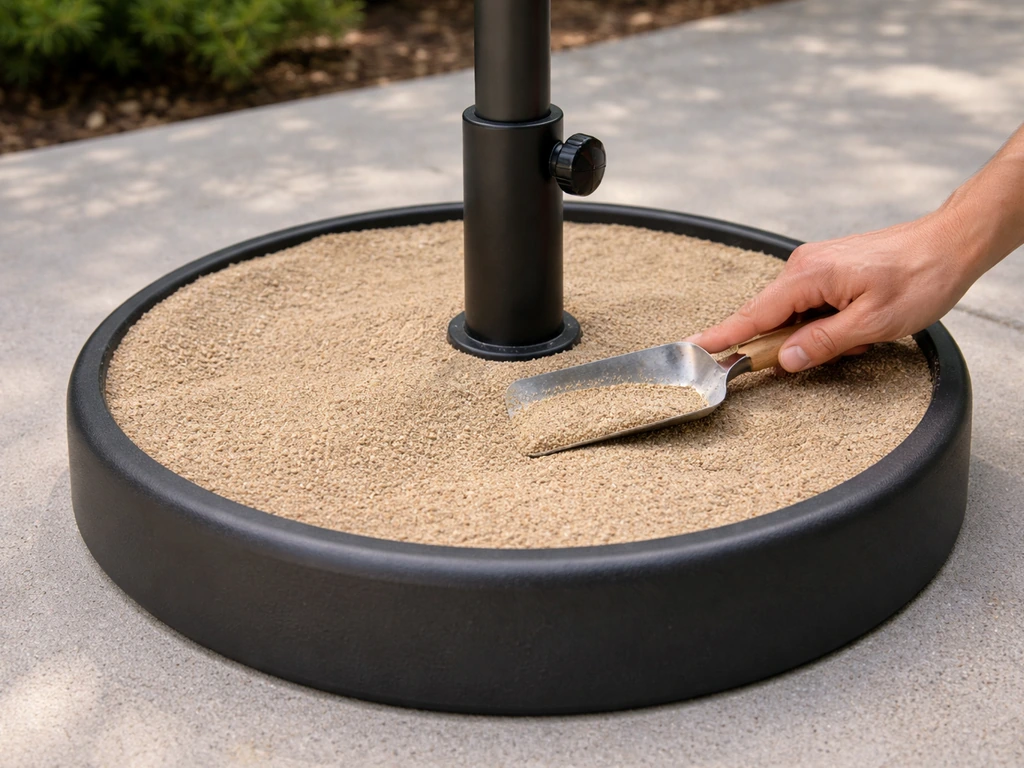
How to Fill a Patio Umbrella Base With Sand
Step by step guide to fill a patio umbrella base with sand for solid stability, no leaks, plus leveling and maintenance
How to Make a Base for a Patio Umbrella DIY Guide
DIY step-by-step guide to build a stable, non-tipping patio umbrella base, with placement, securing, and maintenance tip