
You can use a patio umbrella without its standard base by switching to a purpose-built weighted stand, a surface-mount spigot system, an in-ground anchor, or by securing a cantilever umbrella with pavers and bolts. If you want a true DIY option, you can build a sturdy base for a patio umbrella using sand or gravel ballast and a solid, level housing that matches your pole size how to make a base for patio umbrella.
How to Use a Patio Umbrella Without a Base Safely

Luca Morrison
4 Jul 2026
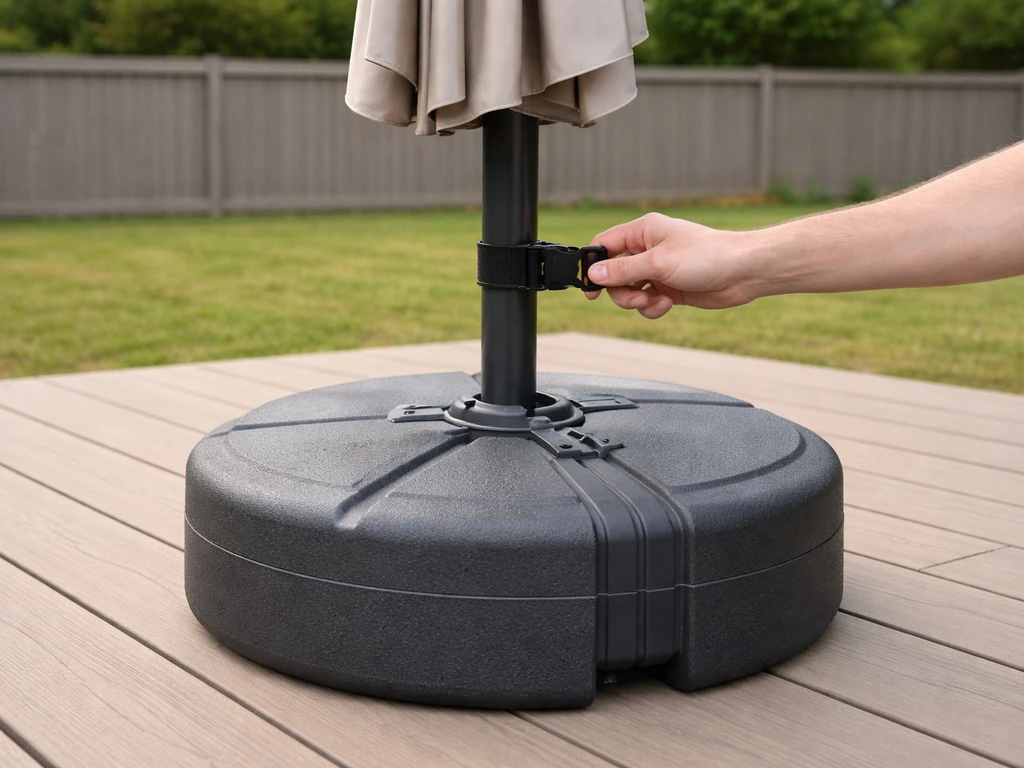
The right method depends on whether you have a center-pole market umbrella or a cantilever, what surface you're working with, and how windy your spot gets. None of these are difficult to set up in an afternoon, but skipping the weight math is where people get hurt. Let's walk through it.
First: figure out what umbrella you have and why the base is missing
Before you improvise anything, spend two minutes identifying your umbrella type. The approach that works for a center-pole market umbrella is completely different from what works for a side-arm cantilever, and mixing them up is the most common mistake people make.
- Center-pole (market) umbrella: the pole runs straight through the center of the canopy and sticks out the bottom. These are designed to drop into a base or through a table hole. They have no structural side support and will tip immediately without something holding that pole upright.
- Cantilever (offset) umbrella: the arm extends sideways from a vertical post anchored in a cross-base. The canopy hangs off to the side. These need much more ballast weight because the offset load puts serious torque on whatever is anchoring the base.
- Freestanding pedestal style: the pole fits into a heavy pedestal or table unit. Stability depends on the pedestal's mounting or mass.
Now think about why your base is missing. If it broke, knowing that will help you choose a compatible replacement. If you never had one (bought the umbrella secondhand, inherited it, or the base was sold separately and you skipped it), you're starting fresh and have more options. If the base is just temporarily unavailable, some of the methods below are safe short-term solutions while you wait for the right hardware.
Safe stability options: what actually works instead of a base
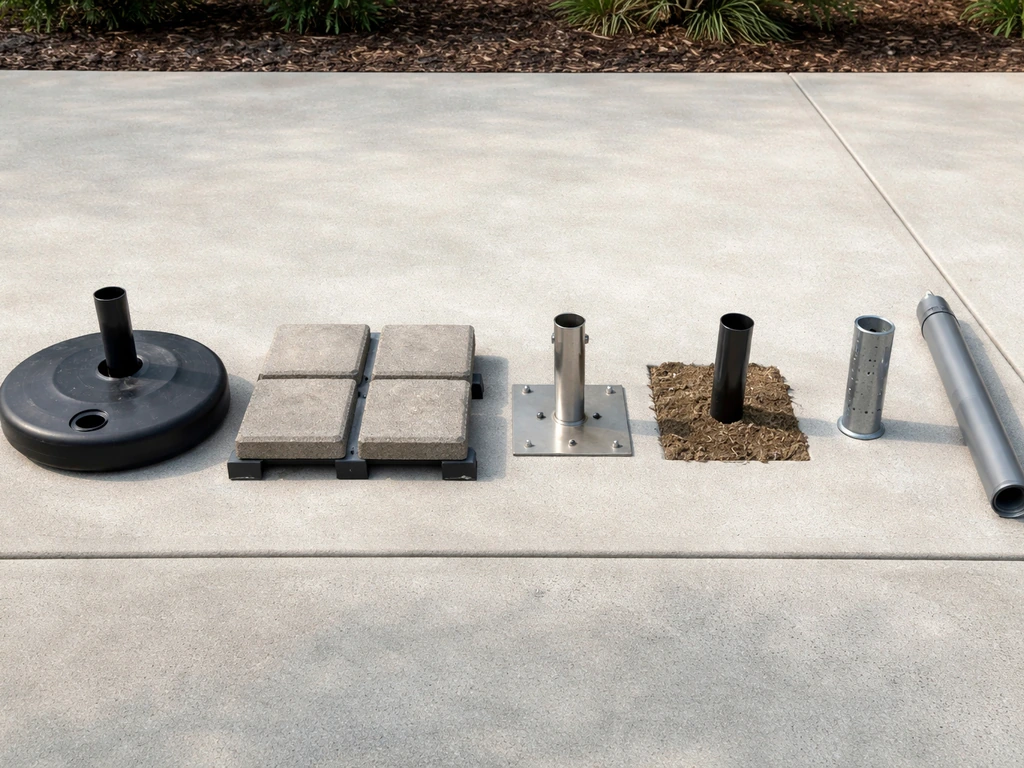
There are five legitimate alternatives to a standard umbrella base. Each has trade-offs in cost, permanence, and how much weight they provide. Here's the honest rundown.
| Method | Best for | Approximate stability weight | Permanence |
|---|---|---|---|
| Fillable weighted stand (sand or water) | Market umbrellas on any flat surface | 50–100 lb depending on fill | Semi-permanent, move when needed |
| Cantilever cross-base with pavers stacked on top | Offset/cantilever umbrellas on patios | 200–374 lb recommended | Semi-permanent |
| Surface-mount spigot/camlock plate | Decks and concrete patios | Depends on fastener anchoring | Permanent to semi-permanent |
| In-ground sleeve or anchor | Lawn, soil, or pre-drilled concrete | Ground friction + fill material | Permanent |
| Tie-down straps to railing or structure | Emergency/temporary only, low-wind conditions | Low, supplemental only | Temporary |
A quick note on weight: this is not a place to estimate. Cantilever umbrella manufacturers are specific about this. One common guidance example from the industry specifies filling a cantilever base with roughly 330 pounds of sand plus 44 pounds of water for a total of around 374 pounds. For a DIY option, you can fill a patio umbrella base with sand to reach the manufacturer’s recommended ballast weight.
That sounds extreme until you've watched an offset umbrella tip over in a 20 mph gust. For market umbrellas, the required base weight is lower but still needs to be matched to the canopy diameter. A 9-foot market umbrella needs at least 50 pounds; an 11-foot canopy needs closer to 80–100 pounds. Going lighter is where wobble and tipping start.
Tie-down straps to a railing or deck post are the one method I'd call truly temporary. They can work in a pinch on a calm day but are not a substitute for proper ballast or anchoring. If you want the safest option, focus on how to secure patio umbrella base so it stays stable in wind and won’t shift over time proper ballast or anchoring. The straps absorb tension load, not compressive ground load, so if the umbrella catches a real gust, the strap becomes the weakest link, and whatever it's attached to takes the force.
Setting up on different surfaces: deck, patio, and ground
The surface you're working with changes the approach significantly. For a patio umbrella, the best setup usually means choosing a compatible base, filling it with the right amount of weight, and securing the pole so it stays stable in wind patio umbrella base. Here's what you need to know before you start drilling or stacking pavers.
Wood or composite deck
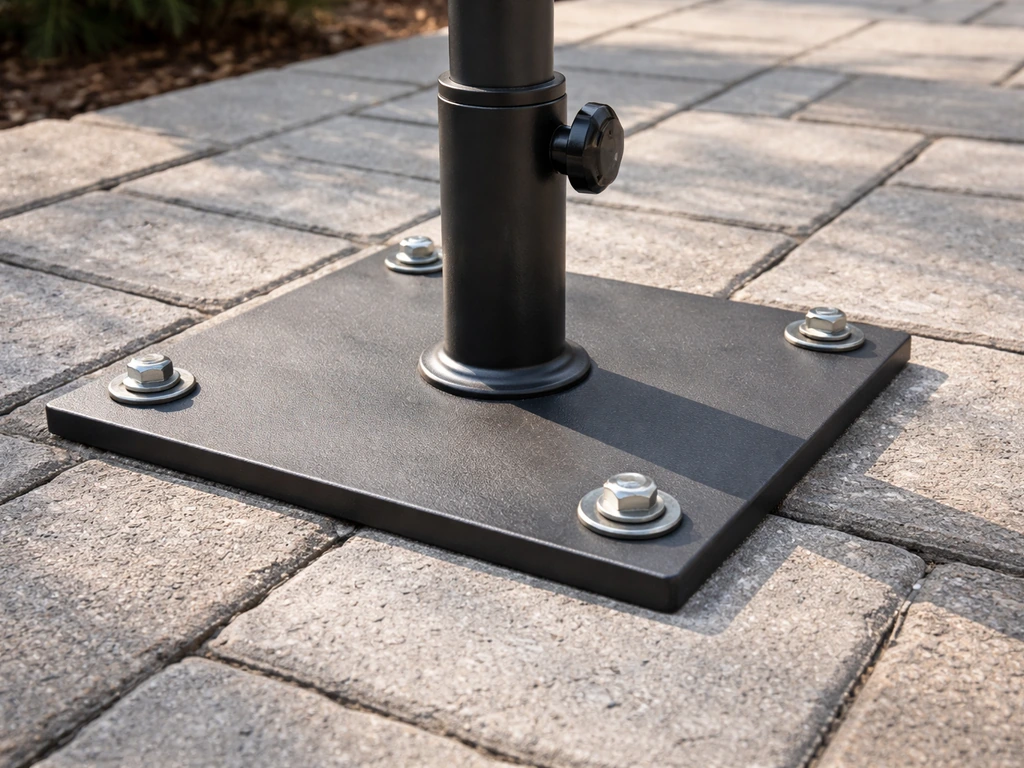
A surface-mount spigot plate bolted into your deck is the cleanest solution here. You bolt a flat base plate to the deck boards, then lock the umbrella pole into the plate using a camlock or set-screw mechanism. The critical detail: you need to hit a joist, not just the decking boards. Deck boards alone don't have the structural strength to resist the lateral pull from an umbrella in wind.
Probe under the deck to find your joist spacing (typically 16 inches on center) and place the base plate accordingly. Use lag screws, not wood screws. A fillable weighted stand also works on a deck if you don't want to drill, but make sure the combined weight won't create a point-load problem on older decking.
Concrete or paver patio
Concrete gives you two good options: a heavy fillable stand that just sits on the surface, or a bolt-down plate using concrete anchors.
For cantilever umbrellas specifically, Reddit users discuss that misassembled or under-engaged locking and rotation/securement points can cause the umbrella to wobble or blow more than expected, increasing side-load and risking base movement For cantilever umbrellas specifically, Coolaroo and similar manufacturers explicitly require securing the cross-base with either paver stones placed on top of the base arms or bolts into the surface. .
For cantilever umbrellas specifically, Coolaroo and similar manufacturers explicitly require securing the cross-base with either paver stones placed on top of the base arms or bolts into the surface. This isn't optional wording in the manual, it's a safety requirement. Pavers are the easiest option: place them directly on the base arms, stacking as needed to hit your target weight.
For a paver patio, you can also sink a ground sleeve between pavers if you have the clearance to remove and relay a section. For an in-ground sleeve, measure the pole and follow the sleeve depth guidelines so the umbrella stays stable in wind.
Grass or soil
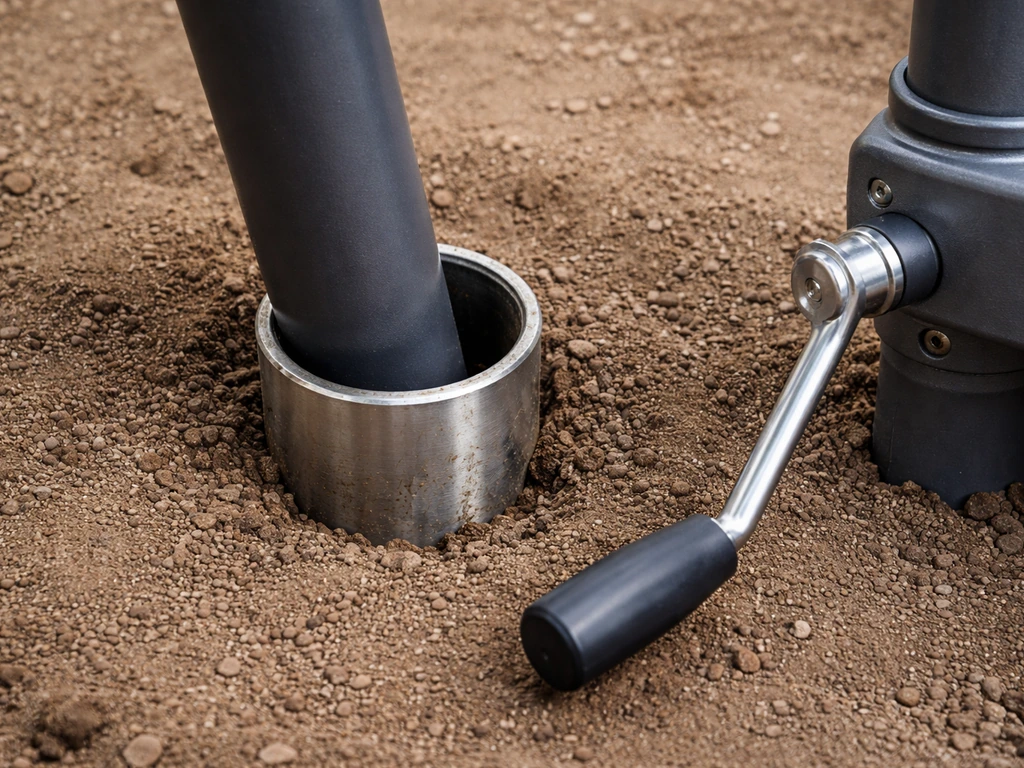
An in-ground sleeve is the right move here. You drive or auger a steel sleeve into the ground, then drop the umbrella pole in and lock it with a pin or set screw. The sleeve provides stability from soil friction plus the compressive grip of the surrounding ground. For soft or sandy soil, fill the sleeve with dry concrete or tamp the soil tightly around it before use.
This is covered in more detail in the how-to for putting a patio umbrella in the ground, but the short version is: the sleeve needs to go at least 18–24 inches deep to resist tipping in any real wind. This guide continues with how to install patio umbrella in base methods like an in-ground sleeve, including how deep to place it for real wind.
Step-by-step setup for each method
Fillable weighted stand (market umbrella, any flat surface)
- Place the stand on level ground where you want the umbrella. Check that it's stable and not rocking. Shim with a thin rubber mat if the surface is slightly uneven.
- Fill the stand with sand (preferred over water for long-term stability and mold prevention) through the fill port. Use a funnel if the port is narrow. Fill it completely, don't leave it half-full.
- Replace the fill cap and tighten it. A loose cap lets water in and sand out over time.
- Insert the umbrella pole into the center opening. Check that your pole diameter matches the stand's sleeve. A 1.5-inch pole in a 2-inch sleeve will wobble no matter how much the stand weighs. Use the rubber insert or shim that came with the stand to fill the gap if needed.
- Tighten the set screw or knob until the pole is snug. Give the pole a firm push in each direction: it should not rock at the base.
- Open the canopy slowly to check for tilt. If the umbrella leans when open, the surface isn't level or the pole isn't fully seated. Adjust before proceeding.
Paver-weighted cantilever cross-base
- Position the cross-base in your target location. Orient it so the main post is on the opposite side from where you want the canopy shade (the arm reaches out over your seating area).
- Assemble the vertical post and cantilever arm per the manufacturer's manual before adding weight. It's much harder to adjust once the pavers are loaded.
- Stack paving stones or concrete blocks directly on the cross-base arms. Distribute weight evenly across all four arms if it's a four-legged base. Target your manufacturer's specified weight (check your manual, or aim for at least 200 lb for any canopy over 10 feet).
- If using a fillable base instead of pavers, fill each section completely with sand or water, then cap and secure all fill ports. Partially-filled sections create uneven ballast.
- Lock the pole rotation collar at the base of the cantilever arm. This is the collar that lets you spin the canopy direction. If it's not locked, the arm can rotate unexpectedly under wind load and the whole assembly can shift.
- Open the canopy to its smallest position first, then extend it fully. Check that nothing is binding and the arm lock is engaged.
- Push on the canopy from below and from the side. There should be zero movement at the base. If the base slides or lifts on any side, add more weight to that arm.
Surface-mount spigot plate (deck or concrete)
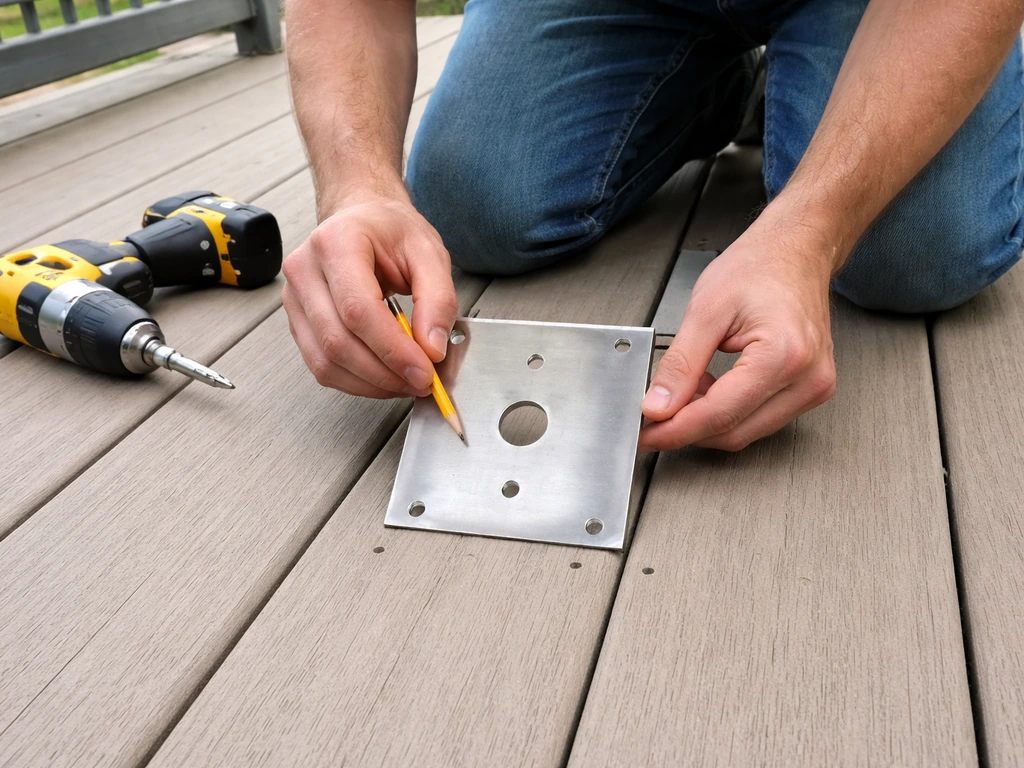
- Mark your drill holes using the base plate as a template. Double-check joist location on a deck before marking.
- Drill pilot holes appropriate to your fastener type: lag screws for wood decks, concrete anchors for poured concrete.
- Bolt the plate down firmly. No play, no flex. If the plate moves when you push it, the fasteners aren't adequate.
- Insert the umbrella pole and engage the camlock or set-screw locking mechanism. With a camlock system, you'll push the pole in and turn the lever until it clicks locked.
- Open the umbrella and do a wobble test by pushing the pole from the side with moderate force. There should be no lateral movement at the plate. Any movement means a fastener needs to be retightened or the pole diameter doesn't match the sleeve.
In-ground sleeve (lawn or soil)
- Use a post-hole digger or auger to create a hole at least 18 inches deep (24 inches for larger canopies or loose soil).
- Drop in the steel sleeve and check that it's vertical with a level on two sides.
- Pack dry concrete or tightly-tamped soil around the sleeve. If using dry concrete, add water slowly and let it cure 24 hours before loading the umbrella.
- Insert the umbrella pole, seat it fully in the sleeve, and lock with the pin or set screw.
- Open the umbrella and check for wobble. Some movement is normal at the top of the pole; there should be zero movement at ground level.
Troubleshooting: wobble, tilting, crank strain, and canopy angle
Umbrella wobbles when open
Wobble almost always comes from one of three places: the pole doesn't fit snugly in the sleeve, the stand isn't heavy enough, or the base is on uneven ground. Start with the simplest fix. Check whether a rubber reducing insert or shim is available for your stand to close the gap between the pole and sleeve. If the stand is under the recommended weight for your canopy size, fill it more. If neither helps, the base isn't sitting flat. A rubber mat under the base can compensate for minor surface irregularity.
Umbrella tilts to one side under the canopy's own weight
This is a ballast distribution problem for cantilever umbrellas, or a pole-fit problem for market umbrellas. For cantilever setups, check that weight is distributed equally on all base arms. A canopy that drifts toward one side usually means the arm on that side isn't loaded enough. For market umbrellas, if the pole tilts in the stand even when locked, the sleeve or set screw is worn or stripped. Wrap the bottom of the pole with a few layers of plumber's tape (PTFE tape) to fill the gap and create a tighter friction fit temporarily.
Crank is hard to turn or feels strained
A stiff crank when operating base-free usually means the pole is under a side load it wasn't designed to absorb. This happens when the umbrella is leaning in the stand instead of sitting truly vertical. Fix the tilt first (see above), then try the crank again. If the crank is still stiff, the internal gear or cord may be at fault independent of the base setup. Also make sure you're not trying to crank a wet or water-logged canopy: waterlogged fabric adds significant weight that can overload the crank mechanism.
Canopy angle won't hold position (tilt head keeps dropping)
The tilt adjustment knob or pin relies on the pole being stable. If the pole is wobbling even slightly in the stand, the tilt mechanism gets extra stress every time the canopy moves and the locking knob loosens over time. Solve the base stability first. Once the pole is solid, if the tilt still won't hold, the friction knob likely needs to be tightened more firmly or the tilt pin may be worn. With some models, wrapping the tilt collar with a rubber band as a friction shim is a valid temporary fix until you can replace the knob.
Wind safety: what to do in gusts and when to just close the umbrella

This is the part most people skip and then regret. An unsecured or under-ballasted umbrella becomes a projectile in wind. An under-ballasted patio umbrella can become unsafe in moderate wind because it may wobble or tip when the base is not heavy enough or not designed for that umbrella under-ballasted umbrella. When you're using a non-standard base setup, your margin for error in wind is smaller than with a manufacturer-specified base, so you need to be more conservative, not less.
- Close the umbrella when winds reach 15–20 mph (a moderate breeze that makes leaves and small branches move constantly). Don't wait for gusts to hit.
- Never leave the umbrella open unattended, especially overnight or when you're inside. Wind can pick up quickly and you won't be there to close it.
- In a cantilever setup, engage the rotation lock at the base before leaving the umbrella open. An unlocked cantilever arm can spin in wind, shifting the entire load and walking the base across the patio.
- If a gust hits while the umbrella is open, close it before trying to add weight or adjust the base. Adjusting a loaded, open umbrella in wind is how people get knocked over.
- For any temporary setup (tie-downs, improvised stands), close the umbrella completely any time you're not actively sitting nearby.
- After a windy day, check all fasteners, set screws, and weight placements before reopening. A single high-wind event can shift weight distribution without you noticing.
The consistent advice from manufacturers across market and cantilever styles is the same: blank" rel="noopener noreferrer">when in doubt, close. An umbrella that flaps in wind isn't just at risk of tipping. The repeated fabric stress damages the canopy seams, the rib joints take impact loads they're not designed for, and the pole or arm starts working loose from whatever is holding it. Closing early is not being overly cautious, it's how you keep the umbrella working all summer.
Maintenance, next steps, and making this a long-term solution
Temporary vs. long-term setup
Be honest with yourself about which category you're in. If you're waiting on a replacement base to arrive, a sand-filled stand or paver-weighted cross-base is a perfectly fine short-term solution as long as you follow the weight guidelines. If this is going to be your setup all season, it's worth spending a bit more time on a surface-mount plate or in-ground sleeve because those solutions are more stable, more weather-resistant, and less likely to shift over time.
Check pole diameter compatibility before buying anything
This is the single most common purchasing mistake. Umbrella poles come in different diameters, most commonly 1.5 inch, 1.75 inch, and 2 inch. A stand built for a 2-inch pole will wobble dangerously with a 1.5-inch pole, no matter how heavy the stand is. Measure your pole diameter before ordering any stand, sleeve, or surface-mount plate. Most product listings specify both the stand's opening diameter and which pole sizes are compatible. If the listing doesn't tell you, contact the seller before you buy.
Routine checks to keep the setup safe
- Every two weeks: check fill levels in any water-based stands. Water evaporates, especially in summer heat, and a half-empty water base can lose 40–50% of its effective weight.
- Monthly: retighten all set screws, spigot locks, and camlock mechanisms. Vibration from wind and daily opening/closing loosens hardware over time.
- After any storm or high-wind event: re-check base weight distribution (pavers can shift), confirm all fasteners are tight, and inspect the pole for any new wobble.
- End of season: drain water from fillable bases before freezing temperatures arrive. Water expands when it freezes and can crack plastic base components. Sand-filled bases can stay filled year-round.
When to stop improvising and get the right base
If you find yourself re-checking wobble every few days, adding more weight repeatedly, or closing the umbrella more often than you're using it because you don't trust the setup, that's a sign the current workaround isn't adequate for your umbrella size or wind exposure. At that point, the right move is to invest in a properly-matched base. For market umbrellas, the process for setting up a correct base and filling it properly is straightforward.
If you need the exact steps for a missing or damaged base on a patio umbrella, see how to fix patio umbrella base for a direct, model-agnostic walkthrough. For cantilever setups, some manufacturers offer dedicated fillable base systems or in-ground mounts as accessories for their specific umbrella models, which is usually the safest long-term path. The time you spend on a proper setup now saves you from a tipped umbrella and a ruined canopy later.
FAQ
Can I use an umbrella without a base if I’m only going to use it for a few hours?
Only if you can use a truly conservative temporary method, like tie-down straps to a structure, and it’s a calm day. Even then, you should close the umbrella at the first sign of repeated flapping, because straps typically handle tension, not the compressive ground load that proper ballast creates in gusts.
What’s the safest temporary option while I wait for a replacement base?
If you have the option, use a fillable weighted stand or a paver-weighted cross-base and match the manufacturer ballast target for your umbrella type and canopy size. Avoid relying on partial weight or a stand that looks close, because under-ballasting reduces your margin for tipping.
How do I know if my umbrella is center-pole market or a side-arm cantilever (without guessing)?
Look at where the canopy is supported: market umbrellas have one central pole under the canopy. Cantilevers have a post offset from the canopy center and typically a cross-base with arms underneath. If the mounting hardware you have references a “cross-base,” treat it as cantilever.
Do I need to weigh the sand or water, or can I estimate by volume?
Weighing is strongly preferred. Volume estimates vary by sand type and moisture, and the safety margin is tied to specific ballast totals. If you cannot weigh, you should still use the manufacturer’s fill instructions exactly (including any sand vs water ratios) rather than “close enough” amounts.
Can I place pavers directly on the patio base arms if my paver patio surface is uneven?
Uneven surfaces are a common reason for drift and wobble. Before adding pavers, level the area under the base, and ensure the base sits flat on all load points. If the gap is minor, a rubber mat can help for small irregularities, but it should not replace proper leveling for larger dips.
If my pole seems loose in the sleeve or stand, is it okay to force it down?
Don’t force it. A loose fit usually means you need the correct insert/shim for that model or a compatible reducing insert. For a short-term friction fix, some people use PTFE tape on the pole bottom to improve grip, but you should replace or use the correct parts once available.
My umbrella wobbles even when fully locked. What should I check first?
Check fit and stability in this order: confirm the pole diameter matches the stand or sleeve opening, confirm the stand or sleeve is seated on flat ground, then verify you reached the recommended ballast weight. If it drifts toward one side on a cantilever, inspect that both base arms are loaded evenly.
What’s the biggest mistake people make when they skip the base?
Mixing umbrella types or using mismatched hardware. A stand or sleeve built for a different pole diameter or umbrella style can wobble dangerously even if it’s heavy. Always verify pole diameter compatibility and the correct mounting mechanism for your umbrella design.
Can I anchor straps to a railing if I don’t want to drill or add heavy weight?
You can, but only as a last-resort temporary approach. Straps can be the weakest link during gusts because they don’t compress the ground the way ballast does. If your railing posts are not designed for lateral impact loads, avoid this setup or reduce exposure by closing early in wind.
Is it safe to open the umbrella in light rain or after it has gotten wet?
Be cautious. Waterlogged fabric adds significant weight and can overload crank or tilt mechanisms, especially in base-free setups where the pole is under extra stress. If the fabric is soaked, consider closing and draining, or allow it to dry before raising fully.
How deep should an in-ground sleeve be for stability, and does soil type change anything?
As a baseline, plan for at least 18 to 24 inches of depth for wind resistance. In soft or sandy soil, tamp the soil tightly or fill the sleeve with dry concrete, because soil compaction and sleeve grip are what prevent tipping.
My tilt knob loosens over time. Should I keep tightening it?
Tightening the knob can help if the base is already stable, but if the pole wobbles even slightly, tilt hardware will loosen repeatedly from cyclic stress. First solve stability (fit, ballast, flat seating). If the pole is steady and the tilt still won’t hold, you may need a replacement knob or a model-specific friction adjustment.
When should I stop troubleshooting and buy the correct base?
If you keep re-checking wobble often, repeatedly add weight without getting the pole solid, or you close the umbrella earlier than you want because you don’t trust it. At that point the workaround is not matching your canopy size, wind exposure, or pole fit, and a properly matched base is the safer path.
What pole diameter should I measure, and where exactly do I measure it?
Measure the outside diameter of the umbrella pole at the portion that inserts into the stand or sleeve. Common diameters are about 1.5 inch, 1.75 inch, and 2 inch, and a mismatch can cause dangerous wobble even with adequate weight. Verify the insertion diameter, not a nearby section that may be larger or shaped differently.
Next Articles
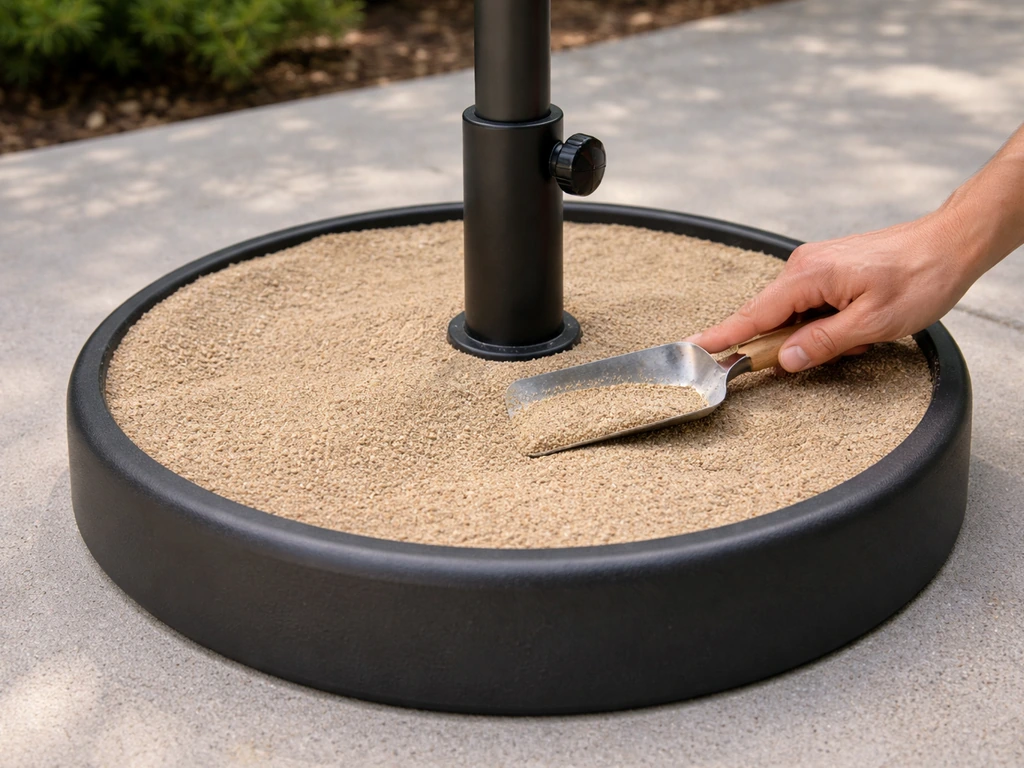
How to Fill a Patio Umbrella Base With Sand
Step by step guide to fill a patio umbrella base with sand for solid stability, no leaks, plus leveling and maintenance
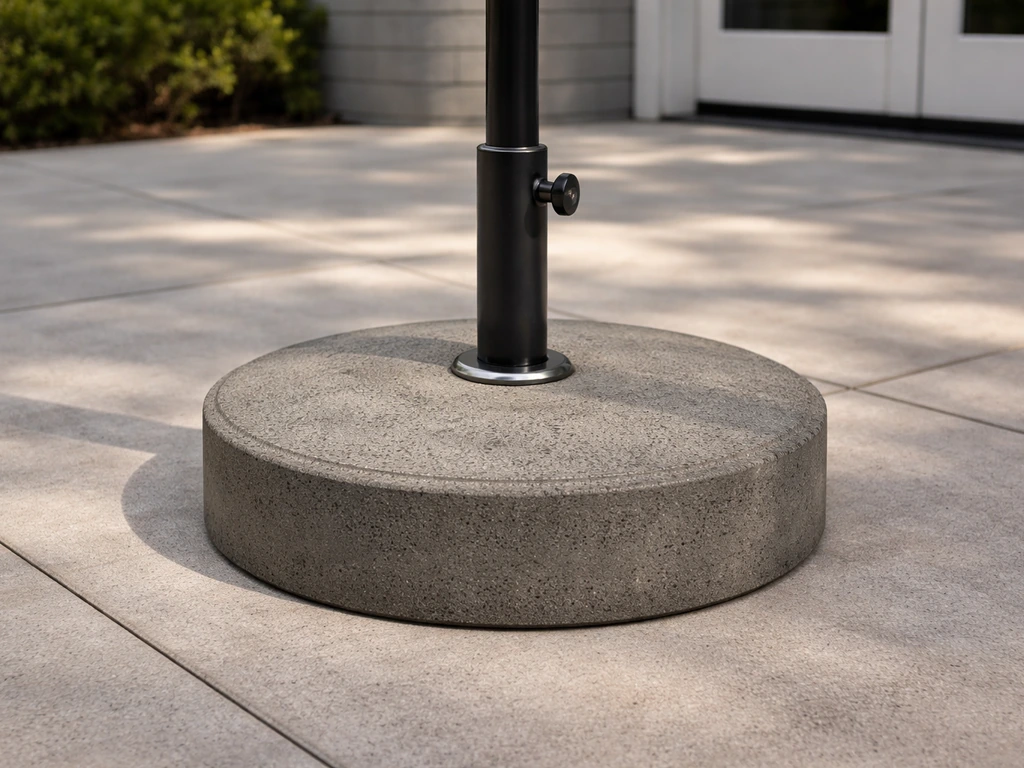
How to Make a Base for a Patio Umbrella DIY Guide
DIY step-by-step guide to build a stable, non-tipping patio umbrella base, with placement, securing, and maintenance tip
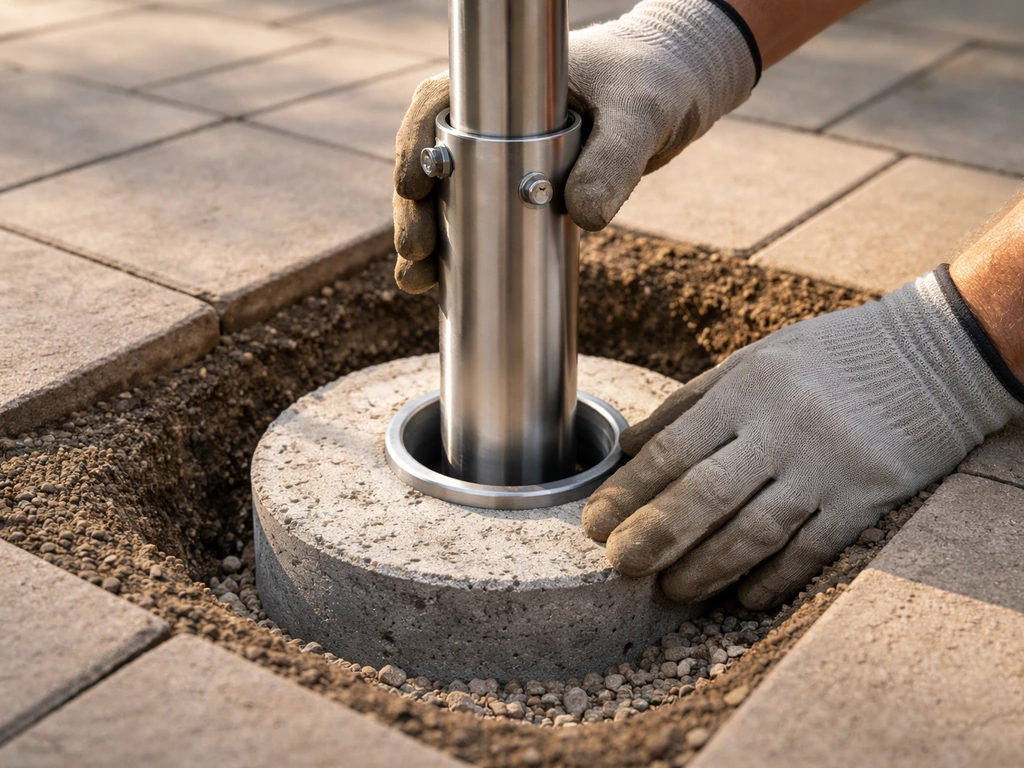
How to Put a Patio Umbrella in Ground Step by Step
Step-by-step guide to install an in-ground patio umbrella base, align the pole, prevent wobble, and check tilt and crank