
[Fill your patio umbrella base](/how-to-set-up-patio-umbrella-base) with dry play sand or all-purpose sand, aim to pack it at least 50% full (and ideally 75–100% full for real stability), and use a funnel to pour it in slowly through the fill cap. For a typical freestanding base that holds around 50–60 lbs when full, you're looking at roughly 1. 5 to 2 cubic feet of sand. That's usually two 50-lb bags from any hardware store.
How to Fill a Patio Umbrella Base With Sand

Luca Morrison
4 Jul 2026
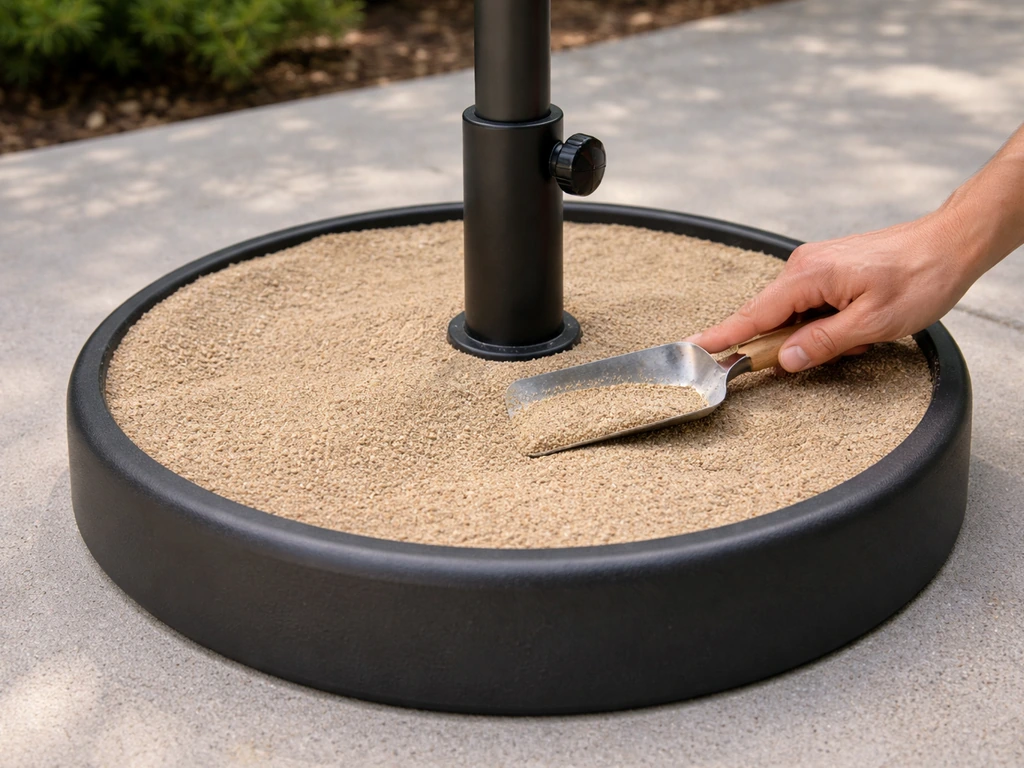
If your base is a larger cantilever-style unit, some models specify up to 100 kg (220 lbs) of sand, so check your manual for the exact fill weight before you start. One fillable umbrella-base owner manual specifies that you can add 100 kg (220 pounds) of sand, then fill with water, and it notes the base weight as 140 kg [up to 100 kg (220 lbs) of sand](https://assets. wfcdn. com/dm/document/3ec36716-c1b4-4baa-b25d-05a27757fbee/qtar1007%20owner%20manual.
pdf).
Choosing the right sand type and how much to use
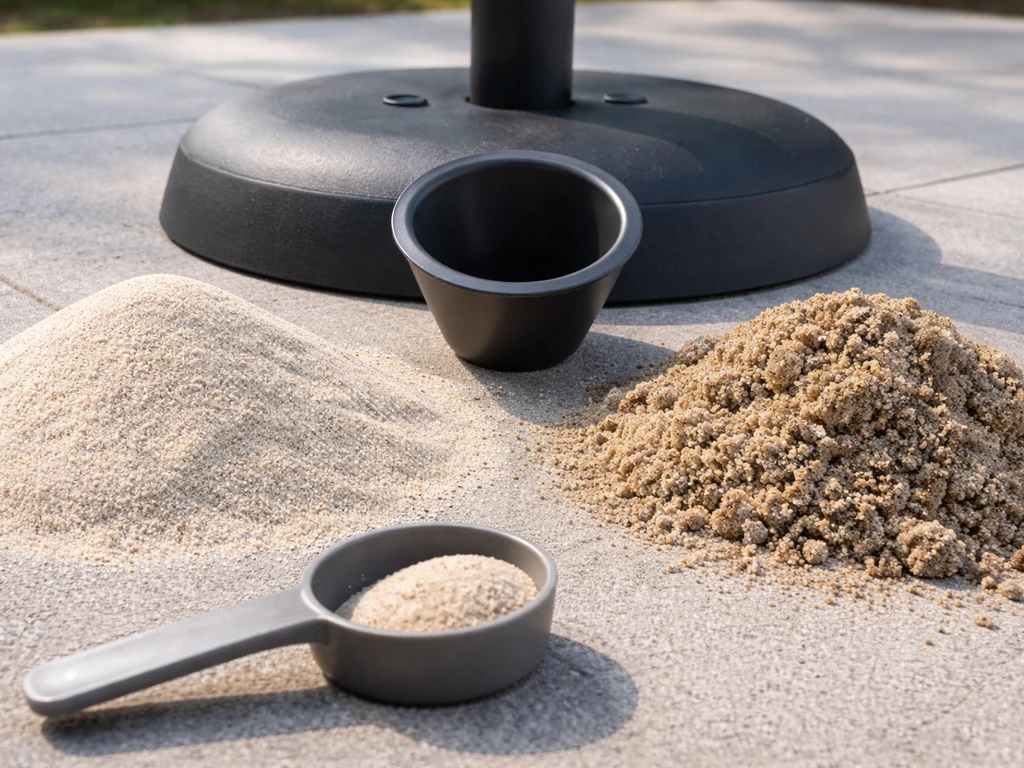
Not all sand is created equal when it comes to umbrella bases. You want dry, fine-grain sand because it pours easily through narrow fill openings and settles into a tight, stable mass. Here's how the common options break down:
| Sand Type | Best For | Pros | Cons |
|---|---|---|---|
| Play sand (fine-grain, washed) | Most freestanding bases | Clean, dry, pours easily, widely available | Can clump if it gets wet |
| All-purpose sand | Most freestanding bases | Cheap, heavy, good density | May contain larger particles that clog narrow spouts |
| Tube/leveling sand | Bases with very narrow fill openings | Extra fine, flows well | More expensive, harder to find |
| Coarse construction sand | Not recommended | Heavy | Clogs fill openings, hard to pour and remove later |
Play sand is the go-to choice for most jobs. A 50-lb bag costs around $5–$8 at any home improvement store and pours cleanly through a standard fill cap without clogging. Avoid wet or damp sand entirely, it adds weight temporarily but can cause mold inside the base and makes the sand nearly impossible to remove later when you need to move or store the base.
How much sand you need depends entirely on your base's capacity. A compact, round freestanding base (the kind that sits on a patio table's center hole or at the base of a 9-ft umbrella) typically holds 40–60 lbs of sand. Larger wheeled cantilever bases can require 100–238 lbs of sand or a sand-plus-water combo. The safest approach: look up your base's model number, find the fill weight in the manual, and buy that much.
If your instructions are lost, fill it at least 75% full. If you need to use a patio umbrella without a base, use a purpose-built weighted stand or a mount made for your umbrella type so the pole stays stable. Some products specifically note 50% as the minimum for stability, but I always recommend going closer to full, underfilling is the most common reason a base tips over.
Tools and materials checklist
This is a pretty low-tech job. You probably already have most of what you need. Here's what to gather before you start:
- Dry play sand or all-purpose sand (buy 10–15% more than your estimated fill weight to be safe)
- A wide-mouth plastic funnel (a $3 hardware store funnel works perfectly; the fill openings on most bases are 1–2 inches wide)
- A flat-head screwdriver or coin (for twisting off the fill cap on most bases)
- A rubber mallet or a piece of scrap wood (for tamping — more on this below)
- A garden trowel or small scoop (for controlling the pour)
- A dry measuring cup or kitchen scale (optional but helpful for tracking how much you've added)
- Painter's tape or duct tape (to temporarily seal around the funnel opening if there's a gap)
- A drop cloth or tarp (sand goes everywhere — trust me, lay something down first)
- Plumber's thread tape or a silicone sealant pen (to seal the cap threads if your base has a history of leaking)
- Safety glasses (optional but smart when pouring fine sand on a windy day)
Step-by-step: filling the patio umbrella base with sand
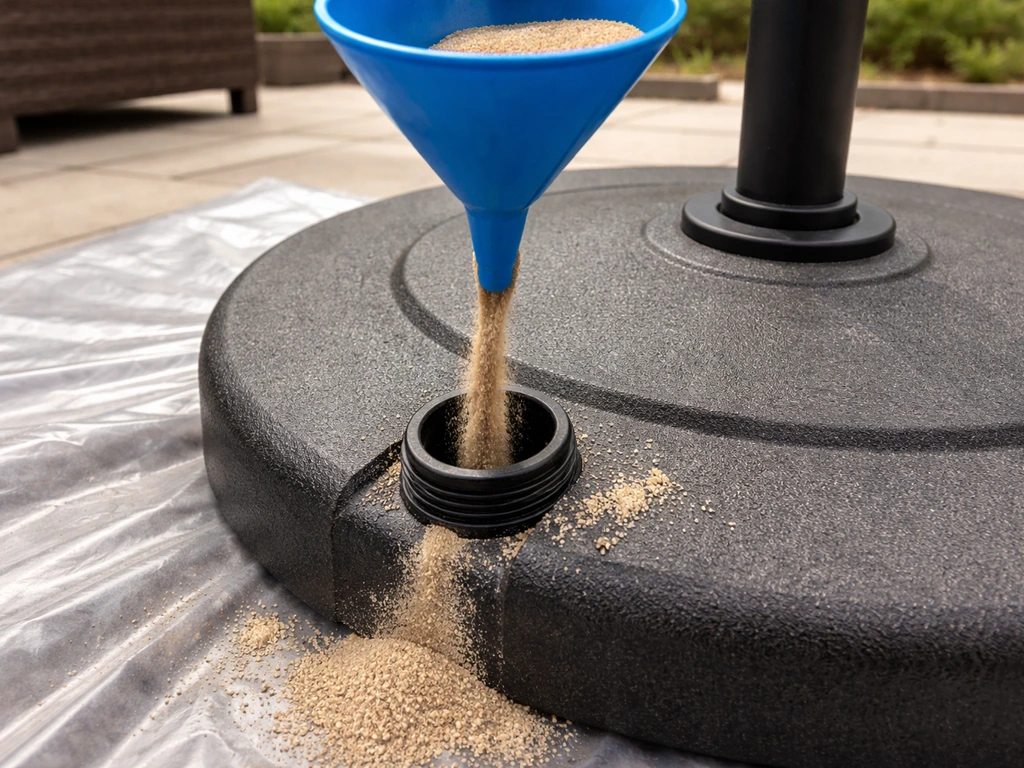
Do this job in the spot where the base will actually live. If you’re starting from scratch, you can follow the same steps to fill and stabilize your patio umbrella base with dry sand how to make a base for patio umbrella. Once it's full of sand, you won't want to drag it across the patio. If you have a wheeled cantilever base, lock the wheels before you start.
- Clear the area and lay down your drop cloth. Sand that misses the opening ends up in every crack in your patio, so protect the surface now.
- Remove the umbrella pole from the base if it's already installed. You want the base stable on its own before the pole goes in. (If you haven't set up the umbrella yet, check out how to install a patio umbrella in a base for that part of the process.)
- Locate the fill cap. On most freestanding bases it's a threaded plug on the top or side. Twist it counterclockwise to remove. Some use a coin-slot style cap — a flathead screwdriver works here.
- Set the base upright and level on your drop cloth. For multi-section cantilever bases with separate fill chambers, fill each chamber evenly rather than topping off one section at a time.
- Insert the funnel snugly into the fill opening. If there's a gap around the funnel neck, wrap a piece of tape around the funnel to create a tighter fit and reduce spillage.
- Pour sand slowly and steadily through the funnel using your trowel or scoop. Don't dump the whole bag at once — this clogs the funnel and causes overflow. Work in small scoopfuls.
- Every 10–15 lbs of sand added, stop and tap the sides of the base firmly with your rubber mallet or piece of wood. This settles the sand and removes air pockets so you can fit more in. Without this step, the base won't reach its rated fill weight.
- Keep filling and tapping until the sand level reaches the top of the fill chamber or hits your target fill weight. You should feel the base getting noticeably heavier and harder to tip with each round.
- Once filled, remove the funnel and inspect the fill opening threads. If there's any sand in the threads, wipe them clean with a dry cloth before replacing the cap.
- Thread the fill cap back on by hand first, then tighten with your screwdriver. Don't overtighten — you just need a snug seal, not a wrench-tight connection, or the plastic threads can crack.
- Wipe down the outside of the base to remove any spilled sand, then reinstall the umbrella pole.
Leveling, tamping, and preventing leaks or spills
Getting the sand level and compacted properly makes a real difference in how stable the base feels. After the initial fill and tapping, give the base a firm shake from side to side. If you hear a lot of shifting and sloshing inside, there are still air pockets. Keep tapping the sides while gently rocking the base until it sounds and feels dense and solid. A well-tamped base won't shift noticeably when you nudge it.
For leveling the base on an uneven patio surface, don't try to fix this with more sand, it won't help. Instead, use rubber furniture pads or shims under the base feet to bring it level. A base that sits crooked puts uneven stress on the pole and can cause the umbrella to tilt or rock even if the base itself is full.
Preventing leaks is mostly about the fill cap seal. Here's how to install patio umbrella in base once the sand, cap seal, and leveling are handled fill cap. If your base has a threaded plastic cap and you're worried about sand seeping out over time, wrap 2–3 layers of plumber's thread tape (PTFE tape) around the cap threads before screwing it back on. This creates a tighter seal without permanently bonding anything.
Some newer bases advertise twist-cap designs with built-in leak-free seals, if you have one of those, just make sure the cap is fully seated and locked. If sand starts seeping out from the cap or base seam, take the Noble House manual's advice seriously: disassemble and address the leak immediately rather than leaving a compromised base in use.
Testing stability in normal use and in wind
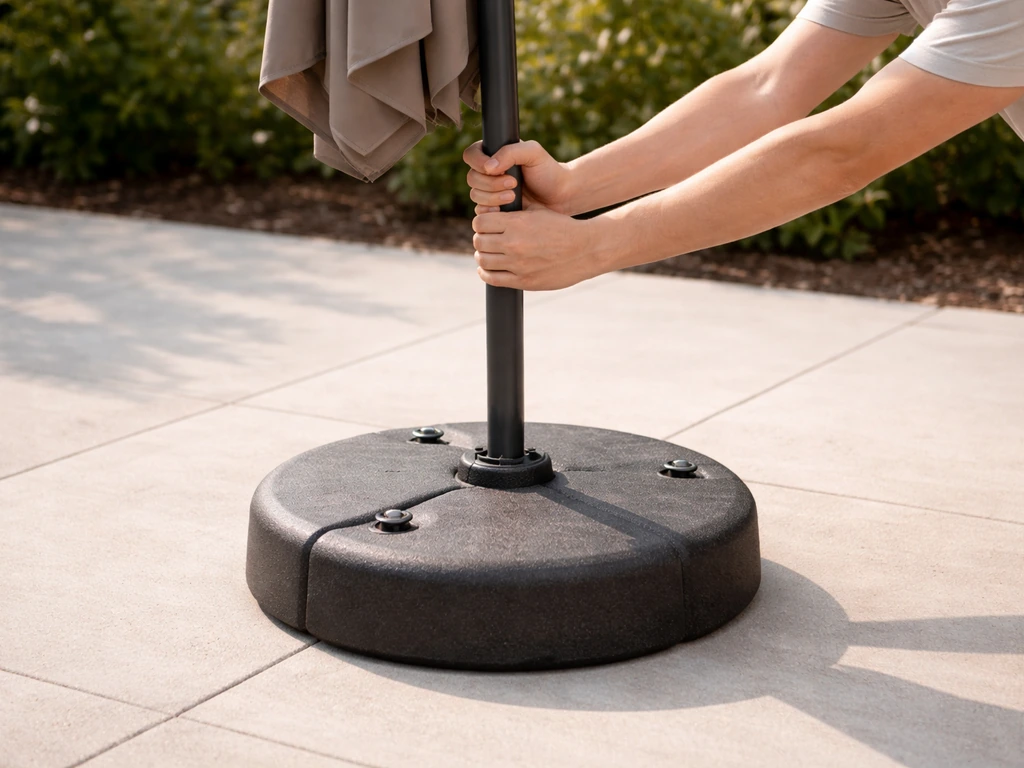
Once the base is filled and the pole is installed, do a quick push test before you open the umbrella. Push the pole firmly from multiple directions while the umbrella is closed. It should feel solid and barely move. If it rocks more than half an inch in any direction, you either need more sand or the base needs to be leveled.
For wind conditions, keep expectations realistic. A sand-filled freestanding base is designed for calm to light-breeze conditions. Many manufacturer instructions specifically warn not to use an umbrella in winds above 5 mph without securing the base further. A sand-filled base adds passive weight, but it won't anchor an umbrella in a strong gust.
On breezy days, close the umbrella canopy, an open canopy acts like a sail and can tip even a well-filled base. If you're regularly dealing with wind, pair the filled base with a patio table or add sandbag weights around the base's legs. For more strategies on anchoring in wind, the topic of how to secure a patio umbrella base covers several good options that work alongside sand filling.
If you want extra protection beyond filling, follow a guide on how to secure a patio umbrella base so it stays steady in breezes.
After your first full day of use with wind or movement, come back and re-check the fill cap. Sand settles with vibration, and the cap can sometimes loosen slightly during normal use. Give it a quick hand-tighten and you're done.
Common mistakes and troubleshooting
The base still tips or feels wobbly after filling
This almost always means you've underfilled. Check the fill percentage, if you're below 75%, add more sand. If you're already at full capacity and the base is still unstable, the base may be undersized for your umbrella. A 9-ft or 10-ft umbrella typically needs a base with a minimum filled weight of 50 lbs. A 10-ft offset cantilever umbrella needs 100+ lbs. If your base maxes out below the recommended weight for your umbrella size, you need a heavier base rather than more sand.
Sand is jamming or won't pour through the fill opening
This usually means the sand is slightly damp, or you're using a coarser grain than the opening can handle. First, check the sand, if it clumps when you squeeze a handful, it's too wet to use. Spread it on a tarp in the sun for a few hours to dry out. If the grain size is the issue, switch to fine play sand. Never try to force sand through a clogged opening by adding water, you'll end up with a cemented plug that's extremely difficult to remove.
The umbrella pole fits awkwardly or the tilt mechanism feels off after filling
Filling the base doesn't change the pole diameter or tilt mechanism, but it can expose a pre-existing fit issue. If the pole is wobbling inside the center sleeve after you've filled the base, the sleeve insert may be missing or damaged. Most bases have a rubber or plastic insert at the top of the pole sleeve that keeps the pole snug, check that it's in place. If the tilt mechanism (the button or crank that adjusts the canopy angle) feels stiff or misaligned after reinstalling the pole, the pole may not be fully seated in the base sleeve. Lift the pole, recheck the sleeve opening for any sand that fell in during filling, clear it out, and reseat the pole.
The fill cap won't seat properly or keeps loosening
If the cap threads feel stripped or the cap won't stay tight, the plastic threads have likely worn out. You can temporarily fix this with a layer of plumber's tape to add grip to the threads. For a more permanent solution, a small bead of removable silicone sealant around the cap (not the threads) will hold it in place while still allowing you to remove it at season's end. Don't use permanent adhesive, you'll need to empty the base for winter storage.
The base is leaking sand
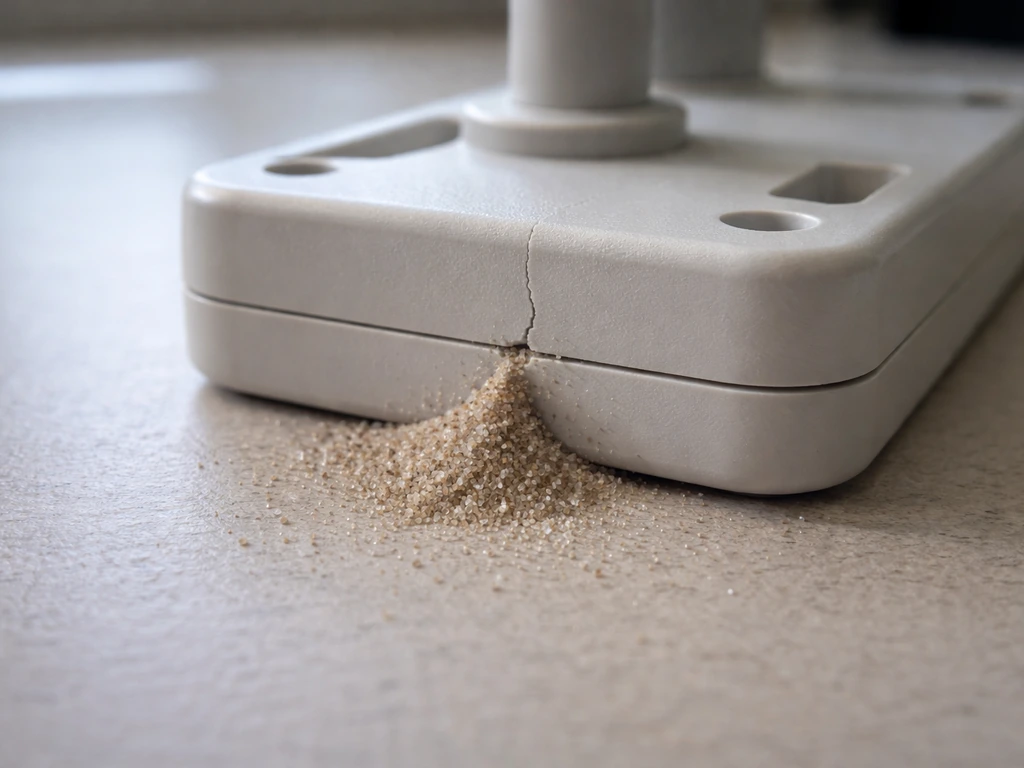
If sand is trickling out from a seam rather than the cap, inspect the base body for cracks. Small hairline cracks in plastic bases can develop over time from UV exposure or being knocked over. A cracked base section is difficult to repair reliably, the ongoing sand loss and structural weakness usually means it's time to replace that base. If the leak is only from the cap area, the PTFE tape fix described above should handle it.
Cleanup, maintenance, and seasonal storage tips
Right after filling, shake out your drop cloth away from the patio and sweep or blow off any spilled sand from the patio surface. Fine sand in the gaps between pavers or tiles can cause staining over time if left wet, so clean it up the same day.
During the season, check the fill cap monthly. Give it a hand-tighten if needed and look for any sand trickling from the base area. After rain, dry off the top of the base and make sure water hasn't pooled around the fill cap, sustained moisture can work into the threads and cause the cap to seize or the sand inside to clump.
At the end of the season, empty the base before storing it. If you want the extra security benefits, also follow the steps in how to secure patio umbrella base so it stays stable during use and wind empty the base before storing it. A full sand-loaded base is extremely heavy and awkward to carry, and sand left inside over winter can absorb moisture and become a hardened mass by spring. Here's how to empty it cleanly:
- Remove the umbrella pole and set it aside.
- Lay your drop cloth on the patio.
- Remove the fill cap and tip the base slowly onto the drop cloth, allowing the sand to pour out. For stubborn compacted sand, tap the sides firmly with the rubber mallet while tipping.
- Funnel the emptied sand back into a sealed bag if you want to reuse it next season — as long as it stayed dry, play sand is reusable indefinitely.
- Rinse the inside of the empty base with clean water to remove residual grit, then let it dry completely (at least 24 hours in the sun) before storing.
- Store the base indoors or in a shed with the fill cap loose (not fully tightened) so any residual moisture can escape.
If you store the base outside under a cover, weigh down the cover and make sure water can't pool inside the open base. A cracked or UV-degraded base that spent the winter full of wet sand is a common reason bases need replacement, which is an easy problem to avoid with a single afternoon of prep in the fall.
FAQ
Can I use pea gravel or coarse sand instead of fine play sand to fill my patio umbrella base?
Coarse material usually does not settle into a tight mass, and it can bridge inside narrow fill openings, leaving voids. Fine play sand is more likely to pack evenly and pour cleanly through the fill cap. If your base manual specifies a particular grain size, follow that, because some bases are designed around fine sand.
What’s the best way to pack the sand after pouring it in so the base doesn’t loosen later?
After the base is filled to your target level, tap the sides and gently rock the base while the canopy is off or the pole is not yet installed. Then do a quick side-to-side push test with the umbrella closed. If it shifts or sounds sloshy, keep tapping until it feels dense and the sound changes from moving sand to a more solid, quiet mass.
Should I fill the base all the way to the top, or leave some space under the cap?
Leave space for the cap to seat properly, because overfilling can prevent the cap from tightening or can force sand into the cap seal area. Aim for near-full (often 75 to 100% full), then stop when the cap threads can still engage smoothly without resistance. If you have to force the cap, you likely added too much.
How do I fill the base if the fill opening is small and sand keeps getting stuck?
Use a funnel and pour slowly, and keep the funnel close to the opening to reduce spills. If sand clumps or forms a bridge, stop and check for dampness or the wrong grain. Do not add water to clear a clog, it can cement sand into a plug that is very hard to remove.
My umbrella base rocks on a slightly sloped patio, but I don’t want to use shims. What else can I do?
You can set the base on a level platform, like a properly sized outdoor pad or paver under the base feet, then level that surface. Avoid trying to correct a tilt by adding extra sand, because it increases weight but does not fix uneven contact that can stress the pole sleeve.
How often should I re-tighten the fill cap, and what should I look for?
Check the cap about once a month during the season, and after any windy days or noticeable movement. Look for sand trickling at the cap or around the base seam, if you see fresh sand, address the leak right away instead of waiting.
If sand leaks out, is it always a cap problem?
No. A cap leak often comes from a poor seal or worn cap threads, but sand coming from a seam suggests cracks or damage in the base body. If you see leakage away from the cap area, inspect for hairline cracks, cracked bases are usually not worth patching because they keep weakening and losing sand.
Is it safe to leave the base full of sand during winter storage?
It’s not recommended. Sand can absorb moisture and harden into a dense mass by spring, and it can also increase the chance of damage if the base degrades under UV or gets knocked. Empty the base before storing it, and if stored outside, keep water from pooling in the empty base area.
How do I know if my base is the right weight for my umbrella size without the manual?
Use conservative guidance: a typical 9 to 10 ft umbrella often needs a base that can be filled to at least around 50 lbs, and larger offset cantilever umbrellas commonly need 100 lbs or more. If you can’t fill your base up to the likely minimum and it still wobbles in the push test, the base is probably undersized, not just underfilled.
Do I need to add sand-plus-water for better stability?
Generally no. Water makes sand clump, it increases temporary weight, and it makes the sand harder to remove later. Dry, fine play sand that you pack tightly gives strong stability without trapping moisture inside the base.
What’s the safest push-test procedure to check stability before opening the umbrella?
With the umbrella closed, push the pole firmly from several directions, front, back, and both sides. The base should feel solid and move very little. If you see more than about half an inch of rock or the base shifts noticeably, add sand only if you are below the recommended fill level, otherwise address leveling or base size.
Can I use sand as the only anchoring method in strong wind?
Sand-filled bases are mainly for calm to light breeze, they are not a substitute for anchoring in high wind. If your conditions are breezy, close the canopy and consider securing the base further or using additional weights around the legs, because an open umbrella acts like a sail and can tip even a well-filled base.
Next Articles
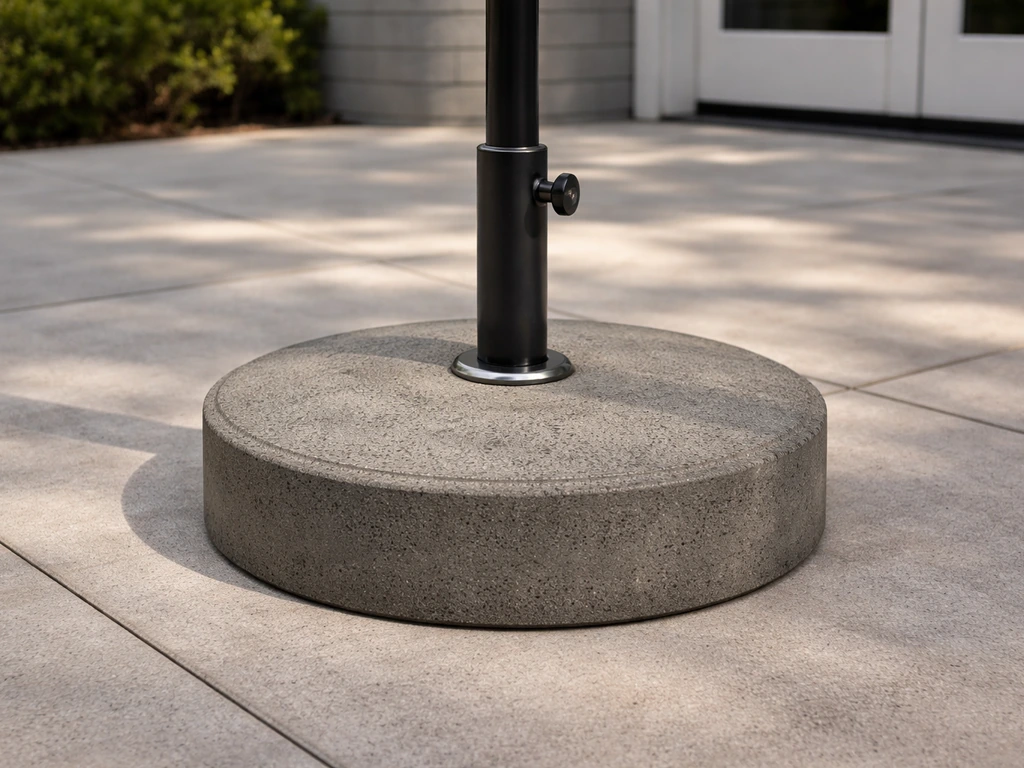
How to Make a Base for a Patio Umbrella DIY Guide
DIY step-by-step guide to build a stable, non-tipping patio umbrella base, with placement, securing, and maintenance tip
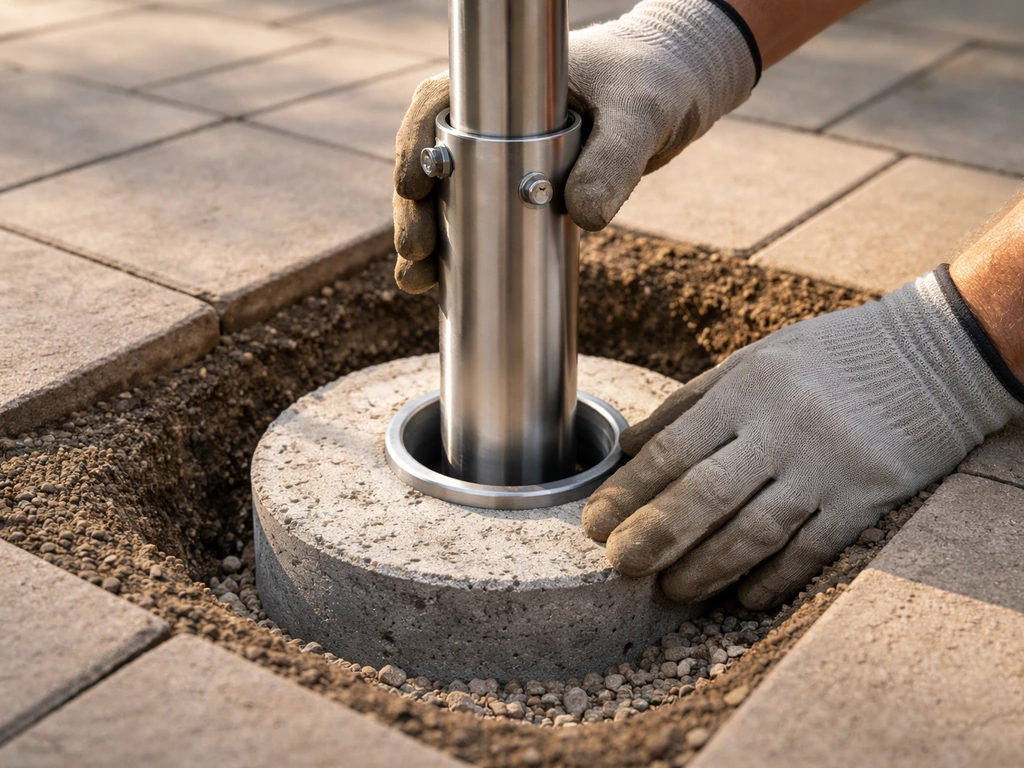
How to Put a Patio Umbrella in Ground Step by Step
Step-by-step guide to install an in-ground patio umbrella base, align the pole, prevent wobble, and check tilt and crank
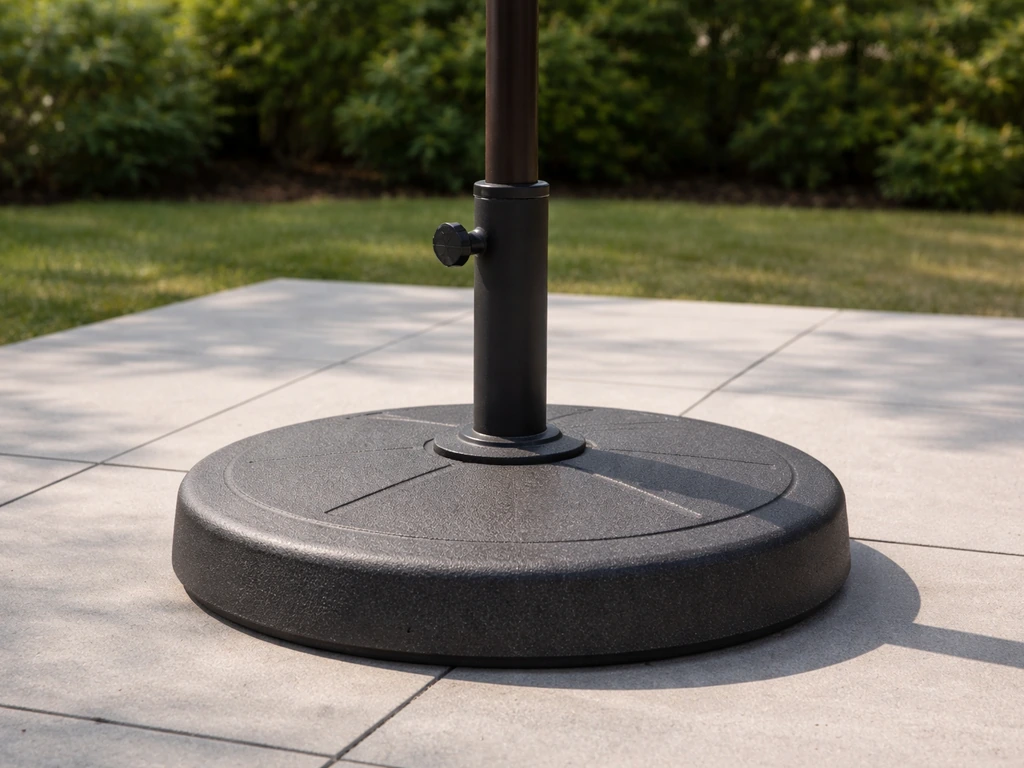
How to Install a Patio Umbrella in a Base: Step by Step
Step-by-step guide to install a patio umbrella into a base, align the pole, tighten safely, and fix fit and stability is