
You can build a solid patio umbrella base using a PVC or steel sleeve set in a concrete-filled container or poured footing, then ballasted with sand or water to hit the right weight for your umbrella size. For a standard 9 ft umbrella, you're targeting at least 50–75 lb of finished base weight. For a 10 ft market-style umbrella, aim for 75 lb minimum, and for a cantilever or offset umbrella in the 9–11 ft range, you want 100–180 lb depending on how exposed your patio is to wind. Get those numbers right before you start shopping for materials, because an undersized base is the number-one reason umbrellas tip over.
How to Make a Base for a Patio Umbrella DIY Guide
Luca Morrison
24 Jun 2026
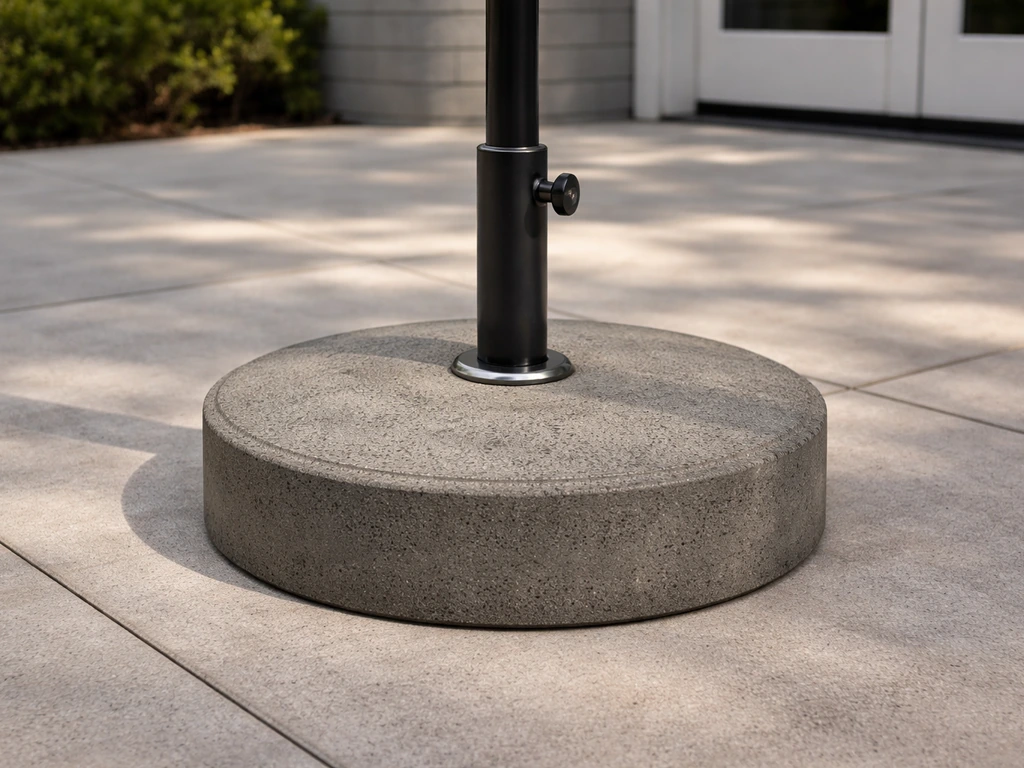
Figure Out Your Pole Size and the Right Base Type First
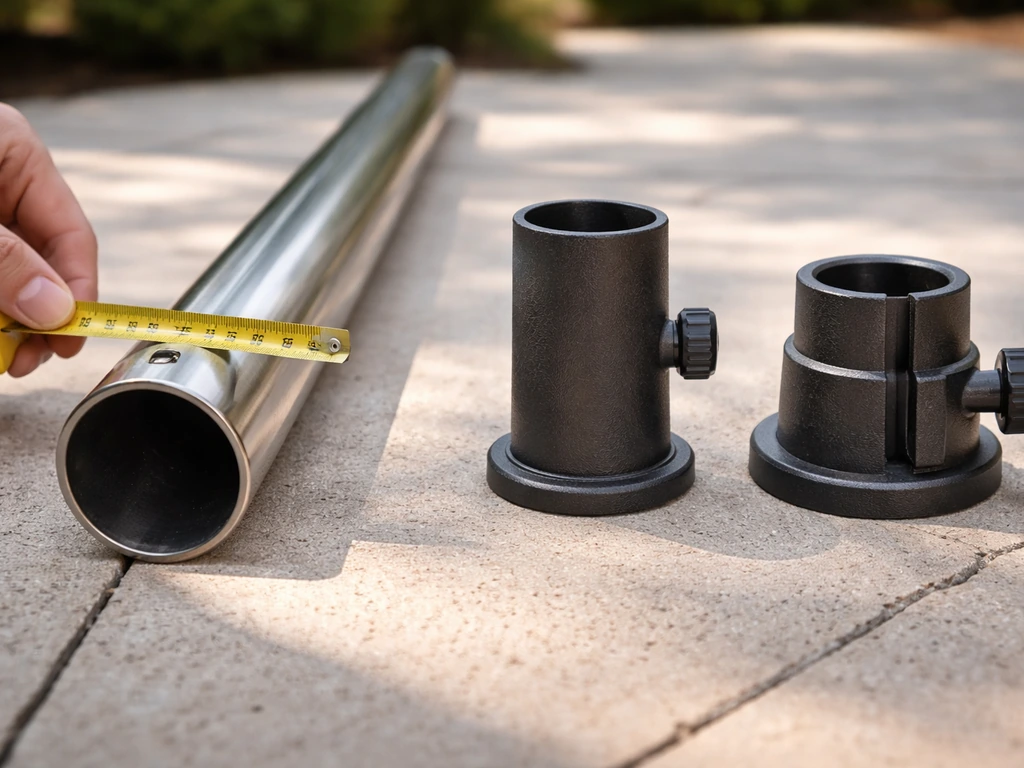
Before you touch a bag of concrete or a length of PVC pipe, you need to know two things: your umbrella's pole diameter and its mounting style. Most standard patio umbrellas have a 1.5 in (38 mm) pole, while larger market-style and commercial umbrellas often use a 1.75 in or 2 in pole. Cantilever and offset umbrellas don't insert into a center base at all, they bolt to a weighted cross-base or a slab anchor off to the side. Measure your pole with a tape or calipers before you buy any sleeve or pipe.
Once you know the pole diameter, decide which base style fits your setup. If your umbrella sits in the center of a table with a hole, you probably don't need a freestanding base at all, the table does most of the work. If you are specifically trying to use a patio umbrella without base, you can still improve stability by tying it down or using a table-mount option instead of relying on a standalone weighted base.
But if you're setting up a freestanding market umbrella or a cantilever, you need a purpose-built weighted base. The three DIY options that actually work are: (1) a fillable container base with a sleeve (easiest), (2) a cast concrete block with an embedded sleeve (most durable), or (3) a ground sleeve poured into an existing concrete slab or poured footing (most permanent).
This article covers all three, but the cast concrete block method is the most practical for most homeowners because it's portable, removable, and works on any patio surface.
Pick the Right Weight, Materials, and Tools
The single most important spec for any umbrella base is total filled weight. A common working guideline is roughly 10 lb of base weight per foot of canopy diameter in low-wind conditions. So a 9 ft umbrella needs about 90 lb, a 10 ft needs 100 lb as a starting point. In moderately exposed areas, patios between buildings, elevated decks, or anywhere that sees gusts, push those numbers up by 30–50 percent. For cantilever umbrellas, the weight requirement is roughly double that of a center-pole base of the same canopy size because the pole is offset and creates more leverage on the base.
| Umbrella Type | Canopy Size | Minimum Base Weight (Low Wind) | Recommended Weight (Moderate/High Wind) |
|---|---|---|---|
| Standard center-pole | 7–8 ft | 50 lb | 75 lb |
| Market/center-pole | 9–10 ft | 75 lb | 100 lb |
| Market/center-pole | 11 ft | 100 lb | 130 lb |
| Cantilever/offset | 9–10 ft | 100–120 lb | 150–180 lb |
| Cantilever/offset | 11–13 ft | 150 lb | 200+ lb |
For ballast material, sand and water are the two practical choices for fillable bases. Sand is denser (a cubic foot of dry sand weighs around 100 lb vs. about 62 lb for water), so it gives you more weight in the same volume. It also won't freeze and crack your base the way water can. Water is easier to pour and drain, which matters if you store the base indoors in winter. A lot of people use a sand/water mix, which packs tighter than dry sand alone. For a cast concrete block base, the concrete itself provides the weight, no filling needed.
Here's what you'll need to gather before you start, regardless of which DIY method you choose:
- PVC pipe or steel pipe sleeve sized to your umbrella pole (inside diameter should match or be 1/8 in larger than your pole)
- Concrete mix (one or two 60 lb bags for a block base; more for a poured slab sleeve)
- A plastic bucket, planter, or wooden form box to shape the concrete block (5-gallon buckets are common and easy to source)
- Gravel or pea stone (a few handfuls for drainage under a ground sleeve)
- A post level or standard carpenter's level
- Mixing bucket, hoe or paddle mixer
- A thumb screw, set screw, or bolt-and-nut hardware to lock the pole in the sleeve
- Waterproof sealant or silicone caulk (for the sleeve interface)
- Sand or water for ballast (fillable base method)
- Safety glasses and gloves for concrete work
How to Build a DIY Patio Umbrella Base: Step by Step
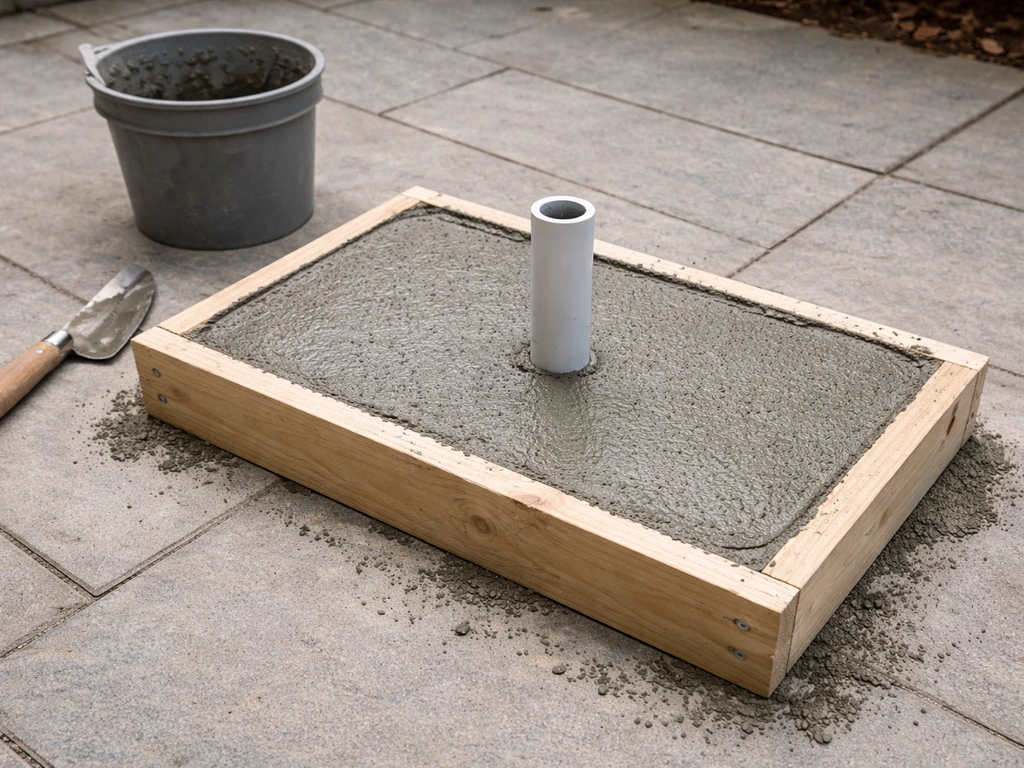
The method below covers the cast concrete block with an embedded sleeve, the most versatile DIY approach. It gives you a heavy, freestanding base you can move around the patio as needed, and it works for any center-pole umbrella. Once your sleeve and base are ready, you can follow the steps to install the patio umbrella into the base securely and safely install patio umbrella in base. Notes for the other two methods (fillable container and ground sleeve) are added at the end of this section.
Method 1: Cast Concrete Block with Embedded Sleeve
- Cut your PVC or steel sleeve to the right length. You want about 10–12 in of sleeve above the finished concrete surface so the pole sits deep enough to stay straight. Total sleeve length is typically 18–24 in, depending on your form depth.
- Set up your form. A 5-gallon plastic bucket works perfectly for a single umbrella. For more weight, use a wooden box form or a larger plastic container. Lightly oil the inside of the form so the concrete releases cleanly once cured.
- Add a small gravel layer at the bottom of the form, about 1–2 in deep. This helps drainage and prevents the sleeve base from pooling water during outdoor use.
- Center the sleeve in the form. Hold it plumb (straight up and down) by taping it to a scrap board laid across the top of the form, or by having a helper hold it. Use your level on two sides of the sleeve to confirm it's perfectly vertical — this is the most important step. A sleeve that's even a few degrees off will make your umbrella lean visibly.
- Mix your concrete according to bag directions until it has a peanut-butter consistency — not too wet. Pour it slowly around the sleeve, working in layers and tapping the side of the form to release air bubbles.
- Check the sleeve for plumb again after pouring — concrete movement can shift it. Adjust and re-level before it starts to set.
- Let the concrete cure on a level surface. Don't rush this. Wait at least 48 hours before handling, and 72 hours (3 full days) before loading it with an umbrella. Full cure strength takes about 7 days.
- Once cured, apply a bead of waterproof silicone sealant around the top of the sleeve where it meets the concrete. This keeps water from seeping down into the gap and rusting the pole over time.
- Drill a small drainage hole in the side of the sleeve near its base, or just leave the bottom of the sleeve open. Either way, water shouldn't be allowed to pool inside the sleeve — it accelerates rust on the umbrella pole.
- Drill and install a set screw or thumb screw through the sleeve wall at a comfortable height. This is what locks the umbrella pole in place. Use a stainless steel screw if your base will live outdoors year-round.
Method 2: Fillable Container Base
If you want something quicker and less permanent, a large plastic planter or storage bin with a centered pipe sleeve works well. Attach a short length of PVC or steel pipe vertically in the center of the container using concrete poured around it (just the bottom 6–8 in of the container), then blank" rel="noopener noreferrer">fill the rest of the container with sand or water once the concrete sets. A 14-inch-wide planter filled with sand will get you to 50–60 lb; a larger 18-inch container with sand can reach 80–100 lb. This is a good approach if you want a base that drains and dries between uses or if you plan to store it indoors in winter.
Method 3: Permanent Ground Sleeve in Concrete
A ground sleeve poured directly into your patio slab or a poured concrete footing is the most stable long-term option, but it's also permanent. You drill or break a hole in the existing slab, pour a gravel drainage bed, set the sleeve perfectly plumb, and pour concrete around it. If you're considering this route, read up on how the sleeve installation and footing process works before you commit, since relocating it later means breaking concrete. Some homeowners on Reddit report drilling a sleeve hole directly into an existing slab using a core drill, it works, but getting the hole perfectly plumb requires care, and you need to seal the interface well to prevent water intrusion.
Position and Install the Base on Your Patio
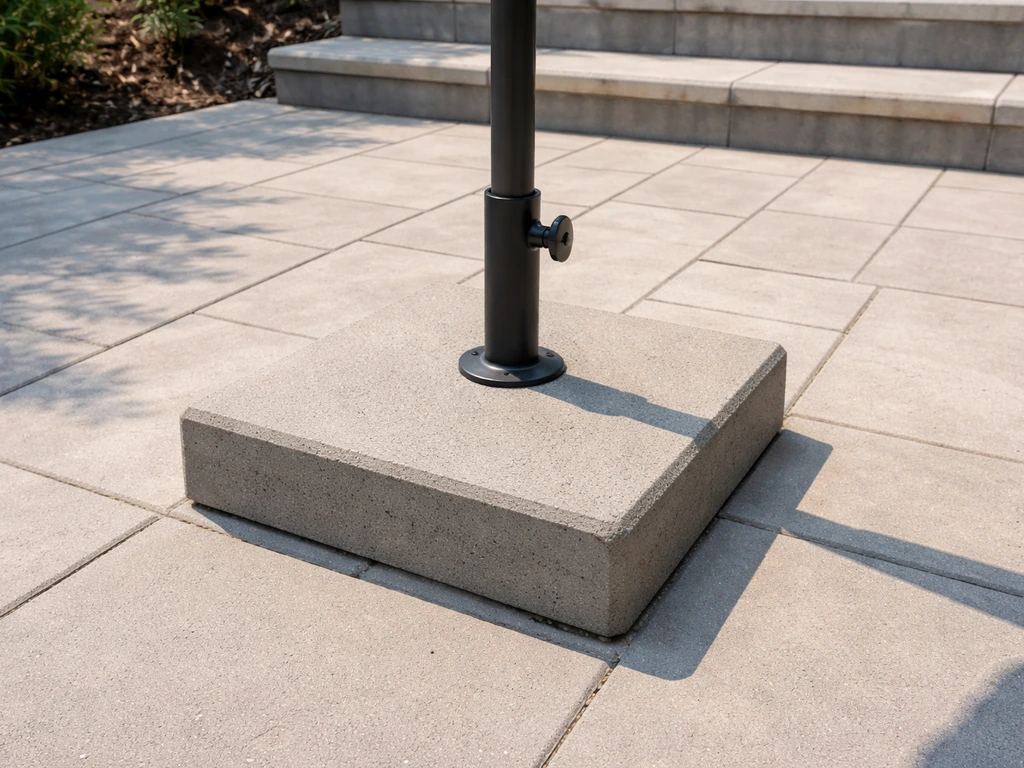
Where you put the base matters almost as much as how heavy it is. Avoid placing it near patio edges, steps, or uneven surfaces where a gust could tip the whole setup over the edge. Flat, level ground is the goal. If your patio is pavers or tile, check that the base sits flat with no rocking, even a slight lean in the base transfers to a visible lean in the umbrella pole.
For a freestanding cast concrete block or fillable base, just set it in position and insert the pole. Make sure the pole bottoms out fully in the sleeve, it shouldn't be floating halfway in. Tighten your set screw or thumb screw firmly. A loose set screw is one of the most common reasons a pole wobbles even in a correctly sized base.
If you want to anchor the base to the concrete slab itself for maximum stability (especially useful for cantilever setups), you can use wedge anchors drilled into the slab. Drill to the depth specified for your anchor size, set the anchor, and torque it to the recommended spec with a torque wrench, don't just tighten by feel. Keep anchors at least 6 inches from slab edges or expansion joints, since concrete near edges can crack under load. This approach is overkill for most freestanding center-pole umbrellas, but it's worth considering if you're in a consistently windy location or have a large cantilever.
On paver patios, be cautious about anchoring directly through pavers. Pavers are typically not load-bearing in the same way a poured slab is, and bolting through them can crack the paver or pull loose under stress. If you need a truly permanent anchor on a paver patio, the more reliable approach is to lift a paver or two, pour a proper concrete footing below, and anchor into that footing instead.
Secure Against Wind and Fix Wobble Before It Becomes a Problem
Even a properly weighted base can let an umbrella tip if you're not accounting for how it's secured at the pole. To make sure your patio umbrella base is stable, focus on how you secure the pole in the sleeve and how well the base resists wind tipping how to secure patio umbrella base. The pole should fit snugly in the sleeve without wiggle room. If your sleeve is slightly oversized for your pole, wrap the bottom of the pole with a few wraps of duct tape or rubber weatherstripping until it fits firmly. A pole that shifts or rotates inside the sleeve will eventually loosen the whole base system.
Wind is the real enemy. The key rule that most umbrella manuals agree on: close the canopy before wind picks up. Some manuals specifically state not to operate the umbrella in winds above 5 mph (8 kph), that's basically a light breeze.
For example, the FLAME SHADE manual for a water-fillable patio umbrella base also instructs not to operate the umbrella in wind over 5 mph (8 kph) and explains filling the base with sand and/or water not to operate the umbrella in winds above 5 mph (8 kph).
In practice, most people leave umbrellas open in gentle winds without issue, but gusts are a different story. A gust hits the canopy like a sail and applies torque at the base that can exceed what even a heavy base can handle. If your patio sits between buildings or faces prevailing winds, you're in what's sometimes called a wind tunnel effect, and you need to be more conservative about closing the umbrella earlier than you'd think.
A few practical anti-tip measures that actually help:
- Place the base so the umbrella canopy's center of gravity is directly above the base, not offset. Even a few inches of offset adds tipping moment.
- If you're using a fillable base, fill it to maximum capacity. A half-filled base performs far worse than a full one.
- Use supplemental ballast like sandbags laid across the base feet if you're in a windy spot — 20–30 lb of extra sandbag weight makes a real difference.
- Check that the pole lock (set screw or thumb screw) is tight each time you open the umbrella. They vibrate loose over time.
- Tilt-and-swivel cantilever umbrellas are particularly vulnerable because the canopy is offset from the base. If yours keeps rotating at the post, look for a pole lock or rotation lock at the base mount — it's often a tightening knob that gets overlooked.
Test the Setup, Then Keep Up with Maintenance and Winter Storage
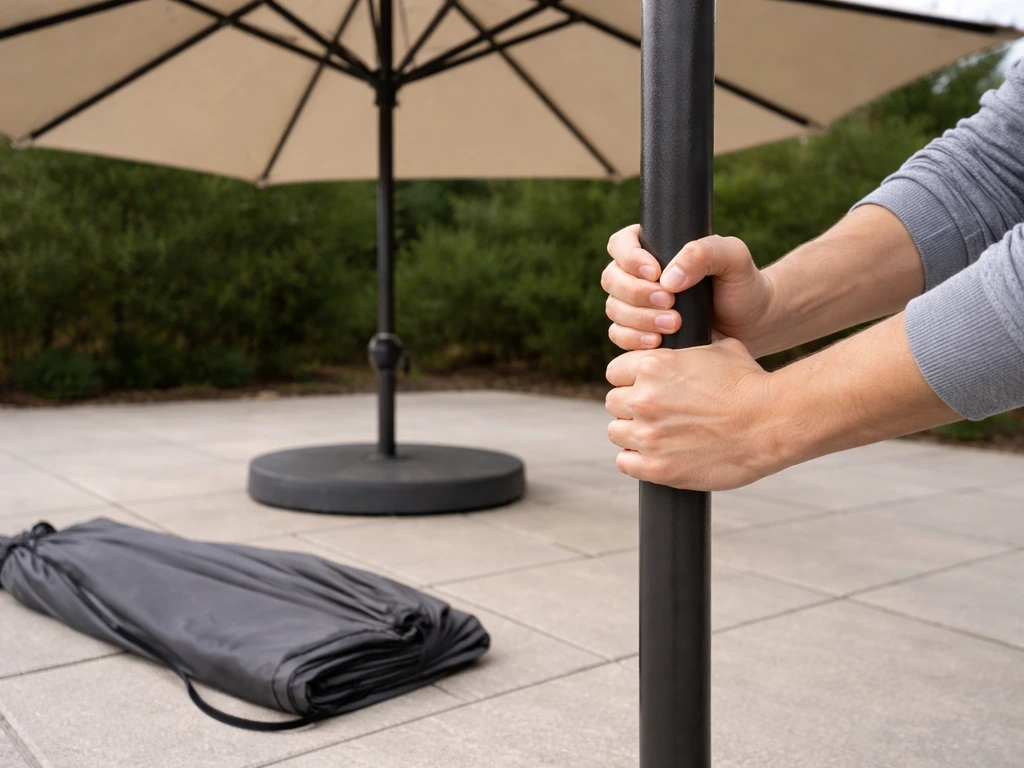
After you've built and installed your base, do a real-world stability test before you consider the project done. Open the umbrella fully, then push firmly on the pole about halfway up, you should feel solid resistance with no rocking or swaying at the base. If the base shifts or lifts on one side, you need more weight or better anchoring before you use it. Also check that the pole is still plumb (vertical) after you've loaded it: put a level against the pole and verify it reads true on two sides. A pole that leans even slightly will put uneven stress on the base and the umbrella mechanism over time.
For ongoing maintenance, check the following every few weeks during the season:
- Tighten the pole set screw or thumb screw — this is the most common thing that gets loose and causes wobble
- Look at the concrete around the sleeve for cracks, especially after a hard freeze or a very windy day
- Inspect the top of the sleeve where it meets the concrete for gap or sealant failure, and re-apply silicone caulk if you see the sealant pulling away
- If your sleeve has a stainless steel collar or ring, wipe it down with a damp cloth and dry it — salt air and standing water are the main corrosion triggers
- For fillable bases, check that the fill cap is tight and sealed so rain doesn't dilute or displace your ballast
When the season ends, your biggest concern is freezing. If your base is water-filled, drain it completely before temperatures drop to freezing. Water expands when it freezes and will crack a plastic or resin container every time, this is specifically called out in Coolaroo's cantilever base instructions, and it applies to any water-ballasted base. Sand-filled bases don't have this problem, but they're heavy to move. If your concrete block base is too heavy to bring inside, at minimum cover it with a weatherproof base cover and tip it so water drains from the sleeve rather than pooling inside.
For concrete block bases, store them on a dry surface (not directly on bare ground) to prevent moisture wicking into the concrete over winter. Lay a scrap piece of wood or a rubber mat under the base. If there are any small surface cracks in the concrete after the first season, fill them with concrete patching compound in the fall before water gets in, freezes, and turns hairline cracks into big ones by spring.
One last thing worth mentioning: if you've built a solid base but your umbrella still feels wobbly or tips too easily, the problem might not be the base at all. If your umbrella base is already installed and you're dealing with wobble, looseness, or tipping, use the steps for how to fix patio umbrella base issues umbrella still feels wobbly. Check that the umbrella pole itself isn't bent or cracked at the base end, that the ribs and canopy aren't catching wind unevenly due to a broken rib or loose canopy fabric, and that any tilt mechanism or crank isn't loose at the collar. A well-built base paired with a properly maintained umbrella is the combination that actually keeps things stable through a long outdoor season.
FAQ
What size sleeve or pole insert should I buy if I only know the umbrella’s brand, not the pole diameter?
Look for the exact “pole diameter” or “fit size” spec in the manual or product listing, many use 1.5 in or 1.75 to 2 in. If you cannot find it, measure the pole with calipers, measure again with a tape (twice in different orientations), then choose the sleeve sized so the pole is snug without binding when fully seated.
Do I have to use concrete, or can I ballast a patio umbrella base with something else?
Concrete is optional only for freestanding container or portable bases. For non-concrete options, the ballast has to be dense and resistant to shifting, dry sand is typically the most practical, and a properly packed sand or sand-water mix is more stable than loose fill. Avoid lightweight fill like gravel alone in a tall container because it can settle and loosen the pole fit over time.
How do I prevent my base from rocking on tile or pavers?
Before installing, place the base on its intended spot and check for rocking with a straightedge or level. If you see any wobble, correct the patio surface first (shim under the base on a stable, non-compressible layer), because even a small lean transfers into a visible umbrella tilt and can loosen the pole sleeve fit.
If my umbrella pole is slightly smaller than the sleeve, is tape the only fix?
Tape or rubber weatherstripping works for minor gaps, but make sure the pole bottoms out fully after wrapping, not halfway into the sleeve. Also inspect whether the set screw is contacting the pole properly, if it is only clamping air space, you may need a different sleeve size rather than adding more wraps.
How can I tell during assembly whether the set screw is actually tightening enough?
After tightening, gently try to rotate and lift the pole by hand, you should feel no wiggle at the sleeve interface. If you can twist the pole even slightly, re-seat it (remove, clean out debris, reinsert) and tighten again. A torque wrench is ideal for bolt-style clamps if the hardware has a published torque spec.
Can I leave a water-ballasted base outside in winter?
Not safely in freezing climates. Drain water-filled bases completely before temperatures drop below freezing, water expands as it freezes and can split resin or plastic containers. If you must leave it outside, switch to sand ballast or use a fully weatherproof, drainable container design, and still expect movement risk if any water remains.
Should I anchor a center-pole base to the slab if I already have the correct weight?
Usually no, the correct filled weight and a snug pole fit are enough for most center-pole umbrellas. Anchor it when you have consistent high gust exposure, a cantilever or offset design, or you repeatedly fail the stability test (open umbrella, push firmly mid-pole, no rocking).
What’s a good stability test result, and when should I add weight or anchoring?
With the umbrella opened fully, pushing firmly on the pole about halfway up should produce firm resistance with no rocking or lift at the base. If you see any shifting, wobble that increases with pressure, or the umbrella slowly rotates, add weight first and confirm the pole is seated and clamped, if it still moves then consider wedge anchors or improved sleeve/pole fit.
Will a poured ground sleeve work on existing slabs without risking water intrusion?
It can, but you need to keep the sleeve installation properly sealed at the interface. If the sleeve is not plumb, or if gaps are left around the sleeve where water can wick in, freeze-thaw can enlarge the gap over time. Plan on careful sealing and drainage work before you pour, and avoid committing if you might need relocation later.
Can I use wedge anchors on a paver patio, or do I need to switch methods?
Wedge anchors drilled through pavers are risky because pavers are not typically load-bearing like poured slabs, they can crack or loosen under cyclic wind load. For a durable anchor on pavers, lift pavers and pour a small concrete footing below, then anchor into the footing instead.
If the umbrella still tips after building the base, what parts should I inspect besides the base?
Check the pole for bend or damage at the lower end, confirm every rib and the canopy fabric are intact so wind loads distribute evenly, and verify the tilt or crank mechanism at the collar is tight. Also check that the umbrella’s pole is not mounted too high above the sleeve bottom, because reduced insertion length lowers stability even with a heavy base.
Next Articles
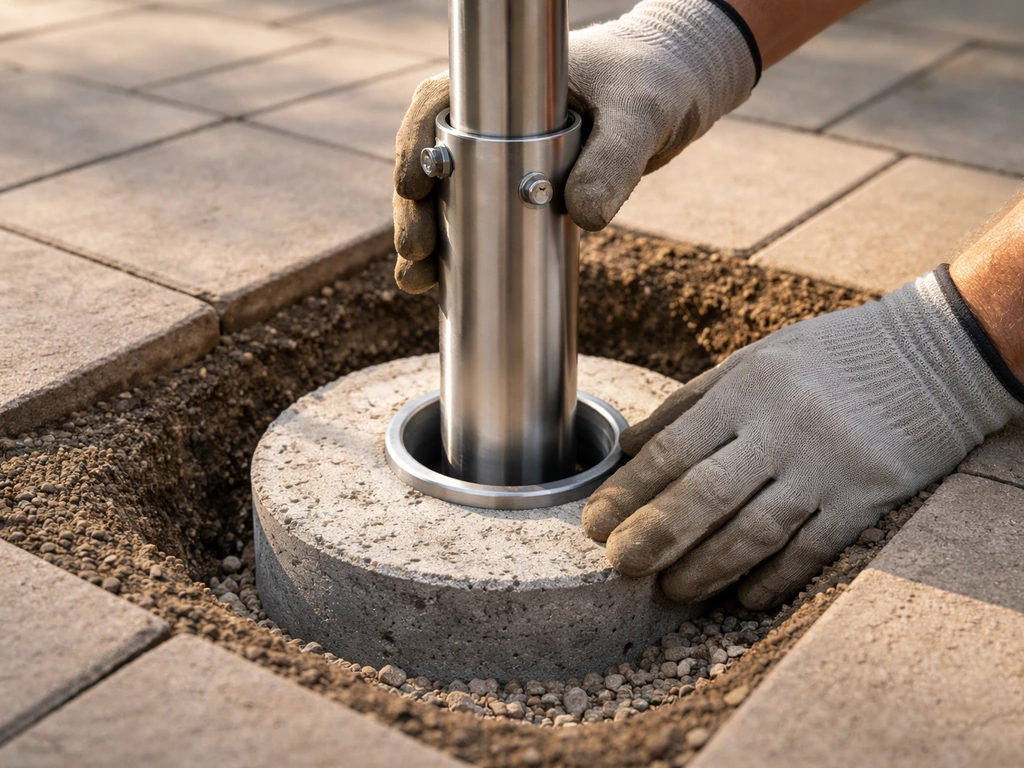
How to Put a Patio Umbrella in Ground Step by Step
Step-by-step guide to install an in-ground patio umbrella base, align the pole, prevent wobble, and check tilt and crank
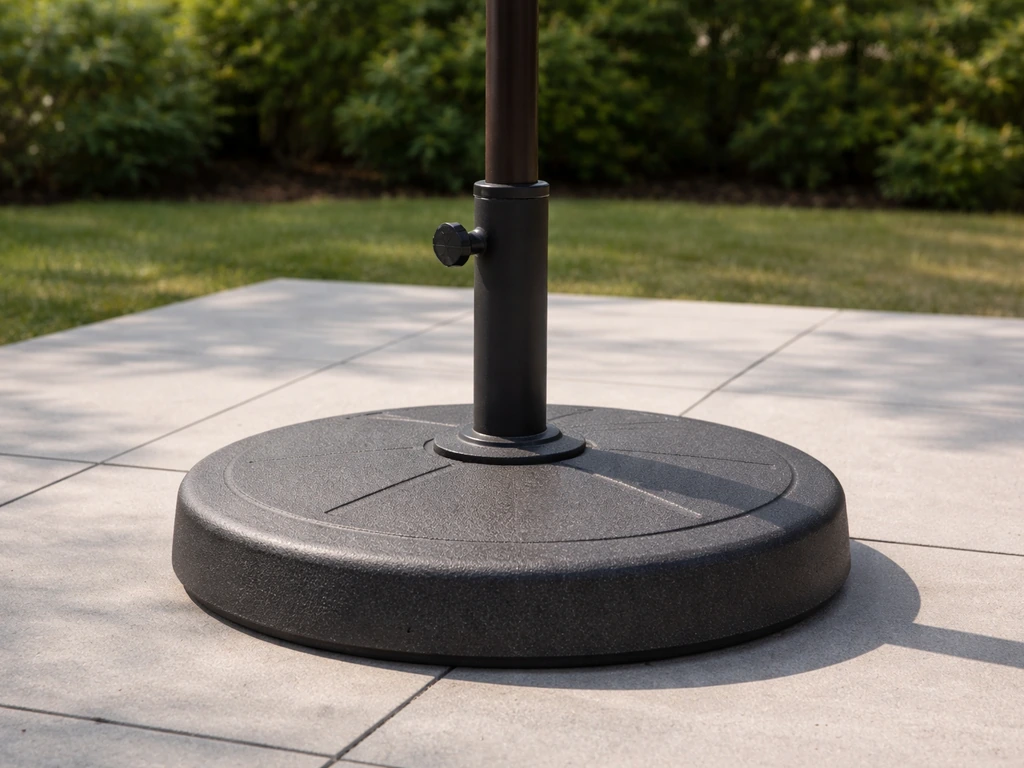
How to Install a Patio Umbrella in a Base: Step by Step
Step-by-step guide to install a patio umbrella into a base, align the pole, tighten safely, and fix fit and stability is
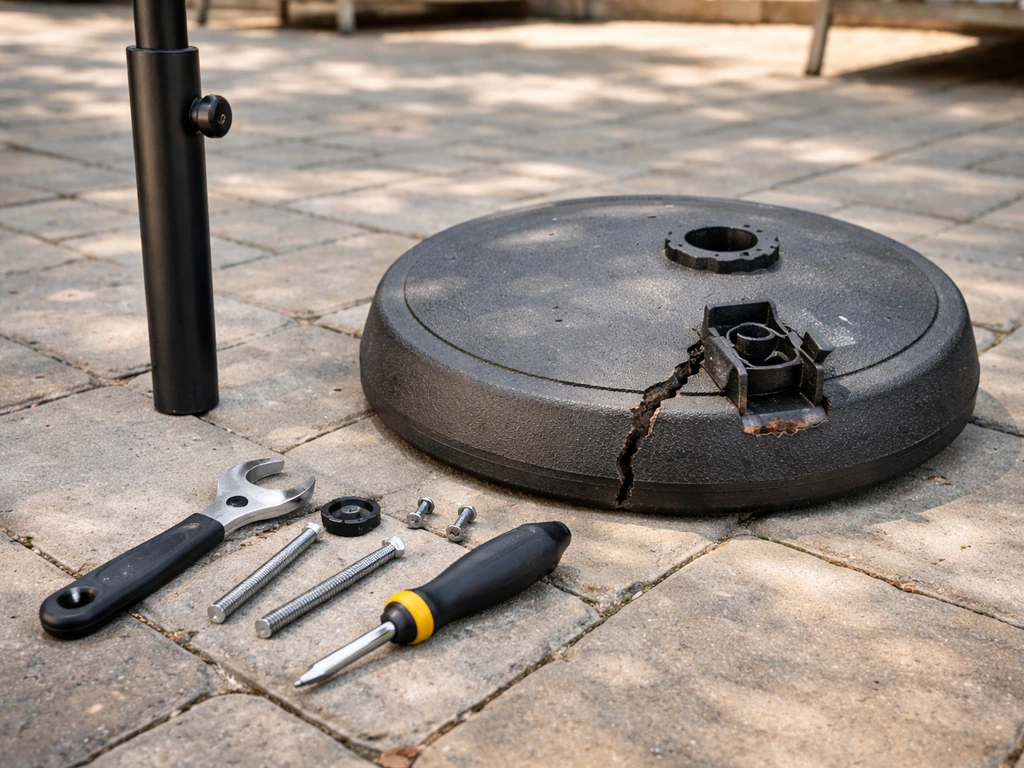
How to Fix Patio Umbrella Base: Step-by-Step Repairs
Step-by-step guide to fix a wobbly, loose, cracked, or rusted patio umbrella base safely and stop tilt/lock issues.