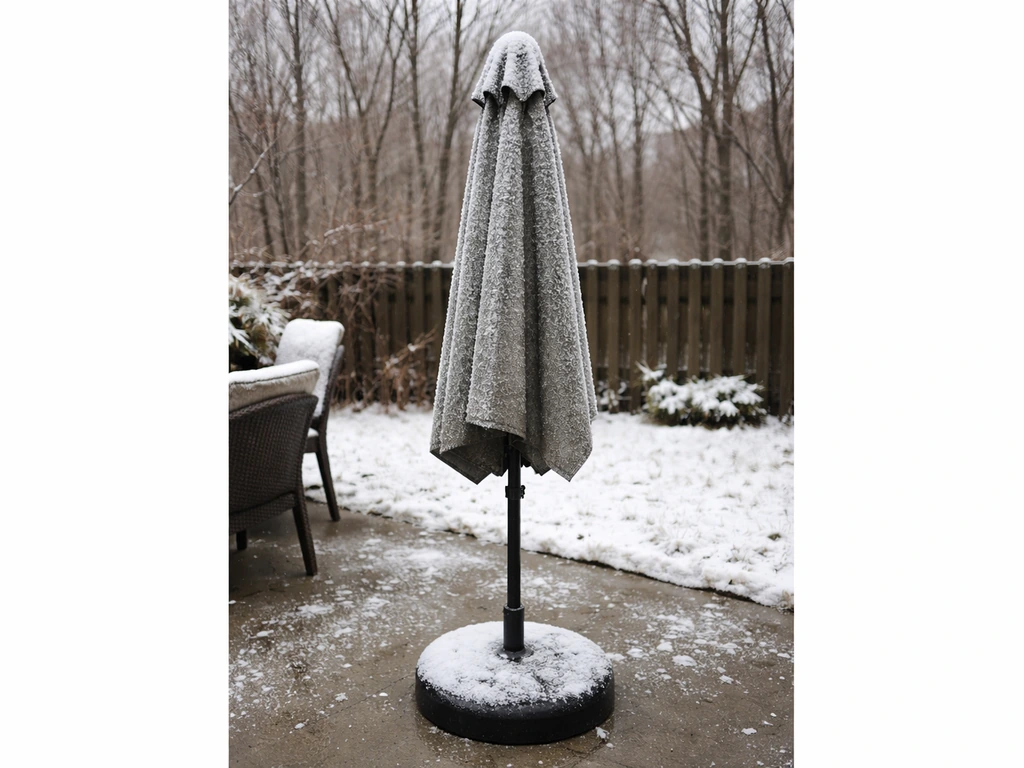
Technically yes, you can leave a patio umbrella outside in winter, but you really shouldn't leave it out unprotected. Cold temperatures alone won't destroy a quality umbrella overnight, but the combination of moisture, freeze-thaw cycles, wind, and UV exposure will steadily wreck the canopy fabric, corrode the frame, and seize up the crank and tilt mechanisms. The honest answer: close it, clean it, dry it, cover it (at minimum), and move it indoors or into a garage if you can. If you're stuck leaving it outside all winter, there are ways to do it without losing the umbrella to damage, and that's exactly what this guide walks through.
Can You Leave a Patio Umbrella Outside in Winter?
Luca Morrison
1 Jun 2026
Leave it outside or store it: the quick decision
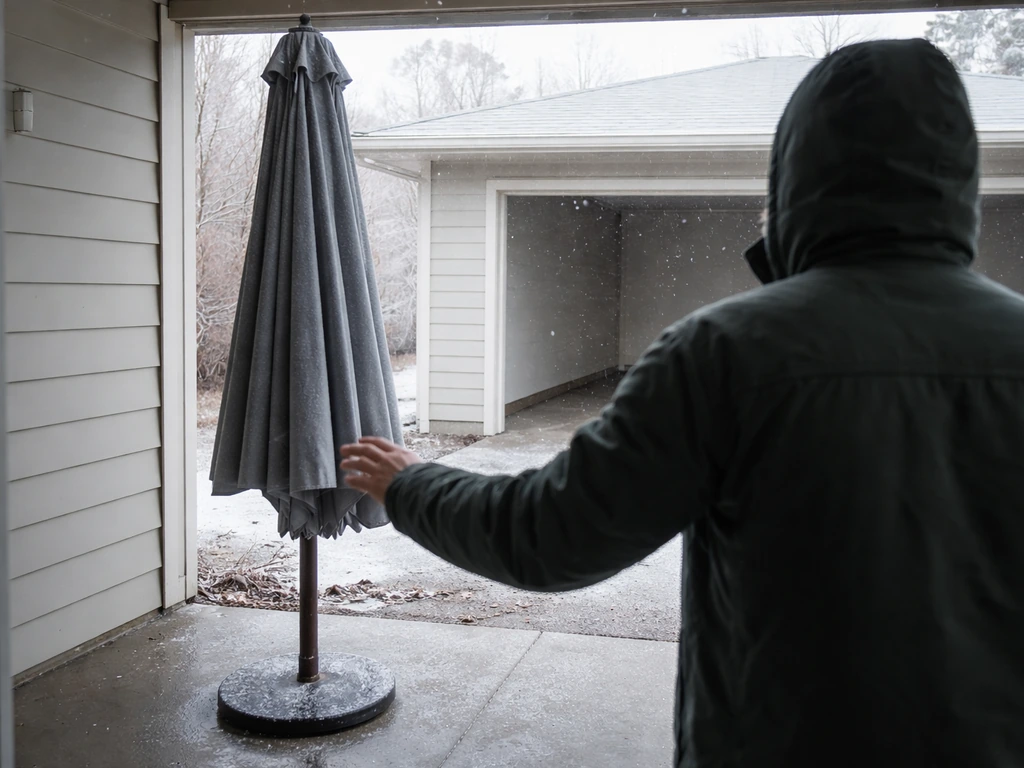
If you're in a climate with hard freezes, heavy snow, or sustained wind events (think USDA zones 6 and below, or coastal areas with winter storms), move the umbrella indoors or into a garage for the season. Full stop. The risk of a ruined canopy, bent ribs, or a seized crank isn't worth skipping storage.
If you're in a mild-winter climate, say zones 9 or 10 with temperatures that rarely dip below freezing and light rainfall, you can leave it outside as long as it's properly closed, covered with a well-fitted protective cover, and secured against wind. Even then, moving it inside is always the better call for longevity.
| Situation | Recommended Action |
|---|---|
| Hard freezes, snow, or ice | Bring indoors or into garage |
| Sustained winter wind events | Bring indoors or into garage |
| Mild winter, occasional rain only | Cover tightly outdoors (minimum) |
| Mild winter, covered patio or shed available | Store under cover outdoors |
| Offset/cantilever umbrella on any large base | Lay horizontal, cover, or store indoors |
| Umbrella with solar panels or battery pack | Always bring electronics indoors |
Offset and cantilever umbrellas deserve special mention. Their large bases hold water in the stem interface, and Frankford explicitly warns to never leave bases standing in water. That trapped moisture plus a freeze is a reliable way to crack a base or corrode a steel stem beyond repair. These umbrellas should always come inside for winter if possible.
What winter actually does to your umbrella
The canopy fabric
Sunbrella and similar solution-dyed acrylic fabrics are genuinely mold and mildew resistant, and Sunbrella says you can leave their fabric outside year-round. That's true of the fiber itself, but here's the gotcha: mildew doesn't grow on clean Sunbrella, but it absolutely grows on dirt and organic residue sitting on the fabric. A canopy left folded and damp through winter with tree debris, bird droppings, and pollen trapped in the folds will come out in spring with mildew stains and a foul smell, even with premium fabric. Cheaper polyester canopies are far more vulnerable. They'll fade heavily with UV exposure even in winter sun and can develop mold in as little as a few weeks of damp, closed storage.
The frame and ribs
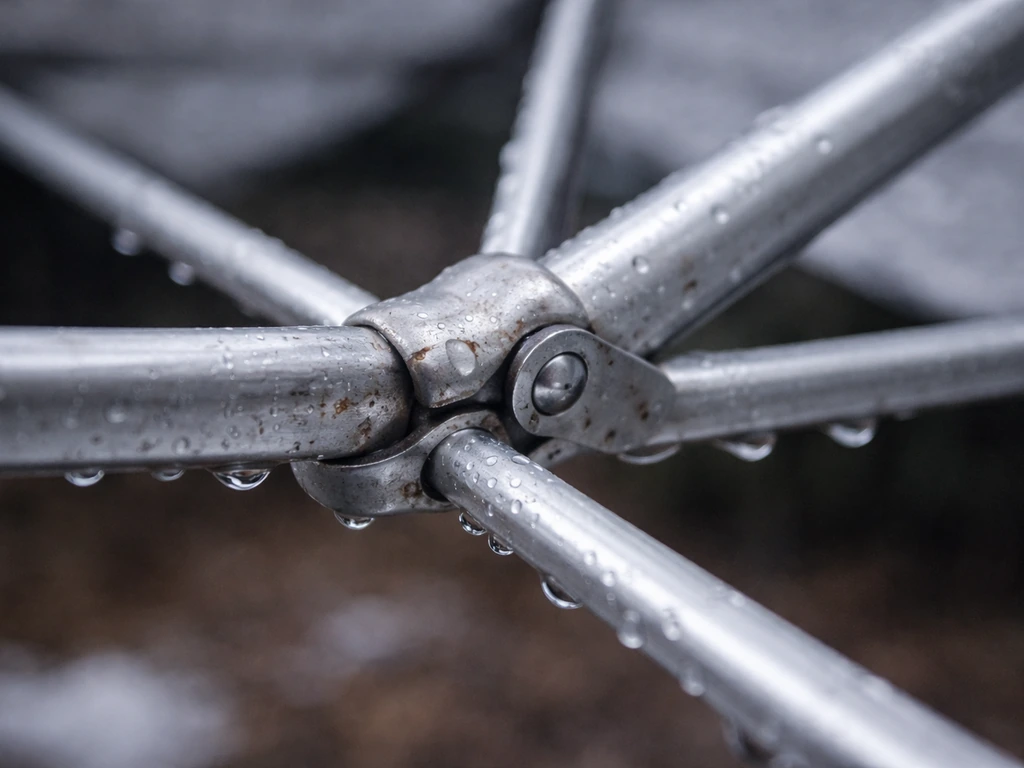
Aluminum frames handle cold very well and don't rust, but they can still oxidize and the joints can corrode if moisture sits in them all winter. Steel frames, including powder-coated steel bases and stems, are much more vulnerable. Water gets into the stem, freezes, expands, and either cracks the coating or permanently locks components together. Frankford recommends applying a rust inhibitor inside steel stems even before the first use, and that step becomes critical if the umbrella is staying outside in wet conditions. Wooden poles are the most vulnerable: they absorb moisture, swell, crack, and can rot at the joints where hardware contacts the wood.
The crank, tilt, and cord mechanisms
This is where winter causes the most frustrating and expensive damage. Crank gears collect grit and water, which freeze and seize the mechanism solid. Tilt systems, whether push-button, collar-lock, or auto-tilt, have small plastic sliders and gears that crack in hard freezes and jam with debris. Auto-tilt failure is often caused by mechanisms like tilt sliders and gears that jam when debris or grit gets into them, so winter buildup can contribute to tilt systems seizing Tilt systems, whether push-button, collar-lock, or auto-tilt. Lift cords and tilt straps become brittle in sustained cold, especially on umbrellas left closed and compressed for months. Opening a neglected umbrella in spring and cranking hard against a seized mechanism is one of the most common ways cords snap and gears strip.
Winterization checklist: clean, dry, close, protect
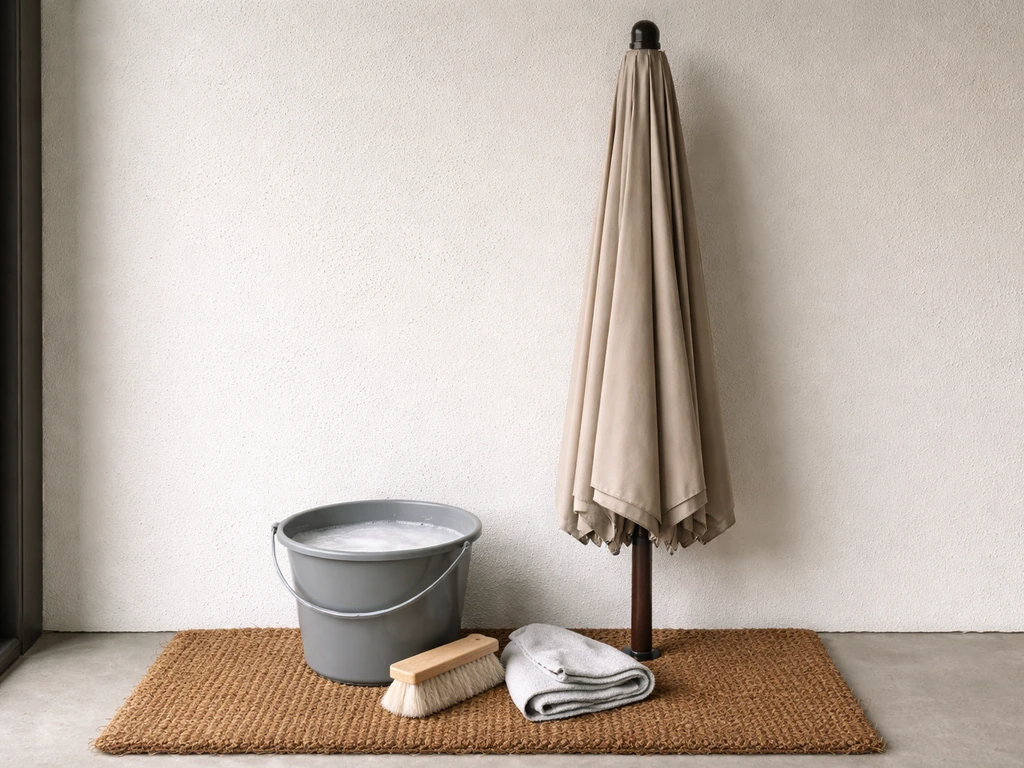
Work through these steps before your first hard freeze or the end of your outdoor season. They take about 30 to 45 minutes and will save you real money and frustration come spring.
- Clean the canopy: Mix a solution of mild dish soap and lukewarm water and scrub the canopy fabric with a soft brush. Rinse thoroughly. For stubborn mildew spots, a diluted bleach solution (1/4 cup bleach per gallon of water) works on Sunbrella; check your fabric manufacturer's guidance for other materials. Remove all dirt, pollen, bird droppings, and debris from both sides.
- Open and dry completely: Open the umbrella fully and let the canopy air dry completely in the open position. Treasure Garden and Weatherend both specifically say to open a wet canopy and allow a full airing before storage. Do not skip this step. Folding even slightly damp fabric traps moisture against the canopy seams and ribs all winter, which leads to mildew and corrosion.
- Inspect the frame and ribs: With the umbrella open, look at each rib for bends, cracks, or loose connections at the hub. Check the pole for any rust spots or corrosion, especially around the tilt collar and crank housing. This is your chance to address issues now rather than in spring.
- Lubricate moving parts: Apply a silicone-based lubricant (not WD-40, which attracts dirt) to the crank gear, tilt mechanism, and any exposed metal pivot points. This protects against moisture intrusion and prevents seizing during cold storage.
- Apply rust inhibitor to steel components: If your umbrella has a powder-coated steel base, stem, or pole, apply a rust inhibitor to the inside of the stem and any exposed metal surfaces. Frankford recommends this step specifically for their steel bases.
- Close and strap the canopy: Fold the canopy down snugly and secure it with the manufacturer's strap or Velcro closure. Don't cinch it so tight that you're stressing the ribs, but make sure there's no loose fabric flapping that wind can grab.
- Cover with a fitted protective cover: Use a manufacturer-supplied cover or a quality aftermarket cover that fits your umbrella size and style. A loose, poorly fitted cover is almost worse than no cover because it traps moisture and flaps violently in wind. California Umbrella emphasizes laying covers flat to dry before reinstalling them, so make sure your cover itself is clean and dry before putting it on.
- Handle solar panels and battery packs separately: If your umbrella has LED lights with a rechargeable battery or solar panel, remove those components and store them indoors in a dry, temperate space. Cold kills battery capacity and moisture corrodes the connections.
- Store the base properly: Never leave a base standing in water or snow. Drain any water from weighted bases, dry them, and if possible move them to a covered area. For fillable bases, consider draining them for winter if you're in a freeze zone.
Storage and covering options: what actually works
Indoors or garage storage
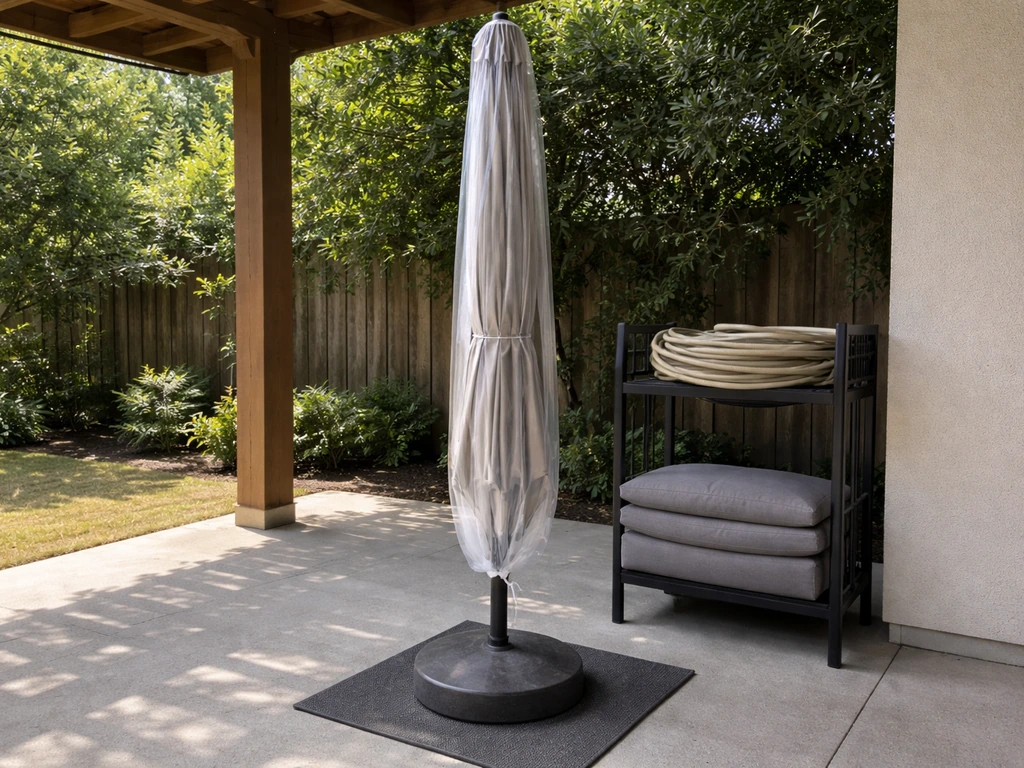
This is the gold standard. A garage, basement, or storage shed keeps the umbrella away from freeze-thaw cycles, UV, wind, and moisture. Treasure Garden recommends storing inside a box away from dirt and debris when possible. For most standard market umbrellas, leaning the pole vertically in a corner works fine. For offset and cantilever umbrellas, Frankford's Aurora manual specifically instructs storing the umbrella laid horizontally, so make sure you have the floor space before committing to that style. Don't store an umbrella near a heat source or in a location with extreme temperature swings (like a metal shed that gets very hot in brief winter sun).
Covered outdoor storage
If indoor storage isn't an option, covered outdoor storage under a patio roof, pergola, or in a well-ventilated shed is the next best thing. If you were wondering about cleaning an umbrella, you should not put a patio umbrella in a washing machine. The key is keeping rain and snow off while allowing some airflow so condensation doesn't build up inside the cover. A tight, breathable cover is better than a non-breathable plastic tarp that seals in moisture. California Umbrella's guidance is simple: cover and store in a dry, clean area when not in use. Atleisure also recommends using a dedicated umbrella cover for best protection and storing related components like solar panels and batteries indoors in a dry, temperate place to prevent cold damage blank" rel="noopener noreferrer">cover and store in a dry, clean area when not in use.
Securing against wind if leaving outside
If the umbrella must stay outside, wind is the biggest threat. A closed and strapped umbrella in a heavy base can still act as a sail in high winds and tip over or get thrown. Use the following approach to reduce risk:
- Close and strap the canopy tightly before any forecasted storm
- Move the umbrella to the most sheltered position on your patio, ideally against a wall or in a corner
- Add weight to the base if possible, or use tie-down straps anchored to a fixed point
- Use a fitted, snug cover that has its own cinch cord or strap at the bottom so wind can't get under it
- For freestanding umbrellas, consider laying the whole assembly on its side on a flat surface during severe winter storms
- Remove the umbrella from the base entirely and store the pole separately if a major storm is forecast
How different umbrella types and materials handle winter
Not all umbrellas age through winter the same way. Here's what changes based on what you have:
| Umbrella Type / Material | Winter Risk Level | Key Concern | Recommended Action |
|---|---|---|---|
| Aluminum frame, Sunbrella canopy | Low to moderate | Canopy mildew if stored dirty/damp | Clean, dry fully, cover outdoors or store indoors |
| Steel frame or steel base/stem | High | Rust, corrosion, cracked coating | Rust inhibitor, never leave in standing water, store indoors |
| Wooden pole | High | Moisture absorption, swelling, rot | Must store indoors; apply teak oil or wood sealant before storage |
| Polyester canopy | Moderate to high | Mold, UV fade, fabric breakdown | Clean thoroughly, store indoors or in a sealed bag |
| Offset/cantilever umbrella | High | Water pooling in stem, base corrosion, wind leverage | Lay horizontal, cover, store indoors if at all possible |
| Standard market (table) umbrella | Low to moderate | Cord/crank seizing, canopy mildew | Close, strap, cover; store indoors for best results |
| Umbrella with solar/LED/battery | High for electronics | Battery damage, corrosion on connectors | Remove electronics and store indoors regardless of other storage |
Fiberglass ribs are worth mentioning separately: they handle cold very well and won't corrode, but they can crack if they're flexed while frozen, so avoid trying to open or adjust a fiberglass-ribbed umbrella in below-freezing temperatures.
Post-winter inspection and fixes before first use
Before you open the umbrella for the first time in spring, spend 10 to 15 minutes going through this inspection. Skipping it and cranking a stiff umbrella open hard is how most mechanism failures happen.
Crank inspection and freeing a seized crank
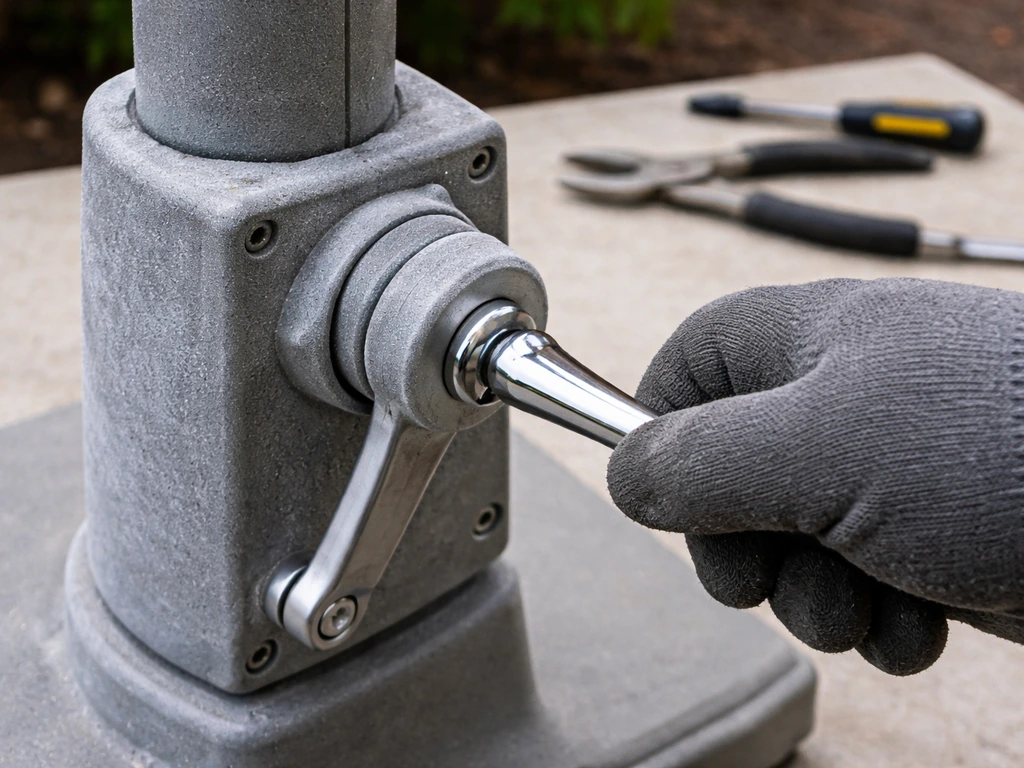
Turn the crank handle slowly and feel for resistance or grinding. A small amount of stiffness is normal after winter. Apply a silicone lubricant to the crank gear housing, wait a few minutes, then try again with gentle pressure. If the crank won't turn at all, there's likely grit, debris, or corrosion inside the gear housing. On most umbrellas, the crank housing unscrews or unclips, and you can clean the gear teeth with a small brush, remove visible corrosion, and relubricate. Don't force a seized crank. The cord wraps around an internal pulley, and one hard forced turn can snap the lift cord or strip the gear.
Tilt mechanism check
Test the tilt before loading any weight on the canopy. Push-button tilt failures after winter are almost always one of four things: the button is gummed up with grit (clean and lubricate), a plastic slider inside the collar cracked in the freeze (you'll feel loose or no resistance when pressing), the tilt cord or strap snapped (check by looking for slack or a dangling end inside the pole), or the lock collar is still engaged and you didn't fully release it. Work through these from simplest to most involved. Replacement tilt cords and collars are inexpensive and the repair is doable at home on most standard umbrellas.
Lift cord and canopy rib check
Look down the pole opening and inspect the lift cord for fraying, kinks, or discoloration. If it looks stressed, replace it before the season rather than waiting for it to snap mid-use. Open the umbrella slowly and watch each rib as it extends: they should all snap into position evenly. A rib that droops, sticks, or won't lock open either has a bent ferrule (the small cap at the rib tip), a cracked or bent rib, or a loose connection at the hub. Bent ribs can often be straightened carefully by hand if the bend is minor. Cracked ribs need replacing, but rib replacement sets are widely available.
Canopy and fabric review
Check all seams, rib pockets, and the center cap for any cracking, separation, or mildew. Minor mildew spots on Sunbrella fabric can be cleaned with a diluted bleach solution and a soft brush, then rinsed thoroughly and air dried. If the seams are separating at the rib pockets, those can be re-sewn or repaired with fabric adhesive as a temporary fix. Extensive delamination or large mildew patches on a polyester canopy usually mean it's time to replace the canopy fabric rather than repair it.
Matching your plan to your setup and climate
Here's a direct action plan based on common homeowner situations. Find your setup and follow it exactly rather than trying to apply general advice to your specific umbrella:
- You have a standard market umbrella with an aluminum frame and Sunbrella canopy in a mild climate (zones 9 to 10, light winter rain, no hard freezes): Clean and dry the canopy, close and strap it, put on a quality fitted cover, and leave it outside. Check it after storms and re-secure the cover if needed. Bring it in if a major wind event is forecast.
- You have a standard market umbrella with a steel frame or wooden pole in any climate: This umbrella needs to come inside for winter, no exceptions. Apply rust inhibitor and wood sealant before storage, cover it, and store it in a dry, temperature-stable space.
- You have an offset or cantilever umbrella: Follow all the cleaning and drying steps, secure the canopy with its strap, and if possible lay it horizontal inside a garage or storage area. Drain and dry the base, apply rust inhibitor to any steel, and never leave the base sitting in pooled water or snow.
- You have any umbrella with a solar panel or LED battery pack: Remove those components before the first frost and store them indoors. The rest of the umbrella follows the rules above for its material type.
- You're in a hard-freeze climate (zones 7 and below) with any umbrella type: Indoor storage is not optional. Clean, dry, lubricate moving parts, cover, and move it inside. Set a calendar reminder for early spring to run the post-winter inspection before you open it for the season.
- You're storing in a garage or shed: Store the pole vertically or (for large cantilever umbrellas) horizontally on the floor. Keep the base nearby but separate from the pole so you can inspect both at the start of the season. Store inside a bag or box to keep dust and pests off the canopy.
For ongoing maintenance through the rest of the season, the routine is simple: clean the canopy every few weeks during heavy pollen or rain periods, never leave it open and unattended in forecasted wind, always open and dry a wet canopy fully before closing it, and lubricate the crank and tilt at the start and end of each season. That routine alone will double the usable life of almost any patio umbrella. If you're also thinking through your general storage options in more detail, whether that's inside your garage, a covered outdoor space, or what to do with the umbrella on a day-to-day basis when it's not in active use, those decisions are all worth working through alongside your winter plan. when should i close my patio umbrella is also about day-to-day timing, so use those storage options alongside your winter plan rather than treating them separately.
FAQ
If my patio umbrella is already wet from rain or snow, should I close it and cover it for winter?
Only if it’s fully dry first. A wet canopy left closed in winter is a mildew risk, even on solution-dyed fabrics, because dirt and organic residue trap moisture inside the folds. If it snowed or rained, wipe off debris, open it in daylight to dry completely, then close and cover.
What kind of winter cover is safest: tarp, plastic bag, or breathable umbrella cover?
Avoid a sealed plastic cover that traps condensation. Use a well-fitted cover that blocks precipitation but still allows some airflow, or check the cover periodically on dry days and re-dry the canopy if you notice dampness under the cover.
Can I bring the umbrella outside only on sunny days to “warm it up,” or is that risky?
Yes, but do it carefully. For below-freezing areas, don’t try to open or adjust the umbrella while it’s frozen stiff. Move it indoors or warm the mechanism area gradually, then clean and lubricate before you crank or tilt.
Does winter storage differ for offset and cantilever umbrellas compared with standard center-pole umbrellas?
Do not store it leaning if the base can hold water in the stem area. Offsets and cantilever styles can trap moisture where the stem meets the base, and freeze-thaw can crack bases or corrode stems. Those models should be laid horizontally only if the manual calls for it, otherwise bring them inside.
How do I decide if my umbrella is okay to leave outside if my area has hard freezes?
Take it indoors or into a controlled storage space. If the umbrella must stay outside in a hard-freeze zone, you’re relying on cover and wind protection, but string/tension cords and slider components are the first to fail when exposed to months of cold. Plan on indoor storage if you want the lowest repair risk.
What should I do if the crank is stiff or won’t move after winter?
Yes, but don’t “crank through it.” If the crank turns with grinding, stop and clean the gear housing after removing visible grit or corrosion, then lubricate gently. Forcing a seized mechanism is a common cause of stripped gears or snapped lift cords.
Can mildew on the fabric be fully removed, or should I replace the canopy?
Sunbrella can be cleaned for small mildew spots, but the umbrella must be fully air-dried afterward. If mildew keeps returning, the cover may be trapping moisture or debris. For polyester or heavily stained areas, replacing the canopy is often more cost-effective than repeated cleaning.
Is it safe to store my umbrella in a heated garage or near a heater in winter?
Keep it away from heat sources and big temperature swings. A metal shed that heats up briefly in winter sun can drive moisture condensation inside the cover, while radiators or furnaces accelerate fabric and coating wear. A stable, cool indoor location is better.
When should I close the umbrella during cold weather, and what changes as winter approaches?
For day-to-day: close it whenever wind is forecast, and only leave it open unattended if weather is calm. For winter: before the first hard freeze, clean, dry, and secure it, then store or cover in a protected spot with airflow to prevent condensation buildup.
How do I prevent my closed umbrella from tipping over in winter wind?
If you must keep it outside, strap it down so the closed umbrella can’t act like a sail. Even a heavy base can tip or get thrown in high winds, so use proper straps and check tie-downs after storms.
Can I inspect or manually open the umbrella to check ribs if it’s below freezing?
Yes, especially for fiberglass ribs. Don’t attempt to open, flex, or “test it” while the ribs are frozen, because cold can make them crack if flexed. Let everything warm up first, then extend ribs slowly to confirm they lock evenly.
Next Articles
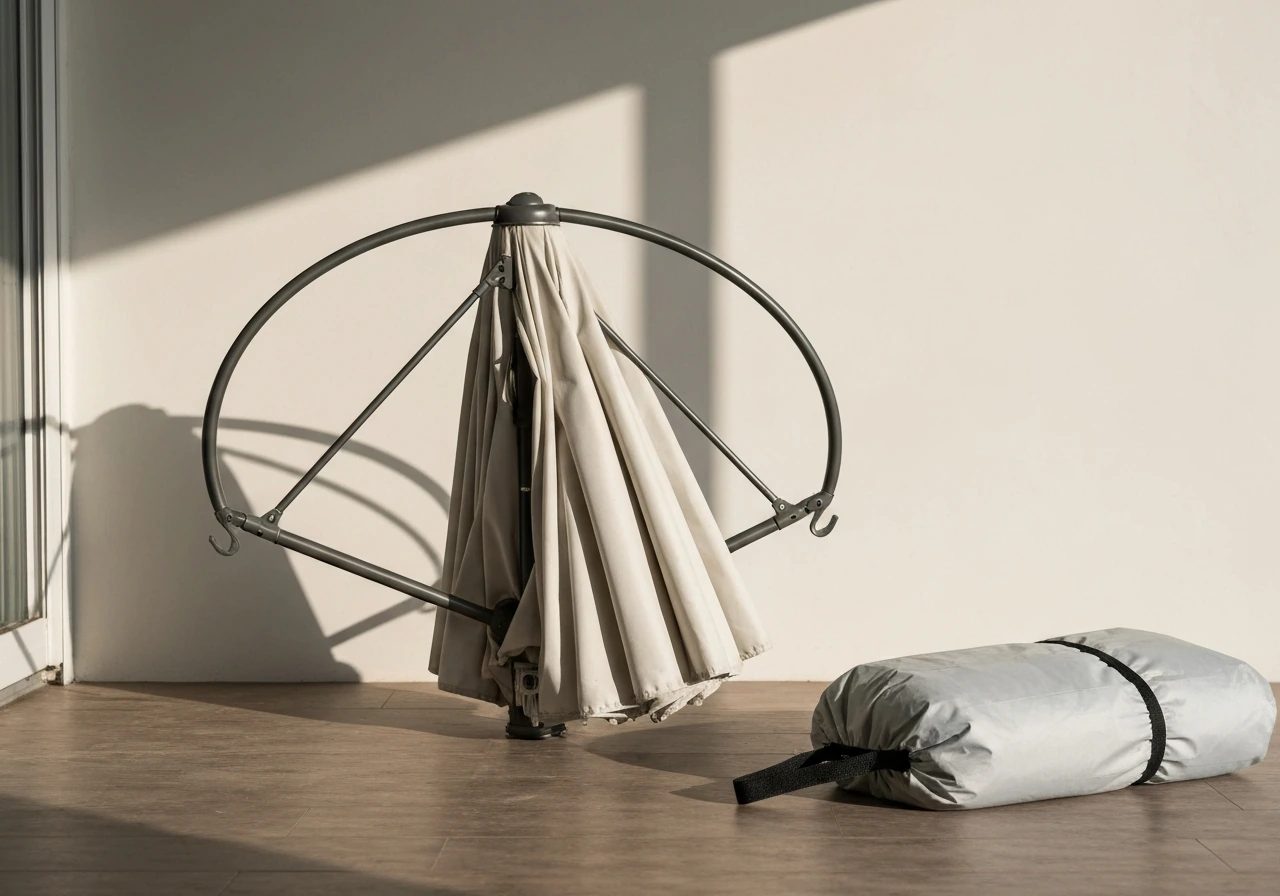
How to Store a Patio Umbrella for Winter: Step-by-Step
Step-by-step winter storage to keep patio umbrella fabric, frame, and crank mechanisms safe from moisture, rust, and mil
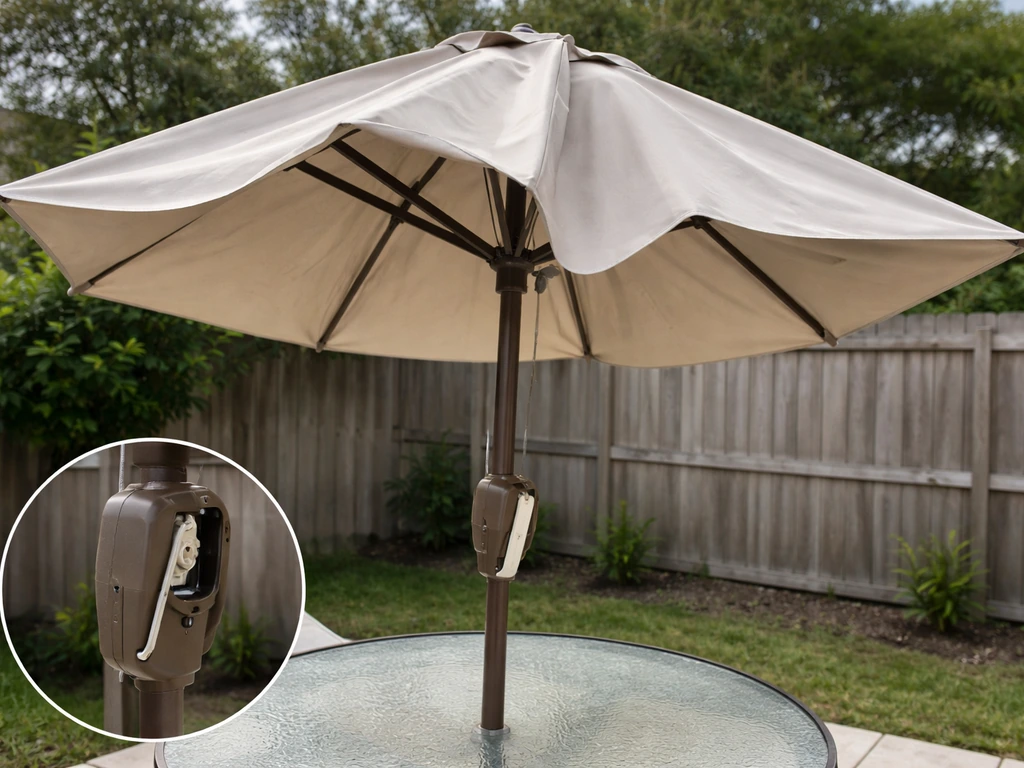
How to Fix a Patio Umbrella That Won't Open or Close
Step-by-step fixes for patio umbrellas that won’t open or close, with checks for jams, cords, latches, and lubricating t
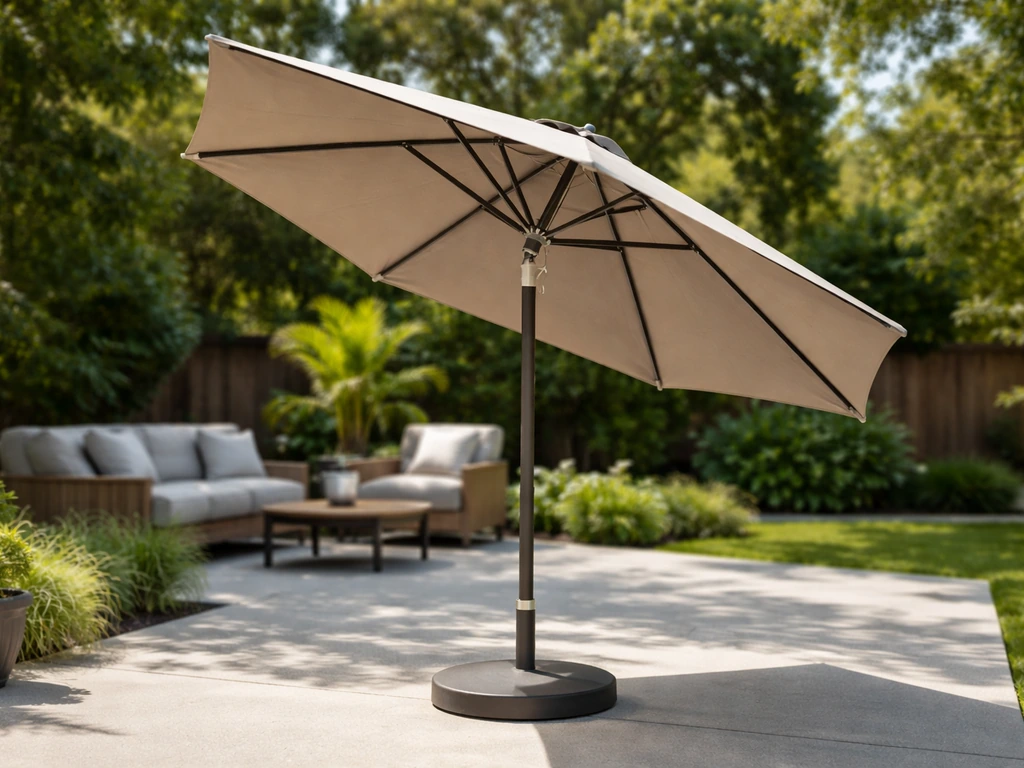
How Does a Patio Umbrella Work? Components, Use, and Fixes
Learn how patio umbrellas work: components, open close tilt, stability, and step by step troubleshooting common mechanic