
To use an auto-tilt patio umbrella, open it fully by cranking the handle clockwise until the hub hits the stop ring, then either keep cranking (crank-through tilt models) or press/push down on the housing (push-tilt models like Treasure Garden's Glide Tilt) to engage the tilt angle you want. If you need brand-specific details, follow the east end patio umbrella instructions for your exact model and tilt style before troubleshooting further.
Auto Tilt Patio Umbrella Instructions: Setup, Fixes, Maintenance
Luca Morrison
6 May 2026
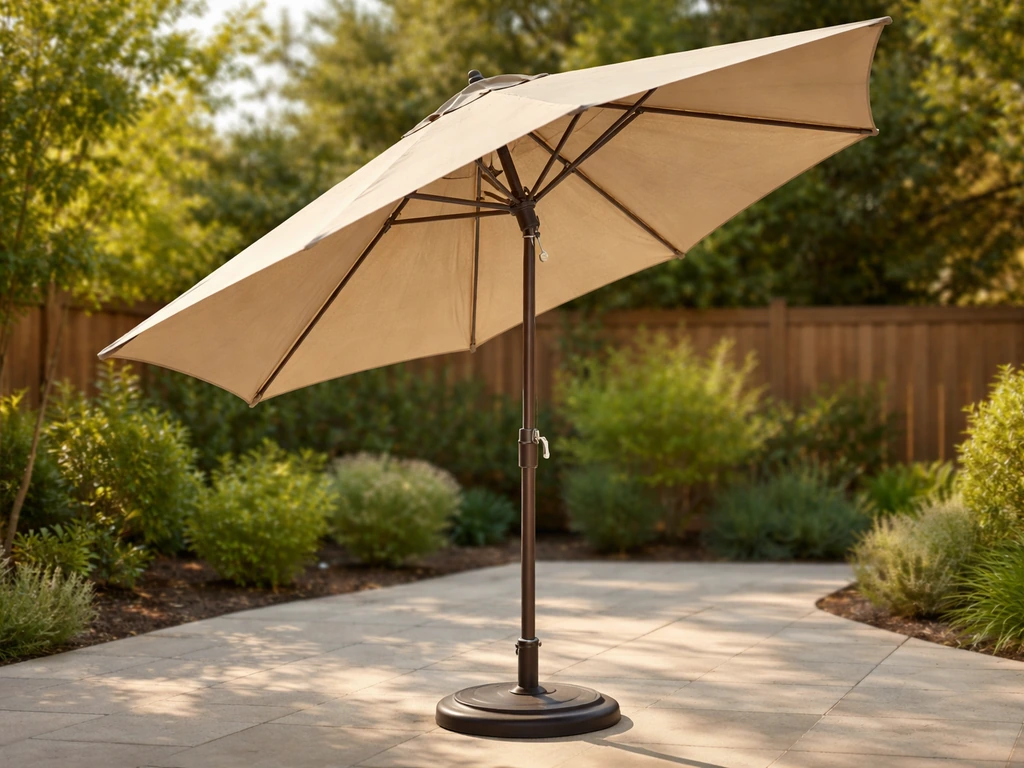
If the tilt isn't working, the fix is almost always one of four things: you haven't cranked far enough to engage the tilt mechanism, a gear or slider is jammed with grit, the tilt cord or strap has snapped, or the lock knob/collar isn't released properly. This guide walks you through identifying your model, operating it correctly, and fixing whichever of those problems you're dealing with.
Identify your auto-tilt model and parts first
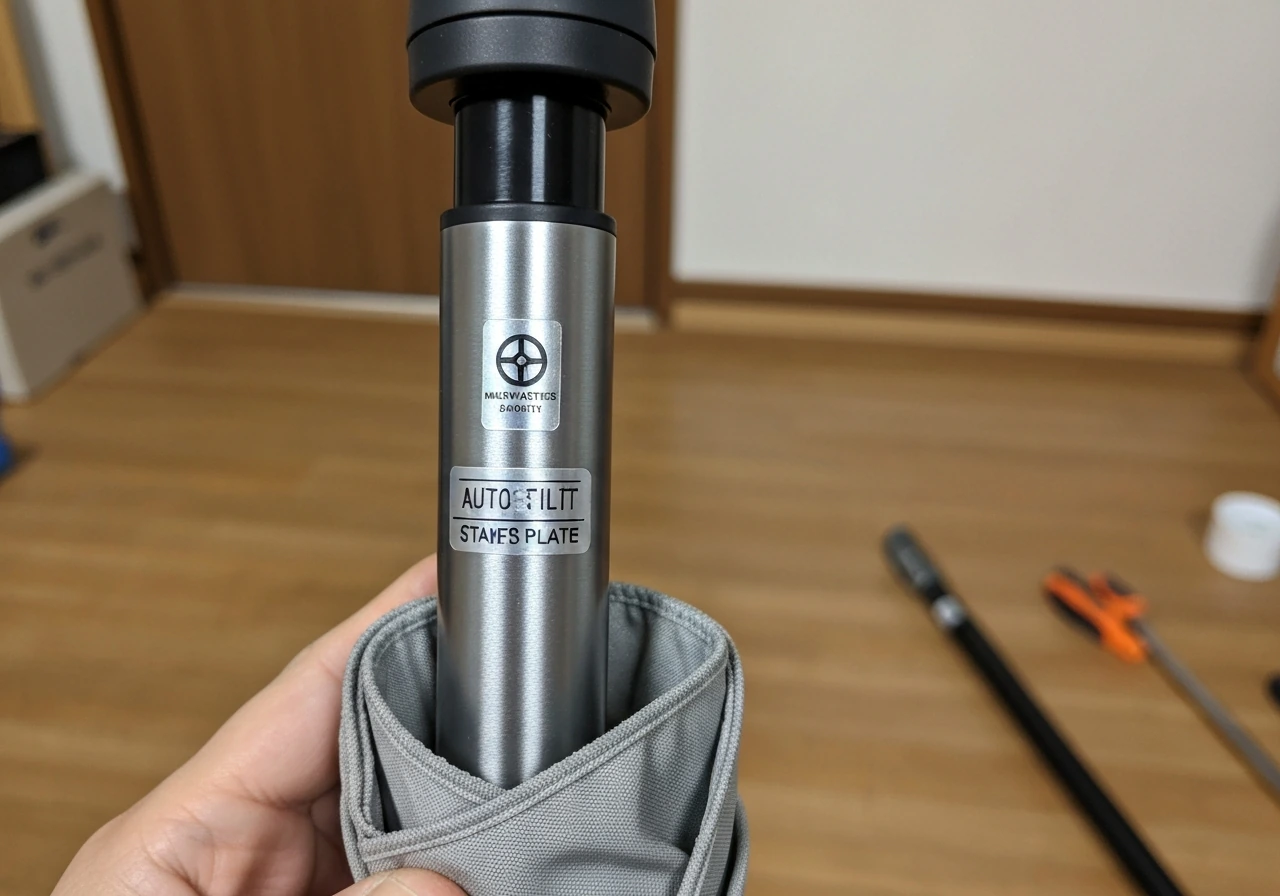
Before you start cranking or disassembling anything, spend two minutes figuring out exactly what model you have. This matters because auto-tilt umbrellas use meaningfully different mechanisms depending on the brand, and following the wrong sequence can strip a gear or jam the tilt arm. The good news is that most manufacturers label their umbrellas with a model number somewhere obvious.
Check these spots for your model number: a sticker or stamped plate on the pole near the base, a tag sewn into the canopy edge, the underside of the base plate, or the original packaging if you still have it. Costco umbrellas, for example, use an item/article number like ITM./ART. 966660 printed on a sticker near the bottom of the main pole. Jardinico models like the JCP.501 have the model code printed in the manual and sometimes on the crank housing itself.
Once you have the model number, look up the manufacturer's manual online. Most brands (Treasure Garden, SunVilla, Jardinico, Costco-branded umbrellas) post PDFs on their websites or on the retailer's product page. Having the parts diagram in front of you is genuinely useful because auto-tilt systems use brand-specific terms for the same parts.
The key parts you need to know
| Part name | What it does | Common brand terminology |
|---|---|---|
| Crank handle | Opens/closes canopy; on crank-through models, also engages tilt after full open | Crank Handle (Jardinico, Costco, SunVilla) |
| Tilt housing / collar | The rotating section of the pole that tips the canopy; on push-tilt models you press this directly | Collar (Costco), Housing (Treasure Garden Glide Tilt) |
| Adjustment knob / lock knob | Tightens or releases the slider car so you can set tilt angle | Adjustment Knob (Jardinico), Lock Button (Costco) |
| Slider car / slider car guide | Slides along the internal mast to change tilt angle on slider-type systems | Slider Car, Slider Car Guide (Jardinico JCP.501) |
| Stop ring | A fixed ring on the pole that halts the hub at full-open position, signaling the crank-through tilt is about to engage | Stop Ring (Costco) |
| Internal mast stem | The inner pole that houses the tilt linkage rods and slider mechanism | Internal Mast Stem (Jardinico) |
| Tilt cord / strap | On cord-operated tilt systems, a nylon cord or strap that physically pulls the tilt arm | Tilt Cord, Tilt Strap (generic) |
| Tilt gear / worm gear | A small gear set inside the crank housing that converts crank rotation into tilt movement | Tilt Gear (generic) |
Knowing these names lets you follow any brand's instructions without getting lost in terminology. If your umbrella uses a push-down housing (like Treasure Garden's Glide Tilt), you won't have an adjustment knob or slider car. If it uses a slider system (like the Jardinico JCP.501), you won't have a push-down collar. Knowing which type you have before troubleshooting saves a lot of frustration.
How to set up and use an auto-tilt patio umbrella
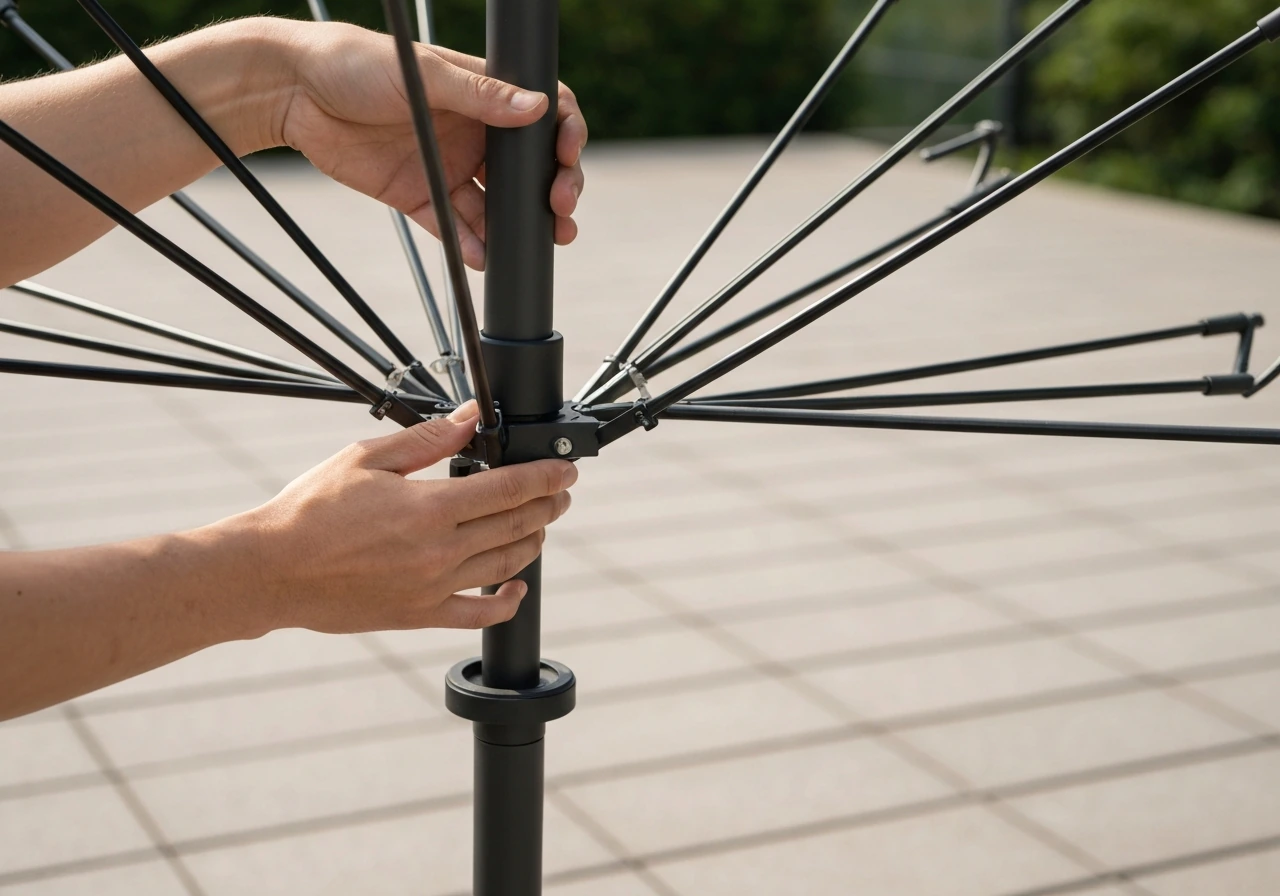
Assembly is straightforward on most models, but tilt issues often trace back to assembly mistakes, so it's worth running through the setup sequence correctly from the start.
Assembly and initial setup
- Insert the main pole into the base and tighten the base collar or locking pin so the pole is firmly seated.
- Attach the canopy to the frame ribs. Most auto-tilt umbrellas have a hub-and-rib system where each rib slots or Velcros onto the hub. Make sure every rib is fully seated before cranking.
- On Jardinico-style slider models, position the slider car on the internal mast stem and finger-tighten the adjustment knob before opening. This prevents the slider from flying loose when you first crank.
- Route any lighting or electrical cords (if you have an LED model like SunVilla's) through the designated cord channel before the canopy is raised. You cannot thread it after.
- Confirm the base weight meets the minimum for your model. Treasure Garden's Glide Tilt, for instance, specifies a minimum of 50 lbs. of base weight. Under-weighted bases are a top reason umbrellas tip over when tilted.
Opening the umbrella and engaging tilt: crank-through models
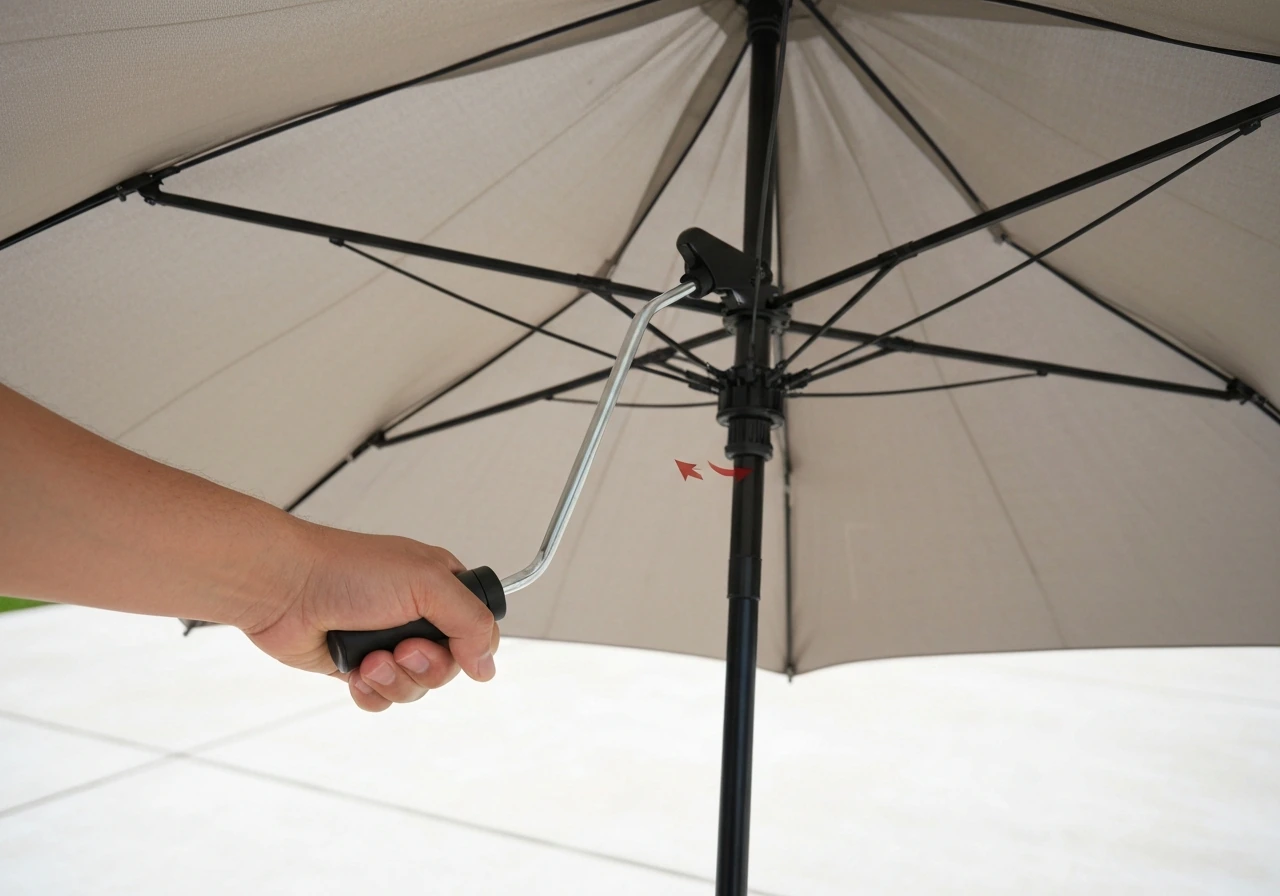
Crank-through tilt is the most common auto-tilt system. The crank handle does double duty: first it opens the canopy, then, once fully open, additional cranking activates the tilt. Here's the correct sequence:
- Turn the crank handle clockwise. You'll feel moderate resistance as the ribs spread and the canopy opens.
- Keep cranking until the hub physically meets the stop ring. You'll hear or feel a distinct stop. This is your signal that the canopy is fully open. Do not stop cranking before this point, the tilt will not engage if the canopy is only partially open.
- Continue cranking clockwise past the stop. On most crank-through models, the tilt mechanism activates after the hub hits the stop ring. You'll feel the resistance change slightly and the canopy will begin to tilt.
- Stop cranking when you reach your desired tilt angle. On Costco's model, the tilt engages in one continuous clockwise cranking motion past full-open.
- To rotate the umbrella 360 degrees to track the sun, pull down on the collar (if your model has a rotating collar), turn it to the desired position, then release. The collar locks in place automatically.
- To return to upright, crank counter-clockwise. The tilt retracts first, then the canopy begins to close. Keep going counter-clockwise to fully close the canopy.
One important caution from Costco's own manual: always tilt fully, not halfway. If you leave the umbrella in a half-tilted position, wind will push the canopy back to upright abruptly, which stresses the tilt linkage. Also, if you over-crank counter-clockwise past fully closed, the mechanism will start opening the canopy again. It won't stay open in that direction, but it can confuse you into thinking something is broken when it isn't.
Opening and tilting: push-tilt models (Treasure Garden Glide Tilt)
- Crank the handle clockwise to fully open the canopy. Again, crank until the hub hits the stop ring.
- To tilt, press down firmly on the tilt housing with both hands. The canopy will tip to the angle you apply.
- Release your hands and the tilt locks in place at that angle.
- To return to horizontal, pull up on the housing. The canopy swings back to level.
- Crank counter-clockwise to close.
Slider-knob tilt models (Jardinico JCP.501 style)
- Crank clockwise until the canopy is completely open.
- Locate the adjustment knob on the side of the pole, near the slider car guide.
- Turn the adjustment knob counter-clockwise to loosen it. This releases the slider car so it can move.
- Slide the car upward or downward along the guide to reach your desired tilt degree.
- Turn the adjustment knob clockwise to tighten and lock the slider car in position.
- To return to upright, loosen the knob again, slide the car back to the neutral position, and retighten.
Step-by-step: troubleshooting tilt not working
When the tilt won't engage, moves unevenly, jams, or won't return to upright, work through these checks in order from simplest to most involved. Most problems get solved in the first three steps.
Tilt won't engage at all
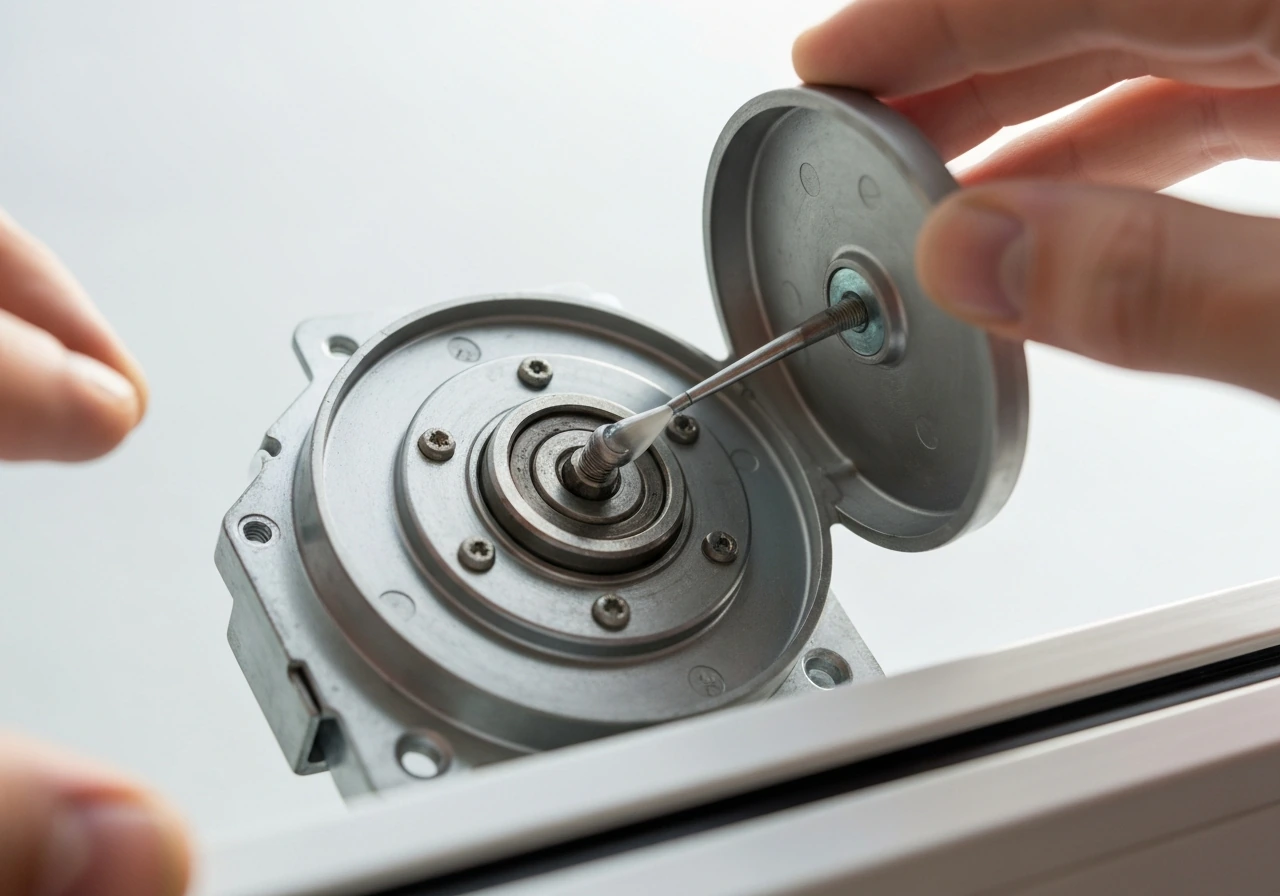
- Check that the canopy is fully open first. The single most common reason tilt doesn't engage is that the hub hasn't reached the stop ring yet. Crank further clockwise and listen for the stop.
- On slider-knob models, check that the adjustment knob is actually loose. If someone tightened it fully, the slider car can't move no matter how hard you push.
- On push-tilt models, confirm you're pressing down on the tilt housing, not the main pole. They look similar but only the housing moves.
- Check for visible obstructions around the tilt joint. Leaves, dirt, or a rib that's slipped out of its socket can physically block the tilt pivot.
- If nothing above works, the issue is likely internal: a broken tilt gear, snapped cord, or stripped linkage. Move on to the repair section below.
Tilt is stiff, jerky, or uneven
- Stiff crank-through tilt is almost always a lubrication issue. The tilt gears inside the crank housing dry out and corrode, especially after winter storage. See the maintenance section for how to address this.
- Uneven tilt (canopy tilts more on one side) usually means one or more ribs aren't seated on the hub properly, or a rib strut is bent. Open the umbrella flat and inspect each rib connection at the hub before tilting.
- Jerky tilt on a slider-knob model suggests the slider car guide is dirty or the car itself is catching on a nick in the guide channel. Remove the slider car, clean the guide channel with a damp cloth, and lightly lubricate before reinserting.
Tilt won't return to upright
- On crank-through models, crank counter-clockwise. If it won't move, the tilt gear may be stripped or the cord that returns the mechanism may be broken.
- On push-tilt models, pull up firmly on the housing. If it's stuck down, the pivot pin or tilt joint may be corroded. A penetrating lubricant applied at the pivot joint (not on the canopy or fabric) usually frees it within a few minutes.
- Check that the lock button or collar isn't engaged in a locked position. Some models have a secondary lock that holds the tilt angle; you have to disengage it before the housing will return.
Tilt moves but the canopy flops or doesn't hold its angle
- On slider-knob models, the adjustment knob isn't tightened enough. Re-tighten it clockwise until firm.
- On push-tilt models, the tilt locking tab inside the housing is worn or broken. You can often source a replacement locking tab or housing collar from the manufacturer.
- On crank-through models with a collar lock, the collar teeth may be worn. Pull the collar down fully and rotate slightly until it clicks into the next tooth position.
Step-by-step: fixing common auto-tilt failures
Crank handle spins freely without opening or tilting
A crank that spins without doing anything means the gear inside the crank housing has stripped. This is one of the most common auto-tilt failures, especially on umbrellas that have been used for several seasons. Here's how to address it:
- Remove the crank handle. Most handles pull straight off or have a small retaining pin or set screw on the underside of the crank arm. Use a flathead screwdriver or 3mm Allen key.
- Unscrew or unclip the crank housing cover. It's usually held on by two to four Phillips screws on the side of the housing or a snap-on cover that pries off.
- Look at the worm gear set inside. If the plastic teeth are sheared flat or visibly rounded, the gear is stripped and needs replacement.
- Take a photo of the gear orientation before removing anything. Note which gear meshes with which.
- Order a replacement gear set using your model number. Many brands sell these as a spare part for under $15. Universal replacement crank gear kits are available online if OEM parts aren't listed.
- Install the new gear, confirm it meshes correctly with the adjacent gear, replace the cover, and reattach the handle.
- Test by cranking slowly in both directions before applying full force.
Tilt cord or strap is broken
Some auto-tilt models use an internal nylon cord or woven strap to pull the tilt arm rather than a gear linkage. When this snaps, the tilt drops or won't engage. You'll sometimes hear a snap when it breaks, or the canopy will suddenly flop to one side.
- Confirm the cord is broken by opening the umbrella fully and checking the access panel on the pole or the crank housing for a dangling cord end.
- Measure the cord length using the remaining piece. You need an exact replacement length, or the tilt angle range will be off.
- Use 3mm to 4mm braided nylon cord for replacement. Paracord works in a pinch but isn't ideal long-term.
- Thread the new cord through the internal mast stem following the original routing path. A stiff wire bent into a hook helps feed it through the pole.
- Tie a secure stopper knot at each anchor point. A figure-eight knot works well and doesn't slip.
- Test the full tilt range before reassembling covers.
Slider car is stuck or damaged
- Loosen the adjustment knob fully. If the knob turns but the car doesn't move, the car itself is seized on the guide.
- Apply penetrating lubricant to the slider car where it contacts the guide channel. Wait five minutes.
- Work the car back and forth gently by hand. Don't force it with a tool or you'll crack the plastic housing of the car.
- If the car is cracked or the guide channel is bent, replacement is the right call. Slider car assemblies are inexpensive and usually available from the umbrella manufacturer.
Tilt joint is corroded or seized
- Locate the pivot point where the upper pole section tilts. It's usually a pin or bolt connection visible as a small protrusion or seam on the pole just below the canopy hub.
- Apply a penetrating lubricant directly to the pivot pin from both sides. Do not spray the canopy fabric.
- Let it sit for 10 to 15 minutes, then gently work the tilt manually by hand (canopy closed) to break the corrosion free.
- If the pin itself is visibly rusted through, it needs to be driven out with a punch and hammer and replaced with a matching stainless steel pin of the same diameter.
How to lubricate and maintain the tilt mechanism
Lubrication is the single best preventive maintenance step you can take on an auto-tilt umbrella. A 15-minute lubrication session at the start and end of each season will prevent most of the failures described above. Here's what to do and what to avoid.
What to lubricate and what to use
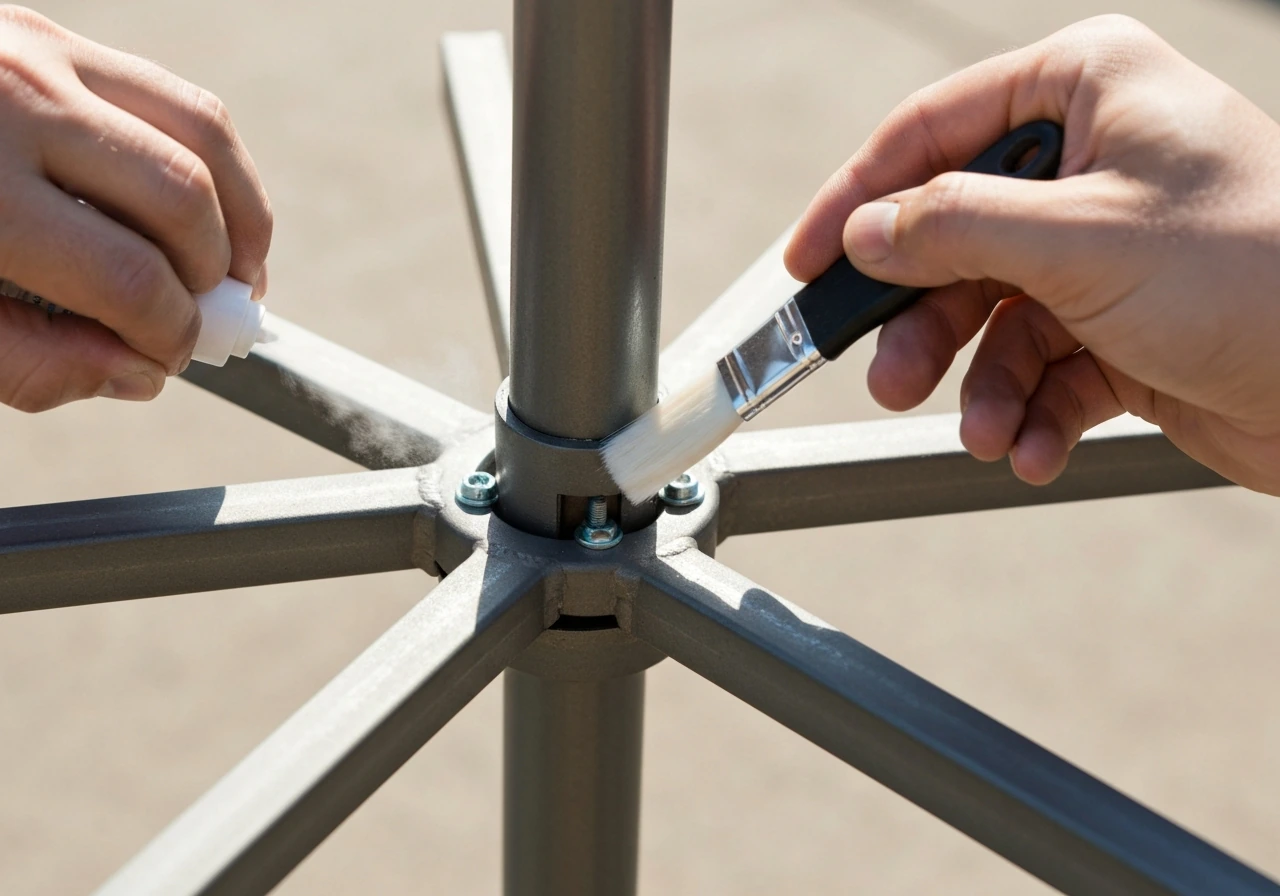
| Location | Lubricant type | How to apply |
|---|---|---|
| Tilt pivot joint (the pin where the pole tilts) | Dry PTFE spray or white lithium grease | Spray or apply with a small brush directly to the pin; wipe off excess |
| Crank worm gear (inside crank housing) | White lithium grease | Open the housing cover, apply a small dab to each gear tooth; do not over-apply |
| Slider car and guide channel | Dry PTFE spray or silicone spray | Spray into the channel, wipe off excess with a rag, slide car back and forth to distribute |
| Adjustment knob threads | Light machine oil or white lithium grease | A single drop on the knob threads; turn in and out to distribute |
| Pole sections (where inner mast slides into outer) | Silicone spray | Spray lightly where sections overlap to prevent seizing |
What not to lubricate
- Do not apply any lubricant to the canopy fabric, rib fabric pockets, or Velcro closures. It will stain the fabric and attract dirt.
- Avoid WD-40 on plastic gear sets. It's a solvent and will dry out and degrade plastic over time. Use white lithium grease or PTFE instead.
- Don't over-grease the crank gear. Too much grease traps grit and eventually grinds the gear teeth down faster than running dry.
Seasonal maintenance routine
- At the start of the season: clean all metal parts with a dry cloth, inspect the pivot pin for rust, check the tilt cord or strap for fraying, and lubricate all the points in the table above.
- Mid-season (after any heavy rain or storm): dry the crank housing and slider guide, re-lubricate the pivot joint if it sounds dry or squeaky.
- End of season: clean the entire umbrella, apply a fresh coat of lubricant to all pivot and gear points, and store or cover as described in the safety section below.
Safety checks: smooth tilt, stability, and wind and winter handling
Confirming the tilt mechanism is operating safely
Before you use the umbrella around people or furniture, do a quick functional safety check. Open the umbrella fully and engage the tilt. It should move smoothly without grinding or sudden drops. The canopy should hold its angled position without drifting back.
SunVilla’s assembly/usage instructions for its auto-tilt market umbrella specify that after the umbrella is fully opened, you keep turning the crank to tilt, and the tilt stops at a maximum of 30 degrees [hold its angled position without drifting back](https://sunvilla. s3. us-east-2. amazonaws.
com/SunVilla-10-Auto-Tilt-LED-Market-Umbrella-Assembly-Instructions-2127206-1902386-1372976-2127215-2127250-2127251-2127252-2127266. pdf). Return it to upright and confirm it locks there, then close the canopy. If any part of that sequence involves a sudden jolt, grinding noise, or the canopy falling under its own weight, stop using it and address the repair before the next use.
Wind safety: the most important rule
Do not use the tilt function in any wind, and do not leave a tilted umbrella unattended outdoors. Jardinico's own manual explicitly states this, and for good reason: a tilted canopy catches dramatically more wind than a vertical one. If a gust hits a fully tilted umbrella, the leverage on the base is multiplied, and even a heavy base can tip. Treasure Garden's Glide Tilt recommends a minimum base weight of 50 lbs. specifically because of this. In practice, if wind picks up while the umbrella is tilted, bring it back to upright or close it entirely before stepping away.
Also remember Costco's tip: always tilt fully, not halfway. A half-tilted position is mechanically unstable and wind will slam it back to upright, which over time damages the tilt joint and gears.
Base stability checks
- Weigh your base and compare it to the manufacturer's minimum. For large 10-foot and 11-foot auto-tilt models, 50 lbs. is a typical minimum, but bigger canopies may need more.
- Check that the base collar or locking pin is fully engaged. A pole that wobbles in the base before tilting will rock dramatically when tilted.
- On windy days, keep the umbrella closed or fully retracted. No base weight compensates for sustained high wind on an open canopy.
Off-season storage and winterizing the tilt mechanism
SunVilla's manual recommends removing the umbrella from its base for off-season storage, which is good practice for any auto-tilt model. Leaving a tilted or even upright umbrella outside through winter exposes the tilt joint, gears, and slider guide to freeze-thaw cycles that crack plastic parts and seize metal pivot pins. Here's a practical storage sequence:
- Close the canopy fully and return the tilt to the fully upright, neutral position before storage. Never store with the tilt engaged, as it keeps tension on the cord or linkage all winter.
- Clean the canopy with mild soap and water and let it dry completely before folding or storing. Storing damp canopies promotes mildew that can wick down into the tilt housing.
- Lubricate all pivot points, gear sets, and slider channels before storing. The lubricant acts as a moisture barrier over winter.
- Remove the pole from the base and store the umbrella horizontally in a dry location, or use a quality protective cover rated for outdoor storage if you must leave it outside.
- In spring, inspect the tilt pivot pin and adjustment knob threads for rust before the first use. Address any corrosion before cranking, since forcing a seized joint will strip the gear.
If you're working with a specific brand, it's worth checking for a manufacturer manual that covers your exact model. The setup and care procedures for cantilever-style auto-tilts, for example, differ from center-pole models in meaningful ways, and brands like Mainstays, East End, Sunnyglade, and Threshold Solar each have their own quirks in how the tilt mechanism is accessed and maintained.
For sunnyglade patio umbrella instructions, follow the manual steps for your exact Sunnyglade model before you adjust or troubleshoot the tilt. Mainstays patio umbrella instructions can help you locate the correct tilt mechanism steps for your exact model before you start troubleshooting. To follow cantilever patio umbrella instructions accurately, use your specific model’s manual for the correct assembly order, tilt engagement steps, and troubleshooting checks.
Grabbing the right manual for your umbrella before diving into repairs will save you a lot of trial and error.
FAQ
What if my auto tilt patio umbrella opens but the tilt will not engage at all, even after cranking fully?
First confirm the umbrella is fully open before you attempt tilt engagement. Then check the tilt lock knob or collar for being fully released. If it still will not engage, inspect the tilt cord or strap area (if your model uses one) for breaks, and look for grit at the slider/gear path, since a small jam can prevent the mechanism from catching.
How can I tell whether my umbrella is a crank-through tilt or a push-tilt (push-down housing) model?
Operate it slowly while watching the mechanism. On crank-through models, you crank clockwise, and after the canopy is fully open, continued cranking triggers the tilt. On push-tilt models, you keep the canopy opening process separate and then push down on the housing or collar to set the tilt angle, without a crank activation step for tilt.
My crank handle spins freely but the umbrella does not tilt. Does that always mean the entire umbrella is broken?
Usually it points to a stripped internal gear or a failed internal linkage at the crank housing, not a safety-critical structural issue. However, you should stop using tilt and troubleshoot the crank housing parts specifically, because continuing to crank can strip additional components or misalign the mechanism.
What lubricant should I use on an auto tilt patio umbrella, and where should I apply it?
Use a lubricant recommended for outdoor use and for metal-to-metal or pivot points, then apply it sparingly to the tilt linkage pivots, sliders, or gear contact areas that move during tilt. Avoid soaking fabric, and keep lubricant off the canopy pole areas where it could stain or attract grit.
How do I clean out grit from the tilt mechanism without damaging it?
Before lubrication, remove loose debris with a soft brush or cloth. If there is visible sand at the slider/gear path, clean that area gently and thoroughly, then let the mechanism dry fully before re-lubricating. Do not force the tilt while jammed, since forcing can deform the slider or strip the gear.
What should I do if the umbrella tilts unevenly or the canopy feels like it catches midway?
Stop the tilt cycle and return the canopy upright. Then check for a partial jam, commonly caused by grit, a mis-seated strap/cord, or the lock collar not fully disengaging. After cleaning the contact area, try engaging tilt slowly again to verify smooth travel before using it around people or furniture.
My umbrella keeps drifting back toward upright after I set the tilt. Is that normal?
No, drift indicates the tilt setting is not holding properly, often due to an incompletely released lock, a worn or dirty slider/gear, or insufficient lubrication at the pivot or guide. Run the tilt functional safety check again, and if it still drifts or jolts, discontinue use until the tilt mechanism is cleaned and serviced.
Is it safe to use the auto-tilt when there is light wind or occasional gusts?
No. Auto tilt patio umbrellas should not have the tilt engaged in any wind, even light gusts, because the tilted canopy creates greater leverage on the base. If wind picks up while tilted, return it to upright or close it before stepping away.
Why does the manual warn against tilting halfway?
Half-tilted positioning is mechanically unstable for many auto-tilt designs. Wind can slam the canopy back upright, which increases stress on the tilt joint and gears and can cause premature wear or binding over time.
Can I leave my umbrella tilted or outside during winter to avoid bringing it in?
Avoid it. Off-season exposure to freeze-thaw cycles can seize pivot pins, crack plastic components, and make the tilt linkage harder to move. A common best practice is to remove the umbrella from the base for storage when not in use, especially in colder climates.
What is the correct safety check before using the umbrella around people or furniture?
Open fully, engage tilt, and confirm smooth movement without grinding, sudden drops, or jolts. The canopy should hold the angled position without drifting unexpectedly, then return to upright and lock there before closing. If any part of the sequence feels unstable, stop using the tilt until it is repaired.
Next Articles
How to Fix a Patio Umbrella That Won't Open or Close
Step-by-step fixes for patio umbrellas that won’t open or close, with checks for jams, cords, latches, and lubricating t
How Does a Patio Umbrella Work? Components, Use, and Fixes
Learn how patio umbrellas work: components, open close tilt, stability, and step by step troubleshooting common mechanic
Patio Umbrella Crank Not Working: DIY Fix Guide
Fix a patio umbrella crank that won’t work with safe step-by-step jam, gear, and base troubleshooting and repair tips.