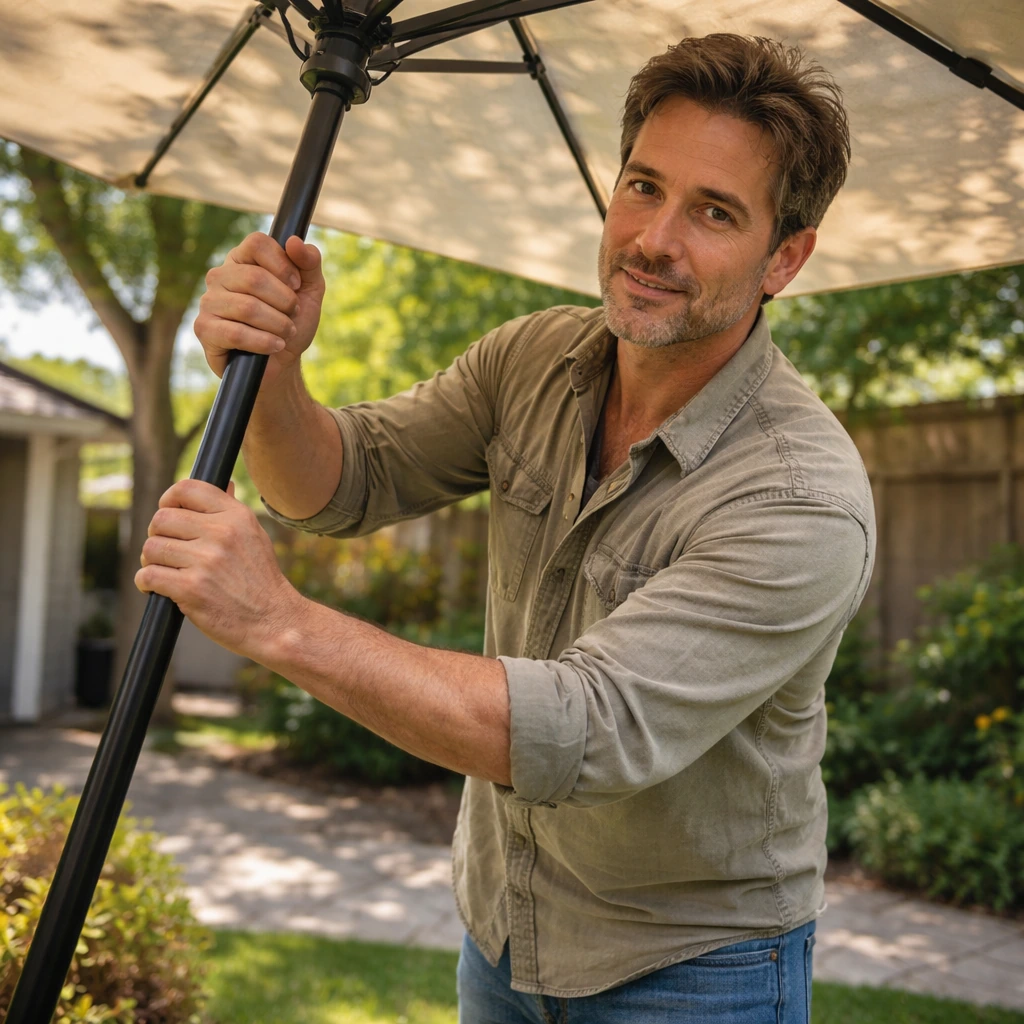
You should close your patio umbrella and bring it inside whenever you're not actively using it, especially before rain, wind, or freezing temperatures hit. If you are wondering whether you should leave your patio umbrella open or closed, the safest default is to close it whenever you are not actively using it should i leave my patio umbrella open or closed. Leaving it open and unattended outside is the single fastest way to wreck it: wind can shatter the ribs, rain soaks fabric that then grows mildew in storage, and repeated freeze-thaw cycles corrode the crank and tilt mechanism from the inside out. That said, "bringing it in" doesn't always mean hauling it to the garage every evening. A properly closed umbrella with a fitted cover, a solid base, and the right setup can safely stay outside through normal weather. The decision really comes down to conditions, your umbrella type, and how much you want it to last.
Should I Leave My Patio Umbrella Outside? Yes/No Guide
Leave it out or bring it in? Here's the quick answer
Close it any time you walk away from it. Every major umbrella manufacturer, including Treasure Garden and Hampton Bay, explicitly states that no umbrella should be left open and unattended, regardless of size or how heavy the base is. That is the non-negotiable rule. Beyond that, here's how to think through the rest of the decision:
| Condition | What to do | Why |
|---|---|---|
| Wind above 20–25 mph | Close and secure or bring inside | Open ribs act like a sail; one gust can snap them or flip the whole umbrella |
| Rain incoming | Close it before the storm | Wet fabric stored closed = mildew; wet fabric left open stretches and fades faster |
| Light overnight dew / calm night | Close it, leave it outside with cover | Low risk if closed and covered |
| Freezing temps | Bring indoors if possible | Water in the crank housing expands and cracks the mechanism |
| Extended time away (vacation, off-season) | Clean, dry fully, store indoors | Prevents mildew, UV degradation, and corrosion buildup |
| Cantilever umbrella in any wind | Close and lock before leaving | Offset canopies catch wind at a worse angle than center-post styles |
A Reddit user found this out the hard way when their umbrella shattered after being left open overnight in 45 mph winds. That's an extreme case, but the physics apply at much lower speeds too. The open canopy creates enormous leverage on the ribs and pole, and no base weight is enough to fully cancel that out.
What outdoor exposure actually does to your umbrella
What happens to the fabric
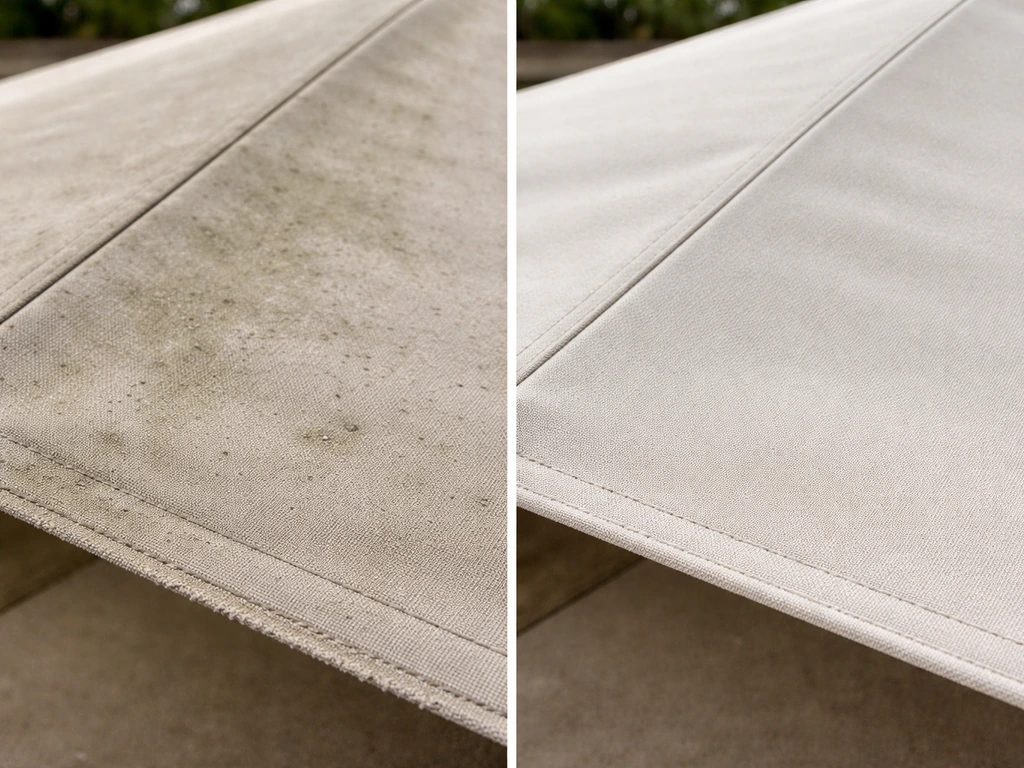
Even high-quality solution-dyed acrylic fabrics like Sunbrella are marketed as mildew-resistant, not mildew-proof. The distinction matters. Sunbrella explicitly states that while the fabric itself resists mold, dirt, debris, and prolonged wet exposure can still cause mildew to grow on the surface. In practical terms, if your umbrella closes wet and sits in a sleeve or cover without drying, you will find mildew spots within days during warm weather. UV exposure compounds the problem by breaking down the weave over time, which makes the fabric absorb more water and lose its water-repellent finish faster.
What happens to the frame and hardware
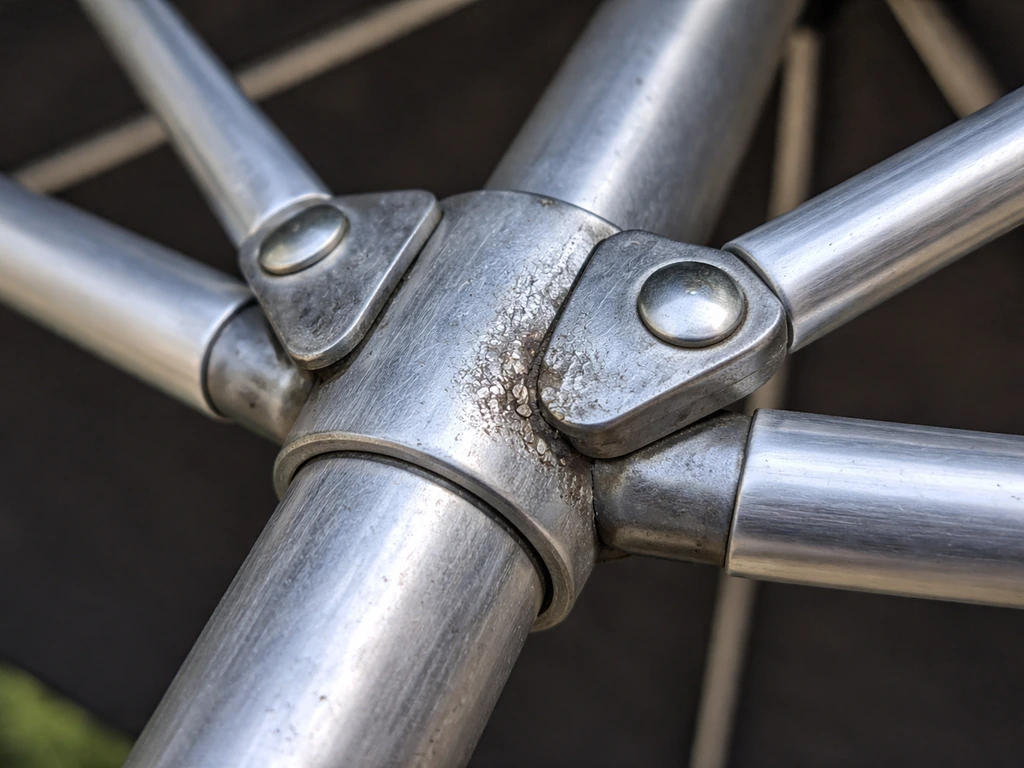
Aluminum poles and ribs don't rust the way steel does, but they're not invincible. When the protective anodized or powder-coated finish gets scratched or worn, the exposed aluminum can pit and corrode, especially in coastal or high-humidity environments. The bigger vulnerability is the crank housing, tilt pin, and cord pulley. These are often made of zinc alloy or steel components that live inside a relatively enclosed space. Water gets in, sits there, and either rusts metal parts or causes the grease to seize up. After a wet season left outside without care, a crank that once turned smoothly will start to grind or refuse to move at all.
How to store your patio umbrella the right way
Storing it wrong is almost as bad as leaving it outside. The most common mistake is folding a damp umbrella into its sleeve and calling it done. To store a patio umbrella in a garage, make sure it is fully dry before you fold it and keep it in a clean, dry spot away from direct moisture. Here's the full process that actually protects it:
- Close the umbrella fully and let it air out. If it's been rained on, leave it open in the sun (on a calm day) to dry completely before touching the storage sleeve. Sunbrella recommends allowing shade fabrics to air dry entirely before storage, and Reddit users who've dealt with shed mildew say "bone dry" is the only acceptable standard.
- Brush off loose debris. Use a soft-bristle brush to knock off any pollen, bird droppings, or leaf bits. Organic material left on the fabric is what feeds mildew during storage.
- Spot-clean any stains or mildew now, not later. Mix 1 cup bleach and 1/4 cup mild dish soap per gallon of water, apply to the affected area, let it sit for 15 minutes, then rinse thoroughly. If you use bleach, you'll need to retreat the fabric with a water repellency spray afterward (more on that in the troubleshooting section below).
- Rinse the entire canopy with clean water after cleaning. Soap residue left in the fabric can break down the finish over the off-season.
- Let the fabric dry completely in the sun before folding. Consumer Reports and Martha Stewart both emphasize this: closing a patio umbrella before it's fully dry promotes mold growth. Leave it open for several hours in direct sun if possible.
- Wipe the pole, crank, and hardware with a dry lint-free cloth. Pay attention to the crank housing and tilt joint. A quick spray of silicone lubricant on the crank gears now will save you a stuck mechanism in spring.
- Fold and slide into the storage sleeve or cover. Avoid plastic bags or fully sealed covers for indoor storage: Sunbrella notes that ventilation matters and insufficient airflow can be problematic even in a storage cover.
- Store indoors, ideally in a garage or dry shed. Standing it upright in a corner works fine for center-post styles. Cantilever umbrellas with offset arms store better laid flat or at a slight angle to avoid warping the arm joint.
If you have to leave it outside, here's how to protect it
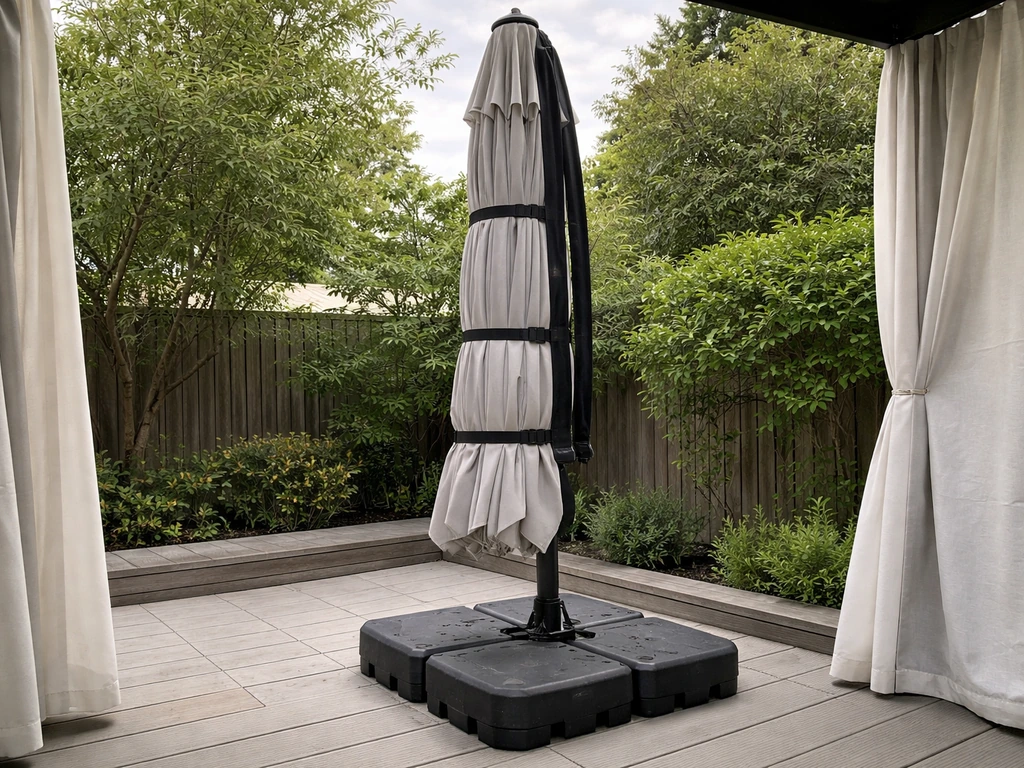
Sometimes hauling the umbrella indoors every few days just isn't realistic, especially with a large cantilever or a heavy market-style umbrella. You can leave it outside safely if you're deliberate about it.
Always close it first
This should be automatic. Before you go inside for the night, before you leave for work, before any weather comes through: close the umbrella. A closed umbrella has very little wind resistance. An open one becomes a lever arm working against every bolt and weld in the frame.
Use a proper umbrella cover
A fitted cover protects against UV degradation, bird droppings, and dust settling into the fabric folds. Look for covers with vents at the top: ventilation prevents condensation from building up inside, which is exactly what causes that musty smell when you open the umbrella in spring. Avoid cheap plastic covers that seal completely, since they trap moisture more than they block it.
Secure the base and the pole
Even a closed umbrella in a light base can tip over in wind. If your umbrella is a center-post style, make sure the base weighs at least 50 pounds for anything up to a 9-foot canopy. For 11-foot or larger canopies, you want 75 pounds or more. Cantilever umbrellas need even heavier bases because the offset arm creates more leverage. Some people add sandbags or secondary weight plates to the base during storm season. If you're leaving it outside in an area with regular wind, a bungee cord or Velcro strap tying the folded canopy to the pole is a simple extra precaution.
Protect the pole and hardware
If the umbrella is staying outside for weeks at a time, apply a light coat of silicone spray to the crank housing and tilt mechanism every month or so. This keeps water from penetrating and sitting against the metal parts. If your umbrella has a steel or iron base (rather than cast aluminum or resin), check the finish for chips and touch them up with rust-resistant paint before corrosion sets in.
Winterizing and wind-proofing before the off-season
Winter is the hardest test for a patio umbrella left outside. Can you leave a patio umbrella outside in winter? In most climates, you are better off bringing it indoors or at least keeping it away from freezing conditions patio umbrella left outside in winter. Hampton Bay's official manual specifically warns to keep umbrellas away from freezing conditions, rain, hail, sleet, snow, and high wind, so if you're in a climate that sees any of those regularly, the umbrella belongs indoors from late fall through early spring.
Winterizing the mechanism
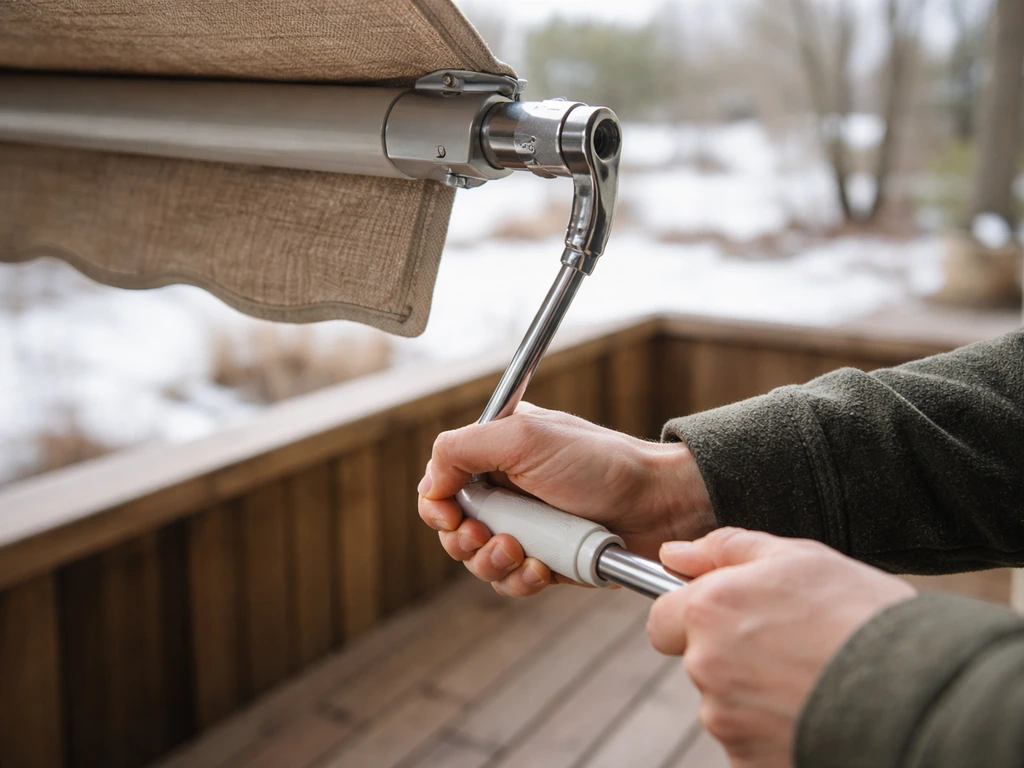
Before you store it for winter, work the crank open and closed several times to loosen any existing stiffness. By following the right winter storage steps, you can prevent mildew, corrosion, and crank stiffness when cold weather arrives how to store patio umbrella for winter. Then spray silicone lubricant into the crank housing, work it again, and wipe away any excess. Do the same for the tilt joint. This displaces any water that's gotten in and coats the moving parts before they sit idle for months. Silicone is the right choice here because it doesn't attract dirt the way petroleum-based lubricants do and it stays effective in cold temperatures.
Winterizing the fabric
Sunbrella specifically recommends letting your shade structure air dry completely after cleaning before the winter months begin. If you are wondering whether you can put a patio umbrella in the washing machine, in most cases you should not, and gentle cleaning plus complete air-drying is safer for the fabric and hardware can you put a patio umbrella in the washing machine. If you used bleach in your end-of-season cleaning, apply a fabric water repellency treatment (like 303 Fabric Guard or a similar fluoropolymer spray) in a well-ventilated outdoor area. This restores the water-shedding finish that bleach removes, so the fabric is protected from the start of next season.
If you absolutely cannot bring it indoors
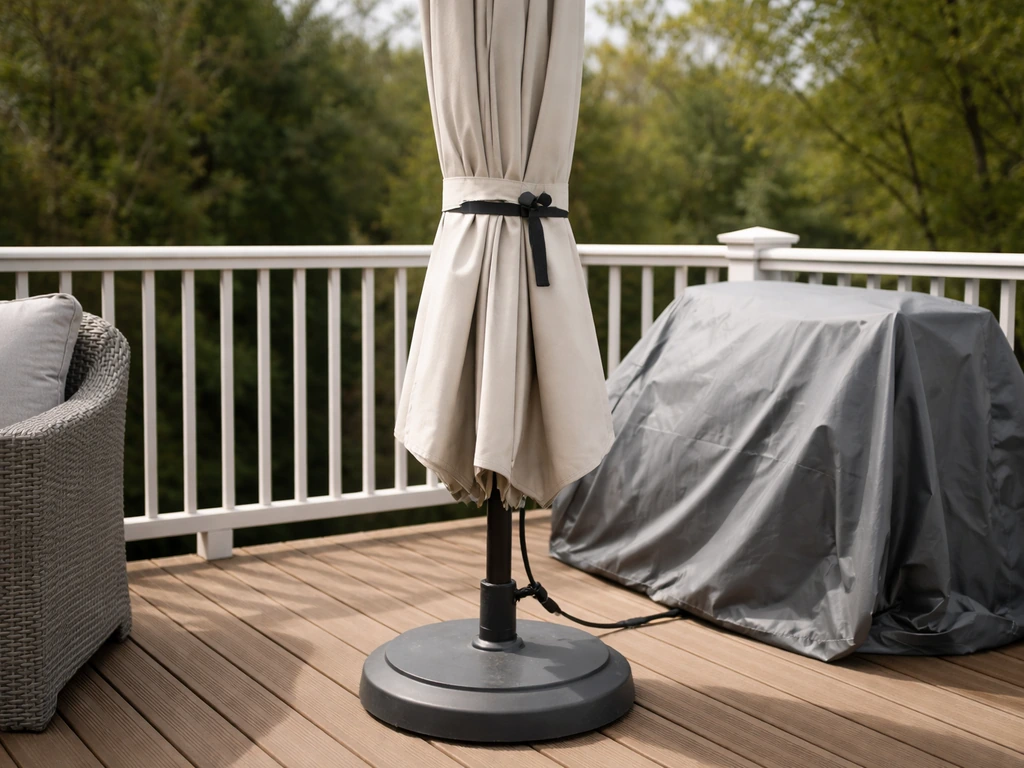
Use a heavy-duty, vented outdoor umbrella cover rated for UV and water resistance. Close the umbrella completely, secure the canopy with the built-in tie straps if your model has them, put the cover on, and weigh down or stake the bottom of the cover so it doesn't act as a wind sail itself. Check on it after any significant storm and remove standing water from the cover immediately. Even in this scenario, consider at least moving it to a covered porch or under an overhang to reduce direct snow and ice load.
Troubleshooting after outdoor exposure
Mildew spots on the fabric
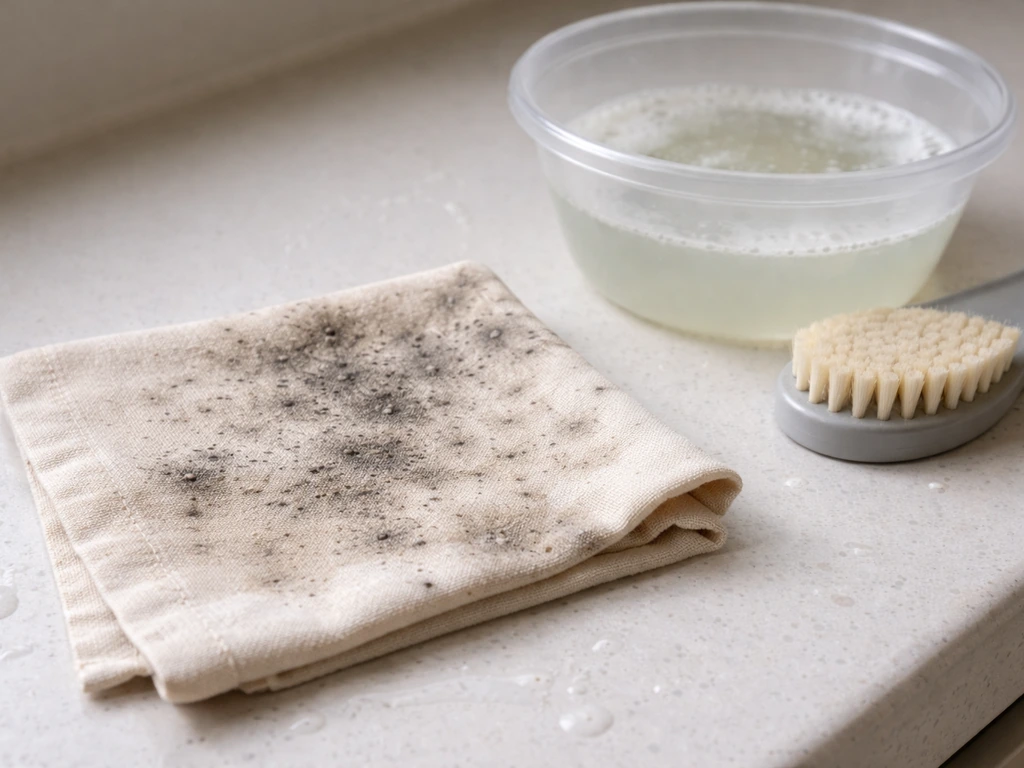
This is the most common problem after a wet season or improper storage. If you see dark spots or smell mustiness, mix 1 cup of bleach with 1/4 cup of mild soap per gallon of water. Apply the solution to the affected areas with a soft brush, let it sit for 15 minutes, then rinse very thoroughly with clean water. Let the canopy dry completely in the sun before folding or covering it. For Sunbrella or similar acrylic fabrics, follow up with a water repellency retreatment since bleach temporarily reduces the fabric's resistance. For stubborn mildew that doesn't respond to one treatment, repeat the process rather than scrubbing harder, which can damage the weave.
Crank that won't turn or grinds
A stiff or seized crank after outdoor exposure is almost always caused by rust, dried lubricant residue, or debris packed into the housing. Start simple: spray a silicone-based lubricant (not WD-40, which evaporates and leaves residue) directly into the crank housing socket, then work the handle back and forth slowly. If it starts to move but grinds, apply more lubricant and keep working it. If you can access the inside of the crank mechanism by removing a cover cap or pole section, wipe out any old dried grease or debris first with a dry cloth, then apply fresh lubricant before reassembling. Engineer Fix also recommends wiping away old dried lubricant and debris before applying a silicone-based spray or a light water-resistant lithium grease to crank-related metal parts wipe out any old dried grease or debris first with a dry cloth. For crank mechanisms that are completely frozen, light water-resistant lithium grease worked into the gear is a step up from silicone spray for stubborn cases. Give it 10 minutes to penetrate before forcing the handle.
Tilt mechanism stuck or won't lock
The tilt button or collar usually sticks because the spring inside the joint has corroded or the pin is swollen with rust. Press and release the tilt button repeatedly while applying silicone spray around the joint. Work the canopy up and down gently while doing this. If the tilt is a collar-style (you twist a collar on the pole to set the angle), unscrew it fully, wipe the threads clean, apply a thin film of silicone, and reassemble. Avoid forcing the tilt mechanism hard in either direction: the bracket that holds the tilt joint to the pole can crack under torque, and that's a harder repair.
Waterlogged or stretched canopy
If the canopy has been sitting open in the rain for a long time, the fabric may look saggy or distorted when dry. Open the umbrella fully in dry conditions and let it bake in direct sun for a full day. Most woven acrylic fabrics will tighten back up as they dry. If the sagging is concentrated around seams, that area may have stretched beyond recovery, and a canopy replacement may eventually be necessary. But try the full dry-out first: you'd be surprised how much recovers with just heat and time.
Pitting or corrosion on the pole
Light surface corrosion on an aluminum pole can be addressed with a fine (0000) steel wool or a non-abrasive metal polish, followed by a coat of car wax to protect the surface going forward. If the corrosion is deep pitting or affects the structural integrity of the pole (visible holes, deep gouges, or obvious weakening at the joints), replacement of the affected section is the safer call rather than trying to patch over it.
FAQ
Is it okay to leave my patio umbrella outside overnight if I close it first?
If the umbrella is closed and under a proper, vented cover, short periods outside during light weather are usually fine, but you should still check it after storms to remove any standing water on top of the cover (water can leak through seams and cause mildew even when the canopy is closed).
How can I tell if my umbrella cover is actually helping or making moisture worse?
A good test is whether water can drain and air can circulate. If the cover is fully sealed and the canopy stays damp inside, condensation will form and mildew risk goes up, so prioritize a vented cover and a cover tight enough that it cannot billow.
What should I do if my umbrella is wet but I can’t bring it indoors immediately?
If your umbrella got soaked and you can’t bring it inside right away, close it only after shaking off excess water, then open it briefly in dry weather to air out before fully covering it again. If it stays closed while damp for days, expect mildew spots even on mildew-resistant fabrics.
My umbrella stays closed outside but tips in wind, what does that mean for safety and wear?
Don’t rely on the base alone. If you notice the umbrella creeping, leaning, or the fabric strap slipping in wind, you need more weight, a better anchor, or tighter securing, because tipping can also bend the tilt or crank components over time.
Can I use a pressure washer to clean an outdoor patio umbrella before storage?
Don’t use a pressure washer on the canopy or seams, it can drive water and dirt deeper and increase mildew chances later. Gentle rinsing and complete air-drying are safer, and any cleaning should be followed by water-repellency retreatment if you used bleach.
If I store my closed umbrella in a shed or garage, does it count as “indoors” for winter protection?
Yes, but only if the storage location stays above freezing and stays dry. If your storage area can get below freezing, the umbrella can still experience freeze-thaw stress on the crank, tilt joints, and mechanism internals.
How often should I inspect and re-treat a patio umbrella that I leave outside for weeks?
For long stretches outside, check the crank and tilt access points for early rust, listen for grinding when you operate it, and confirm the fabric can dry fully after rain. A simple monthly silicone treatment on moving metal parts helps, but the real goal is preventing water from sitting inside housings.
What’s the best first step if my crank won’t open smoothly after being outside?
If the crank feels stiff, you can apply silicone spray and work it gently without disassembling at first. Avoid forcing the handle hard, forcing can deform internal brackets, and if it’s completely frozen you may need to wipe out old residue before re-lubing.
When should I replace a corroded aluminum umbrella pole instead of trying to clean it?
Visible bubbling, deep pitting, or structural weakening at pole joints is the point where repair is not reliable. Light surface corrosion can be polished and protected, but once corrosion affects integrity, replacing the affected section is typically safer.
Are tie straps and bungee cords safe to use, or can they damage the canopy?
If you’re using straps, bungee cords, or tie-downs, confirm they are securing the folded canopy to the pole, not cinching the fabric too tightly into sharp creases. Over-tight straps can damage seams or cause permanent wrinkles that then hold water longer.
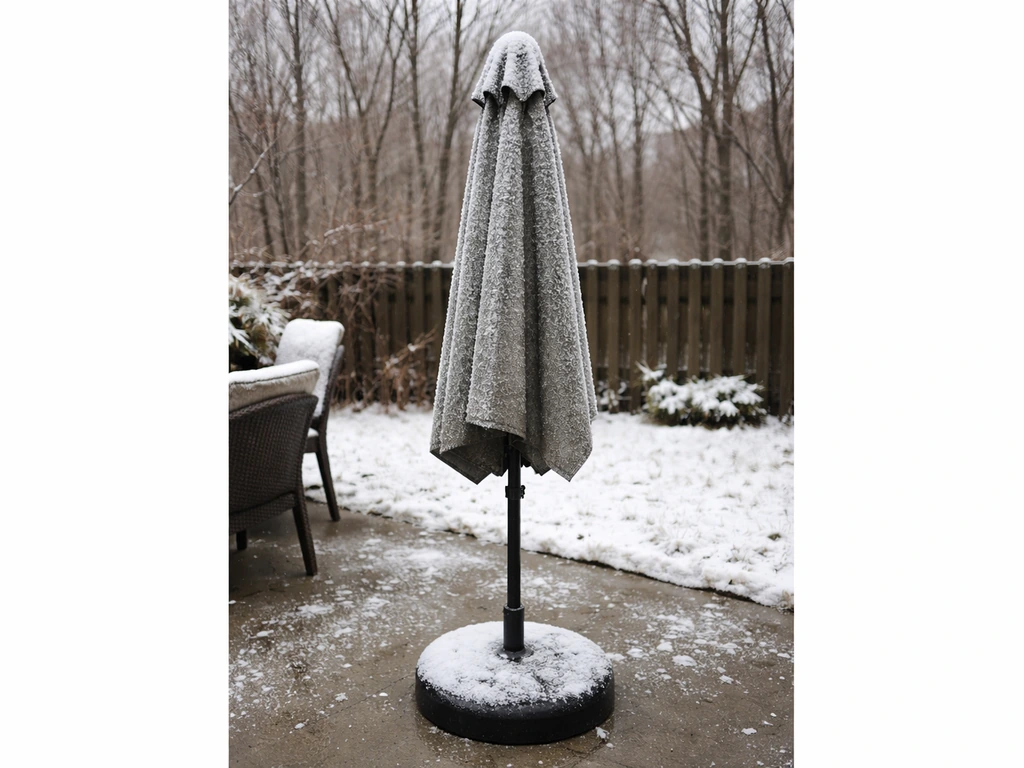
Learn when you can leave a patio umbrella outside in winter and how to prep, protect, and fix it before spring.
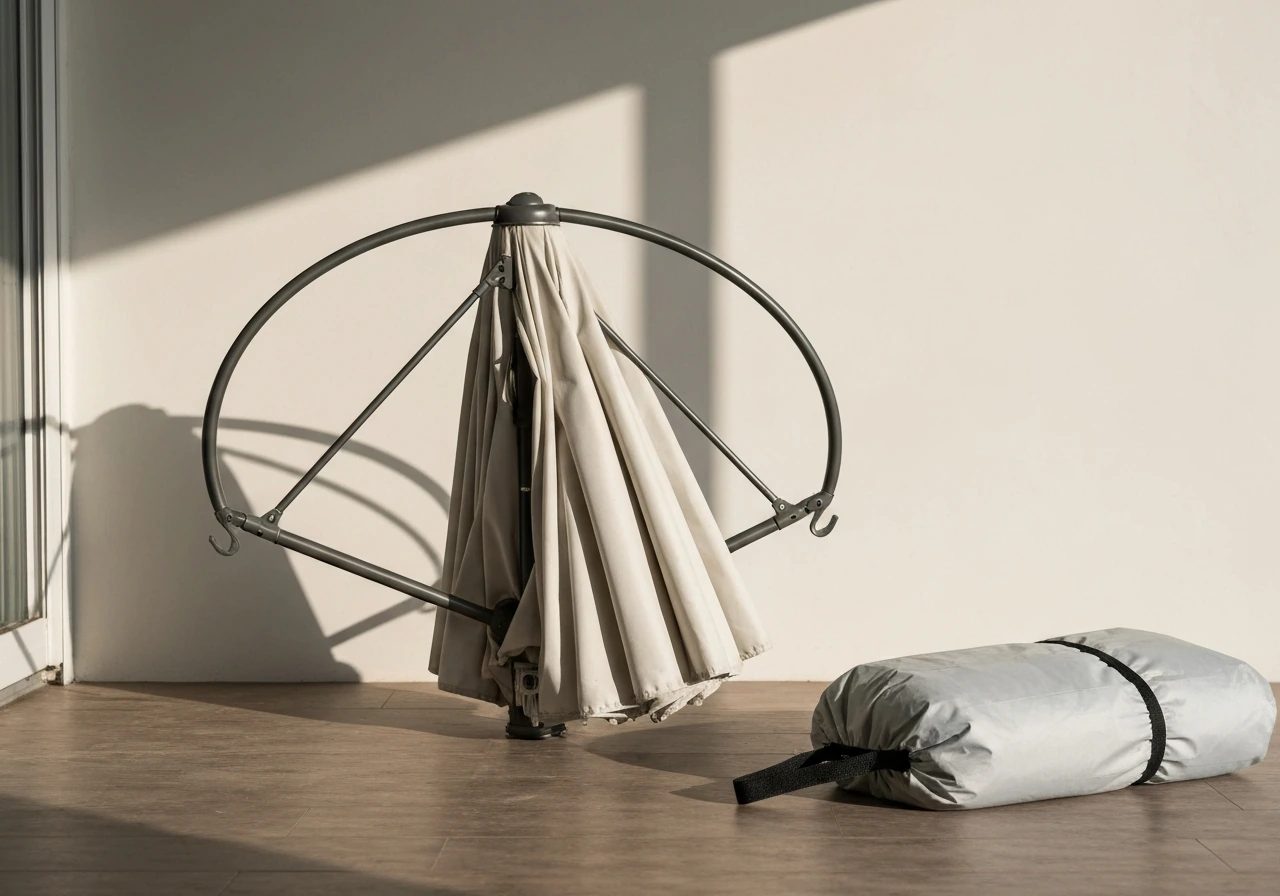
Step-by-step winter storage to keep patio umbrella fabric, frame, and crank mechanisms safe from moisture, rust, and mil
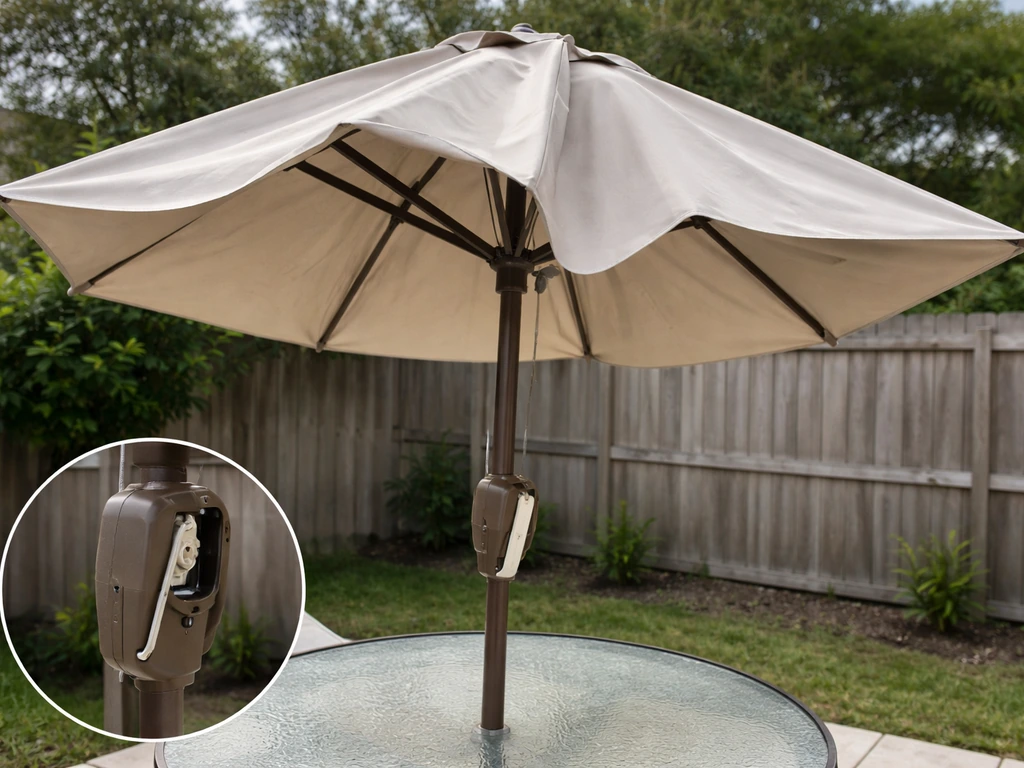
Step-by-step fixes for patio umbrellas that won’t open or close, with checks for jams, cords, latches, and lubricating t