If your patio umbrella looks washed out and sad, you have three real options: deep-clean and restore it with a fabric protector, re-dye it a new color, or replace just the canopy. Most umbrellas that look faded can be dramatically improved with one of the first two approaches, especially if the fabric is still intact and the frame is solid. The key is figuring out which path makes sense before you buy anything.
What to Do With a Faded Patio Umbrella: Fix or Dye It
Luca Morrison
12 Jun 2026
Why patio umbrellas fade and how to tell what you're dealing with
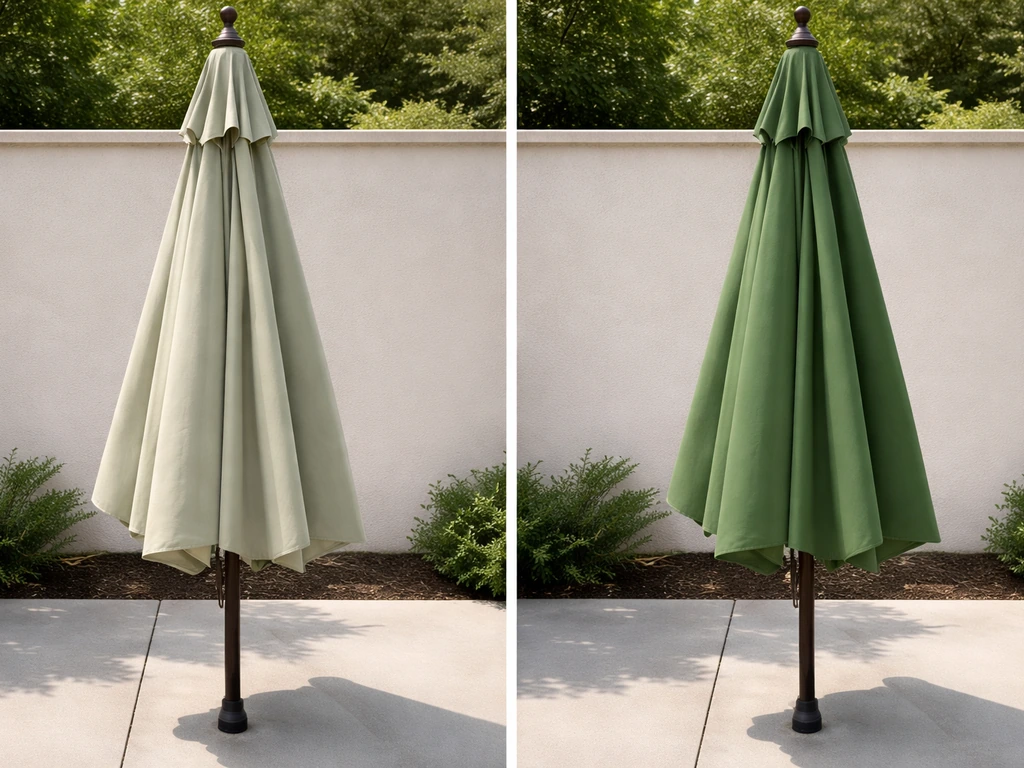
Fading happens for a few different reasons, and the cause matters because it changes what will actually fix it. UV exposure is the biggest culprit. The sun breaks down the dye molecules in outdoor fabric over time, and no fabric is completely immune. Even Sunbrella, which is solution-dyed (meaning the color goes all the way through the fiber, not just on the surface), will fade after years of direct sun. Cheaper polyester canopies fade faster, often within a single season.
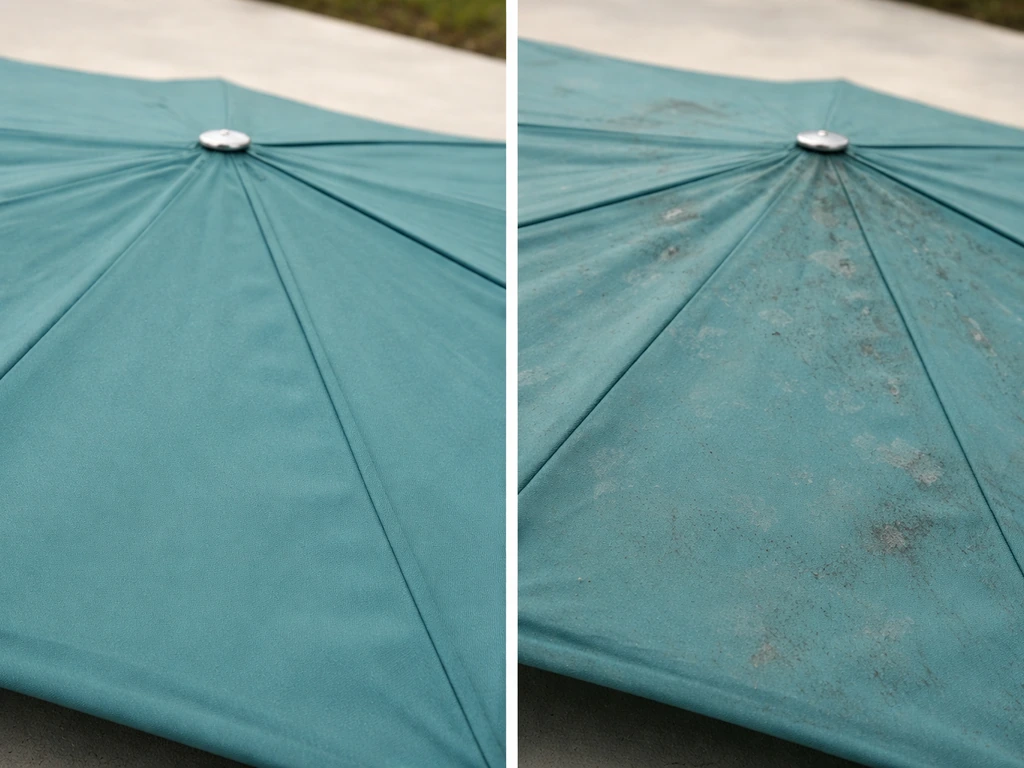
The second cause is surface buildup. Dust, pollution, bird droppings, tree sap, and mildew sit on the fabric and create a gray or dingy cast that looks like fading but is actually just dirt. This kind of 'fading' cleans right off. A third cause is loss of water repellency: once the DWR (durable water repellent) finish wears down, water soaks in instead of beading off, and that makes the fabric look darker and duller even when it's dry.
To figure out what you're dealing with, do a quick inspection. Rub a damp white cloth across a section of the canopy. If it picks up significant brown or gray residue, you have surface buildup. Hold the canopy up to the light and look for thin spots, brittleness, or areas where the weave looks worn through.
If the fabric crinkles like paper or the fibers feel stiff and fragile, the UV degradation is deep and no amount of dye or protector will save it. Check for mildew by looking for black or dark gray spots, often in the seams and folds. Finally, check the color: is it evenly faded across the whole canopy, or just in the spots that get the most direct sun?
Uneven fading usually means the fabric still has some dye left to work with.
Quick assessment: can it be restored or should it be replaced
Before doing anything else, make an honest call on whether this umbrella is worth restoring. Restoration takes a few hours of real effort and some supplies. If the canopy is in rough shape, you might be better off buying a replacement canopy (if your frame is still solid) rather than putting time into fabric that won't hold up.
| What you see | What it means | Best move |
|---|---|---|
| Dull color, slightly dingy overall | Surface buildup or lost DWR finish | Deep clean plus fabric protector |
| Even, lighter color across the whole canopy | True UV fading, fabric still intact | Re-dye or accept the current look with a protector refresh |
| Mildew spots in seams and folds | Mildew that may have damaged fibers | Clean first, then assess — mild mildew is fixable |
| Holes, tears, or frayed edges | Physical fabric damage | Repair tears before dyeing, or replace if extensive |
| Brittle, papery, or cracking fabric | Deep UV degradation | Replace the canopy — dye won't fix structural breakdown |
| Frame bent, broken ribs, or stuck mechanism | Mechanical issue, not a fabric issue | Fix the frame first, then address the canopy |
If the frame opens and closes smoothly (or you can fix it), the ribs are intact, and the fabric passes the light and flex test, you have a good candidate for restoration or re-dyeing. If you're on the fence about the fabric, err toward re-dyeing: the process forces a deep clean first anyway, so worst case you've thoroughly cleaned an umbrella before deciding to replace the canopy.
Cleaning and deep prep before any restoration or dyeing
This step is non-negotiable. Skipping it or rushing it is the number one reason dye jobs come out blotchy and protectors don't adhere properly. Dirt, oils, sunscreen residue, and mildew all block penetration. The canopy needs to be genuinely clean before anything else touches it.
If your umbrella has a removable canopy, take it off the frame. Most canopies attach with a sleeve that slides over the pole and ties or clips onto the ribs. Removing it makes cleaning much easier and protects the frame from dye and chemicals. Keep track of how the canopy attaches so reinstallation is straightforward.
For general dirt and grime
- Shake or brush off loose debris first.
- Mix a solution of mild dish soap and warm water in a bucket.
- Use a soft-bristle brush to scrub the entire canopy, working in sections. Pay extra attention to seams, folds, and the underside — these trap the most dirt.
- Rinse thoroughly with a garden hose. Soap residue left in the fabric will interfere with dye and protector.
- Pat down with a dry lint-free cloth, then let the canopy air dry completely in the sun before moving to the next step. Completely dry means hours, not minutes — damp fabric will cause dye to blotch badly.
For mildew stains
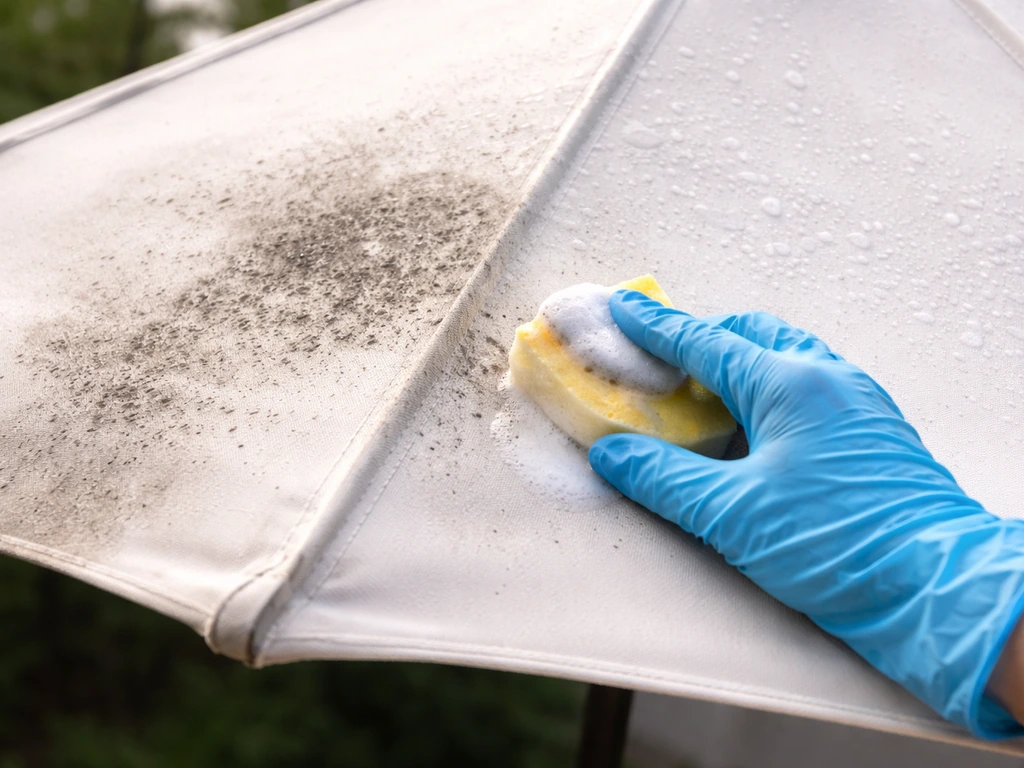
Mildew needs a different approach. Mix 1 cup of bleach and 1/4 cup of mild soap per gallon of water (this is the Sunbrella-recommended ratio for mildew removal on their fabric; for other fabrics it works similarly). Apply the solution to the affected areas and blank" rel="noopener noreferrer">let it soak in for 15 minutes. Scrub with a soft brush, then rinse very thoroughly and allow to dry completely in the sun. Do not skip the sun-drying step: it helps finish the mildew-killing process and lets you see whether the spots are actually gone before you move forward.
If you have existing stains from spills or sap, blot rather than scrub: scrubbing spreads the stain into more fibers and makes it harder to cover later with dye. Use a mild stain remover and blot from the outside of the stain inward.
Dyeing a faded patio umbrella: supplies, color choice, and step-by-step process
Dyeing is the most dramatic fix you can do short of replacing the canopy. Done right, it takes an umbrella that looks tired and turns it into something that looks genuinely new. Done wrong, you get blotches. Here's how to do it right. If you want a smoother result, follow the full process for how to paint a patio umbrella, from prep through sealing how to do it right. For the exact supplies and step-by-step details, follow this guide on how to dye patio umbrella fabric.
Supplies you'll need
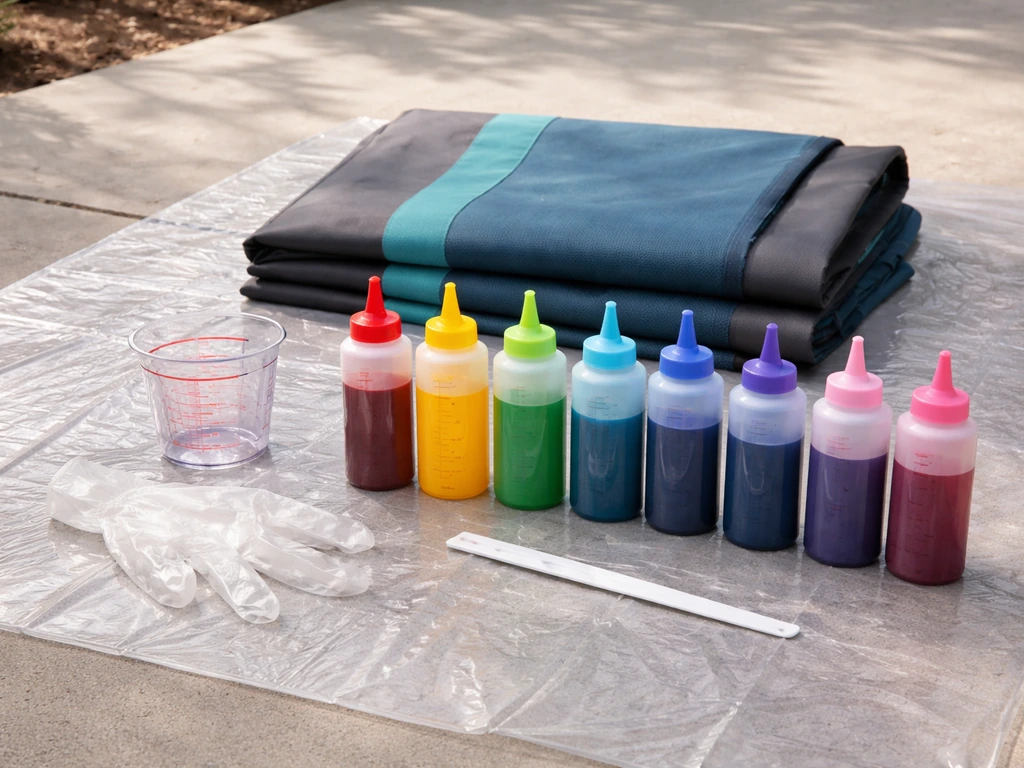
- Fabric dye rated for synthetic outdoor fabric (Rit DyeMore for synthetic fabrics works for polyester canopies; Rit All-Purpose works for cotton/canvas blends — check your canopy's care tag)
- A large plastic tub, kiddie pool, or clean trash can big enough to submerge the canopy
- Rubber gloves (the heavy kind, not thin latex)
- Plastic sheeting or drop cloths to protect your work surface and surrounding area
- Measuring cups and a stirring stick
- Mild dish soap for the pre-rinse
- Clean water source (outdoor hose works well)
- Fixative (Rit ColorStay Dye Fixative helps color last longer on synthetics)
- Optional: a sponge brush or foam roller for spot application if you're not doing a full submersion dye
Choosing a color
Go darker, not lighter. Dye adds color on top of what's already there, so you cannot dye a dark navy canopy into a light beige. You can go from faded red to deep red, or from washed-out beige to a rich tan or brown. Going with a darker shade of the original color is the most reliable approach and tends to look the most natural. If you want a completely new color, choose something significantly darker than what you have now. Black, navy, forest green, and deep burgundy are forgiving and easy to apply evenly.
One practical note: if your canopy is Sunbrella or another solution-dyed acrylic, it won't take standard fabric dye well. Solution-dyed acrylic fibers resist dye by design. For those canopies, your best options are a thorough clean plus a UV-blocking fabric protector (which can partially restore vibrancy) or replacing the canopy. Standard polyester and polyester-cotton blend canopies take dye much more readily.
Step-by-step dyeing process
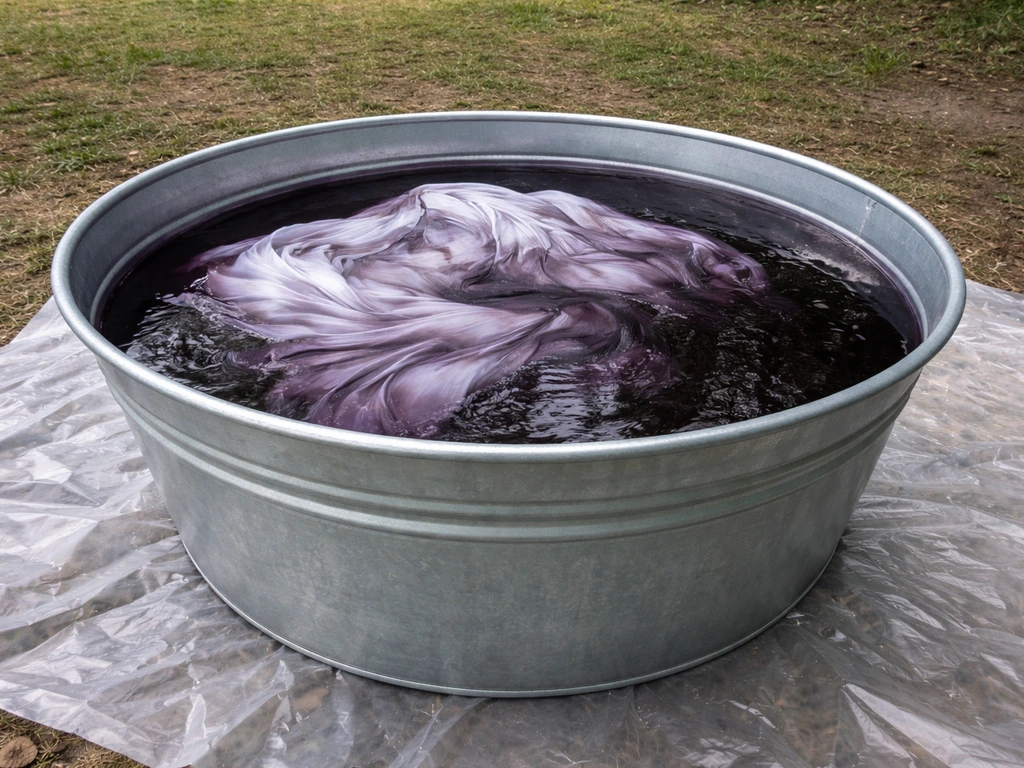
- Set up your work area outdoors on a flat surface covered with plastic sheeting. Dye stains concrete and wood permanently.
- Fill your tub with enough hot water to fully submerge the canopy. The hotter the water, the better the dye penetrates — aim for water hot enough that it steams.
- Mix in the dye according to the package instructions. As a general rule, one bottle of Rit DyeMore handles about 2 pounds of dry fabric. Most patio canopies fall in the 1-3 pound range depending on size.
- Add a small squirt of dish soap to the dye bath. This acts as a surfactant and helps dye penetrate the fabric evenly.
- Wet the canopy thoroughly with plain water before submerging it in the dye bath. A wet canopy absorbs dye far more evenly than a dry one.
- Submerge the canopy fully and stir continuously for the first 10 minutes. This is the most important step for avoiding blotches: keep it moving.
- Continue stirring or agitating every 2-3 minutes for a total soak time of 30-60 minutes. The longer you leave it, the deeper the color.
- Remove the canopy and rinse in warm water, gradually cooling the rinse water until it runs clear. Do not wring or twist — squeeze gently to avoid creasing.
- If using a fixative, mix it per instructions and soak the rinsed canopy for another 20 minutes, then rinse again.
- Hang the canopy to air dry completely in the shade (not direct sun while wet — direct sun can cause uneven drying and streaking during this phase).
- Once completely dry, reinstall on the frame. Open and close the umbrella a few times to make sure the canopy moves freely and isn't stiff.
Spot dyeing vs. full submersion
If your canopy is too large to submerge or you're dealing with a particularly faded section rather than all-over fading, you can apply dye with a sponge brush or foam roller. Mix the dye slightly stronger than the package instructions suggest, then apply in smooth, overlapping strokes, working from one edge to the other. Feather the edges into the less-faded areas to avoid a hard line. This approach works but requires a steadier hand and more patience to get an even result.
Troubleshooting dye issues (uneven color, blotches, fading back)
Even with good technique, things sometimes go sideways. Here are the most common problems and how to fix them.
Blotchy or uneven color
This almost always means the canopy wasn't wet enough before going into the dye bath, wasn't agitated enough during the first 10 minutes, or had residual soap or grease from incomplete cleaning. The fix: run another dye bath with the same color, make sure the canopy is thoroughly pre-wetted, and stir constantly for the first 15 minutes. A second pass at a slightly cooler temperature will even things out in most cases.
Seams and edges came out darker
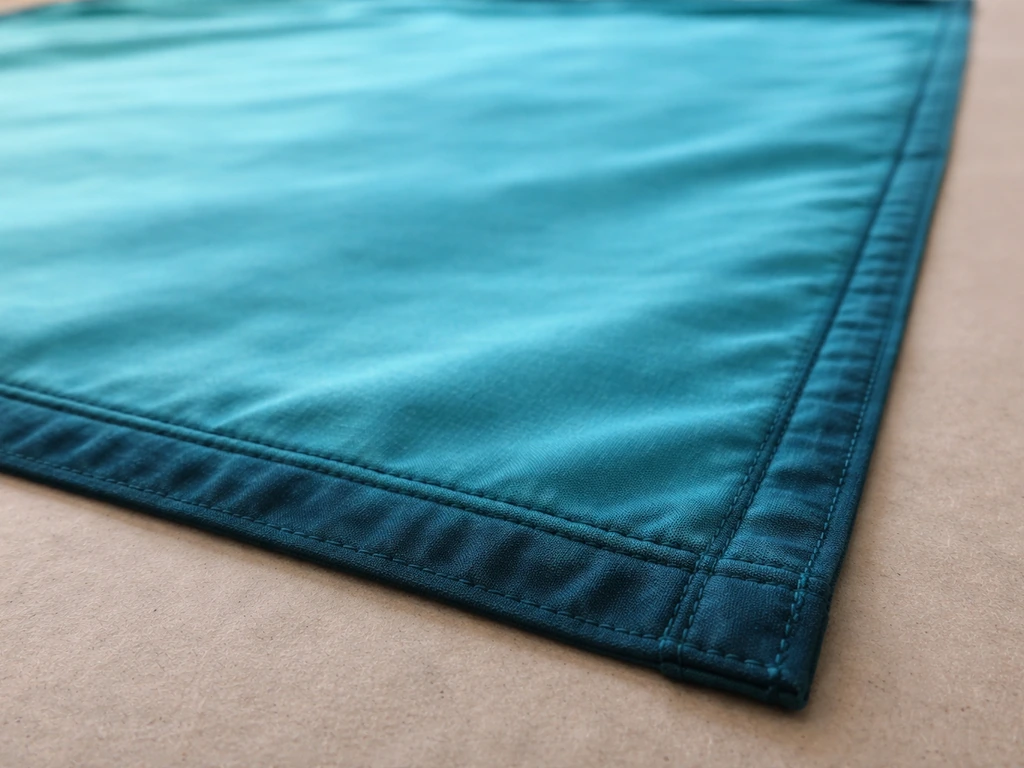
Seams and hems are thicker, so they absorb more dye. This is common and can look natural (like stitching detail) or look messy depending on the color contrast. To minimize it, make sure those areas are moving freely in the bath rather than folded on themselves. If you're spot-dyeing, use less dye on seam areas or dilute the mix slightly before applying there.
The canopy barely took any color
If the dye didn't visibly change the color, the fabric is likely solution-dyed acrylic (like Sunbrella), a very tightly woven synthetic, or has a finish or coating that's blocking penetration. Check the care tag if you still have it. If it says 100% solution-dyed acrylic, standard dye won't work. At this point, your options are fabric paint (which sits on top of the fiber rather than penetrating it) or replacing the canopy. Fabric paint applied with a foam roller in thin, even coats can actually look quite good and is worth trying before buying a new canopy.
Color fades after one or two weeks
Fast fading usually means the dye didn't fully set, or you skipped the fixative step. Re-dye, use hot water, extend the soak time to 60 minutes, and use a dye fixative. Also make sure you rinse until the water runs completely clear: residual loose dye that wasn't fixed will wash out quickly with rain or morning dew.
When to stop and just replace the canopy
If you've done two dye attempts and the result still looks patchy, or if the fabric is starting to show the brittleness and cracking mentioned in the assessment step, replacement is the right call. Most major umbrella brands sell replacement canopies separately, and it's significantly cheaper than buying a whole new umbrella if the frame is still solid. Measure your umbrella's diameter and note the pole diameter and rib count before ordering.
Post-restoration care and seasonal maintenance to prevent repeat fading
Once the canopy looks good again, keep it that way. To keep your patio umbrella looking great, focus on post-clean drying, UV protection, and regular seasonal maintenance. The single most effective thing you can do is apply a UV-blocking fabric protector right after the canopy is fully dry from the dye process.
If you want extra rain resistance, apply a waterproofing fabric protector technique right after the canopy dries so water beads and runs off longer apply a UV-blocking fabric protector. Products like 303 Fabric Guard or Sunbrella Restore Fabric Protector and Repellent refresh both the UV inhibitors and the water-repellent finish that wears down over time. Both of these are spray-on applications: lay the canopy flat or hang it up, spray evenly in overlapping passes, let it dry completely.
Reapply once a season or whenever you notice water soaking into the fabric instead of beading off.
Beyond the protector, a few habits will dramatically extend how long the canopy holds its color. Close the umbrella when you're not outside, especially during the hottest midday hours when UV intensity peaks. Even a few hours of direct sun every day adds up fast over a summer. Rinse the canopy with a hose monthly to remove dust and bird droppings before they build up and degrade the fabric finish.
When you clean it, let it dry fully in the open position before closing and storing, trapping moisture accelerates mildew. After you clean the umbrella, [dry it using a dry, lint-free cloth](https://images. thdstatic. com/catalog/pdfImages/29/29e6561a-8be7-43c4-8e57-d23a8bd03464.
pdf), and retailers recommend doing this at least monthly to help remove dust before it builds up. At the end of the season, clean thoroughly, let it dry completely, and store the canopy either still on the frame in a protective cover or removed and stored in a breathable bag.
If you want to go deeper on prevention, the topic of how to keep a patio umbrella from fading is worth its own attention, including shade positioning and seasonal storage strategies. And if waterproofing the canopy after cleaning is your main concern, there are specific application techniques that make the protector last longer.
Optional fixes while you're at it: canopy tears, mildew damage, and safe handling
Since you already have the canopy off the frame for cleaning and dyeing, this is a good time to deal with any small tears or worn spots. Small tears of under an inch can be repaired with clear outdoor fabric repair tape or an iron-on nylon patch applied to the underside. Make the patch at least an inch larger than the tear in all directions. For tears in seams, a curved needle and UV-resistant nylon thread work well for hand stitching. Do all repairs before dyeing so the patch takes the same color as the rest of the canopy.
If you found mildew during cleaning and the spots are still visible after the bleach treatment, that usually means the mildew has stained the fibers rather than just sitting on top of them. Deep mildew staining won't fully clean out, but dyeing over it with a dark color will hide it effectively. If the mildew has actually weakened the fabric (you'll notice the area feels thin or tears easily when flexed), that section needs a patch before dyeing.
One thing people often overlook: while the canopy is off, check the frame. Wipe down the ribs with a damp cloth, inspect the tilt mechanism and crank if your umbrella has them, and add a tiny amount of silicone-based lubricant to any pivot points that feel stiff. Reinstalling a freshly dyed canopy on a frame with a stuck tilt or grinding crank just creates a new frustration. Five minutes on the frame now saves you a problem later.
When reinstalling the canopy, do it in the closed position if possible to avoid stressing the fabric as you thread the sleeve over the pole. Once it's on, open it slowly and check that all the ribs seat correctly and the canopy hangs evenly. An uneven hang usually means one rib tie or clip isn't seated, which is easy to fix before you walk away and forget about it.
FAQ
Is it possible to tell the difference between real color fade and color loss from a coated fabric before I start cleaning or dyeing?
Yes. After a thorough wash, if the color looks noticeably closer to the original and brightens uniformly, it was likely dirt, mildew staining, or loss of water repellency. If the color remains evenly washed out across the whole canopy, especially on solution-dyed acrylic, plan for UV protector or canopy replacement, because standard dye may not penetrate or may not show up.
Can I dye only one faded section of my umbrella instead of the whole canopy?
You can, but the most common problem is a hard boundary line because dyed and undyed areas absorb at different rates. If you spot-dye, blend by feathering at the edges and extend dye slightly into the less-faded zone. For best results, match the darker “forgiving” approach and consider fabric paint for very small areas where blending is critical.
What temperature and water conditions should I use for dyeing, especially if the dye results were patchy last time?
Use hot water as directed by the dye product, then keep the dye bath consistent. Patchiness often shows up when the fabric isn’t evenly pre-wetted or when agitation is minimal during the first part of the soak. If you’re redoing it, pre-wet completely and stir or agitate constantly for the first 10 to 15 minutes to ensure uniform saturation.
Do I need to remove the canopy ties and clips, or can I dye with everything attached to the frame?
For an even job, remove the canopy so the fabric can be fully soaked and moved freely during dye. Leaving it attached makes it harder to clean and agitates unevenly, which increases blotches and can also contaminate the frame with dye or mildew remover.
What should I do if dye still looks uneven even after I re-dyed once?
Stop chasing it after a second failed attempt and switch strategies. If the canopy is solution-dyed acrylic or heavily coated, standard dye may never take consistently. At that point, try a fabric paint approach (thin, even foam roller coats) for patch concealment, or replace the canopy if the fabric is also starting to feel brittle or thin.
Can I use bleach or oxygen cleaners on any patio umbrella fabric before dyeing?
Only if you confirm compatibility with your canopy material. Bleach can be too aggressive for some weaves and can weaken fabric over time, especially if it’s already near brittle. For mildew, stick to the specific bleach-to-soap ratio you’ll use for treatment, then rinse very thoroughly and dry fully before dyeing so residue does not block penetration.
How do I clean bird droppings or tree sap without making the stain harder to hide?
Remove the debris first, then blot the area rather than scrubbing. Scrubbing can drive sap or organic stains deeper into the fibers and make dye coverage patchier. Use gentle stain remover and blot from the outside of the spot inward, then rinse and dry completely before any dye or protector.
Will a UV fabric protector fix faded color by itself, or is dye or replacement still needed?
A protector can help slow further fading and may restore some vibrancy if the fabric is just losing water repellency or has light surface dullness. It won’t reverse sun-driven loss of dye in solution-dyed fabrics or deeply UV-broken fibers. If the canopy still looks uniformly washed out after cleaning, plan for re-dye (if compatible) or canopy replacement.
Can I dye over mildew stains, and how do I know whether they are likely surface-only or deep?
If the spots disappear after the mildew treatment and drying, they were likely surface-related. If dark areas remain after bleach treatment, the mildew often stained the fibers. In that case, dyeing can hide it better with a darker color, but severely weakened fabric may require patching or replacement before dyeing.
What’s the safest way to repair small tears before dyeing, and do patches need to match the color?
Repair first, then dye. Use a patch or outdoor tape sized at least about an inch beyond the tear in all directions, and stitch tears in seams with UV-resistant thread if you have to. After the patch is secure, dye the whole canopy so the new material and the surrounding fabric finish in the same color tone.
Should I reapply waterproofing as well as UV protection after dyeing?
If your main goal is color longevity and better water behavior, yes, but sequence matters: apply the UV-blocking protector first after the canopy is fully dry, then apply waterproofing after that if you want stronger beading. Reapply seasonally or whenever water stops beading and begins soaking in.
How long should I wait before opening or closing the umbrella after dyeing or protector application?
Wait until the fabric is fully dry. For dye jobs, incomplete drying can trap moisture in folds and seams, increasing mildew risk and causing uneven drying-related spotting. For spray protectors and waterproofing, follow the product’s dry time, then leave the canopy flat or hung until the spray feels fully cured, not tacky.
Next Articles
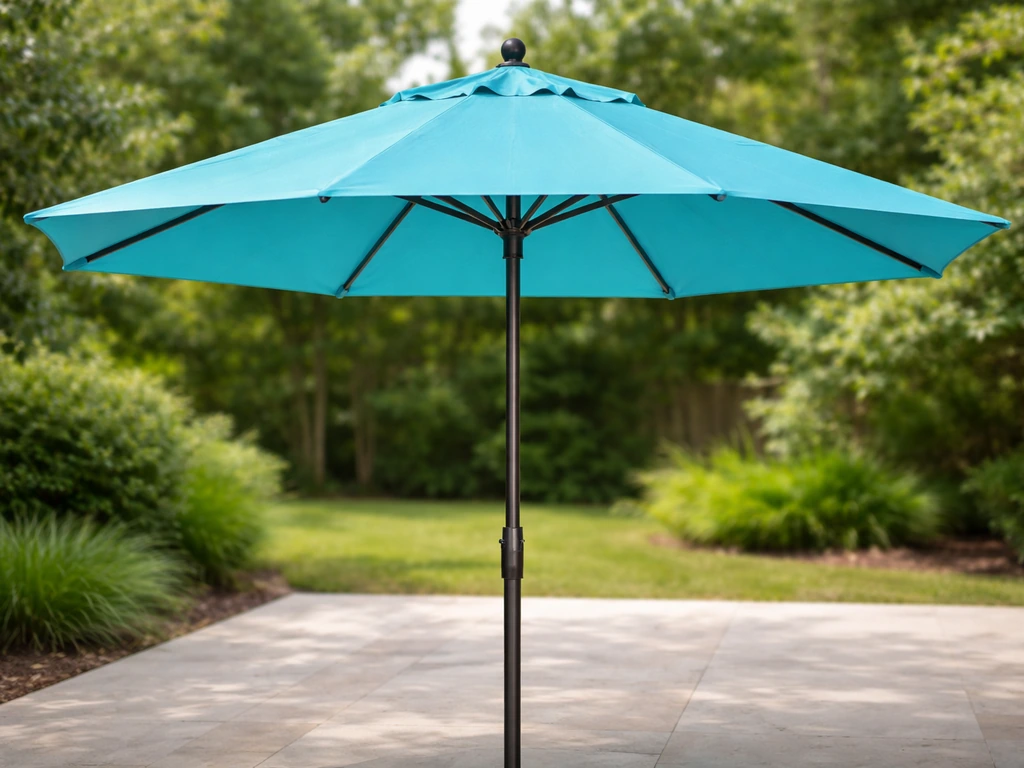
How to Paint a Patio Umbrella Step by Step Guide
Step by step guide to prep, prime, and paint a faded outdoor patio umbrella, protecting mechanisms for lasting color.
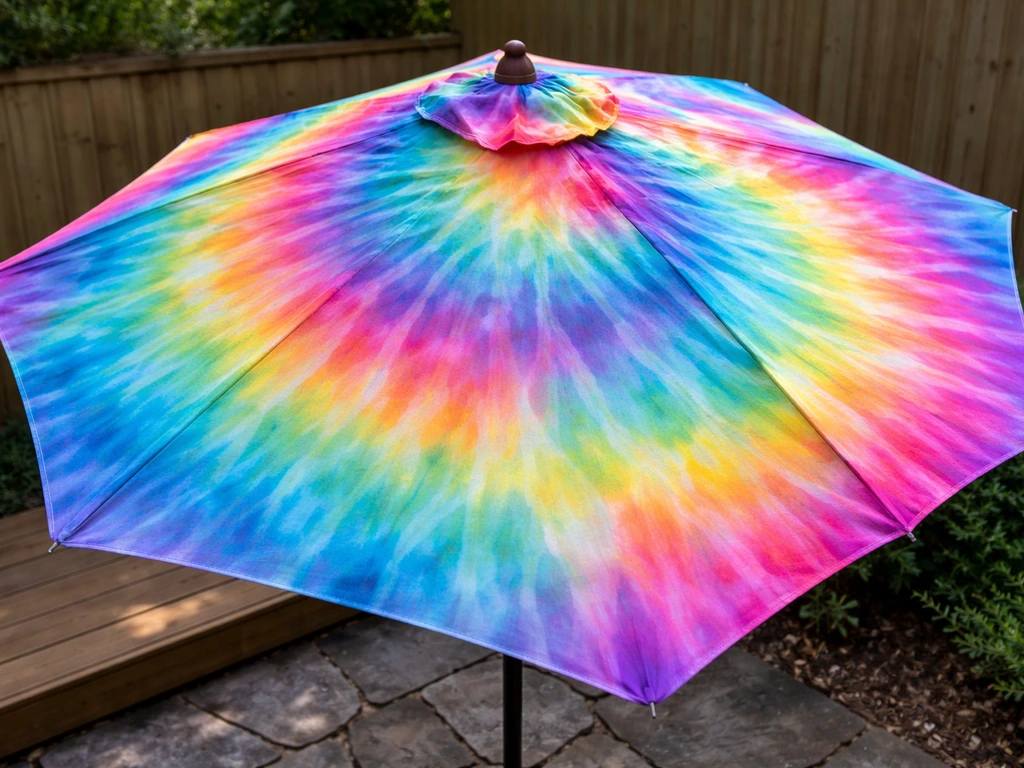
How to Dye a Patio Umbrella Step by Step Guide
Step-by-step how to dye and tie-dye a patio umbrella, including prep, dye choice, aftercare, and avoiding streaks.
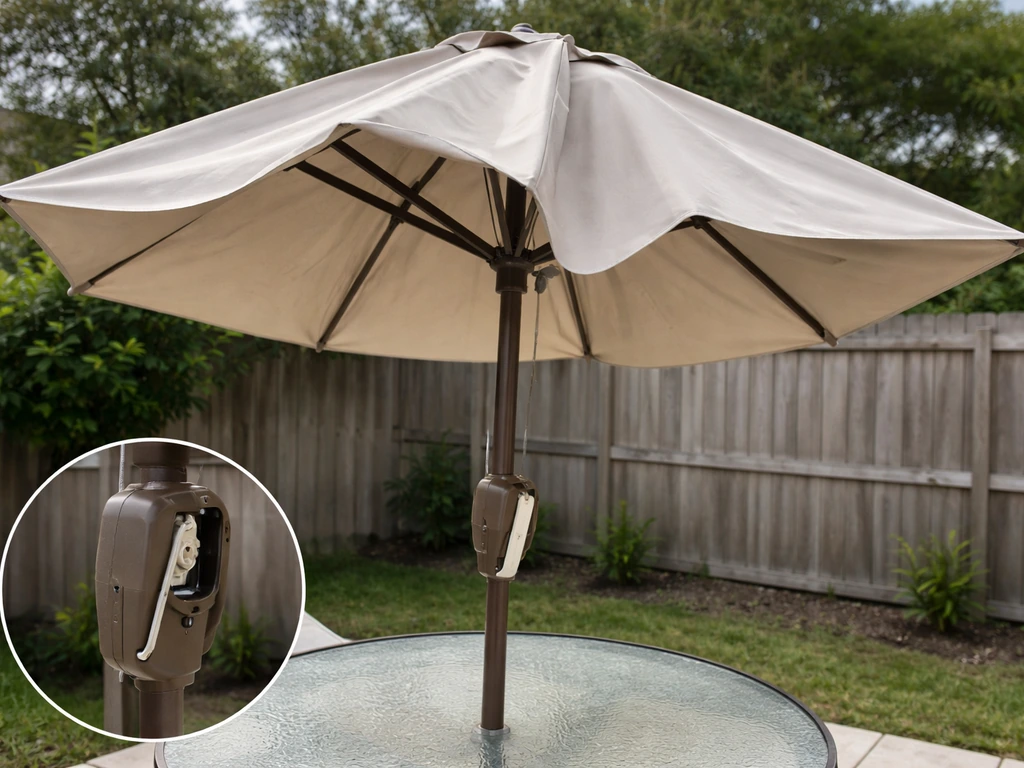
How to Fix a Patio Umbrella That Won't Open or Close
Step-by-step fixes for patio umbrellas that won’t open or close, with checks for jams, cords, latches, and lubricating t