The single most effective thing you can do to keep your patio umbrella from fading is to close it and cover it whenever it's not in use. That one habit alone will dramatically slow color loss. Beyond that, a combination of smart positioning, regular gentle cleaning, and choosing the right fabric in the first place will keep your canopy looking good for years instead of turning into a washed-out ghost of its original color.
How to Keep a Patio Umbrella From Fading
Luca Morrison
8 Jul 2026
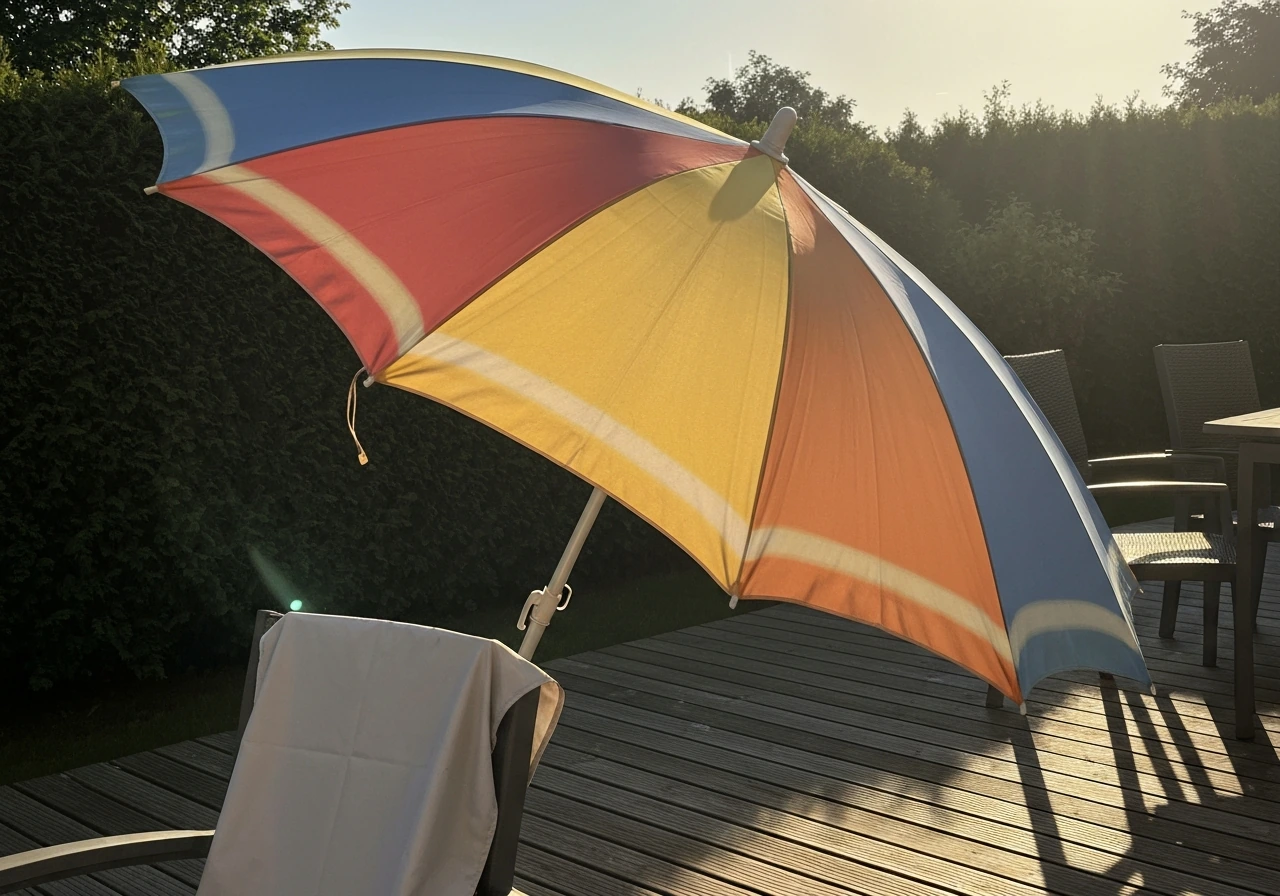
Colour fade can occur after blank" rel="noopener noreferrer">UVA/UVB exposure because pigments or dyes are affected by UV radiation. If you have a faded patio umbrella already, focus on stopping further sun damage first with cover, then clean it gently so you can get more life out of the fabric.
Why your umbrella is fading in the first place
Fading isn't just the sun bleaching things out in a simple way. What's actually happening is called photodegradation: UV radiation (both UVA and UVB) physically breaks the chemical bonds inside the dye molecules themselves, called chromophores. Once those molecular bonds snap, the color is gone permanently. No amount of cleaning or UV spray will reverse it. On top of that, oxygen in the air speeds up the process through photo-oxidation, which gradually breaks down the polymer fibers holding the fabric together. That's why old faded umbrellas don't just look pale, they also feel thin and brittle.
Moisture makes things worse faster. Humidity and water exposure weaken the textile matrix so UV damage penetrates more deeply. A wet umbrella left open in afternoon sun is getting hit from two directions at once. Heat plays a role too: high temperatures accelerate the chemical reactions UV starts, so parking your umbrella in full afternoon western sun in July is about the worst scenario possible.
The fabric type matters enormously. Solution-dyed acrylic (brands like Sunbrella are the most recognized example) is dyed at the fiber level before the thread is even woven, so UV has to destroy the entire fiber to remove the color. Polyester and cotton fabrics are surface-dyed after weaving, which means UV exposure only has to break down a thin coating of dye sitting on top of the fiber. That's why a cheap polyester umbrella can look faded after one summer while a quality acrylic canopy still looks good after five.
Quick wins you can do right now
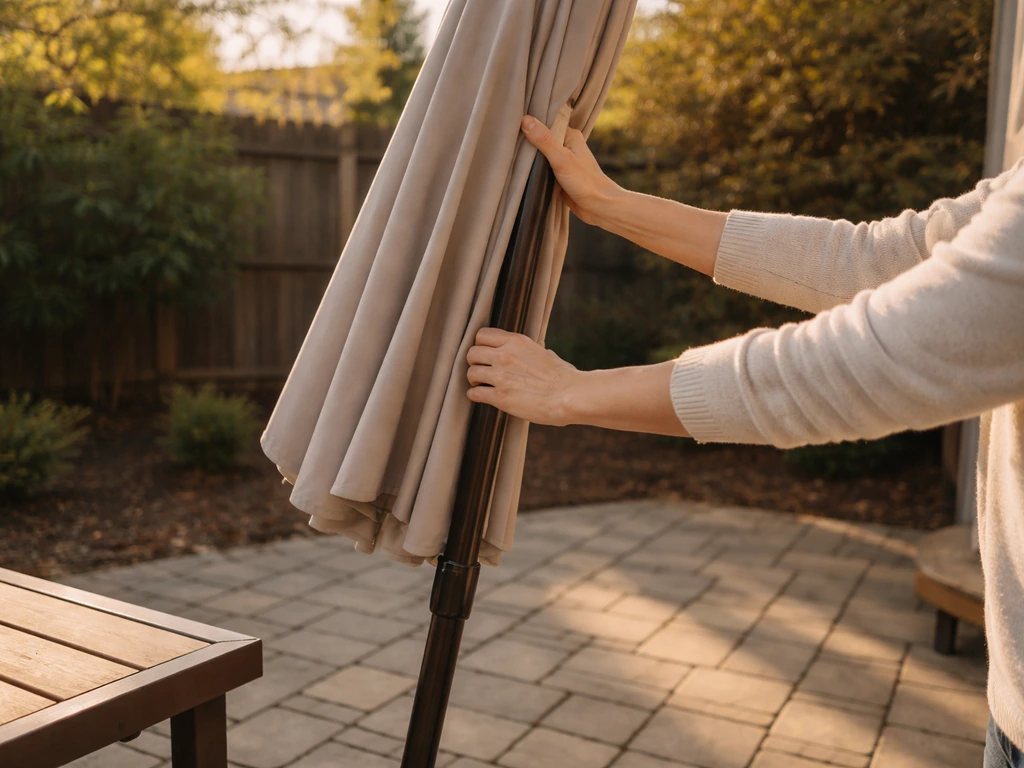
If you're reading this mid-season and want to slow fading starting today, these steps cost nothing and take about five minutes.
- Reposition it out of direct western afternoon sun. Morning light is lower intensity; afternoon western sun (especially from about 1 to 5 p.m. in summer) delivers the most concentrated UV and heat. If your patio layout allows, angle the umbrella or move the base so the canopy gets afternoon shade from a wall, tree, or overhead structure.
- Rotate the canopy every few weeks. Most umbrella canopies are not perfectly symmetrical in how they face the sun throughout the day. One side often takes more direct exposure than the other. Many canopies can be loosened from the pole and rotated 90 or 180 degrees so UV wear is distributed evenly rather than destroying one panel.
- Close it when you're not outside. This is the biggest quick win. An umbrella that's closed 18 hours a day ages much more slowly than one left open around the clock. Make it a habit: if you're going inside for more than 30 minutes, close it.
- Tilt or angle it strategically. If your umbrella has a tilt mechanism, use it to minimize how much of the canopy faces directly skyward during peak sun hours. A canopy angled to provide shade rather than sitting flat catches less direct UV on its top surface.
The right protection: covers, storage, and UV-resistant products
Get a proper umbrella cover
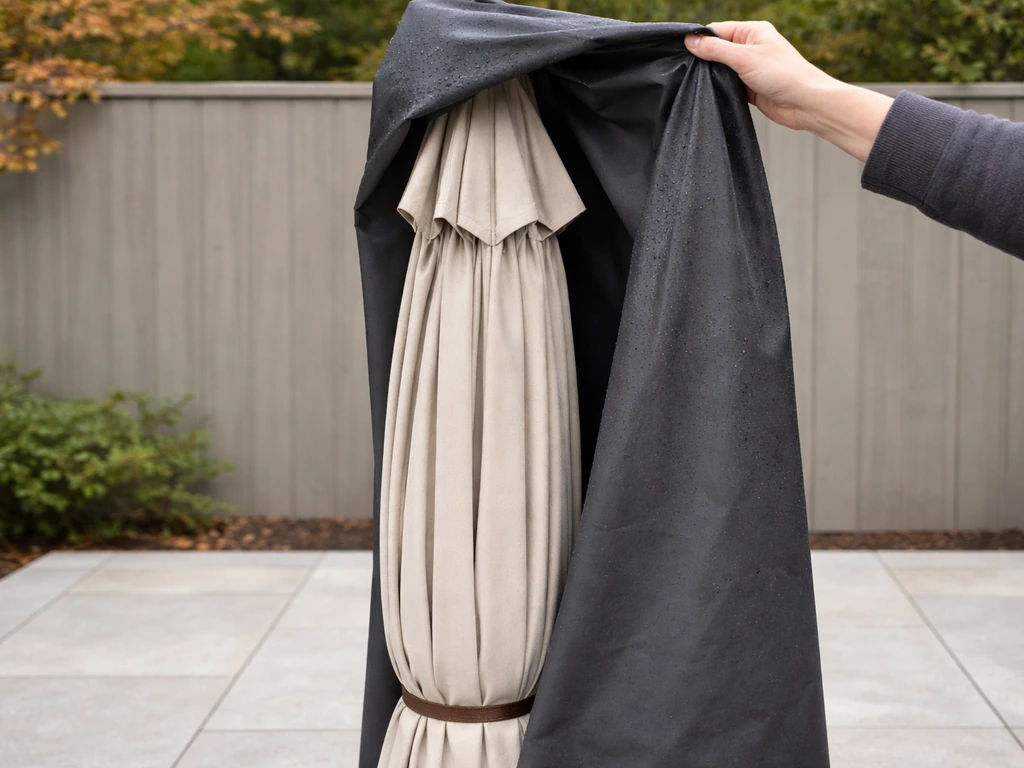
A fitted umbrella cover is one of the best investments you can make. When the umbrella is closed and covered, UV exposure drops to nearly zero and moisture can't collect in the folds of the canopy. Look for a cover made from a UV-blocking fabric (not just water-resistant nylon) with a drawstring or tie at the bottom so wind doesn't strip it off. Measure your closed canopy length before buying. A cover that's too loose will flap around and actually abrade the fabric, which accelerates wear just as much as sun exposure.
UV-protective fabric sprays
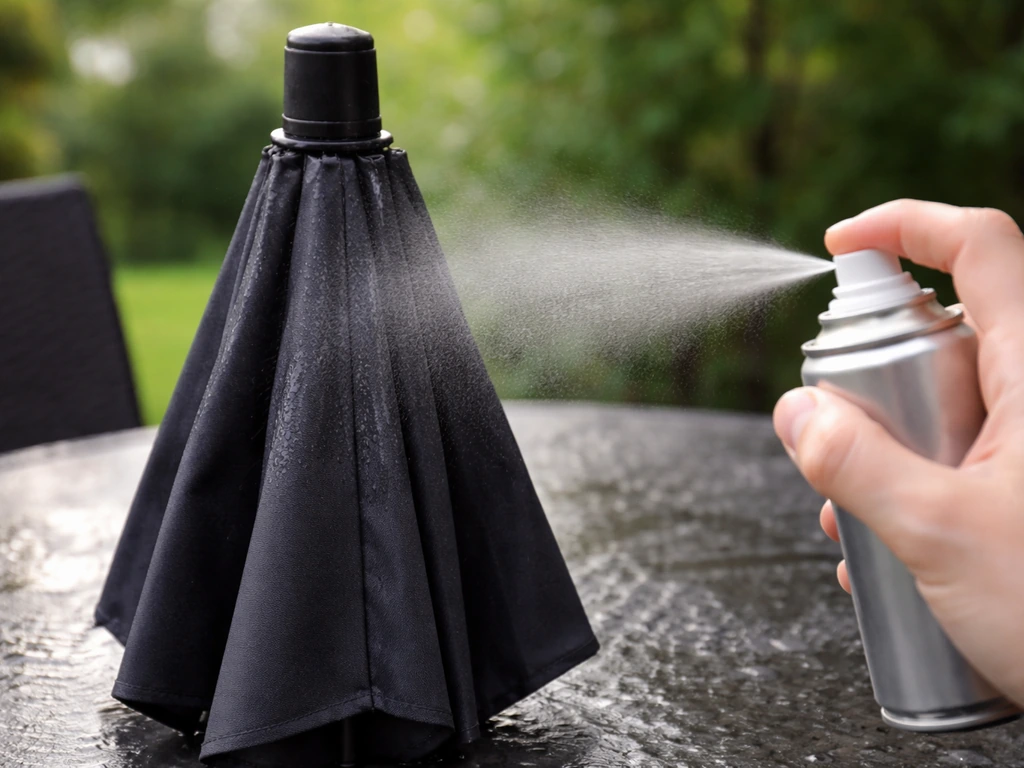
UV-blocking fabric sprays (sometimes marketed as UV protectants or fabric guards) work by depositing a thin film that absorbs UV before it reaches the dye. They're worth using on polyester and cotton umbrellas where you want to extend the life of a surface-dyed fabric. Apply them to a clean, dry canopy and reapply every 4 to 6 weeks during heavy use season or after the canopy has been washed.
They won't perform miracles on an already-faded umbrella, but they do meaningfully slow further damage. If your patio umbrella is already faded, focus on slowing further sun and moisture damage with proper protection and storage already-faded umbrella. For solution-dyed acrylic, UV sprays are less critical (the fiber itself is UV-stable), but a fabric protectant that adds water repellency is still worthwhile.
Secure it so wind doesn't damage it
Wind damage and fading are related more than people realize. When an umbrella flaps violently in wind, the fabric stretches, the weave loosens, and micro-tears form. Those damaged areas then absorb UV and moisture faster, accelerating fading in patches. Use a weighted base (at least 50 lbs for a 9-foot umbrella, more for larger sizes) and consider a sand-filled base for added stability. If you're in a consistently windy area, close the umbrella at any wind above about 20 mph and make it a non-negotiable habit. An umbrella knocked over by wind doesn't just get scratched and bent; the canopy drags on the ground and takes serious surface damage.
Cleaning the canopy without damaging the color
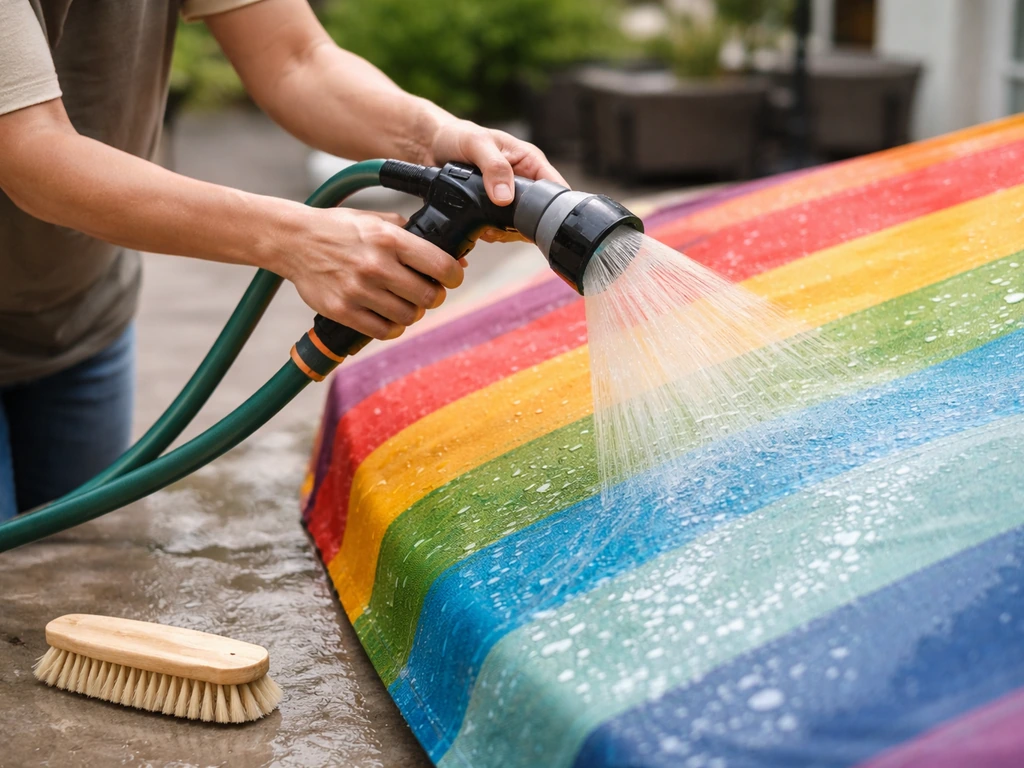
Dirt, mildew, and bird droppings are fading accelerators because they hold moisture against the fabric and create localized chemical reactions that break down dye. But the wrong cleaning method can strip color just as fast as the sun can. Here's how to clean safely.
- Start with a rinse. Use a garden hose on a gentle spray setting to knock off loose dirt. Do this while the umbrella is open so water flows off the canopy naturally.
- Mix a mild soap solution. For regular cleaning, mix about a teaspoon of mild dish soap or a fabric-safe cleaner into a gallon of lukewarm water. Avoid detergents with bleach, brighteners, or enzymes. These chemically attack dye molecules directly.
- Use a soft-bristle brush. Work in gentle circular motions from the center of each panel toward the edge. Don't scrub hard. Aggressive scrubbing damages the weave and removes any protective coating the fabric came with.
- Rinse thoroughly. Soap residue left in the fabric will attract dirt faster and can itself degrade dye over time. Rinse until the water runs completely clear.
- Let it air dry fully before closing or covering. Trapping moisture under a cover is a fast way to grow mildew, which creates stains that are much harder to remove without harsh chemicals.
Handling stains without stripping color
For bird droppings, tree sap, or food stains, act fast while still fresh. Gently scrape off any solid material with a plastic scraper or the back of a spoon, then blot (don't rub) with a damp cloth and a tiny amount of mild soap. Rubbing spreads the stain and grinds it into the weave.
For mildew spots, a solution of one part white vinegar to four parts water applied with a soft cloth works well for most fabrics without the color damage risk that comes with bleach. If you're dealing with a stubborn mildew stain on solution-dyed acrylic, the manufacturer's own cleaner (Sunbrella's own fabric cleaner, for example) is usually safe because it's formulated for that specific fiber chemistry. When in doubt, test any cleaner on a hidden seam area first.
What to avoid completely
- Chlorine bleach on any colored fabric: it oxidizes dye molecules and causes immediate, irreversible color loss
- Pressure washers: the force physically damages the weave and strips coatings
- Harsh multi-surface cleaners or degreasers: formulated for hard surfaces, too aggressive for fabric dyes
- Machine washing in a top-loader with an agitator: the mechanical stress is brutal on canopy panels
- Drying in direct afternoon sun when the canopy is still wet from cleaning: wet fabric is more UV-vulnerable than dry fabric
Material-specific tips: what you have changes what you should do
| Fabric Type | Fading Resistance | Best Cleaning Approach | UV Spray Worthwhile? | Key Things to Avoid |
|---|---|---|---|---|
| Solution-dyed acrylic (e.g., Sunbrella) | Excellent: dye is in the fiber core | Mild soap and water, soft brush, thorough rinse | Optional (mainly for water repellency) | Bleach, pressure washing, heavy scrubbing |
| Solution-dyed polyester | Good: better than surface-dyed but not as durable as acrylic | Mild soap and water, rinse well, air dry | Yes, reapply every 4-6 weeks | Bleach, agitator washing machines, wet storage |
| Surface-dyed polyester | Fair: fades within 1-3 seasons under heavy use | Gentle soap, minimal scrubbing, UV spray after every wash | Yes, essential for longevity | Any harsh cleaner, soaking wet before closing |
| Olefin (polypropylene) | Good: naturally moisture and fade resistant | Mild soap and water, rinse well | Optional | Prolonged heat exposure, harsh solvents |
| Cotton or cotton blends | Poor: surface-dyed, absorbs moisture, UV-vulnerable | Gentle soap, cold water, air dry in shade | Yes, and reapply frequently | Hot water, bleach, leaving damp under cover |
If your umbrella is cotton or a cheap surface-dyed polyester and it's already showing significant fading, honest advice is that prevention products will only slow the decline, not stop it. At that point, it may be worth looking at whether dyeing or painting the canopy is a viable option to restore some color before the next season, or planning an upgrade to a solution-dyed acrylic canopy as a longer-term fix. If you decide to dye the canopy, focus on the fabric type and choose a dye made for outdoor umbrella materials so the color bonds properly.
Your long-term routine: a simple seasonal plan
During the season (May through September in most climates)
- Close and cover the umbrella every evening and whenever you leave the house for more than a short time
- Do a quick rinse-down with the hose once a month to prevent dirt and pollen buildup
- Do a full mild-soap wash every 6 to 8 weeks during heavy use
- Reapply UV protectant spray after each wash if you have a polyester or cotton canopy
- Rotate the canopy 180 degrees at least once mid-season to even out sun exposure
- Inspect the canopy panels and seams monthly for any small mildew spots and treat immediately before they spread
End of season storage (October or when temperatures drop below 50°F consistently)
- Give the canopy a thorough wash before storing. Storing with dirt, pollen, or bird droppings on the fabric causes staining and dye degradation over winter even without sun exposure.
- Let it dry completely in the shade. This is critical. Even a small amount of trapped moisture will cause mildew and staining over several months of storage.
- Remove the canopy from the pole if possible. Most canopy panels are attached with velcro, ties, or a sleeve. Removing them allows flat or rolled storage, which prevents creasing and keeps the fabric away from any metal corrosion on the pole.
- Store in a breathable bag or container, not sealed plastic. Sealed plastic traps any residual moisture and creates perfect mildew conditions. A canvas storage bag or a loose cloth cover is better.
- Store indoors: a garage, basement, or shed is ideal. Avoid spaces that get very hot (above 100°F) or very damp.
- For the pole and base, wipe down metal parts, apply a light coat of metal protectant, and store the base where it won't collect standing water.
Opening back up in spring
Before you set everything up for the new season, inspect the canopy in good light for any mildew spots that developed in storage (treat them before they get sun exposure and bake in permanently), check all the seams and stitching for fraying, and do one pre-season wash. If the fabric looks good and clean at the start of the season and you follow the close-and-cover habit throughout the summer, you'll be in solid shape. A solution-dyed acrylic canopy treated this way can realistically last 7 to 10 years or more without meaningful fading. A polyester canopy with consistent UV spray application and good storage habits can push to 4 or 5 seasons instead of burning out in 1 or 2.
If you do end up with a canopy that's already significantly faded despite your best efforts, that's not necessarily the end of the umbrella. The frame and mechanism may still be in great shape, and replacing just the canopy is often straightforward. There are also options like fabric dye and specialized umbrella paint formulated for outdoor fabric if you want to restore the color before committing to a replacement. If you’re considering that route, follow a guide for how to paint patio umbrella so the color bonds well and looks even across the canopy.
FAQ
Will putting sunscreen or UV spray on the umbrella keep it from fading as well as covering it?
UV sprays can help slow new fading, but they cannot undo photodegradation once the dye bonds are broken. Think of sprays as a supplement for surface-dyed fabrics, not a replacement for closing the umbrella and using a real UV-blocking cover, especially during peak afternoon sun.
How often should I reapply a UV protectant or fabric guard?
A common rule is every 4 to 6 weeks during heavy sun season, and after any wash or heavy grime removal. If the umbrella is cleaned frequently or gets scrubbed, the protectant film wears off faster, so expect shorter intervals.
Should I keep the umbrella open during light rain to let it dry faster?
It’s better to close and cover once rain is over. A wet umbrella left open in the sun gets UV and moisture exposure at the same time, which accelerates both color loss and fiber breakdown.
What cover material is best, and how can I tell if it actually blocks UV?
Choose a fitted cover made from UV-blocking fabric, not just water-resistant nylon. If wind causes flapping, you may also get abrasion that speeds wear, so look for a bottom tie or drawstring and confirm the cover fits snugly.
Can I use bleach or oxygen cleaners to remove mildew without fading?
Avoid bleach, because it can damage dyes and lighten color further. For mildew, a mild vinegar-water solution is typically safer for most outdoor umbrella fabrics, and you should always test any cleaner on a hidden seam first.
Is rubbing stains to “work them in” actually better for bird droppings and sap?
No. Scrape off solids gently, then blot with a damp cloth and a tiny amount of mild soap. Rubbing spreads pigment and grinds residue deeper into the weave, which can look like deeper fading over time.
Why does my umbrella fade in patches, even though I rotate it?
Patch fading often comes from wind-driven flapping, which creates micro-tears and weakens the fabric in specific areas. If you see uneven fading patterns, check the base weight and tighten any loose hardware, then keep it closed when winds are above roughly 20 mph.
Does the umbrella size or base weight change how quickly it fades?
Yes, stability affects both fading and wear. For example, a 9-foot umbrella typically needs at least a 50 lb weighted base, and larger umbrellas usually need more. Insufficient weight increases flapping, leading to faster UV and moisture damage.
If my umbrella is already very faded, can I still use UV protectant to improve it?
Protectants can only slow additional damage. For noticeably faded fabric, the practical goal is preventing further loss while you decide between canopy replacement, outdoor fabric dye, or specialized umbrella paint for a more visible color restoration.
What’s the safest way to clean before applying a UV protectant or fabric guard?
Clean only when the fabric is dry and use gentle methods, then allow it to fully dry before applying the product. Applying protectant over dirt or residue can trap grime and create uneven protection, which may show up as blotchy color later.
How do I protect the umbrella in winter if I don’t have indoor storage?
If outdoor storage is unavoidable, use the fitted UV-blocking cover, keep it tightly secured against wind, and inspect it after long damp periods. Treat any mildew spots before they get sun exposure, because that can permanently set into the fabric during the next warm season.
Is dyeing or repainting worth it compared to buying a new canopy?
It can be worth it when the frame and mechanism are still in good condition, or when you need a specific color match. However, dyeing and outdoor fabric paint work best when applied to properly cleaned, compatible fabric, and you should plan for thorough, even coverage to avoid streaks.
Next Articles
How to Waterproof a Patio Umbrella Today Step by Step
Learn how to waterproof a patio umbrella today: clean, treat fabric and seams, cure, test, and fix leaks without replaci
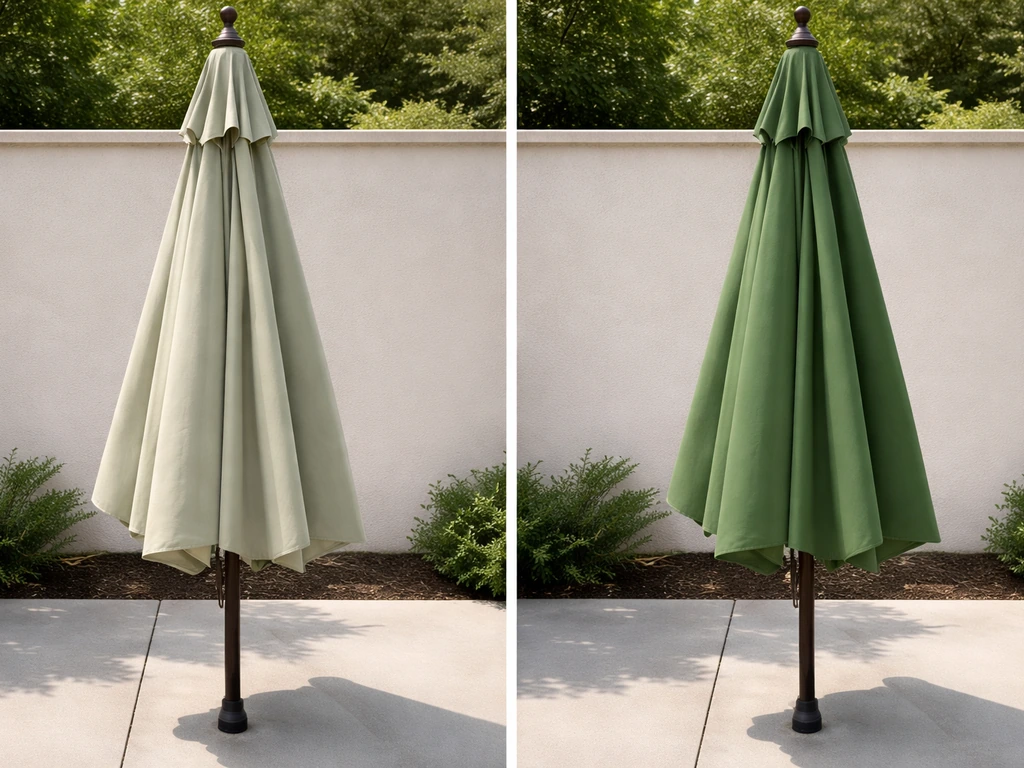
What to Do With a Faded Patio Umbrella: Fix or Dye It
Fix or dye a faded patio umbrella with step-by-step cleaning, prep, dyeing tips, and troubleshooting for even color.
How to Paint a Patio Umbrella Step by Step Guide
Step by step guide to prep, prime, and paint a faded outdoor patio umbrella, protecting mechanisms for lasting color.