
Yes, you can dye a faded patio umbrella, but whether it actually works depends almost entirely on what your umbrella fabric is made of. If it's polyester (which most are), standard fiber-reactive dye kits will largely rinse right out. You need disperse dye and high heat to get real color uptake on synthetic fabric. If your umbrella is solution-dyed acrylic like Sunbrella, dyeing won't work at all because the color is baked into the fiber itself. But if you have the right fabric and the right dye, you can absolutely refresh a faded umbrella and make it look dramatically better without buying a replacement.
How to Dye a Patio Umbrella Step by Step Guide

Luca Morrison
5 May 2026
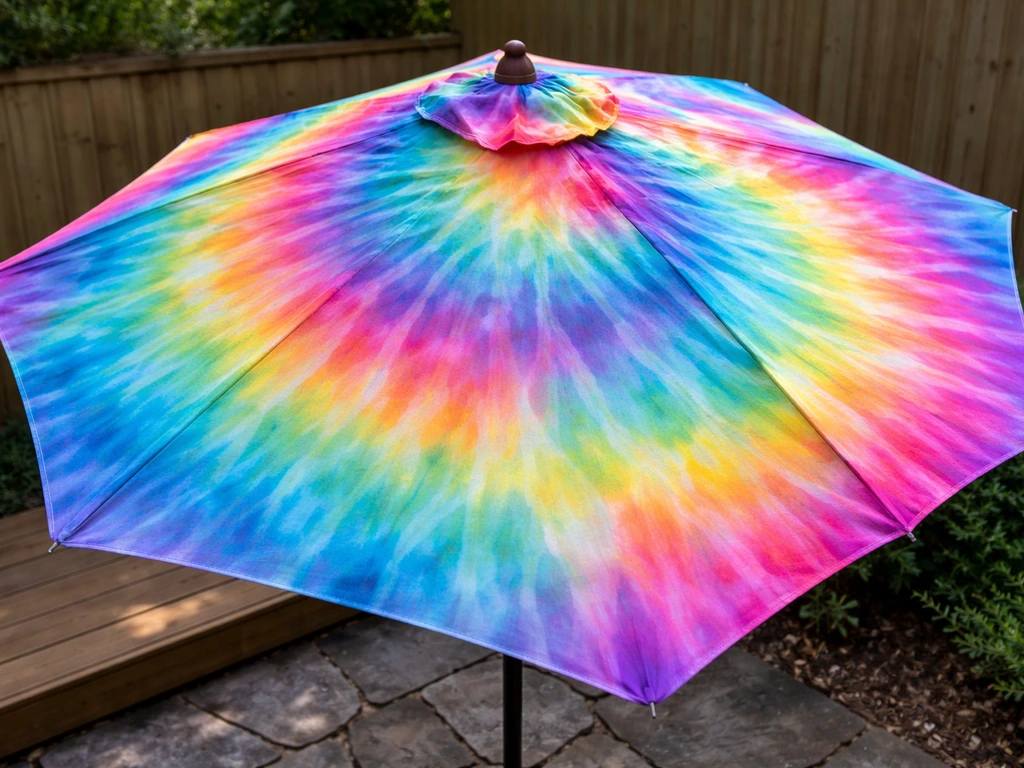
Can (and when) you actually dye a faded umbrella
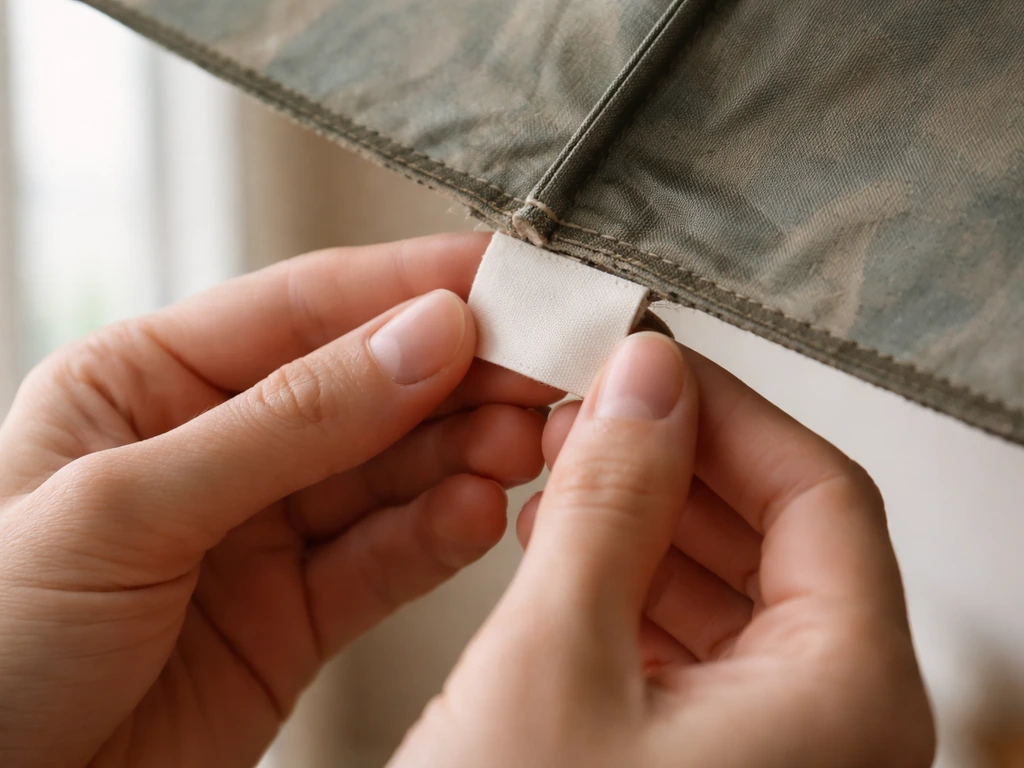
The honest answer is: it depends on your fabric. Before you buy a single bottle of dye, flip your umbrella over and check the tag or manufacturer's website for the fabric content. This one step will save you from wasting an afternoon and staining your patio.
Polyester is the most common umbrella fabric and it is genuinely difficult to dye. It requires very high water temperatures and a specialized disperse dye to get color to bond with the fiber. Standard tie-dye kits, Rit All-Purpose Dye, and most craft-store fabric dyes are fiber-reactive, meaning they're designed for natural fibers like cotton and linen. On polyester, they either rinse out almost completely or leave a dull, blotchy ghost of a color.
Solution-dyed acrylic fabric (Sunbrella is the most well-known brand) is a different situation entirely. The pigment in solution-dyed acrylic is injected into the fiber before it's even spun into yarn, so there's no surface to dye over. If you have Sunbrella or a similar performance acrylic, dyeing won't take. Your options there are fabric paint applied by brush or spray, or re-treating the fabric with a UV-protective product like blank" rel="noopener noreferrer">303 Fabric Guard to slow ongoing fading. Both of those are worth exploring as alternatives.
Dyeing works best when: your umbrella is 100% polyester (or a high-polyester blend), the fading is uniform rather than patchy, the fabric has no water-repellent coating blocking absorption, and the canopy can be fully removed from the frame. If your umbrella checks those boxes, you have a genuinely good shot at a solid result.
| Fabric Type | Can You Dye It? | Best Approach |
|---|---|---|
| 100% Polyester | Yes, with disperse dye + high heat | iDye Poly or Rit DyeMore, stovetop method |
| Polyester blend (under 35% synthetic) | Possibly, with All-Purpose dye | Rit All-Purpose, hot water bath |
| Solution-dyed acrylic (Sunbrella) | No | Fabric paint or UV protectant spray |
| Olefin / Polypropylene | Very difficult | Fabric paint is more realistic |
| Canvas (cotton) | Yes, easily | Standard fiber-reactive dye, no special heat needed |
Tie-dye vs. solid dye: what actually works on umbrella fabric
Both solid dyeing and tie-dyeing are possible on polyester, but they use the same fundamental chemistry: disperse dye plus high heat. The difference is technique, not dye type. For a solid color refresh, you want full immersion in a hot dye bath with continuous stirring. For tie-dye, you apply concentrated dye to folded or bound sections of the fabric and then heat the whole thing to set the color.
A word of caution about those colorful tie-dye kits you see at craft stores: most of them are fiber-reactive dyes formulated for cotton. On polyester, the results are almost always disappointing. The dye sits on top of the fiber and washes off. For polyester tie-dye that actually lasts, you need iDye Poly (from Jacquard) or PROsperse disperse dyes. These are the products specifically engineered for synthetic fibers, and iDye Poly is widely considered one of the only dye types that reliably colors polyester.
For a solid dye job, the stovetop immersion method is your best bet. A washing machine can't reach the water temperature needed for disperse dye to penetrate polyester fiber, which is why Rit specifically says not to use a machine for DyeMore. You need near-simmer temperatures, meaning around 180-200°F (82-93°C), sustained for anywhere from 10 minutes up to an hour depending on how deep you want the color.
One more practical note: umbrella canopies are large. Even a 9-foot umbrella canopy has a significant amount of fabric that needs room to move freely in the dye bath. Cramming it into a small pot causes uneven color because parts of the fabric get more dye exposure than others. You need a big stainless steel or enamel pot (aluminum reacts with some dyes, so avoid it) or you can use a large outdoor propane burner setup with a dedicated dyeing vessel.
Supplies and safety prep before you start
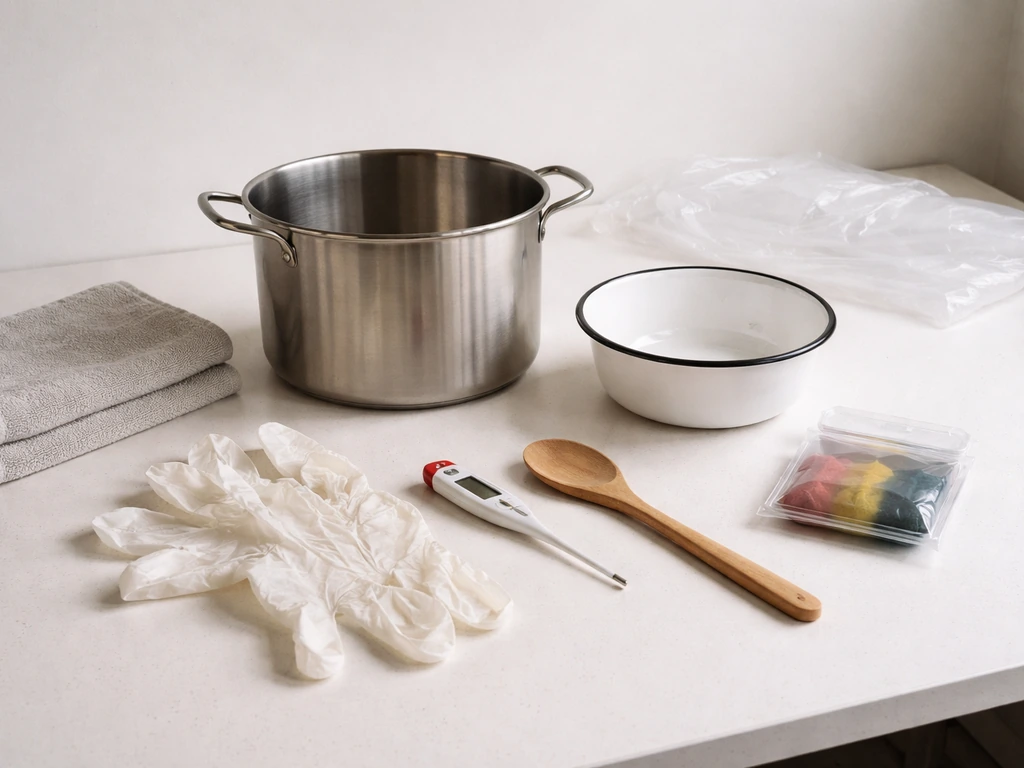
Gathering everything before you start saves you from scrambling mid-project with dye-stained hands. Here's what you need:
- Disperse dye: iDye Poly (Jacquard) or Rit DyeMore for Synthetics are the most accessible options
- Large stainless steel or enamel pot (avoid aluminum) big enough for the fabric to move freely
- Propane burner or large stovetop burner capable of sustaining near-simmer heat
- Long stainless steel or wooden stirring rod or tongs
- Synthrapol or a similar surfactant for pre-washing and post-wash (helps even dye uptake and removes loose color)
- Rubber gloves rated for chemical use (nitrile or thicker rubber, not thin latex)
- Safety glasses or goggles
- N95 or better respirator mask (disperse dye powder is a respiratory sensitizer)
- Plastic sheeting or old tarps to protect your work surface and surrounding area
- Painter's tape for masking hardware if you're doing an on-umbrella spray method
- Thermometer to monitor water temperature
- Old clothes you don't mind ruining
- A dedicated plastic bucket for rinsing
- Optional for tie-dye: rubber bands, zip ties, or cotton string for binding; squeeze bottles for applying concentrated dye
Safety is not optional here. Disperse dyes are classified as respiratory and skin sensitizers. The Safety Data Sheets for products like PROsperse disperse dyes specifically flag respiratory sensitization risks and recommend protective gloves, eye protection, and avoiding breathing the dust or fumes. Work outdoors or in a very well-ventilated space, wear your respirator when handling dry dye powder, and keep kids and pets well away from the process.
Also: test before you commit. Cut a few inches of a hem or a hidden seam allowance if possible and dye that swatch first. This tells you whether the dye will take on your specific fabric and what shade you'll actually get, not what the package shows.
Step-by-step: how to dye a patio umbrella (solid color)
Step 1: Remove the canopy from the frame
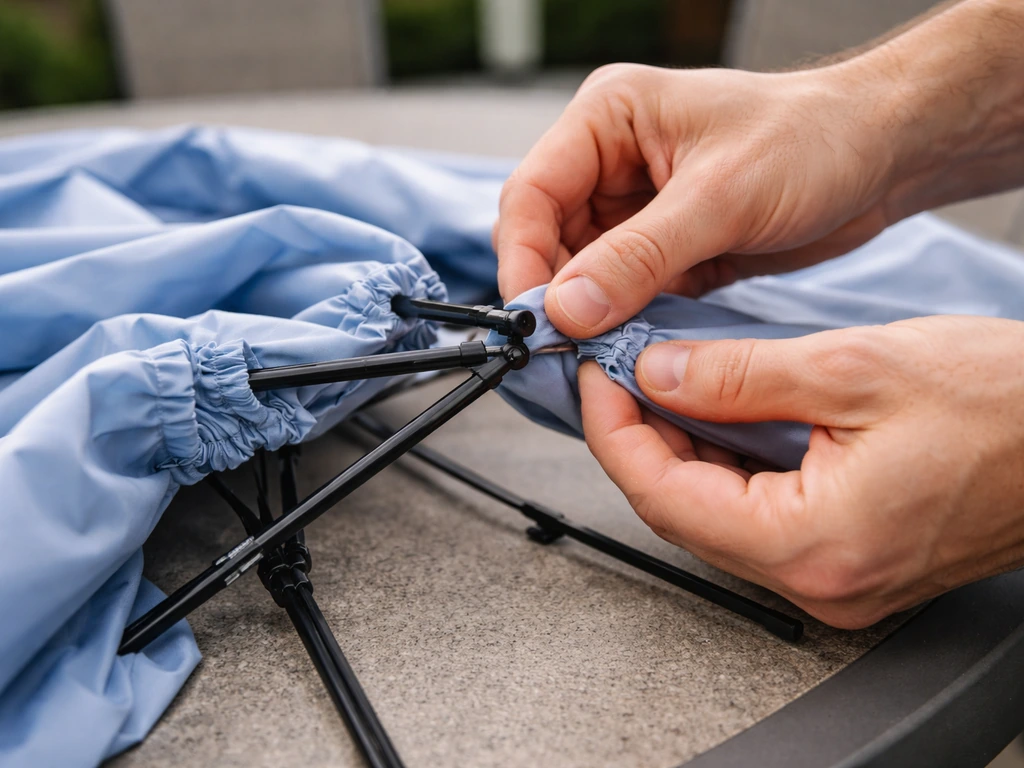
You need to get the fabric off the frame before dyeing. Most umbrella canopies attach to the ribs via small fabric pockets or tie-on tabs. Open the umbrella fully, then work around each rib unthreading or untying the canopy panels. Take a photo before you start so you remember how everything goes back together. Set the frame somewhere it won't roll away or rust.
Step 2: Scour and prewash the canopy
This step is one most people skip, and it's the main reason dye jobs come out blotchy. Outdoor fabric accumulates oils, sunscreen residue, dust, and water-repellent treatment over time. All of that blocks dye from reaching the fiber. Wash the canopy thoroughly in the hottest water it can handle (check the label, but around 140°F/60°C if possible) with Synthrapol or a quality dish detergent. Jacquard recommends about 3 tablespoons of Synthrapol per 8 pounds of fabric for a prewash. Rinse completely. Any soap residue left in the fabric will interfere with dye absorption.
Step 3: Prepare your dye bath
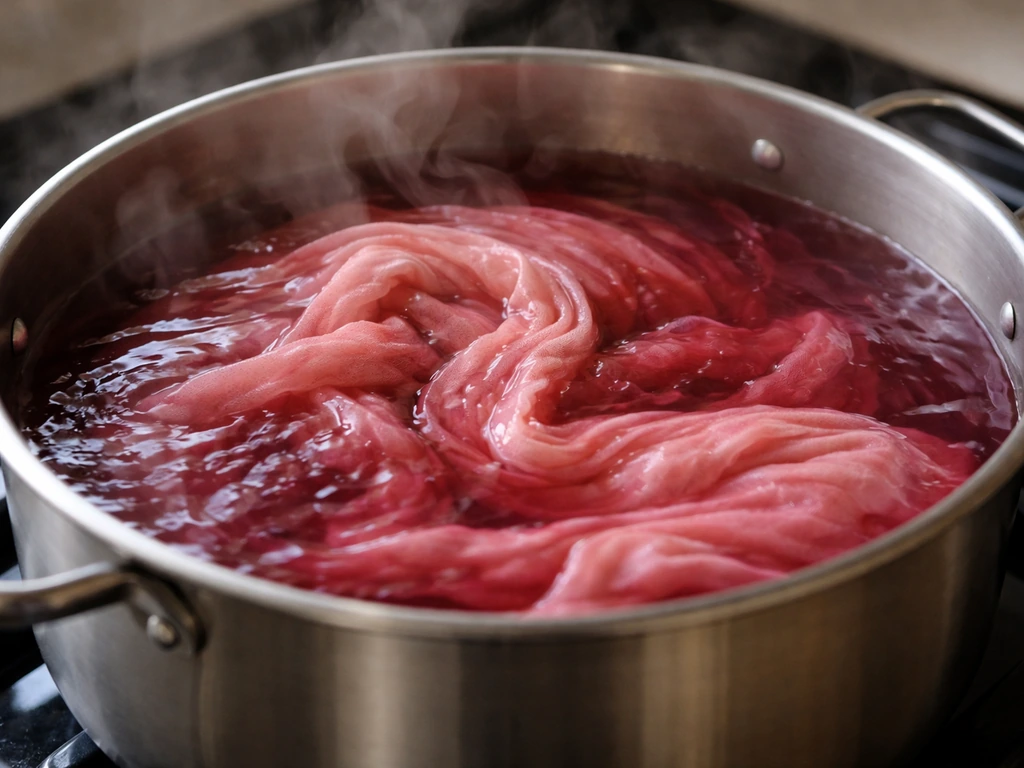
Fill your large pot with enough water to allow the fabric to move around freely. Bring the water to a near simmer, around 180-200°F (82-93°C). Add your disperse dye according to the package directions. For iDye Poly, the packet goes directly into the water. For powdered disperse dyes, pre-dissolve the powder in a small amount of hot water first to avoid clumps, then add it to the pot. Stir well to distribute the dye evenly before adding the fabric.
Step 4: Dye the canopy
Wet the canopy thoroughly with hot water before submerging it in the dye bath. This helps it absorb dye more evenly from the start. Ease it into the pot and begin stirring slowly and continuously. Continuous agitation is key to avoiding streaks and uneven patches. Keep the temperature consistent throughout the process. Let the canopy soak in the dye bath for at least 30 minutes, and up to an hour for deeper color. The longer it stays in, the more saturated the result, but the temperature must stay high the whole time or the dye won't bond.
Step 5: Rinse progressively
When the dye time is up, remove the canopy and rinse it in warm water first, then gradually cooler water in stages until the water runs nearly clear. Do not rinse in cold water immediately. The thermal shock can cause dye to bleed unevenly. A final rinse with a small amount of Synthrapol helps lift any unfixed dye off the surface, which prevents that dye from bleeding onto the umbrella frame or your furniture later.
Step-by-step: how to tie-dye a patio umbrella
Step 1: Prewash and prep the canopy
Same deal as with solid dyeing: wash the canopy first to remove any sizing, starches, coatings, or residue that would resist dye uptake. Rinse well and wring out as much water as you can, but leave the fabric slightly damp. Damp fabric takes tie-dye more evenly than dry fabric.
Step 2: Fold and bind the canopy sections
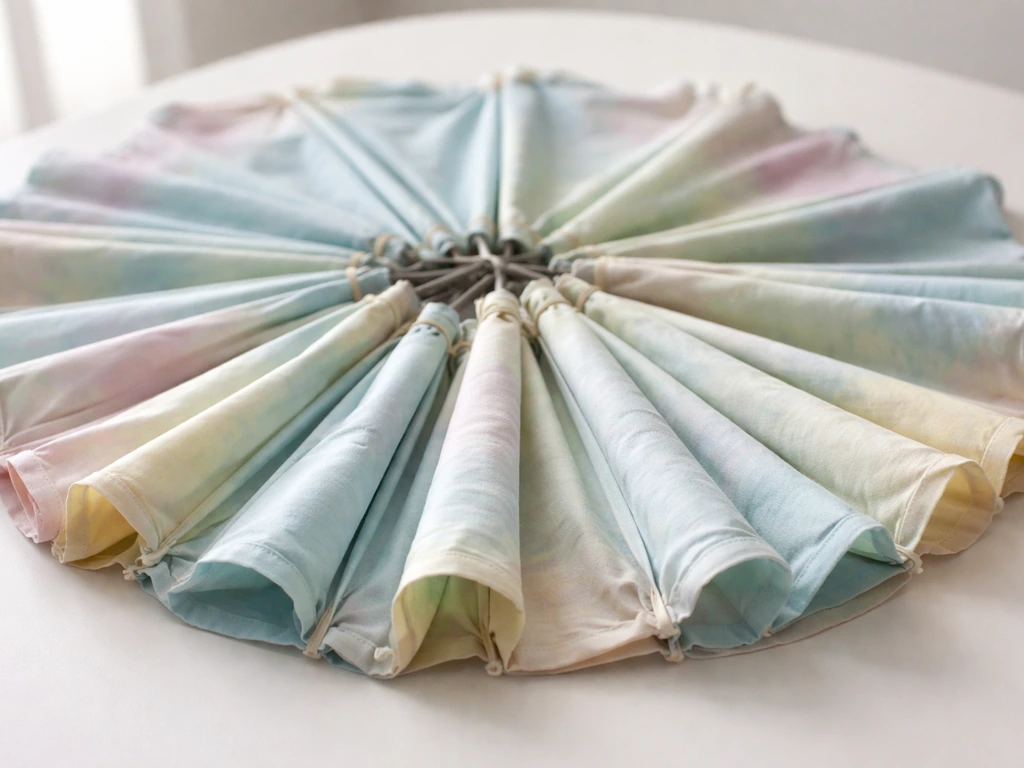
Here's where umbrella tie-dye gets interesting. An umbrella canopy is already divided into panels by the rib pockets, which gives you a natural guide for repeating patterns. The most effective approach for umbrellas is to work panel by panel. For a starburst or spiral look, pinch the center of each panel and twist it into a spiral, then wrap rubber bands across it in a grid pattern. For stripes, accordion-fold each panel lengthwise and bind at intervals with rubber bands or cotton string. The tighter your bindings, the crisper the white resist lines between colors.
Step 3: Apply the dye
Mix your disperse dye in squeeze bottles according to the package directions. Apply concentrated dye directly to the bound sections of fabric, pressing and squeezing the bottle so the dye penetrates through the folds. Apply colors to different zones, keeping adjacent colors from overlapping too much unless you want them to blend. Flip the bound canopy sections over and apply dye to the back side too. Flip then repeat. Let it soak in for a few minutes after application.
Step 4: Heat-set the dye
This is the step that separates polyester tie-dye that lasts from one that washes out. Disperse dye needs sustained high heat to bond with the fiber. Place the bound, dye-soaked canopy sections into a large pot of near-simmering water and hold that temperature for at least 30 minutes. The water will take on the colors of the dye, which is normal. Alternatively, some crafters wrap the bound sections tightly in plastic wrap and steam them, but the simmering water method is more reliable for large pieces.
Step 5: Remove the bindings carefully
Once the fabric has cooled enough to handle safely, cut the rubber bands and string carefully with scissors rather than pulling them off. Yanking bindings off can smear dye from one color zone into the resist areas and ruin the pattern. Unfold each section slowly. Then rinse in progressively cooler water until it runs clear, same as the solid dye method.
Drying, reassembly, and keeping the color looking good
Drying the canopy
Always air-dry the canopy rather than putting it in a dryer. Lay it flat or hang it in a shaded spot (not in direct sun while it's still wet, since UV can affect fresh dye). Avoid letting it crumple into a heap while drying or you may get faint watermarks where pooled water dries unevenly. Shake it out and smooth it periodically as it dries.
Reattaching the canopy to the frame
Make sure the canopy is fully dry before putting it back on the frame. Reattach the rib pockets and tie tabs using your earlier photo as a reference. This is also a good time to inspect the ribs, the runner, and the hub for any wear or damage while everything is apart. Once the canopy is back on, open the umbrella and inspect the color in natural light before you move on.
Preventing streaks during the process
Most streaking and blotching comes from three things: not stirring constantly during immersion, letting temperature drop during the dye bath, and skipping the prewash. If your result has light streaks, it usually means part of the fabric was folded against itself and blocked from dye contact. For a second-pass touch-up, re-wet the canopy, reheat the dye bath, and repeat the soak with extra agitation.
Protecting the new color from fading
UV exposure is what fades patio umbrella fabric, and dyeing doesn't add any UV protection back. Once the canopy is dry and reinstalled, apply a UV-protective fabric treatment like 303 Fabric Guard.
Apply it in two thin, even coats rather than one heavy saturating coat. A 15-ounce bottle typically covers around 40-75 square feet, so a standard 9-foot canopy usually takes one bottle applied properly. This both protects the new color from UV degradation and restores water repellency that the prewashing and dyeing process may have stripped away.
To keep your patio umbrella looking its best between dye refreshes, follow the right cleaning and drying habits so the fabric stays protected care for patio umbrella. If you want to waterproof your patio umbrella too, focus on reapplying a water-repellent treatment after dyeing so it can bead water again. Reapply it each season or whenever water stops beading on the surface.
Closing the umbrella when it's not in use and storing it out of direct sun when possible will also extend the life of the new color significantly.
If after all this the color still looks uneven or faded faster than expected, it's worth considering whether your umbrella fabric is really a good candidate for dyeing at all. Some heavily treated or coated umbrella fabrics simply resist dye no matter what you do. In that case, fabric paint applied with a brush or spray is a more reliable path to a color refresh, and it's a method that works on fabrics dyeing won't touch. If dyeing will not take on your specific fabric, fabric paint is often the easiest way to refresh a faded patio umbrella.
FAQ
How do I know if my patio umbrella fabric is actually dyeable before I start?
Look for the fiber content on the tag, then do a quick “bond check” on a hidden seam swatch. If the manufacturer lists solution-dyed acrylic (often branded like Sunbrella) or any wording about pre-dyed or pigment in the yarn, dye will not take. If it is 100% polyester, your best odds are with a disperse dye and sustained near-simmer heat, but you should still test the swatch to confirm you are not dealing with a heavy water-repellent or stain-resistant finish.
Can I dye a canopy while it is still attached to the umbrella frame?
It is strongly not recommended. Heat, dye bath circulation, and thorough rinsing work best when the fabric is off the ribs so dye and rinsing water can reach every panel. If you leave it on, you will risk staining the frame and getting uneven color on pocket areas. Also, some canopy pockets hold water longer during rinsing, which can create localized blooms.
What temperature is “hot enough” for dyeing polyester, and how strict do I need to be?
Target a near-simmer range (about 180 to 200°F, 82 to 93°C) and keep it stable for the full soak. If the bath cools below the effective range for too long, polyester often ends up with weak or patchy color. A thermometer helps, because the stove flame can fluctuate as the pot heats and water evaporates.
Why does my dye job look blotchy even though I used the right disperse dye?
The most common causes are uneven prewashing, insufficient stirring, and temperature drop. Oils and residues stop dye from penetrating, especially in rib-pocket seams. Folding the fabric so two areas press together can also block contact, leaving darker or lighter streaks. If you see light streaking, a second pass usually works best by rewarming the dye bath and increasing agitation, rather than just adding more dye to the final rinse.
Can I speed up dyeing by leaving the umbrella in a lower-temperature bath longer?
Usually no. For polyester with disperse dye, time does not fully compensate for temperature. You need sustained heat for dye to bond with the fiber, so lowering the temperature tends to reduce color uptake and increases the chance of fading or bleeding later.
Do I need to wash the canopy again after dyeing, or is rinsing enough?
Plan on a proper wash after rinsing. Rinsing clears loose dye, but a short wash (with an appropriate, non-residue detergent) helps remove residual unfixed dye and any loosened coatings that can otherwise transfer during later cleaning of the umbrella.
Why should I avoid immediate cold rinsing after dyeing?
Sudden temperature changes can encourage uneven dye movement and bleeding, especially on synthetic fibers that are still in the process of releasing unfixed dye. The staged rinse approach (warm first, then gradually cooler) helps the color set more evenly and reduces the chance of staining when the umbrella is reassembled.
What should I do if my tie-dye resist bands or strings leave marks or smear colors?
Remove bindings only after the fabric cools enough to handle and cut them instead of yanking. Pulling bindings can stretch or shift folded zones, dragging dye into the resist lines. Also, keep bindings tight and use consistent pressure across panels so the “white” lines stay crisp and do not wick dye from adjacent zones.
Can I use a washing machine for any part of the process?
Do not rely on a washing machine to achieve dye-set temperatures for disperse dye on polyester. At most, you can use the machine for prewashing and post-dye rinses if you ensure it can handle the hottest safe water for your fabric and you are not using it for the dye bath itself.
Will dyeing affect the umbrella’s water repellency and UV protection?
Yes. Dyeing can strip or weaken finishes that were helping with water repellency, and dyeing does not restore UV protection by itself. After the canopy is fully dry, apply a UV-protective fabric treatment in two thin coats and reapply water repellency if water stops beading during testing. Timing matters, so apply treatments after dyeing and post-washing are complete.
How long should I wait before using the umbrella again after dyeing and treatments?
Wait until the canopy is completely dry and the treatments have cured as directed by the product. Even if it feels dry on the surface, damp fabric trapped in folds can hold dye residue and water, leading to faint marks or transfer. Before reinstalling permanently, inspect in natural light for any remaining streaks.
Is it normal for the dye bath water to look very dark or colored?
Yes, it is expected. Disperse dye can leach color into the bath as it disperses and as excess dye unfixed to the fiber passes out during the process. What matters is consistent heat and agitation, plus correct rinsing later so the canopy is not releasing dye in service.
What if my umbrella fabric is polyester but results still wash out quickly?
First check for heavy coatings or finishes that resist absorption. Next confirm you used disperse dye designed for synthetics and actually reached near-simmer temperatures for long enough. Finally, make sure you did a thorough prewash to remove oils and water-repellent treatment, then rinse in stages to prevent lingering unfixed dye.
Next Articles
How to Fix a Patio Umbrella That Won't Open or Close
Step-by-step fixes for patio umbrellas that won’t open or close, with checks for jams, cords, latches, and lubricating t
How Does a Patio Umbrella Work? Components, Use, and Fixes
Learn how patio umbrellas work: components, open close tilt, stability, and step by step troubleshooting common mechanic
Patio Umbrella Crank Not Working: DIY Fix Guide
Fix a patio umbrella crank that won’t work with safe step-by-step jam, gear, and base troubleshooting and repair tips.