If your manual push-up patio umbrella won't open, won't stay up, or feels like it's fighting you on the way down, the fix is almost always one of three things: something is physically blocking the hub from sliding up the pole, the locking pin or hub isn't seating correctly, or the mechanism needs a good clean and lubricate. Most of these problems take 15 to 30 minutes to sort out yourself, no special tools required.
Manual Push Up Patio Umbrella Repair Guide and Fixes
Luca Morrison
12 Jun 2026
How a manual push-up umbrella actually works
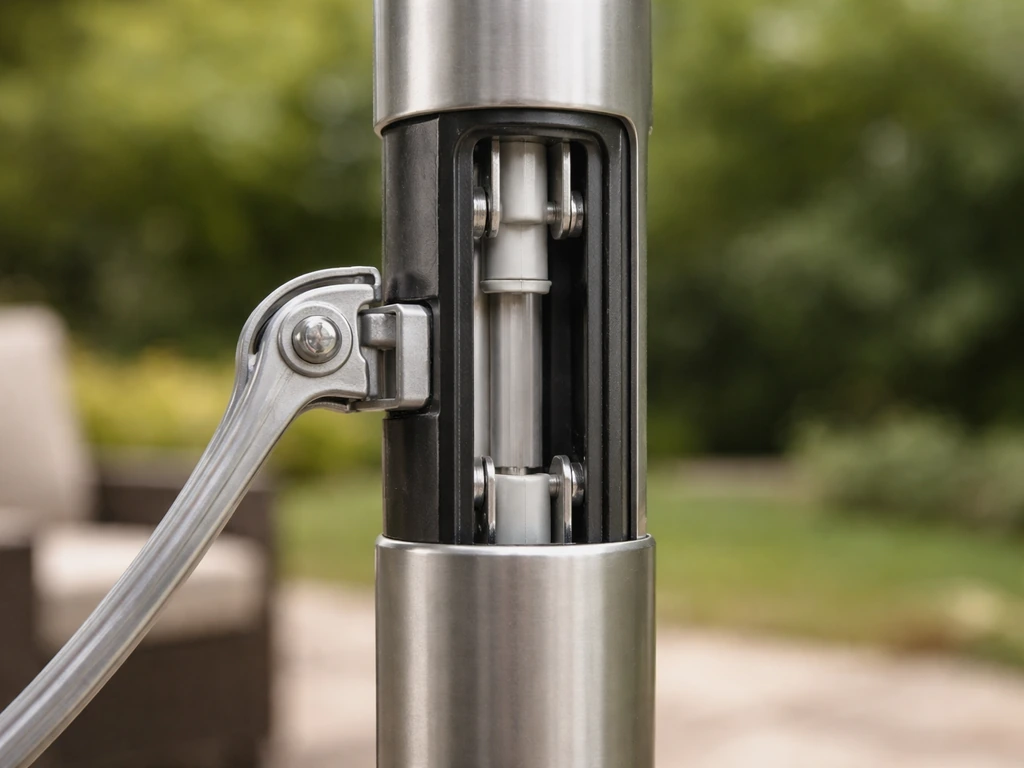
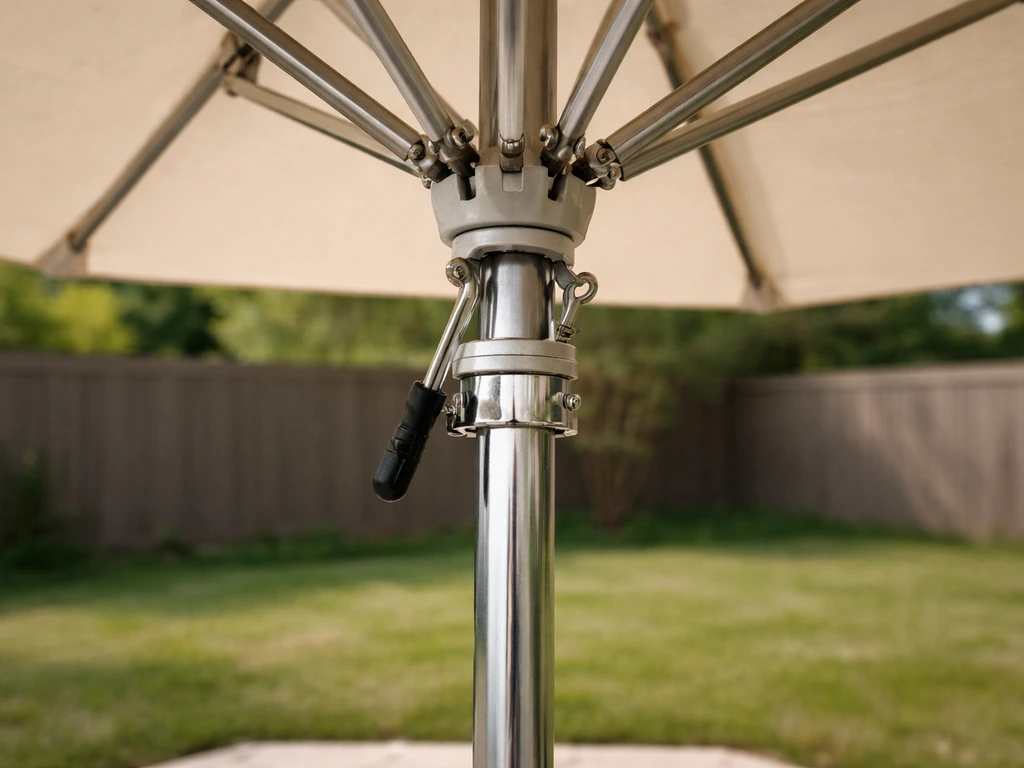
A push-up patio umbrella works almost exactly like an old-school personal umbrella. There's no crank, no cord pulley, and no motor. Instead, a hub (sometimes called a runner) slides up the center pole when you push it. As it travels upward, it pulls the ribs outward and stretches the canopy open. Once the hub reaches its highest position, it locks into place, either by a pin dropping into a hole drilled in the pole, or by a spring-loaded latch clicking into a notch. That lock is what keeps the canopy open and the ribs under tension.
To open it correctly: stand directly behind the umbrella, grasp the lower hub with both hands, and blank" rel="noopener noreferrer">push it firmly upward along the pole until you feel or hear a click, or until the locking pin drops into its hole. If yours uses a pin-and-hole system (common on California Umbrella models), the pin needs to seat completely in the hole, a partial lock is what causes the canopy to slowly sag or collapse. To close it, hold the hub firmly with one hand to support its weight, then pull the pin out of the hole (or press the latch release) and guide the hub back down the pole steadily. Don't let it drop. Letting the hub fall free slams stress into the rib joints and bends the pole over time.
Safety checks before you start troubleshooting
Before you touch anything mechanical, run through these quick checks. Skipping them is how minor problems become expensive ones.
- Make sure the umbrella is in its base and the base is stable before opening or manipulating the mechanism. An unsupported pole that tips while you're pushing up the hub can pinch your fingers or send the canopy into something.
- Never force the hub if it won't move. Forcing a jammed push-up mechanism bends ribs, cracks the hub, or strips the locking notch in the pole. If it's stuck, stop and diagnose first.
- Check wind conditions before opening. Manufacturers like Treasure Garden and Bob Vila both recommend closing the umbrella when winds pick up to around 20 mph or higher. A canopy that snaps open in high wind can injure you and destroy the ribs in one shot.
- Don't try to troubleshoot a wet umbrella that was stored closed while still damp. Moisture trapped inside a closed hub causes corrosion and mildew that increases friction significantly. Let it dry fully before working on it.
- If you see a visibly bent pole or cracked hub, don't try to open the umbrella at all until the part is replaced. Operating with a structurally compromised pole concentrates stress at the break point.
Common problems and what's likely causing them
Hub won't push up (umbrella won't open)
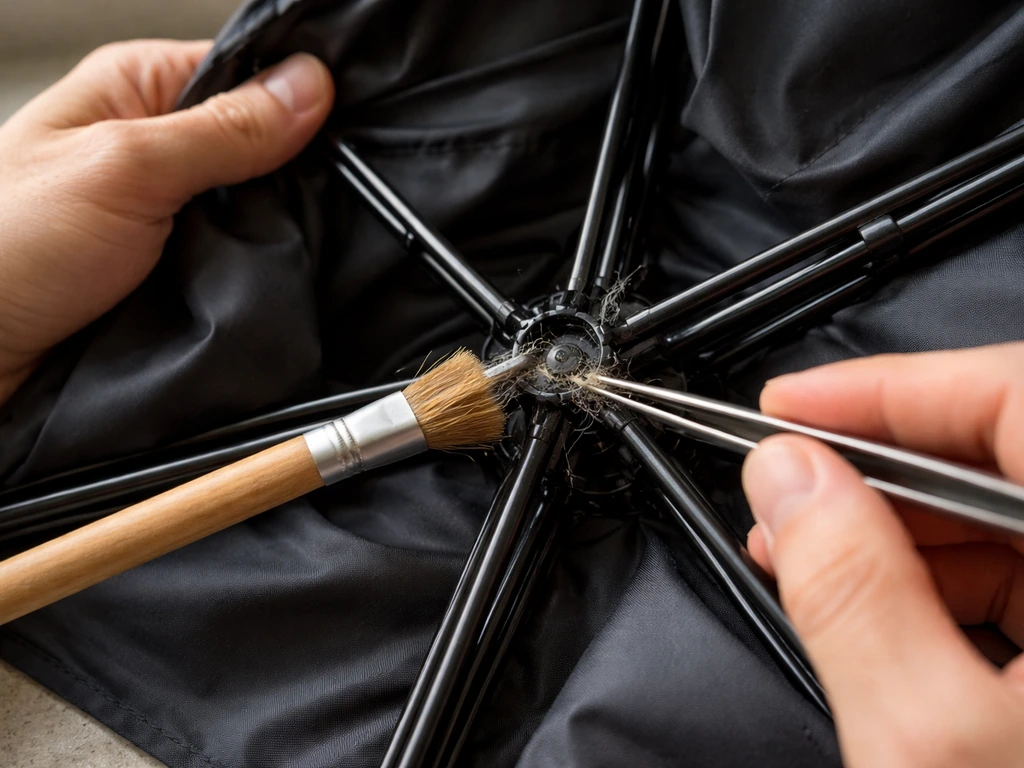
This is usually debris in the hub channel, fabric caught between rib joints, or a rib that's folded at the wrong angle and is blocking upward travel. If your manual lift patio umbrella hub won't push up, check for debris in the hub channel, fabric caught between rib joints, and any rib blocking upward travel. Sometimes the hub itself has dried-out grime that's essentially gluing it to the pole. Occasionally a runner guide inside the hub is cracked and has grabbed the pole surface.
Opens but won't stay up
The locking mechanism isn't engaging fully. In one Reddit r/fixit fix, commenters suggested that resetting or re-engaging the umbrella’s mechanism and ensuring correct tension or alignment helped it work again, as an anecdotal tip rather than a manufacturer-standard repair resetting or re-engaging the mechanism. Either the pin isn't dropping into its hole (hole is dirty or the pin is bent), the spring in the latch is worn out, or the hub isn't being pushed high enough to reach the lock position. Some people stop pushing when resistance increases, but that's exactly the point where the hub needs one firm final push to seat the lock.
Won't close or hub feels stuck coming down
Either the pin is seized in the hole (corrosion or grit), the latch release is stiff, or the hub is binding on the pole on the way down. Trapped fabric or a rib that's rotated out of alignment can also create a mechanical block on descent.
Everything feels stiff and gritty
This is almost always a lubrication issue compounded by built-up dirt. It's the easiest fix on this list and the one most people put off too long.
Step-by-step troubleshooting and fixes
- Lay the umbrella on a flat surface or lean it at a low angle so you can see the full length of the pole and all the ribs. Working vertically is harder to inspect.
- Look at every rib joint (the hinged connection point between the main rib and the pole hub). Canopy fabric loves to loop around these joints, especially after wind events or if the umbrella was closed in a hurry. If you see fabric caught at any joint, gently work it free by hand before doing anything else. This is the single most common cause of a push-up umbrella that suddenly won't open or won't open smoothly.
- Check rib alignment. All ribs should fold flat and parallel to the pole when closed. If one rib is sticking out at an angle or is kinked, it will catch on the hub when you try to raise it. Gently straighten bent ribs by hand; a slight bend can usually be coaxed back. A sharp crease or crack means the rib needs replacement.
- Inspect the hub channel. Run your finger around the inside of the hub opening where it contacts the pole. If you feel grit, dried grime, spiderwebs, or leaf debris, clean it out with a dry cloth or a cotton swab before lubricating anything.
- Check the locking mechanism specifically. If your umbrella uses a pin-and-hole system, pull the pin out fully (it's usually held by a small cord or clip so it won't get lost) and look at the hole in the pole. Clean any corrosion or debris out of the hole with a dry toothbrush. If the pin itself is bent, it won't drop cleanly and the umbrella won't stay open — straighten it carefully with needle-nose pliers or replace it.
- Lubricate the pole and hub channel with a silicone spray lubricant. Apply a light coat to the pole where the hub travels, and spray a small amount into the hub channel itself. Work the hub up and down several times to distribute the lubricant. Do this, then try normal operation.
- If the umbrella still won't stay up after cleaning and lubricating the pin/hole system, push the hub all the way up and hold it there firmly while watching and feeling for the pin to drop. If it drops but the umbrella still sags, the locking notch in the pole may be worn smooth. At that point the pole needs replacing or the hub needs to be shimmed (a job that usually points toward part replacement).
- If the hub is completely seized and won't move at all after lubrication, do not force it. Apply silicone spray liberally and let it soak for 10 to 15 minutes, then try working the hub in small back-and-forth movements rather than trying to push straight to the top. Sometimes a hub that's been corroded in place needs several soak-and-work cycles before it frees up.
- For tilt mechanisms (if your push-up umbrella also has a push-button or collar tilt), make sure the tilt is locked in the straight-up (vertical) position before trying to push the hub up. Trying to open a push-up umbrella while the canopy is angled sideways puts uneven load on the ribs and the hub, and can cause a jam that feels like a mechanical failure but is just an operation sequence problem.
Cleaning, lubrication, and routine maintenance
The single most common reason a push-up mechanism becomes stiff or jams is lack of regular lubrication combined with built-up grime. This is a 10-minute job once or twice a season and it prevents almost every friction-related failure.
What to use (and what not to use)
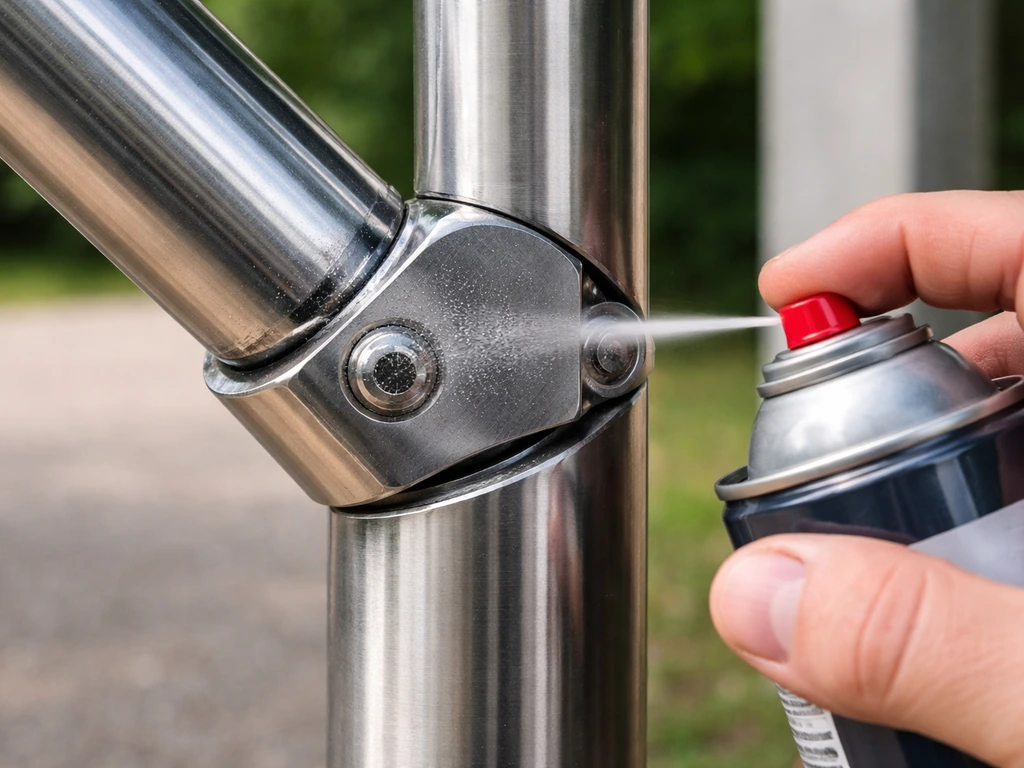
Use silicone spray lubricant on the pole, hub channel, and any metal sliding or pivoting contact points. Silicone is clean, doesn't attract dust, and won't degrade plastic or rubber components. If you want something with even less residue, a dry PTFE spray (like WD-40 Specialist Dry Lube) works well on sliding metal channels and won't gum up over time. White lithium grease is appropriate for pivot pins on tilt mechanisms where you need something that stays put.
Do not use standard WD-40 Multi-Use as your lubricant here. WD-40 is primarily a water displacer and degreaser, not a lasting lubricant. Its petroleum base can degrade plastic hub components and, crucially, it attracts dust and dirt that builds up into a gummy residue over a few months, making your mechanism stiffer than before you started. It's a useful short-term loosening agent, but follow it up immediately with a proper silicone spray.
Cleaning the frame and canopy
For the pole and metal frame components, wipe down with a damp cloth and mild dish soap, then dry thoroughly. Hard-water calcium deposits on the pole (white chalky buildup) can be loosened with a solution of 1 part white distilled vinegar to 9 parts water, applied with a cloth. Rinse well and dry before lubricating. For the canopy fabric, follow your manufacturer's guidance, but most solution-dyed acrylic canopies (like Sunbrella) tolerate a gentle scrub with diluted dish soap and a soft brush. Always let the canopy dry completely in the open position before closing and storing.
Hardware and part inspection: what to look at and when
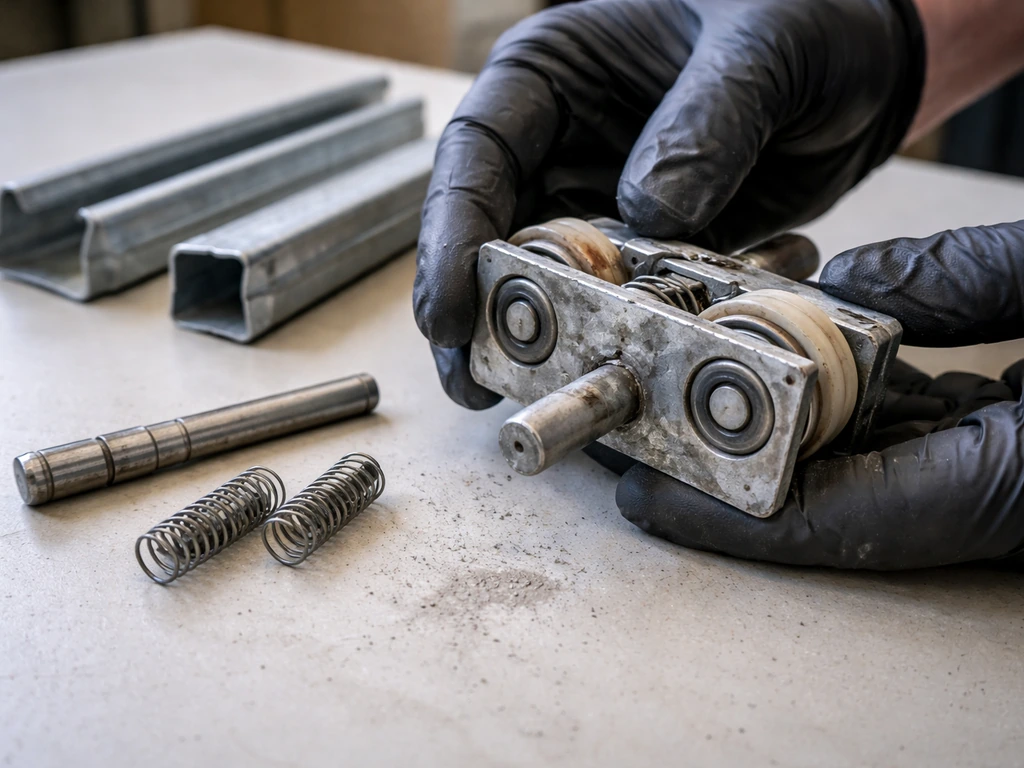
Do a full hardware inspection at the start and end of each season. Here's what to check on each component:
| Component | What to Look For | Action if Damaged |
|---|---|---|
| Hub / runner | Cracks, chips, binding on pole, worn interior guide | Replace hub — most are available as parts from the umbrella brand |
| Locking pin | Bent, corroded, or won't drop cleanly into hole | Straighten with pliers if minor; replace if bent sharply or corroded through |
| Pole / shaft | Dents, bends, worn locking notch, corrosion at base | Minor surface rust: sand and treat. Bent or notch-worn pole: replace |
| Ribs (main and secondary) | Kinks, sharp bends, cracks at joint points | Slight bends: straighten by hand. Cracked or snapped: replace individual rib |
| Rib hinge joints | Stiff pivoting, visible corrosion, seized pins | Clean with dry brush, lubricate with silicone spray or dry PTFE |
| Tilt mechanism (if present) | Button won't depress, collar won't rotate, slips under load | Lubricate pivot pin with white lithium grease; replace collar if cracked |
| Canopy attachment points | Torn vent seam, loose rib pockets, frayed ties | Re-sew loose pockets; replace canopy if tears are at structural points |
Most replacement parts (hubs, pins, ribs, tilt collars) are available directly from brands like California Umbrella, Treasure Garden, and others, or through patio parts retailers. Before ordering, note your umbrella's pole diameter (typically 1 inch, 1.5 inches, or 2 inches) and rib count (usually 6, 8, or sometimes 10), since hub fit depends on both. If you have a manual lift style that uses a cord-and-pulley system rather than a bare push-up hub, that's a related but slightly different mechanism class, and the cord path and pulley wheel become additional inspection points.
When to stop DIYing and get professional help
Most push-up umbrella problems are genuinely fixable at home. But some situations call for either a part replacement or a professional assessment:
- The pole is visibly bent or has a sharp crease. Operating a bent pole risks it snapping under canopy load, which is a safety hazard.
- Multiple ribs are cracked or snapped at the joint. A single rib is a straightforward part swap. Half the ribs failing at once usually means the whole frame has fatigue damage and the umbrella has hit the end of its useful life.
- The locking notch in the pole is worn smooth and the hub won't stay up even with a new pin. Pole replacement is the fix, and whether that's worth it depends on the umbrella's overall condition and replacement cost.
- The hub is cracked through (not just chipped). A cracked hub under load can shatter, releasing the ribs suddenly.
- The umbrella was hit by wind and something is visibly twisted. Wind damage distorts alignment across multiple components at once, and the interaction between damaged parts is harder to diagnose safely at home.
Seasonal storage, wind safety, and winterizing
How you handle the umbrella at the end of the season directly determines whether you open it in spring to a working mechanism or a seized, corroded mess.
Wind safety during the season
Close the umbrella whenever you're not actively using it, and always close it when winds pick up. Treasure Garden's own safety documentation is explicit: allowing a canopy to flap in the wind can cause personal injury and damage the umbrella. The commonly cited threshold is around 20 mph, but err on the side of closing earlier. Every time a pushed-up canopy fights the wind, it's loading the rib joints, the hub, and the locking pin. That accumulated stress is what causes failures that feel sudden but have actually been building all season.
End-of-season winterizing
- Clean the canopy thoroughly and let it dry completely in the open position before closing. Storing a damp canopy closed traps moisture against the hub, pole, and rib joints and accelerates corrosion and mildew.
- Close the umbrella fully and apply a light coat of silicone spray to the pole surface and hub channel before storage. This prevents the hub from seizing on the pole over winter.
- Cover the umbrella with a fitted protective cover. This isn't just about keeping it clean — it keeps moisture, insects, and debris out of the hub channel and rib joints.
- If possible, remove the umbrella from its base and store it horizontally in a shed or garage. Leaving it standing outside in winter exposes the pole base and hub to freeze-thaw cycling, which is particularly hard on plastic hub components and painted metal poles.
- If you're leaving it outside covered, check that the base has adequate weight (most manufacturers recommend a base of at least 50 lbs for a market-size umbrella). A covered umbrella still catches wind, and a tipped umbrella in winter often means a bent pole and cracked hub in spring.
If you also work with retractable awnings or manual shade systems on your patio, the seasonal care principles translate well, close and cover when not in use, lubricate contact points before storage, and inspect hardware before the first use of the new season. Retractable awnings also benefit from periodic lubrication and checking the locking components so the fabric stays tensioned and operates smoothly. The same idea applies to a manual retraction slope patio awning: keep the track and pivot points clean, lubricate contact areas, and inspect locking hardware before the new season. If you have manual patio shades, the same ideas about lubrication, cleaning, and checking the locking parts before storage can help them operate smoothly too. If you’re dealing with a patio awning manual setup, the same close-and-cover routine helps protect the mechanism from sticking and wear manual shade systems. The push-up umbrella is one of the simpler manual shade mechanisms out there, and with a little maintenance it should run smoothly for years.
FAQ
My manual push up patio umbrella only opens halfway, then stops. What should I check first?
Start with the lock position, not the force you apply. Make sure the hub reaches its highest travel before you release your grip, then inspect the pin-and-hole area for debris or a bent pin. If the pin is present but not fully seating, clean the hole thoroughly and try again with one firm final push at the end of the travel.
When closing my manual push up patio umbrella, the hub feels stuck near the bottom. Is it safe to pull harder?
Avoid yanking. If the hub binds on descent, you may have a rib or fabric that rotated out of alignment and is creating a mechanical block. Support the hub with one hand, loosen tension slightly by lifting straight up a little, then guide the hub down slowly while checking for trapped fabric around the rib joints.
Can I lubricate my manual push up patio umbrella without disassembling anything?
Yes in most cases. Spray silicone directly onto the hub channel and the metal sliding or pivot points while moving the hub through its range slowly. Keep lubricant off the canopy fabric, then wipe any overspray from the pole so it does not end up on the canopy later.
How do I clean the hub channel and remove buildup without damaging plastic parts?
Wipe first with a damp cloth and mild dish soap, then dry completely. If buildup is stubborn, use a soft brush to clear debris from the hub channel before adding silicone. Don’t use abrasive pads or harsh solvents on plastic hub components, since they can crack or craze over time.
Is PTFE (dry lube) always better than silicone for a manual push up patio umbrella?
Not always. PTFE dry lube is great for sliding metal channels where you want low residue, but silicone can be more forgiving for mixed contact points that include plastic or rubber. If you already see gumminess from older sprays, clean thoroughly first, then choose silicone for the hub channel and pivot points.
What causes the umbrella to slowly sag even after it seems locked open?
Most commonly, the pin is only partially seated, or the latch is not engaging fully. Close it, then reopen while standing directly behind the umbrella and pushing the hub firmly until you get a clear click or fully inserted pin. Also inspect the hole for grit, since a dirty hole can prevent full seating even when the hub reaches the top.
My pin-and-hole lock looks fine, but the latch still won’t click. Could the spring be worn?
Yes. If cleaning and proper hub height do not restore a full engagement, the latch spring may be weak or the hub may not be landing squarely on the pole. Check for a hub runner guide that is cracked or warped, since that can shift the alignment and stop the latch from reaching the notch.
Should I store my manual push up patio umbrella open or closed?
Closed. Storing with the canopy tensioned or exposed to wind-like movement increases stress on rib joints, the hub, and the locking pin. Keep it fully closed whenever it is not in use, then store dry and fully opened only for thorough drying after cleaning.
What wind range is actually safe for a manual push up patio umbrella?
Use a conservative approach. Even if the commonly cited threshold is around 20 mph, the safer move is to close when you first notice strong gusts, because repeated flapping loads the joints and can lead to failures that seem sudden.
When do I stop repairing and replace parts for my manual push up patio umbrella?
Replace instead of repeatedly forcing if you see a bent pin, a cracked hub runner guide, a permanently deformed latch, or ribs that cannot hold their tension after lubrication and cleaning. If replacement is needed, measure pole diameter and rib count before ordering, and confirm whether your umbrella uses a bare push hub or a cord-and-pulley variant.
Next Articles
12 ft Manual Patio Retractable Awning Troubleshooting Guide
Fix a 12 ft manual patio retractable awning with crank, fabric roll, and tension troubleshooting plus maintenance and re
Manual Retraction Slope Patio Awning Troubleshooting Guide
Fix a manual retraction slope patio awning: diagnose binding, uneven or slow travel, adjust alignment and crank operatio

Manual Patio Shades: Install, Fix, and Maintain Them
Step-by-step guide to choose, install, fix, and maintain manual patio shades, with crank, cords, tilt troubleshooting.