
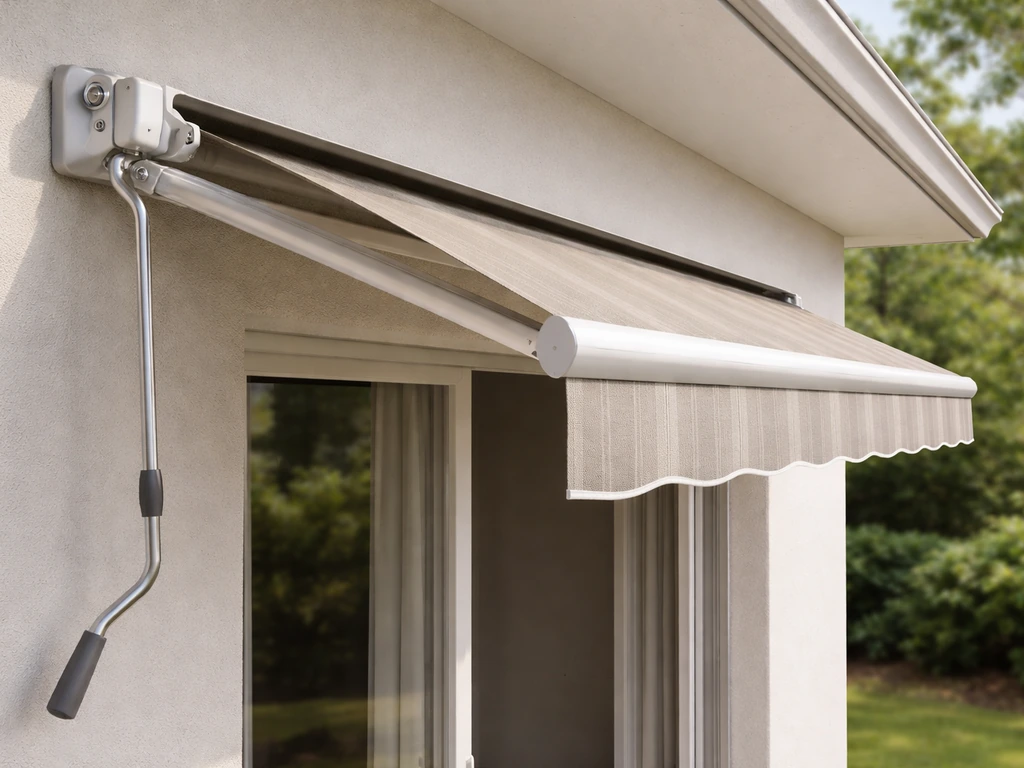
A 12 ft manual patio retractable awning extends and retracts by turning a hand crank that drives a gear box connected to a roller tube. If you need help selecting, operating, or troubleshooting a patio awning manual for your specific model, review the setup and failure-mode steps in this guide. When the crank turns, the roller tube winds or unwinds the fabric while the folding arms push out or fold back in. If you are looking for a step-by-step method, this same manual setup applies to a manual push up patio umbrella as well. To keep it running smoothly, the front bar needs to stay level, the arms need to move freely, and the roller tube needs to stay aligned. When any of those three things go wrong, you get binding, tilting, or a crank that feels like it's fighting you. This guide walks you through correct daily operation, every common failure mode, and the DIY fixes that actually work, with specific callouts for the ALEKO 12 ft model.
12 ft Manual Patio Retractable Awning Troubleshooting Guide
How a 12 ft manual retractable awning actually works
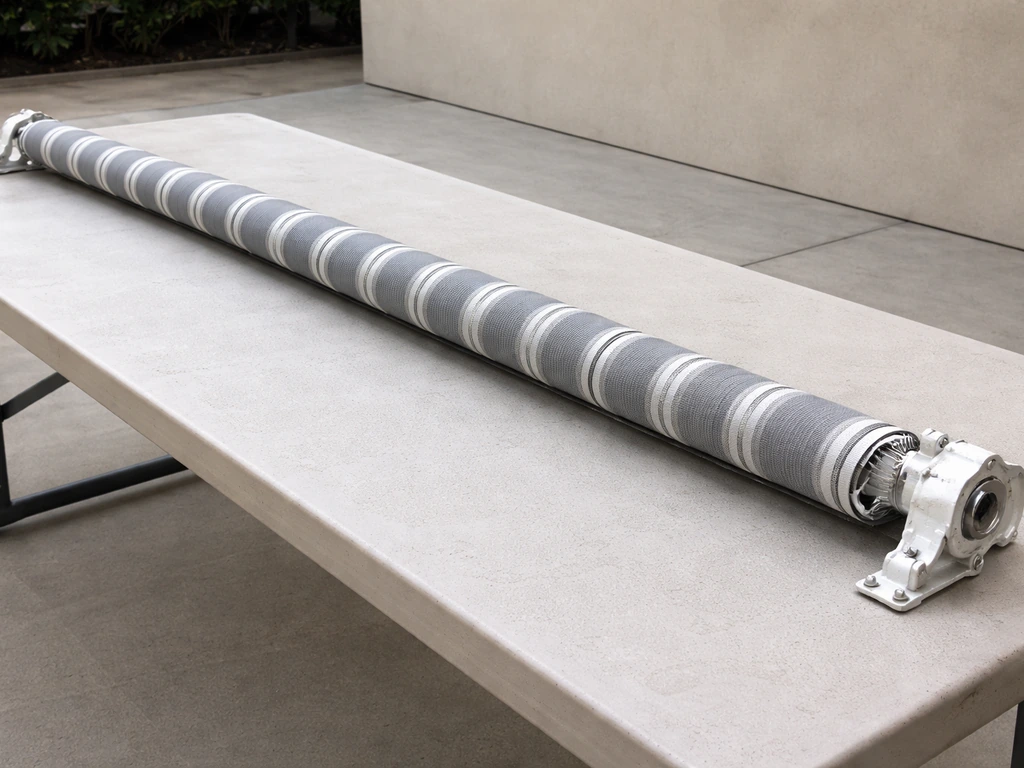
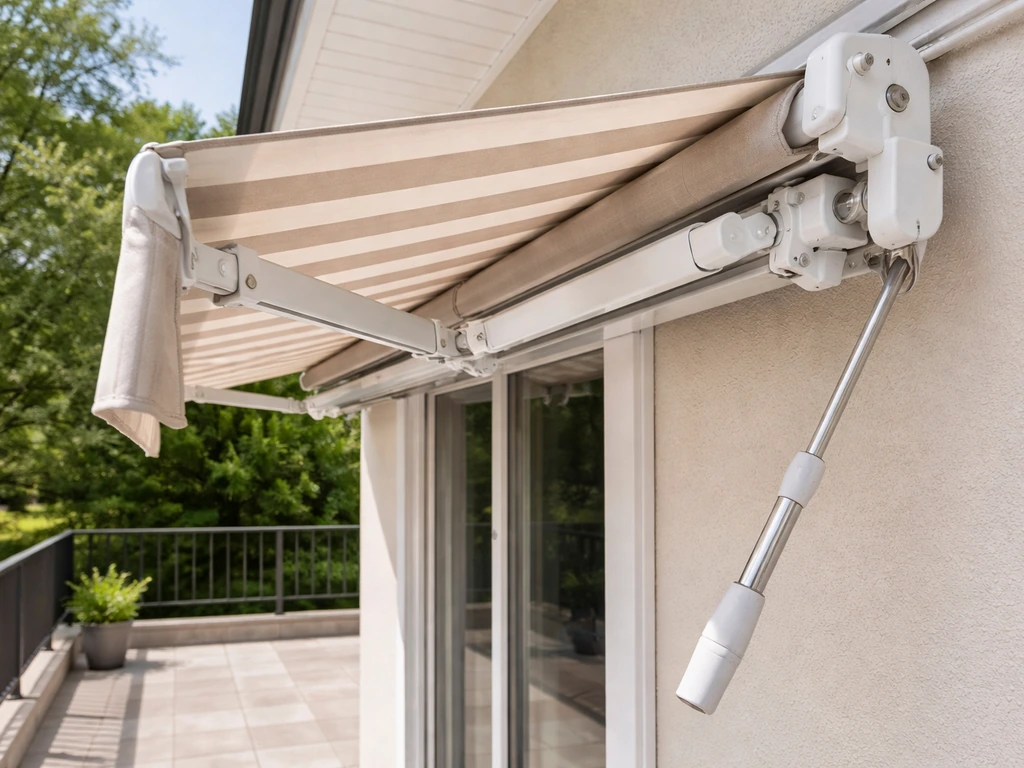
The core of the system is a horizontal roller tube (sometimes called the torsion bar) that runs the full 12-foot width of the awning. The fabric wraps around this tube. On one end sits a gear box that is connected to your hand crank via a drive shaft. When you turn the crank, the gear box spins the roller tube, which either rolls the fabric up (retract) or lets it unroll while the folding arms push it outward (extend). The folding arms are hinged to the front bar at one end and to a wall-mounted roller support bracket at the other end. Spring tension inside the arms keeps the fabric taut once extended.
On the ALEKO Victoria Series, the main named components you will see in the parts diagram are: the roller (tube), the gear box, the torsion bars, the front bar/arms, the roller supports (wall brackets), the hand crank, blocker links, and various end covers. Understanding those names matters because that is the language ALEKO uses on their parts pricing page and in their replacement-parts documentation, including size-specific parts lists for 10 ft and 12 ft models.
The pitch, meaning the downward angle of the awning when extended, is adjustable. This matters a lot: if the front bar sits too high (low pitch), rainwater pools in the middle of the fabric instead of running off. Too steep and it looks awkward and stresses the arms. The ALEKO manual sets the correct target as getting the front bar completely level and even side to side, then fine-tuning pitch from there. Any misalignment at the front bar creates uneven tension across the roller tube, which is the root cause of most binding and tilting problems.
ALEKO 12 ft manual awning: correct setup and daily operation
Setting the pitch angle before first use
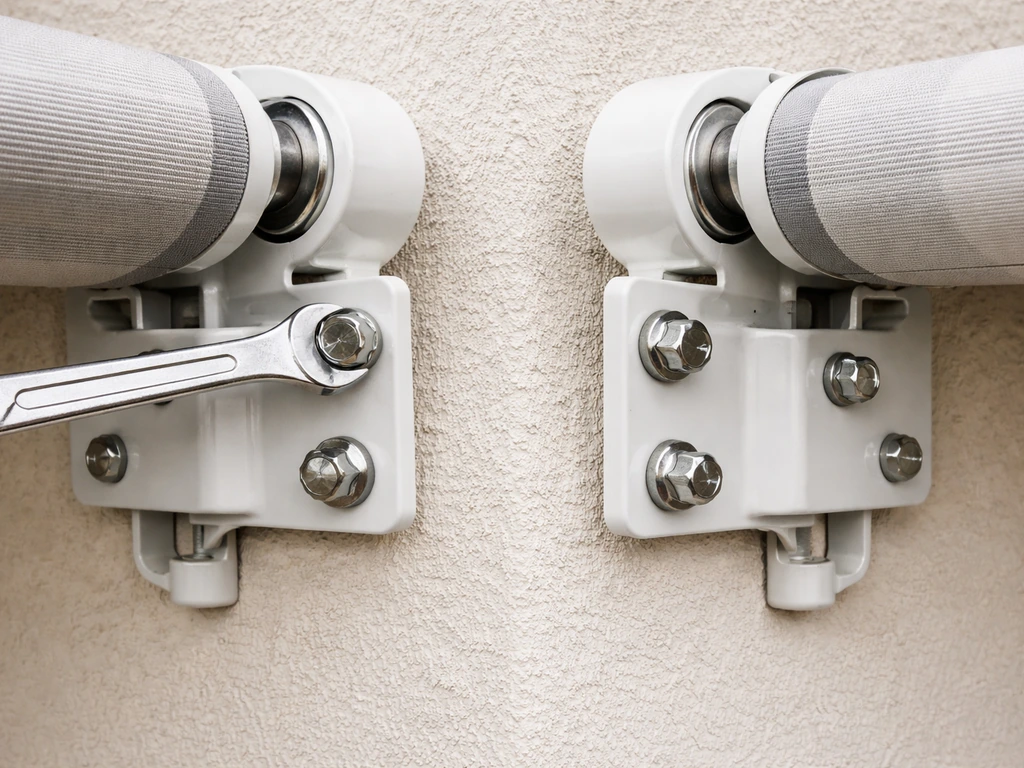
- Locate the locking nuts on the wall brackets (roller supports) on both sides of the awning.
- Loosen both locking nuts with a wrench, keeping them equally loose on each side.
- Find the jack bolt on each bracket and turn it to raise or lower the pitch angle of the arm.
- Adjust both sides equally until the front bar is completely horizontal when viewed from the front.
- Confirm the front side stays in a horizontal line with the awning partially extended.
- Tighten both locking nuts firmly once you are satisfied with the angle.
Do not skip this step on a new installation or after moving the awning. Even a slight difference between the left and right bracket angles causes the fabric to roll unevenly and makes the crank feel stiff.
Extending the awning
- Check that the path in front of the awning is clear of obstacles, furniture, or overhead obstructions.
- Insert the crank handle into the crank socket, usually located on the right side of the gear box.
- Turn the crank slowly in the extension direction (typically counterclockwise, but confirm with your specific unit's label or manual).
- Keep turning at a steady, even pace. Do not force it if you feel resistance. Stop and check for obstructions.
- Stop extending when you reach your desired position. The awning can stop at any point along its travel.
Retracting the awning
- Turn the crank in the opposite direction from extension (typically clockwise).
- Maintain steady, even pressure. Uneven or jerky cranking stresses the gear box.
- Watch the fabric as it rolls up. If one side is rolling faster than the other, stop and read the troubleshooting section below.
- Continue until the fabric is fully rolled and the arms are folded flat against the wall.
- Remove and store the crank handle if the awning will be left retracted for an extended period.
Troubleshooting: the most common problems and what causes them
Awning won't extend or retract
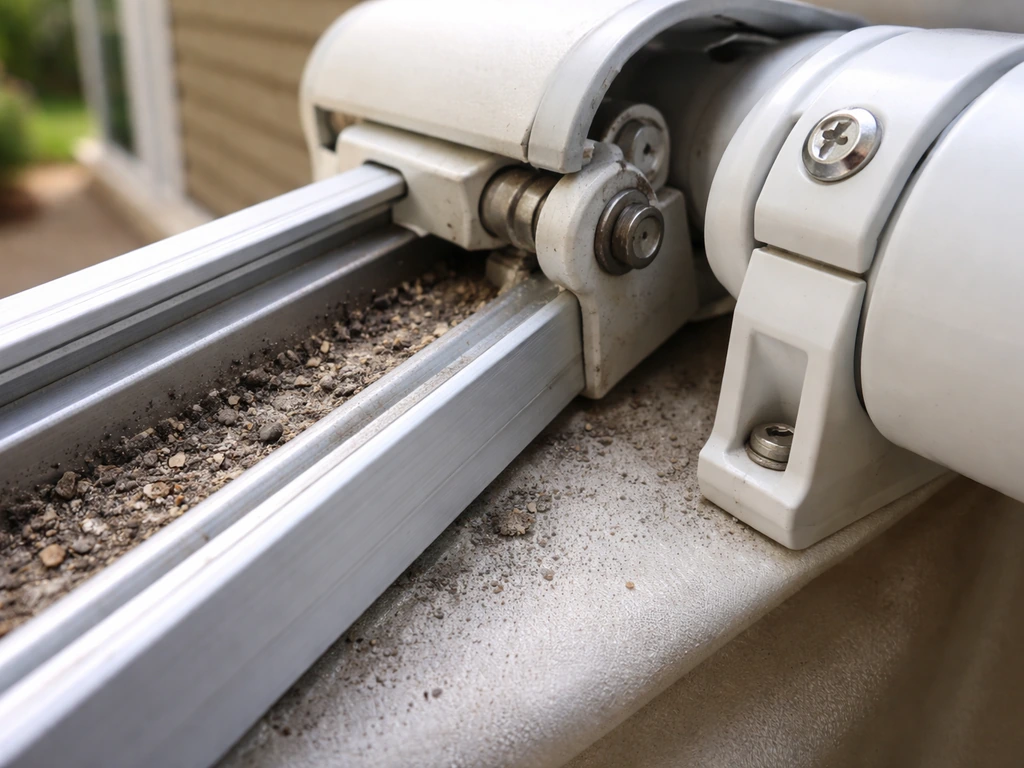
The most common culprit is dirt, grit, or debris in the arm tracks or around the roller support brackets. Start by walking the full length of both arms and visually checking for anything jammed in the hinges or slides. Clean out any debris with a stiff brush. The second most common cause is a stripped or cracked manual crank, which means the crank turns but the gear box shaft does not actually rotate. Remove the crank and inspect the socket end for visible wear or stripping. If the gear box spins freely under no load but feels locked when the fabric is loaded, you likely have a binding roller tube caused by misalignment.
Crank feels stuck or grinds
A grinding crank almost always means either the gear box is dry and corroded, or debris has gotten into the gear teeth. First try lubricating the gear box shaft and any exposed gear teeth with a silicone-based spray lubricant (avoid WD-40 as a long-term fix since it evaporates and leaves residue). If the grinding continues after lubrication, the gear box itself may have a cracked or worn gear. Gear boxes on the ALEKO Victoria Series are discrete replaceable components, so this is a repair, not a whole-awning replacement situation.
Fabric rolls unevenly or the front bar tilts
This is the misalignment problem. The ALEKO manual is direct about it: any misalignment will result in improper retraction, and the fix is getting the front bar level. Start by fully extending the awning and checking the front bar with a spirit level. If one side is higher than the other, go back to the pitch adjustment steps above and equalize the bracket angles. After adjusting, lower the awning fully and manually check that the roller tube looks centered in its end supports. To troubleshoot uneven rolling, you can blank" rel="noopener noreferrer">lower the awning fully and manually adjust the roller tube to align it properly. For persistent uneven rolling, lower the awning all the way and physically check whether the roller tube has shifted in its end brackets. Slide it back to center if needed before re-tensioning.
Cord or spring tension problems
If the fabric sags when extended or snaps back sluggishly, the torsion spring tension inside the roller tube has weakened. On a manual awning, this feels like the fabric droops in the middle when fully extended rather than staying taut. You can sometimes re-tension the roller by winding the tube one extra rotation before securing it in its brackets, but the procedure depends on your specific model. If you are also dealing with a manual lift patio umbrella, the safest approach is to follow the umbrella’s own manual for lift height and mechanical checks. If the arms are not springing outward at all and feel completely slack, the internal arm springs may be broken and will need replacement.
Fabric is stuck mid-travel
If the fabric stops partway and the crank suddenly gets very hard to turn, stop immediately. Forcing it risks stripping the gear box. Look for fabric that has caught on a bracket, a screw head, or a split seam that has folded back on itself. Gently reverse the crank a few turns to release tension, then visually trace the fabric path before trying to continue.
Repairs you can handle yourself
Lubrication
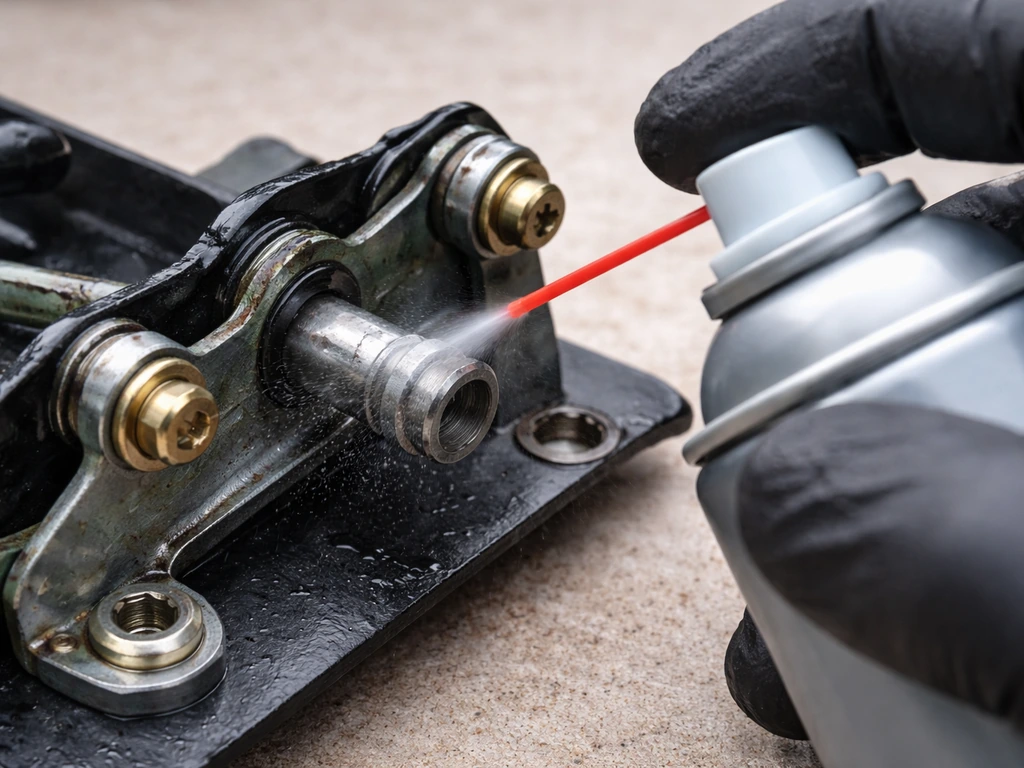
This is the single highest-return maintenance task and takes about ten minutes. Apply silicone spray or a dry PTFE lubricant to the gear box shaft, the pivot points on both folding arms, and the bracket pivot pins. Do not use petroleum-based grease on the fabric or any plastic parts. Lubricate at the start of each season and again mid-season if you use the awning daily. Dry, corroded pivots are what turn a smooth crank into a grinding one over time.
Aligning the roller tube and front bar
If the roller tube has shifted sideways in its end brackets, retract the awning fully, loosen the end bracket hardware, slide the tube back to center, and re-tighten. Always check that both roller support brackets are at the same height on the wall before doing this. A tape measure from the ground to each bracket will confirm it. Re-run the pitch adjustment procedure after any roller tube realignment.
Replacing the hand crank
The crank is one of the most commonly replaced parts on any manual awning and is straightforward to swap. On ALEKO models, the crank length for a standard unit is typically around 5 feet, and ALEKO's replacement parts FAQ uses that measurement as a compatibility identifier. When ordering a replacement crank, confirm the drive socket size matches your gear box shaft. Remove the old crank, slide the new one in, and test rotation before fully extending the awning.
Replacing rollers, arm springs, and gear box components
These are still DIY repairs but require a bit more confidence. For the roller supports (brackets), the main failure mode is a cracked casting from over-tightening or impact. Replacement brackets are sold as individual parts matched by model SKU. For arm springs, the spring is internal to the arm assembly. Some arm assemblies are designed to be replaced as a unit rather than having the spring swapped out separately. For the gear box, ALEKO lists it as a discrete replaceable component in the Victoria Series parts diagram. When replacing any of these, photograph the existing assembly before disassembly so you have a reference for reassembly.
Maintenance and seasonal care
Cleaning the fabric
Brush loose debris off the fabric with a soft-bristle brush before it has a chance to grind into the weave during retraction. For a deeper clean, mix mild soap with lukewarm water and scrub gently with a soft brush, then rinse thoroughly and let the fabric air-dry completely before retracting. Never retract the awning while the fabric is still damp. Trapped moisture breeds mildew and weakens the fabric over one or two seasons. For mildew stains, a diluted bleach solution (1 part bleach to 10 parts water) on solution-dyed acrylic fabric is generally safe, but test a small hidden area first.
Frame and hardware checks
Once a month during the active season, extend the awning fully and look at every pivot point, bracket bolt, and arm connection. Tighten any fasteners that have worked loose from vibration. Check the wall anchor bolts, especially if you have had any wind events. Loose wall anchors are a safety issue, not just a maintenance one. While you have the awning extended, sight down the front bar to confirm it is still level side to side.
End-of-season storage and winterizing
Before storing or leaving the awning retracted for winter, clean and fully dry the fabric as described above. Lubricate all pivot points and the gear box shaft. If your awning can be removed from its wall brackets for the season, do so and store it indoors in a dry location. If it stays mounted, a fitted awning cover adds meaningful protection against UV degradation and debris accumulation. Inspect the wall anchor bolts before the first storm of fall and re-torque anything that feels loose.
Wind, rain, and freeze safety
Manual retractable awnings are not designed to stay out in bad weather, full stop. The ALEKO manual is explicit on this: blank" rel="noopener noreferrer">retract immediately when wind starts, when rain becomes heavy enough to form water pockets in the fabric, or when snow begins to fall. Rain weight alone can be enough to collapse the arms if the fabric pools water, which happens most easily when the front bar pitch is set too flat. Operating in winter conditions risks cracking the fabric, seizing the gear box with ice, and over-stressing frozen pivot joints.
If you are leaving home or going to sleep and the awning is out, retract it. No automatic motor, lock, or anchor replaces that habit on a manual unit. Wind gusts that seem moderate at ground level can hit an extended awning with enough force to bend the arms or rip the fabric from the roller tube. If you want something that handles moderate wind automatically, that is a different product category entirely, closer to a motorized unit with a wind sensor.
For freeze prevention specifically: if temperatures are dropping below freezing overnight and you know the fabric or hardware is damp, retract before it freezes. Ice in the roller mechanism can crack the gear box casting. In climates with hard winters, the smartest move is to remove the awning from its brackets in November and reinstall in spring. This also gives you a natural opportunity to do a full inspection and lubrication before the next season.
Identifying your exact ALEKO model and finding the right parts
ALEKO organizes their replacement parts by model SKU, and they publish size-specific parts lists including one that covers 10 ft and 12 ft models. The first step is finding your model's SKU, which is usually on a label on the roller end cap or on the original packaging. If the label is gone, you can work backward from the physical measurements. ALEKO's replacement parts FAQ uses component dimensions as compatibility identifiers, for example the crank length (around 5 feet for a standard unit) and the wall bracket dimensions. Measure those and compare against the parts pricing page or contact ALEKO support with your measurements.
If you have the original installation manual, the Victoria Series version includes a full parts diagram with component names and a corresponding parts list. Match the component name from the diagram to the SKU in ALEKO's parts inventory before ordering. ALEKO's support documentation notes that you should verify availability by SKU in their inventory system before submitting a parts request, since not every component is stocked at all times.
When to repair vs. replace
| Situation | Recommended action | Why |
|---|---|---|
| Stripped or broken hand crank | Replace the crank (DIY, low cost) | Crank is a standalone part; gear box is likely fine |
| Grinding gear box, still turns | Lubricate first; replace gear box if grinding persists | Gear box is replaceable; full awning replacement not needed |
| Uneven rolling, front bar tilts | Realign brackets and adjust pitch (DIY) | Almost always a geometry issue, not a parts failure |
| Cracked arm or roller support bracket | Replace individual bracket or arm assembly | Discrete parts; no need to replace full awning |
| Fabric torn or heavily mildewed | Replace fabric panel | Frames outlast fabric; fabric-only replacement is cost-effective |
| Multiple bent arms plus broken gear box plus torn fabric | Replace the full awning | Repair cost exceeds replacement cost at this point |
| Wall anchor bolts pulling from wall | Get professional assessment | Structural issue; incorrect repair creates safety risk |
As a rough rule: if a single component has failed and the frame is straight, repair it. If the frame itself is bent from a wind event or the wall anchors have been compromised, that is the point to get a professional opinion or plan for full replacement. Bent frames are almost impossible to realign accurately at home, and a misaligned frame will keep producing the same binding and uneven-rolling problems no matter how many smaller parts you replace.
If you are also looking at related shade options or have a different manual mechanism, it helps to know that the pitch adjustment logic here is very similar to what you would find on a manual retraction slope awning, and the crank-and-roller concept shares some DNA with manual lift umbrella systems, though the awning's folding arm design makes alignment more critical than on a freestanding umbrella pole. Manual patio shades like these often require the same kind of pitch and alignment checks to keep the crank running smoothly.
FAQ
How do I tell if my 12 ft manual patio retractable awning has a gear box problem versus a roller tube binding issue?
With the awning fully retracted, turn the crank gently by hand. If the crank feels smooth unloaded but gets hard only when the fabric is extended, it usually points to alignment or roller tube binding. If it grinds or locks even when unloaded, the gear box shaft, gear teeth, or the drive coupling is more likely the cause (and lubrication or gear box replacement may be needed).
What should I do if the awning retracts unevenly, one side rolling in faster than the other?
Stop and check the front bar level first, then verify both roller support brackets are the same height on the wall (measure from the ground, not by eye). After re-adjusting pitch and bracket angles, lower the awning fully and confirm the roller tube is centered in both end supports before trying to operate again.
Can I use WD-40 to fix a grinding crank on my 12 ft manual patio retractable awning?
It is not the best long-term solution. Silicone spray or a dry PTFE lubricant is preferred for the gear box shaft and pivot points because WD-40 evaporates and can leave residue that attracts dirt. If you already used WD-40, clean off excess residue around the gear area before re-lubricating with the correct lubricant.
My awning is level when extended, but the crank still feels stiff. What’s the next thing to check?
Inspect for debris at the arm tracks and in the hinge or slide points, then confirm the folding arms are moving freely by hand when the awning is out. Also check that the roller tube is aligned in the end brackets, because a centered tube can still feel stiff if one end is slightly shifted.
What’s the correct way to lubricate a manual awning without damaging the fabric or plastics?
Use silicone spray or dry PTFE only on the gear box shaft, arm pivot points, and bracket pivot pins. Avoid petroleum-based grease, and do not apply lubricant directly to the fabric. If any lubricant lands on the fabric, wipe it off immediately so it does not stain the weave or collect grit.
If the fabric sags in the middle, does that always mean the torsion spring needs replacement?
Not always. First confirm the front bar pitch is set correctly and that both sides are level, because uneven pitch can cause uneven tension and apparent sagging. If pitch and alignment are correct and the fabric droops when fully extended, then weakened torsion spring tension is likely, and the appropriate re-tension or arm/spring service procedure depends on your model.
My awning stops partway and suddenly gets very hard to crank. Should I keep turning to finish the motion?
No. Forcing it can strip the gear box or worsen the jam. Reverse the crank a few turns to release tension, then trace the fabric path for a catch (caught on a bracket, a screw head, or a folded seam) before trying again.
How do I safely adjust the pitch on my 12 ft manual patio retractable awning after I clean or move it?
Extend the awning and use a spirit level to get the front bar completely level side to side. Then fine-tune the pitch so the front bar sits at the manufacturer’s target angle range, not too flat, because flat pitch increases pooling water and accelerates binding or arm stress.
When should I tighten bolts on my awning, and where are the most critical fasteners?
Do a monthly check during active season with the awning extended. Focus on bracket bolt connections, arm connection points, and wall anchor bolts after any wind event. If anchor bolts loosen, treat it as a safety risk and do not operate until they are properly secured.
Is it okay to retract my awning if the fabric is damp?
Avoid it. Retracting damp fabric traps moisture in the weave and can lead to mildew and faster fabric deterioration. Clean and air-dry fully, then retract only when dry, especially before storing for winter.
What should I do before winter if I cannot remove the awning from the wall brackets?
Retract only when the fabric is fully dry, lubricate the pivot points and gear box shaft, and inspect wall anchor bolts before the first storms. Use a fitted cover if you leave it mounted to reduce debris and UV exposure. In hard-freeze climates, plan for earlier inspection and consider removal if ice risk is high.
Do I need to retract the awning in light rain or only in heavy storms?
Retract when rain becomes heavy enough to create water pockets in the fabric, even if it is not a full storm. Flat pitch makes pooling more likely and increases the risk of arm collapse or fabric stress, so do not wait for collapse signs to appear.
If I replace the crank on my 12 ft manual patio retractable awning, how can I confirm it will fit?
Confirm the drive socket size matches your gear box shaft before ordering. Measure the crank length and compare it against your model’s standard replacement dimensions, then test rotation by hand after installing the crank but before fully extending the awning.
How can I tell whether I should replace a part or call a professional for possible frame damage?
If the frame looks straight and only a component (crank, gear box, brackets, or arms) failed, repair is usually the right path. If you suspect the frame was bent by a wind event, or if alignment cannot be restored after pitch and tube centering adjustments, get professional help because a bent frame will repeatedly cause binding and uneven rolling.
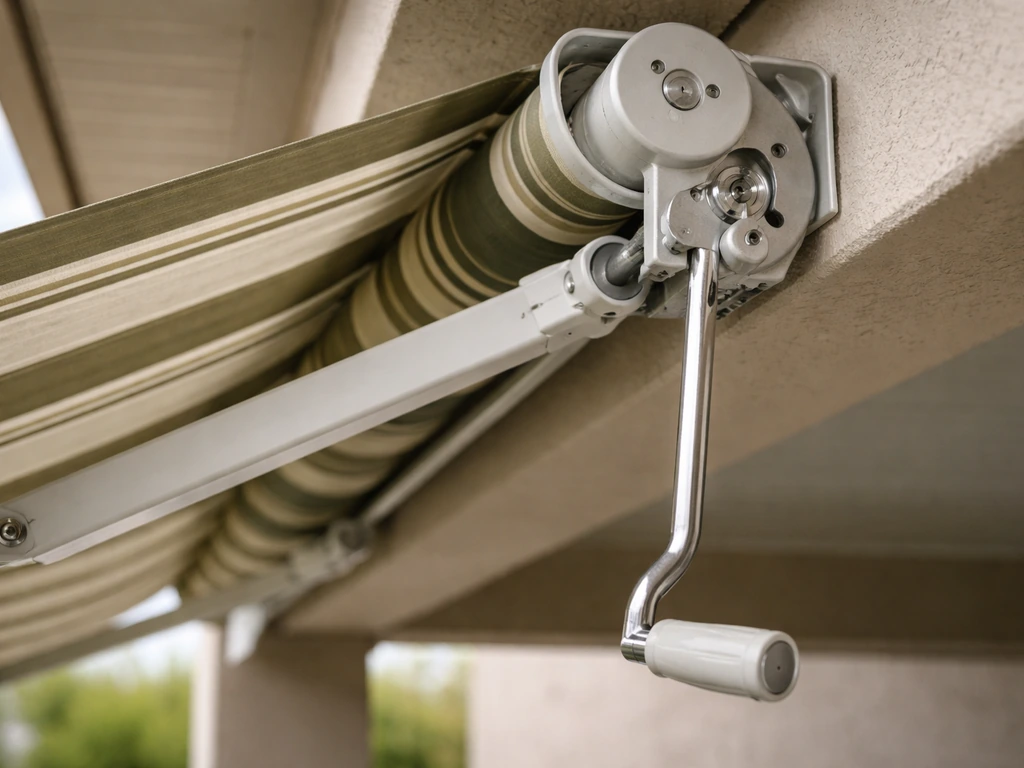
Fix a manual retraction slope patio awning: diagnose binding, uneven or slow travel, adjust alignment and crank operatio
Step-by-step guide to choose, install, fix, and maintain manual patio shades, with crank, cords, tilt troubleshooting.
Step-by-step manual patio awning guide for smooth opening, fixing jams, uneven retraction, crank and tilt arm issues, an