
The fastest way to keep bees out of your patio umbrella is to remove what's drawing them there in the first place: clean the canopy of any sugary residues, seal any hollow openings in the pole or frame hardware, and close the umbrella when you're not using it. Those three steps alone solve most bee problems. If bees are already clustering on or inside your umbrella, stay calm, move everyone away slowly, and give the swarm 24 to 48 hours before you do anything else. Most swarms move on by themselves. The rest of this guide covers every situation from a few curious foragers to an active nest, so you can handle it safely and decide when to call for help.
How to Keep Bees Out of Patio Umbrella: Safe DIY Steps
Luca Morrison
24 Jul 2026
When and why this actually matters
Bee season on a patio typically runs from late spring through early fall, peaking during swarm season in April through June in most of the United States. That's when honey bee colonies split and a portion of the hive, led by a queen, flies out looking for a new home. A patio umbrella, especially one that's left open and unattended, offers exactly what a scouting swarm wants: shade, shelter, and a structure with hollow spaces. Even if you never see a full swarm, individual foragers will visit umbrellas in search of sugary spills, standing water in the canopy's tilt mechanism, or the scent of sunscreen and sweet drinks. Left unchecked, what starts as a few bees can escalate to an established colony inside your umbrella pole or canopy vents, at which point you're dealing with a removal job rather than a deterrent job. Prevention is genuinely much easier than removal, and it takes less than 20 minutes.
Materials and tools you'll need
Most of the deterrents and physical fixes in this guide use things you probably already have. Before you start, gather what's on this list so you're not stopping mid-task to search for something.
- Mild dish soap and warm water (for cleaning the canopy and frame)
- White vinegar (spray bottle, for residue cleaning and scent deterrence)
- Peppermint essential oil (optional, short-term scent deterrent)
- Cotton balls or small cloth strips (for essential-oil application)
- Spray bottle (clean, no prior chemical residue)
- Fine steel wool or foam backer rod (for sealing pole vent holes)
- Clear weatherproof silicone caulk or exterior-grade caulk (for sealing seams)
- Caulk gun
- Fiberglass window screen material or fine mesh fabric (cut to size for vent covers)
- Zip ties or exterior-grade hook-and-loop tape (for attaching mesh)
- Patio umbrella storage cover or bag (fitted to your umbrella size)
- Flashlight (for inspecting pole top, vents, and canopy ribs)
- Disposable gloves
- Camera or smartphone (to photograph bee activity before calling a professional)
- Epinephrine autoinjector (EpiPen or equivalent), if any household member has a known bee or venom allergy
Why bees keep showing up at your umbrella
Bees are looking for three things: food, water, and shelter. Your patio umbrella can accidentally supply all three. On the food side, any sugary residue on the canopy fabric matters more than you'd think. Spilled lemonade, sticky sunscreen, sweet drink splatter, or even honeydew secretions from aphids on a nearby plant can all draw foragers. Bees have a strong sense of smell and will zero in on sugar at concentrations that seem invisible to you.
Water is a bigger factor in hot weather than most people realize. On days above 85 degrees Fahrenheit, honey bee colonies actively send foragers out to collect water for evaporative cooling inside the hive. Shallow puddles in the canopy fold lines, condensation around a tilting mechanism, or even damp fabric after rain can make your umbrella a destination. University of California research confirms that providing a dedicated, separate bee water source (a shallow dish with stones so bees can land) near your garden rather than on your patio can meaningfully reduce visits to umbrella structures and other furniture.
Shelter is the most structural problem. Many center-pole umbrellas have an open or partially open vent at the top of the pole where the shaft fits into the canopy hub. Market umbrellas often have a finial cap that doesn't fully seal the pole interior. The result is a hollow tube that looks, to a scouting bee, like a promising cavity for a new colony. Ribs and seam pockets in the canopy create small sheltered areas too, particularly in older umbrellas where fabric has loosened at attachment points.
Bees, wasps, or hornets? How to tell them apart
Before you do anything, take a moment to confirm what you're actually dealing with. The right response depends on the insect. Spraying a wasp nest and waiting out a honey bee swarm are completely different situations.
| Feature | Honey Bee | Bumble Bee | Yellowjacket Wasp | Paper Wasp | Bald-Faced Hornet |
|---|---|---|---|---|---|
| Body shape | Robust, rounded abdomen | Large, very round and fluffy | Slender, narrow waist | Slender, narrow waist, long legs | Large, teardrop body |
| Body texture | Fuzzy/hairy | Dense, thick hair | Smooth and shiny | Smooth | Smooth |
| Color | Golden-brown with dark bands | Black and yellow or black and orange | Bright yellow and black | Brown/red with yellow markings | Black and white |
| Leg appearance | Hind legs may carry visible yellow pollen | Hind legs carry pollen sacs | No pollen on legs | No pollen on legs | No pollen on legs |
| Flight behavior | Steady, flower-directed | Slow, hovering near flowers | Fast, erratic, food-scavenging | Slow but aggressive if nest disturbed | Fast, aggressive near nest |
| Typical nest location | Tree hollow, wall void, pole cavity | Ground holes or dense grass | Ground burrows or wall voids | Open paper combs under eaves | Large paper nest in trees/eaves |
| Aggression level | Low unless hive is threatened | Low unless stepped on | High, especially in late summer | Moderate | High near nest |
The practical rule of thumb: if the insects are hairy and visiting flowers between sessions at your umbrella, they're almost certainly bees. University extension ID guides, including A Beginner's Field Guide to Identifying Bees, Colorado State/Extension (field guide), note that bees are generally more robust and hairy with pollen‑carrying structures on their hind legs while wasps are smoother and more slender blank" rel="noopener noreferrer">A Beginner's Field Guide to Identifying Bees — Colorado State/Extension (field guide). If they're smooth, fast-moving, and interested in your food and drinks, you're looking at yellowjackets or paper wasps. That distinction matters because beekeepers can relocate honey bee swarms humanely, while wasps and hornets require different management entirely. Decoy paper nests (those fake nest balls you hang) can deter paper wasps from starting a new colony nearby, but they do absolutely nothing for honey bees.
Immediate safety steps if bees gather on your umbrella
Finding a cluster of bees on your umbrella can be startling, but the situation is usually safer than it looks. A swarm cluster, which appears as a dense ball of bees hanging from the canopy or frame, is typically a honey bee colony in transit. They've left the parent hive and are resting while scouts search for a permanent home. During this phase, bees are generally docile because they have no comb or young to defend. Extension entomologists consistently note that resting swarms sting very rarely when left undisturbed.
That said, docile does not mean harmless, and your first job is to protect people, especially children and anyone with a venom allergy. Follow these steps in order.
- Stay calm and move slowly away from the umbrella. Do not swat, wave, or spray the bees with water. Rapid movement and vibration trigger defensive stinging.
- Get children and pets inside or at least 20 feet away, and keep them there until the situation is resolved.
- Do not close or fold the umbrella while bees are present. Disturbing the cluster can cause the bees to scatter and become defensive.
- Set up a simple physical barrier if needed: a lawn chair, a table, or rope-off line to discourage others from approaching the area.
- Avoid loud noises, vibrations, or running near the area. Gas-powered mowers, leaf blowers, or anything that causes structural vibration close to the umbrella can agitate bees.
- Photograph the cluster from a safe distance using your phone's zoom. A clear photo helps a beekeeper or pest professional give you an accurate assessment before they arrive.
- Wait 24 to 48 hours before taking further action. A resting swarm will often move on by itself within this window. If the cluster grows larger, thickens, or you see bees entering a hollow space (rather than just resting on the surface), that is a sign they may be setting up permanently.
Sting response and allergy cautions
If someone is stung, remove the stinger promptly by scraping it sideways with a fingernail, credit card edge, or the flat of a knife. Do not pinch or squeeze it, which can inject more venom. Wash the area with soap and water, apply a cold pack to reduce swelling, and watch for symptoms over the next 30 minutes. For most people, local pain, redness, and minor swelling are the only reactions and can be managed with an oral antihistamine and ice.
Anaphylaxis is a different situation entirely and is a medical emergency. Signs include difficulty breathing, tightness or swelling in the throat, swelling of the face or lips, sudden dizziness or fainting, or hives spreading across the body away from the sting site. According to American Heart Association and American Red Cross 2024 first aid guidelines, intramuscular epinephrine (an EpiPen or equivalent autoinjector) is the primary emergency treatment, and 911 should be called immediately even if the autoinjector is used. If any member of your household has a known venom allergy, keep an autoinjector accessible at all times when spending time outdoors, and confirm with your physician on proper dosing and follow-up care.
Quick action checklist: approach, avoid, and who to call
- DO: Move people and pets away calmly and quietly
- DO: Photograph the bees from a safe distance
- DO: Wait 24 to 72 hours to see if a resting swarm moves on
- DO: Call a local beekeeper (free or low-cost) if the swarm persists or you see bees entering a hollow space
- DO: Call a licensed pest control professional if the colony has been in place more than 72 hours and you suspect established comb
- AVOID: Swatting, spraying water, or using compressed air near the cluster
- AVOID: Closing or folding the umbrella while bees are on it
- AVOID: Applying pesticide sprays to a honey bee swarm — this is wasteful, potentially illegal depending on local pollinator protections, and escalates the situation
- AVOID: Using smoke around your patio structure — smoke does not reliably repel bees and creates a fire risk near fabric and wood
- AVOID: Attempting to remove an established nest inside a pole or cavity without protective gear and experience
Cleaning and scent-based deterrents, step by step
This is your first line of defense and the most reliable one. Removing the food and scent triggers that attract bees in the first place costs almost nothing and takes about 15 minutes. Do this at the start of spring and repeat every two to three weeks during peak bee season.
- Open the umbrella fully so you can access all panels. Work in the morning or evening when bee activity is low, not during the midday heat when foragers are most active.
- Mix one tablespoon of mild dish soap into one quart of warm water in a spray bottle. Spray the canopy panels, paying close attention to the undersides where food and drink particles collect. Let it sit for two minutes.
- Wipe down all panels with a clean cloth. Work from the top of each panel toward the rib, not inward toward the center hub, to avoid pushing debris toward the pole vent.
- Rinse with clean water and allow the canopy to dry completely before closing the umbrella. Closing a damp umbrella traps moisture in the fabric folds, which creates exactly the kind of cool, damp microhabitat that attracts both bees and mildew.
- Clean the pole, hub hardware, rib attachment points, and any metal or plastic connectors using the same soapy solution. Dry them off thoroughly.
- Apply a light deterrent scent if desired: add 10 drops of peppermint essential oil to a small spray bottle of water and mist the perimeter of the canopy and the upper pole area. Re-apply every three to five days. Understand the limitation here: research on essential oil repellency for honey bees shows short-term effects at best, and the evidence for reliable long-term deterrence is mixed. This is a supplemental step, not a stand-alone solution.
- Place cotton balls with a few drops of peppermint or eucalyptus oil at the junction between the pole and the canopy hub, and replace them every few days. Keep them secured with a rubber band or wire so they don't blow off in wind.
- Set a dedicated bee water station at least 20 feet from your patio: a shallow dish or saucer with clean water and a few small stones for landing perches. Refresh the water daily. This redirects thirsty foragers away from your furniture and umbrella fabric.
Sealing and physical exclusion: close off the openings bees want
Scent deterrents help, but sealing physical entry points is more permanent and more reliable. This step requires about 30 minutes and a few dollars in materials. Check your umbrella type first: market umbrellas (the classic single-pole style with a finial cap at the top) usually have an open or loosely fitted pole vent, while cantilever and offset umbrellas may have hollow side-arm joints and hardware cavities that need attention.
- Close and lower the umbrella. Disconnect the canopy from the frame if your model allows it, or simply work around the fabric as-is.
- Use a flashlight to inspect the top of the center pole where it meets the hub. Look for a gap between the pole shaft and the hub socket, any vent holes drilled in the pole for drainage, and whether the finial cap (the decorative cap at the very top of the pole) is loose, cracked, or hollow-backed.
- Check the pole base where it enters the stand or table-mount hole. There is often a gap here of a quarter inch or more that bees can enter from below and travel up through the hollow interior.
- Seal pole vent holes (usually 1/4 to 3/8 inch diameter drainage holes near the top of the pole) with fine steel wool pushed firmly into the hole, or with a cut piece of foam backer rod. Steel wool is particularly good because bees will not chew through it, while foam alone can be worked loose over time. For a more permanent fix, apply a small amount of clear exterior silicone caulk over the steel wool plug.
- Seal the gap between the pole shaft and the hub socket using a ring of clear silicone caulk. Apply a thin bead around the joint, smooth it with a gloved finger, and let it cure for 24 hours before opening the umbrella. Check annually as movement from wind and use can crack the seal over time.
- Replace a loose or cracked finial cap. Most market umbrella finials unscrew or pull off; replacements are available from umbrella manufacturers or hardware stores for under $10. If the finial is still structurally sound but has a gap at the base, seal it with a wrap of waterproof silicone tape before screwing it back on.
- Address the base gap by wrapping the pole at its entry point with weatherstripping foam tape or using a rubber pole boot designed for patio umbrella bases. This seals the bottom entry as well as the top.
- For cantilever or offset umbrellas, inspect all the pivot points and connection hardware on the side arm and frame. These often have hollow bolt housings or pivot covers that can come loose. Re-seat or replace any loose covers and apply a bead of caulk to any gaps larger than 1/8 inch.
Using mesh, screens, and protective covers
When you can't fully seal a vent or opening without interfering with drainage or mechanical function, mesh is your friend. This is especially true for pole drainage vents, which need to stay open to prevent water buildup inside the pole but also need to keep bees out.
| Option | Best Use | Installation | Pros | Cons |
|---|---|---|---|---|
| Fiberglass window screen patch | Covering pole vent holes and small hub gaps | Cut to size, attach with exterior caulk or silicone tape | Cheap, easy to find, allows drainage, durable | Can collect debris over time, needs annual inspection |
| Fine metal mesh (hardware cloth, 1/16 inch or smaller) | Larger openings like loose finial bases or exposed joint gaps | Cut, fold to shape, secure with caulk or zip ties | Very durable, bees cannot chew through it | Harder to cut and shape, slight rust risk on cheaper grades |
| Fitted umbrella storage bag/cover | Whole-umbrella protection when not in use | Slip over closed umbrella, cinch at base | Protects the entire structure, simplest option | Must be removed each time you use the umbrella, can trap moisture if stored wet |
| Canopy cover or rain cap (pole top) | Blocking the top pole/hub area specifically | Fit over hub, tie or clip in place | Targeted, low cost | Not available for all umbrella models, may interfere with opening mechanism |
The storage cover approach is the single easiest physical deterrent if you're disciplined about using it. Close the umbrella at the end of each day or whenever it won't be used for more than a few hours, and slip the bag over it. For step-by-step fixes for a stuck crank or locking collar, see how to keep patio umbrella open. A closed, covered umbrella gives bees and wasps nothing to explore. This also protects the fabric and mechanical components from UV and weather exposure, extending the life of the canopy significantly. It's a habit that pays back on multiple fronts.
Safe repellents: natural options and commercial products
A quick note before diving in: repellents work best as supplements to cleaning and physical exclusion, not as replacements. The EPA's Pollinator Protection Strategic Plan notes that pesticide labels must include pollinator hazard information and that applicators should avoid using bee‑toxic pesticides on bloom or when bees are foraging, following label directions to prevent harm to pollinators Pollinator Protection Strategic Plan — U.S. EPA. If the underlying attractants are still present (sticky residue, open vents, standing water), even a good repellent will only slow bees down temporarily.
Natural options
- Peppermint oil mist: dilute 10 to 15 drops per 8 oz of water, spray on canopy perimeter and upper pole. Reapply every 3 to 5 days. Short-term deterrent only; peer-reviewed research shows variable effectiveness and some toxicity to bees at high concentrations, so keep concentrations low and do not spray directly on bees.
- Cinnamon powder: sprinkle lightly around the base of the umbrella stand and along the bottom edge of the canopy. Bees reportedly dislike cinnamon's scent. Reapply after rain. Very low effectiveness once diluted by weather, best used in dry climates or covered settings.
- White vinegar: wipe down umbrella surfaces after cleaning. The acetic acid smell dissipates quickly but may provide a few hours of deterrence. Not a reliable long-term solution.
- Decoy wasp nests: paper-nest decoys (fabric or plastic balls that mimic a paper wasp nest) show some experimental support for reducing paper wasp nesting activity nearby, but they have no documented effect on honey bees. Only useful if paper wasps are specifically your problem.
- Dedicated bee water station: as described in the cleaning section, this is a preventive rather than a repellent, but it consistently redirects foragers and is supported by university extension guidance.
Commercial products
- Yellowjacket and wasp traps (brands like RESCUE! W-H-Y Trap): designed primarily for yellowjackets, hornets, and paper wasps, not honey bees. Place at least 20 feet away from your seating area, not directly under the umbrella. Follow the label directions. These can inadvertently catch beneficial insects including native bees if placed near flowering plants.
- Pyrethrin-based wasp sprays: appropriate for wasp and hornet nests in specific locations, but should not be used on or near honey bee swarms. Many states and localities have protections for honey bees; check local regulations before applying any pesticide to a honey bee colony. Always read and follow EPA-registered product labels, which must include pollinator hazard information.
- EcoPCO and similar plant-oil-based commercial repellent sprays: designed for general flying insect deterrence around structures. May provide limited short-term repellency around umbrella hardware but are not a targeted bee solution and require frequent reapplication.
The honest bottom line on repellents: nothing in this category works as well as sealing openings and removing food sources. Use them as a secondary layer, not the primary strategy.
Humane nest removal and relocation
If you find an established colony (not just a resting swarm) inside your umbrella pole or frame, humane relocation by a beekeeper is the best outcome for the bees and for you. Here's what the process actually involves.
A resting swarm that arrived within the last 24 to 72 hours and is still clustered on the outside of the umbrella is the easiest case. A local beekeeper can collect the swarm by brushing or shaking the cluster into a hive box. This takes 20 to 40 minutes and most beekeepers will do it free of charge because they genuinely want the colony. Contact your local beekeeping association or check state/county bee inspector lists to find someone nearby.
If bees have been present for more than 72 hours and you can see them entering and exiting a hollow area repeatedly (rather than resting on the surface), comb-building has likely begun. This is now a structural removal job, sometimes called a cutout. The beekeeper or pest professional needs to access the interior of the pole or frame, remove the comb and brood, and collect the colony. For an umbrella pole, this may mean disassembling the umbrella hardware to access the pole interior. The good news is that umbrella poles are more accessible than wall cavities, so the job is generally simpler than a full building cutout. Expect the process to take one to two hours and confirm in advance whether the person you hire handles both the bee removal and the cleanup.
After any nest removal, thoroughly clean the interior of the pole with warm soapy water, allow it to dry completely, and seal all openings before reassembling. Residual wax and honey scent can attract new swarms if left behind.
Beekeeper vs. pest control: who to call and when
This decision comes down to two factors: whether the insects are honey bees (versus wasps or hornets), and whether there is established comb or just a resting swarm.
| Situation | Who to Call | Typical Cost | Expected Outcome |
|---|---|---|---|
| Resting honey bee swarm, less than 72 hours, no comb | Local beekeeper | Free to $50 | Beekeeper collects the live swarm; bees are relocated to a managed hive |
| Honey bee colony with established comb, inside a cavity | Beekeeper experienced in cutouts, or pest control with cutout service | $100 to $400+ | Colony and comb removed; cavity cleaned and sealed |
| Paper wasp nest under canopy or on frame | Pest control, or DIY with labeled wasp spray at night | $50 to $150 or DIY cost | Nest treated; repeat inspection recommended |
| Yellowjacket nest in ground or wall near patio | Pest control | $100 to $300 | Nest treated; entry points may be sealed |
| Bald-faced hornet nest in tree or eave near patio | Pest control (professional protective gear needed) | $100 to $250 | Nest removed; area cleared |
| Unknown insect type, large colony, aggressive behavior | Pest control first to assess, then beekeeper if honey bees confirmed | Assessment fee varies | ID confirmed; appropriate specialist engaged |
One important practical note: always confirm that a beekeeper is insured and experienced with structural removals before hiring them for a cutout job. Collecting a swarm from a surface is very different from disassembling an umbrella pole. Most local beekeeping clubs can refer you to experienced members who handle both.
Seasonal storage, inspection, and maintenance schedule
A consistent maintenance routine does more than prevent bee problems. It also catches mechanical issues early, which is the whole point of keeping your umbrella in good working order. Here's a practical schedule that covers both.
Early spring (before prime swarm season, March to April)
- Take the umbrella out of storage and inspect the canopy for damage, mildew, or tears that could create new sheltered pockets.
- Check all pole vents, the finial cap, and pole-base gap. Re-seal any caulk that has cracked over winter. Replace steel wool plugs if they've corroded or compressed.
- Clean the canopy thoroughly with soapy water before first use of the season.
- Test all mechanical components: crank, tilt mechanism, and locking collar. A stuck or partially open umbrella is harder to close if bees arrive, and it creates an inviting sheltered space. If you're dealing with a crank or tilt mechanism that won't function properly, address that separately before bee season starts.
- Set up your bee water station 20 feet from the patio.
Active season (May through September)
- Clean the canopy every two to three weeks during peak use.
- Inspect pole vents and hub connection weekly during peak swarm months (April through June). A two-minute look with a flashlight is enough.
- Close and cover the umbrella each evening or whenever it won't be used for several hours.
- Replace essential oil cotton balls every three to five days if you're using scent deterrents.
- Check and refill the bee water station daily in hot weather.
End of season (October through November)
- Clean the canopy thoroughly and allow it to dry completely before storage. Storing a damp umbrella invites mildew and creates a moist, sheltered microhabitat that can attract insects during mild winter days.
- Inspect all hardware joints and seals one final time. Touch up any caulk as needed before temperatures drop.
- Store the umbrella in a fitted storage bag or in a dry garage or shed. A vertical storage bag that keeps the umbrella closed and sealed is ideal.
- Remove and store the bee water station. Stagnant water in winter can attract mosquitoes and other pests.
How your other umbrella decisions affect bee activity
Bee prevention doesn't happen in isolation from other umbrella care decisions, and a few related issues come up together so often it's worth addressing them directly.
Leaving your umbrella open when not in use is one of the biggest contributors to bee problems. An open umbrella is an exposed canopy full of potential shelter, surface area for foragers to explore, and in some cases, pooled water in the tilt adjustment seam. If you're having trouble keeping the umbrella in the closed position when you want it closed, that's a mechanical issue worth fixing on its own terms. For step-by-step fixes and parts recommendations on how to get a patio umbrella to stay up, see our guide on how to get a patio umbrella to stay up. A stuck crank, a locking collar that won't hold, or a tilt mechanism that's seized can all prevent you from closing the umbrella reliably, which leaves it open by default.
Wind instability also matters. An umbrella that blows over or tilts unpredictably in the wind tends to get left partially open or even abandoned outside for long periods, exactly the conditions that invite nesting. Securing your umbrella properly with an adequate base weight and wind-resistant positioning reduces the chance of those long, unattended open periods. Related to this, an umbrella that keeps closing on its own despite appearing functional may have a worn locking mechanism, which is a repair that's worth addressing both for daily use and for pest prevention.
Birds are another patio umbrella visitor that occasionally gets lumped in with bee problems because both tend to show up in the same warm-weather seasons. Birds are attracted to umbrella spokes and canopy tops as perches and, occasionally, nesting sites. Bird droppings on the canopy can create residue that attracts insects including bees, so keeping birds off your umbrella contributes directly to bee deterrence as well. For practical tips on how to keep birds off a patio umbrella, see the dedicated section on bird deterrents and perch prevention. The cleaning routine described in this article addresses both issues.
Your decision flow: DIY prevention, repair, humane removal, or professional help
Run through this sequence and stop at the first step that fits your situation.
- No bees yet, or just occasional foragers visiting: Start with the cleaning and scent deterrent routine, seal all pole vents and hardware gaps, get a fitted storage cover, and use the umbrella daily maintenance habits described in this guide. This handles about 80 percent of bee problems before they start.
- A cluster of bees has appeared on the umbrella in the last 48 hours: Keep everyone away, do not disturb the swarm, and wait up to 72 hours. Most resting swarms move on by themselves. If they're still there after 72 hours, call a local beekeeper.
- Bees are entering and exiting a hollow area of the umbrella repeatedly: This is an active nest. Call a beekeeper (preferred) or pest professional. Do not attempt to seal the opening while bees are inside. Take photos to share before the appointment.
- You have identified wasps or hornets (not bees): Use a labeled wasp spray at night for accessible nests, or call pest control for ground or structural nests. Decoy paper wasp nests can help prevent paper wasps from starting new nests nearby.
- Mechanical issues (umbrella won't close, crank is stuck, tilt won't hold) are making bee prevention impractical: Address the mechanical repair first. A working umbrella that closes and stores properly is the foundation of every other deterrent in this guide.
- A nest has been removed but bees keep returning: The interior of the pole or hardware still has residual wax or honey scent. Disassemble the affected parts, clean thoroughly with soap and water, allow to dry completely, then re-seal all openings before reassembling.
FAQ
How can I tell if the insects on my patio umbrella are bees or wasps?
Look from a safe distance. Bees (honey bees, bumble bees) are generally plumper, hairy, and carry pollen on their hind legs; flight is steady and flower‑directed. Wasps (yellowjackets, paper wasps) are slimmer, smooth, often banded, and behave more aggressively around food and trash. If insects are scavenging food, they're more likely wasps; steady traffic to a single hole or cavity suggests bees.
What should I do immediately if I see bees on my umbrella?
Stay calm and move slowly away—do not swat. Keep children and pets inside or at a safe distance. Put a barrier between people and the umbrella (close doors, use furniture). Photograph or video from a safe distance to document behavior. If anyone shows signs of a severe allergic reaction (trouble breathing, facial or throat swelling, fainting), use epinephrine if available and call emergency services immediately.
When is it safe to leave a bee swarm alone, and when should I act?
Swarms that have just landed (a clustered group of bees) are usually docile; many sources advise leaving them undisturbed for 24–72 hours because they may move on. If the swarm remains beyond ~72 hours, or you observe steady traffic into an umbrella pole or cavity (sign of comb or nesting), arrange removal. If the bees are inside a structure or building cavity, call a beekeeper or pest professional promptly.
When should I call a beekeeper versus a pest control professional?
Call a local beekeeper or beekeeping association first for honey bee swarms or hives—beekeepers often relocate bees humanely. If the insects are clearly wasps, hornets, or the colony is in a hard‑to‑access structural void with comb built into building materials, contact a pest professional experienced in stinging insect removal. If anyone is allergic or the colony location presents immediate danger, call professionals right away.
What DIY inspection steps can I take safely to check my umbrella?
From a safe distance: 1) Observe for steady traffic to a single point (hole, seam, pole). 2) Scan the canopy for sticky residues, trapped insects, or sheltering spots. 3) Inspect ribs, seams and the pole top/base for vent holes or gaps. 4) Photograph evidence. Do not reach into cavities or try to remove clusters yourself—call a beekeeper if you see clustering or an entrance with returning bees.
What materials and tools should I have on hand to prevent bees from using my umbrella?
Materials/tools checklist: soap and water, mild detergent, soft brush or sponge, hose, outdoor cleaner for sticky residues, silicone sealant or weatherproof tape, fine mesh (1–2 mm) or insect netting, zip ties/velcro, umbrella cover, pole cap or plug, rubbing alcohol for cleaning, gloves and eye protection, trash can with tight lid, bee water station (shallow dish with pebbles). Keep epinephrine autoinjector if someone has allergy history.
Next Articles
How to Keep Patio Umbrella Open: Fixes, Maintenance & Tips
How to keep patio umbrella open: quick fixes, repair steps, tools list, safety tips & when to replace.
How to Keep Birds Off Patio Umbrella: Step by Step
Step-by-step layered tips to keep birds off patio umbrellas, including quick deterrents, setup changes, and long-term pr
How to Fix a Patio Umbrella That Won't Open or Close
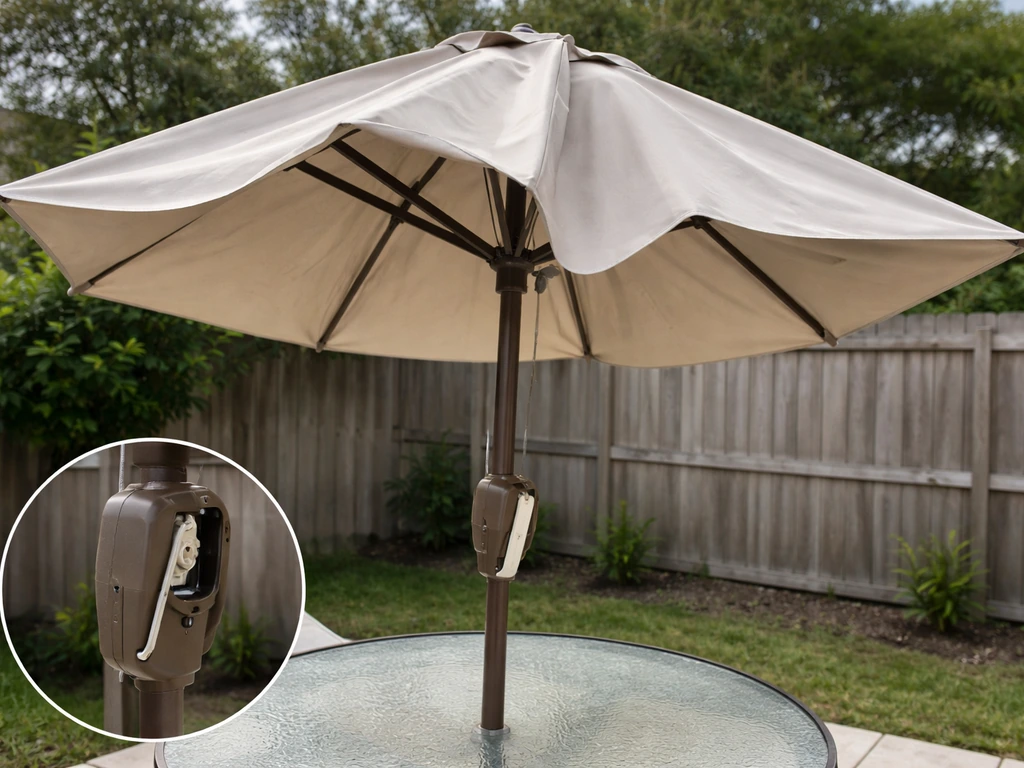
Step-by-step fixes for patio umbrellas that won’t open or close, with checks for jams, cords, latches, and lubricating t