The fastest way to keep birds off your patio umbrella is to combine a physical deterrent (reflective tape or a set of bird spikes on the canopy ribs) with blank" rel="noopener noreferrer">removing whatever is attracting them in the first place, usually standing water or food residue nearby. Do both at once and most birds will move on within a few days. Keep reading and I'll walk you through exactly how to do that, plus what to do if they keep coming back. To keep bees out of your patio umbrella, you can reduce what attracts them nearby and use a closed cover when the umbrella is not in use what to do if they keep coming back.
How to Keep Birds Off Patio Umbrella: Step by Step
Luca Morrison
8 Jul 2026
Why birds keep choosing your patio umbrella
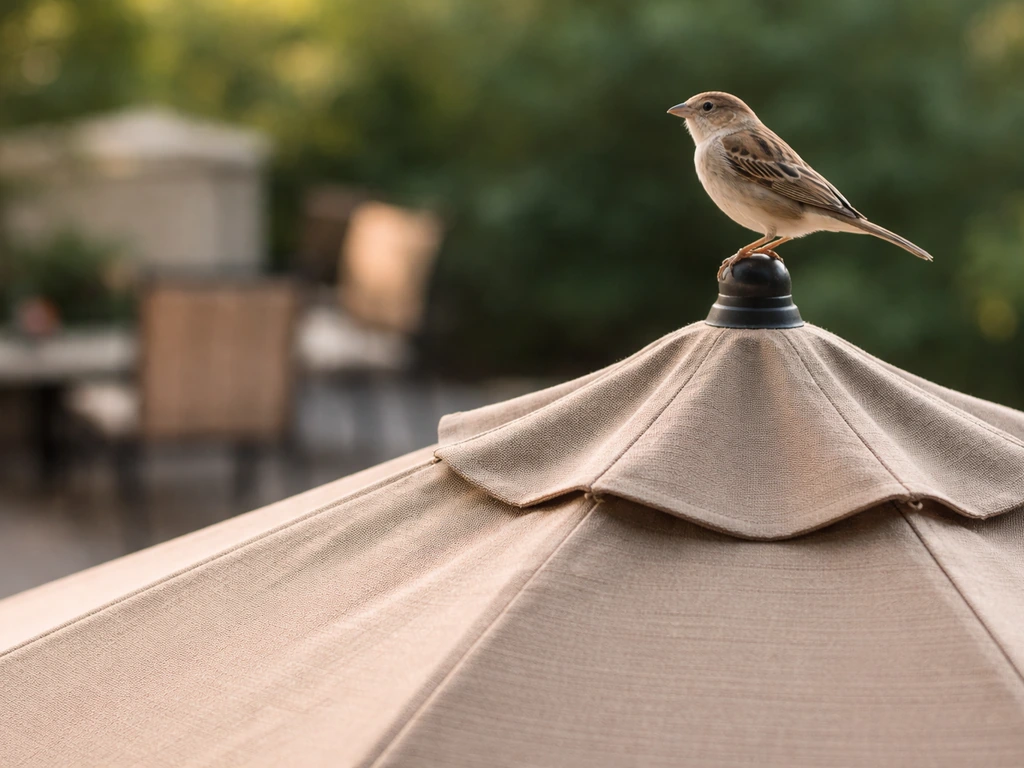
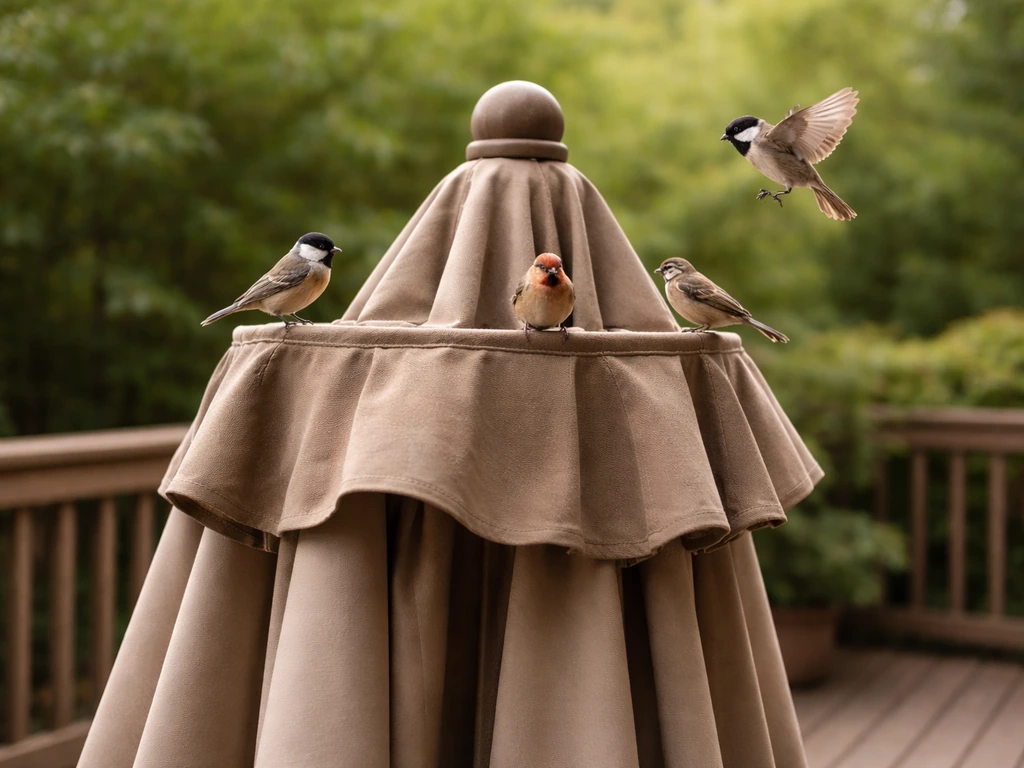
Before you spend money on deterrents, it helps to understand what's pulling birds to your umbrella specifically. Birds aren't random about where they land. They're looking for three things: a safe elevated perch, shelter from sun or rain, and proximity to food and water. Your patio umbrella checks most of those boxes perfectly.
The canopy top gives a clear sightline for spotting predators, which makes it an ideal lookout. The ribs and center pole provide grip for perching. The underside of a cantilever umbrella or the area around the pole hub creates a sheltered pocket that birds find attractive for nesting in spring, especially if there's a small gap or fold they can tuck into. Add a nearby bird feeder, food scraps on the patio table, or even just a puddle on the umbrella fabric from the last rain, and you've built a five-star bird hotel.
The timing matters too. In spring (roughly March through June depending on your region), birds are actively scouting nesting sites. A patio umbrella that's been sitting open and unattended is an easy target. By midsummer they're less focused on nesting but still use the same perch repeatedly out of habit. Knowing which phase you're in changes which deterrents to prioritize.
What to do right now: quick deterrents you can set up today
These are all humane and don't require any tools or special equipment. You can have most of them in place within an hour.
- Hang reflective tape or old CDs near the canopy. Cut strips of holographic bird-deterrent tape (or even aluminum foil in a pinch) and tie them to the outermost rib tips so they flutter in the breeze. The flashing light disorients birds and makes them uncomfortable landing nearby. Replace foil after a week since it tears quickly; purpose-made tape lasts months.
- Set up a predator decoy. A realistic owl or hawk decoy placed on a post near the umbrella works well for the first few days. The catch: birds figure out it's fake within about a week if you don't move it. Plan to reposition it every 3 to 4 days.
- Use a motion-activated sprinkler. If you have a garden hose nearby, a motion-activated sprinkler (like a Scarecrow-style unit) aimed at the umbrella area is one of the most effective quick deterrents. Birds hate the sudden burst of water and learn fast.
- Close or tilt the umbrella when not in use. This alone eliminates a huge portion of the appeal. A closed umbrella has no flat perching surface, no sheltered underside, and nothing for birds to grip comfortably. If your tilt mechanism is stiff or broken, that's worth fixing separately so closing becomes easy.
- Remove food and water sources within a 10-foot radius immediately (more on this in the cleaning section below).
Physical barriers and umbrella setup changes
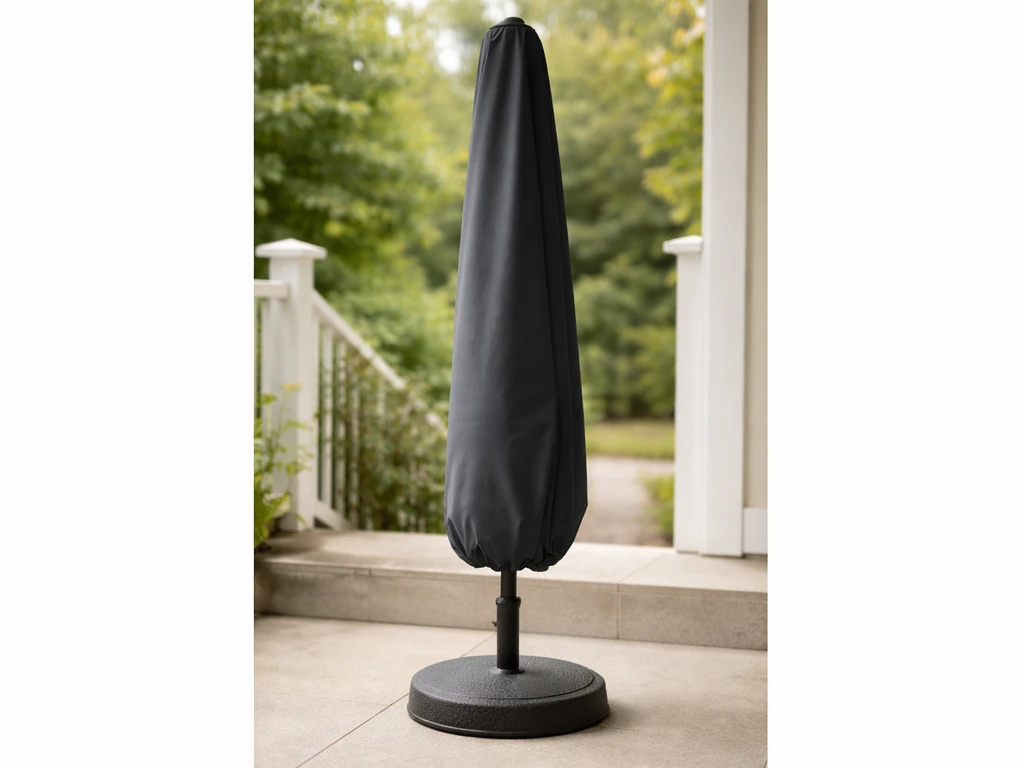
Quick deterrents buy you time, but physical changes to how your umbrella is set up or stored give you a more lasting result.
Use a proper umbrella cover
A snug-fitting umbrella cover does double duty. It protects the fabric from UV damage and it removes the open perching surface entirely when the umbrella is closed. Get a cover with a tie or drawstring at the bottom so it doesn't billow and create gaps.
Using a tighter tie-down strategy, like a snug cover with a drawstring at the bottom, also helps keep your patio umbrella stable and more resistant to being lifted or knocked tie or drawstring at the bottom. Birds will sometimes try to roost between a loose cover and the canopy, so fit matters. If your umbrella comes with a matching cover from the manufacturer, use it. Generic covers work fine as long as they fit close to the canopy shape.
Seal gaps around the pole and hub
On traditional push-up and crank umbrellas, the area where the pole meets the hub (the center ring where all ribs connect) can develop small gaps, especially as the fabric ages and stretches. Birds, particularly sparrows and starlings, will probe these gaps for nesting sites. Check yours by opening the umbrella fully and looking up at the hub from underneath. Any visible gap wider than about half an inch is worth addressing. You can close most gaps with a few wraps of UV-resistant outdoor foam tape (the kind used for weatherstripping) around the pole just below the hub. It's removable at the end of the season and doesn't damage the umbrella.
Adjust positioning to reduce appeal
Where you place the umbrella on the patio matters more than people realize. If it's positioned close to a fence, tree branch, or roof overhang, birds can hop directly onto it from a nearby perch. Moving the umbrella even 3 to 4 feet away from the nearest landing point breaks that bridge.
If your patio umbrella keeps blowing over, the same “make it less inviting” mindset applies, but you will also want to address stability and wind resistance alongside deterrents. Also consider the angle: if your umbrella has a tilt function, tilting it at roughly 15 to 20 degrees when you're not using it (rather than leaving it flat and horizontal) makes the canopy top a less stable landing surface.
Cantilever umbrellas need extra attention
Cantilever (offset) umbrellas have a large, flat underside that's completely sheltered from rain and often partially shaded. That makes them especially attractive for nesting. The area where the support arm meets the canopy frame is worth inspecting regularly in spring. If you see any nesting material starting to accumulate in that joint, remove it immediately and seal that area with foam tape or a physical blocker. Don't wait, because once a nest has eggs in it you may face legal restrictions on removing it depending on where you live.
Device-based deterrents that work on umbrellas
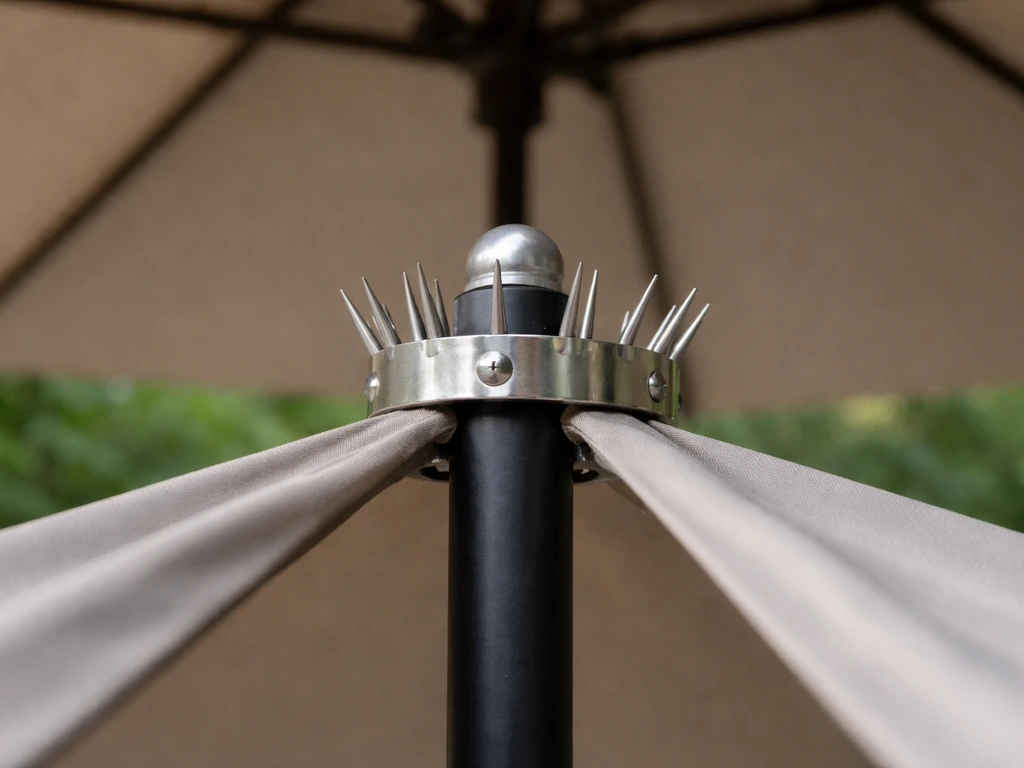
Once you've handled the setup changes, adding a dedicated device makes the deterrence more consistent. Here's what actually works on an umbrella specifically, and what doesn't.
| Deterrent Type | Best Used On | Effectiveness | Ease of Install | Cost |
|---|---|---|---|---|
| Reflective/holographic tape | Canopy ribs, top edge | High initially, fades over 1-2 weeks without rotating | Very easy | Low ($5-$15) |
| Bird spikes (plastic) | Pole top, rib tips, flat frame edges | High and long-lasting | Easy, use adhesive or zip ties | Low-medium ($10-$30) |
| Bird netting | Underneath cantilever canopy, enclosed patio | Very high, blocks access entirely | Moderate, requires anchoring | Medium ($20-$60) |
| Motion-activated ultrasonic device | Patio area generally | Moderate, birds adapt over time | Easy, plug or battery | Medium ($25-$50) |
| Motion-activated sprinkler | Patio perimeter | High, especially for persistent birds | Moderate, needs hose connection | Medium ($30-$60) |
| Predator decoy (owl/hawk) | Nearby post or rail | High short-term, low long-term without movement | Very easy | Low ($10-$25) |
Installing spikes without damaging your umbrella
Plastic bird spikes are probably the most durable long-term solution for the pole top and the outer rib tips. The key is attachment method. Don't use permanent adhesive on powder-coated metal frames or fabric. Instead, use zip ties to fasten spike strips to the ribs, or use removable outdoor mounting tape for smooth pole sections. Position spikes on the top 6 to 8 inches of the center pole above the canopy (this is the most popular single perching spot), and optionally along the outer rib tips where birds like to land before walking inward. You don't need to cover every inch, just the preferred landing zones.
Netting under a cantilever canopy
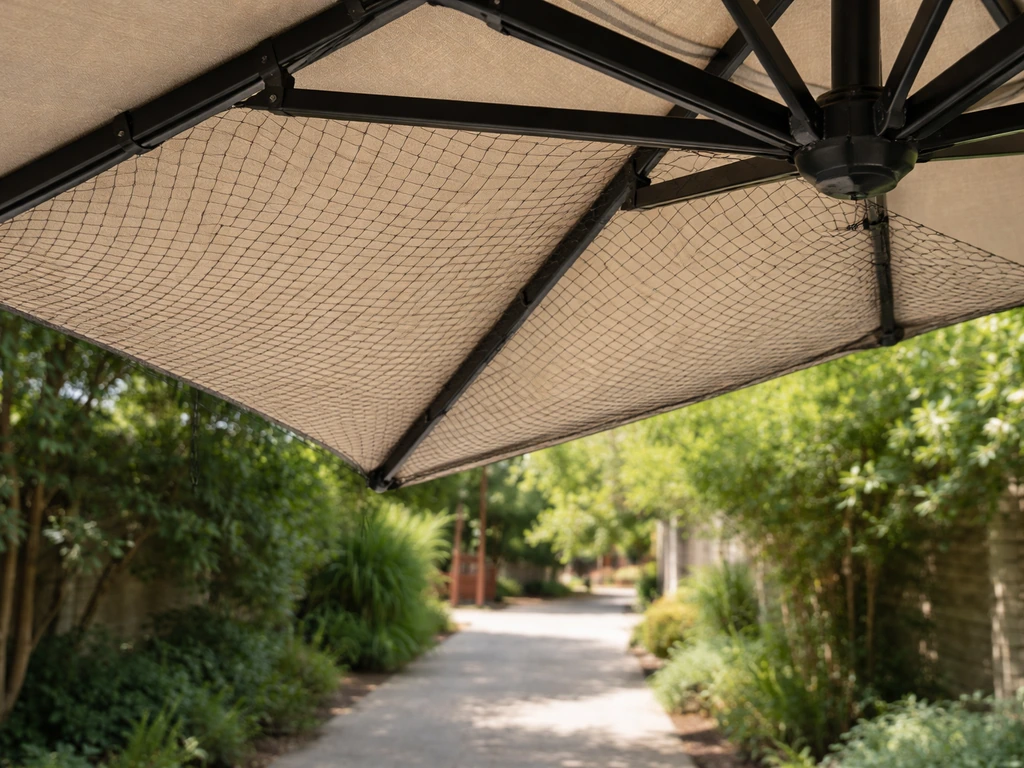
For a cantilever umbrella with a persistent bird problem, lightweight bird netting (1/2-inch or 3/4-inch mesh) draped across the underside of the canopy frame and secured with bungee clips or zip ties is the most complete physical barrier you can add. It's not the prettiest solution, but it completely blocks access to the sheltered underside that birds love. Remove it when you're actively using the umbrella and replace it when you step away. Some people leave it up full-time and it becomes nearly invisible after a week or two.
Cleaning up what's actually attracting them
Deterrents work much better when you've also removed the things pulling birds to the area. This step gets skipped a lot, and it's usually why people say 'I tried everything and the birds still came back.'
- Check the umbrella canopy for puddles after rain. A flat or slightly sagging canopy collects water, and birds will visit it for drinking and bathing just like they use a puddle or birdbath. Make sure your canopy has adequate tension so water runs off. If the fabric sags, the center pole height or the rib tension may need adjusting.
- Remove bird feeders and outdoor pet food bowls within 15 to 20 feet of the umbrella. Birds that visit a feeder will naturally explore and perch nearby. You don't have to eliminate feeders entirely, just move them to the far end of the yard.
- Wipe down the umbrella fabric with a diluted white vinegar solution (roughly 1 part vinegar to 3 parts water) once every couple of weeks. This removes food residue, bird droppings, and scent markers that signal 'safe perch' to other birds. Rinse well afterward so it doesn't affect the fabric coating.
- Eliminate standing water near the patio. Check for low spots in the patio surface, clogged drains, or containers (plant saucers, buckets, etc.) that collect water. Birds visit standing water reliably, and if it's right next to your umbrella, they'll land on the umbrella too.
- Clean up food scraps from the patio table after every meal. Even crumbs attract small birds, which then establish the area as a regular foraging spot.
Keeping deterrents working long-term and through the seasons
The biggest mistake people make is setting up deterrents in June and then forgetting about them. Birds are persistent and adapt. Here's how to stay ahead of them.
Rotate and refresh visual deterrents
Reflective tape, predator decoys, and hanging objects lose their effectiveness once birds figure out they pose no real threat, usually within 1 to 2 weeks of continuous exposure. Set a reminder to reposition decoys every 3 to 4 days, move reflective strips to different rib positions weekly, and replace worn or faded tape every 4 to 6 weeks. Motion-activated devices (sprinklers, ultrasonic units) maintain effectiveness longer because the response feels unpredictable to birds, but even those benefit from occasional repositioning.
Spring is your critical window
Start deterrence in early spring, around late February or early March in most of the US, before birds begin actively nesting. Once a bird has started building a nest in or around your umbrella, removal becomes complicated (and potentially illegal if eggs are present). Inspect your umbrella when you first bring it out of winter storage and again every couple of weeks through June. A quick look at the hub area and the underside of the canopy takes about 30 seconds and can save you a much bigger problem.
Winterizing your umbrella to prevent off-season problems
When you're done for the season, close the umbrella, remove any spike strips or tape, give the fabric a thorough clean with mild soap and water, let it dry completely, and then store it in a breathable cover or bring it indoors. A closed, covered umbrella stored properly gives birds nothing to work with. If you leave the umbrella outside year-round (common with heavy cantilever models), keep a fitted winter cover on it from around October through March and check under it occasionally in early spring to catch any nesting activity before it progresses.
Troubleshooting by umbrella type
Different umbrella styles create different bird problems. Here's how to think through the specifics based on what you have.
Traditional market umbrella (crank or push-up)
The center pole top is almost always the #1 landing spot on this style. A spike collar around the top 6 to 8 inches of the pole above the canopy stops most of it. The finial (the decorative cap at the very top) is a common perch, so make sure your spike placement covers it. If the crank mechanism is stiff and the umbrella is left open out of inconvenience, that's your first repair priority because getting into the habit of closing it when you step away is one of the best deterrents there is.
Tilt umbrellas
Tilt mechanisms (collar-tilt, push-button, or auto-tilt styles) add a joint in the pole where there's often a small gap or seam. Birds probe these gaps. After installing any deterrents, check the tilt collar area specifically. A wrap of foam weatherstripping tape around the collar gap when the umbrella is in its upright position closes off that access point without interfering with the tilt function. If your tilt mechanism is broken and the umbrella is stuck at an angle, it's worth fixing, both for your comfort and because a tilted canopy can collect water in a pocket, which attracts birds.
Cantilever (offset) umbrellas
As mentioned earlier, the sheltered underside is the main vulnerability. The support arm joint and the canopy frame corners are secondary. For persistent nesters, combine netting on the underside with spike strips on the outer frame edges. Also check that the canopy's rotation and tilt locks are engaging properly. A canopy that droops slightly due to a loose tilt mechanism creates an extra-sheltered pocket underneath that's even more attractive to birds.
Fabric condition and exposed ribs
Aging fabric that has started to separate at the rib channels (the sleeves the ribs slide through) creates actual gaps that small birds can enter. Check the seam at each rib tip and along the rib channels on the underside. If you see fraying or open seams, repair them with outdoor fabric repair tape or a UV-resistant sealant before adding deterrents, otherwise birds will exploit those gaps regardless of what else you've installed.
Keeping it humane and staying on the right side of local rules
Every deterrent in this guide is non-harmful to birds. The goal is to make your umbrella an unappealing place to land, not to injure or trap any animal. That said, there are a few things worth knowing before you start.
- Do not use sticky or adhesive bird repellent gels on umbrella fabric. These products (like Tanglefoot) are designed for hard surfaces and can coat birds' feathers when they land, which causes serious harm. They're also a mess to remove from fabric and can damage umbrella coatings.
- Active nests with eggs or chicks are protected under the Migratory Bird Treaty Act in the US, which covers most common backyard bird species (robins, sparrows, swallows, finches, etc.). If you find an active nest with eggs or young birds, you cannot legally remove it until it's abandoned. Contact your local wildlife authority if you're unsure what applies in your area.
- Ultrasonic repellers are safe for birds but check whether your model produces frequencies that might bother pets, particularly dogs and cats, before running it continuously.
- Reflective tape and spinning deterrents are legal everywhere, but some HOAs have appearance restrictions. If you're in a managed community, check your HOA rules before adding permanent-looking deterrents to your outdoor furniture.
- Relocation of birds is almost never a practical or legal option for pest birds like pigeons, starlings, or house sparrows. Focus on making the space unattractive rather than trying to catch or move individual birds.
Your decision plan: immediate fix vs. long-term solution
If you want results today, start with reflective tape on the rib tips, close and cover the umbrella whenever you're not using it, and remove any standing water or food within 15 feet. Standing puddles and small pools can give birds drinking and bathing opportunities, so keeping clean shallow water available in your yard supports wild birds naturally remove any standing water. That combination handles about 80% of bird problems within a few days.
If you want a more permanent fix that you don't have to think about every week, add plastic bird spikes to the pole top and outer rib tips (they last seasons with no maintenance), seal any gaps at the hub and tilt collar with foam tape, and set up a motion-activated sprinkler for the broader patio area. Combine that with the habit of closing the umbrella when you step away, which also extends the life of your canopy fabric and helps the umbrella stay open properly, and you'll have a setup that stays effective all season.
The layered approach always wins over a single deterrent. Birds are smart enough to ignore one thing they've decided isn't a real threat, but two or three overlapping deterrents plus reduced attractants adds up to a patio they'd rather skip.
FAQ
Will birds get used to reflective tape or bird decoys on a patio umbrella?
Yes, effectiveness drops once birds learn the pattern is harmless, typically in 1 to 2 weeks. To slow that learning, rotate the reflective tape to different rib positions weekly, and change decoy placement every 3 to 4 days rather than leaving the same setup in one spot.
How close should I place the umbrella to remove the “landing bridge” from nearby perches?
Try moving it at least 3 to 4 feet away from the nearest fence, branch, or roof edge. If you cannot move it, break the pathway by adding another obstacle to the landing route, like repositioning nearby planters or moving bird feeders farther away.
Are bird spikes safe for the umbrella fabric and metal frame?
They are, as long as you avoid permanent adhesives on powder-coated metal or fabric. Use zip ties on ribs and removable outdoor mounting tape on smoother pole sections, then periodically check for looseness or fabric rubbing where the spikes contact the canopy.
What if I only see birds on the umbrella at certain times of day?
That usually means they are timing for either roosting comfort (cool morning shade, afternoon shelter) or quick access to nearby water or food. Watch for which direction they approach from, then place spikes or netting to block the most common landing zone and remove any water sources within roughly 15 feet.
Can I leave a net on a cantilever umbrella all the time?
It can be left up, but you should plan to remove it when you actively use the umbrella because the net will interfere with opening and access. If you do leave it, inspect it for sagging or gaps, since any loosened edge can become a new sheltered entry point.
How do I tell if birds are probing for nesting in gaps inside the hub or tilt collar?
Look up from underneath with the umbrella fully open and check the tilt collar seam and the center hub for any visible openings wider than about half an inch. In spring, also check for fresh nesting material at joints, then seal access with removable foam weatherstripping tape.
My umbrella is already showing small tears or fraying seams. Should I repair first or add deterrents first?
Repair first. Deterrents can’t block birds that can enter through actual fabric openings or rib-channel sleeves. Patch fraying seams with outdoor fabric repair tape or UV-resistant sealant, then add spikes or netting so the birds have no access point to exploit.
What should I do if birds start building a nest before I can install deterrents?
Stop and inspect immediately, because once eggs are present removal can become complicated or restricted. Your safest move is to avoid disturbing the nest, then contact local wildlife authorities for guidance and switch to non-invasive prevention methods only after nests are no longer active.
Does closing and covering the umbrella really matter if I already installed spikes?
Yes, it matters for two reasons. First, it removes the open perching surface that birds can use before deterrents fully block landing. Second, a properly fitted cover prevents rain or dew accumulation on the canopy, which reduces the “water nearby” attraction even when birds do land.
How often do I need to maintain spikes, tape, and foam sealing?
Spikes on pole tops typically last multiple seasons, but you should still inspect them every couple of weeks during nesting season for looseness. Reflective tape and foam seals should be checked for fading or peeling, with reflective tape replaced every 4 to 6 weeks if it loses sheen.
What’s the fastest way to get results today if birds are already nesting activity nearby?
Start with closing the umbrella immediately when not in use, cover it snugly so it does not billow, and remove any standing water or food within about 15 feet. Add reflective tape to rib tips right away for quick coverage, then schedule a deeper hub and underside inspection.
If a motion sprinkler works, will it affect other outdoor areas like plants or pets?
It can, so place it to target the patio zone around the umbrella rather than walking paths. Use a zone or adjust settings so water sprays the umbrella area mostly when birds approach, and secure the sprinkler head so it does not shift and start spraying where it is not intended.
Next Articles
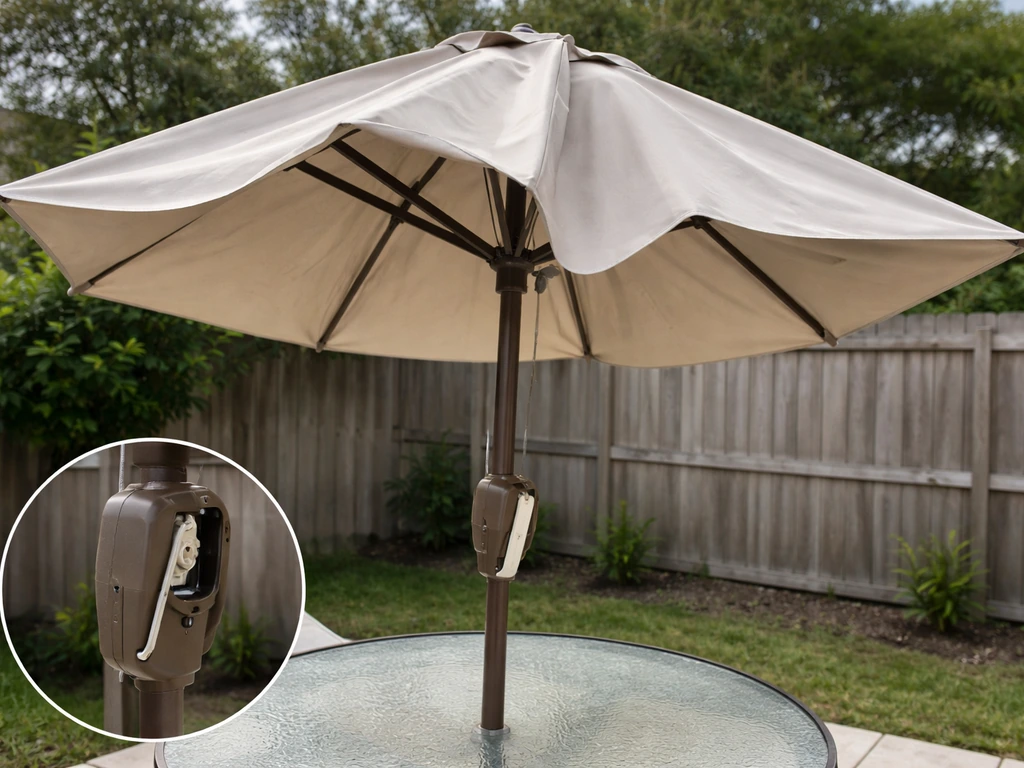
How to Fix a Patio Umbrella That Won't Open or Close
Step-by-step fixes for patio umbrellas that won’t open or close, with checks for jams, cords, latches, and lubricating t
How Does a Patio Umbrella Work? Components, Use, and Fixes
Learn how patio umbrellas work: components, open close tilt, stability, and step by step troubleshooting common mechanic
Patio Umbrella Crank Not Working: DIY Fix Guide
Fix a patio umbrella crank that won’t work with safe step-by-step jam, gear, and base troubleshooting and repair tips.