To assemble and operate your Grand Patio Napoli umbrella correctly, start by confirming which Napoli version you own, because Grand Patio sells at least two distinct products under that name: a hanging cantilever umbrella with a rolling base, and a rectangular 10x13 FT cantilever. Each one has a different crank layout, tilt system, and base-fill requirement. Once you know your version, the actual setup is straightforward, and most common problems like a stiff crank, uneven tilt, or a canopy that won't open smoothly can be fixed in under 30 minutes without replacing the whole umbrella.
Grand Patio Napoli Umbrella Instructions: Setup to Repair

Luca Morrison
29 May 2026
Figure Out Which Napoli Model You Have
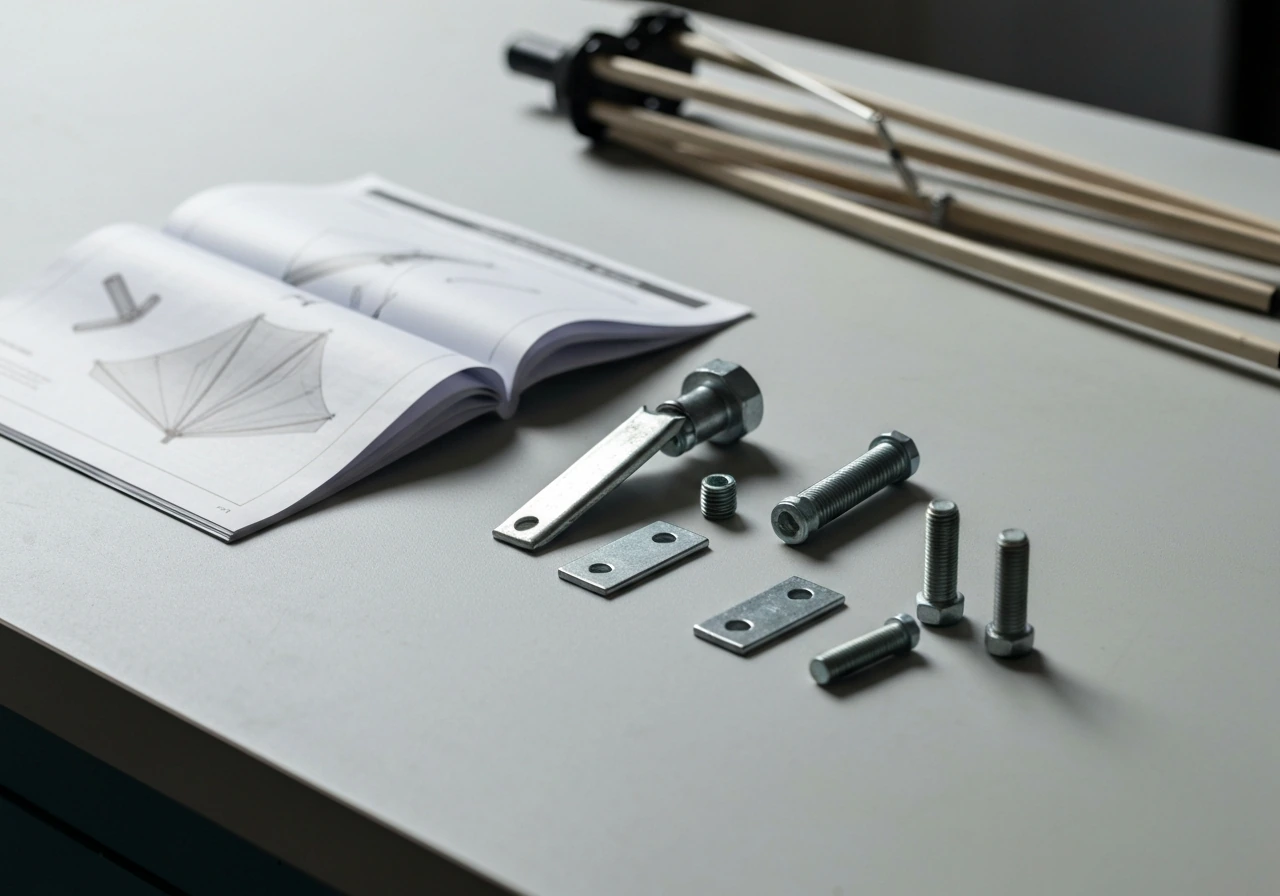
Before you touch a single bolt, flip open the box and pull out the parts list. Grand Patio's manual for the Napoli explicitly tells you to compare your actual hardware against the parts list before starting, and to stop assembly entirely if anything is missing or damaged. This step also tells you which version you have.
The two main Napoli configurations you'll run into are the Napoli Hanging Umbrella with Big Base (an offset cantilever that hangs from an arm) and the Napoli 10x13 FT Rectangular Cantilever. Here's how to tell them apart quickly:
| Feature | Napoli Hanging Umbrella with Big Base | Napoli 10x13 FT Rectangular Cantilever |
|---|---|---|
| Canopy shape | Round or rounded | Rectangular (10x13 FT) |
| Rib count | Not specified in manual | 8 heavy-duty aluminum ribs |
| Crank parts | Crank Mechanism Arm (H), Handle (I), Connector (J), Holder (D) | Grip Crank Handle |
| Tilt system | Adjustable angle knob | Auto-lock tilt, up to 90 degrees |
| Base fill | Refer to your manual | 396 lbs of sand and water |
| Base mobility | Tilt base ~35 degrees and roll | Wheels included on base |
If your box includes a labeled Crank Mechanism Arm and a separate Crank Handle Connector, you have the Hanging Umbrella version. If your canopy is clearly rectangular and the hardware is simpler, you have the 10x13 FT model. When in doubt, check the model number printed on the box or on the sticker inside the crank housing, then download the matching manual from ManualsLib or Manuals+ before proceeding.
Parts You Should Find in the Box
For the Napoli Hanging Umbrella with Big Base, the key named parts in the official manual are:
- Part D: Crank Handle Holder (mounts to the pole or frame)
- Part H: Crank Mechanism Arm (the main arm that drives opening/closing)
- Part I: Crank Handle (the piece you turn by hand)
- Part J: Crank Handle Connector (links the handle to the mechanism)
- Base frame sections and connecting hardware
- Strap (used to secure the canopy when closed or parked)
- Canopy with ribs pre-attached or separately sleeved
For the rectangular 10x13 FT Napoli, the parts are fewer and the Grip Crank Handle comes as a single assembled unit. Count every bolt, washer, and pin against the parts diagram before you start. A missing pin or bolt at this stage saves you from a half-assembled umbrella and a second trip to the garage.
Unpacking and Initial Assembly
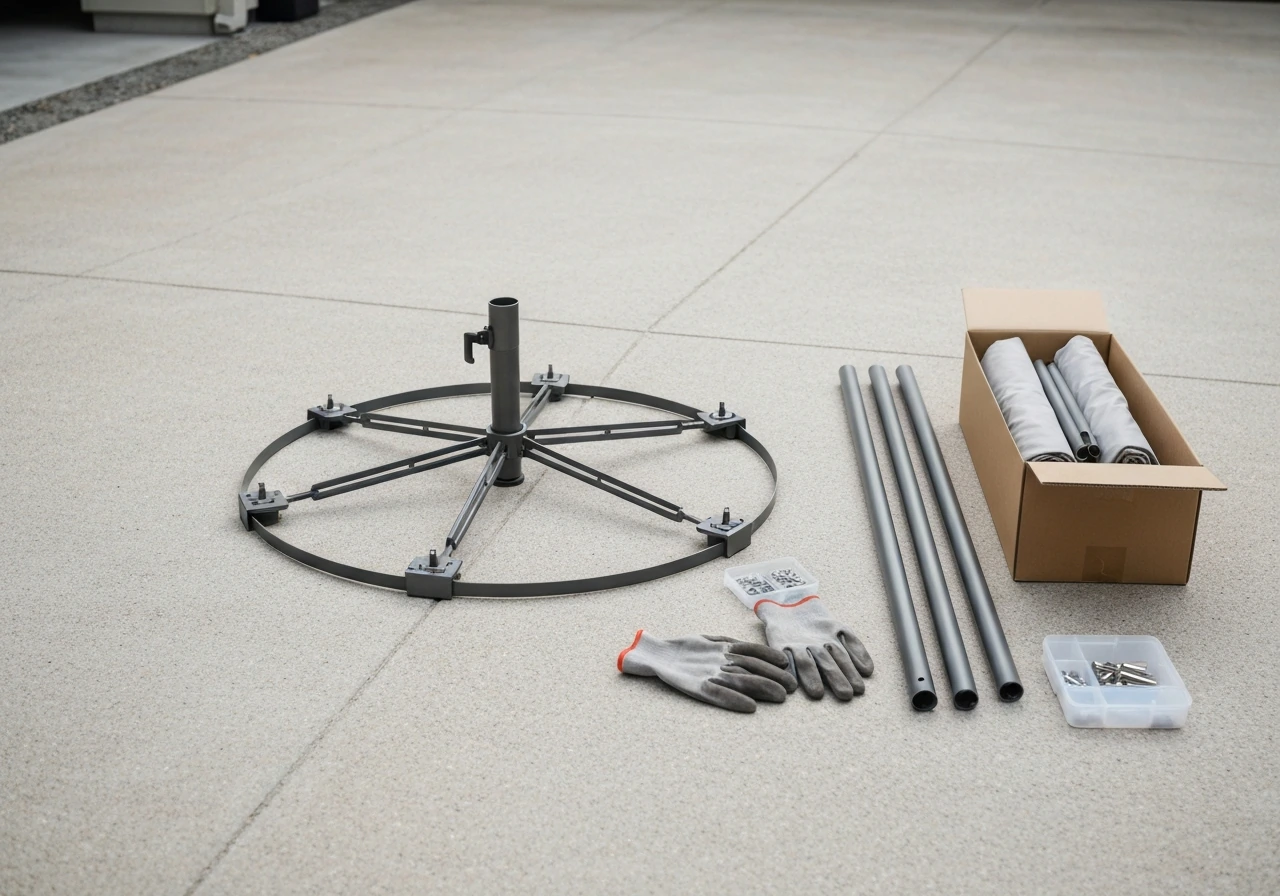
Clear a flat, open area before you open the box. These umbrellas are large and the canopy fabric can snag on pavement edges or deck screws if you're not careful. If you want patio umbrella instructions specific to safety and setup, follow the open, close, and maintenance guidance for your Napoli model. Lay everything out on grass or a clean tarp.
Hanging Umbrella with Big Base: Assembly Steps
- Assemble the base frame first by connecting the base sections according to the manual diagram. The base is heavy by design and will be even heavier once filled, so get it into its final position before you fill it.
- Attach the main pole to the base. The pole slides into the base socket and is secured with a locking pin or bolt. Make sure it seats fully before moving on.
- Mount the Crank Handle Holder (Part D) to the designated mounting point on the pole. This is the bracket that keeps the crank assembly in place during operation.
- Connect the Crank Mechanism Arm (Part H) to the crank housing. The arm connects the turning motion of your handle to the internal mechanism that raises and lowers the canopy.
- Attach the Crank Handle (Part I) using the Crank Handle Connector (Part J). Hand-tighten only at this stage.
- Raise the umbrella arm into position and attach the canopy. Thread each rib tip into its corresponding canopy sleeve or clip, working around the canopy evenly so you don't stress one side.
- Do a dry run: crank clockwise a few turns to confirm the canopy begins to open, then counter-clockwise to confirm it closes. If it binds, stop and check that all rib tips are fully seated.
- Fill the base once everything checks out (see weight requirements below).
Rectangular 10x13 FT Napoli: Assembly Steps
- Assemble the base frame and position it where you want the umbrella to live permanently. Once filled to 396 lbs, you won't want to move it often.
- Insert and lock the main upright pole into the base socket.
- Attach the cross-arm assembly to the pole top according to the manual diagram. The rectangular canopy needs the arm positioned correctly so the canopy hangs level.
- Hang the canopy from the arm, attaching each rib clip or sleeve in order. Start from the center and work outward.
- Attach the Grip Crank Handle to its mount on the pole.
- Test open and close before filling the base.
How to Open, Close, and Tilt Your Napoli Umbrella

Once assembled, operating the Napoli is the same basic motion on both versions. Turn the crank handle clockwise to open the canopy, and counter-clockwise to close it. On the Hanging Umbrella version, the manual is explicit: clockwise opens, counter-clockwise closes. Take it slow the first few times so you can feel when the canopy is fully extended and stop before over-cranking.
Adjusting the Tilt
The two models handle tilt differently. On the Hanging Umbrella with Big Base, you adjust the umbrella angle by turning a knob on the arm joint. Loosen the knob, reposition the canopy to the angle you want, and re-tighten. Simple, but make sure the knob is genuinely snug before walking away, because a loose knob lets the canopy droop under its own weight.
The 10x13 FT rectangular model uses an auto-lock tilt system that adjusts up to 90 degrees. Push the tilt button or lever (depending on your build), reposition the canopy, and release. The auto-lock clicks into place. If it doesn't click, the tilt mechanism isn't fully engaged. Back it up slightly and re-engage.
Securing It When You're Done
The Hanging Umbrella manual includes a strap specifically for securing the closed canopy when the umbrella is parked or not in use. Use it every single time. A closed canopy that isn't strapped can catch wind and start cranking itself open, which stresses the mechanism. When you need to move the base, tilt it about 35 degrees and roll it on its wheels rather than dragging it flat.
Fixing Common Operating Problems
Most Napoli problems fall into three categories: the canopy won't open or close smoothly, the crank is stiff or slipping, or the tilt is uneven or locked up. Here's how to work through each one.
Canopy Won't Open or Close Smoothly
First, look for obstructions. On a cantilever design, the fabric can fold or bunch near the rib tips if the canopy wasn't hung evenly during assembly. Close the canopy completely, shake out any bunched fabric, re-seat each rib tip in its sleeve, and try again. If the issue is seasonal, check whether the aluminum ribs have developed a slight bend from wind or storage. A bent rib catches the canopy fabric and makes it drag. You can usually straighten a mildly bent rib by hand or with a rubber mallet, working gently.
Crank Is Stiff or Hard to Turn
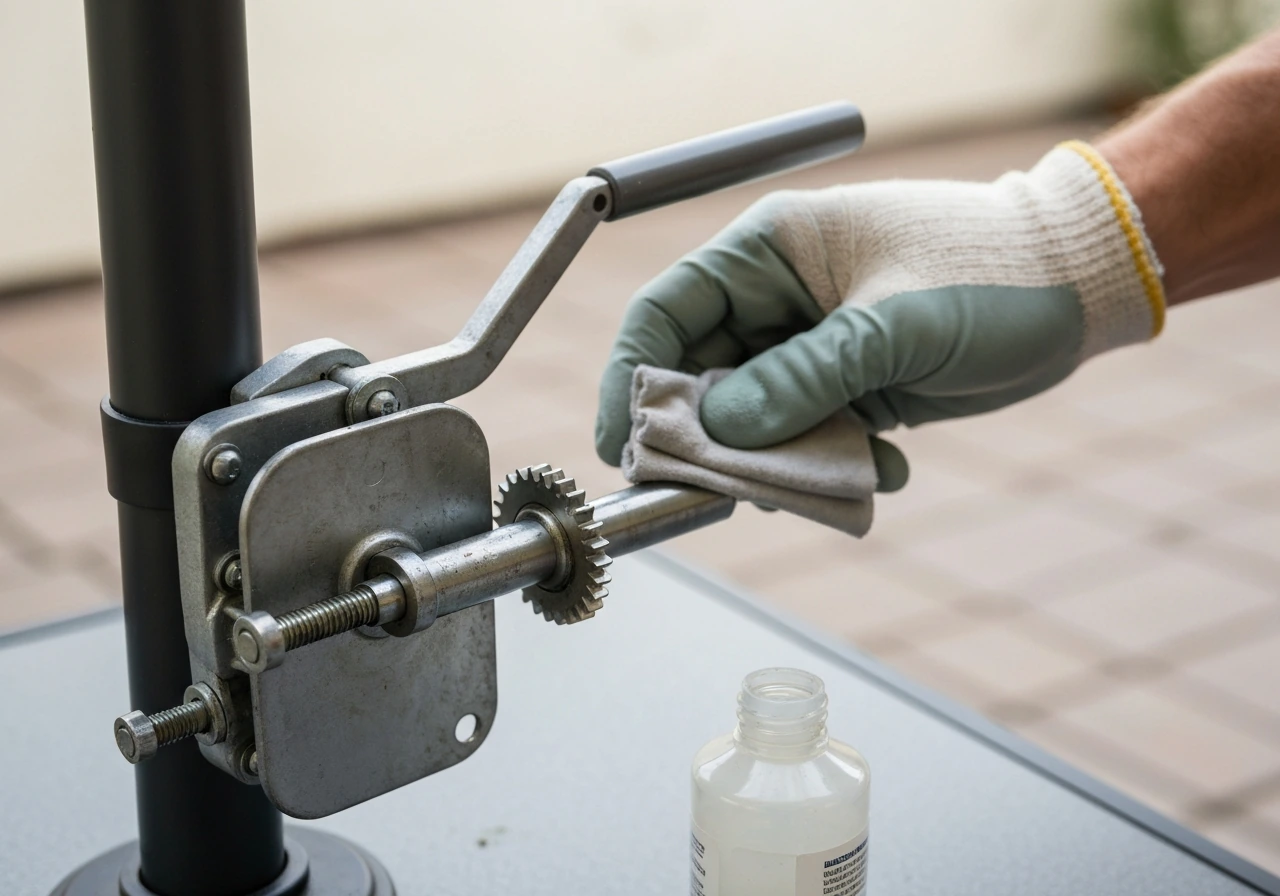
This is the most common complaint on all Grand Patio cantilever models, including the Napoli. The official troubleshooting guidance points to dirt accumulation and lack of lubrication. The fix is to clean the crank mechanism with a dry cloth or soft brush to remove grit and debris, then apply a silicone-based lubricant to the moving parts inside the crank housing. For more detailed patio umbrella repair instructions, follow the manufacturer’s troubleshooting steps for your exact Napoli model before replacing any parts. Don't use WD-40 as a long-term fix because it evaporates and can attract more dirt. A proper silicone spray or dry PTFE lubricant lasts much longer. After lubricating, run the crank through several open/close cycles to work the lubricant in.
Tilt Is Uneven or Won't Lock
On the knob-style tilt (Hanging Umbrella), uneven tilt usually means the knob was tightened while the canopy was slightly off-center. Loosen the knob completely, physically re-center the canopy, then re-tighten. If the knob threads feel stripped or won't hold, the knob assembly needs replacing. On the auto-lock tilt (rectangular model), a tilt that won't lock is almost always because the lock button wasn't fully released during repositioning. Hold the button down while moving the canopy, then release it slowly at the position you want. If the auto-lock mechanism is physically broken, see the replacement section below.
Umbrella Sways or Feels Unstable
Swaying in even a light breeze almost always means the base isn't filled to spec. The 10x13 FT Napoli needs 396 lbs of sand and water in the base. The 11 FT cantilever spec (which shares design DNA with the Napoli line) calls for 330 lbs of sand plus 44 lbs of water. Under-filled bases are the number one stability issue on all Grand Patio cantilever models. Fill to the required weight before assuming there's a mechanical problem.
Replacing or Troubleshooting the Key Mechanisms
If basic fixes don't work, you may need to repair or swap out a specific component. The good news is that none of these require replacing the entire umbrella.
Crank Mechanism
The Napoli Hanging Umbrella breaks the crank into four named parts (D, H, I, J) specifically so individual pieces can be replaced. If the crank handle (Part I) snaps or the connector (Part J) strips out, you only need that one part. Contact Grand Patio customer support with your model number and request the specific part. Before ordering, disassemble the crank from the housing and visually inspect which piece has failed. A stripped connector looks like worn or absent threads. A broken mechanism arm usually has visible cracking or a loose pivot. If the internal crank housing itself has sheared, you'll need the full crank mechanism assembly.
Ribs
The 10x13 FT Napoli uses 8 heavy-duty aluminum ribs. If a rib snaps (usually from wind stress or improper storage), the canopy will sag on that side and the remaining ribs will take more load. A single broken rib is worth replacing if the rest of the frame is sound. Most replacement ribs for Grand Patio cantilever models are available through the manufacturer or third-party suppliers. Measure the broken rib's length and profile (check if it's a main rib or a supporting brace) before ordering. Replacing a rib means threading the canopy fabric sleeve off the old rib and onto the new one, which takes about 15 minutes.
Cords and Pulleys
If your Napoli version uses a cord-and-pulley system to open and close the canopy (some earlier or different Napoli configurations do), a frayed or snapped cord is a common failure point. Signs of cord trouble include a crank that turns but the canopy doesn't move, or one side of the canopy rising while the other stays down. To inspect the cord, open the crank housing cover (usually held by two screws) and trace the cord from the crank drum through the pulleys. Look for fraying, knotting, or a cord that has jumped its pulley groove. Re-seating a cord that has jumped a pulley is a 10-minute fix. Replacing a snapped cord means threading new cord through the pulley system, which takes more patience but is very doable. Use outdoor-rated braided cord of the same diameter as the original.
Auto-Lock Tilt Mechanism
If the auto-lock tilt on the rectangular model clicks but doesn't hold, or the button no longer springs back, the internal spring or locking pin has worn out. This is a small component, and the fix is usually a spring replacement inside the tilt joint housing. If you're not comfortable disassembling the joint, Grand Patio's customer service can send a replacement tilt joint assembly. It's a relatively inexpensive part and swaps in by removing two bolts from the joint housing.
Securing the Napoli in Wind
A properly filled base handles typical residential wind loads, but there are additional steps that make a real difference. Grand Patio's own recommendation is to close the canopy whenever the umbrella is not in use. This is the single most effective thing you can do for wind safety because a closed canopy presents almost no wind surface area.
- Fill the base to the full specified weight before using the umbrella at all. Partial fills are a setup for a tip-over.
- Use the included strap to secure the closed canopy so it can't accidentally open in a gust.
- Position the base so the umbrella arm extends over the seating area and the weighted base is on the windward side, not the leeward side.
- On days with sustained winds above 20-25 mph, close the canopy completely. The ribs and fabric are not rated for high winds when open.
- If you're in a storm or leaving for an extended period, consider moving the whole assembly to a sheltered spot using the rolling base wheels (Hanging Umbrella version: tilt base to ~35 degrees to roll).
- Check that all pole-locking pins and bolts are fully engaged before each use. A loose pole multiplies wind stress on the entire frame.
Maintenance, Seasonal Storage, and Winterizing
The Napoli is built from aluminum and polyester, both of which hold up well outdoors, but neglect will shorten the life of both the fabric and the mechanical parts. Use these jearey patio umbrella instructions to help you follow the correct setup, opening, and troubleshooting steps for your umbrella. The following routine keeps everything working season to season.
Regular Cleaning
Grand Patio's care instructions are specific: use mild soap and warm water only. No abrasive cleaners and no bleach. Bleach degrades the canopy fabric's UV coating and can corrode aluminum fittings over time. Rinse thoroughly and let the canopy air dry fully before closing it. Storing a damp canopy causes mildew, which weakens the fabric and smells terrible.
Lubricating the Mechanism
Once at the start of each season and once at the end, run a thin coat of silicone-based lubricant through the crank mechanism, all pivot points on the ribs, and the tilt joint. This prevents the seasonal stiffness that causes most crank damage. Wipe away any excess so it doesn't collect dirt.
Winterizing the Base
This is the step most people skip and then regret in spring. The official manual calls out a specific risk: water trapped inside the frame tubing can freeze, and expanding ice will crack the tubing from the inside. Before storing for winter, tip the pole sections to drain any water that has collected inside. If you live somewhere with hard freezes, prop the pole at an angle during storage so any residual moisture can drain out rather than pooling at joints.
End-of-Season Storage
- Close the canopy fully and strap it.
- Clean the canopy with mild soap and water. Let it dry completely before the next step.
- Drain the base if possible, or leave it filled in a sheltered spot if draining is impractical. An empty base is easier to store indoors.
- Disassemble the crank handle and store it indoors if possible. Cold and moisture degrade the plastic connector parts faster than the aluminum frame.
- Cover the entire umbrella with a matching cover or a heavy-duty outdoor furniture cover. Grand Patio strongly recommends a purpose-made cover for the Napoli. A cover keeps UV off the fabric, keeps birds off the canopy, and prevents moisture from working into the joints.
- Store in a dry, protected area like a garage or shed. If outdoor storage is the only option, tie the cover down so it can't blow off.
Getting It Ready in Spring
At the start of each season, do a full inspection before the first use. Check every rib for bends or cracks, inspect the crank cord or mechanism for wear, confirm all bolts are tight, and test the tilt lock before anyone sits under it. Apply fresh lubricant to all moving parts. Five minutes of inspection at season-start prevents the mid-summer mechanical failures that leave you scrambling for parts on a holiday weekend.
If you have other Grand Patio models or are comparing care routines across brands, the maintenance steps above are largely consistent across the broader Grand Patio umbrella line, including their standard and cantilever series. Repair approaches for crank mechanisms, ribs, and cord systems also apply broadly to most patio umbrella designs, so if you find yourself troubleshooting a different model, much of this guidance still applies.
FAQ
Do I need to assemble the base with sand and water right away, or can I add it later after the umbrella is standing?
Add the base fill before you fully operate the umbrella. If you build the frame first and then fill, you have more opportunity to move the base and misalign the tilt and crank loads. For the 10x13 FT Napoli, measure to the required weight, 396 lbs (sand plus water), and distribute it evenly so one corner does not lift.
What should I do if the crank turns, but the canopy does not move or only moves partway?
Stop and inspect for cord or rib binding. A common pattern is one side rising while the other stays down, which points to a cord that jumped a pulley groove or is frayed inside the crank housing. Confirm the canopy is fully closed first, then open the housing cover and trace the cord path before lubricating, because lubrication will not fix a misrouted cord.
How can I tell whether I have a hanging cantilever Napoli versus the rectangular 10x13 FT model without relying only on the box label?
Use the assembly hardware cues: the hanging model typically includes a separate crank handle connector and a labeled crank mechanism arm, and its tilt is adjusted with a knob on the arm joint. The rectangular 10x13 FT model uses an auto-lock tilt with a button or lever and simpler crank hardware. If you still cannot confirm, check the sticker inside the crank housing rather than trusting the exterior shipping label.
Is it safe to leave the umbrella partially open while it is windy?
No. Partially open can create significant sail area and can stress the crank and tilt parts, especially if the canopy is not strapped. For wind safety, keep the canopy closed when unattended, and only open to the position you intend to use. If you must secure temporarily, still use the strap for the hanging version.
My canopy keeps opening slightly even when I think it is closed, what causes this and how do I prevent it?
This usually happens when the closed canopy is not secured and the strap is omitted, or when the tilt/lock engagement is not fully seated. Recheck that the canopy is completely closed, confirm the auto-lock clicks fully on the rectangular model, then strap the hanging version. If it still creeps, examine the locking pin or spring in the tilt joint, since worn parts can fail to hold position.
What lubricant should I use on the crank, and can I use the same one on fabric or aluminum ribs?
Use a silicone-based spray or a dry PTFE-style lubricant on moving metal parts, including the crank mechanism and tilt joint. Avoid getting lubricant onto the polyester canopy fabric. Also, do not use bleach or abrasive cleaners on the fabric, bleach can degrade UV coating and accelerate aluminum corrosion at fittings.
How tight should the hanging umbrella tilt knob be, and what are signs it is too loose?
Tighten the knob until it is snug and the canopy holds its selected angle without any droop when you walk away. If you see gradual downward sag after tightening, or you notice uneven tilt right after adjustment, loosen completely, recenter the canopy physically, and re-tighten. If the knob threads feel stripped or it will not hold even when centered, replace the knob assembly rather than forcing it.
What is the best way to clean the crank if it is stiff, without damaging plastic or bearings inside the housing?
Remove visible grit with a dry cloth or soft brush first, then apply silicone-based lubricant to moving parts within the crank housing. Avoid soaking the housing and avoid aggressive wiping that can push debris deeper into pulley tracks. After lubricating, cycle open and close several times slowly to distribute lubricant and confirm smooth travel before using the umbrella outdoors.
Can I replace a single broken rib, or do I need to replace the whole rib set?
Often you only need to replace the broken rib if the rest of the frame is straight and the remaining ribs are not cracked or bent. Measure the broken rib length and profile (main rib versus supporting brace) before ordering, then transfer the canopy fabric sleeve to the new rib. If multiple ribs are damaged or the frame is twisted, replacement may need to expand to additional parts.
If the umbrella wobbles, how do I confirm whether it is a base-fill issue versus a mechanical failure?
First verify the base weight and water volume match the model spec, then confirm the base is filled evenly. Wobble in a light breeze usually indicates under-filled base rather than broken components. Only after correcting fill should you troubleshoot crank stiffness or tilt lock, because an unstable base can make a properly working mechanism seem misaligned.
What should I check at the start of each season to avoid mid-summer failures?
Do a rib inspection for bends and cracks, check that all fasteners are tight, and test tilt lock engagement before anyone uses the umbrella. Also inspect the crank mechanism and cord (if present) for fraying or unusual resistance. Then apply a thin coat of silicone-based lubricant to pivot points and run a few open and close cycles to confirm the motion is smooth.
How should I store the umbrella in winter to prevent freeze damage inside the frame?
Before freezing weather, tip the pole sections to drain any trapped water, then store with the pole angled so residual moisture does not pool at joints. Make sure the canopy is fully air-dry before storage to prevent mildew. If you store in a damp area, consider additional airflow so fabric and metal do not stay wet through the winter.
Next Articles
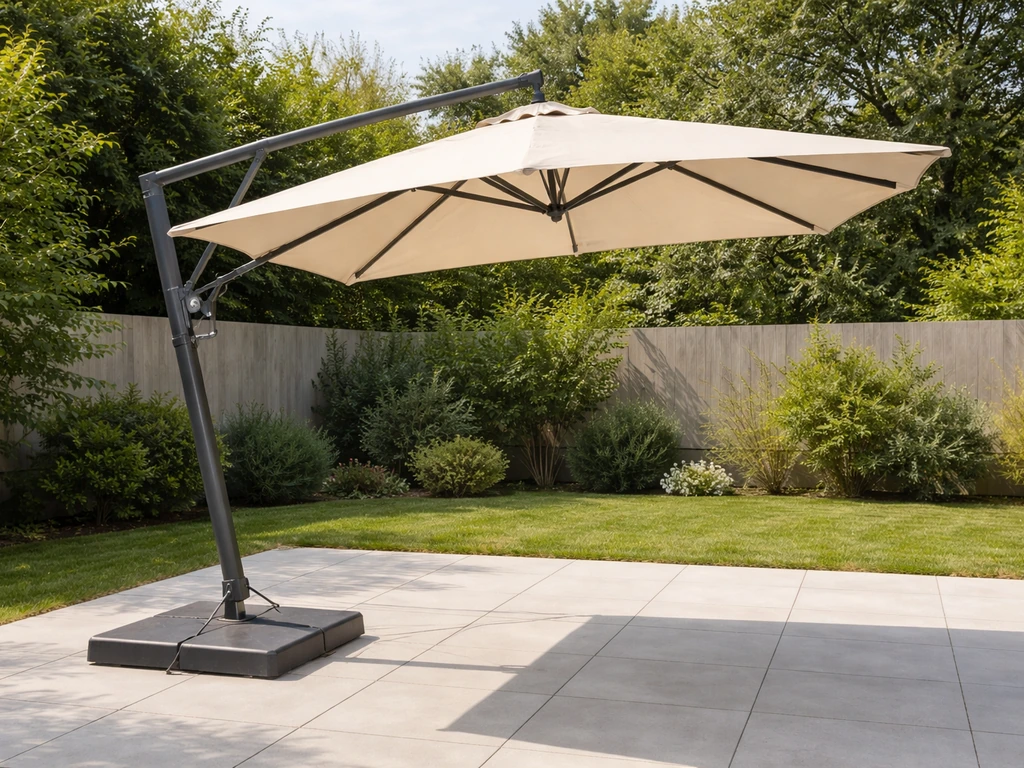
Grand Patio Umbrella Instructions: Cantilever Setup, Use, Fix
Step by step Grand patio umbrella instructions for cantilever setup, operation, fixes, and seasonal maintenance troubles
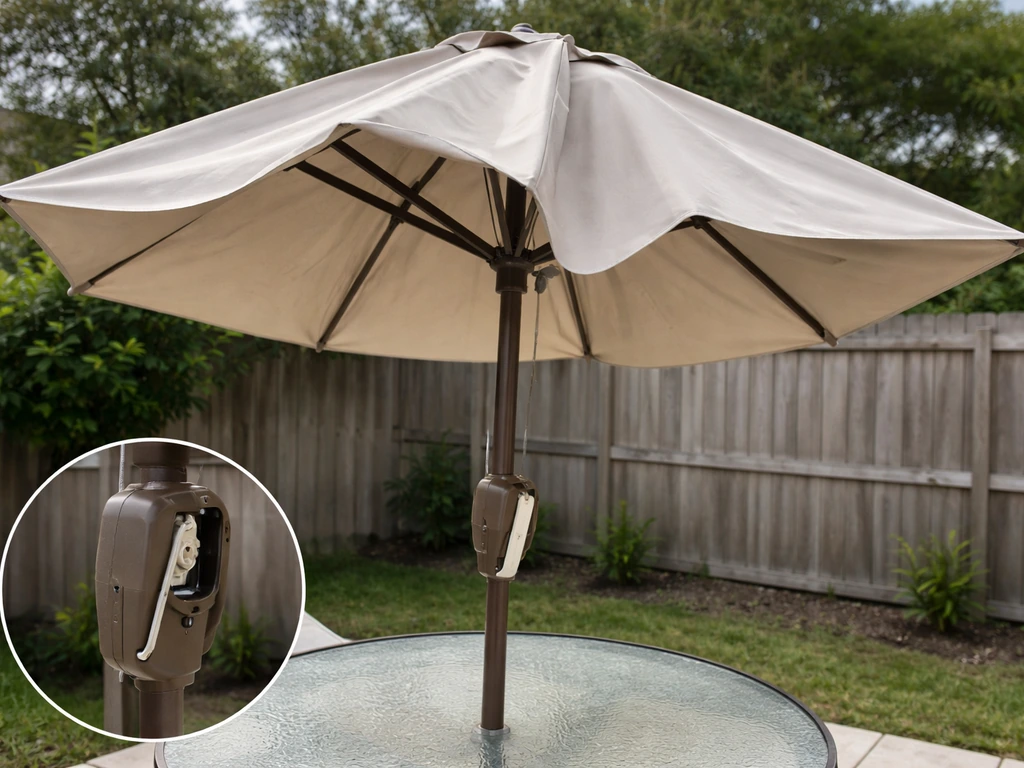
How to Fix a Patio Umbrella That Won't Open or Close
Step-by-step fixes for patio umbrellas that won’t open or close, with checks for jams, cords, latches, and lubricating t
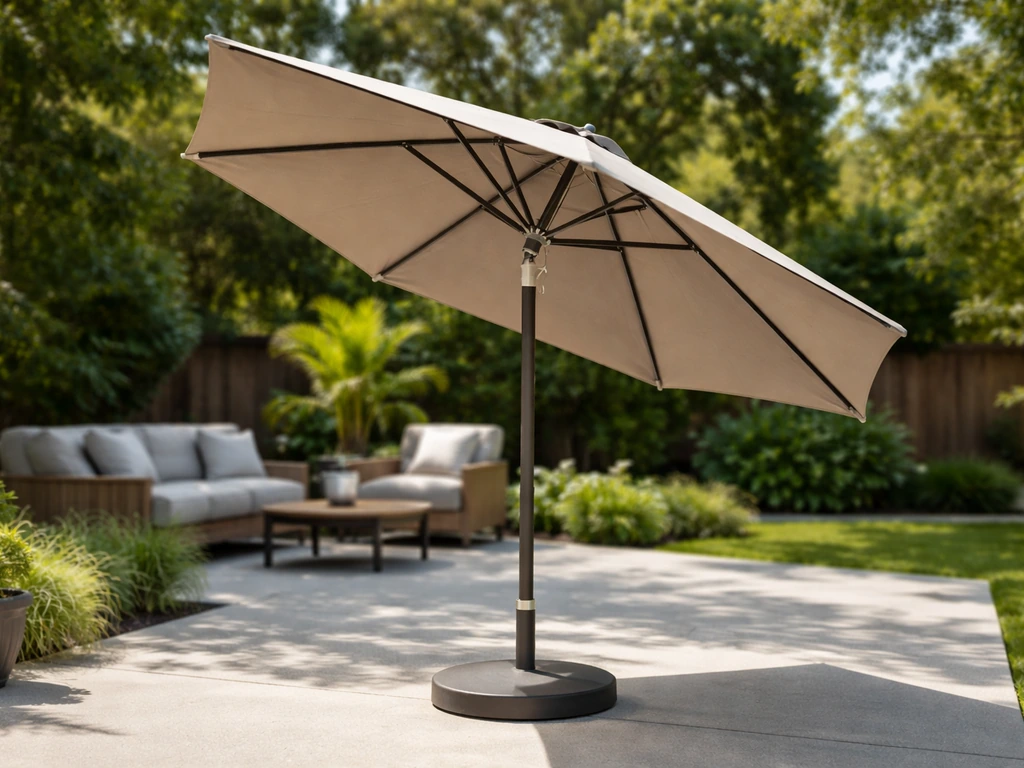
How Does a Patio Umbrella Work? Components, Use, and Fixes
Learn how patio umbrellas work: components, open close tilt, stability, and step by step troubleshooting common mechanic