To open a patio umbrella with a string, locate the cord (usually hanging near the pole or threaded through a small hole near the crank housing), pull it downward in a steady hand-over-hand motion, and once the canopy is fully spread, wrap or hook the cord around the small notch or cleat on the pole to hold everything in place. That's the short version. But if your cord won't pull, slips back, or the umbrella opens halfway and stops, the fix depends on which type of string system you have and what's causing it to fail.
How to Open a Patio Umbrella With a String: Step-by-Step
Luca Morrison
29 Apr 2026
Identify your patio umbrella cord system first
Before you touch anything, you need to know what kind of opening mechanism you're dealing with. Patio umbrellas with strings fall into a few distinct types, and the steps are different for each. Getting this wrong is the number one reason people get frustrated or accidentally damage their umbrella.
| System Type | How to Identify It | How the String Works |
|---|---|---|
| Pull-cord only (no crank) | Single rope or cord hanging from the pole, no crank handle socket visible | Pull the cord down to raise the runner hub, which pushes the ribs open. Secure cord in notch when done. |
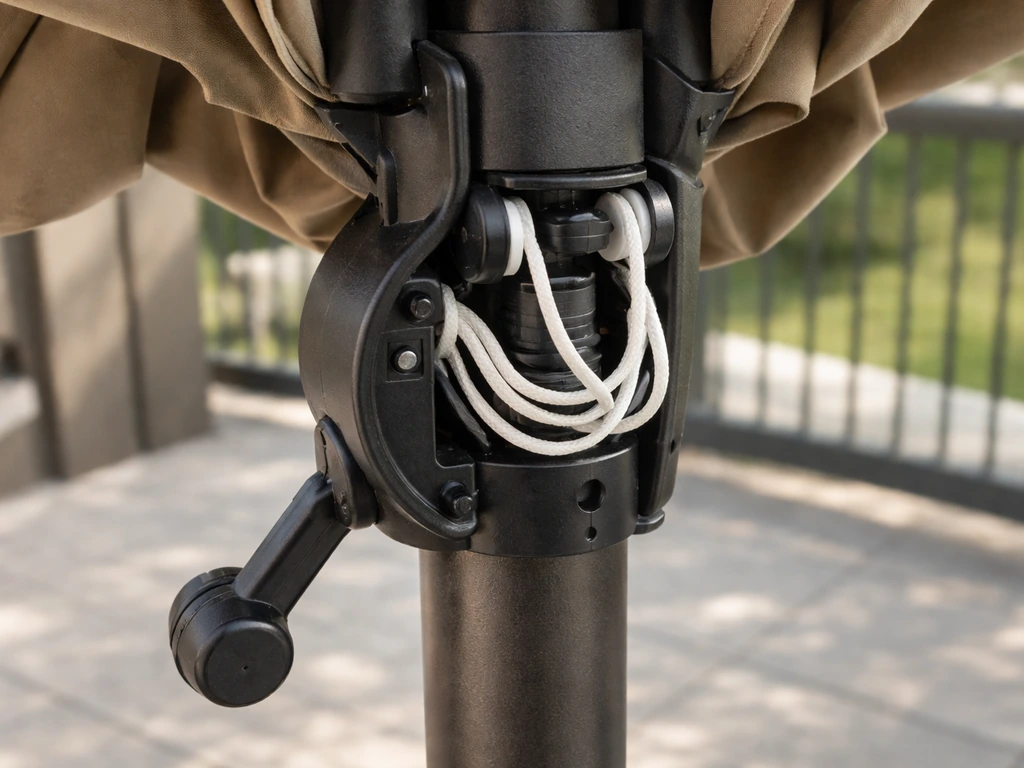
| Crank-assisted cord system | Crank handle socket on the pole, but cord is also present (often inside or near the crank housing) | Cranking turns a gear that winds the internal cord; the cord lifts the runner hub. No separate external pull needed. |
| Cord-and-tilt (push-button or pin tilt) | Cord for raising, separate tilt collar or button at the top pole section | Pull cord to raise canopy fully first, then engage the tilt mechanism separately after the canopy is open. |
| Strap or latch-release string | Short fabric strap or thin cord attached to a latching collar, not routed through pulleys | Pull to release a spring-loaded latch or clip; the canopy may then push open manually or self-open. |
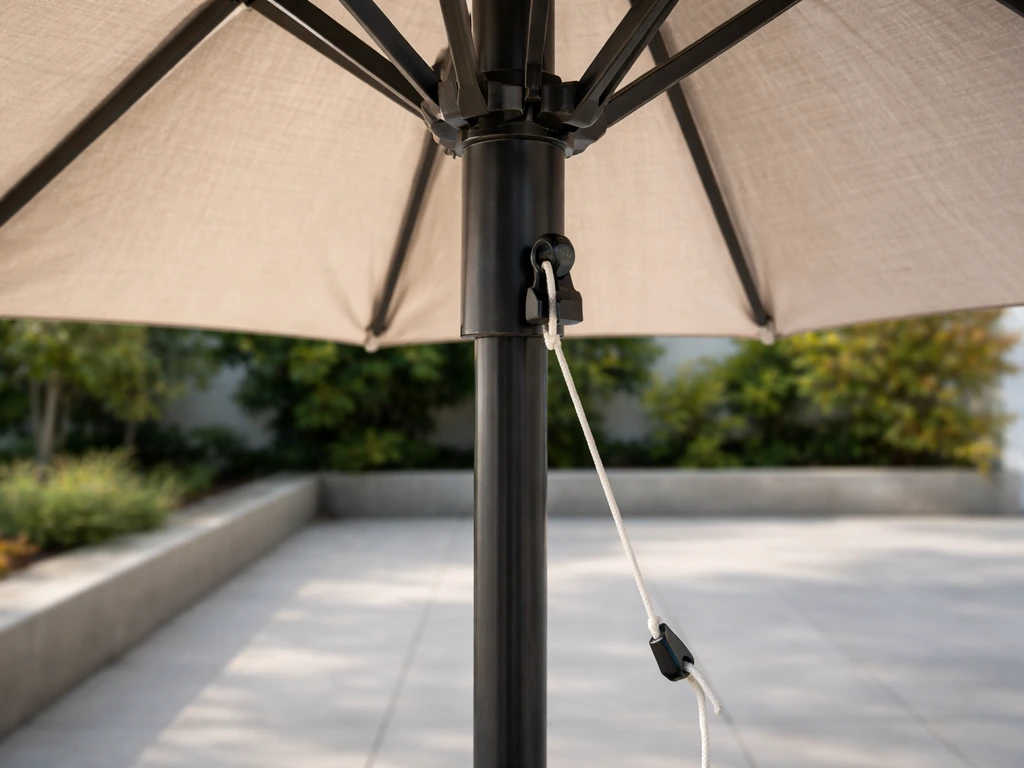
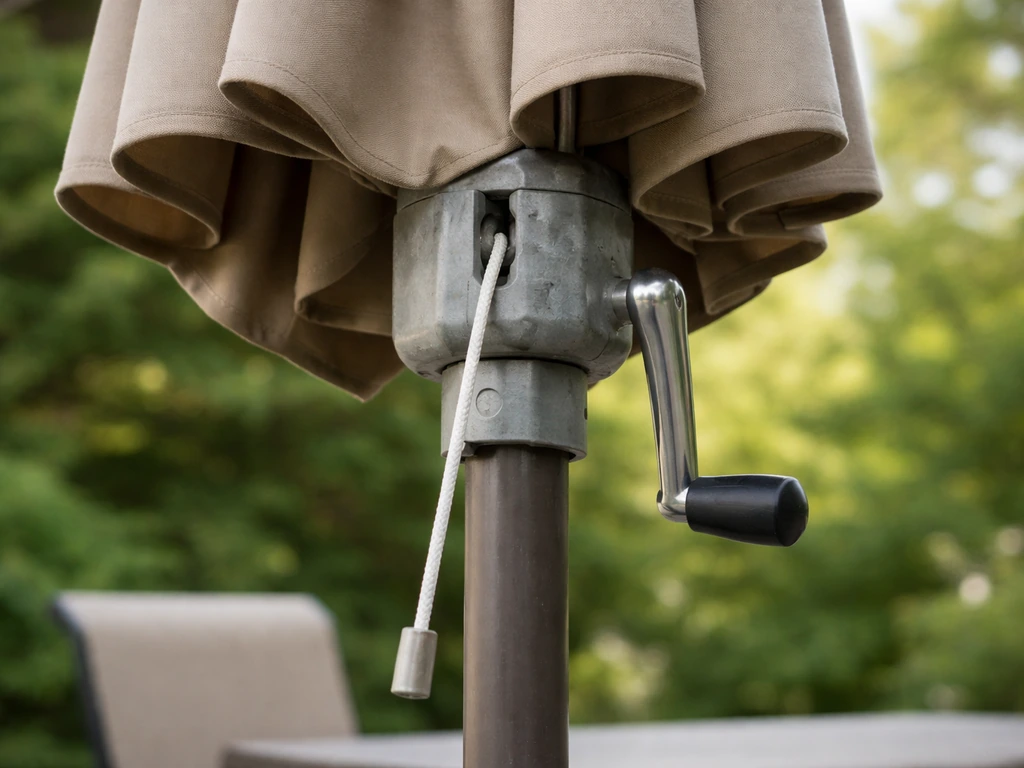
The most common setup you'll encounter on mid-range market umbrellas is the pull-cord system routed through a pulley at or near the upper hub, with the blank" rel="noopener noreferrer">cord end hanging down the pole. If you see a crank handle socket but no visible external cord, your cord is almost certainly internal and the crank does the pulling for you. If you can't see any cord outside the frame at all, a cord replacement probably can't be completed without disassembly, which is a situation Treasure Garden's own manual calls out specifically.
How to open the umbrella with the string (step by step)
Pull-cord only system
- Stand the umbrella upright in its base and make sure the pole is fully seated and stable before doing anything.
- Locate the cord. It usually hangs near the bottom of the upper pole section, sometimes threaded through a small hole near the top hub. If it's coiled up, let it drop so you have enough length to work with.
- Hold the cord with both hands and pull downward in a slow, steady motion. You're pulling the runner hub (the sliding ring on the pole) upward, which fans the ribs out. Don't yank it. A smooth, even pull works much better.
- As the canopy spreads, keep light tension on the cord to control the pace. If you let go suddenly, the hub can drop and the canopy will collapse back down.
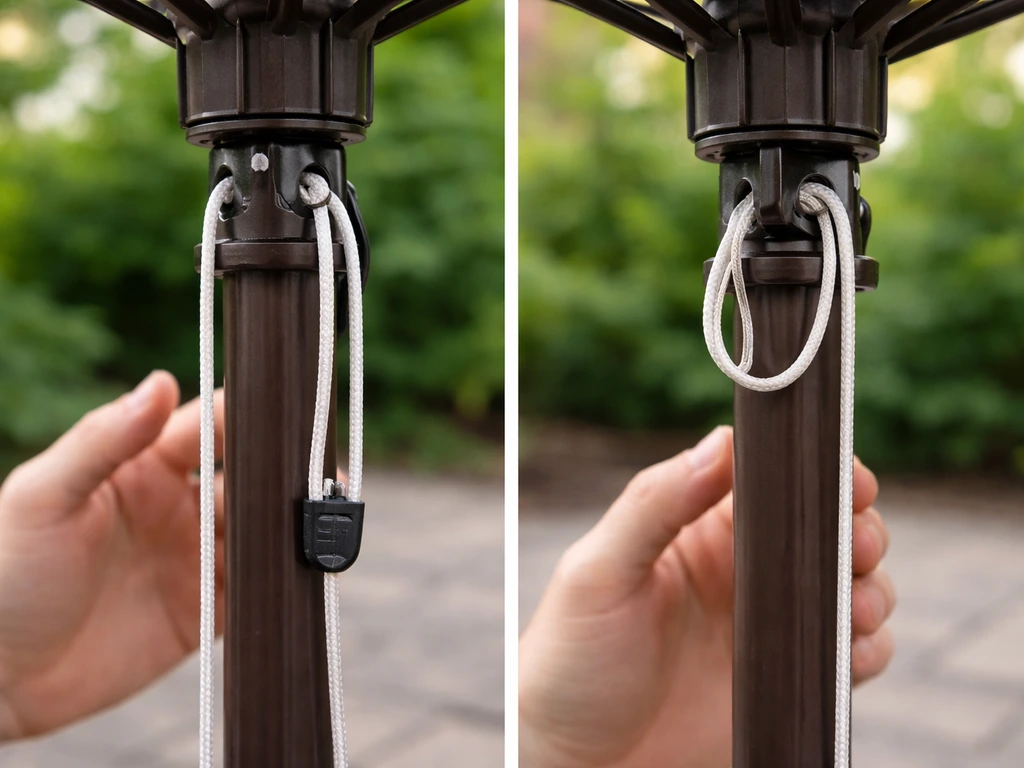
- Once the canopy is fully open and the ribs are extended, secure the cord. Wrap it around the notch, cleat, or hook on the pole — this is what keeps the umbrella from closing on its own.
- If your umbrella has a tilt feature, engage it now (after the canopy is fully open, never before). Push the tilt button or rotate the tilt collar at the upper pole joint until it locks into the angle you want.
Crank-assisted cord system
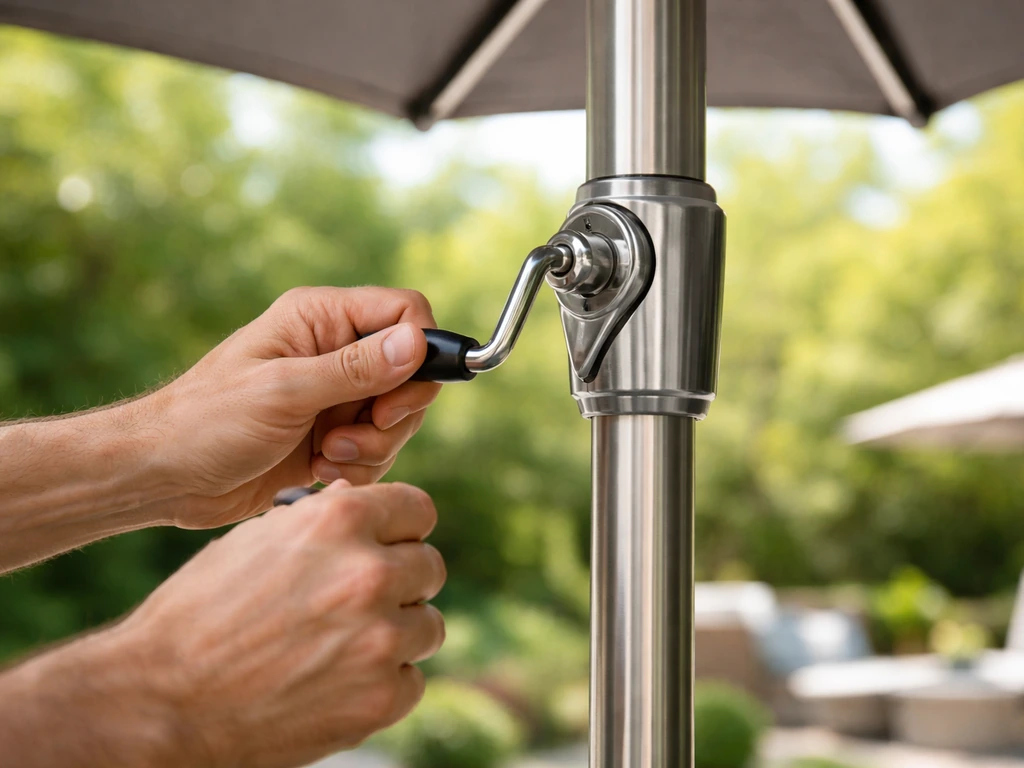
- Insert the crank handle into the socket on the pole, usually located in the crank housing partway up the shaft.
- Turn the handle in the direction that raises the canopy (almost always clockwise when you're facing the pole). The internal cord winds around a gear and lifts the runner hub.
- Continue cranking until the canopy is fully spread. You'll feel resistance decrease when the ribs are fully extended.
- To tilt (if your model supports it), insert the crank handle into the secondary tilt socket, typically labeled Left/Right, and rotate. On some cantilever models, a foot pedal click locks the tilt angle.
- Remove the crank handle and store it somewhere you won't lose it. Leaving it in the socket is a wind hazard.
Keeping the canopy aligned while opening
Whether you're pulling a cord or cranking, watch the canopy as it rises. If one section of fabric is bunching or one rib seems to lag behind the others, stop and gently ease that rib into position by hand. Forcing the cord past a misaligned rib can snap a rib tip or jam the hub. A slow, controlled open every time extends the life of both the cord and the rib connections.
When the string won't pull or the umbrella won't open
This is where most people get stuck. The cord feels stuck, it pulls a few inches and snaps back, the umbrella opens partway and stops, or nothing moves at all. If your patio umbrella cord stuck problem is happening right at the pulley or hub, check for binding or a misrouted line before you force the motion. Here's how to work through it from the simplest cause to the more involved ones.
Cord pulls but umbrella won't rise
If the cord moves freely but the canopy doesn't go up, the cord has likely disconnected from the runner hub or the pulley system. This is exactly the scenario a JustAnswer technician described: when the cord isn't connected to the pulley, the umbrella simply can't open or close. You'll need to open up the hub area and check whether the cord end has pulled free of its anchor point or if the knot has failed.
Cord won't pull at all (feels seized or jammed)
A cord that won't move usually points to one of three things: a seized pulley, a jammed runner hub, or the cord has frayed enough to catch on a guide hole or bracket. Check the pulley (the small wheel near the top hub) first. Spin it by hand. If it doesn't turn freely, it's either dirty, corroded, or cracked. A jammed runner hub is usually caused by debris, a bent rib, or dried lubricant. More on both of these below.
Cord slips back after pulling
If the umbrella rises and then the cord slips back when you try to secure it, the notch or cleat on the pole is either worn down, broken, or the cord end is too frayed to catch. Try wrapping the cord an extra loop around the cleat. If your patio umbrella cord keeps slipping back, make sure you are securing it correctly after each open slips back. If it still won't hold, inspect the cord end, a mushroomed or frayed tip won't grip. You may also have a worn internal locking mechanism if it's a crank system.
Umbrella opens unevenly or stops partway
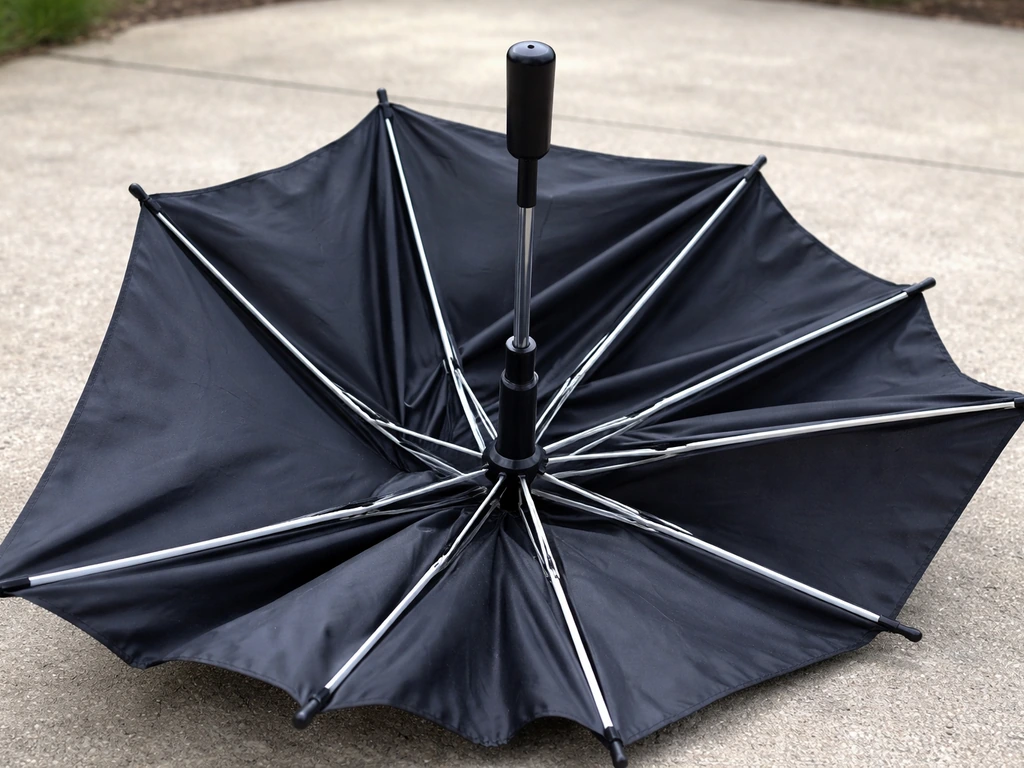
Partial opening, where only some ribs extend or the canopy fans out on one side, is typically a rib problem rather than a cord problem. Check each rib connector at the hub and at the tip. A snapped rib, a cracked rib connector, or a stuck runner hub that won't travel all the way up the pole will cause this. If the runner hub is stopping mid-pole, feel around it for grit or a nick in the pole surface that's catching it.
Safety checks before you force anything
If the cord or mechanism feels genuinely stuck, do not force it. Applying extra pull force on a jammed system is how cords snap, pulleys crack, and rib connectors break. Run through these checks before you add any more force.
- Is the umbrella pole fully upright and seated in the base? A slightly off-angle pole can bind the runner hub against the pole wall.
- Is the canopy fabric caught on anything? A rib tip tangled in a table corner or a velcro strap still fastened is a common culprit.
- Are any packing ties, shipping straps, or velcro storage bands still on the canopy? These prevent the fabric from spreading even if the cord pulls fine.
- Is there visible cord damage near the pull point? A cord that's about to snap will show fraying or a flattened section. Don't pull harder on a cord in this condition.
- Is the tilt mechanism in a neutral position? On some models, attempting to raise the canopy while the tilt is locked at an angle will bind the system. Return the tilt collar to straight before trying to open.
- Is there ice, debris, or hardened old lubricant around the runner hub or pulley? In early spring setups, residue from winter storage can lock these components.
How to inspect and fix common string-related failures
Frayed or broken cord
Fraying most often happens where the cord passes through a pulley or rubs against a guide hole in the hub or frame. If the cord is frayed at the contact point, it will eventually snap there. If it's already broken, you'll need to replace it. The process involves threading a new cord through the pulley system, securing it with the correct knot at the anchor point (blank" rel="noopener noreferrer">a figure-eight knot is the standard for most brands including Treasure Garden's UM810x and UM812x), and tucking the knotted end back into the frame before reinserting the crank or cord guide. Full restringing and cord repair steps are covered in separate dedicated guides on this site.
Mis-threaded or incorrectly routed cord
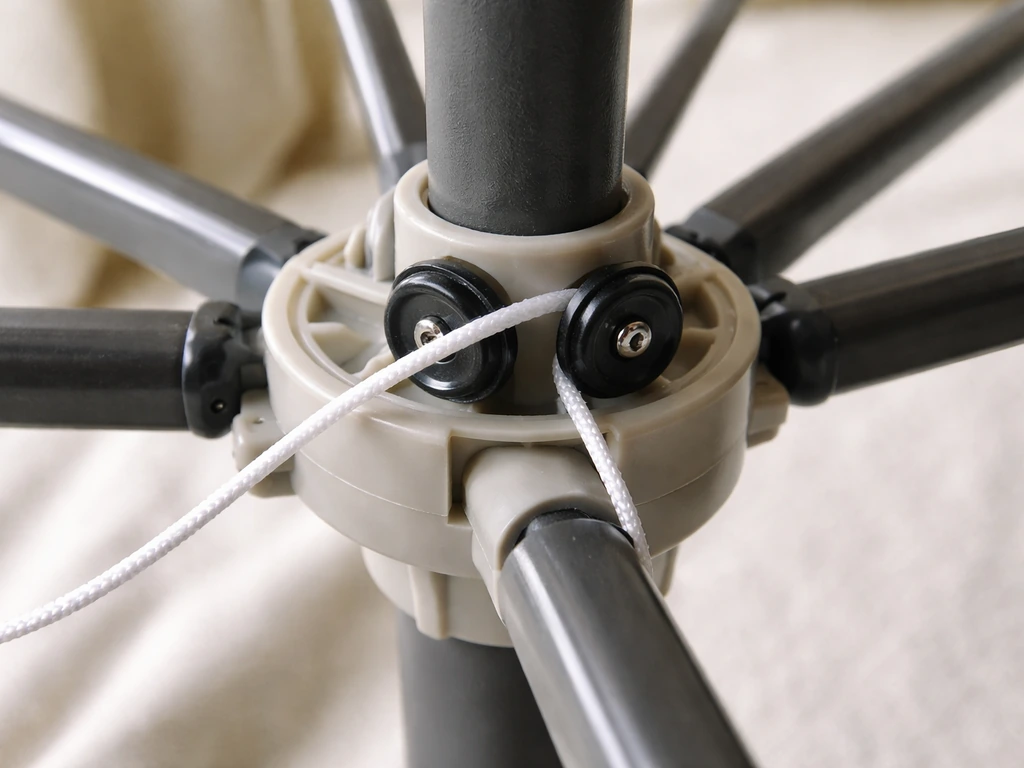
If the umbrella was recently reassembled or the cord was replaced and it's not working right, the cord may be routed incorrectly. On most hub-and-pulley systems, the cord needs to pass through a specific notch in the hub before it connects to the runner ring. If it's running outside that notch, it will either bind, slip, or fail to lift the hub at all. Compare your routing to the original manufacturer diagram if you have it, or look up the parts diagram for your model. Galtech's parts diagram, for example, labels the Upper Hub, Runner Hub, and Tilt Mechanism as distinct components, which helps you identify exactly where each cord section should go.
Pulley wear or seizure
The pulley is a small plastic or metal wheel that the cord rides over near the top of the pole. It wears out faster than most people expect. Spin it by hand and check that it rotates smoothly and that the axle isn't cracked. If it's seized, try a drop of silicone-based lubricant and work it back and forth. If the pulley housing is cracked or the wheel won't spin after lubrication, replace the pulley. They're inexpensive and brand-specific replacements are available from most major manufacturers.
Loose or broken mounting brackets
The brackets or guides that keep the cord on track along the pole can loosen over time, especially on lower-cost models. When a guide shifts out of position, the cord can rub against the metal pole edge instead of running smoothly through the guide, which causes fraying and resistance. Check each bracket and retighten any screws. If a bracket is cracked or missing, replace it before rerunning the cord. Some crank-style umbrellas also have a slotted washer, gear, nut, and cotter pin assembly at the crank connection point that needs to be correctly reassembled after any cord work, as UmbrellaSource's restringing instructions outline.
Knot failure at anchor points
The cord is anchored at one or both ends with a knot, and if that knot works loose or was tied incorrectly during a previous repair, the cord will pull free under load. For Treasure Garden models, the anchor is at the handle bolt end, and a figure-eight knot is specified because it won't slip under tension. After tying, the knotted end gets tucked into the frame so it can't vibrate loose. If you're finding the cord slipping at the anchor, re-tie with a figure-eight and test by pulling firmly before trusting it.
Lubrication and maintenance after opening
Once the umbrella is working again, spend five minutes on maintenance so you're not dealing with the same problem next season. Treasure Garden's own manual puts it well: areas subject to turning and sliding should be treated with a non-staining silicone-based lubricant spray. Avoid WD-40 for ongoing lubrication as it attracts dirt and dries out. Use a proper silicone spray.
- Pulley wheel and axle: one light spray of silicone, work the cord back and forth a few times to distribute it.
- Runner hub channel: the inside groove where the hub slides up and down the pole. Wipe it clean first, then apply a thin coat of silicone spray or dry PTFE lubricant.
- Tilt mechanism collar and pivot pin: if the tilt feels stiff, a drop of silicone at the pivot point and a few cycles of the tilt will free it up.
- Crank housing gear (if applicable): a small amount of silicone-based grease on the gear teeth, not spray, as spray tends to fling off under rotation.
- Cord itself: do not lubricate the cord. A slippery cord won't grip the securing notch and will let the canopy drop. Keep it clean and dry.
While you have the umbrella open, inspect the full length of the cord for signs of wear. Run your fingers along it slowly. Fraying, stiffness, a flattened section, or any visible strands separating means the cord is overdue for replacement. Replacing a cord proactively costs a few dollars and 20 minutes. Replacing it after it snaps under a gust of wind can mean a damaged canopy, bent ribs, or a trip hazard.
Seasonal storage tips
Before closing the umbrella for winter storage, clean the cord with a damp cloth, make sure the pulley spins freely, and close the canopy slowly so the cord doesn't snap tight. Store the umbrella in a ventilated cover rather than a sealed bag to prevent moisture from degrading the cord fibers. If you live somewhere with hard freezes, bring the umbrella inside entirely or at least store the cord and crank handle indoors, since repeated freeze-thaw cycles crack plastic pulleys and stiffen cord material.
When to stop and get replacement parts or professional help
Most string-related patio umbrella problems are genuinely fixable at home, and repair is almost always worth it before considering replacement. But there are a few situations where it makes sense to stop, order parts, or call in help.
- The cord is completely broken and not visible outside the frame. If the internal cord has snapped inside the pole and you can't access it without disassembling the frame, some manufacturers (including Treasure Garden) state that cord replacement cannot be completed in this condition without professional or factory service.
- The pulley is cracked or the pulley housing is broken. A cracked pulley will shred a new cord within a season. Order a brand-specific replacement pulley before restringing.
- The runner hub is visibly cracked or won't slide smoothly even after cleaning and lubrication. A damaged runner hub is a structural issue and the umbrella shouldn't be used until it's replaced.
- The tilt mechanism is broken and the umbrella is sitting at an angle. Don't operate the umbrella until the tilt lock is repaired. An umbrella that tilts unexpectedly in wind is a safety hazard.
- The crank housing gear is stripped. If the crank turns freely with no resistance and no cord movement, the internal gear has stripped. Crank housing assemblies are available as replacement parts for most major brands.
- You have a branded umbrella (Treasure Garden, Galtech, GrandinRoad, ProShade, PatioWell) and the issue seems structural. Contact that brand's customer support directly with your model number. Most of these companies stock replacement parts for specific models and can walk you through the repair or ship you the exact component.
If you've confirmed the cord itself is the issue, a full restringing walkthrough and cord replacement guide are available on this site, along with specific guidance on fixing a stuck or jammed cord situation. Start with the simplest fix, work methodically, and you'll almost always find the problem is one small component rather than a reason to replace the whole umbrella.
FAQ
Can I open the umbrella by pulling the string even if it feels tight or only partially working?
Yes, but only in a controlled way. Keep the canopy moving slowly and keep one hand on the fabric near the hub. If you feel the ribs start to snag or you notice the cord snapping back, stop, because forcing can jam the hub or break a rib connector.
My patio umbrella cord feels like it is not moving at all, what should I check first?
If the cord is external and you see no motion at all, the most common quick checks are pulley binding and a misrouted line around the hub notch. Spin the pulley by hand first, then verify the cord passes through the hub notch that leads to the runner hub, not outside it.
Why does my patio umbrella open halfway or only on one side when I pull the cord?
If the canopy opens only on one side or some ribs lag, treat it as a rib or runner issue rather than a simple cord problem. Inspect each rib connector at both ends, and feel for grit or a nick in the pole that could be stopping the runner hub mid-pole.
What lubricant should I use if the opening mechanism feels sticky?
Use silicone-based lubricant on moving contact points like the pulley axle and sliding areas, then work the mechanism back and forth gently. Avoid WD-40 as a long-term solution, since it can attract dirt and dry out over time, making the jam worse.
My umbrella cord is frayed near the pulley, can I still use it?
A frayed cord needs replacement, not just “taping it.” Fraying commonly happens where the cord rides over the pulley or rubs at a guide hole. If the cord is already broken at the contact point, restringing is the safer fix to prevent a second failure.
The umbrella opens but the cord slips back and won’t stay secured, what could cause that?
If the cord slips back after you wrap it on the cleat, check two things: whether the cleat is worn down or damaged, and whether the cord end is too frayed to grip. Also try adding an extra loop around the cleat and confirm the cord is secured the same way after every open.
What if my umbrella has a crank, but I cannot find the string or cord externally?
No, internal and external cord systems can be very different. If you do not see an external cord at all (and you only find a crank socket), you likely have a crank-actuated internal line, and cord replacement may require disassembly rather than simple rethreading.
If the cord keeps pulling free at the anchor point, can I fix it with a better knot?
Yes, but only as a temporary diagnostic. When the cord is anchored with the wrong knot or comes loose, it will pull free under load. After any knot work, tuck the knotted end back into the frame and test by pulling firmly before relying on it.
How do I know when it is time to replace the cord before it snaps?
To reduce repeat failures, inspect the full cord length while the umbrella is open, looking for stiffness, flattened sections, or separated strands. If any of that is present, replace proactively, since cords can snap under gusts and also damage ribs or the canopy.
What is the best way to store my patio umbrella over winter if I had cord issues?
Make sure the pulley spins freely, clean the cord with a damp cloth, and close the umbrella slowly so the cord does not get snapped tight. Store it in a ventilated cover (not sealed), and in freeze-prone areas, store the umbrella or at least the cord and crank indoors to prevent freeze-thaw cracking.
Next Articles
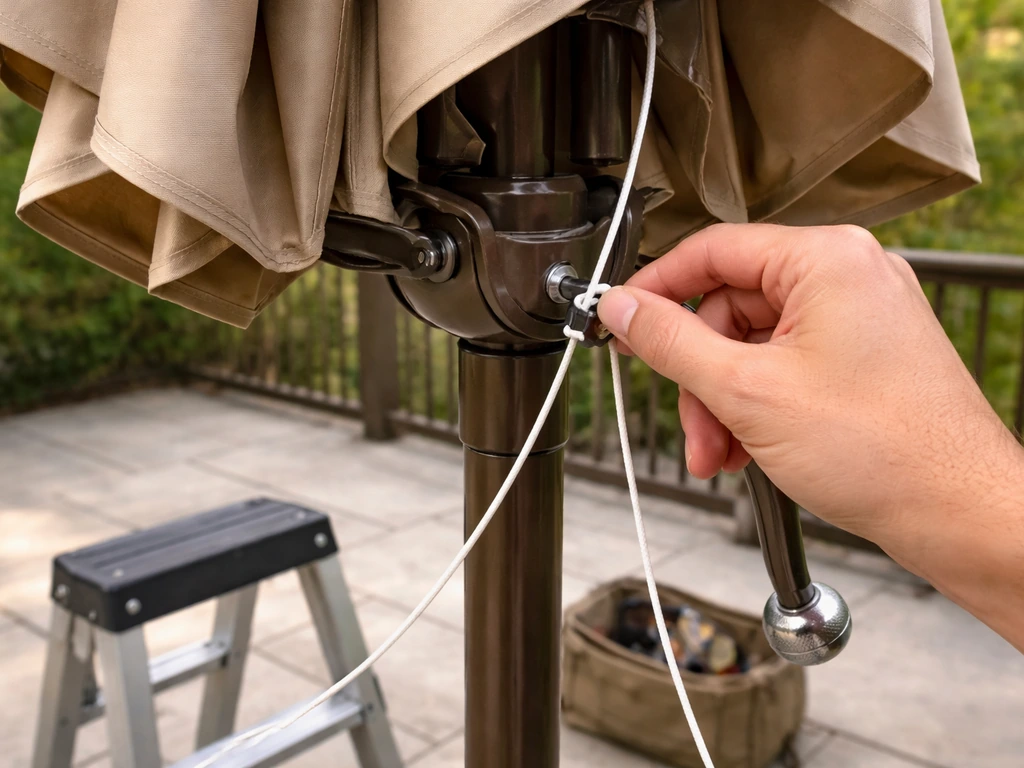
How to Fix Patio Umbrella Cord: Repair or Replace
Step-by-step guide to fix or replace a patio umbrella cord, with tools, routing, testing, and prevention tips.
Fix Patio Umbrella Cord: Repair a Broken Pull String
Step-by-step guide to fix a broken patio umbrella pull cord, diagnose crank issues, repair mechanism, and test safely.
How to Restring Patio Umbrella Lift and Tilt Cords
Step-by-step guide to restring lift and tilt cords on crank or tilt patio umbrellas, incl. offset types and troubleshoot