
Most patio umbrella cord problems come down to one of three things: the cord snapped, it came untied from its anchor point inside the pole, or it got tangled around the spool so the crank spins freely but nothing moves. All three are fixable in an afternoon with basic hand tools and about 50 feet of replacement braided nylon cord if needed.
Fix Patio Umbrella Cord: Repair a Broken Pull String
Luca Morrison
29 Apr 2026
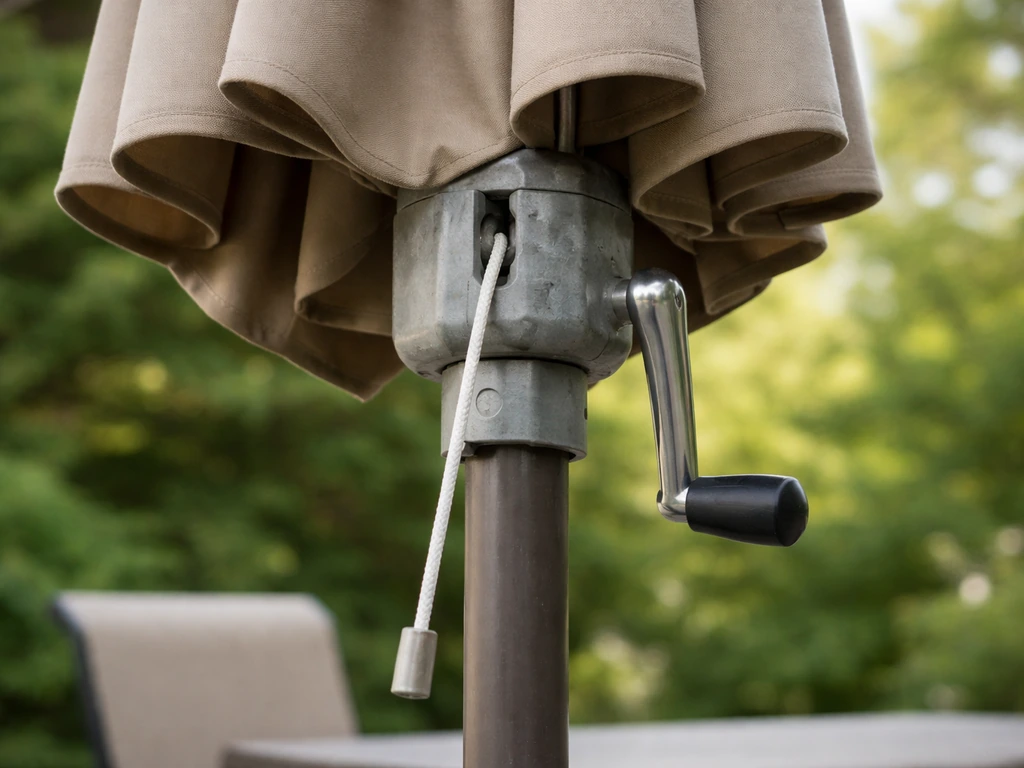
If you need step-by-step help on how to restring patio umbrella cord, follow the repair flow for your specific cord failure. If you’re wondering how to fix patio umbrella cord when it snaps, comes untied, or tangles inside the pole, this same afternoon approach still applies. The trickiest part is usually accessing the internal mechanism and re-routing the cord back through the pole, but once you know what you're looking for it's very manageable.
Quick diagnosis: figure out what's actually wrong
Before you pull anything apart, spend two minutes doing a proper diagnosis. The symptom you're seeing tells you almost exactly what's broken inside.
| Symptom | Most likely cause | Repair needed |
|---|---|---|
| Crank turns freely, canopy doesn't move at all | Cord detached from lift ring, or cord snapped inside the pole | Re-tie or replace the cord |
| Crank turns but feels wrong, canopy moves a little then stops | Cord tangled around the spool or internal routing | Re-route the cord through the pole |
| Pull cord hangs loose and won't retract | Cord end came untied at the hub/anchor point | Retie the knot at the attachment point |
| Crank turns hard or is stuck, canopy won't move | Debris or a tangled cord is jamming the mechanism | Clear the obstruction, check the cord path |
| Umbrella opens but immediately collapses back down | Cord re-routed correctly but internal spring is fatigued | Replace the crank spring assembly |
The two most common scenarios are a detached cord end (the knot slipped or the cord frayed through at an attachment point) and a cord that snapped somewhere inside the pole. Both feel the same from the outside: you crank and nothing happens. If you can pull the cord out and see a clean break or a frayed end, you know you need a full replacement. If the cord looks intact but is looped weirdly around the spool, you just need to re-route it.
Gather your tools and stay safe before you start
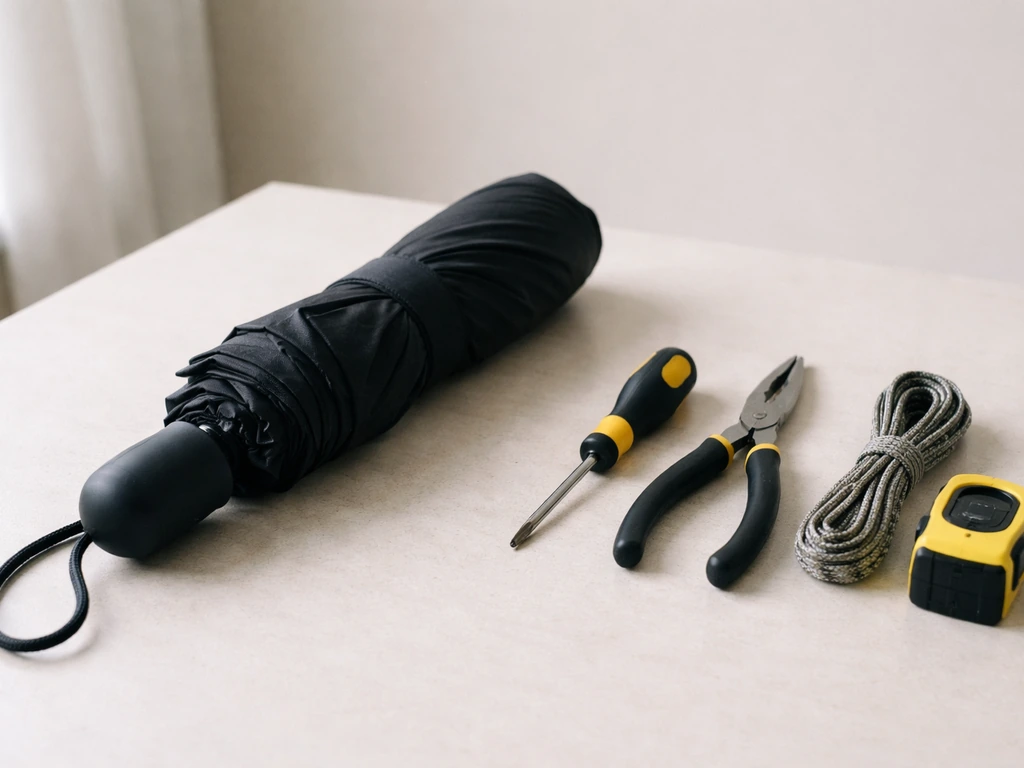
This repair involves releasing tension from the umbrella mechanism, and that's where injuries happen if you skip the safety steps. A tensioned cord or a suddenly released canopy can snap back hard. Follow these precautions before touching anything inside the pole.
- Close the canopy fully before you start. Never work on the cord mechanism while the umbrella is open and the cord is under load.
- If the canopy is partially open and stuck, have someone hold it down while you work, or use a ratchet strap around the canopy and pole to keep it from springing open.
- Wear work gloves: cord ends and metal components inside the pole can be sharp, especially if the cord has frayed.
- Safety glasses are worth putting on, especially when you're fishing wire through the pole and metal edges are involved.
- Lay the pole flat on a workbench or table if you can. Working on it horizontally is much easier than trying to do this with the umbrella standing upright in a base.
Tools you'll need: a Phillips and flathead screwdriver, a pair of needle-nose pliers, a stiff piece of wire or a wire coat hanger straightened out (this is your cord guide), scissors or a utility knife, and a lighter to melt the cut ends of nylon cord so they don't fray. If you're replacing the cord, pick up braided nylon umbrella cord rated at about 0.115 inches in diameter, sold in 50-foot lengths. That spec fits most standard market and garden umbrellas. Matching the original diameter matters because cord that's too thick will bind in the pulleys and cord that's too thin will slip.
Open up the mechanism: removing covers and finding the cord
Access depends on your umbrella type. The two most common are center-pole crank umbrellas (the kind with a handle you rotate on the side of the pole) and cantilever or runner-style umbrellas (where a separate arm holds the canopy and the cord routes through a more complex assembly). Both are doable, but the access points are different.
Center-pole crank umbrellas
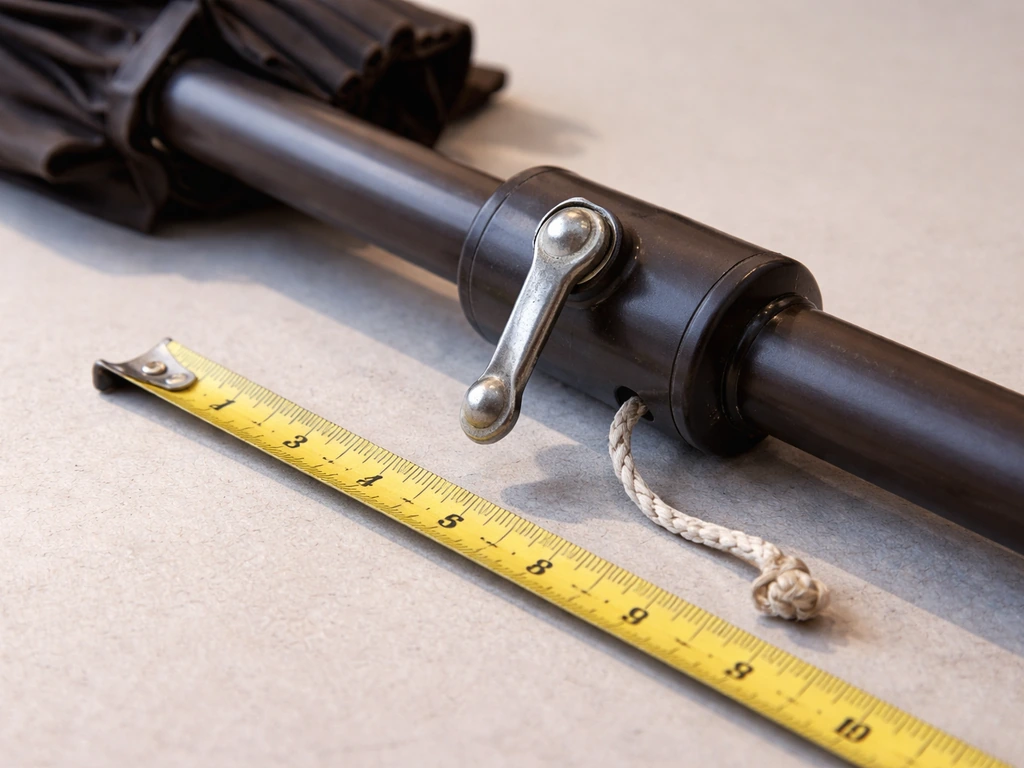
- Find the crank housing on the side of the pole, usually about two-thirds of the way up. It's the plastic or metal box where the crank handle attaches.
- Look for 2 to 4 small screws holding the housing cover on. Remove them with a Phillips screwdriver and set them somewhere they won't roll away.
- Pull the cover off carefully. You'll see the spool (a cylinder or drum the cord wraps around) and the cord path leading up and down through the pole.
- Take a photo with your phone before you touch anything. This is the single most useful thing you can do. You want a reference for how the cord was routed before you pulled it apart.
- Locate where the cord attaches: one end ties to the spool or crank drum, and the other end routes up through the pole and ties to the lift ring (the metal ring that pushes the ribs outward when the canopy opens). That lift ring connection is the most common failure point.
- For cantilever or runner-style umbrellas, you'll also need to remove the top cap from the main post to access the cord routed through the upper section. The cord on these typically wraps around a crankshaft inside the post.
Before you remove the old cord entirely, measure its length if any usable portion remains. This gives you a cutting guide for the replacement and saves you from guessing how much slack to leave.
The actual repair: re-threading, replacing, and re-tying
If the cord is intact but came untied
This is the easiest fix. The cord slipped its knot at the lift ring or the spool anchor point. Use your needle-nose pliers to thread the cord end back through the anchor hole and tie a secure stopper knot (a figure-eight or a double overhand knot both work well). The knot needs to be large enough that it can't pull back through the hole. After tying, burn the cut end lightly with a lighter to seal the nylon fibers so it doesn't fray. Pull on the cord firmly with your hands to test the knot before reassembling.
If the cord is tangled inside the pole
Pull the cord out as far as you can and try to identify where the tangle is. Sometimes you can shake the pole and feel the snag loosen. If not, untie both ends of the cord so it's completely free, pull it out entirely, and then re-route it fresh using the guide wire method described below. Following a DIY guide like Best Patio Umbrella’s repair instructions, re-routing the braided cord through the same internal path after inspection helps fix many tangled patio umbrella cord problems re-route it fresh. Attempting to untangle a cord while it's still threaded inside a narrow pole tube is usually a losing battle.
If the cord is broken or frayed: full replacement
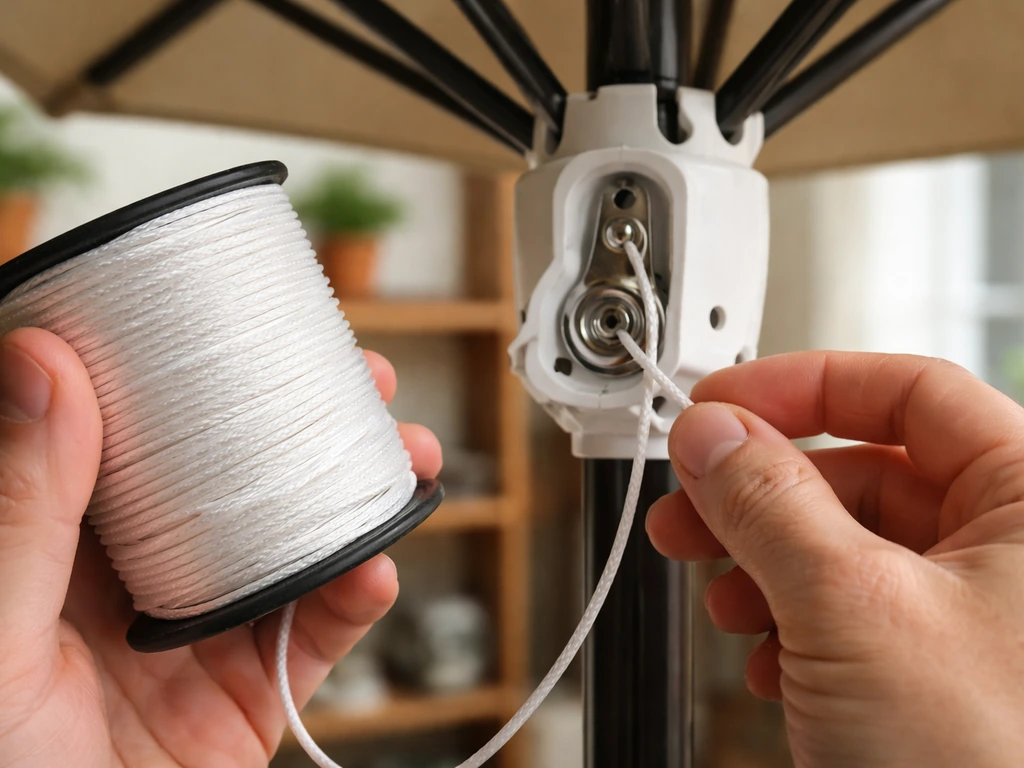
- Remove the old cord completely. Note any pulleys, eyelets, or guides it passed through as you pull it out.
- Cut your new braided nylon cord to the measured length (or add about 12 extra inches over your measurement to give yourself room to tie the knots).
- Melt both ends of the new cord with a lighter to seal them.
- Straighten your guide wire (a coat hanger works perfectly) and tape or tie one end of the new cord to the tip of the wire.
- Feed the guide wire up through the pole from the crank housing opening, following the same path the old cord used. Use the photo you took earlier as your map.
- Once the wire emerges at the top of the pole or at the lift ring location, pull the cord through until you have enough length to tie the knot at that attachment point.
- Tie the cord securely to the lift ring with a figure-eight stopper knot. Burn the end to seal.
- Route the other end of the cord back down to the spool or crank drum and tie it there. Again, burn the end.
- If there are pulleys or routing eyelets along the way, make sure the cord sits inside each one before tying off. A cord that bypasses a pulley will bind immediately.
On cantilever and runner-style umbrellas, after removing the crank assembly and untying the rope from the shaft, you'll place the rope back into the main post before reconnecting the runner. Transfer the tilt handle before reinstalling if your model has a separate tilt component, and follow the sequence in your photo. The order of reassembly matters on these more complex mechanisms.
Put it back together and test it properly
- Reinstall the crank housing cover and tighten all screws snugly but not so hard you crack the plastic housing.
- Replace any top caps or access covers you removed.
- Stand the umbrella upright in its base before testing so you can watch the canopy move.
- Crank the handle slowly and watch what happens. The canopy should begin to rise smoothly within the first one or two rotations.
- Open the umbrella fully, then close it fully. Do this at least three full cycles to seat the cord in the pulleys and confirm there's no binding.
- Check for consistent tension: the crank should feel roughly the same resistance throughout the opening motion, not suddenly tight or suddenly loose at any point.
- If the umbrella has a tilt function, test that separately after confirming the open/close works.
Proper cord tension means the canopy opens fully to a firm, taut position and closes completely without the cord going slack and looping around the spool. After the cord is correctly routed and tensioned, you should be able to open the patio umbrella using the string smoothly without slack. If there's too much slack, you tied off with too much extra cord length. Untie the spool end and shorten it by an inch or two, then re-tie. If the cord seems too tight and the crank is hard to turn, you have the opposite problem: untie and add a little slack.
Still not working? Here's how to troubleshoot it
If you've re-threaded the cord and the umbrella still won't open or close correctly, work through these possibilities in order from simplest to most involved. A Reddit thread about a cantilever umbrella stuck open describes a failure mode where the rope-spool inside the crank mechanism doesn’t move even when the crank is turned, which can help narrow down what’s stuck.
- Crank turns but canopy still doesn't move: open the housing again and confirm the cord is actually connected to the spool drum. It's possible the knot at the spool anchor is slipping under load even though it held during your hand-pull test. Retie with a larger stopper knot or add a second knot as a backup.
- Canopy opens then immediately collapses: the cord routing is probably correct, but the internal spring inside the crank assembly is fatigued. This spring holds the mechanism in the open position. Replacement crank spring assemblies are sold by most umbrella parts suppliers. This is a separate issue from the cord itself.
- Crank is hard to turn or feels gritty: debris is likely caught in the mechanism or around the cord routing eyelets. Remove the housing cover again, clear out any dirt, dead insects, or debris, and apply a light spray of silicone lubricant to the pulleys and spool. Do not use WD-40, which attracts dirt. Silicone spray is the right choice here.
- Cord keeps fraying at the same spot: there's a sharp edge somewhere in the cord path, usually a burr on a pulley or eyelet. Find it, file it smooth with a small metal file, and replace the cord again.
- Tilt button won't engage or lock after cord repair: check that the tilt mechanism's latch is fully seated. Sometimes when you reassemble the housing the tilt pin gets slightly misaligned. Push it firmly into position and try again.
- None of the above resolves it: if the crank gears feel stripped (the handle just spins with zero resistance and no cord movement at all), the internal gear is gone and you need a replacement crank assembly, not just a new cord.
One thing worth knowing: if you're dealing with a cord that's stuck and won't move rather than a broken cord, that's a slightly different situation with its own set of fixes around obstructions and mechanism jams. Similarly, if you're not sure how the pull-cord system is supposed to work in the first place on your umbrella style, getting familiar with the normal operating sequence before diving into repairs will save you a lot of frustration.
Keep it from breaking again: maintenance that actually helps
A patio umbrella cord that's been replaced properly can last for years if you treat the mechanism right. Most repeat cord failures come from a handful of easily avoidable habits. For maintenance, the lubrication instructions for retractable awnings recommend using dry silicone spray lubricant on movable outdoor mechanisms, rather than oily or liquid lubricants blank" rel="noopener noreferrer">treat the mechanism right.
- Always close the umbrella when you're not using it or when you leave it unattended. Wind is the number one cause of cord stress and sudden failure. A gust catching an open canopy yanks the cord with force the mechanism was never designed to handle.
- Use the velcro or fabric tie straps that come with most umbrellas when the canopy is closed. They keep the canopy from billowing in a breeze and rattling the cord loose.
- Operate the crank smoothly and at a steady pace. Cranking fast and hard is how you snap cords and strip gear teeth. Slow and even is all you need.
- Once or twice a season, open the crank housing cover, brush out any debris, and hit the spool and pulleys with silicone spray. This two-minute task prevents the gritty binding that accelerates cord wear.
- Check all the visible screws on the crank housing and pole connection points every spring and tighten any that have worked loose over winter. Loose hardware causes vibration that wears on the cord routing over time.
- Inspect the cord itself while you're lubricating. Look for signs of fraying, especially at the knot attachment points and at any pulley where the cord bends sharply. Catching a 10% frayed cord now costs you nothing. Catching it after it snaps mid-season costs you a full replacement job.
- In climates with hard winters, store the umbrella indoors or at minimum store it in a ventilated cover. Freeze-thaw cycles degrade nylon cord faster than UV exposure does.
Replacing a patio umbrella cord is genuinely one of the more satisfying DIY repairs you can do because the fix is permanent, the cost is low (usually under $10 for replacement cord), and the alternative is buying a whole new umbrella. With a bit of patience on the re-threading step and a good phone photo before you disassemble anything, most people get this done in under an hour.
FAQ
My umbrella crank spins but nothing moves, how do I know whether to replace the cord or just re-route it?
If the cord looks intact but the crank turns freely, first confirm the failure type: gently pull the cord by hand. If it pulls out but the canopy does not move, the cord is likely routed incorrectly or the knot slipped at the spool anchor. If it does not pull out and you can’t locate a clean break, you may have an internal snag or jam, not a snapped cord. Use this to decide whether to re-route only or replace the cord entirely.
What happens if I use replacement cord that is slightly different thickness than the original fix patio umbrella cord?
Make sure you match cord diameter, even if the cord length seems right. Too thick can bind in the pulleys and make the crank feel heavy, too thin can slip at the anchor and recreate the same failure. If you cannot match the original diameter exactly, prioritize a slightly tighter fit that still moves freely, then test by opening and closing with light hand pressure before sealing anything back up.
Can I mix up the reassembly order on cantilever or runner-style umbrellas and still get the cord to work?
Yes, and it’s common on runner or cantilever models where the tilt or runner components change the cord’s path. Take a clear photo of the cord route before disconnecting, then reinstall in the same order. If your model has a separate tilt handle, set it back to its correct position before reconnecting the runner, otherwise the cord may tension incorrectly and prevent full opening.
How tight should the stopper knot be, and how do I prevent it from pulling back through the anchor point?
Do not. If the knot is too small for the anchor hole, it can pull back through, causing the same “crank spins but nothing moves” problem. Use a stopper knot that is deliberately larger than the opening, then burn-seal the cut end so individual nylon fibers do not unravel and weaken the knot over time.
I shortened the cord to fix slack, now the crank is hard to turn. What should I adjust?
If you shortened the cord to remove slack and the crank becomes hard to turn, the cord is likely too tight or the cord is rubbing somewhere in the route. Undo the spool end and add a small amount of slack (about 1 inch at a time), then re-test open and close. If it still feels rough, check for cord crossing, twisting, or a pinched section near the spool.
How do I measure replacement cord length so the canopy reaches full open and fully closes without slack looping?
Before buying cord, measure any usable portion and count the cord travel you need for full open and full close. Then verify once routed: the canopy should reach a firm, taut position without the cord looping around the spool. If the canopy stops early or the cord bunches, you likely need more length, not just a new knot.
What’s the best way to test that the fix patio umbrella cord repair is correct before I fully reassemble the umbrella?
The most reliable test is to open and close the umbrella with the cord alone, checking that the cord stays seated in its track and does not ride over the spool edge. If you hear or feel grinding, stop and re-route. A final safety check is that the canopy closes completely without the cord staying under tension.
My cord is stuck, not broken. How do I decide between troubleshooting a jam versus replacing the cord?
The repair is different. A stuck cord issue usually means an obstruction, dry or corroded internal pulley, or a jammed guide point rather than a snapped or detached cord end. If you cannot pull the cord out with reasonable hand force after accessing the mechanism, treat it as a jam and inspect the route and contact points before tying knots or replacing cord.
What safety steps are most important to avoid a snap-back when fixing a patio umbrella cord?
Yes, and it matters for safety and accuracy. When tension is released, the internal parts can move quickly, and a canopy can snap back. If possible, keep the canopy controlled while you access the mechanism, and use the cord guide wire to route the line instead of forcing it through by hand. That reduces the chance of twisting the cord inside the pole.
Next Articles
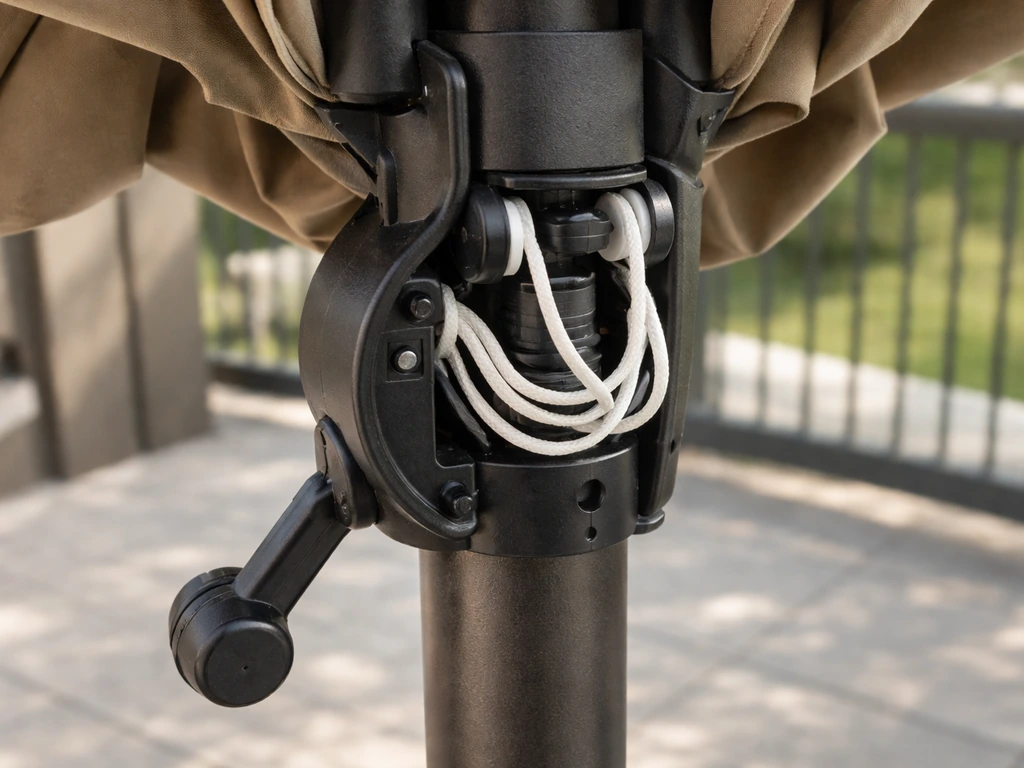
How to Restring Patio Umbrella Lift and Tilt Cords
Step-by-step guide to restring lift and tilt cords on crank or tilt patio umbrellas, incl. offset types and troubleshoot
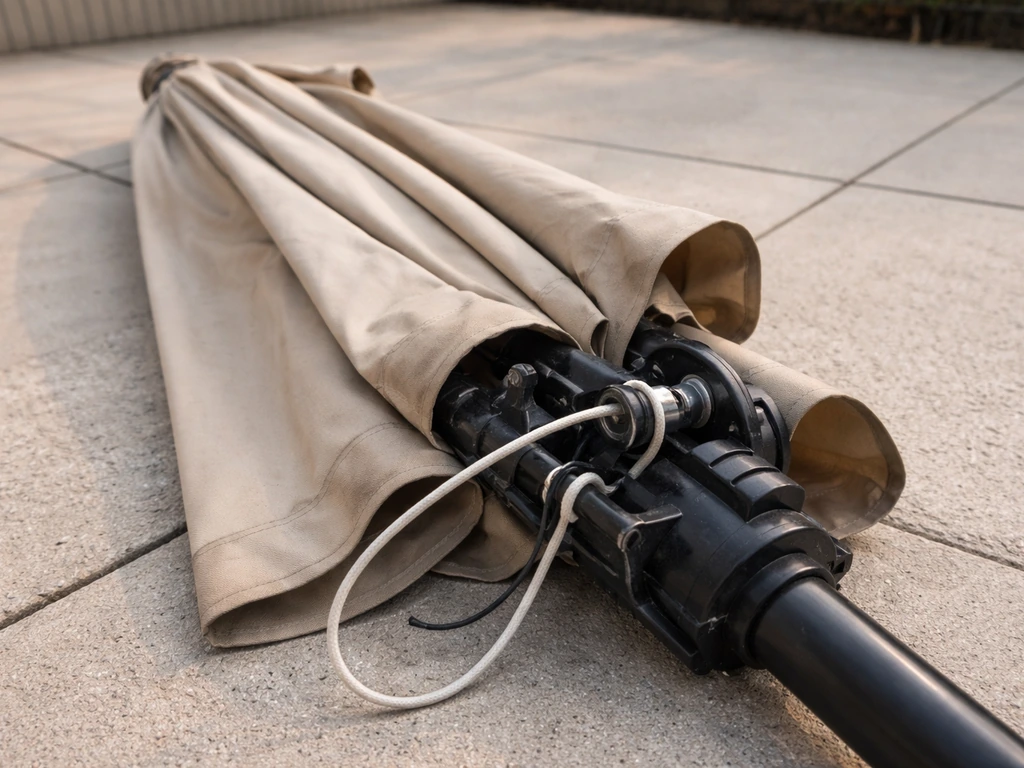
Patio Umbrella Cord Stuck: Fix It Safely Today
Safe, step-by-step fixes for a patio umbrella cord stuck open, jammed mid-way, or won’t retract, plus replacement and pr
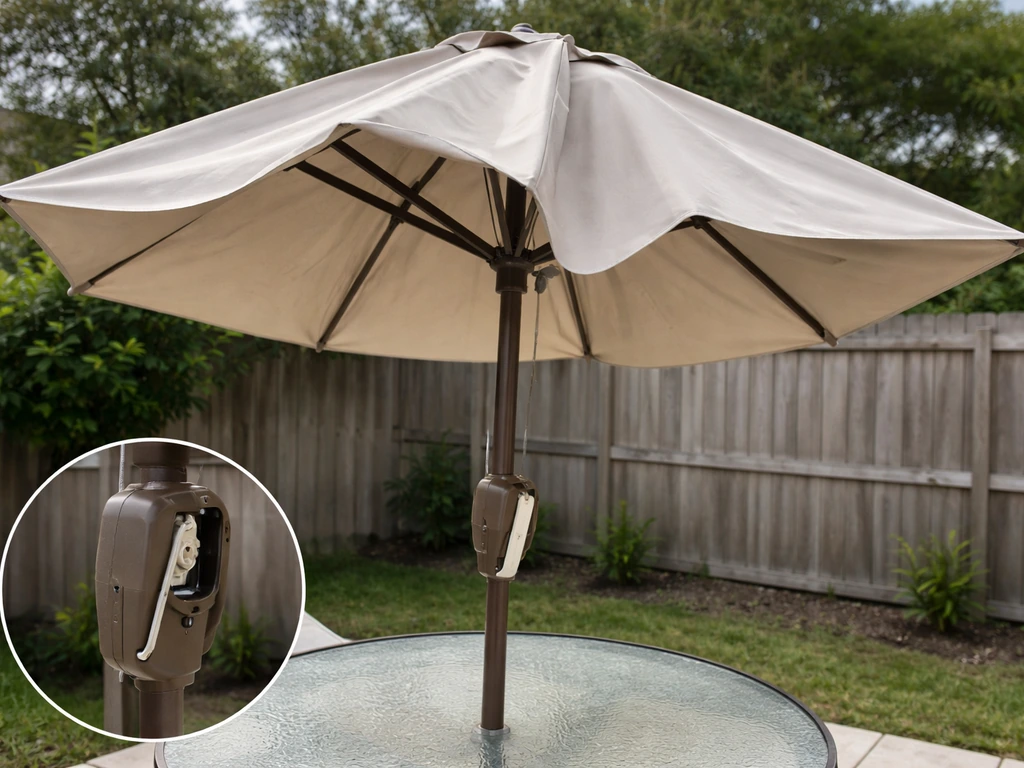
How to Fix a Patio Umbrella That Won't Open or Close
Step-by-step fixes for patio umbrellas that won’t open or close, with checks for jams, cords, latches, and lubricating t