
If your patio umbrella cord is broken, frayed, or stuck, you can almost always fix it yourself in under an hour without buying a new umbrella. The exact repair depends on what's actually wrong: a short broken segment near the hub or handle can sometimes be repaired with a knot or splice, but a fully snapped or tangled cord inside the pole needs a complete rethread. If your patio umbrella cord stuck happens again, check for tangles or rough spots before you rethread. Either way, this guide walks you through both paths so you can get your umbrella opening and closing smoothly again today.
How to Fix Patio Umbrella Cord: Repair or Replace
Luca Morrison
29 Apr 2026
Quick diagnosis: what cord problem you actually have
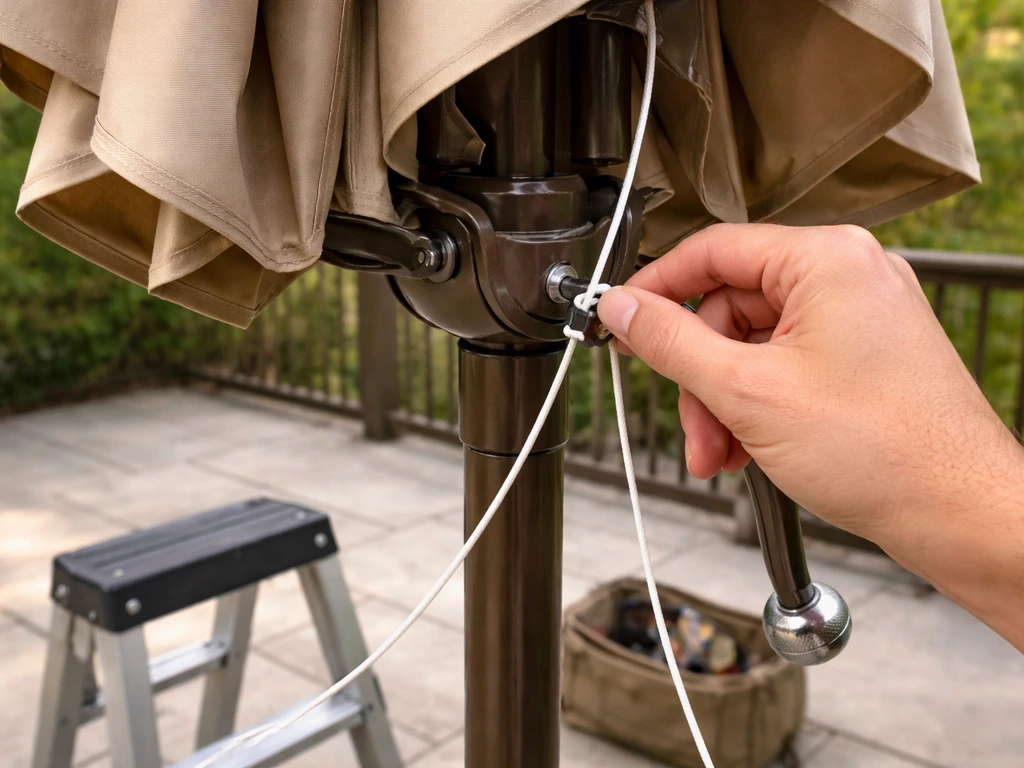
Before you grab any tools, spend two minutes figuring out exactly what's failed. The fix is totally different depending on the symptom, and jumping straight to a full rethread when you only need a small repair wastes a lot of time.
| Symptom | What it usually means | Fix you need |
|---|---|---|
| Crank spins freely, canopy doesn't move | Cord has snapped inside the pole or detached from the spindle | Full cord replacement/rethread |
| Canopy stops partway up or down | Cord is kinked, knotted, or binding on a pulley | Clear the obstruction, then rethread if needed |
| Canopy drops suddenly on its own | Cord slipped off the winding drum or a knot failed | Reattach or replace cord |
| Cord is intact but frayed near the hub or handle end | Wear from friction at a stress point | Trim and re-tie, or replace before it snaps |
| Cord is completely missing or you can see a dangling loose end | Previously broken and never fixed | Full cord replacement/rethread |
The two most important things to check right now: first, grab the loose cord ends and see if both ends are still accessible (one near the hub, one near the crank or pull ring). If you can reach both ends, a repair splice or simple re-tie may be all you need. If one end has disappeared inside the hollow pole, you're doing a full replacement. Second, turn the crank slowly by hand and listen. If you feel any grinding or the crank handle spins with zero resistance at all, the problem may not be the cord alone. Stripped gears inside the crank housing can mimic a broken cord, and if that's the case, fixing the cord won't solve anything. A broken crank mechanism is a separate repair.
Tools and parts you'll need
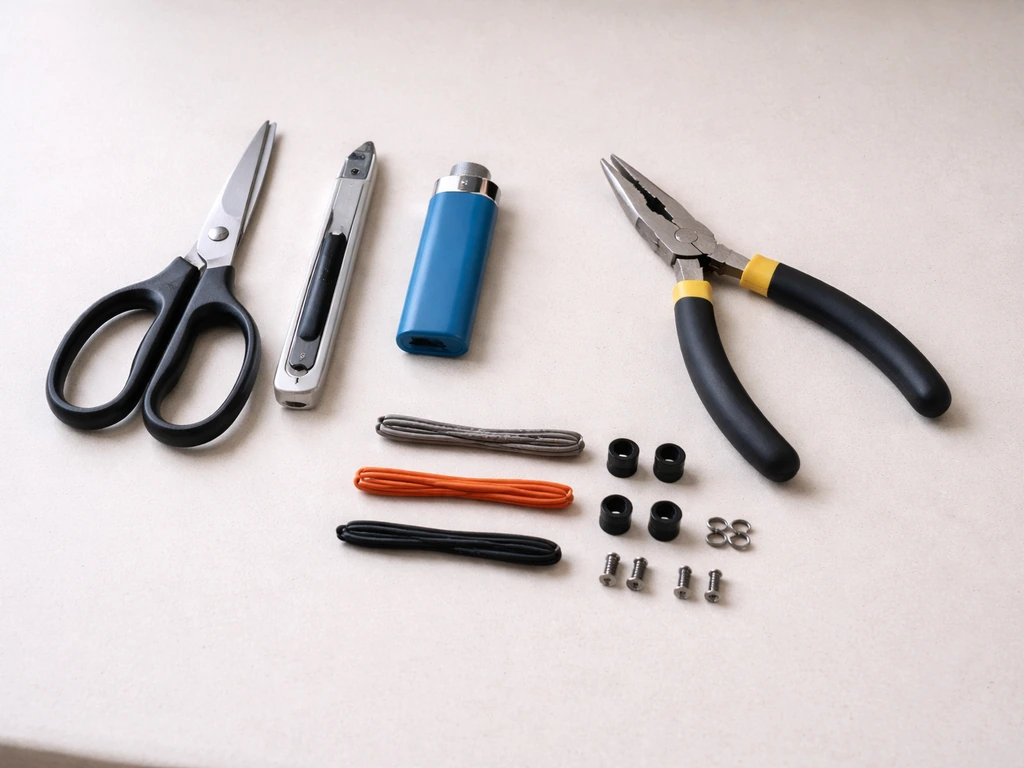
The good news is that neither repair nor replacement requires specialized tools. Here's what to gather before you start, split by which job you're doing.
For a simple cord repair (splicing or re-tying)
- Scissors or a utility knife
- Lighter (to melt and seal the cut ends of synthetic cord so they don't fray)
- Pliers (needle-nose work best for reaching into tight spaces near the hub)
- Replacement cord segment if the damaged section is too short to re-knot: use 3mm–4mm braided polyester or nylon cord rated for outdoor use
- A sturdy needle and thread if your model uses a sewn cord termination at the hub (common on Treasure Garden UM810/UM812 series)
For a full cord replacement (rethreading through the pole)
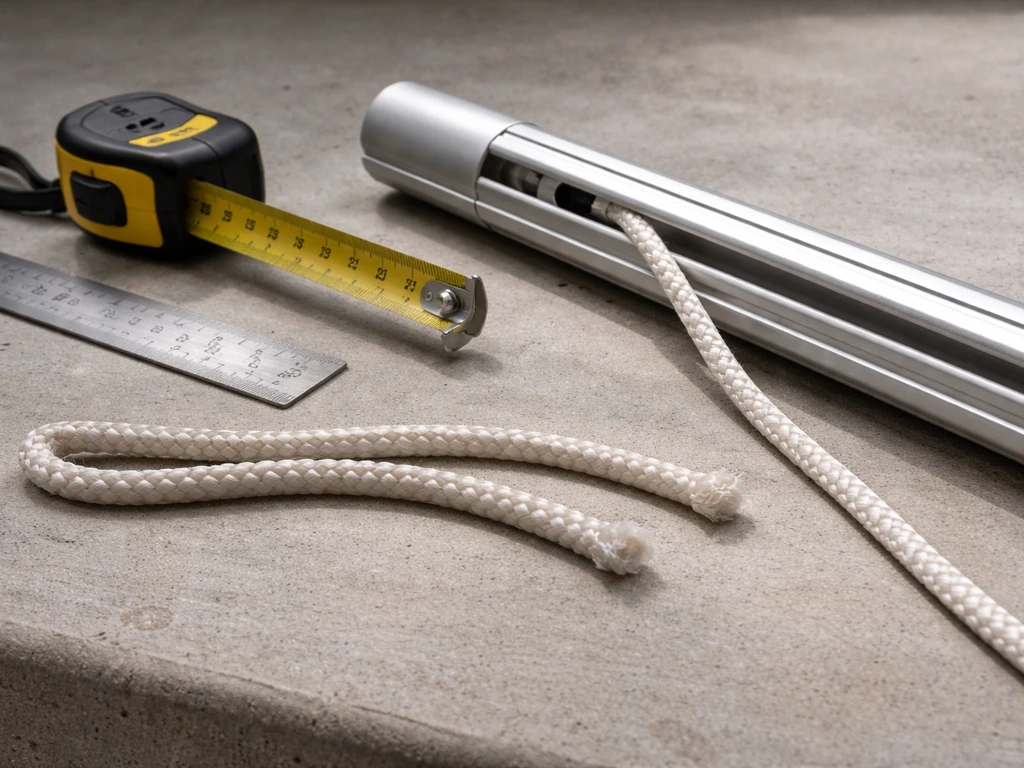
- Replacement cord: measure the old cord if possible, or allow at least 2x the pole height plus 3 feet extra for knots and routing; 3mm–4mm braided polyester is standard
- Scissors and a lighter
- Needle-nose pliers
- A stiff guide wire, coat hanger, or fish tape (to guide the cord through the hollow pole if the old cord has fully disappeared inside)
- Masking tape (to tape the new cord to the old cord end so you can pull it through in one pass)
- A Phillips-head and flathead screwdriver (to open the crank housing if needed)
- Needle and thread for hub attachment on models that require it
- A helper is genuinely useful for the rethreading step
On cord selection: don't use cheap twisted nylon rope from a hardware store. It unravels under the friction of the pulley or winding drum and you'll be back at this repair in a season. Braided polyester holds up far better outdoors and doesn't stretch the way twisted nylon does. If you can find the manufacturer's replacement cord kit for your model (Treasure Garden and ProShade both sell them), that's the easiest option since the cord length and end fittings are already sized correctly.
Step-by-step: repair a broken patio umbrella cord
Use this path if both ends of the cord are still accessible and you have enough length to work with, or if the cord is frayed but not fully snapped. Work with the umbrella laid flat on a table or the ground, not upright and open. A sudden shift in the canopy when you're working near the hub can cause injury, so keep it horizontal and stable throughout. If you are also wondering how to open a patio umbrella with a string, the opening sequence matters as much as the cord repair itself umbrella opening and closing.
- Lay the umbrella flat. Fully collapse the canopy first, then lay the whole umbrella on a table or clean ground. This keeps the ribs from springing and gives you safe, steady access to the hub and pole.
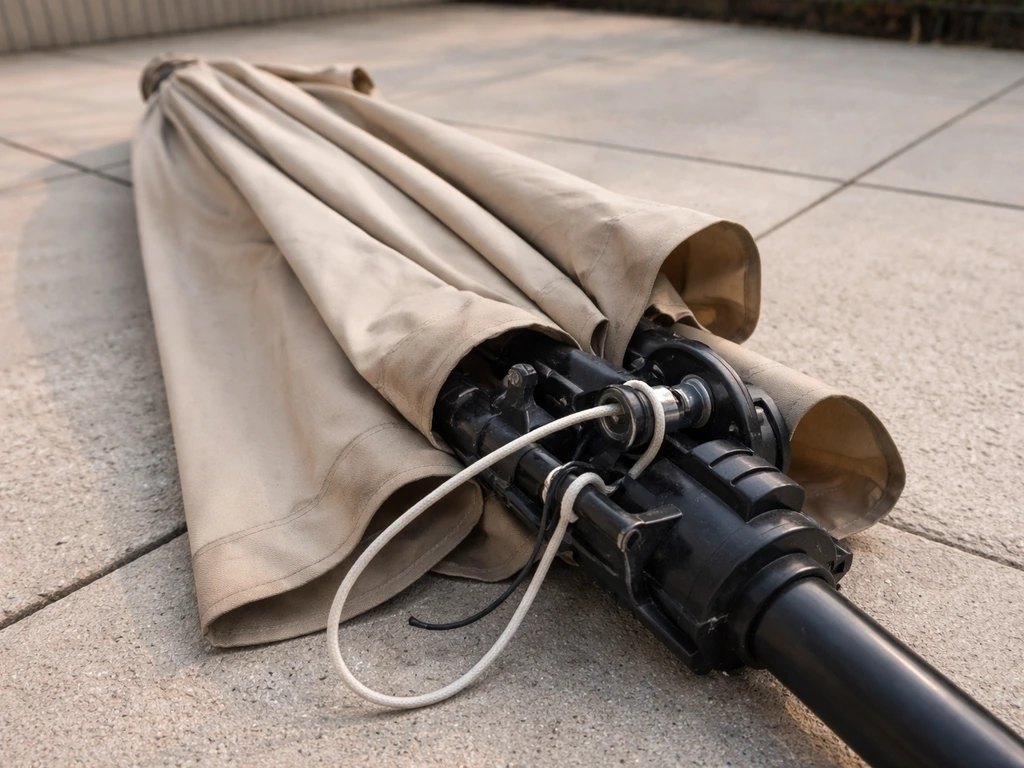
- Locate both cord ends. The cord typically exits the bottom of the pole near the crank or pull handle, runs up inside the hollow pole, and attaches to the lift hub (the sliding ring that pushes the ribs open). Find and pull out both broken ends so you can see how much cord you have to work with.
- Assess the damage. If you have at least 4–6 inches of cord on each end to tie a knot, you can splice directly. If one end is too short, you'll need to add a short cord segment to bridge the gap. Cut away any frayed or damaged section cleanly with scissors, then melt each cut end briefly with a lighter to stop fraying.
- Tie a secure knot. A double fisherman's knot (also called a grapevine knot) is the most reliable choice here because it cinches tight under load and doesn't slip. Thread the two ends together and tie the knot, then pull hard on both sides to seat it. The finished knot should be compact enough to pass through the hub opening or routing path in your umbrella.
- Check the knot clearance. Slide the knot to the point where it will sit inside the pole or pass through the hub. If it's too thick to pass, use a figure-eight knot instead, which is slimmer. On Treasure Garden UM810/UM812 models, the cord passes through a small hub opening, so knot size matters.
- Re-route the cord if it slipped off a pulley. Some umbrellas use a pulley partway up the pole to redirect the cord. If yours has one and the cord slipped off during the break, you'll need to open the pole section at that point (usually two screws on the collar) and reseat the cord in the pulley groove before reassembling.
- Reattach the hub end. The cord attaches to the lift hub either with a knot through a hole, a sewn loop, or a small metal clamp. Reattach it the same way it was originally secured. If the attachment point was sewn (common on fabric-reinforced hubs), use a needle and heavy thread to resecure it.
- Reattach the handle end. At the bottom, the cord usually ties to a pull ring or wraps around a crank spindle. Retie or resecure it in the same configuration. Leave about 6 inches of tail past the knot and melt the end.
Step-by-step: replace the patio umbrella cord (full replacement)
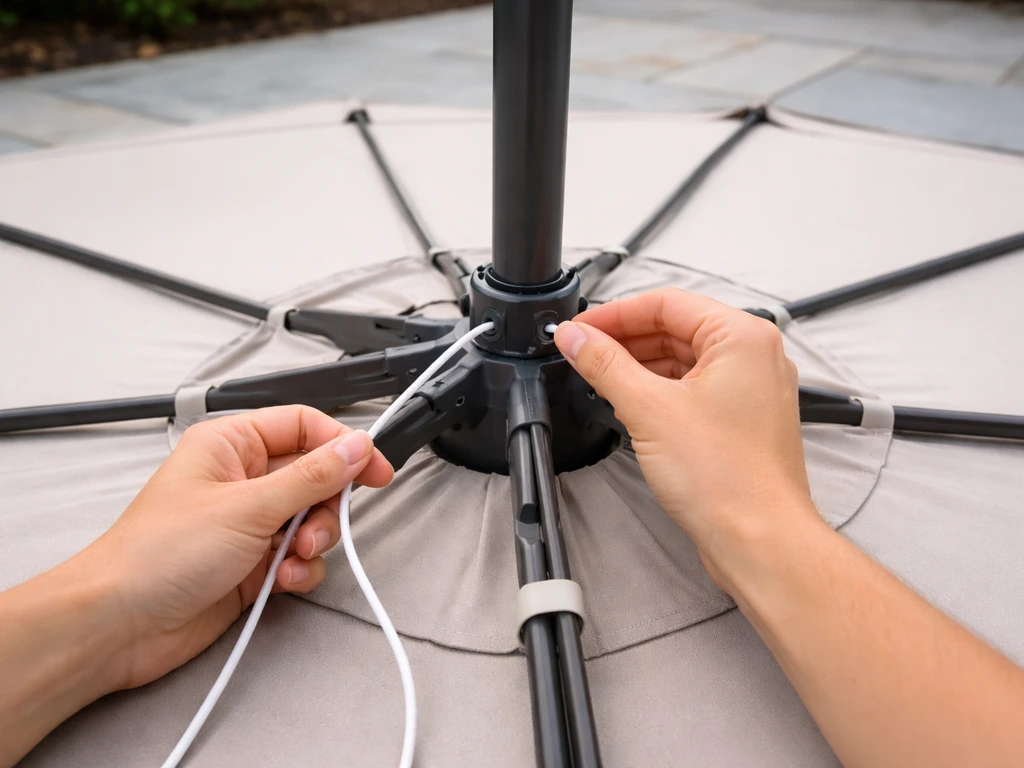
Use this path when the cord has fully snapped inside the pole, when one end has disappeared and you can't retrieve it, or when the cord is so worn that a splice would just fail again in a few weeks. This is more involved but still very doable on your own. If you need the full process, follow the step-by-step guidance for how to restring a patio umbrella cord from start to finish. Budget about 45–60 minutes.
- Lay the umbrella flat and fully open the canopy. This is counterintuitive but important: with the canopy open, the lift hub is raised and the hub opening is more accessible. The Treasure Garden UM810/UM812 manual specifically calls for opening the umbrella before removing the broken cord from the hub, and it's good advice for most crank-lift designs.
- Remove the broken cord from the hub. At the hub (the sliding collar that the ribs attach to), locate where the cord passes through or attaches. Untie, unclip, or cut the cord free. Pull the broken cord downward and out through the bottom of the pole, taking note of any pulleys or routing guides it passes through along the way. If the cord is already gone, skip this step.
- Use the old cord as your pull guide. If the old cord came out in one piece, tape the end of your new cord to it securely with masking tape, creating a smooth tapered junction (not a bulky lump). Then pull the old cord back through from the bottom, and the new cord will follow it up through the pole automatically. This is the cleanest method and avoids any risk of the new cord getting stuck on internal hardware.
- If the old cord is gone, use a guide wire. Straighten a wire coat hanger or use a fish tape and feed it down through the pole from the top hub opening. Tape the new cord to the wire end, then pull the wire back up through the bottom. Go slowly and wiggle gently if you feel resistance rather than forcing it.
- Route through pulleys correctly. As the cord passes through the pole, make sure it seats into any pulley wheels or routing rings rather than bypassing them. If you have a quad-pulley lift model (some Treasure Garden designs use this), the routing path is more complex. Check your model's manual PDF if available, since pulling the cord through the wrong path in a multi-pulley system will cause binding.
- Attach the cord at the hub. Thread the cord end through the hub opening and tie a stopper knot on the inside so it can't pull back through. A figure-eight knot works well here. On models with sewn cord terminations, sew the loop through the hub attachment point using needle and thread, pulling tight and finishing with a few lock stitches.
- Close the umbrella and attach the cord at the bottom. Slowly collapse the canopy while holding gentle tension on the cord at the bottom of the pole. This ensures the cord doesn't tangle inside as the hub drops. Once the umbrella is closed, tie or secure the cord at the crank spindle or pull ring end. If your umbrella uses a winding drum inside the crank housing, you may need to open the crank housing (two screws on the underside of the crank collar) to wrap the cord around the drum the correct number of turns before closing the housing back up.
- Cut and seal the tail. Leave about 4 inches of cord past your bottom knot or attachment point and melt the end with a lighter to prevent fraying.
Test, tension, and proper cord routing after fixing
Don't skip this part. A cord that's routed slightly wrong or tensioned incorrectly will either fail again quickly or make the umbrella stiff to operate. Here's how to confirm everything is working correctly before you put the umbrella back into service.
- Stand the umbrella upright in its base before testing. Testing it lying flat doesn't replicate real operating conditions.
- Crank or pull the cord slowly by hand through one full open-close cycle. Don't rush this first cycle. You're feeling for smooth, even resistance throughout the full range of motion. If you feel a catch or jerk at a specific point in the travel, stop and identify where in the pole that corresponds to. It's usually a cord knot that's slightly too large for a pulley or routing ring.
- Check that the canopy opens fully. The lift hub should travel all the way up the pole until the ribs are fully extended. If the umbrella opens only partway, the cord is either too short (you tied off the bottom end with too little slack) or the knot at the hub is catching somewhere. Loosen the bottom attachment, pull a little more cord through, and retie.
- Check that the canopy closes fully. The hub should drop all the way back to its resting position. If the canopy won't close completely, there's too much cord (you left too much slack) or the cord is looped somewhere internally. Open the housing or hub access point and take up the extra length.
- Listen for grinding when cranking. If you hear grinding while cranking after the cord repair, the issue is with the crank gears, not the cord. Slow crank resistance without grinding usually means the cord just needs a light application of silicone spray on the routing points.
- Apply lubrication. A small spray of silicone lubricant (not WD-40, which dries out quickly and attracts grime) at each pulley point and along the cord where it enters the pole top will make operation noticeably smoother and extend cord life. Do this every season.
Why cords fail and how to stop it happening again
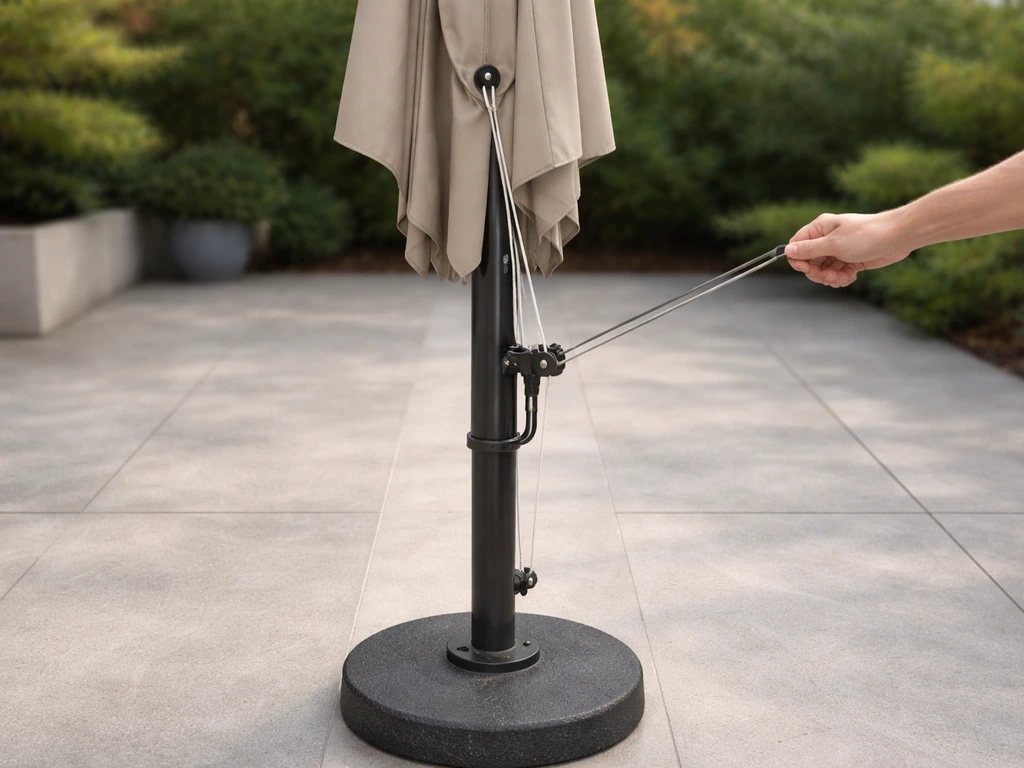
If you're repairing this cord for the second or third time, something is causing accelerated wear. Here are the most common root causes and what to do about each one.
UV and weather degradation
Nylon cord exposed to sun and moisture stiffens, becomes brittle, and snaps. If your cord is more than 3–4 seasons old and has been outdoors year-round, age is probably the cause. Switching to UV-stabilized braided polyester cord gives you significantly longer service life. When you store the umbrella for winter, loosening the cord tension by cranking it halfway down takes stress off the material during the months it's not in use.
Friction wear at stress points
Collar-tilt umbrellas and models with multiple pulleys have more points where the cord bends sharply under load. Every bend is a wear point. If the cord keeps breaking at the same spot, that spot has a friction problem. Check whether the pulley wheel at that location is spinning freely or has seized up. A seized pulley stops rotating and essentially saws through the cord over time. Replace the pulley if it doesn't spin easily, or at minimum clean and lubricate it.
Wrong cord diameter or material
Using too-thin cord means it cuts into pulley grooves and frays quickly. Using too-thick cord means it won't pass through routing channels properly and builds up friction. Stick to 3mm–4mm braided polyester unless your manufacturer's manual specifies otherwise. If your umbrella has a pull-cord design (no crank), the cord is often a thicker 5mm–6mm rope because it takes direct hand tension.
Crank mechanism damage
If the crank housing is cracked, the gears are stripped, or the winding drum has a rough edge, a new cord will wear out just as fast as the old one. Before you call the cord repair done, inspect the winding drum inside the crank housing for rough edges or burrs. A small metal file can smooth out a burr. If the housing itself is cracked or the gears are visibly damaged, the crank mechanism needs replacing, not just the cord.
Forcing the umbrella when it's stuck
This is the most common cause of cord snapping all at once rather than gradual fraying. If the umbrella feels stiff or stuck and you crank harder to force it, the cord takes the full load and snaps. Any time the umbrella feels stiff, stop and find the cause before continuing. Usually it's a seized pulley, a kinked cord, or a canopy panel caught on a rib. Fixing those small issues as they come up prevents the catastrophic snaps that require full rethreading. If you're frequently dealing with a stuck umbrella, that's a related problem worth addressing directly.
When repair isn't worth it
Replacing the cord is almost always worth doing before replacing the whole umbrella. A full replacement cord costs a few dollars and the job takes under an hour. The only time to consider replacing the whole umbrella (or at minimum the full crank mechanism assembly) is if the pole is bent, the crank housing is cracked beyond repair, or the ribs are broken in multiple places. A working cord won't fix a fundamentally damaged frame. But if the frame is solid and the cord is the only problem, fixing it yourself is almost always the right call.
FAQ
My cord feels broken, but I cannot find both loose ends. Should I still try to splice it?
If the cord ends are not both reachable, you cannot reliably “patch” it with a knot. That situation usually means one end is pulled fully inside the hollow pole or the cord has broken during winding, so you will need a full restring to restore the correct routing and tension.
How can I tell whether the crank problem is actually the cord, or something inside the crank housing?
A quick safety check is to test the mechanism with the canopy kept horizontal and stabilized, then stop immediately if the crank feels oddly loose (no resistance) or if you hear grinding. Those signs often point to damaged gears, stripped drive parts, or a jammed drum, not just the cord.
What are the most reliable “it’s fixed” tests before I put the umbrella back outside?
Once you pick the right job (small splice versus full restring), you still need the umbrella to operate smoothly through its full cycle. If it opens partway then stalls, or it snaps again in the same spot, re-check routing alignment through the pulleys and confirm the cord is not rubbing a housing edge or rib.
What should I do if the umbrella is stiff or stuck while opening or closing?
Never force the crank when the umbrella feels stiff or stuck, because you can convert a minor routing issue into a total snap. Instead, stop, inspect for a kink in the cord path, a seized pulley, or a canopy panel caught on a rib, then resume only after the motion is free.
Why does my cord keep fraying quickly, even though I used a replacement cord?
If you use the wrong cord type or diameter, the system can bind or abrade. Twisted nylon tends to stretch and unravel under pulley friction, too-thin cord can cut into grooves, and too-thick cord can increase friction in routing channels, leading to early failure.
My patio umbrella cord snaps in the same spot every time. What should I inspect first?
If the cord breaks at the same location repeatedly, the failure point is usually a friction problem at a pulley, guide, or sharp burr. Confirm the pulley spins freely, remove debris or buildup, and inspect the winding drum for rough edges (lightly smoothing a burr can prevent repeat damage).
Can I use any rope I find at the store to fix my patio umbrella cord?
Yes, but only for the manufacturer-supported approach. Some umbrellas require a specific cord length and end fittings, so using a random rope or kit can leave you with incorrect tension or misalignment, causing stiffness or rapid wear.
After restringing, the umbrella feels uneven or sluggish. How do I correct cord tension without making it worse?
If your umbrella is springy or the cord feels slack after repairs, tension is likely off or the cord is routed incorrectly through the pulleys. Re-verify cord threading order and that the cord tracks the intended channels, then adjust tension by following the restring steps rather than guessing.
When is it better to replace the crank assembly instead of replacing the cord again?
If the crank housing is cracked, gears are visibly stripped, or the winding drum has a persistent rough edge you cannot fix, replacing the crank mechanism (or the full crank assembly) is the better long-term choice. A sound frame with a faulty cord can be repaired, but a damaged drive system will chew through new cord quickly.
Does winter storage affect how fast patio umbrella cords fail?
Seasonal storage matters. Loosening the cord tension before winter (for example, cranking partway down to reduce stress) helps prevent the cord from aging under continuous load, which reduces the chance of brittle snapping the next season.
Next Articles
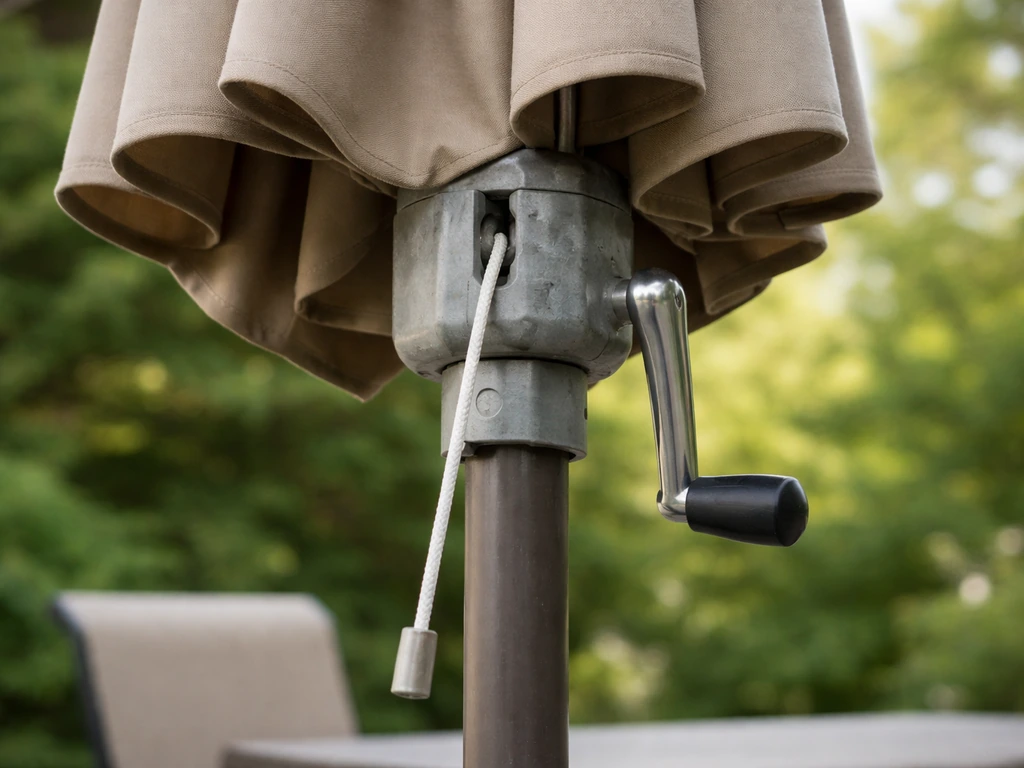
Fix Patio Umbrella Cord: Repair a Broken Pull String
Step-by-step guide to fix a broken patio umbrella pull cord, diagnose crank issues, repair mechanism, and test safely.
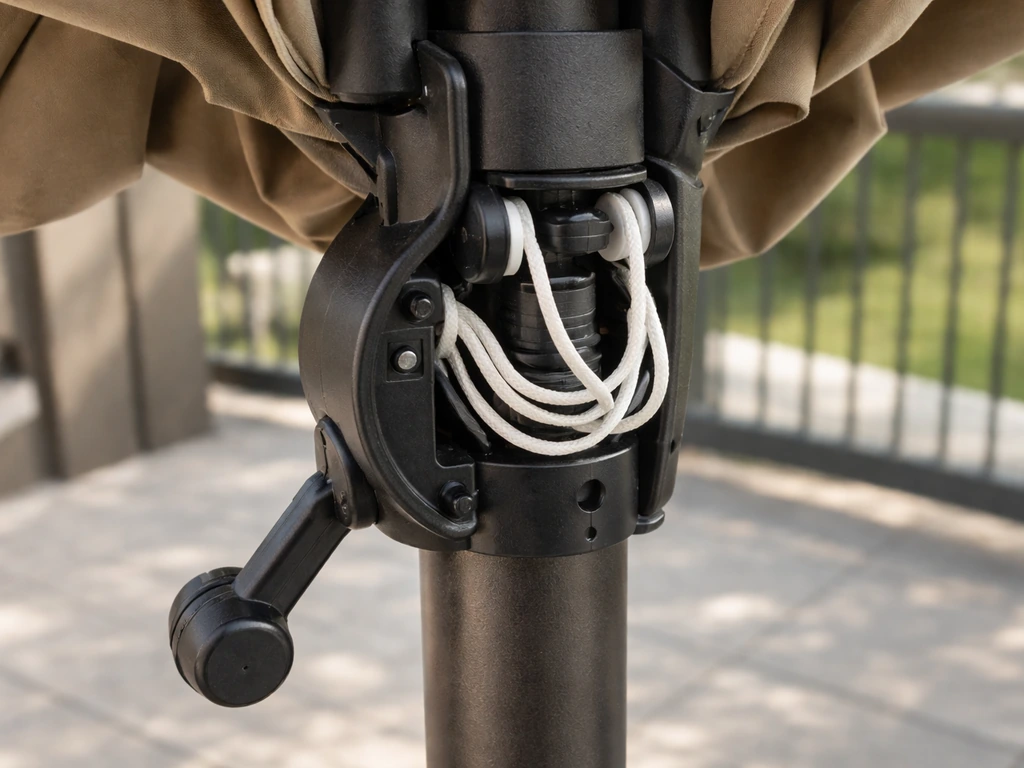
How to Restring Patio Umbrella Lift and Tilt Cords
Step-by-step guide to restring lift and tilt cords on crank or tilt patio umbrellas, incl. offset types and troubleshoot
Patio Umbrella Cord Stuck: Fix It Safely Today
Safe, step-by-step fixes for a patio umbrella cord stuck open, jammed mid-way, or won’t retract, plus replacement and pr