If your patio umbrella frame is still structurally sound, you can clean it up, treat any rust, repaint it, and rebuild the mechanical parts to make it fully functional again. If it's badly corroded, bent, or cracked at the joints, skip the restoration work and either repurpose the frame for a DIY outdoor project or take it to a scrap metal drop-off. The key is doing a quick triage first so you don't spend two hours scrubbing something that belongs in a blank" rel="noopener noreferrer">recycling bin.
What to Do With Old Patio Umbrella Frames: Restore or Repurpose
Luca Morrison
2 Jul 2026
Quick triage: is the frame worth saving?
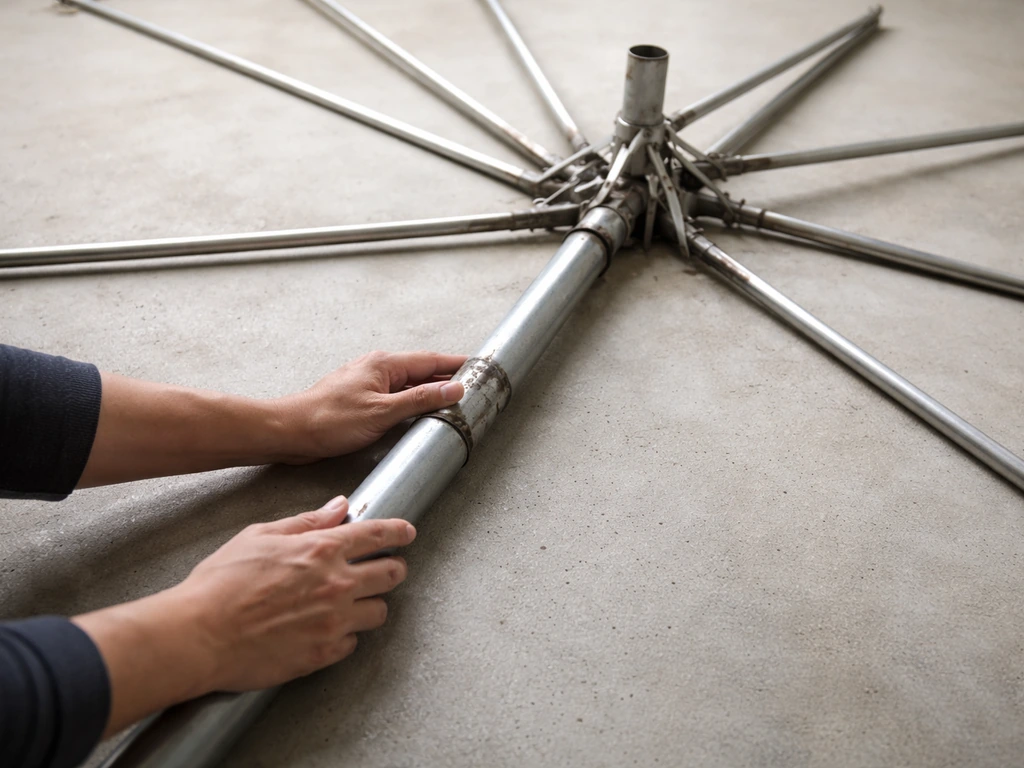
Before you do anything else, lay the frame out on a flat surface or lean it against a wall where you can see every section. You're looking for three things: structural damage, corrosion depth, and mechanical viability. This takes about ten minutes and tells you everything.
Start with the poles. Run your hand along the main pole sections and check the joints where the upper and lower poles connect. Look for visible cracks, deep bends that won't straighten, or joints that feel loose and wobbly when you twist them. A little surface rust on steel is fine. A pole that's cracked through or a joint that's completely seized is not.
Next, check the ribs. These are the arms that extend outward from the hub (the center piece at the top) to hold the canopy. Flex each rib gently. If more than two are cracked, snapped, or so corroded they crumble when you bend them, the frame is not worth repairing as an umbrella. One or two broken ribs, though, are completely fixable with replacement parts.
Finally, look at the tilt mechanism and crank housing. If the crank turns freely but nothing moves, that's usually just a broken internal cord, which is a cheap and easy fix. If the tilt collar is completely frozen or cracked off, that's still repairable. If the main hub is shattered or the pole is kinked at a hard angle, that's your signal to move on.
| What you see | What it means | Recommended path |
|---|---|---|
| Light surface rust or fading on steel | Cosmetic wear, structurally fine | Clean, treat, repaint, and reuse |
| White chalky pitting on aluminum | Oxidation corrosion, check depth | Sand lightly, prime, repaint if pitting is shallow |
| Deep pitting with visible holes or crumbling metal | Structural integrity compromised | Repurpose or recycle |
| One or two broken/cracked ribs | Partial mechanical failure | Source replacement ribs and rebuild |
| Cracked or seized crank housing | Mechanical part failure, frame may be fine | Replace crank assembly |
| Bent or kinked main pole | Structural damage | Repurpose or recycle |
| Cracked hub or joint separation at welds | Frame is unsafe to use | Recycle |
Safety checks and prep before you touch anything
Old umbrella frames can hurt you if you're not paying attention. Corroded metal edges get sharp, especially on aluminum ribs and steel rib tips. Rusty steel can have flakes that break off and get into your eyes. And if the frame has been painted before 1978, there's a non-zero chance it has lead-based paint, which matters when you start sanding.
Put on nitrile gloves and safety glasses before you start handling the frame. If the frame has old paint and you're planning to sand it, wear an N100 respirator (not just a dust mask) to avoid inhaling fine particles. The EPA and OSHA both flag sanding and scraping old painted surfaces as an activity that can release lead dust, so treat it seriously.
Check every rib tip and the bottom of the main pole for sharp edges or broken-off sections. If you find them, file them down with a metal file before you go any further. A rib tip that's snapped off at a jagged angle will cut right through a work glove if you grab it wrong.
Also look at all the joints and connection points for rot if any wood components are present (some older frames have wooden hub pieces or decorative wood accents). Wood that's soft, spongy, or discolored means moisture has gotten in. Those sections need to be removed before any repair work, and if structural wood is rotted, that part of the frame is done.
Cleaning the frame and removing old hardware or fabric remnants
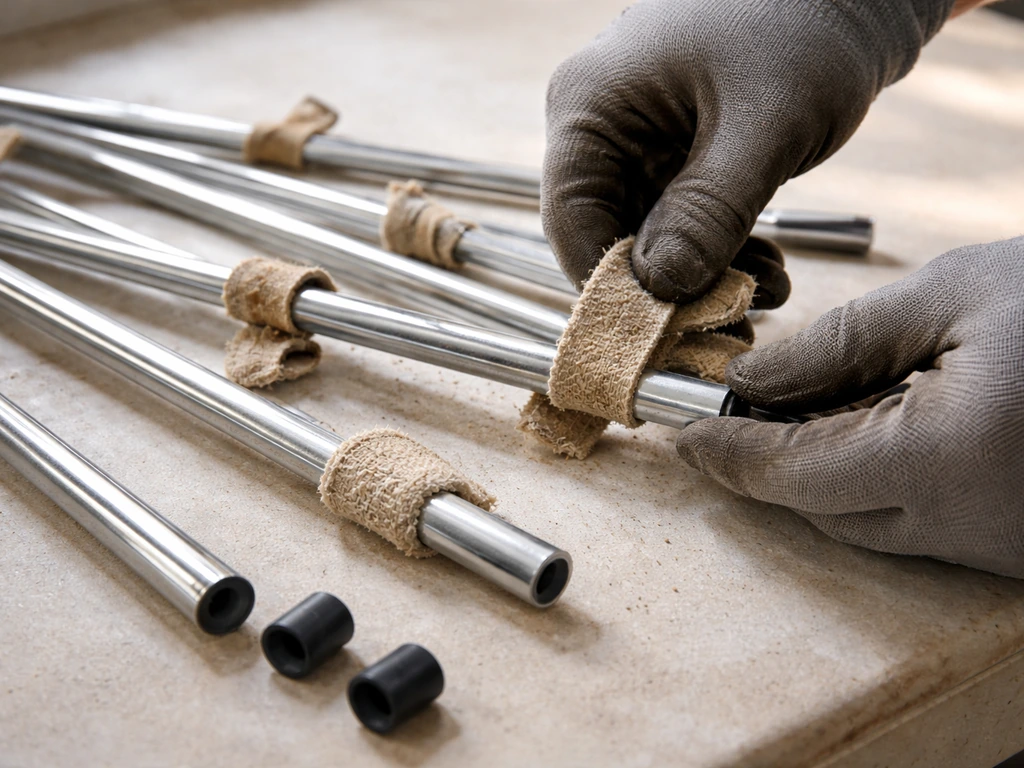
Once it's safe to work, get all the old fabric off. Most patio umbrella canopies attach to the ribs with fabric loops, hook-and-loop tabs, or a pocket sleeve along the top. Cut away any fabric that's been weathered into the ribs or shrunk tight around the hardware. Don't force it, because corroded rib hardware will snap if you yank hard enough.
Remove the old rib end caps, velcro straps, and any plastic or rubber hardware that's cracked, yellowed, or crumbling. These parts are usually just pressed on or held by small screws. Keep any hardware that's still in good shape since you may be able to reuse it.
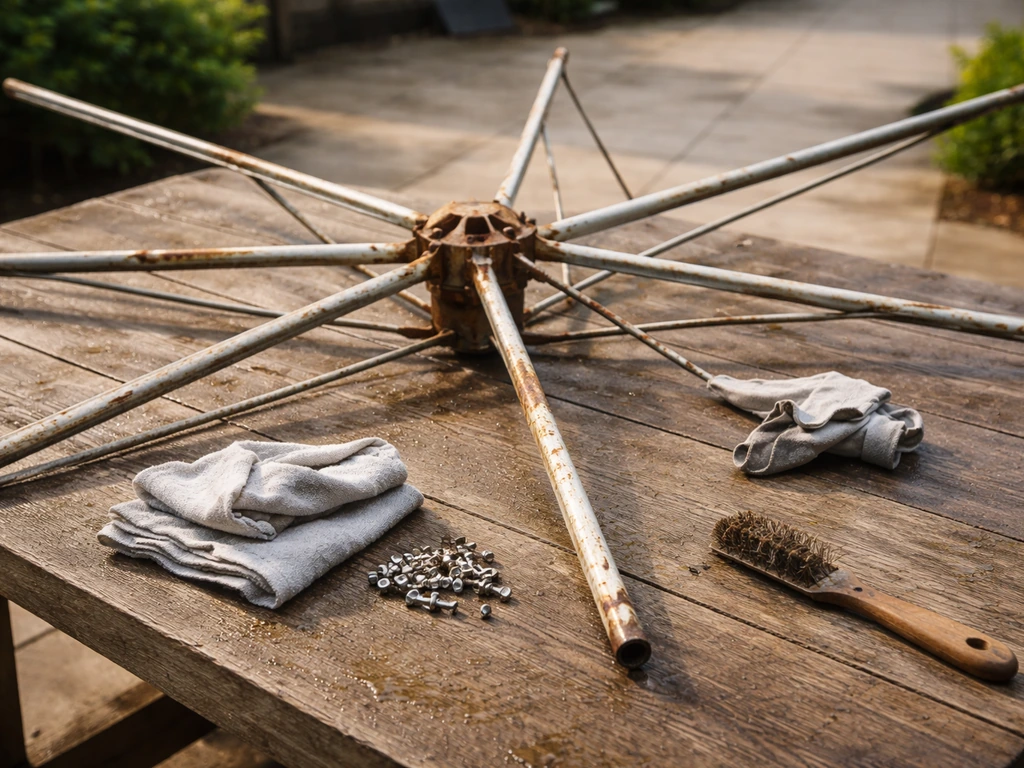
Now clean the frame. For aluminum frames, use a mild soap and water solution with a soft cloth or non-abrasive sponge. Do not use steel wool or abrasive scouring pads on aluminum. They scratch the surface and can actually accelerate oxidation. For steel frames, a stiff nylon brush or a wire brush works well to knock off loose rust flakes and debris. Rinse thoroughly and dry completely before moving on.
If you want to power wash, use a low-pressure setting. High-pressure washing can strip finishes and force water into joints, which makes corrosion worse over time. A garden hose with decent pressure is usually enough for this job.
Rust removal, repainting, and protecting the frame
This is where you bring the frame back to life. The approach depends on whether you're working with steel or aluminum, and how bad the corrosion is.
Steel frames
For light surface rust, sand it down with 80 to 120-grit sandpaper or use a fine wire brush by hand. For significant rust coverage, an electric drill with a wire brush wheel attachment or an angle grinder makes the job much faster. Remove all loose rust, mill scale, and peeling paint before you prime. The metal should feel smooth and slightly rough (not glossy) when you're done.
After sanding, wipe the frame down with a degreasing solvent (acetone or mineral spirits works fine) to remove oils and dust. Then apply a rust-inhibiting primer. For heavily corroded steel, an epoxy-based primer or a direct-to-rust epoxy coating bonds better to the surface and gives you a stronger base. Water-based rust-inhibiting primers are easier to work with and dry in about 2 to 4 hours.
Water-based rust-inhibiting primers have a recoat window of about 2 to 4 hours on certain Rust-Oleum systems dry in about 2 to 4 hours. Oil-based primers take 8 to 24 hours before you can topcoat.
Self-etching primers designed for bare metal dry fastest, around 30 minutes to an hour. Whichever you choose, follow the product's recoat window or the topcoat won't bond correctly.
For the topcoat, any spray enamel rated for outdoor metal works well. Rust-Oleum's Stops Rust line is widely available and holds up outdoors. Apply two thin coats rather than one thick coat to avoid drips. Let the primer cure fully first.
Aluminum frames
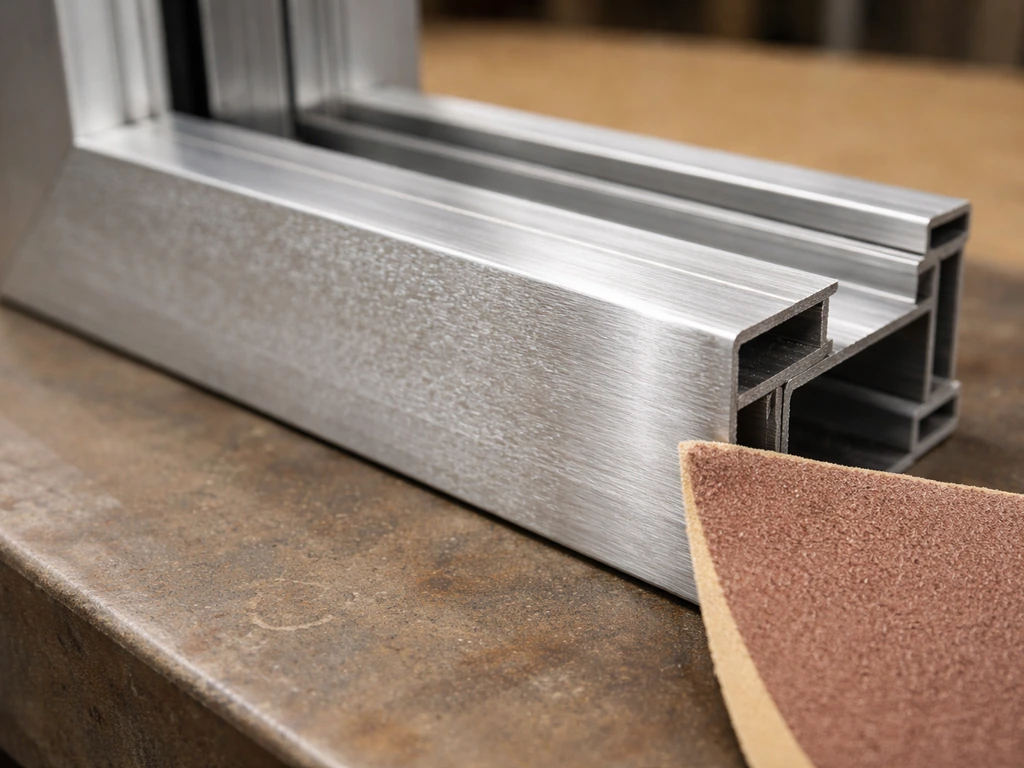
Aluminum doesn't rust the way steel does. Instead, it oxidizes, forming a chalky white layer or pitting on the surface. For shallow pitting and oxidation, sand lightly with 220-grit sandpaper to break up the oxidized layer, then clean off the dust. Use a primer specifically designed for aluminum (Rust-Oleum makes one) before applying a topcoat. A standard rust primer can actually cause adhesion issues on aluminum, so the product match matters here. Skip the steel wool entirely on aluminum.
If the pitting is deep (meaning you can see actual cavities or holes forming in the metal wall), that section of the frame has lost meaningful structural strength and shouldn't be trusted under load.
Rebuilding the umbrella mechanics
If the frame passed your triage and looks good after cleaning and repainting, the next step is making sure the crank, tilt, cord, and pulley system actually work. Most old umbrella frames fail mechanically for a few very predictable reasons, and all of them are fixable.
The crank turns but the canopy doesn't open
This is almost always a broken internal lift cord. The braided nylon cord that runs from the crank through the pole and up to the hub fatigues over time and snaps. You'll need to thread a new cord through the pole, which means disassembling the pole sections to access the pulley at the top. Measure the old cord before you remove it, or note the pole length, because cord length varies. When installing the new cord, make sure the pulley wheel spins freely before you reassemble everything.
The tilt mechanism is stuck or missing
Tilt mechanisms come in a few main types: push-button tilt, collar tilt (where you twist a collar on the pole), and auto-tilt (built into the crank). These are not interchangeable, and the replacement part has to match both the mechanism family and the pole diameter. A common diameter for residential umbrellas is 1.5 inches, but 1.75-inch and 2-inch poles exist too. Measure your pole before ordering anything. A tilt adjuster designed for a 1.5-inch pole physically won't fit a 1.75-inch pole, and trying to force it will crack the housing.
If you know the brand, check the manufacturer's parts diagram. Treasure Garden, Galtech, and similar brands publish labeled diagrams showing the upper hub, runner hub, tilt collar, crank housing, and rib assembly by name. Matching part names to what you see on your frame helps you order the right component the first time.
Replacing ribs and end hardware
Replacement ribs are sold individually by most umbrella parts suppliers. You need to know the rib length (measure from hub attachment point to tip), the cross-section shape (flat or round), and whether your umbrella uses a smooth runner assembly or a fixed hub. For smooth runner systems, the runner slides up the pole to open the canopy, and replacement involves laying the frame on its side to swap the old runner and reattach the new rib assembly. Take photos of the existing setup before disassembly so you have a reference.
Pay attention to pinch points around the hub when opening and closing during reassembly. Move slowly and keep your fingers clear of the joint areas when testing the mechanism. The opening action creates real force at the hub, and a finger caught in there is a bad day.
Decide the best next step: reuse, refurbish, repurpose, or recycle
At this point you should have a clear picture of what you're working with. Here's how to make the final call.
Reuse it as a working umbrella
If the frame is structurally sound and the mechanics work (or are now repaired), get a replacement canopy. Replacement canopies are sold by pole diameter and rib count, so measure both before ordering. A refurbished frame with a fresh canopy looks and functions like new, and you've saved yourself the cost of a full replacement umbrella.
Refurbish only part of it
Sometimes the frame is fine but the base is cracked, or the crank assembly is solid but the ribs are gone. In those cases, you're essentially harvesting the good components. A working crank assembly or a sturdy pole section can be sold, donated, or held as spare parts if you have another umbrella of the same style. This is worth doing if individual parts are in genuinely good shape.
Repurpose the frame for something else
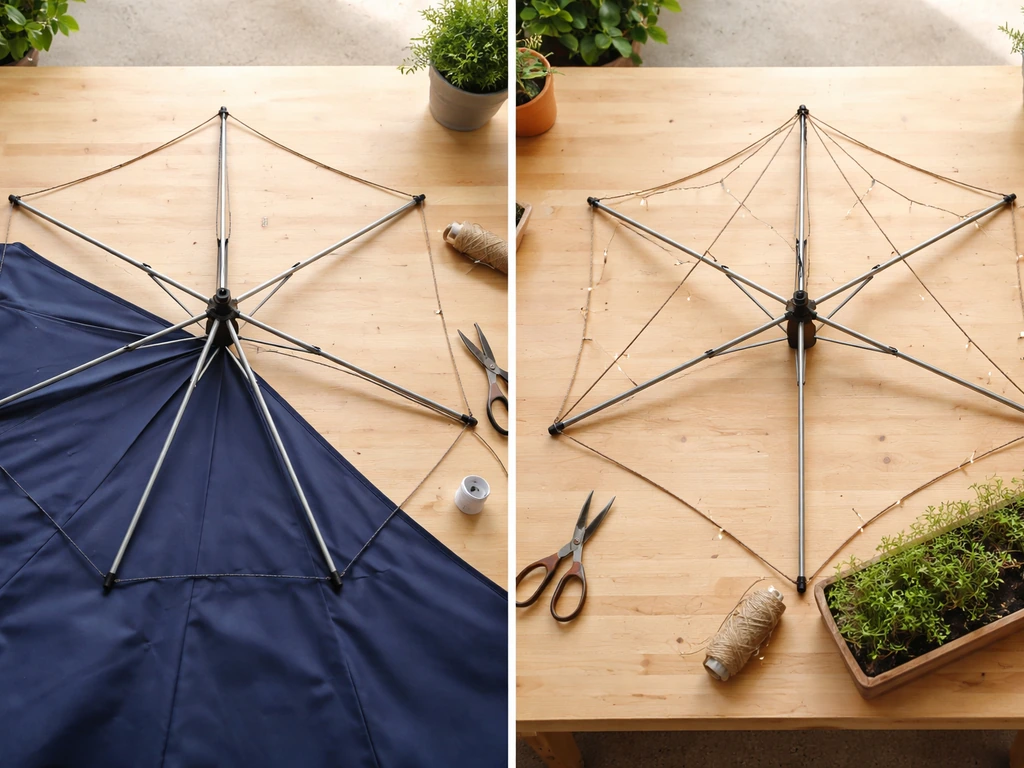
A frame that can't be trusted as an umbrella anymore still has structural value. The main pole makes a solid vertical support for outdoor string lights, a garden trellis post, or a plant hanger. A full frame with ribs still attached can become an outdoor drying rack, a bird feeder stand, or a DIY canopy frame for a small shade structure using a tarp instead of a fabric canopy.
If you're interested in creative reuse ideas, there are a lot of directions you can take an old umbrella beyond just the trash can, and the concept applies whether the canopy fabric is usable or not. If you are wondering what you can do with an old patio umbrella, start by thinking through safe repurpose options for the frame and any still-usable parts what can i do with an old patio umbrella.
Recycle or dispose of it responsibly
If the frame is past saving and you don't want to repurpose it, recycle it, but do it right. Patio umbrella frames cannot go in curbside recycling bins. You need to remove the fabric first, then take the bare metal frame to a scrap metal drop-off or metal recycler.
If you are getting rid of the whole umbrella, this step is part of how to dispose of a patio umbrella responsibly take the bare metal frame to a scrap metal drop-off or metal recycler. Steel and aluminum are both accepted at most scrap yards, and you may even get a small payment for the weight.
Do not leave old painted frames at scrap yards without checking first whether the paint contains hazardous materials, since some facilities won't accept items with contaminated coatings.
If you're uncertain about disposal options beyond just the frame itself (for example, if you're also getting rid of the canopy fabric, the base, or a complete broken umbrella), there's more specific guidance available on how to dispose of a full patio umbrella and what recycling facilities accept. If you need step-by-step ideas, review what to do with old patio umbrellas before you start making disposal decisions. The general rule is: separate the materials, keep metal out of landfill if you can, and call your local transfer station if you're unsure what they accept.
FAQ
Can I straighten a bent patio umbrella frame and still use it as an umbrella?
Only if the bend is mild and not at a joint. If you see kinks in the main pole near the crank or tilt housing, or the pole does not align when you rotate it by hand, the metal may be fatigued and will fail again. For safety, treat hard-angle bends as “no repair” even if sanding looks fine.
What’s the best way to tell if corrosion is too deep to keep the frame?
Look for visible pitting holes (not just surface texture), metal that feels thin or crumbles when lightly tapped, and rust that has spread under coatings. If you can press a screwdriver tip into the metal or you find daylight through the wall, that section should not be trusted under load, even after repainting.
Should I remove all paint before priming, or can I repaint over what’s left?
Remove anything that is peeling, flaking, or loose. For rust or oxidation, you need the surface smooth enough that primer can bite, meaning no glossy mill scale and no powdery rust. If the existing coating is still tight and intact, you can often scuff-sand it rather than stripping fully, which saves time and reduces dust.
What grit should I use for the “last sand” before painting?
Use a heavier grit to remove rust and a finer grit to prepare the surface for coating. A common approach is 80 to 120-grit to level and clean, then a final pass around 180 to 220-grit to improve primer adhesion, especially on steel. Aluminum typically needs a lighter touch since you are targeting oxidation, not removing lots of material.
Is it safe to power wash the frame if I’m trying to get rust off faster?
Use low pressure and keep the nozzle moving. If you force water into rib pivots, pulley areas, or the tilt housing, you can accelerate corrosion from inside-out. After washing, dry completely and let it air dry longer than you think before priming, because trapped moisture will keep rusting under the new coat.
Can I reuse a broken umbrella’s crank or pulley parts?
Yes, if the metal housings are not cracked and the moving parts rotate smoothly without grinding. Replace the lift cord if it snapped, even if you can see only a small failure. A pulley that binds or wobble at the wheel will wear the new cord quickly.
How do I make sure a replacement tilt mechanism actually fits my pole?
Match both the mechanism type (push-button, collar tilt, or auto-tilt) and the pole diameter. Measure the outside diameter at multiple points, because poles can be slightly warped. Also confirm the adjustment range, some assemblies are designed for a specific tilt travel and won’t align with the existing crank housing.
If the canopy fabric is still fine, can I just attach it to a repurposed frame?
You can, but check the rib attachment method matches the frame hardware. Fabric loops, hook-and-loop tabs, and sleeve pockets do not transfer well without compatible rib ends and tension points. If you mismatch attachment types, the canopy can sag or tear when the ribs spread.
What should I do about lead-based paint risk during sanding or scraping?
Avoid dry sanding if possible and don’t use a wire brush wheel that generates heavy dust. If you must sand, use an N100 respirator and keep dust containment tight (vacuum with a HEPA shop vac if available). Dispose of sanding dust and debris properly, since it can count as hazardous waste when lead is present.
Can I recycle the frame with the fabric still attached?
Generally no. Many scrap yards and metal recyclers require bare metal for accepted processing. Remove fabric first so it does not contaminate the metal stream, and separate any plastic or rubber components that are cracked and likely to be rejected.
Do scrap yards ever refuse painted umbrella frames?
Yes, some facilities won’t accept items with coatings they consider contaminated or hazardous, especially if coatings are suspected to contain lead or heavy metals. Call ahead or check local acceptance rules. If you must bring it in, bring it bare metal and cleaned, or be prepared for it to be declined.
What small parts from an old umbrella are worth saving as spares?
Save the hub hardware that is not cracked, intact rib end caps, the tilt collar assembly if it moves freely, and any springs or fasteners that are not rusted through. These small components are often harder to find than the full ribs, and matching them to your model can prevent repeated ordering.
If I want to repurpose the pole for outdoor use, what’s the safest finishing step?
After cleaning and corrosion treatment, use a rust-inhibiting primer and outdoor-rated topcoat, same as you would for an umbrella. Also cover sharp metal edges you cut or file, since umbrella frames have pinch-point geometry that can cause cuts during handling later. If the pole had a hard-angle bend, don’t repurpose it for load-bearing supports.
Next Articles
Repurpose Broken Patio Umbrella: DIY Steps and Fix Paths
DIY guide to repurpose a broken patio umbrella: diagnose failures, salvage frame and hardware, rebuild a sturdy shade, w
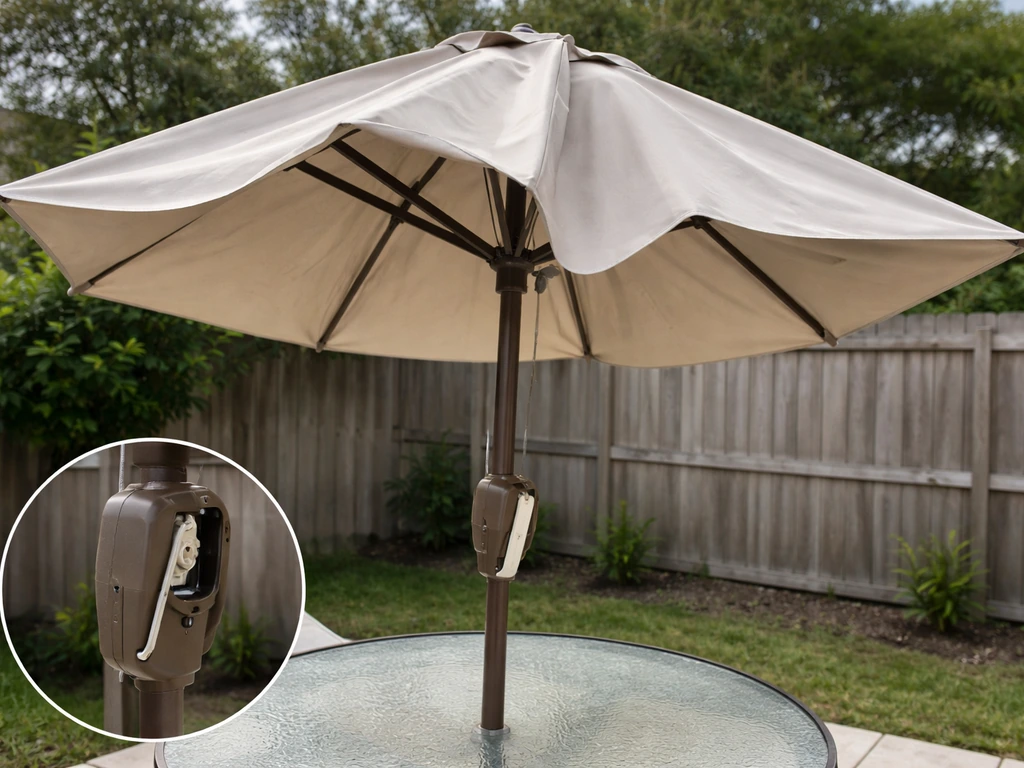
How to Fix a Patio Umbrella That Won't Open or Close
Step-by-step fixes for patio umbrellas that won’t open or close, with checks for jams, cords, latches, and lubricating t
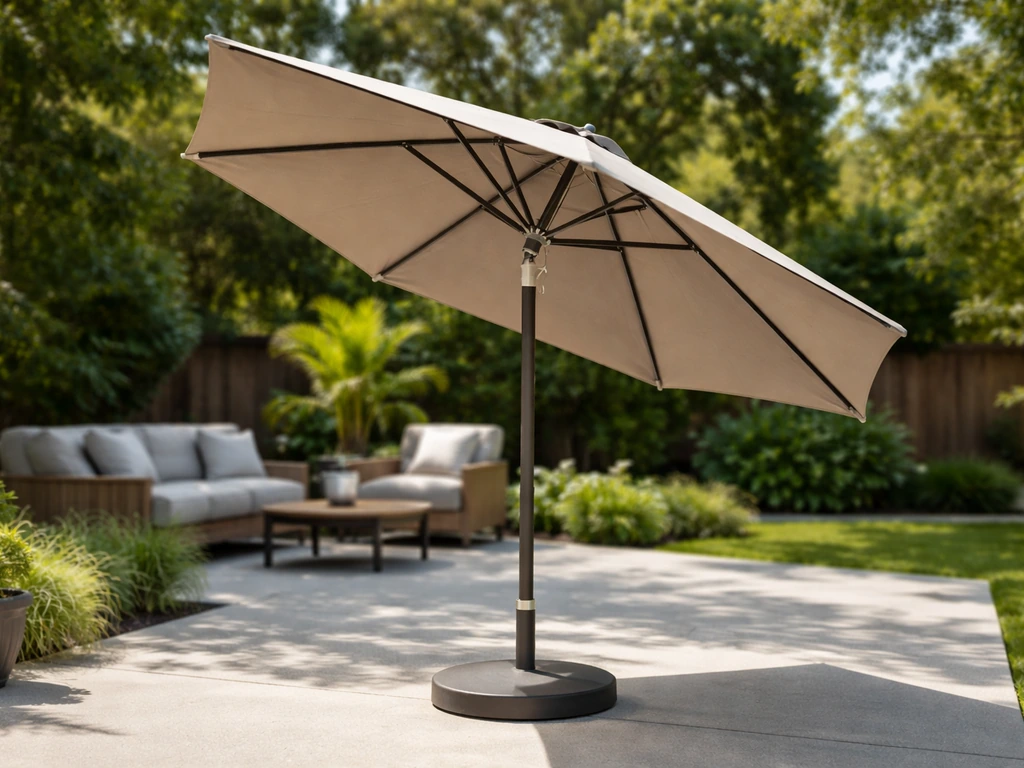
How Does a Patio Umbrella Work? Components, Use, and Fixes
Learn how patio umbrellas work: components, open close tilt, stability, and step by step troubleshooting common mechanic