If your patio umbrella is broken, you do not have to throw the whole thing away. If you have an old patio umbrella that is beyond a full repair, this guide will help you repurpose the usable parts into a new shade setup broken. Most of the time, one or two parts have failed while the rest of the structure is perfectly solid. The trick is figuring out exactly what broke, deciding which parts are still safe to use, and then choosing a repurpose path that matches what you have left. A bent rib and a bad crank are very different problems with very different solutions, and this guide walks you through all of it from triage to a finished, weatherproof shade setup.
Repurpose Broken Patio Umbrella: DIY Steps and Fix Paths
Luca Morrison
3 May 2026
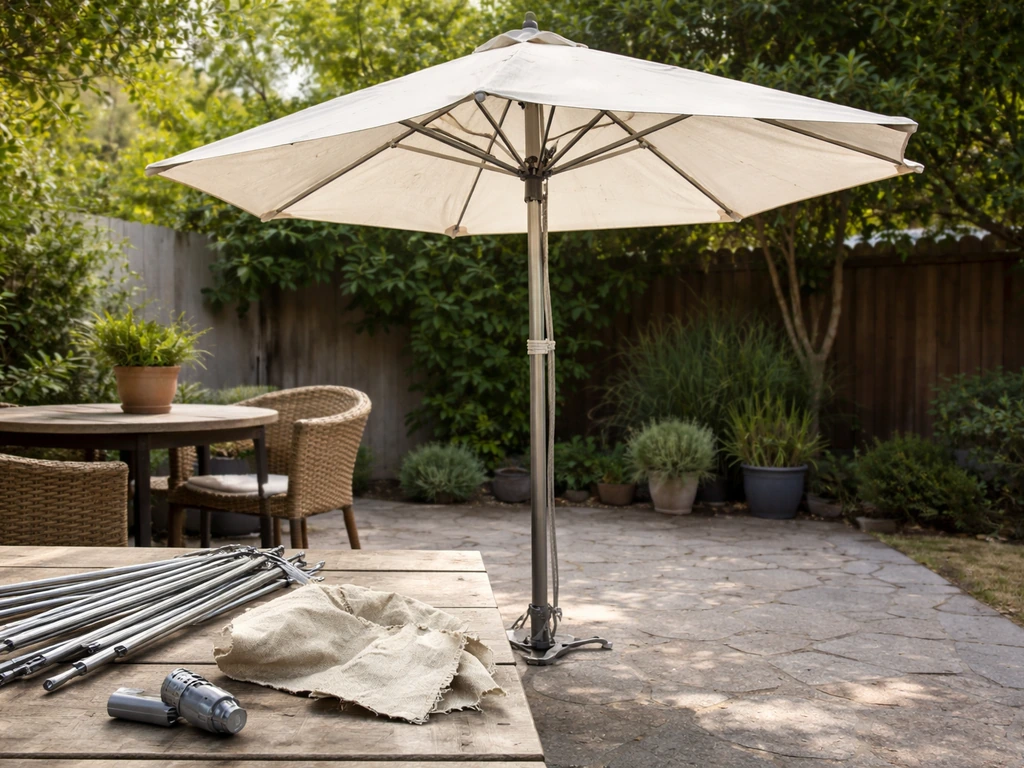
Quick Triage: What's Broken and What's Still Usable
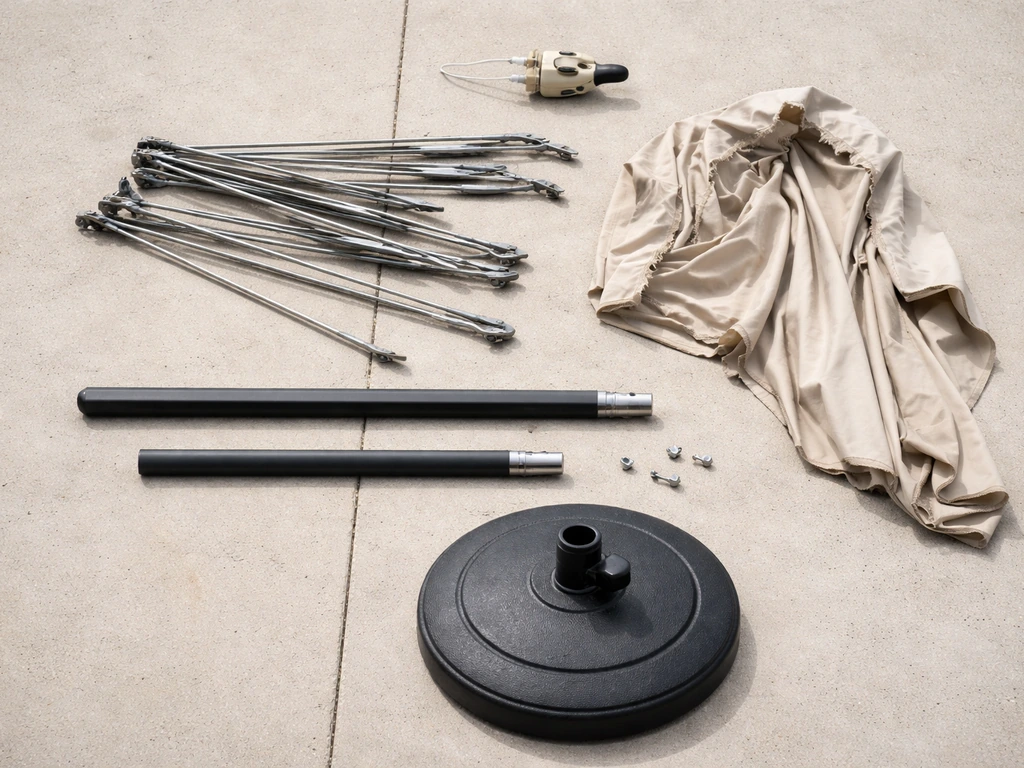
Before you do anything else, spend ten minutes doing a honest condition check. Go component by component and write down what you find. This tells you which repurpose path makes sense and, just as importantly, whether the umbrella is safe to use at all in any form.
Crank and Tilt Mechanism
Turn the crank slowly. If it spins freely without opening or closing the canopy, the internal cord, gear, or drum has failed. If the canopy gets stuck halfway, the cord is likely jammed or frayed. A tilt mechanism that won't hold position usually means the cord or pulley has worn through. Here's the key rule: if the umbrella doesn't open or close easily, do not force it. Forcing a stuck mechanism creates additional damage to the pole or ribs and turns a small repair into a bigger one. A crank system with a damaged cord can't hold the canopy in wind, which makes it dangerous to use as-is.
Ribs and Frame Joints
With the umbrella fully closed, run your hand along each rib from the center hub to the tip. Look for bends, cracks, or rib-tip sleeves that have cracked or popped off. Rib-tip sleeves are a very common failure point on budget umbrellas, so check those first. Then open the umbrella and look at the upper and lower hub connections. Ribs that wobble at the hub but are otherwise straight can sometimes still be reused in a new configuration. Ribs that are kinked or snapped are scrap.
Canopy Fabric
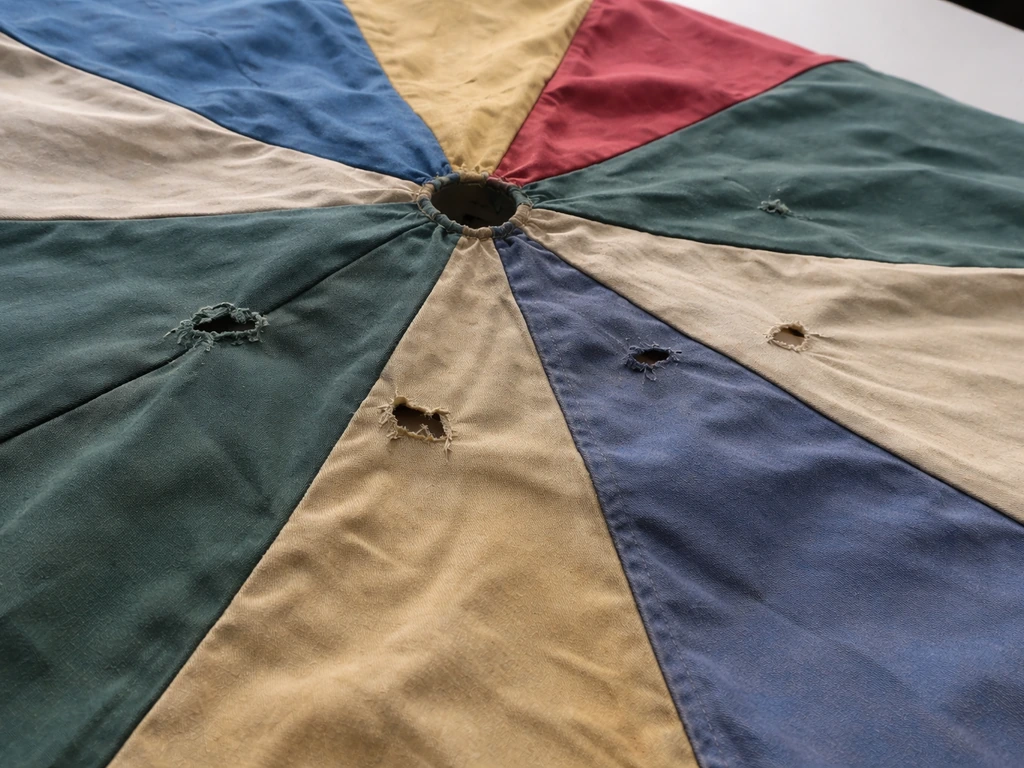
Spread the canopy flat and look for rips, tears, holes, and heavily faded panels. Small tears near seams are a sign the seam thread has UV-degraded and the whole panel may be close to failure. Faded fabric is usually also brittle fabric. A canopy with one or two small holes in a non-stress area can be patched for repurposing. A canopy that is torn along a rib channel or at a hub attachment point is no longer structurally reliable and should not be used overhead.
Pole and Base
Check the pole for corrosion, especially at the joints where pole sections meet. Surface rust on aluminum or steel is manageable; deep pitting or cracks are not. For the base, grab the pole and push it side to side. Any wobble in the base means the base is no longer safe. This is a hard stop: if the umbrella wobbles in its base, stop using it immediately. A cracked concrete or plastic base should be retired or replaced before anything else gets reused.
| Component | Signs It's Still Usable | Signs to Retire It |
|---|---|---|
| Crank/Tilt | Cord intact, gears engage smoothly, canopy opens fully | Cord frayed or snapped, crank spins freely, tilt won't hold |
| Ribs | Straight, hub connections firm, rib tips intact | Bent, cracked, or snapped; hub wire broken |
| Canopy Fabric | No tears at stress points, color/texture still flexible | Rips along rib channels, brittle fabric, large holes |
| Pole | No cracks, surface rust only, joints tight | Deep pitting, cracks, bent sections |
| Base | No wobble, no cracks, weight intact | Wobble under load, cracked concrete or plastic |
Repurposing Ideas for Each Umbrella Part
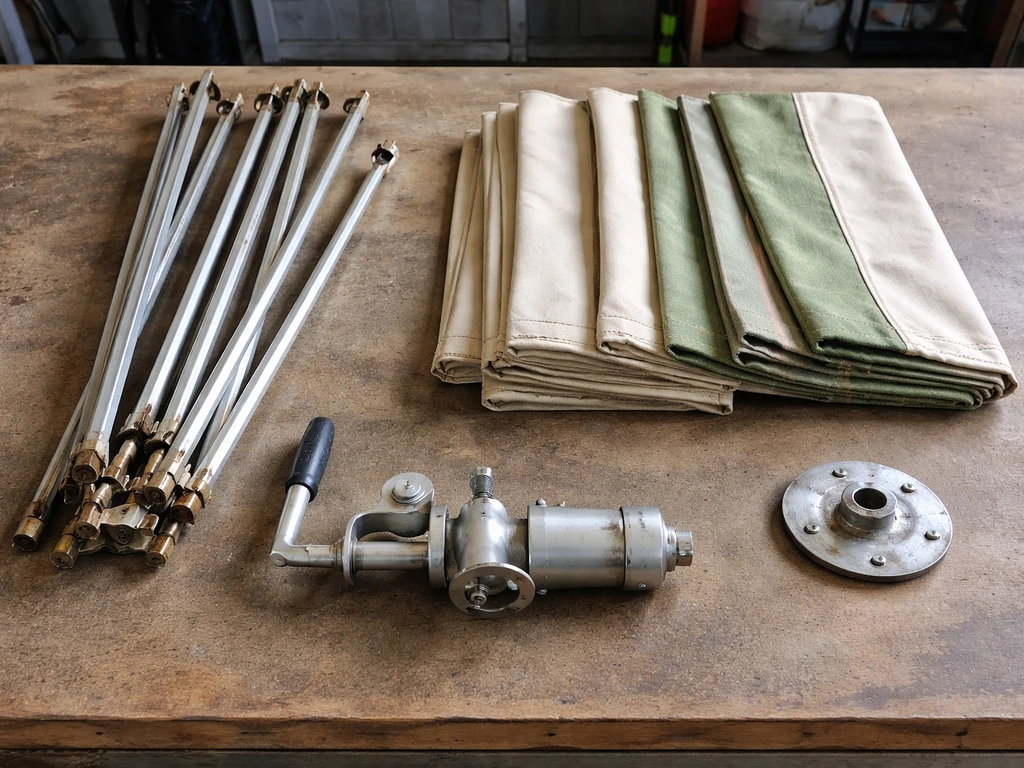
Once you know what's good and what's not, match your salvageable parts to one of these options. If you need more ideas for reusing the whole umbrella, including salvaging parts or starting fresh, see what to do with old patio umbrellas. You don't need every component to be perfect for a repurpose to work well.
Frame and Ribs: Build a Smaller Shade Structure
A solid frame with good ribs but a bad crank or torn canopy is the best candidate for a standalone DIY shade frame. You can remove the crank system entirely, fix the pole at a set height using a pipe clamp or set screw, and attach new shade fabric, a replacement canopy cut-down from a larger piece, or even a shade sail panel to the rib tips. The ribs stay connected to the hubs exactly as they were; you're just changing what covers them. Measure one rib from the center hub to the tip before you buy fabric so you know the radius you're covering.
Canopy Fabric: Garden Cover, Windscreen, or Patch Material
If the frame is too far gone but the canopy fabric is still solid, cut the fabric panels apart along the seams. Individual panels can be used as garden frost covers, privacy screens stapled to a fence, ground cloth under raised beds, or patch material for another umbrella. Panels from Sunbrella or similar solution-dyed acrylic hold up surprisingly well even after the umbrella itself has failed mechanically. Rinse the panels before repurposing them and check each one for brittleness by folding a corner; if it cracks, that panel is done.
Crank and Tilt Hardware: Spare Parts or Craft Fixtures
A working crank assembly salvaged from a frame-damaged umbrella is worth keeping if you have (or plan to buy) a compatible replacement pole. Umbrella cranks are not universal, but they're often compatible across umbrellas from the same manufacturer. Pull the crank mechanism off, label it with the brand and model, and store it as a spare. The tilt hardware and the finial (the cap at the very top) can also be saved as replacements.
Base: Planter Weight, Anchor Point, or New Umbrella Foundation
A heavy umbrella base that's structurally sound is genuinely useful even without a working umbrella. Fill it with soil and drop a tall container plant into the center pole sleeve. Use it as an anchor point for a shade sail by threading a cable through the pole sleeve. Or simply pair it with a new umbrella pole and canopy if only the base from your old setup survived. If the base is cracked, do not reuse it for any load-bearing purpose.
Safe Disassembly: How to Take It Apart Without Getting Hurt
Disassembly is where most DIY injuries happen with umbrella work, so take a few minutes to do this right. Two hazards come up over and over: tensioned rope/cord and corroded hardware with sharp edges.
Releasing the Cord and Pulley Safely
If your umbrella uses a pulley/rope system (common on market-style and cantilever umbrellas), the rope is under tension when the canopy is open. Never cut the rope while the canopy is open. Instead, fully close the canopy first by hand if the crank is broken, supporting the hub as you lower it. Once the canopy is fully collapsed and the hub is at its lowest point, remove the pulley rope from its hook, then slowly release any remaining tension. Only then is it safe to cut or remove the cord.
Separating Pole Sections
Before pulling pole sections apart, look inside the top of the lower pole section for a locking knob or plug. Some umbrella poles (especially multi-piece aluminum poles) have an internal locking plug that must be loosened before the sections will separate cleanly. Skipping this step can cause internal components to drop or snap, and it can make sections impossible to separate without damaging the pole. Loosen that knob first, then slide the lower pole section off the mainframe.
Handling Rusted Hardware and Sharp Rib Tips
Wear leather or cut-resistant gloves throughout disassembly. Corroded steel ribs and brackets can have razor-sharp flaking edges that slice right through thin work gloves. When removing ribs from the hub, expect resistance from corroded wire or hub pins. Use pliers rather than bare hands. For the hub wire that retains the ribs (the looped wire threaded through each rib at the hub), use needle-nose pliers to grip and unthread it rather than prying, which can send the wire snapping back at you.
Removing the Canopy from the Ribs
Close the umbrella completely before removing the canopy. This is not optional: fabric caught between open ribs during removal tears easily and can cause a rib to snap back. With the umbrella closed, lay the entire frame flat on a table or clean surface. Unthread the canopy from each rib tip sleeve, working from the outer tips toward the hub. If the sleeves are sewn onto the canopy rather than slipped on, use a seam ripper rather than pulling hard.
How to Rebuild a Functional Shade Setup from Repurposed Parts
This is the part most guides skip, but it's the whole point. Here's how to turn salvaged umbrella parts into a shade setup you'll actually want to use.
Option 1: Fixed-Height Frame with New Fabric
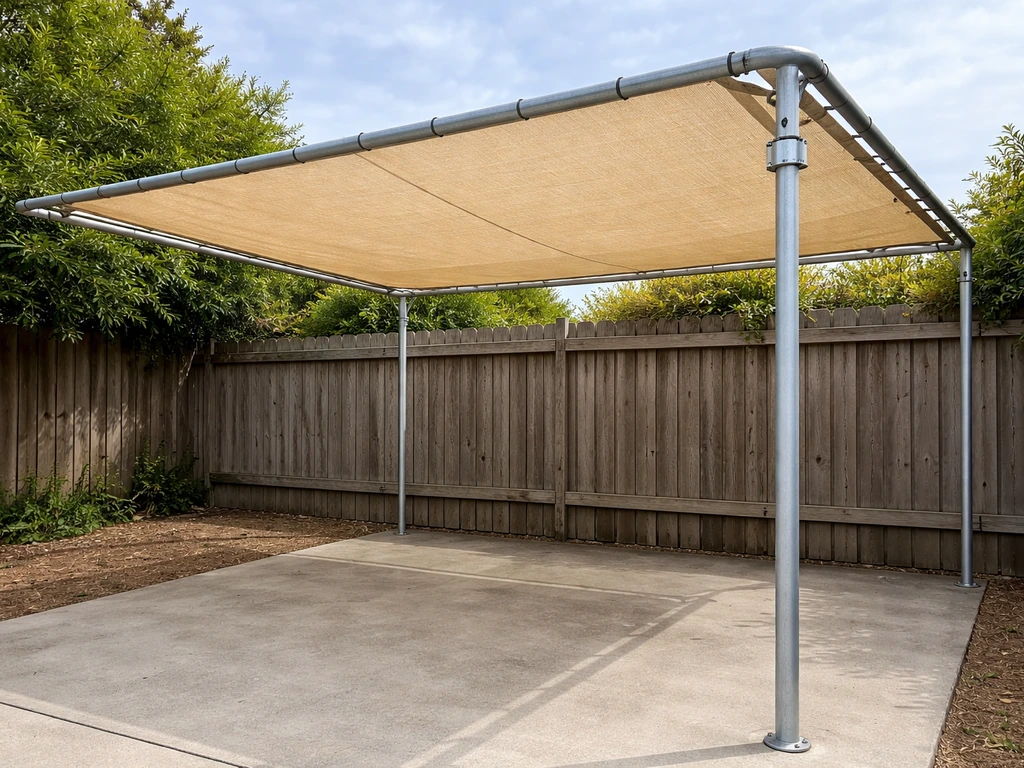
This works when the frame and ribs are solid but the crank and canopy are both gone. Set the pole at the height you want and secure it with a stainless steel pipe clamp through the pole's existing set-screw hole, or drill a new hole and use a bolt and lock nut. Open the ribs manually and prop them in the open position using a short piece of dowel or PVC pipe between the lower hub and the pole collar (the collar that the ribs' lower arms attach to). Measure the rib span from hub to tip, then cut new shade fabric into a circle with that radius plus about two inches of overlap at each rib tip for attachment. Sailrite explains that its Fabric Calculator can help determine how much fabric is needed for specific projects, so you can estimate yardage before cutting. Attach the fabric to each rib tip with a grommet and a stainless zip tie or a hog ring. This gives you a fixed shade canopy with no moving parts to fail.
Option 2: Canopy Panels Converted to a Shade Sail
If you have good fabric panels but a wrecked frame, cut the panels into triangles and sew or reinforce the corners with heavy-duty webbing and brass grommets. Run a line of UV-resistant thread (Gore TENARA or similar marine-grade thread holds up far better than standard polyester outdoors) along the edges before installing the grommets. Then hang the panels between fixed anchor points: fence posts, deck posts, or the salvaged umbrella pole set in a new concrete footing. A shade sail setup like this can actually cover more area than the original umbrella.
Option 3: Pole and Base as a New Umbrella Foundation
If the pole and base survived but everything else failed, you're essentially buying a new canopy and crank. Check the pole diameter (most standard market umbrellas use a 1.5-inch or 38mm pole), then shop for a replacement canopy kit or a new umbrella that fits your existing pole. This is cheaper than buying a whole new umbrella and wastes nothing.
Tools, Materials, and Sourcing Replacement Hardware
Here's what you'll realistically need for most repurpose projects. You probably have some of this already.
Basic Tool Kit
- Leather or cut-resistant work gloves
- Needle-nose pliers and standard pliers
- Flathead and Phillips screwdrivers
- Seam ripper (for canopy removal)
- Drill with metal bits (for new holes in the pole if needed)
- Wire cutters
- Measuring tape
- Marker for measuring and cutting fabric
Materials for Repurpose Projects
- Stainless steel zip ties or hog rings (for attaching fabric to rib tips)
- Stainless steel pipe clamp (to fix-height the pole)
- Brass or stainless grommets and a grommet setting kit
- Heavy-duty outdoor webbing (1-inch nylon or polyester) for shade sail edges
- UV-resistant marine-grade thread (for any sewing)
- Rust converter primer (for any steel parts you're keeping)
- Outdoor-rated spray paint in your color of choice
- Thompson's WaterSeal Fabric Seal or equivalent fabric waterproofing spray
- Replacement cord/rope (manufacturer OEM cord is far better than hardware-store string for crank systems)
- Bolt and lock nut set, assorted stainless steel fasteners
Sourcing Compatible Replacement Hardware
For crank and cord systems, always try the manufacturer first. Most major brands (Galtech, California Umbrella, Treasure Garden, etc.) sell OEM replacement cords and crank assemblies directly or through their dealer network. Using OEM cord matters because the cord diameter, material, and length are matched to the drum and pulley in your specific umbrella. An improvised rope from a hardware store is a safety risk in a loaded crank system. For ribs, search the brand name plus 'replacement rib' and the umbrella size (e.g., '9-foot'). Galtech and several other brands sell individual ribs as spare parts. For generic hardware like grommets, clamps, and fasteners, any marine or outdoor supply store works fine.
Weatherproofing, Anchoring, and Testing Your Repurposed Setup
Treating Metal Parts Before Reassembly
Any steel parts you're keeping need to be treated before going back outside. Remove all loose, flaking rust with a wire brush or sandpaper first. Rust converter won't bond to loose scale, so this step isn't optional. Once the surface is down to stable (firmly bonded) rust or bare metal, apply a rust converting primer and let it cure fully before painting. For aluminum poles with surface oxidation, a light sand and a coat of outdoor metal paint is usually enough.
Waterproofing the Fabric
If you're reusing the original canopy fabric or cutting it into a new shade panel, spray it with a fabric waterproofing product like Thompson's WaterSeal Fabric Seal. For product-specific handling and safety guidance, you can consult the SDS for Thompson’s WaterSeal Clear/Multi-surface Waterproofers Thompson's WaterSeal Fabric Seal. Apply it on a dry day, let it cure, and then do a water-bead test by dripping water on the surface. One important limitation: fabric waterproofers penetrate the weave but cannot seal the stitch holes at seams. If your seams are letting water through, apply a seam sealer (similar to what tent makers use) along each sewn line after the waterproofing spray has dried.
Anchoring for Wind Safety
A repurposed shade structure needs to be just as stable as the original, and in some configurations it may be less inherently stable (especially if you've removed the crank mechanism and the canopy is now fixed open). For a pole-based repurpose, make sure the base has adequate ballast. Most manufacturers recommend 50 pounds minimum for a standard 9-foot canopy; cantilever and offset setups need more, often 100 pounds or more in exposed spots. For shade sail repurposes using the canopy panels, anchor points must be rated for the sustained load the sail will exert. Angle your support posts 5 to 10 degrees away from the sail direction to counteract the lever force the fabric puts on the post. Never anchor a shade sail to a structure that hasn't been checked for load capacity.
Testing Before Regular Use
- Set up the repurposed structure and leave it standing for 24 hours with no one sitting under it.
- After 24 hours, check all connection points: rib tips, hub attachments, pole clamps, and base connections. Tighten anything that has shifted.
- Apply a light lateral push to the top of the pole. There should be no perceptible wobble. Any wobble means the base ballast or anchor is insufficient.
- Check the fabric for any new pulling or tearing at grommet points or rib-tip attachment points. If a grommet is pulling through, reinforce it with a larger washer before using the structure.
- If everything is solid after the 24-hour check, do one final tug on each fabric edge and confirm it holds. Then it's ready to use.
Maintenance, Seasonal Storage, and When to Walk Away
Ongoing Maintenance
A repurposed shade setup still needs the same basic care the original did. Always bring it down or collapse it (if it's still collapsible) during high winds. Even a fixed-open structure can be disassembled and stored if a storm is coming. Rinse the fabric a few times per season with clean water to prevent mold and mildew buildup. Check all metal joints and fasteners at the start of each season for rust or loosening. Re-apply fabric waterproofing spray once a year, ideally in early spring before peak use.
Seasonal Storage
If you're in a climate with freezing winters, take the repurposed structure down before the first freeze. Water trapped in pole joints or base cavities can freeze and crack metal or concrete. Store pole sections and ribs horizontally in a dry location to prevent warping. Fold fabric loosely (never tightly compressed) and store it in a breathable bag rather than a sealed plastic bin, which traps moisture and encourages mildew.
When to Retire the Repurposed Structure
Not every broken umbrella is worth repurposing, and some should be retired outright for safety. Do not repurpose any umbrella that has a cracked or deeply pitted pole, a base that wobbles or is cracked through, ribs that are bent or snapped at the hub, or canopy fabric that cracks or tears when you fold it. If after repurposing the structure develops a wobble that additional ballast doesn't fix, or if a rib or joint fails during your testing phase, stop and retire it. The goal is a shade setup that won't come down on someone sitting under it. If you can't get there with what you have, the right call is disposal and replacement. For more on how to properly dispose of parts that can't be reused, or what to do with an old umbrella frame specifically, those questions deserve their own look since disposal options and frame reuse options each have their own set of practical paths. For more on how to properly dispose of parts that can't be reused, or what to do with an old patio umbrella frame specifically, those questions deserve their own look since disposal options and frame reuse options each have their own set of practical paths.
FAQ
Can I repurpose a broken umbrella if the pole only has surface rust?
No. If the pole is cracked or deeply pitted, or if the base wobbles even slightly after you tighten or reinstall the pole, the failure can propagate under wind load. A repurpose project can work with a bad crank, torn canopy, or missing crank parts, but it should not start with a structurally compromised pole or base.
What if I cannot find a replacement crank or cord for my umbrella brand?
First, try to salvage a working crank assembly with the exact model parts from the same manufacturer. If you cannot match the crank, do not improvise with random rope or a different mechanism, because cord diameter and drum geometry affect how securely it holds canopy position under load.
Do I need to take down a repurposed umbrella during storms if I converted it to a fixed-open canopy?
For a fixed-open setup, you still need a wind plan. On high-wind days, fully disassemble or collapse the structure if it can be done safely, even if you removed the crank. If it is truly fixed and cannot be collapsed, remove the shade panels or fabric and leave only the pole and base secured.
Is it ever safe to cut the pulley rope or cord if the crank is broken?
Do it only when the canopy is fully closed and supported so the tension is relieved. With rope or pulley systems, cutting while open can cause a sudden snap that damages ribs or injures you. Close the canopy, release the rope from its hook, then slowly relieve remaining tension before cutting anything.
Are umbrella replacement ribs universal across different brands and sizes?
Not automatically. Replacement ribs can be compatible only within a brand line, sometimes within a specific umbrella size range. Measure the rib length, confirm rib-tip sleeve style, and match hub connection type before buying, otherwise the ribs may not attach securely or may not hold the canopy shape.
Can I waterproof the repurposed canopy fabric without sealing the seams?
Yes, but only in the right way. Seal the fabric surface for water-beading, then address seam leaks separately, because waterproof sprays do not seal stitch holes. After the spray cures, run seam sealer along stitched lines and test by dripping water directly on seams, not just on the middle of panels.
How do I know if my fence posts or deck posts are strong enough for an umbrella-panel shade sail?
For a shade sail or panel hang, you should assume higher leverage forces than a loose fabric drop. Use anchor points rated for sustained load, add ballast or additional bracing as needed, and angle posts 5 to 10 degrees away from the sail direction to reduce bending stress at the tops.
Can I still use a canopy that has a tear near a rib channel for a repurposed overhead canopy?
If the canopy is torn at a hub attachment point, or torn along a rib channel, treat it as non-structural and do not use it overhead. You can still salvage the fabric if you cut around the failure into intact sections, but any piece that looks like it will flex at the tear line should be avoided for anything load-bearing.
If the crank is bad but the cord looks okay, should I still replace the cord?
You can, but do not assume one body-only fix will solve it. If you replace only the crank but the cord was jammed, frayed, or wound improperly, the new mechanism can fail quickly. After installing, open and close slowly by hand multiple times and check that the canopy parks fully without binding.
What is the safest way to test a repurposed umbrella before using it outdoors?
Before reassembly, confirm the hub connection area is solid by checking wobble and alignment when ribs are attached. During testing, start with gentle opening and closing, then verify that the canopy reaches full open and full closed positions without sticking. Any wobble at the hub that appears after assembly is a stop signal, not something to “tighten later.”
Next Articles
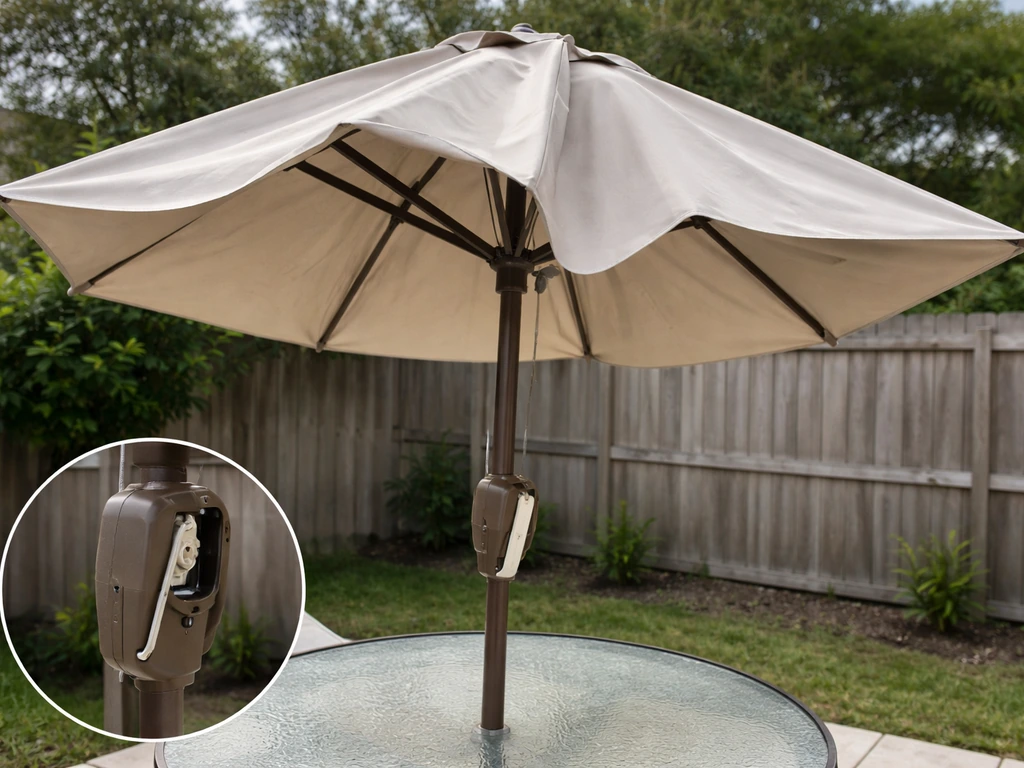
How to Fix a Patio Umbrella That Won't Open or Close
Step-by-step fixes for patio umbrellas that won’t open or close, with checks for jams, cords, latches, and lubricating t
How Does a Patio Umbrella Work? Components, Use, and Fixes
Learn how patio umbrellas work: components, open close tilt, stability, and step by step troubleshooting common mechanic
Patio Umbrella Crank Not Working: DIY Fix Guide
Fix a patio umbrella crank that won’t work with safe step-by-step jam, gear, and base troubleshooting and repair tips.