To assemble your Sunnyglade 10x13ft cantilever umbrella (model B0854JD5G9), you set up the cross base first, bolt the main pole into it, attach the canopy to the cantilever arm, then open it by turning the crank handle clockwise. That's the basic sequence. But there's a lot that can go sideways if you skip steps, forget the separately sold weighted base, or try to operate the tilt system before everything is locked in. This guide walks you through the whole thing, from confirming your parts to troubleshooting a crank that won't budge.
Sunnyglade 10x13ft Cantilever Umbrella Instructions Guide
Luca Morrison
11 May 2026
Confirm Your Model and Check Every Part First
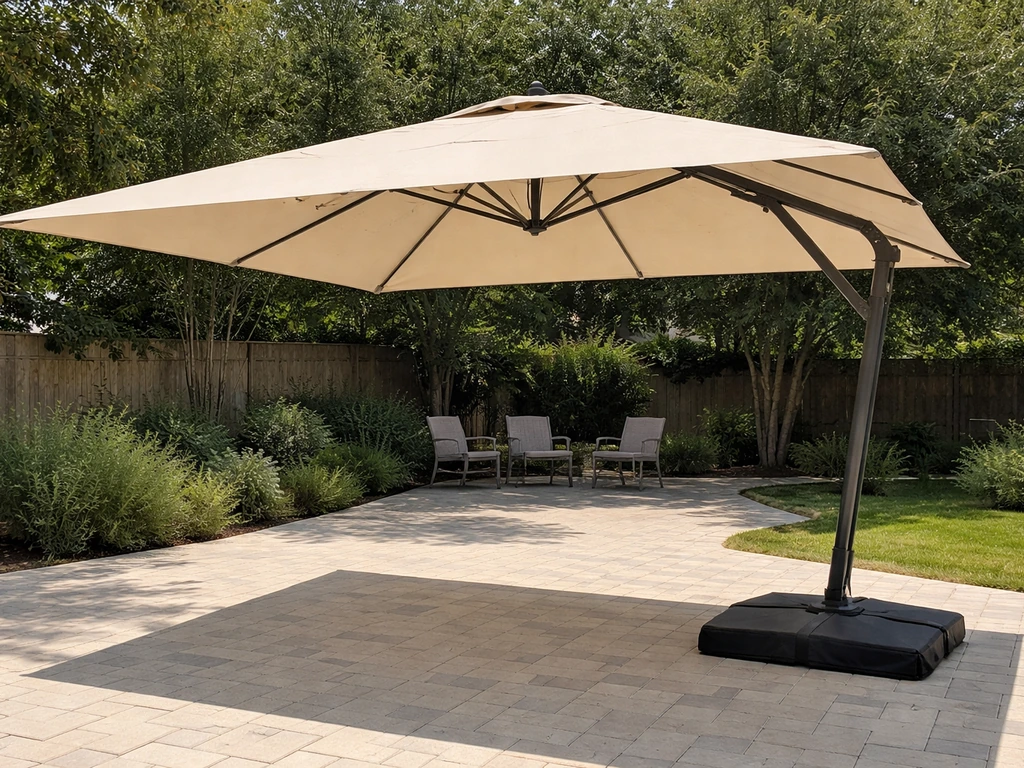
Before you touch a bolt, verify you actually have the right model. The Sunnyglade cantilever this guide covers is the B0854JD5G9, a 10 x 13 ft rectangular canopy with an offset (cantilever) arm design. If your box or manual shows a different SKU, the assembly steps may differ enough to cause problems. Check the label on your box or the front page of the included manual.
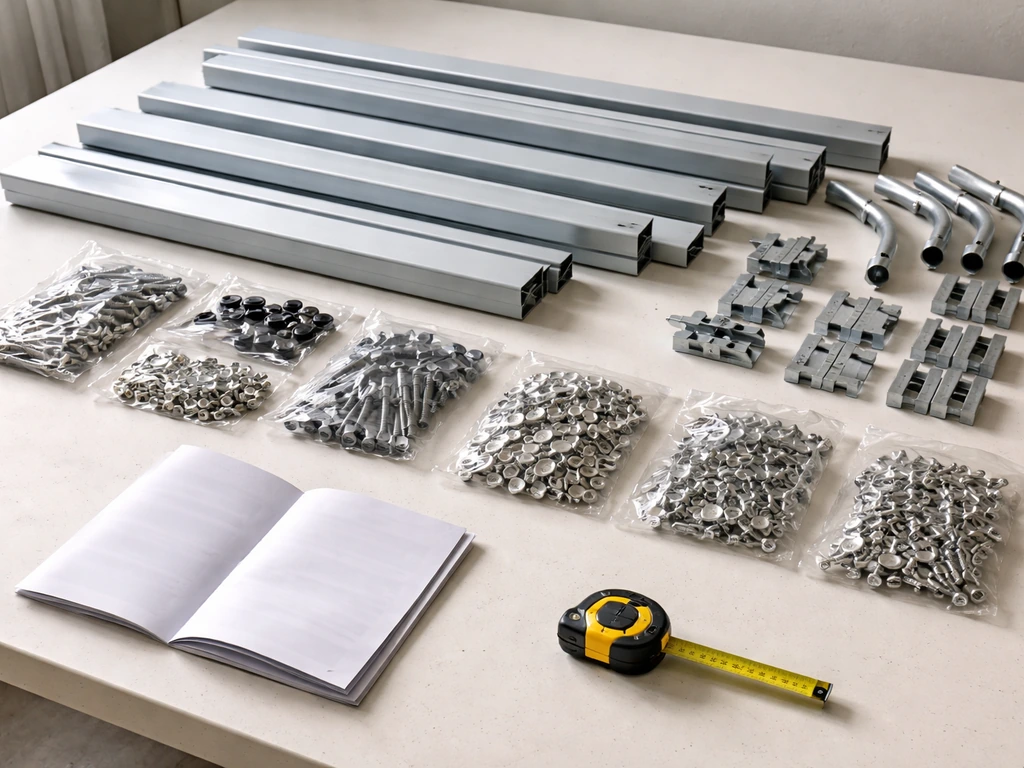
Lay everything out on a clean surface and match it against the official package contents list. Here's what should be in the box:
- Umbrella canopy (1)
- Main pole (1)
- Cross base (1)
- Crank handle (1)
- Assembly hardware: bolts, washers, nuts, and wrenches
- Instruction manual
One thing that trips people up: the weighted base is NOT included. The manual is explicit that this umbrella cannot stand on its own without an adequately weighted base, which is sold separately. If you don't have one yet, stop here and get one before assembly. Sand-fill or water-fill base weights both work. Trying to stand this umbrella up without a proper weighted base is how it ends up on top of your patio furniture (or worse, a guest).
If any hardware is missing or a rib on the canopy frame looks bent, contact Sunnyglade before you assemble. It's much easier to get replacement parts at this stage than after you've bolted everything together.
Step-by-Step Assembly for the 10x13ft Cantilever
Have a second person available for steps 2 and 3. The pole and canopy assembly are both heavy and awkward for one person, and the manual specifically notes that two people may be needed. Working alone is how you scratch the pole, strain something, or knock the base over mid-assembly.
- Prepare the base: Place the cross base on a flat, stable surface, ideally on your patio where you plan to use the umbrella. Attach the weighted base to the cross base and make sure it's secure before anything else goes up. This is your foundation. If the ground is uneven, find a flatter spot.
- Attach the main pole: Lift the main pole and insert its bottom end into the slot on the cross base. Align the pre-drilled holes on the pole with the holes on the base bracket. Insert the provided bolts through both, add washers and nuts, and tighten with the included wrench until snug. Don't just hand-tighten. Give it a real turn with the wrench or the pole will wobble under load.
- Mount the canopy: With your second person helping, lift the canopy assembly and attach it to the cantilever arm at the top of the main pole. The cantilever arm is the horizontal or angled offset section that positions the canopy out to the side. Follow the connection points in your manual diagram and use the provided hardware to secure it.
- Final checks: Before you open the canopy, physically push and pull on the pole and arm to test stability. Check every bolt connection. Confirm the weighted base is locked in place and hasn't shifted. If anything feels loose or wobbly, tighten it before proceeding.
One gotcha to watch for during canopy mounting: make sure none of the canopy fabric gets pinched between the frame joints as you attach the arm. It seems obvious in hindsight, but trapped fabric will cause problems the first time you try to open the canopy.
How to Operate the Crank, Tilt, and Rotation System
Once the umbrella is assembled and stable, here's how to actually use it. There are three separate controls: the crank for opening and closing, the tilt handle for adjusting canopy angle, and the foot pedal for rotation.
Opening and closing with the crank
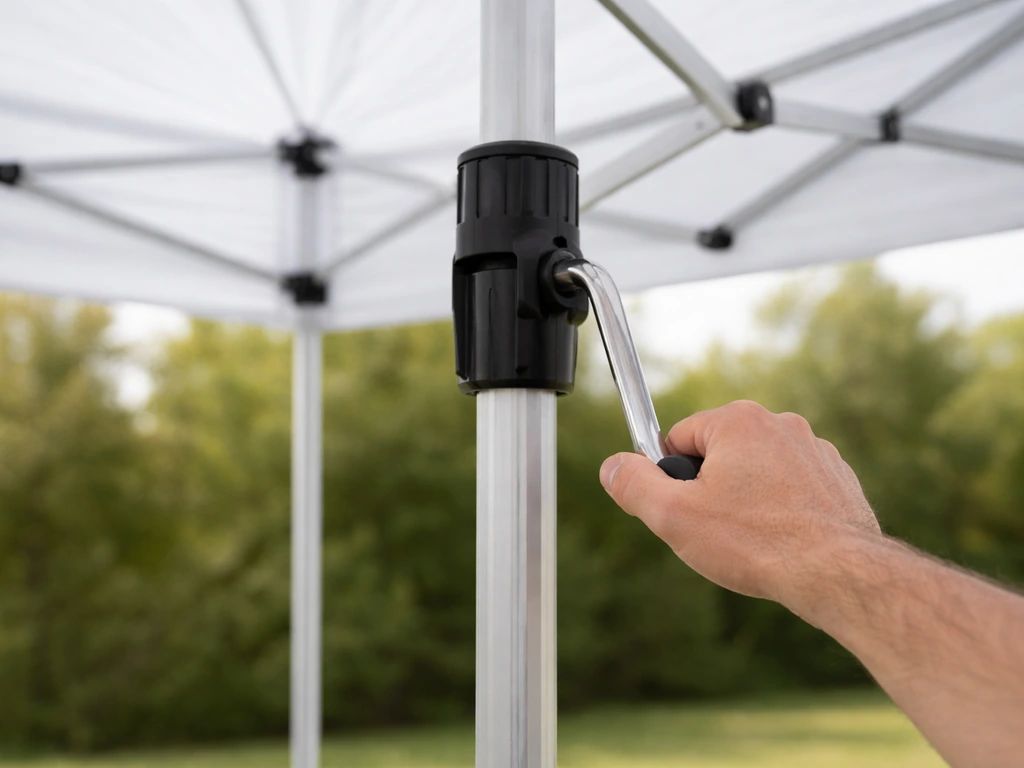
The crank handle attaches to a socket on the main pole. Insert it fully before turning. Turn clockwise to open the canopy, counter-clockwise to close it. Turn slowly and steadily. If you feel resistance, stop and look at what's catching before forcing it. The most common reason a crank is hard to turn is fabric caught in one of the ribs, which you can usually free by hand before continuing.
Adjusting the tilt and height
The B0854JD5G9 has a 4-level adjustable tilt and height system. The control is the handle located on the cantilever arm itself, not on the main pole. Grip the handle, adjust the canopy to your desired angle, and lock it in place. This lets you follow the sun throughout the day without moving the whole umbrella. Don't force it past the four defined positions, as that's a quick way to strip the mechanism.
Rotating 360 degrees
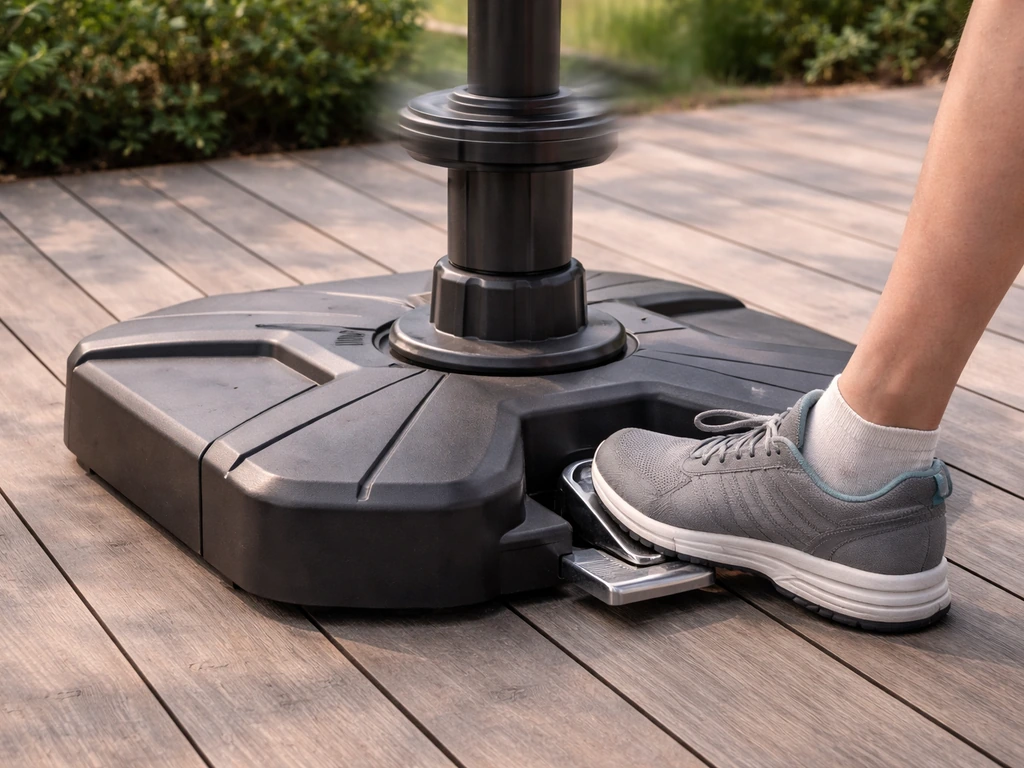
To rotate the canopy, press down on the foot pedal at the base with your foot and hold it. While the pedal is held down, twist the pole to rotate the canopy to your desired direction. Once you're happy with the position, release the pedal and it locks in place. This is a detail a lot of people miss entirely because the foot pedal isn't obvious. If you're trying to rotate by just pushing the pole without engaging the pedal, it either won't move or you'll stress the locking mechanism.
What not to do
- Don't leave the canopy open when you're not outside or when wind picks up. The manual is explicit: always close the canopy when not in use or in windy weather.
- Don't crank with the fabric caught. Stop and free it first.
- Don't force the tilt past its adjustment positions.
- Don't rotate without using the foot pedal. You'll fight the lock and potentially damage it.
- Don't let children or pets near the umbrella during operation or adjustment.
Securing It Against Wind: Base, Weight, and Placement
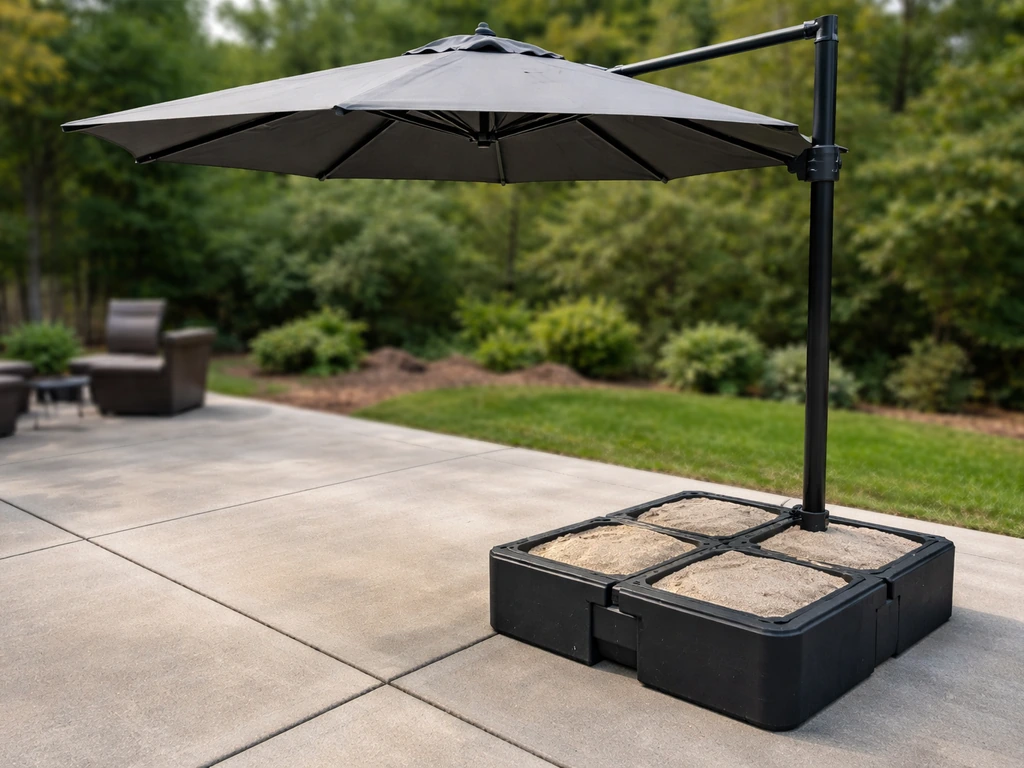
A 10x13ft cantilever canopy catches a lot of wind. The offset design means the canopy is out to the side of the pole, which creates leverage that can tip the whole thing over if the base isn't heavy enough. These threshold offset patio umbrella instructions explain how that offset affects stability and what to do when you set the base and placement offset design. The manual is clear that stability depends entirely on the weighted base. No anchor stakes, no bolted-down base, no shortcuts.
For the weighted base, fill it with sand rather than water if you have the option. Sand is denser and won't evaporate or freeze and crack the base in winter. Follow the base manufacturer's weight recommendations, and err on the heavier side if you live somewhere with regular afternoon wind.
Placement also matters. Positioning the umbrella so the canopy extends away from the prevailing wind direction reduces the load on the base significantly. If your prevailing afternoon wind comes from the west, point the canopy east. It's a simple adjustment that makes a real difference. Avoid placing the umbrella on elevated decks or exposed corners where wind is amplified.
If you're in a regularly windy area, consider placing additional weight bags (available cheaply online) over the cross base arms. Some homeowners also use ground stakes through the cross base feet when the umbrella is used on a lawn or soft surface, but on hard patio surfaces your main option is more base weight. And again: close the canopy any time you leave, and always close it if a storm is coming. An open 10x13ft canopy in 30 mph wind is genuinely dangerous.
Troubleshooting the Most Common Problems
Canopy won't open or opens with heavy resistance
First, check if any fabric is caught between the ribs or folded over a strut. With the canopy partially open, look along each rib from the center hub outward. Free any trapped fabric by hand, then try the crank again. If the fabric is clear but the crank is still stiff, look for debris or dirt inside the crank mechanism socket on the pole. Blow it out, then apply a light coat of silicone-based lubricant to the moving parts. Don't use WD-40 long-term. It attracts dirt and will make the problem worse over time. Silicone spray is the right call here.
Canopy won't fully extend
If the canopy opens partway but won't go all the way out, check two things: first, look for fabric that's tangled or caught anywhere on the frame. Second, make sure the crank mechanism is fully engaged, meaning the crank handle is seated completely in its socket before you turn it. A partially inserted crank can slip instead of fully driving the mechanism.
Tilts to the wrong angle or won't hold its position
If the tilt handle isn't locking between positions, the adjustment mechanism may be worn or the handle may not be fully engaging the locking notch. Try adjusting to a different position and see if that one holds. If none of the four positions hold, the locking pin or notch is likely worn or bent. At that point, contact Sunnyglade for a replacement part rather than continuing to use it, because a canopy that can swing freely under load is a hazard.
Crank handle is loose or slipping
If the crank handle spins without moving the canopy, the crank gear mechanism inside the pole may be stripped or the handle connection is worn. Remove the handle and inspect the socket and the handle's drive end. If the teeth look rounded off, the part needs replacement. This is a common failure point on umbrella cranks generally, not just Sunnyglade. Using the crank too fast or forcing it when the canopy is stuck accelerates wear.
Canopy is uneven or one side droops
An uneven canopy usually means one or more ribs didn't seat properly at the hub, or a rib is bent. Open the canopy fully and visually inspect each rib from the center hub to the tip. If a rib looks kinked or isn't snapped into the hub, try pressing it in while the canopy is partially open. A bent rib from shipping or a fall needs to be replaced. Continuing to use it puts stress on the surrounding ribs and the hub.
Rotation is stuck or won't lock
If the 360 rotation isn't working, check the foot pedal first. It needs to be fully depressed to release the lock. If the pedal is engaging but the pole won't turn, there may be debris in the rotation collar at the base. Clean around it and apply silicone lubricant. If the pedal releases fine but the position won't lock, the locking mechanism inside the collar may be worn.
Maintenance and Seasonal Storage
Cleaning the canopy fabric
Clean the canopy with a damp cloth and mild dish soap. Rinse it thoroughly with clean water and let it air dry completely before closing it. This last part matters: closing damp fabric traps moisture and breeds mildew, which ruins the fabric and smells terrible. Don't use bleach, harsh detergents, or pressure washers. The manual specifically warns against harsh chemicals, and a pressure washer can pull threads and compromise the water-resistant coating.
Lubricating moving parts
Once or twice a season, apply silicone-based lubricant to the crank mechanism, the tilt handle pivot, the rib hinges at the center hub, and the rotation collar at the base. This takes about five minutes and prevents most of the jamming and stiffness issues covered in the troubleshooting section. Don't skip this. Moving parts on outdoor equipment that never get lubricated eventually seize, and that's when parts break.
Winterizing and off-season storage
When the season ends, close the canopy completely, clean and dry the fabric as described above, and put a protective cover over the entire umbrella. Store it in a dry place if possible. If you're leaving it outside through winter, a good-quality cover is non-negotiable. The cross base and metal hardware will corrode faster if left exposed and wet. Check all bolts in spring before the first use of the season, since freeze-thaw cycles can loosen connections. Other offset umbrella setups from brands like Purple Leaf, Threshold, and Southern Patio follow similar winterizing logic, so if you're managing multiple shade structures, the same cover-and-dry-storage routine applies across the board.
What to inspect at the start of each season
- Tighten all bolts, especially the pole-to-base connection
- Check each rib for bends or cracks at the hub connection points
- Test the crank before putting the umbrella in service for the season
- Inspect the tilt handle locking mechanism
- Check the foot pedal and rotation collar for debris or corrosion
- Look over the canopy fabric for mildew spots, tears, or frayed edges
- Confirm the weighted base is still structurally sound and fully filled
When to Repair vs. When to Replace
Most mechanical issues on this umbrella, including stiff cranks, jammed rotation, and stuck tilt mechanisms, are fixable with cleaning, lubrication, or an inexpensive replacement part. Sunnyglade customer support can often supply specific hardware. Where it stops being worth it: if the main pole is bent, the center hub is cracked, or the cantilever arm has structural damage, the repair cost and complexity typically exceeds the value of the umbrella.
A bent or cracked main structural component is also a safety issue. At that point, replace the umbrella rather than repair it. Likewise, if the canopy fabric has large tears or significant mildew that cleaning won't fix, replacement canopies are sometimes available but verify the part number (B0854JD5G9) before ordering to make sure you're getting the right size and attachment style.
FAQ
How can I confirm the umbrella is fully locked and safe before using it for the first time?
After assembly, confirm the crank can move through the full open and close travel with the canopy empty of any fabric loads. Then try tilting to each of the four positions and rotate a small amount using the foot pedal before leaving it unattended, so you catch a mis-seated hub or a partially engaged crank drive early.
What should I do if the canopy gets wet, can I close it right away and store it?
For rainy days, keep the canopy fully open only if you must, then close it when you are done. If the canopy gets wet, dry it by air before storing, do not close damp fabric and do not cover it tightly while it is still wet, since trapped moisture increases mildew and can weaken coatings.
Can I adjust the tilt or height while the umbrella is open and windy, and what order should I use?
If you need to adjust height while the umbrella is deployed, keep people and objects clear because height changes can shift the center of pressure on a cantilever model. Adjust gradually, then recheck tilt position locking and only then rotate using the pedal, do not force any control past its defined range.
My crank feels stiff, should I keep turning until it frees up or do something else?
Do not use the crank as a “power” lever, if it feels stuck stop immediately and inspect for trapped fabric or obstructions in the crank socket. For long-term help, apply silicone lubricant at the pivot and moving parts during seasonal maintenance rather than spraying lubricants repeatedly when problems appear.
One rib doesn’t snap into the hub, what’s the correct way to fix it without damaging the frame?
If a rib will not seat properly, open the canopy partway, then press the rib into the center hub while holding the canopy steady. Never bend the rib into place, a shipped or damaged rib should be replaced because forcing it can strain the hub connection and lead to uneven canopy behavior later.
What’s the best way to choose and fill the separately sold weighted base for stability?
Use sand fill if you have a choice because it does not evaporate and does not freeze and crack like water can. Also, fill the base to the manufacturer’s recommended level, and if you see the base shifting during rotation or strong gusts, increase weight rather than relying on placement alone.
Can I add ground stakes or extra weight bags to make the umbrella more stable, and when is it worth doing?
Yes, but only on suitable surfaces and only as an addition, not a replacement for a properly weighted base. On hard patios, stakes are often ineffective, so prioritize extra base weight, and if you use bags, place them securely over the cross base arms so they cannot slide when the canopy rotates.
When should I close the umbrella if weather changes during the day?
Never leave the umbrella open unattended in conditions with strong gusts, and close it before leaving the area or before a storm watch. A safe rule is to close at the first sign of sustained wind, not just when gusts reach a specific number, because the cantilever leverage can tip the base even before you reach extreme wind.
The tilt handle doesn’t lock reliably, is it safe to keep using the umbrella anyway?
If the tilt handle won’t hold, do not keep testing it under load. Set it to a position that locks if possible, then stop using it until you confirm the handle fully engages the locking notch. If none of the positions lock, request a replacement locking component rather than using the umbrella with a loose tilt.
My 360 rotation won’t work, how do I tell whether it’s the pedal, the collar, or a worn lock?
If the pedal seems to do nothing, verify you are fully depressing it first, and check that the base area is clear of debris. If the pedal releases but rotation won’t lock, the collar mechanism may be worn, and cleaning plus silicone lubrication may help, otherwise you may need a replacement part from Sunnyglade.
What cleaning method should I use to avoid damaging the canopy fabric or the water-resistant coating?
For cleaning, damp cloth plus mild dish soap is usually enough. Avoid bleach and harsh detergents, and do not pressure wash, especially around the ribs and hub where water can enter seams, degrade coatings, and speed up corrosion on metal parts.
When should I replace the canopy instead of continuing to troubleshoot, and how do I make sure I order the right one?
If you spot significant fabric damage such as large tears or heavy mildew you cannot remove with cleaning, replace the canopy rather than continuing to use it. Before ordering a replacement, match the canopy part and attachment style to the umbrella model, since size and mounting differences can prevent proper fit.
Next Articles
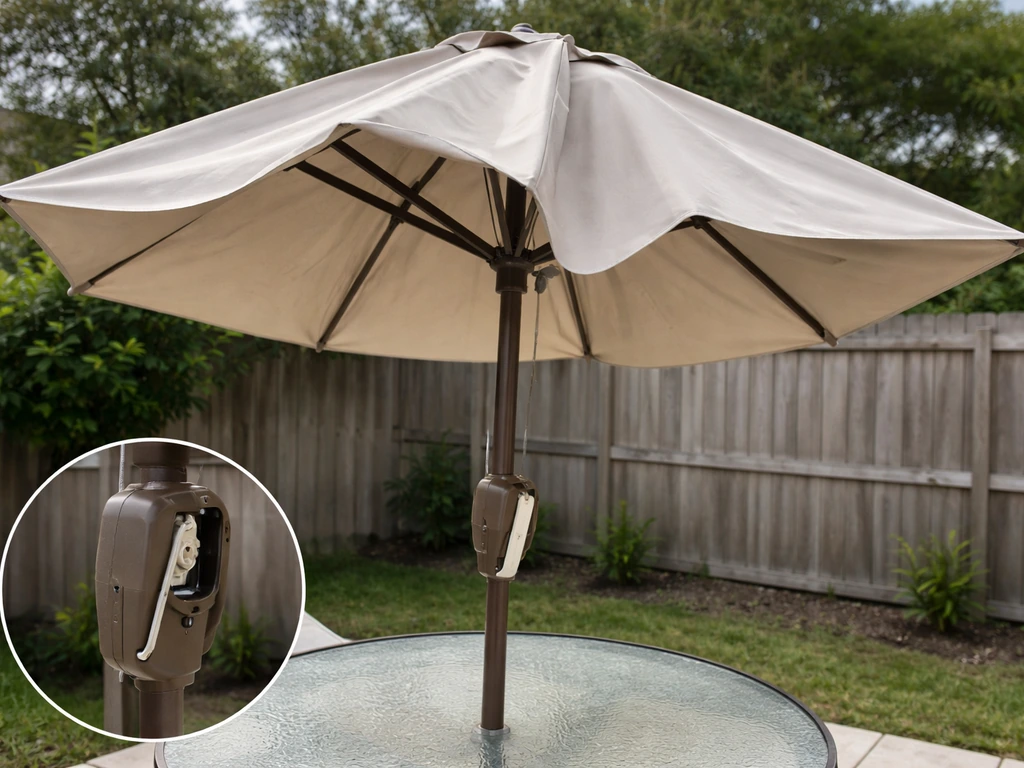
How to Fix a Patio Umbrella That Won't Open or Close
Step-by-step fixes for patio umbrellas that won’t open or close, with checks for jams, cords, latches, and lubricating t
How Does a Patio Umbrella Work? Components, Use, and Fixes
Learn how patio umbrellas work: components, open close tilt, stability, and step by step troubleshooting common mechanic
Patio Umbrella Crank Not Working: DIY Fix Guide
Fix a patio umbrella crank that won’t work with safe step-by-step jam, gear, and base troubleshooting and repair tips.