
Most broken patio umbrellas come down to one of five things: a snapped or bent rib, a frayed or tangled lift cord, a stripped crank gear, a damaged tilt mechanism, or a cracked pole. In almost every case, you can diagnose the exact problem in about five minutes with a visual inspection, and most of those fixes are genuinely doable at home with basic tools and a replacement part that costs less than $30. The key is knowing which mechanism your umbrella uses before you start pulling things apart.
Broken Patio Umbrella Repair Guide: Diagnose and Fix Fast
Luca Morrison
1 May 2026
Safety check before you touch anything
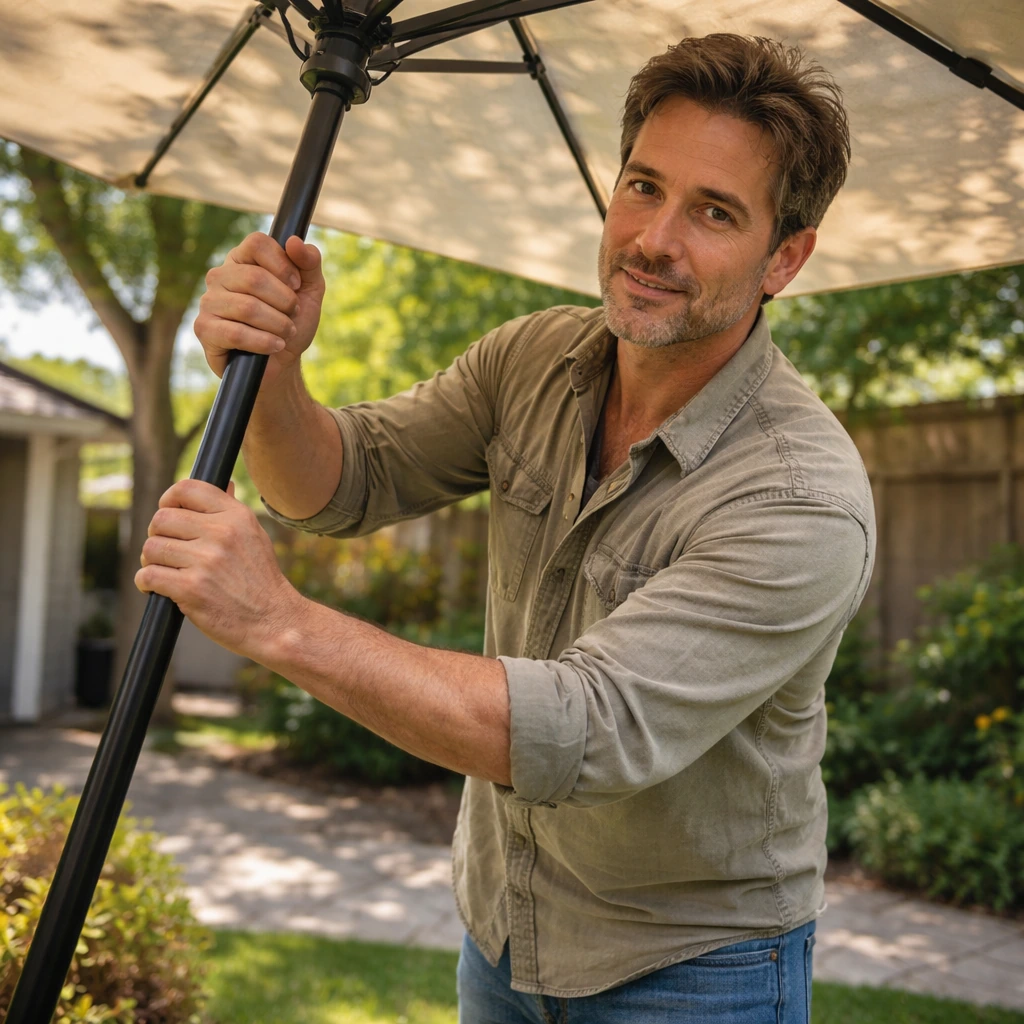
Before you diagnose or repair anything, take a minute to make sure the umbrella is safe to work on. If the canopy is still open and the frame looks unstable, close it carefully by hand before doing anything else. A patio umbrella with a broken rib or bent pole can shift or tip suddenly when you start manipulating it, and blank" rel="noopener noreferrer">the CPSC has documented serious injuries from umbrellas becoming airborne or tipping over unexpectedly. If you suspect a patio umbrella broken arm, keep the umbrella stable and check the ribs and arm connection points before attempting repairs. Keep kids and pets away from the area while you work.
- If the umbrella is open, close it manually before inspecting. Do not force a mechanism that feels stuck or jammed.
- Never work on the cord or lift ring while the umbrella is upright and fully open. The lift ring can snap down and pinch fingers badly.
- If the center pole is cracked or the base is tipped, lay the umbrella flat on the ground before continuing.
- If you're working on a tilting umbrella, re-center the tilt and lock it in the straight-up position before closing or disassembling.
- Don't leave a damaged umbrella open while you go get tools. Even a light breeze on a compromised frame can send it over.
Diagnose the problem: what actually broke
Stand in front of the umbrella and run through this quick mental checklist. You're looking for one clear failure point, not a mystery. Most broken patio umbrellas fail in a predictable spot, and the symptom tells you almost exactly where to look.
The crank turns but nothing happens
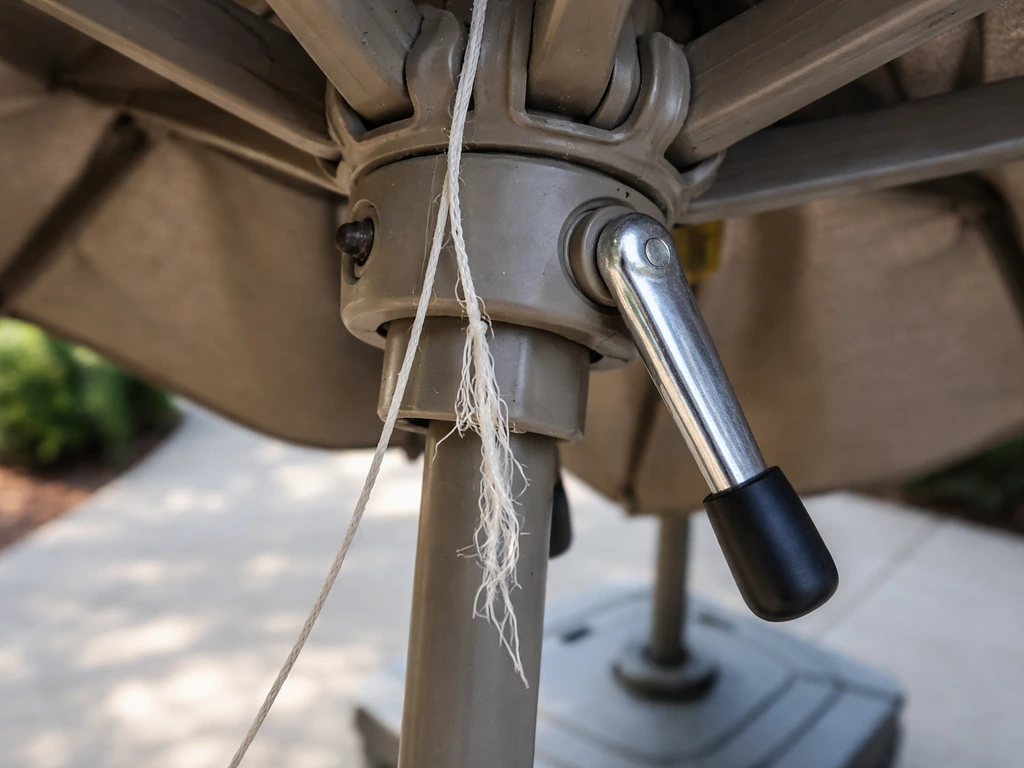
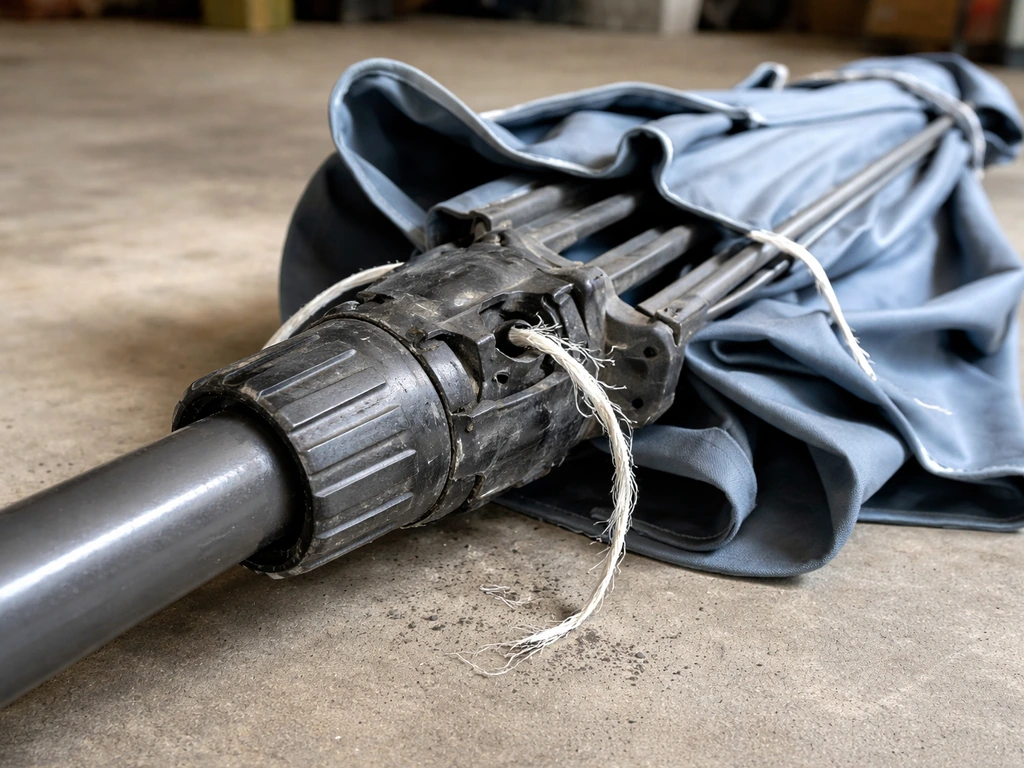
If the crank spins freely without lifting the canopy, or the canopy rises part way and stops, the lift cord is almost certainly frayed or broken. On crank-style umbrellas, turning the handle winds a cord around an internal spindle, which pulls a lift ring upward and spreads the ribs open. When that cord breaks or slips off the spindle, the crank just spins uselessly. Look at the strands near the hub and crank housing. If you see fraying, that's your answer. If the crank feels rough, grinds, or the housing is visibly cracked, the gear mechanism itself may be stripped, which is a different repair.
The umbrella opens unevenly or hangs low on one side
Uneven opening, where one side of the canopy droops or the frame looks lopsided when open, usually means a rib or spoke is snapped. It can also mean the lift cord is misrouted or has jumped off a pulley wheel inside the pole. Do a full visual scan of every rib from the center hub out to the canopy edge. A snapped rib is obvious. If all ribs look intact, the problem is likely a cord routing issue inside the pole.
The tilt mechanism won't move or won't stay locked
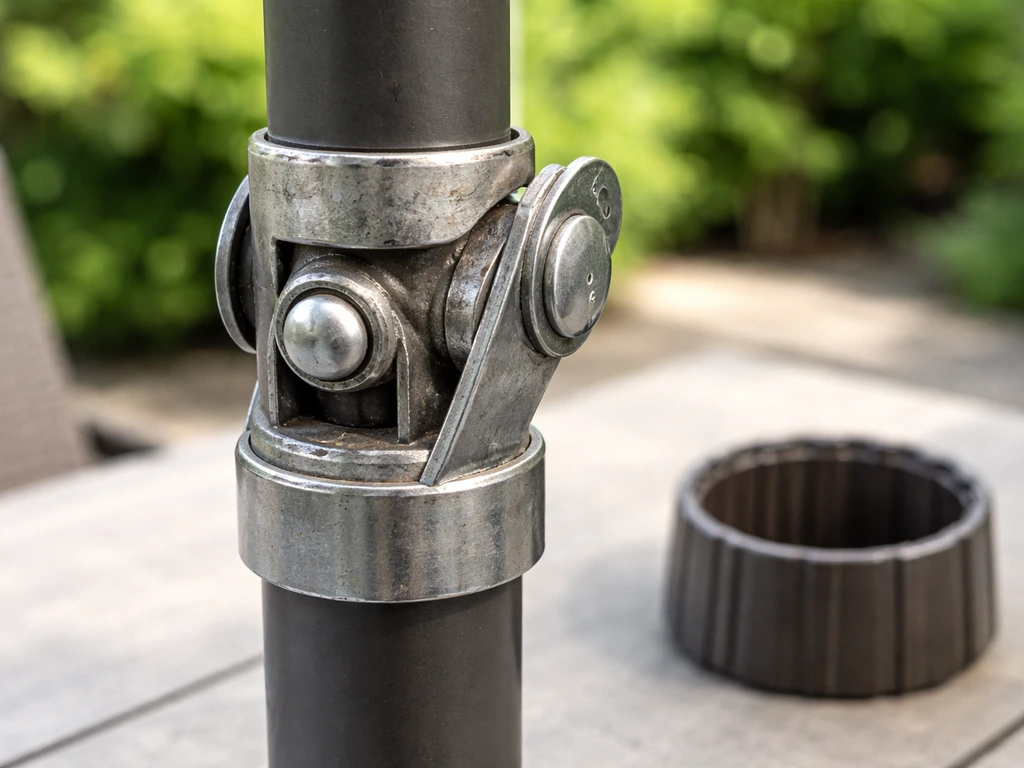
Tilt issues usually fall into two categories: the tilt button or collar is stuck (often from dirt or corrosion), or the internal tilt joint is bent or cracked from wind stress. One real-world example from r/fixit describes a broken tilt mechanism where a small metal component fails after the user takes it apart, matching the “small internal part” tilt-failure pattern internal tilt joint is bent or cracked from wind stress. Push the tilt button and check whether it springs back properly. If the umbrella tilts but won't hold its angle, the locking collar is worn. If the tilt joint looks bent at an angle even when centered, the joint itself has failed.
The pole is cracked, bent, or split
A cracked or severely bent center pole is one of the few cases where repair isn't realistic. Minor bends near the top (usually from wind) can sometimes be worked around, but a cracked aluminum or fiberglass pole is a structural failure. If your pole is only slightly bent, you can still focus on the right repair steps to fix a bent patio umbrella safely fix bent patio umbrella. Check the entire length of the pole for hairline cracks, especially at the tilt joint and at the base collar where it meets the stand.
The base is wobbly, tipped, or the umbrella keeps falling over
A loose or inadequate base isn't a frame repair issue, it's a stabilization issue. The umbrella itself may be fine. Check whether the base weight is appropriate for your umbrella size (a 9-foot umbrella generally needs at least 50 lbs of base weight), and look for cracks in the base casting or a loose pole collar that lets the pole rock side to side.
The most common failure points at a glance
| Failure Point | Common Symptom | DIY Repair Difficulty | Typical Fix |
|---|---|---|---|
| Lift cord (crank type) | Crank spins freely, canopy won't rise or stops halfway | Easy | Restring with new cord |
| Lift cord (pulley/cord type) | Pull cord feels slack, umbrella won't open or close fully | Easy | Replace or rethread cord |
| Broken rib or spoke | Canopy droops or collapses on one side | Moderate | Replace rib with matching size |
| Stripped crank gear | Crank grinds, slips, or makes clicking noise | Moderate | Replace crank mechanism |
| Tilt button/collar | Umbrella won't tilt or won't hold tilt angle | Easy-Moderate | Clean, adjust, or replace collar |
| Tilt joint (bent/cracked) | Tilt joint visibly bent or broken | Moderate | Replace tilt section of pole |
| Center pole (cracked) | Pole visibly cracked or split | Hard / Not worth it | Replace umbrella |
| Base/anchoring | Umbrella tips or rocks in light wind | Easy | Add weight or anchor base |
Repair or replace? How to make the call
Here's the honest answer: most mechanical failures on a patio umbrella are worth repairing if the pole is intact and the fabric is in decent shape. A replacement lift cord runs $5-15. A replacement rib is usually $10-25. A new crank mechanism is $15-40. Compare that to a new quality umbrella at $100-400 and the math is pretty clear on the repair side. That said, Lowe's is right that you're rarely restoring it to brand-new condition. You're making it functional again, and that's enough.
Replace the whole umbrella when: the center pole is cracked (not just bent), multiple ribs are broken at once and the canopy is also torn, the crank housing is cracked AND the gears are stripped, or the umbrella is a cheap entry-level model where replacement parts cost nearly as much as a new one. Also replace if you can't find parts. Always check the model number on the pole or base label first and search the manufacturer's website. Many brands sell replacement ribs, cords, and crank kits directly.
Step-by-step fixes by mechanism type
Fix 1: Replacing a broken lift cord on a crank umbrella
This is the most common repair you'll do. Before you start, close the umbrella fully and lay it flat on a table or the ground if possible. Have a replacement cord ready. Paracord or braided nylon cord in 3-4mm diameter works for most umbrellas, but check your model specs or order from the manufacturer for an exact match.
- Remove the top finial (the cap at the very tip of the umbrella) by unscrewing it counterclockwise. Set it aside.
- Remove the fabric canopy by unclipping or unvelcroing it from the ribs. You don't always need to remove the entire canopy, just enough to access the top hub cap.
- Remove the top hub cover (a plastic cap where all the ribs meet at the top). It usually pops off or has one small screw underneath the finial.
- Look inside the hub for the existing cord routing. Take a clear photo with your phone before you remove anything. This is your reference map.
- Tie the new cord to the end of the old cord with a secure knot before pulling the old cord out. This turns the old cord into a guide wire for the new one.
- Pull the old cord down through the pole slowly. The new cord will follow it through the hollow center of the pole.
- At the crank end (the bottom of the pole), untie the old cord and secure the new cord around the crank spindle or through the crank mechanism housing according to your photo reference.
- At the top end, thread the cord through the pulley or lift ring hardware exactly as it was in your photo, and tie it off securely.
- Crank the handle slowly and watch the lift ring travel up the pole. It should move smoothly. If it catches or the cord jumps off a wheel, stop and re-check your routing.
- Reattach the hub cap, finial, and canopy.
Fix 2: Replacing a lift cord on a pulley/cord (non-crank) umbrella
Pull-cord umbrellas work differently: you grab a dangling cord at the side of the pole and pull down to raise the canopy, then lock it with a cleat or cam lock. The failure point is usually the cord itself breaking, the cleat getting damaged, or the cord jumping off the pulley wheel.
- Close the umbrella fully and identify where the cord exits the pole (usually through a hole near the bottom of the pole section).
- Uncleat or unthread the old cord from the cleat hardware. Tie the new cord to the old one before pulling it out, just like with the crank method.
- Feed the old cord upward through the pole to guide the new cord into position over the pulley wheel at the top hub.
- Thread the new cord through the cleat mechanism at the bottom exit point.
- Pull the cord and verify the canopy opens fully and locks when you wind the cord on the cleat. The cord should feed over the pulley wheel cleanly.
- Test open/close five times and confirm the lock holds before reassembling the cover pieces.
Fix 3: Fixing a stuck or stripped crank mechanism
If the crank handle turns but grinds, skips, or makes a clicking noise, you're dealing with either corroded/dirty gears or stripped teeth. Try lubrication first. Remove the crank handle (usually a set screw or snap pin holds it on), then spray a light penetrating lubricant into the gear housing and work the mechanism back and forth. If that doesn't clear it up, the gears are likely stripped.
At that point, you need to replace the entire crank mechanism. Order a replacement crank by model number if possible, or measure the pole diameter and crank housing dimensions to find a compatible replacement. Installation is the reverse of removal: slide the new housing onto the pole, reconnect the cord to the spindle following the original routing, and reattach the handle.
Fix 4: Fixing or replacing a tilt mechanism
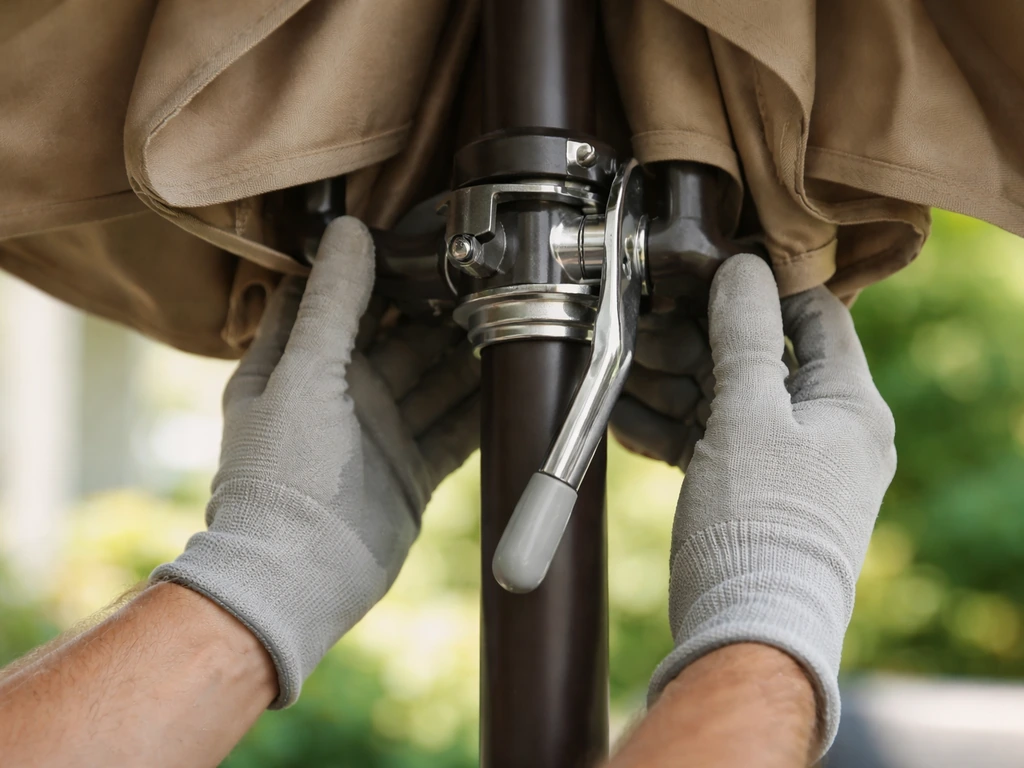
The most common tilt fix is just cleaning the button and collar. Grit and oxidation can jam the spring-loaded tilt button so it won't depress properly. Remove the tilt collar (it usually slides off after depressing the button), rinse it thoroughly with water, dry it, then apply a light spray lubricant to the button spring and collar contact points. Reassemble and test. If the collar is cracked or the tilt joint itself is bent, you'll need a replacement tilt section. These are model-specific, so check the manufacturer's parts page with your umbrella's model number.
Fix 5: Repairing a broken rib or spoke
A snapped rib can't be spliced back together reliably. You need to replace it. The repair process depends slightly on your umbrella design, but the general approach works for most market-style umbrellas. Fixing a broken rib is closely related to rib replacement procedures for specific umbrella arms, which are covered in detail in dedicated rib and arm repair guides on this site.
For more specific steps on repairing the umbrella arm itself, follow a dedicated guide to fix a patio umbrella arm fix patio umbrella arm. If your patio umbrella arm is broken or misaligned, the repair process will depend on the arm style, but you can often replace the arm parts or rib-spoke assembly with the right fit.
- Open the umbrella slightly (just enough to access the hub) and remove the canopy by unclipping it from the rib tips.
- At the center hub, locate the pin or rivet holding the broken rib in place. Push out the pin with a nail punch and hammer, or unscrew it if it's a bolt type.
- Slide the broken rib out of its hub slot. Note the angle and orientation before removing it.
- Slide the replacement rib into the hub slot in the same orientation. The replacement must match the original in length and diameter. Measure the original and check your umbrella's rib count (common counts are 8 ribs for a 9-foot canopy).
- Secure the new rib with the pin or bolt. If using a new pin, use the same diameter as the original.
- Reattach the canopy and open the umbrella fully to confirm the new rib sits level with the others.
Fixing an offset (cantilever) umbrella
Offset umbrellas have the pole off to one side and the canopy suspended on an arm, which puts more mechanical stress on the crank and cord system. The repair process for the cord is similar to a crank umbrella, but you typically need to remove the canopy fabric first to access the crank housing on an offset model. Once the canopy is off, follow the same cord replacement steps: photograph the routing, use the old cord to guide the new one through, and re-thread per your reference photo. The tilt and rotation locking mechanisms on offset umbrellas are also more complex, so if those fail, check whether the manufacturer offers a replacement rotation hub or tilt collar before attempting a DIY fix on the joint itself.
Replacing damaged or missing components
Finding the right replacement rib
Rib replacement parts are not universal. You need to match three things: rib length, rib diameter (usually aluminum tube diameter in millimeters), and rib count for your canopy size. A 9-foot umbrella typically uses 8 ribs with lengths in the 52 to 54 inch range. Some manufacturers, like Galtech and Frontera, sell replacement ribs by model number and provide model-specific installation instructions. Galtech’s umbrella parts diagram (PDF) labels key components and can be used as a visual reference when following model-specific installation instructions for replacement ribs. Look for the model number on a sticker on the pole, base, or the original packaging. If you can't find an exact match by model, measure the intact ribs yourself and search by dimension.
Replacing the lift cord
Replacement lift cord is available at home improvement stores like Home Depot or Lowe's in the hardware or patio section, at garden centers, or directly from your umbrella's manufacturer. The manufacturer's own cord is always the safest bet for fit and durability. If you order generic, get braided nylon or polyester cord rated for outdoor use and match the diameter to the original. Most standard patio umbrella lift cords are 3mm to 5mm in diameter.
Replacing a crank handle or gear housing
Crank handles and gear housings are sold as complete assemblies by most umbrella brands. Search by your umbrella's brand and model number. If you can't find an exact part, measure the pole outer diameter (usually 1.5 inch or 38mm on common market umbrellas) and match the replacement housing to that. Some third-party sellers on Amazon and specialty patio parts sites sell universal-fit crank kits that work for the most common pole sizes.
Patching or replacing torn canopy fabric
Small tears (under 3 inches) in the canopy fabric can be patched with outdoor fabric repair tape or a UV-resistant fabric adhesive. Clean and dry the area first, apply the patch on both sides of the tear if possible, and press firmly for at least 60 seconds. For larger tears or completely blown-out panels, replacement canopies are sold by rib count and canopy diameter. You need to match both the number of ribs and the rib length to get a canopy that fits properly over the frame. Some brands sell canopy-only replacements for popular models, which is much cheaper than replacing the whole umbrella.
Stabilizing your umbrella and preventing wind damage
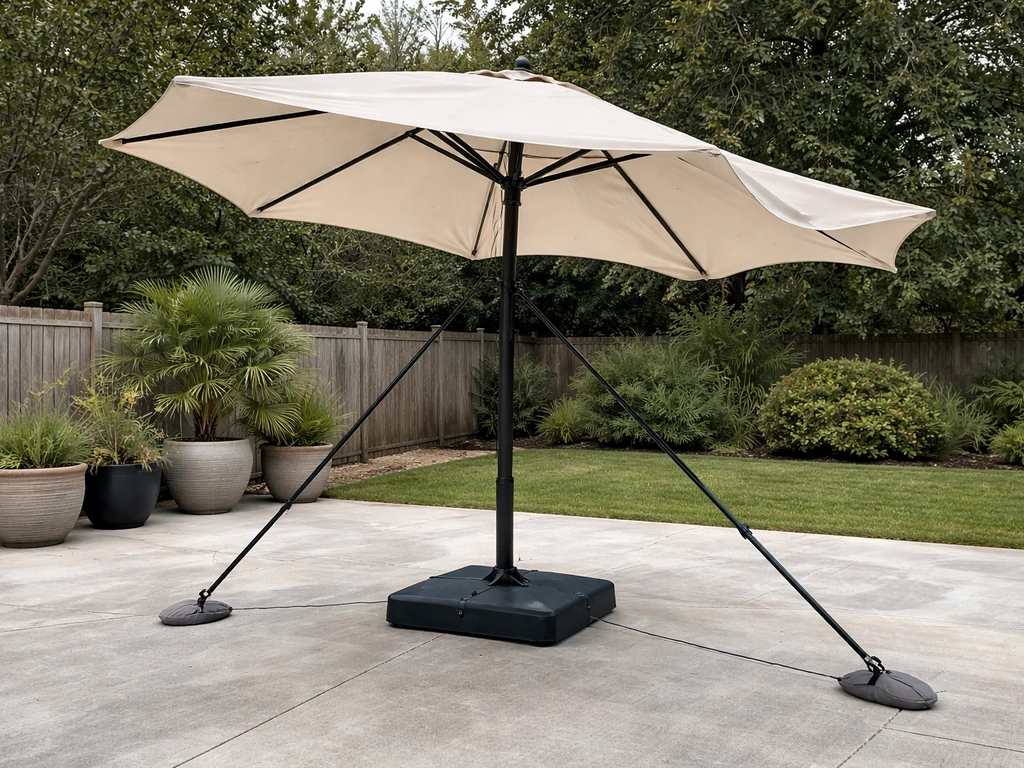
The CPSC has documented umbrella-related injuries and fatalities from umbrellas becoming airborne in wind. This isn't a remote risk. A 9-foot umbrella canopy acts like a sail, and even a modest gust can launch an unsecured one. Getting the base and anchoring right is as important as fixing the mechanism.
Base weight and anchoring
Use a base that's heavy enough for your umbrella size. A common rule of thumb is 50 lbs minimum for a 9-foot umbrella and 75 lbs or more for an 11-foot or offset model. If your base has a fill chamber (many plastic bases do), fill it with sand rather than water: sand is heavier and won't freeze and crack the base in winter. For decks, anchor-style umbrella bases that bolt directly to the deck frame offer the best resistance to tipping. For in-ground installation, a sleeve embedded in concrete is the most secure option.
Wind behavior and safe use habits
Don't leave an open umbrella unattended when conditions are breezy. Most mechanisms and ribs aren't designed to handle sustained wind loads, and a tipped or airborne umbrella can injure people nearby. The tilt feature deserves special attention: operating a tilted umbrella in any wind (even light wind) dramatically increases the force on the frame. Manufacturer guidelines for some umbrella models specifically state the tilt should only be used on completely calm days. When wind picks up, close the umbrella fully and, if possible, lay it flat or store it inside. Always re-center the tilt to the straight-up position before you attempt to close or fold the canopy.
Reassembly, testing, and keeping it working all season
Reassembly and function test
After any repair involving the cord or internal mechanism, do a partial function test before you put the canopy back on. Operate the crank or pull cord and watch the lift ring travel up and down the pole. It should move smoothly without catching, jumping, or making noise. Confirm the cord is riding cleanly over every pulley wheel. Only once that looks right should you slide the canopy back onto the ribs and do a full open-close cycle. Open the umbrella fully, tilt it if applicable, then return it to center and close completely. Do this three times. If anything feels rough or uneven, stop and re-check the cord routing before calling it done.
Lubrication and routine maintenance
Once or twice a season, apply a light silicone or lithium-based spray lubricant to the crank mechanism, tilt pivot points, and any metal-on-metal contact points in the hub. If the crank or tilt feels stiff but isn't stripped, lubrication often solves it completely. Avoid WD-40 for long-term lubrication: it's a cleaner and short-term loosener, not a lubricant, and it can attract dirt to the gear housing. For really stiff gear mechanisms, a lithium grease spray is the better choice.
End-of-season inspection checklist
Before you put the umbrella away for winter, spend five minutes doing a quick inspection. Catching a problem now means you'll open a working umbrella next spring instead of a broken one.
- Inspect every rib for bends, cracks, or visible stress marks at the hub connection point.
- Check the lift cord along its full visible length for fraying, kinking, or worn spots near the pulley wheels.
- Test the crank or pull cord through a full open-close cycle and note any roughness or slipping.
- Check the tilt button, spring, and collar for dirt buildup or corrosion. Clean and lightly lubricate.
- Inspect the center pole for cracks, especially at the tilt joint and base collar.
- Check the canopy fabric for small tears, UV fading, or mildew. Patch small tears now before they grow.
- Verify the base weight is still adequate and that the pole collar is tight with no side-to-side play.
Winterizing and storage
Close the umbrella completely and remove the canopy if possible. Store the canopy fabric indoors in a dry location to prevent mildew and UV degradation. If you leave the frame outdoors, use a breathable umbrella cover (not a plastic tarp, which traps moisture) and secure the cover against wind. In freezing climates, drain any water-filled base chambers before the first frost to prevent cracking. A little attention in the fall means you won't be searching for a broken patio umbrella fix next May.
FAQ
Can I repair a broken patio umbrella rib by gluing it or using epoxy instead of replacing it?
For ribs, adhesive repairs usually fail under repeated wind and bending loads. If a rib is snapped, the reliable option is replacement, especially if the break is at a joint or near the center hub where flex is highest.
What tools do I actually need to fix a broken patio umbrella at home?
Most DIY repairs only require basics like a screwdriver (often Phillips and flat), a small wrench or socket for the crank handle hardware, pliers for cotter pins or snap pins, and a flashlight for inspecting cord routing and hairline cracks.
How can I tell whether my broken patio umbrella problem is the cord versus a stripped gear?
If the crank turns but the canopy does not rise at all, the cord is commonly broken or slipped off the lift spindle. If the crank turns with grinding, clicking under load, or feels rough, the gear teeth are more likely stripped and you will need a crank mechanism replacement.
My crank handle feels loose. Does that mean the gear is stripped?
Loose handle feel can come from a worn set screw or snap pin, not only stripped gears. Remove the handle and check the fastener and shaft coupling first, then test the gear housing separately.
Is it okay to replace the lift cord with any outdoor cord from the store?
Only if the diameter and type are a close match. Generic cord that is too thick or too stiff can bind on pulleys, while cord that is too thin can slip off the spindle, leading to premature failure.
What if I cannot find the exact broken patio umbrella replacement part by model number?
Use measurements to cross-check compatibility. For ribs, match rib length, diameter, and rib count, and for crank kits match pole outer diameter and crank housing dimensions. If you cannot match at least those core dimensions, replacement is safer than forcing a fit.
My umbrella opens unevenly, but none of the ribs look snapped. What should I check next?
Re-check the cord path inside the pole, look for a pulley wheel that has popped its track, and inspect whether one side of the lift ring travel is catching. Uneven opening with intact ribs often points to misrouting or a slipped cord.
Can I fix a broken patio umbrella tilt that won’t lock by cleaning it only?
Cleaning helps when dirt or corrosion is jamming the collar or button. If the collar is cracked, the joint is visibly bent, or the umbrella tilts but will not hold position after reassembly, you likely need a replacement tilt section.
How do I test whether the broken patio umbrella is safe to use before fully reinstalling the canopy?
Run a partial function test with the canopy off. Operate the crank or pull cord and confirm smooth lift ring movement, no catching at pulleys, and no abnormal noise. If the lift feels inconsistent, re-check the cord routing before putting the canopy back on.
What should I do if I drop or lose the lift ring, pulleys, or small internal pieces during a repair?
Stop and locate the missing part before proceeding. Misplacing even a small spacer or pulley guide can change cord tension and cause skipping or uneven opening, potentially damaging ribs on the first full open-close cycle.
Does lubricating a broken patio umbrella with WD-40 solve stiff crank or tilt issues?
Usually not as a long-term fix. WD-40 acts as a cleaner and short-term loosener, and it can pull dirt into the gear housing. Use a penetrating lubricant for stuck parts only if the instructions recommend it, then switch to silicone or lithium-based spray lubricant for ongoing use.
How do I know whether my base weight and anchoring are adequate for a broken patio umbrella I just repaired?
Base adequacy depends on umbrella size and design. A 9-foot umbrella typically needs at least about 50 lbs of base weight, and larger or offset models often need 75 lbs or more, plus anchoring for deck or windy areas.
Can I keep using a repaired broken patio umbrella in wind if I keep it closed?
If wind is picking up, the safe approach is to close it fully and avoid using tilt features. A closed umbrella can still be blown if not secured, so use proper base weight and secure straps or storage in gusty conditions.
Are small canopy tears relevant to umbrella safety after other repairs?
They can be. Even small tears can weaken fabric panels and increase sail-like catching in wind, especially on fully open umbrellas. For best results, patch small tears promptly using UV-resistant outdoor repair materials or replace canopy panels for larger damage.
When should I stop DIY repair and replace the umbrella instead?
If the center pole is cracked (not just bent), the crank housing is cracked while gears are stripped, multiple ribs are broken along with canopy damage, or you cannot obtain compatible parts. In those cases, repeated stress can cause a second failure even after a temporary fix.
Next Articles
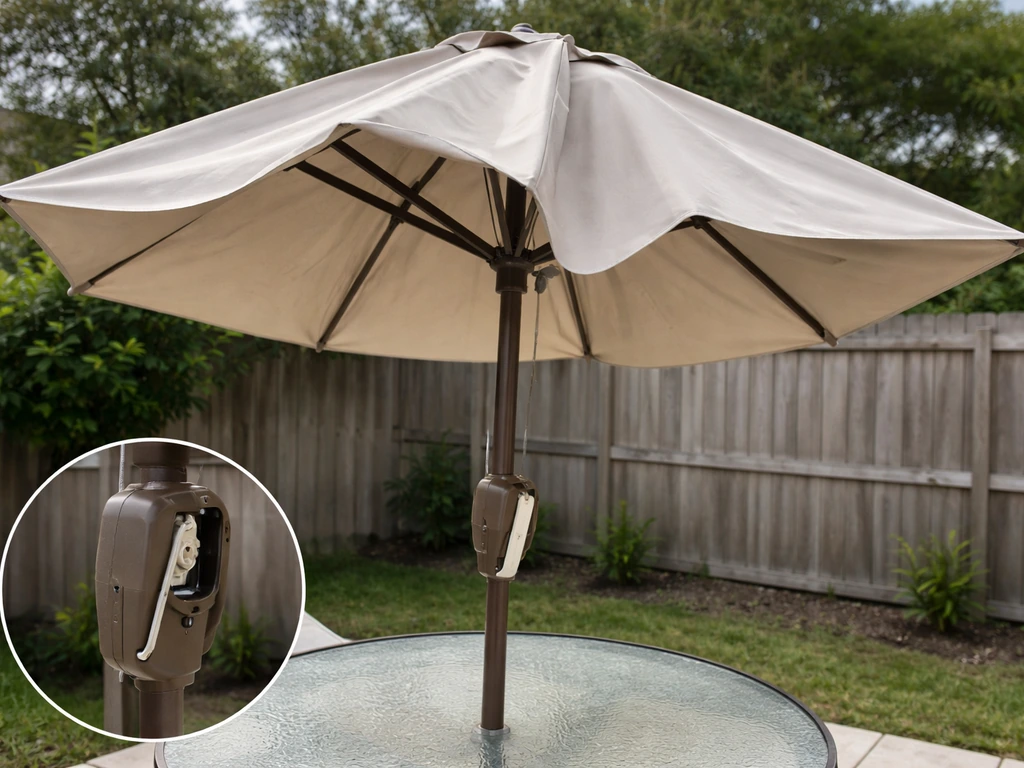
How to Fix a Patio Umbrella That Won't Open or Close
Step-by-step fixes for patio umbrellas that won’t open or close, with checks for jams, cords, latches, and lubricating t
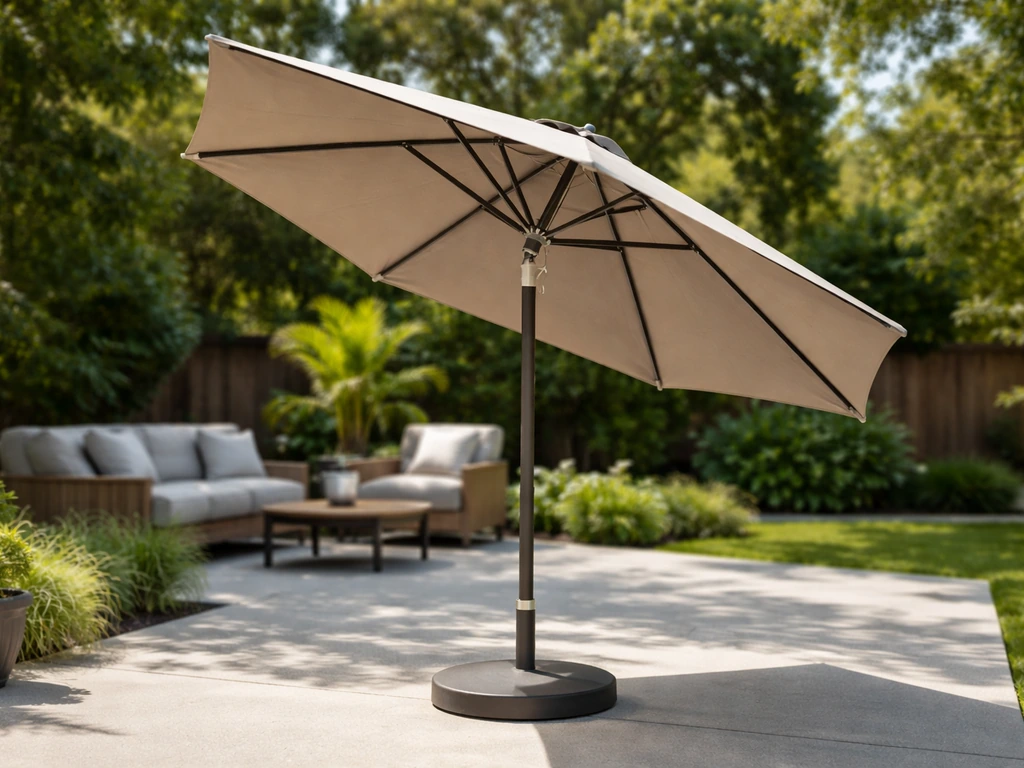
How Does a Patio Umbrella Work? Components, Use, and Fixes
Learn how patio umbrellas work: components, open close tilt, stability, and step by step troubleshooting common mechanic
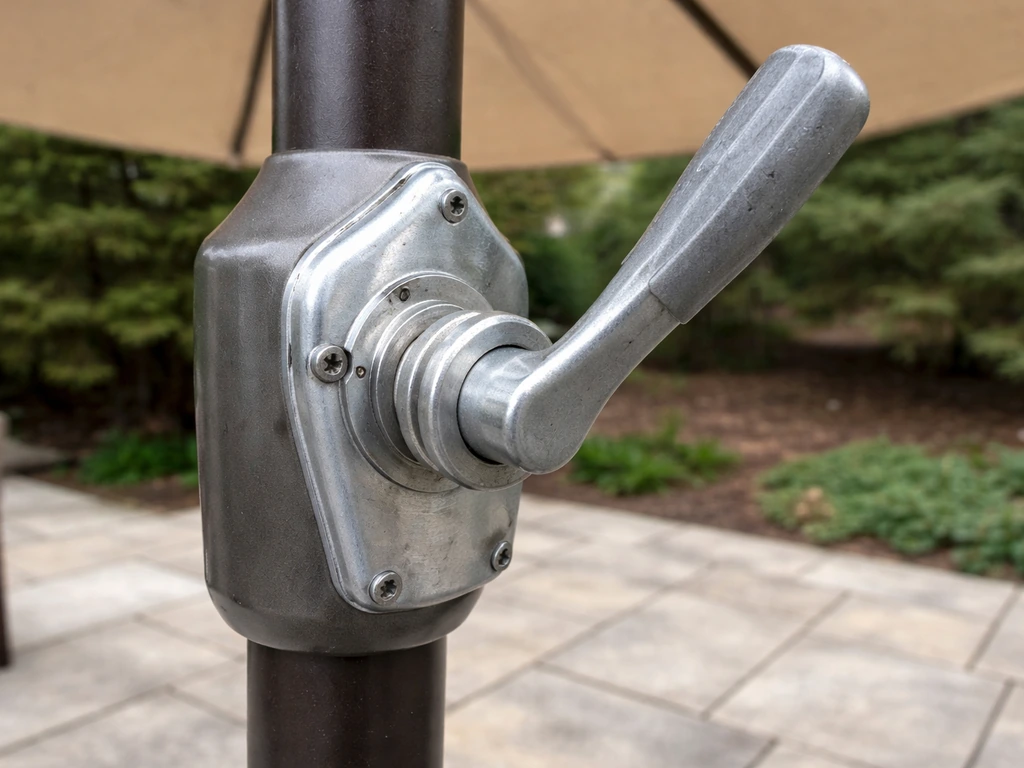
Patio Umbrella Crank Not Working: DIY Fix Guide
Fix a patio umbrella crank that won’t work with safe step-by-step jam, gear, and base troubleshooting and repair tips.